The ABC’s of Heritage Conservation (Part 3 of 3)


 The final segment of this series ends with the middle – the letter ‘M’. 

‘M’ is the most important letter in the heritage conservationist’s alphabet. Maintenance is the best (and cheapest) way to maintain a historic place, and minimal intervention is always the desire when completing an intervention. 

  • Maintenance:  Routine, cyclical, nondestructive actions necessary to slow the deterioration of an historic place. It entails periodic inspection; routine, cyclical, non-destructive cleaning; minor repair and refinishing operations; replacement of damaged or deteriorated materials that are impractical to save. 
  • Minimal intervention:  The approach that allows functional goals to be met with the least physical intervention. 
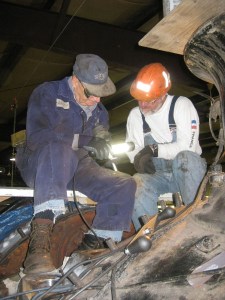
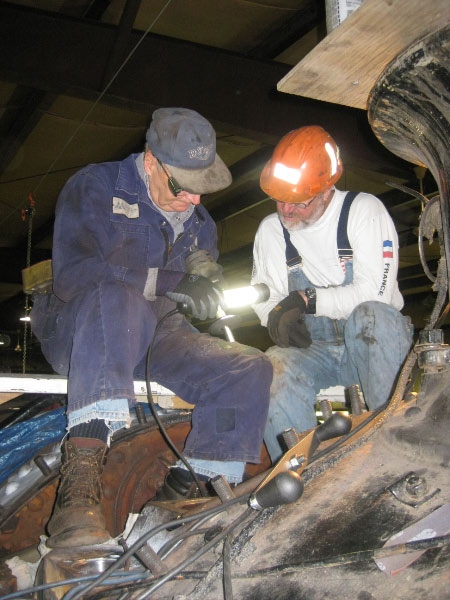
L to R: Larry G. Potter and Don Totten

In the above photo Larry G. Potter and Don Totten conduct routine maintenance on the Canadian National Railways Steam Locomotive 6060 Provincial Historic Resource. Click here to read the Locamotive’s Statement of Significance on the Alberta Register of Historic Places.

To learn more about the above terms or to read about additional conservation terms, please review the Standards and Guidelines for the Conservation of Historic Places in Canada. The Glossary section of the Municipal Heritage Partnership Program website is also a great resource. 

Did we miss something? Would you like us to discuss a term not mentioned in this series? Do you want more information on one of the terms we have defined? Submit a comment to this blog post and we will prepare a response. 

Written by: Brenda Manweiler, Municipal Heritage Services Officer (with definitions from the Standards and Guidelines).

Heritage Markers tell Alberta’s History

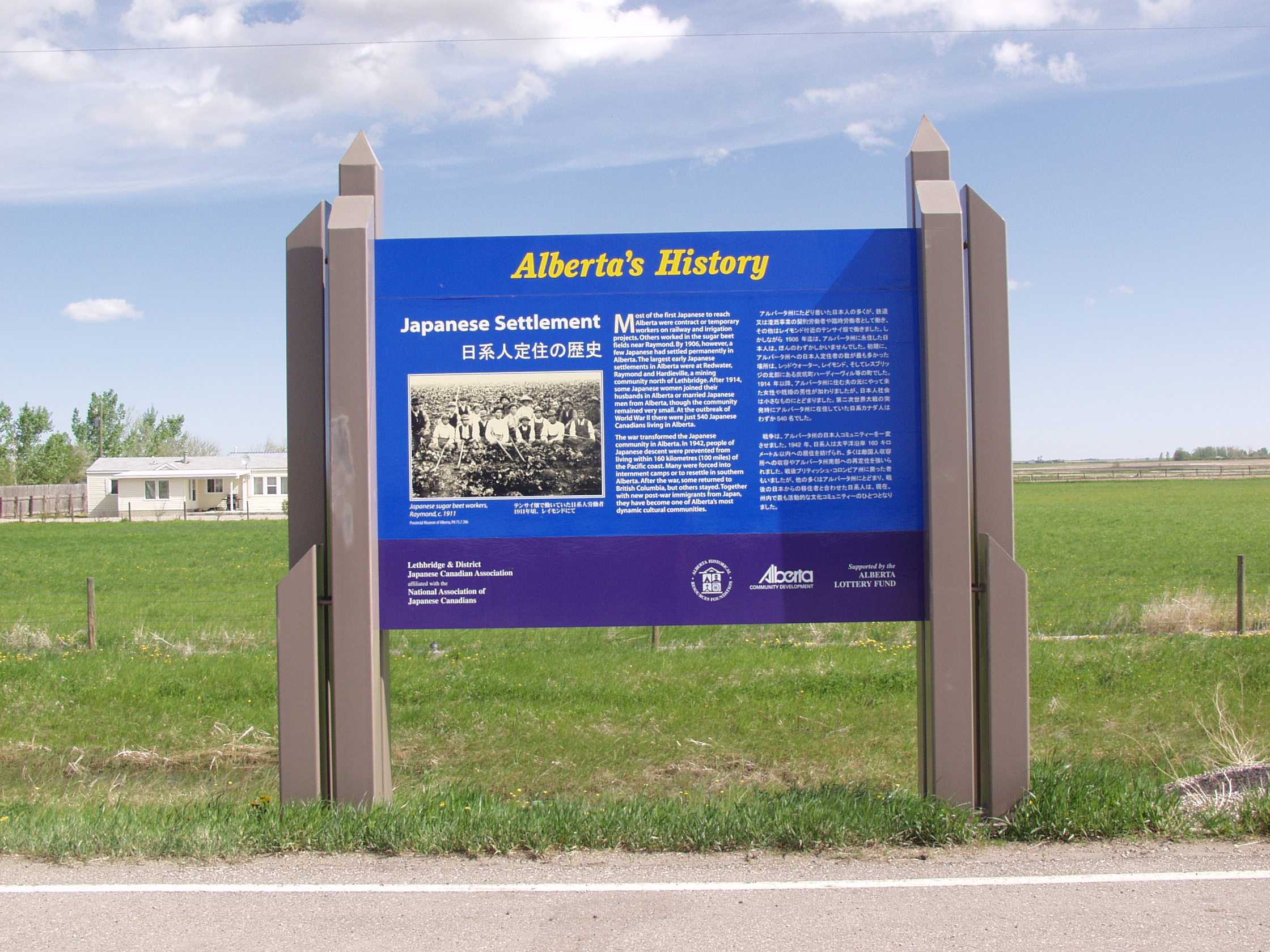
You have all probably seen them – large blue heritage markers located at highway rest areas or points of interest throughout Alberta. These interpretive signs tell of Alberta’s rich heritage. Come, travel Alberta and read a featured heritage marker:

Japanese Settlement

Most of the first Japanese to reach Alberta were contract or temporary workers on railway and irrigation projects. Others worked in the sugar beet fields near Raymond. By 1906, however, a few Japanese had settled permanently in Alberta. The largest early Japanese settlements in Alberta were at Redwater, Raymond and Hardieville, a mining community north of Lethbridge. After 1914, some Japanese women joined their husbands in Alberta, though the community remained very small. At the outbreak of World War II there were just 540 Japanese Canadians living in Alberta.

The war transformed the Japanese community in Alberta. In 1942, people of Japanese descent were prevented from living within 160 kilometers (100 miles) of the Pacific coast. Many were forced into internment camps or to resettle in southern Alberta. After the war, some returned to British Columbia, but others stayed. Together with new post-war immigrants from Japan, they have become one of Alberta’s most dynamic cultural communities.

This heritage marker is located west of Raymond on the north side of Highway 52, 1.1km west of Highway 844.

If visiting Raymond you might like to also check out the Raymond Buddhist Church. It is a Provincial Historic Resource listed on the Alberta Register of Historic Places.

The ABC’s of Heritage Conservation (Part 2 of 3)


If Part 1 left you confused but less bemused hopefully the terms below will continue to explain the difference between some of our key terms. 

The Standards and Guidelines for the Conservation of Historic Places in Canada provides direction on how to conserve historic places. But what exactly is conservation and how does it differ from all the other “–tion” words related to historic places?  

  • Intervention:  Any action, other than demolition or destruction, that results in a physical change to an element of a historic place. 
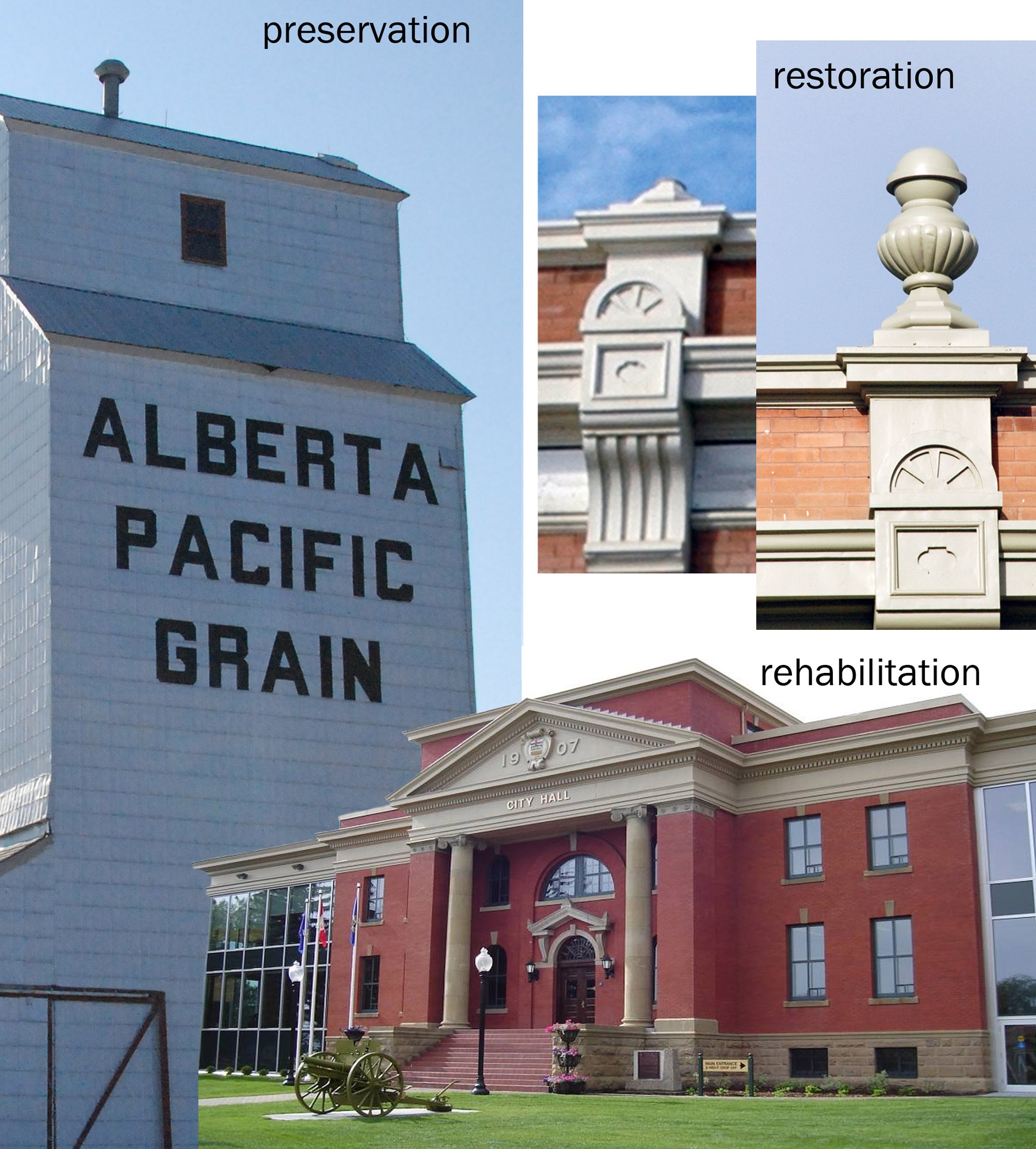
  • Conservation:  All actions or processes that are aimed at safeguarding the character-defining elements of a historic place so as to retain its heritage value and extend its physical life. This may involve “Preservation,” “Rehabilitation,” “Restoration,” or a combination of these actions or processes. 
  • Preservation:  The action or process of protecting, maintaining, and/or stabilizing the existing materials, form, and integrity of a historic place or of an individual component, while protecting its heritage value. 
  • Rehabilitation:  The action or process of making possible a continuing or compatible contemporary use of a historic place or an individual component, while protecting its heritage value. 
  • Restoration:  The action or process of accurately revealing, recovering or representing the state of a historic place or of an individual component, as it appeared at a particular period in its history, while protecting its heritage value. 

To learn more about the above terms or to read about additional conservation terms, please review the Standards and Guidelines for the Conservation of Historic Places in Canada. The Glossary section of the Municipal Heritage Partnership Program website is also a great resource. 

Written by: Brenda Manweiler, Municipal Heritage Services Officer (with definitions from the Standards and Guidelines).

MHPP comes to Drumheller

  
The Town of Drumheller spans the banks of the Red Deer River north-east of Calgary in the Canadian Badlands. You probably know Drumheller as the home of the Royal Tyrrell Museum, but it should be famous for more than fossils. Like all of Alberta’s communities, places throughout Drumheller reflect its unique history. In Drumheller these places show us Drumheller’s evolution from a ranching town to a regional service centre and as the site of over 130 coal mines. 

The Municipal Heritage Partnership Program (MHPP) recently trained the Drumheller Heritage Steering Committee appointed by Town Council. This is the first step MHPP takes when helping a municipality evaluate local historic places.    

Over the next several months, the committee will develop a context paper defining the people, groups and events that Drumheller feels contributed to its development. The next step will be to identify sites in Drumheller that reflect these influences. Hopefully, many of these sites will have “heritage integrity”—that is, the sites must have enough historic material to reflect the reasons why they are important to Drumheller. If they do, a Statement of Significance will be written for each site.

The Statement of Significance explains why the site is valued and what about it must be conserved for it to remain historic. The statements will help Drumheller decide how best to preserve locally significant historic places.   
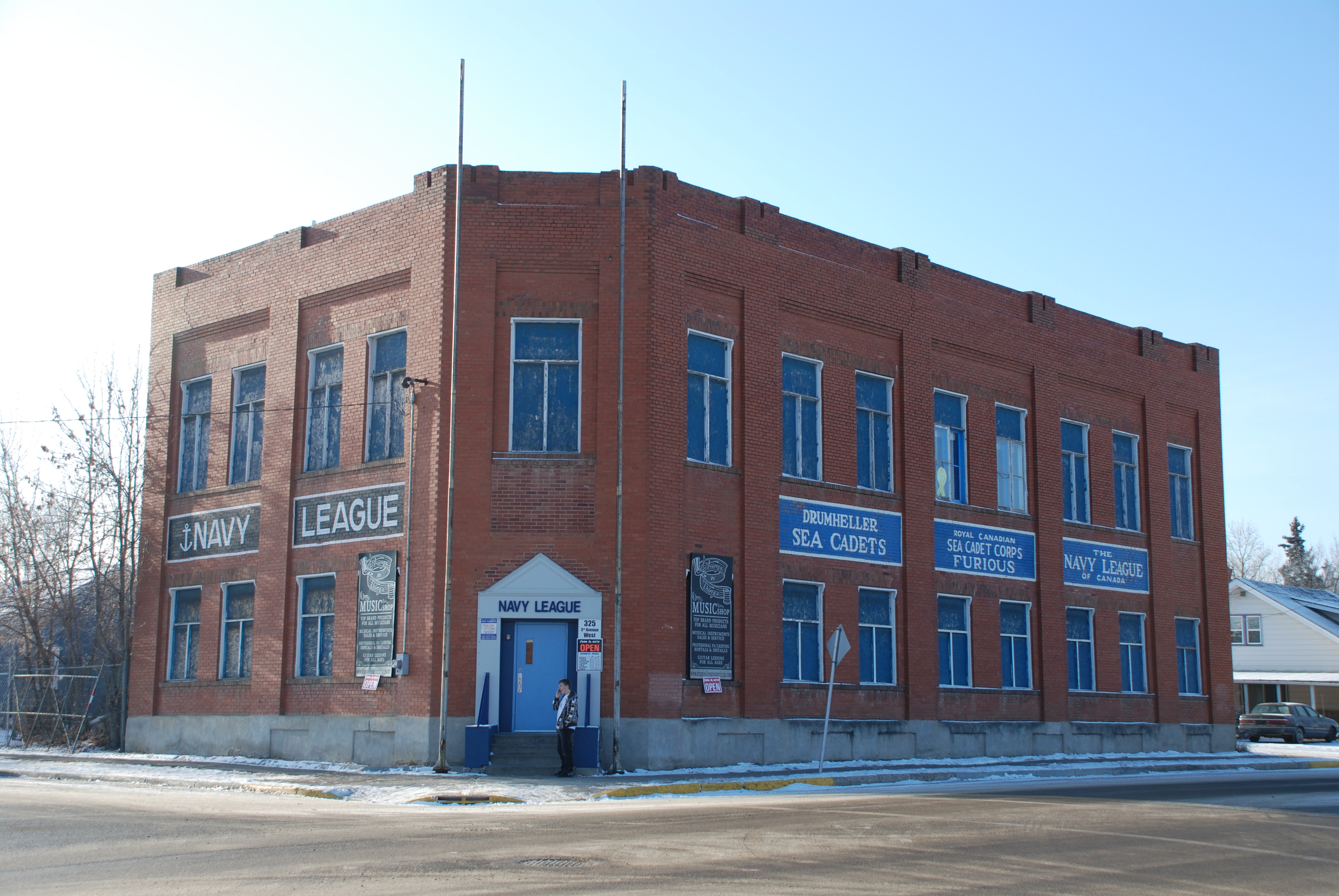
The Navy League building may be one of the sites evaluated in the Town of Drumheller's Municipal Heritage Inventory project.

If you would like to learn more about conducting a Municipal Heritage Inventory, please read the Evaluating Historic Places manual found on the MHPP website. If you would like to discuss options please contact MHPP staff.

  
Written by: Michael Thome, Municipal Heritage Services Officer  


The ABC’s of Heritage Conservation (Part 1 of 3)


The words of our trade can confuse and bemuse – below is a brief glossary of key terms designed to clarify and inform. 

Statements of Significance are used to understand how historic places should be conserved after a designating authority (i.e., a municipality – City, Town, Village or Municipal District, or the Government of Alberta) designates a place as a Municipal Historic Resource or a Provincial Historic Resource. 

  • Historic place:  A structure, building, group of buildings, district, landscape, archaeological site or other place that has been formally recognized for its heritage value. 
  • Statement of Significance (SoS):  A statement that briefly describes the historic place, identifies the heritage value or values associated with the place and lists the corresponding character-defining elements that must be conserved. 
  • Heritage value:  The aesthetic, historic, scientific, cultural, social or spiritual importance or significance for past, present or future generations. The heritage value of an historic place is embodied in its character-defining elements. 
  • Character-defining elements:  The materials, forms, location, spatial configurations and cultural associations or meanings that contribute to the heritage value of an historic place, which must be retained in order to preserve its heritage value. 

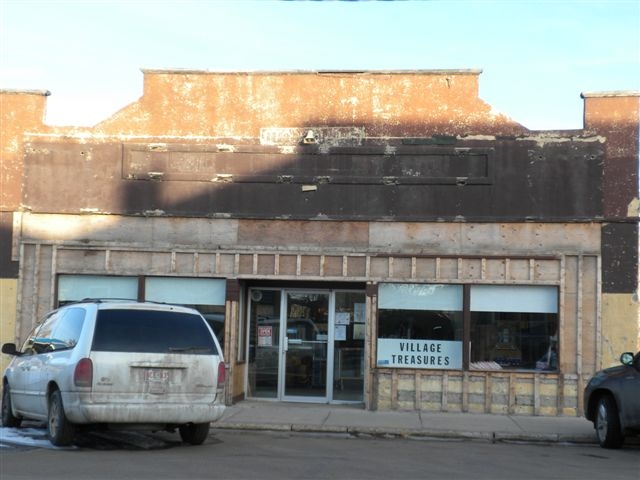
Village Treasures, in the Village of Mannville, is an example of a historic place. In January 2010 the Village designated it a Municipal Historic Resource. To read the Statement of Significance click here.

To learn more about the above terms or to read about additional conservation terms, please review the Standards and Guidelines for the Conservation of Historic Places in Canada. The Glossary section of the Municipal Heritage Partnership Program website is also a great resource. 

Written by: Brenda Manweiler, Municipal Heritage Services Officer (with definitions from the Standards and Guidelines).


Heritage Training Day for City of Medicine Hat


The Municipal Heritage Partnership Program (MHPP) provided a training session for the City of Medicine Hat’s Heritage Resources Committee on Friday, March 18, 2011. The meeting took place at the Esplanade Arts & Heritage Centre in downtown Medicine Hat, and focused on expanding the Committee’s capacity to evaluate the City’s places of heritage interest. Matthew Francis, Manager of Municipal Heritage Services for Alberta Culture and Community Spirit, presented on “Values-Based approaches to Heritage Resource Management,” as well as on “Understanding and Using Statements of Significance.” Case studies of four potentially significant places in Medicine Hat were explored during the workshop.

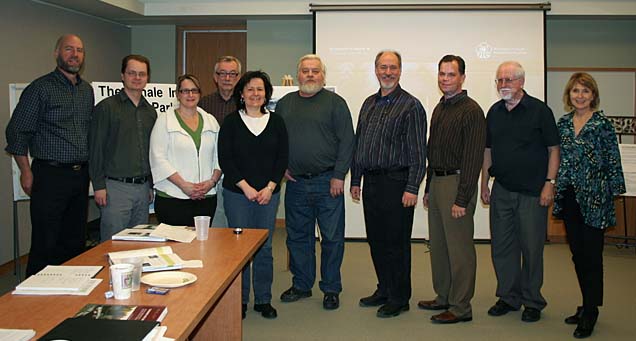
City of Medicine Hat Heritage Advisory Committee

Pictured from Left to Right:  Malcolm Sissons, Chair; Philip Pype, Archivist, Staff Resource; Kathy Eden, Heritage Assistant, Staff Resource; George Webb, Vice-Chair; Jeanie Gartly, Planning Superintendent (Policy & Heritage) Staff Resource; Dennis Baresco, Member; Barry Finkelman, Ex-Officio Advisor; Mark Dumanowski, Member; Earl Morris, Member; Carol Beatty, Cultural Development Manager, Staff Resource; Andrea McIntosh, Member (not in photo); Alderman Graham Kelly, City Council Representative (not in photo).

Formed in 2009 by Medicine Hat City Council to advise on issues relating to heritage conservation, the Committee has enthusiastically embraced its task. Already, the Committee has provided valuable advice relating to the 2010 designation of Medicine Hat’s first Municipal Historic Resource – the Hargrave-Sissons Block. Heritage Advisory groups like this are being developed by municipalities all across Alberta, and MHPP staff are available to provide orientation and training to acquaint communities with “best practices” in heritage conservation.

For more information on establishing or training municipal Heritage Advisory groups, please contact Matthew Francis, Manager of Municipal Heritage Services at (780) 438-9502 or matthew.francis@gov.ab.ca.

Diverse Sites Tell Distinct Stories of Alberta’s History


Three sites from Alberta’s past – one that precedes the railway, one that was made possible by the railway and one that made the railway run – were recently designated as Provincial Historic Resources for their historical and architectural significance.

The McDonald Stopping House, a pre-railway lodging place in Smoky Lake County.

The Red Brick School, an imposing structure in Didsbury, built to accommodate the railway-fuelled population boom before World War One.

The West Canadian Collieries Mine Site in the Municipality of Crowsnest Pass, which sold virtually all of its 13 million tonnes of coal to the Canadian Pacific Railway.


Click on the above links to read the sites’ Statements of Significance on the Alberta Register of Historic Places. Alberta currently has over 330 Provincial Historic Resources.  These sites embody the richness and variety of our province’s history and include medicine wheels, tipi rings, fur trading and mounted police posts, coal mines, farmsteads, ranches, railway stations, grain elevators, churches, schools, government offices, commercial blocks and private residences.   

For more information on Alberta’s Provincial Historic Resource Designation Program, click here.

Written by: Matthew Wangler, Manager of Historic Places Research and Designation Program

Where do all those Place Names come from?


Part 1: Geographical Naming in Canada 

The geographical names we are familiar with today have come from many sources. Some are aboriginal names, but most are names that were given to features by explorers, fur traders, land surveyors, settlers and government officials. Many names throughout North America, particularly the western regions, developed on an almost ad hoc basis, with no overall guiding framework. Many features soon came to have numerous names and many different spellings and variations. Governments began to see the importance of establishing guidelines to ensure that consistent and reliable maps could be produced.

Oddly, the official naming of geographical features in Canada began in the United States with the establishment of the United States Board on Geographic Names in 1890. The board began making naming decisions for features located in Canada. As the names adopted by American government officials were accepted by other countries, Canadian government officials saw the need to exert Canada’s sovereignty over place names within its territories. In 1897, the Geographic Board of Canada (GBC) was established and given the authority to make naming decisions for geographical features within Canada. This board would go through periodic name changes – to the Canadian Board on Geographic Names in 1948, the Canadian Permanent Committee on Geographical Names in 1961, and the Geographical Names Board of Canada in 2001.
Starting in 1897, the federal government held complete authority over naming decisions in Canada. As years passed, the provinces began to gradually play a larger role in these decisions. In 1899, the existing seven provinces and the North West Territories were permitted to appoint a representative to the GBC. These provincial and territorial representatives could present the opinions of their respective jurisdictions on the appropriateness and spelling of names. In 1961, jurisdiction over naming was almost completely transferred to the provinces, but the federal government retained control over naming on federally controlled lands – National Parks, Indian reserves, military bases and in the territories. In 1979, geographical naming on federal lands became joint decisions between the province and the relevant federal department or agency. The territories did not gain the authority to name their own geographical features until 1984.

Today each province and territory has the authority to make its own geographical naming decisions. The Geographical Names Board of Canada (GNBC) still exists, but its mandate has changed. Today it serves mainly as a supporting body that aids the provincial and territorial programs. It does so by serving as a liaison between the provincial programs and federal departments, it co-ordinates policy regarding nomenclature and procedures, it advises on research, it promotes the use of official names through information-sharing, it represents Canada at international naming conferences and on naming bodies, such as the United Nations Group of Experts on Geographical Names and it maintains the Canadian Geographical Names Database, which is a registry of all official geographical names in Canada.

To be continued with “Part 2: Geographical Naming in Alberta.”

Written by: Ron Kelland, Historic Places Research Officer and Geographical Names Program Coordinator


The Power of QR Codes


Most people interested in historic places enjoy learning about site history. For instance, the public may like to learn about detailed historical information, heritage values and information pertaining to site location. Throughout Alberta (and listed on the Alberta Register of Historic Places), there are 339 Provincial Historic Resources, two Provincial Historic Areas, 211 Registered Historic Resources and approximately 157 Municipal Historic Resources. How could information about these sites be shared with the public? 

What are QR Codes? 

The emergence of small adaptable square bar codes called QR codes could be an option. QR (Quick Response) codes are funny looking square bar codes that can be scanned from your cell phone’s camera, provided your phone is enabled with decoding software. Each code can be embedded with all kinds of information including text, URLs or other data. 

QR Code (bottom right-hand corner) featured on a Government of Alberta advertisement.

My first experience with QR codes was three years ago when I participated in an urban race in Edmonton. The race was part scavenger hunt and part puzzle solving, which largely involved finding particular locations by solving riddles about Edmonton and completing certain tasks. A portion of the race involved using your cell phone to find QR Codes.  Since the race, I have noticed a gradual increase in the use of QR codes. They are in advertisements and located on the packaging of various consumer products. 

The Japanese, creators of the QR code, wanted a way to embed content that could be quickly decoded. Created in 1994, the Japanese have integrated the QR code into their everyday life. In a place so densely populated, where lack of space is an issue, the QR code allows for much more information to be available to those who want it. Although QR codes are most commonly used for reading a URL and accessing a website, QR codes in Japan are also being used in unique ways. QR codes can be used to allow people to purchase items from cashless vending machines by scanning QR codes with their cell phones. 

Check out the QR Code for Ophelia Liew's email address.

QR Codes and Historic Places: 

Could QR codes be used to provide information on individual historic places, and also for walking tours, historic districts and areas? The compact size, the ease in generating new codes and the popularity of camera enabled cell phones are all factors that suggest the ease of using QR codes. It would be interesting to investigate if QR codes could be used as a new and effective medium for displaying and accessing information about Alberta’s historic places. 

Heritage Conservation Advisors would find this technology useful as we refer to two main conservation management tools on a daily basis: the Statement of Significance (SoS) and the Standards and Guidelines for the Conservation of Historic Places in Canada. Each designated historic resource in the province has a Statement of Significance, a one or two page document that outlines the site’s heritage values and character-defining elements. Anyone with an appropriate type of cell phone would have the ability to retrieve the Statement of Significance by being directed to the Alberta Register of Historic Places. 

Written by: Ophelia Liew, Heritage Conservation Advisor

Read about where we work! Check out the QR Code for Old St. Stephen's College's Statement of Significance.

Spring Forward!

We’ve changed the clocks, it’s warming up, and the annual crop of potholes is appearing. Spring must be just around the corner. If you’re itching to get out and enjoy the fresh air, why not add some heritage to your outing? Check out the PDFs of walking and driving tours on the Heritage Survey Programwebsite – from Coleman to Grande Prairie and places in between, there’s a whole bunch to choose from!