Editor’s note: The banner image above featuring James Hargrave family, Medicine Hat, Alberta ca. 1887-1888, is courtesy of the Glenbow Library and Archives Collection, Libraries and Cultural Resources Digital Collections, University of Calgary.
Author Julia Stanski is a scholar and recent MA History grad from the University of Alberta. Her research centers on western Canadian women’s history in the Victorian and Edwardian periods.
Written by: Julia Stanski
If you think about women’s history in relation to Alberta, the first thing that comes to mind is probably the Famous Five, a group of women whose activism earned Canadian women the legal status of “persons” permitted the rights and privileges of “qualified persons,” including the possibility of being appointed to the Senate. Emily Murphy, Nellie McClung, Louise McKinney: these are names that most Albertans have seen before, in social studies textbooks and on statues and parks. But today, I want to introduce you to another woman from Alberta’s past: Lillian Adkins.
She was not a famous author or speaker. There are no statues of her. But many Albertans can trace their roots to women like her. Lillian spent roughly five years of her youth working as a domestic servant in what became Edmonton.
Do you know a person or group in your community helping to support Alberta’s history and heritage? It could be a local historical society helping preserve a physical piece of local history; a researcher publishing a book or article; or a member of the community who’s shown long-term leadership and contribution to the preservation and presentation of Alberta’s history. If so, consider nominating them for a 2026 Heritage Award.
Presented by the Government of Alberta, the Heritage Awards recognize individuals, non-profit organizations, corporations, municipalities and First Nations and Metis settlements for their significant contributions to the protection, preservation and promotion of Alberta’s heritage. Heritage awards are presented every two years.
The Heritage Awards are divided into three categories:
Heritage Awareness Recognizes research, publications or public engagement projects that have deepened our understanding and promoted greater awareness of Alberta’s heritage.
Heritage Conservation Recognizes projects that demonstrate excellence in the protection and management of palaeontological and archaeological resources; conservation of a Provincial Historic Resource, Municipal Historic Resource or Indigenous Historic Place; or identification, protection and management of historic places
Outstanding Achievement Recognizes an individual’s or organization’s exemplary long-term leadership and contribution to the preservation and presentation of Alberta’s history.
Take a look at the information and fill out a nomination form. And to get a sense of the scope and range of nominations across the province, check out past winners of the Heritage Awards.
The nomination period begins March 1 and closes June 1.
Editor’s note: Learn more about the history and heritage of Black Albertans from the Royal Alberta Museum.
Written by: Michael Gourlie, Government Records Archivist, Provincial Archives of Alberta
Since the 1960s, the Provincial Archives of Alberta (PAA) has acquired kilometres of records, millions of photographs and thousands of hours of audiovisual recordings about the lives and activities of Albertans. While Alberta’s Black community is underrepresented among these archival holdings, it faces a similar challenge to other groups. For every famous individual whose life is documented in detail in numerous sources, there are dozens of other individuals who remain nameless and forgotten until someone researches their stories.
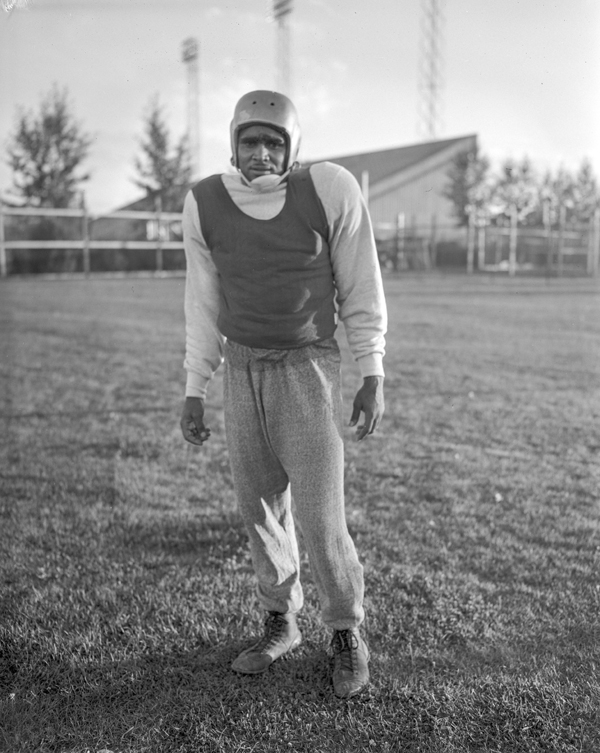
Among the famous individuals found in the PAA’s holdings is John Dee (Johnny) Bright. Born in Indiana in 1930, he attended Drake University on a track and field scholarship, which led to a remarkable collegiate football career marked by several National Collegiate Athletic Association (NCAA) records as well as a national profile. His senior year in 1951 was also notable when he was the target of a racially motivated assault on the playing field during a game with Oklahoma A&M University (now Oklahoma State University), an incident documented in a Pulitzer Prize winning series of photographs. While some on-field rules changed because of the incident, the opposing team and its university administration denied any wrongdoing for decades and only apologized for the incident in 2005.
File OS.1843: Johnny Bright, 1954. (Frank Oliver Studios fonds, PR1992.0261/1096, OS.1843). Source: Provincial Archives of Alberta.
He graduated from Drake University in 1952 with a Bachelor of Science in Education, specializing in physical education. He was the first pick chosen by the Philadelphia Eagles in the 1952 draft, but fearing his treatment in the National Football League, he chose to emigrate to Canada and play for the Calgary Stampeders. He was traded to Edmonton in 1954, where he primarily played offense. Bright set several Canadian Football League (CFL) records, helped the team win the Grey Cup in 1954, 1955 and 1956, and was named Edmonton Athlete of the Year in 1959.
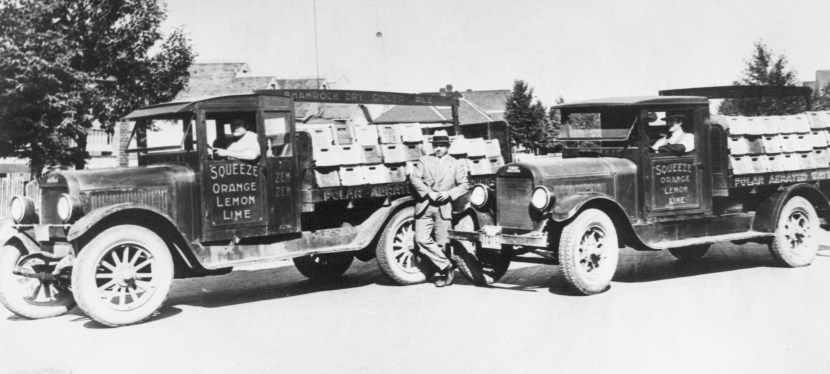
Editor’s note:The banner image above, courtesy of the Jewish Historical Society of Southern Alberta, depicts a polar delivery truck advertising its Squeeze and Shamrock Ginger Ale brands, 1928. Abe Pearlman is standing between the trucks.
Author Bruce Dawson holds a MA in History from the University of Saskatchewan and is presently the Manager of Historic Places Policy and Programs for the Ministry of Parks, Culture and Sport in Saskatchewan. He is also a long-time collector of soda pop memorabilia, with a particular interest in Polar Aerated Water Works and other bottlers from Calgary and Lethbridge.You can read the full version of Bruce’s article in Alberta History.
Written by: Bruce Dawson
Did you know that soft drink manufacturing in Alberta began over 135 years ago? Many of the early manufacturers were family-run businesses that developed a significant industry in the province while helping to shift the perception of soft drinks from being a medicinal or specialty product to being an indispensable item for the masses. A significant part of this story is Calgary’s Polar Aerated Water Works.
In 1914, William Denby and Gordon Goodison established a bottling plant at the corner of 11 Ave and 12 Street East. Their back cover advertisement on the 1914 Henderson’s Directory stated that they were a “manufacturer of all kinds of soft drinks and distilled waters.” By this time, soft drinks had transitioned from association with pharmacists and medical treatment to become a status symbol amongst the upper and middle class. Calgary had at least three soft drink manufacturers already, led by the Calgary Brewing and Malting Company, which had been producing soft drinks for over 20 years. The owners named their new company Polar Aerated Water Works and, by May of 1915, registered a patent for their logo, described as, “a representation of a polar bear on a float of ice with icebergs and setting.” The company used this logo for the remainder of its history. Denby left the firm in 1915 and Goodison stayed on as sole owner, with several family members working for the company over the next decade.
Written by: Ronald Kelland, Geographical Place Names Coordinator
The Dr. McMillan Residence, a somewhat unprepossessing yet significant home in Claresholm, has recently been designated as a Provincial Historic resource and is now listed on the Alberta Register of Historic Places.
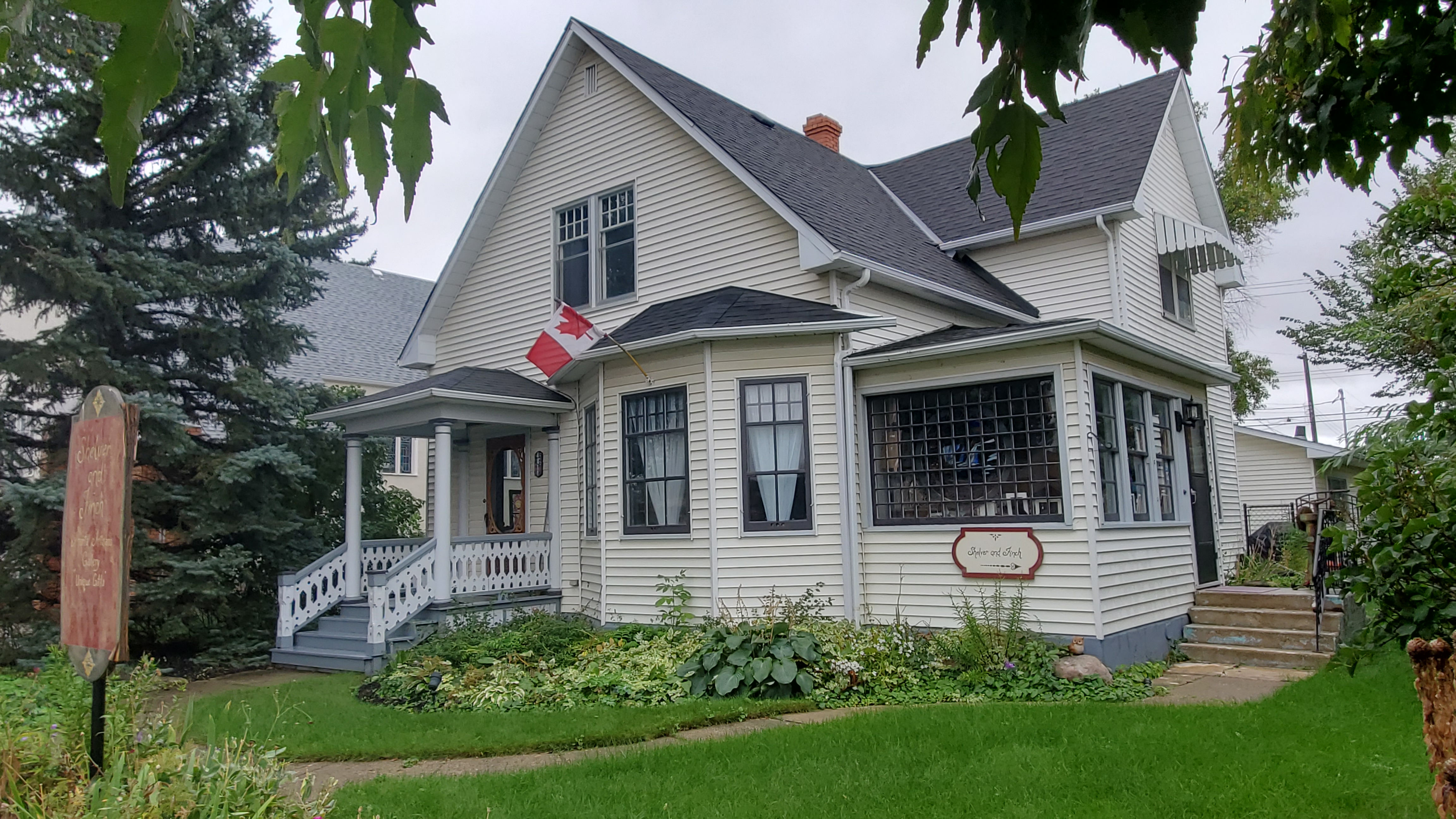
View of the Dr. McMillan Residence from the south, showing the main, residential entrance and the secondary, clinic entrance. Source: Historic Resources Management, Alberta Arts, Culture and Status of Women, 2024.
On Second Street West, at the western fringes of Claresholm’s downtown district, beside a church and amongst several more recent commercial buildings, stands the Dr. McMillan Residence. The house has provincial heritage significance for its association with the provision of medical services in Alberta and for its design, being a combination of private, residential space and professional, medical clinic space.
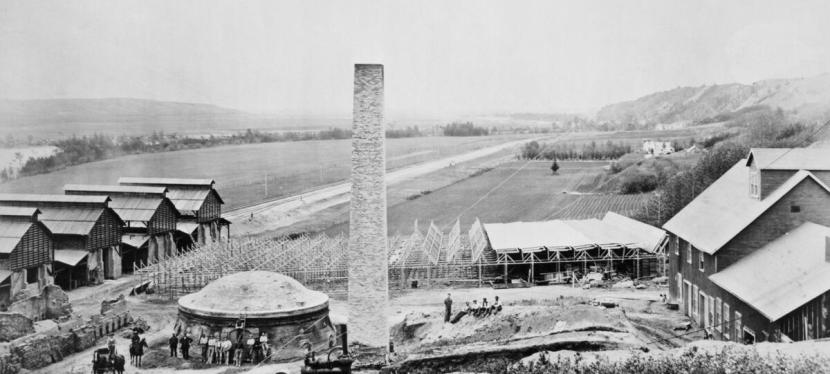
Editor’s note: The banner image above is the Calgary Pressed Brick and Sandstone Company plant, Brickburn, Alberta (ca. 1916-1920 [CU1136164] by unknown). Image courtesy of Glenbow Library and Archives Collection, Libraries and Cultural Resources Digital Collections, University of Calgary.
Written by: Sam Judson and Lindsay Amundsen-Meyer, Department of Anthropology and Archaeology, University of Calgary
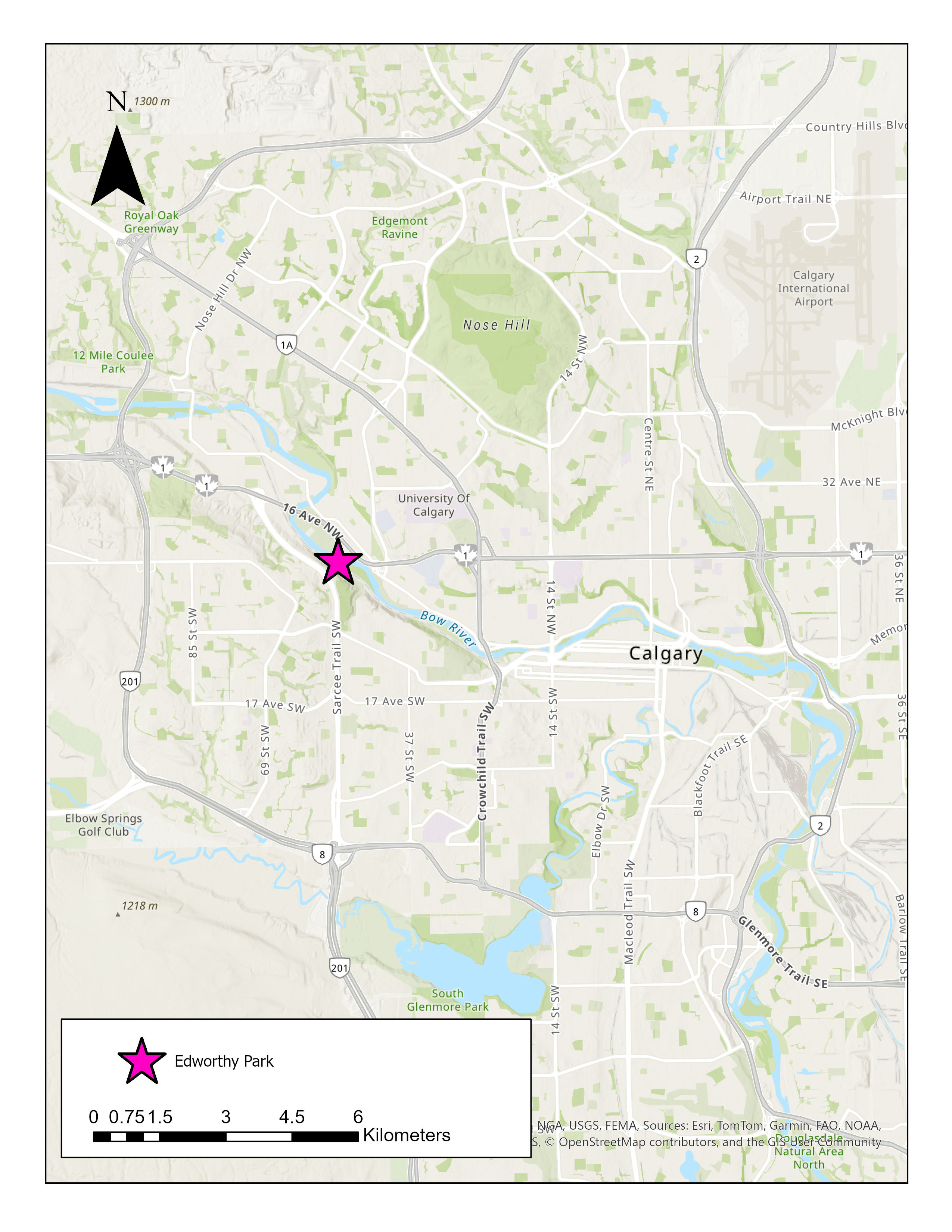
To most Calgarians, Edworthy Park is nothing more than a city park with a large and popular off-leash area for dogs, rocky ‘beaches’ along the Bow River and meandering biking and walking trails that folks enjoy throughout the year. What most users of the park do not realize is that Edworthy Park has a remarkable history: numerous pre-contact Indigenous archaeological sites within the park; the presence of a Métis winter camp in the late 19th century; the eventual establishment of one of the Calgary area’s earliest homesteads by Thomas Edworthy; and Edworthy’s operation of a sandstone quarry on the land in the early 20th century. There was even a 20th century brick factory within the park and its associated village (Brickburn) to the west. As you’ll learn, the students and staff of the University of Calgary archaeology field school and Public Archaeology Program discovered these many layers of history are present across much more of Edworthy Park than previously known.
Location of Edworthy Park, within the City of Calgary. Source: Lindsay Amundsen-Meyer.
Over the past year, I’ve been volunteering with the Labour & Industry curatorial team at the Royal Alberta Museum (RAM). What began as a project to help process recent architectural acquisitions—related to Wallbridge & Imrie and Doris Newland Tanner—has gradually expanded into something much broader. I’ve since been fortunate to assist with other newly acquired collections, each object offering its own intriguing story and mystery to unravel.
In particular, individual pieces have caught my attention not only for their craftsmanship but for the stories embedded in them. Each one—whether an architectural tool, scale model or illustration—becomes a small but meaningful window into Alberta’s working and community past.
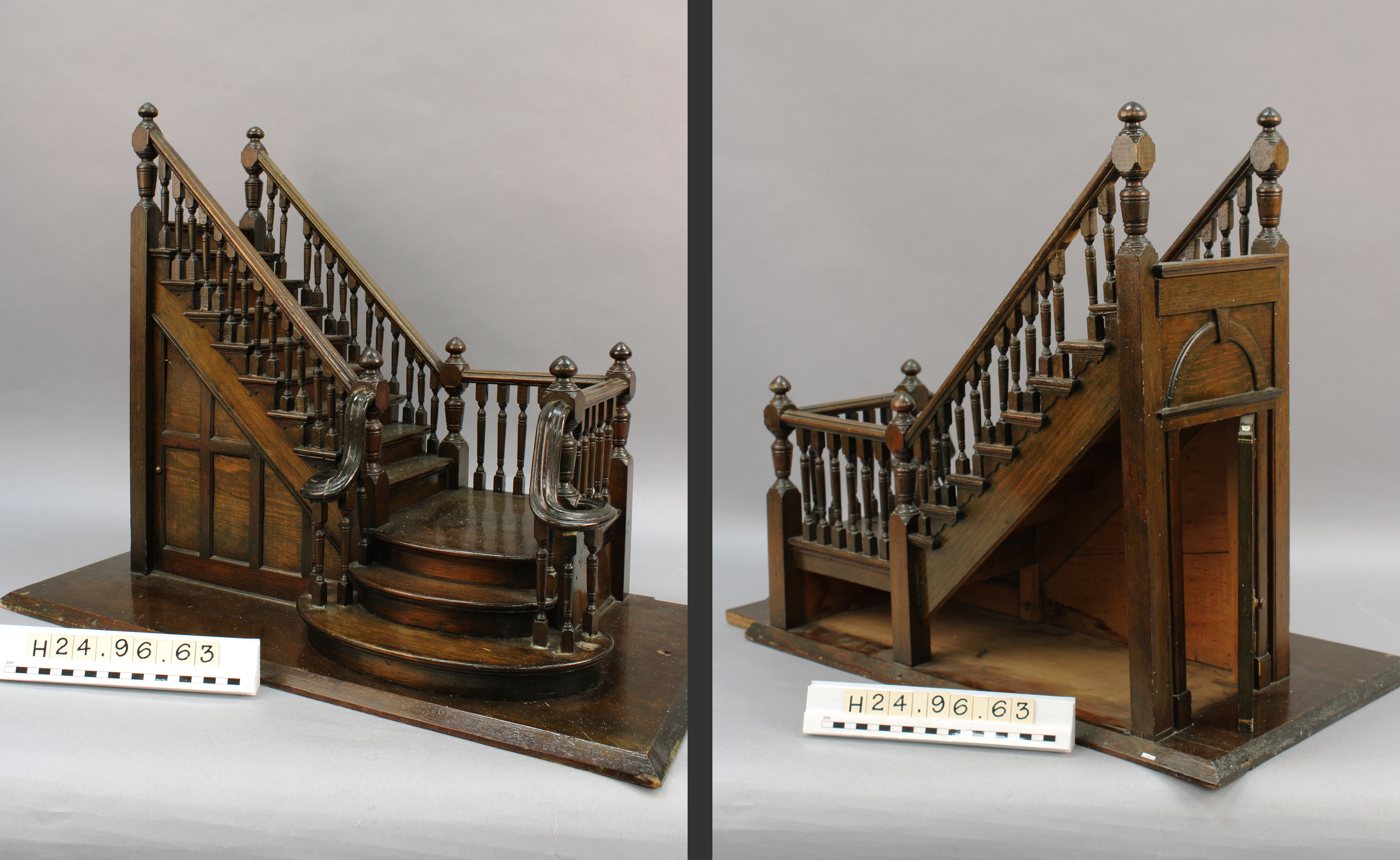
Among the recent acquisitions at the RAM was a particularly appealing object: a 100+ year old scale model of a staircase from the Town of Vegreville. The model was obtained by the RAM in 2024 after the Vegreville Regional Museum ultimately closed its doors.
Curators from the RAM’s history programs—including Labour & Industry, Daily Life & Leisure and Military & Government History—travelled to Vegreville to identify and help preserve objects of historical value within the RAM’s permanent collection. The staircase model was among those selected and is now part of the Labour & Industry collection.
This remarkable scale model is constructed primarily of wood and mounted on a plywood base. It was most likely built to a scale of 1″: 1′ (i.e., one inch equals one foot). Though small compared to its full-scale counterpart, it’s meticulously crafted—complete with turned balusters, a square landing and even a functioning door with tiny hinges and a wooden knob. The design reflects the restrained character of early twentieth-century domestic interiors, where craftsmanship and proportion met simple, elegant ornamentation. From the graceful curve of the lower steps and railing to the careful shaping of each newel post, every element has been thoughtfully made, likely by hand woodworking tools, and with the aid of early woodworking machines.
Despite being over a century old, the model has survived in remarkably good condition. A few balusters are missing and there are signs of minor repairs, but significantly, the overall integrity of the piece remains. The varnished surfaces retain their warmth, while the hidden undersides reveal the maker’s practical side—unfinished wood, tool marks, and the occasional nail or screw added probably long after its creation. Together, these details hint at a life of use and care, and a level of craftsmanship that continues to impress.
Front (left) and Back (right) Three-quarter Views of a 100-year-old Miniature Wooden Staircase. Source: Royal Alberta Museum, H24.96.63.
Editor’s note:September 30 is the National Day for Truth and Reconciliation and Orange Shirt Day.Reading residential school histories can be a painful process. If reading this is causing pain or bringing back distressing memories, please call the Indian Residential Schools Crisis Line at 1-866-925-4419. The Crisis Line is available 24 hours a day and can also provide information on other health supports provided by the Health Canada Indian Residential Schools Resolution Health Support Program.
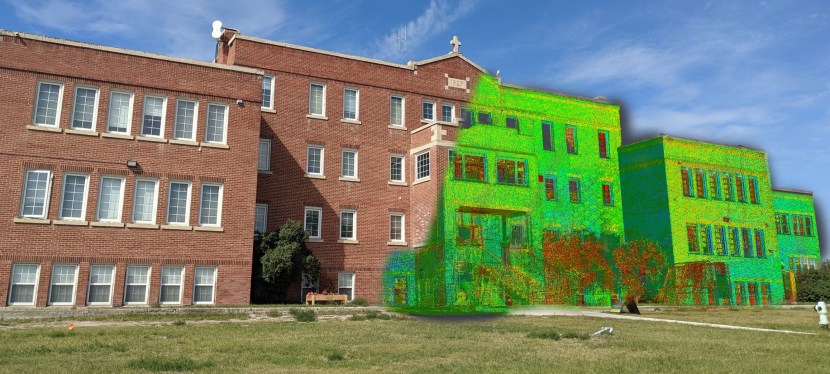
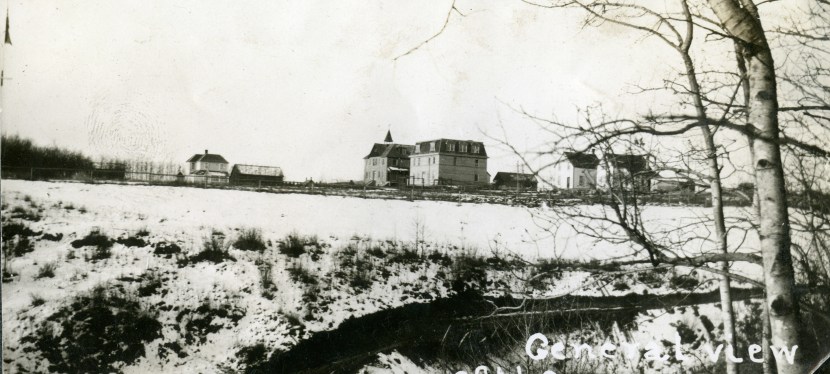
The banner image above is “General view of the I.I. School.” Date unknown. Source: City of Red Deer Archives, P10890.
Written by: Laura Golebiowski (Indigenous Consultation Adviser) in collaboration with Whitecap Dakota First Nation.
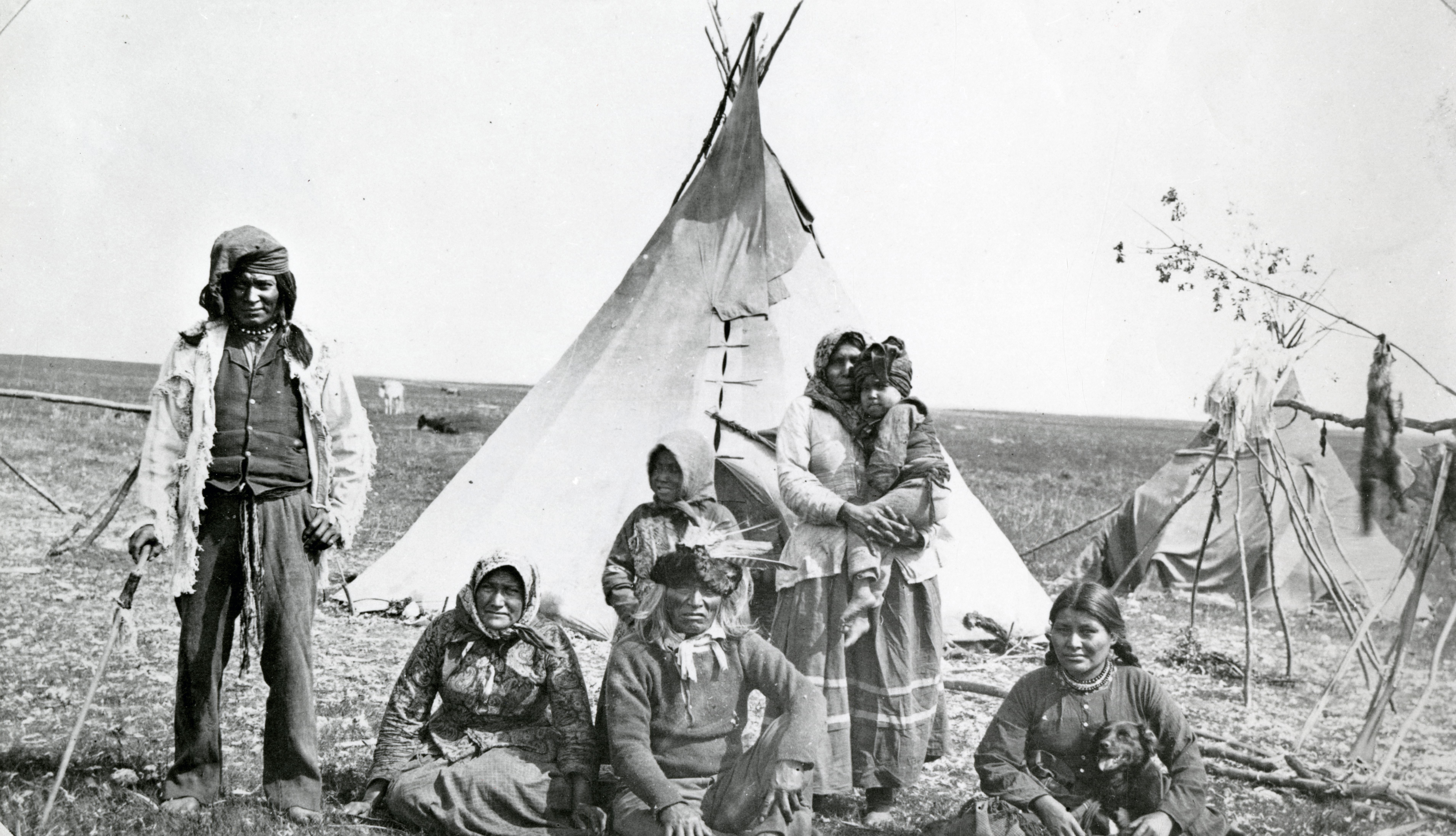
In the late 1880s, a group of Dakota Oyate led by Chief Whitecap were making their home along the northern extent of their territory. They settled near Mni Duza—the South Saskatchewan River—on a landscape known as “Moose Woods”: rich with water, wood, wildlife and plants for sustenance and ceremony.
Chief White Cap (seated centre) and members of his family, ca 1885. LH-5418, Saskatoon Public Library.
Written by: David Monteyne, Professor, School of Architecture, Planning and Landscape, University of Calgary
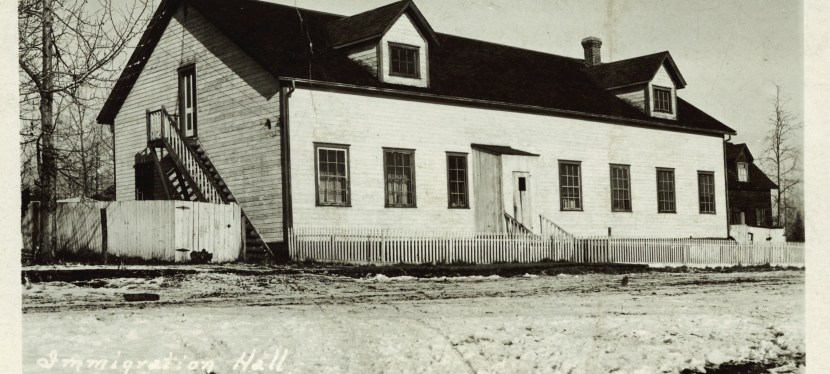
Between 1885 and 1930, the Dominion government built and operated about a dozen immigration halls in Alberta (and rented space for this purpose in a dozen more towns), from Lethbridge and Medicine Hat in the south to Grande Prairie and Peace River in the north. But what, exactly was an “immigration hall”?
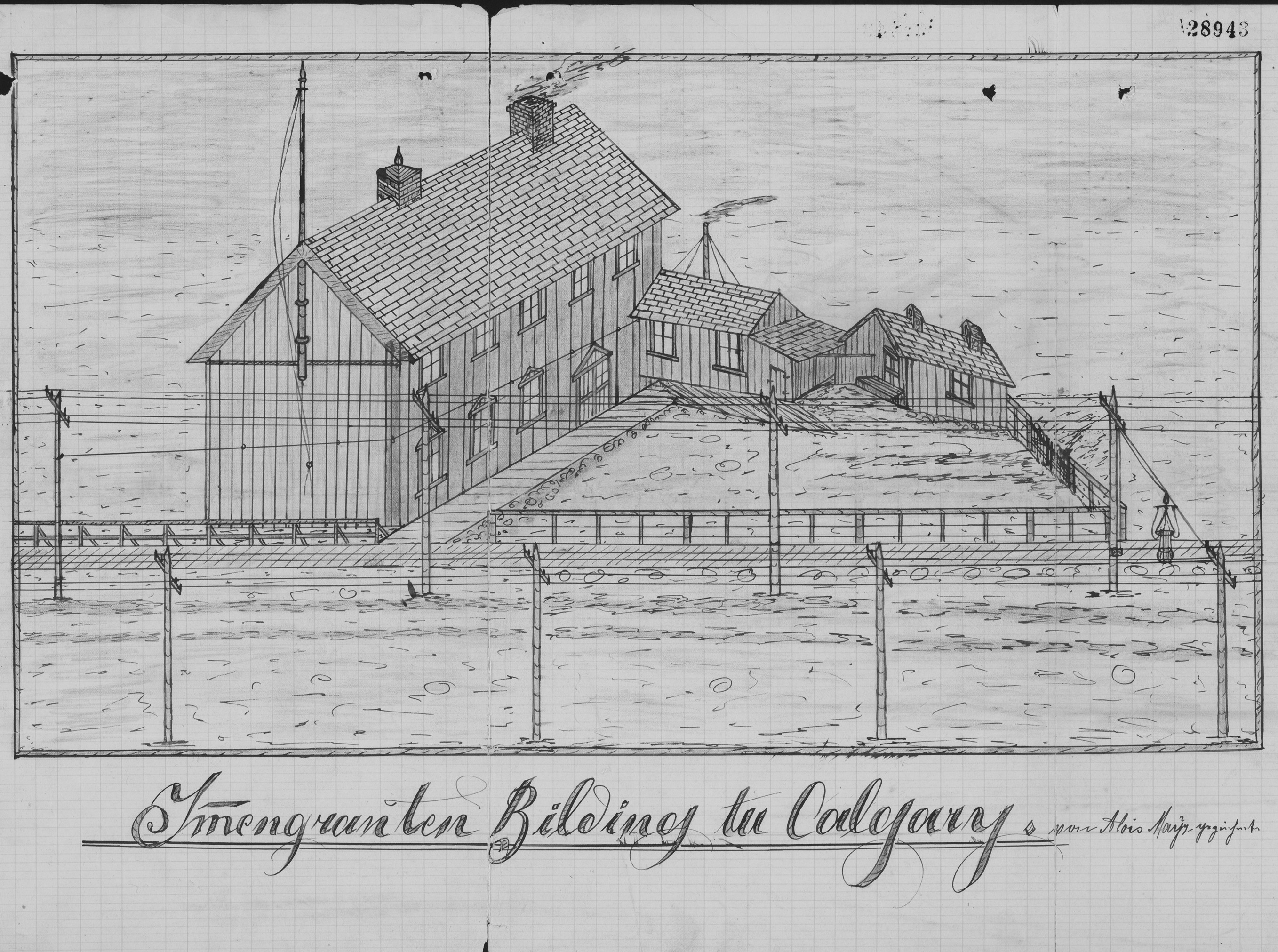
An immigration hall was a place where the federal immigration branch provided free accommodations as well as advice to new arrivals from Europe, the United States and even eastern Canada. These prairie immigration halls were part of a nationwide building program, described in my recent book, for which the federal Department of Public Works designed and built: pier buildings in ports like Quebec City and Halifax (Pier 21, now the Canadian Museum of Immigration); immigrant detention hospitals; and quarantine stations on both coasts. Of all of these, the immigration halls were the most numerically significant, with more than 50 buildings erected across the three prairie provinces. The immigration hall was a newly invented building type, unique to Canada.
An immigrant’s late-1890s sketch of the immigration hall at Calgary, which was built in 1885 and used until 1913. Source: Library and Archives Canada, Department of the Interior fonds, Immigration Branch, RG 76, volume 20, file 180, part 1.
Editor’s note: Alberta’s heritage sector and the Heritage Division of Arts Culture and Status of Women recently lost two dedicated and long-serving colleagues – former Historic Conservation Advisor Rino Basso and former historian and provincial archivist David Leonard.
Written by: Ronald Kelland, Geographical Names Program Coordinator and Fraser Shaw, Heritage Conservation Advisor
Rino Basso
Rino Basso was born at Nordegg, Alberta on July 22, 1946, to Pietro “Pete” Basso, a coal miner with significant carpentry skills and Barbara Basso (nee Sieben), who was a notable volunteer in her community and church and had some nursing training. The Basso family moved to Red Deer in 1947 where Pete Basso started Basso Construction and built houses. Being born in the historic mining community of Nordegg and having a carpenter and a homebuilder as a father may have set Rino on a career path in historic resources management from an early age.
Rino attended Red Deer Catholic Separate Schools, graduating from St. Thomas Aquinas High School in 1965 then enrolling in the Architectural Technology Program at the Northern Alberta Institute of Technology. In the early-1970s, Rino began working with the Government of Alberta as Senior Preservation Advisor in the Historic Sites Service and, as it is known today, Historic Resources Management. There is probably not a single Provincial Historic Resource designated between the 1970s and 2010s that has not seen his involvement. It seems like his name can be found on every file in Historic Resources Management’s records. Rino used to jovially remark that he had probably driven on every byway, stayed in every motel, eaten at every bakery and visited every city, town and village in the province from Edmonton and Calgary to the proverbial “Cucumber Corner,” his shorthand, all-inclusive term for the small communities and rural areas across the province whose history and heritage he dedicated so much of his career to preserving.
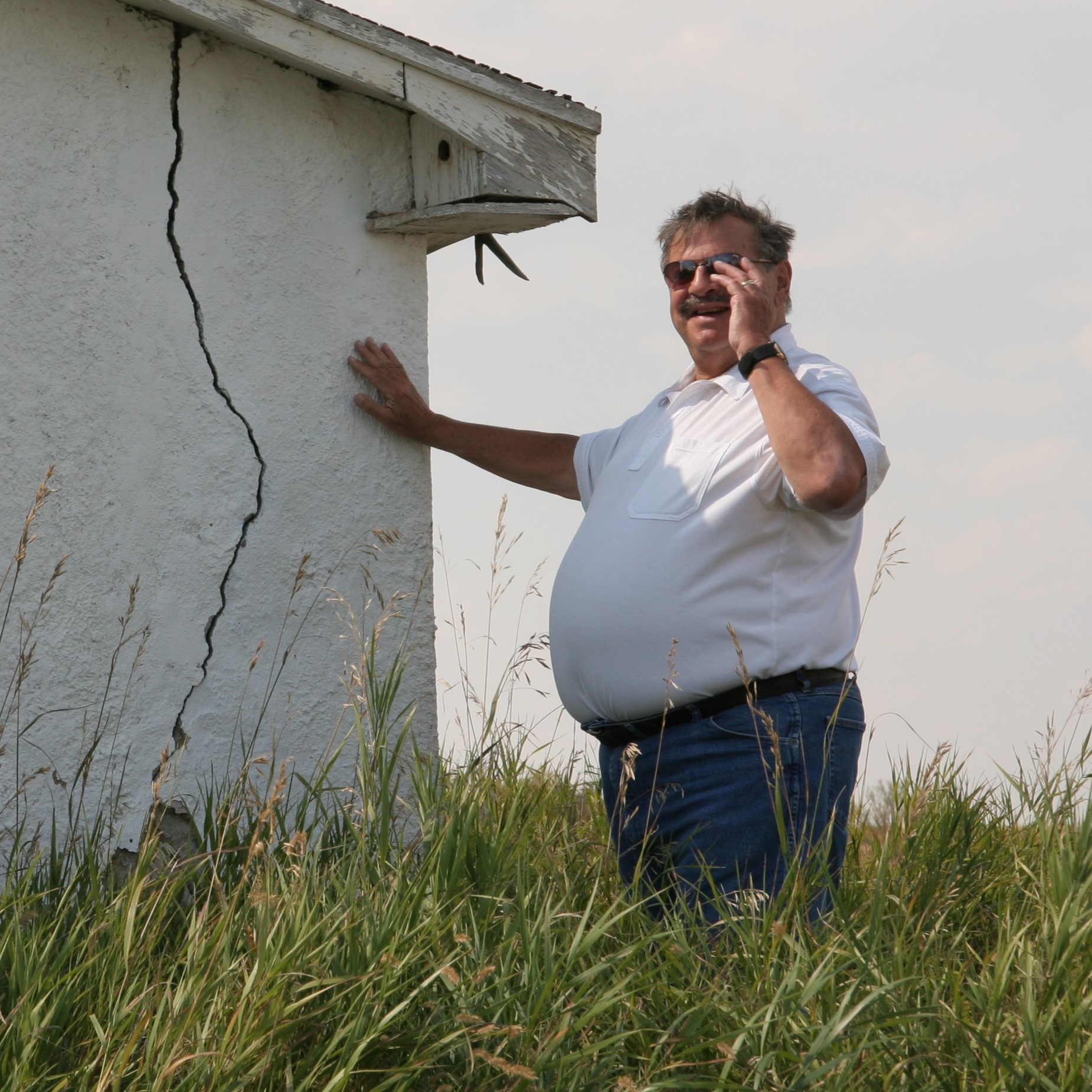
Rino was delighted to find that this structure, one of only two known extant, historic sod houses was still standing, 2013. Even after more than three decades working with historic places, he was enthralled when encountering a new site or building.



 RETROactive