Written by: Colby Parkkila, Historical Interpreter, Rutherford House Provincial Historic Site
Within the walls of Rutherford House, the home of Alberta’s first premier Alexander Cameron Rutherford, there are numerous artifacts that are displayed for public viewing. While some items receive plenty of attention, such as Mrs. Rutherford’s piano, Alexander’s bust of Prime Minister Wilfred Laurier, or Mrs. Rutherford’s china, there are many that receive considerably less attention. However, each of these items, big or small, are representative of stories and histories that are deeper and more important than they first appear.
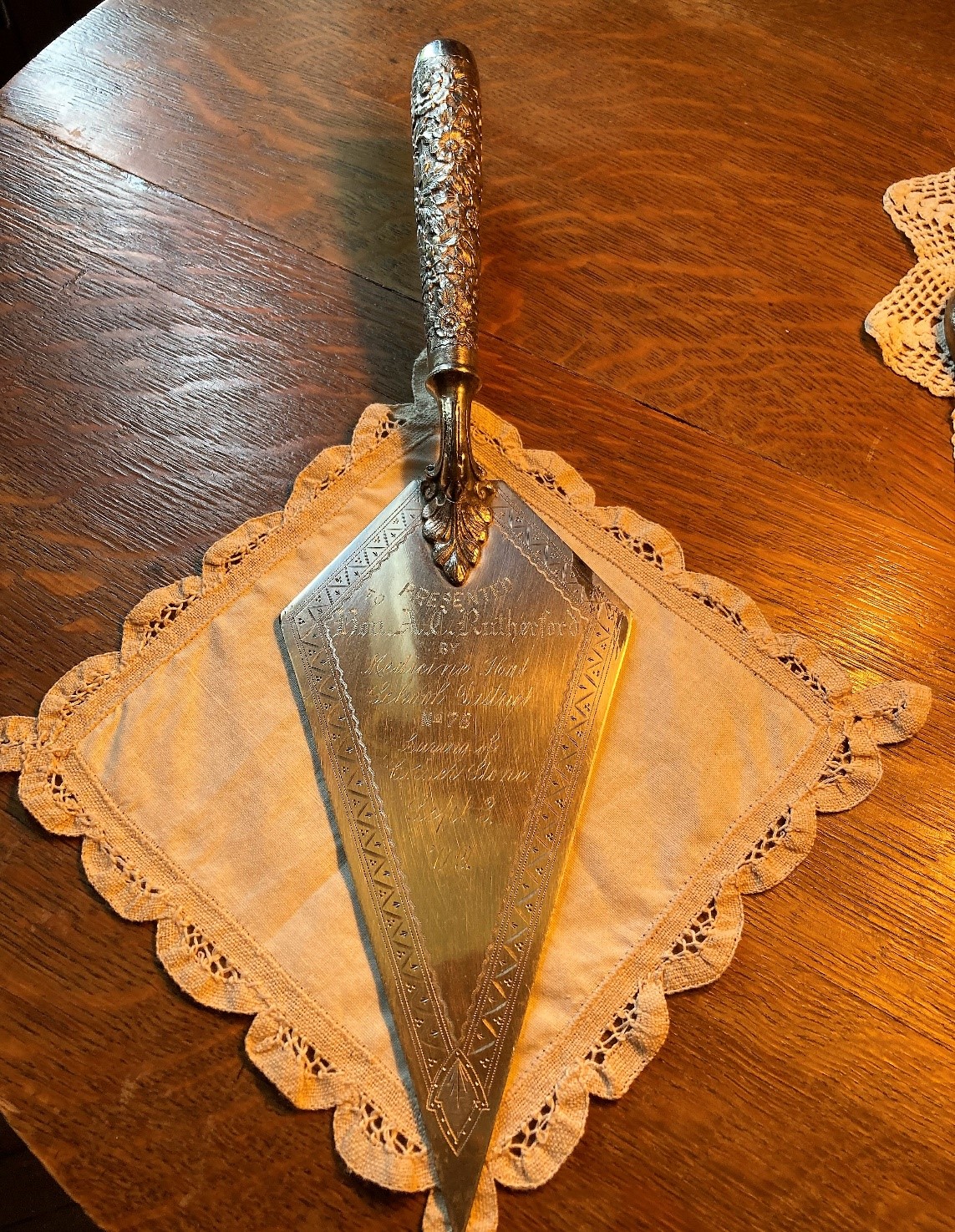
One of these often overlooked artifacts sits atop a nondescript doily on the second shelf of a side table in the library of Rutherford House – a silver-plated brick-laying trowel. Often missed simply because of its slightly obscured location, the trowel appears unassuming at first. After all a trowel is merely a working man’s implement. However, upon closer inspection more is revealed to the keen-eyed observer.
Trowel presented to Alexander Rutherford on September 3rd, 1909, in honour of the laying of the cornerstone for Alexandra School. Source: Rutherford House Provincial Historic Site.
Immediately noticeable is the trowel’s material. Unlike most other trowels, it is not made of wood and metal, but is silver-plated with ornate flowers carved into the handle and a decorative border added to its blade. Both elements suggest that the trowel is not meant for use in construction, but for display and commemorative purposes. Upon closer inspection, an inscription can also be found, reading “Presented to Hon. A. C. Rutherford by Medicine Hat School District No. 76. Laying of Corner Stone Sept 3. ‘09.” The inscription provides some valuable information regarding the provenance and the occasion during which Alexander received this trowel. However, it also raises additional questions: What was this school and why was Alexander present at the laying of its corner stone?
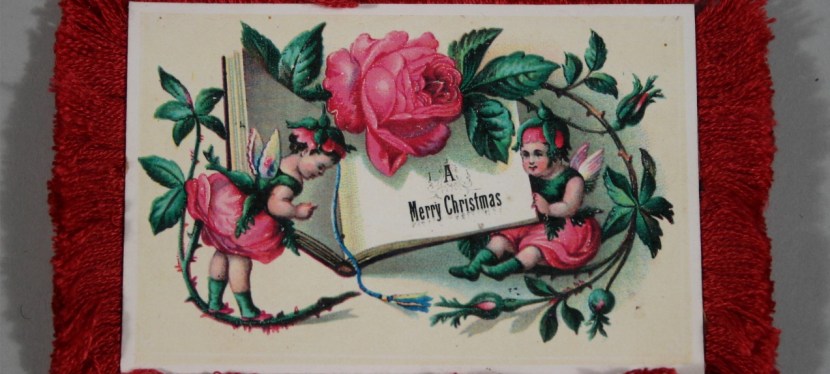
What makes your holiday season complete? Is it fruit cake, latkes or bannock? Lighting a menorah, Christmas tree or a kinara? How old or new are the traditions you participate in? Where did they originate?
The Beaver people who first inhabited the areas bordering the Peace River have been gathering at Dunvegan for thousands of years. Like other Indigenous peoples, before the arrival of the fur traders and missionaries, it’s possible they may have celebrated the Winter Solstice while camping in the area.
When Northwest Company fur traders arrived in 1805 and established Fort Dunvegan, they brought with them the customs of European Christians, particularly those of the Scots. You’ve probably heard of Kwanzaa, but have you ever heard of Hogmanay? In Scotland, Christmas was celebrated quietly, while Hogmanay or New Year’s Eve, was well…a party! Being as many fur traders originally hailed from Scotland, those traditions came with them over to what is now known as Canada.
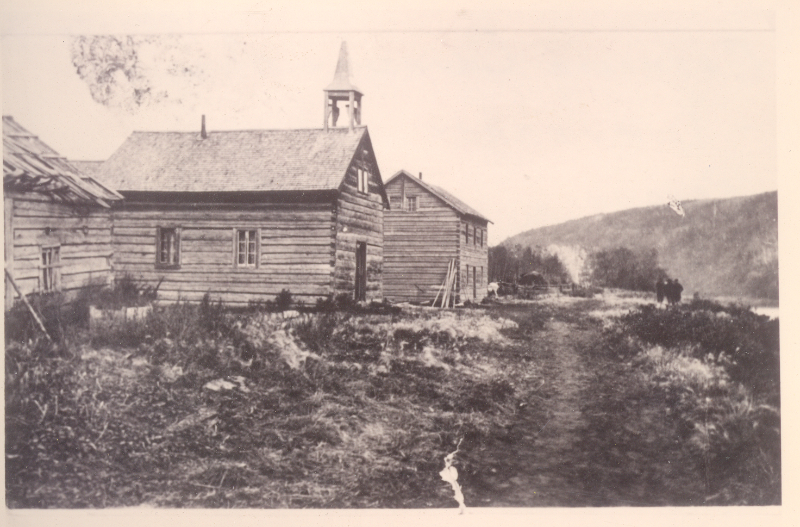
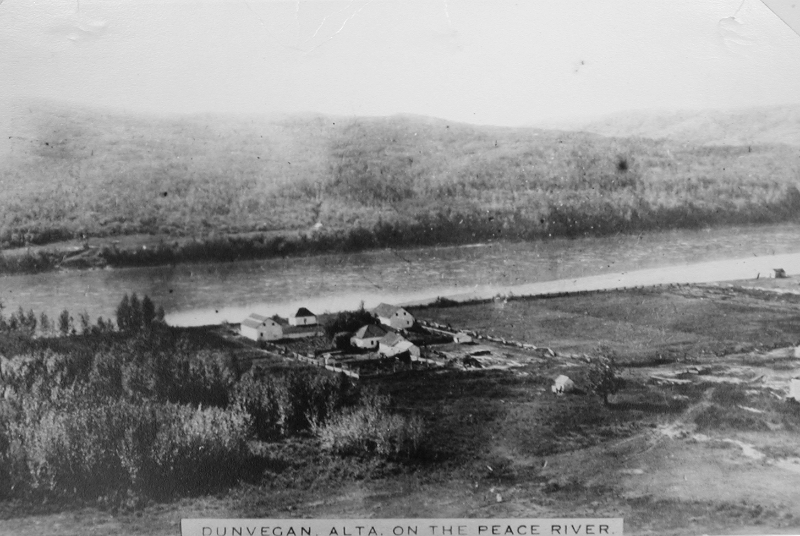
By the time this photo was taken in 1909 by A.M. Bezanson, the St. Charles Mission at Dunvegan had been shut down for six years. Source: South Peace Regional ArchivesTaken from the north bank of the Peace River, this photo shows Fort Dunvegan in the early 1900s. Source: South Peace Regional Archives.
Indeed, this is reflected in the journals left by the men in charge at Fort Dunvegan through the 1800s. In some cases, Christmas isn’t even mentioned at all on December 25. When it is mentioned it’s often to say that nothing of importance happened. But every entry that was made on January 1 (at least between 1822 and 1844) mentions everyone gathering at the fort for their usual treat of a ration from the store. This included gifts of tobacco, rum, meat or biscuits. Even lime juice has been mentioned as a special treat given to visitors.
Editor’s note: Catch up with part one of 50 years of the Historical Resources Act. The banner image above is courtesy of the Royal Alberta Museum.
Written by: Valerie Knaga, Indigenous Heritage Section, Ronald Kelland, Historic Places Research Officer and Fraser Shaw, Heritage Conservation Adviser, Southern Region
Indigenous heritage
Indigenous heritage has existed long before Indigenous Peoples had first contact with European settlers, long before the establishment of Alberta as a province in 1905 and long before the Historical Resources Act was enacted. While Indigenous people have been subject to legislation and policies that sought to undermine their connection to their culture and heritage, they have retained a powerful connection to their historic places and the rich repository of cultural meaning they embody. While Indigenous heritage was not explicitly referenced in Alberta’s Historical Resources Act when it was passed in the 1970s, the Act has played a key role in helping to preserve Indigenous heritage sites. That is not to say that some Indigenous voices were not present during the development of this legislation. The Public Advisory Committee on the Conservation of Archaeological and Historical Resources which advised on the creation of the legislation included representative Chief John Snow and one of the briefs presented at the public hearings was from Allan J. Wolf Leg of the Calgary Native Development Society.
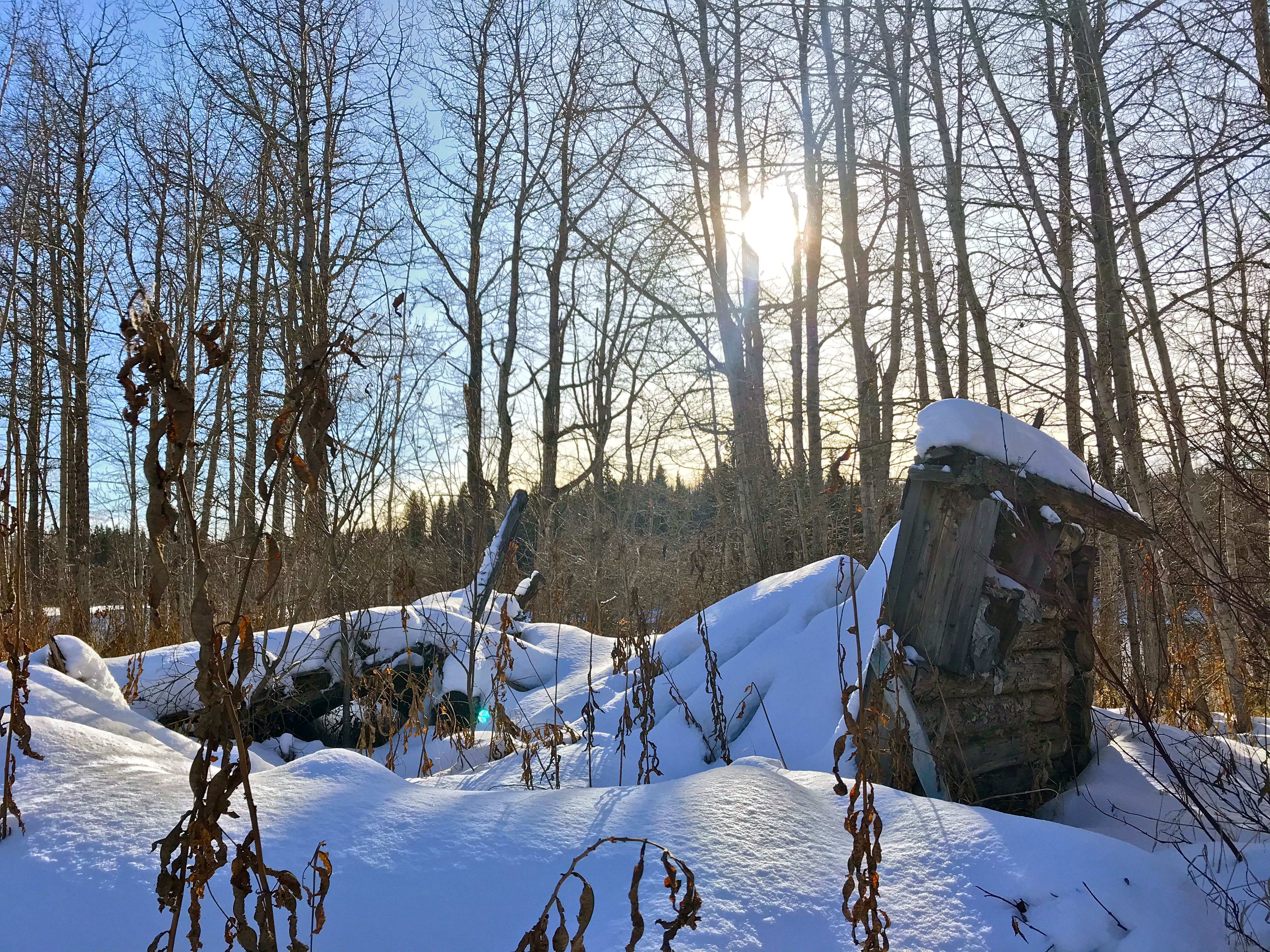
A historic settlement site south near Muskwa Lake was documented in February 2020 during field work with Bigstone Cree Nation. Source: Laura Golebiowski.
Editor’s note: The banner image above is courtesy of the Royal Alberta Museum.
Written by: Todd Kristensen, Archaeological Survey of Alberta and Dan Spivak, Head, Resource Management Program, Royal Tyrrell Museum of Palaeontology
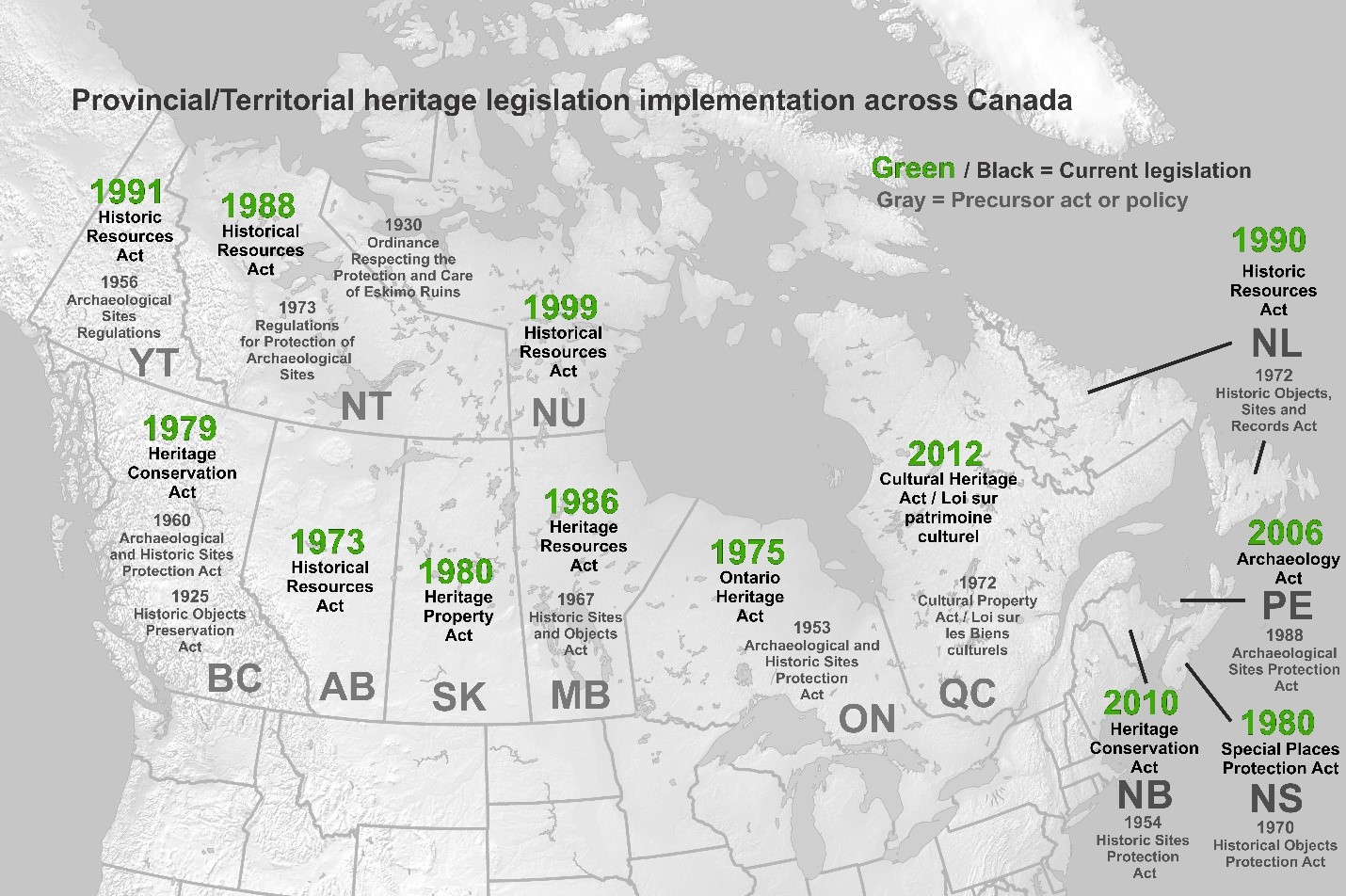
This year, the Historical Resources Act (HRA or the Act) in Alberta celebrates its 50th anniversary. When it was passed in 1973, the Act provided a range of tools to manage historic resources across the province. This now includes archaeological sites, historic buildings, Indigenous traditional use sites of an historic character and palaeontological sites. It was a landmark achievement on a national scale because it stimulated the first stand-alone provincial department whose purpose was to ensure site protection during industrial development. Since inception, the Act has led to the documentation of over 42,000 archaeological sites, 110,000 historic structures, 7,200 palaeontological sites and 2,400 historical Indigenous traditional use sites. While the goals of heritage management in Alberta have evolved along with the Act, it continues to protect the past.
To recognize this milestone, RETROactive contributors will look at the legacy of the Act in managing historic resource sites, including archaeological, palaeontological, historic building and Indigenous traditional use sites. They will also explore the role of the Act in establishing the names of geographical locations across the province.
A map of heritage legislation and preceding acts or policies across Canada. Source: Todd Kristensen.
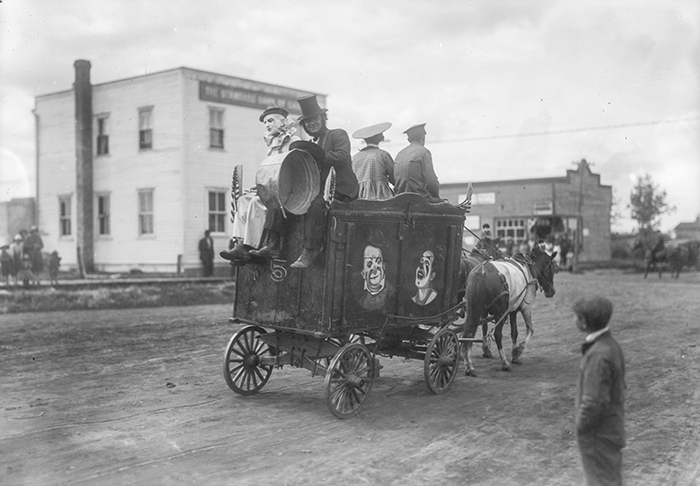
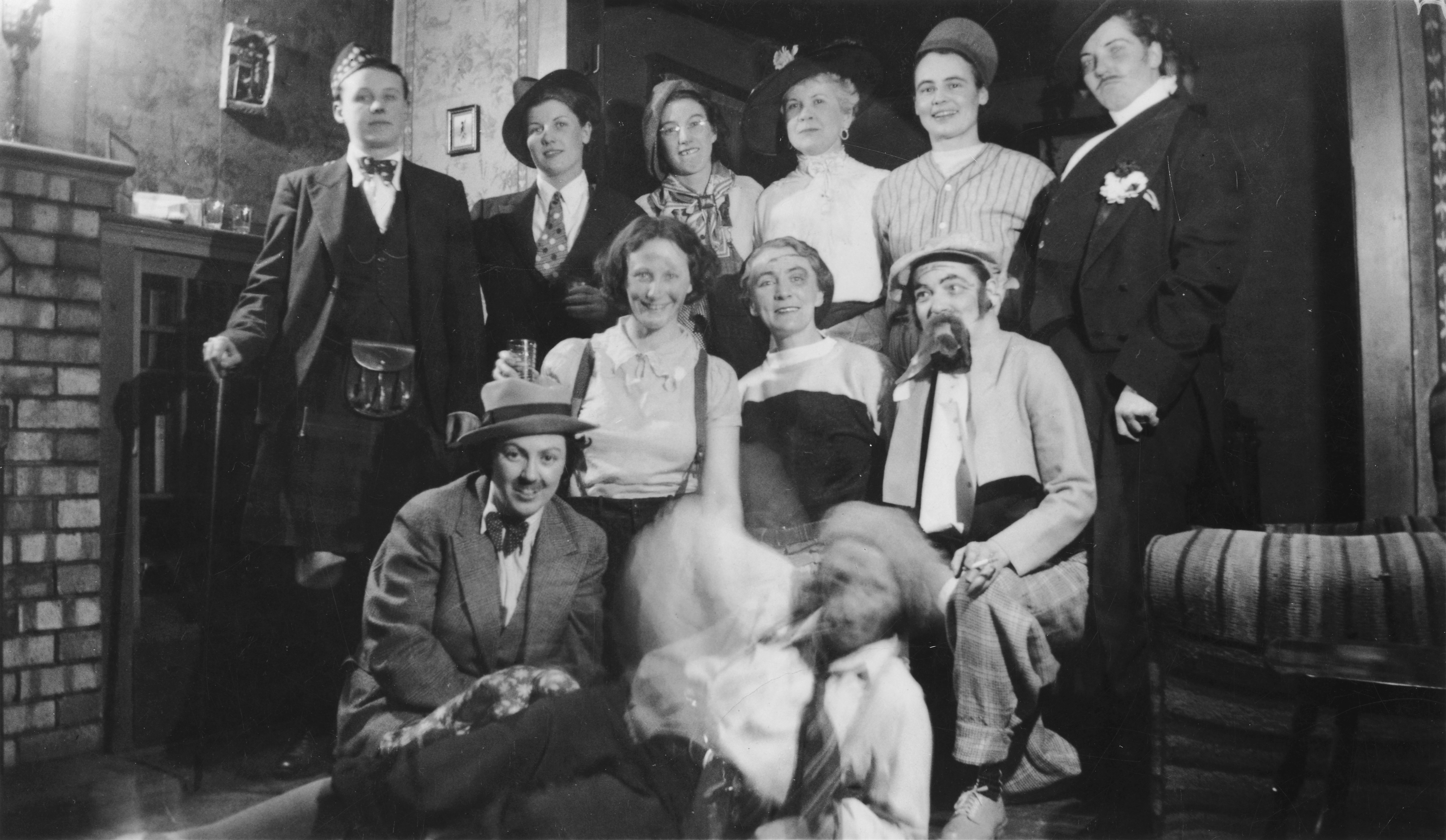
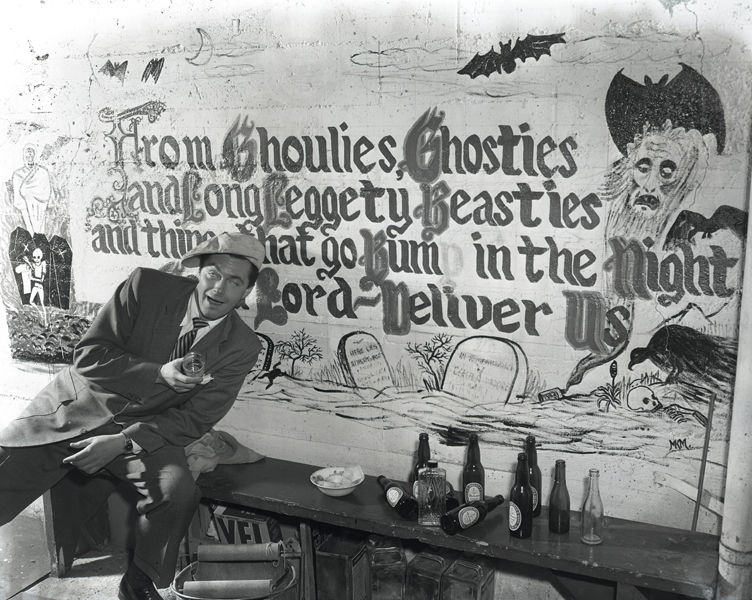
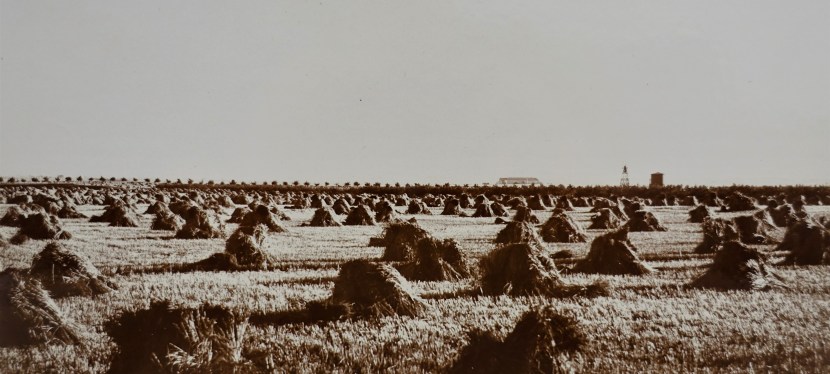
On behalf of everyone at RETROactive, have a safe, fun and spooky Halloween! Take a look below at how Albertans celebrated the occasion decades ago. All images courtesy of the Provincial Archives of Alberta.
Traveling Circus Comes to Smoky Lake c. 1927.
Theatre College Saint-Jean, Edmonton, [c. 194?].
Halloween Party, Wainwright [c. 192?].
Braemar Badminton Club Opening Tea, Edmonton, Nov. 8, 1953.
Editor’s note: The banner image above is courtesy of the Glenbow Library and Archives Collection, Libraries and Cultural Resources Digital Collections, University of Calgary
Written by: Sara Bohuch, BA Archaeology (Simon Fraser University) , MSc Conservation Practice (Cardiff University)
At the turn of the 20th century, the government of Canada continued to look for ways to convince people to move to the country and transform the land there into profitable resources. The government tried many different strategies to achieve this over the years, and some of the more successful tactics were old-fashioned advertising campaigns. Polished ads were produced that depicted Canada (and the prairies within it) as the best sort of fresh start, with bountiful potential and the opportunity to forge your own community.
However, for many prospective immigrants, Canada was not exactly the landscape as advertised. It was not a vast empty expanse rich with resources, as many of the campaigns described. It seemed that the numerous harsh realities of making a living on the prairies were quietly glossed over by the various advertisements.
So how do you sell the Prairies in particular, over other parts of Canada?
In the early 1800’s the propaganda campaign of the “Glorious Canadian West” was accompanied by artwork and slogans depicting bustling communities and vast farmland. During the latter half of the century, the invention of the camera upgraded the medium of the message, though the imagery stayed similar. The new technology offered a way to capture the “truth” of a place and was able to communicate that truth to an increasingly wider audience quickly.
One of the most well-known providers of such promotional material for the government was the Canadian Pacific Railway (CPR). The CPR began to use photography to document the Canadian landscape in the late 1880s and continued with its usage well into the 20th century. They used the images captured by their photographers to promote not only a certain image of the country, but also their own operations within Canada.
In the Glenbow’s Archives and Special Collections there is a series of these types of photographs, dating from the 1900s and documenting the landscape around the Albertan line. Even knowing the history and reason that these photos were taken in the first place, it is still undeniable that these early photographers were very good at what they did. The images that were captured showcased an Albertan landscape bursting with natural beauty and bountiful acres of farmland.
All images courtesy of the Glenbow Library and Archives Collection, Libraries and Cultural Resources Digital Collections, University of Calgary.
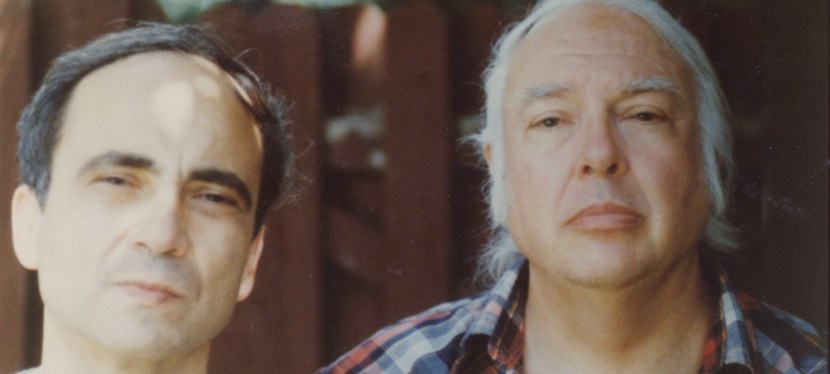
Editor’s note: The banner image above shows legendary experimental musician Bruce Haack (right) with long-time collaborator and friend Ted Pandel (left) , circa 1985. Image courtesy of the Provincial Archives of Alberta.
The Provincial Archives of Alberta also invites you to an evening devoted to electronic music pioneer Bruce Haack at the TELUS World of Science – Edmonton, Zeidler Dome for a screening of the 2004 documentary Haack: The King of Techno followed by a lightshow performance set to Haack’s landmark album The Electric Lucifer.The event takes place on Friday, September 29. Doors at 6:30 p.m., show at 7 p.m. The event is free, seating is first come, first served.
Written by: Jared Majeski (Editor, RETROactive) and Braden Cannon (Private Records Archivist, Provincial Archives of Alberta [PAA])
After creating some of the most spaced-out, light years-ahead-of-its-time experimental electronic music, the renaissance of Albertan Bruce Haack continues apace. His music has been reissued by record labels around the world (including Toronto’s own Telephone Explosion Records), he was the subject of the 2004 documentary Haack: The King of Techno and now, some of his most treasured possessions have been made available at the Provincial Archives of Alberta.
Tape reel from Haack’s recording for Def Jam Records’ Russell Simmons. Source: Provincial Archives of Alberta.
Bruce Haack, from the Rocky Mountain House area, was born in 1931 and displayed music talent from an early age. He attended the University of Alberta before being accepted into the Julliard School in New York City to study music. After a year, he dropped out to explore his own, unique ideas in music. He had an early interest in electronic music and began to design and build his own electronic instruments and voice modulators. Together with Ted Pandel, a pianist whom he met at Julliard, Haack supported himself with songwriting gigs for record labels and advertising firms. He eventually met Esther Nelson, a children’s dance instructor, and collaborated with her on a series of children’s records using Haack’s electronic instruments and his increasingly experimental arrangements. Haack gained further attention through appearances on “The Tonight Show with Johnny Carson” and “Mr. Roger’s Neighborhood” where he would demonstrate his inventions such as a synthesizer that would emit sound through touch.
Editor’s note: The banner image above is courtesy of the Drake University archives.
Written by: RETROactive staff
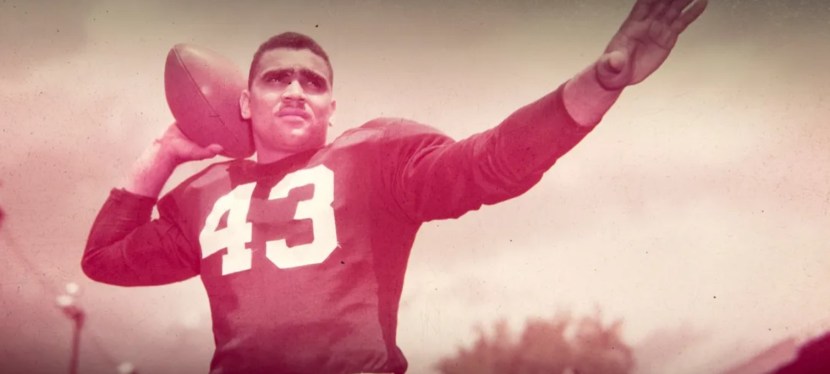
An African American standout player at Drake University during the 40s and 50s, Johnny Bright was a front-runner to win the 1951 Heisman Trophy. In a game against Oklahoma A&M, Bright was knocked unconscious and ultimately forced to leave the game due to injury. Bright enjoyed a hall of fame career in the Canadian Football League and was an educator, coach and principal. A public school in Edmonton also bears his name.
After years in development, The Bright Path: The Johnny Bright Story, is now available to view free on PBS.
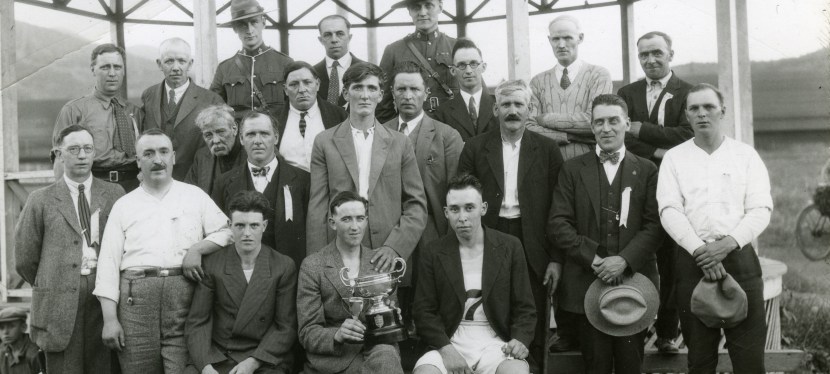
Editor’s note: The banner image above, awarding of a Dominion Day track trophy at the Blairmore Bandstand, is courtesy of the Crowsnest Museum and Archives.
Written by: Ronald Kelland, Historic Places Research Officer
A well-known landmark in the Crowsnest Pass has recently been designated as a Provincial Historic resource and is now listed on the Alberta Register of Historic Places.
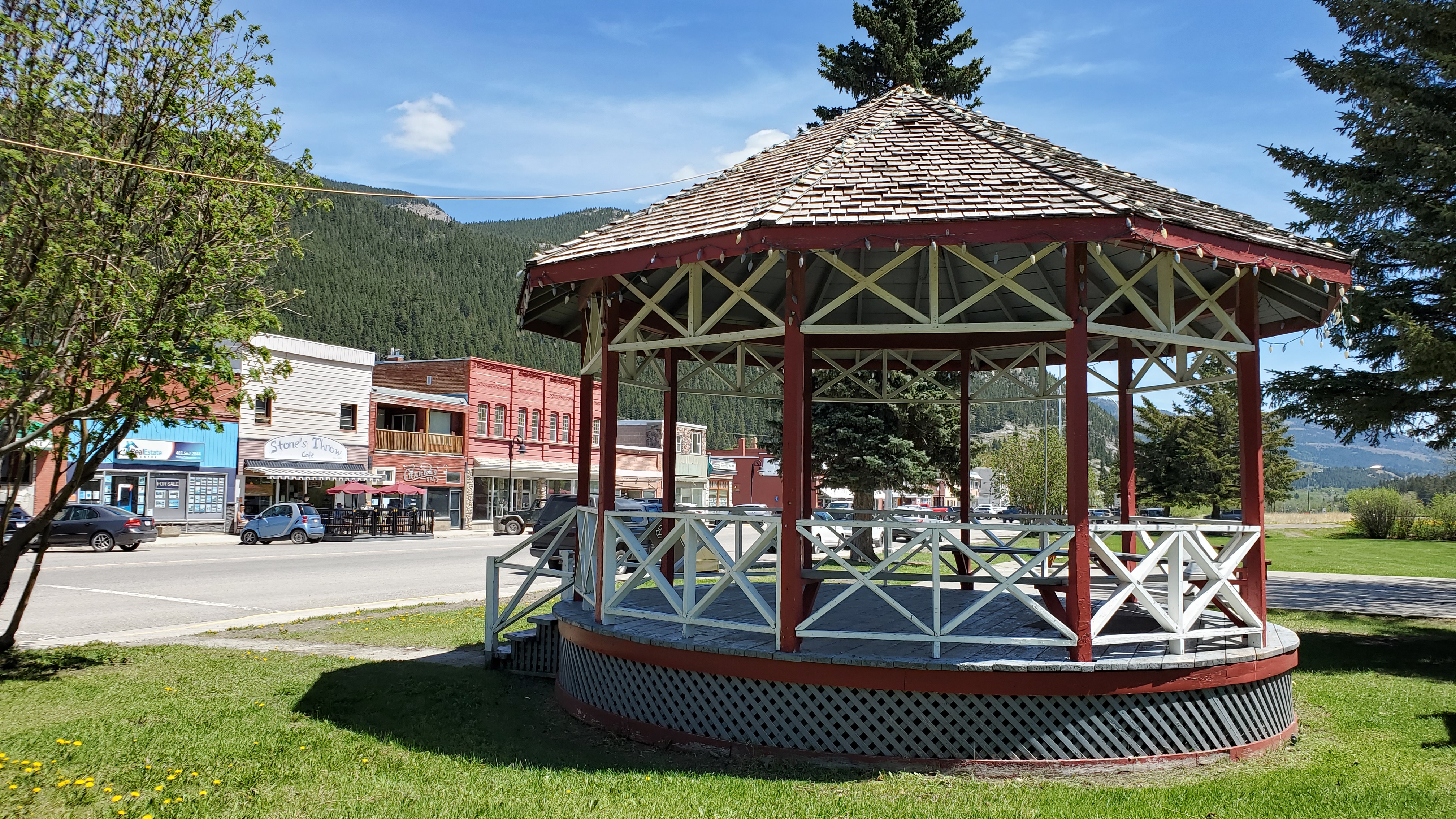
View of the Blairmore Bandstand from the east, showing its wooden construction and prominent position along Blairmore’s main commercial roadway, June 2021. Source: Historic Resources Management, Alberta Arts, Culture and Status of Women.
On your drive through the Crowsnest Pass, if you were to pull off Highway 3 and travel down the streets of the communities that make up the municipality you will see historic buildings that harken back to the boom periods of these coal mining towns. One structure that you may miss is a small bandstand in the community of Blairmore situated in a green space between 20th Avenue and the Canadian Pacific Railway line. It may be an unassuming structure, but the Blairmore Bandstand is one of the most significant sites in the Crowsnest Pass – a community landmark and a symbol of hard-won workers’ rights and the labour movement of the 1920s and 1930s.
The Blairmore Bandstand is typical of such structures. Built of wood, the bandstand consists of a raised, circular platform with railings and interior benches under an eight-sided, peaked roof with flagpole. Bandstands were once a common and important fixture in many Alberta communities. Associated with Victorian and Edwardian Age beliefs about the healing and restful benefits of urban green spaces, education and wholesome entertainment, bandstands were often the centrepiece of urban parks, where they were used for public events such as concerts and speeches. Being situated in publicly accessible spaces also leant their use as rallying points for social movements and protests.
Editor’s note: The following is an excerpt from author Adriana A. Davies’ new book, From Sojourners to Citizens: Alberta’s Italian History. You can purchase this book, along with her first memoir, My Theatre of Memory: A Life in Words, at Guernicaeditions.com.
Written by: Adriana A. Davies
Restaurateurs and Chefs
At the beginning of the twentieth century, Italian food was considered alien in Alberta. While local pasta manufacturers and grocers helped to introduce Italian products to the general public, it would be pioneer restaurateurs who would build the popularity of Italian cuisine. While individuals worked as cooks in commercial kitchens likely from the earliest days of immigration, Italian restaurants would not emerge as a culinary force until the post-Second World War wave of immigration.[1] Soldiers who fought in Italy acquired a taste for Italian food and looked for it in Italian neighbourhoods back home. Historian John Gilchrist observed in a 2011 article that new immigrants settle near each other and, “Quickly, entrepreneurs open shops that sell foods and materials from the homeland. And soon, a restaurant or two opens to serve the needs of the community.” He continues:
Adventurous diners from across the city venture into the cultural enclave to sample the wares. They report back to their friends and more ‘outsiders’ arrive, bumping up business. In time, entrepreneurs may move or open a second location in the city’s business centre or ‘outsider’ community, expanding the clientele, and helping connect their community to the broader population…. In Calgary, this pattern applies to the two cultural enclaves – Chinatown and Bridgeland – that date to the early 1900s and to the development of many local Chinese and Italian restaurants.[2]
Gilchrist refers specifically to Gene Cioni whose daughter Mary authored Spaghetti Western: How My Father Brought Italian Food to the West.[3] Her claim that her father brought Italian food to the west might seem extravagant but he certainly appears to have created Calgary’s first Italian restaurant at 111 – 4th Street NE on the edges of the Italian district of Riverside/Bridgeland.
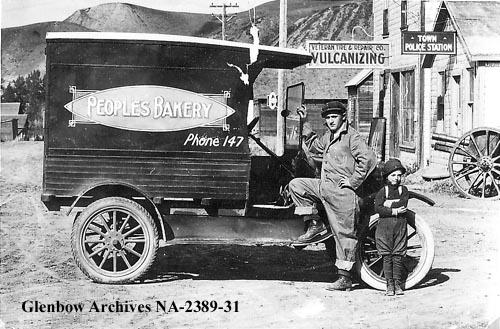
The People’s Bakery van with Curly Miglierina in front with an unknown child, Drumheller, Alberta, August 15, 1918. Source: Glenbow, Archives and Special Collections, University of Calgary NA-2389-31.
Genesio Ciono was born in Antrodocco, Rieti, Lazio, the son of Sabato Cioni, a shoemaker, and his second wife, Flavia Cardellini. Sabato died in 1908 leaving his widow to care for five children. The connection to Canada occurred when 15-year-old daughter Gisa, from the first marriage, went to Calgary to marry a man she did not know – Ricardo Santopinto. Gisa’s letters painted a glowing picture of Calgary and inspired in the 37-year-old Flavia, who felt trapped in poverty, a desire to immigrate. Relatives arranged a marriage with Annibale Corradetti, a 49-year-old widower who worked for the city as a labourer. According to Mary, he was mean-spirited and stingy, and did not honour his promise to Flavia to give her money to bring her sons (Genesio and Sabatino) to Canada. A resourceful woman, she saved money from her household expenses and sent it to Italy. It was enough for only one fare and, Gene, the elder, came to Calgary in 1923. He turned 16 on shipboard. Flavia wanted Gene to become a barber and he worked at the Calgary Shoe Hospital to save money. Two years later he enrolled at the Hemphill Barber School and graduated in 1925. Tragically, his mother died of a ruptured gall bladder in 1926, and Gene blamed his stepfather for lack of attention to her health. This freed him from a trade that he had not embraced and, through his cousin and best friend Mario Grassi, he obtained a job at the Palliser Hotel as a busboy (Mario was a waiter). Soon after, he became sous-chef and learned the CPR repertoire of largely English and French specialties.




 RETROactive