George First Rider’s Stories of Summer

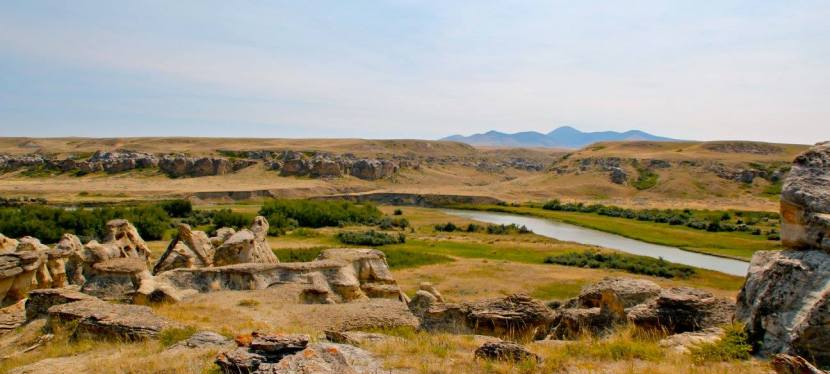
Editor’s note: The banner image above is of Áísínai’pi/Writing-on-Stone. Source: Laura Golebiowski.

Blair First Rider is a Kainai (Blood Tribe) Elder and Horn Society grandparent, and an Indigenous Consultation Adviser with the Historic Resources Management Branch. Thank you Blair for sharing your grandfather’s stories. Suukapi!

Written by: Blair First Rider and Laura Golebiowski, Indigenous Consultation Advisers

In a previous RETROactive blog post, we discussed the seasonal round: the Niitsitapi (“the real people,” how the Blackfoot refer to themselves) concept that structures the year and our relationship to the land and one another. In this post, we learn some of the ways the Niitsitapi spent time during the hot summer months at the turn of the century.

This knowledge was shared by George First Rider, Blair’s paternal grandfather. George was born in 1904 on the Kainaiwa (Blood Tribe) reserve. His father was Dog Child and his mother was The Only Handsome Woman, also known as Catching Another Horse.

George First Rider was a kipita-poka: a grandparent’s child. Deeply loved and cared for by his family, he was afforded a lifestyle of traditional knowledges and practices. He was also a member of the Horn Society and other age-grade Societies (the complex social and ceremonial system that Niitsitapi men participate in from the age of seven or eight to adulthood. Niitsitapi women participate in the Motokis Society). Through ceremonial transfers, George learned many songs and earned the ability to conduct many ceremonies.
Read more

Designation and protection: 50 years of the Historical Resources Act (Part 2)

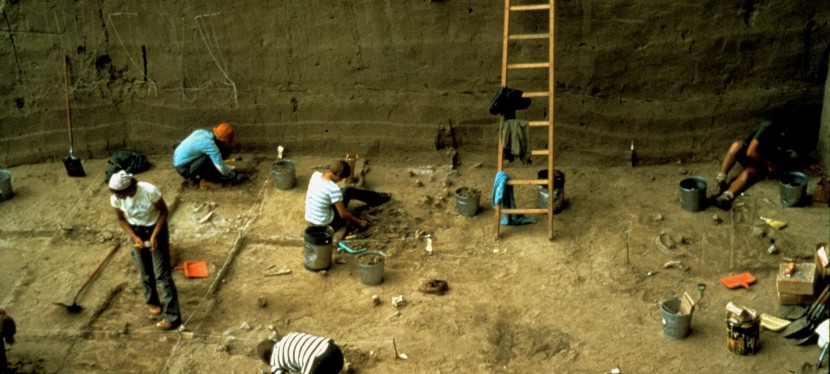
Editor’s note: Catch up with part one of 50 years of the Historical Resources Act. The banner image above is courtesy of the Royal Alberta Museum.

Written by: Valerie Knaga, Indigenous Heritage Section, Ronald Kelland, Historic Places Research Officer and Fraser Shaw, Heritage Conservation Adviser, Southern Region

Indigenous heritage

Indigenous heritage has existed long before Indigenous Peoples had first contact with European settlers, long before the establishment of Alberta as a province in 1905 and long before the Historical Resources Act was enacted. While Indigenous people have been subject to legislation and policies that sought to undermine their connection to their culture and heritage, they have retained a powerful connection to their historic places and the rich repository of cultural meaning they embody. While Indigenous heritage was not explicitly referenced in Alberta’s Historical Resources Act when it was passed in the 1970s, the Act has played a key role in helping to preserve Indigenous heritage sites. That is not to say that some Indigenous voices were not present during the development of this legislation.  The Public Advisory Committee on the Conservation of Archaeological and Historical Resources which advised on the creation of the legislation included representative Chief John Snow and one of the briefs presented at the public hearings was from Allan J. Wolf Leg of the Calgary Native Development Society. 

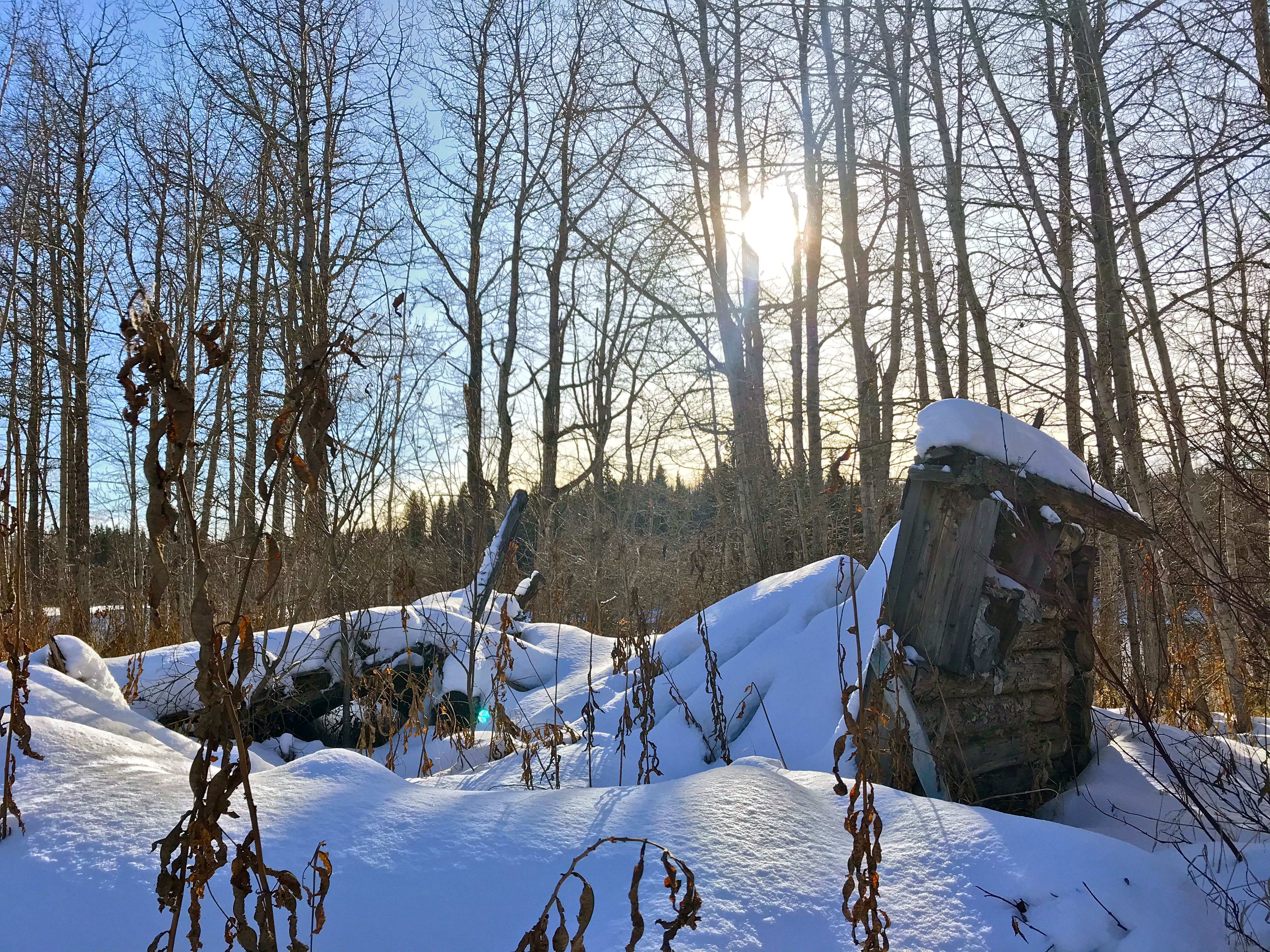
A historic settlement site south near Muskwa Lake was documented in February 2020 during field work with Bigstone Cree Nation. Source: Laura Golebiowski.
Read more