Significant for its status as the oldest church building in Medicine Hat, and the home of the City’s oldest religious congregation, St. John’s Presbyterian Church was listed on the Register in late 2012.
Just this week, another historic place designated by the City, the Merchants Bank of Canada, was also listed on the Alberta Register of Historic Places. Constructed in 1899, the Merchants Bank is valued not only as the first permanent bank branch in the City, but also as an important building constructed of brick, in a city where brick was historically an important and characteristic local material, and brick-making a key industry.
Congratulations to the City of Medicine Hat and the owners of these two properties for being listed on the Alberta Register!
Written by: Matthew Francis, Manager of Municipal Heritage Services
I spent a day in the Village of Delburne earlier this month, training the village’s new heritage advisory board. They plan to survey buildings and structures in the village over the next six months, or so. They also plan to do some oral history work with local citizens and use all this information to develop a walking tour and some interpretive plaques. Delburne is preparing to celebrate the centenary of the village’s incorporation, in 2013.
I do all sorts of heritage planning projects with Alberta’s municipalities, but while preparing for this workshop I was struck by how few municipal heritage surveys I have worked on recently. Delburne’s project has reminded me just how useful heritage survey’s can be.
A survey helps a municipality identify buildings and structures that may be significant, providing a basis to determine which places to evaluate further. The first step is for a community to select a geographic area to be studied. (Delburne is compact enough to be surveyed in one go). The survey team does some research to locate buildings and structures built before a cutoff date (usually 40 years ago). A fieldworker photographs each place’s facades (from the sidewalk and alley) using black-and-white archival-quality film. They will also make notes on each place’s design and general condition. This is combined with some historical information explaining how the building has been used over time. Together, this information forms a survey record.
The survey records are entered into the Alberta Heritage Survey database, part of the Heritage Resources Management Information System (HeRMIS). Each survey record is a snapshot of Alberta’s streetscapes and farmyards, showing us how they have evolved over time. The database can be searched in all sorts of ways—you can look for places made of a particular material, buildings that have certain design features and/or places associated with people or events.
The survey in Delbure will provide a sense of which places may be sufficiently significant to warrant further study and evaluation. Municipalities may choose to evaluate some of these places for heritage value, eventually develop management policies and possibly designate several places as Municipal Historic Resources.
Written by: Michael Thome, Municipal Heritage Services Officer
You may have read that Calgary’s city council has decided to incorporate the Eamon’s Gas Station (also known as the Eamon’s Bungalow Camp) into the planned Tuscany LRT Station. Calgary will conserve a historic resource rather than demolishing it to make room for parking. This is exciting news!
We recently talked with Christy Caswell, one of the City’s Heritage Planners, and she said that Calgarians today are enthusiastic in supporting their city’s historic places. The interest garnered by the Eamon’s project has been one of many catalysts for people to think about historic places in a new way, and how they can be creatively integrated with new development.
Alberta’s municipalities can identify and conserve historic resources without the provincial government’s permission or involvement by legally protecting these places as Municipal Historic Resources. If interested, municipalities can also offer conservation incentives. By extension, each municipality is free to determine its own criteria for deciding what to designate. Calgary is a fine example of this.
Calgary has identified a range of heritage values that a place must reflect to be considered for conservation. For example, the Calgary Heritage Authority has overseen the development of context papers for many of Calgary’s historic communities. The city’s heritage planning program regularly evaluates potential historic place for significance. The result is Calgary’s Inventory of Evaluated Historic Resources. Each place on the city’s inventory reflects a local heritage value. Indeed, the Eamon’s Bungalow Camp is one of over 600 places included on Calgary’s Inventory. Be sure to read the listing to learn about the site’s history.
The Municipal Heritage Partnership Program (MHPP) helps municipalities develop programs that will identify, evaluate and conserve locally significant historic places. For more information, visit the MHPP website.
Written by: Matthew Francis and Michael Thome, Municipal Heritage Services
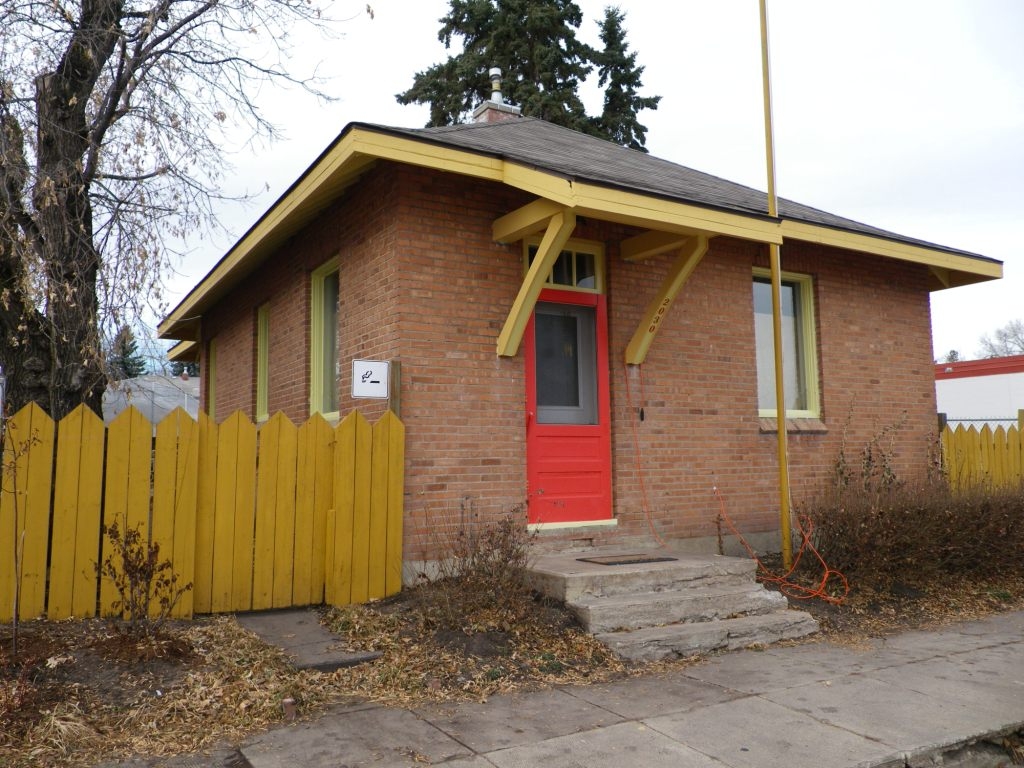
Although now a residence, the building once housed the switching equipment that first connected the village and the surrounding area to the long-distance telephone network. To read more about the heritage value of this building take a look at the statement of significance on the Alberta Register of Historic Places.
The City has been collaborating with the Municipal Heritage Partnership Program for several years to identify, evaluate, and protect Lethbridge’s significant historic places. They have developed a Heritage Management Plan, established a Heritage Advisory Committee, and Downtown Lethbridge is an Accredited Alberta Main Street community.
These three new listings complement the properties already designated by the City. Congratulations Lethbridge!
Written by: Matthew Francis, Manager of Municipal Heritage Services
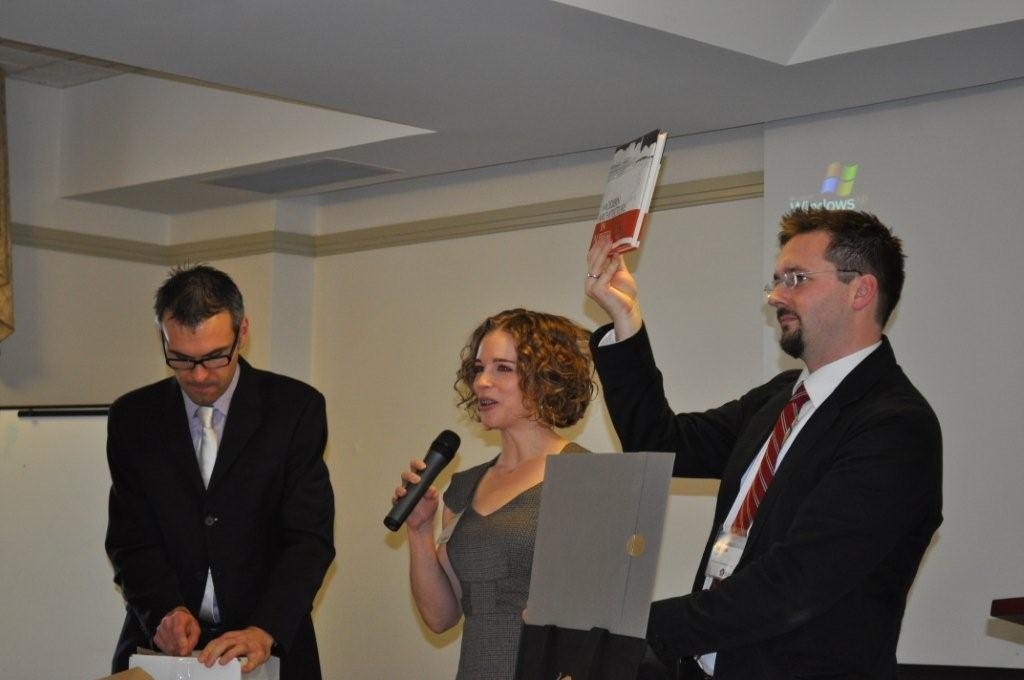
On Thursday January 26th Matthew Francis and I were privileged to attend the Top Hat Ceremony in the Town of Olds. Hosted by Uptowne Olds, the Top Hat Ceremony honored the nine Municipal Historic Resources designated by the Town of Olds, to date. Search the Alberta Register of Historic Places to learn more about these sites. (Four of the sites are listed so far and the Town is working on the documentation to list the rest).
The crowd in Olds was buzzing with excitement and the ceremony was great fun. I can honestly say it was the only event I’ve attended (so far) that began with a proclamation read by a town crier. Each property owner was given a plaque in recognition of their stewardship of one of the town’s historic resources.
Matthew Francis had the pleasure of announcing that Olds has been accredited as an Alberta Main Street Community for 2011. Olds is only the third municipality to be accredited since the Alberta Main Street Program was re-launched in 2008. Accredited means that Olds has met the ten standards of performance needed to fully participate in and benefit from the Alberta Main Street Program.
The Alberta Main Street Program helps municipalities conserve and market their historic commercial districts. Expect to hear more about this exciting aspect of our work over the next year.
Written by: Michael Thome, Municipal Heritage Services Officer
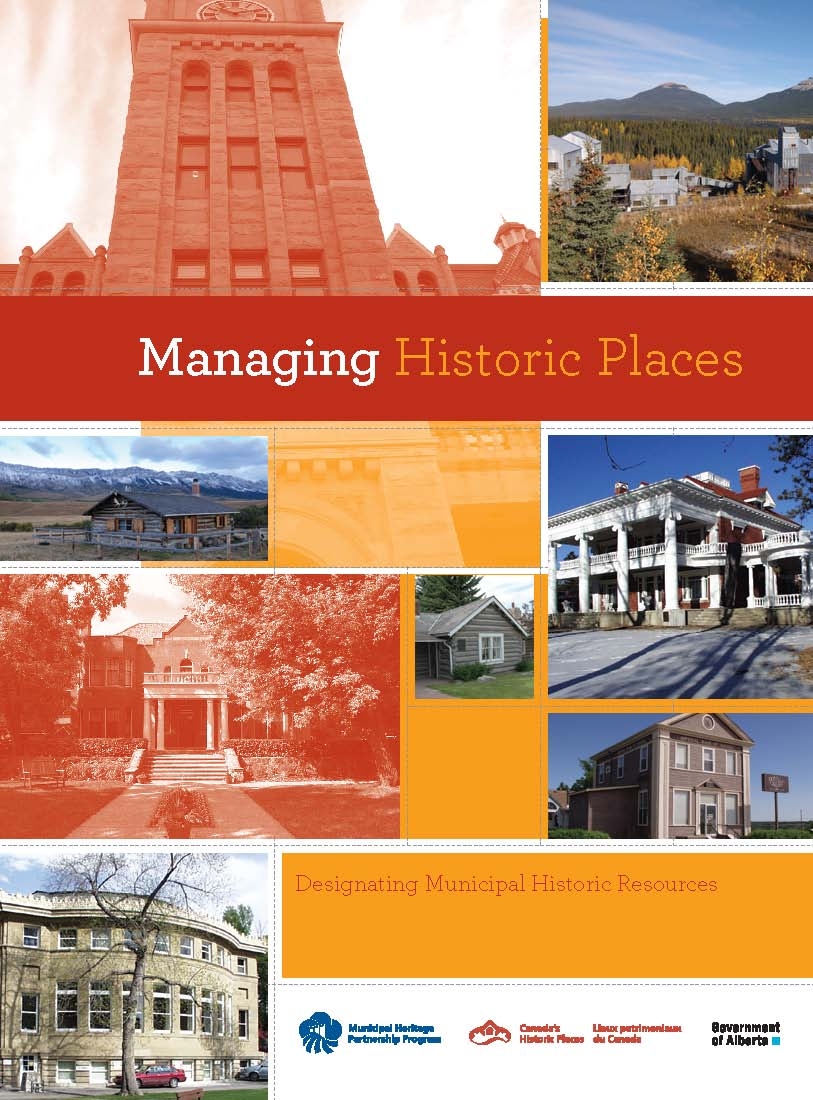
Many municipalities will designate a Municipal Historic Resource without first developing a designation policy. The Historical Resources Act does not specify how municipalities must evaluate places for Municipal Historic Resource designation. Municipal Historic Resource designation bylaws are passed in a slightly different way than a bylaw is normally considered, but otherwise each municipality is allowed to define how it will protect its historic resources. (To learn more about designating Municipal Historic Resources read Managing Historic Places: Designation Guide, which can be downloaded from the publications section of the MHPP website).
How should your municipality respond to a request from a member of the public to protect a historic resource? By developing a policy that describes how the municipality will use its power to designate Municipal Historic Resources. A place should not be designated unless it is in the public interest to do so, and a good designation policy will help determine when that is the case. A good designation policy will explain:
What the purpose of the Municipal Historic Resource designation program is, specifically explaining what types of places the municipality is willing to protect and why.
Who is allowed to nominate places for designation.
What information a nominator needs to provide.
How the municipality will evaluate a proposed designation, including who is responsible for evacuating the proposal (like a Heritage Advisory Board) and what information council needs to make a decision.
A written policy that answers these questions will help protect significant sites while reducing the time and effort needed to evaluate designation proposals. A good policy lets nominators know what types of sites the council is willing to evaluate, what they are willing to protect and what information they need to provide. A good policy will make for a transparent and fair nomination process.
For more information on creating a designation policy or other heritage management planning activities, please consult the publications section of the MHPP website, or contact Municipal Heritage Services staff.
Written by: Michael Thome, Municipal Heritage Services Officer
Heritage Advisory Bodies (HABs) are boards, committees or commissions established through municipal bylaw. The community members appointed to the HAB advise council on heritage conservation matters and assist with the implementation of heritage initiatives (such as a Municipal Heritage Survey or a Municipal Heritage Inventory). This presentation discusses the ingredients necessary to establish an effective HAB.
A Municipal Historic Resource may not be destroyed, disturbed, altered, restored or repaired without the written approval of the applicable municipal council, or their designate. This presentation provides an overview of the designation and alteration approval processes.
The Standards and Guidelines for the Conservation of Historic Places in Canada provides practical guidance on the preservation, rehabilitation and restoration of historic resources. This presentation is a general introduction to the principles and recommended/not recommended actions contained in the Standards and Guidelines.
NOTE: For a complete collection of the 2011 Municipal Heritage Forum presentations, please click here.
Written by: Brenda Manweiler, Municipal Heritage Services Officer
Some of the words we use to discuss heritage conservation can be confusing. The related but distinct terms historic place, historic resource and historic site are often misunderstood. Sometimes, people will talk of historic sites when they mean historic resources, and make reference to historic places when the place is not formally historic. Confused? I shall clarify:
Historic Place is the generic term used throughout Canada to reference “a structure, building, group of buildings, district, landscape, archaeological site or other place in Canada that has been formally recognized for its heritage value.” Each province and territory has separate legislation regulating the identification, evaluation and management of historic places. Therefore, each province uses a different term to describe a designated or protected historic place. For example, in Manitoba they are called Heritage Sites and in Saskatchewan, Heritage Properties.
Brooks Aqueduct is a historic place designated as a Provincial Historic Resource and is operated as a historic site.
Alberta’s HistoricalResources Act uses the term Historic Resource. A Historic Resource is defined as a historic place valued for “its palaeontological, archaeological, prehistoric, historic, cultural, natural, scientific or esthetic interest”. The Government of Alberta may designate a historic resource as a Provincial Historic Resource and a municipality may designate a historic resource as a Municipal Historic Resource. Designated historic resources may not be repaired, altered or destroyed without written approval from the designating authority.
A Historic Site is a historic resource owned or leased by the Government of Alberta and managed by the Historic Sites and Museums Branch of Culture and Community Spirit. These sites are interpreted through public programming, signage and exhibits. Stephansson House and Brooks Aqueduct are examples of historic sites.
So, if you ever find yourself talking about an old place ask: “What do I really mean? Has it been formally recognized by the Government of Alberta or a municipality?” Perhaps you are talking about a formally recognized historic resource.
Written by: Brenda Manweiler, Municipal Heritage Services Officer
The Alberta Historical Resources Foundation (AHRF) continues to find strategies to strengthen its ability to meet its mandate. One strategy is to adopt some changes to the funding policies of the Heritage Preservation Partnership Program. These changes will become effective for the next application deadline: February 1, 2012.
To manage the demand for historic resource conservation grants, the maximum grant for conservation of Provincial Historic Resources will be capped at $100,000. Currently, there is no grant ceiling set for these historic resources. Other grant ceilings remain the same: $50,000 for the conservation of Municipal Historic Resources, $5,000 for Local Historic Resources, and $25,000 for architectural/engineering studies/reports/plans.
Applicants may only submit one application for conservation and one application for architectural/engineering studies/reports/plans per historic resource per calendar year. The February 1st deadline is still the primary deadline.
To support the Municipal Heritage Partnership Program’s goal of strengthening the municipality’s role in historic place management, Provincial Historic Resources and Municipal Historic Resources will have the same opportunity for funding – Provincial Historic Resources are not given priority. The awarded level of funding will continue to be determined using criteria which include: grant ceilings, project scope, resource’s conservation priorities, grant program’s budget and applicant’s ability to complete the project.
The second deadline for the Roger Soderstrom and Heritage Trades Scholarships will be moved from September 1st to October 1st to give more time for students to prepare their applications.
New funding guidelines and application forms will be released in time for the next application deadline. For more information, click here or contact the Grants Program Coordinator at 780-431-2305.
Written by: Carina Naranjilla, Grant Program Coordinator


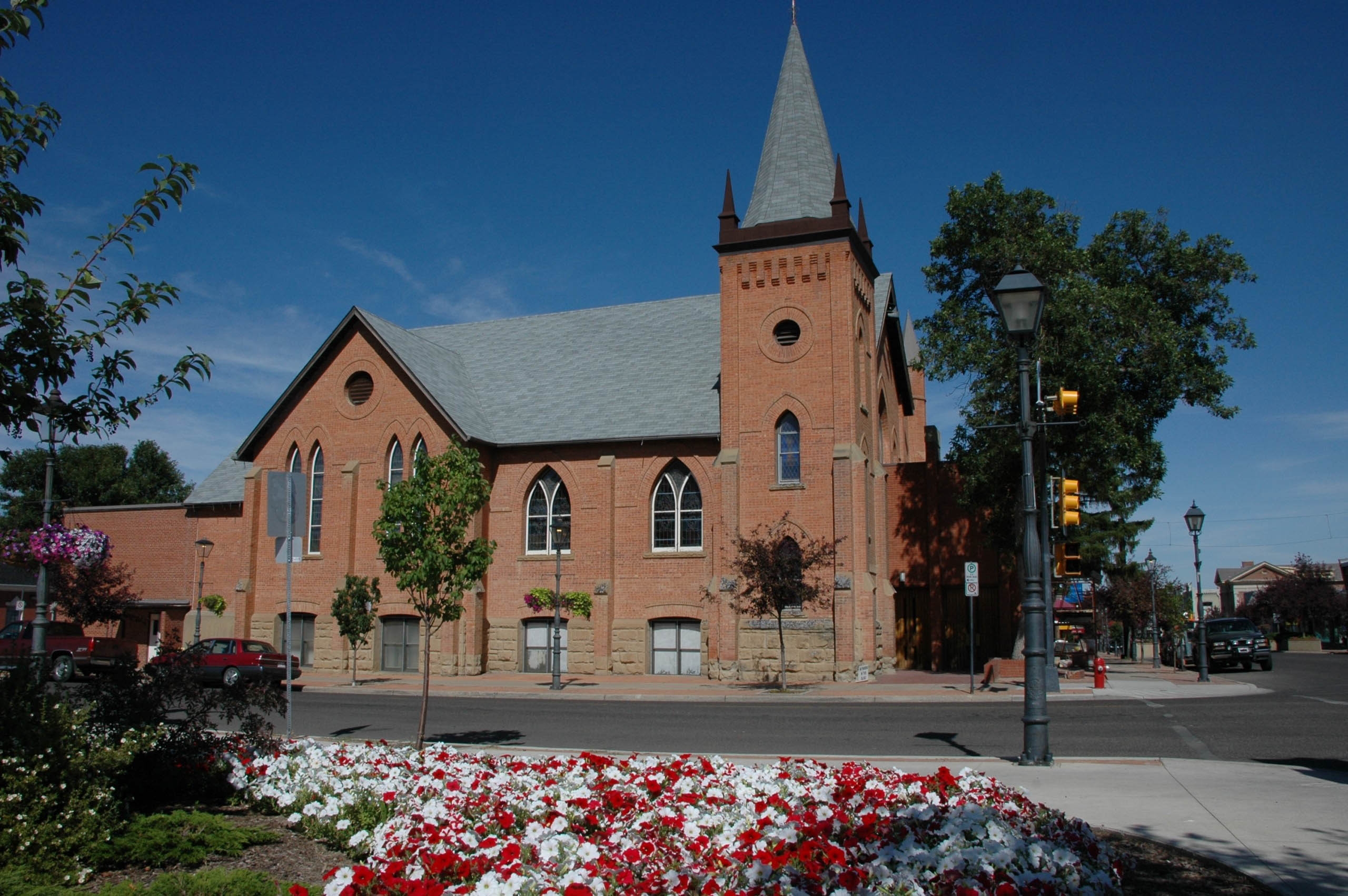 Significant for its status as the oldest church building in Medicine Hat, and the home of the City’s oldest religious congregation, St. John’s Presbyterian Church was listed on the Register in late 2012.
 Congratulations to the City of Medicine Hat and the owners of these two properties for being listed on the Alberta Register!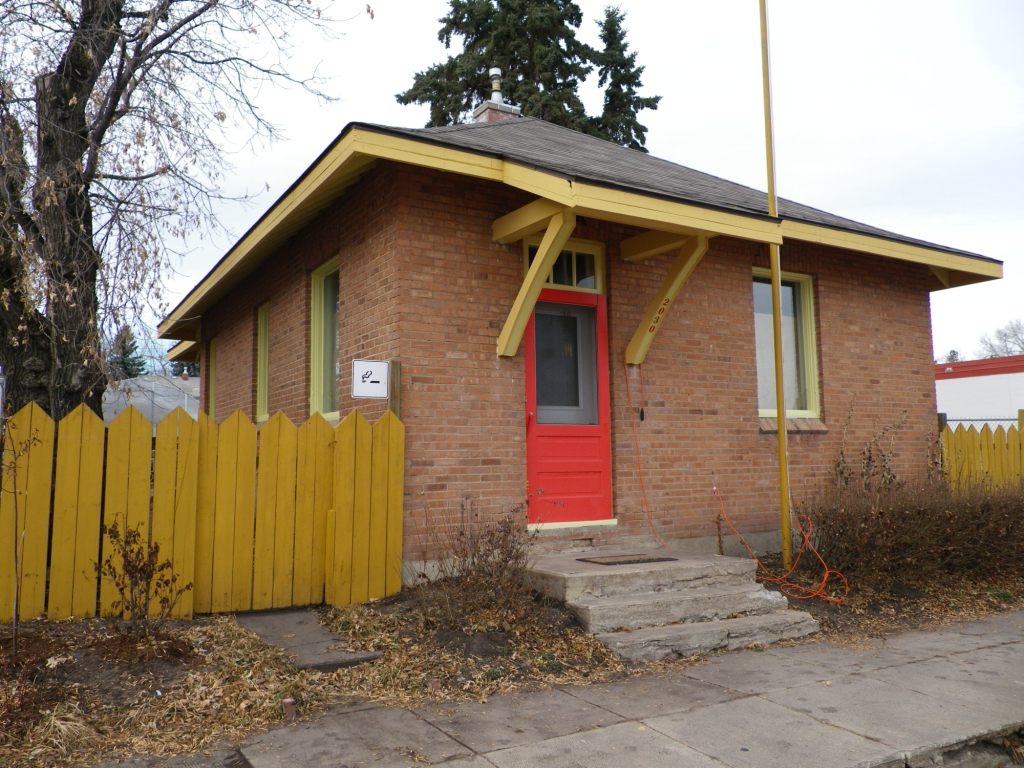




 RETROactive