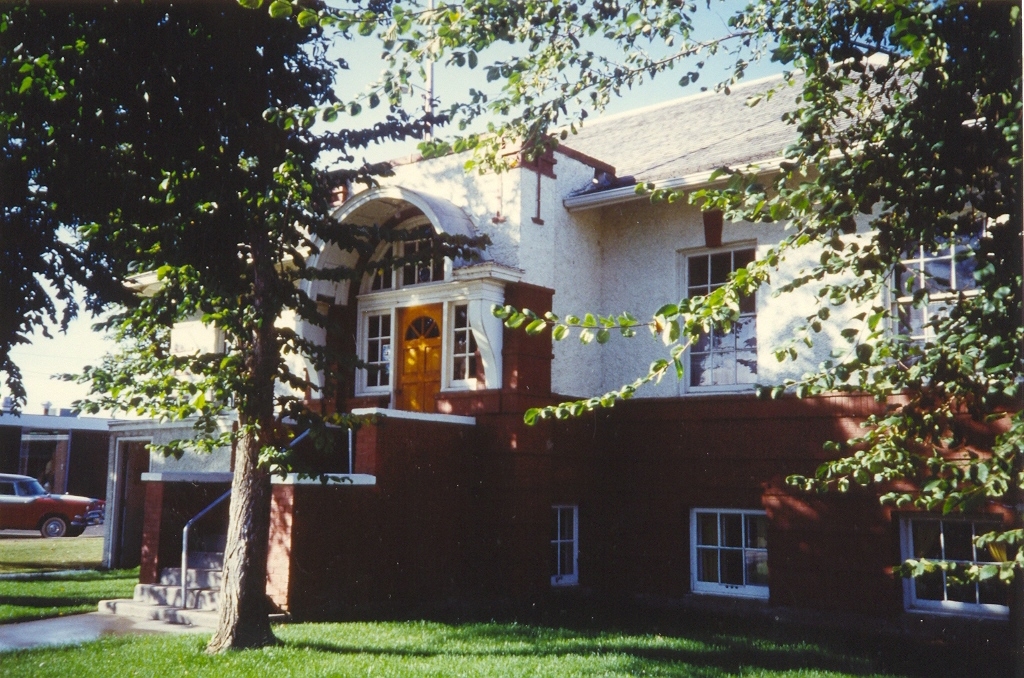
The Rutherford House Historic Site and Museum Christmas season exhibit is now on display. This year the exhibit is Winter in Edmonton – Weather, Entertainment and Survival. The exhibit runs from December 2013 until January 24, 2014.
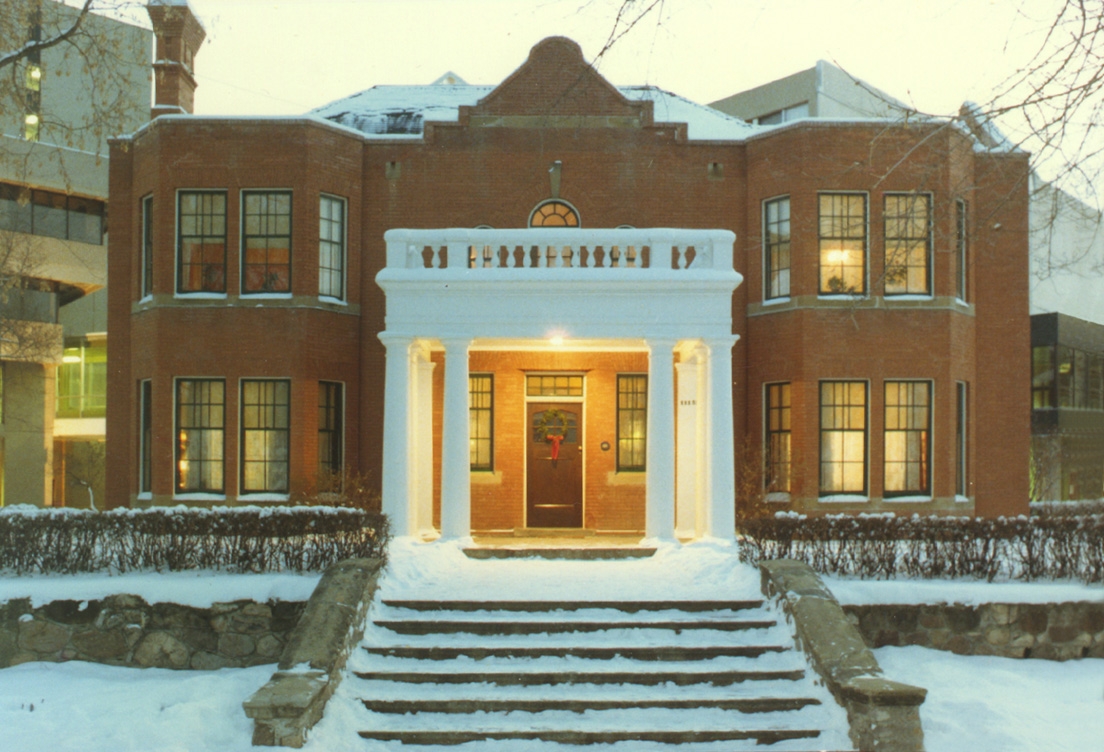
Rutherford House Historic Site and Museum in winter (2005).
Edmonton is a winter city. That undeniable fact was clearly demonstrated a few weeks ago when the thermometer dropped to -30°C. On cold and snowy days many of us stay inside our centrally-heated homes and shudder as we look out over wind-swept, icy and snow-covered streets and sidewalks.
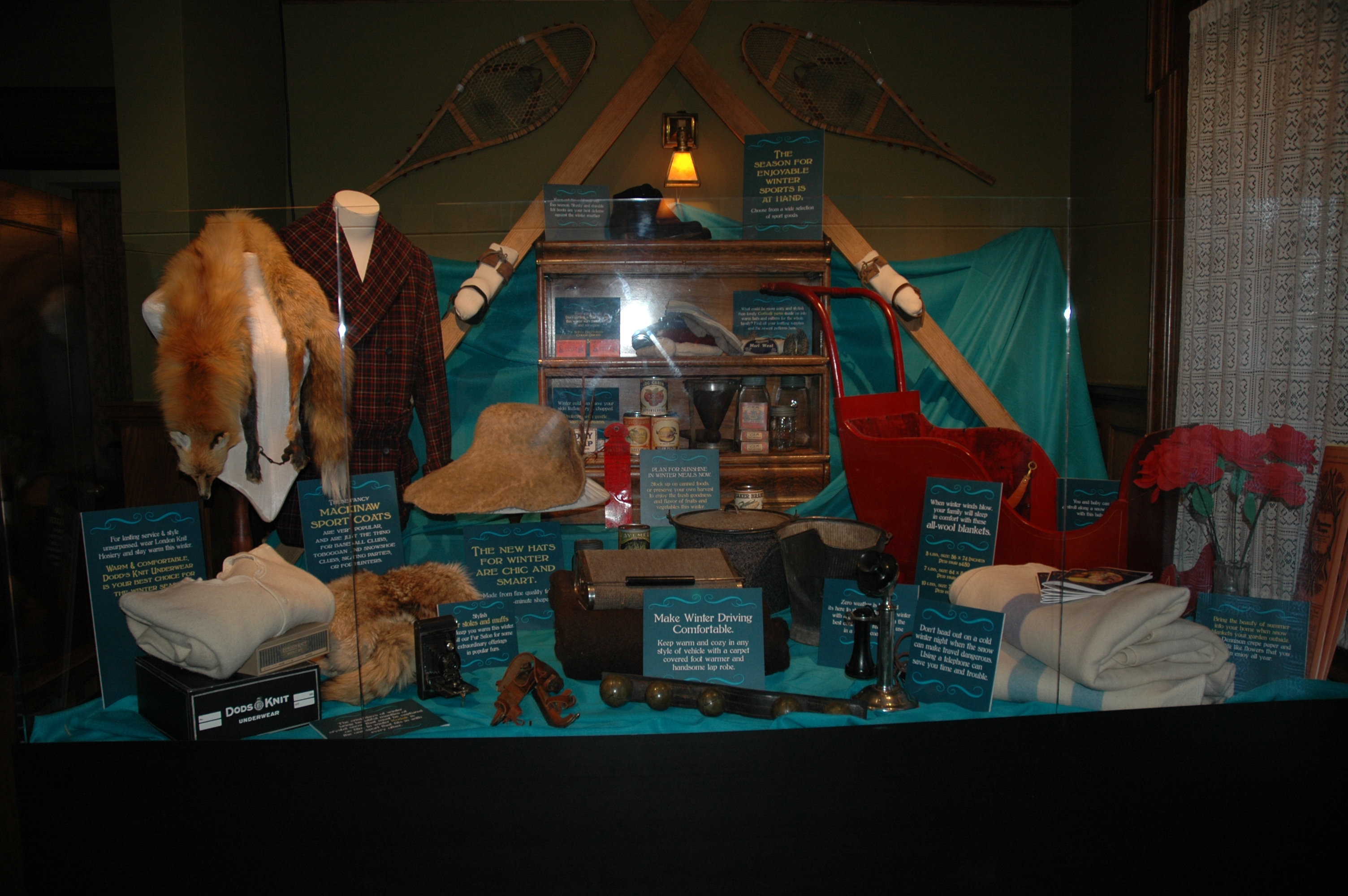
A selection of winter-related artifacts from the Rutherford House collection and the Royal Alberta Museum are on display at the Rutherford House Historic Site and Museum until January 24, 2014.
Winter is not all cold and dreariness, of course. Winter is a season of fun and outdoor games. It is a season of snowmen and skating parties, of shinny and skiing. It is a season of companionship amongst friends and family, of hot chocolate and large meals.
Whether you enjoy bracing walks outside or a book by a warm fire inside, have you ever wondered how did Edmontonians of the 1910s to the 1930s deal with winter? How did they keep warm outside? How did they heat their homes? How did they get around their community? What did they do for fun in the snow? What did they do when it was too cold to go outside?
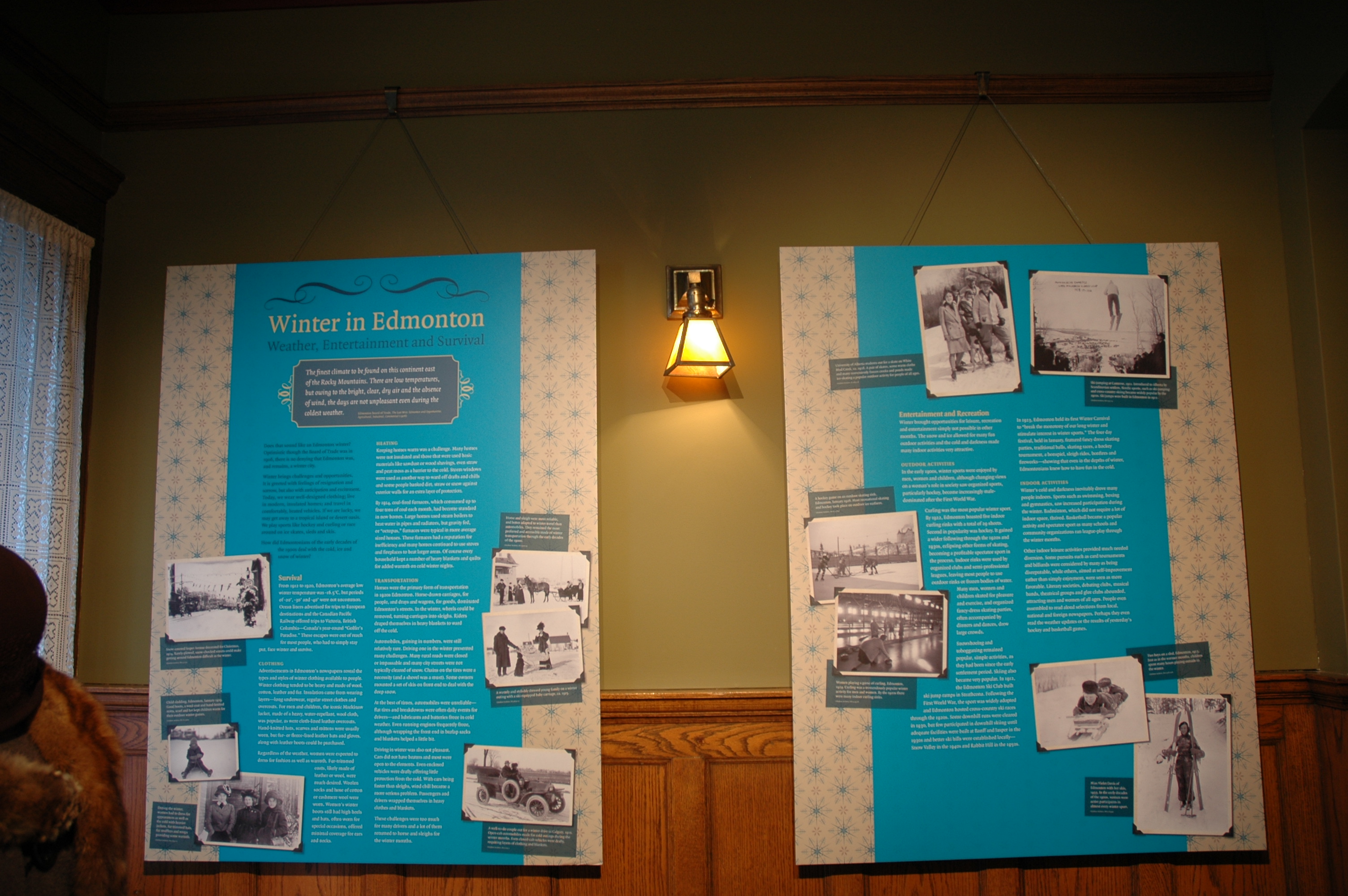
Interpretive panels and archival photographs explain and illustrate how Edmontonians survived and enjoyed winter in the 1920s and 1930s.
Visit the Winter in Edmonton exhibit at the Rutherford House Historic Site and Museum for the answers to these questions and to learn about this Provincial Historic Resource – one of Edmonton’s early architectural gems and the historic family home of Alberta’s first Premier.
The Rutherford House Historic Site and Museum is located on the University of Alberta campus at 11153 Saskatchewan Drive. Winter hours are 12 (noon) until 5:00pm, Tuesday through Sunday. While you are there, stop and visit the newly re-opened gift shop for great Christmas stocking stuffers.
Written by: Ron Kelland, Historic Places Research Officer and Geographical Names Program Coordinator.
Markerville Tour Booklet Re-vamped and Re-launched!
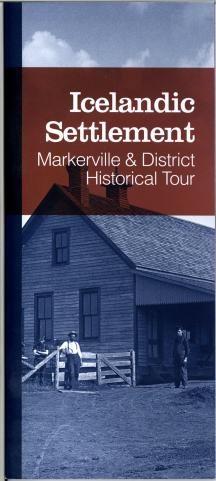
Markerville & District Historical Tour booklet
The Stephan G. Stephansson Icelandic Society has just published a 3rd edition of the Markerville tour booklet. Re-named Icelandic Settlement: Markerville and District Historical Tour, the revised and re-designed booklet is packed with information and historic photographs.
Starting in the late 19th century, settlers of Icelandic descent arrived and started building a community on the banks of the Medicine River. The hamlet of Markerville never grew to any great size, but it was a vibrant community with several businesses as well as a church and hall. The Icelandic heritage of the early settlers gave Markerville a distinctive character.
Today, Markerville has four Provincial Historic Resources that help tell its story. The Stephan G. Stephansson Icelandic Society owns and operates three: the Markerville Creamery, the Markerville Lutheran Church, and the Fensala Hall. The Stephansson Memorial, located just across the Medicine River in Markerville Park, is also a Provincial Historic Resource.
Close by is another Provincial Historic Resource, the Stephan G. Stephansson House, home of an early settler who became famous for his poetry in the Icelandic language. The house is also the centerpiece of the Stephansson House Provincial Historic Site, one of the interpretative sites run by Alberta Culture.
Markerville is located southwest of Red Deer, at the centre of Alberta’s historic Icelandic settlement area. This part of the province is not only scenic, it has a wealth of historic interest as well.
The tour booklet provides background information, and a route map to guide you through the tour.
Alberta Culture assisted the Stephan G. Stephansson Icelandic Society in revising the tour booklet; the society also received funding from the Alberta Historical Resources Foundation to assist with the cost of its publication. Copies of the booklet are available from the Society at the Markerville Creamery Historic Site in Markerville.
Written by: Dorothy Field, Heritage Survey Program Coordinator
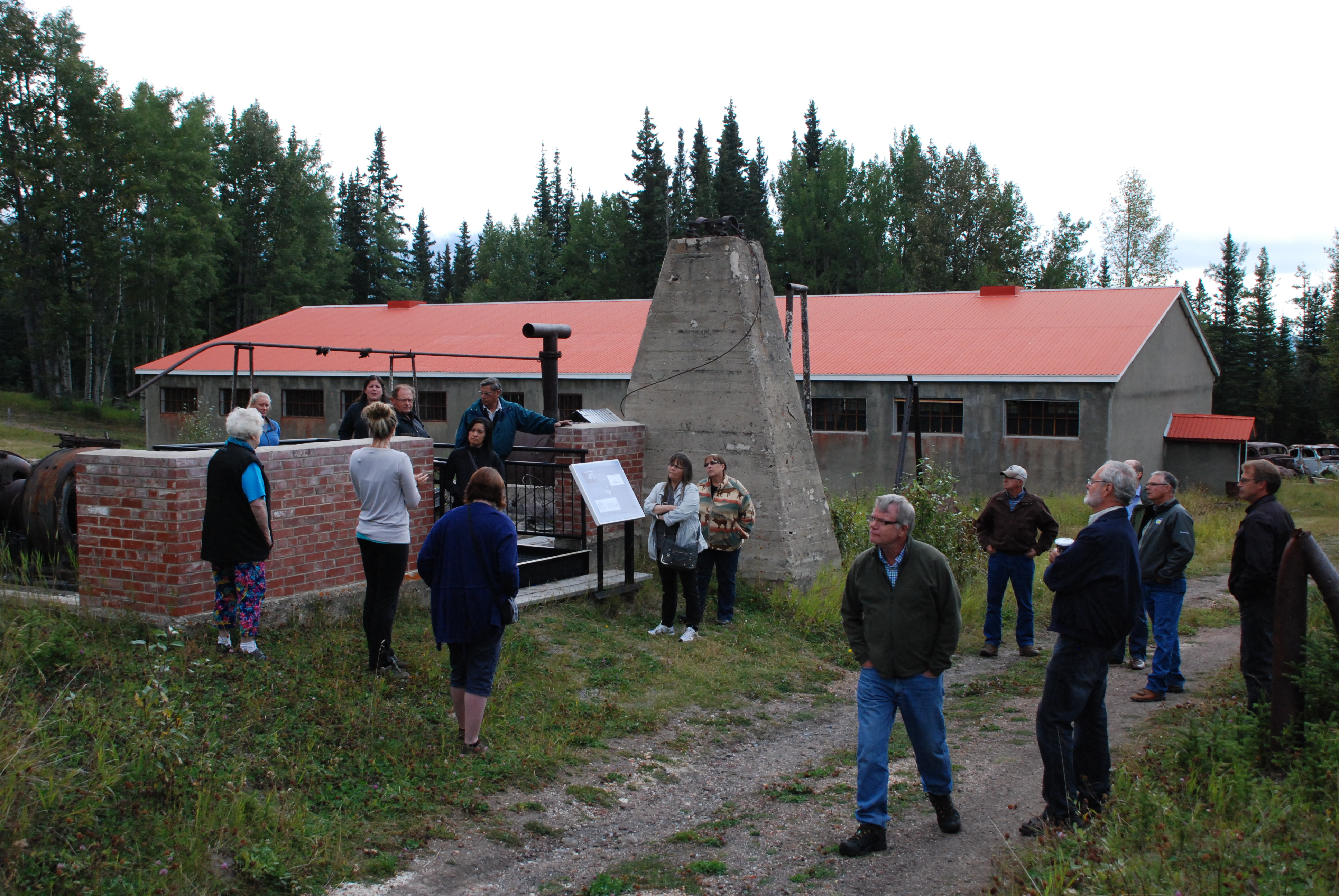
Board tours the Nordegg/Brazeau Collieries Mine Site.
With the September meeting of the Alberta Historical Resources Foundation held in Rocky Mountain House, board members and staff took the opportunity to visit the Nordegg/Brazeau Collieries Mine Site.
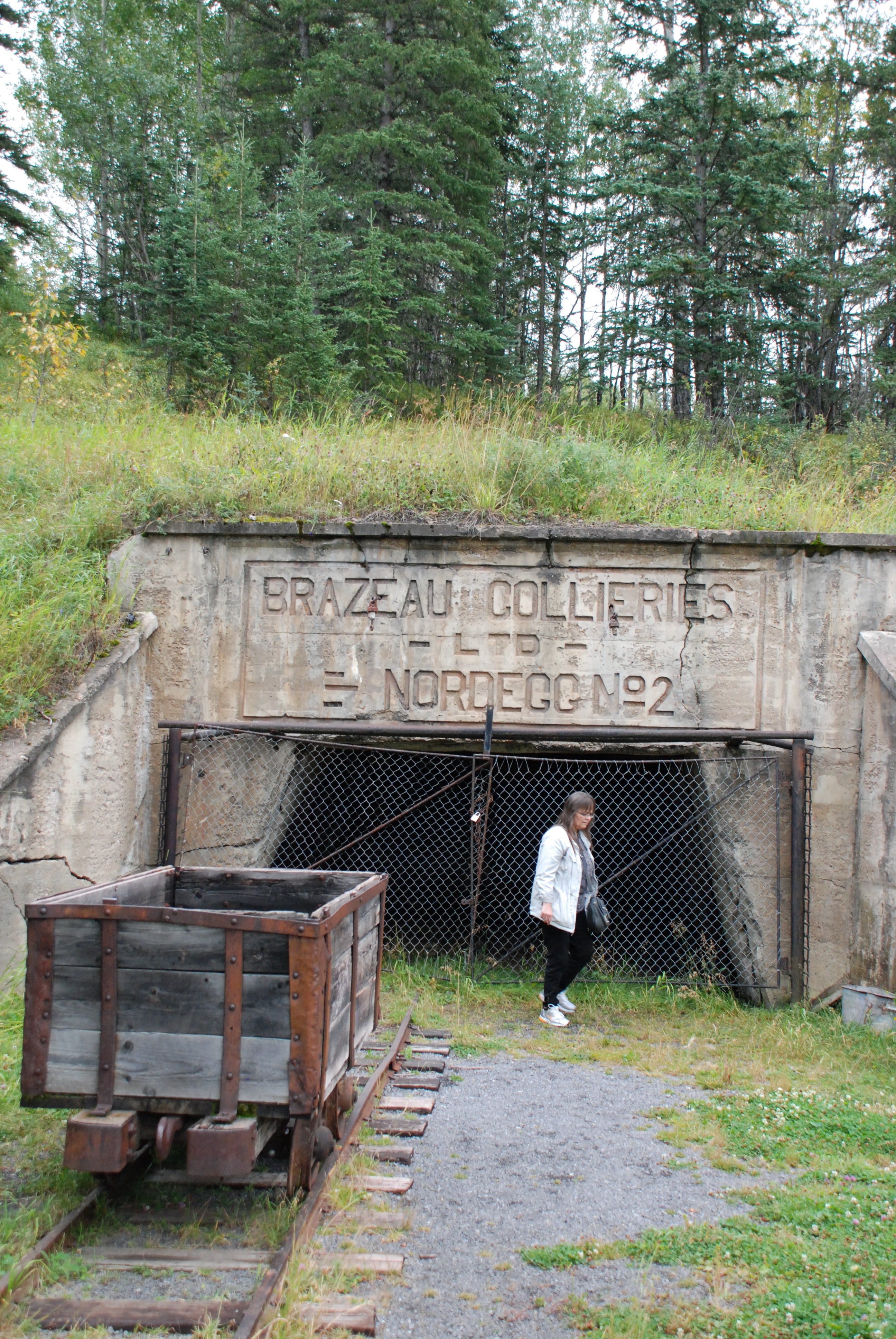
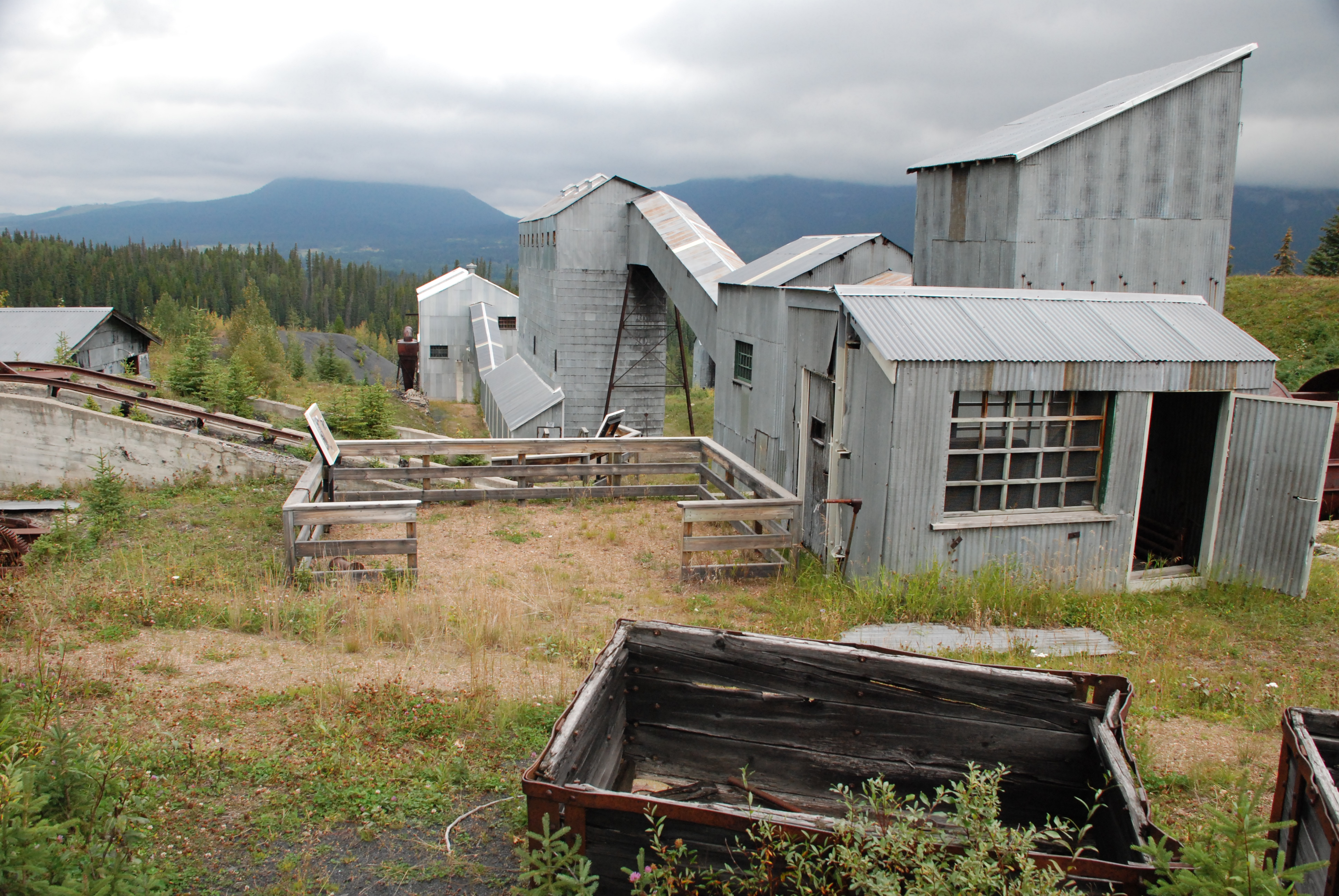
We enjoyed a great walking tour of the Nordegg/Brazeau Collieries Mine Site, led by the informative staff of the Nordegg Historical Society. Designated as a Provincial Historic Resource in 1993, the site of consists of several industrial structures, support buildings and related machinery associated with the coal-mining operations of the Brazeau Collieries between 1911 and 1955.
The site is being restored through a partnership between Clearwater County and the Nordegg Historical Society, with conservation funding from the Foundation’s Heritage Preservation Partnership Program. It was exciting to see this Provincial Historic Resource–large and complex with a variety of heritage values–steadily being restored and revitalized.
Here are a few photographs from our tour of the site:
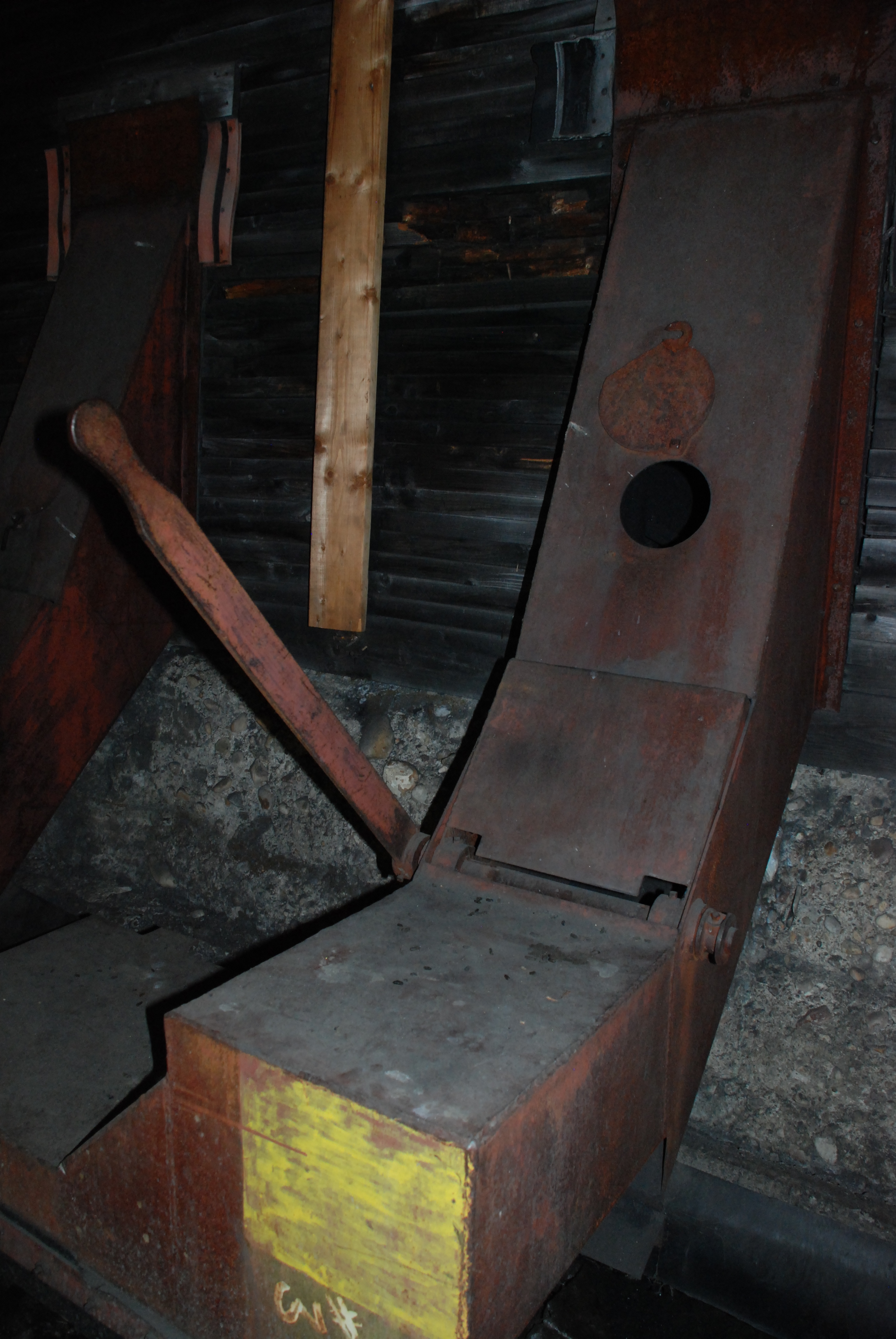
AHRF board beginning it’s tour of the Nordegg Mine Site.Val Clark peeking into one of the mine shafts at Nordegg.Several buildings at the Nordegg Mine Site.A coal chute.Two miner’s cabins, one of which has been restored.
Following the tour, we had an informal meeting with the society and representatives of the Clearwater County in the Nordegg Museum, where everyone learned a great deal about the restoration and interpretation of this historic mine site.
Written by: Carina Naranjilla, Grants Program Administration, Alberta Historical Resources Foundation
Misunderstandings about alterations to designated historic resources
Now and again, I receive a call or a question from someone who appears to be under the impression that their Provincial or Municipal Historic Resource cannot be “altered” and that it must be “preserved” as is. That is not entirely true. Under Alberta’s Historical Resources Act, “no person shall destroy, disturb, alter, restore or repair any historic resource…without the written approval from the minister (Section 20-9)” if the site is a Provincial Historic Resource. For Municipal Historic Resources, the written approval must come from “the council or a person appointed by the council for the purpose (Section 26-6).” To obtain a written approval, the proposed alteration must be evaluated under the Standards and Guidelines for the Conservation of Historic Place in Canada.
The Standards and Guidelines is a pan-Canadian document that is used as a tool to evaluate and sometimes enforce certain principles in the conservation of our historic resources. There are four major components to the document: the conservation decision-making process, the conservation treatments, the standards, and the guidelines – with each component going into more and more detail. The most critical of these is the “conservation decision-making process”. This process involves three stages that I like to refer to as the acronym U.P.I. (pronounced whoopee!) or Understanding, Planning, and Intervening.
The designation of a historic resource implies that we are trying to conserve it for future generations as part of our shared heritage. Understanding why a designation was put in place is the first step in determining what can and can’t be touched. This is summarised in a Statement of Significance (SoS). Each designated historic resource has one. If you do not know what the SoS for your designated building contains, you can search for it on the Alberta Register of Historic Places.
Planning is the most important part of any project and for historic resources it is critical in order to avoid mistakes and the potential damage or loss of heritage fabric – usually listed as character-defining elements within a SoS. As a Heritage Conservation Adviser, it is part of my job to help you understand and plan (and subsequently recommend approvals for Provincial Historic Resources) for projects that will affect your historic resource before any intervening occurs. When someone indicates to me that they will be going straight to an intervention (i.e. actual physical alteration to a historic resource) without any understanding or planning having taken place, I will tend to react like the guy in this video clip.
Ok, well maybe on the inside. Suffice it to say, that intervening without understanding or planning is not recommended. Although I did find the guy in the video’s treatment of the new homeowner’s lack of respect for their heritage building interesting – would you agree?!
Written by: Carlo Laforge, Heritage Conservation Adviser.
Designated in 2005 as a Provincial Historic Resource, the historical significance of the Hudson’s Bay Company Factor’s House in Fort Vermilion lies in it being the only structural evidence remaining of the presence of the Hudson’s Bay Company in Fort Vermilion. It is significant as well in that, having served as the residence of the Hudson’s Bay Company’s factors just after the turn of the twentieth century, it represents the dominance of the HBC in all aspects of life in this spread out community, which was the largest between Edmonton and the Yukon. It is also significant in that, in its size and with its many facilities, it was the first dwelling of its kind to be constructed in Alberta northwest of the Edmonton district.
Historical Context
In 1788, traders for the North West Company established a trading post on the flats of the Peace River at a point near the mouth of the Boyer River. It was called Fort Vermilion, apparently after red ochre deposits in the area. At the time, lands north and west of this point were occupied mostly by members of the Beaver First Nation, who were the initial intended clients of the Company. Once this post was established however, trading was also undertaken with members of the Slavey First Nation, who lived further north and west and also with recently migrated Cree who were now occupying the lands throughout the region. In time, a number of freemen, mostly Metis, came to settle on the river flats outside the Fort and engaged in trading as well.
With the incursion of the Hudson’s Bay into the Peace Region in 1815, a rival HBC post called Colville House was established upriver from Fort Vermilion. After a bitter fur trade war, the two companies amalgamated under the single name of Hudson’s Bay Company, and Colville House was closed down. Throughout the rest of the nineteenth century, trade continued at Fort Vermilion, and, after the Irene Farm and Training School was established near the Fort in 1879, further settlement in the area increased. Soon, the HBC itself was maintaining a farm, milling its own grain, and selling the produce, primarily to people further up the Peace River, around Fort Chipewyan and even at HBC posts down the MacKenzie River. This activity picked up after 1899, when the Klondike gold rush and the signing of Treaty 8 brought a cash economy and more people to the north.
By the end of the nineteenth century, there were more people living around Fort Vermilion than any other community in Canada northwest of the Edmonton district, save for Dawson City. Most of these people were Metis engaged in trapping and small-scale farming. The First Nations of the area preferred to live in the woodlands away from the Fort. The economy of the district continued to centre around the Hudson’s Bay Company trading post, and, even though the fur trade had declined in recent times, business at the HBC farm and grist mill continued to grow. In addition to other small farms in the area, there were now several large ones, such as those of Fred and later Sheridan Lawrence, and that of St. Henri’s Roman Catholic Mission. In 1907, part of Fred Lawrence’s farm would be made over into a federal agricultural research station. All of these farms invariably sold most of their produce to the HBC, especially once the HBC had set up a modern steamroller flour mill, with an auxiliary sawmill and planer, in 1902 for $45,000. By this time, a hundred pound sack of flour produced at Fort Vermilion was selling for 6 dollars, as compared to 10 dollars for those imported from Edmonton.
In 1905, the commercial activity of the HBC around Fort Vermilion was augmented by its launching of a large new steam boat on the Peace River called the SS Peace River. At the same time, the HBC decided to provide the overall director of its operations in the area, Factor Frank Wilson, with a new residence on the banks of the river next to the Fort and farming operation. This was a two-and-one-half storey wood frame dwelling, made from wood cut locally and planed at the HBC sawmill. When completed, it immediately stood out as the most fashionable residence in the northwest with four bedrooms, a den, a dining room separate from the living room, a pantry separate from the kitchen, a sitting room, a sewing area, and even an indoor bathroom. This residence, which no doubt was the venue of much business activity on behalf of the HBC, would be a showcase home and a social centre in Fort Vermilion for years to come. Though it ceased to serve the managers of the HBC store during the 1930’s, it continued to be used as a private residence, in time blending with the other large wood frame dwellings nearby.
Note: the above material was prepared by a former staff historian.
Visit the Alberta Register of Historic Places to learn more about the heritage value of theHudson’s Bay Company Factor’s House in Fort Vermilion. In order for a site to be designated a Provincial Historic Resource, it must possess province-wide significance. To properly assess the historic importance of a resource, a historian crafts a context document that situates a resource within its time and place and compares it to similar resources in other parts of the province. This allows staff to determine the importance of a resource to a particular theme, time, and place. Above, is some of the historical information used in the evaluation of the Hudson’s Bay Company Factor’s House.
Last fall (2012), I had meetings with the Municipal District of Spirit River and also had the opportunity to visit Historic Dunvegan Provincial Park. What a beautiful place to explore! Located approximately one hour north of Grande Prairie and fifteen minutes south of Fairview, this park offers camping, a walking trail that meanders along the Peace River, a Provincial Historic Site and stunning views of the Dunvegan Bridge. With a Visitor Centre acting as a gateway to the Provincial Historic Site portion of the park (of which, portions are also designated as a Provincial Historic Resource) interpretive staff provide guided tours of the historic buildings. If you time your visit carefully, you might even get to experience one of their special events. See below for more information.
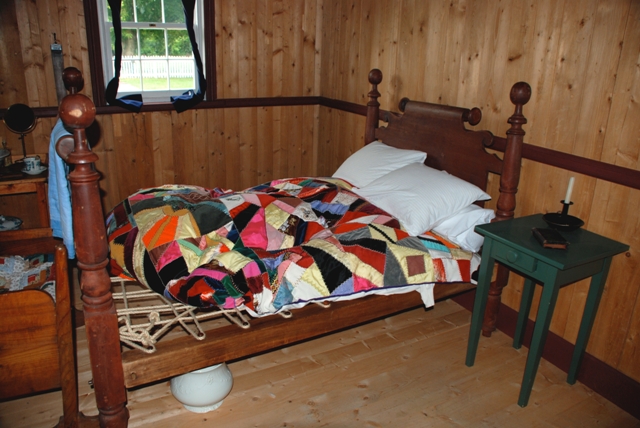
Factor’s House, Historic Dunvegan (Interior) Do you remember hearing the saying “sleep tight” when you were a child? While it’s not known for sure, many believe that the saying originated with the use of rope beds such as this. A person would have to tighten the ropes of the bed every so often, otherwise the ropes might loosen and cause the person to fall through to the floor in the middle of the night. Possibly as a reminder to tighten the ropes, the saying: “Good night, sleep tight” came into being.
Historic Dunvegan is a significant part of Alberta’s heritage because of its connection to the operations of the North West Company and Hudson’s Bay Company in the Peace River District, for being an example of early architecture in Alberta and for the archaeological resources located at the site. To learn more about the significance of Historic Dunvegan and its history, read its listing on the Alberta Register of Historic Places.
Historic buildings that you could tour when at Historic Dunvegan Provincial Park, include:
St. Charles Mission – The Rectory
St. Charles Mission – St. Charles Church
Factor’s House
Revillon Frères Store (opening July 1st)
Tours of these fully restored buildings are offered daily.
Open Hours: May 15-September 2, 2013 from 10am-5pm.
Regular admission prices: $3.00 for Adults; $2.00 for Seniors; $1.50 for Youth; Free for children 6 and under.
Attention educators and youth group leaders! Educational programs or tours can be booked anytime during the summer.
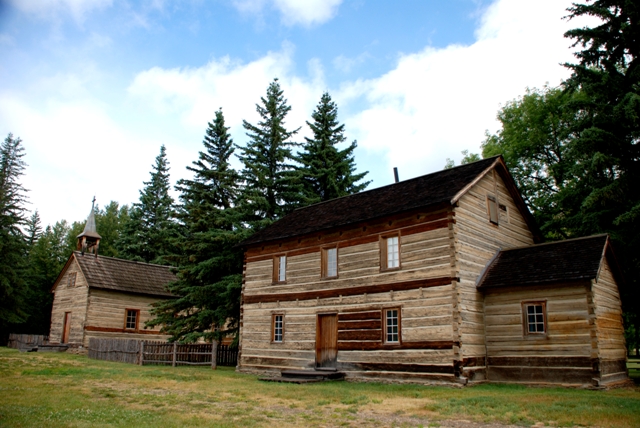
St. Charles Mission, Church and Rectory
SPECIAL EVENTS
Canada Day – Monday, July 1st, 11am-4pm. Celebrate a historical milestone at Historic Dunvegan by being part of the grand opening of a building originally constructed by the Revillon Frères free traders in 1909. Discover this significant chapter of Dunvegan’s story by exploring the building and hearing from many of the people who have helped bring it to life. The day’s festivities will also include a performance by Juno-nominated family entertainer Mary Lambert, tours of all historic buildings, games, cake and crafts.
Admission is half price!
Annual Fresh Air Market – Sunday, August 4th, 11am-5pm. Experience the time-honoured tradition of trading and gathering at Historic Dunvegan’s Fresh Air Market. Shop for jewellery, gifts, and other treats – all handcrafted by artisans from the Peace Country. Costumed interpreters will be offering tours of Historic Dunvegan’s three fully restored historic buildings. Activities for the kids will be provided. Regular fees apply.
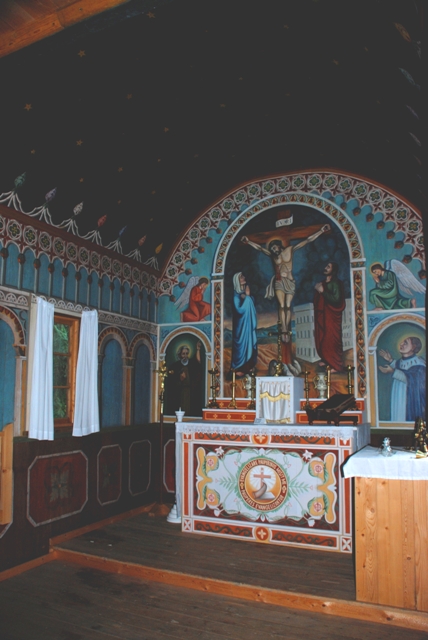
St. Charles Mission, Church (Interior)
LONG WEEKENDS
Amphitheatre Entertainment –Saturdays (May 18, June 29, August 3) at 2:00pm. Join the staff of Historic Dunvegan for a humorous and often interactive dramatic presentation. Participation by donation.
Sunday Funday – Sundays (May 19, June 30, September 1) at 2:00pm. Have some fun with our historical interpreters as they host games and activities. Participation by donation.
JULY AND AUGUST
Day Camps – Most Wednesdays in July and August, 11am-4pm. For kids aged 4-10. Have some fun in the sun, learn a new craft, play a fun game, watch movies and more! Fee: $10/child. Bring a bag lunch.
Tea Leaves & Bannock Sticks – Most Saturdays in July and August, 2pm-4pm. Learn to bake bannock (traditional Scottish/Aboriginal bread) and enjoy a cup of tea while visiting with friends, family and historic staff. Participation by donation.
Written by: Brenda Manweiler, Municipal Heritage Services Officer
(Special thanks goes out to Stephanie McLachlan, Program Coordinator at Historic Dunvegan Provincial Park, who supplied all the summer event information.)
A recent Government of Albertainformation bulletinannounced a new Provincial Historic Resource. Check it out:
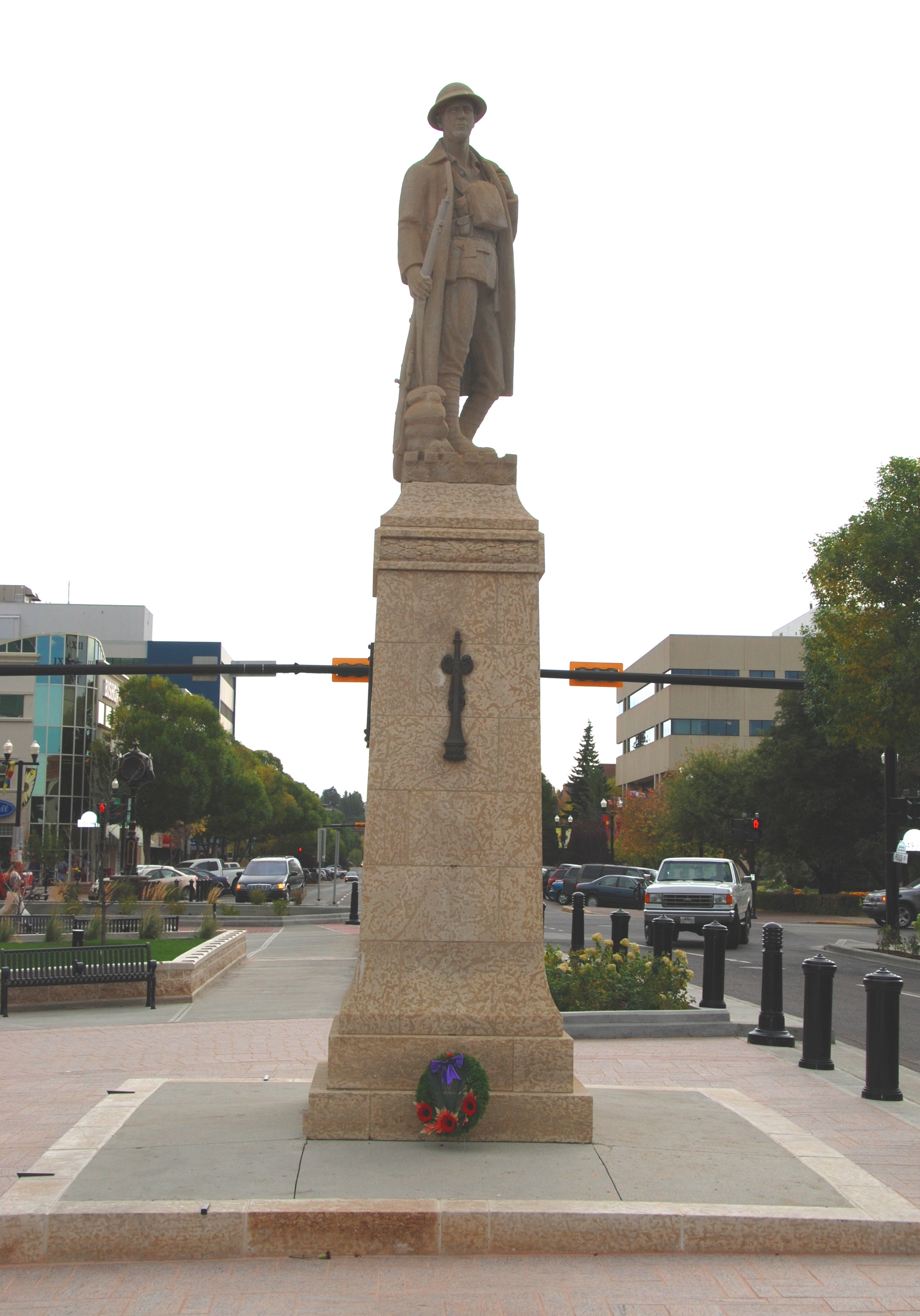
A treasured monument honouring the service and sacrifice of the soldiers of Central Alberta has been designated a provincial historic resource.
The Red Deer Cenotaph is located on 50th Avenue, the city’s historic main street, near the CPR Railway Station that was the embarkation point for those on their way to the European front.
Unveiled on September 15, 1922, by Lord Byng of Vimy, Governor General of Canada, the cenotaph is one of the earliest and best known works of Major Frank H. Norbury. A native of Liverpool, Norbury was a skilled carver, decorated veteran and a major contributor to artistic culture in Alberta. The depiction of the Unknown Soldier in full World War I dress kit that stands atop the limestone base evokes the weariness and resolute purpose of those who served far from home.
“The Red Deer Cenotaph honours the selfless service of Alberta’s military men and women and serves as a reminder of how these Albertans helped to shape the history of our province, this nation and the world,” said Alberta Culture Minister Heather Klimchuk. “The designation of the Red Deer Cenotaph will help to ensure future generations learn the stories of their sacrifice and to share in the pride those stories evoke.”
Alberta currently has more than 350 provincial historic resources. These sites embody the diversity of our province’s history and include medicine wheels, tipi rings, fur trading and mounted police posts, coal mines, farmsteads, ranches, railway stations, grain elevators, churches, schools, government offices, commercial blocks and private residences. Along with helping to provide economic, social and cultural benefits, designation of provincial historic resources helps to ensure that local landmarks will continue to help connect Albertans with their rich heritage.
For more information on the Provincial Historic Resource Designation program, click here.
Visit the Alberta CultureNewsroomto read additional releases.
A recent Government of Alberta information bulletin announced one of the latest Provincial Historic Resource designations. Check it out:
The Alberta government has designated the Taber Courthouse, one of Alberta’s early seats of justice, as a Provincial Historic Resource.
Built in 1918, the Taber Courthouse became the model for Alberta courthouses built prior to the Second World War. After being declared a judicial sub-district in 1917, the Town of Taber donated land for the construction of the courthouse building that would also house the local detachment of the newly-formed Alberta Provincial Police. The Taber Courthouse was also the site for meetings of local community organizations and the Taber Town Council. Following the dissolution of the judicial sub-district, the courthouse continued to be used for a variety of provincial government activities and in 1953 became the official Town Hall.
The courthouse currently serves as home to the Centre Court for the Arts, a multi-use arts facility operated by the Arts Council of Taber that showcases the work of local and provincial artists.
“The partnership between the Town of Taber and the Arts Council of Taber in breathing new life into this community landmark is a wonderful example of how our historic resources can continue to provide economic, social and cultural benefits to the community,” said Culture Minister Heather Klimchuk, who joined with representatives from the Town of Taber and the Arts Council of Taber in marking the designation. “Identifying the Taber Court House as a Provincial Historic Resource will help to ensure that future generations will continue to share in those benefits while preserving the story of Taber’s rich heritage.”
“Taber takes great pride in our local history and the contributions our community has made in the development of Alberta,” said Taber Mayor Ray Bryant. “The designation of the Taber Courthouse as a Provincial Historic Resource is an important part of our ongoing efforts to honour our past as we look to grow into the future.”
Alberta currently has more than 350 provincial historic resources. These sites embody the diversity of our province’s history and include medicine wheels, tipi rings, fur trading and mounted police posts, coal mines, farmsteads, ranches, railway stations, grain elevators, churches, schools, government offices, commercial blocks and private residences. Along with helping to provide economic, social and cultural benefits, designation of Provincial Historic Resources helps to ensure that local landmarks will continue to help connect Albertans with their rich heritage. For more information on the Provincial Historic Resource Designation program, click here.
Visit the Alberta Culture Newsroom to read additional releases.
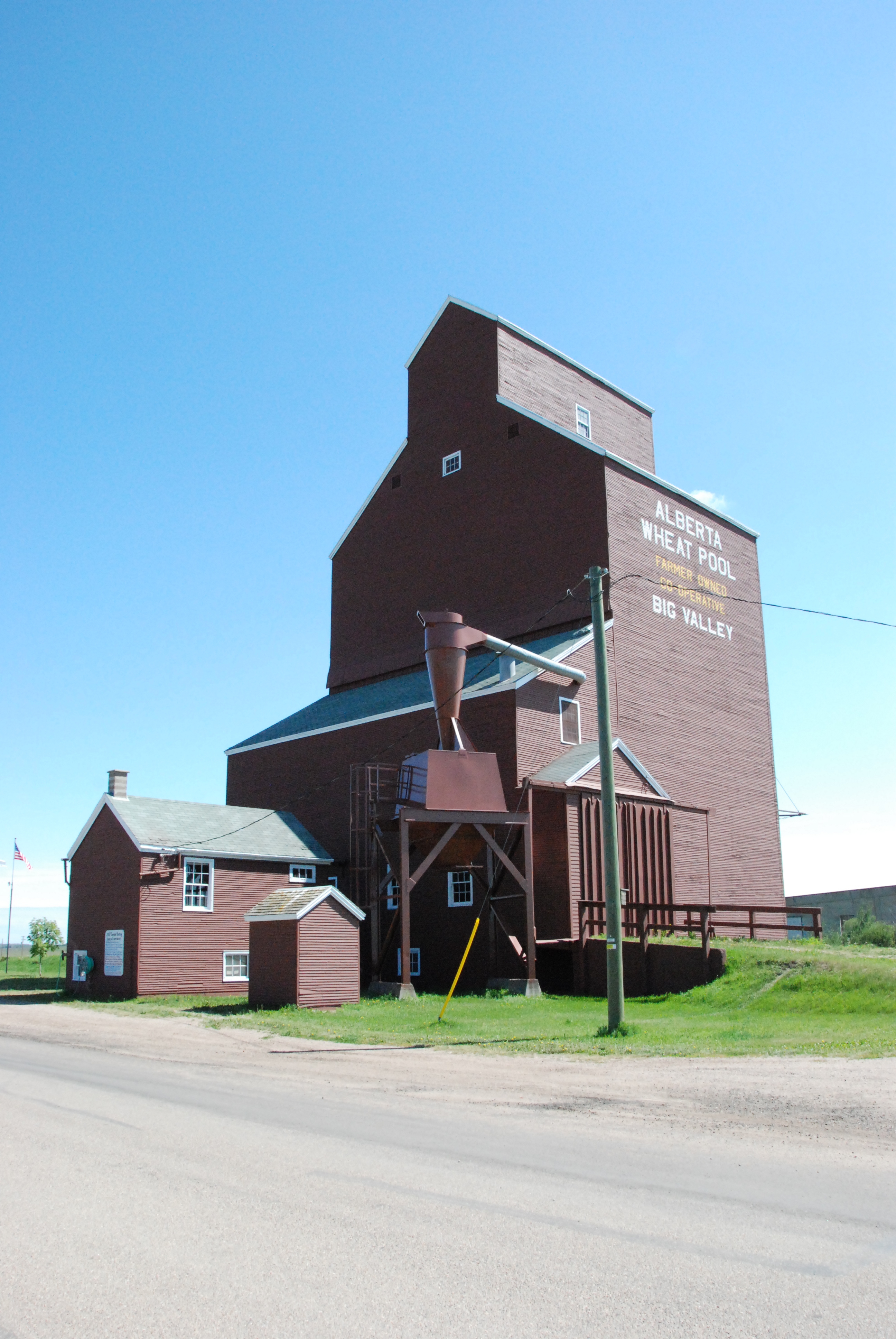
Alberta Wheat Pool Grain Elevator (DSC_5353 Historic Resources Management Branch).
Today’s blog post will no doubt please all of our railroad and grain elevator enthusiasts out there in the ether. On August 27, 2012, the Alberta Wheat Pool Grain Elevator in Big Valley was designated as a Provincial Historic Resource and added to the Alberta Register of Historic Places. This grain elevator has heritage significance due essentially to the fact that it is…, well, it’s a grain elevator. These once dominant, landmark structures in rural Alberta have become iconic symbols, speaking to the province’s agricultural, social and railroad transportation history. This particular elevator also contributes to the cultural landscape of Big Valley, aiding in the visual communication of the community’s history as one of the province’s busiest railroad divisional points.
Wood-cribbed grain elevators such as the Alberta Wheat Pool elevator in Big Valley were once a dominant presence in the lives of most rural Albertans. These imposing, structures stood out on the horizon and could be seen from miles around. They were essential facilities for the sorting, storage, and transportation of grains and, as such, they also served an important social function as meeting places for area farmers. Although there were some variations in elevator design, size and services, they remained consistently similar in basic design and form over the years. This Alberta Wheat Pool grain elevator was a relatively late addition, being built in 1960, but it shares much with its earlier predecessors, notably its vertical orientation, gable-roofed cupola, shed-roofed drive shed with earthen ramps and overall lack of fenestration.
View of the Alberta Wheat Pool Grain Elevator, Big Valley (DSC_2647 Historic Resources Management Branch).
In 1912, Big Valley had been selected as a divisional point on the Canadian Northern Railway’s (CNoR) Battle River Subdivision. At one point it possessed a large railyard and a number of important railroad maintenance facilities and storage areas for fuel, water and freight. Largely supported by the railroad, Big Valley was a bustling centre with a large population. In the late-1920s, Big Valley’s boom period came to an end when the divisional point was moved to Mirror on the former Grand Trunk Pacific Railway line.
Although the 1960 Alberta Wheat Pool grain elevator was built long after the Big Valley’s glory days as a divisional point, its presence adds to the interpretation of the community’s railroad heritage, particularly when considered together with the presence of other designated historical resources, such as the historic CNoR railway station and the remains of the roundhouse and frequent visits by the Canadian National Railways 6060 steam locomotive.
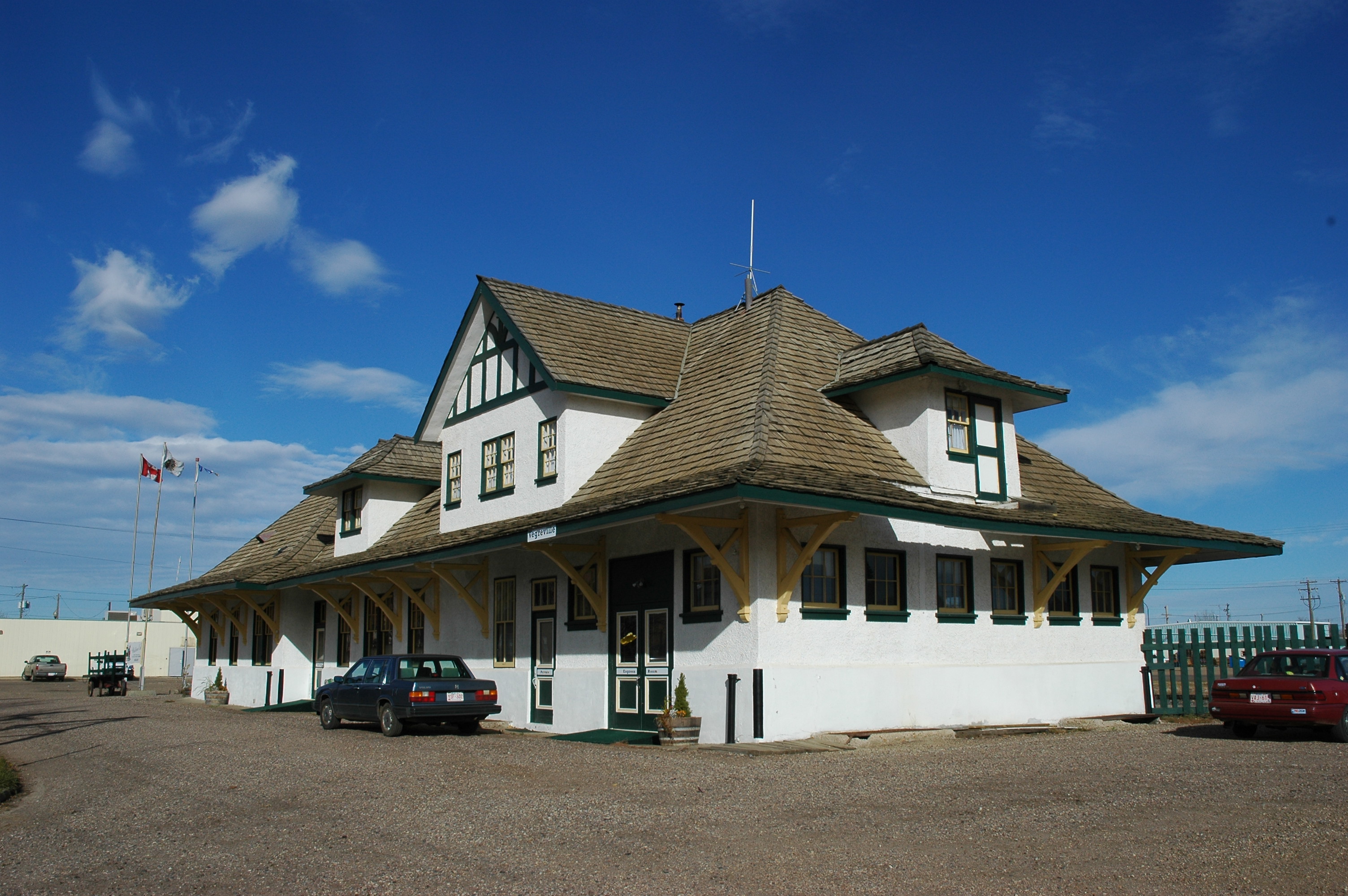
Canadian National Railway Station, Vegreville (DSC_3053 Historic Resources Management Branch).
When the Canadian Northern Railway strung its line through east central Alberta during 1904-05, a number of sidings were put up. At a few locations, stations were erected and townsites subdivided. One of the townsites was near the tiny community of Vegreville, named after the Oblate priest, Father Valentin Vegreville, in 1895 when a post office was opened. The name was probably suggested by Father Morin, who was trying to establish a Roman Catholic Francophone colony in the area. A few French settlers did come in, and, by the turn of the 20th century, a few English settlers were around as well. A number of Ukrainians were also beginning to arrive, some spilling over from Ukrainian settlements further to the east. In time, Vegreville became known as, primarily, a Ukrainian district, exhibiting many trappings of Ukrainian culture.
With the coming of the railway, many more settlers arrived, and the earlier community was soon replaced by the railway center. With the railway, farmers in the district could at last ship their produce directly to markets in the East. As the hinterland was so large, a building boom occurred in Vegreville. In August 1906, the community was incorporated, first as a village and then as a town, with over 400 people.
The district experienced much prosperity during World War I, but, like the rest of rural Alberta, it suffered from reduced grain prices following the War. The Canadian Northern was also suffering, and, in 1919, it was taken over by the Dominion government and made part of the Canadian National system of railways.
The late 1920’s was a period of high grain prices and high crop yields in Alberta. The farming population around Vegreville prospered accordingly, and also grew. By this time, CN was well aware that the old train station, built in 1906, was hardly adequate for the needs of the district. It had been built to a third class 100-3 design, as had most stations between Lloydminster and Edmonton. According to railway historian Les Kozma, most of these stations were then recognized to be inadequate. On 10 April 1929, the local Board of Trade wrote to CN Superintendent Devenish to complain that:
… the present CNR station is an eyesore and a blemish on the fair face of the town, and the facilities provided the travelling public at this station were ridiculously inadequate for the size of the town the station intended to serve.
By this time, the Canadian Pacific Railway had begun building a branch line south from Willingdon. Possibly in recognition of the coming competition, CN decided to build a new station in Vegreville. This was a two-story wood frame structure, measuring 107’ x 37’, with a stucco exterior. It was divided into four separate functional areas on the ground floor (waiting room, ticket and express office, express room, and two washrooms). The second floor was made into living quarters for the station manager and his family. A storage room and a boiler room occupied the basement. The waiting room itself was subdivided into compartments, one serving as a ladies waiting room, and another as a smoking room. The Vegreville Observer was evidently satisfied, for it observed that:
… The CN, as our pioneer railway, has always been generous to Vegreville, not unduly so, but sufficiently for our present needs.
The station’s historical significance lies in its service as a station for the entire Vegreville district from 1930 to 1975. As such, it was the nerve centre for the export of agricultural produce, and the import of finished products. It also provided a passenger service for people travelling east or west, and contained the district telegraph office.
This 1930 CN Station in Vegreville served the community as a station until 1975, at which time it was sold to the town and converted into other uses, including a seniors drop-in centre. Currently, the station houses a restaurant and provides meeting space upon request.
Visit the Alberta Register of Historic Places to learn more about the heritage value of theCanadian National Railway Station in Vegreville. In order for a site to be designated a Provincial Historic Resource, it must possess province-wide significance for either its history or architecture. To properly assess the historic importance of a resource, a historian crafts a context document that situates a resource within its time and place and compares it to similar resources in other parts of the province. This allows staff to determine the importance of a resource to a particular theme, time, and place. Above, is some of the historical information used in the evaluation of the Canadian National Railway Station.



 RETROactive