Making sense of the Victoria Settlement census

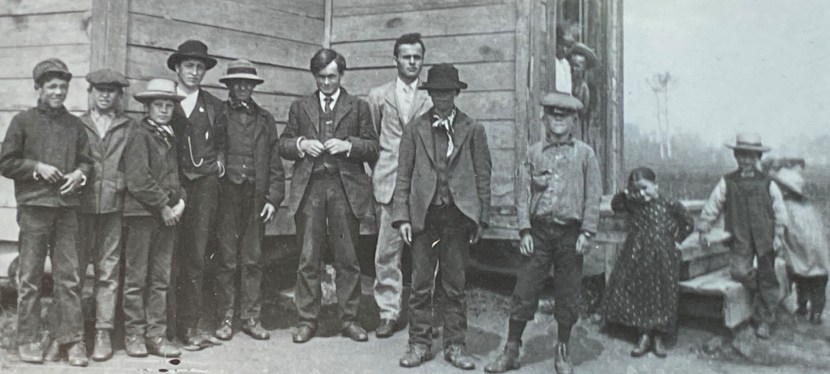
Editor’s note: The banner image above is of the school children of Pakan in 1910, the year before the 1911 census. Image donated by Rev. Metro Ponich.

Written by: Sarah Mann, Master’s student in Anthropology, University of Alberta

The Canadian census is something most Canadian adults have experienced. While the survey is often looked as tedious, it can hold a myriad of information and questions. My work around Victoria Settlement Provincial Historic Site was done as part of a Community Service Learning (CSL) internship with the Heritage Division of the Government of Alberta. This work involved looking at what information and further research plans can be drawn from the Victoria Settlement censuses using supplemental materials from community history books from around Alberta. From the census data, I created two spreadsheets tracing the changes and differences in the various censuses done in Victoria Settlement. Comparisons of the 1881, 1891 and 1901 censuses show several inconsistencies and allow us to ask many questions about life in the area.

Victoria Settlement, northeast of Edmonton along the North Saskatchewan River, was settled in 1862 when George McDougall founded the Methodist mission on the site of a traditional Indigenous camping ground. Then in 1887, the area became known as Pakan after the name of the local post office, which in turn was named for Cree Chief Pakan (James Seenum). The settlement was abandoned in 1922 when the railroad bypassed the community, instead being built through the town of Smoky Lake, approximately 15 km to the north. The eras examined in the censuses are the periods of 1881-1911, as there is a national census every 10 years. In between the years of 1891 and 1901 a large Ukrainian population settled in the area, but my study focused on the Métis elements of the community.
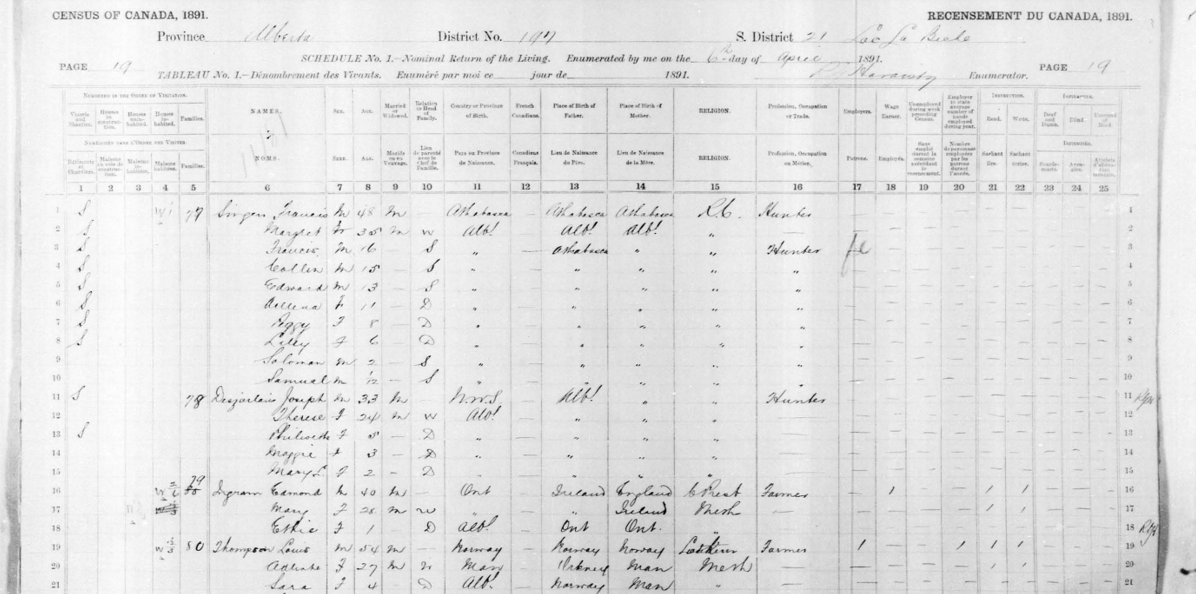
1891 census. Source: Library and Archives Canada.
Read more

Blairmore, Trochu and Grande Prairie home to new Municipal Historic Resources

Editor’s note: Read previous RETROactive posts about Historic Resource designation.

Written by: Ronald Kelland, Historic Places Research and Designation Program

Recently, some new Municipal Historic Designations in the Crowsnest Pass, Trochu and Grande Prairie have been added to the Alberta Register of Historic Places. These resources have been deemed by their municipality to be of significant heritage value to their community. Like Provincial Historic Resources, municipally designated properties are protected under the Historical Resources Act and qualify for conservation grants from the Heritage Preservation Partnership Program.

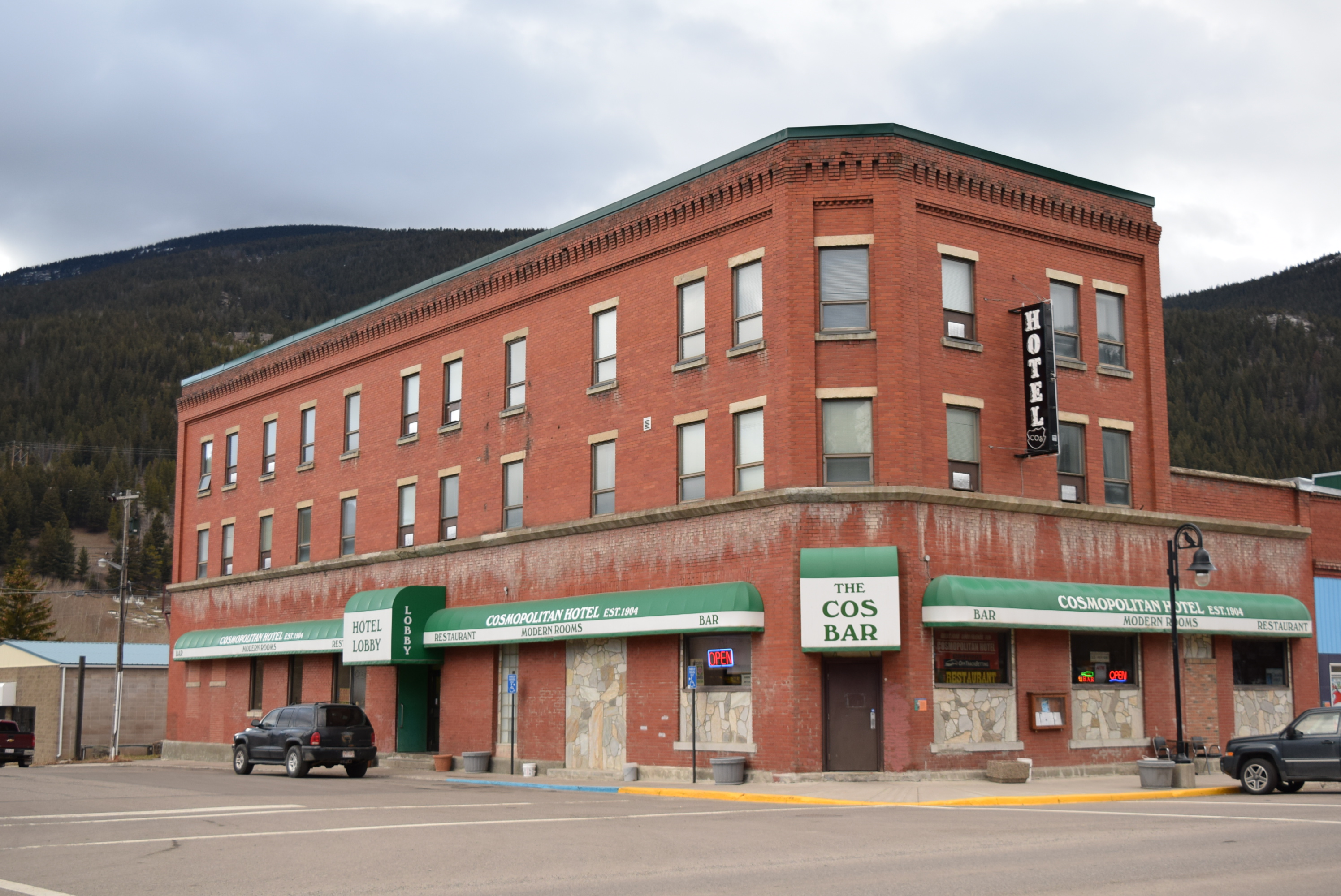
Cosmopolitan Hotel (Crowsnest Pass – Blairmore)

The Cosmopolitan Hotel is a three-story brick building. Its heritage value lies in its: association with the urban and commercial development of the former mining town; for its design; and for its position as a community landmark. Like many communities in their early days, Blairmore’s earliest buildings were simple, wood-frame structures, which were highly susceptible to fire. The original, wood-frame Cosmopolitan Hotel burned down in 1912, along with much of Blairmore’s commercial district. The hotel was rebuilt as a substantial, 50-room brick structure later that same year.

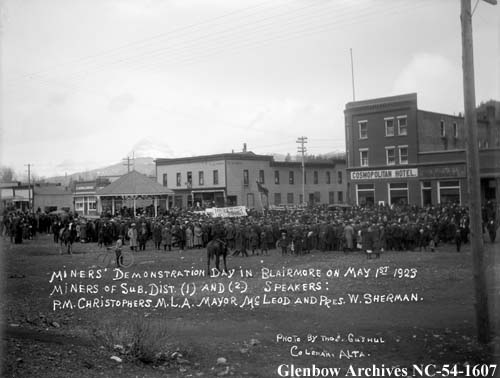
Although still a simple and understated structure, it affects an impressively solid appearance and has some ornamental details, such as the corbelled parapet that were common on commercial buildings of the period. Located on a corner lot on what was Blairmore’s most important intersection, the Cosmopolitan Hotel has long been a significant landmark in the Crowsnest Pass. Being located across the street from the Blairmore Bandstand, which was a favoured location for community events, miners’ union rallies and strikes, the Cosmopolitan Hotel was often the backdrop of those events, making it a significant focal point for the community.

The Cosmopolitan Hotel was designated as a Municipal Historic Resource in 2016 and was listed on the Alberta Register of Historic Places in early 2024.

Cosmopolitan Hotel from the southwest, November 2018. Source: Historic Resources Management, Arts, Culture and Status of Women.
Miners’ Union Rally at the Blairmore Bandstand with the Cosmopolitan Hotel in the background, May 1, 923. Source: Glenbow Archives, NC-54-1607.
Read more