Heritage along the Highway

Yellowhead County: Municipal Heritage Survey and Inventory

A municipal heritage survey of approximately 300 sites and a municipal heritage inventory project to evaluate 30 surveyed sites for eligibility, significance and integrity have been keeping the highways and byways of Yellowhead County busy. Throughout 2011 and 2012, heritage consultants and local heritage enthusiasts have been exploring, identifying and learning about the history and heritage of one of Alberta’s largest rural municipalities – Yellowhead County.
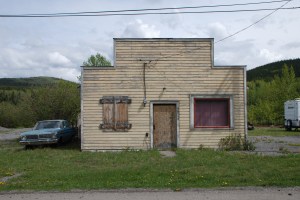
The Cadomin Photo Studio was documented in the Yellowhead County Municipal Heritage Survey and is currently be evaluated as part of the County's inventory project.
The Cadomin Photo Studio was documented in the Yellowhead County Municipal Heritage Survey and is currently being evaluated as part of the County’s inventory project.

West of Edmonton, Yellowhead County is located along Yellowhead Highway 16. It encompasses 7,012,000 acres stretching from the Pembina River in the east to the Jasper National Park gates in the west. Travellers that frequent this section of the Yellowhead Highway are likely familiar with the Towns of Edson and Hinton and, of course, the iconic Rocky Mountains. What might be less familiar is that alongside these Highway 16 destinations and nestled off into the north and south of this transportation corridor are reminders of a long and varied history. Trapping, logging, farming, coal mining and more recently oil, gas and tourism have all impacted the development of what is now Yellowhead County. Various structures, cultural landscapes and buildings located in the hamlets of Evansburg, Wildwood, Robb, Cadomin and Brule (amongst others) retain glimpses of this diverse history.

Miners cabins, ranches, hotels, industrial remains, barns, schools, churches, a pool hall and a water tower exemplify the range of potential historic places documented and evaluated in Yellowhead County’s heritage survey and inventory projects. Throughout 2011 and 2012 an extensive but not exhaustive survey was completed. Upwards of three hundred potential historic places located in all corners of the County were photographed and geographical, architectural and historical information was recorded for uploading to the Alberta Heritage Survey database.

Currently, thirty of the three hundred surveyed sites are being evaluated to determine if they possess significance – in other words – why are the sites important to area residents? Did they have a lasting impact on making the community what it is today? The sites will also be evaluated for integrity to ensure they still possess the ability to communicate their significance. The results of this analysis will be written up into Statements of Significance and Statements of Integrity. Yellowhead County staff, combined with the services of a heritage consultant and the County’s Heritage Advisory Board, will see this project through to completion.
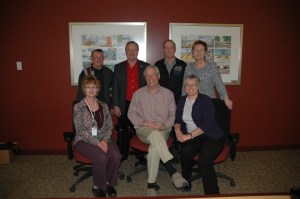
Yellowhead County Heritage Advisory Body Back L-R: Gary Conger, Shawn Berry, Brian Broughton, Pat DiMarcello. Front L-R: Cheryl May (Heritage Coordinator), Marshall Hoke (Chair), Debbie Charest (Director of Community and Protective Services).
Yellowhead County Heritage Advisory Body – Back L-R: Gary Conger, Shawn Berry, Brian Broughton, Pat DiMarcello. Front L-R: Cheryl May (Heritage Coordinator), Marshall Hoke (Chair), Debbie Charest (Director of Community and Protective Services).

The municipal heritage survey and the inventory project will allow applicable municipal staff, councillors and residents to better understand the older places that make their communities unique and vibrant. Essentially, these projects will serve as a foundation for establishing a local heritage conservation program and will contribute to sense of place and community identity.

Written by: Brenda Manweiler, Municipal Heritage Services Officer
Long live heritage!

Presentation of the Alberta Historical Resources Foundation Heritage Awards (November 30, 2012)

“It’s very important to remember that heritage preservation is much more than paying tribute to our past, it is about building strong communities for our future …”  This was one of the key messages of Honourable Heather Klimchuk, Minister of Culture, as she paid tribute to the accomplishments of eight recipients of the 2012 Alberta Historical Resources Foundation (AHRF) Heritage Awards.

On the evening of November 30th, the historic McKay Avenue School in Edmonton was bustling with excitement, pride and nostalgia as Minister Klimchuk joined AHRF board, staff and guests in celebrating the achievements of heritage community members.

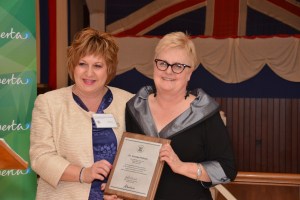
Honourable Heather Klimchuk presenting Dr. Carolee Pollock with plaque at the 2012 AHRF Heritage Awards.
Honourable Heather Klimchuk presenting Dr. Carolee Pollock with a plaque at the 2012 AHRF Heritage Awards.

In keeping with the theme of honouring excellence, the Minister first presented a plaque to Dr. Carolee Pollock in recognition of her nine years of service with AHRF as board member (since 2004) and Chair (since 2009).  As the night unfolded, Dr. Pollock then proceeded with the presentations of the AHRF heritage awards. Board member Joe Friedel graciously handed out the plaques.

Delegates from the communities of High River and St. Albert gathered to celebrate their successful conservation efforts, which earned them Heritage Conservation awards. These were presented to the Town of High River for excellence in the conservation of the Canadian Pacific Railway Station and the Arts and Heritage Foundation of St. Albert for outstanding achievement in the conservation of their two grain elevators (the Alberta Grain Company Grain Elevator and the Alberta Wheat Pool Grain Elevator).

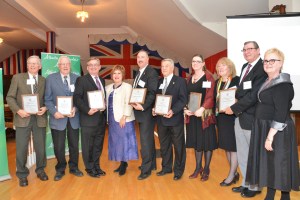
From L to R: Kermith Anderson; Lawrence Henderson, President, Lacombe & District Historical Society; Jamie Kinghorn, Councillor, Town of High River; Honourable Heather Klimchuk, Minister of Culture; Steve Christie, Mayor, City of Lacombe; Jack Manson; Trisha Carleton (receiving award for her mom, Judy Ann Carleton); Ann Ramsden, Arts & Heritage Foundation of St. Albert; Dr. Alan Murdock, Chair, Arts & Heritage Foundation of St. Albert; Dr. Carolee Pollock, AHRF Chair. Missing: Cathering C. Cole.
From L to R: Kermith Anderson; Lawrence Henderson, President, Lacombe & District Historical Society; Jamie Kinghorn, Councillor, Town of High River; Honourable Heather Klimchuk, Minister of Culture; Steve Christie, Mayor, City of Lacombe; Jack Manson; Trisha Carleton (receiving award for her mother, Judy Ann Carleton); Ann Ramsden, Arts & Heritage Foundation of St. Albert; Dr. Alan Murdock, Chair, Arts & Heritage Foundation of St. Albert; Dr. Carolee Pollock, AHRF Chair. Missing: Catherine Cole.

The community of Lacombe was beaming with pride as they took home two plaques this year:  a Heritage Conservation award went to the Lacombe and District Historical Society for their commitment to the conservation of the Lacombe Blacksmith Shop and the Municipal Heritage Preservation award went to the City of Lacombe for their successful multi-phased Heritage Management Program.

AHRF was also honored to recognize Catherine Cole with a Heritage Awareness award for her excellent work on Piece by Piece: the GWG Story.

Last but not the least, the stories of Outstanding Achievement award recipients filled the evening with fond memories of family life and dedication to conserving their community’s heritage.  The Outstanding Achievement awards were presented to Kermith Anderson of Scandia, Judith Ann Carleton of Blackfalds and Jack Manson of the Mulhurst area.

It is through the tireless efforts of these heritage community members that we and others continue to enjoy Alberta’s rich heritage.

On behalf of the AHRF board and staff of Alberta Culture, congratulations to all award recipients!

Additional information on award recipients as well as photographs, audio clips and videos of the awards ceremony are available at Alberta Culture’s newsroom.

Written by: Carina Naranjilla, Grant Program Coordinator

Thank you! Success despite Snow!

Municipal Heritage Forum 2012

Last week, on November 8th and 9th, the sixth annual municipal heritage forum was held at the Glenbow Museum’s Conoco-Phillips Theatre. Nearly 85 attendees from rural and urban municipalities gathered to discuss issues and opportunities associated with the local conservation of historic urban landscapes.

We thank all those that made the trek to Calgary through adverse winter driving conditions. Your enthusiasm and participation was inspiring.

Stay tuned for detailed Forum updates!

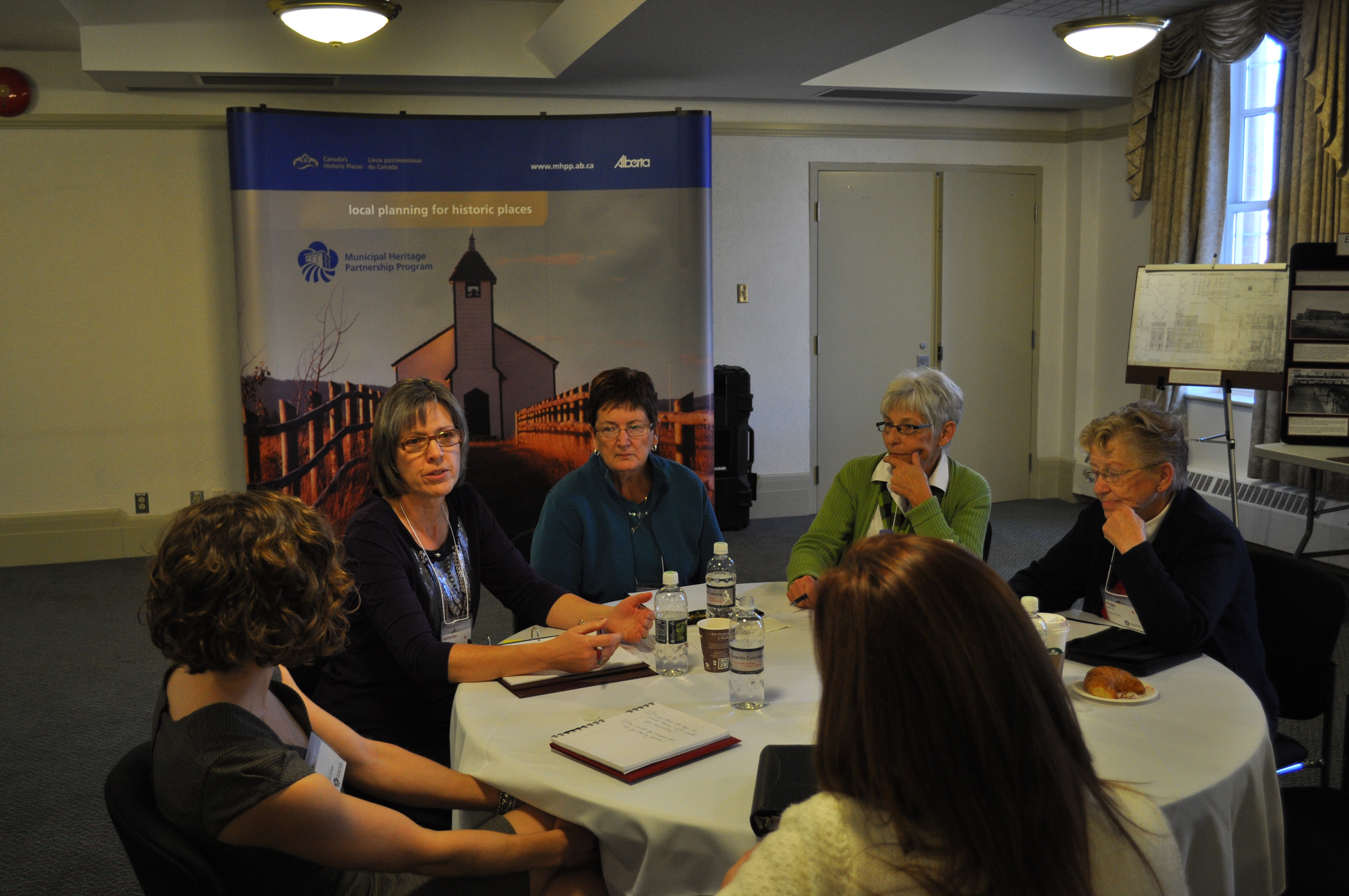
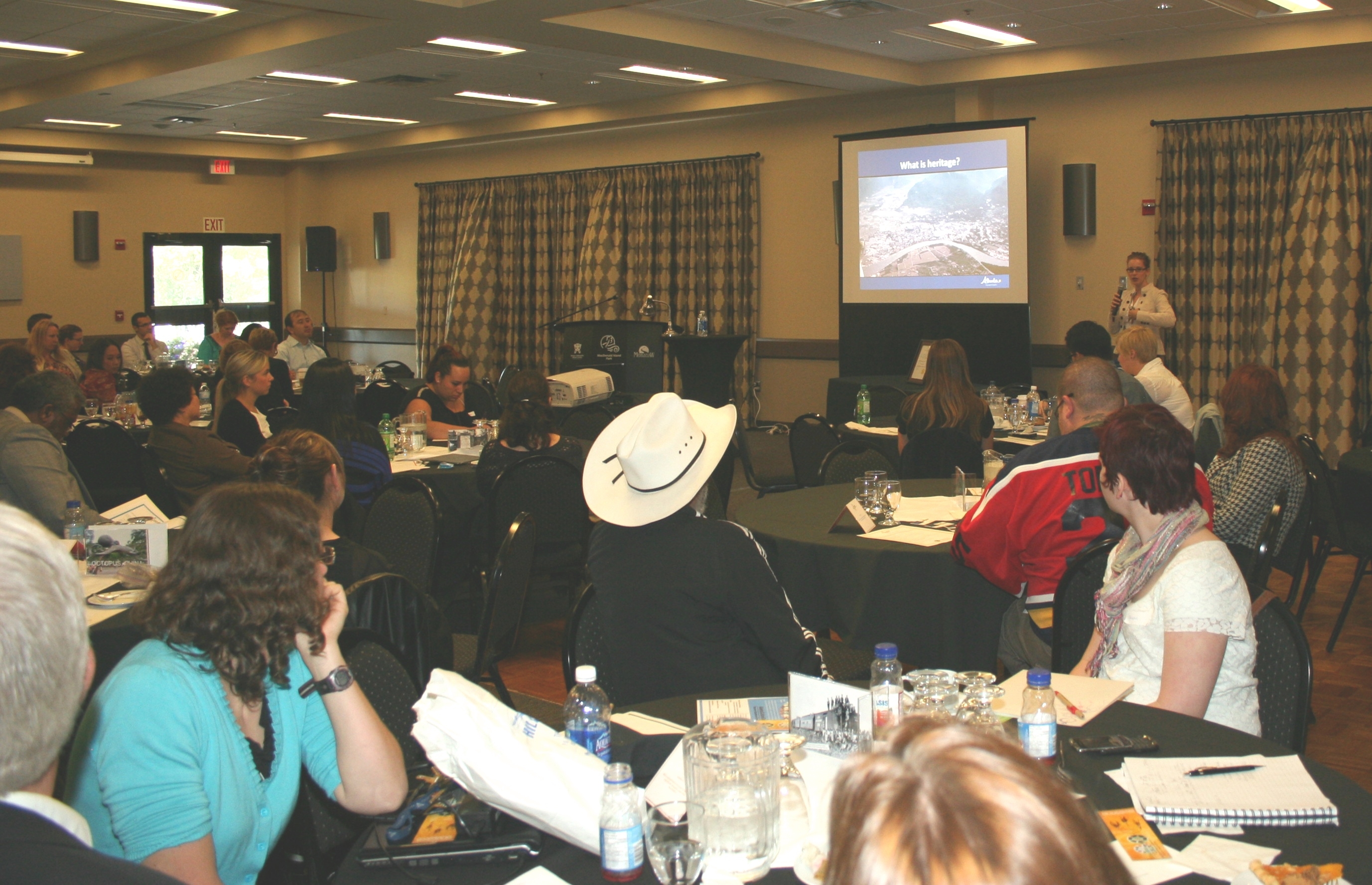
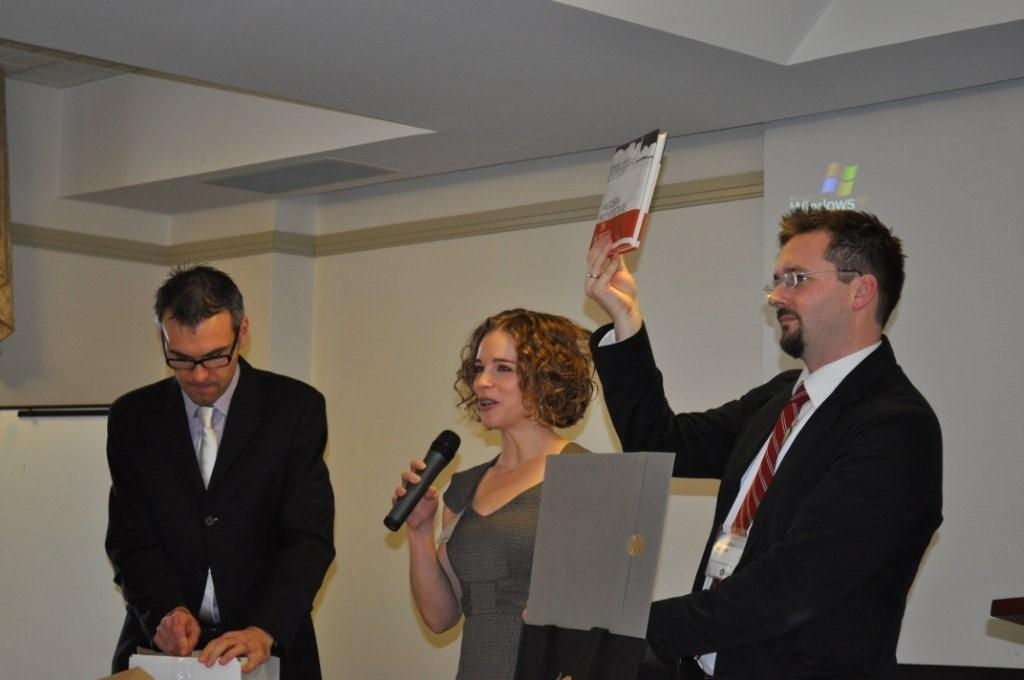
Future blog posts will feature Julian Smith’s keynote address, the municipal show and tell presentations and the full range of presentations provided during the concurrent breakout sessions. In the meantime, please enjoy some photographs from the various sessions:

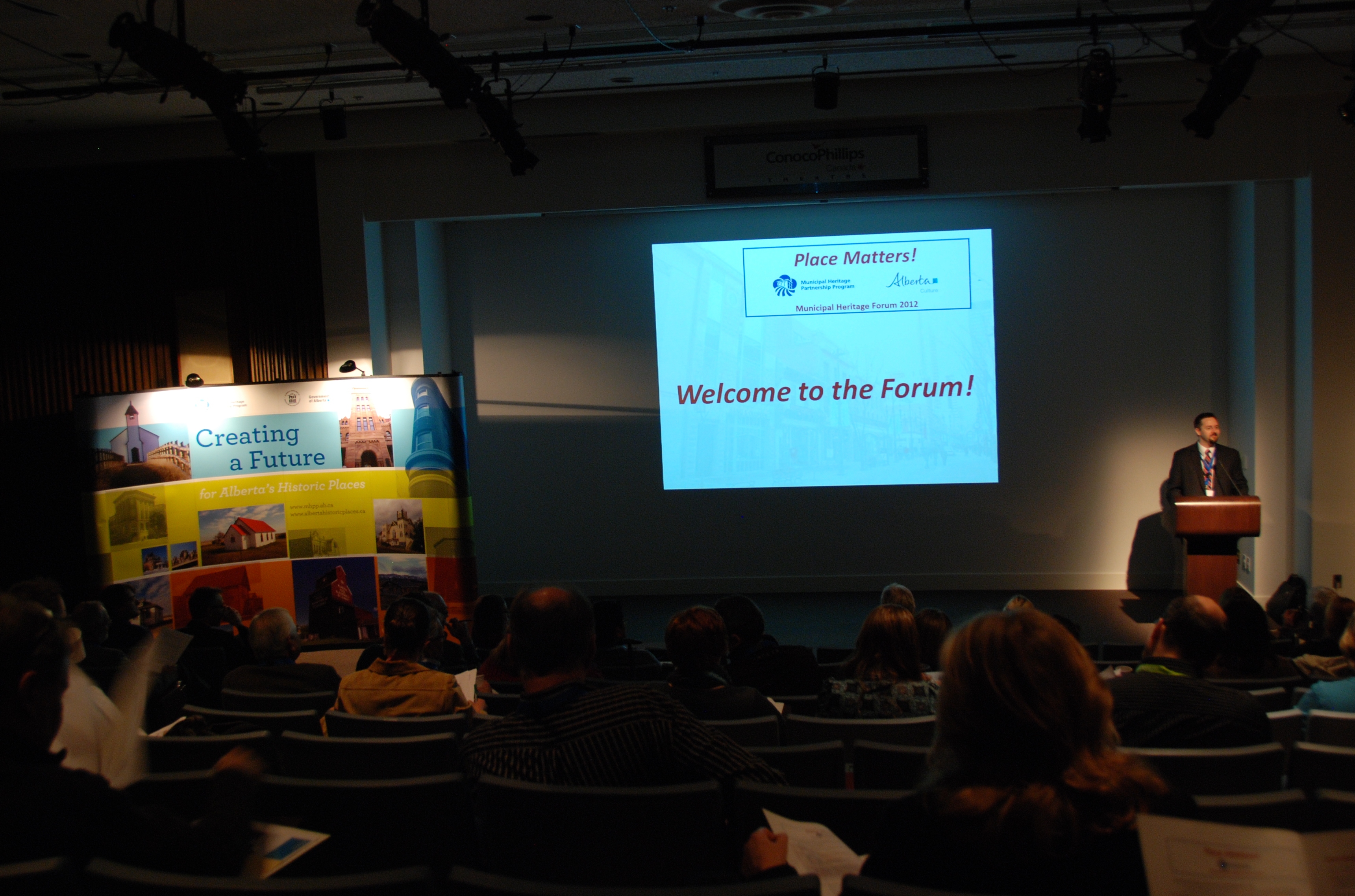
Matthew Francis, Manager of Municipal Heritage Services, welcoming attendees.
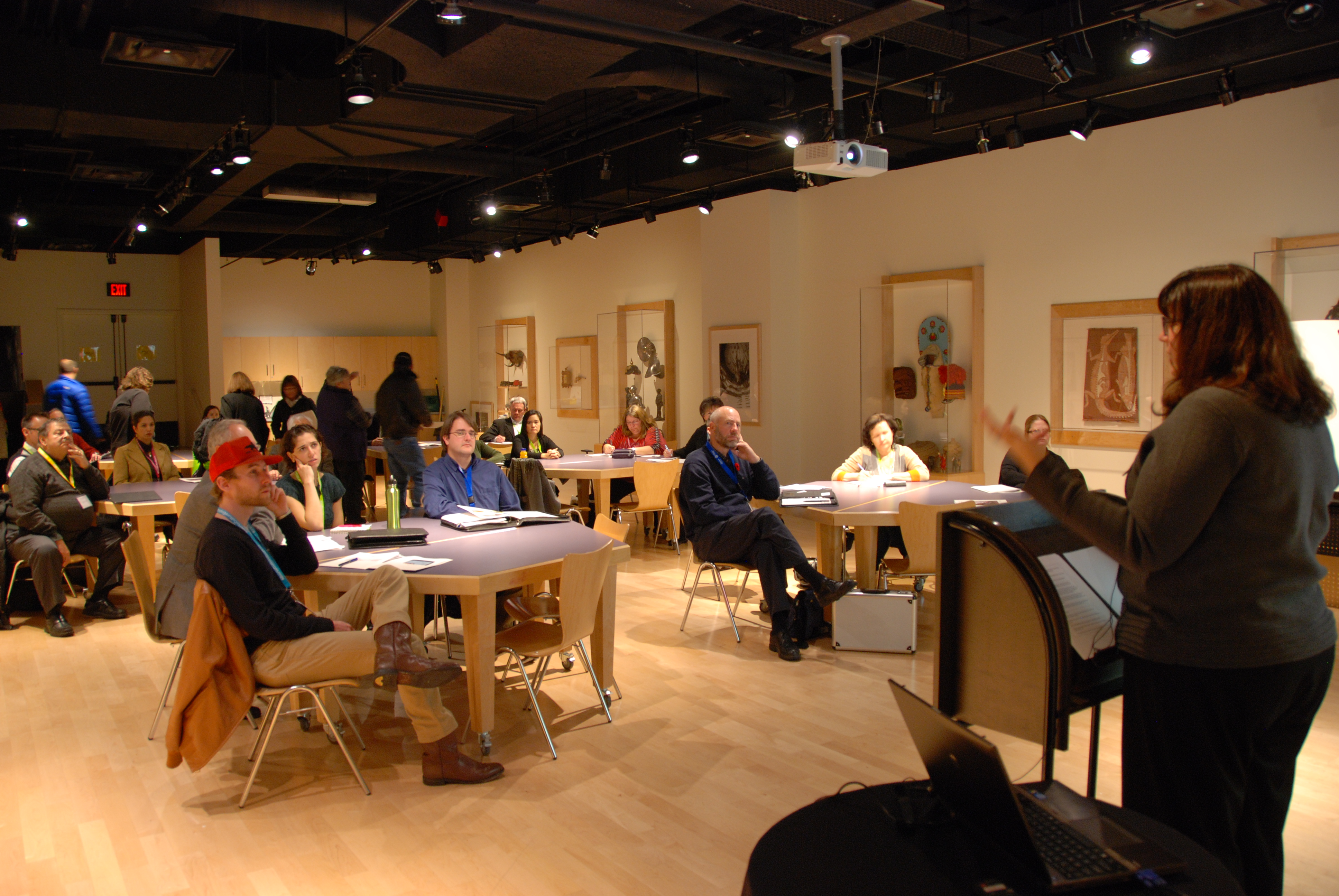
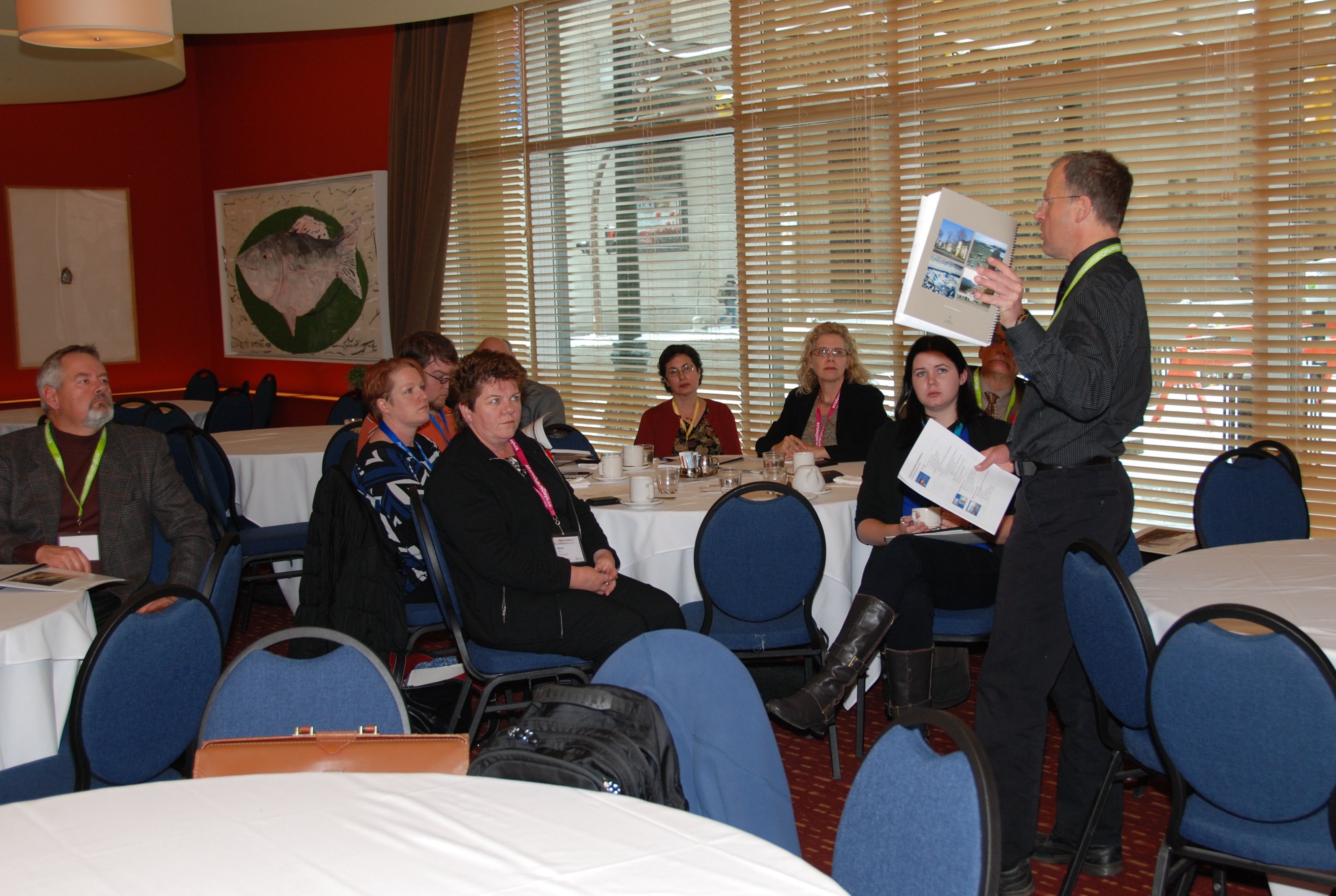
Concurrent Breakout Session: How Cultural Landscapes Build Strong Communities
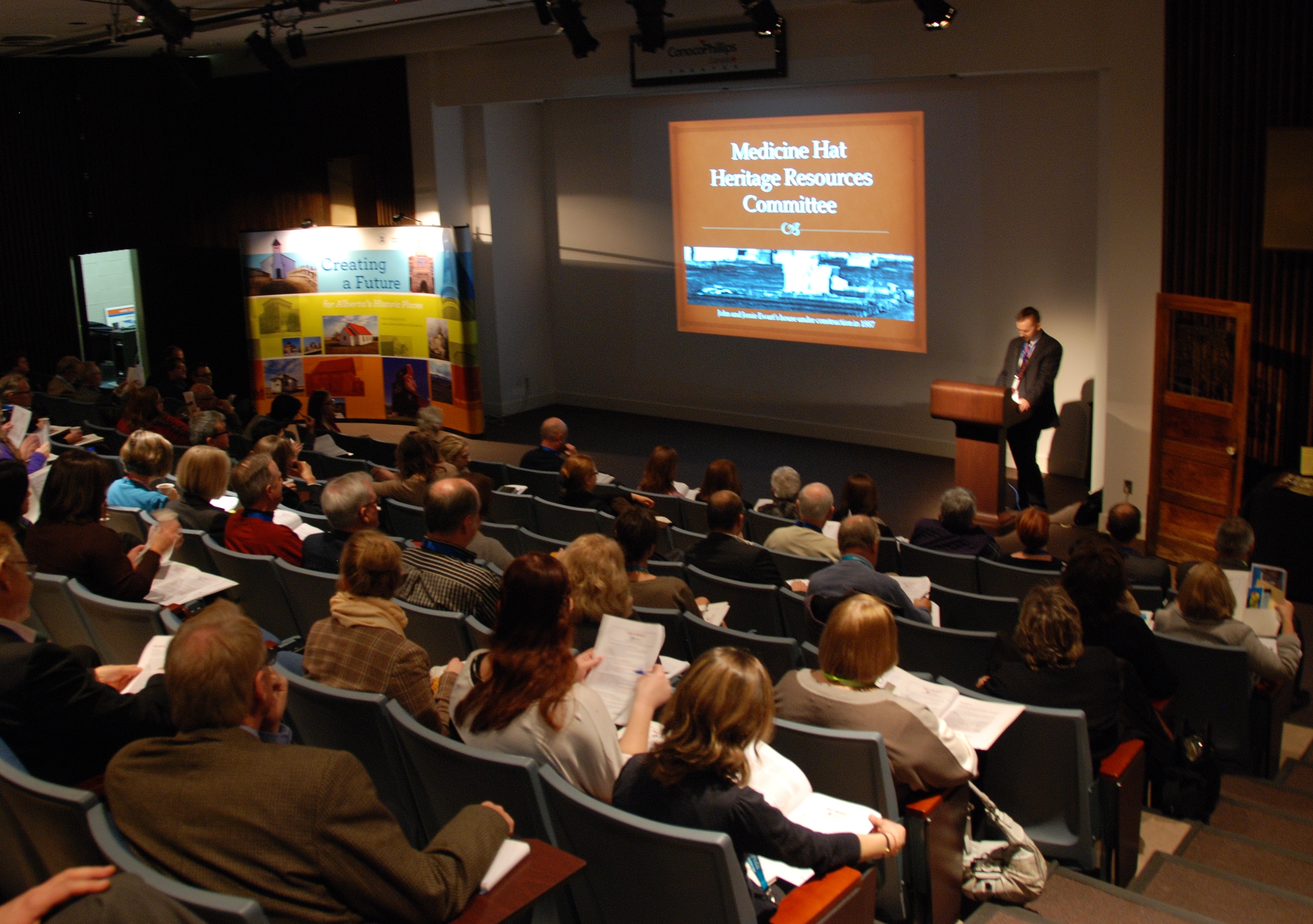
Municipality Show & Tell: Medicine Hat Heritage Resources Committee
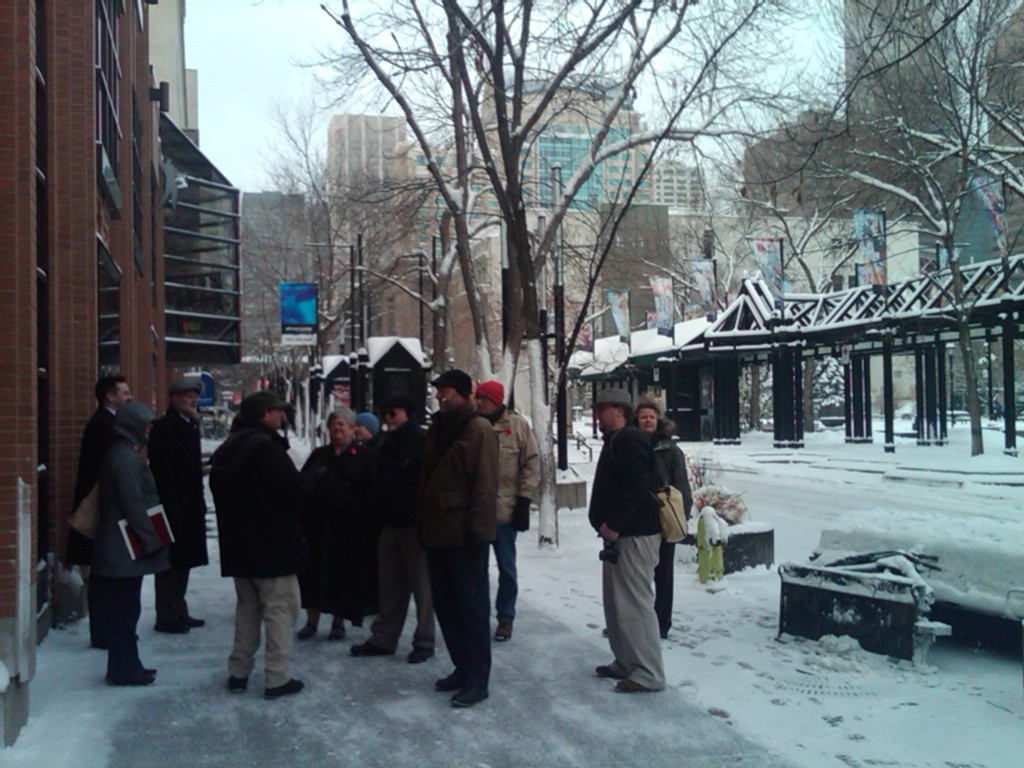
Stephen Avenue Walking Tour
Concurrent Breakout Session: Using the Standards and Guidelines
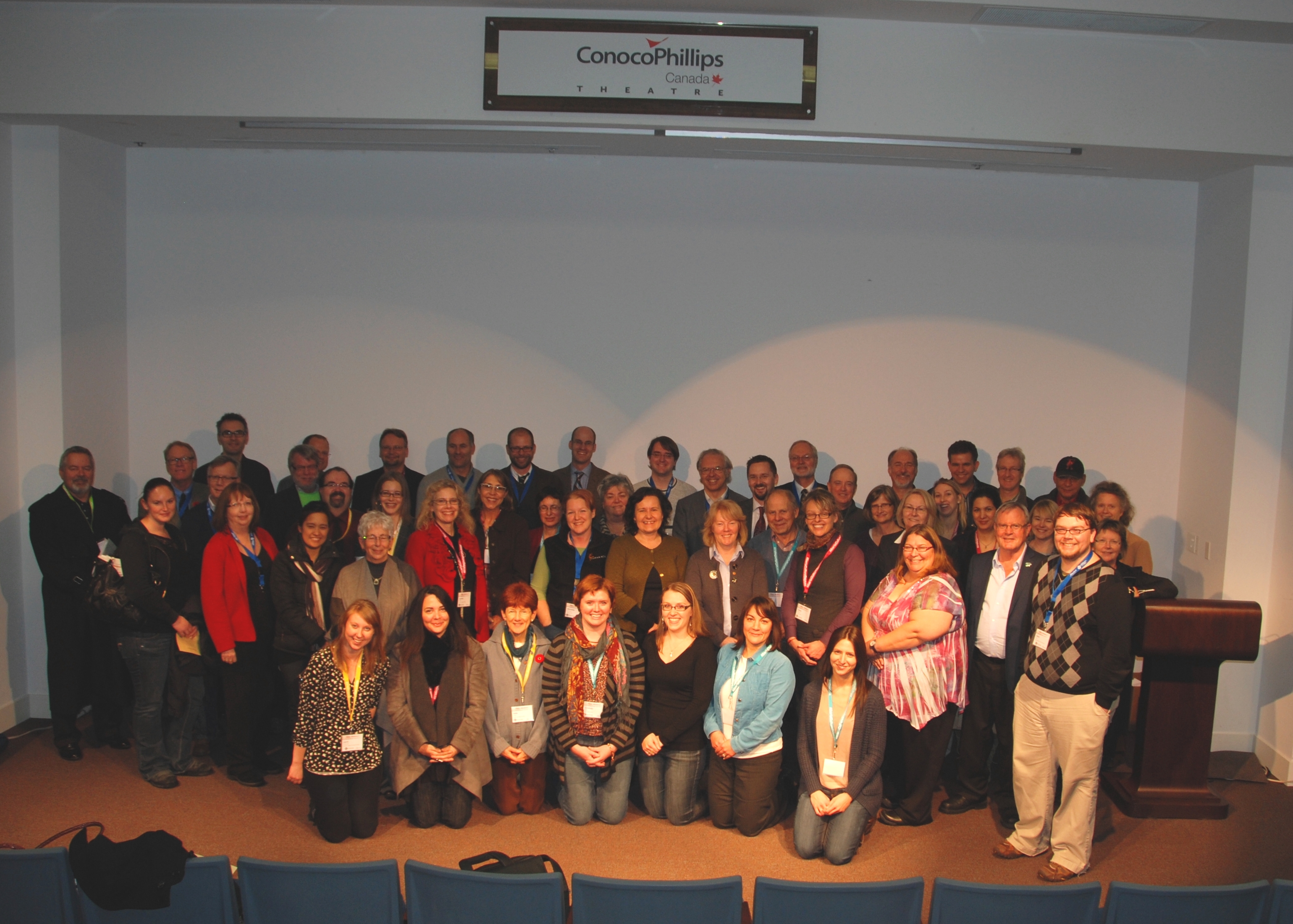
Group Photo (Friday, November 9, 2012)

Written by: Brenda Manweiler, Municipal Heritage Services Officer
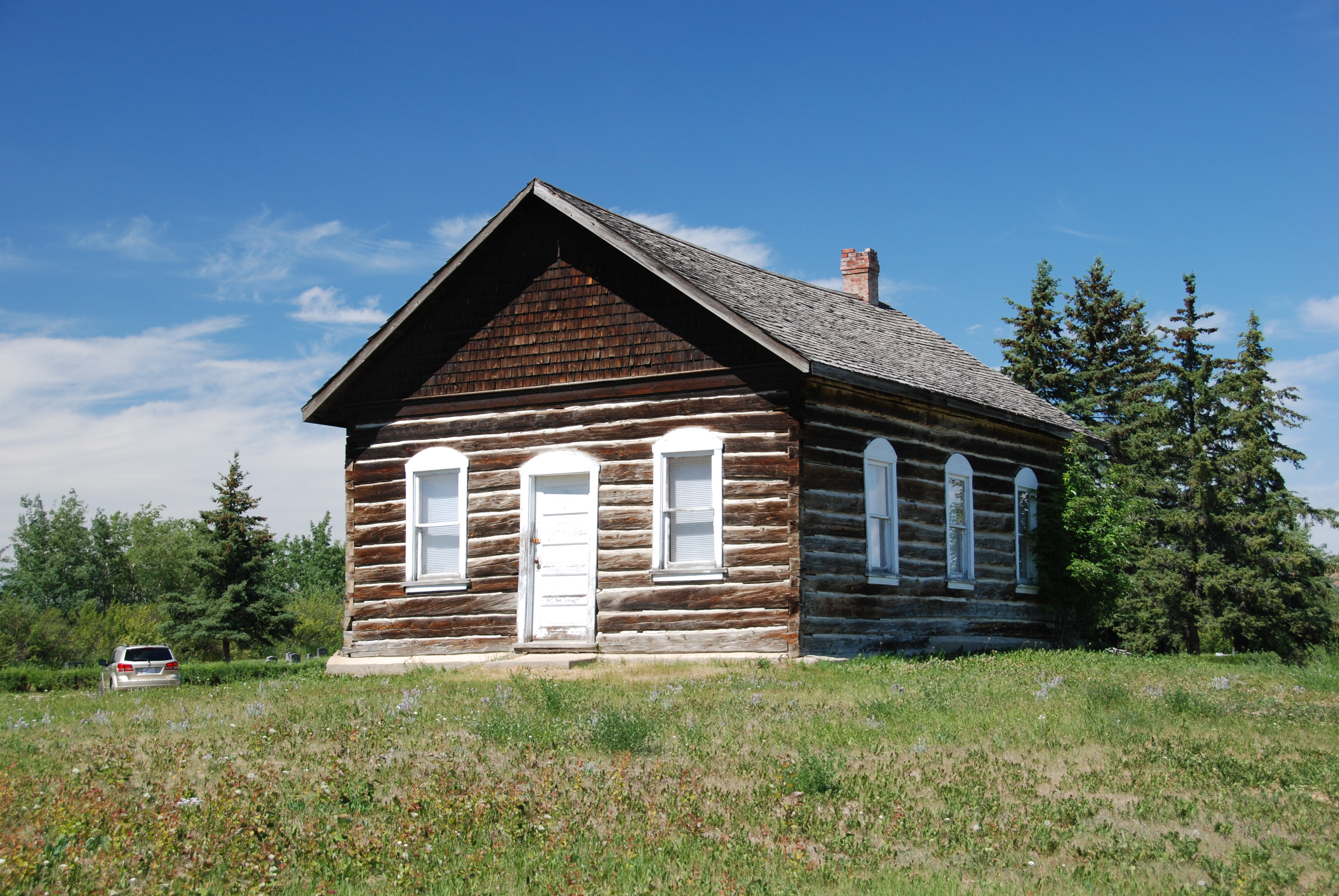
Glen Leslie Church, near Bezanson

In the summer of 1909, Dominion Land Surveyor Walter MacFarlane subdivided 17 townships on the Grande Prairie in northwestern Alberta into quarter-sections for land settlement. In the spring of 1910, the townships were thrown open of homesteading, and, during the next four years, there were 2,675 applications made for land on the Prairie, with 1,854 of them (69%) being proven up. One of the districts to receive considerable attention was that of Glen Leslie, just south of Kleskun Hill, where 144 settlers took out land. In all, these settlers made 164 applications for land, with 86 of these being proven up.

One of the homesteaders in this district was Thomas Leslie from Roslin, Ontario, who filed for and proved up NE26 TP72 R4 W6. His sons, Bruce and Norman, filed for land close by. With so much settlement in the area, Thomas applied to be the district postmaster in August, 1914.  His application was granted, which was natural as his homestead was already serving as the district store. The name proposed for the post office was Glen Leslie, which reflected Leslie’s Scottish heritage.  Leslie’s home also facilitated church services conducted by the Presbyterian minister Alexander Forbes from Grande Prairie.

In November 1913, Leslie and Forbes jointly applied for ten acres of SW6 TP72 R3 W6 in order to build a church and plot ground for a cemetery. The land contained a substantial bog and was not suitable for cultivation. The land granted, and, during the winter of 1914-15, logs were cut by local volunteers for a church building. Construction began on the structure that would become known as the Glen Leslie Church the following spring, with Alf Olson as the coordinator. The building committee consisted of Dan Minchin, Alex Milne, Lewis Fowler, and Bruce and Norman Leslie.  The total cost, born by local fundraisers, turned out to be $468. The first service was conducted by Reverend Forbes in October, 1915. In the meantime, a cemetery was plotted just to the north

The population of the Glen Leslie district was interdenominationally Protestant, and so attendees at the Glen Leslie Church were not exclusively Presbyterian. The church building was maintained by local volunteers and was made part of the new United Church of Canada in 1925.  From 1918 to 1928, it also served as the Glen Leslie School. Many other social events were held there.

In 1928, the cemetery was taken over by the Municipal District of Grande Prairie. When church services were curtailed in 1964, the County of Grande Prairie took over the church building as well. Having been well maintained, the structure was still useful for social events. It was provided with a foundation in 1970 and re-shingled in 1976. Special events continued to be held there, and, on 6 October 2011, the church was designated a Provincial Historic Resource.  Its significance lies in its provision of structural evidence of the small community of Glen Leslie, one of the many districts on the Grande Prairie, from 1915 until today.  The structure is important also in providing structural evidence of an early Presbyterian church in northwestern Alberta.

Visit the Alberta Register of Historic Places to learn more about the heritage value of the Glen Leslie Church. In order for a site to be designated a Provincial Historic Resource, it must possess province-wide significance for either its history or architecture. To properly assess the historic importance of a resource, a historian crafts a context document that situates a resource within its time and place and compares it to similar resources in other parts of the province. This allows staff to determine the importance of a resource to a particular theme, time, and place. Above, is some of the historical information used in the evaluation of the Glen Leslie Church. 

Written by: David Leonard, Historian

Register for Municipal Heritage Forum 2012

November 8th and 9th, Calgary

One week left before registration closes!

Municipal Heritage Forum 2012 is the annual opportunity for municipal leaders interested in the conservation of locally significant historic places. If you are a municipal heritage planner, heritage advisory board member or councillor we encourage you to sign up today!

Why should you attend?

– Our keynote speaker, Julian Smith, Executive Director of the Willowbank School of Restoration Arts, will explore the theme Place Matters! by sharing his perspectives on places and spaces.

– Concurrent breakout sessions will offer opportunities to learn about developing and implementing municipal heritage conservation programs. Topics include:

  • the Standards and Guidelines for the Conservation of Historic Places in Canada;
  • the integral role of geographical place names in conserving local and provincial heritage;
  • aboriginal heritage;
  • funding programs offered by the Alberta Historical Resources Foundation; and
  • meet and discuss your ideas, questions and concerns about municipal heritage conservation with Municipal Heritage Services Officers Michael Thome and Brenda Manweiler.

– Several of Alberta’s municipalities with active heritage conservation programs will present aspects of their programs. Learn firsthand how local heritage is being conserved!

Interested in attending?

DOWNLOAD: Municipal Heritage Forum 2012_Agenda and Registration Form

Written by: Brenda Manweiler, Municipal Heritage Services Officer
Prior Preparation and Planning

Municipal Heritage Planning in the Village of Holden

Members of the Holden Heritage Resources Committee at the 2011 Municipal Heritage Forum

In 2011 the Village completed a combined Municipal Heritage Survey and Inventory but decided that before designating any Municipal Historic Resources it would be best to develop a “recipe” for a successful local heritage conservation program. In January of 2012, the Village of Holden began work on the plan. Village staff and the Holden Heritage Resources Committee, with the services of a heritage consultant, have developed a draft plan appropriate to the Village’s needs and objectives. Elements of the plan include:

  • a policy outlining the designation process and eligibility requirements;
  • a procedure for reviewing requests to alter Municipal Historic Resources; and
  • a template bylaw for Municipal Historic Resource designations.

On Tuesday, October 16, 2012 the Village hosted on open house, inviting the owners of properties that had been documented and evaluated in the Municipal Heritage Survey and Inventory project, and any other interested residents. The attendance numbers and interest exhibited revealed an engaged community. Congratulations on a successful open house!

Cost-shared funding assistance for this project was provided by the Municipal Heritage Partnership Program (Alberta Historical Resources Foundation). If your municipality is interested in developing a municipal heritage conservation program please contact Municipal Heritage Services. 

Written by: Brenda Manweiler, Municipal Heritage Services Officer
A Vibrant Culture Summit – Arts, Heritage and Redevelopment

Regional Municipality of Wood Buffalo 

On Thursday, September 20th I was invited to participate in the Regional Municipality of Wood Buffalo’s Vibrant Culture Summit up in Fort McMurray. Attended by approximately 85 area residents and culture enthusiasts, the event sparked conversation about how to enhance local culture.

The day began with a keynote presentation by Gord Hume. As a former municipal councillor and author, he spoke about cultural planning, creative cities and how culture – when combined with economic, social and environmental factors – can produce dynamic, sustainable communities. Three panel discussions and various roundtable questions completed the day.

Attendees listening to my presentation on heritage conservation.

Panel One featured the City Centre Area Redevelopment Plan. Attendees were able to glimpse the sights and sounds intended for a revitalized City Centre. The arts and other cultural pursuits are central components in the plan.

Panel Two served as an update on the creation of Arts Council Wood Buffalo. Established in February 2012, the Arts Council will work with regional arts organizations to strengthen and promote arts in the area.

Panel Three was all about HERITAGE! Jack Peden, Vice President of the Fort McMurray Historical Society, spoke about early river travel in the region, which is a significant aspect of Fort McMurray’s history as the confluence of the Athabasca River and the Clearwater River is located in town. He also featured some of the restored vessels that now call the Fort McMurray Marine Park Museum home.

As the Municipal Heritage Services Officer responsible for working with the Regional Municipality of Wood Buffalo, I was also asked to be part of the panel. I provided a brief introductory presentation on heritage conservation and engaged the attendees in a game of “Is this a historic place?” Through discussion and laughter, it was determined:
  • yes, a historic place can be a 1960, 45 unit apartment building (i.e. Valleyview Manor in the City of Edmonton);
  • yes, a historic place can be a 1966 Safeway Store (formally recognized as a historic place by the City of Vancouver); and
  • yes, a historic place can also be a 160’ steel hangar built in 1953 and located at CFB Cold Lake.

These and other places, despite being relatively “new” and void of boomtown facades, ornate columns or other elements of traditional architecture can still be historic places. Historic places can be pretty or gritty, modern or traditional, modest or ornate, representative or symbolic…. Historic places reflect a community’s evolution – they help to tell the story of how a community has evolved into its present form. It is through the conservation of these varied places that a community’s unique identity is celebrated, enabling the community to be some place, somewhere as opposed to any place, anywhere.

I was very pleased to speak at the Vibrant Culture Summit. I appreciated the opportunity to learn about the cultural successes and challenges occurring in the Regional Municipality of Wood Buffalo thereby allowing me to better understand the region’s varied heritage.  As a Municipal Heritage Services Officer I spend much of my time travelling Alberta meeting with municipal heritage stakeholders. Typically, these meetings are specific to heritage conservation as I advise municipal administration in their development of local heritage conservation programs, present information to councils on our Municipal Heritage Partnership Program, or provide specialized training on municipal heritage surveys, inventories and management plans to Heritage Advisory Bodies. Occasionally – and quite happily – I get the opportunity to speak to a wider range of community stakeholders, and be reminded that heritage conservation is but one aspect responsible for enabling vibrant and sustainable communities. Thank you, Regional Municipality of Wood Buffalo, for offering me one of these opportunities!
Written by: Brenda Manweiler, Municipal Heritage Services Officer
Concurrent Breakout Sessions at Municipal Heritage Forum 2012

Municipal Heritage Forum 2012 (November 8th and 9th) will feature a broad range of concurrent breakout sessions designed to inform and inspire. 

DOWNLOAD: Municipal Heritage Forum 2012_Agenda and Registration Form

CONCURRENT BREAKOUT SESSIONS:

Julian’s Top Ten (Thursday and Friday)

Keynote speaker Julian Smith will describe his “Top Ten Favourite Places in Canada,” and why they are significant and meaningful. Come gain a new sense of perspective on spaces and places from our resident expert, and enter into a conversation about heritage values – both local and global. 

Building a Heritage Community (Thursday only)

Calgary’s heritage community gathers at the “Community Heritage Roundtable” to socialize, hear snappy presentations, and share information on heritage issues.  Run on no budget by a volunteer committee from a spectrum of heritage-related groups, quarterly events routinely attract more than 100 people, and the Roundtable has developed a contact list of more than 700 emails. Learn how this forum, now in its sixth year, is a gateway for people to connect with heritage, an incubator of heritage initiatives and a “force multiplier” for heritage advocates. Get inspired to start a heritage forum in your community! 

Connecting Homeowners and Heritage: Century Homes Calgary (Friday only)

Century Homes Calgary is an incredibly successful grassroots project that engages people to celebrate houses constructed during Calgary’s first big building boom, which peaked 100 years ago.  Inspired by If This House Could Talk”, a similar project first created by residents of Cambridge, Massachusetts, it attracted over 500 participating households in its inaugural summer of 2012. Owners and residents of century-old houses sign up to display a specially designed garden flag, research the history of their homes, and create and display home‐made signs telling their part of Calgary’s story during Historic Calgary Week. Legacy projects are planned that will leverage the huge network of heritage home owners and advocates.  Find out how this participatory heritage project can be replicated in your community!

Using the Standards and Guidelines (Thursday and Friday)

The Standards and Guidelines for the Conservation of Historic Places in Canada are a key tool used in making conservation decisions and alteration approvals for historic places. This classic presentation by Tom Ward, Manager of Heritage Conservation Advisory services is packed with examples and practical know-how. If you have not had training in the “S&G’s” before, this is your chance! If you have, you may just learn something new by attending.

Q & A with Municipal Heritage Services Staff (Thursday only)

Municipal Heritage Services staff – Michael Thome and Brenda Manweiler – will be available to talk with you about whatever municipal heritage issues are on your mind. Want to find out how to conduct a Municipal Heritage Survey? Ever wondered why your community should have a Municipal Heritage Management Plan? Come with your questions! 

Place Names Matter (Thursday and Friday)

Geographical names, or toponyms, serve an integral role in our society. On a practical level they provide reference points, allowing us to easily orient ourselves within our surroundings. However, geographical names are more than just labels on maps; they are a cultural legacy. They can tell us about our history and the values of previous generations. They can reveal trends in exploration and land settlement, resource use and cultural development. They provide us with a sense of both place and time. How we name places and what names we choose for them offer a glimpse of the values held by previous generations and they are a sacred trust that will inform future generations about our values. Join Ron Kelland, coordinator of the Alberta Geographical Names Program as he explains why place names are important, how names are adopted and what can be done to preserve our geographical naming heritage. 

What all municipalities should know about Aboriginal Heritage in Alberta (Thursday and Friday)

Did you know that Alberta Culture, through the Historic Resources Management Branch has a specific program area that works with Aboriginal communities to help preserve and protect their cultural heritage sites? Aboriginal Consultation Advisor Valerie Knaga will be available to give you all the information needed to increase your awareness of how this program area may be able to assist communities. 

Heritage District Learning Lab – It Happened on “Church Street” (Thursday and Friday)

Are you interested in heritage districts or areas? The City of Edmonton is working on creating and defining a unique heritage district in the inner-city. Come hear Heritage Planner David Holdsworth showcase the unfolding process behind the “Church Street” project. 

“Money, Money, Money!” – AHRF Grants 101 (Friday only)

Let’s face it, it takes resources to properly steward historic places. The Alberta Historical Resources Foundation has a number of funding programs and categories, which can help support heritage work. Grants Program Coordinator, Carina Naranjilla, will walk you through the Foundation’s grants and answer your questions.

A World Class Heritage Experience – The Historic Clay District (Thursday and Friday)

Medalta, Medicine Hat’s Historic Clay District is a National Historic Site of Canada and a Provincial Historic Resource. It is also a museum and increasingly a world-class destination in its own right. Hear from Executive Director Barry Finkelman about how Medalta is leading the way in cultural tourism for historic places.

Interested in attending Municipal Heritage Forum 2012?

DOWNLOAD: Municipal Heritage Forum 2012_Agenda and Registration Form

Prepared by: Brenda Manweiler, Municipal Heritage Services Officer
Registration for Municipal Heritage Forum 2012 is now open!

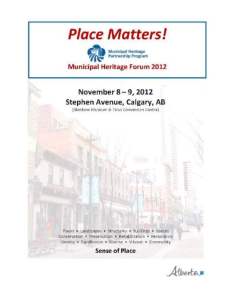
Place Matters!

Municipal Heritage Forum 2012

November 8th and 9th, 2012

Glenbow Museum (Phillips-Conoco Theatre), Calgary, AB

Municipal Heritage Forum 2012 is the annual opportunity for municipal leaders interested in the conservation of locally significant historic places to network with peers and learn about heritage conservation. If you are a municipal heritage planner, heritage advisory board member or councillor we urge you to sign up today!

Municipal Heritage Services staff at Municipal Heritage Forum 2011 in Edmonton.

Our keynote speaker, Julian Smith, Executive Director of the Willowbank School of Restoration Arts, will draw upon his heritage conservation work in Canada, France, India and the United States to help us understand why Place Matters! Several of Alberta’s municipalities will present aspects of their heritage conservation programs for discussion and several heritage professionals will provide breakout sessions on various topics.

DOWNLOAD: Municipal Heritage Forum 2012_Agenda and Registration Form

We look forward to seeing you in Calgary!

Written by: Brenda Manweiler, Municipal Heritage Services Officer
Keynote Speaker Announced!

We are pleased to announce that the 2012 Municipal Heritage Forum keynote speaker will be Julian Smith, Executive Director of the Willowbank School of Restoration Arts in Queenston, Ontario. Julian has many years of experience as an architect and scholar focused on heritage conservation. He recently advised the United Nations Education Scientific and Cultural Organisation (UNESCO) on the development of recommendations for Historic Urban Landscapes. Julian’s wide-ranging experience makes him the pre-eminent person to speak about our theme, “Place Matters!”

To learn more about Julian and some of the innovative and significant projects that he may speak about at our Forum, check out the brief biography that is posted on the Willowbank website: 

About Julian Smith:

Julian is an architect, conservator, scholar and educator. He is internationally recognized for his contributions to the field of heritage conservation in general, and to cultural landscape theory and practice in particular. After a childhood in Montreal, Quebec; Delhi, India; and Cambridge, Massachusetts, he did undergraduate work at Oberlin, graduate studies with Kevin Lynch and others at MIT, and a certificate in preservation planning at Cornell. He worked in the contemporary design field with Peter Eisenman at the Institute for Architecture and Urban Studies in New York City, and later returned to India to do research on cognitive mapping of historic town centres in South India. He moved to Canada and eventually became Chief Restoration Architect for the National Historic Sites program, a position he held for six years. He then established his own architectural and planning practice, and also founded and directed the graduate program in Heritage Conservation at Carleton University. He became Executive Director of Willowbank in 2008. Julian has been responsible for design and development work involving significant cultural sites in Canada, the U.S., France, Italy, India, Sri Lanka, and Japan. Among his projects are the restoration of the Vimy Monument in France, the Aberdeen Pavilion in Ottawa, and the Lister Block in Hamilton, and master plans for the Parliament Buildings in Toronto, the Central Experimental Farm in Ottawa, and a new campus for a historic college in south India. He has also developed policy documents for a variety of federal and provincial agencies in Canada, and has been Canadian delegate to UNESCO for the drafting of the new international recommendation on Historic Urban Landscapes. His use of a cultural landscape framework allows him to move across the boundaries between architecture, landscape and urban design. Julian is architectural advisor to the Trustees of Queen’s University, a past member of the Advisory Committee to the Minister of Canadian Heritage, and a frequent contributor to international forums. He is a recipient of Heritage Canada’s Gabrielle Léger Award and the Architectural Conservancy of Ontario’s Eric Arthur Award, both recognizing lifetime achievement in the heritage conservation field.

Interested in hearing Julian speak? If you are a municipal heritage stakeholder (i.e. municipal staff member, heritage advisory board member, councillor) look into attending our Municipal Heritage Forum on November 8-9, 2012 in Calgary. Detailed information about the Forum will follow shortly.

Written by: Brenda Manweiler, Municipal Heritage Services Officer