Vintage historic sites research papers now available online

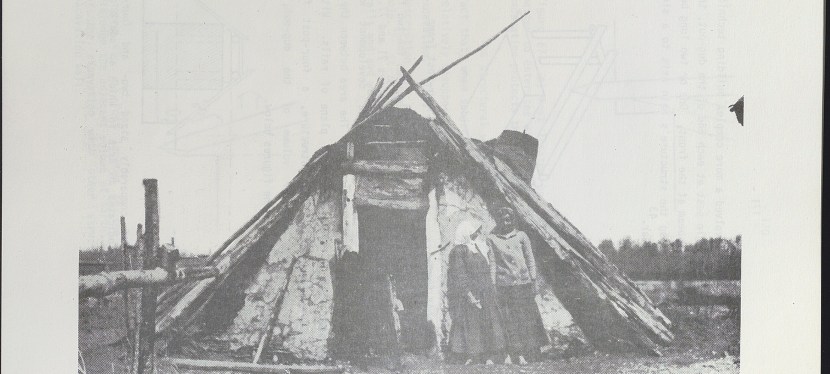
Editor’s note: The banner image above is a slanted roof, dug-out home with a four-post frame, 1913, found in Occasional Paper No. 11.

Written by: Dorothy Field, Heritage Survey Program Coordinator and Ronald Kelland, Historic Places Research Officer

The Alberta Heritage Survey Program is happy to announce that digitized versions of the first 15 Historic Sites Services Occasional Papers, published by the Historic Sites Service (HSS) between 1976 and 1985, are now available online.

Starting in 1976, the HSS produced and published an Occasional Paper Series about sites, people and historic themes in Alberta. Similar to the Archaeological Survey of Alberta’s Occasional Papers, popularly known as the “Blue Books” or the “Blue Series,” the HSS occasional papers series were produced by staff historians and contractors based on their in-house research.

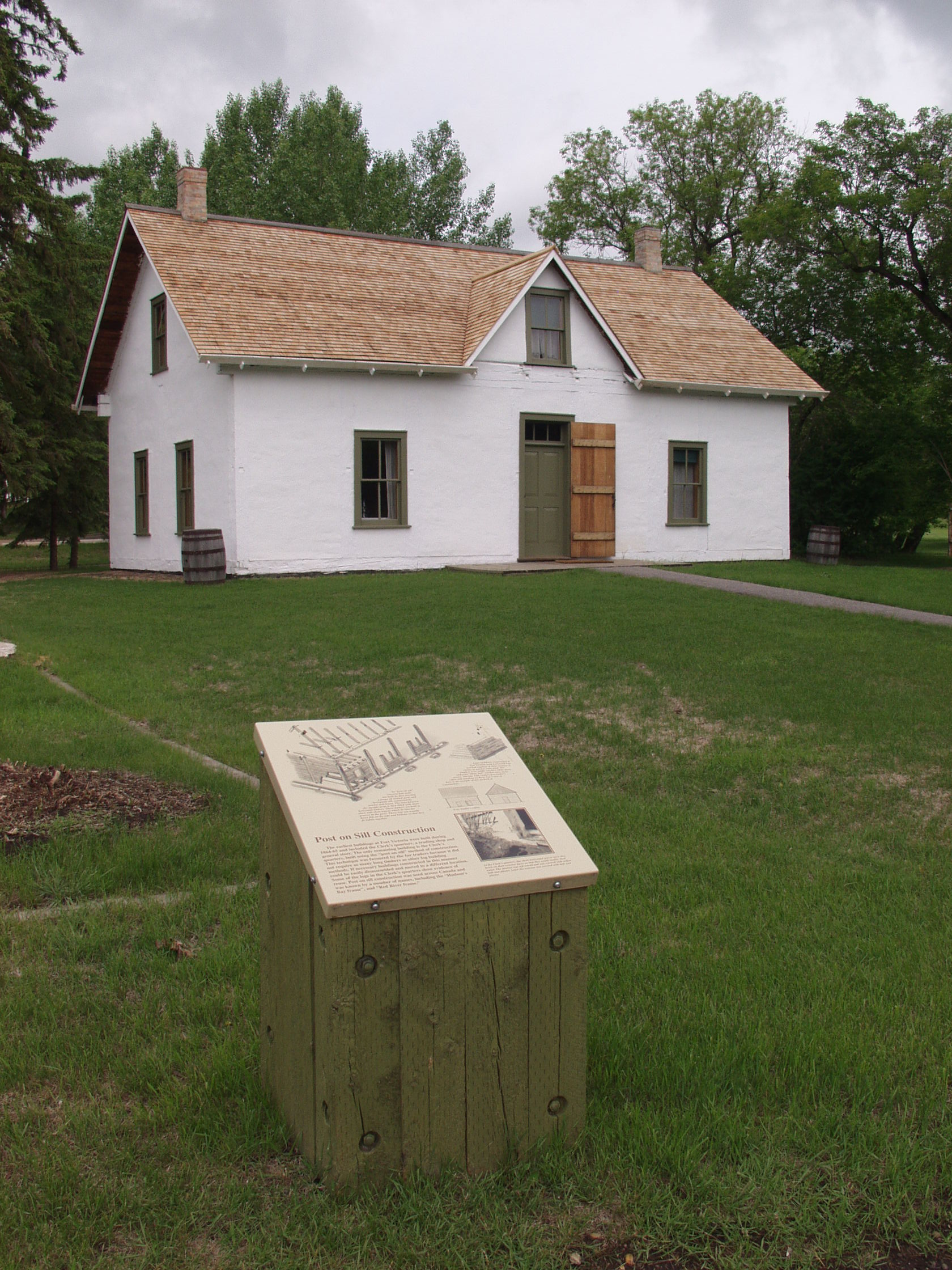
Fort Victoria Clerk’s House, Provincial Historic Resource, 2014. Source: Historic Resources Management Branch.
Read more

The Canadian Architectural Archives: a treasure trove of architectural information

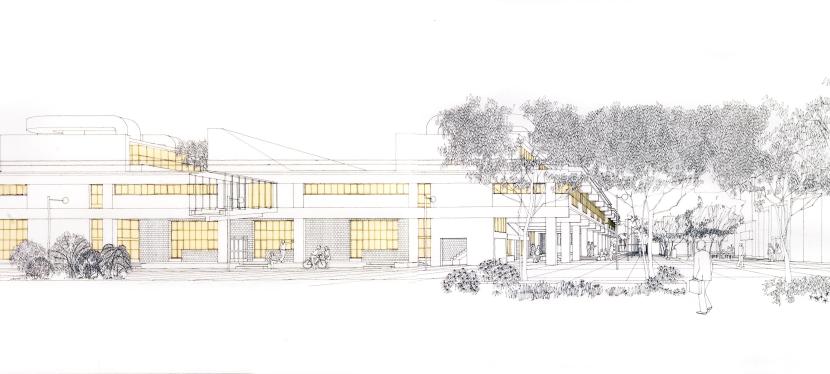
Editor’s note: The following interview has been lightly edited for length and clarity. The banner image above is of the Carleton University School of Architecture, Ottawa, 1970. Source: University of Calgary, Canadian Architectural Archives, Carmen and Elin Corneil fonds, CA ACU CAA F0007.

Written by: Robb Gilbert, Archivist, Canadian Architectural Archives and Dorothy Field, Heritage Survey Program Coordinator

In my work with the Alberta Heritage Survey, I’m always on the lookout for sources of reliable information about Alberta’s architectural history. One such resource that people may not generally be aware of is the Canadian Architectural Archives (CAA), which is a veritable Aladdin’s Cave full of material donated by architects from Alberta and across Canada. But just what, exactly is the CAA? Recently, I had the opportunity to ask Robb Gilbert, Archivist at the Canadian Architectural Archives, about the history, holdings and services of the CAA.

(Dorothy) Hi Robb! Can you tell me about yourself and what you do at the CAA?

(Robb) I’ve been at the CAA for five years. My role is to manage the CAA’s extensive collection, improve access to the holdings, acquire new collections and additions to existing collections, teach students about the archives, assist visiting researchers, and generally raise awareness and engagement with the archives. I previously worked at the Kamloops Museum and Archives before joining Archives and Special Collections at the University of Calgary. My educational background before becoming an archivist was in religious studies and art history. Courses in art and architectural history at Carleton University in Ottawa fueled my ongoing passion for the history of Canadian architecture.

When was the CAA established, by whom, and what was its original mission?

The CAA was established at the University of Calgary 50 years ago in 1974. The idea to start an archive originated with the Dean of the Faculty of Environmental Design (now called School of Architecture, Planning and Landscape) William T. Perks (1934-2023) who proposed an archive to Ken Glazier (1912-1989), the Chief Librarian. The archive was established and developed by Perks, as well as the professors of architecture Michael McMordie and R.D. Gillmor (1930-2019), and the rare books librarian Ernie Ingles (1948-2020). McMordie built the holdings from his connections and through outreach to architects across Canada. And Ingles and the staff in the library provided the administration and operations for the archive. The original mission was to serve as a teaching and research resource for students and researchers, to collect and preserve historical records on Canadian architecture, and to promote public education and awareness about the built environment.

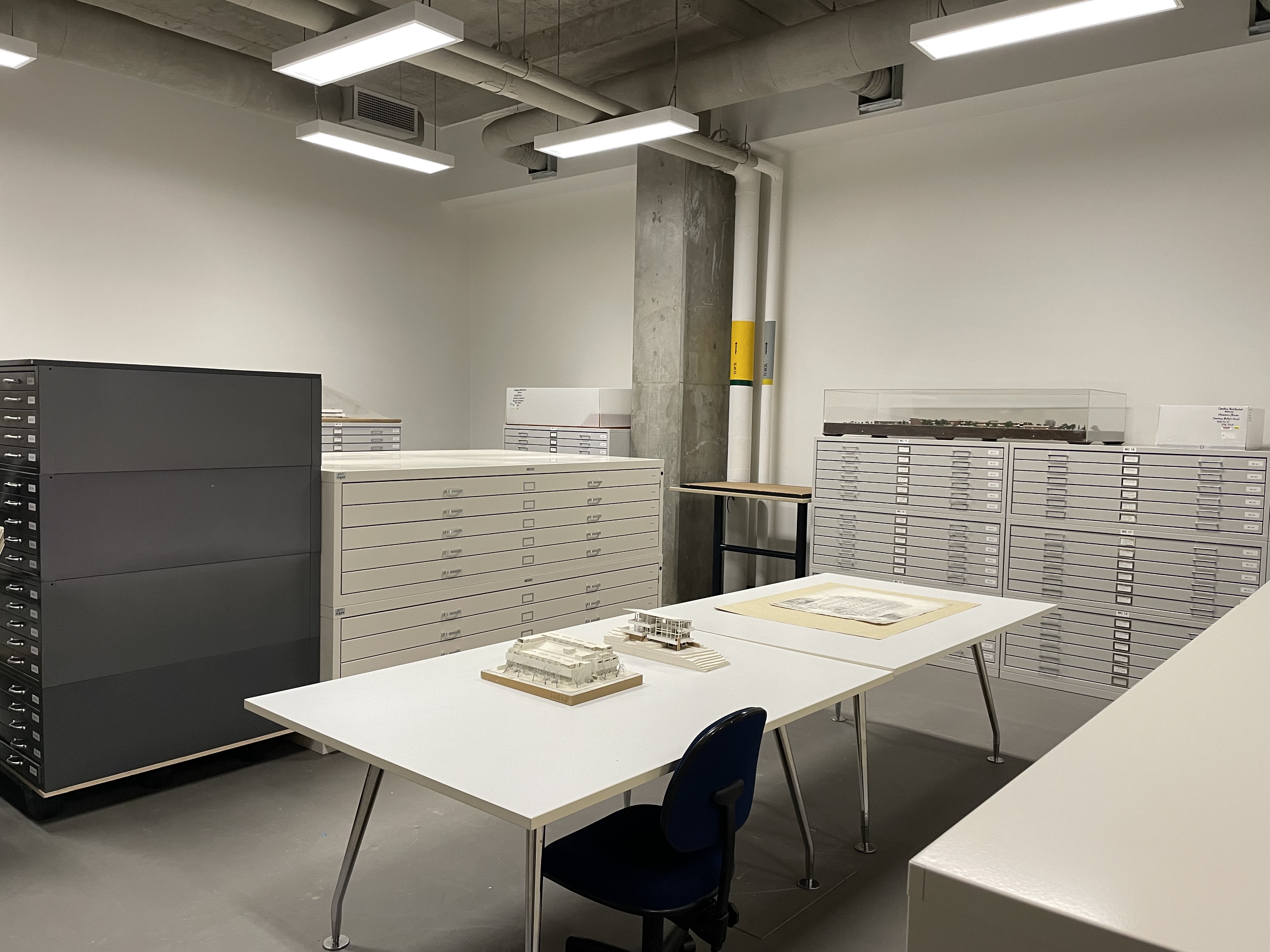
Canadian Architectural Archives, Archives Vault. Source: Photograph courtesy of the author.
Read more

The Alberta Register of Historic Places: Questions and Answers

Editor’s note: For our next instalment recognizing National Historic Places Days, we look at the Register of Historic Places, what information it contains and how to use the database to search for historic resources. It’s recommended that while you read this article, you follow along on the Heritage Resources Management Information System. This database works best using Internet Explorer.

Written by: Dorothy Field, Heritage Survey Program Coordinator

Alberta’s provincial and municipal governments have recognized and protected over 800 historic resources. Did you know that information about all of these significant sites is available to the public? Read on to find out all about where this information is located, and how you can learn more about Alberta’s historic places.

What is the Alberta Register of Historic Places?

The Alberta Register of Historic Places is a searchable database of legally protected historic places in Alberta, including sites designated by the province and by municipalities.

Where can I access the Alberta Register of Historic Places?

The register is available to the public on the HeRMIS (Heritage Resources Management Information System) website. Here it is possible to find information about the location, significance and level of designation for designated historic resources. In addition to this data, the website also includes photographs and an interactive map.

What sorts of things are listed on the Alberta Register of Historic Places?

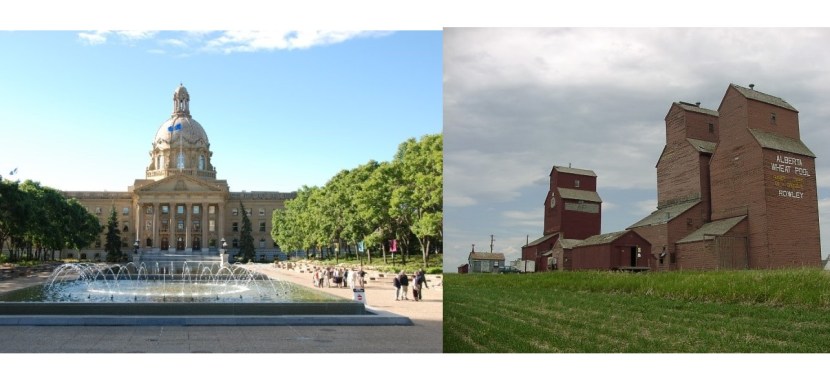
A wide variety of historic resources have been designated in Alberta, reflecting the range of resources that are significant to Albertans. In fact, if it’s not a small moveable object, human remains, or no longer in its historic context, just about anything that’s provincially or municipally significant could be designated and listed on the register. There are things on the register you might expect, like the Legislature Building in Edmonton and the Rowley Grain Elevator Row, near Big Valley. There are also unexpected things, like significant geological features such as the Whitecourt / Woodlands Meteorite Impact Crater, or important biological sites like the Wood’s Douglas Fir Tree Sanctuary in Calgary. There are all kinds of other designated historic resources, including industrial sites and machinery, palaeontological sites, engineering structures, homes, commercial buildings, churches and more – all of them illustrating some significant aspect of Alberta’s history.

What can I do with the Alberta Register of Historic Places?

You can search the register to learn about a wide variety of topics relating to Alberta’s history – from archaeology to architecture to astronomy, from the prairies to the Rockies and the 49th to the 60th parallel. You can use the Map Search function to plan a tour to view historic resources within a community or along a route between communities.

Read more

Municipal Historic Resource designation refresher series: character-defining elements

Editor’s note: Welcome to the fifth post in a series of blog posts developed with municipalities in mind who either have or are considering undertaking Municipal Historic Resource designation. In this post, we will continue to discuss Statements of Significance as the primary tool for summarizing the significance of designated historic places. You can read the previous post here.

For more information, please review the “Creating a Future” manuals available here or contact Rebecca Goodenough, Manager, Historic Places Research and Designation at rebecca.goodenough@gov.ab.ca or 780-431-2309.


Written by: Dorothy Field, Heritage Survey Coordinator, Sandy Aumonier, Heritage Conservation Adviser and Allan Rowe, Historic Places Research Officer, Historic Resources Management Branch


As previously mentioned, a Statement of Significance (SOS) is a one- to two-page summary document written as a clear, concise and brief narrative of a historic resource. It is written for a broad audience that is not familiar with the resource. The SOS has three sections: description of historic place, heritage values and character-defining elements.

An SOS is central to understanding a resource and any of its elements that might be protected and why.

If a historic resource is designated, the SOS will thereafter be an important planning and property management tool and essential for developing a conservation plan for ongoing management of the resource.

Read more

Municipal Historic Resource designation refresher series: heritage value

Editor’s note: Welcome to the fourth post in a series of blog posts developed with municipalities in mind who either have or are considering undertaking Municipal Historic Resource designation. In this post, we will continue to discuss Statements of Significance as the primary tool for summarizing the significance of designated historic places. You can read the previous post here.

For more information, please review the “Creating a Future” manuals available here or contact Rebecca Goodenough, Manager, Historic Places Research and Designation at rebecca.goodenough@gov.ab.ca or 780-431-2309.


Written by: Dorothy Field, Heritage Survey Coordinator, Sandy Aumonier, Heritage Conservation Adviser and Allan Rowe, Historic Places Research Officer, Historic Resources Management Branch


As previously mentioned, a Statement of Significance (SOS) is a one- to two-page summary document written as a clear, concise and brief narrative of a historic resource. It is written for a broad audience that is not familiar with the resource. The SOS has three sections: description of historic place, heritage values and character-defining elements.

An SOS is central to understanding a resource and any of its elements that might be protected and why.

If a historic resource is designated, the SOS will thereafter be an important planning and property management tool and essential for developing a conservation plan for ongoing management of the resource.

Read more

Municipal Historic Resource designation refresher series: determining significance

Editor’s note: Welcome to the second post in a series of blog posts developed with municipalities in mind who either have or are considering undertaking Municipal Historic Resource designation. In this post, we will be discussing how to determine if a historic place is eligible for designation.You can read the first post here.

For more information, please review the “Creating a Future” manuals available here or contact Rebecca Goodenough, Manager, Historic Places Research and Designation at rebecca.goodenough@gov.ab.ca or 780-431-2309.


Written by: Dorothy Field, Heritage Survey Program Coordinator, Sandy Aumonier, Heritage Conservation Adviser and Allan Rowe, Historic Places Research Officer.


Determining significance

Typically, most folks agree that preserving significant historic resources in our province is important. While it is relatively easy to identify the ‘old’ stuff, how do you go about determining which historic resources are significant and should be considered for protection?

In order to be considered for protection as a Municipal Historic Resource (MHR), a site needs to:

  • be an eligible resource type
  • possess historical significance
  • have sufficient material integrity

If a site meets all three of these of these criteria, it can be considered for MHR designation.

Read more

Alberta Remembers

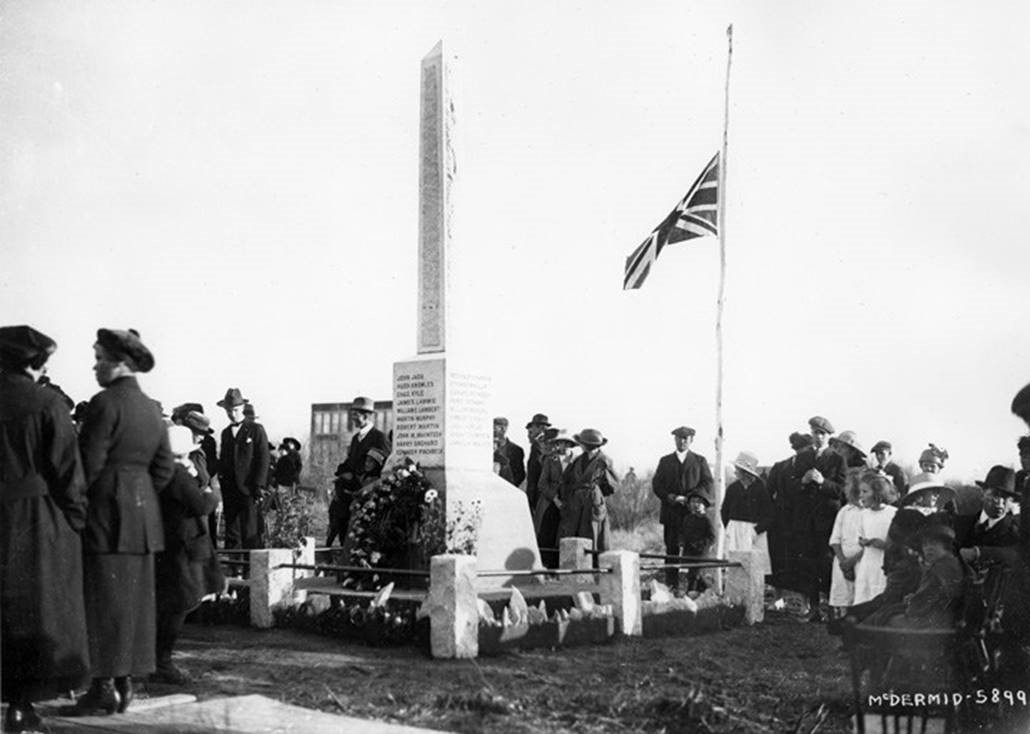
The Beverly Cenotaph, a simple stone obelisk, was unveiled on October 17, 1920. (City of Edmonton Archives, EA-160-14)

On November 11, 1918, after more than four years of fighting the “war to end war”, an armistice was called in France and all hostilities came to an end on the Western Front of the First World War. While the battles may have ceased, the effects of the conflict continued to reverberate around the world and across the years, even to the present day, a century later.

Albertans were among those who fought alongside fellow British citizens, as well as French and American soldiers – among others – to defeat Germany and its allies. Estimates place the number of Albertan soldiers at 48,885 – or over one third of the province’s male population aged 18 to 45. Of these, about one in eight did not return from the war, and almost half of those who did return had been wounded.1 The effect of the distant, unseen war was felt throughout the province on a personal level.

One way Albertans dealt with the trauma and loss was to come together and commemorate those who had sacrificed their lives. A model for these activities was provided by “Peace Day”, celebrated on July 19, 1919, in London, England, in honour of the signing of the Treaty of Read more

Alberta’s Wooden Country Grain Elevators – Update

This post was originally published on RETROactive on March 6th, 2012 and again on August 26, 2015. Interest in grain elevators remains strong, so a revisit seems in order. Some additional data has been added, an updated list of communities with elevators can be accessed below, as well as a variety of resources and documents relating to Alberta’s Grain elevators.

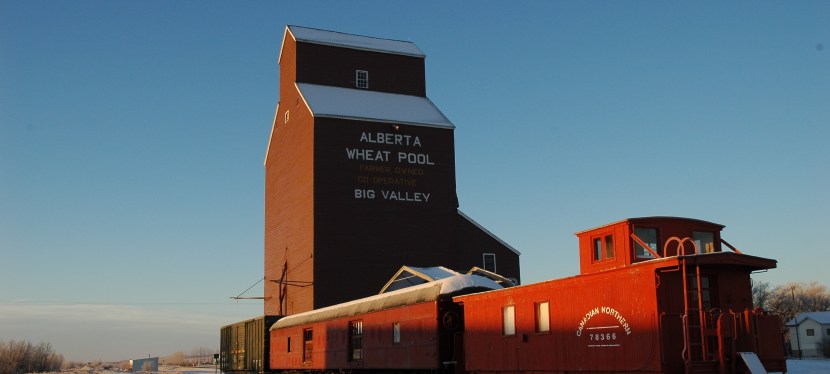
The twentieth century saw the rise and fall—literally—of the wooden country grain elevator in Alberta. As rail lines spread across the province in the early 1900s, grain elevators sprouted like mushrooms after a spring rain. The height of wooden country grain elevators was reached in 1934. New ones continued to be added until the 1990s, but with increasing numbers being demolished, these icons of the prairie became scarcer. Today, the remaining wooden country grain elevators number only about six percent of the maximum reached in the 1930s. Check out the following “index” of Alberta’s wooden country grain elevators, called “elevators” for short in this article.

Number of elevators in Alberta: Read more

Claiming their Ground – Three Pioneering Alberta Women in their Professions

October is Women’s History Month in Canada, when we celebrate the achievements of women throughout our past and use their stories to inspire Canadians today. The twentieth century saw women entering occupations previously the exclusive domain of men. A variety of circumstances combined to allow these advances, including the rise of public education, social activism culminating in universal suffrage, legal challenges that established women as “persons” and the upheaval created by two world wars. These changes are not sufficient to explain the careers of the three women described in this blog; it took determination, persistence, courage and intelligence for them to succeed and carve a place for themselves as professional women in these fields that were predominantly, if not exclusively, the preserve of men.

diane_loranger
Diane Loranger, geologist, ca. 1946-1947. (Glenbow Archives, IP-14A-1470)

Read more