Adams Lake: Officially Recognizing a Long–standing Local Name

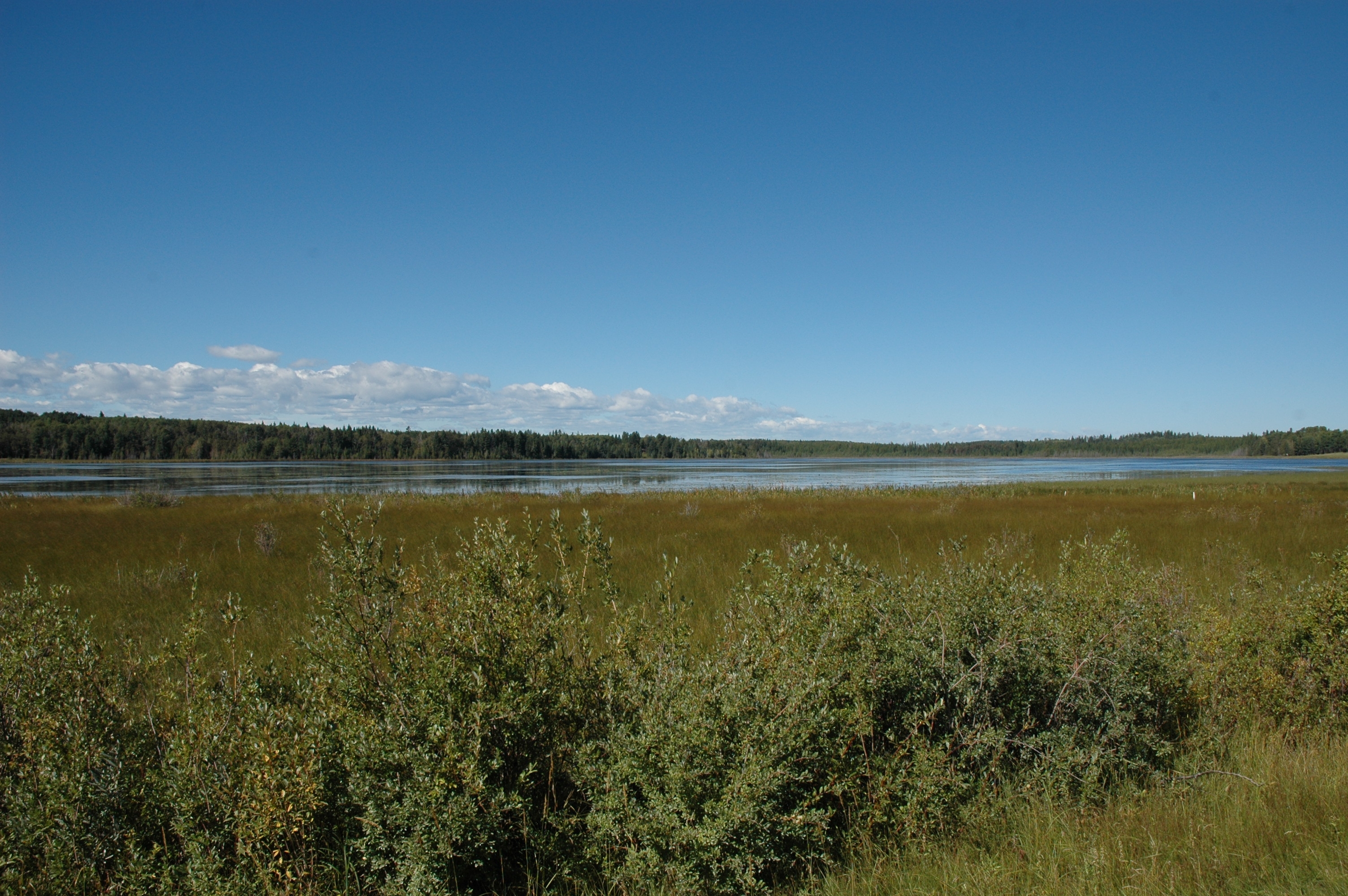
Adams Lake (looking west), August 29, 2012, Alberta Geographical Names Program

The Alberta Historical Resources Foundation and the Minister of Culture has officially adopted the name Adams Lake for a small lake in Red Deer County (see information bulletin). The lake is approximately 100 hectares (250 acres) in size and located about two kilometres south of Raven and 35 kilometres west of Innisfail. The adoption of this name is significant as it commemorates the Adams family, who homesteaded in the region, and recognizes a name that has been used locally for about 100 years.
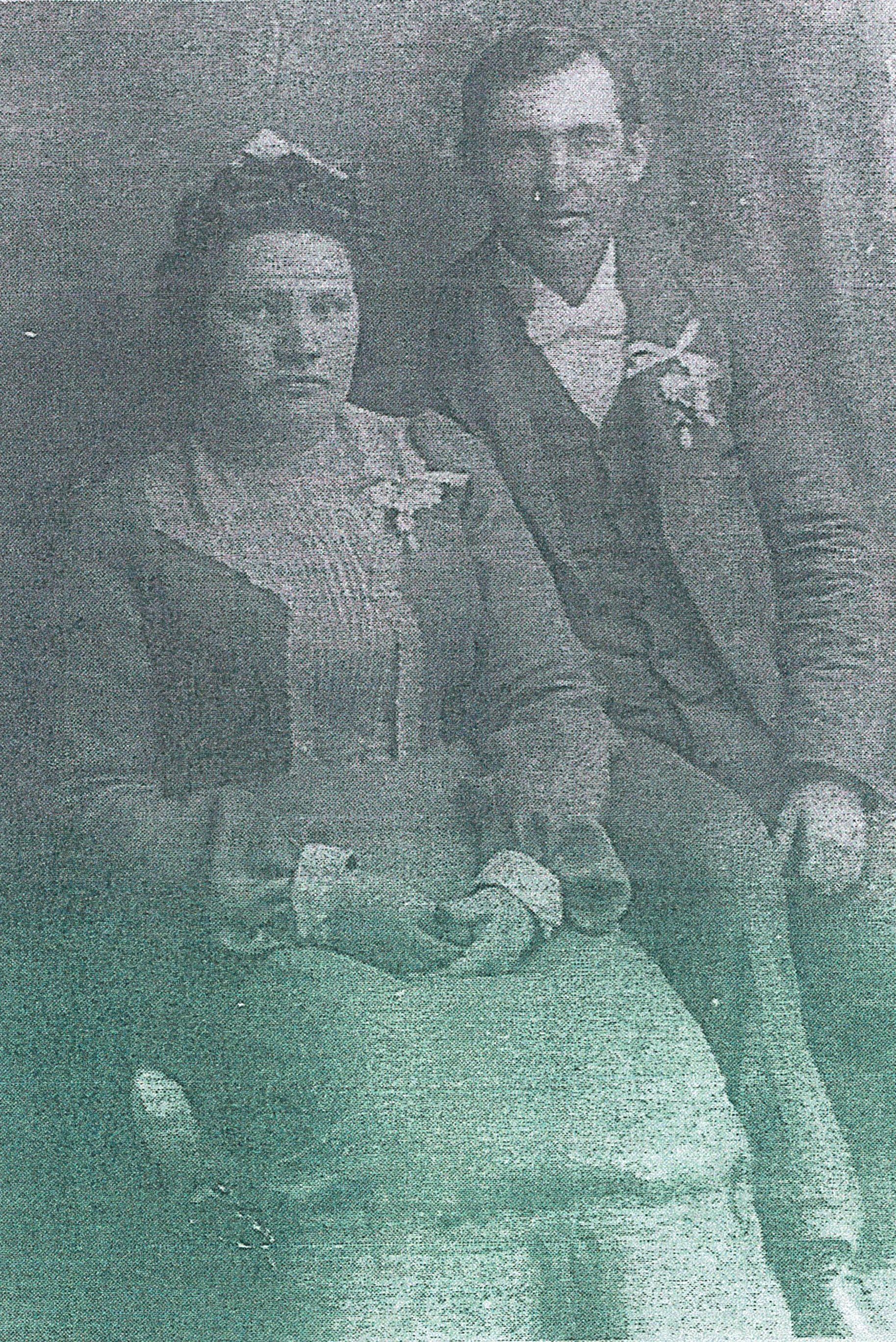
David Arthur and Julia Marie Adams, 1902, Photograph courtesy of the Adams family

The name commemorates the family of David and Julia Adams. David Arthur Adams was born in Stratford, Ontario. As a young man he met Julia Marie Hedlund, of Chippewa County, Minnesota at a hotel in Lakota, North Dakota. They were married in 1902 and lived for a time with David’s parents in Birtle, Manitoba. The couple soon struck out on their own and lived for a time in Vancouver and Mission, British Columbia and in Calgary, Alberta. Ultimately, in 1912, they settled on a homestead in the Raven District. The homestead, NW2-36-4-W5, was on the eastern shore of a small lake. The lake had been previously noted as “Lake No. 3” in a 1904 Dominion Land Survey Plan of Township 36-4-W5 and it appears unnamed on most federal government maps of the region following that date. It became popular with people from as far away as Spruce View for skating in the winter months and after 1912, it became known to locals as “Adams Lake,” likely due to the family’s proximity.

By the time the Adams’ had settled near Raven, they were raising six children, and four more were born during their time at the homestead. According to David and Julia’s descendents, the land the family was working was not ideal for agriculture and, perhaps for this reason, at the age of 42, David Adams enlisted for service with the 187th (Central Alberta) Regiment during the First World War. Following the war he returned to farming. However, as the older children grew up and left home for farms in the neighbouring districts, and other careers of their own in Spruce View, Bowden, Innisfail and Rocky Mountain House, the farmstead was not sustainable and at some point in the 1920s David and Julia also left the area. David passed away in Calgary in 1942. Julia lived with her children in the Dickson and Kevisville districts and the Pigeon Lake area before also passing away in Calgary in 1966.
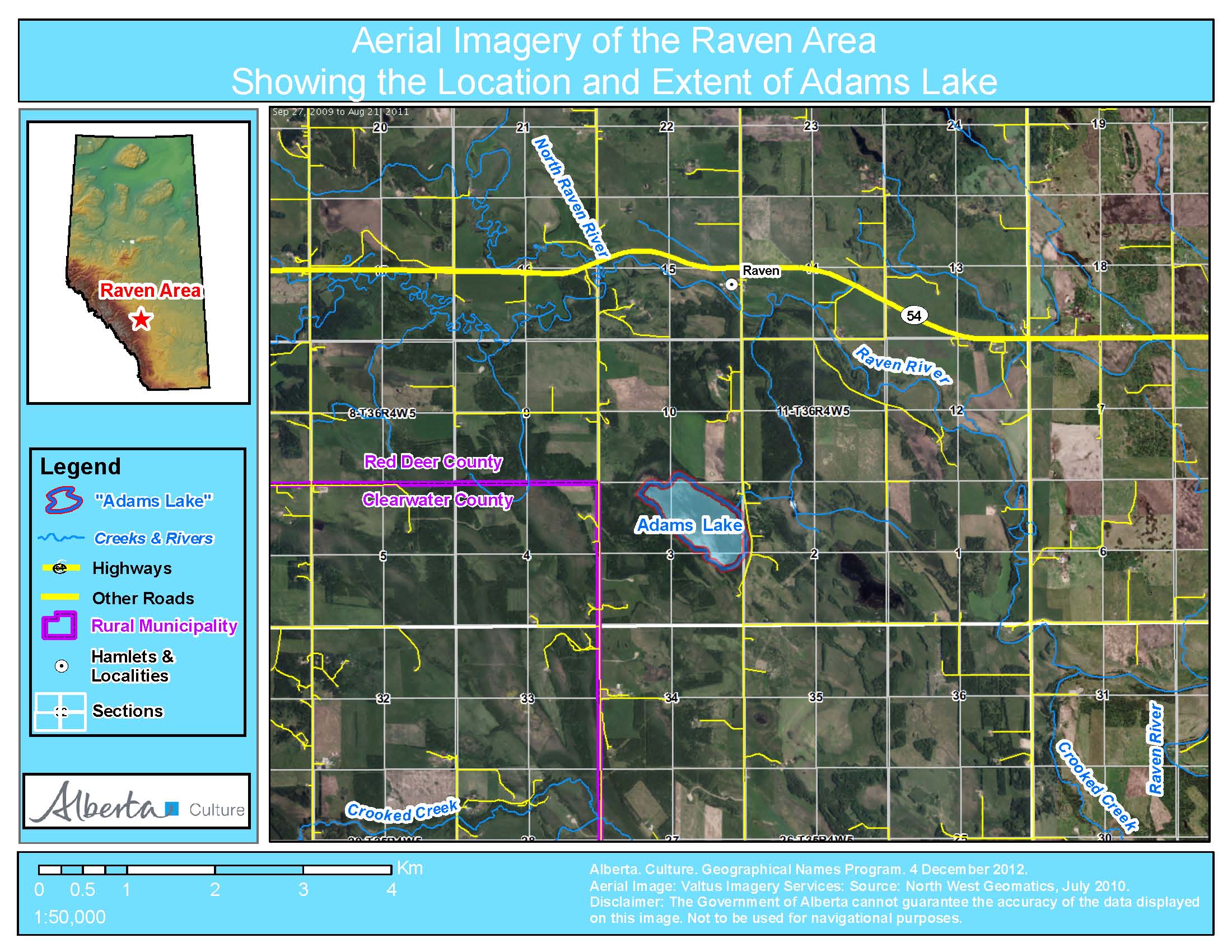
Aerial Imagery: Adams LakeAlthough the Adams family remained in the general area for some time, their direct association with the lake was relatively short. However, field research done by the Alberta Geographical Names Program in 1981 and 2012 found that the name Adams Lake was still being used by many local residents and that the name had been in use since at least the 1920s, probably even longer. The lake has also been identified by that name in local publications, newspapers and water conservation reports for the area.

In Alberta, geographical names are adopted after being evaluated against the “Principles of Geographical Naming.” These principles can be found in the Geographical Names Manual. The principles to approve names are based on national and international standards and guidelines and hold that names that have a demonstrated local and/or historical usage should be given primacy when names are being considered for features with no official name. In 2011, Robert Nanninga, a resident of the Raven area applied to Alberta Culture to have the long-standing, but unofficial name given official recognition by Alberta Culture. A considerable amount of information was provided by the applicant and the region’s local history (Grub Axe to Grain…). However, the real breakthrough came when another area resident put researchers in touch with Ken Adams, a grandson of David and Julia. Through him connections were made with Georgina O’Coin, a granddaughter, and Edith Hudson (née Adams), the last surviving child of David and Julia. When these three family members were interviewed in Red Deer in August 2012, Mrs. Hudson was 101 years old. The information given during this interview proved invaluable in firming up the history of the lake and family by providing more details than were included in the local history. It was a true pleasure to be able to meet with the descendents of this homesteading family.
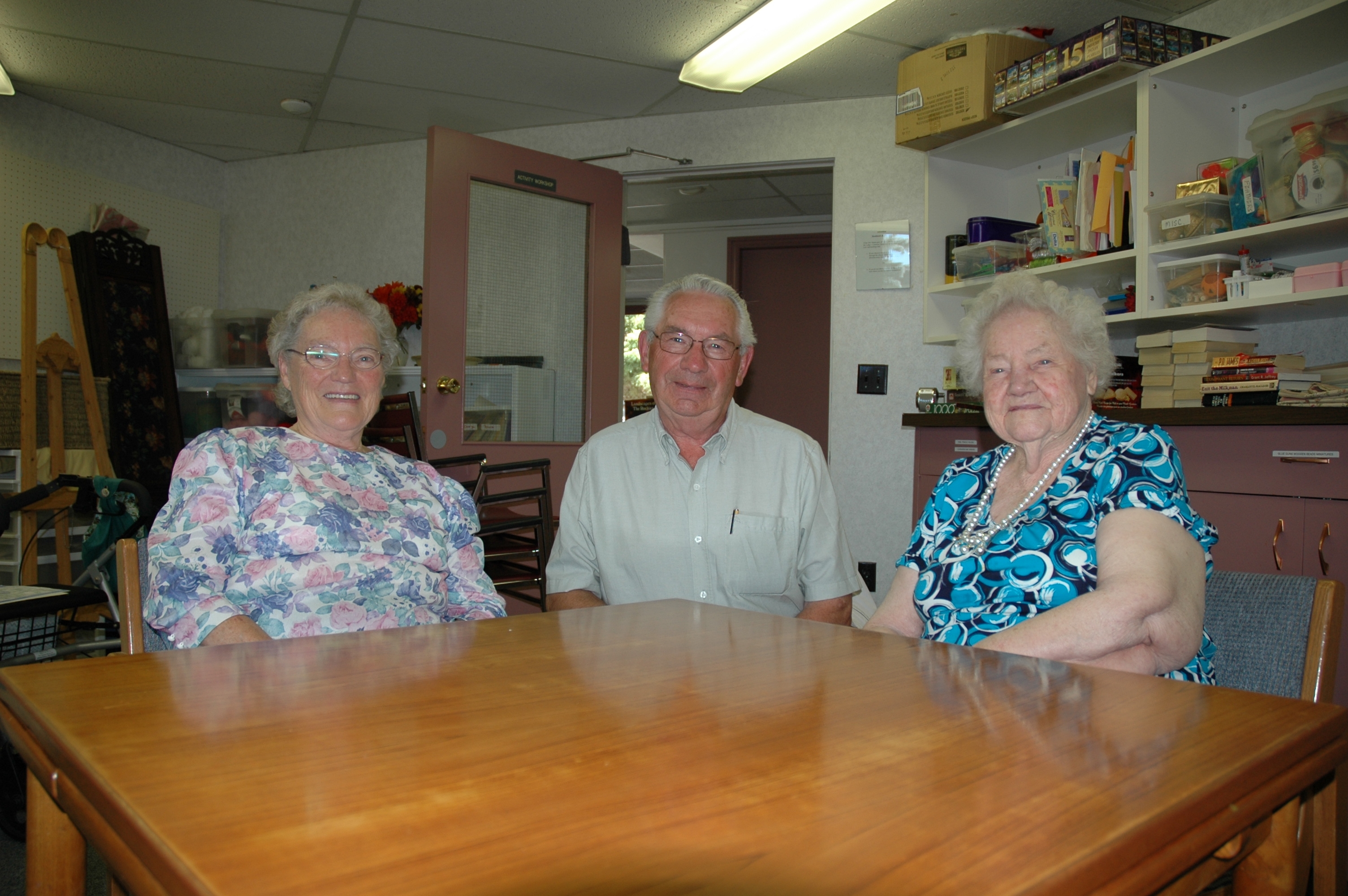
LtoR: Georgina O’Coin, Ken Adams, Edith Hudson (née Adams). Taken at Red Deer, August 29, 2012, Alberta Geographical Names Program

The Adams Lake naming proposal was supported by the Municipal Council of Red Deer County. The Board of the Alberta Historical Resources Foundation decided to officially adopt the name during their October 20, 2012 meeting in Banff. On November 19, 2012, the Minister of Culture concurred with the board’s decision and the adoption of the name became official. Notification of the adoption of the name Adams Lake was published in Alberta Gazette on January 15, 2013. Notification of the new official name has been communicated to provincial mapping authorities and to the Secretariat of the Geographical Names Board of Canada for inclusion in the Canadian Geographical Names Database, ensuring that the name will appear on new maps of the region produced by the federal and provincial governments.

Written by: Ron Kelland, Historic Places Research Officer and Geographical Names Program Coordinator

Location

National Topographic System Map Sheet: 83 B/1 – Markerville

Latitude/Longitude: 52° 04′ 05″ N & 114° 29′ 05″ W

Alberta Township System: Sec. 3 Twp. 36 Rge. 4 W5

Description: Approximately two km south of Raven and 35 km west of Innisfail (town).

Additional Resources 

Additional information about the lake and the Adams family can be found in:

Grub Axe to Grain…: A History of Craig, Dickson, Happy Hill, Heckla, Hola, Markerville, New Hill, North Raven, Raven, Red Raven, Rich Hill, Spruce View (Spruce View: Spruce View School Area Historical Society, 1973). Available from Our Future Our Past: The Alberta Heritage Digitization Project, University of Calgary, http://www.ourfutureourpast.ca/loc_hist/toc.aspx?id=7618.
Using the Standards and Guidelines

How do you determine whether or not a proposed change (what we call an intervention) is appropriate for a historic place? Would a fresh coat of paint preserve the heritage value of an old house? Does painting the brick affect its heritage value as a Municipal Historic Resource? How do I choose the colour of paint?

Using the Standards and Guidelines_Page_10Answers to these questions and more are found in the Standards and Guidelines for the Conservation of Historic Places in Canada (or the S&Gs for short). Introduced in 2003 and revised extensively in 2010, the S&Gs are the definitive framework for heritage conservation in Canada, having been widely adopted by municipal, provincial, and federal authorities as a tool for determining how to conserve and manage change to historic places.

The S&Gs provide a foundation of conservation principles organized around fourteen standards, a standardized vocabulary of conservation terms, a straightforward decision-making process, and practical conservation guidelines for a wide range of resource types. Used in conjunction with Statements of Significance, the S&Gs also play a role in determining if work is eligible for conservation grants from the Alberta Historical Resources Foundation.

The presentation below, from the 2012 Municipal Heritage Forum, offers an overview of the S&Gs as a tool for municipalities to manage the historic places identified through surveys and inventories and subsequently protected as Municipal Historic Resources.

PRESENTATION: Using the Standards and Guidelines

Written by:  Fraser Shaw, Heritage Conservation Adviser.

“Rah, Rah, Sis Boom Ba!”

Heritage Advisory Bodies aren’t pep squads but they do need P.E.P!

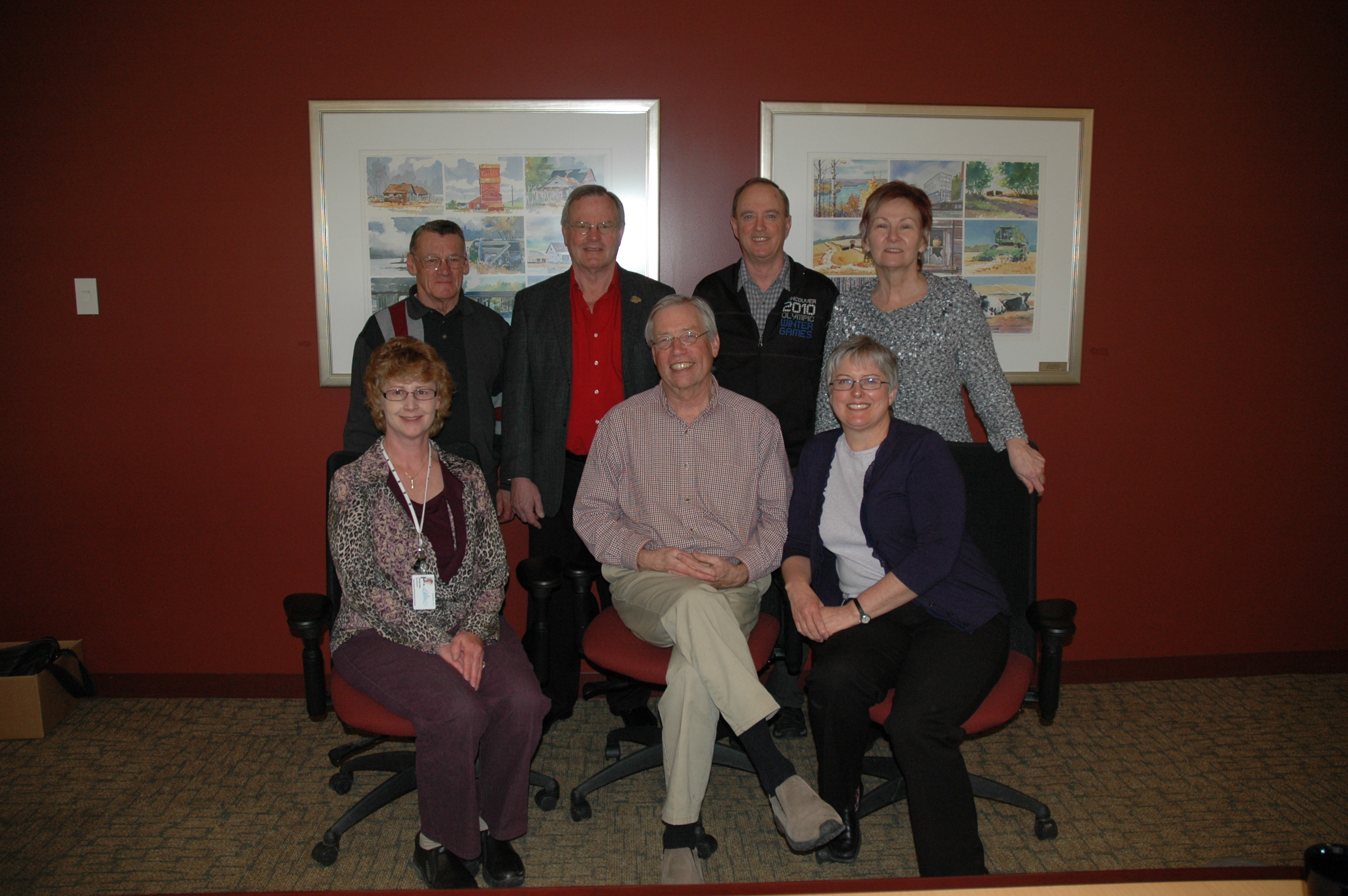
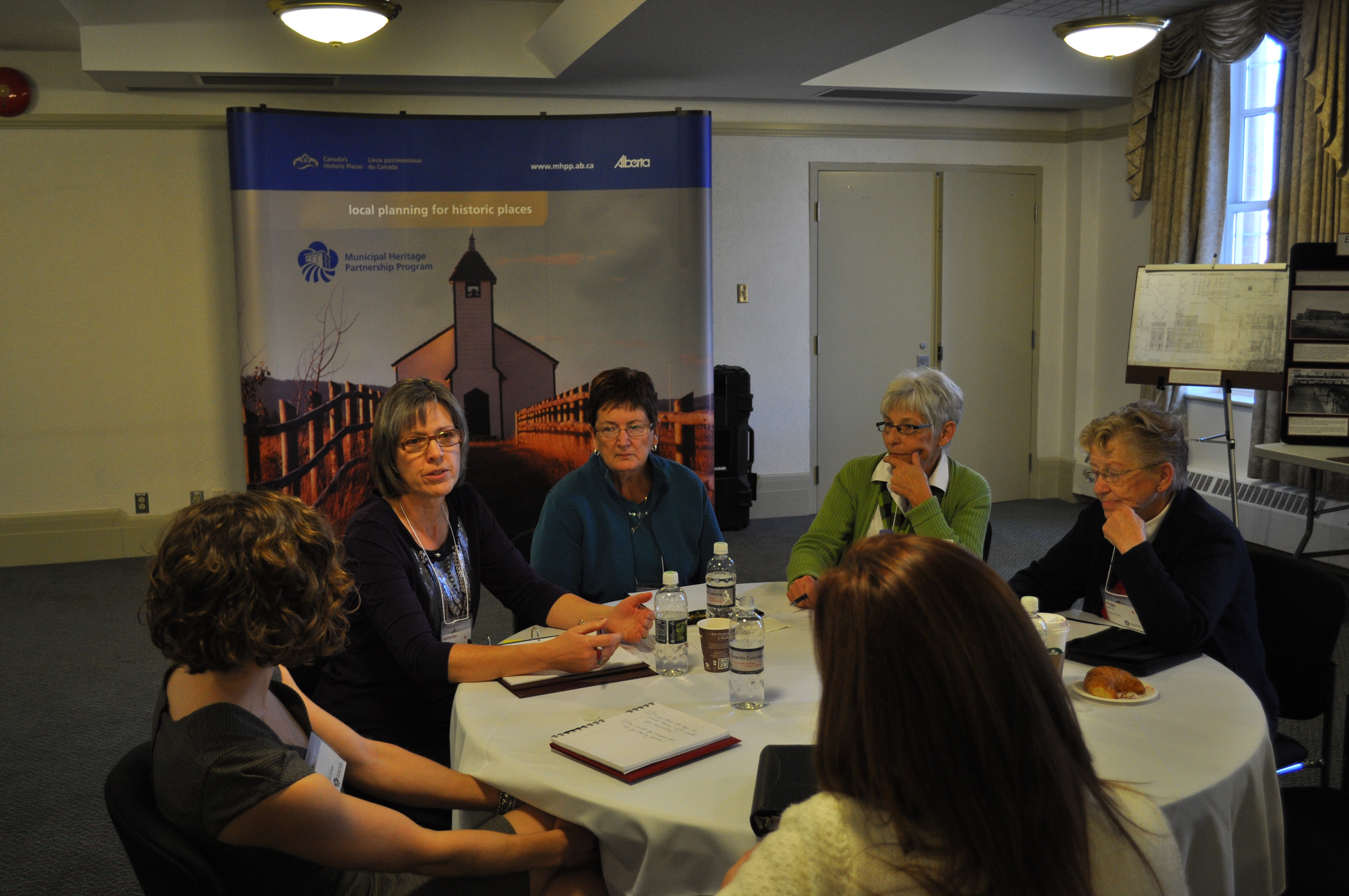
Members of the Holden Heritage Resources Committee.
Members of the Holden Heritage Resources Committee (Municipal Heritage Forum 2011).

As a best practice, the Municipal Heritage Services Unit of Alberta Culture encourages municipalities that are developing local heritage conservation programs to establish a heritage advisory body. A heritage advisory body could be a board, commission or committee that advises Council on matters pertinent to the development and management of a local heritage program. Essentially, a heritage advisory body has the important job of providing public input and expertise to Council so that informed decisions about the municipality’s heritage will benefit current residents and future generations. Heritage advisory bodies can also play a key role in fostering community interest and support.

So what does pep have to do with heritage advisory bodies? Well, a quick search on Dictionary.com defines “pep” as being indicative of high spirits, energy, or vitality. While these are great traits for a municipal heritage advisory body, these groups should also possess another type of pep: Planning, Engagement and Partnerships.

Yellowhead County Heritage Advisory Board (2011)
Yellowhead County Heritage Advisory Board and municipal staff (2011).

Planning – A wise man once taught me: “Prior preparation and planning prevents poor performance.” This holds true for the development of local heritage conservation programs. For a municipality (and its heritage advisory body) to effectively manage historic resources it should learn about, understand and plan for the successful protection and conservation of significant places. A heritage advisory body, representing the broader community, plays a key role in planning projects that identify potential historic places, evaluating sites for heritage value and determining appropriate procedures and policies for managing an effective heritage program. The Municipal Heritage Partnership Program has a suite of cost-shared grants designed to assist with the completion of these projects.

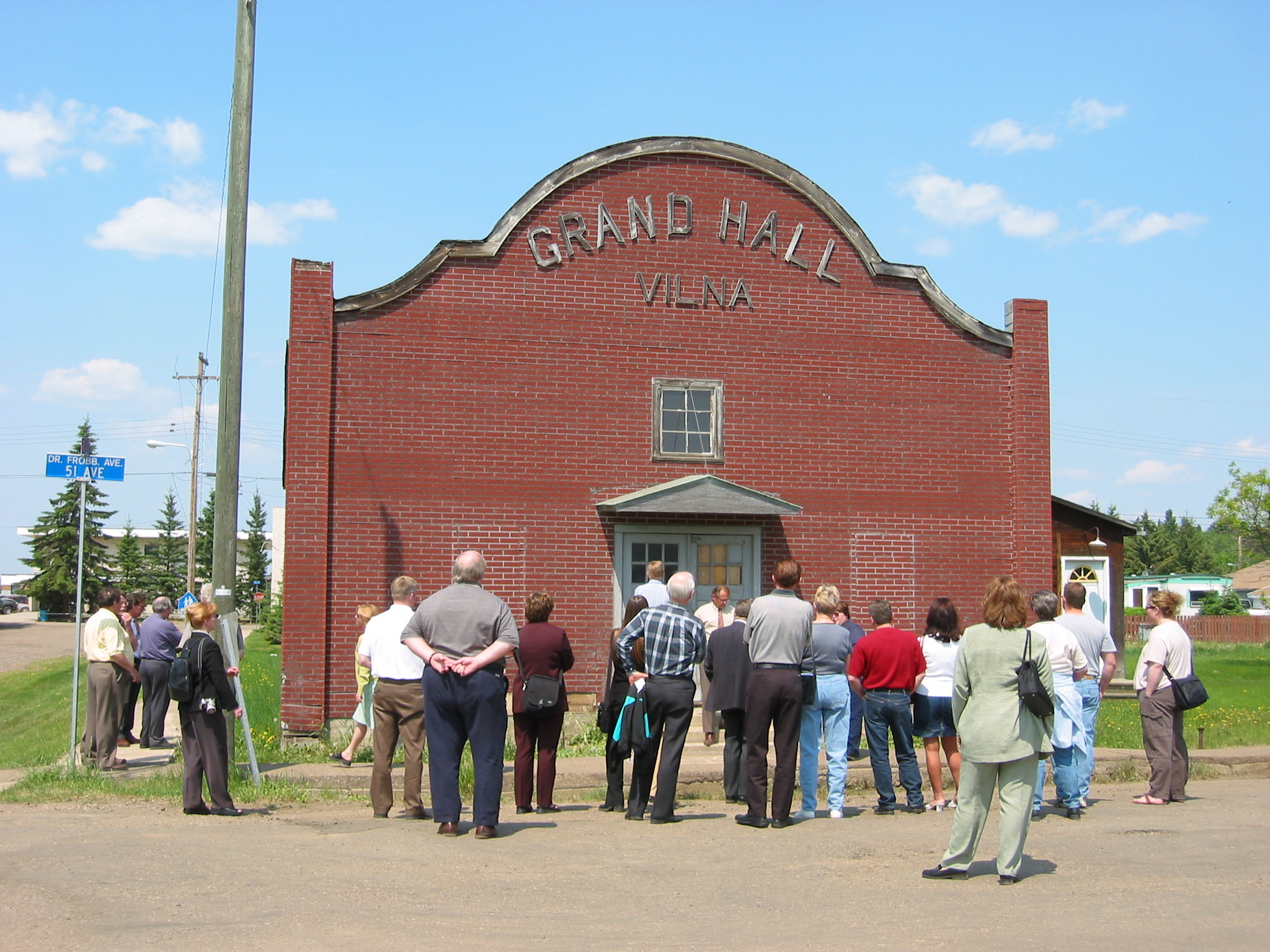
Tour of historic places in the Village of Vilna (2002).

Engagement – Why do we conserve heritage? Many answers come to mind but the most commonly referenced speaks of how present and future generations will benefit from improved community identity and a stronger sense of place. Ultimately, this reason transforms heritage conservation into something that is very people focused, as opposed to place specific. So, when planning don’t forget to engage the community benefiting from heritage conservation! Find ways for residents to participate and experience their heritage: organize heritage awareness special events; develop educational material so that people may learn about and take pride in their community’s unique heritage. Be creative in your approach and have fun! Heritage awareness or research grants offered through the Heritage Preservation Partnership Program may assist with these types of initiatives.

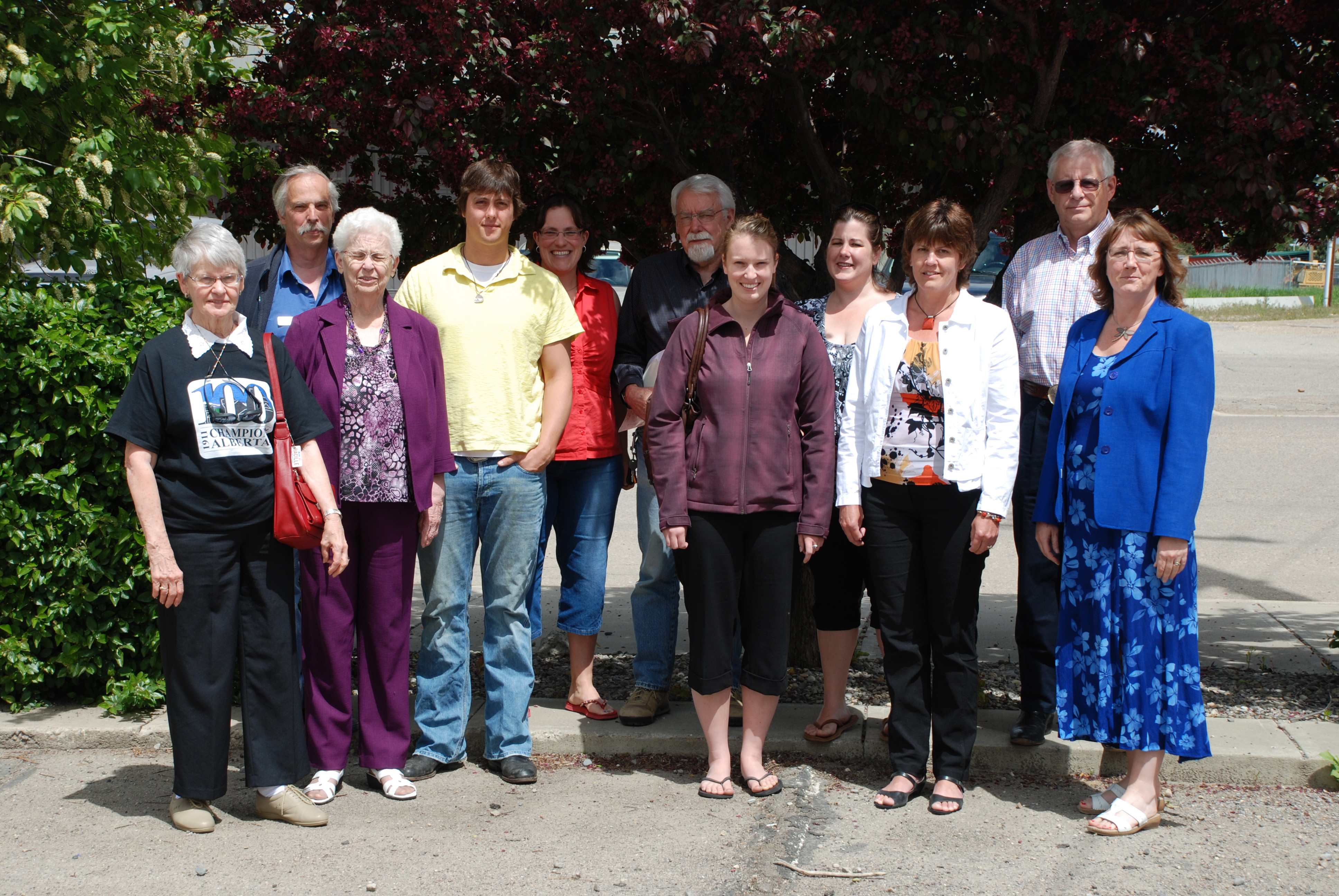
Vulcan Regional Heritage Project Steeering Committee - a collaboration between area municipalities (2011).
Vulcan Regional Heritage Project Steeering Committee – a collaboration between Vulcan County, Town of Vulcan and the villages of Carmangay, Champion and Milo (2011).

Partnerships – Heritage is holistic and so its conservation and celebration can’t be completed in isolation. As a result, heritage advisory bodies should engage and partner with other organizations – especially community organizations that are atypical. That local hockey association, tennis club, wilderness organization or theatrical society might very well be planning the perfect event that could support some heritage engagement objectives. The members of those same organizations might also provide a new perspective or highlight additional opportunities related to heritage conservation. I challenge you: find a listing of community organizations, select the one that seems least likely to have an interest in heritage conservation and try to collaborate on a mutually beneficial project. Through partnerships and collaborations, awareness and appreciation of heritage will surely increase.

This P.E.P. approach to heritage management will help ensure a collective community-driven attitude; a method that will strengthen and increase support and contribute to a community culture of conservation.

Written by: Brenda Manweiler, Municipal Heritage Services Officer

Wheatland County Lists Historic Resources on the Alberta Register of Historic Places

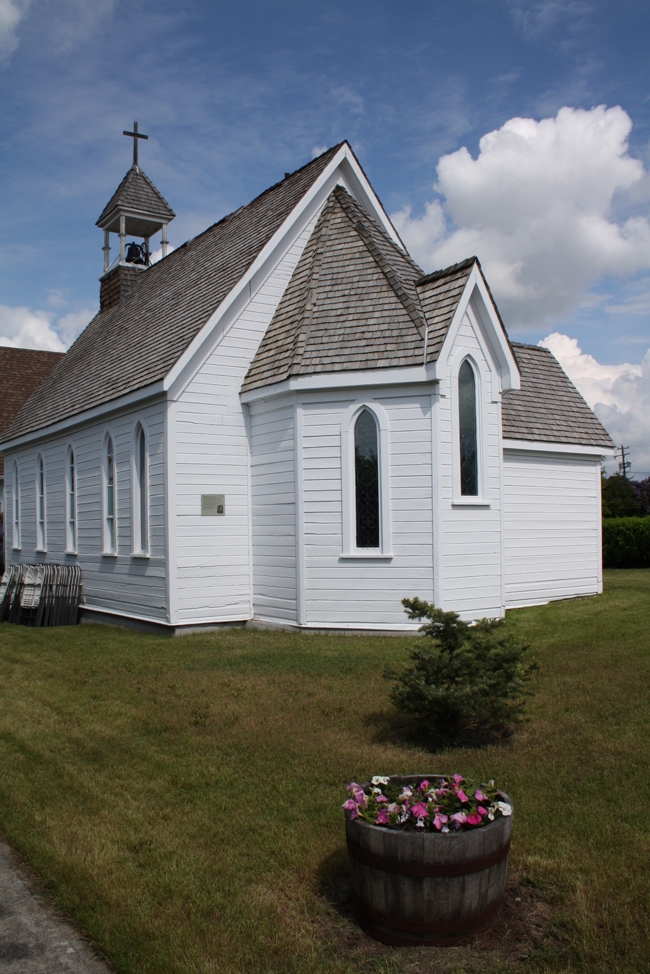
St. Andrew's Anglican Church_September 12 2012Wheatland County recently designated two Municipal Historic Resources that are now listed on the Alberta Register of Historic Places. You can find Wheatlead County a few kilometres east of the City of Calgary and adjacent to the Siksika Indian Reserve. The area was settled in the 1890s and the two sites reflect very different themes in Alberta’s history.

The St. Andrew’s Anglican Church is a small church located in the Hamlet of Gleichen, just north of Siksika Nation. It was built in 1885 by Anglican missionaries to the Blackfoot nation. The descendants of the Blackfoot people and the area’s settlers worship here to this day. This little chruch is quite likely one of the oldest Anglican churches in Alberta.

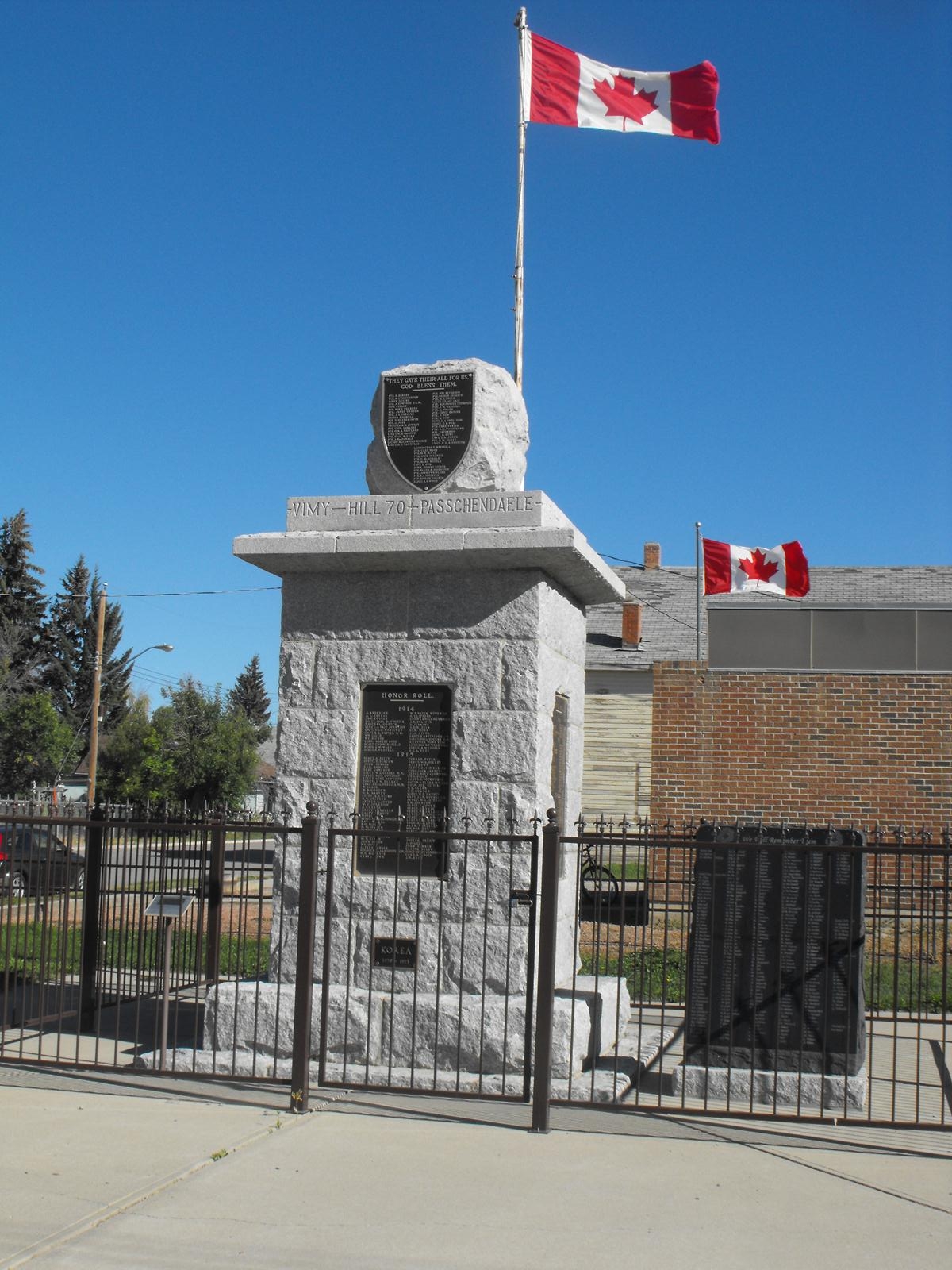
Cenotaph, Wheatland CountyThe Gleichen War Memorial Cenotaph is located in the Hamlet of Gleichen as well. Is was built in 1920 as a monument to the 51 men from the area who lost their lives while fighting for Canada in World War I. Plaques have subsequently been added to honour soldiers from the area who died during the Second World War, the Korean War and the mission to Afghanistan.

Written by: Michael Thome, Municipal Heritage Services Officer

County of Minburn: Conserving Ukrainian Canadian Historic Places

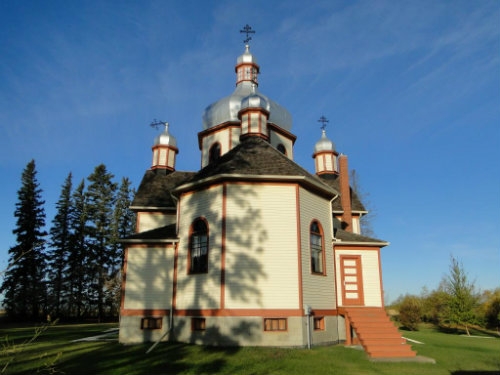
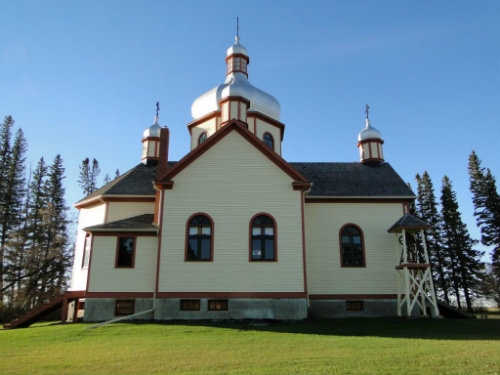
Sich-Kolomea Ukrainian Orthodox ChurchThe County of Minburn recently listed one of its newly designated Municipal Historic Resources on the Alberta Register of Historic Places. The Ukrainian Orthodox Church of the Dormition of St. Mary of Sich-Kolomea (otherwise known as Sich-Kolomea Ukrainian Orthodox Church) is one of the many historic resources that tell us about Ukrainian Canadian settlers.

Sich-Kolomea Ukrainian Orthodox ChurchThe Sich-Kolomea church is valued by the county because of what it conveys about the Ukrainian Canadians setters who built it. The church served the pioneer farmers of the area, and was the first church in what was to become the Vegreville mission district. It is also a beautiful example of the Canadian interpretation of the Byzantine style of church architecture seen in many eastern rite churches built on the Canadian prairies.

There are many municipal and provincial historic resources that tell us about the Ukrainian Canadian settlers in east-central Alberta. You can use the advanced search features of the Alberta Register of Historic Places to learn more about the places that form their legacy.

Written by: Michael Thome, Municipal Heritage Services Officer

Century Homes Calgary wins Governor General’s Award

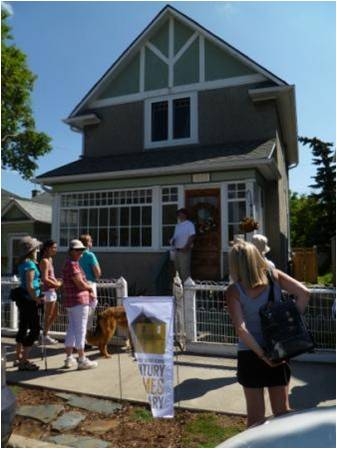
Century Homes Calgary logoAt the Place Matters! Municipal Heritage Forum back in November 2012, we heard about a highly successful community program called “Century Homes Calgary.” This initiative engaged hundreds of Calgarians in showcasing the unique heritage of their 100-year old homes, with over 500 homes participating.

In June 2012, the Alberta Historical Resources Foundation awarded a Heritage Awareness Grant for this creative initiative.

Recently, the Century Homes Calgary project, and its parent organization the Calgary Heritage Initiative Society, received recognition as the 2012 English winner of the prestigious Governor General’s Award for Community Programming.

A house participating in Century Homes Calgary

Here are the two presentations made at the Forum about the Century Homes Calgary project:

The group’s presentation at our Forum generated a lot of interest from other communities to learn how they could develop similar events.

Congratulations on your award and thank you for being an inspiration!

Written by: Matthew Francis, Manager of Municipal Heritage Services

Recent Addition to the Alberta Register of Historic Places

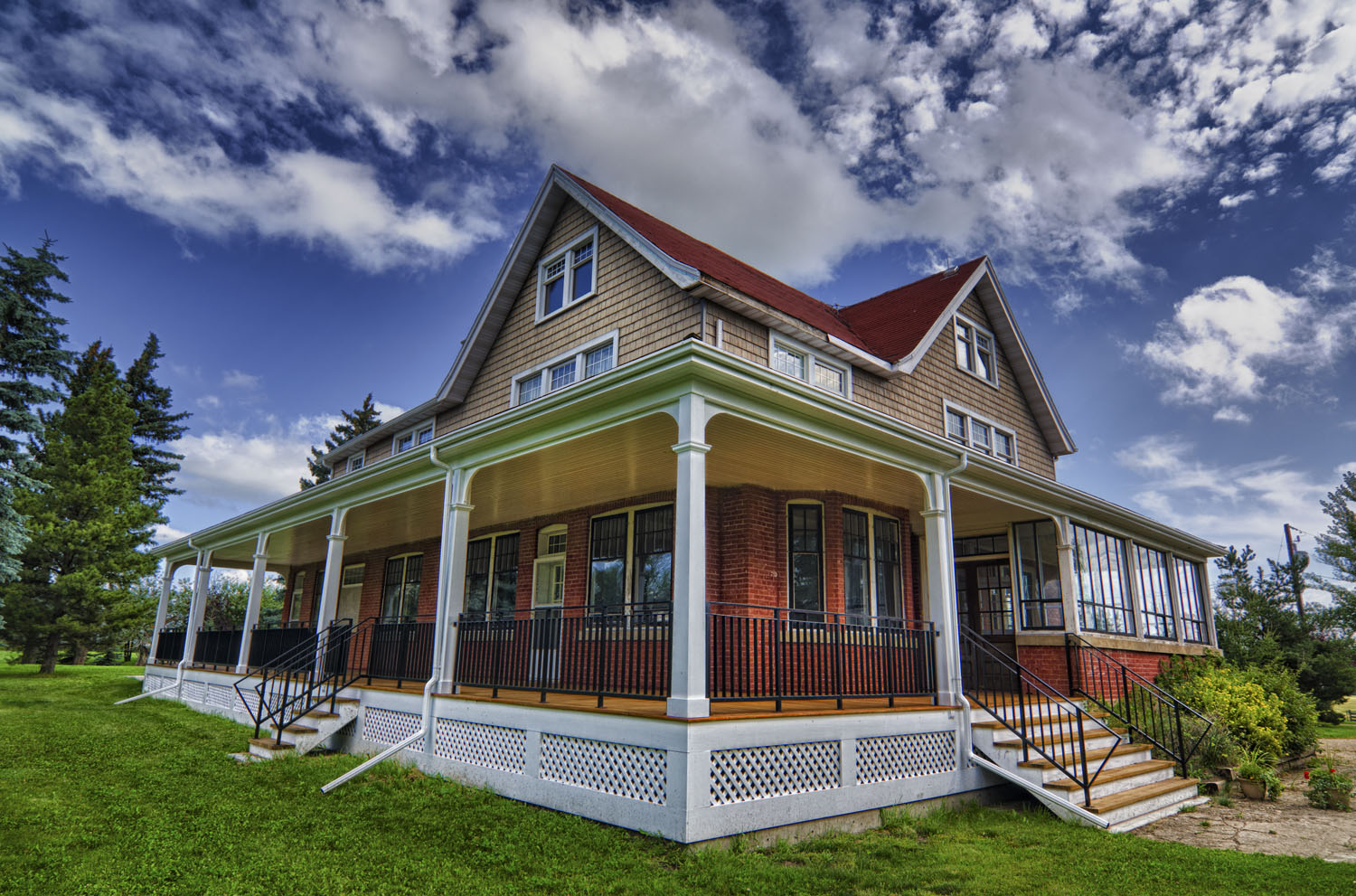
4664-0289_ExteriorA recent Municipal Historic Resource listed on the Alberta Register of Historic Places is Bremner House, located in rural Strathcona County. It is a large two and one half storey residence constructed in the early 1900’s. Heritage values associated with Bremner House include the aesthetic significance of the scale, style and location of the building as well as its representation of the cultural growth and development of Strathcona County during the first half of the 20th Century.

To read more about the significance of Bremner House, and to view additional photos, check out the listing on the Alberta Register of Historic Places.

Are you curious if places in your community are listed on the Alberta Register of Historic Places? Complete an Advanced Search by “municipality” and see what is found. Only sites formally designated as either Municipal Historic Resources, Provincial Historic Resources or Registered Historic Resources are listed on the Alberta Register of Historic Places.

Written by: Brenda Manweiler, Municipal Heritage Services Officer

City of Medicine Hat sees two new listings on the Alberta Register

A community rich in Alberta history – boasting not one but two National Historic Sites of Canada – the City of Medicine Hat recently had two of its designated Municipal Historic Resources listed on the Alberta Register of Historic Places.

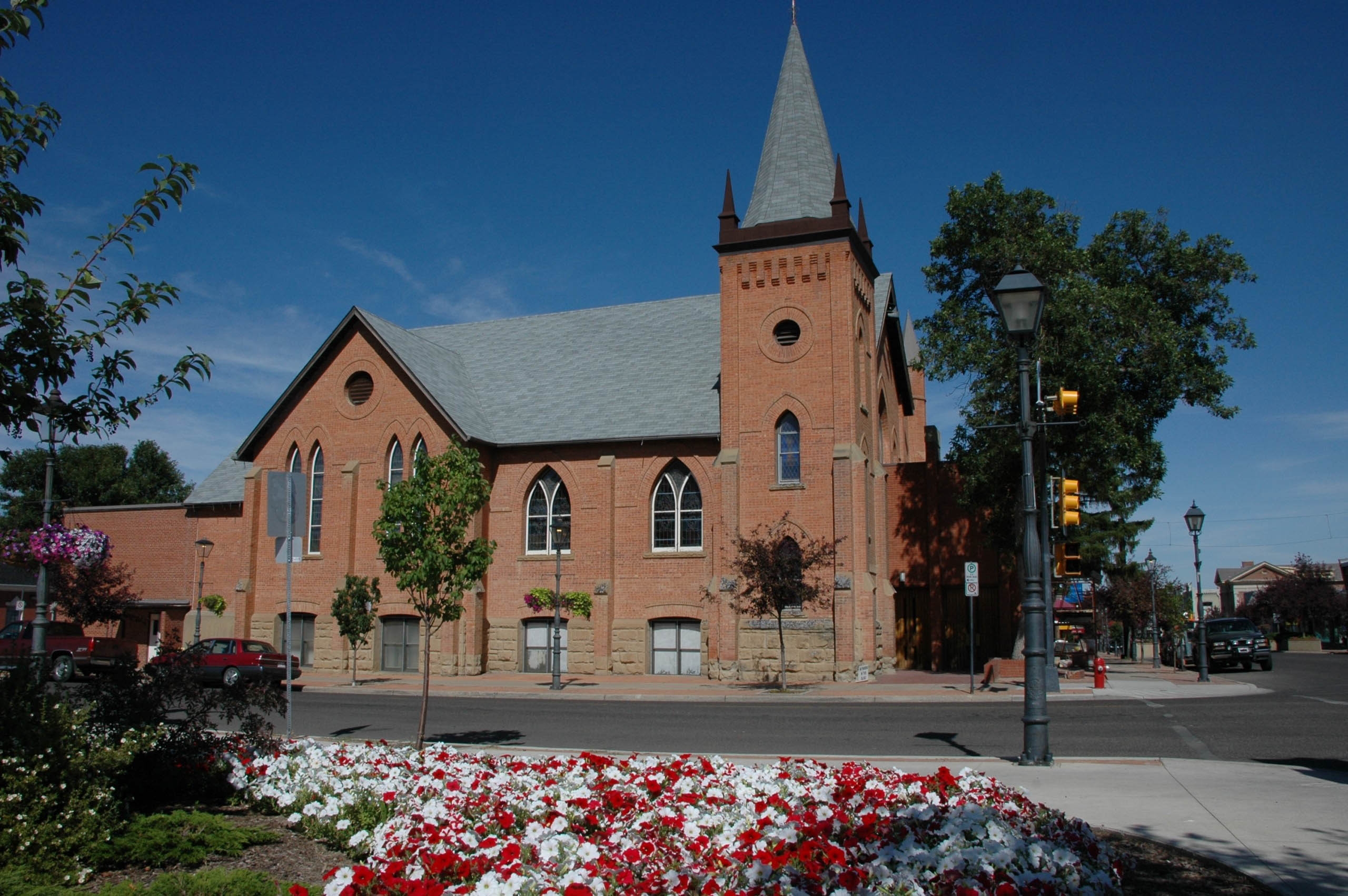
St  John's Presbyterian Church Medicine HatSignificant for its status as the oldest church building in Medicine Hat, and the home of the City’s oldest religious congregation, St. John’s Presbyterian Church was listed on the Register in late 2012.

Just this week, another historic place designated by the City, the Merchants Bank of Canada, was also listed on the Alberta Register of Historic Places. Constructed in 1899, the Merchants Bank is valued not only as the first permanent bank branch in the City, but also as an important building constructed of brick, in a city where brick was historically an important and characteristic local material, and brick-making a key industry.

Merchants Bank, Medicine HatCongratulations to the City of Medicine Hat and the owners of these two properties for being listed on the Alberta Register!

Written by: Matthew Francis, Manager of Municipal Heritage Services

Accepting Applications: Premier’s Council on Culture

Premier's Council on Culture

As many of you may already know, on January 9, 2013, Minister of Culture Heather Klimchuk launched a recruitment process for members of the Premier’s Council on Culture. Members will represent the range of sectors responsible for cultural activities and experiences – the arts, heritage, multicultural and nonprofit/voluntary organizations, as well as creative and cultural industries, youth and corporate partners.

The Government of Alberta will be recruiting up to 20 new council members, who may serve terms of up to three years. The application period ends February 28, 2013. If you are interested in being a cultural leader for both your community and Alberta, apply on the Government of Alberta Jobs Website (Job ID# 1015041).

Additional Information

Renewed Premier’s Council to help build capacity in Alberta’s cultural sectors

Council Members, Premier’s Council on Culture, Government of Alberta

Culture Ads - Final_Page_2

Prepared by: Brenda Manweiler, Municipal Heritage Services Officer

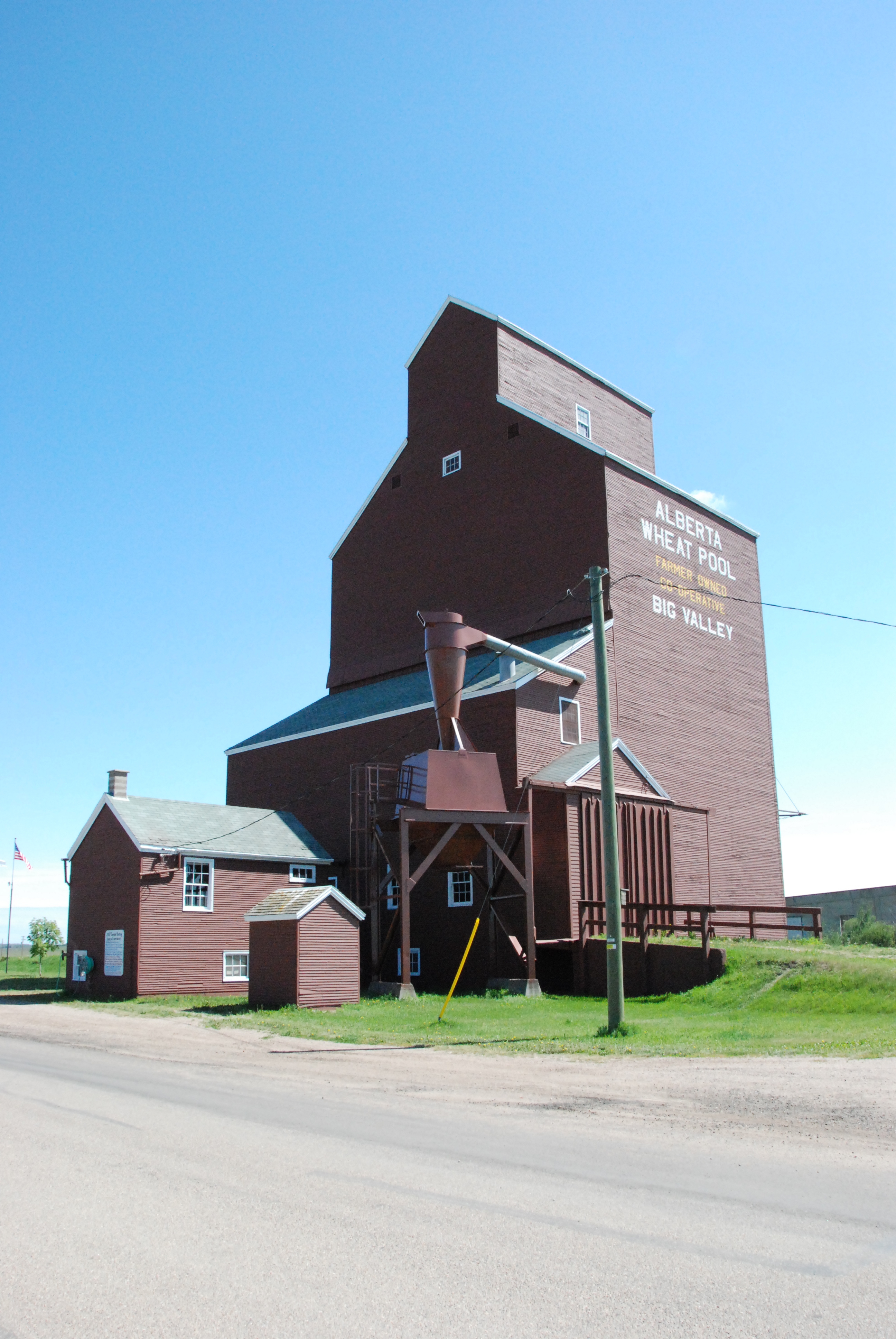
Alberta Wheat Pool Grain Elevator, Big Valley

Alberta Wheat Pool Grain Elevator (DSC_5353 Historic Resources Management Branch).

Today’s blog post will no doubt please all of our railroad and grain elevator enthusiasts out there in the ether. On August 27, 2012, the Alberta Wheat Pool Grain Elevator in Big Valley was designated as a Provincial Historic Resource and added to the Alberta Register of Historic Places. This grain elevator has heritage significance due essentially to the fact that it is…, well, it’s a grain elevator. These once dominant, landmark structures in rural Alberta have become iconic symbols, speaking to the province’s agricultural, social and railroad transportation history. This particular elevator also contributes to the cultural landscape of Big Valley, aiding in the visual communication of the community’s history as one of the province’s busiest railroad divisional points.

Wood-cribbed grain elevators such as the Alberta Wheat Pool elevator in Big Valley were once a dominant presence in the lives of most rural Albertans. These imposing, structures stood out on the horizon and could be seen from miles around. They were essential facilities for the sorting, storage, and transportation of grains and, as such, they also served an important social function as meeting places for area farmers. Although there were some variations in elevator design, size and services, they remained consistently similar in basic design and form over the years. This Alberta Wheat Pool grain elevator was a relatively late addition, being built in 1960, but it shares much with its earlier predecessors, notably its vertical orientation, gable-roofed cupola, shed-roofed drive shed with earthen ramps and overall lack of fenestration.

(DSC_2647 Historic Resources Management Branch).
View of the Alberta Wheat Pool Grain Elevator, Big Valley (DSC_2647 Historic Resources Management Branch).

In 1912, Big Valley had been selected as a divisional point on the Canadian Northern Railway’s (CNoR) Battle River Subdivision. At one point it possessed a large railyard and a number of important railroad maintenance facilities and storage areas for fuel, water and freight. Largely supported by the railroad, Big Valley was a bustling centre with a large population. In the late-1920s, Big Valley’s boom period came to an end when the divisional point was moved to Mirror on the former Grand Trunk Pacific Railway line.

Although the 1960 Alberta Wheat Pool grain elevator was built long after the Big Valley’s glory days as a divisional point, its presence adds to the interpretation of the community’s railroad heritage, particularly when considered together with the presence of other designated historical resources, such as the historic CNoR railway station and the remains of the roundhouse and frequent visits by the Canadian National Railways 6060 steam locomotive.

More information on the Alberta Wheat Pool grain elevator in Big Valley can be found on the Alberta Register of Historic Places.

Written by: Ron Kelland, Historic Places Research Officer and Geographical Names Program Coordinator