Cheese Please!

You have all probably seen them – large blue heritage markers located at highway rest areas or points of interest throughout Alberta. These interpretive signs tell of Alberta’s rich heritage. Come, travel Alberta and read a featured heritage marker:

Alberta’s First Cheese Factory

When the Canadian Pacific Railway arrived at Fort Calgary in 1883, the cattle industry in the region was given a great boost. The CPR also made it possible for homesteaders to settle in the foothills, and a number of small mixed farming operations developed in addition to the large cattle ranches. One of the first homesteads in Springbank was begun by Ebenezer Healy.
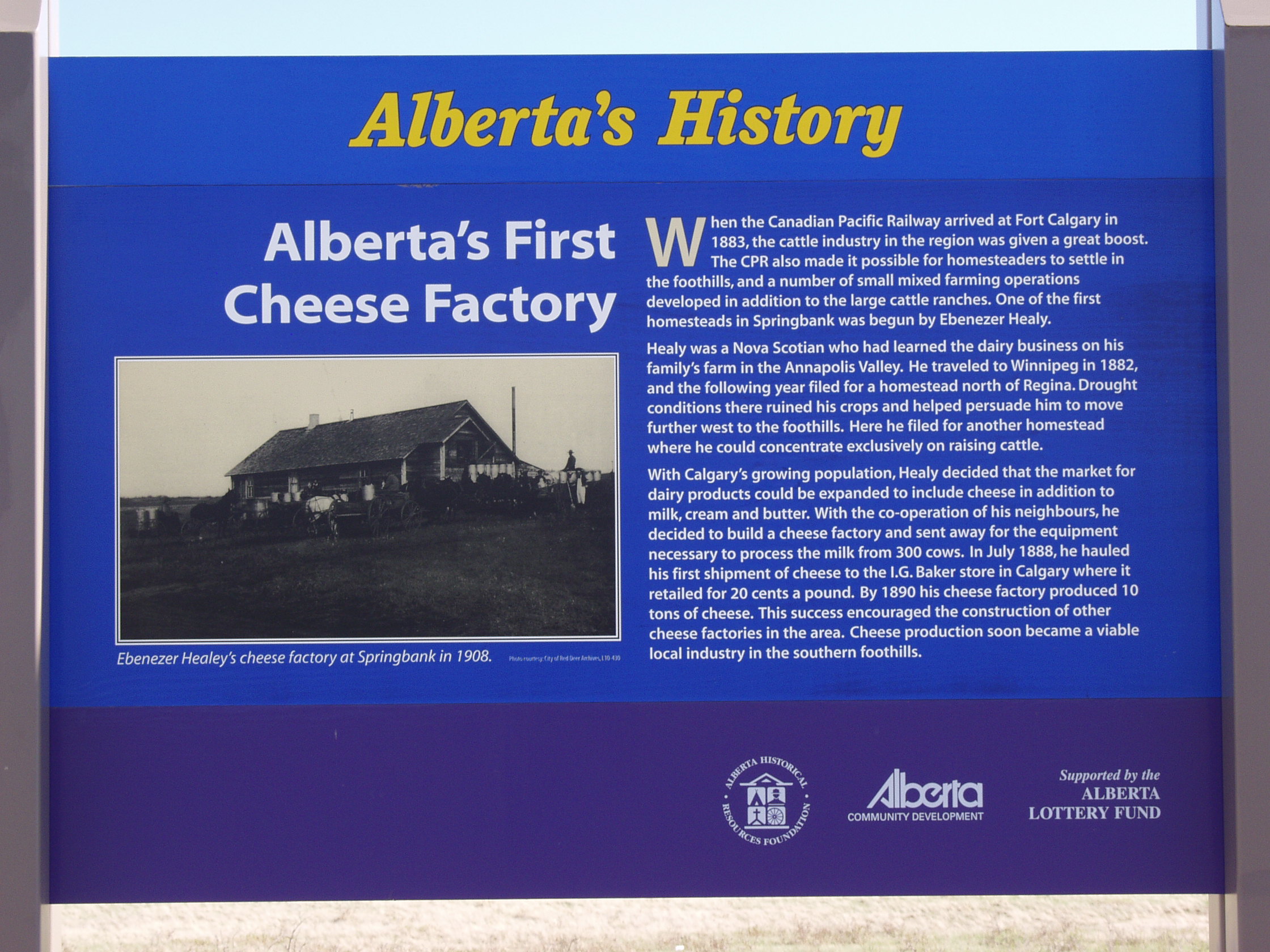
Alberta's First Cheese FactoryHealy was a Nova Scotian who had learned the dairy business on his family’s farm in the Annapolis Valley. He traveled to Winnipeg in 1882, and the following year filed for a homestead north of Regina. Drought conditions there ruined his crops and helped persuade him to move further west to the foothills. Here he filed for another homestead where he could concentrate exclusively on raising cattle.

With Calgary’s growing population, Healy decided that the market for dairy products could be expanded to include cheese in addition to milk, cream and butter. With the co-operation of his neighbours, he decided to build a cheese factory and sent away for the equipment necessary to process the milk from 300 cows. In July 1888, he hauled his first shipment of cheese to the I.G. Baker store in Calgary where it retailed for 20 cents a pound. By 1890 his cheese factory produced 10 tons of cheese. This success encouraged the construction of other cheese factories in the area. Cheese production soon became a viable local industry in the southern foothills.

Heritage Marker Location 

South side of Highway 1, one kilometre west of Highway 22.

Alberta Register of Historic Places

If you would like to read more about Alberta’s dairy industry check out these Provincial Historic Resources on the Alberta Register of Historic Places:

Donalda Creamery, Donalda AB

Markerville Creamery, Markerville AB

Prepared by: Brenda Manweiler, Municipal Heritage Services Officer
We want to hear from you!

RETROactive was launched six months ago and thanks to all of you it has grown into a blog followed by nearly 125 people. Over 60 blog posts have been published, covering topics such as: the conservation of historic windows; roadside heritage markers; the history of various Provincial Historic Resources; how to complete Municipal Heritage Surveys/Inventories and how Albertans can access conservation funding.

Are these the types of posts you want to read? Are there certain topics you would like us to discuss? What do you think about RETROactive? Please provide us with your feedback by commenting at the bottom of this post, write a comment on our Facebook page or email us at: albertahistoricplaces@gov.ab.ca. We look forward to receiving all of your messages.

Thank you for visiting RETROactive.

Written by: Brenda Manweiler, Municipal Heritage Services Advisor

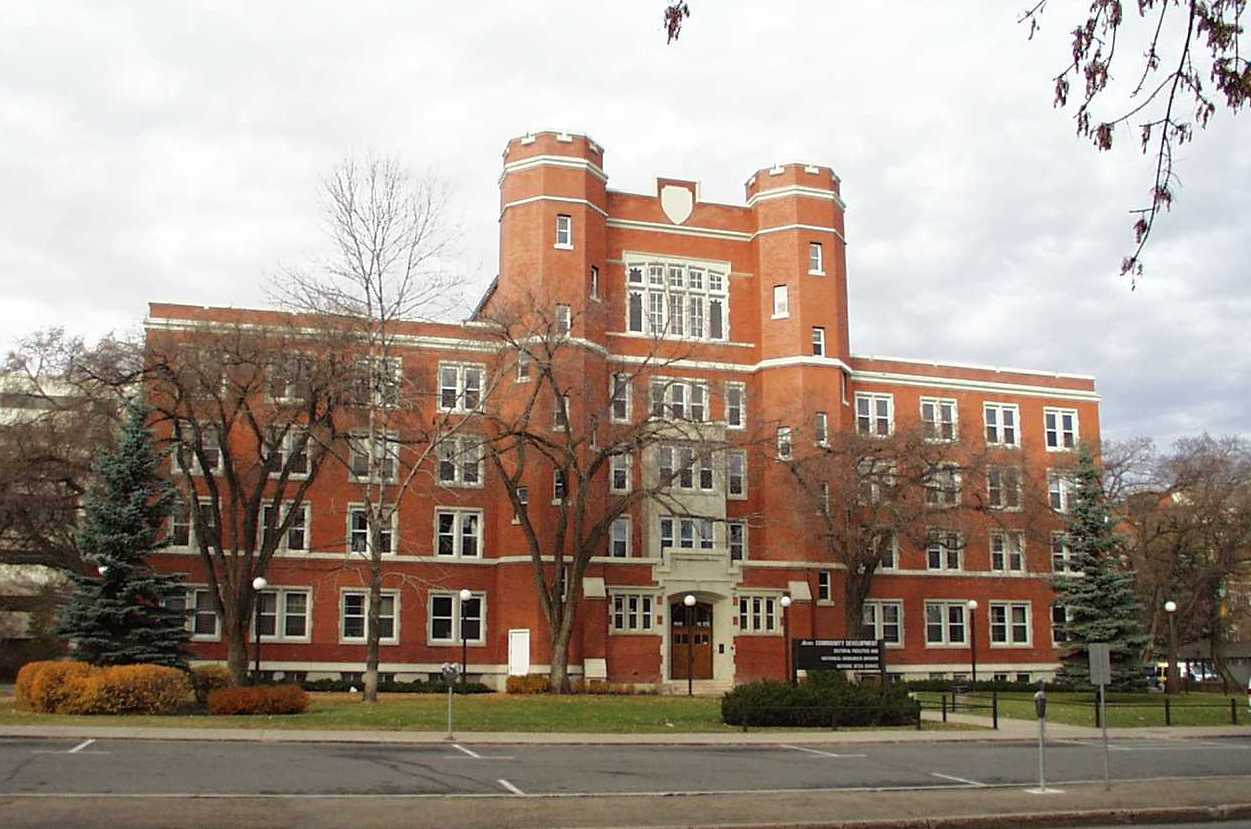
Old St. Stephen's College, located on the University of Alberta campus, is home to the Historic Resources Management Branch (the authors of RETROactive). This building is also a Provincial Historic Resource.

Alberta’s Victoria Settlement: Still a Special Place after 150 Years

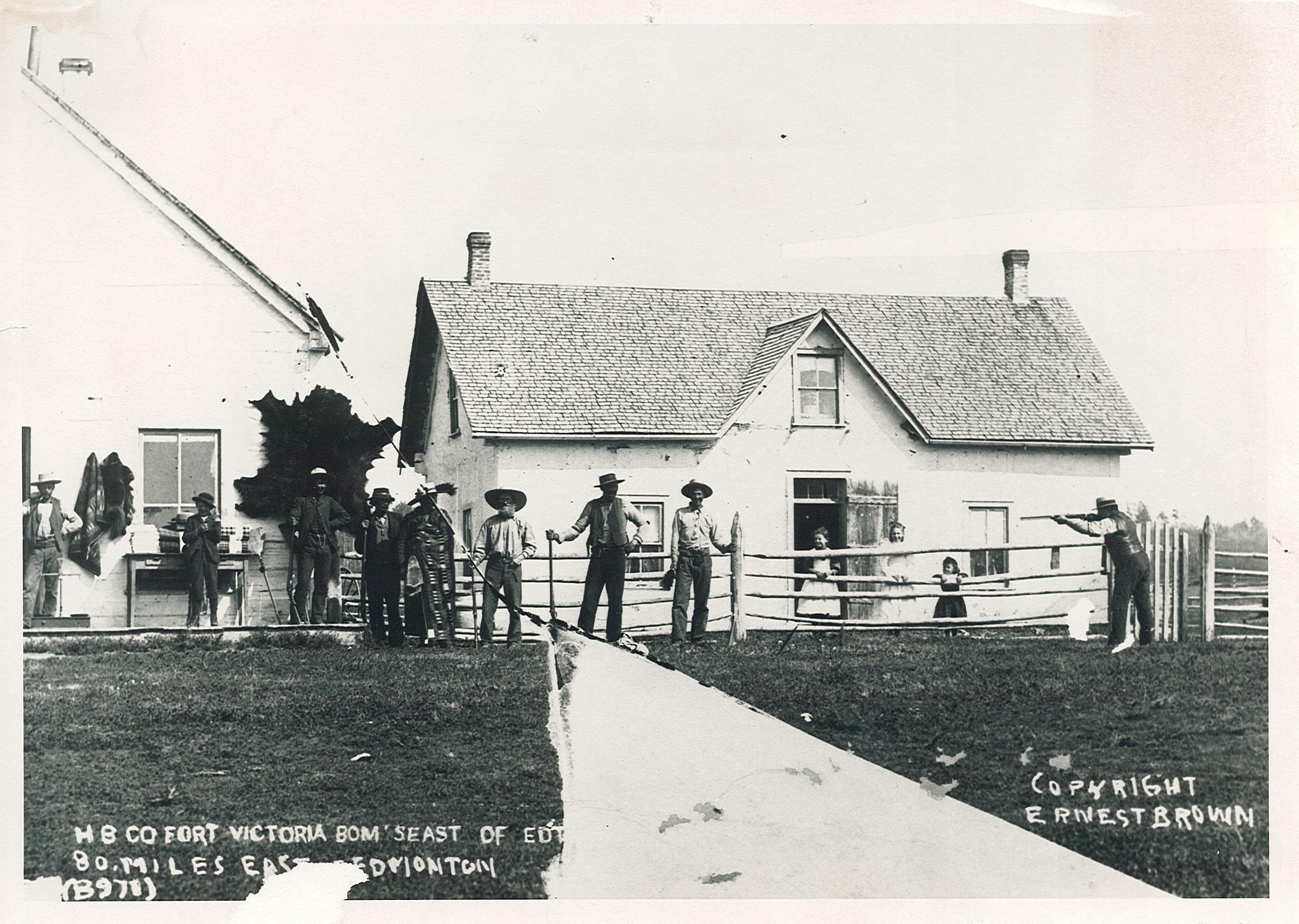
The year 2012 marks the 150thanniversary of Alberta’s Victoria Settlement. In 1862 Methodist minister George McDougall established a mission at the “Hairy Bag” a buffalo feeding ground north of the North Saskatchewan River which was a favourite meeting place and camping site for Aboriginal peoples for thousands of years. The mission was named Victoria in honour of the reigning British monarch. The Hudson’s Bay Company soon noted the activity of free traders in the vicinity and the large numbers of Aboriginals gathering at the mission and established Fort Victoria in 1864, a post which operated for more than three decades.

Clerk’s quarters and trading shop at Fort Victoria, c. 1890. Provincial Archives of Alberta B.2406.

The mission and trading post attracted several hundred English-speaking Métis (historically known as Mixed-bloods) from the Red River Settlement, in what is now Manitoba, who established a permanent river lot settlement at Victoria. The river lot system was based upon the seigneurial system of New France. It consisted of long narrow river-front lots that provided all settlers river access for transportation and agricultural needs. Combining agriculture with the traditional buffalo hunt, a prosperous community of missionaries, fur traders, settlers and Cree hunters developed. In 1887, when the community established its first post office, it was named Pakan in honour of local Cree chief, James Seenum or “Pakannuk”, in tribute to his leadership during the 1885 Rebellion. During the 1890s, settlement in the district expanded as hundreds of Ukrainian and other European settlers took up homesteads. The community thrived as a commercial and service centre until 1918 when the Canadian Northern Railway line was established north of the settlement at Smoky Lake.

Fort Victoria was designated a Provincial Historic Resource in 1976, ensuring that Victoria Settlement’s historical ties to Alberta’s First Nations, Métis and Ukrainian settlers and it’s associations with the fur trade, mission and homestead history are conserved for the benefit of all Albertans. This site is interpreted as the Victoria Settlement Provincial Historic Site. It includes the Hudson’s Bay Company Clerk’s Quarters built in 1865, Alberta’s oldest structure remaining on its original location and the 1906 Pakan Methodist Church.

In 2001, the Historic Sites and Monuments Board of Canada commemorated the area as the Victoria Settlement National Historic Site of Canada. Its highly visible and physical attributes represent an exceptional illustration in a concentrated area of major themes in Prairie settlement including the development of the fur trade, the establishment of the Métis river lot system, the arrival of missions, Prairie agricultural development and the establishment of eastern European immigrants at the beginning of the 20th century. The national designation along the old Victoria Trail includes the Lobstick Settlement to the west, the Victoria (Pakan) Settlement to the east, and a Ukrainian settlement area to the north.

Main (Free Trader’s) House at River Lot 3, Victoria Settlement Provincial Historic Resource

Historical points of interest in the National Historic Site include the site of the McDougall Mission, the McGillivray House originally located on River Lot 7 but currently found on River Lot 3, which is also designated as a Provincial Historic Resource and the Anderson House, a Municipal Historic Resource on River Lot 14 of the Lobstick Settlement. Other resources from the Settlement have been moved: the Erasmus House is currently displayed at Fort Edmonton Park, while the Sinclair House which for many years functioned as the Pakan Museum on the Mitchell property at River Lot 7 is currently displayed at Metis Crossing along with the Cromarty House from River Lot 12.

Written by: Peter Melnycky, Historian


Victoria Settlement Gathering 2-01

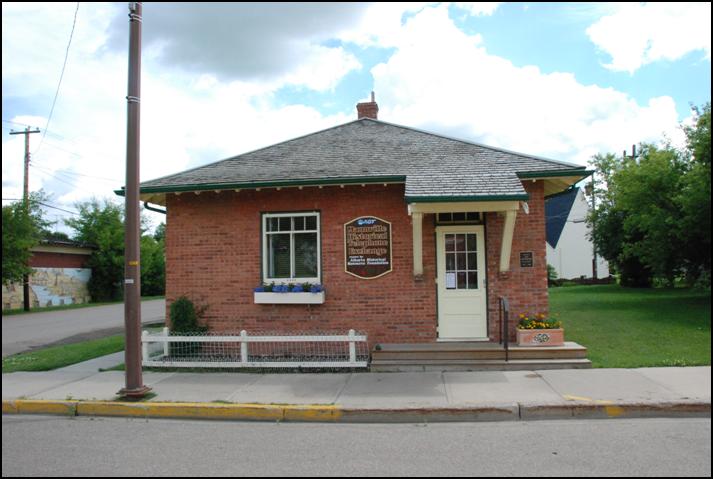
AGT Exchange Building, Mannville

In 1907, the government of Alberta purchased the Alberta interest of Bell Canada and set up the Alberta Government Telephone Company, a Crown Corporation which was the precursor to AGT. The following year, a telephone line was extended from Edmonton as far east as Mannville, Alberta.  The following year, telephone installation was begun in this small community on the Canadian Northern Railway.  A telephone office was set up in S. K. Smith’s Drug Store, with various employees of the store operating the Kellog switchboard.  In 1912, the Telephone Company extended the service to the rural areas surrounding Mannville.

In October 1915, a new telephone exchange was opened in Mannville with a northern electric switchboard.  On 1 December 1917, the exchange was moved into a newly constructed telephone office on Main Street, built by Neil MacKinnon, who became mayor one year later.  MacKinnon had also constructed the original Mannville School and the McQueen Memorial Church.  The Telephone Agent was Ellen Ewing.  She was assisted by Mrs. Alice Rutherford, who would take over as Agent in 1920 and continue in this role until 1965, while herself residing in the AGT building.

During the 1930’s, AGT found the cost of maintaining rural telephone lines increasingly expensive, as fewer and fewer people were subscribing to the system due to the Depression.  In parts of the province, including the Mannville district, the telephone system was disconnected.  Some of the rural areas formed mutual telephone companies.  Around Mannville, six separate companies were formed, but, before long, they were amalgamated into one company, centred in Mannville.  The old Telephone Exchange thus found renewed use.

Shortly after World War II, AGT returned to the area, buying out the Mannville Mutual Telephone Company, and securing direct connections with Edmonton and elsewhere.  On 1 May 1965, automatic dialing was introduced to the Village and its hinterland with the use of one of the first underground cable systems to be installed in the province.  As a result, the Mannville Telephone Exchange was closed.  The building served for a while as the community library and has continued as a prominent historical feature of Main Street Mannville ever since.

In October 2009, the Manville Telephone Exchange was designated a Provincial Historic Resource. Its historical significance lies primarily in its provision of structural evidence of telecommunications in early Alberta. It is one of the oldest telephone exchange buildings in the province, at least of those buildings dedicated exclusively to telephone service. It is also a reminder of the early development of downtown Mannville, a major farming community in east central Alberta.

Written by: David Leonard, Historian

Visit the Alberta Register of Historic Places to learn more about the heritage value of the Alberta Government Telephones Exchange Building in Mannville. In order for a site to be designated a Provincial Historic Resource, it must possess province-wide significance. To properly assess the historic importance of a resource, a historian crafts a context document that situates a resource within its time and place and compares it to similar resources in other parts of the province. This allows staff to determine the importance of a resource to a particular theme, time, and place. Above, is some of the historical information used in the evaluation of the AGT Exchange Building.

Win a Prize!!

Test your knowledge of Alberta’s historic places and enter a chance to win a great prize. Simply click on the link below and answer the following skill-testing questions:

https://hermis.alberta.ca/arhp/

  1. What monumental Calgary civic building designated as a Municipal Historic Resource, a Provincial Historic Resource, and a National Historic Site of Canada, is celebrating the centennial of its completion this year?
  2. Which municipality is home to Alberta’s most northern Municipal Historic Resource? What is it? (Hint: Which municipality in Alberta covers the largest geographic area?
  3. In the Alberta Heritage Survey Program database, how many sites are listed under the “Social and Recreational: Sport or Athletic Building” Site Type category?
  4. Which municipality has the most Municipal Historic Resources?

Be the first to submit correct answers and you will receive a prize package designed to help you discover Alberta’s historic places.

Each month we will post a new quiz, so stay tuned!


Municipal Heritage Forum 2011

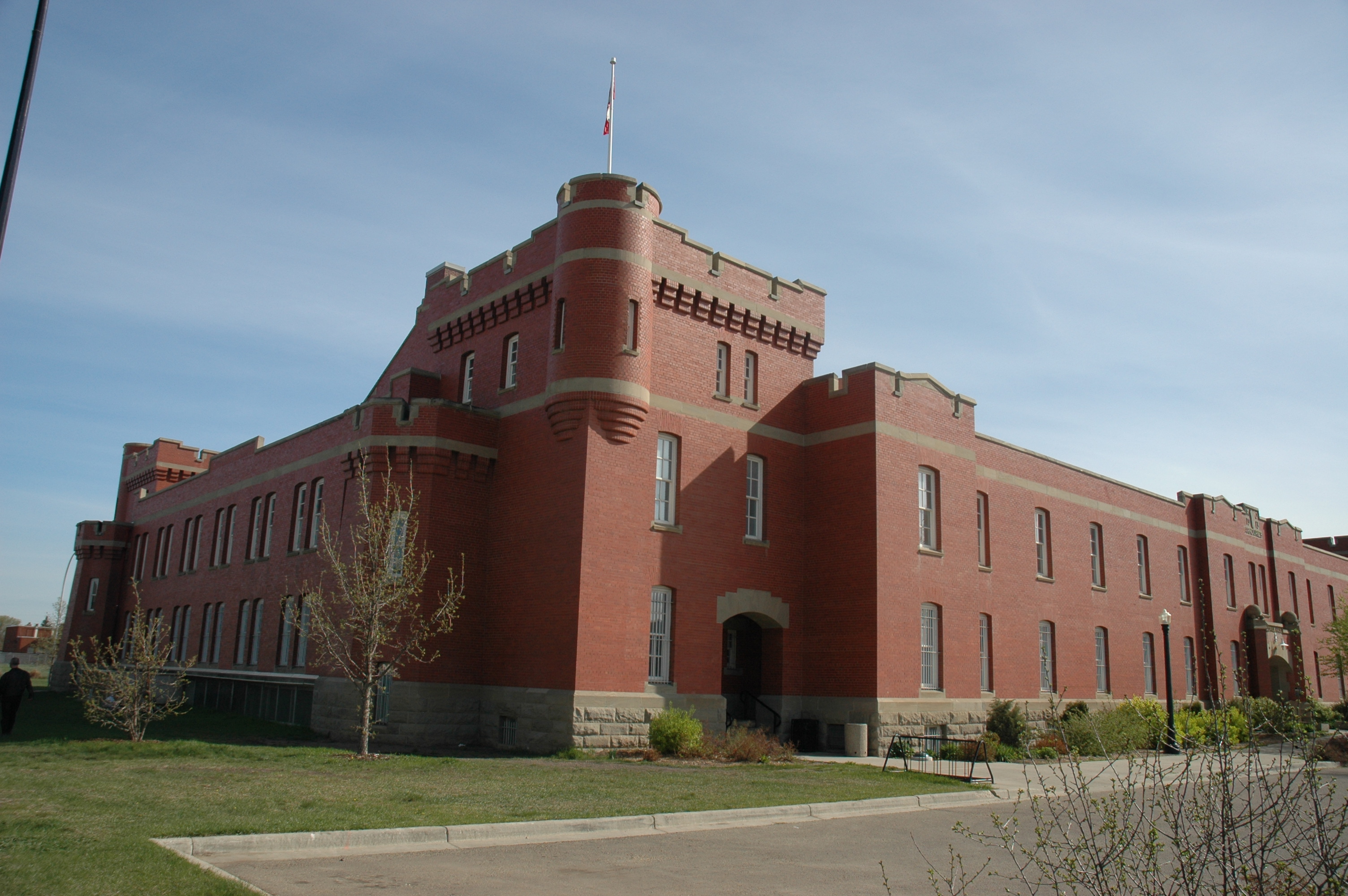
You are invited to our 5th annual Municipal Heritage Forum,“Roadmap to Success!” It is scheduled for October 27th and 28th Ÿin Edmonton, at the Prince of Wales Armouries.

This event is intended for municipal staff, councillors and heritage committee members interested in learning how to identify and protect local historic places. Registration is free, but we only have room for the first 100 registrants at the Forum, and the first 75 for the evening reception – so please register early!

Click here for event details and a copy of the registration form.

The keynote presentation will be, “The Other Side of the Rockies: BC’s Experience with Community Heritage Context Planning” by Berdine Jonker, Senior Heritage Planner. Berdine Jonker is Senior Heritage Planner with the BC Heritage Branch, Ministry of Forests, Lands and Natural Resource Operations. She has worked in the heritage conservation field since 1998, focusing primarily on building local government capacity for heritage conservation planning. Berdine has also worked with groups such as Smart Growth BC to further develop the connection between heritage conservation and healthy community development. She holds a Bachelor of Arts (Art History) (1998), a Diploma in Cultural Resource Management (2003), and a Master’s Degree in Public Administration (2010) from the University of Victoria.

We look forward to seeing you at the Forum in October!

New MHPP Projects Funded for Communities!

Congratulations to four communities that have recently been awarded grants by the Alberta Historical Resources Foundation for heritage planning projects!

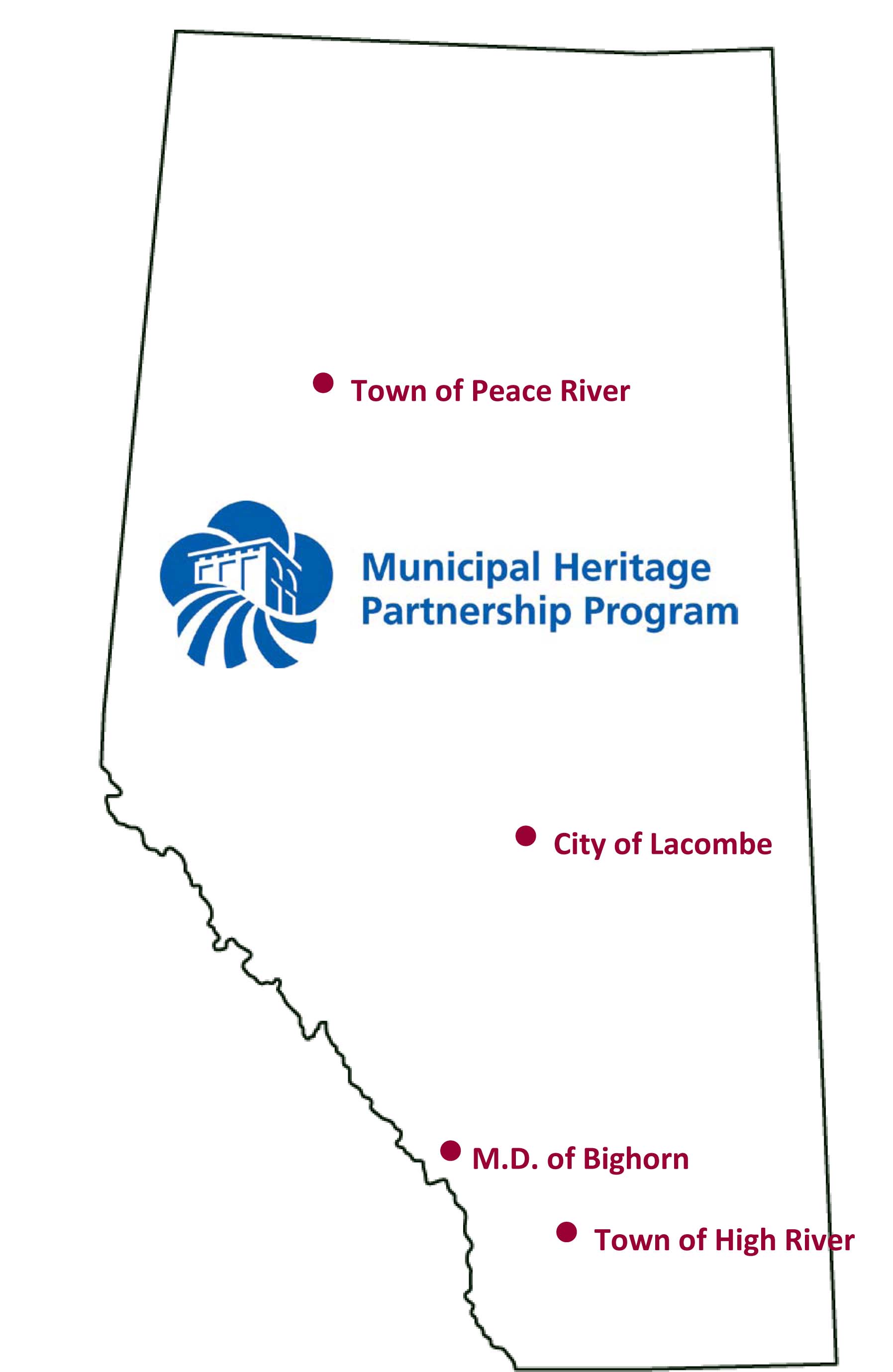
The Town of High River will receive a $20, 000 matching grant from the Municipal Heritage Partnership Program (MHPP) to undertake a Heritage Inventory project, evaluating potentially significant historic places in this growing southern Alberta town. This is the first collaboration of the Town of High River with MHPP.

Heading up north to another “River” town, Peace River has been awarded a matching grant of $6, 000 to develop a Heritage Management Plan. This plan will build upon the previous Heritage Inventory work funded by the Foundation through MHPP.

Lacombe, Alberta’s newest City, will receive a matching grant of $24, 500 to continue its program of evalating its significant collection of historic places in a second phase of Heritage Inventory work.

And, last, but definitely not least, the Municipal District of Bighorn, located on the cusp of Banff National Park, has been approved for a matching grant of $20, 000 for the creation of its own Heritage Management Plan. This project will build upon years of previous partnership with MHPP, which yielded both a Heritage Survey and Inventory.

These municipalities join numerous others – both rural and urban – that are currently partnering with MHPP to help create a future for Alberta’s historic places. These communities include:

We are looking forward to working with these municipalities to help protect, conserve and celebrate the places that matter most to Albertans.

Heritage Conservation in the Spotlight!

On Thursday, August 11, 2011, Access Television’s current affairs program, Alberta Primetime, aired a segment on the preservation of historic buildings in Alberta. A webcast of this segment can be found here.

The segment included a panel discussion consisting of me (Larry Pearson, Director of the Historic Places Stewardship Section), Darryl Cariou, the City of Calgary’s Senior Heritage Planner and Edmonton architect Shafraaz Kaba, Senior Partner with Manasc Issac Architects. Our discussion explored the benefits of adaptively reusing heritage buildings and some of the funding support available to their owners.

During the panel discussion, I noted that there are approximately 700 historic places listed on the Alberta Register of Historic Places. Of these, 508 are designated as Municipal Historic Resources or Provincial Historic Resources. These places are legally protected under Alberta’s Historical Resources Act and are eligible for funding from the Alberta Historical Resources Foundation. Beginning with the February 1, 2012 grant deadline, Provincial Historic Resources will have an annual eligibility for up to $100,000 in cost shared funding to support eligible conservation work. For Municipal Historic Resources, the annual eligibility will be $50,000. Darryl Cariou outlined the City of Calgary’s grant funding and illustrated how other strategies, such as defering tax increases that would normally occur when a building is signficantly upgraded, could be used to support the rehabilitation of historic places legally protected by the City.

In exploring the benefits of adaptivly reusing historic places, the panel illustrated how heritage conservation is an excellent example of “sustainable developmant”. The reuse of existing buildings is environmentally sustainable. Shafraaz noted that the “greenest building is the one that is already built”.  This is because the reuse of an existing building saves a landfill from the waste created by demolition and conserves the energy that was invested by a previous generation during its construction. A study prepared for the Government of Alberta showed that the rehabilitated historic Lougheed Building in Calgary would use about 10% less energy than a typical new building of similar size. The study also revealed that the overall energy saved was equivilant to the annual energy use of 1,591 homes. Recycling historic places also contributes to “economic sustainability”. A higher percentage of the money invested in rehabilitation projects represents labour costs rather than material costs. The labour investment reflects the work of skilled tradesman and, because it is spent locally it is also more likely to stay in the community. Heritage conservation also helps a community maintain its sense of place, therefore, it supports cultural tourism and contributes to viable communities and a high quality of living.

For more information on the heritage programs of the Government of Alberta, click here.

Information about the City of Calgary’s heritage programs can be found here.

Written by: Larry Pearson, Director of Historic Places Stewardship

Happy Anniversary St. Peter’s Church!

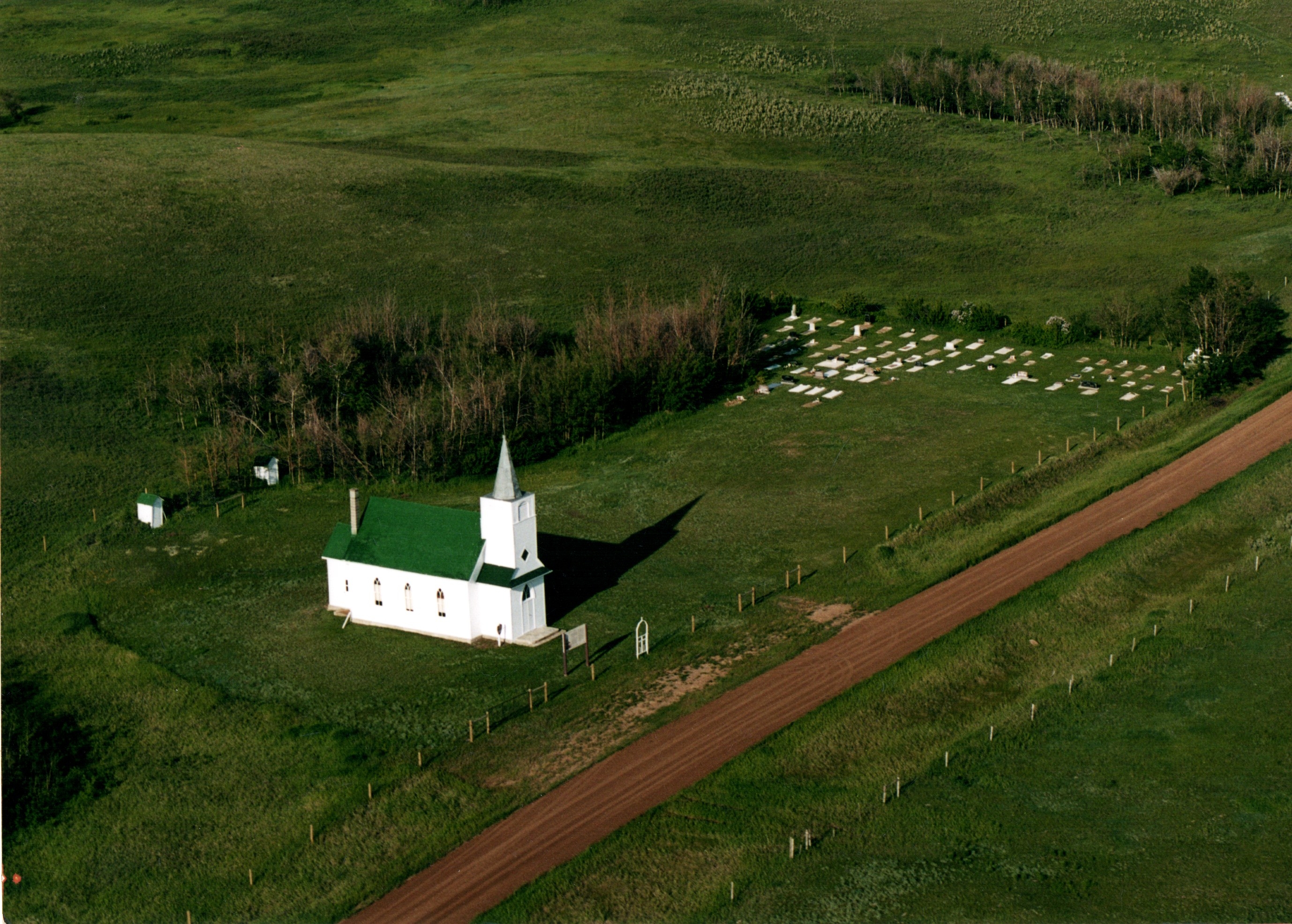
St. Peter’s Lutheran Church and Cemetery is the newest Municipal Historic Resource listed on the Alberta Register of Historic Places. It is located in Special Area 2, in the former Hamlet of Scapa. On Saturday, August 13th, the parishioners are celebrating the 100th anniversary of the church’s construction. If you are in the area, stop by for a visit.

The church was constructed in 1911 and moved to its present location in 1921. The residents of Special Area 2 value this place for its historic use as a Lutheran parish church, particularly by the settlers who homesteaded the Hamlet of Scapa. The Church was designated as a Municipal Historic Resource by the Special Areas Board in 2009.

Written by: Michael Thome, Municipal Heritage Services Officer

Vulcan: A Regional Collaboration

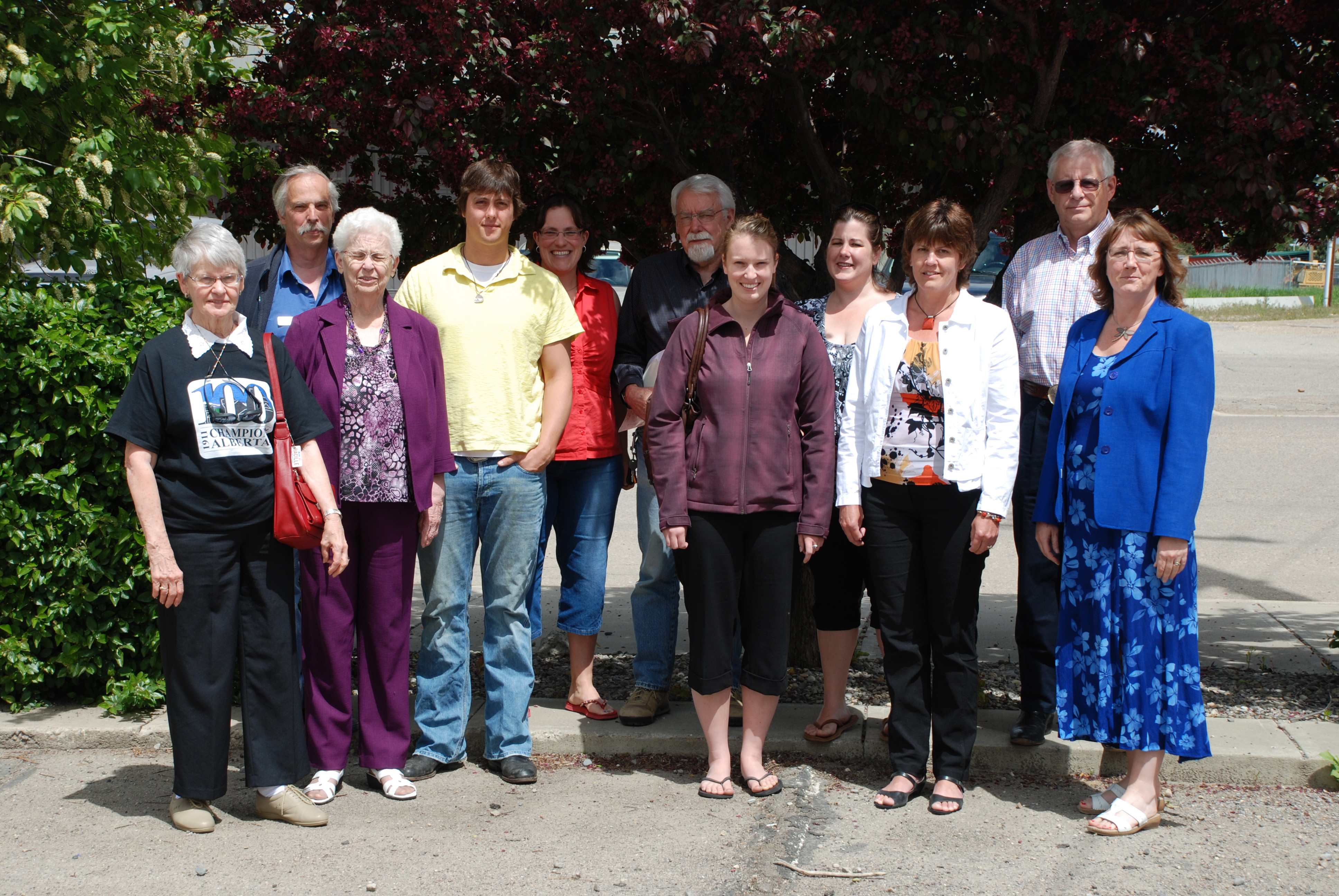
Over the next nine months the Vulcan region will be a hive of activity. Vulcan County has partnered with the Town of Vulcan and the villages of Carmangay, Champion and Milo to complete both a Municipal Heritage Survey and a Municipal Heritage Inventory. Working collaboratively, and with the services of a heritage consultant, a range of potential historic places within these municipalities will be documented and a number of places of interest will also be evaluated for eligibility, significance and integrity.

Completing these projects will allow municipal staff, councillors and residents to better understand the older places that make their communities unique and livable. From this understanding, municipal officials will be able to make informed decisions about which sites may merit protection and conservation for the benefit and enjoyment of future generations.

Pictured from Left to Right: Racille Ellis, Champion Community Representative; Paul Taylor, Town of Vulcan Councillor; Marjorie Weber, Vulcan and District Historical Society; Cody Shearer, Vulcan Business Development Society; Katie Walker, Village of Milo Councillor; Richard Lambert, Vulcan and District Historical Society; Amy Rupp, Village of Champion CAO; Kym Nichols, Village of Carmangay Mayor; Leslie Warren, Vulcan Business Development Society; William Roebuck, Kirkcaldy Community Club; Liza Dawber, Vulcan County. Missing: Bill Lahd, Milo Community Representative.

Written by: Brenda Manweiler, Municipal Heritage Services Officer