A New Roof for St. Ambrose Church

Located on a quiet residential street in Redcliff, Alberta, St. Ambrose Anglican Church is distinguished by its buttressed brick masonry exterior, steeply-pitched gable roof and pointed arch windows. These characteristics strongly identify the 1914 church with the Gothic Revival style popular in the Victorian era for ecclesiastical architecture in England, a style also eagerly adopted by Anglican, Presbyterian, Methodist and Congregational churches across Canada. Unlike many churches, though, St. Ambrose was modelled on small Anglican parish churches in England and is a variant of the Gothic Revival style seldom found in Alberta.

St. Ambrose’s architecture hearkens back to England but the building’s local roots are evident in the “clinker brick” masonry exterior, an overfired brick with distinctive irregular or lumpy shapes and striking colour variations. Clinker brick resulted from high firing temperatures in the kiln which caused the clay to partly vitrify or melt, sometimes to the point where clumps of bricks would fuse together and had to be broken apart. This lack of uniformity was appreciated for its decorative qualities and the clinker brick at St. Ambrose was produced at the Redcliff Brick and Coal Company just blocks away. The combination of far-reaching colonial stylistic influences and distinctive local materials contributed to the church’s designation as a Provincial Historic Resource in 2008.
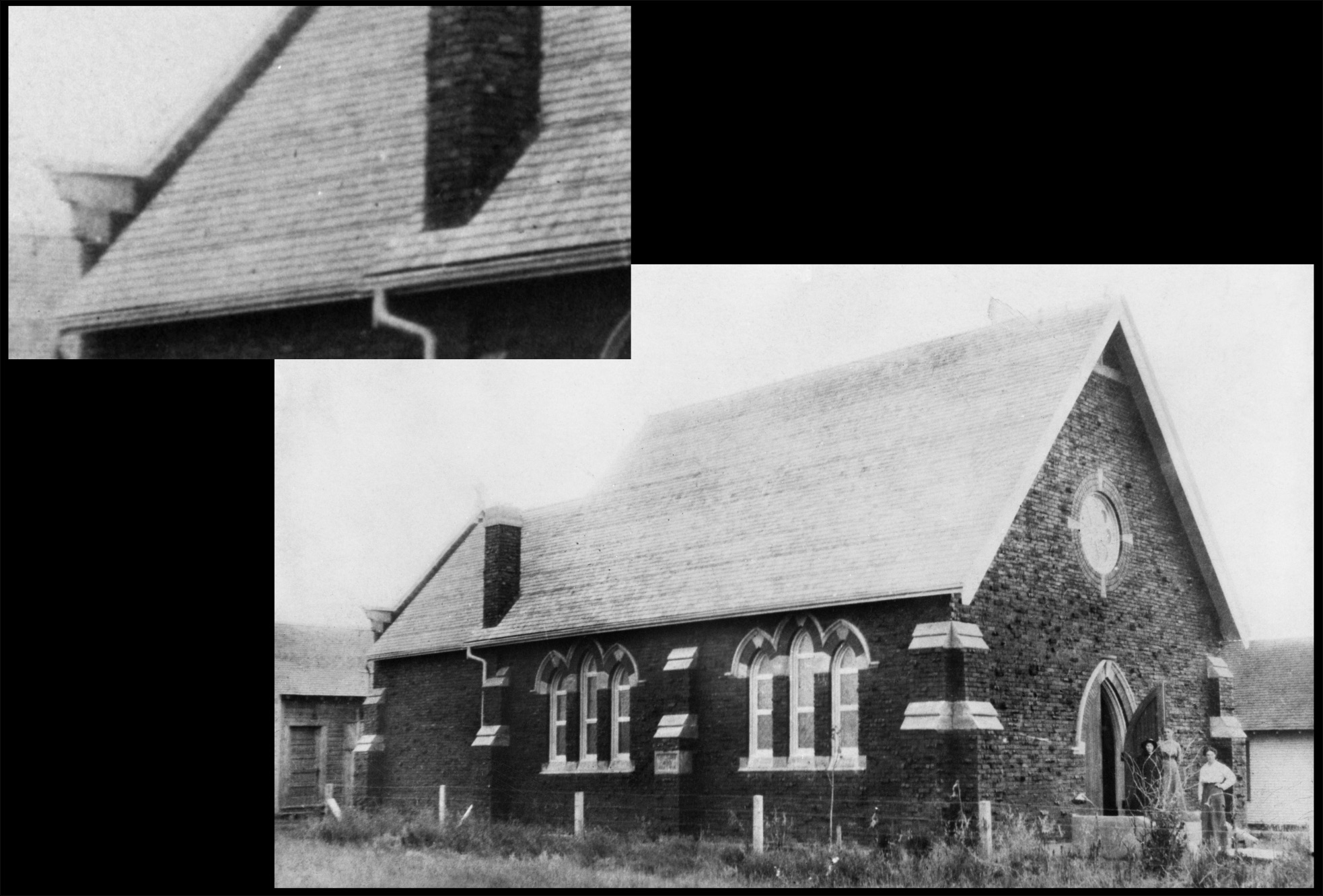
St. Ambrose Church from the northwest in 1914, with inset showing the original narrow exposure, traditional step flashings, and rows of slightly offset shingles (inset) to create shadow lines and decorative horizontal bands across the roof. Glenbow Archives photograph NA -2701-5.

Read more

“IT THREW A MUSHROOM CLOUD JUST LIKE AN ATOMIC BOMB”: THE LEDUC No.1 OIL DISCOVERY – 70 YEARS AGO

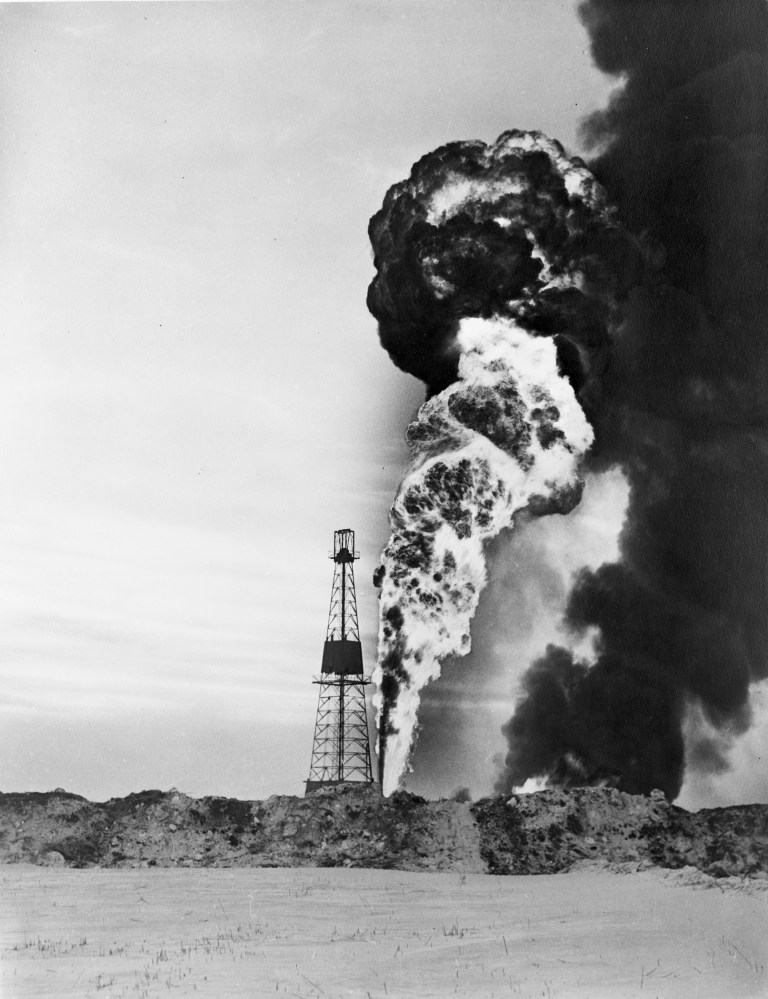
On a bitterly cold afternoon, at 3:55pm, Nathan E. Tanner, Minister of Lands and Mines turned a valve at the Leduc No. 1 oil well as a rig hand held out a burning rag, setting alight a massive column of smoke and flame that roared hundreds of feet skyward. That event took place on February 13, 1947, seventy years ago today and it heralded in a new era for Alberta. An era of rapid development and prosperity fed by the now discovered reserves of oil deep under the province.

p1342
“It flared hundreds of feet” is how tool push Vern Hunter described the lighting of the flare as the Leduc No. 1 oil well was brought in on February 13, 1947. Source, Provincial Archives of Alberta, P1342

Read more

Dealing with Graffiti at Historic Places

Historic places are unfortunately fair game for graffiti attacks – sometimes especially so when these places are visible and widely recognized landmarks. Defined as writing or drawings scribbled, scratched, or painted illicitly onto walls and other surfaces, graffiti from a heritage conservation perspective is an intervention to be removed or reversed. It clearly differs from old markings that are an acknowledged and legitimate part, or “character-defining element”, of a historic place. Examples of the latter are prisoners’ inscriptions etched into the basement cell walls of the Cardston Courthouse or, on the opposite side of the law, North West Mounted Police members’ initials carved into the sandstone outcrops overlooking Police Coulee at Writing-On-Stone Provincial Park. These special cases contribute to heritage value rather than obscure or detract from it. Read more

Claiming their Ground – Three Pioneering Alberta Women in their Professions

October is Women’s History Month in Canada, when we celebrate the achievements of women throughout our past and use their stories to inspire Canadians today. The twentieth century saw women entering occupations previously the exclusive domain of men. A variety of circumstances combined to allow these advances, including the rise of public education, social activism culminating in universal suffrage, legal challenges that established women as “persons” and the upheaval created by two world wars. These changes are not sufficient to explain the careers of the three women described in this blog; it took determination, persistence, courage and intelligence for them to succeed and carve a place for themselves as professional women in these fields that were predominantly, if not exclusively, the preserve of men.

diane_loranger
Diane Loranger, geologist, ca. 1946-1947. (Glenbow Archives, IP-14A-1470)

Read more

Fighting Words?

Origin of the Names Battle Lake, Battle Creek and Battle River

Note: This post was originally published on RETROactive March 9, 2011.

Battle Lake is located approximately 53 km west of Wetaskawin and is one of a series of water features in the area that are identified by the name Battle, including Battle Creek, Battle Lake and Battle River.

The name Battle Lake was first recorded in the 1883 field notes of Tom Kains of the Dominion Land Survey (DLS). He recorded it as “Battle River Lake” due to its location on the Battle River. He later shortened the name to Battle Lake and, in 1901, that form of the name was approved by the Geographic Board of Canada for use on maps. Read more

Sand Paint

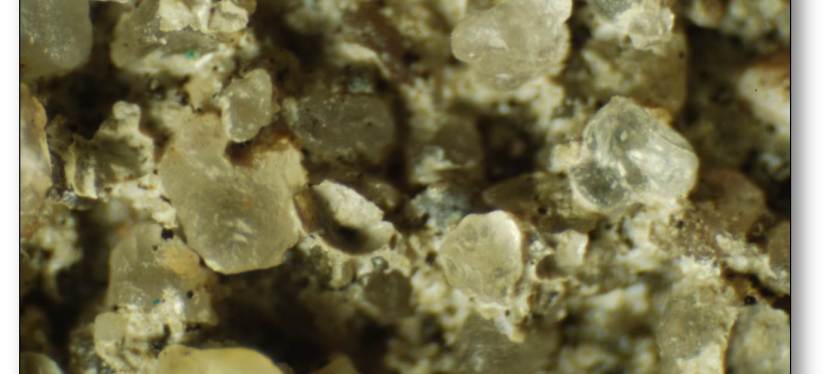
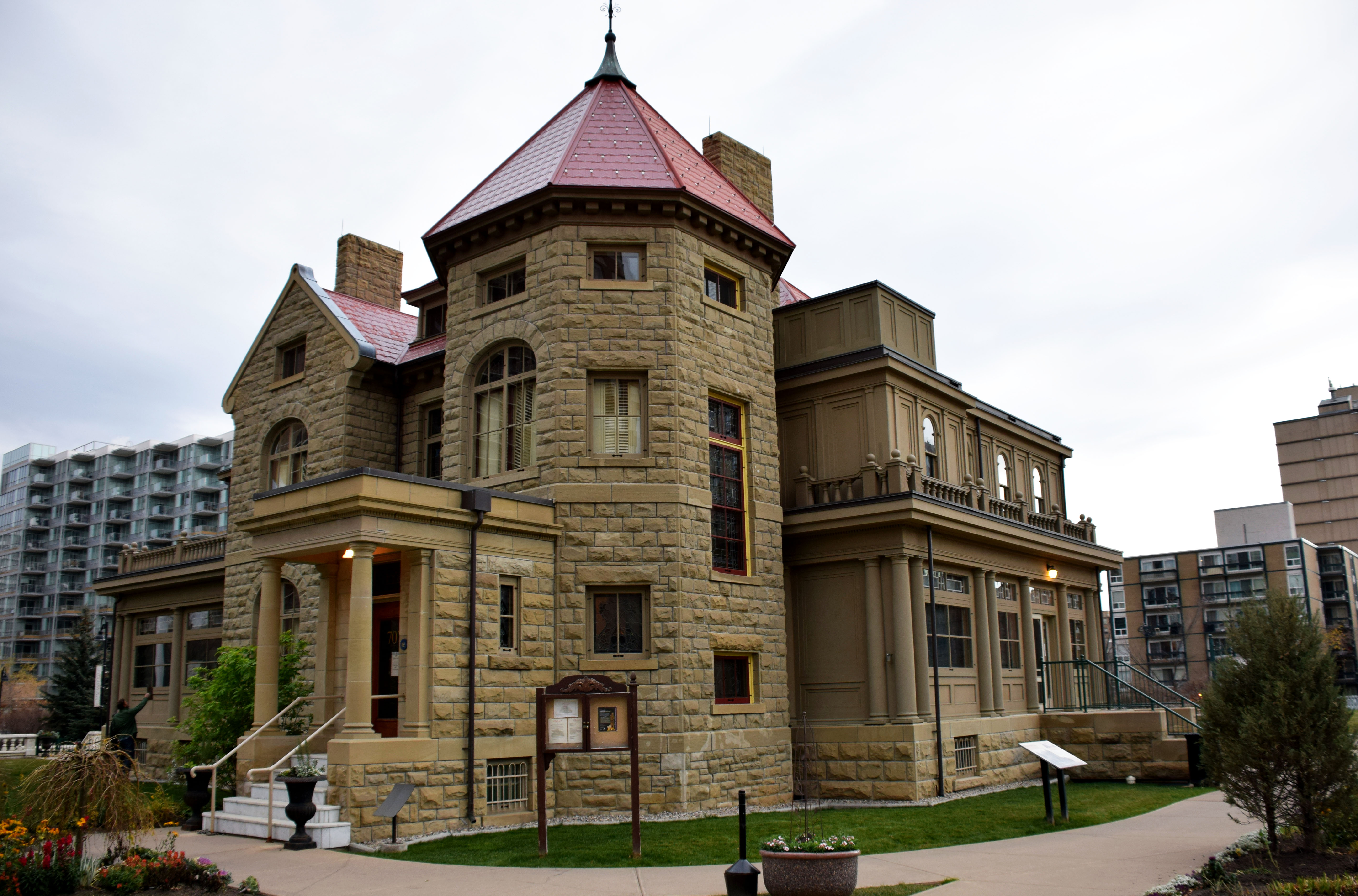
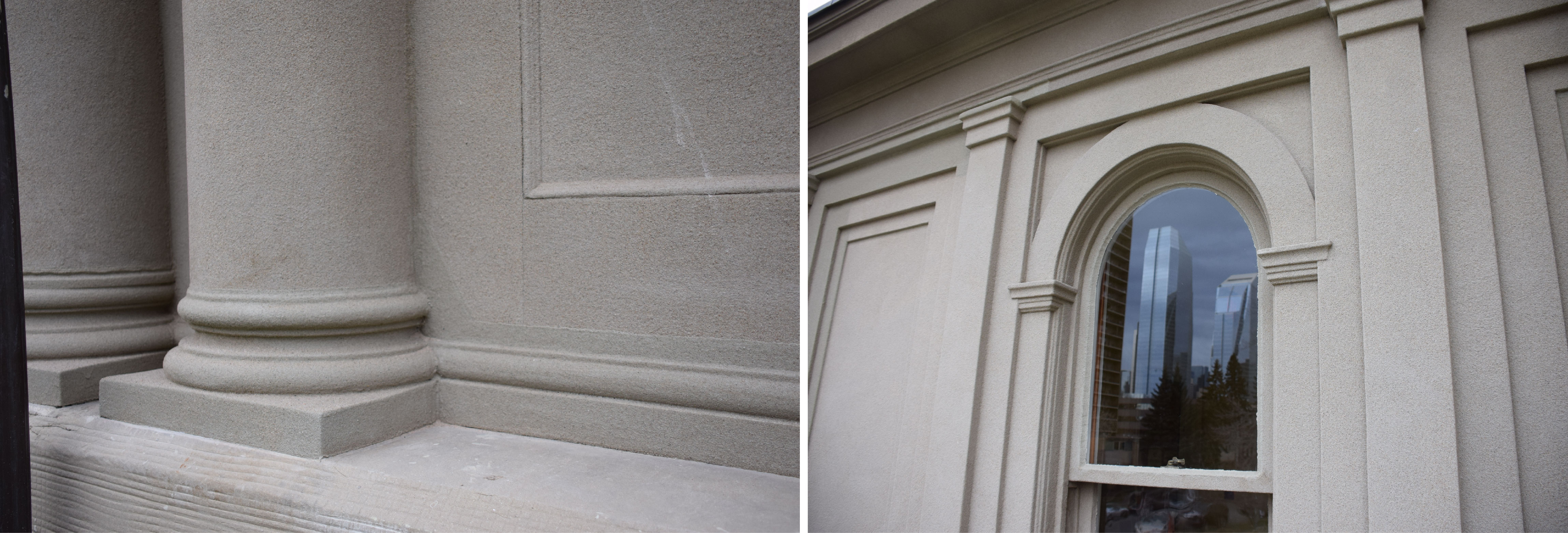
Sand painting is a faux finish technique that was not uncommon for exteriors of masonry buildings in the early part of the twentieth century.  By dusting sand onto paint while still tacky, painted wood or metal details were made to resemble stone.  If you guessed you were looking at magnified grains of sand in the teaser photograph above, you were right.  The photograph, taken through a binocular microscope, is actually of a sand paint sample taken from the Senator Lougheed Residence in Calgary.

Senator Lougheed Residence, Calgary
Senator Lougheed Residence, Calgary.
Sand painted wood details at the Senator Lougheed Residence, Calgary
Sand painted wood details at the Senator Lougheed Residence, Calgary.

Read more

In Search of Historic Colours: The Empress Theatre Marquee

The historic downtown of Fort Macleod, one of two Provincial Historic Areas in the province, is well known for its impressive commercial buildings of brick and sandstone masonry. Collectively, these Classical Revival buildings exemplify an Edwardian commercial streetscape just prior to the First World War.

One of the main street’s crown jewels is the Empress Theatre, an elegant brick building with decorative sandstone details built in 1912. Historically a hub of the town’s social life, the theatre hosted plays, vaudeville acts and performers from Alberta, across North America and even overseas, as graffiti preserved in the original basement dressing rooms attests to this day. The original façade was theatrical in its own right and featured a grand arched entrance and recessed box office. As tastes changed and motion pictures grew in popularity, the original entry was enclosed to provide a lobby and concession, the auditorium was renovated with plush upholstered seats in the Art Deco style and neon tulips mounted on the ceiling, and a bold new neon sign and marquee replaced the original blade sign on the front facade. These 1930s and 1950s renovations added layers of architectural history and significance to the building and contributed to its designation as a Provincial Historic Resource in 1982.

empress2
The Empress Theatre in April 2016 (top). Bottom from left: View west along 24 Street in 1953, Glenbow Archives photograph NA-5600-6653 (cropped slightly from original); detail of 1953 streetscape showing the Empress marquee in essentially its present form; historic colours exposed on a blade sign letter; a plywood mock-up to evaluate proposed blade sign colours.

The Town of Fort Macleod owns the theatre and has embarked on an extensive rehabilitation project that includes rehabilitation of the historic neon marquee. The marquee was refurbished in the late 1980s by Fort Macleod’s Main Street Project but a generation of exposure to the elements has taken its toll on the galvanized sheet metal, paint, and fragile neon tubing. Removal of the signs for other façade repairs was an ideal opportunity to re-examine and document the marquee’s colour history. Read more

The Battle of Jutland, First World War Commemoration and Alberta Place Names

No single event has had such a dramatic impact on place names in Alberta than the First World War Battle of Jutland. Deep in the heart of Kananaskis Country can be found a series of mountains bearing the names of the ships and naval commanders of this naval battle. At least twenty-six mountains bear names commemorating the Battle of Jutland – sixteen of them are named for Royal Navy vessels that took part in the battle and ten are named for the Admirals, ship captains and seamen that lead and fought at Jutland. Additionally, many features associated with the mountains (glaciers, lakes and creeks) have subsequently been given Jutland names. The great number of Jutland-related geographical names in Alberta is curious. While there is no questioning the significance of the Battle of Jutland – it was the only major sea battle of the First World War, one of the few times in which dreadnought battleships fought directly against each other and its results affected strategy and tactics on both sides and altered the course of the war – it was also a battle in which there was no significant Canadian presence; no Canadian ships were involved and only one Canadian casualty has ever been confirmed. So, how did so many of these mountains along the Alberta-British Columbia boundary end up being named to commemorate this battle?

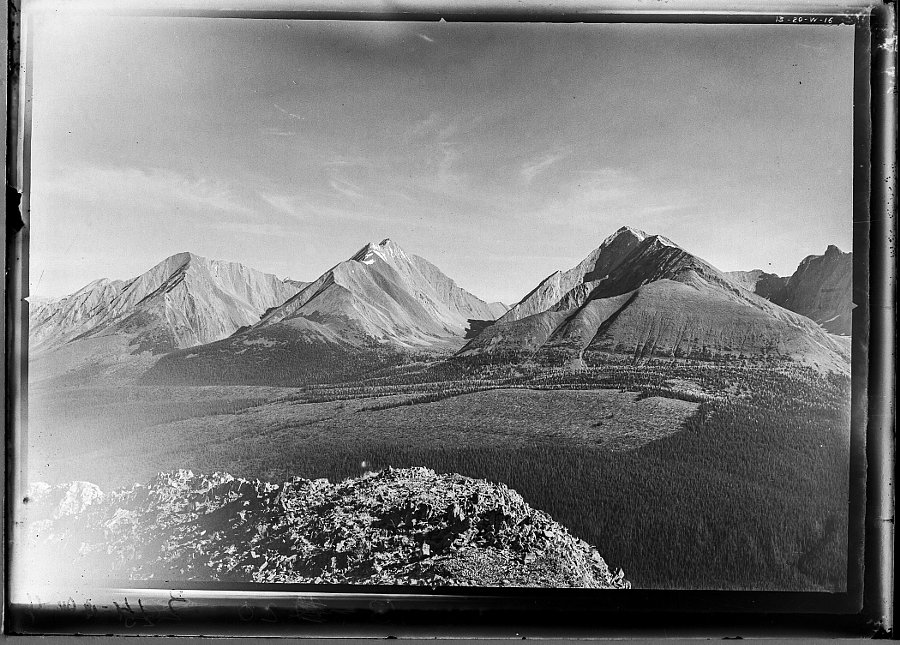
Mount Engadine (left), The Tower (middle) and Mount Galatea (right), taken in 1916 by the Interprovincial Boundary Survey. Mount Engadine and Mount Galatea are named for Royal Navy vessels that fought at the Battle of Jutland, the seaplane carrier HMS Engadine and the light cruiser HMS Galatea.
Mount Engadine (left), The Tower (middle) and Mount Galatea (right), taken in 1916 by the Interprovincial Boundary Survey. Mount Engadine and Mount Galatea are named for Royal Navy vessels that fought at the Battle of Jutland, the seaplane carrier HMS Engadine and the light cruiser HMS Galatea. Image Source: Mountain Legacy Project, IMG_3320. The Mountain Legacy Project is based at the School of Environmental Studies, University of Victoria, Victoria, BC. For more information, go to mountainlegacy.ca, or email mntnlgcy@uvic.ca.

Read more

Mount Lougheed and Wind Mountain

One of the most recognizable mountains in the Canadian Rockies is Mount Lougheed. Located approximately 15 kilometres southeast of Canmore, this majestic 3,150 metre (10,335 ft.) mountain is named for Sir James Alexander Lougheed. However, Lougheed is not the only name the mountain has had. In fact, it is not even the first mountain in the area to bear the name Lougheed. The story of how the mountain became known as Mount Lougheed is interesting.

IMG_0322

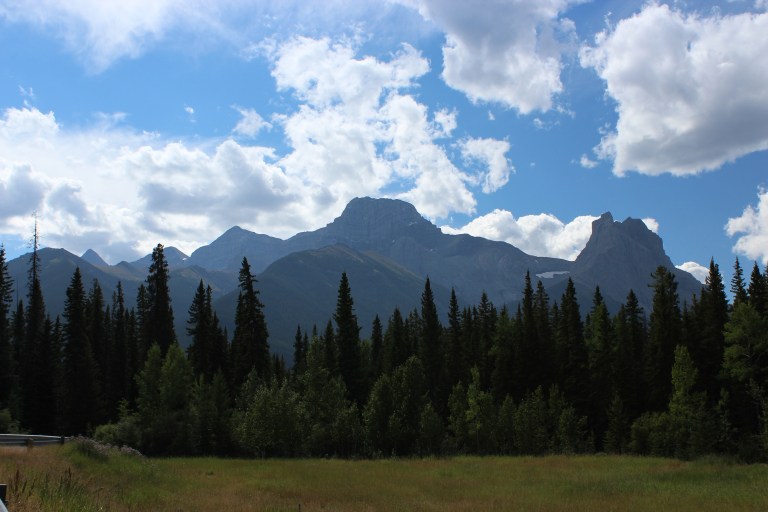
Mount Lougheed from the Trans-Canada Highway, August 2011. The entire massif is known as Mount Lougheed. The large, central peak is likely the feature named “Windy Mountain” by Eugene Bourgeau in 1858. The prominent peak furthest to the right is Windtower Mountain. The peak known today as Wind Mountain is the distinctly pointed peak visible on the horizon at left side of the photograph.
Source: Larry Pearson, Historic Places Stewardship Section, Alberta Culture and Tourism.

In 1858, Eugène Bourgeau (sometimes spelled Bourgeaux), a botanist with the Palliser Expedition, accompanied James Hector up the Bow Valley towards what is now Canmore. Bourgeau named many of the mountains and lakes along the way. Bourgeau was struck by the way the clouds swirled around one particular peak. James Hector, in his account of August 11, 1858, noted that Read more

The Butterfly Effect

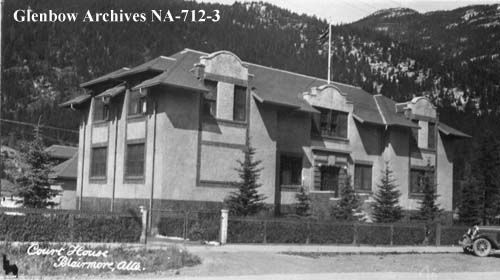
Peeling paint and powdering plaster were the first indications something was amiss at the Blairmore Courthouse, a Provincial Historic Resource in the Crowsnest Pass. A leak in the cedar shingle roof, replaced just the previous year, was immediately suspected. Detailing around the dormers in particular, part of the 1922 building’s distinctive Spanish Colonial Revival design by architect R.P. Blakey, is tricky and vulnerable to water penetration.

1920s view of Blairmore Courthouse from the southwest (Photo Credit: Glenbow Archives)
1920s view of Blairmore Courthouse from the southwest (Photo Credit: Glenbow Archives NA-712-3)

Nippon School of Technology, which owns the building and runs a technical school and exchange program for Japanese engineering students there, inspected the roof from the attic and found no active leaks. Puzzled, N.I.T. engaged a conservation architect to inspect the building and identify sources of moisture causing the paint and plaster failure. The findings were at once surprising and (in hindsight) credible.   Read more