Alberta Museums Association: Championing Alberta’s Museums

The Alberta Museums Assocation, founded in 1971, is a non-profit society whose mission is to lead, facilitate, and support museums in their vital role with communities. The Museums Association now has more than 200 Institutional and 250 Individual Members among its membership. The Association is one of five provincial heritage organizations that receive annual funding from the Alberta Historical Resources Foundation. May 18th is International Museums Day, a day to raise awareness of the importance of museums. Be sure to visit one of your local Alberta museums to celebrate!
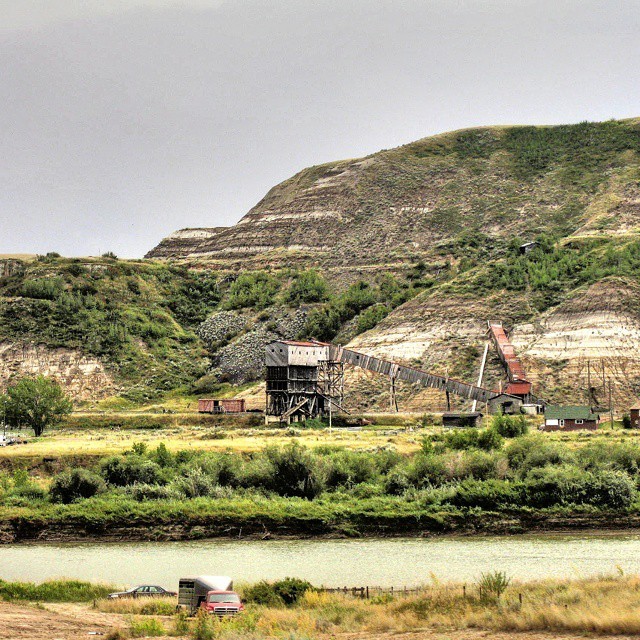
Atlas Coal Mine National Historic Site, Drumheller Valley. Photo Credit: Erika Price @erykahprice

Museums are invaluable resources and contributors to communities; they educate, they engage, they convene, they inspire, they question, and they evolve. The Alberta Museums Association (AMA) champions the value of museums to stakeholders across the province and beyond, and works to ensure that museums create dynamic connections with their communities. We also offer a variety of programs and services, including:

  • Professional development opportunities, including our Annual Conference, Certificate in Museum Studies, and other specialized learning events to increase the professionalization of the sector;
  • Allocation of funding to museums and museum professionals to facilitate the completion of innovative work throughout the province, and;
  • Administration of the Recognized Museum Program to help museums fulfill their public trust responsibilities and ensure their succession for the future.

These programs are extensively used and have proven valuable to members as they reinvent themselves and solidify their roles as connected, creative hubs in their communities. Read more
Kirkness House: Two Edmonton Pioneers

Thank you to Melanie Moore (Board Member of the Highlands Historical Society in Edmonton) for sharing this important piece of history. 

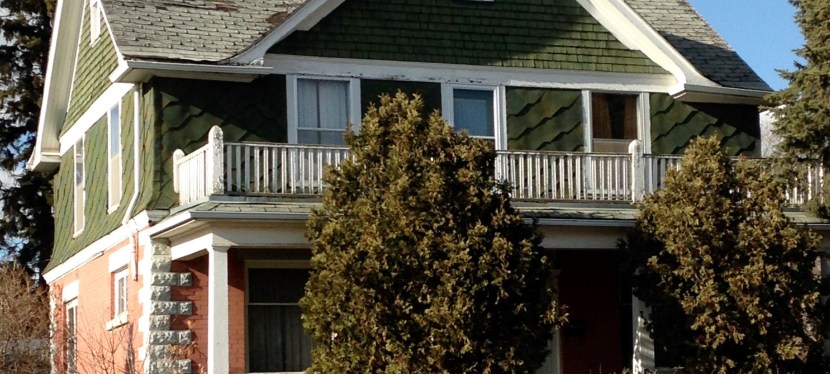
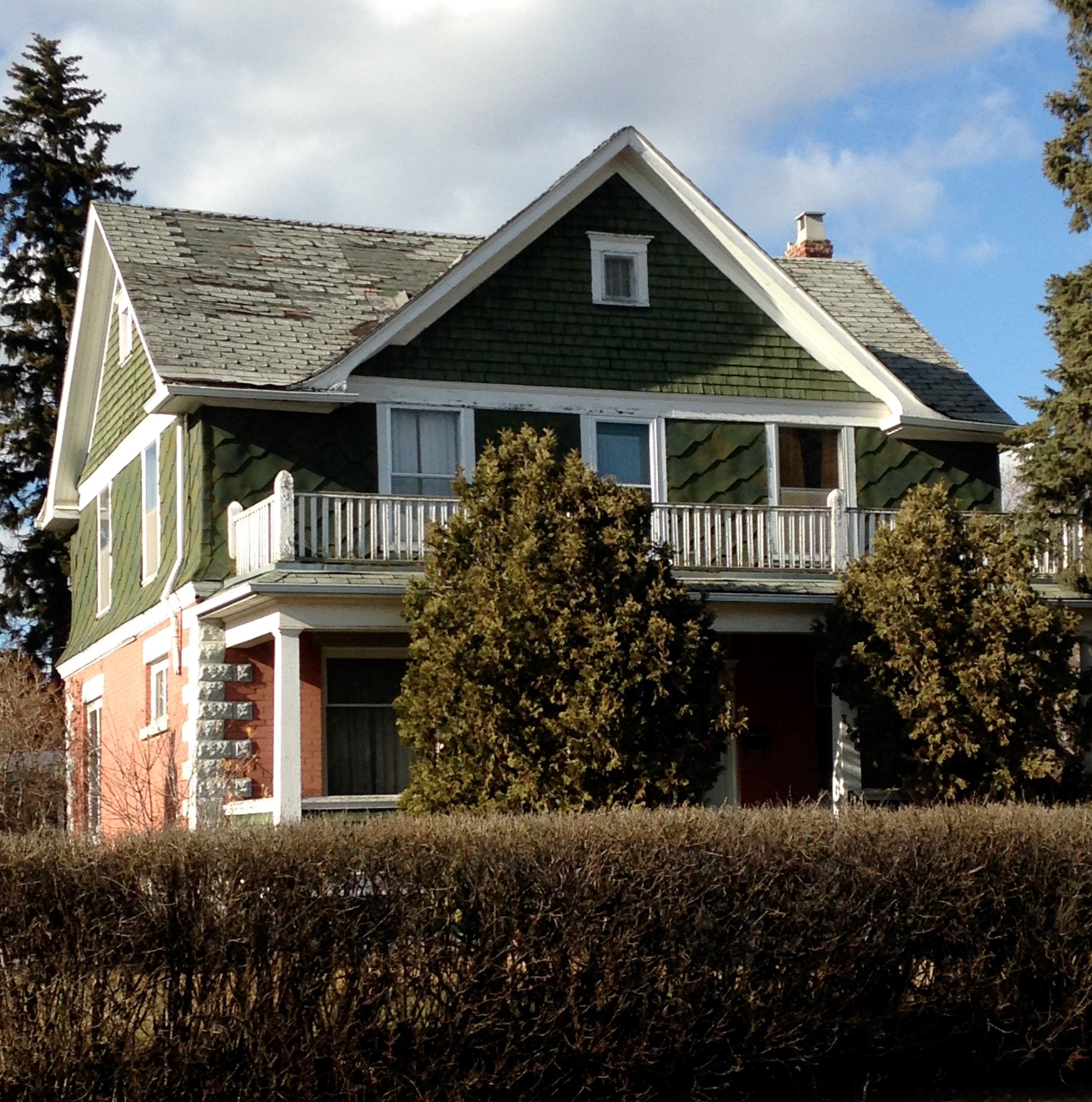
There is an old house in the Virginia Park neighbourhood of Edmonton, on 73rd Street and Ada Boulevard. Now empty, it has seen better years. The shingles are coming off, the paint old and faded, the yard overgrown. When asked about the house, neighbours knew little of its story.

Kirkness House, Edmonton, 2018 (photograph by Melanie Moore).

Having recently explored the history of my own 100 year old home in Edmonton, I decided to find out more. James Kirkness, and his wife Sarah Steinhauer, built the house in 1909. Prior to that, he and Sarah lived in an adjacent log cabin where they raised their children. The City of Edmonton Archives has a painted-over photograph of James in front of the 1870s log cabin with the new 1909 house behind. Likely James had the painting commissioned, put it in an ornate frame, and hung it proudly in his new home. Read more

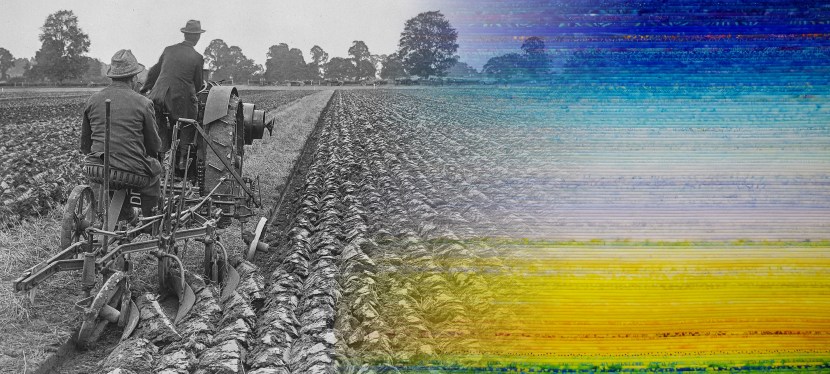
Plough your Furrows Deep: The Foundations of Agriculture in Alberta

Farming in Alberta has been shaped by a deep and layered history of geological, biological, and human forces. This article takes us back to the beginning.

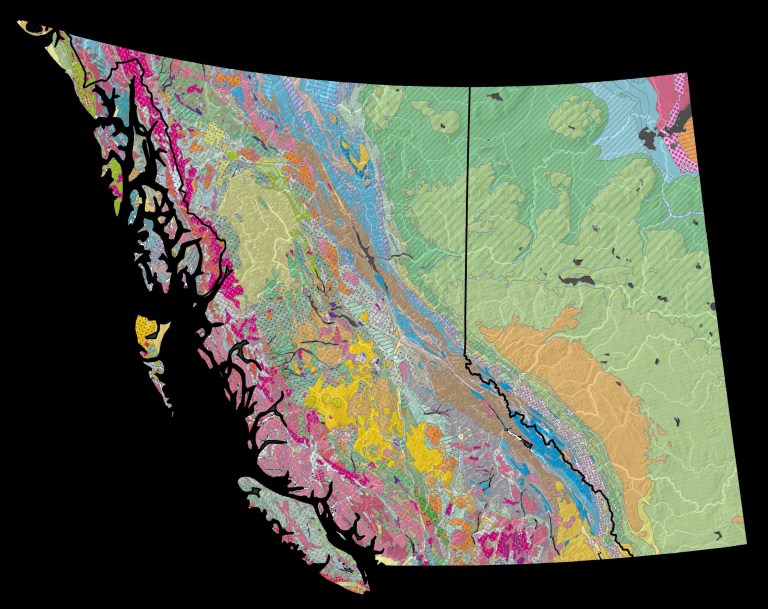
Farming is based on a sliver of soil that caps kilometers of sediment and bedrock. To understand how our fields first formed, we need to read an ancient geological story of how Alberta has been raised and tilted then scoured and capped over time. Alberta has sat inside a continental plate (or ‘craton’) for over 300 million years. Around 180 million years ago, the western edge of this plate began crunching to form the up-and-down terrain of the Coast Mountains of British Columbia (B.C.) and the Rocky Mountains between B.C. and Alberta (Figure 1). Mountain building finished about 50 million years ago.

Bedrock geology draft 4
Figure 1. This is a bedrock map of Alberta and B.C. “Bedrock” refers to the stony basement below our modern soil and loose sediment (gravel, sand, and silt). B.C. is striped with colour because its bedrock is made of diverse chunks of land called terranes that got repeatedly mashed against a moving continental plate that Alberta lay within. One product of this mash-up (‘accretion’) was mountain building (‘orogeny’). Creation of the western mountains forever shaped the development of soils and agriculture in the Prairie Provinces (map by Todd Kristensen with bedrock data from the USGS 2015).

For almost 200 million years, Alberta has been tilted: our bedrock is formed largely of shales and sandstones that built up when sediment either poured off the mountains and solidified into rock or settled down in ancient waters that once filled a basin over Alberta. From about 50 to 5 million years ago, huge sheets of gravel and sand continued to shed off the Rockies (carried by rivers and streams) before settling into our basement. Read more

Building skills: Using seeds and shells to learn about Alberta’s ancient environments

How do we know about past environments?

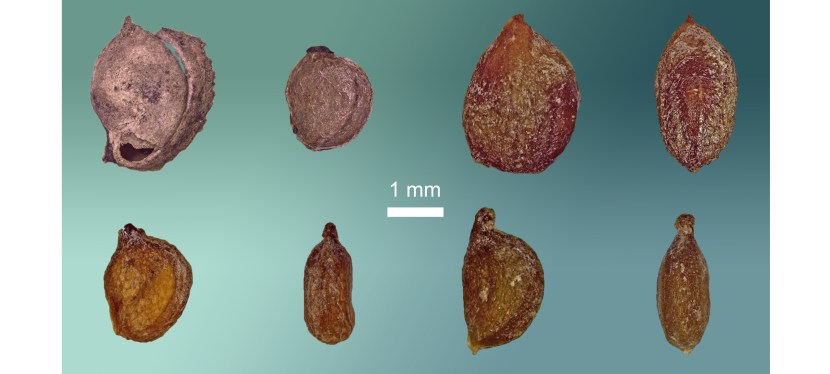
Historic and precontact archaeological and palaeoenvironmental sites from across Alberta tell us much about people and past environments. But how can we learn the details about that environment? This blog post will tell you how we use environmental indicators, especially macrofossils, to reconstruct what conditions were like at sites in the past.

It may seem reasonable to assume that the environment when an archaeological site was inhabited by people was generally the same as it is now, and this is sometimes the case. However, the archaeological record in Alberta goes back at least 13,000 years , to the end of the last major glaciation and its transition to our present epoch (the Holocene). Given this long and varied history, it’s obvious some considerable changes have occurred. Read more

Volcanoes and Alberta

Thank you to guest writer Britta Jensen of the Department of Earth and Atmospheric Science, University of Alberta, for this interesting post about the impact volcanoes have had on our province.

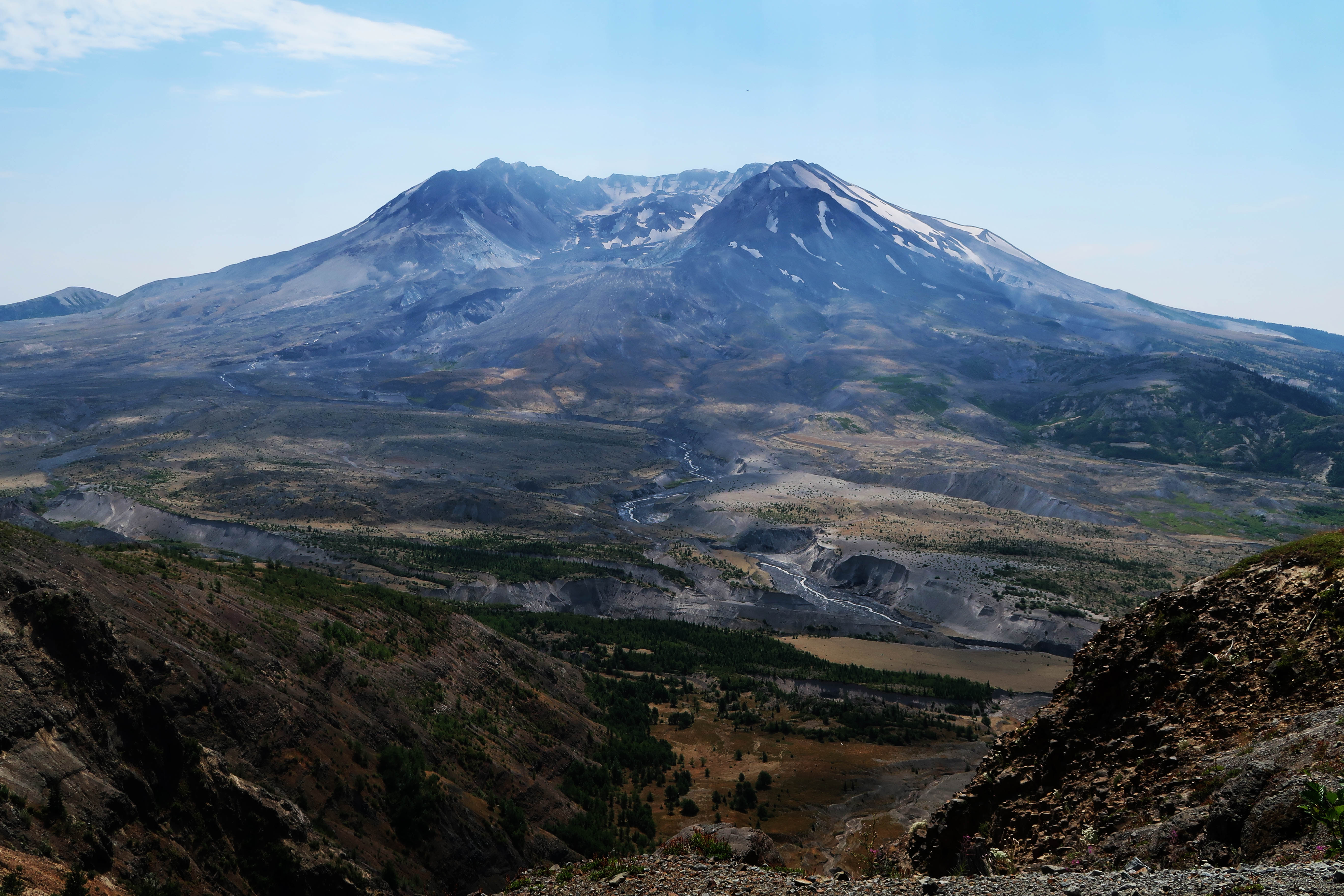
It is safe to say that when people think of Alberta they rarely think of volcanoes. Prairies, check; mountains, check; boreal forest, check; volcanoes, ummm, no? This is a fair reaction because Alberta can’t currently claim a single volcano. However, take a look at a map and you can see that we aren’t actually that far, relatively speaking, from the impressive volcanic peaks that dot the west coast – Mount St. Helens, Rainier, Baker, Meager, to name a few. Far enough to avoid the damaging effects of an eruption? Perhaps not. On May 18th 1980, Albertans learned that we are close enough to have our province impacted by major volcanic eruptions. The eruption of Mount St. Helens, which killed 57 people locally, spread ash far and wide. Enough ash accumulated in southern Alberta to cause problems, with reduced visibility, vehicles, and people with respiratory illnesses. A light dusting of ash was even reported as far north as Edmonton. No visible layer of that eruption remains on the landscape of Alberta. But what about the past?

Mount St. Helens, Washington State, summer 2017. View of the north-face that collapsed in 1980 (Photo Credit: Britta Jensen).

When we look under the ground, at pits dug during construction, road cuts, river banks and other exposures of the ground we walk upon, we can see a history of large eruptions blanketing parts of our province in volcanic ash. This record of Read more

Celebrating Mary Schäffer Warren

Thursday, March 8th marks International Women’s Day. This year we honour the memory, achievements and spirit of Yahe–Weha (mountain woman, as she was known to the Stoney), Mary Schäffer Warren.

“Lake Louise is a pearl; Lake Maligne is a whole string of pearls.”

– Mary Schäffer Warren

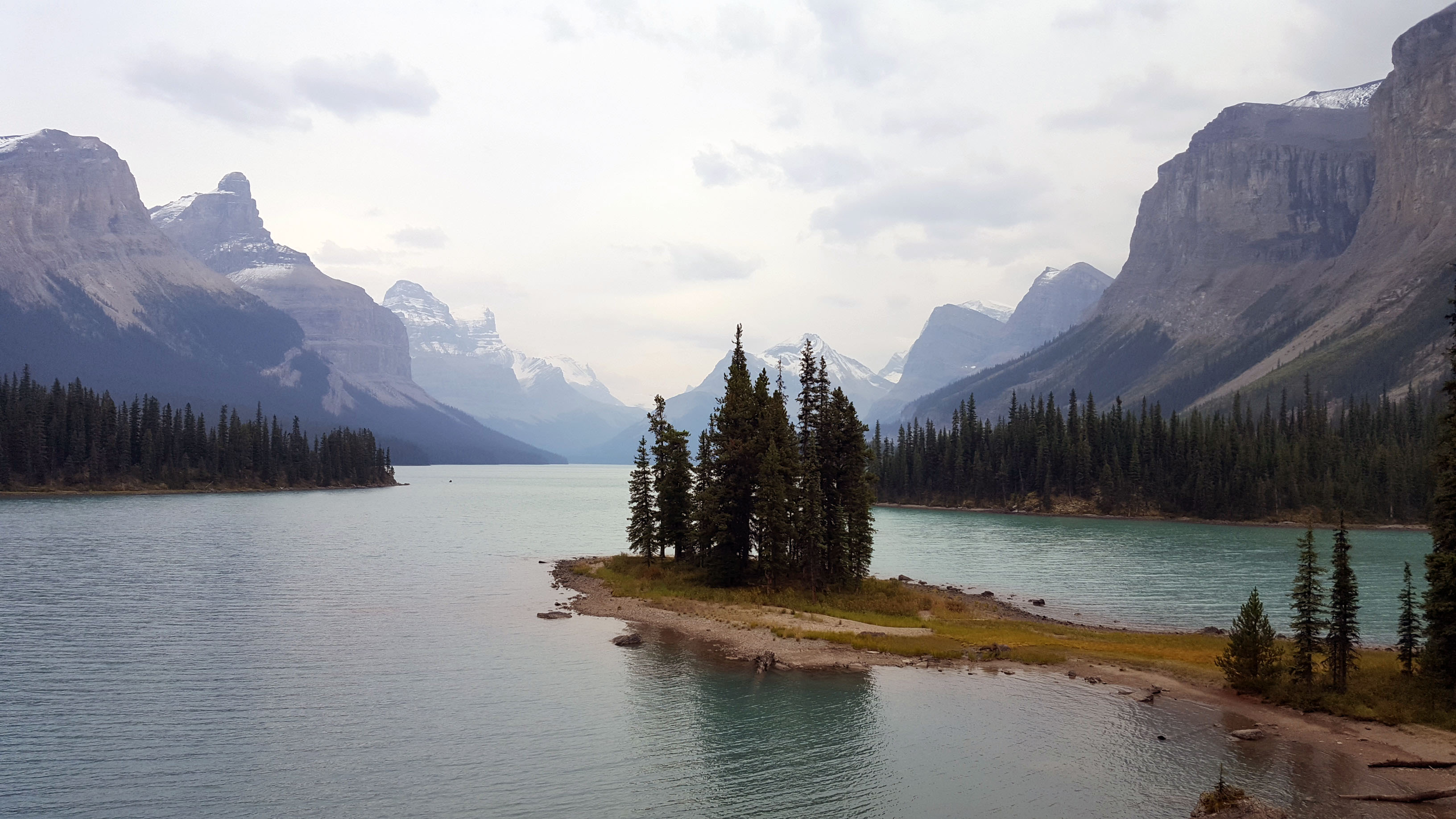
A view towards Spirit Island, Maligne Lake, Jasper National Park (taken by the author, September 2017).

The famed turquoise blue waters of Maligne Lake are bordered by impressive mountain peaks and glaciers. The lakes breathtaking natural beauty often leaves visiting tourists awestruck. But did you know that a Quaker woman from Philadelphia first surveyed, mapped and named the geological features (lake, mountains, peaks and glaciers) in the area? This remarkable pioneering woman was Mary Schäffer Warren. Read more

The Sun Greenhouse Company

Thank you to Kim Fung (Sien Lok Society of Calgary), Tommy Y. Ng (Bison Historical Services Ltd., Sien Lok Society of Calgary), Edward Gee and Bill Gee for sharing this important piece of Alberta’s history.

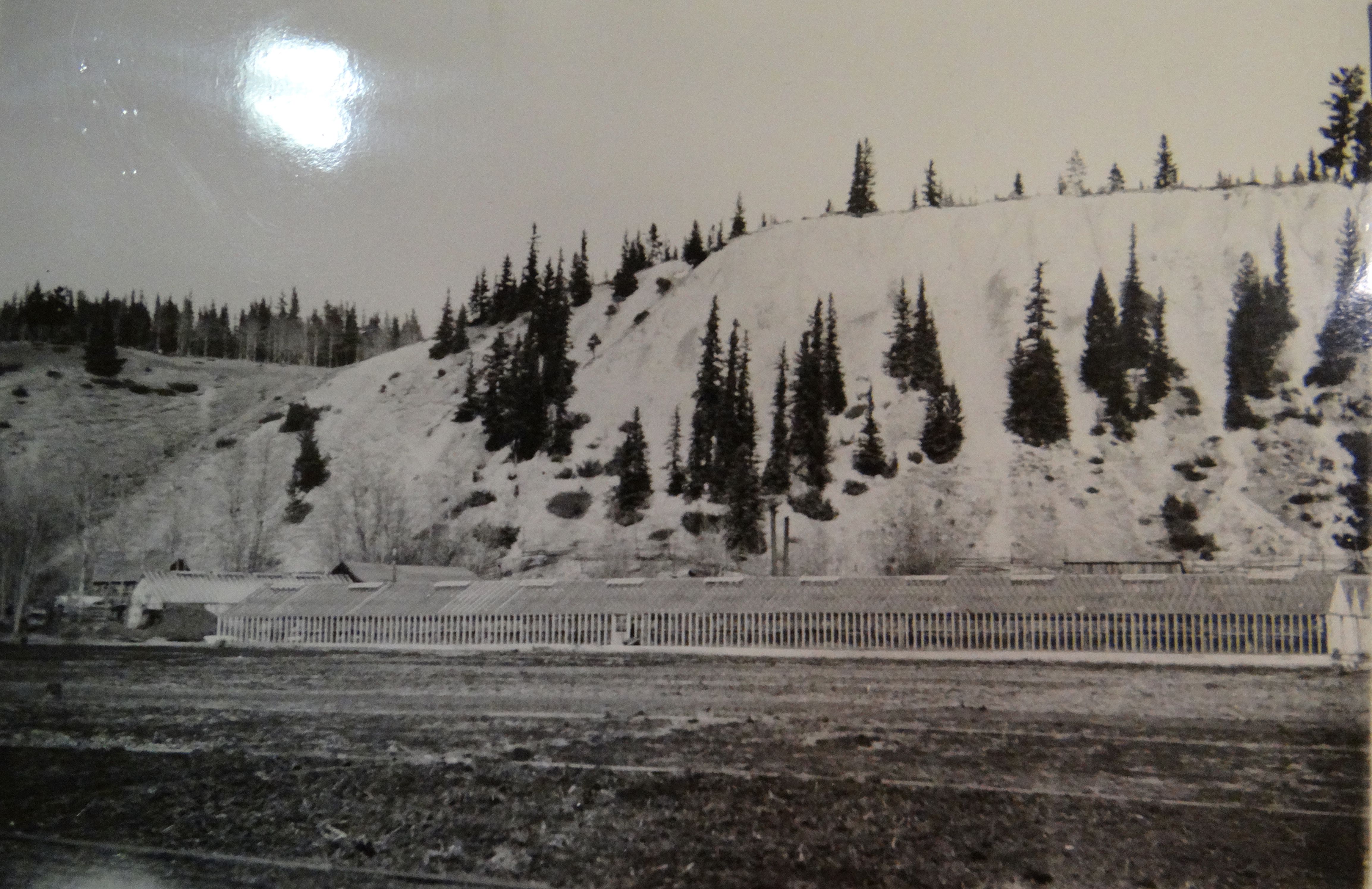
The Sun Greenhouse Company was a vegetable farm that operated from 1927 to 1973 in Banff National Park, specifically at a former location in Anthracite, an abandoned coal-mining town that existed from 1886 to 1904. Thriving for two generations on 10.4 acres of land, it supplied needed produce to soldiers stationed in Banff during WWII, the Banff Springs Hotel, Chateau Lake Louise, and various local restaurants, and grocery and food outlets in the Bow Valley (Lake Louise to Canmore). It is believed that anyone who dined in Banff from 1927 to 1973 will most likely have eaten a product from the Sun Greenhouse Company.

Sun Greenhouse, Anthracite, Alberta, 1951. Photo Credit: Whyte Museum of the Canadian Rockies.

What made this business unique is that it was located on non-arable land leased within the Rocky Mountains, and owned and operated by Chinese immigrants living under the racist restrictions of the 1923 Chinese Immigration Act, also known as the infamous Chinese Exclusion Act. The Act forbade Chinese immigrants from many professions, including farming or owning crown land, yet the Chinese flourished in the produce growing industry (specifically in BC), even under additional provincial discriminatory restrictions (Chan 2016 and 2017). Read more

The Early Years of Archaeology in Alberta

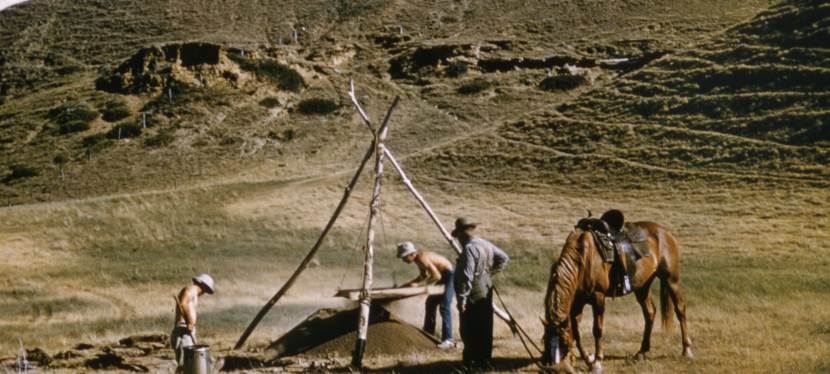
As the summer of 1949 approached, Boyd Wettlaufer, a Master’s student of archaeology at the University of New Mexico, was asked by his Field Director where he wanted to dig for the summer. In a 2008 interview, with Karen Giering of the Royal Alberta Museum, Wettlaufer related how the conversation with his director had transpired:  

 “Boyd,” he said. ‘I think it’s time you did a dig of your own. Where would you like to go?” And I thought of Head-Smashed-In. I said, “Well there’s a buffalo jump up in Alberta I wouldn’t mind taking a look at.” And so, he gave me a couple boxes of groceries and credit card for the gas and the two boys (William Hudgins and Donald Hartle) to help me and sent me off” [1].

Wettlaufer was familiar with the area around Fort MacLeod, having been stationed out of the nearby Royal Canadian Air force base of Pearce during the war as a flight instructor and aerial photographer. It was a member of the local historical society (Boyd and his wife Dorothy plugged their trailer into her porch for electricity [2]), who had first shown him the Read more

A TASTE OF CHRISTMASES PAST

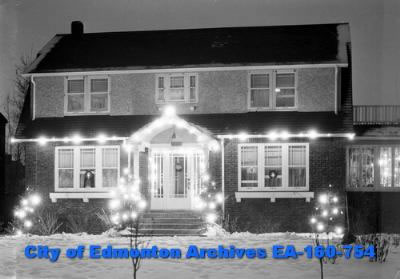
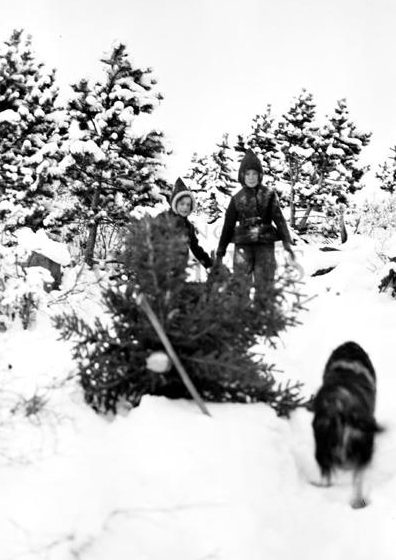
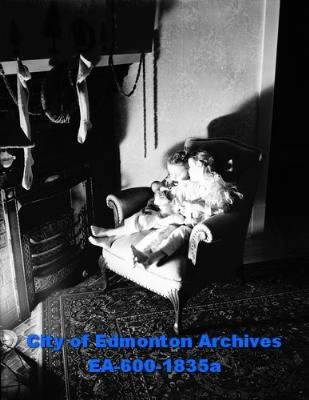
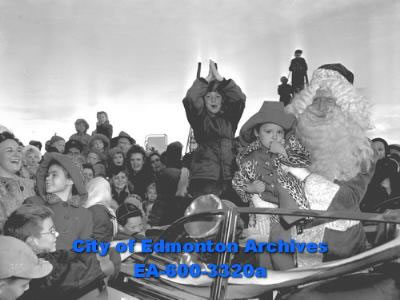
Season’s Greetings! With its hustle and bustle, Christmas Day will soon be here. Before we celebrate the magic of the holiday season, let us look back at the wonder and charm of a simpler time. The extensive photo collections at the Provincial Archives of Alberta and the City of Edmonton Archives offer a unique glimpse into the celebrations of Christmases past in Alberta; the following images were selected from their holdings to create a photo montage dedicated to old-fashioned holiday memories and traditions. Enjoy!


PLUM PUDDING – A VICTORIAN CHRISTMAS MUST!

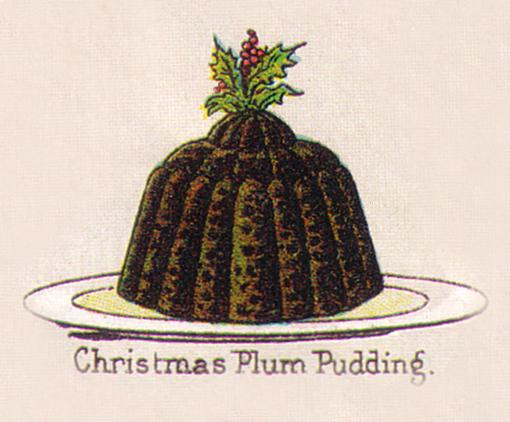
Not only does the holiday season include fun outdoor activities, festive bright lights and the sweet sounds of Christmas melodies, but it is always filled with an assortment of tasty old-fashioned baked treats. Thanks to our colleagues at Rutherford House Provincial Historic Site, we are pleased to share one of Mrs. Rutherford’s classic Christmas desserts, a treasured family recipe for plum pudding passed down from her mother.

GRANDMOTHER BIRKETT’S PLUM PUDDING

Chop fine 2# suet, add #2 seeded raisins cut in half, #2 seedless raisins, ½# peel, ½ # almonds cut in half or slices 4 cups bread crumbs. Beat 8 eggs, 2 cups milk and 2 cups brown sugar together. Add sifted 2 cups of flour, ½ tsp cinnamon, ½ tsp nutmeg, 2tsp salt, 4 tsp baking soda. Combine with fruit. Fill oiled moulds 2/3 full. Steam 3 – 4 hours.

Sauce for Plum Pudding (Foamy)

½ cup butter

1 cup sugar

3 tbsp boiling water

1 egg

Juice of ½ lemon

1 tsp nutmeg

Cream butter and sugar, beat egg lightly add with lemon juice and nutmeg, beat until light and fluffy. Add water 1 teaspoon at a time and beat well heated over hot water (double boiler?). Serve hot on pudding.

Should any of our readers decide to take it upon themselves to try and make Grandmother Birkett’s Plum Pudding recipe, please let us know how it turns out. Comments are always appreciated; we anxiously await your review!

Traditional Christmas Plum Pudding (from Mrs. Beeton’s Book of Household Management, Food Plate of Puddings – 1890s edition)

Written By: Marsha Mickalyk, Archaeological Permits and Digital Information Coordinator & Pauline Bodevin, Regulatory Approvals Coordinator, Historic Resources Management Branch.

References

HERMIS (Heritage Resources Management Information System) – https://hermis.alberta.ca/

City of Edmonton Archives – https://archivesphotos.edmonton.ca

Red Deer Industrial School Monument Unveiled

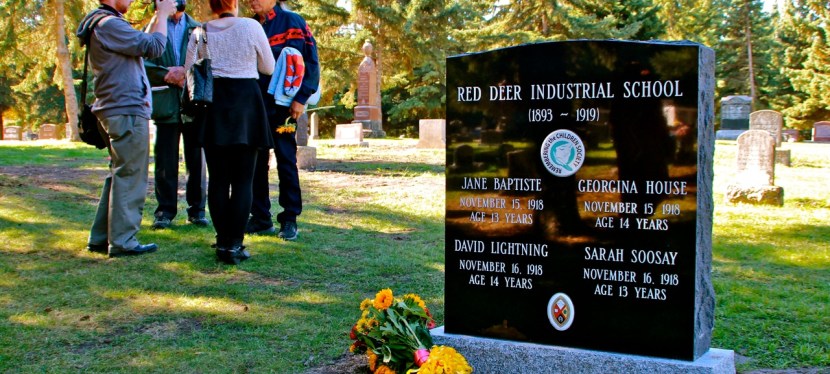
During the past three weeks the Spanish influenza has swept through this institution. I regret to report that as a result, five of our pupils are dead: Georgina House, Jane Baptiste, Sarah Soosay, David Lightning, William Cardinal…At the time the children died practically everyone was sick so that it was impossible for us to bury the dead. I thought the best thing to do was to have the undertaker from Red Deer take charge of and bury the bodies. This was done, and they now lie buried in Red Deer.”

These words, written by then-Principal Joseph F. Woodsworth to the department of Indian Affairs, now also appear in the Red Deer City Cemetery, on a monument commemorating the lives of four of the five young men and women who passed away on November 15 and 16, 1918, while attending Red Deer Industrial School[1]. Until now, their names and resting places within the Red Deer City Cemetery had remained largely unmarked and their stories untold. Read more