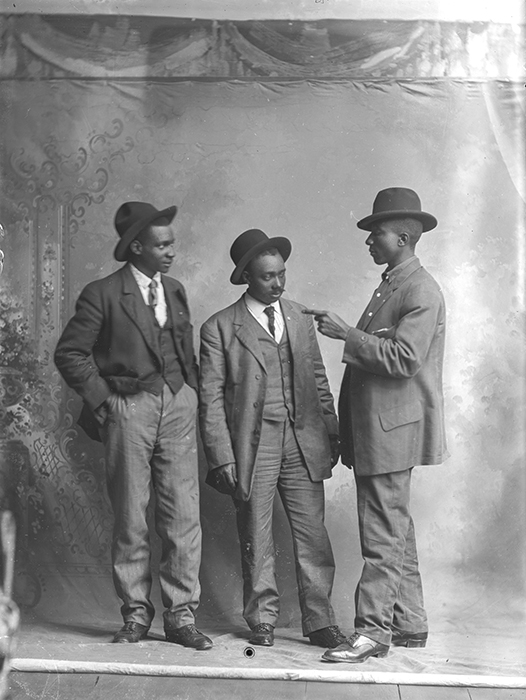
Editor’s note: In our continued recognition of Black History Month, the Provincial Archives of Alberta has shared a collection of portraits of Black Albertans from photographer Ernest Brown. The Ernest Brown fonds contain around 50,000 negatives and other materials, predominantly from the years 1880-1960.
One of the earliest professional photographers in Alberta, Ernest Brown moved to Edmonton from England in April 1904. In Edmonton, Brown went to work as an assistant to C.W. Mathers, the city’s first photographer. Three months later, Brown bought the rights to Mathers’ portrait studio and in 1905 the studio expanded into the Ernest Brown Company Ltd.
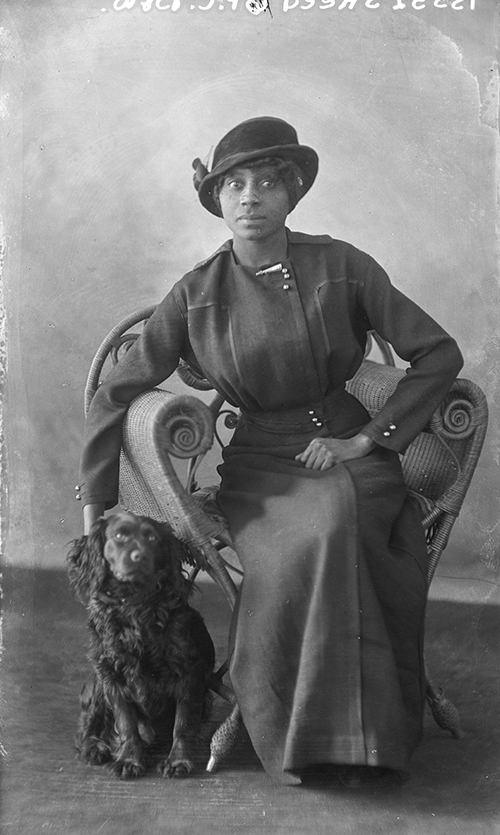
Little is known about the subjects in the photographs below. Likely, the only records kept from these photo sessions was the name of the person who booked and paid for the session.
Editor’s note: In our continuing recognition of Black History Month, RETROactive contributors from the Provincial Archives of Alberta highlight some of the resources available for researchers wanting to know more about the history of Alberta’s Black community.
Written by: Michael Gourlie, Government Records Archivist and Karen Simonson, Reference Archivist
Researching the history of Black communities in Alberta can be challenging. Sources can be limited and potentially scattered among many institutions within Alberta’s heritage communities. Much of the access is dependent on knowing a person’s name or having some additional background clues or information. But the history of Alberta’s Black communities can be teased out of the records preserved by the Provincial Archives of Alberta (PAA), and all the resources described below are available for researchers to see and consult for themselves during regular opening hours of the reading room.
Unidentified woman with dog, ca. 1920 (Ernest Brown fonds, BP2-15552)
In addition to published books and newspapers providing context to the community, the PAA is fortunate to have received donations of records from private individuals such as Fil Fraser, Selwyn Jacob and Junetta Jamerson. While these records can only tell part of the story, looking more closely at some familiar holdings at the PAA reveals perhaps some unexplored and unexpected traces of Alberta’s Black history.
Editor’s note: This week, RETROactive is pleased to share another post written by historical researcher Matt Hiltermann, on behalf of the Métis Nation of Alberta Region 3. Matt recently wrote about the Métis of Rouleaville.
Written by: Matt Hiltermann
When Albertans hear the Lougheed name, they likely think of late premier Peter Lougheed. Others may may also be familiar with his grandfather, Sir James Alex Lougheed. Much less discussed, however, is the matriarch of the Lougheed family: Lady Isabella Clark Hardisty Lougheed.
To the extent that history has focused on rich, white men, this is unsurprising if disappointing. At the same time, Isabella was widely regarded as the driving force behind her husband.[1] She and her Hardisty kin also formed the nucleus of the Lougheed family.[2] All evidence seems to point to her being a binding force in both her family and the community at large. Who was this Métis matriarch, and how did she become the “First Lady of the Northwest?”[3]
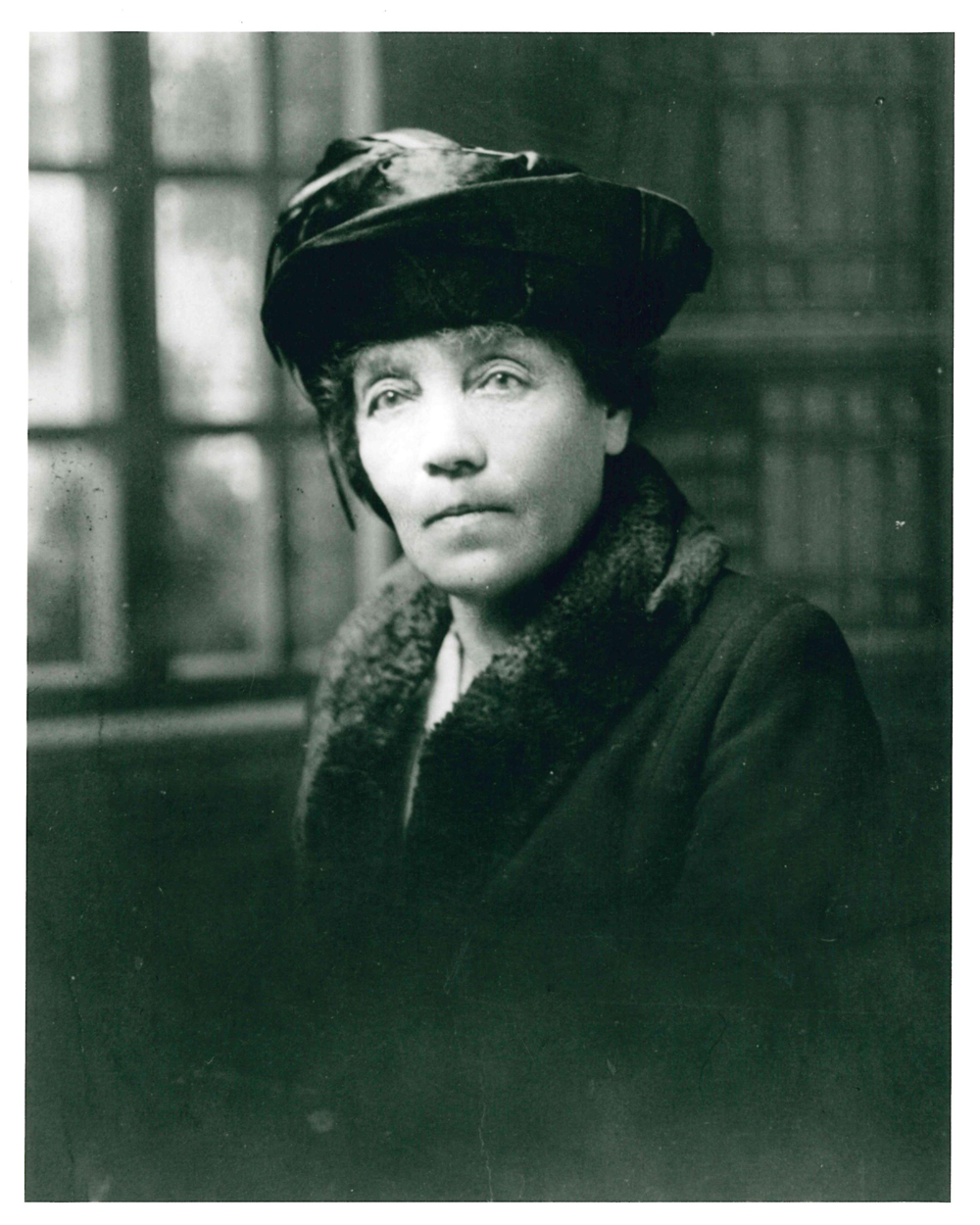
Isabellla Lougheed, ca 1910s. Source: Glenbow Library and Archives.
Isabella Hardisty was born around 1861 at Fort Resolution in what is now the Northwest Territories.[4] Her father, William Lucas Hardisty, was one of only four Métis men to attain the rank of Chief Factor between 1851 and 1869.[5] Her mother was Mary Anne Allen, a Métisse of obscure origins.[6] Both of her parents’ families had intergenerational ties to the fur trade.[7]
Written by: Jared Majeski, Historic Resources Management Branch
For his decades-long work as an archaeologist, curator and author helping to promote and preserve Blackfoot Culture, former Historic Resources Management Branch and Royal Alberta Museum staff member Jack Brink was recently named a member of the Order of Canada. He became part of this illustrious group along with a handful of other Albertans, including: Daniel Steadward, a lifelong Paralympic advocate; Dr. Lori West, who directed transplant immunology research at the U of A; and Art Bergmann, a prolific punk rock musician both as a solo artist and member of the legendary Young Canadians.
Blair First Rider, an Aboriginal Consultation Advisor with the Alberta government, worked with Jack for a number of years on, among other things, the cultural resource management file; this included work at Writing-on-Stone, Head-Smash-In Buffalo Jump and the Okotoks Erratic. In honour of Jack’s work with The Blackfoot Confederacy and Treaty 7, he was given the honourary Blackfoot name Owl Head.
“It’s kind of a bit of disbelief,” Jack Brink told Global News when asked how he felt when he heard the news. “You’re thinking… ‘What have I done to deserve this?’” Source: Office of the Governor General of Canada.
“Jack has earned his name as a way of acknowledging his support and efforts of reconciliation, repatriation and preserving the archaeological record of the sacred sites and cultural resources we are entrusted with as stewards of the land,” First Rider explained.
Understanding and preserving Indigenous history and culture, in this era of reconciliation, is done in numerous ways. One way is through archaeology, a field Brink has worked in for much of his professional life. He mentions that through archaeology, we can begin to understand the great accomplishments Indigenous people who have lived in Alberta (and Canada) for thousands of years.
“I think when the general public learn more about the deep past of Indigenous people,” Brink said, “we [can] make steps forward in terms of truth and reconciliation. The ‘past’ is a great part of the true story of Indigenous people on this continent. Most people are unaware of it, and as they learn more they come to respect the success of indigenous people surviving on this land under challenging conditions for such a long period of time. I believe that this builds an appreciation of what Indigenous people have accomplished and contributed.”
Former colleagues at the Royal Alberta Museum, where Jack worked for over 25 years, recall lessons learned from one the country’s preeminent archaeologist and curator. Assistant Archaeologist Bob Dawe mentioned that, “Jack is an excellent teacher and writer with enviable communication skills. The most beneficial enduring advice he taught me was how to be more succinct with writing and lecturing – cut to the chase rather than clutter scholarly publications and conference presentations with time wasting less relevant material. Other than this extremely helpful lesson, he didn’t belabor advice as much as lead by example.”
Acting Curator of Archaeology Kris Fedyniak worked with Brink on the ultimately successful bid for Writing-on-Stone Provincial Park to be named a UNESCO World Heritage Site. “Through the numerous and lengthy United Nations Education Scientific and Cultural Organization application bids, Jack taught me the importance of perseverance. A ‘no’ sometimes means you have to reset, reframe and try again.”
Recognition of a professional archaeologist at such a high level will hopefully inspire younger generations to not only recognize the important role archaeology and science play in our world, but to pursue a career in the field.
“I think recognition by the Governor General’s office is recognition of the power of archaeology to do good in this world,” Brink said, “to help reveal impressive stories about past cultures and to do so in a respectful way. I would hope that this would have a positive effect on young people who may be considering a career in archaeology; that it would make them aware that significant achievements can be made in the field of archaeology and that a great career can come from it.”
Editor’s note: With a couple weeks left in what felt like the longest year ever, this will be the last RETROactive post of 2020. Thank you to all our followers, visitors and everyone interested in Alberta’s diverse and unique history. Have a safe and happy holiday season, and we’ll see you all in 2021!
Written by: Sara King, Government Records Archivist, Provincial Archives of Alberta and Jared Majeski, Editor, RETROactive
Courtesy of the Provincial Archives of Alberta, let us start to settle in for Christmas break with some vintage video of folks hitting the slopes.
“Where Winter’s a Pleasure” was a promotional film produced by the Film and Photograph Branch of the Department of Industry and Development in 1962 for the Alberta Travel Bureau. It features footage and narration from Hans Gmoser (1932-2006), a mountain guide and founder of Rocky Mountain Guides Ltd. (later Canadian Mountain Holidays CMH) who would tour throughout North America giving lectures and showing promotional films. He was awarded the order of Canada in 1987, among other honours. Starting before dawn for a four hour hike up a glacier to ski might seem a bit daunting for some, but you can always catch the gondola at Lake Louise if you’re less ambitious, and a trip to the Tom Tom Lounge at the end of the day can’t go wrong. Just don’t forget your mountain mixture.
The Archaeological Survey of Alberta is proud to release Occasional Paper Series No. 39, devoted to advancing archaeological practice in Western Canada. The volume contains seven articles written by archaeological consultants, university researchers, and heritage managers. The 2019 volume is dedicated to Terrance Gibson who passed away in 2018 and was a life-long advocate of improving archaeological research and practices.
As Albertans begin to safely hunker down for the holiday season, you might think about picking up a project left at the side of your desk. Or maybe you’ll start something new altogether. If you’re someone thinking of learning more about your family history; if you’re a non-profit group wanting to mark a moment in your local history; or a person who wants to preserve the lived experiences of an older generation, these new resources will certainly help.
Developed by staff in the Alberta government’s Heritage Division, the Heritage Note Series so far consists of resource guides covering three topics: historical research, heritage markers and oral history. In these guides, you’ll learn skills like how to properly conduct an interview, how to write text for historical signage and how to manage research notes and materials.
Editor’s Note: November 15- 21 is Métis Week: an opportunity to recognize the culture, history and contributions of Métis people to Alberta and across the country. The following post is written by Matt Hiltermann on behalf of Métis Nation of Alberta Region 3. Through extensive research of census records and archival material, Matt tells the story of the many Métis families who lived at the confluence of the Bow and Elbow rivers, and who contributed to the social fabric of Rouleauville—one of Calgary’s oldest neighbourhoods.
Communities do not spring from the soil fully formed; rather, they tend to coalesce around existing population centres, important trade routes, and/or vital resources, among other things. As a fording place for the buffalo herds, the area that would become Calgary and its environs was an important gathering place for the Niitsitapi (Blackfoot) and their Tsuut’ina and Stoney Nakoda allies since time immemorial. [1] Due to its status as a gathering place rich in resources, by the mid-19th century, Métis freeman bands with kin ties to the Tsuut’ina or Niitsitapi began to visit these peoples along the Bow. [2] These Métis freemen acted as middlemen in the ever-important pemmican trade that fueled the Hudson Bay Company’s (HBC) northern trading posts, brigades and the fur trade more broadly.[3]
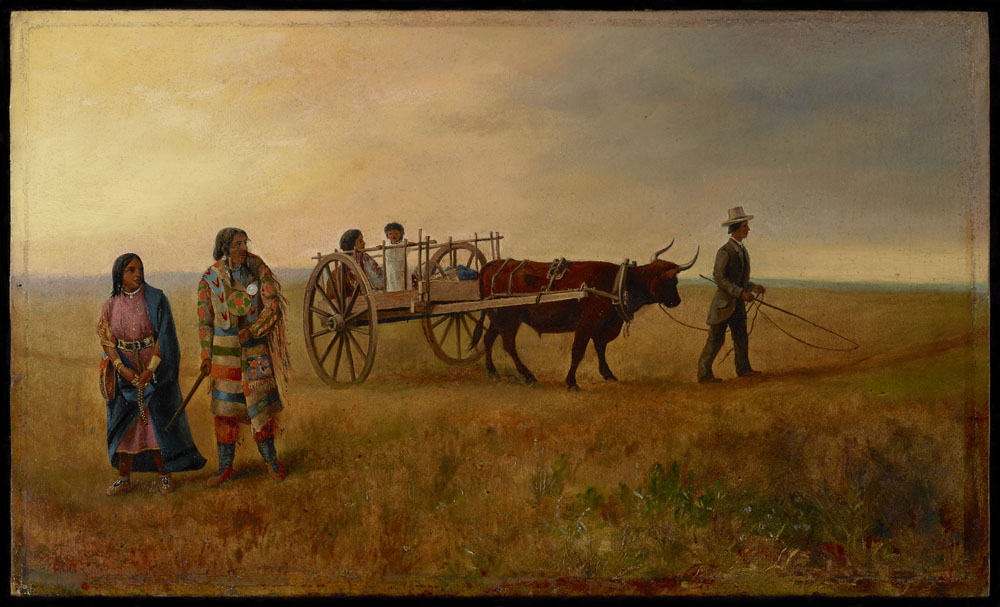
“A Red River Cart at Calgary, N.W.T.” Painting by Edward Roper, ca 1887 – 1909. Source: Library and Archives Canada.
Written By: Pauline Bodevin, Regulatory Approvals Coordinator.
As the leaves change and the temperatures begin to dip in October, it’s naturally the perfect time for sharing tales of ghostly sightings, unexplained phenomena and spooky places. This year our haunted heritage feature looks at historic theatres associated with legends of unexplained paranormal activity, mysterious happenings and superstitions. These majestic old historic buildings are often well-known locally as the sites of alleged supernatural phenomena and ghost-ridden performances.
Here are a few allegedly paranormal playhouses:
The Walterdale Playhouse, Edmonton
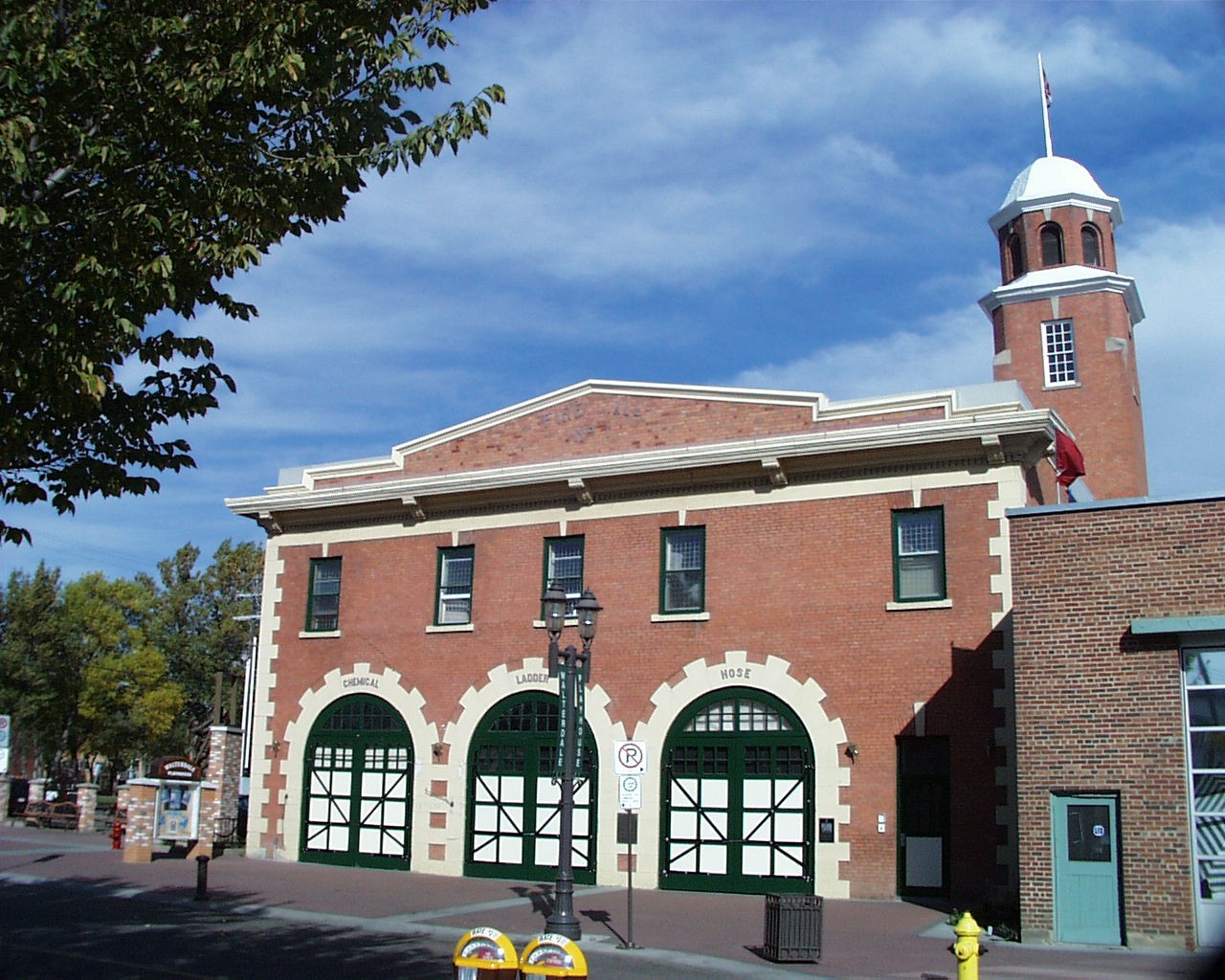
The Walterdale Playhouse is known locally for tales of ghostly hauntings and mysterious unexplained phenomena. Originally completed in 1910, the building served as the Strathcona No. 1 Firehall and was occupied by the Edmonton Fire Department until 1954. It was later used as a warehouse to store unused furniture and equipment when the fire department moved to a new location. Over the course of the next 20 years, the old building fell into disrepair and its condition deteriorated badly. In 1974, the Walterdale Playhouse group took over the lease on the condition that the old fire hall would be restored. Reborn as the home of the Walterdale Playhouse amateur theatre group, the building was converted into the theatre we are familiar with today.
Strathcona Fire Hall #1, Edmonton. Source: City of Edmonton.
According to local lore, the theatre is allegedly haunted by a friendly ghost affectionately known as Walt. The apparition is rumoured to be one of the original fire department volunteer members who is thought to have perished after a fatal accident occurred inside the building. Visitors have been known to describe seeing objects mysteriously moving, lights flickering on unexpectedly, and often experience unsettling feelings of being watched. Other have heard inexplicable sounds of a ringing bell, the smell of horses and the sounds of phantom hoof beats occurring regularly on the cement floors. Many still believe the restless spirit of Walt continues to roam the building to this day.
Written by: Sara Bohuch, BA Archaeology (Simon Fraser University) , MSc Conservation Practice (Cardiff University)
In terms of places rich with classified war time projects and military intrigue, Alberta is rarely the first spot that people think of. But history holds no bias in terms of where it takes place, and Alberta had its own part to play in the eccentric branch of the military arms race circa WW2. This was in part due to the plentiful excess of one of Canada’s most abundant and hated elements: ice.
In 1943, the Chief of Combined Operations for the British War Office had a point to prove about ice. His name was Lord Mountbatten, and he sincerely believed that ice could be used to defeat the Nazi menace during WW2. To establish his argument, he brought two huge chunks of it into the 1943 Quebec Conference. The secret conference was host to the likes of Winston Churchill, Franklin D. Roosevelt and William Lyon Mackenzie King, and Mountbatten had to justify the validity of his ice-related project to the leaders and their staff.
In front of a skeptical crowd of WW2 brass, he set up two ice blocks right next to each other. The first block was pure ice, while the block next to it was a new manmade composite mixture of ice and wood pulp. He retreated to the other side of the room, removed his gun, and shot a bullet into the first ice block. It predictably shattered to pieces. Mountbatten then reloaded his gun, took aim at the second block, and fired. This time, the bullet could not penetrate the ice, instead ricocheting completely off the block, flying through the pant leg of a nearby admiral, and ending up in the wall. The new material remained remarkably intact.
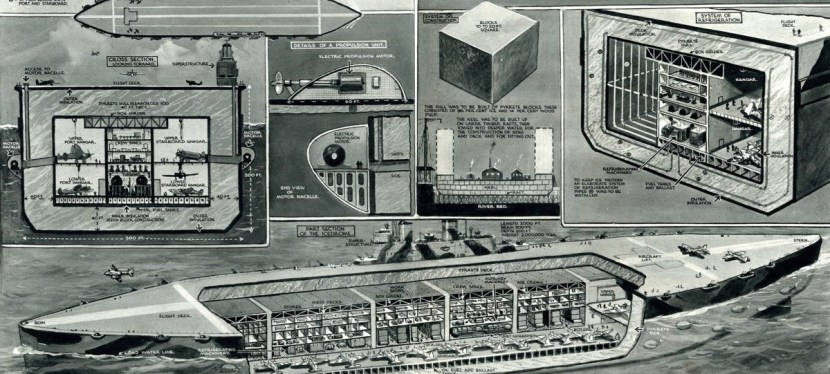
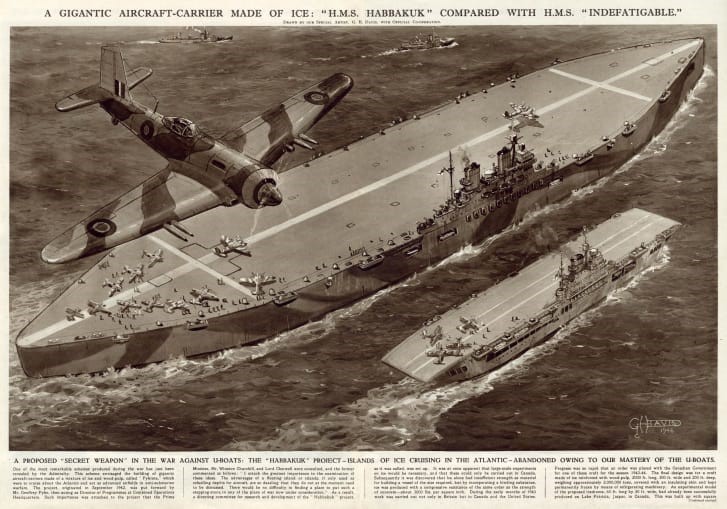
Artist’s rendering of what would be Project Habbakuk. Source: cnn.com.





 RETROactive