Alberta Historical Resources Foundation visits Olds

The Alberta Historical Resource Foundation held its first quarterly board meeting of 2014 in the town of Olds on February 21st and 22nd.
Alberta Historical Resources FoundationThe Foundation’s board members and staff look forward to the quarterly meetings, each held in a different Alberta community. This allows us to meet the Albertans who work so hard to conserve and promote our heritage; seeing and experiencing the fruits of their labour is both informative and a pleasure.

Friday afternoon began with a bus tour led by Donna Erdman, chair of the Olds Historical Society. Before we boarded the bus, Mitch Thompson of the Olds Institute surprised us by asking us to turn on our smartphones. Mitch showed us the new EverythingOlds.ca website—the Heritage Sites section contains video vignettes showcasing locally significant historic resources. (There’s much more community information on the website too.)

Once the bus got underway, Donna showed us some of the historic places the Town of Olds evaluated in 2009 (with the assistance of a Foundation grant and the Municipal Heritage Partnership Program staff). Many of these places have since been designated as Municipal Historic Resources.

Our bus first stopped at the Mountain View Museum and Archives. There were several interesting displays that used locally significant historical artefacts to highlight the region’s history. We also learned a bit about their archival holdings and viewed some of the contemporary art displayed in the adjoining art gallery.

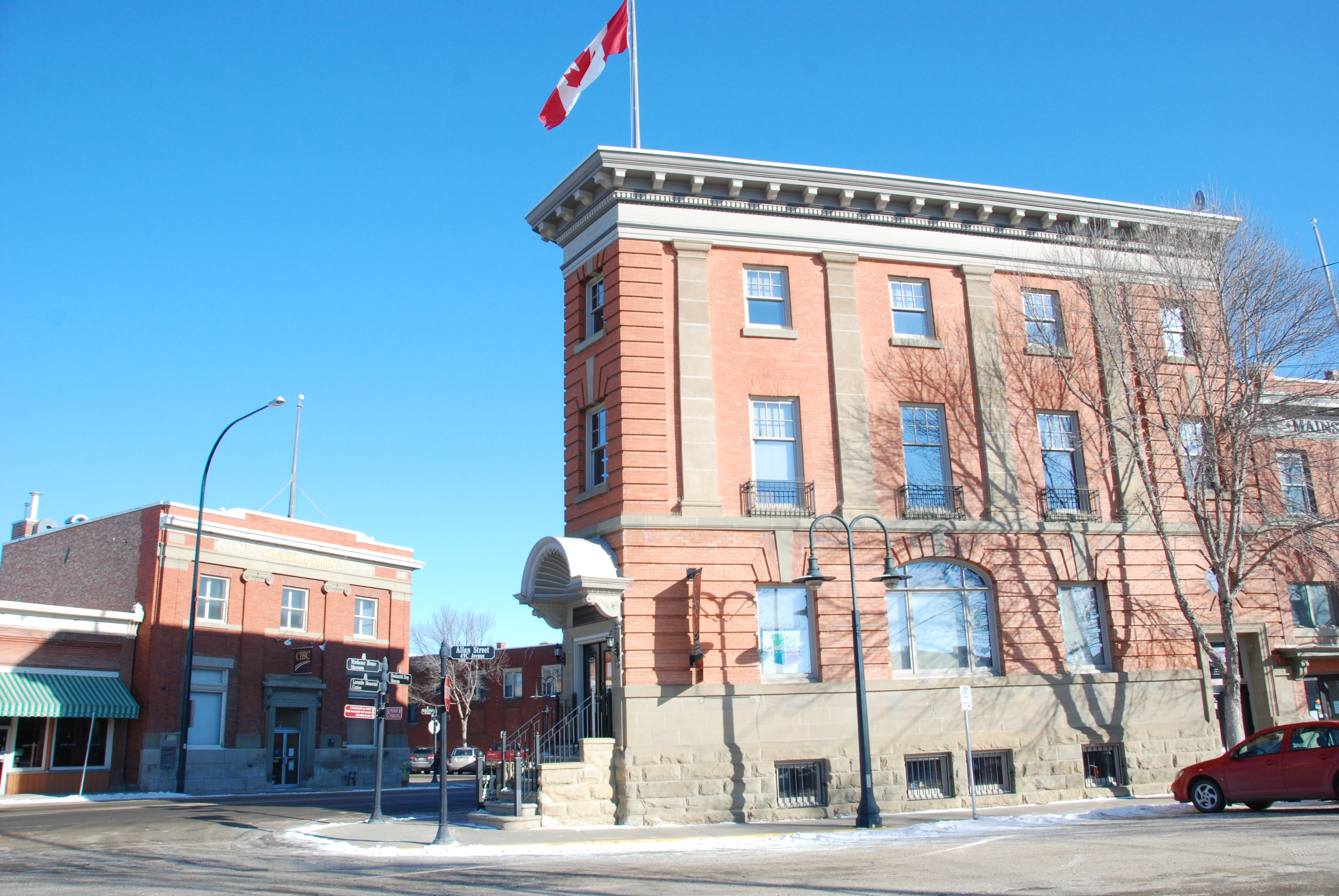
Our next stop was the former Canadian Bank of Commerce, now home to [sic] Pandora’s Boox and Tea. The beautiful, classically-detailed bank building has been adapted for its new use as a book store and coffee shop. Pandora’s is in the heart of Uptowne Olds, the town’s historic commercial district.

Upon re-boarding the bus, we were slowly driven up and down the several blocks that make up the Uptowne area. We admired the many historic resources in the Uptowne. Olds is one of four communities that the Foundation has accredited through its Alberta Main Street Program. We were impressed by the conservation projects currently being undertaken on several buildings in the Uptowne area (some with the Foundation’s support).

We briefly visited the grounds of the Olds Agricultural Society. Olds’s large Ag society is one of the olds-est (pun not intended) Agricultural Societies in Alberta, having been incorporated in 1899. Our next stop was the Olds College.

Olds College celebrated its centenary in 2013. Founded in 1913, the college is Alberta’s largest and olds-est (there I go again) rural agricultural college. The campus has evolved with the college it houses, but amidst all the modern classrooms, laboratories, libraries and dorms are at least two buildings older that the college they’ve become an integral part of: a calf barn (now home to a herd of goats) and a horse barn. Both buildings were constructed in 1911, when what is now a campus was part of a provincial demonstration farm.

We ended our visit to Olds College by visiting to their state of the art brewery: an example of how the college contributing to Alberta’s future by being true to our agricultural past. The first class of brewers will graduate shortly.

The tour was followed by a meet and greet at the Pomeroy Inn. Thanks to Michelle Jorgensen (Heritage Advisor, Town of Olds) for organising an informative and fun event. It was a pleasure to meet and speak with Mayor Judy Dahl, and with  members of the town staff, the Mountain View Museum and Archives, the Olds Institute for Community and Regional Development, Olds College and many citizens of the area who build the partnerships that protect and promote Old’s wealth of historic resources.

Everyone agreed that it was an afternoon well spent that reminded us of how important our work is; it was the best way for the board to get inspired before spending their Saturday immersed in paperwork.

This slideshow requires JavaScript.

The Alberta Historical Resources Foundation has been collaborating with the citizens of Olds through its grant programs for over two decades. The Town of Olds has completed a full range of heritage planning projects with the assistance of the Municipal Heritage Partnership Program, including a heritage survey, inventory and management plan. As an Accredited Main Street Community, the Olds Institute for Community and Regional Development (Olds Main Street sponsoring organization) was recently awarded a coordinator salary subsidy along with marketing, economic development, organization and design grants. The Heritage Preservation Partnership Program has also provided technical advice and conservation grants to a number of Olds’s Municipal Historic Resources.

Written by: Carina Naranjilla, Grant Program Coordinator, Alberta Historical Resources Foundation; and Michael Thome, Municipal Heritage Services Officer.
The Alberta Historical Resources Foundation gives heritage another financial boost

Alberta Historical Resources FoundationThe Alberta Historical Resources Foundation awarded over one million dollars to assist 58 heritage projects. Through the Foundation’s Heritage Preservation Partnership Program, funding was approved for 52 projects to assist individuals, municipalities and organizations to preserve and interpret Alberta’s heritage. Project grant categories are: historic resource conservation, heritage awareness, publications and research, as well as the Roger Soderstrom Scholarship.

The Municipality of Crowsnest Pass has been awarded funding through the Municipal Heritage Partnership Program and the Town of Olds was awarded grants for projects through the Alberta Main Street Program.

For a complete list of the funded projects, visit the Alberta Historical Resources Foundation‘s webpage.

Written By: Carina Naranjilla, Grant Program Coordinator, Alberta Historical Resources Foundation

More on the Deep Roots of Beaver and Human Relationships

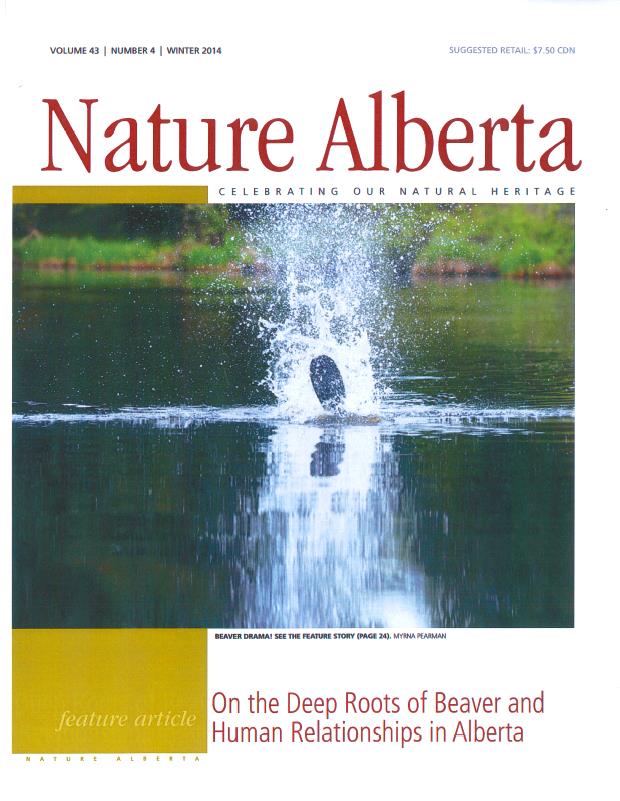
Did you enjoy our recent post On the Deep Roots of Beaver and Human Relationships in Alberta? Have we got exciting news for you. Todd Kristensen just told me that Nature Alberta will publish an expanded version of the article in the next issue of their quarterly magazine.

“On the Deep Roots of Beaver and Human Relationships in Alberta” will be the feature article in the Winter 2014 edition of Nature Alberta Magazine.

Nature Alberta Magazine - cover - (Winter 2014) jpgIt should hit news stands soon. You can also contact Nature Alberta directly to purchase a copy. Congratulations Todd and Heiz!

Written by: Michael Thome, Municipal Heritage Services Officer.
Main Street Coordinators Meet to Learn and Strategize

Local leaders from Alberta Main Street Program communities met recently in Olds for information sharing, learning best practices, and ongoing conversations about the Four-Point Approach®.  

The program, established in 1987 and now renewed with a fresh format, revitalizes historic commercial areas through heritage conservation. The bar for participation is high: communities desiring to participate must complete a Heritage Inventory  of their historic commercial area and commit to meet detailed standards of performance. Those in the Alberta Main Street Program network have met these high criteria and are committed to achieving excellence.

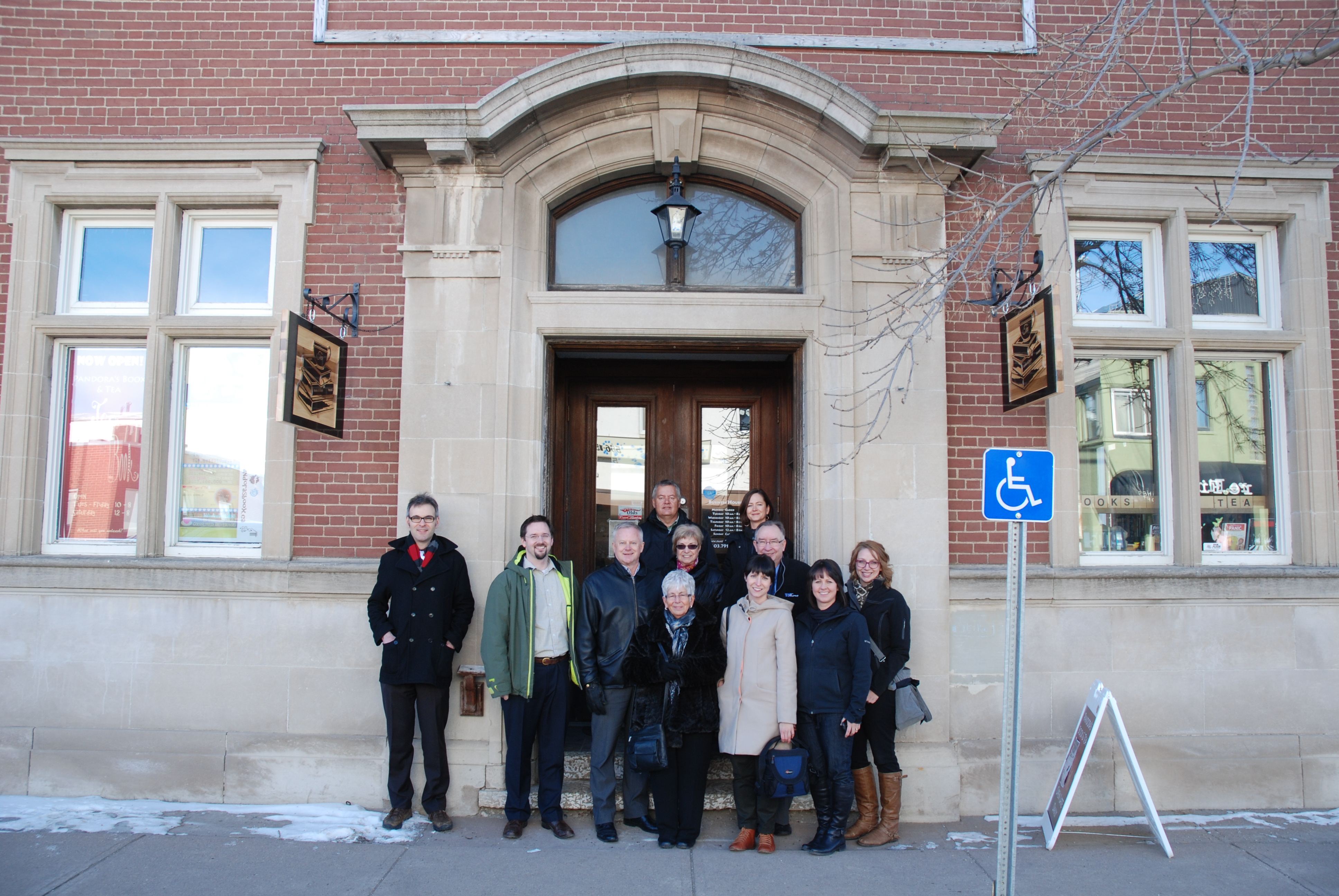
Alberta Main Street Program staff and Coordinators outside the historic Bank of Commerce Building in Olds.
Alberta Main Street Program staff and Coordinators outside the Bank of Commerce Municipal Historic Resource in Olds. Back row, left to right: (Leon Durand, Chair, Uptowne Olds; Michelle Jorgensen, Town of Olds Heritage Advisor) Middle row, left to right: (Michael Thome, Municipal Heritage Services Officer; Matthew Francis, Manager, Municipal Heritage Services; Ted Stilson, Executive Director, Downtown Lethbridge BRZ; Carol-May Coty, Manager, City Centre Camrose; Ray Telford, City of Camrose Economic Development Officer; Ashley Stone, Program Director, Wainwright Buffalo Park Foundation. Front row, left to right: (Rita Thompson, Uptowne Olds; Rebecca Goodenough, Municipal Heritage Services Officer; and Debra Aitken, Uptowne Olds Coordinator).

Alberta Main Street Program network members including Uptowne Olds, Downtown Lethbridge, City Centre Camrose, and Wainwright were represented at the coordinator’s meeting, the first in 2014.

Fraser Shaw, Heritage Conservation Adviser with Alberta Culture, who served as the Main Street Coordinator in Ponoka and Black Diamond, delivered an informative presentation on quality design for historic Main Street communities. A key aspect of this is the area of historic signage: what is, and what is not, appropriate. While in the late 19th and early 20th centuries a “wild West” ethic probably prevailed, with “my sign is bigger than your sign” approach usually winning out, commercial areas today are governed by sign bylaws and other regulations. Can these bylaws take into account historic significance and character? The answer is  a definite yes!  – but implementation requires careful planning.

The group learned that determining heritage values and understanding the historic area as a whole provides the basis to answering these kinds of questions. The afternoon learning session sparked many interesting questions and discussions among the Coordinators. Everyone left Olds energized and looking forward to the next quarterly Alberta Main Street Network meeting, which will take place in May.

Written by: Matthew Francis, Manager of Municipal Heritage Services.

Work of the Branch’s Executive Director Is Varied, Unpredictable

This is the first of a series of articles introducing you to the staff of the Historic Resources Management Branch. We hope to give you a better sense what our staff does to protect, conserve and promote Alberta’s rich heritage. We begin by introducing you to our Executive Director.

As Executive Director of the Historic Resources Management Branch, Matthew Wangler relishes the variety of his job, and the great range of historic resources he gets to learn about in depth—from quarrying sites used by First Nations peoples for thousands of years, to unassuming buildings embodying the history of one of Alberta’s most remarkable communities, to one of the world’s few meteorite craters holding surviving impact fragments (one of his favourites!).

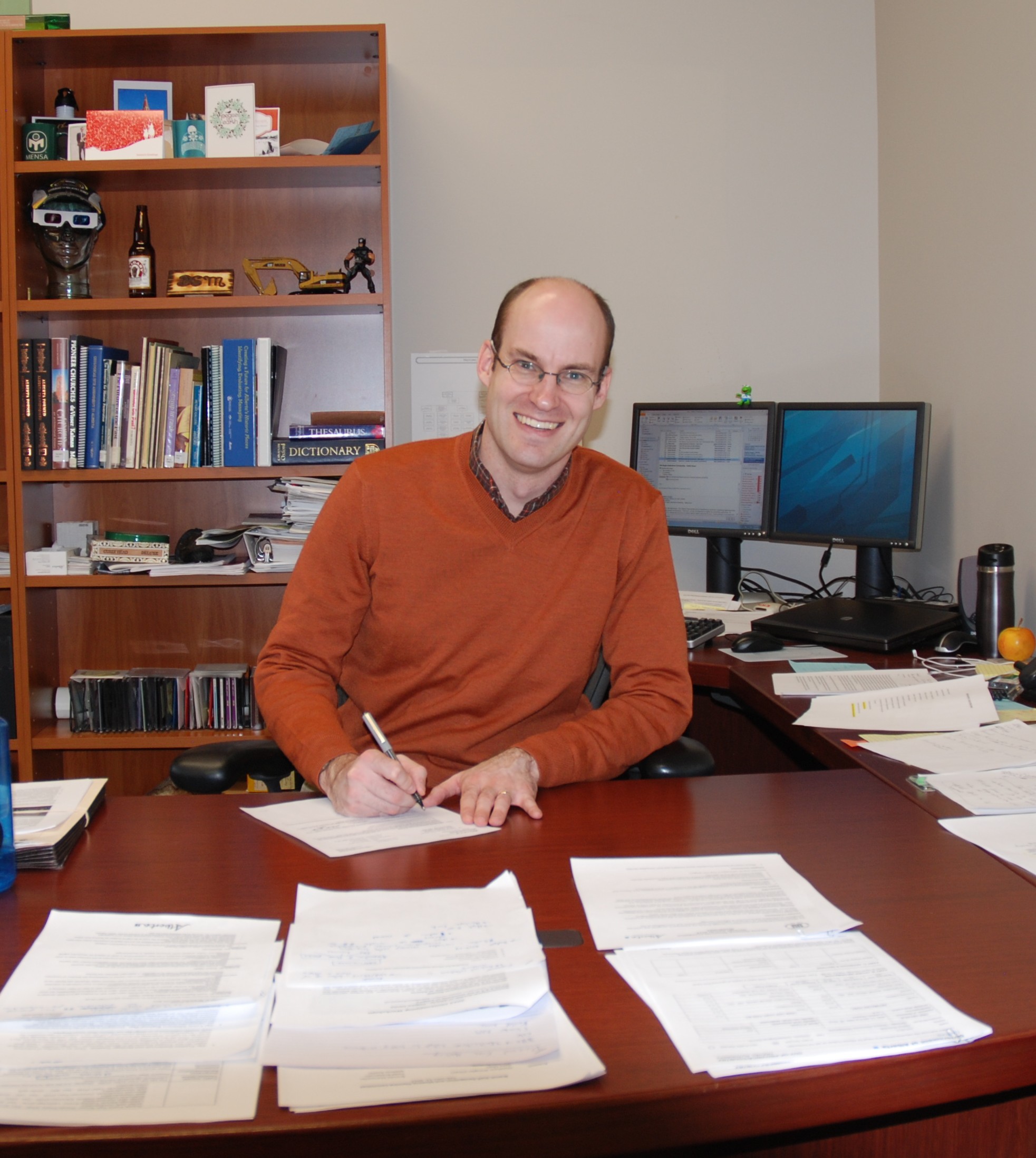
Matthew Wangler, Executive Director the Historic Resources Management Branch
Matthew Wangler, busy at work.

The Historic Resources Management Branch is charged with identifying, documenting, and protecting significant historic, archaeological, and palaeontological resources within Alberta. This is done through regulation of development that could impact such resources, along with education and consultation to help others (municipalities, property owners, community groups) to conserve or interpret their historic resources.

This work is accomplished by three sections that Wangler oversees: Aboriginal Heritage, Archaeological Survey, and Historic Places Stewardship. Wangler reviews the major regulatory decisions of these sections. He is also directly involved in those large initiatives that involve other ministries. One such task has been working to develop the recently announced flood relief funding programs.

In addition, Wangler is Executive Director of the Alberta Historical Resources Foundation. In that role he provides support to activities of the Foundation’s board, including its quarterly meetings, and he helps to ensure that funding decisions are implemented.

While some of his workload is predictable, much of it “comes out of left field,” he says. “It’s very common for an urgent issue to emerge the same day” that action is needed, “or the same hour, or the same minute.”

Often these concern potential risks to significant archaeological or built heritage sites that are not protected by municipal or provincial historic resource designation. The provincial government has the authority to require proponents of development projects potentially affecting such sites to undertake additional steps before their projects may proceed. For example, before being allowed to use land known or strongly suspected to hold evidence of early Aboriginal activity, a developer could be required to conduct an archaeological excavation. “So if an issue comes up that involves the exercise of this authority, I get involved. I have to make sure I understand all the ins and outs of the situation, so that I can brief [the responsible person] and he can make an informed decision.”

For instance, several years ago, City of Calgary staff alerted the Historic Resources Management Branch that a demolition application had been filed for a portion of the Calgary Brewing and Malting Company—an early and major employer that was highly influential in the development of Calgary and the region. The department responded by requiring the owner to produce a Historic Resources Impact Assessment.

Such requirements can buy time to educate property owners about the historical significance of their sites and the potential financial, environmental, and visitor-appeal benefits of conserving them appropriately. It also gives municipal planners time to propose conservation-friendly development alternatives.

A lot of property owners are simply unaware” of the benefits of conservation, Wangler says. “But in the vast majority of cases, you can educate them about the value of heritage, both culturally and potentially economically, and you can bring them on your side.”

In fact, lack of widespread awareness about Alberta’s heritage resources and the value of conservation is among Wangler’s most pressing concerns. Part of the problem is that the value of much of the work of the Historic Resources Branch may not be immediately apparent to the public, although the artifacts and fossils that are recovered, the historic buildings that are saved and reused, and the cultural sites of significance to Aboriginal communities that are preserved contribute to a range of social, economic, and cultural outcomes.

“But the solution is quite simple!” Wangler continues. He’s eager for his staff to engage in greater public outreach—writing blog posts, visiting school classrooms, speaking at public events—to build awareness of Alberta’s diverse heritage resources and the opportunities they offer.

“Have people talk about what they love and why they do what they do!,” he urges. “Every person who works for my branch has a passion for history and heritage, that’s why they ended up working here. You scratch a little bit under the surface, and you find that most people do have some connection to heritage and some native interest in it. It’s really not difficult to find and create allies.”

Written by: Kerri Rubman.

On the Deep Roots of Beaver and Human Relationships in Alberta

This post continues our look at the work of Alberta’s Archaeological Survey. Previously, we explored “10, 000 years of hunting in Alberta”, as shown in the archaeological record and how the horse changed the west. Today we look at that Canadian icon: the Beaver.

There are few animals in the north whose history is so intricately interwoven with people than the beaver. From the early fur trade to modern environmentalism, the beaver has chewed its way into numerous facets of life in Alberta. Paleontology, archaeology, history, and modern politics combine to tell an amazing story of human-beaver relationships in the province.

The earliest beavers lumbered into the province over five million years ago. By two million years ago, the modern beaver (Castor canadensis) was living alongside a colossal cousin that was five to six times larger (Figure 1). The giant beaver (C. ohioensis) weighed up to 160 kilogram and was just under 3 metres long. It went extinct around 10 000 years ago. First Nations’ stories tell of the beaver’s role in creating the world by molding the primordial mud into an island fit for humans. To Alberta’s first people, beavers also furnished important materials for tools, clothing, and food. Archaeology sites across the province have yielded beaver bones where very few other animal remains were found. This indicates that beavers were crucial to human diet, particularly during winter. Beavers were captured with willow bark nets, stone-tipped spears, and sinew snares set along beaver trails and canals.

Figure 1: Beaver scale comparison (by Todd Kristensen).

Three major anatomical traits made the beaver important to various cultures in Alberta through history. Beavers stay warm with large fat deposits and very dense, barbed hair. The former trait explained why beavers were important winter foods while the latter trait fueled the fur trade that shaped our nation. The third important trait is durable teeth that enable beaver’s incessant chewing. When it came time to design wood working tools, prehistoric people enlisted the beaver’s dental assistance. Ancient engravers and chisels were made of beaver teeth lashed to a wooden handle. Beaver tooth engravers were common in the toolbox of early northern people and provide a unique glimpse in to the ingenuity of First Nations.

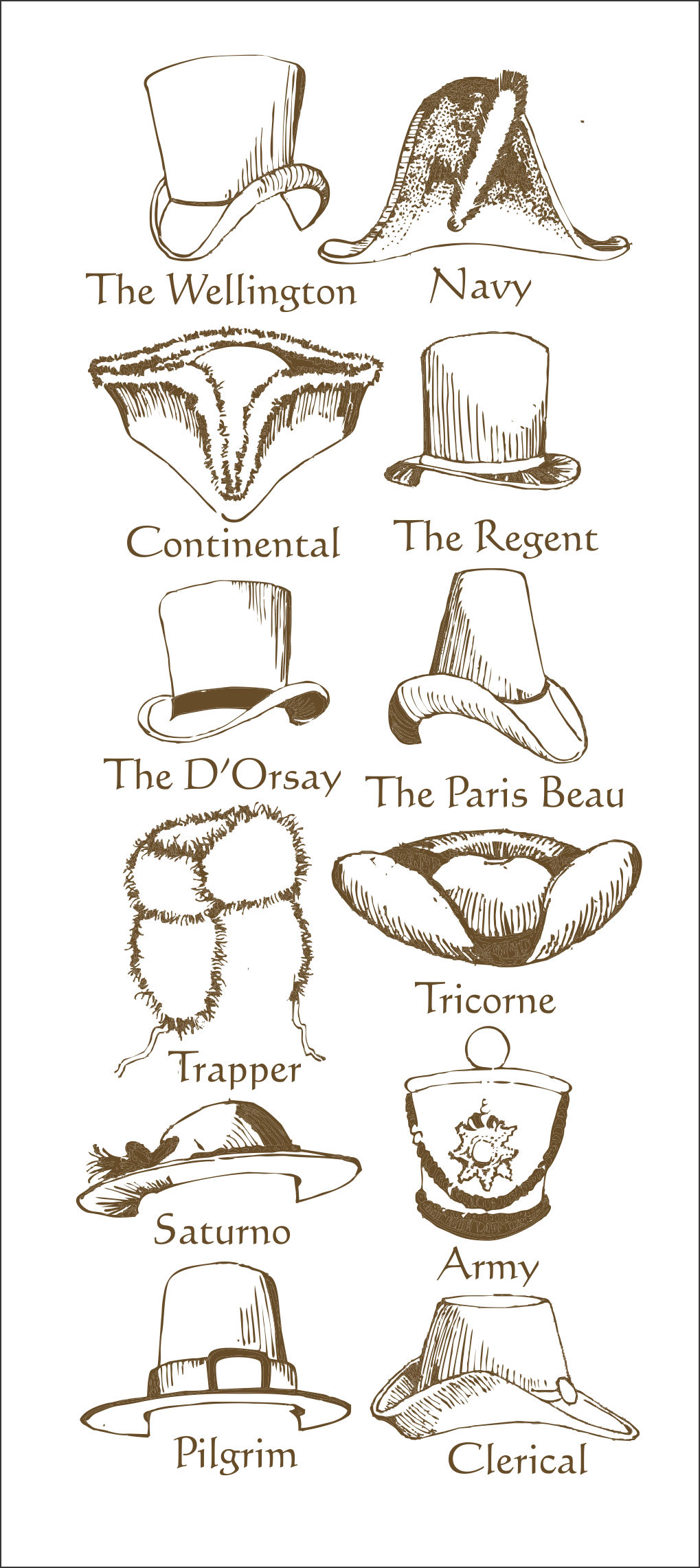
Figure 4: Beaver hat fashions during the fur trade (by Terry Pamplin and Todd Kristensen).

The strong, oily, and barbed under-hairs of beaver were ideal for making superb quality felt hats that were popular from the late 1500s-1800s (Figure 4). Prior to European contact there were likely over 10 million beaver in Canada. These vast numbers were an economic ‘boon’ for Europeans, but the abundance was short-lived. Beaver populations were reduced by as much as 95% in two centuries. As each new fur trade post was established on Alberta’s lakes and rivers, a zone of beaver depletion rapidly radiated outwards until local numbers dwindled and the traders moved on. Fur trade competition decreased in the 1820s and areas of the Canadian northwest were managed more judiciously so that beaver populations recovered and future crashes were prevented. Despite lower populations, hundreds of thousands of beaver pelts and over 10 tons of castoreum (a highly fragrant secretion produced in beaver castor sacs) were shipped out of the Athabasca and Saskatchewan River Districts in the early 1800s.

Biologists like Dr. Glynnis Hood of the University of Alberta, are researching the ecological impact of the fur trade and modern beaver dams. They’ve found that beavers drastically alter local water levels as well as wetland biodiversity, fire regimes, floods, carbon sequestering, and the filtering of local toxins. Dr. Hood’s research explores how knowledge of the beavers’ aquatic engineering can inform land management decisions. The esteemed human-like propensity for industrious labour earned the beaver the honour of our national animal and it may become a tool to mitigate future climatic oscillations (e.g., droughts and floods). Beaver teeth, winter fat, and dense fur represent biological adaptations that early Albertans exploited to suit their needs; dam building may be the latest trait that Albertans utilize in their ever evolving relationship with beavers.

Written by: Todd Kristensen, Northern Archaeologist & Heinz Pyszczyk, Archaeologist.

UPDATE:  Nature Alberta will publish an expanded version of this article in their quarterly magazine. In fact, “On the Deep Roots of Beaver and Human Relationships in Alberta” is the feature article in the Winter 2014 edition of Nature Alberta Magazine. Congratulations Todd and Heiz.  –Michael Thome, editor.

Here are a few more images that illustrate ideas from the article:

This slideshow requires JavaScript.

Municipal Heritage Forum 2014—Save the Date!

Every year, the Historic Resources Management Branch organises a conference for Albertans involved in identifying, protecting or conserving historic places at the municipal level. We’re please to announce that the 2014 Municipal Heritage Forum will be held on October 16th and 17th.

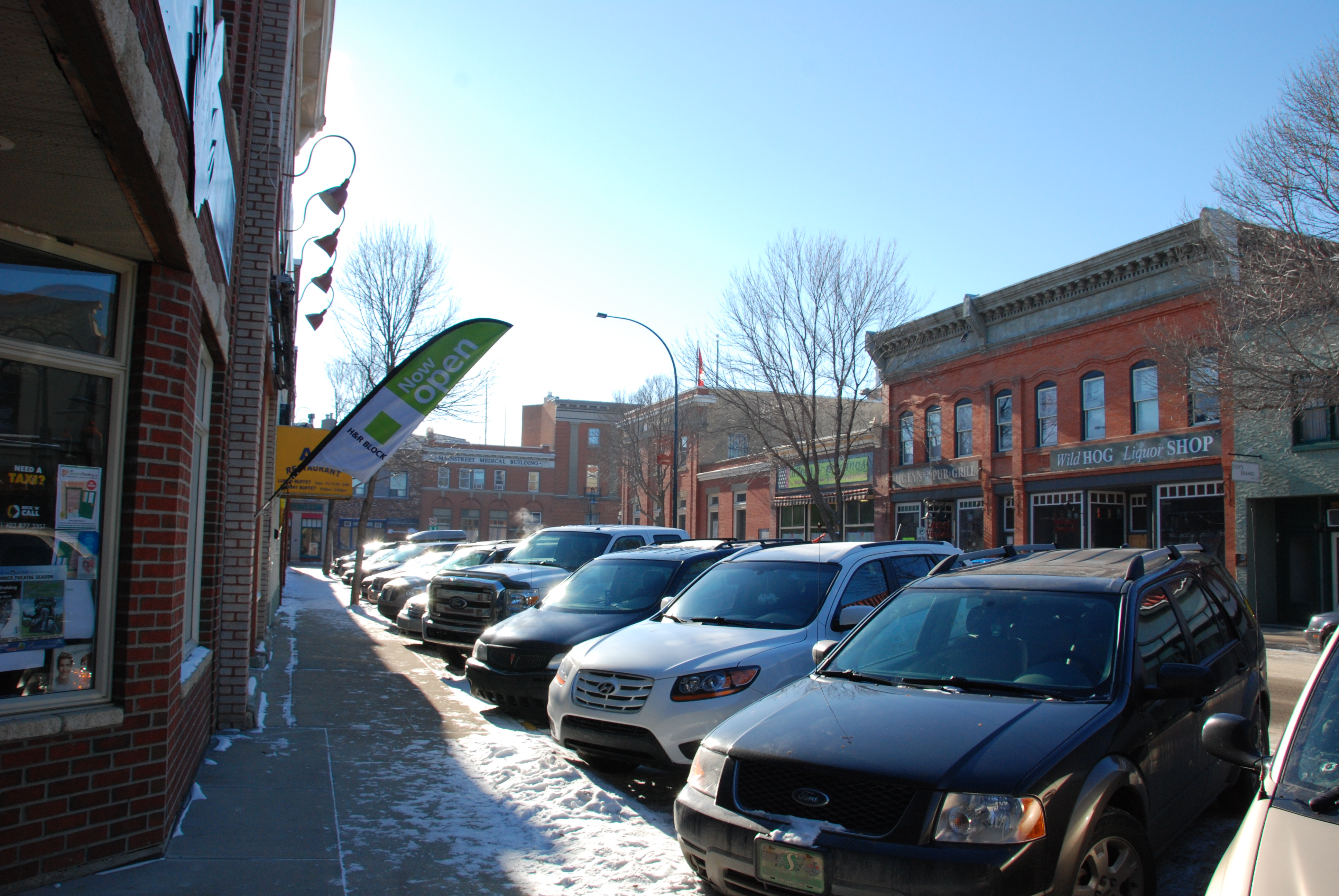
Photographed on February 7, 2014
Where is this? (Photographed on February 7, 2014.)

The Municipal Heritage Forum is open to both municipal staff, elected officials and volunteers. It’s a great opportunity to see what your peers in other municipalities are working on and learn about the cutting edge of heritage conservation. If you are working with your municipality in some way to conserve historic places, please save those dates. (Check out some of our posts about past forums if you’d like to learn what the Municipal Heritage Forum is all about.)

Photographed on February 7, 2014
here are we? (Photographed on February 7, 2014)

We are excited to host this year’s forum in a municipality we haven’t held it in yet. Many of you haven’t been here (yet) and will be delighted by their conservation ethic. I’ve posted some pictures of their historic downtown.

Can you guess where the forum will be this year? Post your guess in the comment section, on our Facebook page or tweet us.

UPDATE:  I guess the cat’s out of the bag: we plan to hold the 2014 Municipal Heritage Forum in the City of Lacombe.

Written by: Michael Thome, Municipal Heritage Services Officer.

New Uses for Old Places – The Warehouse Conversion

This is the first installment of a new series of blog posts on RETROactive entitled New Uses for Old Places. We will be highlighting examples from around Alberta of historic resources that have found interesting, new uses for spaces that were originally designed for different purposes. To start us off we are going to talk about the ubiquitous warehouse conversion.

This slideshow requires JavaScript.

One of the best ways to ensure a long and prosperous future for a historic place is to make sure that it is in use. Making certain that people are frequenting a site ensures that a historic resource stays relevant and in the forefront of public consciousness. This can be a challenge given that the purposes for which many of our historic places were originally designed for are now defunct. The conversion of a building to allow for a new use is known as adaptive reuse and it is a process that can require some creative thinking.

The values-based approach to heritage conservation recognizes the importance of activating our historic places and recognizes that alterations may be required to ensure the long-term sustainability of a site. The Standards and Guidelines for the Conservation of Historic Places in Canada consider adaptive reuse to be a rehabilitation conservation treatment. Rehabilitation is understood to be “the sensitive adaptation of an historic place or individual component for a continuing or compatible contemporary use, while protecting its heritage value” (Standards & Guidelines, page 16).

A popular form of adaptive reuse/rehabilitation is that of the warehouse conversion. More common in larger cities that once were home to warehousing and manufacturing sectors, warehouse districts are now often surrounded by non-industrial, higher density development and attract investors who see the potential in the character that the former industrial spaces have to offer. Warehouses make good candidates for adaptive reuse because they have large, relatively open floor plates, generous ceiling heights and numerous large windows. These features allow for the flexibility to subdivide the interior space for a variety of purposes without compromising the unique elements that make warehouses so charming (think freight elevators, bank vaults, exposed beams, etc.).

Edmonton and Calgary were home to the majority of manufacturing and shipping in Alberta. As such the majority of extant warehouse structures are located in these two cities, though there are others scattered in other communities across the province. A number of these structures have received historical designation at the municipal and/or provincial level and have been rehabilitated to accommodate a variety of new uses.

Written by: Rebecca Goodenough, Municipal Heritage Services Officer.
Click on the following links to find the listing on the Alberta Register of Historic Places for warehouse buildings featured in the slideshow:

Camrose Feed Mill (Designated a Provincial Historic Resource in 1985)

Canadian Consolidated Rubber Company (Designated a Municipal Historic Resource in 2001)

Customs House (MHR) / Customs Examining Warehouse (PHR) (Designated a Provincial Historic Resource in 1979 and a Municipal Historic Resource in 2009)

H.V. Shaw Building (Designated a Municipal Historic Resource in 2001)

A. MacDonald Building (Designated a Municipal Historic Resource in 2000 and a Provincial Historic Resource in 2003)

Metals Building (Designated a Municipal Historic Resource in 2002)

Phillips Building (Designated a Municipal Historic Resource in 2001)

Simmons Factory Warehouse (Designated a Municipal Historic Resource in 2009)

Heritage by Numbers

header_ARHP

Research and evaluation are important tools for managing Alberta’s historic resources. They help us to set our strategic plans and policies for the future, understand how our grants and programs are working and measure the impact we have made – both on historic places and the people who enjoy them.

So here are a few fun facts that you might not have known about heritage in Alberta:

  • The oldest known building in Alberta still on its original foundation is the Clerk’s Quarters at Fort Victoria near Pakan, which dates from 1865.
  • The first building recognized as a historic resource was the Bitumount Site at Fort McMurray on 4th December 1974.

    A recent photograph of the McLaughlin-Nelson Home.
    The McLaughlin-Nelson Home is the most recent addition to the Alberta Register of Historic Places.
  • Since 2000 the number of places recognized with a designation has increased: 41 percent of all Provincial Historic Resources designations and 84 percent of all Municipal Historic Resources designations occurred during this period. 2001 and 2009 were important years for Provincial Historic Resource designation: 17 buildings were listed both years. For Municipal Historic Resources 2009 was an important year: 45 buildings were listed.
  • With 58 Provincial Historic Resources in Calgary and 48 Provincial Historic Resources in Edmonton these two cities have the most in the province. This is followed by Lethbridge (12), Fort MacLeod (9), and Medicine Hat (8).
  • Edmonton has the most Municipal Historic Resources with 91 in total, where Calgary has 35. This is followed by Red Deer (11), Banff (8) and Wainwright (8).
  • Approximately 20 percent of all Provincial Historic Resource and Municipal Historic Resources in Alberta are used as residences. 67 percent of these buildings are single family dwellings. 66 percent of all designated single family dwellings are located in Edmonton, where the property value of residential buildings designated as Municipal Historic Resources ranges from about $215 000 to $1.3 million.
  • Approximately 19 percent of all buildings designated as Provincial Historic Resources or Municipal Historic Resources are used for commercial purposes. 35 percent of these are used as offices and 32 percent are used for retail or wholesale. Historic buildings are also used for other purposes such as: agriculture, community use, education, government, health care, industry, leisure, spirituality, or transportation.
  • As of December 2012, there are 606 buildings which have been identified as places of interest by municipalities across Alberta. Each requires further research and evaluation to determine if it should be designated as a Municipal Historic Resource.
  • With a collection of over 750 historic resources, it is important that funding is available to help their owners look after these precious places. In 2012-2013, grants of $4.9 million were given by the Ministry through the Alberta Historical Resource Foundation to conserve the province’s heritage landmarks.

Get to know Alberta’s historic resource a bit better by visiting a Provincial Historic Site, Interpretative Centre of Museum or having a walk around your city or town. Historic resources are often easy to spot as many have been recognized with a plaque or interpretation panel. You can also search online for buildings recognized in your community by visiting the Alberta Register of Historic Places. If you think there is a building or site in your community that should be recognized but isn’t, talk to your municipality about how it can be protected for the future.

Written by: Sarah Hill.

Major Funding Announced for Flood-Impacted Historic Places

This morning in High River the Honourable Heather Klimchuk, Minister of Culture, announced significant new funding to assist owners of historic properties affected by 2013’s catastrophic floods.

Minister of Culture, Heather Klimchuk, announces funding for flood-impacted historic resources.

The announcement took place at the Museum of the Highwood, a Provincial Historic Resource, which suffered damages to its historic fabric as well to the artifacts and archival collections stored within.

A total of $12 million in funding has been approved to assist in efforts to conserve, and protect historic resources in communities affected by the flooding of 2013. Funding will be allocated to three primary areas:

Historic Buildings

$4.5 million will be invested to provide needed support on conservation projects, for floodrelated work not covered by Disaster Recovery Program or insurance. This support is for designated Provincial and Municipal Historic Resources affected by last year’s flooding. In addition to the Town of High River, communities such as Calgary, Medicine Hat, Canmore, as well as several others, were hit hard, with historic properties adjacent to major waterways significantly impacted.

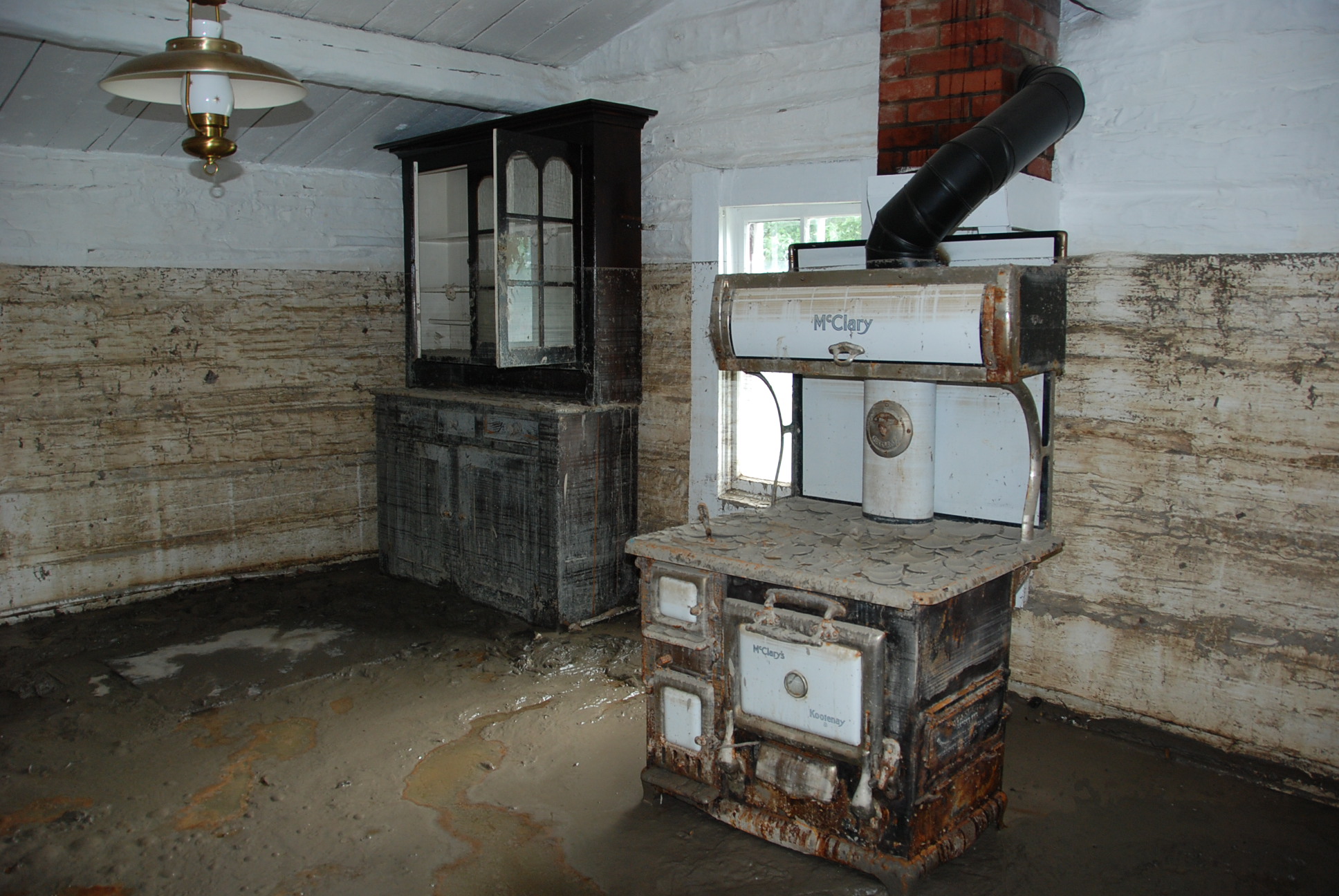
Flood impacts to the Maccoy House in High River.
Flood impacts to the Maccoy House, a Municipal Historic Resource, in High River.

This new support program will aid in the critical work needed to ensure that flood-impacted historic places are appropriately rehabilitated according to the Standards and Guidelines for the Conservation of Historic Places in Canada.

For more information on this funding program, please contact Carina Naranjilla, Grants Program Coordinator, at 780-431-2305 (toll-free by first dialing 310-000) or via email at Carina.Naranjilla@gov.ab.ca

Museum and Archives Conservation Assistance

 $6 million will go to support the conservation of artifacts and archival materials at museums and archives affected by flooding. Funding will be administered through the Alberta Museums Association and the Archives Society of Alberta.

For more details on the funding available to flood-impacted archives, please visit the Archives Society of Alberta webpage or contact Rene Georgopalis, Executive Director and Archives Advisor, at 780-424-2697 or reneg@archivesalberta.org. More details on the funding available to flood-impacted museums can be found on the Alberta Museums Association webpage or by contacting Alexandra Hatcher, Executive Director and CEO, at 780-424-2626 (ext. 224) or ahatcher@museums.ab.ca.  

Archaeological and Palaeontological

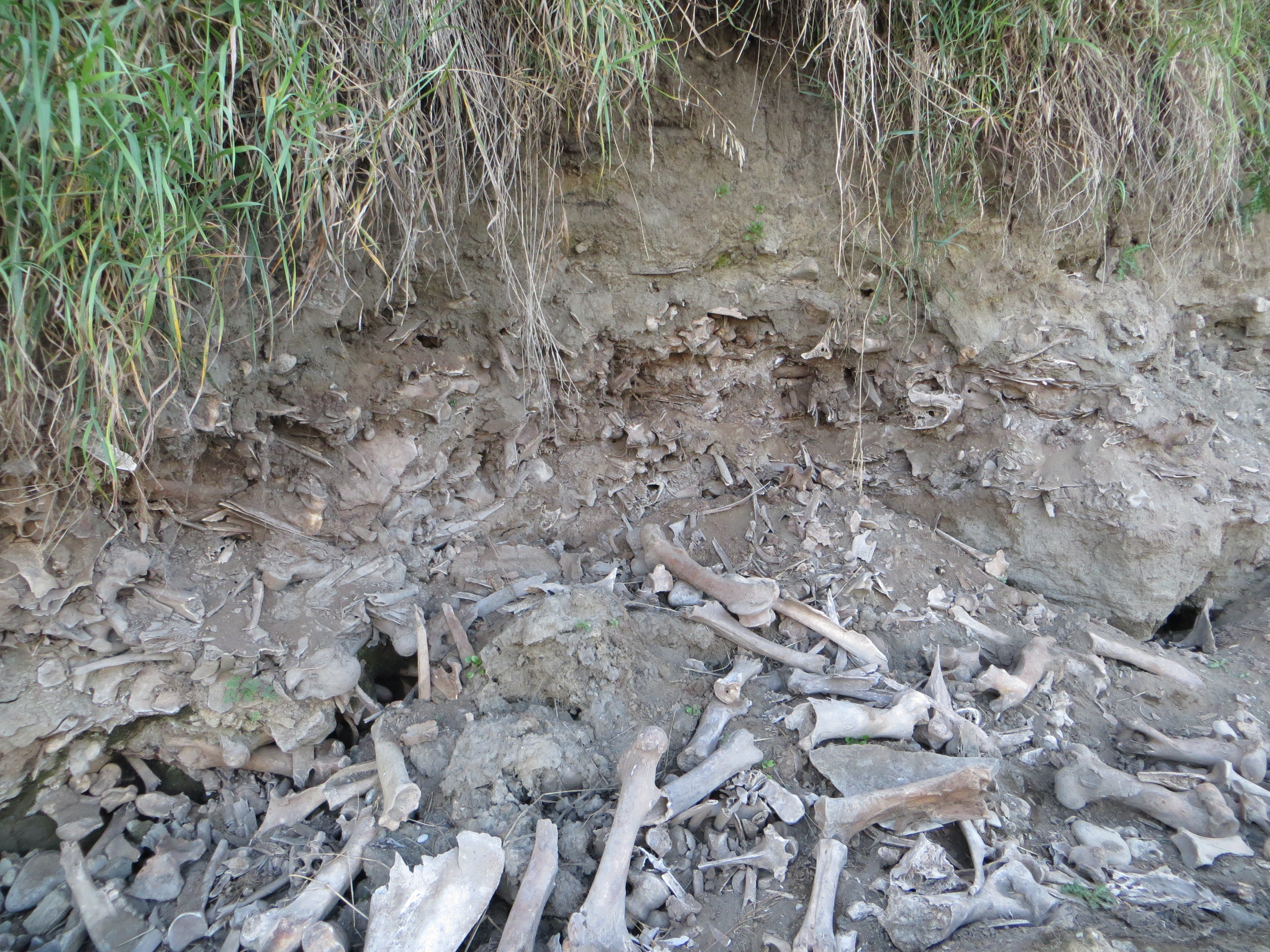
Flood impacts to a highly significant archeological site in southern Alberta.

A number of significant palaeontological sites were exposed as a result of the floods. $1.5 million will support existing Alberta Culture programs to collect fossils and artifacts as well as establish protective measures for archaeological and palaeontological sites affected by flooding.

This funding will ensure that these heritage treasures and the remarkable history they represent will be preserved and passed on to future generations.