Community Heritage Interest Expressed in Mountain View County

Since the Fall, I’ve been talking with some folks from Mountain View County about Alberta’s historic places programs. The Municipal Heritage Partnership Program has worked with many of Mountain View’s neighbours – Red Deer County, the M.D. of Bighorn, and Clearwater County –  and now they too are  exploring opportunities to conserve their historic places. They’re also looking for innovative ways to connect the unique places their communities have to offer with cultural tourism.

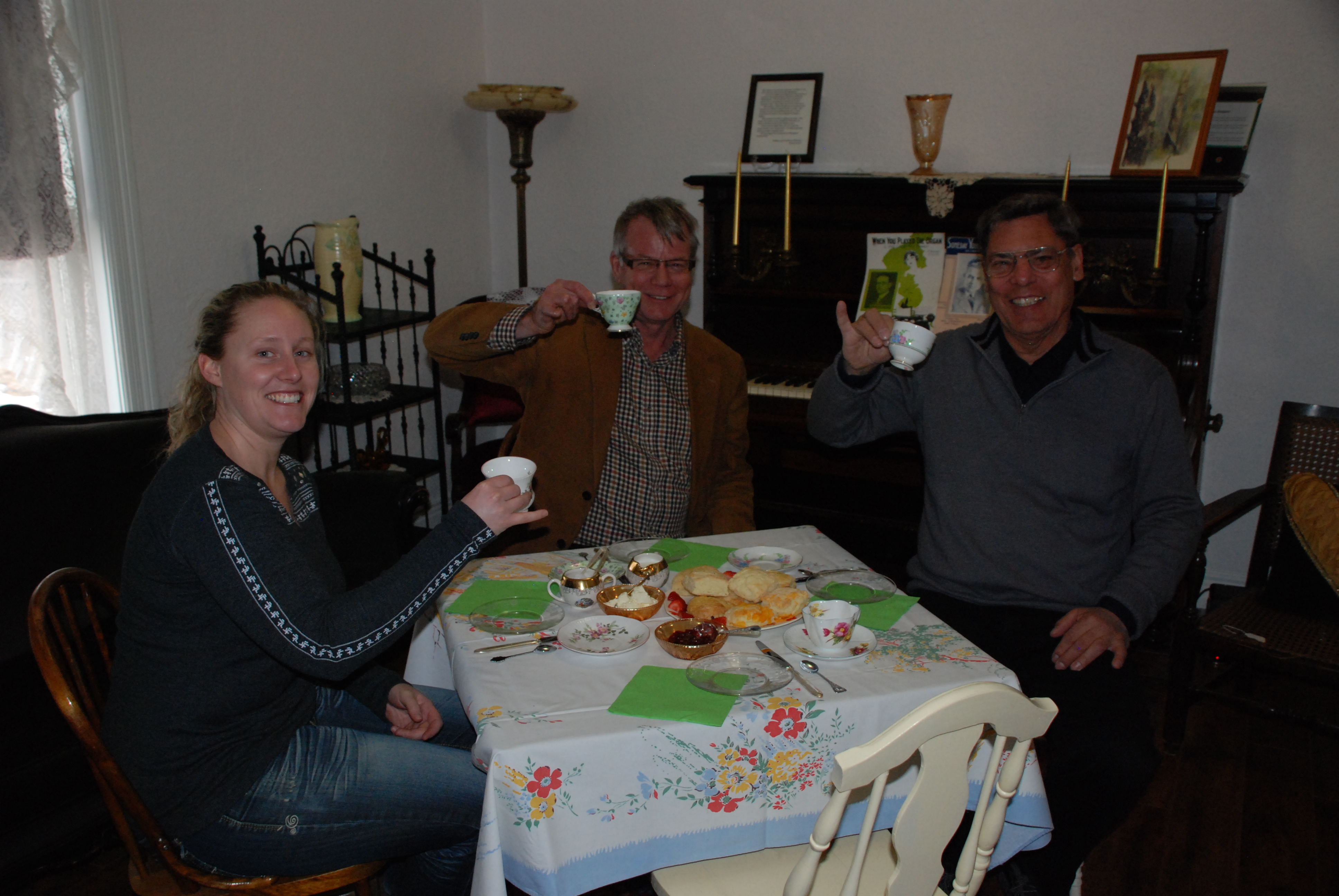
Greg Campkin, a member of the County’s Economic Development Committee, invited me (Matthew Francis) down to Mountain View to speak at a great event on Tuesday evening, March 19th. County Council chambers served as the venue, and were filled with a capacity crowd.

At the meeting, I shared a little bit about the basics of heritage conservation, our Alberta approach, and also described some of the ways community can both showcase their historic places, and become more “visitor friendly.” I got to meet some great people from Water Valley, Sundre, and others from around the County.  I’m looking forward to keeping the conversation going and seeing how we can work together to create a bright future for Mountain View’s historic places.

Things are happening in Mountain View County!

Written by: Matthew Francis, Manager of Municipal Heritage Services

Front Cover of MHPP Manual

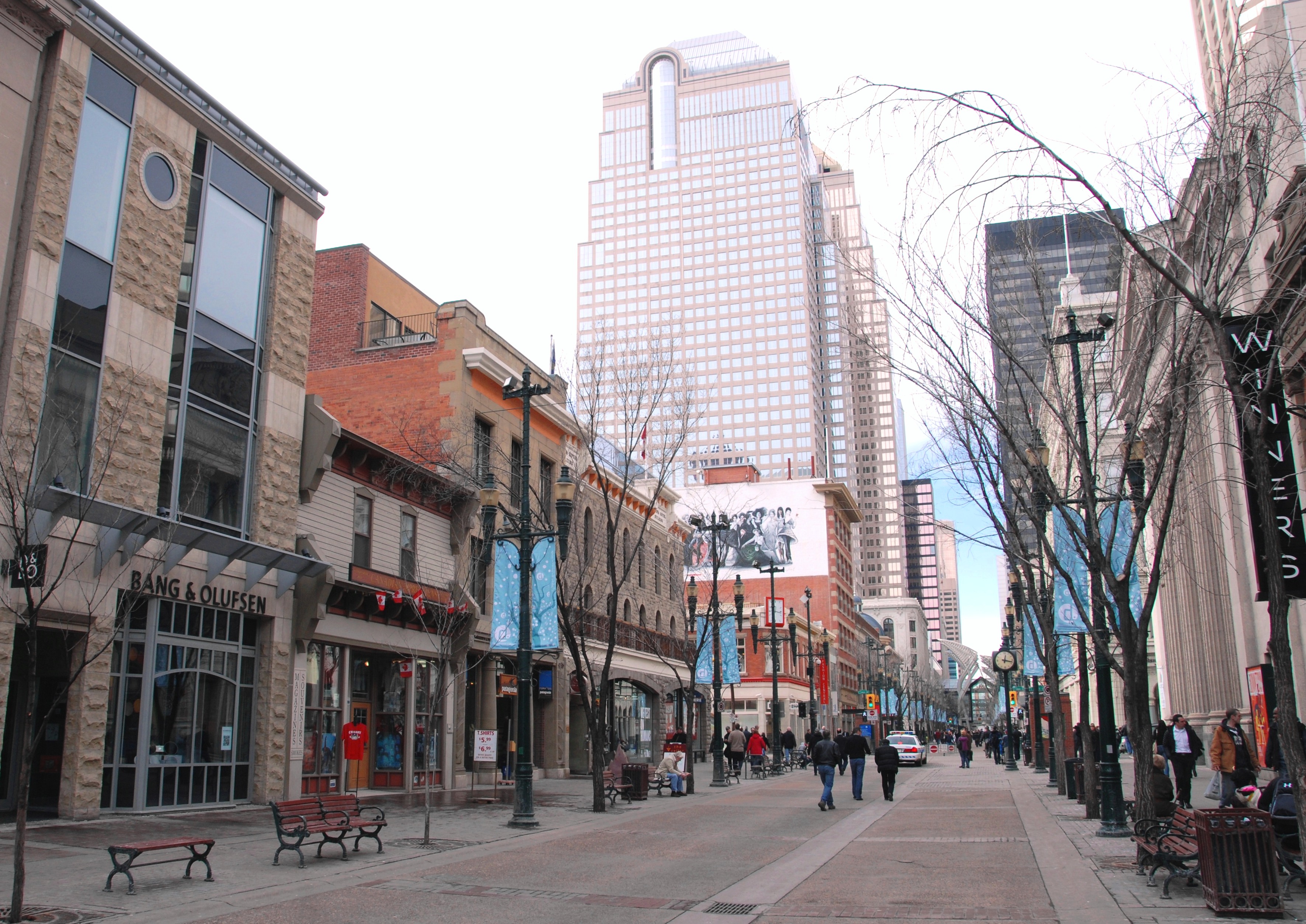
Stephen Avenue – One of Alberta’s Unique Cultural Landscapes

Stephen Avenue - where the historic meets modern.
Stephen Avenue – where the historic meets modern.

Back at our Place Matters! Municipal Heritage Forum in November 2012, we heard a dynamic presentation from City of Calgary Senior Heritage Planner, Darryl Cariou, about Stephen Avenue. He described – with his usual wit – the history of the Avenue from its early days through the various “pedestrian mall” concepts popular from the 1960s through the 90s. One of the most compelling aspects of the presentation was the juxtaposition of images and photographs of the Avenue over the decades.

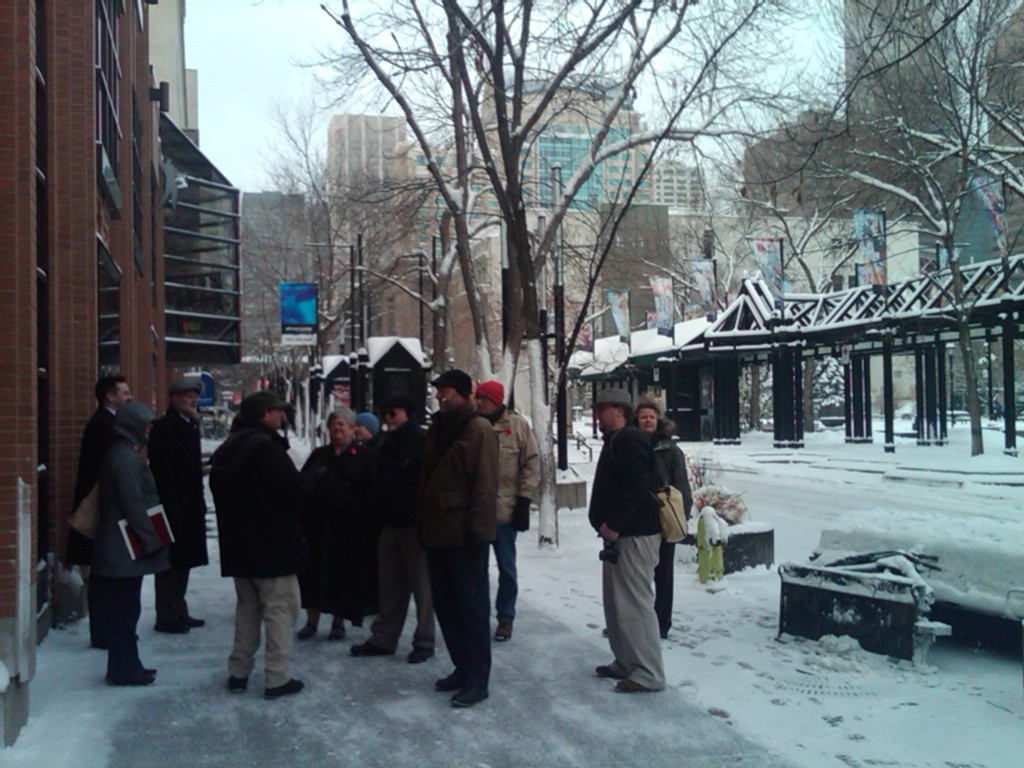
Stephen Avenue Walking Tour (Municipal Heritage Forum 2012)

Here is a link to Darryl’s image-rich presentation of Stephen Avenue.

Numerous Provincial and Municipal Historic Resources line Stephen Avenue. What some of you may not know is that this historic district is actually a National Historic Site of Canada, commemorated as such by the Historic Sites and Monuments Board of Canada in 2001. The Parks Canada website describes the importance of Stephen Avenue as:

Calgary’s Stephen Avenue provides a direct link to the unique circumstances that shaped the character of urban development on the Canadian Prairies between the 1880s and 1930.

The typical prairie city was a distinct entity from the beginning: built according to a gridiron plan oriented to the convenience of the railway and its station, with a spatial organization that placed retail and financial businesses close to the station, industry on the outskirts of the core, and residential areas in outlying suburbs that were serviced by streetcar systems. The combination of rapid growth, gridiron plan and distinct commercial, industrial and residential zones distinguished western cities from their older eastern counterparts.

During Calgary’s “sandstone era,” entrepreneurs converged on Stephen Avenue, building rows of commercial blocks in brick and stone that reflected the dramatic growth in the retail sector of the Canadian economy at that time. This street became the hub of Calgary’s retail district, strategically situated near the station and rail yards, and at the convergence point for streetcar lines leading to the city’s outskirts.

The remarkable thing about Stephen Avenue is that it continues to perform its original function as Calgary’s main street, despite the dramatic changes that have transformed retailing and urban cores across the country. Today, the rows of two to six storey commercial buildings that line both sides of the street continue to house a broad range of retail services, while their designs reflect the architectural revival styles of a bygone era, in sharp contrast to the office towers that now encircle the area.

Saved from redevelopment through the efforts of far-sighted Calgarians in the 1970s, the buildings along Stephen Avenue serve as reminders of the central role that retail streets have played, and continue to play, in sustaining the vitality of Canada’s cities.

Whether you stroll Stephen Avenue this summer as a tourist, rush along the street during your lunch break or dine in one of the many restaurants along the Avenue, perhaps the next time you experience Stephen Avenue you will take a moment to breath in the history and heritage of this significant cultural landscape!

Written by: Matthew Francis, Manager of Municipal Heritage Services

Where in the world is …

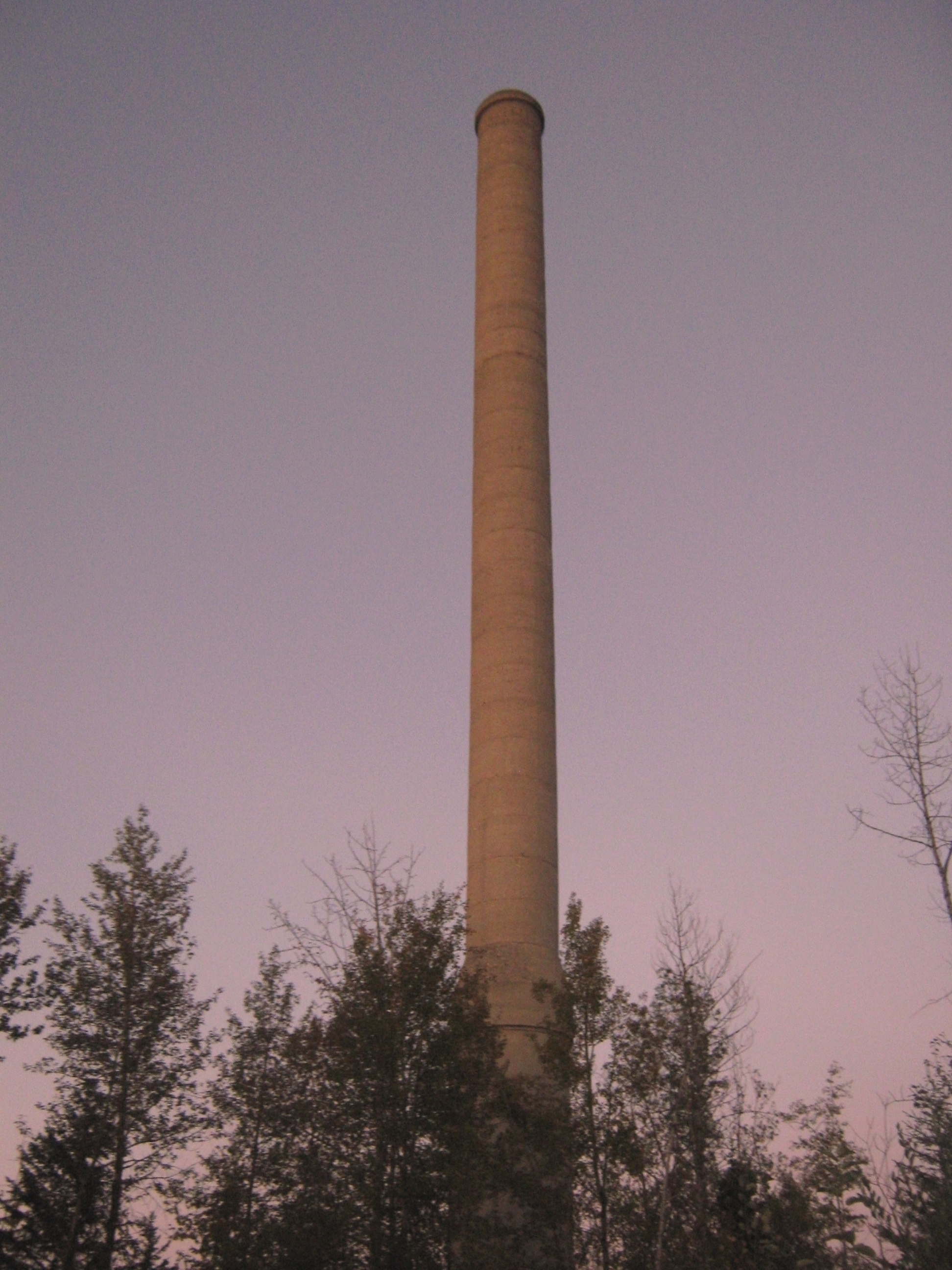
Marlboro Plant, Marlboro (Evaluated as part of the the Yellowhead County Municipal Heritage inventory project).
Marlboro Plant, Marlboro (evaluated as part of the the Yellowhead County Municipal Heritage inventory project).

Marlboro? Wildwood?

Earlier this week I travelled to both Marlboro and Wildwood to attend municipal heritage inventory open houses. You might be scratching your head in confusion asking, “Where in Alberta are those communities located?” Both are located west of Edmonton along the Yellowhead Highway, in Yellowhead County. Marlboro is 26 kilometres west of Edson and Wildwood is approximately an hour’s drive west of Edmonton. Still not feeling overly familiar with Yellowhead County? A previous RETROactive blog post described the County and aspects of its history:

West of Edmonton, Yellowhead County is located along Yellowhead Highway 16. It encompasses 7,012,000 acres stretching from the Pembina River in the east to the Jasper National Park gates in the west. Travellers that frequent this section of the Yellowhead Highway are likely familiar with the Towns of Edson and Hinton and, of course, the iconic Rocky Mountains. What might be less familiar is that alongside these Highway 16 destinations and nestled off into the north and south of this transportation corridor are reminders of a long and varied history. Trapping, logging, farming, coal mining and more recently oil, gas and tourism have all impacted the development of what is now Yellowhead County. Various structures, cultural landscapes and buildings located in the hamlets of Evansburg, Wildwood, Robb, Cadomin and Brule (amongst others) retain glimpses of this diverse history. Miners cabins, ranches, hotels, industrial remains, barns, schools, churches, a pool hall and a water tower exemplify the range of potential historic places.

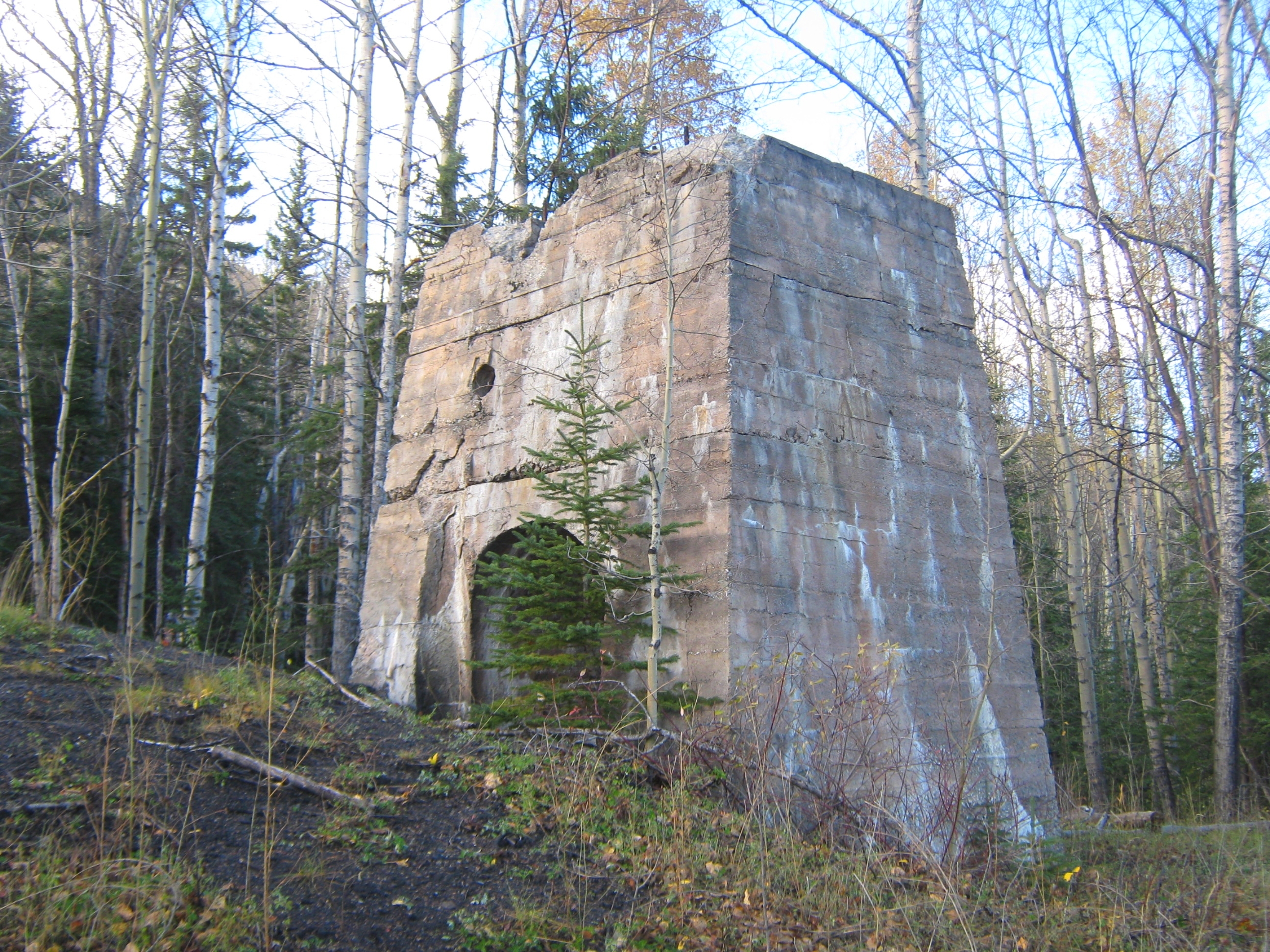
Brule Mine Landscape, Brule (Evaluated as part of the the Yellowhead County Municipal Heritage inventory project).
Brule Mine Landscape, Brule (evaluated as part of the the Yellowhead County Municipal Heritage inventory project).

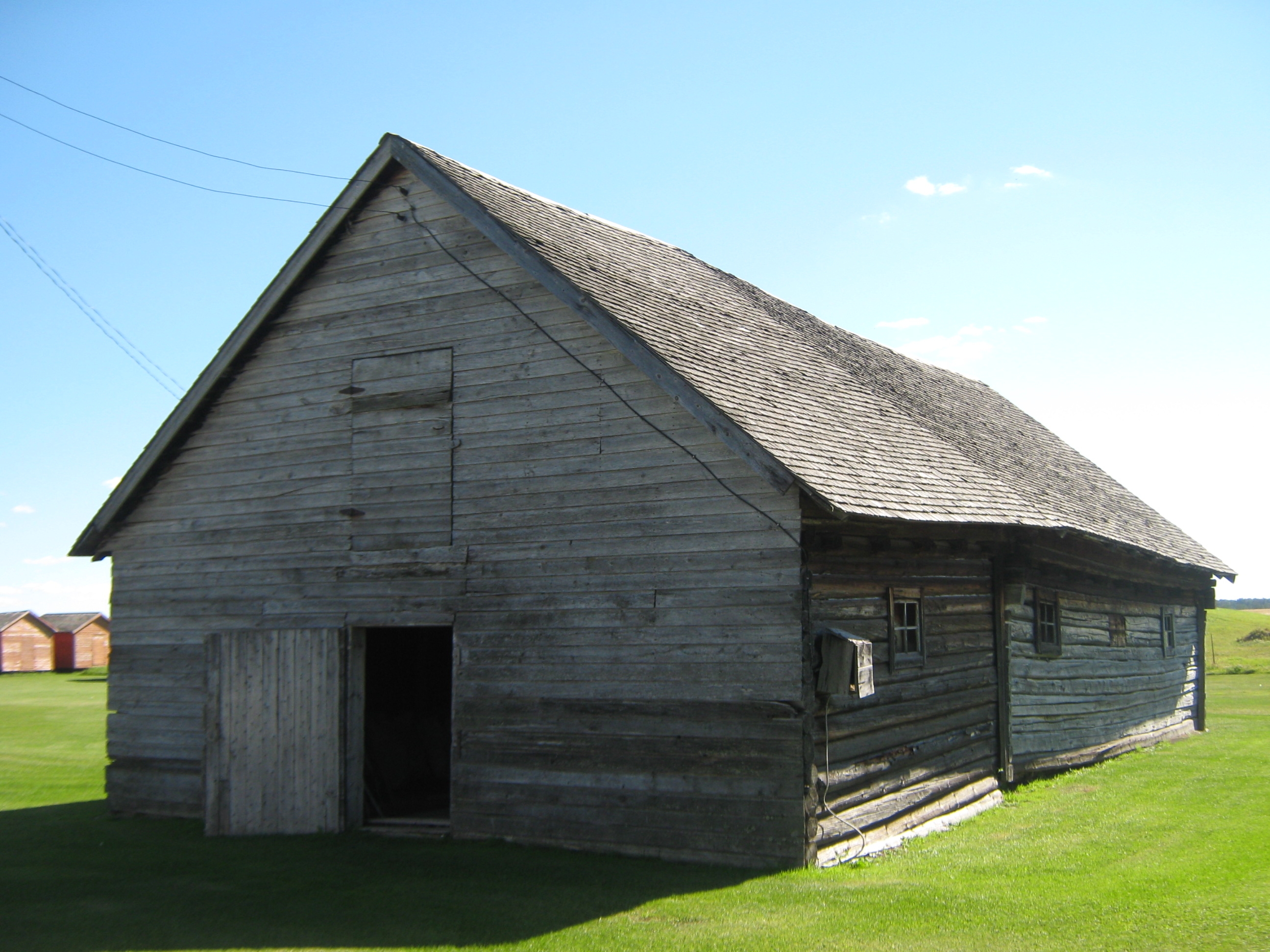
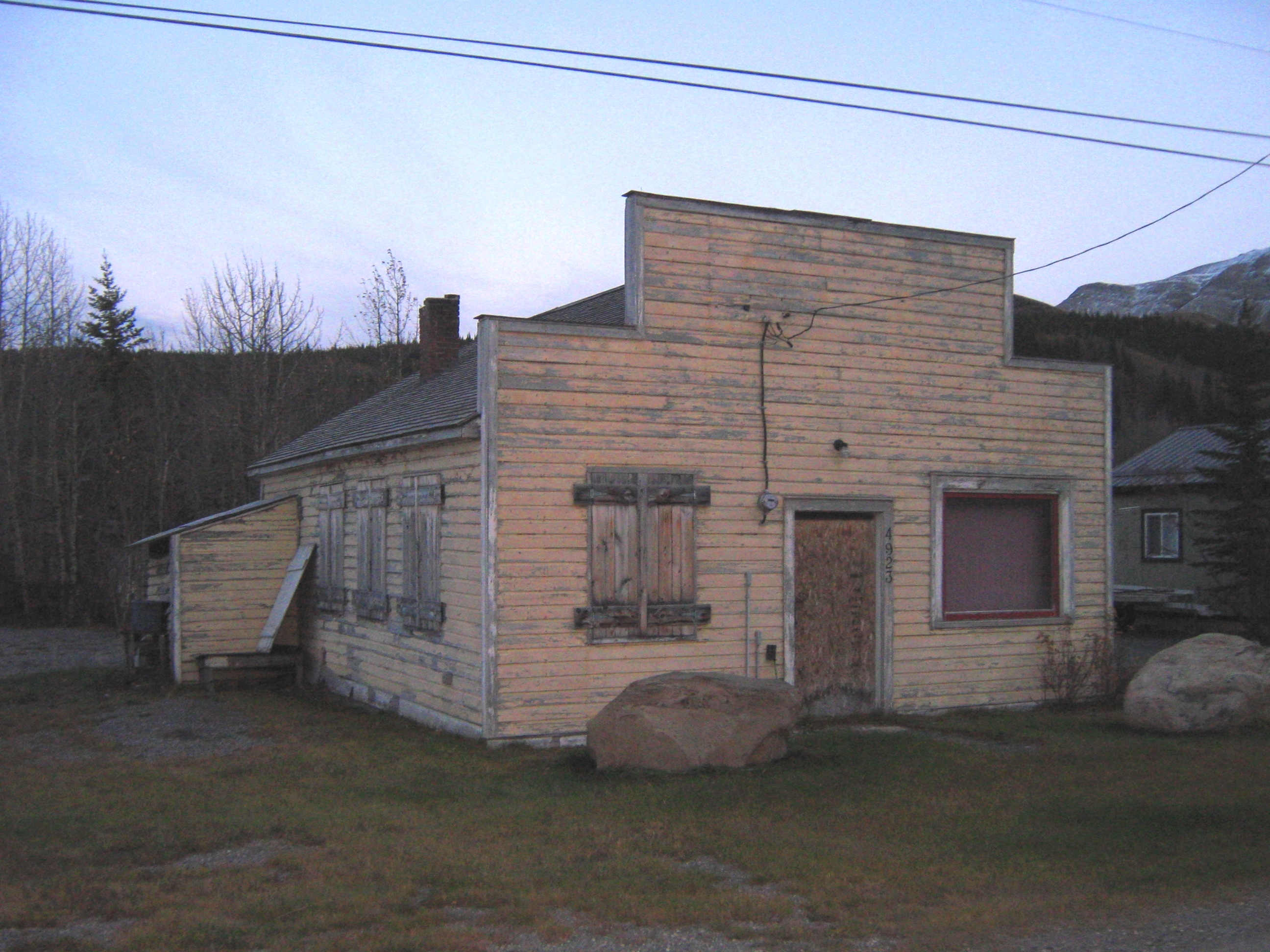
The Marlboro and Wildwood open houses were opportunities for community residents to learn about the County’s inventory project. Twenty three different sites were featured (some of the sites are shown in this blog post). Their architectural, social, cultural, historical and/or landmark value was discussed. Attendees responded with enthusiasm and were full of questions about possible Municipal Historic Resource designation, the implications of designation and opportunities for conservation funding assistance. I responded to many of these questions by discussing “designation myths”. (Hmmm … perhaps a great topic for a future blog post?)

Over the coming months, this project will be concluded. To learn more about Yellowhead County’s heritage program, click here.

Written by: Brenda Manweiler, Municipal Heritage Services Officer

Myschuk Barn, near Wildwood (Evaluated as part of the the Yellowhead County Municipal Heritage inventory project).
Myschuk Barn, near Wildwood (evaluated as part of the the Yellowhead County Municipal Heritage inventory project).
Cadomin Photo Studio, Cadomin (Evaluated as part of the the Yellowhead County Municipal Heritage inventory project).
Cadomin Photo Studio, Cadomin (evaluated as part of the the Yellowhead County Municipal Heritage inventory project).
Shinning Bank Farm (Evaluated as part of the the Yellowhead County Municipal Heritage inventory project).
Shinning Bank Farm (evaluated as part of the the Yellowhead County Municipal Heritage inventory project).

We’re Cracked!

The Challenge of Fixing Foundation Flaws 

Foundation Problems (minor)Every building has a foundation, whether it’s above ground or below ground, concrete or wood.  A foundation is the first building element constructed and therefore it is very important to get it right.  Any errors or flaws will manifest, either relatively quickly for a major mistake or over time for a subtle error.

In Alberta, most heritage building foundations are poured-in-place concrete.  Some foundations are comprised of concrete blocks while others are comprised of a mixture of masonry units (i.e. fieldstones, cut stones and brick).  Now and again flaws such as cracks and spalling (the breaking or splitting of surface layers) manifest themselves.  It is not recommended to ignore these deficiencies as, depending on their severity, they can be repaired fairly easily.  If left unrepaired, the severity will increase.

Some foundation flaws/cracks are inevitable and often show up early once the building is finished and the full weight of the structure is at rest.  Others appear once the structure above and the ground beneath have fully settled.  Depending on the ground composition and the depth of the foundation (foundation depths vary, such as a full basement vs. a crawlspace), these settlement cracks will vary in size.  And finally, some cracks will suggest that something is wrong with the foundation but if addressed in a timely manner may still allow a reasonable/affordable correction to be implemented.

Foundations can also be damaged by water and seasonal frost heaving.  To minimise this damage, ensure that the grade slopes away from the building with sufficient drainage to move the water away.  Frost protection can be achieved by embedding the ground with high-density foam insulation to prevent the frost line from going under the foundation if it is less than four or six feet (1.2 metres or 1.8 metres) or by underpinning the foundation to a depth greater than the frost level in the area (this is usually at least 1.8 metres in Canada, which is one of the reasons why we tend to have basements).  If one has to dig that far down to protect the foundation against frost then one might as well as make it a usable space.

The Standards and Guidelines for the Conservation of Historic Places in Canada  contains a number of sections related to the conservation and repair of foundations: check out the general recommendations of “Structural Systems” (4.3.8) under “Guidelines for Buildings” and for material specific information read about “Masonry” (4.5.3) and “Concrete” (4.5.4) under “Guidelines for Materials.”  Depending on the type of structure and level of intervention, other sections of the Standards and Guidelines might also need to be reviewed.

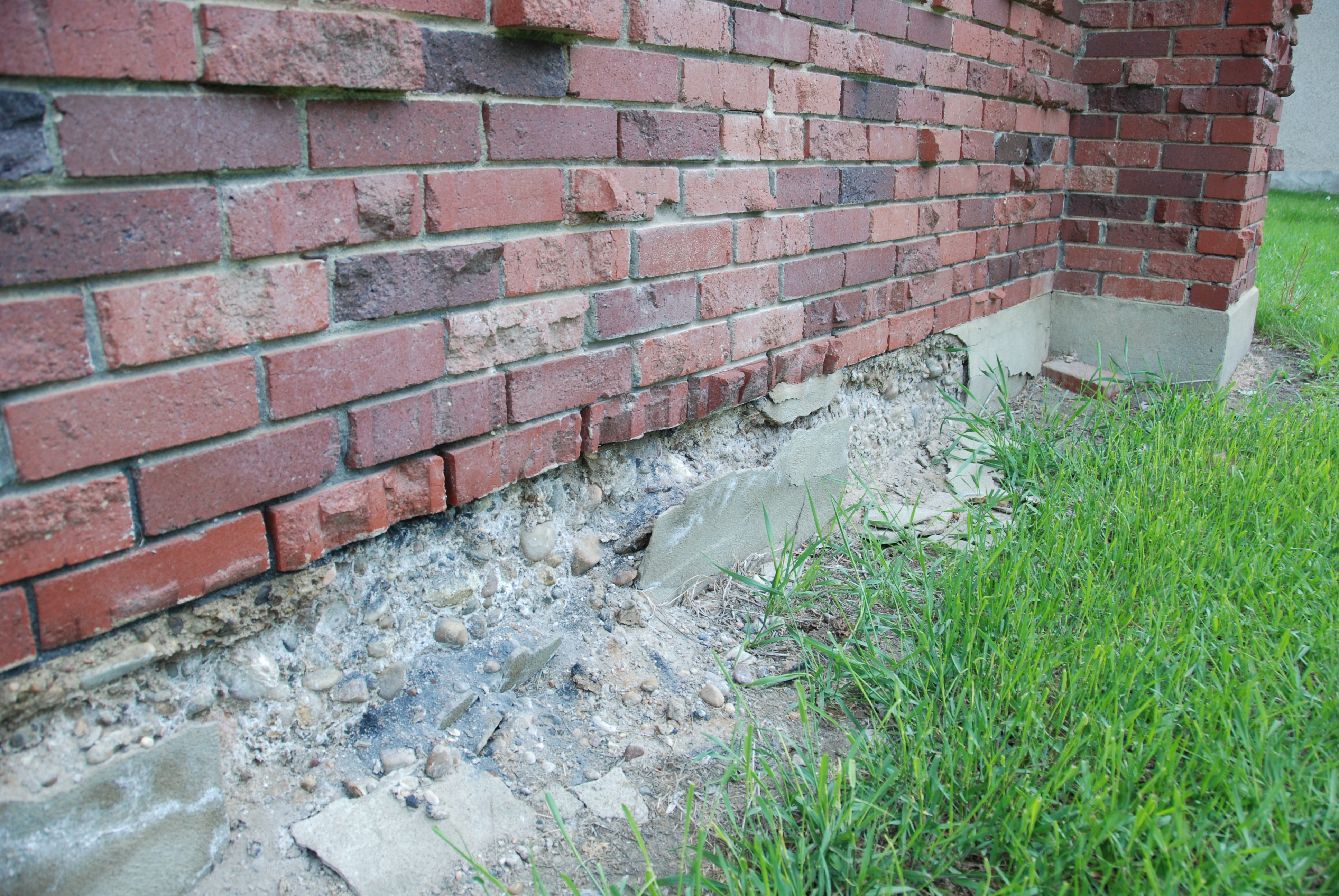
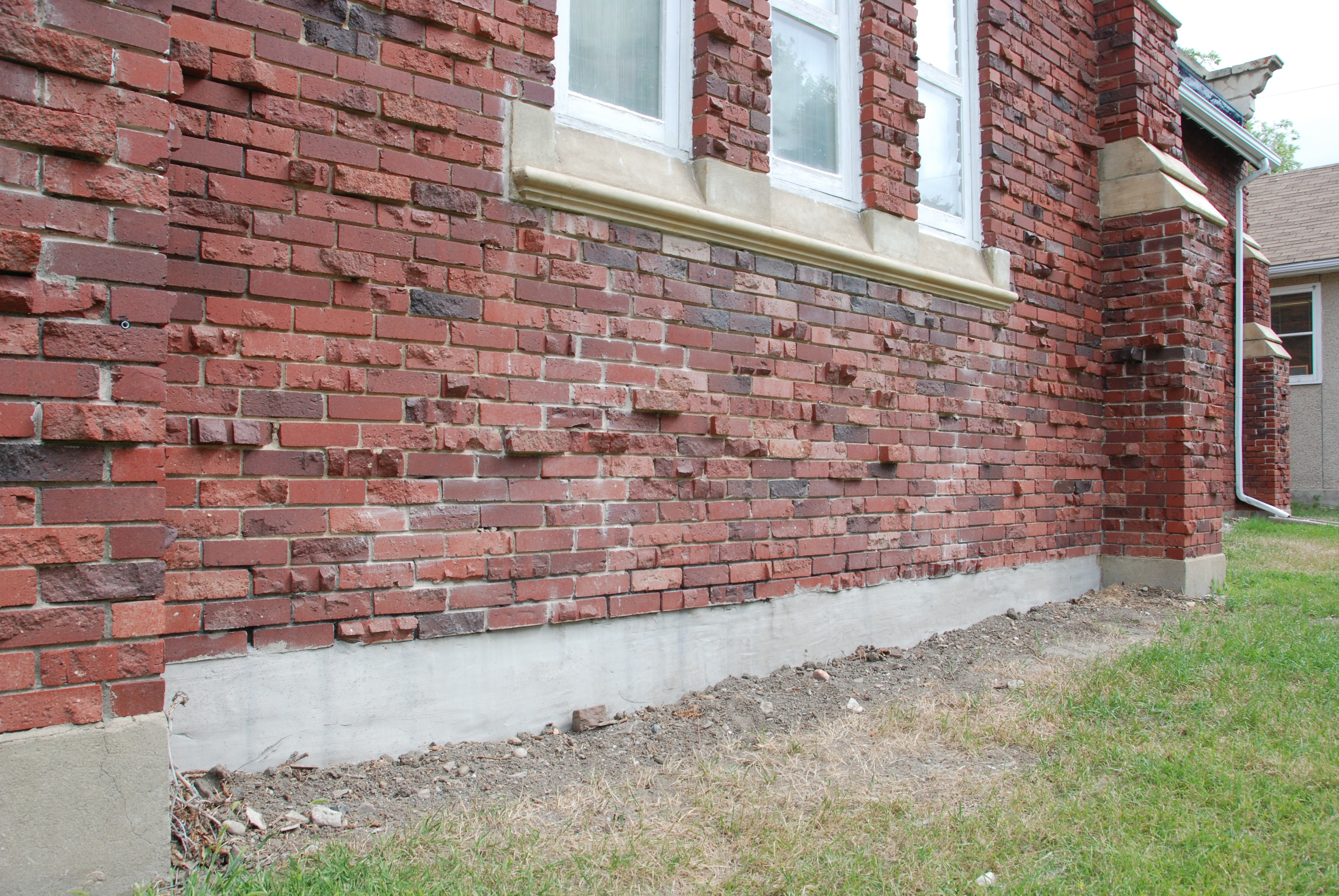
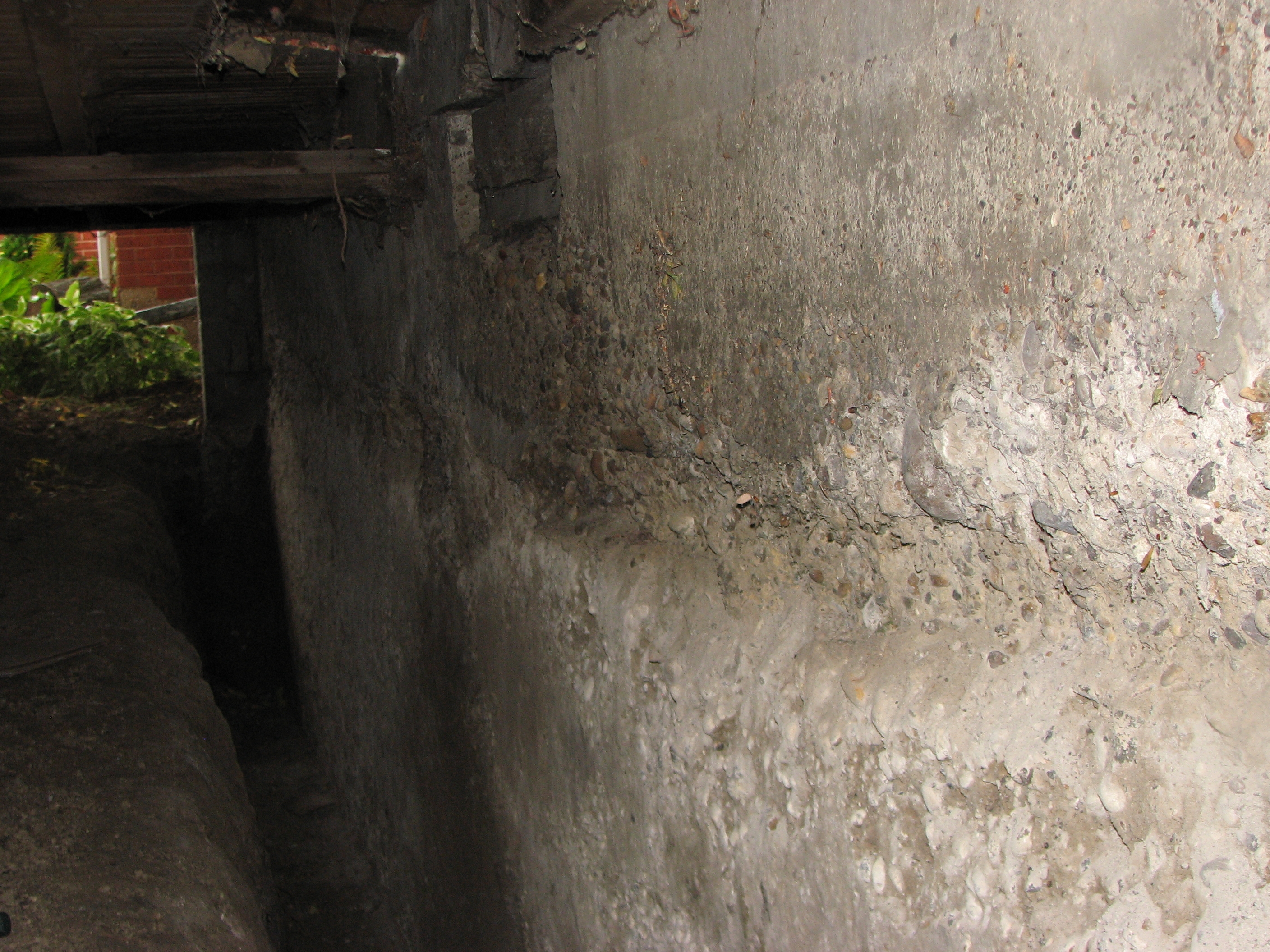
The following images summarize some of the types of foundation cracks and the potential solutions that might be proposed:

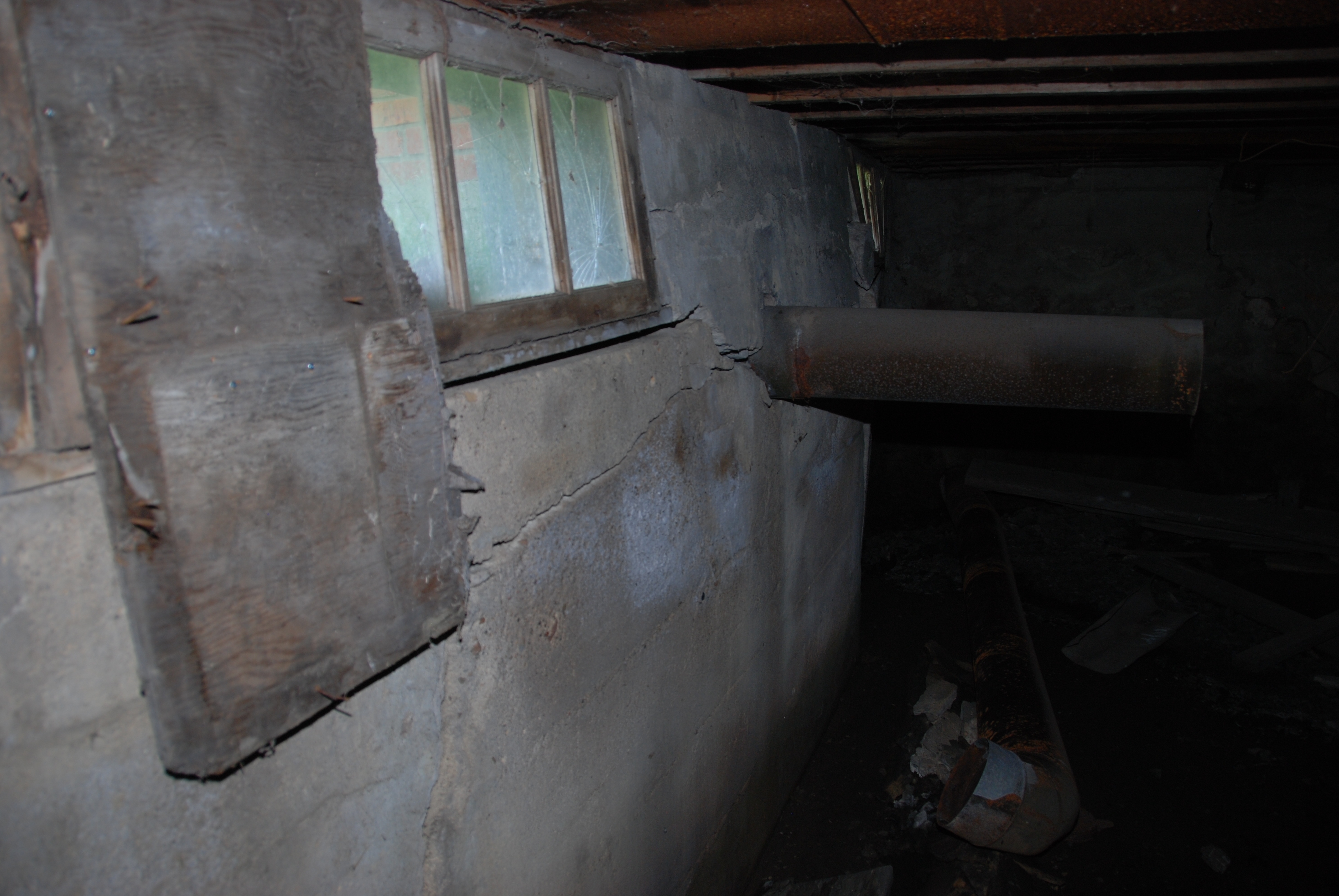
Type of crack: Minor – surface only, usually located at higher stress points.
Type of crack (minor): surface only, usually located at higher stress points.
Proposed Solution: Minor  - Concrete patching, parging or an injected filler product
Proposed solution (minor): concrete patching, parging or an injected filler product.
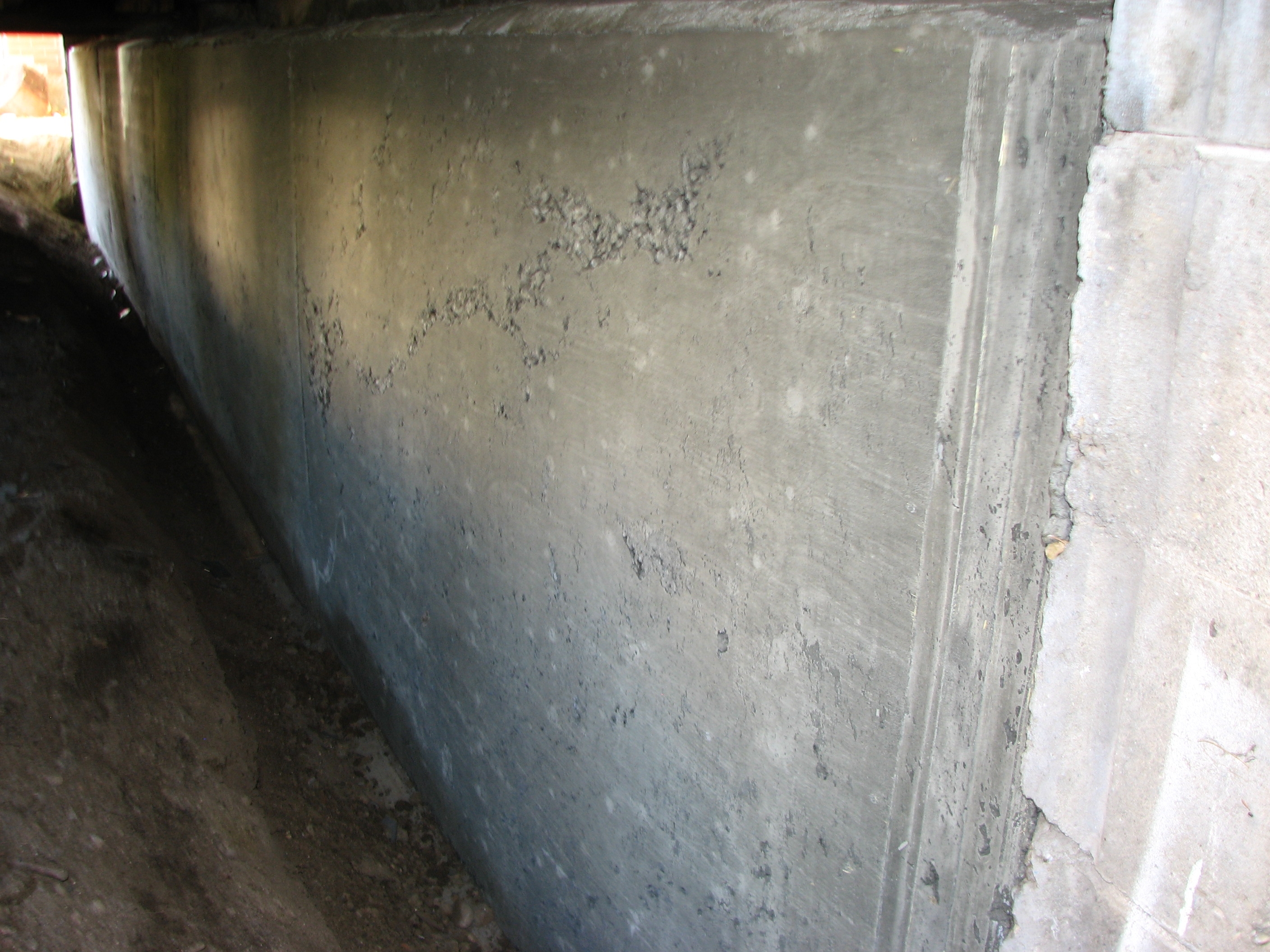
Type of crack: Medium - showing signs of structural failure and weakness such as spalling.
Type of crack (medium): showing signs of structural failure and weakness such as spalling.
Proposed Solution: Medium - Containment – pour new foundation wall against the old to stop the structural failure.
Proposed solution (medium): containment – pour new foundation wall against the old to stop the structural failure.
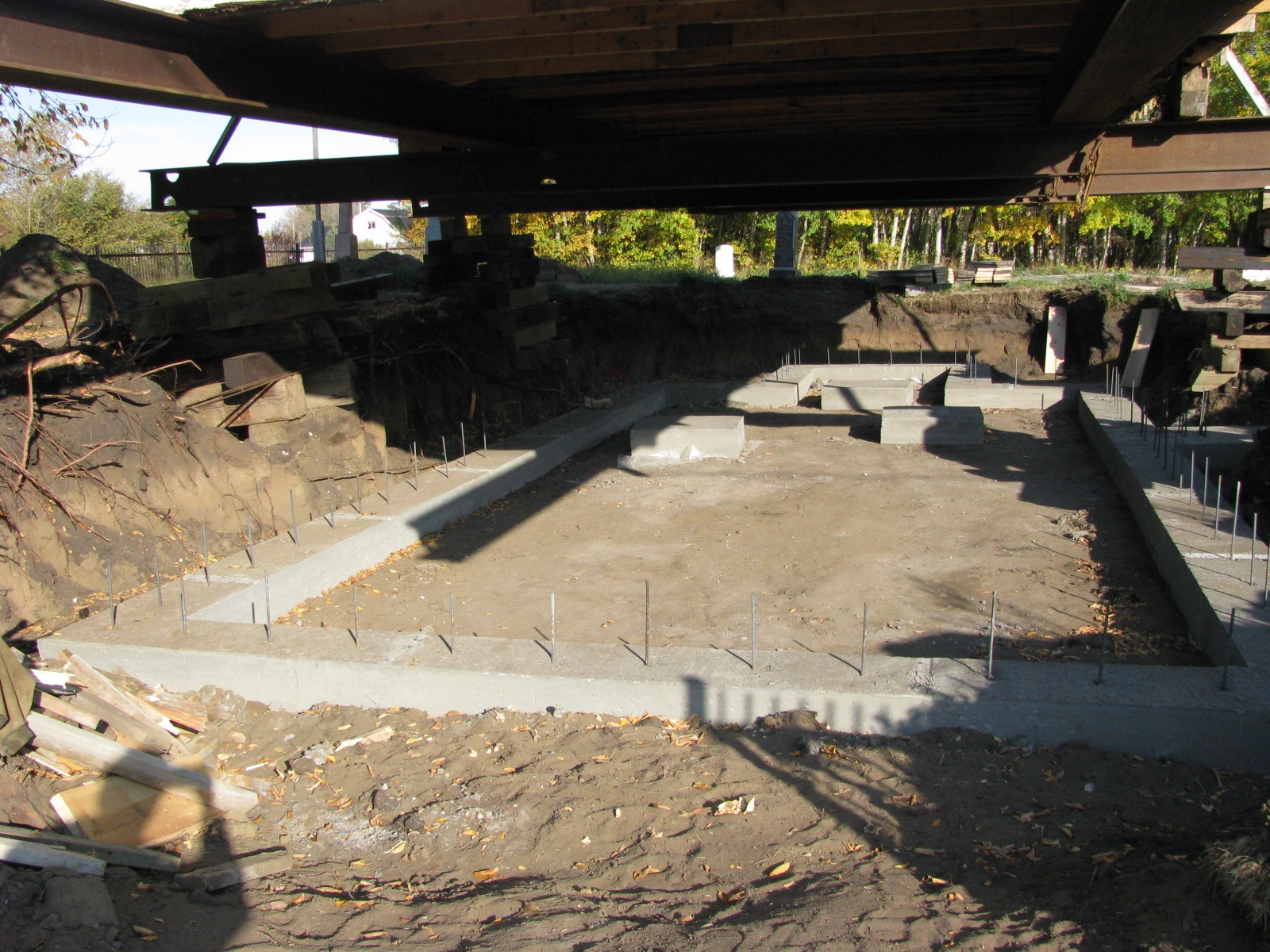
Type of crack: Significant - structural failure has occurred and structure becoming increasingly unstable.
Type of crack (significant): structural failure has occurred and structure becoming increasingly unstable.
Proposed Solution: Significant - Full foundation replacement.
Proposed solution (significant): full foundation replacement.

Notes:

  • Minor and some medium types of cracks can usually be repaired by foundation specialists.
  • Some medium and all significant level cracks will require the services of a structural engineer.
  • Due to the specialty of the mixes and structural nature of foundations it is best to seek certified and experienced masonry/concrete professionals to help resolve the situation.

Ultimately, foundations perform a crucial function for our buildings.  Whatever problems occur they will begin to transfer to the rest of the structure if they are not addressed.  For designated provincial and municipal historic resources the costs incurred to address these issues, whether they be minor, medium or significant (including any engineering costs), would be eligible for grant funding through the Alberta Historical Resources Foundation’s Historic Resource Conservation program.

Written by: Carlo Laforge, Heritage Conservation Adviser.

Managing Lacombe’s Heritage

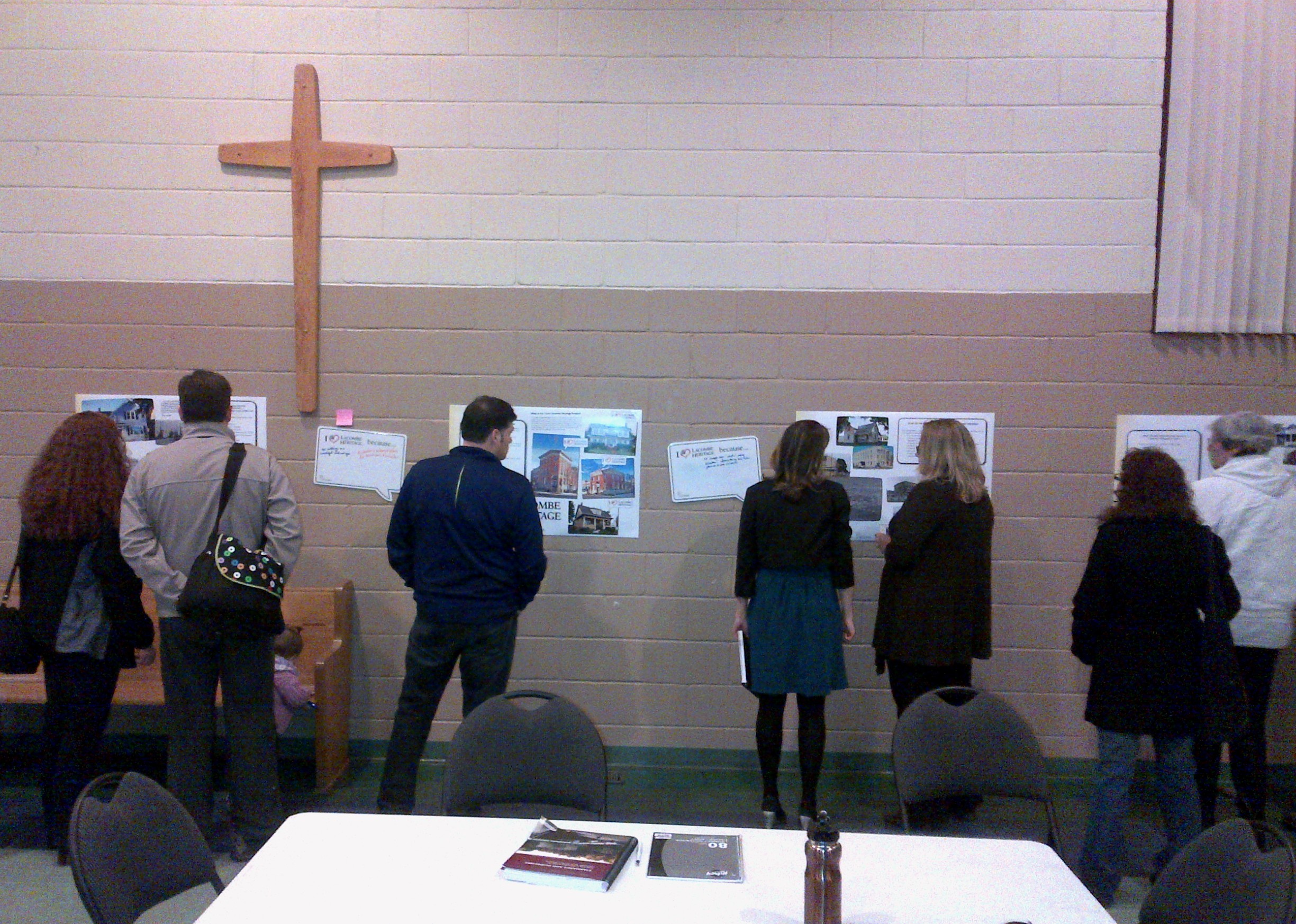
I had the pleasure of attending the City of Lacombe’s Heritage Open House on February 28th. The city presented a draft of their heritage management plan for community perusal and input. The event was hosted by Lacombe’s Heritage Preservation Program at the beautiful St. Andrew’s United Church hall. People started arriving from the moment the doors opened and kept coming until the end, asking great questions about Lacombe’s Heritage Preservation Program. The turnout was wonderful. You can read a bit more about the event itself at the City of Lacombe’s blog.

City of Lacombe, Heritage Management Plan Open House - 20130228-00010Lacombe’s Heritage Management Plan will ensure that locally significant historic resources are identified, protected and systematically conserved. Under the plan, the Lacombe Heritage Steering Committee will continue to revise and update the municipal heritage inventory begun in spring of 2011. The city will soon be able to protect locally significant historic places using new policies governing the designation of Municipal Historic Resources. The final elements will be the plan to evaluate changes to designated resources to insure they retain their heritage value.

The plan will be complete and finalized in the coming months. We’ll bring you more information on the plan when it’s complete. The City of Lacombe can soon begin designating its first Municipal Historic Resources. Stay tuned.

For those who are interested in Lacombe’s heritage, you may wish to check out their facebook page: I ♥ Lacombe Heritage.

Written by: Michael Thome, Municipal Heritage Services Officer

County of Two Hills sees Shandro Church listed on the Alberta Register of Historic Places

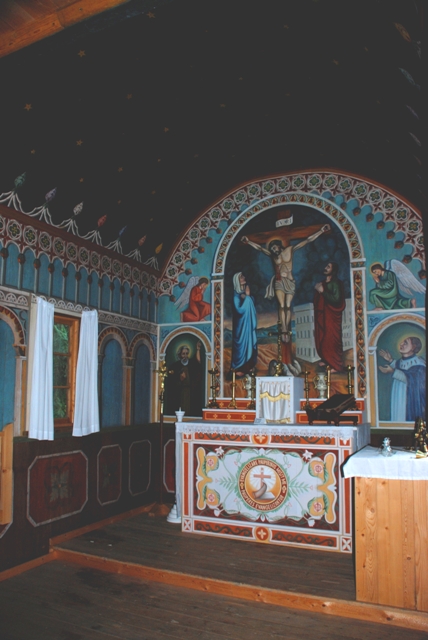
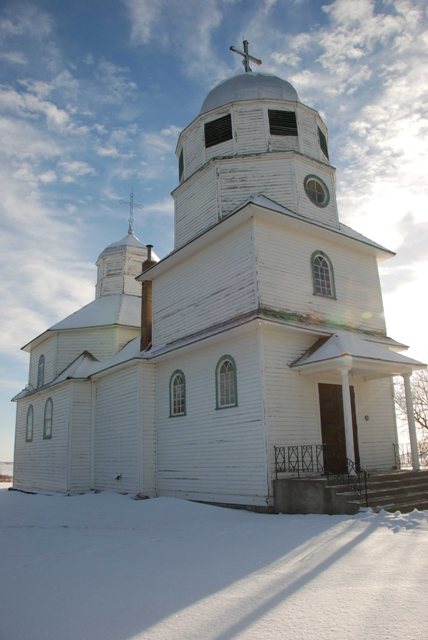
Shandro Church - West and North ElevationsIn 2012, the County of Two Hills passed a bylaw to designate the Russo Greek Catholic Orthodox Parish of St. Mary at Shandro, also known simply as the “Shandro Church,” as a Municipal Historic Resource. It is principally significant for its association to pioneers from Bukovyna, its connection with Bishop Tikhon, and its unique design and construction. The construction of St. Mary’s Church began and was supervised by members of the Shandro clan, who arrived in the Willingdon area in 1899 during one of the great waves of Ukrainian immigration into Alberta. The Shandro family came to play a prominent role in the Ukrainian community in Alberta.

Read more about the heritage values associated with the Shandro Church; visit the Alberta Register of Historic Paces.

Managing Heritage: the City of St. Albert’s new plan

Heritage Management Plan Final Feb 2013_Page_01Over the past year, Municipal Heritage Services staff collaborated with City of St. Albert staff and the St. Albert Arts and Heritage Foundation on developing a municipal heritage management plan. A grant from the Alberta Historical Resources Foundation, through the Municipal Heritage Partnership Program, partially funded the planning process.

The City of St. Albert Heritage Management Plan includes many objectives. A few key elements of the plan include:

  • a list of strategies and objectives for sustaining a successful heritage program in St. Albert, including the appointment of a heritage advisory board for community members to advise the council;
  • it complements existing civic plans including the Municipal Development Plan, the Downtown Area Redevelopment Plan, the Cultural Master Plan and the Tourism Master Plan;
  • provides a process to add new qualifying places to the St. Albert Heritage Inventory; and
  • includes a process for nominating sites on the inventory for designation as Municipal Historic Resources, among other protective strategies.

The plan also includes a provision to establish a reserve fund that can be used to help finance conservation work on Municipal Historic Resources and for raising public awareness of St. Albert’s heritage.

We are excited to see St. Albert implement the plan over the next decade. If you’d like to discuss the possibility of developing a heritage management plan for your community feel free to contact MHPP staff.

Written by: Michael Thome, Municipal Heritage Services Officer

Barrier Free Access to Historic Places: the Little White School

At the 2012 Municipal Heritage Forum Ann Ramsden, Director of Heritage at the Musée Héritage Museum, provided a presentation on the conservation work completed at the Little White School. Specifically, she spoke about ensuring barrier free access. Thank you, Ann, for sharing this case study.

Little White School, St. Albert

The Little White School is a two-room schoolhouse in the City of St. Albert. It was constructed by the St. Albert Roman Catholic School District #3 in 1946 and used as a school until 1987. It was designated as a Municipal Historic Resource in 2009 because it is valued for what it can tell us about Roman Catholic public education in St. Albert. The school is now owned by the City of St. Albert and managed by the Arts and Heritage Foundation.

When the museum acquired the building, it needed some conservation work. The stucco, doors and windows needed to be rehabilitated. The shingles were replaced and a ventilation system was incorporated into the roof to prevent condensation. Water was also leaking into the basement through the foundation. The biggest challenge, however, was ensuring barrier free access to the building.

Rear view of the Little White School, St. Albert

The Standards and Guidelines for the Conservation of Historic Places in Canada not only provides advice on how to rehabilitate building elements like stucco, windows or a roof, it also provides advice on planning additions (or other alterations) needed to accommodate changing uses of a historic place. Historic places certainly do not lose their integrity by adding a means of barrier free access. Additions that are compatible with the historic place, yet visually distinguishable from and subordinate to it are welcome, especially if they help ensure the continued use of the place.

Classroom, Little White School, St. Albert

The Little White School gained an addition that contains a wheel-chair accessible entrance and elevator. This is now the main entrance and provides room for students who visit the school to store their coats and boots. The classrooms received a preservation treatment; one of the classrooms is now being interpreted as a 1940s era classroom. The Musée Héritage Museum invites primary school classes to the school to learn more about St. Albert’s history. Students can come and spend a day at the historic school and learn how students from the 1930s thru to the 1950s experienced school. (The Musée Héritage staff has developed several lesson plans around various themes in St. Albert history.)

Download Ann Ramsden’s presentation: Little White School, St. Albert.

Written by: Michael Thome, Municipal Heritage Services Officer

Adams Lake: Officially Recognizing a Long–standing Local Name

Adams Lake (looking west), August 29, 2012, Alberta Geographical Names Program

The Alberta Historical Resources Foundation and the Minister of Culture has officially adopted the name Adams Lake for a small lake in Red Deer County (see information bulletin). The lake is approximately 100 hectares (250 acres) in size and located about two kilometres south of Raven and 35 kilometres west of Innisfail. The adoption of this name is significant as it commemorates the Adams family, who homesteaded in the region, and recognizes a name that has been used locally for about 100 years.

David Arthur and Julia Marie Adams, 1902, Photograph courtesy of the Adams family

The name commemorates the family of David and Julia Adams. David Arthur Adams was born in Stratford, Ontario. As a young man he met Julia Marie Hedlund, of Chippewa County, Minnesota at a hotel in Lakota, North Dakota. They were married in 1902 and lived for a time with David’s parents in Birtle, Manitoba. The couple soon struck out on their own and lived for a time in Vancouver and Mission, British Columbia and in Calgary, Alberta. Ultimately, in 1912, they settled on a homestead in the Raven District. The homestead, NW2-36-4-W5, was on the eastern shore of a small lake. The lake had been previously noted as “Lake No. 3” in a 1904 Dominion Land Survey Plan of Township 36-4-W5 and it appears unnamed on most federal government maps of the region following that date. It became popular with people from as far away as Spruce View for skating in the winter months and after 1912, it became known to locals as “Adams Lake,” likely due to the family’s proximity.

By the time the Adams’ had settled near Raven, they were raising six children, and four more were born during their time at the homestead. According to David and Julia’s descendents, the land the family was working was not ideal for agriculture and, perhaps for this reason, at the age of 42, David Adams enlisted for service with the 187th (Central Alberta) Regiment during the First World War. Following the war he returned to farming. However, as the older children grew up and left home for farms in the neighbouring districts, and other careers of their own in Spruce View, Bowden, Innisfail and Rocky Mountain House, the farmstead was not sustainable and at some point in the 1920s David and Julia also left the area. David passed away in Calgary in 1942. Julia lived with her children in the Dickson and Kevisville districts and the Pigeon Lake area before also passing away in Calgary in 1966.

Aerial Imagery: Adams LakeAlthough the Adams family remained in the general area for some time, their direct association with the lake was relatively short. However, field research done by the Alberta Geographical Names Program in 1981 and 2012 found that the name Adams Lake was still being used by many local residents and that the name had been in use since at least the 1920s, probably even longer. The lake has also been identified by that name in local publications, newspapers and water conservation reports for the area.

In Alberta, geographical names are adopted after being evaluated against the “Principles of Geographical Naming.” These principles can be found in the Geographical Names Manual. The principles to approve names are based on national and international standards and guidelines and hold that names that have a demonstrated local and/or historical usage should be given primacy when names are being considered for features with no official name. In 2011, Robert Nanninga, a resident of the Raven area applied to Alberta Culture to have the long-standing, but unofficial name given official recognition by Alberta Culture. A considerable amount of information was provided by the applicant and the region’s local history (Grub Axe to Grain…). However, the real breakthrough came when another area resident put researchers in touch with Ken Adams, a grandson of David and Julia. Through him connections were made with Georgina O’Coin, a granddaughter, and Edith Hudson (née Adams), the last surviving child of David and Julia. When these three family members were interviewed in Red Deer in August 2012, Mrs. Hudson was 101 years old. The information given during this interview proved invaluable in firming up the history of the lake and family by providing more details than were included in the local history. It was a true pleasure to be able to meet with the descendents of this homesteading family.

LtoR: Georgina O’Coin, Ken Adams, Edith Hudson (née Adams). Taken at Red Deer, August 29, 2012, Alberta Geographical Names Program

The Adams Lake naming proposal was supported by the Municipal Council of Red Deer County. The Board of the Alberta Historical Resources Foundation decided to officially adopt the name during their October 20, 2012 meeting in Banff. On November 19, 2012, the Minister of Culture concurred with the board’s decision and the adoption of the name became official. Notification of the adoption of the name Adams Lake was published in Alberta Gazette on January 15, 2013. Notification of the new official name has been communicated to provincial mapping authorities and to the Secretariat of the Geographical Names Board of Canada for inclusion in the Canadian Geographical Names Database, ensuring that the name will appear on new maps of the region produced by the federal and provincial governments.

Written by: Ron Kelland, Historic Places Research Officer and Geographical Names Program Coordinator

Location

National Topographic System Map Sheet: 83 B/1 – Markerville

Latitude/Longitude: 52° 04′ 05″ N & 114° 29′ 05″ W

Alberta Township System: Sec. 3 Twp. 36 Rge. 4 W5

Description: Approximately two km south of Raven and 35 km west of Innisfail (town).

Additional Resources 

Additional information about the lake and the Adams family can be found in:

Grub Axe to Grain…: A History of Craig, Dickson, Happy Hill, Heckla, Hola, Markerville, New Hill, North Raven, Raven, Red Raven, Rich Hill, Spruce View (Spruce View: Spruce View School Area Historical Society, 1973). Available from Our Future Our Past: The Alberta Heritage Digitization Project, University of Calgary, http://www.ourfutureourpast.ca/loc_hist/toc.aspx?id=7618.

Using the Standards and Guidelines

How do you determine whether or not a proposed change (what we call an intervention) is appropriate for a historic place? Would a fresh coat of paint preserve the heritage value of an old house? Does painting the brick affect its heritage value as a Municipal Historic Resource? How do I choose the colour of paint?

Using the Standards and Guidelines_Page_10Answers to these questions and more are found in the Standards and Guidelines for the Conservation of Historic Places in Canada (or the S&Gs for short). Introduced in 2003 and revised extensively in 2010, the S&Gs are the definitive framework for heritage conservation in Canada, having been widely adopted by municipal, provincial, and federal authorities as a tool for determining how to conserve and manage change to historic places.

The S&Gs provide a foundation of conservation principles organized around fourteen standards, a standardized vocabulary of conservation terms, a straightforward decision-making process, and practical conservation guidelines for a wide range of resource types. Used in conjunction with Statements of Significance, the S&Gs also play a role in determining if work is eligible for conservation grants from the Alberta Historical Resources Foundation.

The presentation below, from the 2012 Municipal Heritage Forum, offers an overview of the S&Gs as a tool for municipalities to manage the historic places identified through surveys and inventories and subsequently protected as Municipal Historic Resources.

PRESENTATION: Using the Standards and Guidelines

Written by:  Fraser Shaw, Heritage Conservation Adviser.