Editor’s note: September 30 is the National Day for Truth and Reconciliation and Orange Shirt Day. Reading residential school histories can be a painful process. If reading this is causing pain or bringing back distressing memories, please call the Indian Residential Schools Crisis Line at 1-866-925-4419. The Crisis Line is available 24 hours a day and can also provide information on other health supports provided by the Health Canada Indian Residential Schools Resolution Health Support Program.
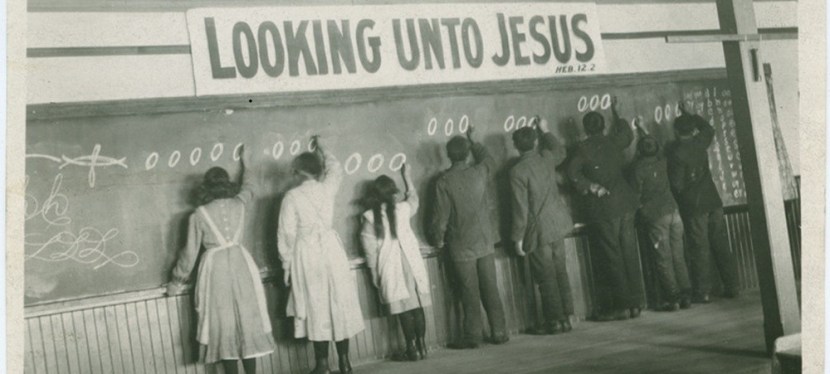
The banner image above is “A class in penmanship, Red Deer Institute.” ca 1914-1919. From Mission to Partnership Collection, United Church of Canada Archives.
Written by: Laura Golebiowski (Indigenous Consultation Adviser) in collaboration with Samson Cree Nation and Paul First Nation
Industrial and residential schools in Canada were established for purposes of assimilation, Christianization, and colonization. The institutionalization of Indigenous girls, alongside boys, became an early part of that equation.
In the beginning of the industrial school system on the prairies, the federal government and churches subscribed to Victorian ideologies of gender, class, and education. These ideologies were firmly entrenched in society at the time. Schooling was seen as the means to condition and prepare men for work in the outside world, and to enforce women’s roles inside the home as wives, mothers and providers of domestic service. Additionally, colonial government officials feared that young Indigenous men would return from schools to the reserve, only to ‘revert’ back to their culture, language and religion. Indigenous women were viewed as likely culprits: men would marry, only to be, “pulled back into Indian savagery by her.” In 1883, Liberal party leader Edward Blake argued: “If this scheme is going to succeed at all, you will, unless these Indian bucks are to be veritable bachelors all their lives, have to civilize the intended wives as well as the husbands.”
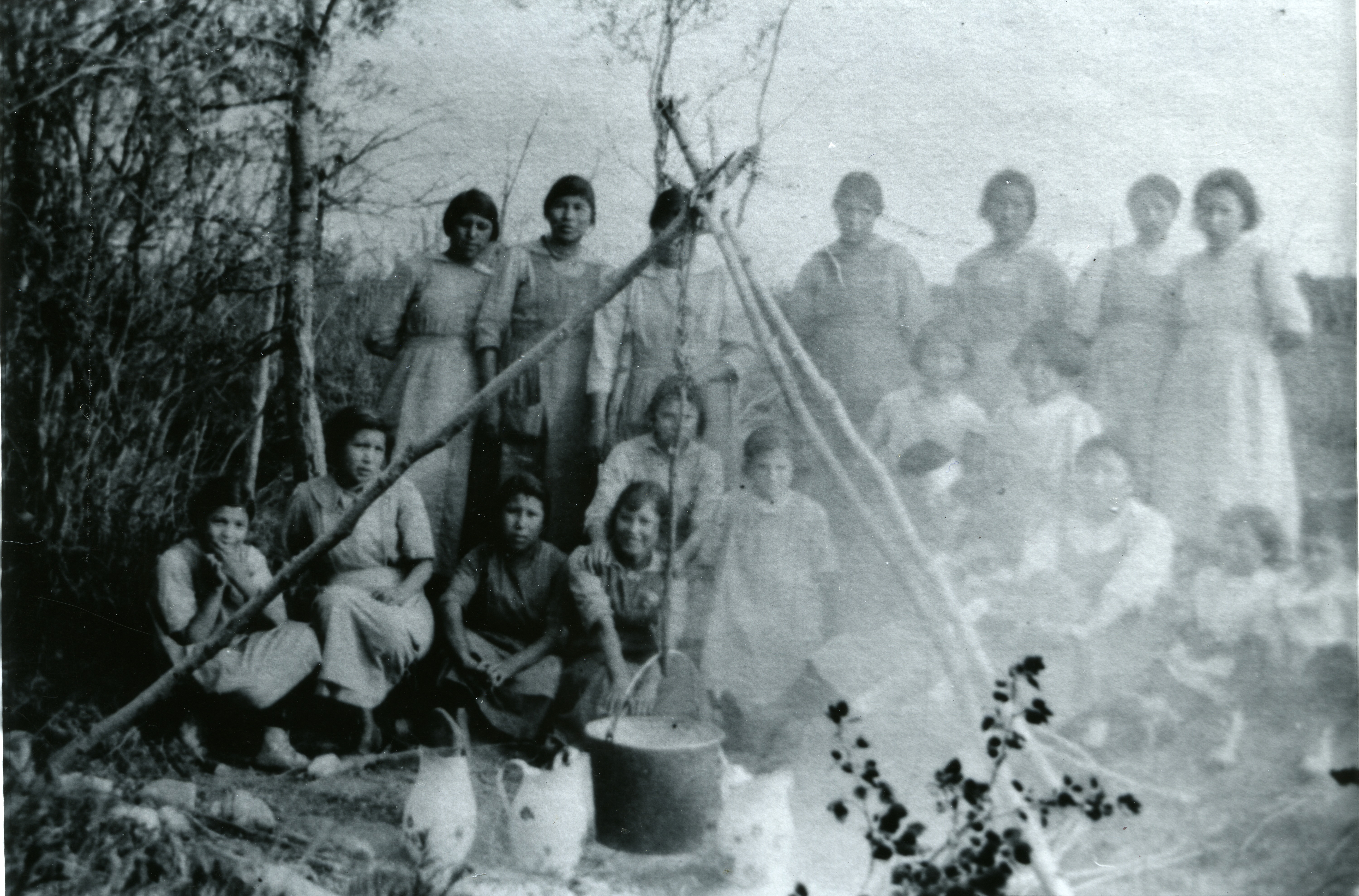
When Red Deer Industrial School opened in 1893, 52 children were enrolled. The number of boys nearly doubled that of the girls. The school operated on a half-day system, where a portion of the day was spent in the classroom, and the remainder was spent working to support the school in delegated trades and vocations. The boys were generally assigned the trade of farming, carpentry or potentially blacksmithing. Girls were relegated to domestic labour: cooking, cleaning, and making clothes.