Some Changes to AHRF’s Grant Program: February 1, 2012

The Alberta Historical Resources Foundation (AHRF) continues to find strategies to strengthen its ability to meet its mandate. One strategy is to adopt some changes to the funding policies of the Heritage Preservation Partnership Program. These changes will become effective for the next application deadline: February 1, 2012.
To manage the demand for historic resource conservation grants, the maximum grant for conservation of Provincial Historic Resources will be capped at $100,000. Currently, there is no grant ceiling set for these historic resources. Other grant ceilings remain the same: $50,000 for the conservation of Municipal Historic Resources, $5,000 for Local Historic Resources, and $25,000 for architectural/engineering studies/reports/plans.

Applicants may only submit one application for conservation and one application for architectural/engineering studies/reports/plans per historic resource per calendar year. The February 1st deadline is still the primary deadline.

To support the Municipal Heritage Partnership Program’s goal of strengthening the municipality’s role in historic place management, Provincial Historic Resources and Municipal Historic Resources will have the same opportunity for funding – Provincial Historic Resources are not given priority.  The awarded level of funding will continue to be determined using criteria which include: grant ceilings, project scope, resource’s conservation priorities, grant program’s budget and applicant’s ability to complete the project.

The second deadline for the Roger Soderstrom and Heritage Trades Scholarships will be moved from September 1st to October 1st to give more time for students to prepare their applications.

New funding guidelines and application forms will be released in time for the next application deadline.  For more information, click here or contact the Grants Program Coordinator at 780-431-2305.

Written by: Carina Naranjilla, Grant Program Coordinator
Win a Prize!!

Test your knowledge of Alberta’s historic places and enter a chance to win a great prize. Simply click on the link below and answer the following skill-testing questions:

https://hermis.alberta.ca/arhp/

  1. What monumental Calgary civic building designated as a Municipal Historic Resource, a Provincial Historic Resource, and a National Historic Site of Canada, is celebrating the centennial of its completion this year?
  2. Which municipality is home to Alberta’s most northern Municipal Historic Resource? What is it? (Hint: Which municipality in Alberta covers the largest geographic area?
  3. In the Alberta Heritage Survey Program database, how many sites are listed under the “Social and Recreational: Sport or Athletic Building” Site Type category?
  4. Which municipality has the most Municipal Historic Resources?

Be the first to submit correct answers and you will receive a prize package designed to help you discover Alberta’s historic places.

Each month we will post a new quiz, so stay tuned!


Municipal Heritage Forum 2011

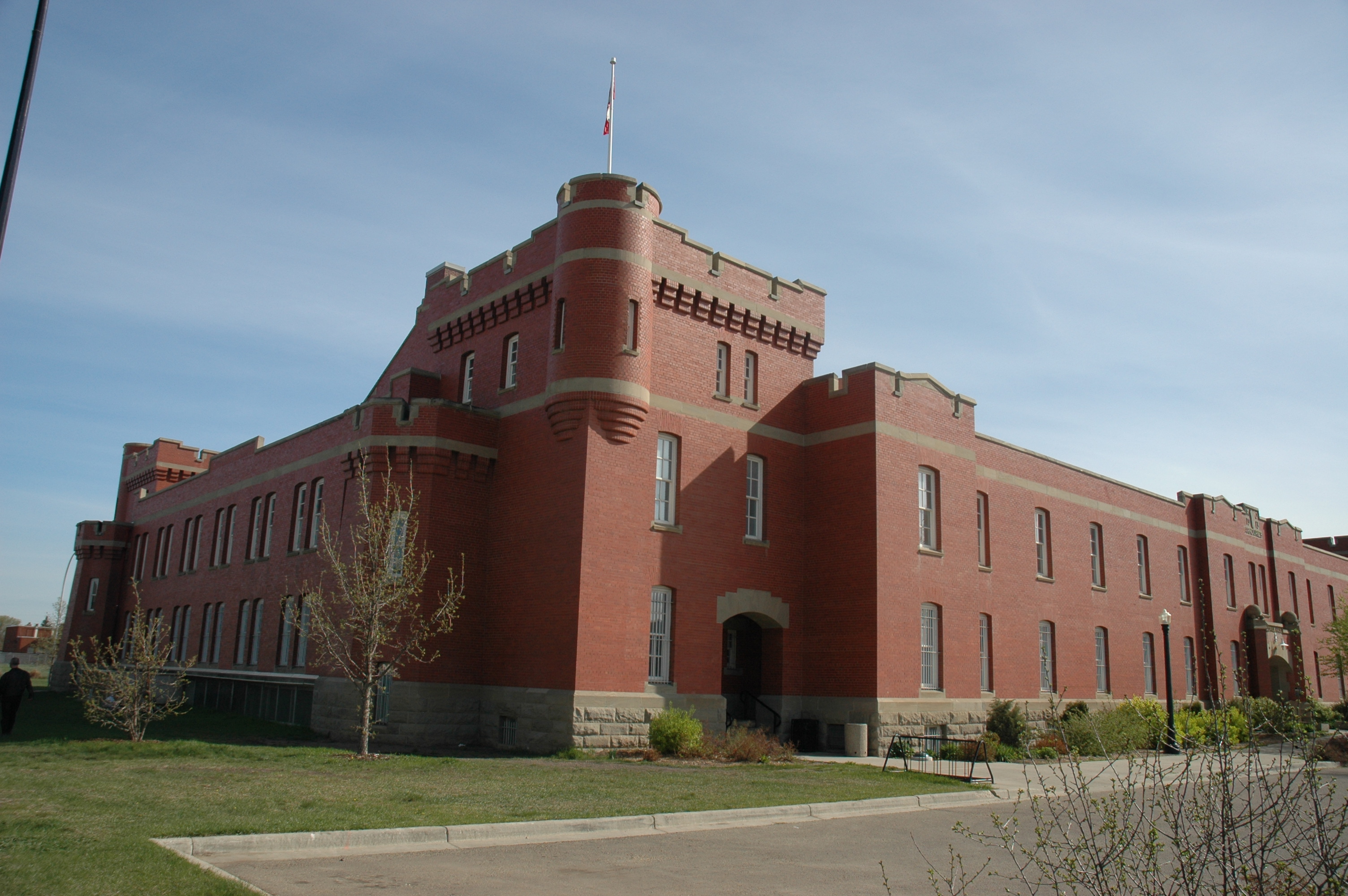
You are invited to our 5th annual Municipal Heritage Forum,“Roadmap to Success!” It is scheduled for October 27th and 28th Ÿin Edmonton, at the Prince of Wales Armouries.

This event is intended for municipal staff, councillors and heritage committee members interested in learning how to identify and protect local historic places. Registration is free, but we only have room for the first 100 registrants at the Forum, and the first 75 for the evening reception – so please register early!

Click here for event details and a copy of the registration form.

The keynote presentation will be, “The Other Side of the Rockies: BC’s Experience with Community Heritage Context Planning” by Berdine Jonker, Senior Heritage Planner. Berdine Jonker is Senior Heritage Planner with the BC Heritage Branch, Ministry of Forests, Lands and Natural Resource Operations. She has worked in the heritage conservation field since 1998, focusing primarily on building local government capacity for heritage conservation planning. Berdine has also worked with groups such as Smart Growth BC to further develop the connection between heritage conservation and healthy community development. She holds a Bachelor of Arts (Art History) (1998), a Diploma in Cultural Resource Management (2003), and a Master’s Degree in Public Administration (2010) from the University of Victoria.

We look forward to seeing you at the Forum in October!

Putting Names on the Map?

Preparing a Naming Proposal 

The Historical Resources Act gives authority to make geographical naming decisions jointly to the Alberta Historical Resources Foundation and the Minister of Culture and Community Spirit. However, over the last number of decades, the Government of Alberta has not generally been proactive in naming geographical features. The responsible authorities believe that it is more appropriate for the citizens of Alberta to play the key role in making naming proposals. So, how does a person suggest a name for a geographical feature? The short answer is to submit a proposal.

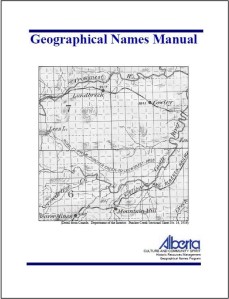
Applications or proposals to name a geographical feature are made to the Alberta Geographical Names Program. The application form is available on the program’s website along with the Geographical Names Manual, which will help guide applicants through the application process and provide some details about the research standards and principles that guide geographical naming in Alberta. It is highly recommended that applicants read the manual before starting the application to ensure that the proposed name is appropriate and meets the “Principles and Guidelines for Geographical Naming” (more on these in a future blog post).

On the application are a number of questions that should be completed as thoroughly as possible. This remainder of this blog post will walk you through the application form. Read more

New MHPP Projects Funded for Communities!

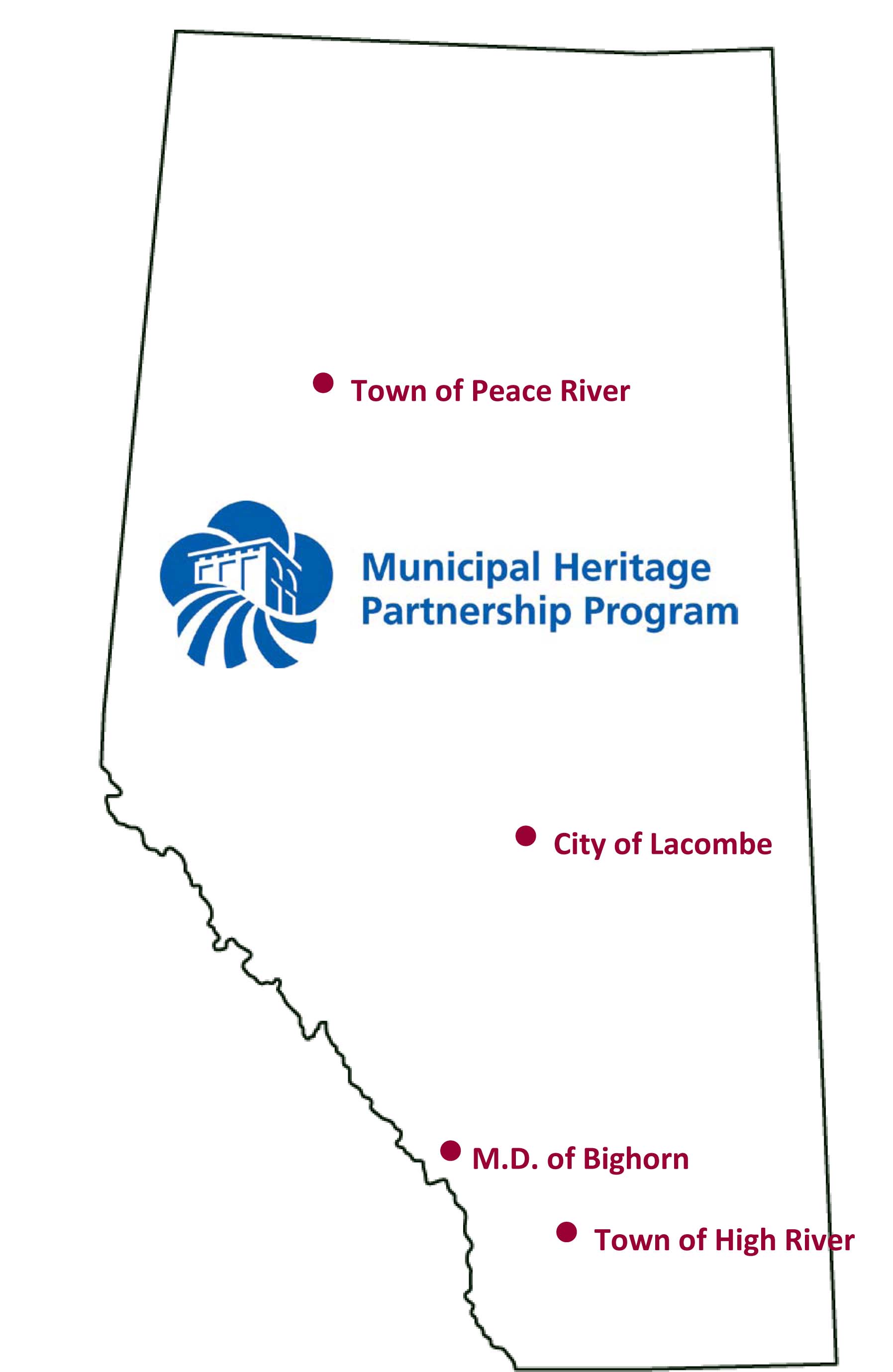
Congratulations to four communities that have recently been awarded grants by the Alberta Historical Resources Foundation for heritage planning projects!

The Town of High River will receive a $20, 000 matching grant from the Municipal Heritage Partnership Program (MHPP) to undertake a Heritage Inventory project, evaluating potentially significant historic places in this growing southern Alberta town. This is the first collaboration of the Town of High River with MHPP.

Heading up north to another “River” town, Peace River has been awarded a matching grant of $6, 000 to develop a Heritage Management Plan. This plan will build upon the previous Heritage Inventory work funded by the Foundation through MHPP.

Lacombe, Alberta’s newest City, will receive a matching grant of $24, 500 to continue its program of evalating its significant collection of historic places in a second phase of Heritage Inventory work.

And, last, but definitely not least, the Municipal District of Bighorn, located on the cusp of Banff National Park, has been approved for a matching grant of $20, 000 for the creation of its own Heritage Management Plan. This project will build upon years of previous partnership with MHPP, which yielded both a Heritage Survey and Inventory.

These municipalities join numerous others – both rural and urban – that are currently partnering with MHPP to help create a future for Alberta’s historic places. These communities include:

We are looking forward to working with these municipalities to help protect, conserve and celebrate the places that matter most to Albertans.

Applying for Historic Resource Conservation Funding

Do you own a Municipal Historic Resource? Would you like to learn how to obtain funding to conserve your historic resource? The Alberta Historical Resources Foundation operates several grant programs to help underwrite the conservation of Alberta’s heritage. The Historic Resource Conservation category of the Foundation’s Heritage Preservation Partnership Program offers grants to defray the cost of conservation work on Provincial and Municipal Historic Resources.

A grant can finance up to half the cost of conservation work that complies with the Standards and Guidelines for the Conservation of Historic Places in Canada. No grant to help conserve a Municipal Historic Resource will exceed $50,000 (although most grants are less than this).

The proposed work must preserve, rehabilitate or restore the historic resource’s character-defining elements. The Foundation will also consider funding architectural or engineering studies that help develop a long-term conservation plan. The Board of the Foundation will only consider an application from an owner of a Municipal Historic Resource if:

  • The Municipal Historic Resource is listed on the Alberta Register of Historic Places;
  • The proposed work complies with the Standards and Guidelines for the Conservation of Historic Places in Canada; and
  • The municipality has reviewed the proposed work, certified that it meets the Standards and Guidelines and issued written approval to undertake the project (pursuant to section 26 of the Historical Resources Act).

Although a provincial Heritage Conservation Adviser can help your municipality complete the approval-documentation, municipalities are responsible for reviewing the proposed work themselves. Municipalities have the legal authority to prohibit any changes that, in their opinion, detract from the heritage value of the site. Municipalities are best situated to evaluate how proposed work impacts the heritage value of the sites they themselves designate.

You can find a Historic Resource Conservation grant application package here. Because of the documentation needed, it is best to begin working on an application as soon as possible. The next application deadline is September 1st, but it is never too early to start thinking about the conservation work you would like to do next summer. Applications submitted for the February 1st deadline should be adjudicated before the snow melts.

For more information on the grant programs of the Alberta Historical Resources Foundation, contact Carina Naranjilla at carina.naranjilla@gov.ab.ca or 780-431-2305.

Written by: Michael Thome, Municipal Heritage Services Officer

Heritage Conservation in the Spotlight!

On Thursday, August 11, 2011, Access Television’s current affairs program, Alberta Primetime, aired a segment on the preservation of historic buildings in Alberta. A webcast of this segment can be found here.

The segment included a panel discussion consisting of me (Larry Pearson, Director of the Historic Places Stewardship Section), Darryl Cariou, the City of Calgary’s Senior Heritage Planner and Edmonton architect Shafraaz Kaba, Senior Partner with Manasc Issac Architects. Our discussion explored the benefits of adaptively reusing heritage buildings and some of the funding support available to their owners.

During the panel discussion, I noted that there are approximately 700 historic places listed on the Alberta Register of Historic Places. Of these, 508 are designated as Municipal Historic Resources or Provincial Historic Resources. These places are legally protected under Alberta’s Historical Resources Act and are eligible for funding from the Alberta Historical Resources Foundation. Beginning with the February 1, 2012 grant deadline, Provincial Historic Resources will have an annual eligibility for up to $100,000 in cost shared funding to support eligible conservation work. For Municipal Historic Resources, the annual eligibility will be $50,000. Darryl Cariou outlined the City of Calgary’s grant funding and illustrated how other strategies, such as defering tax increases that would normally occur when a building is signficantly upgraded, could be used to support the rehabilitation of historic places legally protected by the City.

In exploring the benefits of adaptivly reusing historic places, the panel illustrated how heritage conservation is an excellent example of “sustainable developmant”. The reuse of existing buildings is environmentally sustainable. Shafraaz noted that the “greenest building is the one that is already built”.  This is because the reuse of an existing building saves a landfill from the waste created by demolition and conserves the energy that was invested by a previous generation during its construction. A study prepared for the Government of Alberta showed that the rehabilitated historic Lougheed Building in Calgary would use about 10% less energy than a typical new building of similar size. The study also revealed that the overall energy saved was equivilant to the annual energy use of 1,591 homes. Recycling historic places also contributes to “economic sustainability”. A higher percentage of the money invested in rehabilitation projects represents labour costs rather than material costs. The labour investment reflects the work of skilled tradesman and, because it is spent locally it is also more likely to stay in the community. Heritage conservation also helps a community maintain its sense of place, therefore, it supports cultural tourism and contributes to viable communities and a high quality of living.

For more information on the heritage programs of the Government of Alberta, click here.

Information about the City of Calgary’s heritage programs can be found here.

Written by: Larry Pearson, Director of Historic Places Stewardship

Happy Anniversary St. Peter’s Church!

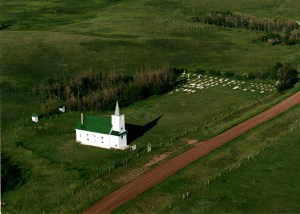
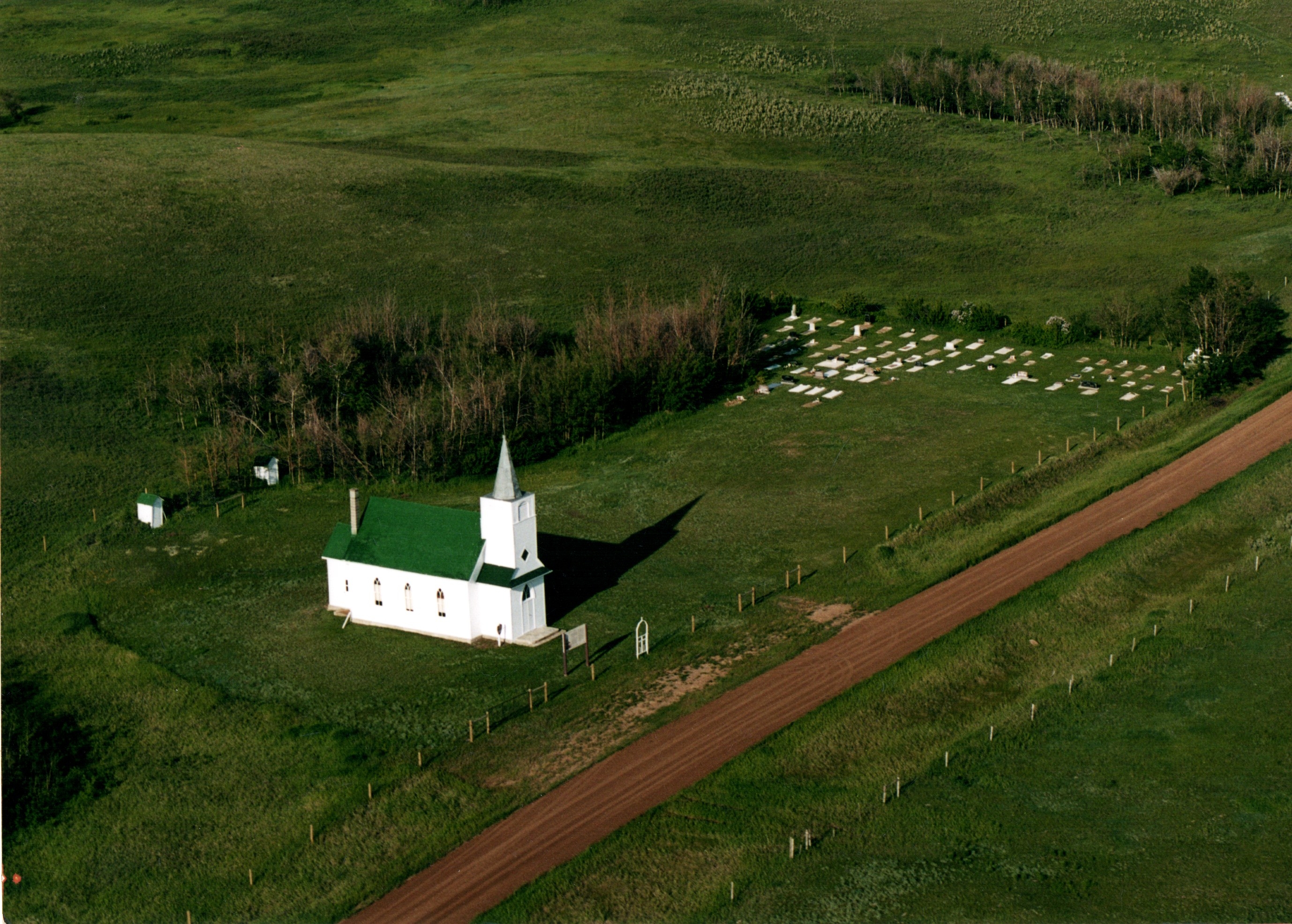
St. Peter’s Lutheran Church and Cemetery is the newest Municipal Historic Resource listed on the Alberta Register of Historic Places. It is located in Special Area 2, in the former Hamlet of Scapa. On Saturday, August 13th, the parishioners are celebrating the 100th anniversary of the church’s construction. If you are in the area, stop by for a visit.

The church was constructed in 1911 and moved to its present location in 1921. The residents of Special Area 2 value this place for its historic use as a Lutheran parish church, particularly by the settlers who homesteaded the Hamlet of Scapa. The Church was designated as a Municipal Historic Resource by the Special Areas Board in 2009.

Written by: Michael Thome, Municipal Heritage Services Officer


Tonight on ALBERTA PRIMETIME – “Preserving the Past”

Tune in tonight at 7pm or 11pm to see Larry Pearson, Director, Historic Places Stewardship, join other key stakeholders to discuss the state of heritage conservation in Alberta.

Alberta Primetime is a daily current affairs show airing weeknights from 7pm MST to 8pm MST. Airing on ACCESS and seen across all of Alberta, Alberta Primetime drills through the surface of current issues to explore the ideas and concerns of Alberta’s real energy sector – its people…

Alberta Primetime can be seen on ACCESS on the following channels:

  • Calgary: Channel 13, Cable 13
  • Edmonton: Channel 9, Cable 9
  • Express Vu: Channel 267
  • Shaw Direct: Channel 351
  • TelusTV: Channel 9

Vulcan: A Regional Collaboration

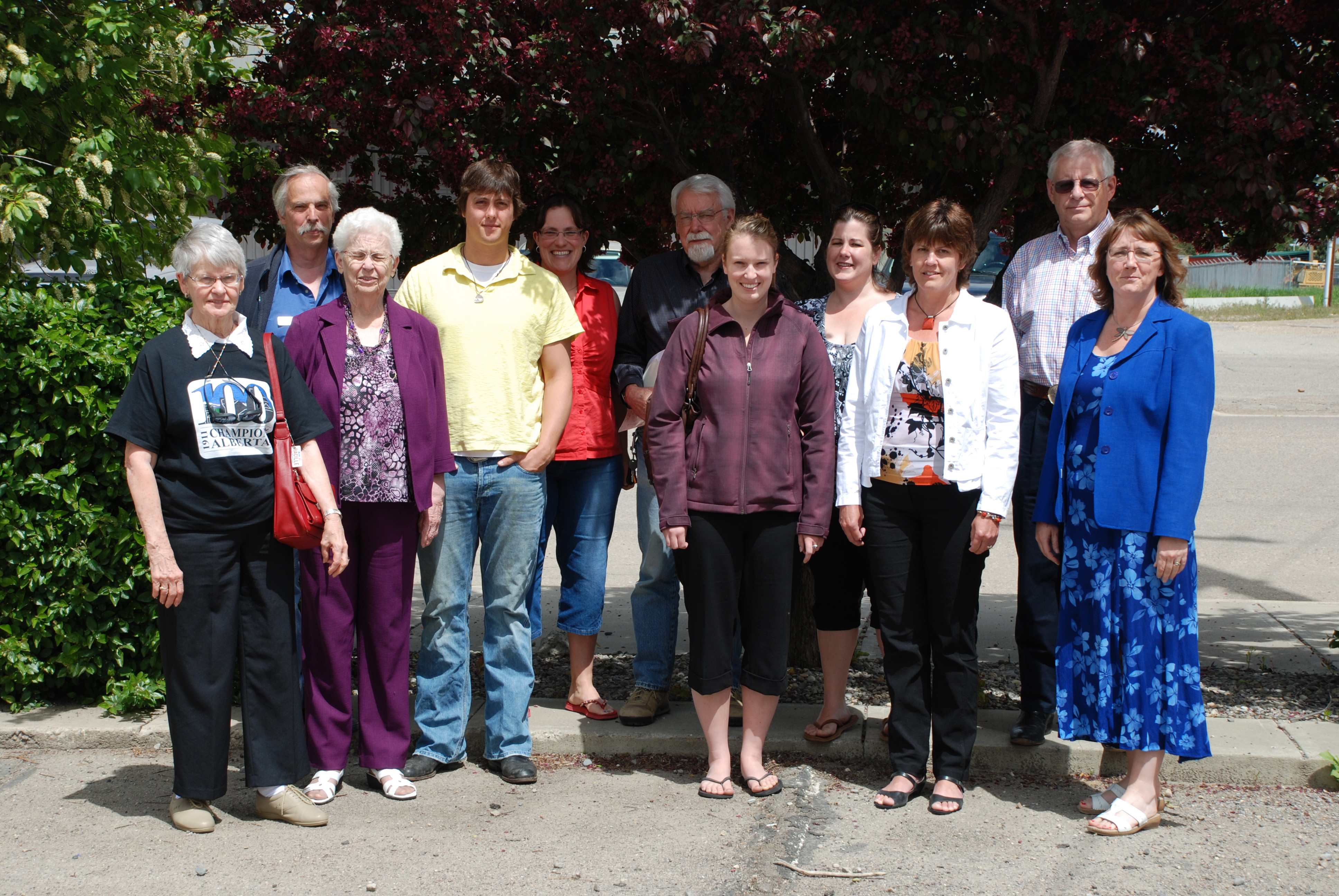
Over the next nine months the Vulcan region will be a hive of activity. Vulcan County has partnered with the Town of Vulcan and the villages of Carmangay, Champion and Milo to complete both a Municipal Heritage Survey and a Municipal Heritage Inventory. Working collaboratively, and with the services of a heritage consultant, a range of potential historic places within these municipalities will be documented and a number of places of interest will also be evaluated for eligibility, significance and integrity.

Completing these projects will allow municipal staff, councillors and residents to better understand the older places that make their communities unique and livable. From this understanding, municipal officials will be able to make informed decisions about which sites may merit protection and conservation for the benefit and enjoyment of future generations.

Pictured from Left to Right: Racille Ellis, Champion Community Representative; Paul Taylor, Town of Vulcan Councillor; Marjorie Weber, Vulcan and District Historical Society; Cody Shearer, Vulcan Business Development Society; Katie Walker, Village of Milo Councillor; Richard Lambert, Vulcan and District Historical Society; Amy Rupp, Village of Champion CAO; Kym Nichols, Village of Carmangay Mayor; Leslie Warren, Vulcan Business Development Society; William Roebuck, Kirkcaldy Community Club; Liza Dawber, Vulcan County. Missing: Bill Lahd, Milo Community Representative.

Written by: Brenda Manweiler, Municipal Heritage Services Officer