John Utendale: From the Monarchs to the Miracle on Ice

Editor’s note: All images below courtesy of the Provincial Archives of Alberta.

Written by: Michael Gourlie, Government Records Archivist, Provincial Archives of Alberta

From his start playing hockey on the northside rinks of Edmonton to winning a gold medal the 1980 Winter Olympics, John Utendale had a remarkable career as an athlete and coach, but his achievements during his career as educator were no less distinguished.

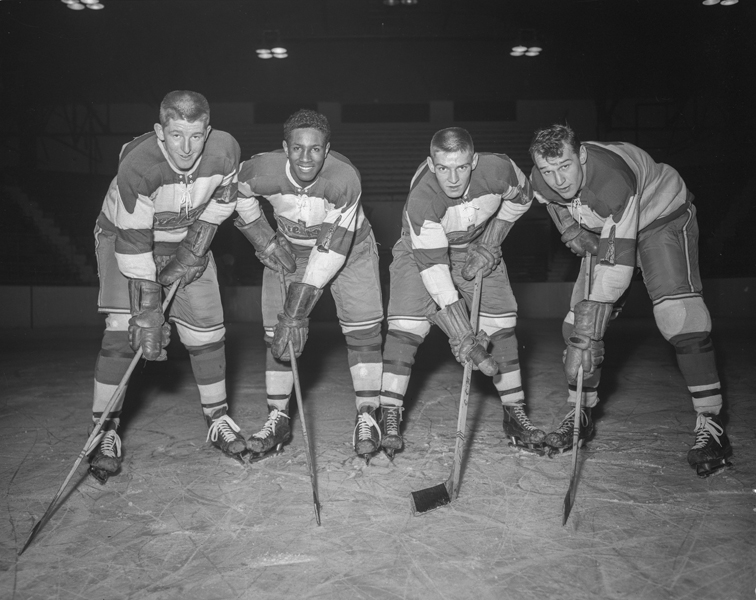
Born in Edmonton in 1937, Utendale played rugby, baseball and hockey while attending Victoria Composite High School.  He continued to play softball at the provincial level while also playing hockey for the Edmonton Oil Kings.  It was his skill as a hockey player that landed him a contract in 1957 with the Detroit Red Wings organization as a member of the Edmonton Flyers of the Western Hockey League. Utendale would become the first Black hockey player to sign a contract with an NHL team.

Utendale with the Edmonton Oil Kings, Oct. 26, 1954.

He later played for the Quebec Aces, joining Willie O’Ree, who broke the National Hockey League’s colour barrier, and Stan Maxwell for an all-Black line.  He also played for the Windsor Bulldogs and for teams in Sudbury and Windsor.

Read more

Black History Month: Edmonton boxing legend George Dunn

Written by: Michael Gourlie, Government Records Archivist, Provincial Archives of Alberta

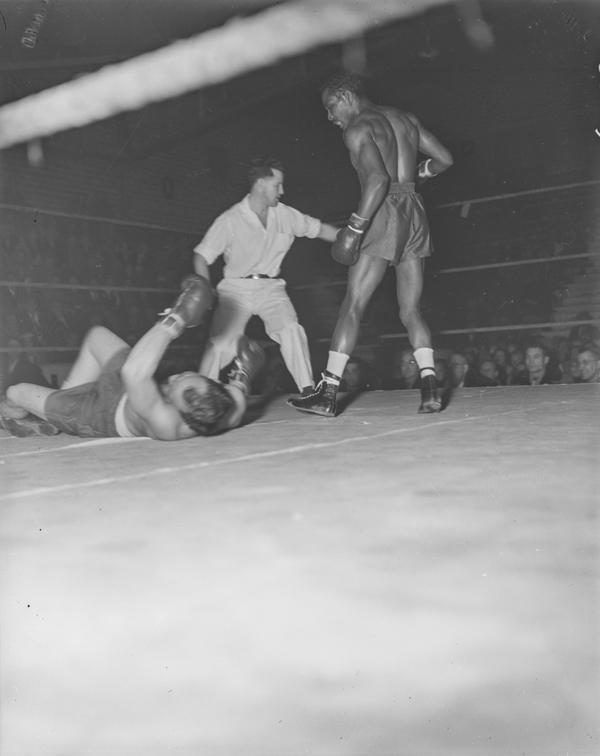
In the early 1950s, George Dunn appeared frequently on the Edmonton sports pages.  Described as a lightning flash, his boxing career lasted only about a decade in Canada, but his contributions to sport continued after he left the ring.

Dunn was born in Raleigh, North Carolina in 1925, the son of William Moses Dunn and Mary Helen High-Dunn. His parents died several months apart in 1926, and he was raised by his siblings. He was working in Hartford, Connecticut at the Pratt and Whitney Aircraft factory in 1943 when he registered for the World War II draft.  He served in the US Army for just over two years during the Second World War, seeing action in the Philippines and New Guinea. During this period, Dunn took up boxing to avoid “KP” (kitchen patrol) duties.  He became a professional boxer in 1946 and lost only two matches between 1946 and 1948, racking up 14 knockouts. In his early career, he fought against Sonny Boy West and Lil’ Arthur King.

Geo Dunn vs. Dutch Hopper, 1950 at the Edmonton Stock Sales Pavilion. Source: Provincial Archives of Alberta, photo number: GS798
Read more

Stage and screen: Black entertainment history in Alberta 1900-1920

Written by: Jeremy Kuipers-Witten

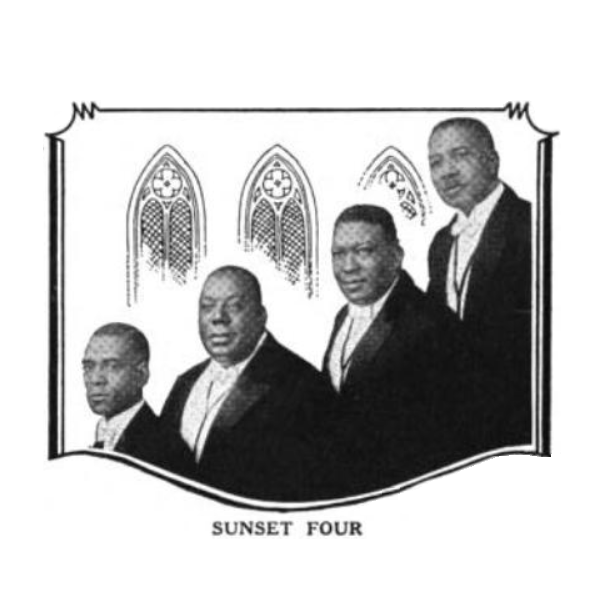
Source: Genius.com.

The changing landscape of mass entertainment between 1900 and 1920 was just as evident in Alberta as it was anywhere else in North America. February is Black History Month and when one examines Alberta’s entertainment history from 1900 to 1920 through a Black history lens, numerous interesting stories emerge. During this time frame, the popularity of minstrel shows and vaudeville theatre was beginning to diminish. Recorded music and film emerged as new markets for mass entertainment. Black actors and musicians who had formerly appeared on theatrical stages began to appear on recorded media that could be mass produced and shipped all over the world. Additionally, even though the popularity of minstrelsy and vaudeville was dwindling, a genre of black musical performance called jubilee singing remained popular throughout the teens and twenties. Still, despite the fact that African-American and African-Canadian musicians between 1900 and 1920 were participating in all genres of music, the recording and entertainment industries of the time mainly relegated these performers to stereotypically “Black” genres — namely the 19th century genres of minstrelsy and jubilee singing and the new 20th century genres of jazz and blues.

Read more

Violet King Henry: trailblazing Alberta lawyer

Written by: Allan Rowe, Historic Places Research Officer

View Violet King Henry Heritage Marker

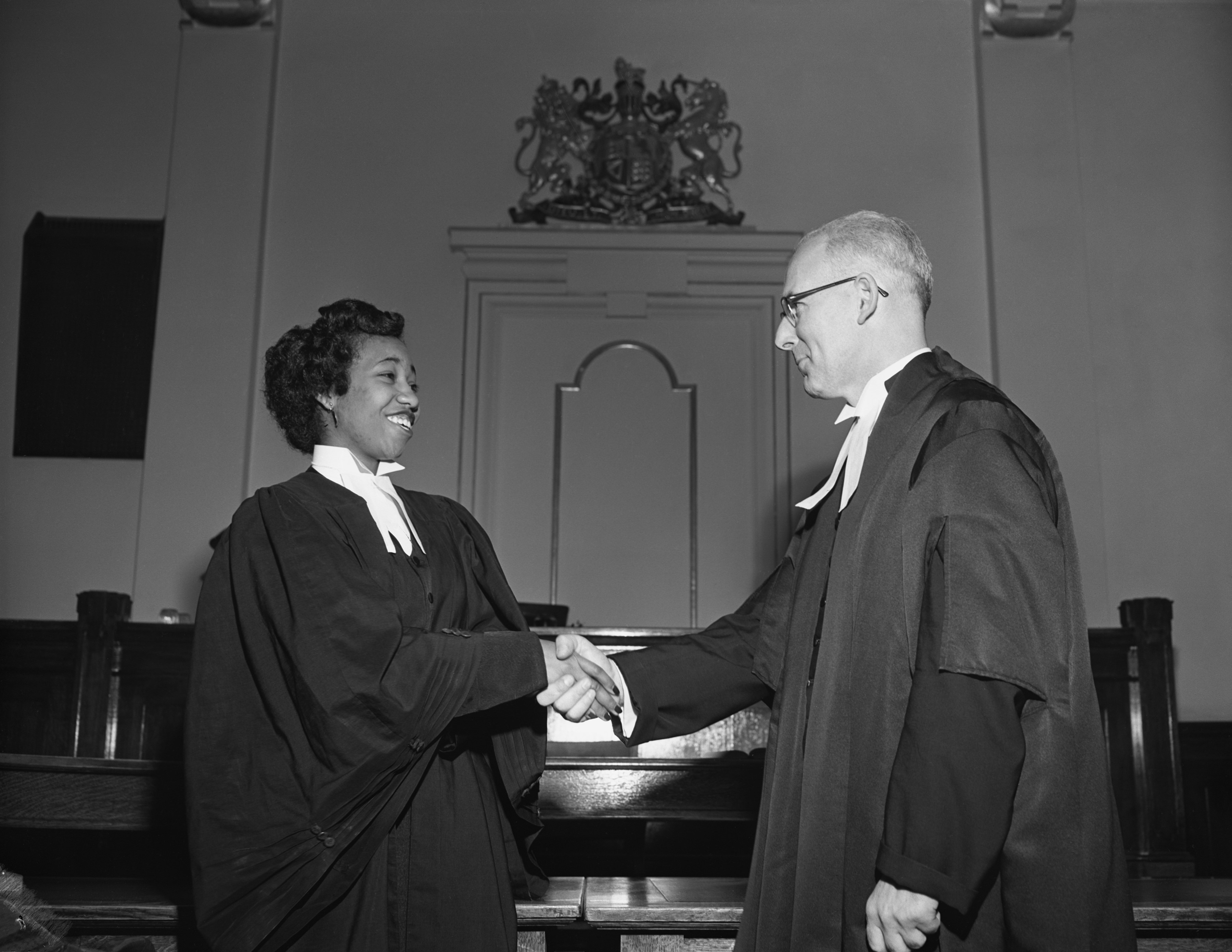
Violet King Henry was one of the most significant figures in Alberta’s legal history. She became a lawyer at a time when it was very rare to find either a woman or a person of colour in the legal profession. When she entered the University of Alberta’s Law School in 1950, she was one of only three women in the program (a fourth had enrolled in the faculty by the time she graduated in 1953).  She was the first Black Canadian to earn a law degree in Alberta and would become the first Black woman to practice law in Canada when she was called to the Alberta Bar in June 1954. It was the start of a remarkable and varied career that took King Henry across Canada and the United States.

Violet King Henry called to the Alberta Bar, June 1954, (CU1140946) by De Lorme, Jack; Calgary Albertan. Courtesy of Libraries and Cultural Resources Digital Collections, University of Calgary.

Violet King Henry was born in Calgary on October 18, 1929. Her grandparents had arrived in Canada in 1911 as part of a large group of Black settlers fleeing racist violence and discrimination in Oklahoma. At that time, the Canadian government was aggressively promoting the Canadian Prairie West as an ideal field of settlement for land-hungry American farmers. The arrival of hundreds of Black settlers from Oklahoma starting in 1908, however, quickly exposed the racist foundations of Canada’s immigration policy. The Government of Canada considered multiple strategies to discourage Black immigration from the United States to Canada, including legislation to ban Black immigration from the United States altogether (the legislation was never passed into law). Despite this hostile reception, approximately 1,000 Black settlers came from the United States to Alberta between 1908 and 1911 and established vibrant communities such as Amber Valley and Keystone (now Breton). 

Read more