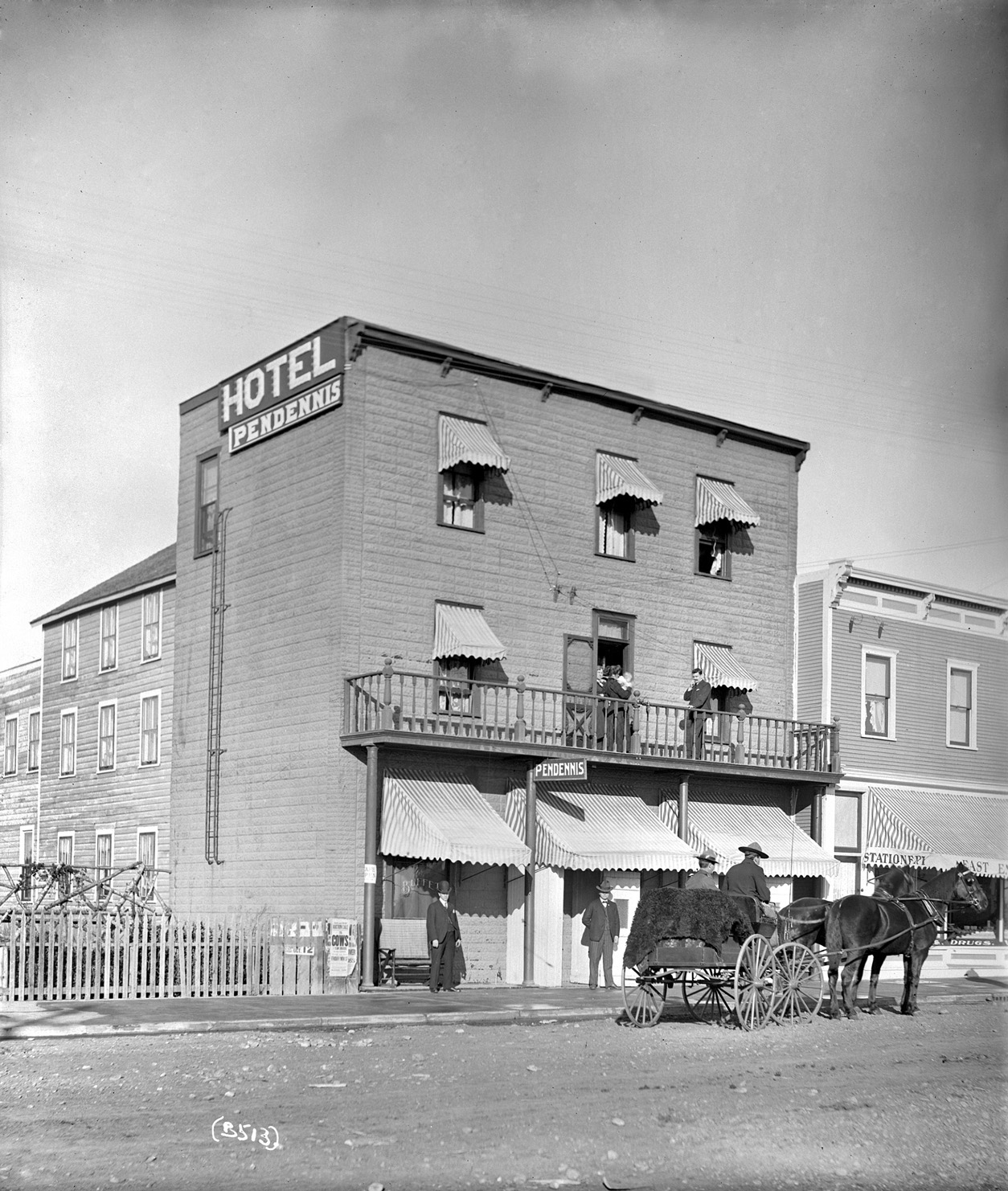
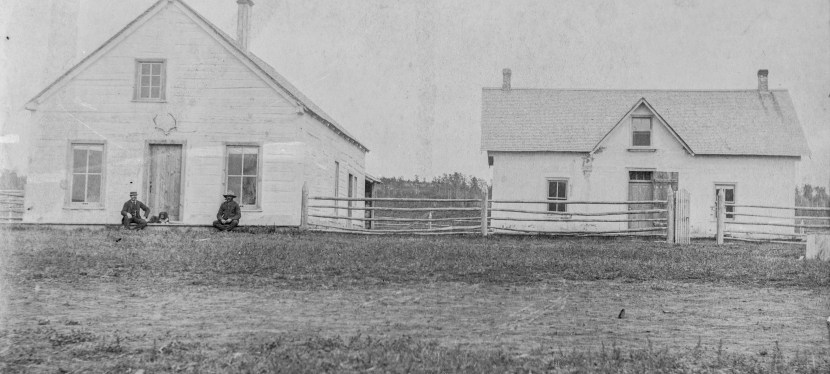
This story begins with the discovery of hundreds of artifacts that were uncovered during the dismantling of the interior of the original Pendennis Hotel in Edmonton in 2006. The Pendennis Hotel, located at 9660 Jasper Avenue, dates to the late 1890s when it was formerly named the California Rooming House. The earliest photo of the building is dated 1898.
Pendennis after 1904. This building was incorporated into the 1911 hotel expansion. Source: Provincial Archives of Alberta, B4328.
Editor’s note: Jillian Richardson is the curator of Labour and Industry at the Royal Alberta Museum (RAM) and worked on both the Doris Tanner Architecture Collection and Wallbridge & Imrie Architecture Collection there. Devon Owen Moar recently wrote his Masters thesis on Wallbridge & Imrie and worked as the cataloguer for the RAM’s Tanner Collection.
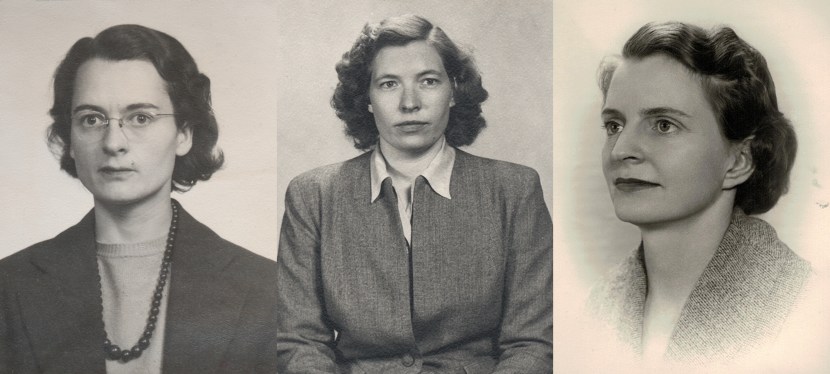
The banner image above is a composite image composed of portraits of the three architects. The portraits of Jean Wallbridge (left) and Mary Imrie (middle) are sourced from the private collection of Mary S. E. Wallbridge-Lillis. The portrait of Doris Newland Tanner (right) is sourced from Cheryl Mahaffy’s “Women Building Alberta” website.
Written by: Jillian Richardson and Devon Owen Moar
While cataloguing the Doris Newland Tanner architecture collection for the Royal Alberta Museum, we noticed something interesting. A few of Doris’s books and technical manuals were inscribed with the names of former colleagues, Mary Louise Imrie and Jean Louise Wallbridge. Finding these inscriptions made us wonder—were these books exchanged as references? Left to Doris after Jean and Mary’s passings? Or, do they hint at an ongoing professional and personal dialogue that extended far beyond the drafting table? This discovery pointed towards the deeper connection between these three architects, beyond being professional acquaintances. The presence of Wallbridge & Imrie’s names in Doris’s books offers a rare glimpse into the professional and intellectual network of Alberta’s pioneering women in architecture at a formative moment in the province’s history and urban development.
Exploring these materials raises broader questions about how museum and archival collections—including architectural tools, books, drawings and correspondence—can illuminate the network of support and influence among professional women. While this research is still in its early stages, this small but compelling kernel of evidence points toward a larger story—one of friendship, mutual mentorship, collaboration and lasting bonds.
Written by: Michael Gourlie, Government Records Archivist, Provincial Archives of Alberta
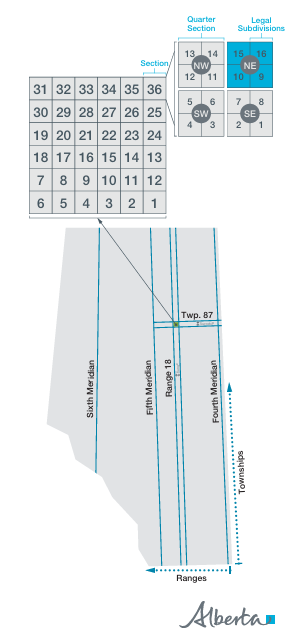
Township maps are a popular research source at the Provincial Archives of Alberta (PAA). An outcome of the Dominion Lands Surveys beginning in 1881 that captured most of what is now Alberta, the township maps document a grid system using meridians, ranges, townships and sections established by federal surveyors. Known as the Alberta Township System (ATS), this grid forms the basis of legal land descriptions used for Alberta land titles to the present day.
The original township maps were subsequently published in several editions, with the published maps used for a variety of operational purposes. They acted as a template or index for various offices to identify land uses for programs such as grazing leases, timber berths, mineral leases, land grants and homestead applicants. They also provided a standardized perspective to administer and oversee land use.
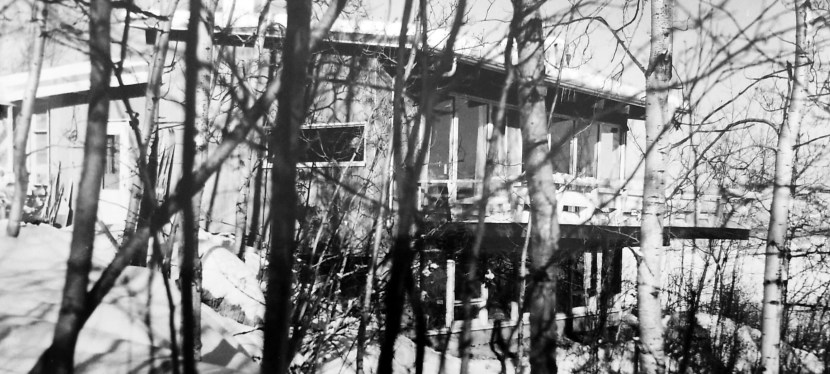
Editor’s note: The dwelling Wallbridge and Imrie created remains standing today, bequeathed to the Province of Alberta upon Mary’s death along with several other parcels of land. It is still owned, managed and maintained by the province, with its current tenants being the Land Stewardship Centre. However, its name has since shifted to “Imrie House.”
The author, Devon Moar, recently completed his Master’s thesis on this very topic.
Written by: Devon Owen Moar
First, I want to open with a quote from the poet Muriel Rukeyser:
“The universe is made of stories, not of atoms.”
The hope is that this line sets the tone for how I believe this dwelling exists, shaped both by structure and story. This place is not only a physical, humble shelter but holds a profound account of its inhabitants.
Welcome to Six Acres
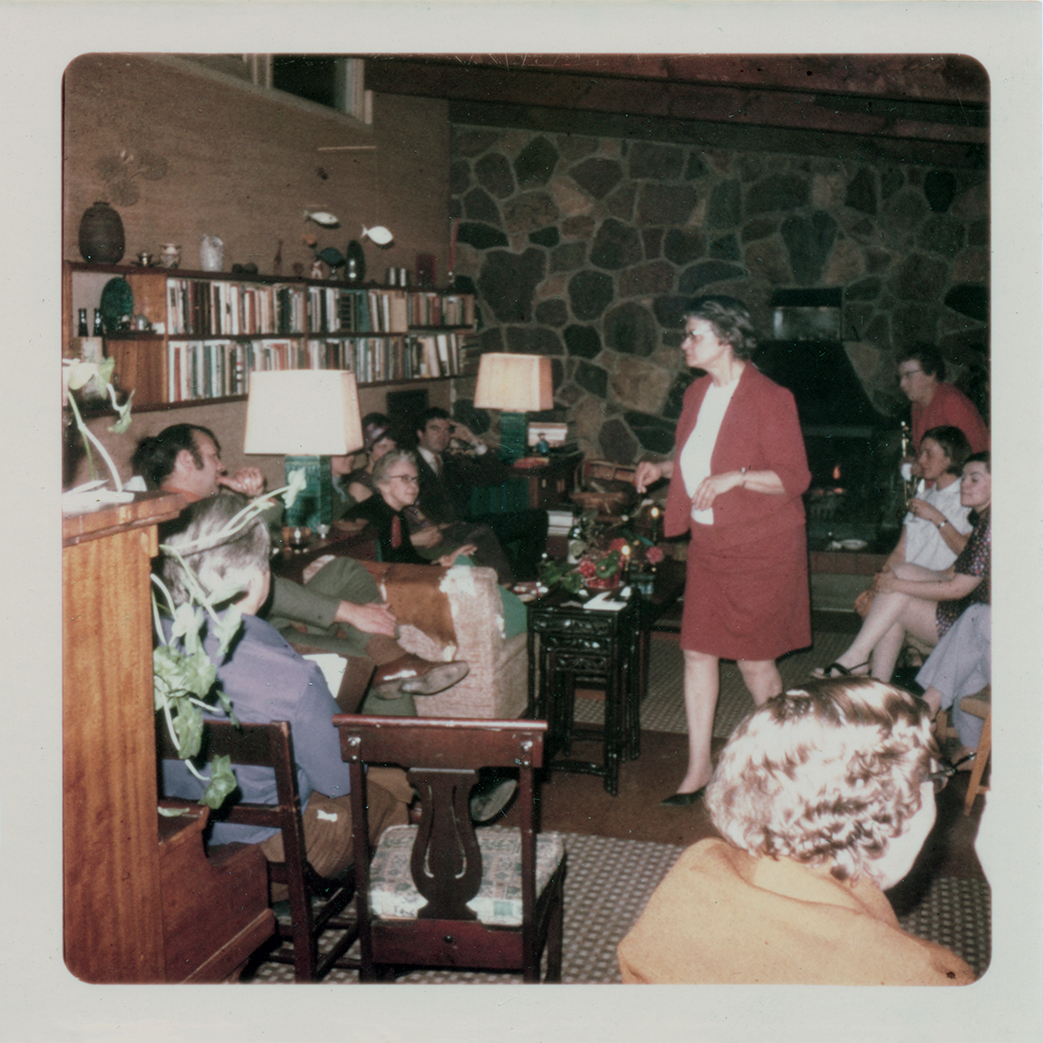
Gathering at Six Acres in the Living Room, back inscription: “French Class Finish, 1971”. Source: Private collection of Mary S. E. Wallbridge-Lillis.
Six Acres is a place where architecture, nature, and personal stories blend into one remarkable narrative. The following isn’t just a tour of a building; it’s an adventure through the living history of a place that served as both an everyday sanctuary and a bustling office for two groundbreaking Albertan women, Jean Wallbridge and Mary Imrie. Now, I’m going to share some anecdotes, quirks, and standout moments that make Six Acres far more than just a simple structure.
Editor’s note: All images below courtesy of the Provincial Archives of Alberta.
Written by: Michael Gourlie, Government Records Archivist, Provincial Archives of Alberta
From his start playing hockey on the northside rinks of Edmonton to winning a gold medal the 1980 Winter Olympics, John Utendale had a remarkable career as an athlete and coach, but his achievements during his career as educator were no less distinguished.
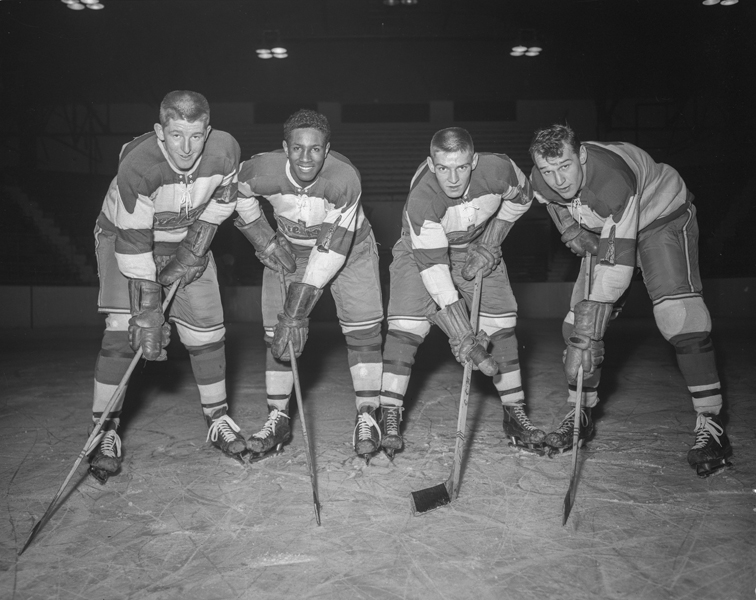
Born in Edmonton in 1937, Utendale played rugby, baseball and hockey while attending Victoria Composite High School. He continued to play softball at the provincial level while also playing hockey for the Edmonton Oil Kings. It was his skill as a hockey player that landed him a contract in 1957 with the Detroit Red Wings organization as a member of the Edmonton Flyers of the Western Hockey League. Utendale would become the first Black hockey player to sign a contract with an NHL team.
Utendale with the Edmonton Oil Kings, Oct. 26, 1954.
He later played for the Quebec Aces, joining Willie O’Ree, who broke the National Hockey League’s colour barrier, and Stan Maxwell for an all-Black line. He also played for the Windsor Bulldogs and for teams in Sudbury and Windsor.
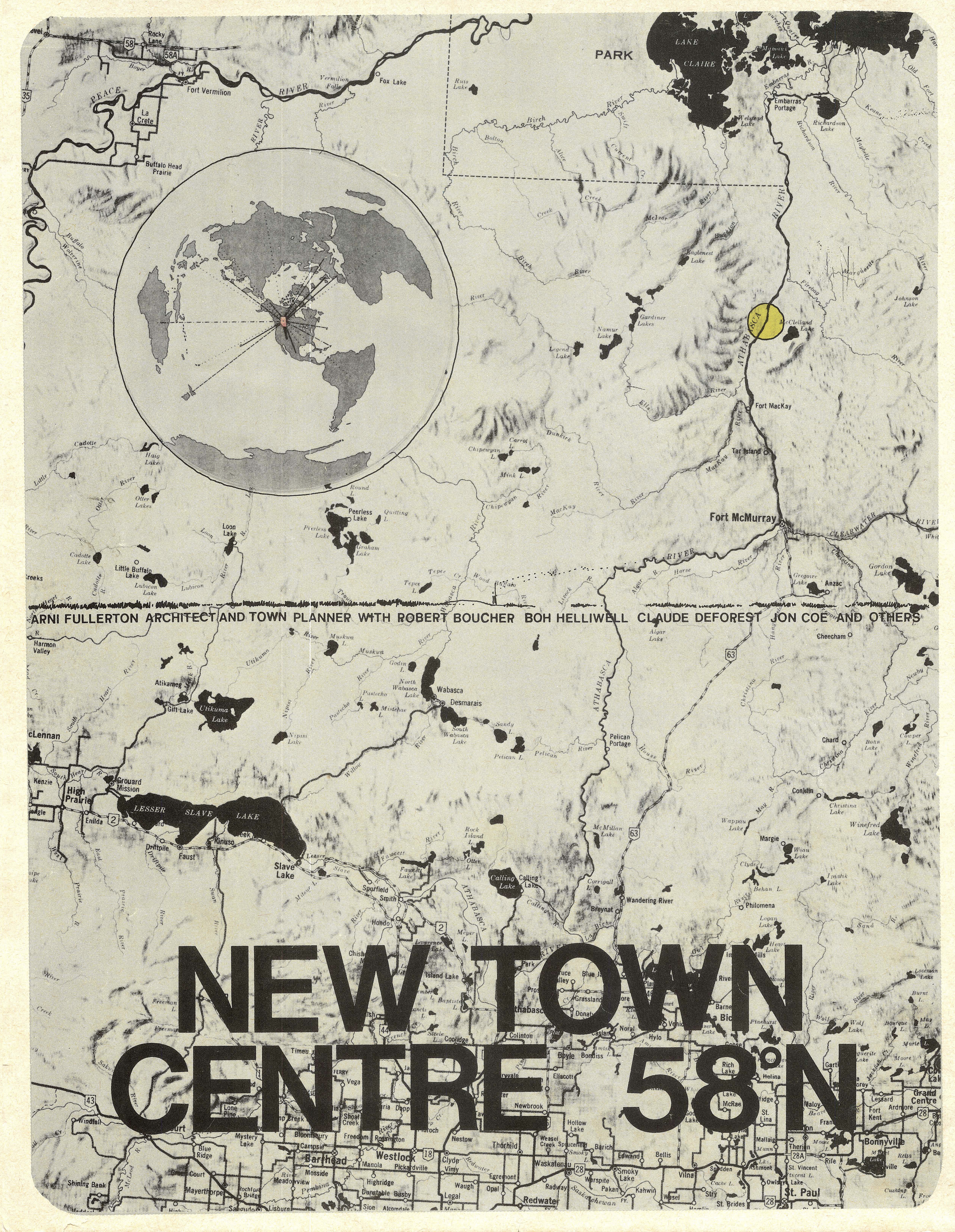
Editor’s note: David Murray is an architect in Edmonton and met Arni Fullerton in 1981 while working for him on an alternate, traditional plan for the development of a new town at 58˚ N as required by his contract with the province, led by Montreal architect Ray Affleck. Fullerton and his wife Merle were interviewed on Zoom in April 2024 at their home in Nanaimo.
All images courtesy of the Arni Fullerton Collection at the Provincial Archives of Alberta, unless otherwise noted.
Written by: David Murray, Architect AAA, FRAIC
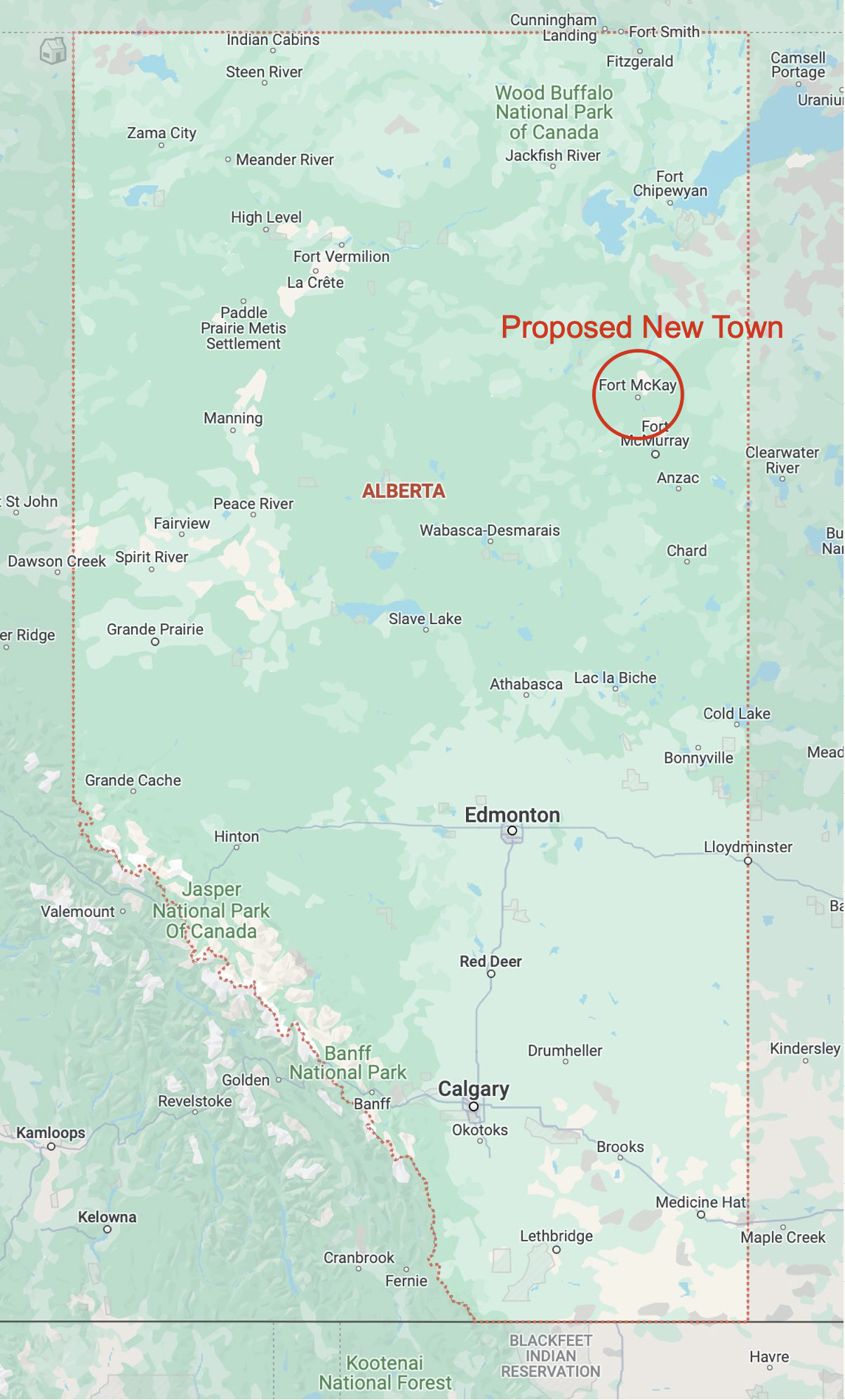
In the late 1970s, the Alberta Government’s Department of Housing and Public Works, initiated a planning process with the intent to design a new community in northern Alberta, north of Fort McMurray, specifically to house workers and their families at the expanding oil sands extraction developments. It would be a most imaginative and provocative approach to living in the north, the culmination of a lot of precedent research by a team of planning and engineering visionaries.
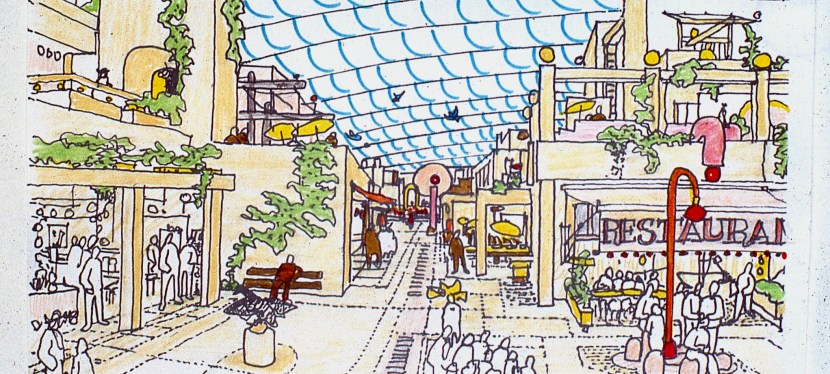
Illustration prepared by David Murray.
Architect Arni Fullerton was hired by the Alberta government to design the proposed new town. His vision, on which he collaborated with Britain’s Buro Happold Engineers and German structural engineer Frei Otto, was a 35 acre air-supported, weather-controlled, transparent dome, covering a town centre that incorporated housing, recreation fields, a sports complex, commercial properties, a shopping centre, schools, an amphitheatre, parks and a children’s plaza. The town was intended to grow incrementally, outside the town centre dome, over time. All parts of the town would be connected by public transit.
Written by: Suzanna Wagner, Program Coordinator, Victoria Settlement and Fort George & Buckingham House
The Hudson’s Bay Company kept a close eye out for anywhere their business might flourish. So, in 1864, when it came to their attention that large groups of people were gathering at the McDougall Methodist Mission on the banks of the North Saskatchewan River (south of the present-day town of Smoky Lake), setting up a fur trade fort next door was an enticing prospect. Rather than reprise the “Fort White Earth” name of the HBC fort that had operated in the vicinity at the turn of the century, they chose to call the place “Victoria Post.” Victoria was the same name as the mission, and it was a “post” because it wasn’t large enough to merit being called a fort. Despite the technicalities, most people call it Fort Victoria.
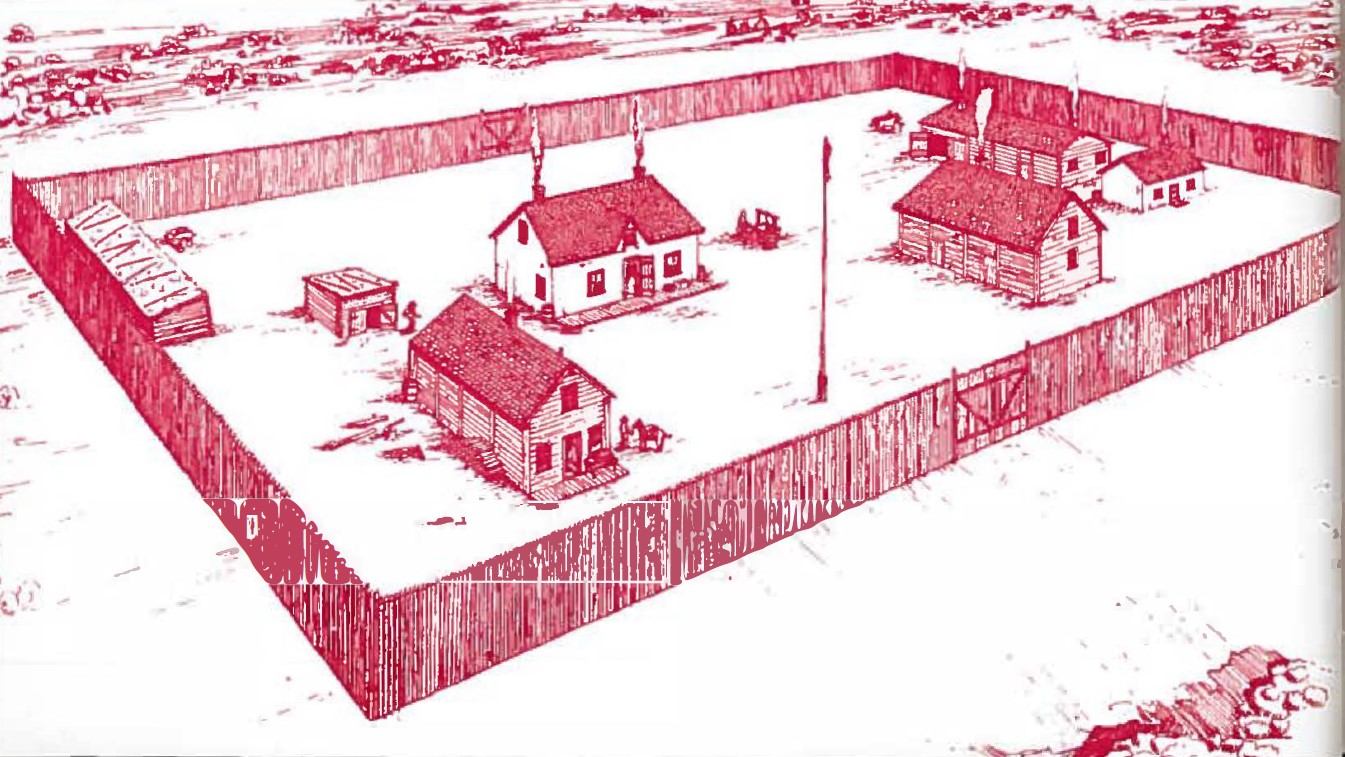
By 1874, the fort contained the Clerk’s Quarters (still at Victoria Settlement Provincial Historic Site today), a warehouse, a house for other fort employees, a blacksmith shop, a stable, a dairy, a palisade, and of particular interest, the trade store. The trade store was built by local men Sam Whitford and Joe Turner, likely between 1866 and 1867. The humble post-in-sill builttrade store went through almost as many changes as did the community which surrounded it, and unique within the history of Victoria Settlement, a series of photographs have shed light on many of the changes this building underwent.
Artist’s conception of Fort Victoria, based on Richard Hardisty’s 1874 scale map. Source: Government of Alberta, 1971.
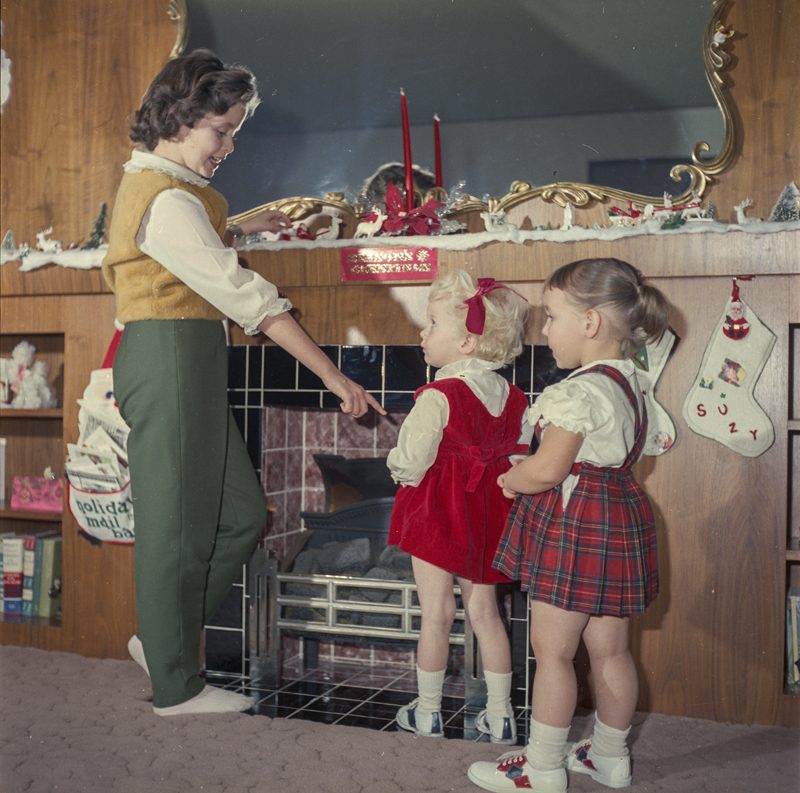
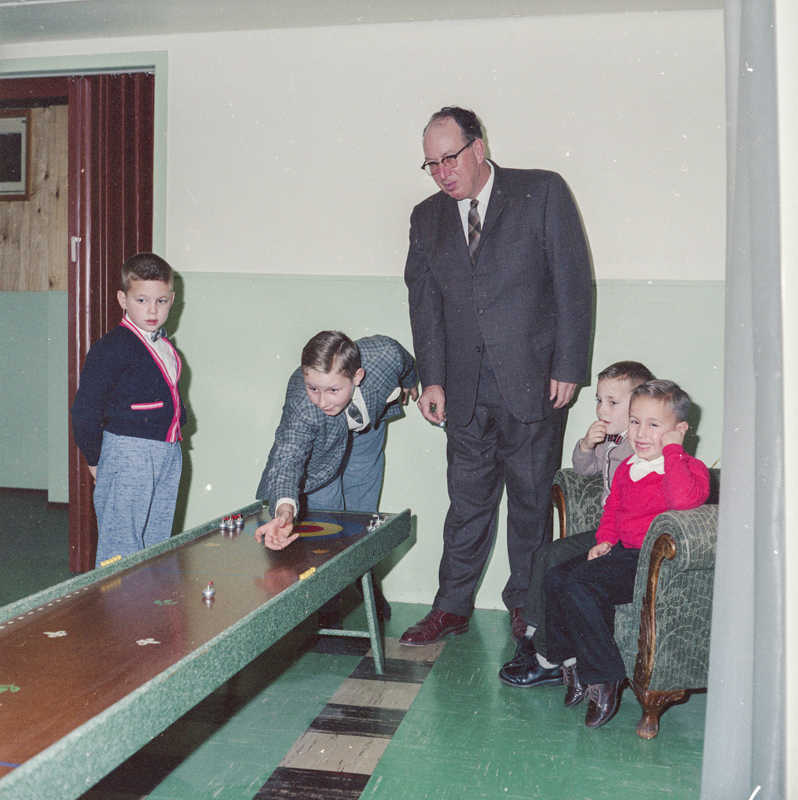
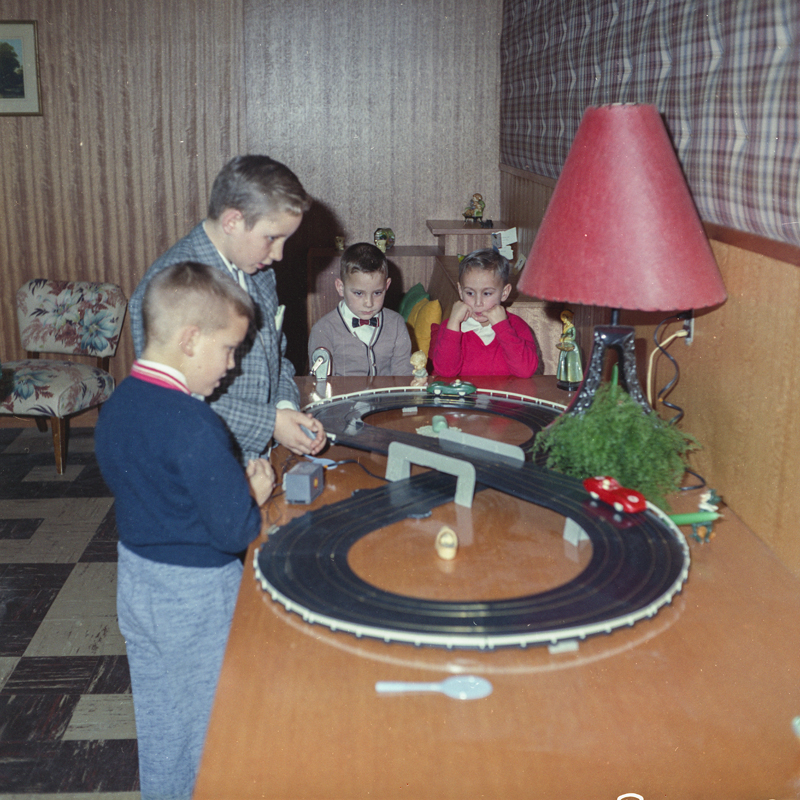
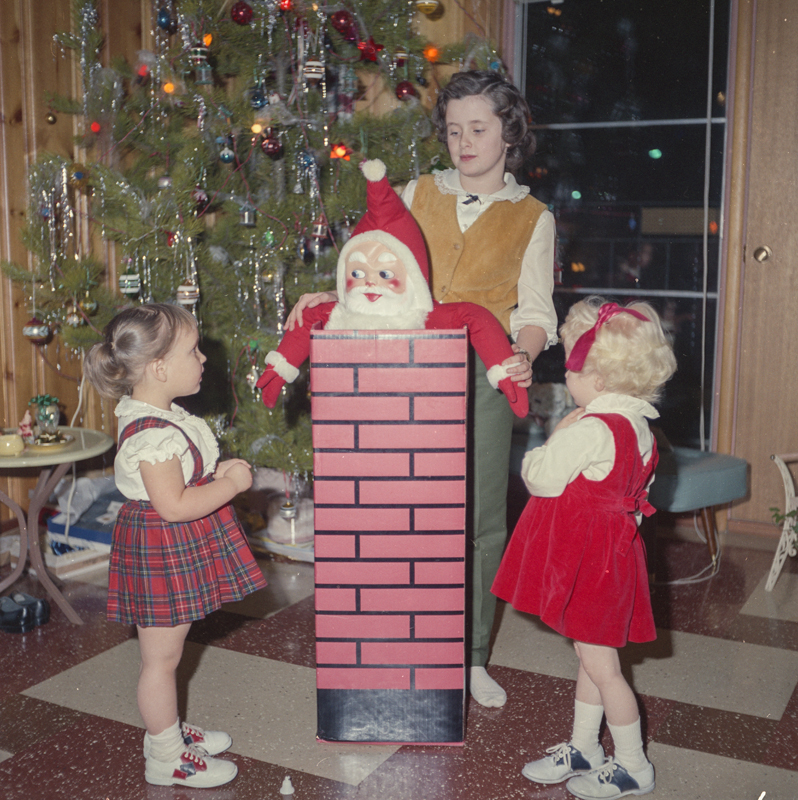
Wishing everyone a safe and enjoyable holiday season! The images below, courtesy of the Provincial Archives of Alberta, were taken from the John Glascow Family Christmas, Edmonton, 1963.
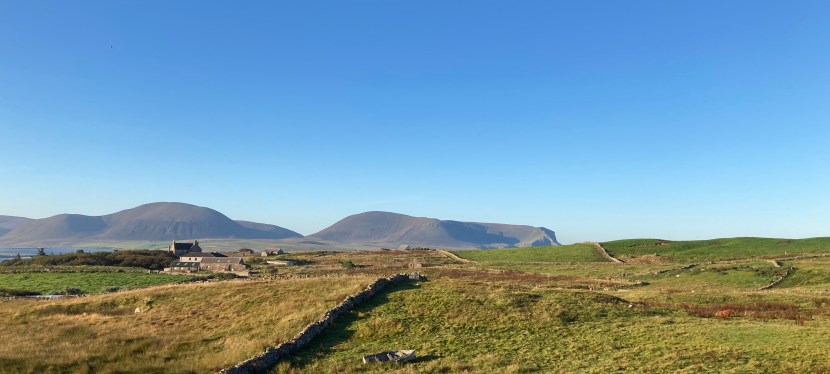
Editor’s note: All images in this post were taken by Suzanna Wagner.The image above is of a view across the Stromness Harbour, Orkney.
Written by: Suzanna Wagner, Program Coordinator, Victoria Settlement and Fort George & Buckingham House
Have you ever travelled vast distances only to find pieces of home?
Intent on exploring new vistas, seeing the ocean, and walking through Neolithic sites, this Canadian historian jetted off to Orkney, Scotland for a vacation. Orkney and Canada share a strong historic connection since the Hudson’s Bay Company hired a great many of their labourers from Orkney. Working with fur trade history made me aware of this, but the only concession my trip plan made to the Orkney-Canada connection was an as-of-yet unread copy of Patricia McCormack’s paper, “Lost Women: Native Wives in Orkney and Lewis” tucked into my suitcase.
After three flights, I arrived bleary-eyed on the largest island of this archipelago north of the Scottish mainland, feeling as though I had travelled to a rather remote part of the world. I couldn’t have been more wrong. Orkney may feel isolated today, but when the Atlantic was bridged with boats instead of planes flying out of densely populated southern urban centres, Orkney was much more central.
Maps of the world on display in Orkney did not have the equator as the centre of the image. Rather, they tilted the globe northward, bringing into focus areas of the northern Atlantic which usually shrink into obscurity- including Orkney itself. By changing the angle from which I considered the globe, I was able to see connections that had never before been made clear to me. One of those connections bridged the wide watery expanse between Orkney and western Canada.
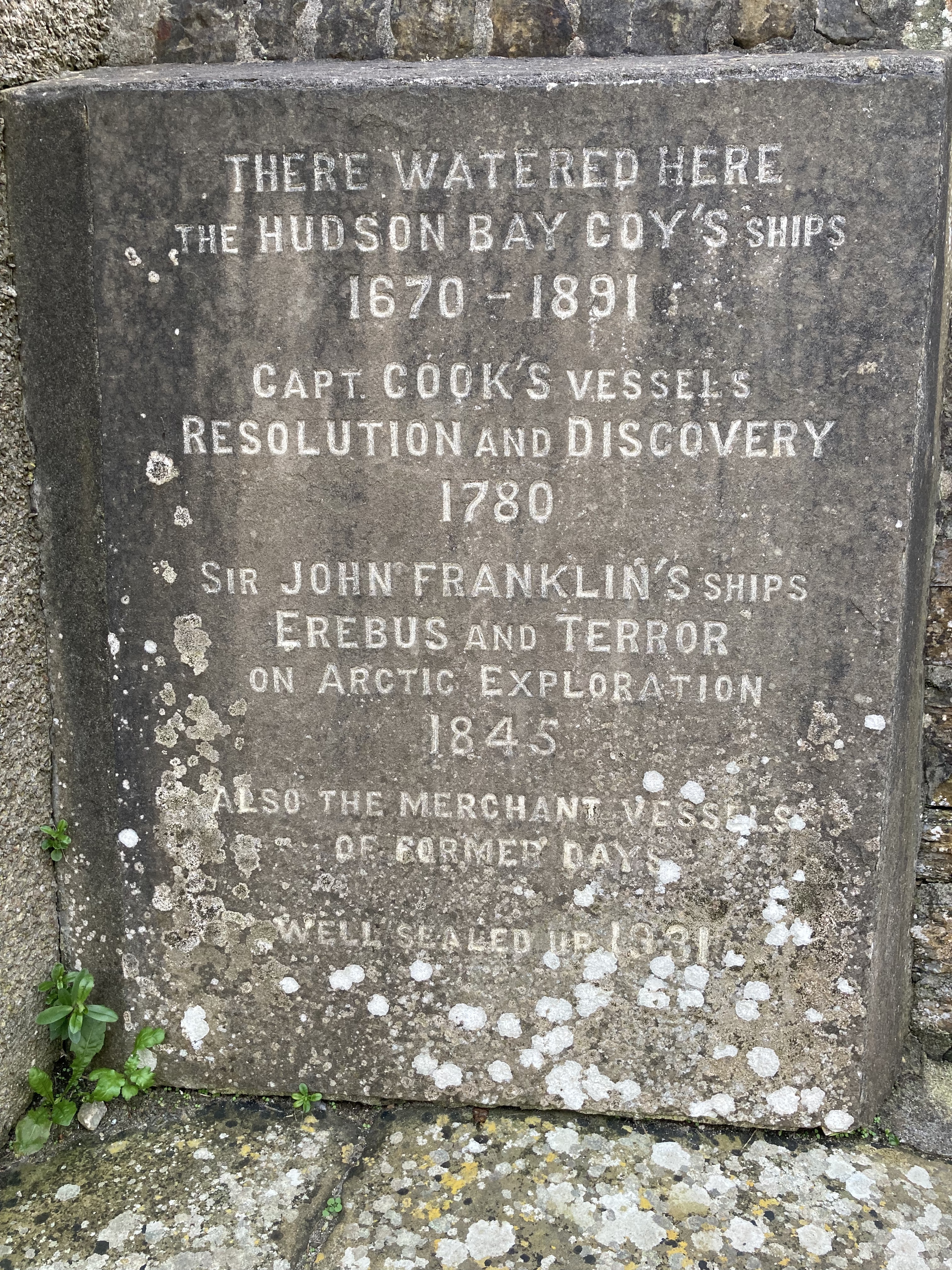
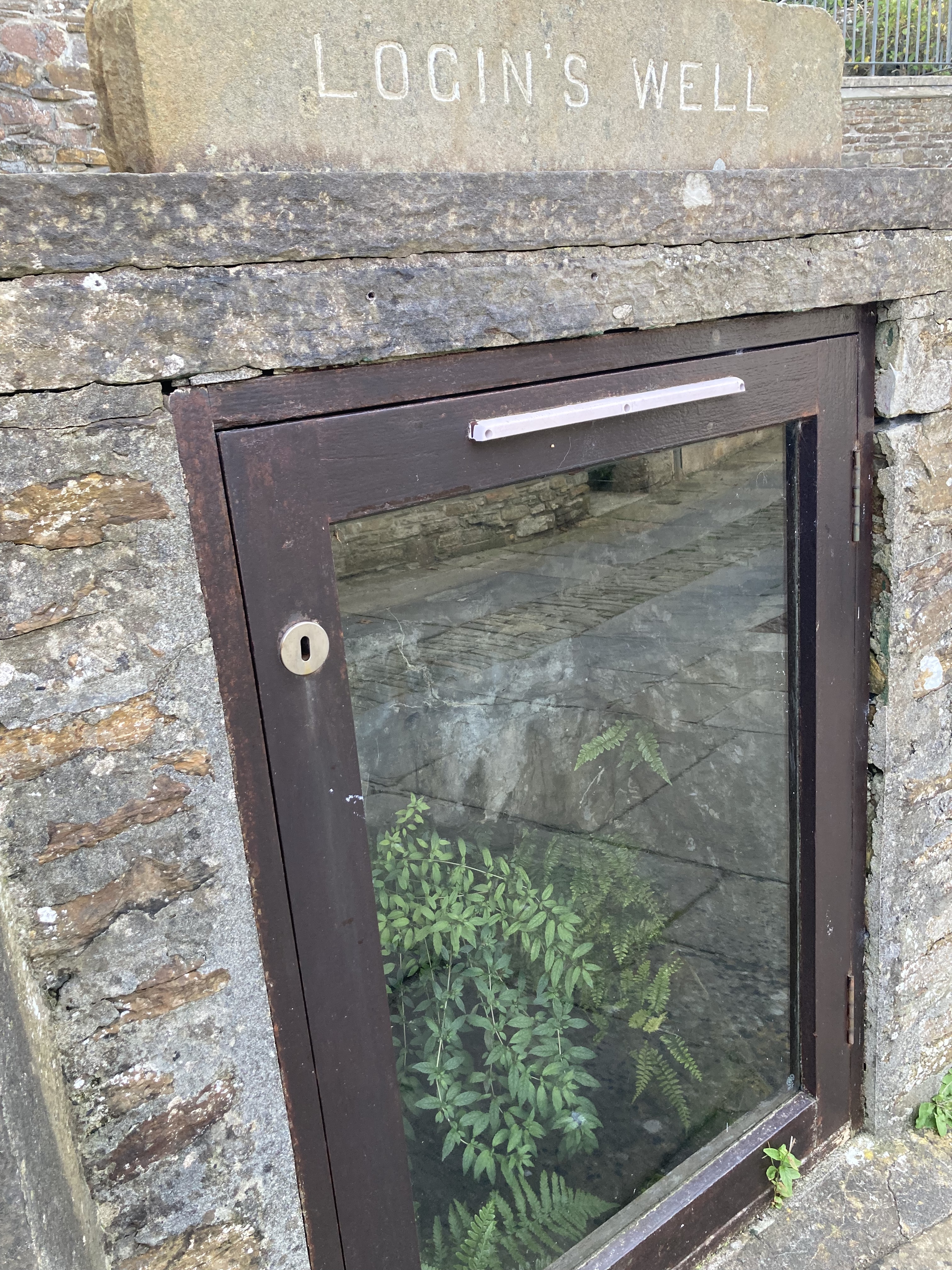
Orkney’s northerly latitude made it a geographically convenient place for the Hudson’s Bay Company (HBC). The oceanic entrance to the Hudson Bay is substantially further north than the mouth of the St. Lawrence seaway, which means that starting the journey from Orkney makes far more sense than leaving from a “more central” port in southern England. Hudson Bay-bound ships “called in” (made a stop at) at the Stromness harbour on the western edge of Orkney as their last landing place before braving the Atlantic crossing. Once in this harbour, they visited Login’s Well (pronounced “Logan’s”) to fill their all-important supplies of drinking water.
Login’s well today: an important part of a Stromness historic walking tour, but if you want to refill your water bottle, you’ll need to look elsewhere.
But it wasn’t just Orkney’s fresh water the HBC wanted. Orkney’s men were also in high demand.
Written by: Patrick Carroll, Cultural Resource Management Advisor, Southwest NWT Field Unit, Parks Canada
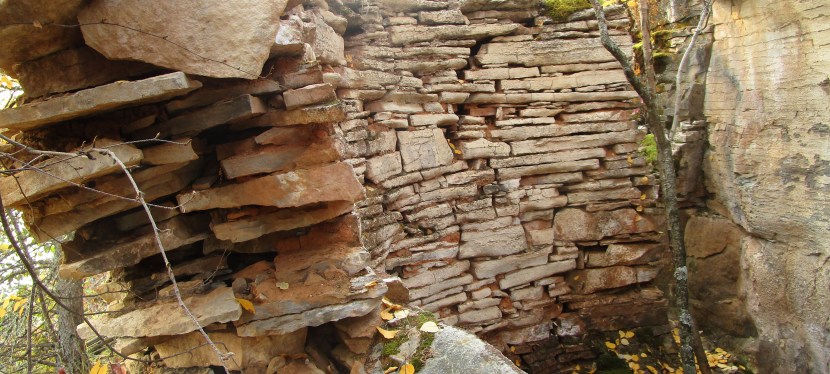
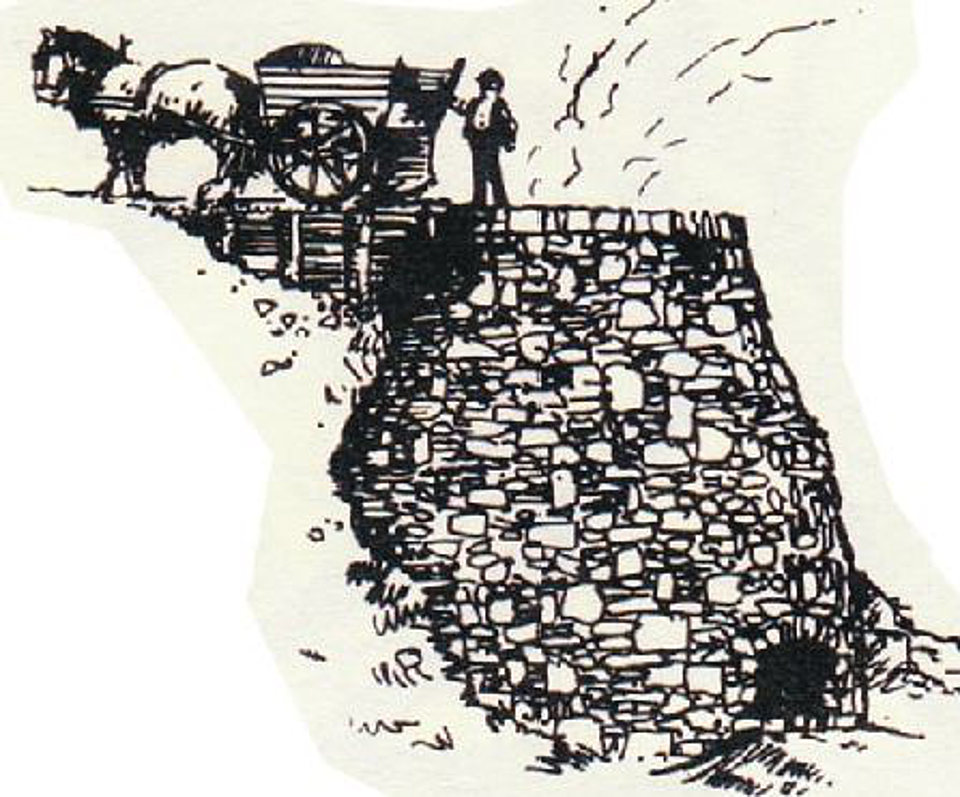
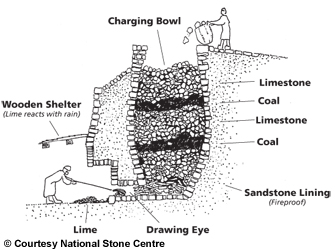
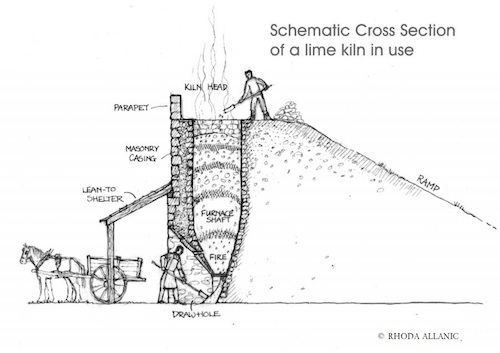
About 50 km upriver on the Slave River from Fitzgerald, Alberta, among a small cluster of islands named Stony Islands, you will find the remains of a stone lime kiln. Archaeologist Marc Stevenson documented the kiln (IjOu-5) and a nearby quarry (IjOu-6) during a survey of the Slave River in 1980. He described the kiln as a, “large semicircular limestone feature 4m in height.” The quarry is an exposed face of limestone just upriver from the kiln. All that we know about the history of the kiln is based on notes from a conversation Stevenson had with a Brother Seaurault. According to Stevenson, “The feature, according to an elderly informant, is the limestone furnace used by residents of Fort Chipewyan in the 1910’s and 1920’s to make whitewash for their log homes in the latter settlement.” It appears, therefore, to have been here for at least a century and is now showing the degradations of time, seasonal flooding and ice scouring.
The kiln is built into a natural alcove in the limestone exposure, set on a rocky shelf at a height to protect it from the impacts of seasonal high water and ice scouring on the Slave River. It consists of a semi-circular convex stone wall extending from the bedrock which, together, create the chimney. The height of the wall extends to the height of the top of the bedrock. A stoke hole on the bottom of the wall faces toward the river. An interesting feature of this kiln is that one side of the wall of the kiln does not abut directly against the limestone outcrop. The collapsing wall on the down-river side appears to have been built mostly flush to the bedrock face. The wall on the up-river side, though, remains in its original condition showing it was built with a 30-60 cm gap between the edge of the stone wall and the bedrock face. It is not known what purpose this gap might have provided for the operation of the kiln, although, it is easily wide enough to allow for a person to enter the cavity of the chimney.
Source: Stoney Middleton Heritage Centre Community Group.Source: National Stone Centre.Source: Rhoda Allanic.Read more →


 RETROactive