Coal Mining History and Heritage Conservation at the Bellevue Mine

Written by: Fraser Shaw, Heritage Conservation Advisor and Allan Rowe, Historic Places Research Officer

The Crowsnest Pass is a landscape of remarkable history and exceptional natural beauty in southwest Alberta. Highway 3 winds through the mountain corridor past the former site of the West Canadian Collieries Mine, where an enormous tipple once straddled rail spurs on what is now the highway. The tipple and above-ground operations were dismantled after the mine’s closure in 1961 but the distinctive concrete portals remain and are clearly visible from the road. Now a historic site, the Crowsnest Pass Ecomuseum Trust Society owns and operates an interpretive facility and maintains a portion of the main tunnel where public tours and thousands of visitors experience an underground mine that historically extended for kilometres along the coal seams.

The Bellevue Mine in June 2024 retains its distinctive paired portals with the name and construction date cast into the concrete facade. The portals and tipple walkway, a remnant of which survives beside the portal today (arrows), both appear in a 1951 photograph in the Provincial Archives of Alberta looking south from the escarpment (above right). Above left, an image of West Canadian Collieries from the collection of the Crowsnest Archives looks north to Bellevue, with stairs ascending the steep slope from the tipple and portal complex (not visible) to the wash house on the ridge above. Source: Historic Resources Management Branch.

Designated as a Provincial Historic Resource in 2011, the former mine exemplifies the early mining history of the Crowsnest Pass and represents industrial practices and technologies at one of Alberta’s most significant underground mining operations in this important historic coal-producing region.

Read more
Rallying Point: Blairmore Bandstand designated a Provincial Historic Resource

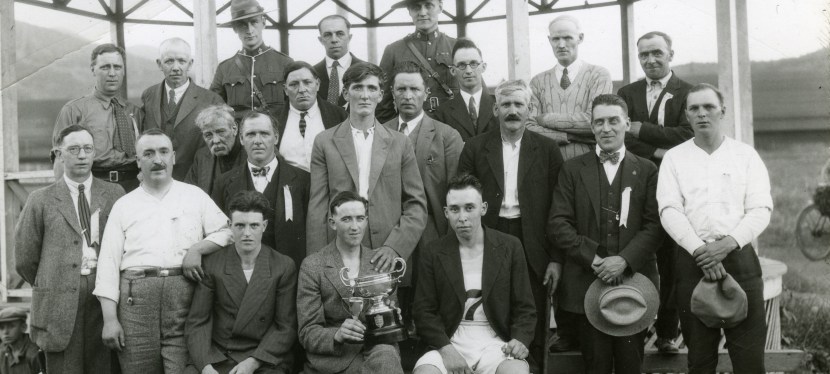
Editor’s note: The banner image above, awarding of a Dominion Day track trophy at the Blairmore Bandstand, is courtesy of the Crowsnest Museum and Archives.

Written by: Ronald Kelland, Historic Places Research Officer

A well-known landmark in the Crowsnest Pass has recently been designated as a Provincial Historic resource and is now listed on the Alberta Register of Historic Places.

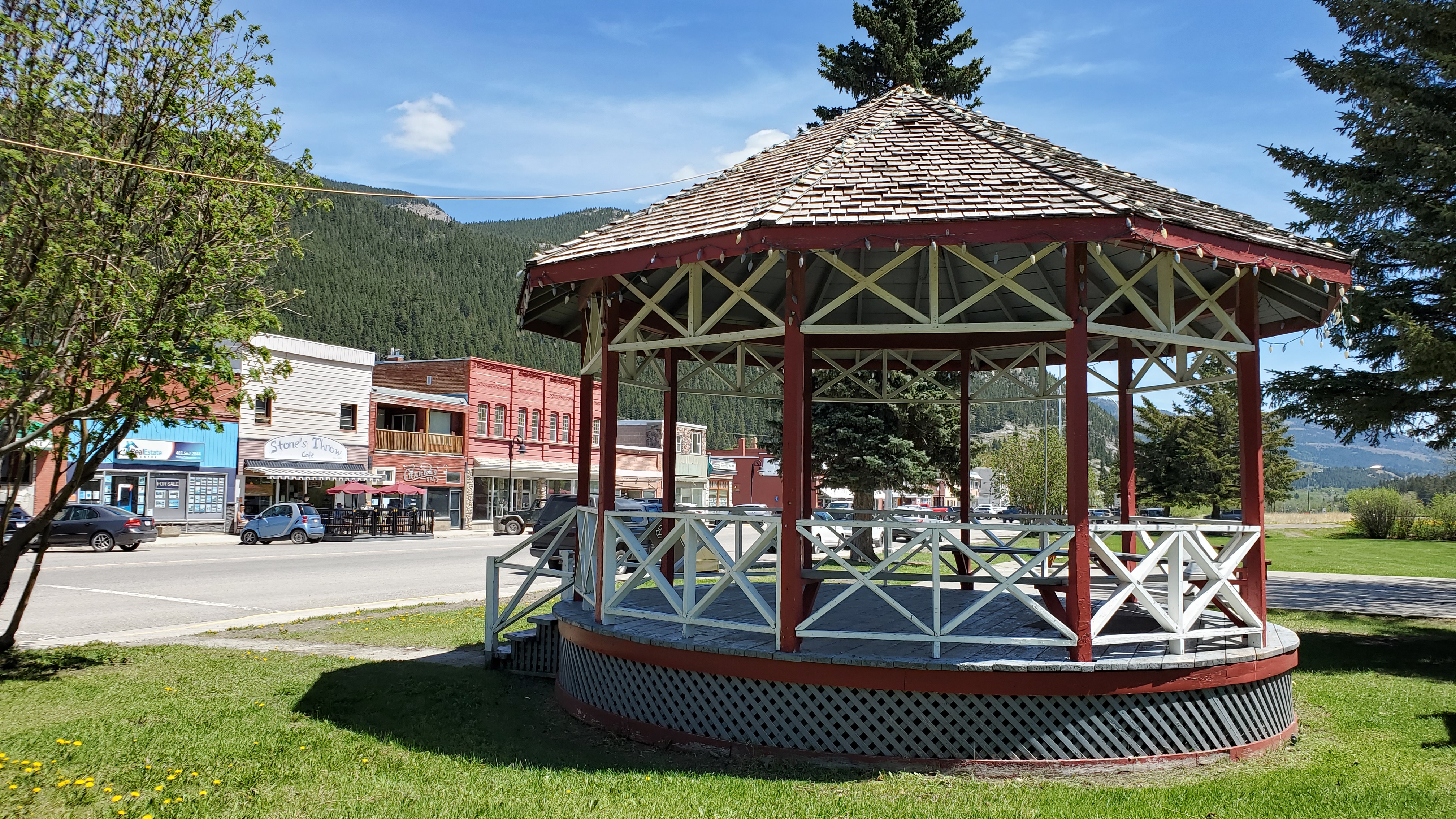
View of the Blairmore Bandstand from the east, showing its wooden construction and prominent position along Blairmore’s main commercial roadway, June 2021. Source: Historic Resources Management, Alberta Arts, Culture and Status of Women.

On your drive through the Crowsnest Pass, if you were to pull off Highway 3 and travel down the streets of the communities that make up the municipality you will see historic buildings that harken back to the boom periods of these coal mining towns. One structure that you may miss is a small bandstand in the community of Blairmore situated in a green space between 20th Avenue and the Canadian Pacific Railway line. It may be an unassuming structure, but the Blairmore Bandstand is one of the most significant sites in the Crowsnest Pass – a community landmark and a symbol of hard-won workers’ rights and the labour movement of the 1920s and 1930s.

The Blairmore Bandstand is typical of such structures. Built of wood, the bandstand consists of a raised, circular platform with railings and interior benches under an eight-sided, peaked roof with flagpole. Bandstands were once a common and important fixture in many Alberta communities. Associated with Victorian and Edwardian Age beliefs about the healing and restful benefits of urban green spaces, education and wholesome entertainment, bandstands were often the centrepiece of urban parks, where they were used for public events such as concerts and speeches. Being situated in publicly accessible spaces also leant their use as rallying points for social movements and protests.

Read more

Revival of a Prohibition-Era Landmark in the Crowsnest Pass

Editor’s note: You can read more of Fraser Shaw’s series on heritage conservation on RETROactive.

Written by: Fraser Shaw, Heritage Conservation Advisor

Gunshots shattered the stillness of 18 Avenue in Coleman on the afternoon of September 21, 1922.

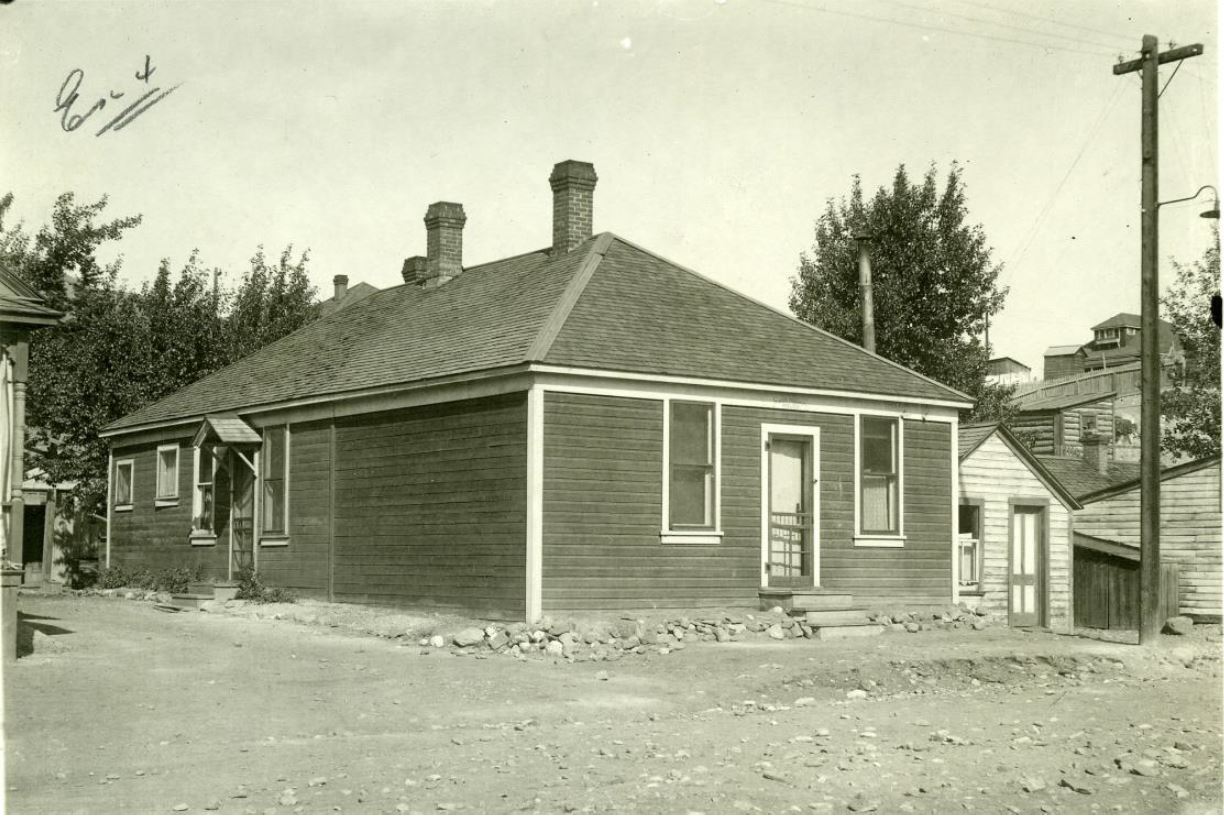
Local bootlegger Emilio Picariello and his accomplice Florence Lassandro sped off in a cloud of dust as Constable Stephen Lawson lay dead outside the Alberta Provincial Police barracks, a cottage-like office and residence where he worked and resided with his family. Hours later, “Emperor Pic”—as he was known locally—and Lassandro were apprehended and charged with Lawson’s murder. Both were later convicted and hanged. Lassandro became the first woman to be executed in Canada since 1899 and the only woman to be hanged in Alberta.

The Alberta Provincial Police Building as it appeared in late 1922 after the murder of Constable Stephen Lawson. Source: Crowsnest Museum.

The Alberta Provincial Police (APP) Building, a Provincial Historic Resource within the Coleman National Historic Site, is significant for its association with the infamous murder of Constable Lawson and, more generally, with its role in the maintenance of law and order in the mining communities of the Crowsnest Pass during Prohibition until the 1930s.

Read more

Bread, salt and water: the history of Doukhobors in Alberta

Editor’s note: The following blog post is part one of a two-part series looking at the history and influence of Doukhobors in Alberta.

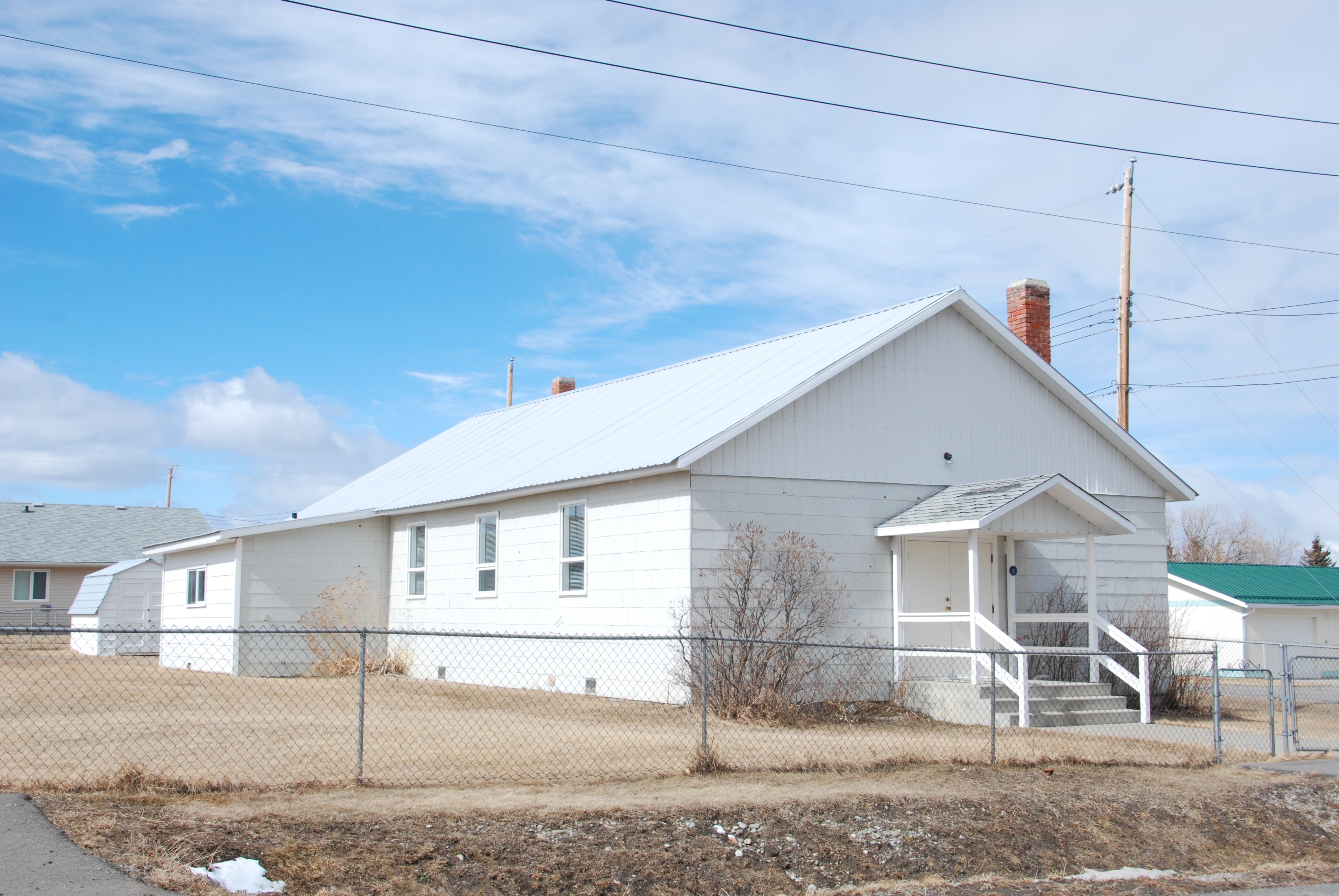
East of the Crowsnest Pass, nestled within the small community of Lundbreck, sits a simple white building clad in asbestos shingles and covered with metal roof. The structure looks utilitarian and spare; it could easily be mistaken for the kind of modest community halls one occasionally sees in Alberta’s small towns. While the building is almost entirely non-descript, the history that it embodies is extraordinarily rich.

The history of the Alberta Doukhobors is an essential chapter in the story of one of the largest experiments in communal living in North America. Approximately 7,500 Doukhobors came to Canada in 1899, at the time it was the largest mass migration in the country’s history. In stark contrast, at a 2018 meeting of Doukhobors in British Columbia, a grim question was posed: will there be any Doukhobors active in their faith by 2030? Between their noteworthy arrival at the end of the nineteenth century and their dwindling membership today, the Doukhobors have lived a tumultuous and compelling experience in Canada. This post attempts to explore the vision and roots of the Doukhobor community, and their early experiences in Canada.

Doukhobor Prayer Home in Lundbreck, 2013
The Doukhobor Prayer Home in Lundreck (also known as the Doukhobor Hall [dom or house]) is one of the few tangible reminders of one of the most remarkable communities of people to ever settle in this province.
Read more

The Butterfly Effect

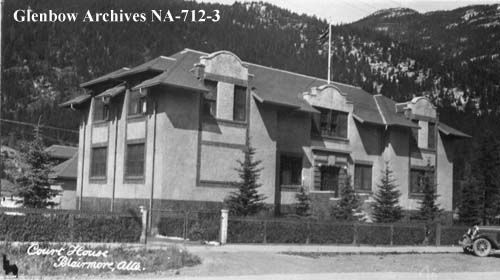
Peeling paint and powdering plaster were the first indications something was amiss at the Blairmore Courthouse, a Provincial Historic Resource in the Crowsnest Pass. A leak in the cedar shingle roof, replaced just the previous year, was immediately suspected. Detailing around the dormers in particular, part of the 1922 building’s distinctive Spanish Colonial Revival design by architect R.P. Blakey, is tricky and vulnerable to water penetration.

1920s view of Blairmore Courthouse from the southwest (Photo Credit: Glenbow Archives)
1920s view of Blairmore Courthouse from the southwest (Photo Credit: Glenbow Archives NA-712-3)

Nippon School of Technology, which owns the building and runs a technical school and exchange program for Japanese engineering students there, inspected the roof from the attic and found no active leaks. Puzzled, N.I.T. engaged a conservation architect to inspect the building and identify sources of moisture causing the paint and plaster failure. The findings were at once surprising and (in hindsight) credible.   Read more

Diverse Sites Tell Distinct Stories of Alberta’s History


Three sites from Alberta’s past – one that precedes the railway, one that was made possible by the railway and one that made the railway run – were recently designated as Provincial Historic Resources for their historical and architectural significance.

The McDonald Stopping House, a pre-railway lodging place in Smoky Lake County.

The Red Brick School, an imposing structure in Didsbury, built to accommodate the railway-fuelled population boom before World War One.

The West Canadian Collieries Mine Site in the Municipality of Crowsnest Pass, which sold virtually all of its 13 million tonnes of coal to the Canadian Pacific Railway.


Click on the above links to read the sites’ Statements of Significance on the Alberta Register of Historic Places. Alberta currently has over 330 Provincial Historic Resources.  These sites embody the richness and variety of our province’s history and include medicine wheels, tipi rings, fur trading and mounted police posts, coal mines, farmsteads, ranches, railway stations, grain elevators, churches, schools, government offices, commercial blocks and private residences.   

For more information on Alberta’s Provincial Historic Resource Designation Program, click here.

Written by: Matthew Wangler, Manager of Historic Places Research and Designation Program