Revisiting the Indigenous Resources Guide at The Provincial Archives of Alberta  

Editor’s note: The author would like to give special thanks to Quinton Crow Shoe for his contribution to this post. As well, the banner image above features audio reels at the Provincial Archives of Alberta. Source: Provincial Archives of Alberta.

Written by: Mikaela LeBlanc, TRC Archivist Intern

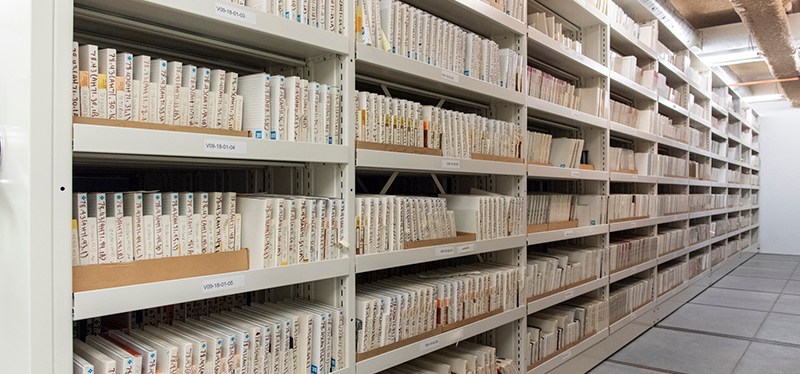
The Provincial Archives of Alberta (PAA) acquires, preserves and makes records available to researchers. These includes government records, which are records created by agencies, boards and commissions as well as departments within the Government of Alberta, and private records, which are records created by individuals, families and organizations. The records come in many formats and can include letters, photographs, drawings, audio recordings, journals, newspapers and maps, among others. Within these records are also a wide variety of materials that were created by and about Indigenous people and communities.

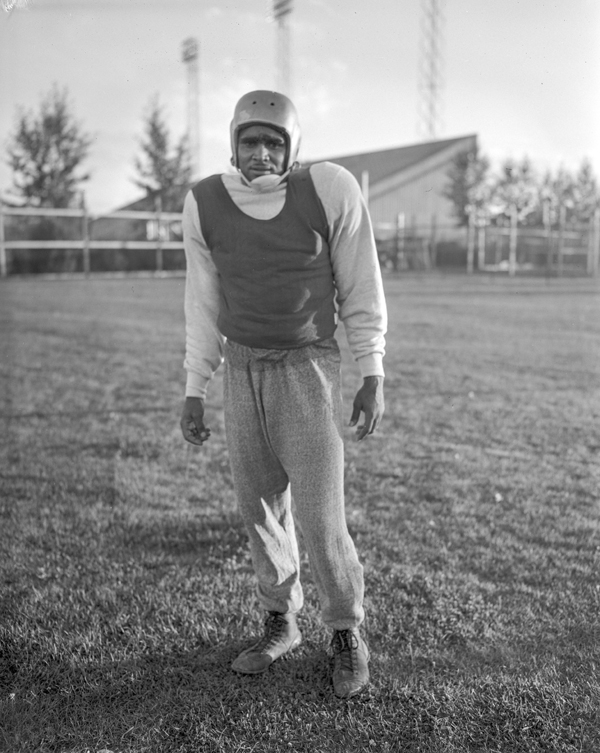
The PAA first released an “Aboriginal Resource Guide” finding aid in 2006, which listed records identified as being about Indigenous communities in Alberta. This guide provided the building blocks for archival research to become more user-friendly when accessing Indigenous related records. The hearings and report of the Truth and Reconciliation Commission (TRC) and Calls to Action related to archives and the heritage sector identified ways in which the PAA could make improvements in access to records by Indigenous creators and about Indigenous communities. This coincided with the PAA’s move to a new collections management database webpage Access to Memory (AtoM), and saw the release of the Indigenous Resources Guide (IRG) in April 2023. The guide identifies records that relate to Indigenous people and communities in Alberta that are currently in PAA’s holdings.

Read more

Township maps at the Provincial Archives of Alberta

Written by: Michael Gourlie, Government Records Archivist, Provincial Archives of Alberta

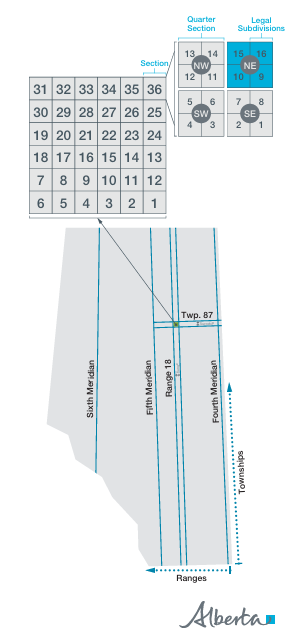
Township maps are a popular research source at the Provincial Archives of Alberta (PAA). An outcome of the Dominion Lands Surveys beginning in 1881 that captured most of what is now Alberta, the township maps document a grid system using meridians, ranges, townships and sections established by federal surveyors. Known as the Alberta Township System (ATS), this grid forms the basis of legal land descriptions used for Alberta land titles to the present day.

The original township maps were subsequently published in several editions, with the published maps used for a variety of operational purposes. They acted as a template or index for various offices to identify land uses for programs such as grazing leases, timber berths, mineral leases, land grants and homestead applicants. They also provided a standardized perspective to administer and oversee land use.

Read more

John Utendale: From the Monarchs to the Miracle on Ice

Editor’s note: All images below courtesy of the Provincial Archives of Alberta.

Written by: Michael Gourlie, Government Records Archivist, Provincial Archives of Alberta

From his start playing hockey on the northside rinks of Edmonton to winning a gold medal the 1980 Winter Olympics, John Utendale had a remarkable career as an athlete and coach, but his achievements during his career as educator were no less distinguished.

Born in Edmonton in 1937, Utendale played rugby, baseball and hockey while attending Victoria Composite High School.  He continued to play softball at the provincial level while also playing hockey for the Edmonton Oil Kings.  It was his skill as a hockey player that landed him a contract in 1957 with the Detroit Red Wings organization as a member of the Edmonton Flyers of the Western Hockey League. Utendale would become the first Black hockey player to sign a contract with an NHL team.

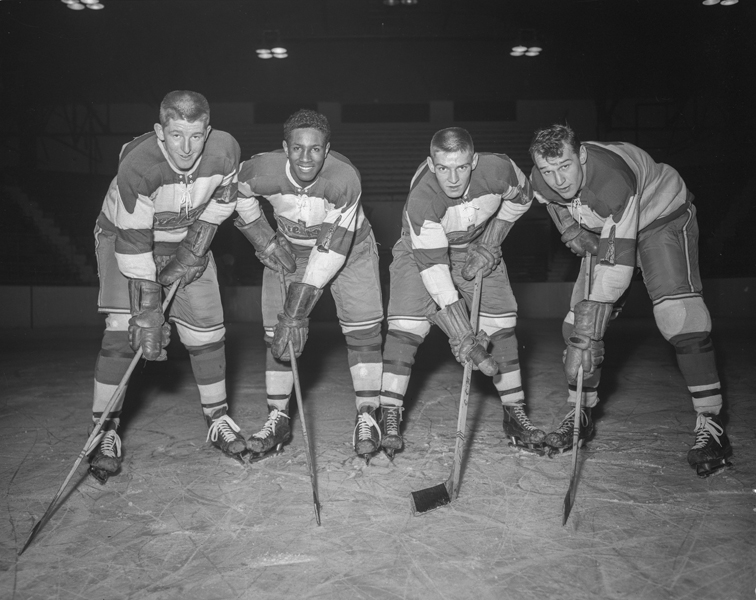
Utendale with the Edmonton Oil Kings, Oct. 26, 1954.

He later played for the Quebec Aces, joining Willie O’Ree, who broke the National Hockey League’s colour barrier, and Stan Maxwell for an all-Black line.  He also played for the Windsor Bulldogs and for teams in Sudbury and Windsor.

Read more

Halloween in Smoky Lake

Written by: Sara King, Government Records Archivist, Provincial Archives of Alberta

With Halloween once again upon us it’s time for some spooky fun from the Provincial Archives of Alberta. Nicholas Gavinchuk operated a photography studio in Smoky Lake from the early 1920s into the 1960s documenting all manner of aspects of community life there, including Halloween. One of the more interesting aspects of doing archival research is seeing a brief description of a file or photograph and finding out it’s not quite what you expected. This is often the case in archives as archivists try and use the titles given to photographs and files by the creator of the records as opposed to assigning their own.  

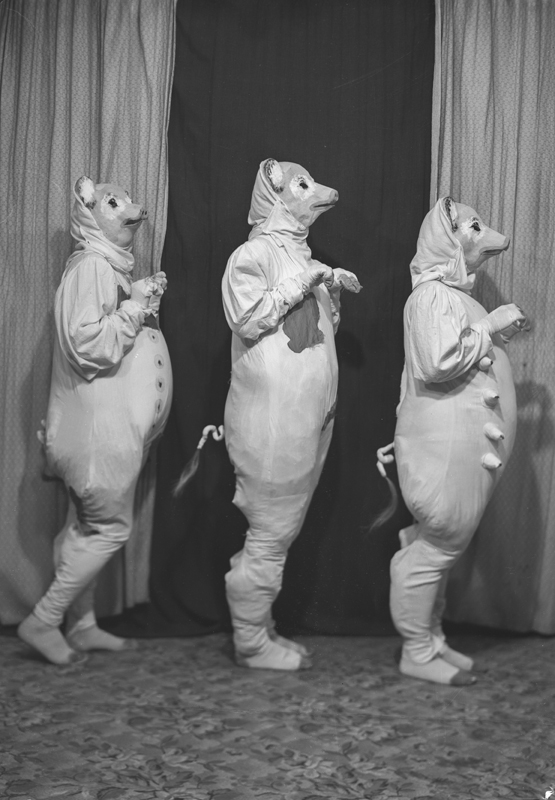
For example, the image below was labelled as “Halloween Hags”. But as you can see, they’re clearly Halloween hogs! In the Archives’ defense, an “a” and an “o” are awfully similar in cursive.

G1810 “Halloween Hags” (Smoky Lake), 1953. Source: Provincial Archives of Alberta.
Read more

Love and Marriage at the Provincial Archives of Alberta

Editor’s note: The banner image above is from the wedding of Sandy and Diane Weir, November 1974. Photo courtesy of the Provincial Archives of Alberta.

Written by: Heather Northcott, Government Records Archivist, Provincial Archives of Alberta

Showcasing a variety of archival records and images, the Provincial Archives of Alberta (PAA) is pleased to present its latest exhibit “Love and Marriage.”

The exhibit was inspired by the often joyful and sometimes sad stories that fill the archival vaults waiting for discovery. Visitors to the exhibit will first encounter images and letters about love blossoming before exploring narratives of engagement and marriage. The arc of romance and marriage leads naturally to anniversaries, divorce and death. The exhibit would not be complete without addressing who is missing – the groups or communities not well represented by the archival documents – and putting a call out for records donations.

Read more

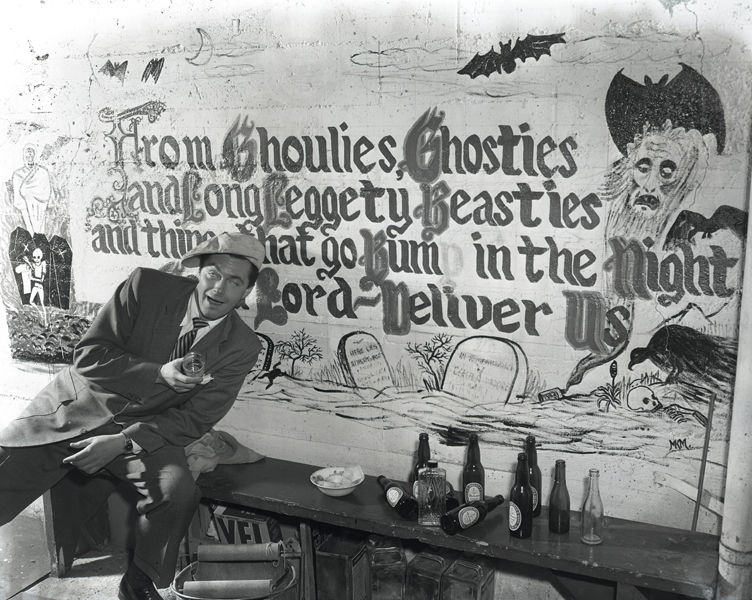
From Ghoulies, Ghosties and Long Leggety Beasties

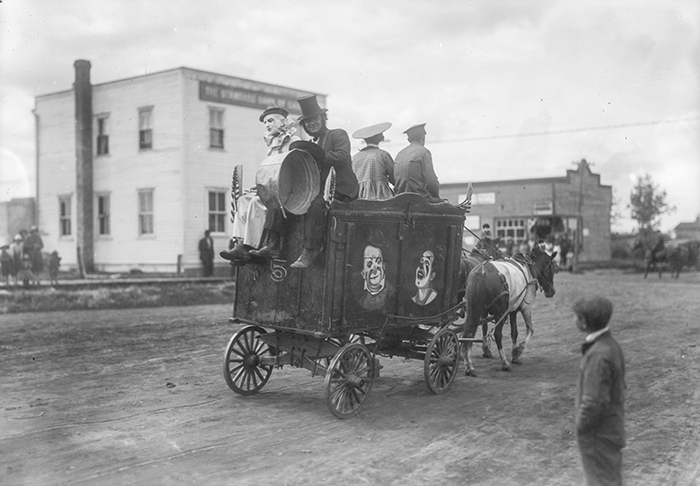
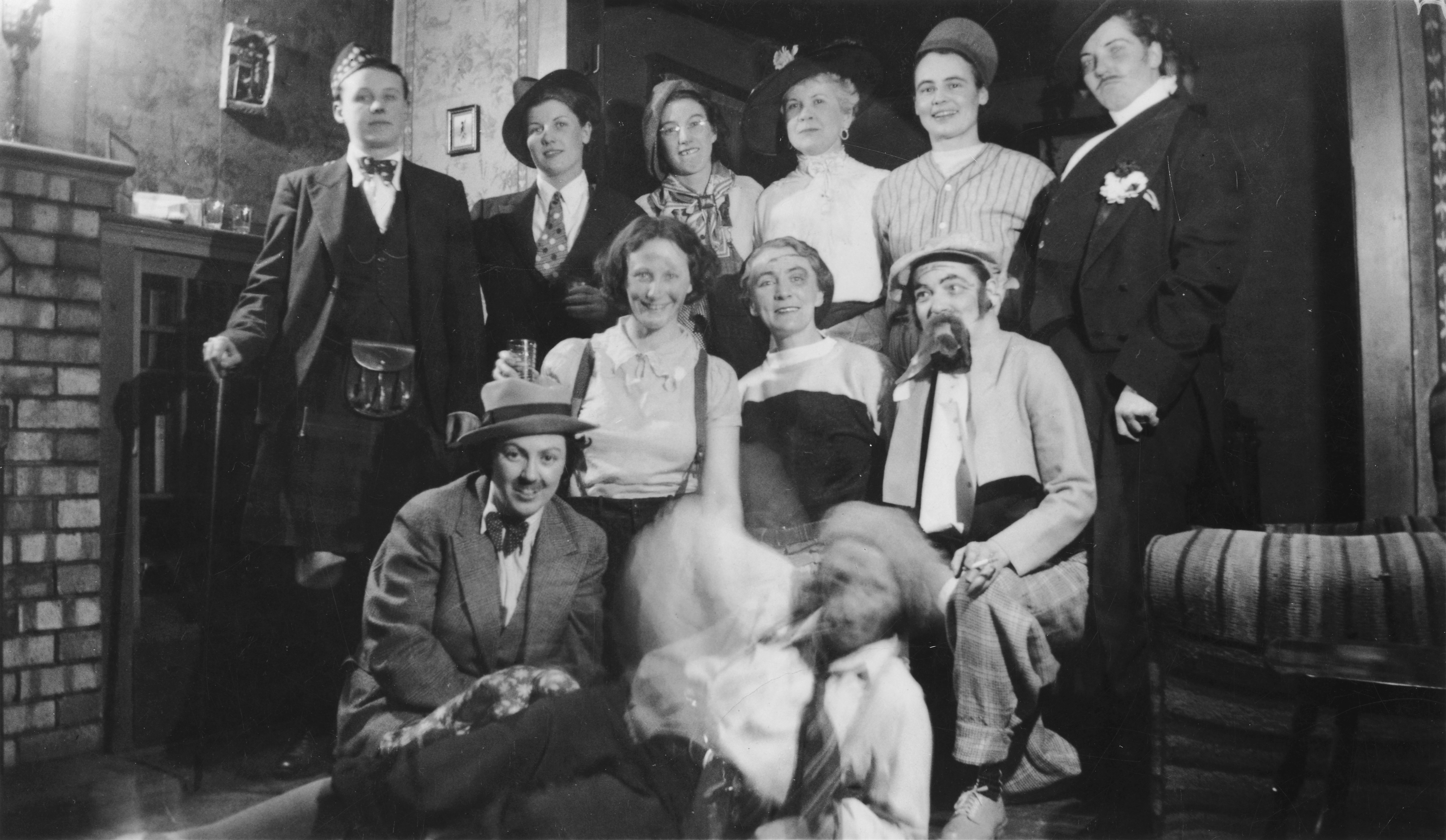
On behalf of everyone at RETROactive, have a safe, fun and spooky Halloween! Take a look below at how Albertans celebrated the occasion decades ago. All images courtesy of the Provincial Archives of Alberta.

Traveling Circus Comes to Smoky Lake c. 1927.
Theatre College Saint-Jean, Edmonton, [c. 194?].
Halloween Party, Wainwright [c. 192?].
Braemar Badminton Club Opening Tea, Edmonton, Nov. 8, 1953.

Way-Out: A psychedelic tribute to Bruce Haack

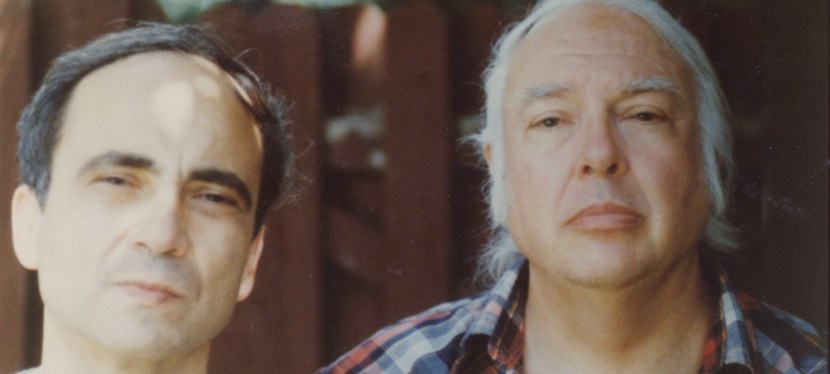
Editor’s note: The banner image above shows legendary experimental musician Bruce Haack (right) with long-time collaborator and friend Ted Pandel (left) , circa 1985. Image courtesy of the Provincial Archives of Alberta.

The Provincial Archives of Alberta also invites you to an evening devoted to electronic music pioneer Bruce Haack at the TELUS World of Science – Edmonton, Zeidler Dome for a screening of the 2004 documentary Haack: The King of Techno followed by a lightshow performance set to Haack’s landmark album The Electric Lucifer. The event takes place on Friday, September 29. Doors at 6:30 p.m., show at 7 p.m. The event is free, seating is first come, first served.

Written by: Jared Majeski (Editor, RETROactive) and Braden Cannon (Private Records Archivist, Provincial Archives of Alberta [PAA])

After creating some of the most spaced-out, light years-ahead-of-its-time experimental electronic music, the renaissance of Albertan Bruce Haack continues apace. His music has been reissued by record labels around the world (including Toronto’s own Telephone Explosion Records), he was the subject of the 2004 documentary Haack: The King of Techno and now, some of his most treasured possessions have been made available at the Provincial Archives of Alberta.

Tape reel from Haack’s recording for Def Jam Records’ Russell Simmons. Source: Provincial Archives of Alberta.

Bruce Haack, from the Rocky Mountain House area, was born in 1931 and displayed music talent from an early age. He attended the University of Alberta before being accepted into the Julliard School in New York City to study music. After a year, he dropped out to explore his own, unique ideas in music. He had an early interest in electronic music and began to design and build his own electronic instruments and voice modulators. Together with Ted Pandel, a pianist whom he met at Julliard, Haack supported himself with songwriting gigs for record labels and advertising firms. He eventually met Esther Nelson, a children’s dance instructor, and collaborated with her on a series of children’s records using Haack’s electronic instruments and his increasingly experimental arrangements. Haack gained further attention through appearances on “The Tonight Show with Johnny Carson” and “Mr. Roger’s Neighborhood” where he would demonstrate his inventions such as a synthesizer that would emit sound through touch.

Read more

Dried out: Prohibition in Alberta

Written by: Sara King, Government Records Archivist, Provincial Archives of Alberta

In 1915, Alberta embarked on a social experiment that would impact the lives of everyone in the province: prohibition.  A century after the repeal of prohibition in 1923, the Provincial Archives of Alberta (PAA) is pleased to present Dried Out: Prohibition in Alberta, on display until February 2024.

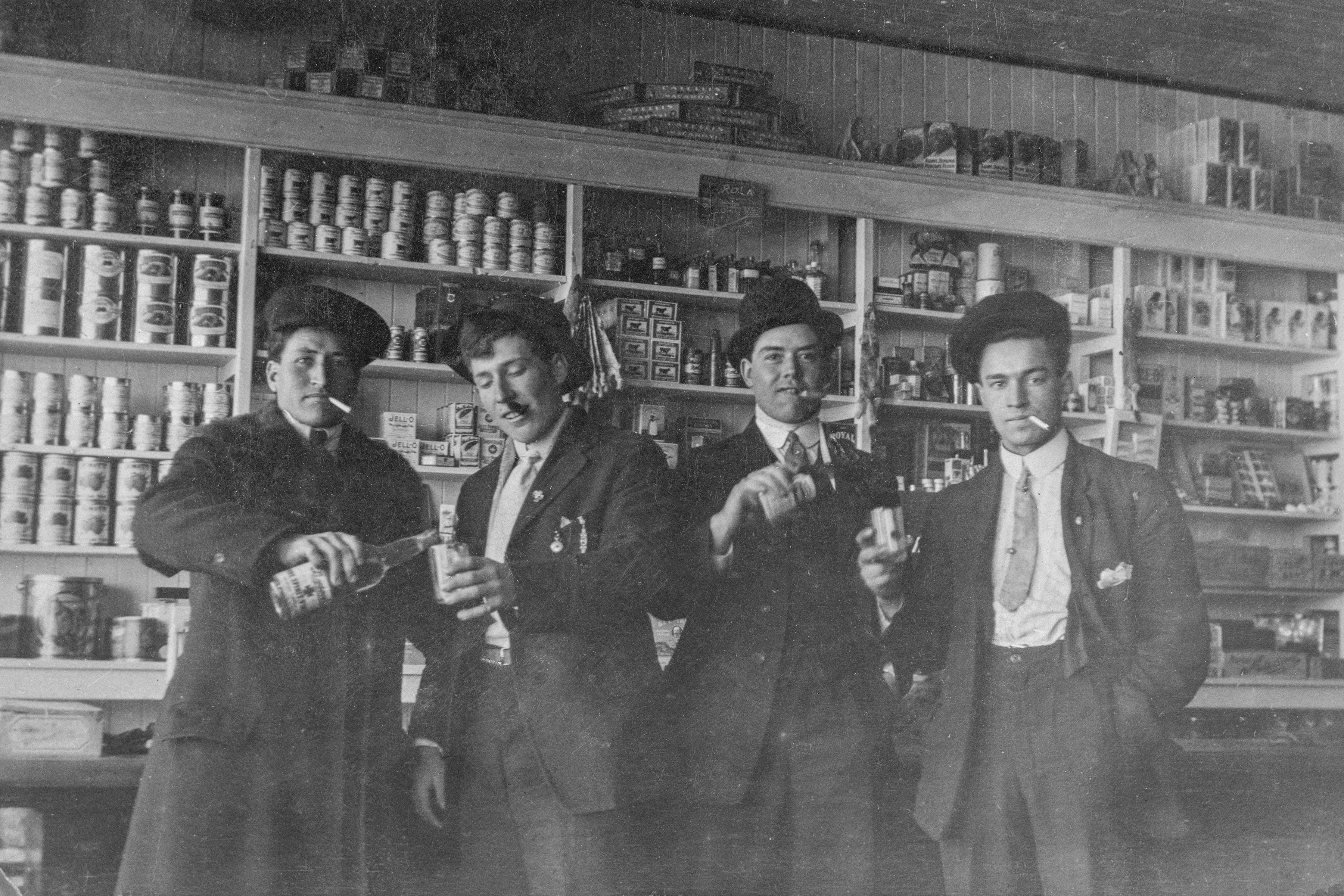
Alexander Bourassa, Frederick Plamondon, Arthur Bourassa and Benoit Plamondon drinking and smoking inside the Plamondon store owned by the Chevigny Bros., M. Corbière, manager, c. 1920. Source: PAA, PR1982.0157 (A7781).

The exhibit explores how the temperance movement took root in Alberta.  The moral and political crusade to ban alcohol would have unintended consequences, both good and bad. It spurred the push for women’s suffrage, led to the creation of the Alberta Provincial Police and prompted experiments in direct democracy. But it would also lead to people flouting the law at all levels of society, which would shape politics, policies and communities for years to come.

Read more

Indigenous Resources Guide at the Provincial Archives of Alberta

Written by: Jonas Vasseur, TRC Archivist Intern

The mission of the Provincial Archives of Alberta (PAA) is to acquire, preserve and make records available to the people of Alberta. This includes material created by the provincial government, but also records from individuals, families and organizations in the province. In our Indigenous-related holdings, we hold records from as early as the 1700s and 1800s, with some record holdings spanning more than five decades—some even a century. This week’s post is an update to work that has been carried out at the PAA on access to its Indigenous-related holdings.

The PAA holds a wide variety of records that were created by and about Indigenous people and communities. Although there are many useful and interesting records, it could be difficult to know where to begin and to find connections. Archival research can be daunting, as records are organized by creator rather than subject and are arranged as they were originally maintained, not necessarily in a chronological way. Our goal has been to identify the wide variety of Indigenous content, either created by or about the Indigenous people of the province, and to present a comprehensive and easy to use subject guide to these holdings.

The first half of a letter from Jenny Margetts (President of IRIW) to Prime Minister Brian Mulroney. Source: Provincial Archives of Alberta, PR2013.0313/114.1.

The PAA first released an “Aboriginal Resource Guide” document in 2006, and it listed the records identified as relevant to Indigenous communities in Alberta. This guide provided the building blocks for archival research to become more user-friendly.

Read more