
Editor’s note: The banner image above is courtesy of the Royal Alberta Museum.
Written by: Devon Owen Moar
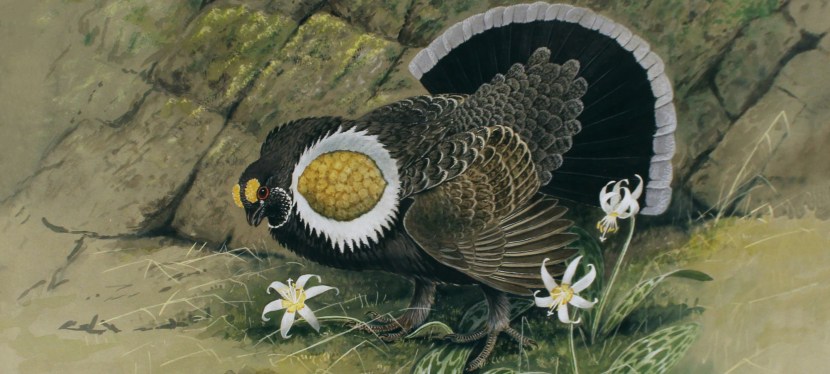
At first glance, the illustration appears simple: a bird, carefully rendered, set within its landscape. There is no dramatic gesture or overt narrative—there is only close attention. Feather by feather, stroke by stroke, the image invites the viewer to slow down and really look. It is both an artwork and a record, capturing not just the likeness of its subject, but a way of seeing that is central to the natural sciences and natural history museums.
This work, now part of the Royal Alberta Museum’s collection, was created by Frank L. Beebe, a self-taught naturalist, illustrator and falconer whose career bridged art and science. Beebe’s illustrations were never meant to be decorative alone; they were tools for understanding, shaped by careful observation and extensive field experience.
Before photography became the dominant way of documenting the natural world, scientific illustrators played a vital role in how knowledge was recorded and shared. People like Beebe translated hours of study into images that could educate, inform and endure. This kind of work helped shape how museums studied and presented the natural world.
This single illustration offers a point of entry into Beebe’s broader world, rooted in western Canadian landscapes and museum and illustrative practices, and reminds us of the important, and often unsung, role illustrators play in connecting science, art and public understanding.
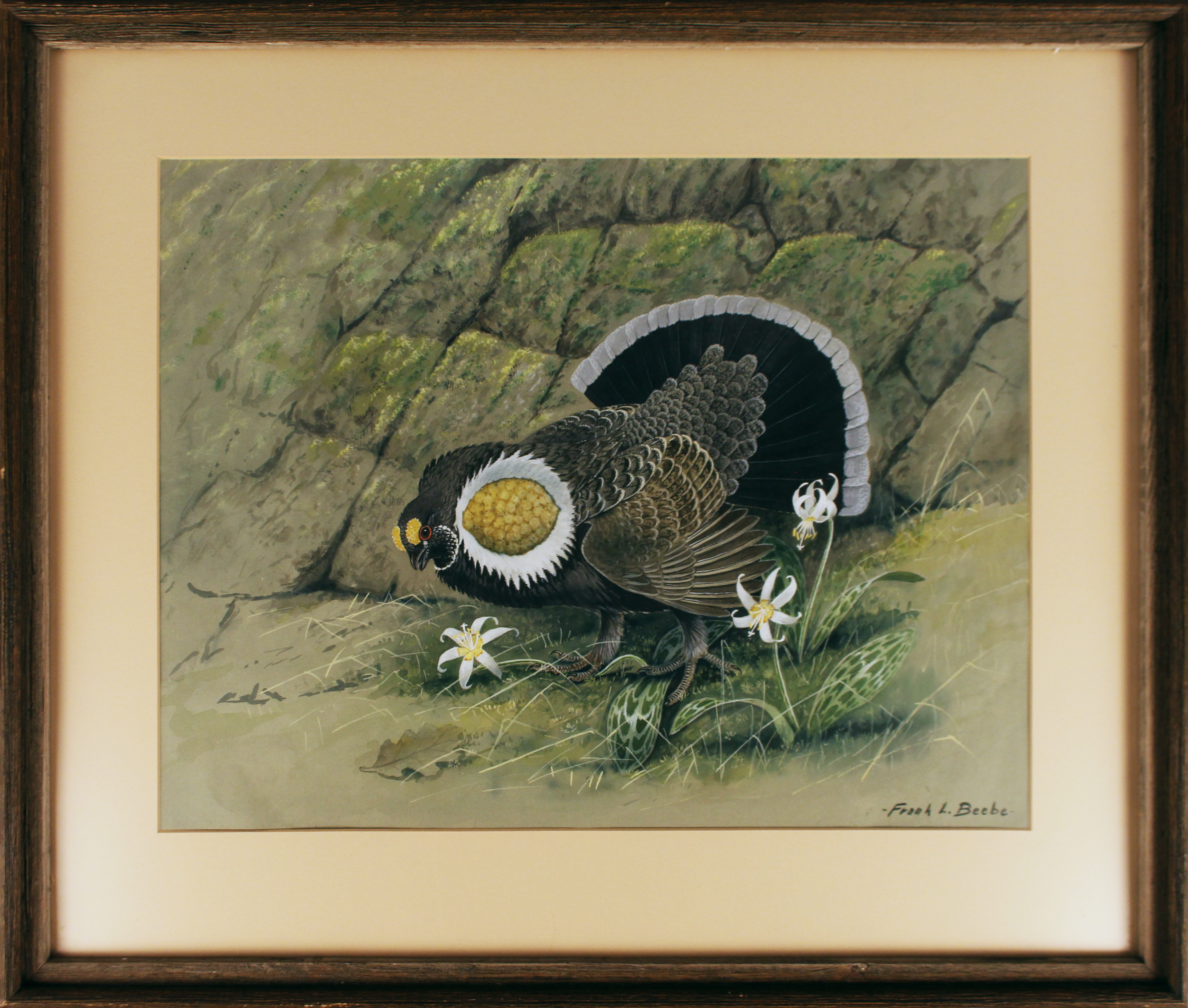
The work that prompted this research is a framed painting depicting a male Sooty Grouse. It is signed in the bottom right corner by the artist, Frank L. Beebe. The grouse is shown mid-display, its body fully puffed with its yellow throat air sacs inflated and tail held upright—a striking posture associated with courtship. Beebe situates the bird within a carefully rendered landscape: a moss-covered rock forms the backdrop, while long grasses, white and yellow flowers (likely avalanche lilies) and a fallen leaf help situate the foreground.
Read more

 RETROactive