Plane Wrecks, Aviation Archaeology and Northern Heritage

This post continues our look at the work of Alberta’s Archaeological Survey. An expanded version of this article can be found in the Fall 2013 issue of the Canadian Aviation Historical Society Journal.

Plane wrecks are unique and dramatic physical records of human movement. We document here the archaeology and history of a 1952 B-17 plane crash to help illustrate the deep and fascinating roots of northern aviation. We reconstructed mission details from accident reports and discovered interesting connections to the famous Northwest Staging Route, which was a significant transportation network that spanned Alberta.

Scale of the SB-17G and the 8 crew members on the ill-fated 1952 flight (diagram T. Kristensen).

On July 11, 1952, a modified B-17 (an SB-17G) set out from Alaska on a search mission in the Yukon to locate a crashed Royal Canadian Air Force plane that had disappeared in June. The B-17 was originally a Second World War era high altitude bomber, legendary for the damage it could endure in combat. Its durability, combined with the availability of surplus aircraft after the war, meant that B-17s were used for many post-war activities including weather survey, forest firefighting, and search and rescue.
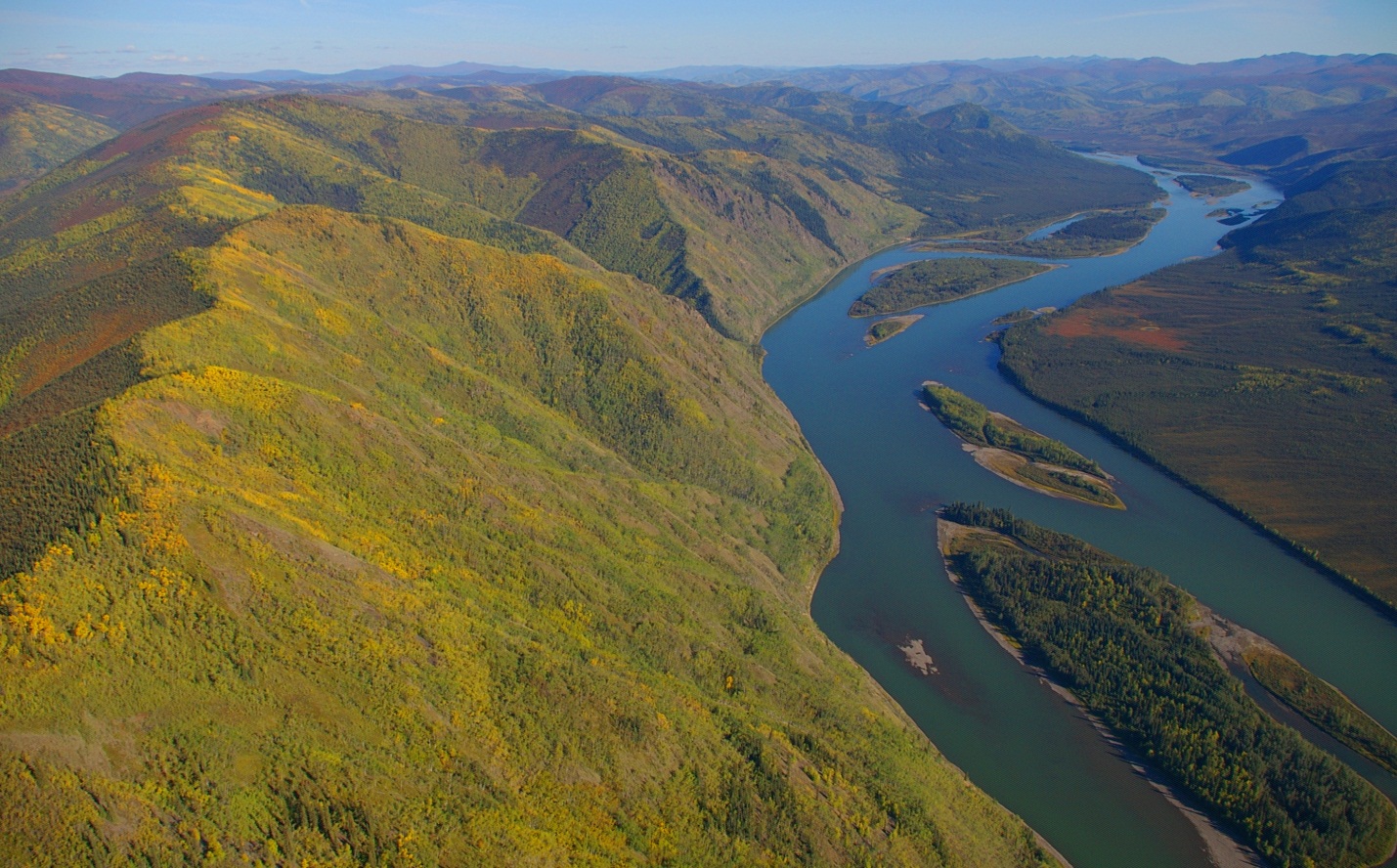
Mountainous terrain in which the SB-17G met its untimely fate (photo T. Kristensen).

Eight crew members of the United States Air Force 10th Air Rescue Squadron were aboard the SB-17G as it entered a small mountain valley. The navigator was unfamiliar with local topography and 15 seconds into the valley, the crew began adjusting power in an attempt to avoid a fast approaching valley wall. Because of its original purpose in high altitude flight, the SB-17G was not particularly maneuverable and couldn’t recover from its predicament. Stalling within meters of the ground, the left wing struck an alpine slope sending the aircraft into an arching skid path that tore through birch trees and bedrock cobbles for several hundred meters before coming to rest. The wreck was quickly consumed by flames. Five men evacuated immediately but the remaining three caught fire in their frantic attempts to depart. An heroic lieutenant escaped the wreck and pulled one man to safety while another emerged from the wreck engulfed in flames. Although he was immediately doused, the airman couldn’t recover from severe burns and died six hours later. The crew spent a somber night in the cold mountains before being rescued the next day.
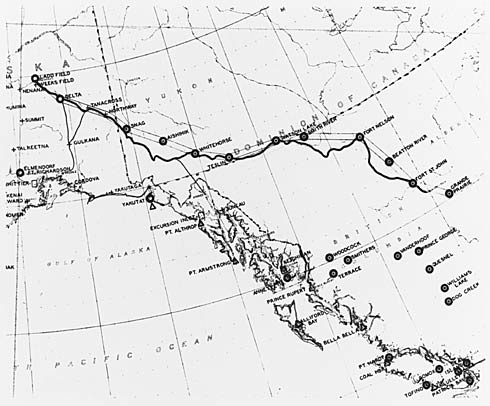
Northwest Staging Route in Canada and Alaska. Yukon Archives. Department of Defence Collection, 91/37 #51, PHO 419.

The story of the SB-17G crash represents a small but significant piece of aviation history. Northern aviation assumed an international importance with the growth of the Northwest Staging Route in the 1930s. The Canadian portion began in Edmonton and linked a series of northern airstrips up to Alaska and Russia. Like Edmonton, most towns along the route were initially First Nations gathering spots that developed into fur trade posts when traders arrived. They eventually grew into agricultural, mining, forestry, or oil and gas centres. The Alaska Highway was built to connect these centres to help protect North America from a potential Pacific attack. After the war, the Northwest Staging Route remained important for military exercises (which drew the SB-17G to the Yukon) and as a transportation route to other international conflicts.
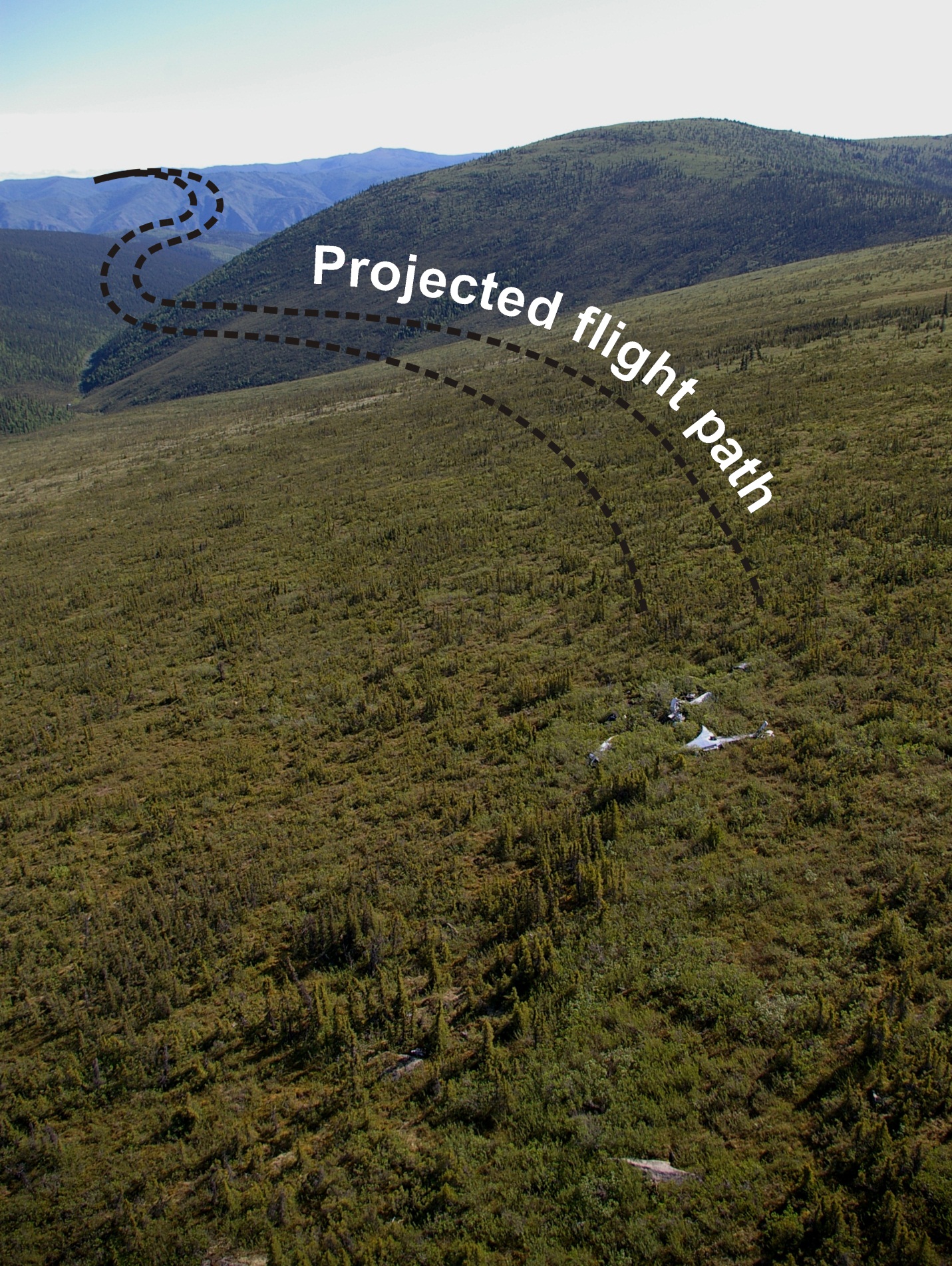
Reconstructed flight path of the SB-17G to its final resting spot (photo T. Kristensen).

Given their experience on the land, First Nations people were hired as guides to help survey the Alaska Highway before construction. Consequently, much of the highway followed First Nations trails that existed for millennia. Other portions followed Gold Rush trails that started to criss-cross the north in the late 1800s. This synopsis illustrates how modern transportation systems in the north have deep histories. The interconnected travel network that now links northern towns has witnessed birchbark canoe paddlers, moccasins, Gold Rush wagons, tank treads, and jet streams.
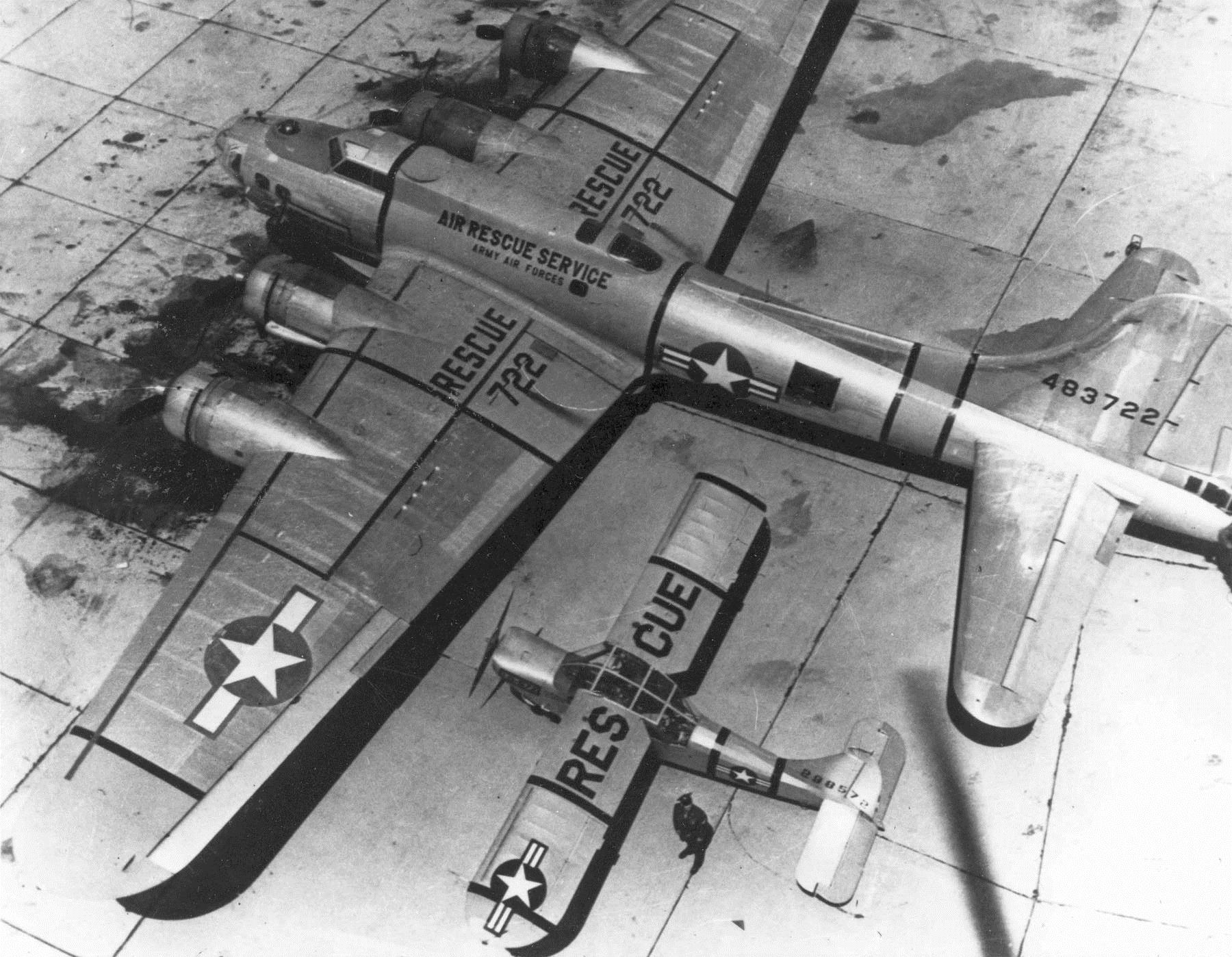
SB-17G (S/N 44-83722) used in the US Military Air Rescue Service (photo credit 060526-F-1234S-009.jpg, National Museum of the US Air Force).
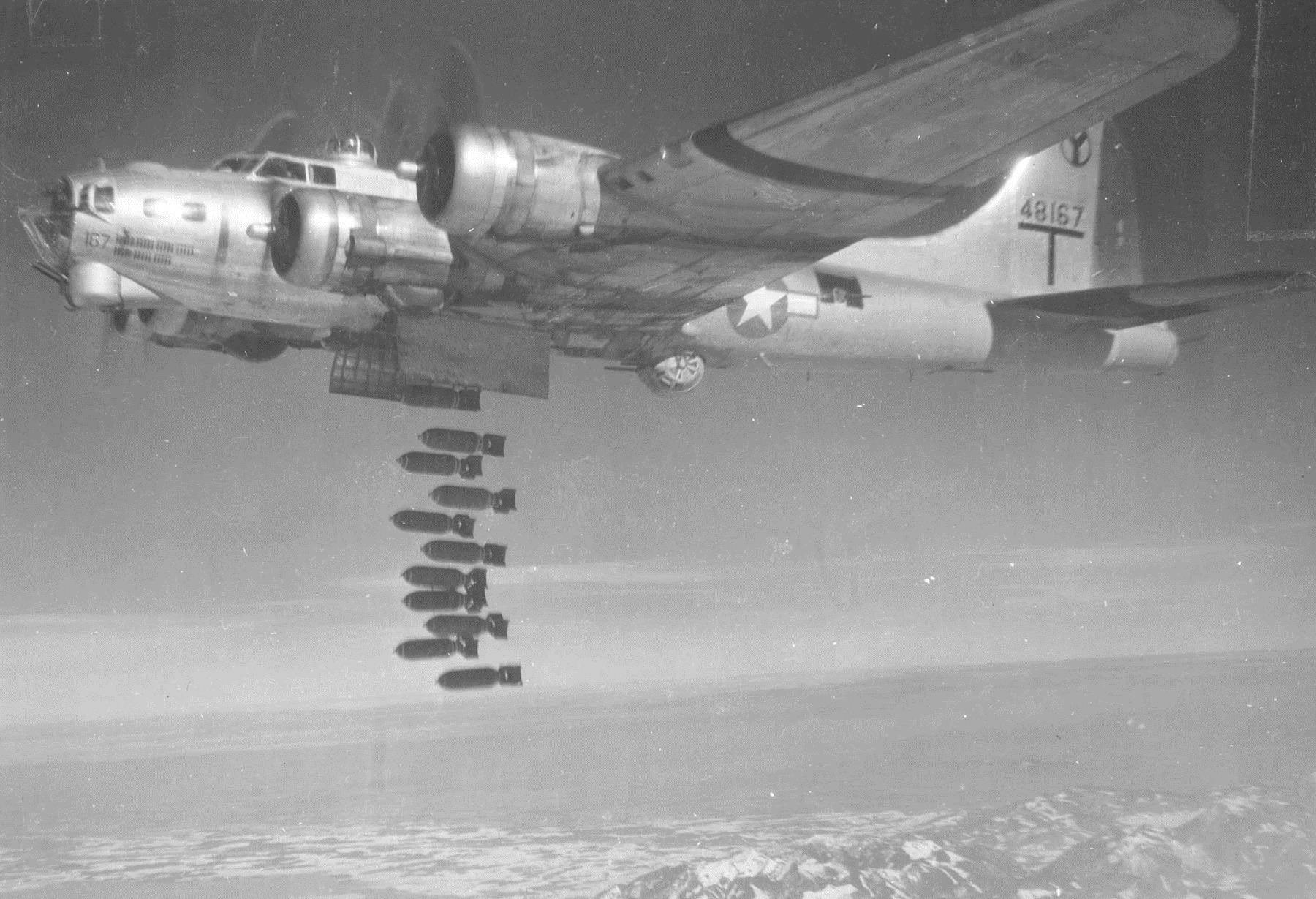
B-17G-50-VE (S/N 44-8167) during in-flight high altitude bomb drop in WWII (photo credit 050610-F-1234P-011.jpg, National Museum of the US Air Force).
B-17F flying fortress formation in WWII (photo credit 050615-F-1234P-006.jpg, National Museum of the US Air Force).
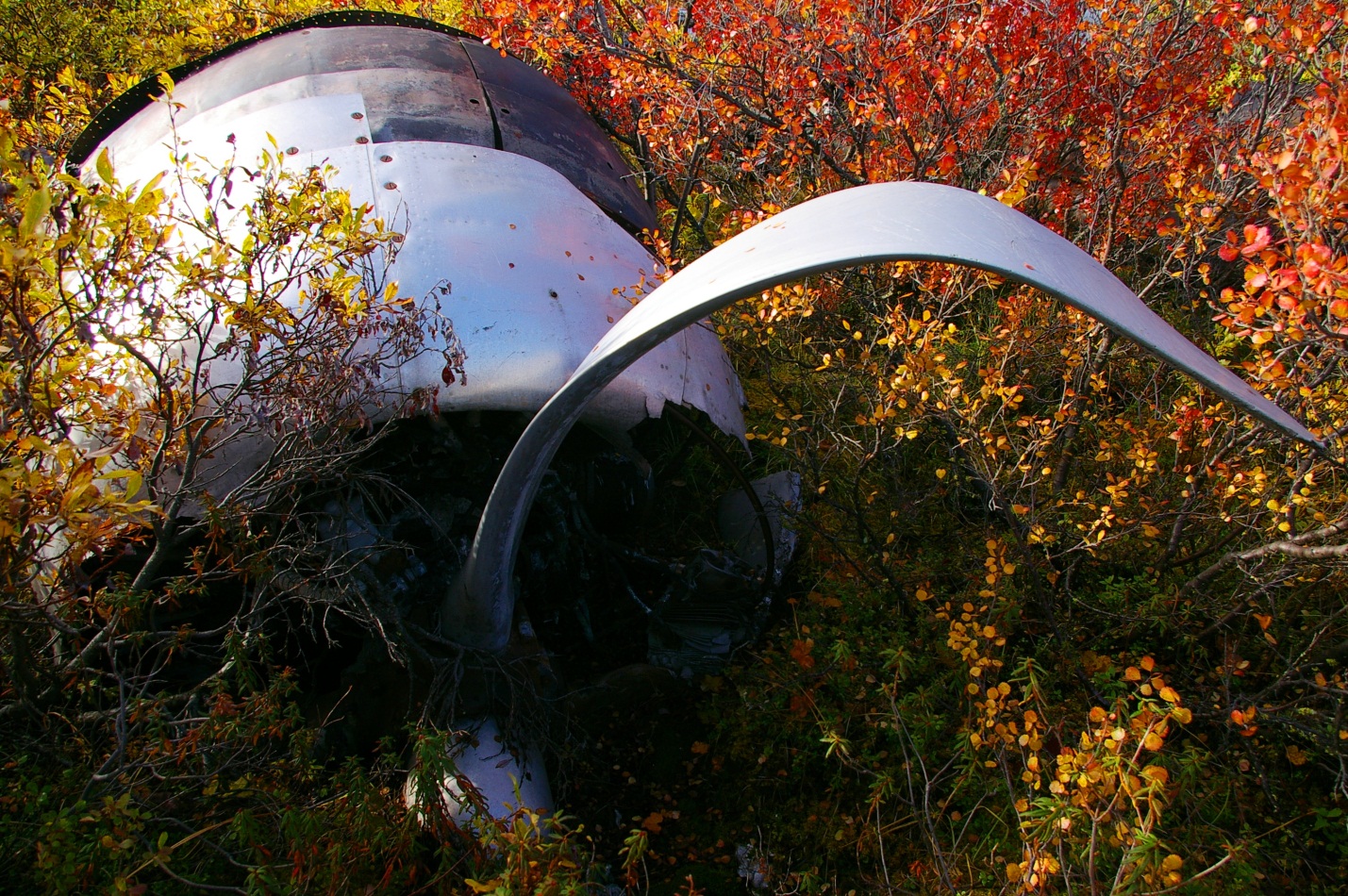
SB-17G propeller and engine (photo T. Kristensen).
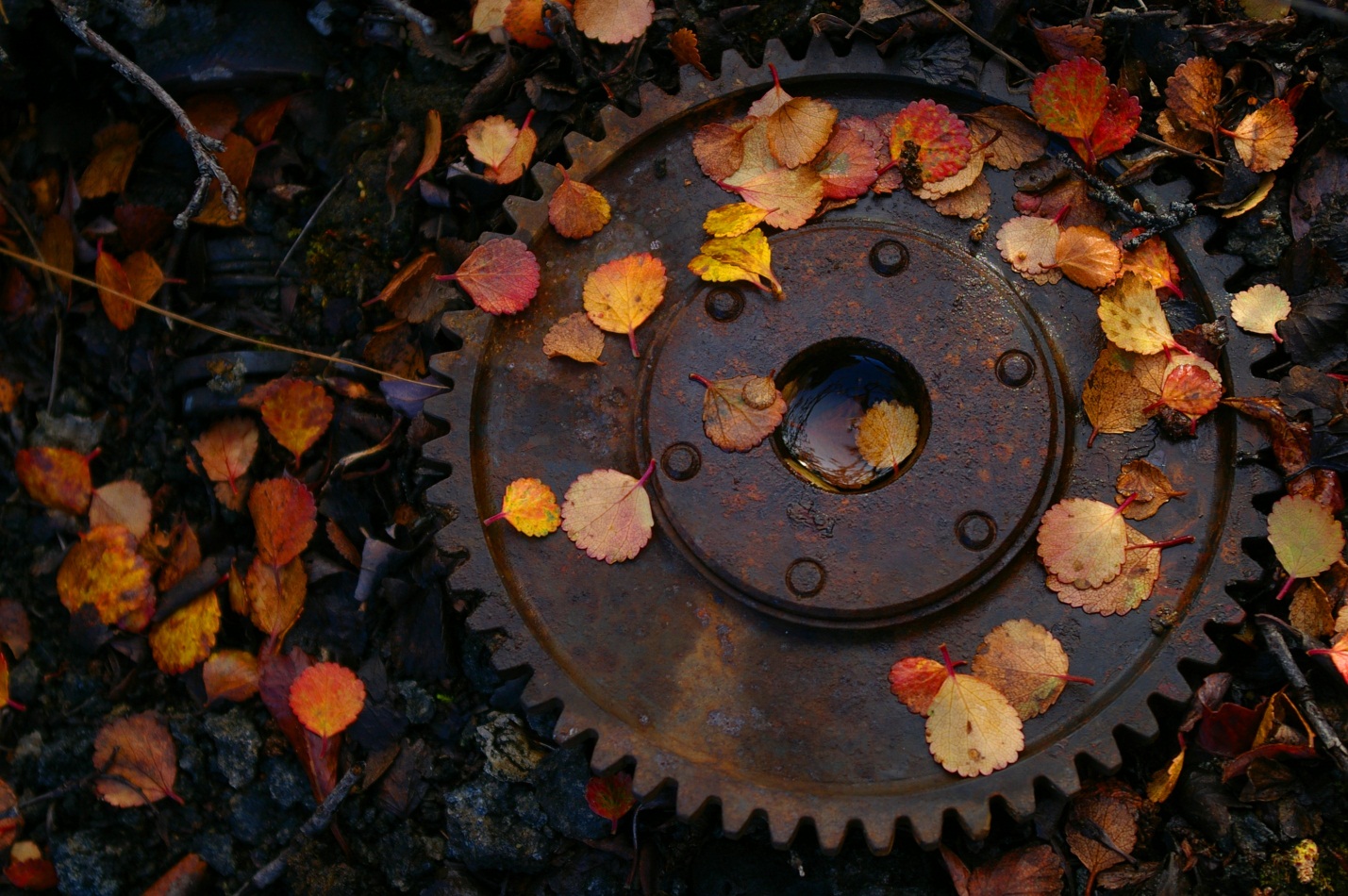
SB-17G gear wheel (photo T. Kristensen).
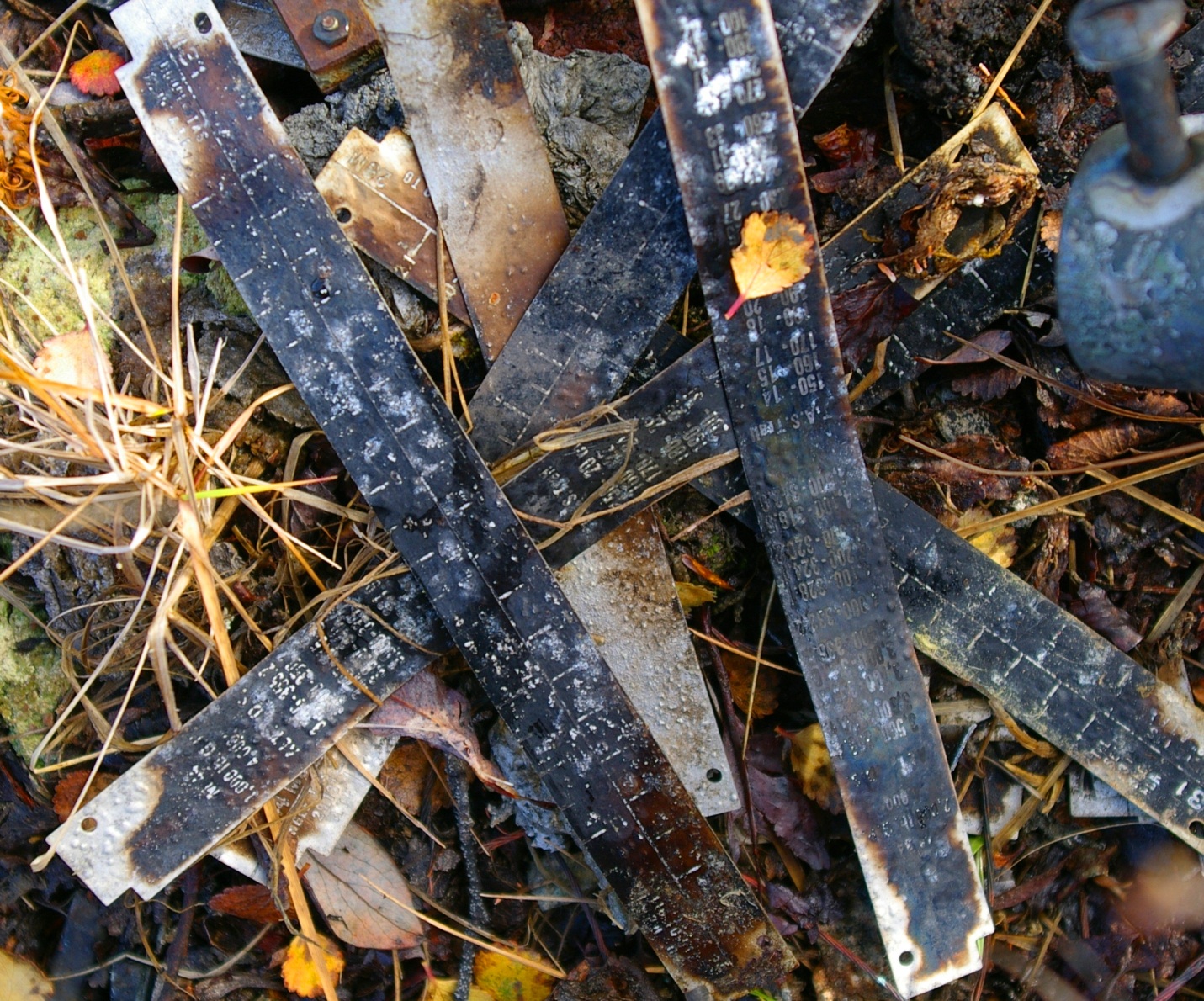
Charred measurement tags from SB-17G (photo T. Kristensen).
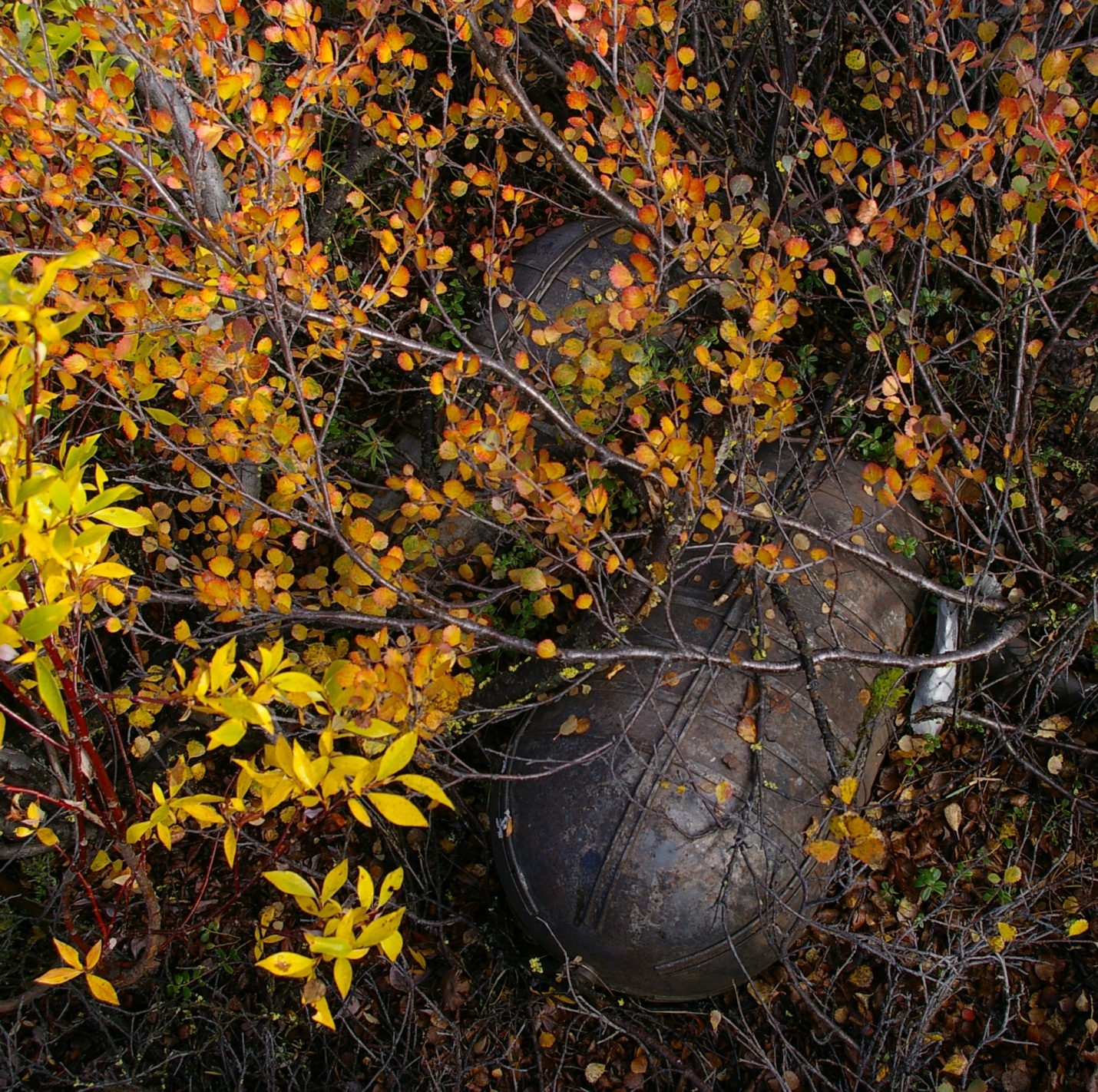
Canister from SB-17G (photo T. Kristensen).
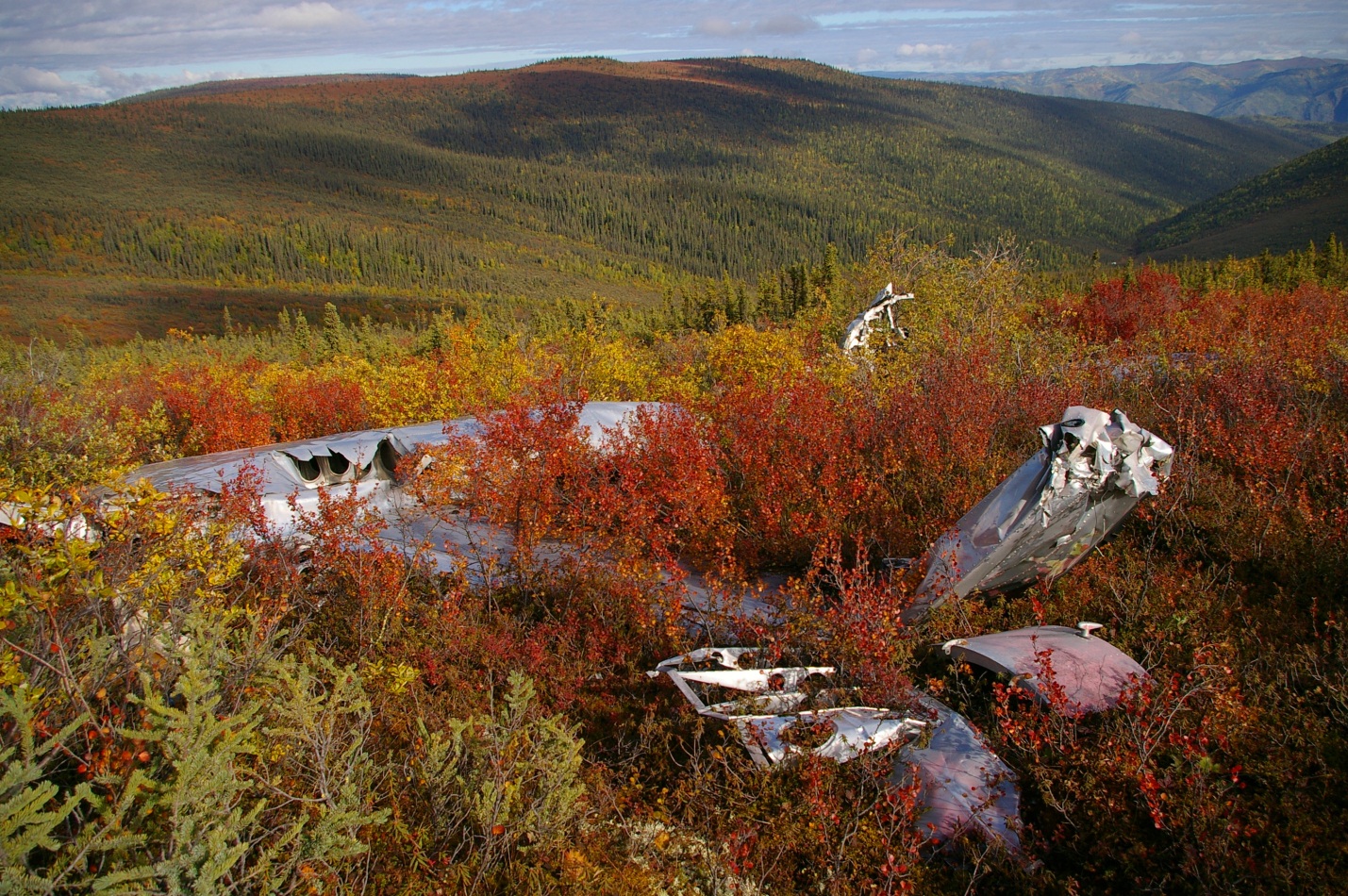
Wreckage of the SB-17G overlooking the valley it was unable to climb (photo T. Kristensen).

Territorial and provincial heritage legislation exists to preserve the remains of historic events like the SB-17G plane crash. A research permit is required to excavate any historic resource be it a 2 million year old fossil, a 2000 year old fishing camp, or a Second World War era aircraft. Historic objects are not permitted to leave the territories or provinces unless authorized by respective governments, which means artifacts can’t be re-located without permission. This legislation has created some conflicts in the past between heritage managers and people interested in salvaging plane wrecks but positive relationships and advance communication can help ensure that aviation historians and archaeologists work together to share their passion for the past. The story of the SB-17G crash highlights the military importance of the north and the historical depth of human movement.

Written by: Todd Kristensen, Northern Archaeologist & Mike Donnelly, Archaeologist.
Curling at the Straw Pile

Curling rinks, long low windowless buildings popped up in towns and hamlets, as each community grew. Inside were sheets of natural ice, 146 feet long and between 14 and 15 feet wide, marked out with lines and the target (called the house) for the rocks or stones as they are also known. Old curling rinks were cold places, but that was exactly the point—they had to be. In 1953 avid curlers in the small farming community of Conjuring Creek, south of Calmar, built a natural ice rink using straw bales for insulation. When someone unsuccessfully tried to buy the stack of bales, the rink became known thereafter as The Straw Pile!

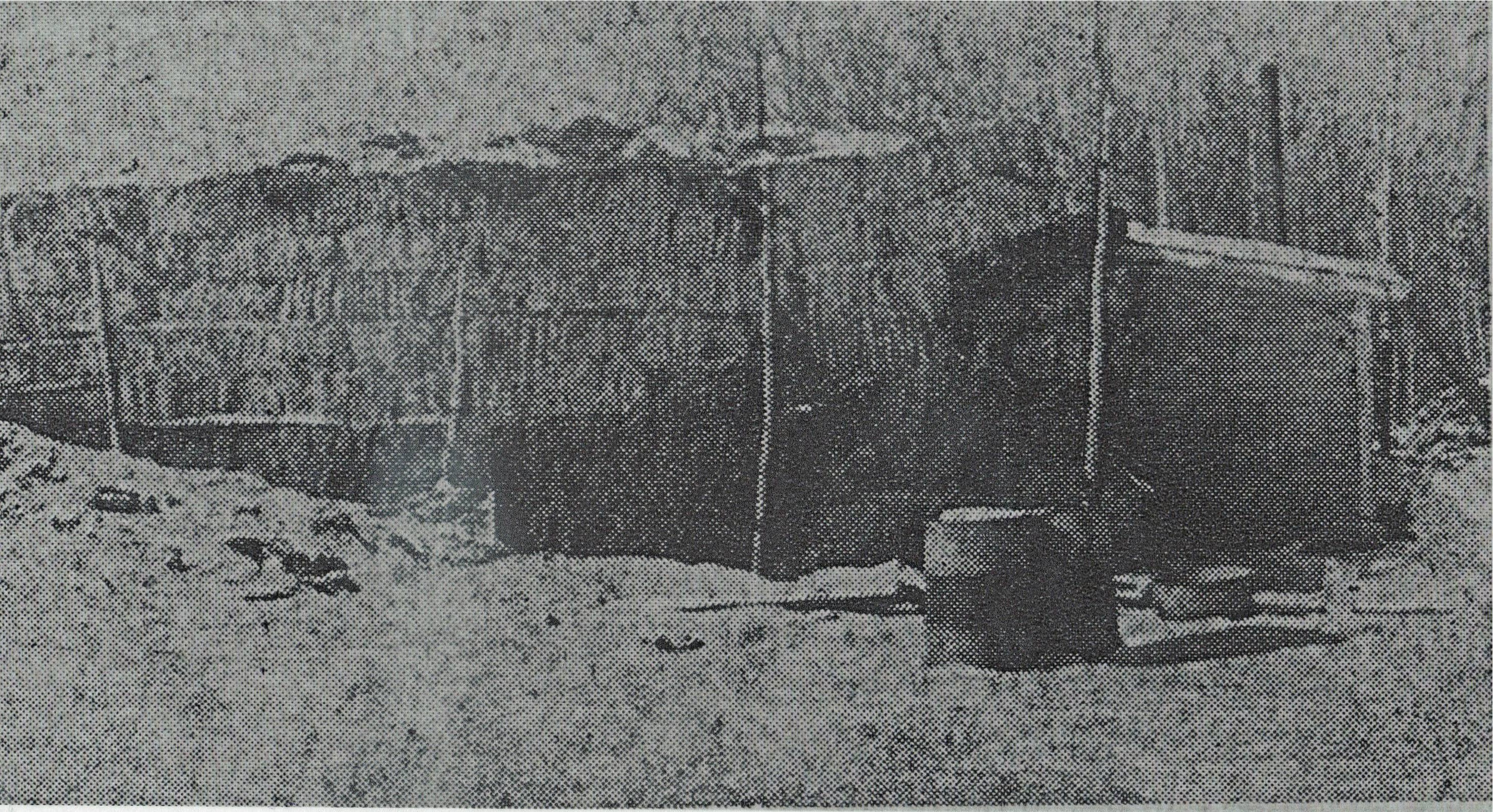
The straw pile, date unknown. (Photo is courtesy of the Conjuring Lake Curling Club.)

Albertans were already avid curlers by the late 1880s with clubs in Edmonton, Fort McLeod, Banff and the mining town of Anthracite. By 1902, Edmonton had a club with a three sheet indoor rink and 100 members. Vegreville curlers began on a pond in 1907; a year later they builit a three sheet indoor rink.

The introduction of mechanical ice plants to make artificial ice for curling rinks was a major change for the sport. Ice could be kept at the ideal temperature -5° (Celsius) to -3° with an ambient temperature of 4° at chest height. Artificial ice came to city centres first, although Claresholm, plagued by chinooks, installed an artificial ice plant in their rink in 1952. Vegreville opened a new professionally engineered and constructed a six-sheet artificial ice rink in 1955 at a cost of $80,000.

Just as artificial ice was gaining momentum, the Conjuring Creek Curling Club was formed. Lumber was pricey, so Club members decided to build with straw bales, a tried and tested construction method for curling rinks. Square straw bales made thick walls which provided good insulation to control rink temperature. The bales were lined up, and spruce posts were spaced along their length to keep the bales together. The exterior walls were covered in wood slabs, and the rink was wired and lit by a generator. The first Straw Pile proved to be temporary, and in 1956 a new building was erected. Straw bales were used again, but this time the Club sprang for exterior siding and also lined the interior walls. The rink was bigger, with 2 sheets of ice. Further improvements in 1973 included fluorescent lighting and comfy red bench car seats in the viewing area.

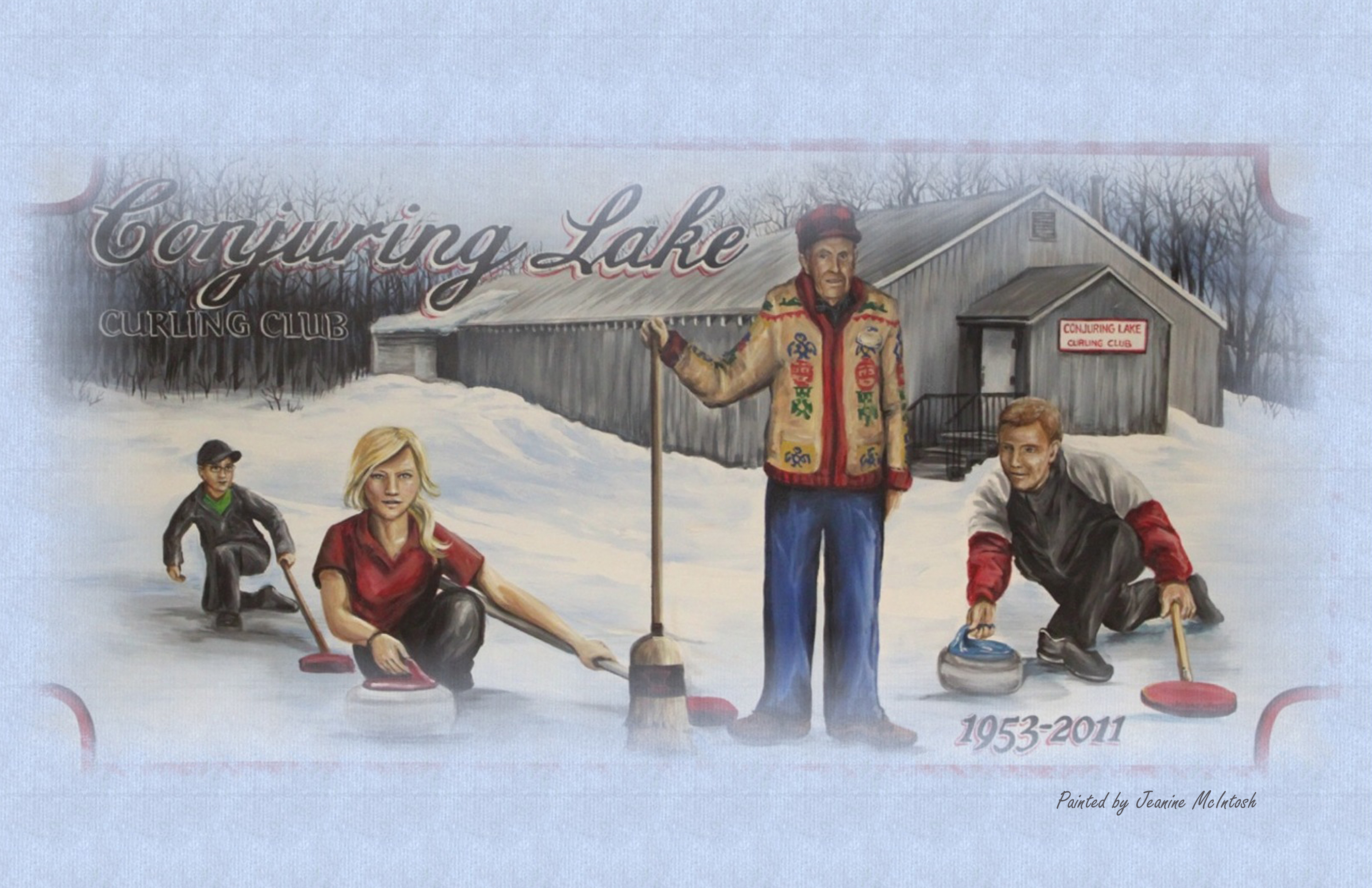
The mural painted in the Calmar Curling rink to commemorate the Conjuring Lake curling Club. (Photo courtesy of the Conjuring Lake Curling Club.)

Preparing the ice took time. Sawdust was spread to the edges of the bale walls against the advice of B.E Olson, whose 1929 pamphlet The Art of Making True Curling Ice noted it was not a good conductor of cold and was inclined to go mouldy in spring. The rink was flooded in layers slowly and evenly; if it was too cold during flooding the ice would crack and peel off. At the right level the surface was planed with a homemade scraper, and then a scriber, a board with saw-teeth spaced to mark the rings of the house, was used to etch the ice. A hole made in the centre of the house to anchor a measuring stick for use during play. The water pumped from nearby Conjuring Creek was a little yellow so powered milk was added to whiten the ice, until it was decided to tank water in. The hacks for placing a player’s feet were frozen into the ice as the flooding progressed. The coloured lines and rings were painted on using paint mixed with oil and then frozen over, and finally the ice surface was pebbled. Closing the doors and turning off the lights in between games kept the rink cold.

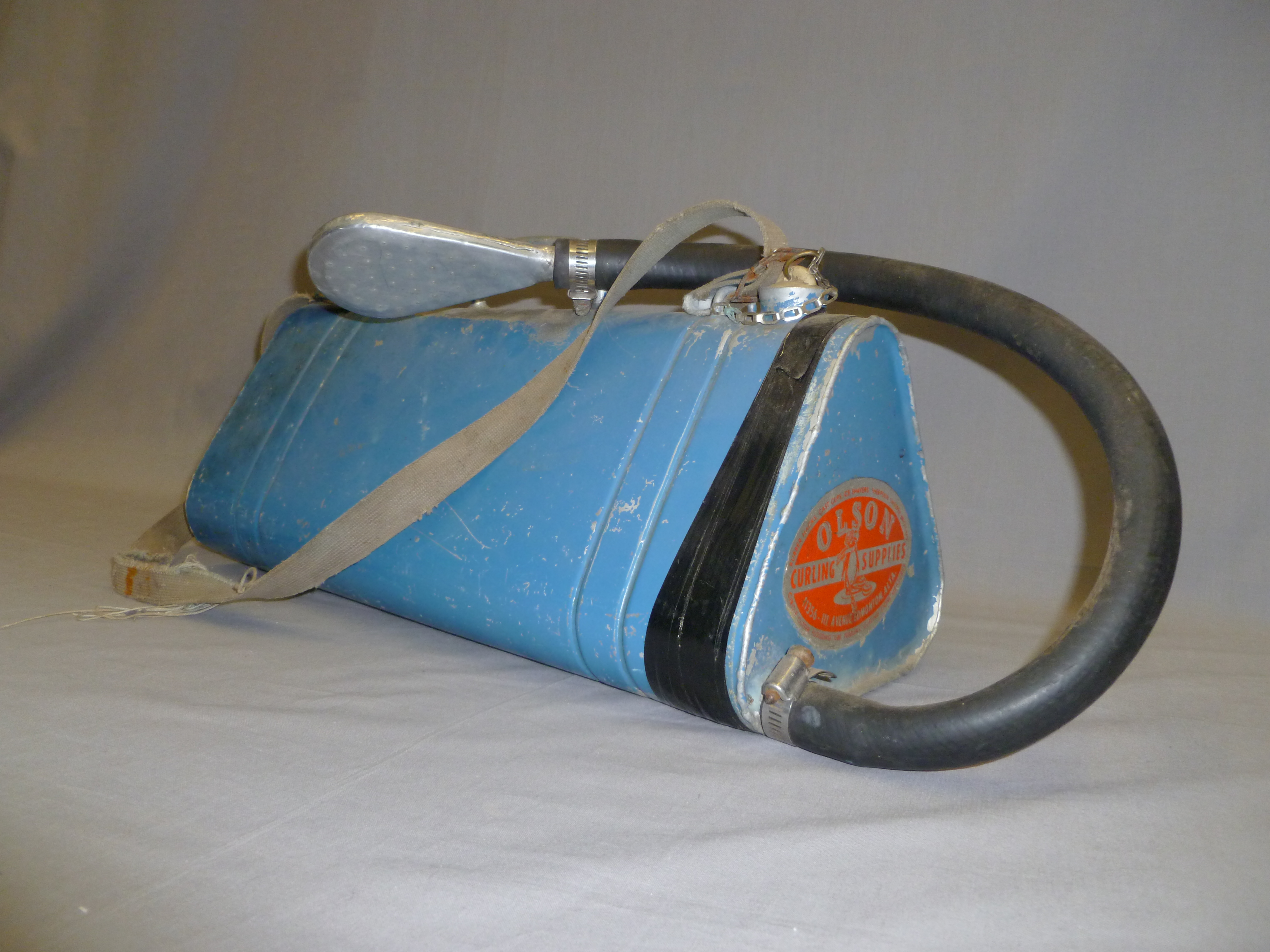
An ice pebbler, one of the Conjuring Lake Curling Club artifacts donated to the Alberta Sports Hall of Fame. It was invented by E.B. Olson, who founded Olson Curling Supplies, in Edmonton in 1933. Pebbling involves sprinkling warm water on the surface of the ice to give some grip for the rocks; if the ice was completely smooth it would not be possible to “curl” the stones.  (Photo by Judy Larmour, Courtesy of the Alberta Sports Hall of Fame.)
An ice pebbler, one of the Conjuring Lake Curling Club artifacts donated to the Alberta Sports Hall of Fame. It was invented by E.B. Olson, who founded Olson Curling Supplies, in Edmonton in 1933. Pebbling involves sprinkling warm water on the surface of the ice to give some grip for the rocks; if the ice was completely smooth it would not be possible to “curl” the stones. (Photo by Judy Larmour, Courtesy of the Alberta Sports Hall of Fame.)

The Conjuring Lake curling rink was a community gathering place. Part of the fun was preparing the ice and the social aspect of curling included cheering from the viewing area, which eventually hosted 5 generations of eager spectators. The first prizes included jam, cigarettes, eggs and chocolate! Trophies came later. By 2010, however, it was no longer viable to keep the rink going and it was demolished, the straw pile burned in 2011. It’s not known how many natural ice rinks were built using straw bales in Alberta, but Conjuring Lake rink was probably the last one in use. We hope to be proved wrong—is there yet one more quintessentially prairie ice rink out there somewhere?

Written by: Judy Larmour.

Manager of Historic Places Research and Designation Program Leads Diverse Identification, Research, and Protection Efforts

As Manager of the Historic Places Research and Designation Program, Brenda Manweiler heads what may be the unit with the greatest variety of responsibilities within the Historic Resources Management Branch. Brenda joined the branch as a Municipal Heritage Services Officer in 2009, after working for museums, British Columbia’s Heritage Branch, and Parks Canada. She has been in her current position since April 2013.

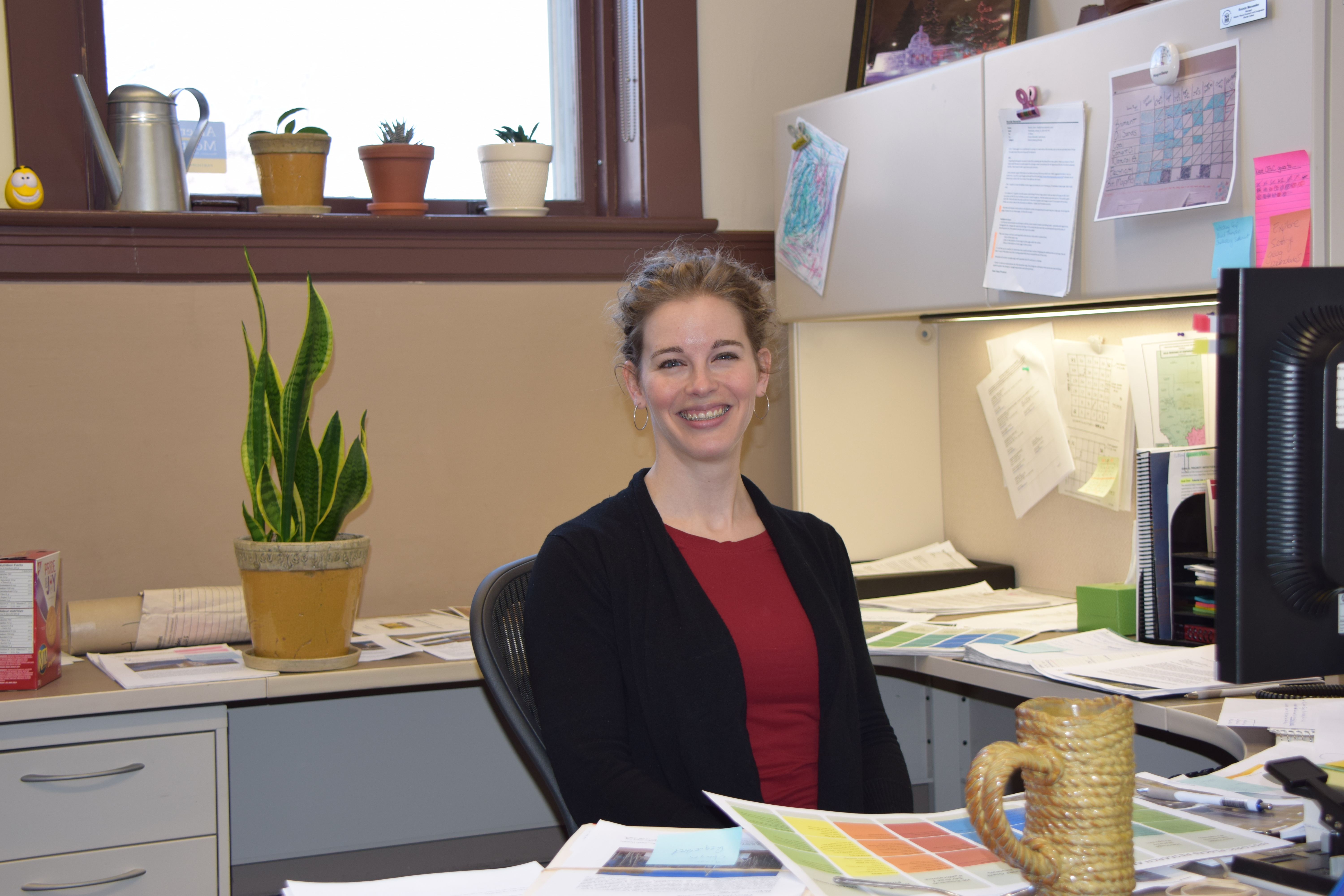
Brenda Manweiler, pausing for a moment during a busy day.

She now heads a six-member team of historians and heritage specialists. The unit’s primary role is administering the Provincial Historic Resources Designation Program (described below). But there’s much more!

In addition, her group provides ongoing advice on how best to address the impact on historic structures (that are not designated) in cases where they may be affected by development in Alberta. This is part of an integrated regulatory function that Alberta Culture administers for the preservation of historic resources.

Members of her staff provide research services to many of the historic sites operated by the Historic Sites and Museums Branch of Alberta Culture. Their services help, for example, to develop exhibits at these sites.

The Historic Places Research and Designation Program also works closely with the Alberta Historical Resources Foundation. The unit’s staff evaluates applications for Heritage Awareness, Research, and Publication grants submitted to the Foundation’s Heritage Preservation Partnership Program.

Creating Heritage Markers

As well, this unit is responsible for the Foundation’s Heritage Markers Program. This program supports the development of heritage markers that promote awareness of the historic people, places, events, and themes that have defined the character of the province. The markers are ideally sized for placement within parks, along trails or sidewalks, and in other community locales. Once the topic of a new marker has been selected, unit staff members develop the text, select photographs, and are responsible for coordinating the design, fabrication, and installation of the markers.

The unit includes the coordinators for two other programs, as well:

What kind of historic places are “out there” in Alberta?

The Coordinator of the Alberta Heritage Survey Program oversees a database of information about non-archaeological historic resources across the province. The Alberta Heritage Survey was established in the mid-1970s, has information dating back to 1971, and is being continually updated. Entries about individual resources include photographs, details of architectural characteristics, history, designation status, and location. This information comes from heritage surveys of neighbourhoods or building types, many of which have been commissioned by municipal governments and conducted by consultants and heritage groups. Today there are almost 100,000 individual resources documented on a searchable online database.

How do Geographical Features Get Names?

The Coordinator of the Geographical Names Program manages the process to formally name geographical features in Alberta. Names are chosen in accordance with international standards and guidelines, with preference usually given to names that have a demonstrated local and/or historical usage. The coordinator’s work includes communicating with governmental organizations from the municipal to international level, disseminating geographical names information from both popular and scholarly sources, maintaining records, and conducting related field and archival research. All this leads to making a recommendation on a name to the Alberta Historical Resources Foundation board and the Minister of Alberta Culture.

How do places get designated?

The Historic Places Research and Designation Program’s largest responsibility, however, is the Provincial Historic Resources Designation Program, which identifies, evaluates, and designates those historic resources that are most significant to the province as a whole. Resources eligible for consideration include structures, archaeological sites, palaeontological resources, and other works of humans or nature that are of value for their historic, cultural, natural, scientific, or aesthetic interest.

Once a resource is designated, its owner cannot destroy, disturb, alter, restore, or repair it without written approval from the provincial government. But the owner gains tangible benefits, including access to conservation grants and technical advice, and the intangible benefit of knowing that a valued property will be preserved and protected into the future. Currently there are some 360 sites protected as Provincial Historic Resources in Alberta.

Owners or advocates interested in obtaining heritage designation for a property often start by contacting Brenda for advice. She’ll ask questions to determine if the property is eligible for consideration, and to gauge whether designation should be pursued at the provincial or municipal level, or both. Occasionally one of the branch’s Heritage Conservation Advisers will make a site visit to answer property owners’ questions and assess the potential eligibility of their property for designation.

Once an application is received, Brenda administers the evaluation process. The Designation Committee, made up of her staff plus staff of the Heritage Conservation Advisory Services unit, meets about every six weeks to confirm the eligibility of new applications and to monitor the progress for sites currently under study. The Designation Committee works to determine if the site has heritage significance (according to five specific evaluation criteria), and a Heritage Conservation Adviser studies the site to determine if it retains enough integrity to communicate that significance. Much archival and onsite research is required to complete an in-depth evaluation. If the committee recommends designation and that is approved at a higher level, the owner is informed and his or her support is obtained, a designation order is signed, and the site is listed on the Alberta Register of Historic Places, an online database of all designated historic resources in Alberta.

Benefits of Designation

Why would owners want their properties designated? Brenda explains: “They believe that they have a property that’s of significance. They want to keep it around so that future generations can enjoy it and benefit from it, so that it can continue to be a part of the communities that they live in. Also, the Alberta Historical Resources Foundation provides conservation grants to property owners of designated resources, which serves as a fantastic incentive for people to conserve their property for the long term.”

There have been about five new applications since Brenda started in her position nearly a year ago, so she estimates that five to ten per year would be the norm. Her team is currently working through the evaluation process for approximately twenty sites.

So Brenda’s job involves lots of paperwork and administrative management. But she never loses sight of what it’s all for: “So many people work in this field because they feel passionately about the buildings, and I’m certainly no different there,” she says. “But for me, so much of it comes down to the people: the applicants, the owners, the community members. The public is so passionate about the sites that they so want to see conserved. I love being able to work with the public to help them reach their goals of contributing to a legacy for Alberta.”

Written by: Kerri Rubman.

Head of Land Use Planning Is on the “Front Line” of Resource Protection

Anna Curtis heads up the Historic Resource Management Branch’s Land Use Planning Section. If proposed development projects in the province could potentially impact historic resources, the Historical Resources Act allows the Minister of Alberta Culture to require the project proponent to perform studies or other work before their projects can proceed. “What we do is coordinate [the regulatory approval process],” Anna explains.

A photograph of Anna Curtis, Head of Land Use Planning, working at a site in the Cypress Hills.
Anna Curtis, Head of Land Use Planning, working at a site in the Cypress Hills.

As Anna puts it, the Land Use Planning Section is on the “front line” of the Historic Resources Management Branch when it comes to communicating these requirements to the proponents of development. Land Use Planning receives plans from proponents and determines which part of Alberta Culture—Archaeological Survey, Aboriginal Heritage, Royal Tyrrell Museum of Palaeontology, or Historic Places Stewardship—might need to review the plans to assess if approval should be conditional, requiring that the proponent first complete a study or undertake some action to mitigate the potential impact to a historic resource. If so, Land Use Planning then “translates” the technical language into a regulatory order for the proponent. As Anna puts it: “We aren’t the authorities, we don’t make those decisions [about how best to mitigate or offset the effects of development]—what we do is coordinate what everybody else says, and put it into a format that is both an order to the proponent and [something] the proponent will understand.”

Coordinating the Protection of Historic Resources

Because Land Use Planning acts as a central coordinator, the different sections of the branch can concentrate on their specialties without needing to worry about presenting a comprehensive requirement for the proponent to follow: Land Use Planning synthesizes the different sections’ points of view. Anna explains, “Managing the project is what we’re all about. We’re the central point. The archaeologists don’t necessarily have to know what the palaeontologists want—that’s our job.” She has been the Head for not quite two years. Previously, she worked at the Royal Tyrrell Museum, doing land use planning in palaeontology. For the last ten years, she worked with the federal government in an Aboriginal relations and consultation capacity. All four areas that Land Use Planning covers (archaeology, palaeontology, Aboriginal traditional use, and historic use [structures]), Anna has covered in her personal background—meaning that she’s well-equipped to head up her section’s mandate to synthesize and communicate the different sections’ requirements.

Heritage Conservation and Development are (usually) Compatible

Because Land Use Planning is on the front line, the section also handles many of the questions that come in from the public about the branch’s work. Sometimes citizens call because they want a particular project in their area stopped. “There’s a lot of concern with certain types of developments, such as gravel pits” says Anna, giving an example, “…and a lot of people don’t want those developments near them in their area. So a lot of times we’ll get calls, with people wanting to know if we can stop developments. That is not the Historic Resources Management Branch’s role, Anna remarks. “That’s not what the [Historical Resources] Act is for. It’s not to stop development. It’s [about] how do we preserve and protect [historic] resources while allowing development to happen.”

Occasionally, though, a particular historic resource is deemed far too valuable to allow development to impact it. This was the case with the Quarry of the Ancestors, a significant stone-quarrying and tool-making site for pre-contact native peoples, situated in the middle of the oil sands. “It’s a big deal when you remove part of an oil sands lease out of production,” Anna notes.

But most of the time, rather than putting a halt to development, the Historic Resources Management Branch makes sure that studies are done so that information can be obtained about the site before development that may damage the historic resource is allowed to move forward. With all the development happening in the province, the branch is busy. The Land Use Planning Section helps the branch to stay ahead in several ways.

Anna’s section works with municipalities, so that their administrations understand what kinds of developments need to be reviewed. They also work closely with other Government of Alberta regulatory ministries and, of course, with different industry sectors, to identify projects with significant potential to impact historic resources. “We’re looking for those developments that are going to have a big impact,” Anna says. “For instance, we do a lot of work with…Alberta Transportation; they are big on gravel pits, roads, bridges—those are big projects in the province.”

Every Project is Unique

Land Use Planning also must keep informed about how different types of development affect historic resources differently. A pipeline that goes for hundreds of kilometres, Anna points out, causes a disturbance that is “long and linear. That’s a whole different thing than when you look at something like a gravel pit, which is more constrained in terms of area, but its impact can be quite extensive in terms of historic resources.”

Changing technologies also lead to different types of concerns. For example, open pit mining in the oil sands is now joined by the in situ process—using a series of wells placed in a row that inject steam into the earth and force the oil out of the sand. The impact of these wells on historic resources is wholly different.

The branch also sees “ebbs and flows in these kinds of developments with the commodity markets,” Anna says. When the demand for a particular commodity comes back strong after a downturn, often the technology for extracting that commodity has advanced. Consequently, Land Use Planning needs learn what kind of impact that these new technologies might have on historic resources. “We have to be flexible” in order to keep ahead of those changes, Anna says. “It’s a challenge because it’s a constantly moving target,” Anna remarks, “but it’s an interesting challenge.”

It’s not just heavy industry that the Land Use Planning Section has to take into account. The branch is currently seeing a great “increase in urban areas and the loss of native prairie, and a lot of that native prairie can have good potential [for containing historic resources].”

The Listing of Historic Resources

The Land Use Planning Section also assists to ensure that the Listing of Historic Resources is an up-to-date and effective tool for the branch. The listing is the provincial government’s database, identifying lands that contain or are believed to contain historic sites, including archaeological and paleontological sites, Aboriginal traditional use sites, and historic structures. “The HRMB updates [the list] every six months according to the work that’s been done,” Anna explains. If an excavated site is found not to be as significant as previously supposed, it may be given a lower priority ranking. This gives the branch a heads-up that other proponents in the same area might not need to perform extensive excavations. As new sites are discovered in the process of doing studies in an area, they are added to the list (and if research makes it clear that a site is of greater significance than previously thought, it can be given a higher ranking), so the branch will be aware that any development in the area is likely to require more in-depth studies before it can proceed. “The various sections use these studies to inform the branch’s decision-making process,” Anna says, and to be “conscious and mindful of the status of resources in the provinces. We don’t ask for studies for the sake of asking for studies.”

Alberta’s Historic Resources are Well Protected

“There is such good, strong regulatory oversight for historic resources in Alberta. It’s some of the strongest legislation in the country,” Anna concludes. “History is something that people always think of as an abstract, and this is tangible history. It’s satisfying to me to know that tangible history is not being lost—that we are making every effort to ensure that the most important sites are being protected and that we are extracting information.”

Plus, Anna reminds us, technology changes not only for extractive industries but also for those who unlock the secrets of our past. “Maybe ten years from now people will have different technology” with which to study historic resources, Anna says. “Suddenly we’ll have a whole other level of information that we didn’t have before.”

Written by: Gretchen A. Albers.

Lonely Lookouts

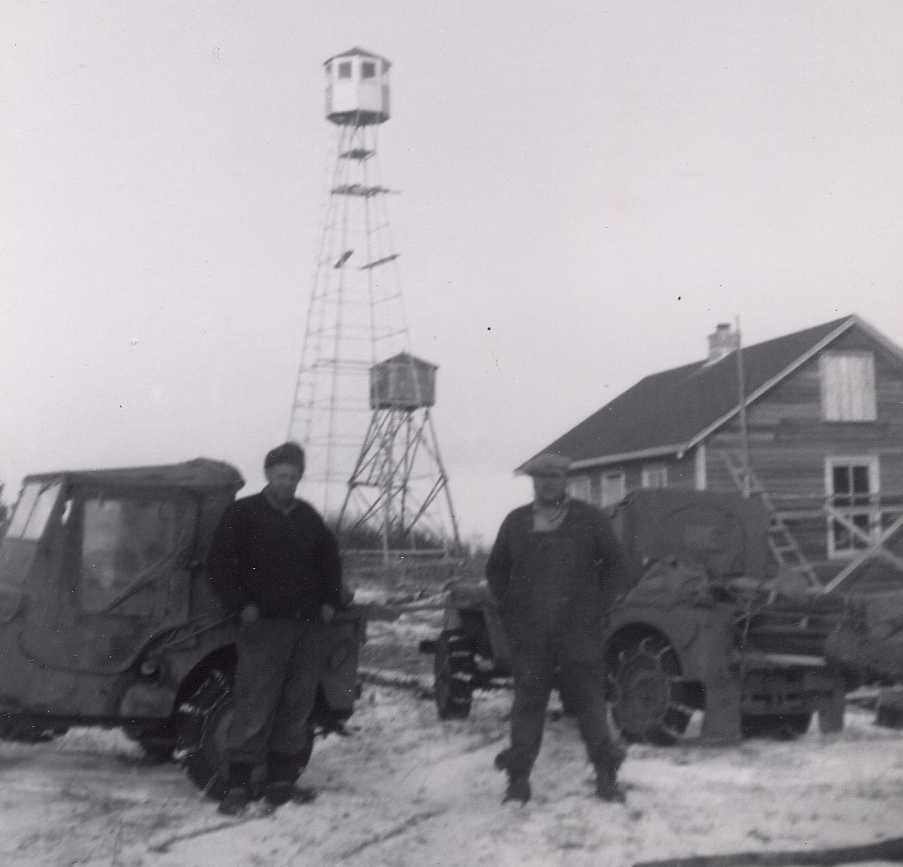
Perched high above the tree tops, braced to mountain peaks or balanced on steel towers, fire lookouts have a magnificent view. And that is the idea—they provide a place to watch for the first wisps of smoke that may signal the beginning of a wild fire. Detection, identification and then communication of the whereabouts of fires has been the job of the seasonal fire lookout observer in Alberta for over a hundred years.

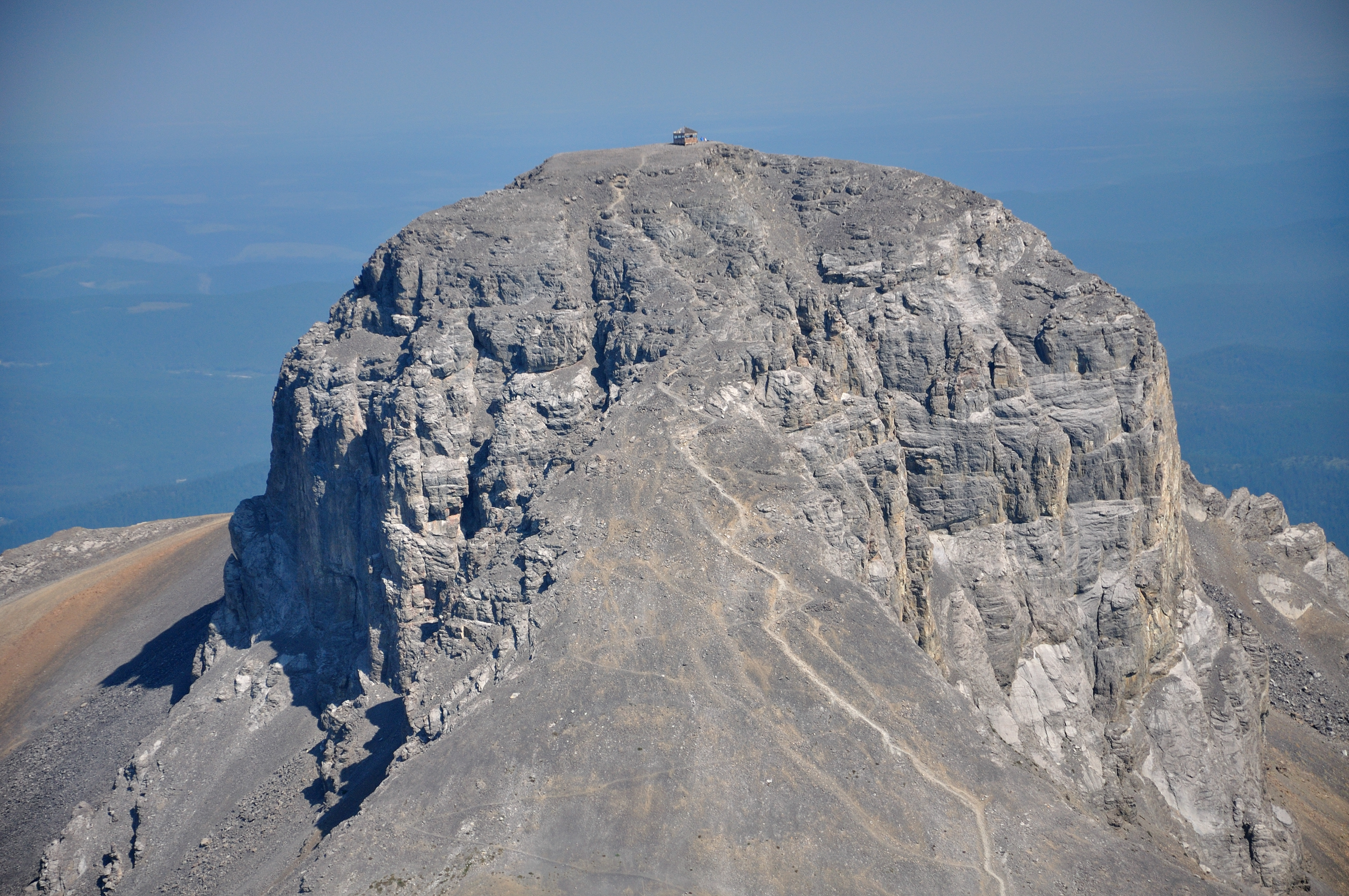
The abandoned Black Rock Lookout, near Banff, August 2009. (Photo courtesy of Alberta Sustainable Resource Development.)

By the 1890s forest fires were increasingly a cause for concern, not only because of economic opportunity lost when marketable timber burned, but because of a long term threat to water conservation. (Forests increase precipitation, prevent erosion and slow the evaporation of ground water.) In response the Dominion Forestry Branch developed trails for their patrol routes, and then began building a system of fire lookouts in Alberta’s extensive area of Forest Reserves and Parks. When jurisdiction over crown lands was transferred to Alberta in 1930, the Albert Forest Service expanded the system further, particularly during the 1950s.

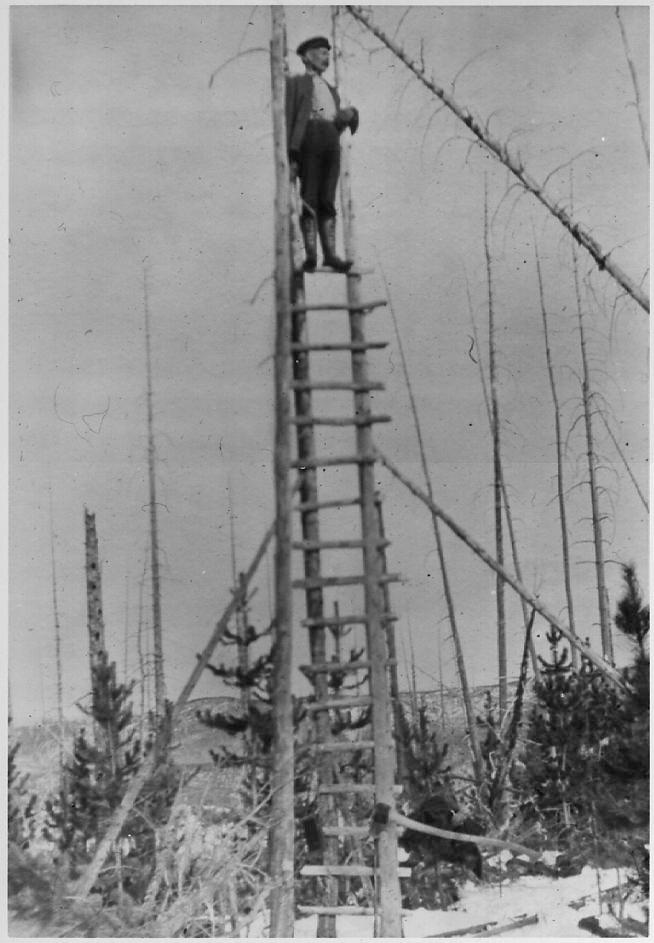
The first tower lookouts were temporary, improvised from building materials the forest rangers found while on patrol. They were often no more than “crawl” tree structures—trees with their branches removed serving as supports for bush ladders, steps between poles attached to two trees. A pre-requisite for a permanent staffed lookout was a phone line. Available after 1910, the phone allowed the man in the tower to talk to someone in the nearest ranger station. Seasonal employees were hired to man lookouts during fire season and their job included maintaining the trails and telephone lines, as well as making weather observations.

A photograph of a person atop a simple lookout in 1912.
Tree crawl lookout, Brazeau Forest, 1912. (Photo courtesy of Alberta Sustainable Resource Development.)

After 1912 there were two types of lookouts: summit lookouts, built on the ground or on short stilts, which provided a vantage point from high alpine peaks, and towers, built on high hills in the boreal forest, which elevated the observer over any obstacles to vision.

On mountaintops the earliest summit lookouts were single, square wood frame 12 by 12 foot structures with a pyramidal roof. Later designs featured a 14 by 14 foot structure with a cabin at ground level and a second story for observation. At these locations everything was constructed from planed boards, the easiest and lightest material for horses to haul. The lookouts were held down by steel cable that ran from a post on the roof to wherever they could be secured in earth. Open windows with hinged wood shutters that pulled upwards gave a 360 degree view.

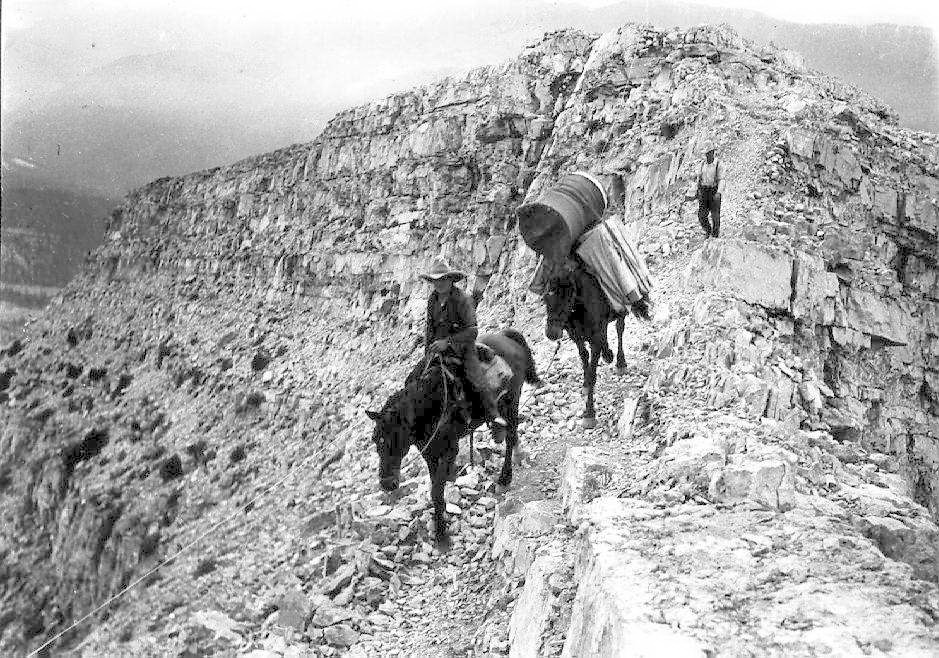
Burke Lookout (later renamed Cameron Lookout) built in 1929 on the summit of Mount Burke in the Livingstone Range is one example. At a staggering elevation of 8,330 feet (2,540 meters), it was the highest in Canada. It was hard work getting supplies up there each summer. The observer had to find his own wood supply for the stove to cook and keep warm; at Cameron this meant a long walk down the mountain to get below the tree line. Cameron was closed in 1953 and replaced by two lookouts positioned at lower altitudes that were easier to get to. Cameron is still visible with binoculars from Highway 2.

Packing in supplies to Cameron Lookout, 1929. Note the rain barrel for catching rain water. (Photo courtesy of Alberta Sustainable Resource Development.)

In the boreal forest area, a variety of tower types evolved. A smaller version of square lookouts, such as that built at House Mountain, near Whitecourt, was placed on broad-based wooden towers. Other towers were narrower, up to 60 feet high, with a small cupola lookout on top. They were constructed from either timber or steel. Introduced in the 1920s, steel increasingly replaced wood for tower construction. The later version of these steel towers replaced the wooden octagonal cupola with a fiberglass design in the 1960s.

Inside the lookout observers used binoculars to scan the forest then locate the fire with a rudimentary fire finder. Then in 1945, lookouts adopted the Osborne, an instrument used to help determine the precise location of a fire in relation to the tower. Mounted on a stand in the middle of the cupola, it measures the azimuth between true north and the location of a fire. Alberta is the only agency in the world that added a telescopic sight to the Osborne. Promoted by a couple of lookout observers in the 1960s, it was developed for use by the province to locate fires with precision over great distances.

The new steel tower at House Mountain, 1953. (Photo courtesy of Alberta Sustainable Resource Development.)

In the early days, the real challenge was to communicate the location of a fire to the nearest ranger stations; the telephone system, a tree-line or tripod system in the mountains, employed cable strung between trees and held on with insulators. It was susceptible to lightning, sometimes with frightening results when a bolt hit the line and the charge travelled along it and up into the lookout. The telephone also went down when trees fell across the line in summer and snow load would take it down prior to the fire season. In 1938, the first two-way radios, run on a generator, were installed in lookouts for communications.

The importance of fire lookouts has not diminished. Many of Alberta’s 127 operational fire lookouts are rebuilt on the location of the first generation of lookouts. Although working conditions are more comfortable, the job requirements for lookout observers—strong physical and mental health to withstand the rigors of climbing the lookout tower, loneliness and often monotonous routines—have changed little. “You have to like yourself to take the job;” that’s what the old hands say about life on the lone lookout.

Written by: Judy Larmour.

Collaboration Is the fun part of Grant Program Coordinator’s Job

The Heritage Preservation Partnership Program of the Alberta Historical Resources Foundation is the provincial funding program focused on helping individuals and organizations fund heritage initiatives. As Grant Program Coordinator, Carina Naranjilla keeps that program on track.

a photograph of Carina Naranjilla, Grant Program Coordinator, A.H.R.F.
Carina Naranjilla, Grant Program Coordinator, A.H.R.F.

The Alberta Historical Resources Foundation is a lottery-funded agency within Alberta Culture. The Heritage Preservation Partnership Program is one of the Foundation’s three grant programs. Heritage Preservation Partnership grants are awarded in five categories: Historic Resources Conservation, Transportation/Industrial Artifact Conservation, Heritage Awareness, Publications, and Research. There are also two scholarships: the Roger Soderstrom Scholarship and the Bob Etherington Heritage Trades Scholarship.

At the close of the twice-yearly application deadlines, Carina logs the applications, then distributes them to the appropriate subject experts within the Historic Resources Management Branch to develop informed recommendations to the Foundation’s Board of Directors.

“I’m not an archaeologist, a historian or conservation expert … so I rely on these people surrounding me in the branch for their technical expertise,” she explains. “My job is to coordinate with them, really putting all their expertise together. I set the timelines. We meet before they submit the technical evaluations to me. Then I edit [their evaluations], ensure the recommendations align with the funding policies and grants budget, check the accuracy of the financial information—a lot of detailed stuff.”

She emphasizes how important these evaluations are: “There are a lot a good projects, but you only have so much funds to distribute, so the challenge is to make sure that we are being fair and…when we deny an application or give reduced funding … we are able to provide the rationale” to explain that decision.

She consults with the Executive Director of the Alberta Historical Resources Foundation on the evaluations and recommendations, and finalises the recommendations that go to the Alberta Historical Resources Foundation’s board for review. She also assists “in the overall operation of the Foundation … administrative, financial, stuff like that.”

The Foundation’s board meets four times a year, and decisions about these awards are made at two of those meetings. Carina organizes the board meetings, along with managing other board interaction: “I look after drafting the agenda, coordinating the logistics, coordinating the materials and making sure they’re distributed on time—everything pertaining to the board meeting.” The two-day meetings, held in different locations around the province, always include a tour of the host community and opportunities for board members to meet with local heritage stakeholders. Carina particularly enjoys this outreach and the chance to see the local impact of grant-funded projects.

The recently announced conservation grants for owners of flood-impacted historic properties will mean more administrative responsibility for Carina. This special funding program will be run in the same way as the Heritage Preservation Partnership Program, but with different deadlines and a separate funding pot of $4.5 million. Carina is eager to see the applications that will come in at the first deadline, April 1.

She also manages two other programs of the Alberta Historical Resources Foundation:

There are the Heritage Awards, presented every two years in the categories of Heritage Conservation, Heritage Awareness, Municipal Heritage Preservation, and Outstanding Achievement. Carina oversees the application and review process, and plans the awards ceremony. “It’s really fun to organize,” she says. She also collaborates with the Communications Branch, which generates media coverage to encourage nominations and publicize the award decisions. The next ceremony, scheduled for October 16, 2014, will be held in conjunction with the annual Municipal Heritage Forum for the first time. Carina anticipates that this will bring even greater attendance and attention.

In addition, the Alberta Historical Resources Foundation provides annual funding to five other provincial heritage organizations—the Alberta Museums Association, the Archives Society of Alberta, the Historical Society of Alberta, the Alberta Genealogical Society and the Archaeological Society of Alberta—and Carina administers that too.

“So, you’ve got to be organized,” Carina concludes about her multifaceted position. She has been with the Historic Resources Management Branch since 2000, and in her present position since 2009, after earning a master’s degree in industrial engineering and working as a Business Analyst in her home country, the Philippines, then holding diverse administrative positions in private industry and government in Edmonton.

While not a heritage specialist herself, Carina says she’s continually learning from her colleagues. For example, when she has time, she likes to “tag along” with the Heritage Conservation Advisers on site visits to view the buildings and projects they’re working on. “It’s great because you collaborate with all these people,” she says. “That’s the fun part of my job.”

Written by: Kerri Rubman.

Coming in Low

The story of the Alberta Wheat Pool Elevator at Leduc.

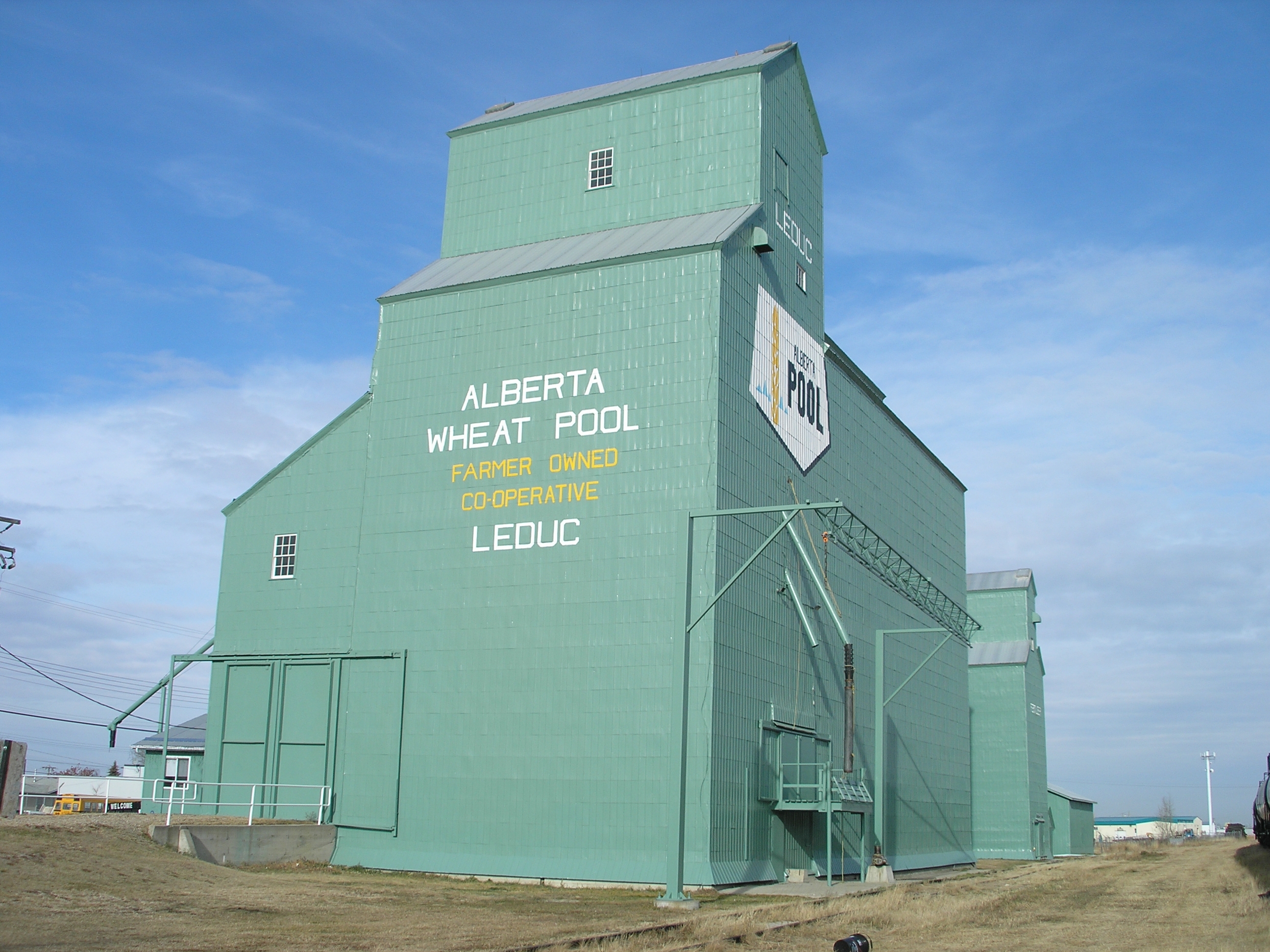
A photograph of the former Alberta Wheat Pool Grain Elevator at Leduc, taken in 2007.
Leduc Grain Elevator in 2007. Photo by Judy Larmour, Courtesy of Alberta Legacy Development Society.

Have any elevator enthusiasts out there ever noticed that the former Alberta Wheat Pool Elevator at Leduc looks a little different? It is a unique low-profile version of the Pool’s single composite 130,000 bushel elevator built on a standard plan during the 1960s and 1970s. It’s also unique as the only grain elevator that lies directly under the flight path to the main runway of an international airport and therein lies a story.

In 1976 the Alberta Wheat Pool revealed its intent to build a new elevator at the siding in Leduc. It wanted an elevator that would have a large enough capacity to replace all their aging elevators on the row, allowing for easier and more efficient grain handling. A single composite elevator built to the standard design stood normally over 27 meters hight (approximately 90 feet). This was considered a navigational hazard for airplanes approaching the airport—too high to get clearance from Transport Canada. So the Alberta Wheat Pool engineers went back to the drawing board to adjust the design, reducing its height. Transport Canada was satisfied with the new design, gave the green light and Leduc issued a building permit. Work began under AWP construction foreman Jim Pearson in spring 1978.

All elevators were basically built the same way. First a hole was excavated, cement foundation pads were poured and the steel pan set flush in the pit. The crew began construction of the sturdy cribbed walls, built to withstand the weight of the grain. The cribbing timbers were laid flat and spiked together. The cribbing of the exterior walls continued in rounds, in step with the cribbing of the inside bins, so that the elevator rose at an even height. As the cribbing progressed the crew installed the leg to elevate the grain, the distribution spout or gerber, the hopper and scales on the work floor, and the loading spout to the track below. The cupola on top was put together with pre-cut wood studs and shiplap or plywood walls. Finally the driveway was added, and the whole structure was clad with wood siding.

At Leduc, as Pearson later explained, changes had to be made to the standard plan. Instead of the standard 67 foot walls, the walls and bins were cribbed up only 59 feet, and the cribbing strength was reduced proportionately to the overall height of the building. The standard rounds of 2 by 6 cribbing were reduced by 5 feet and the higher 2 by 4 cribbing by 3 feet. To partially compensate for the lost volume, the design incorporated an annex 10 feet longer than was standard, giving the structure a footprint of 38 feet by 100 feet.

Lowering the walls 8 feet was still not enough to meet the required height restrictions. Another factor came into play. Elevators compress when they are filled with grain. The term telescope is used to describe a number of ways to allow the building to move in response to changing loads without causing damage to the structure. Normally, the leg is in one piece, so the cupola must be high enough to clear it as the elevator compresses. The Pool, wishing to install two metal legs—one for receiving grain and one for shipping, as was common by the 1970s—had to devise special legs at Leduc. They were telescoped in the middle and moved with the elevator to allow a lower profile than the standard one piece leg. A floating pulley in the pit took up the slack in the belt inside the leg. This one-of-a-kind system designed by Pool engineers allowed them to construct the cupola thirty inches below the regular height. When the new elevator was complete it was about the same height as the three 1920s elevators that it replaced.

The flight path-friendly elevator, with a capacity of 121, 000 bushels, was more expensive than a standard elevator. It cost $592,752 to build and opened in December 1978—the official ribbon cutting deferred until April 1979. It proudly served the farmers of Leduc until July 2000. When its days were clearly numbered and it, too, was faced with demolition the newly formed Alberta Legacy Development Society sprang into action to ensure its survival. Designated as a Provincial Historic Resource in 2003 and with fresh coat of paint in September 2007, it flaunts the once familiar and omnipresent Alberta Wheat Pool crest and logo.

So the next time you fly over Leduc into Edmonton, just before landing, look down to spot Alberta’s special stubby, one of the last Alberta Wheat Pool single-composite elevators standing and still the tallest building in downtown Leduc.

This slideshow requires JavaScript.

Written by: Judy Larmour.

Creative Problem Solving Delights Head of Conservation and Construction Services

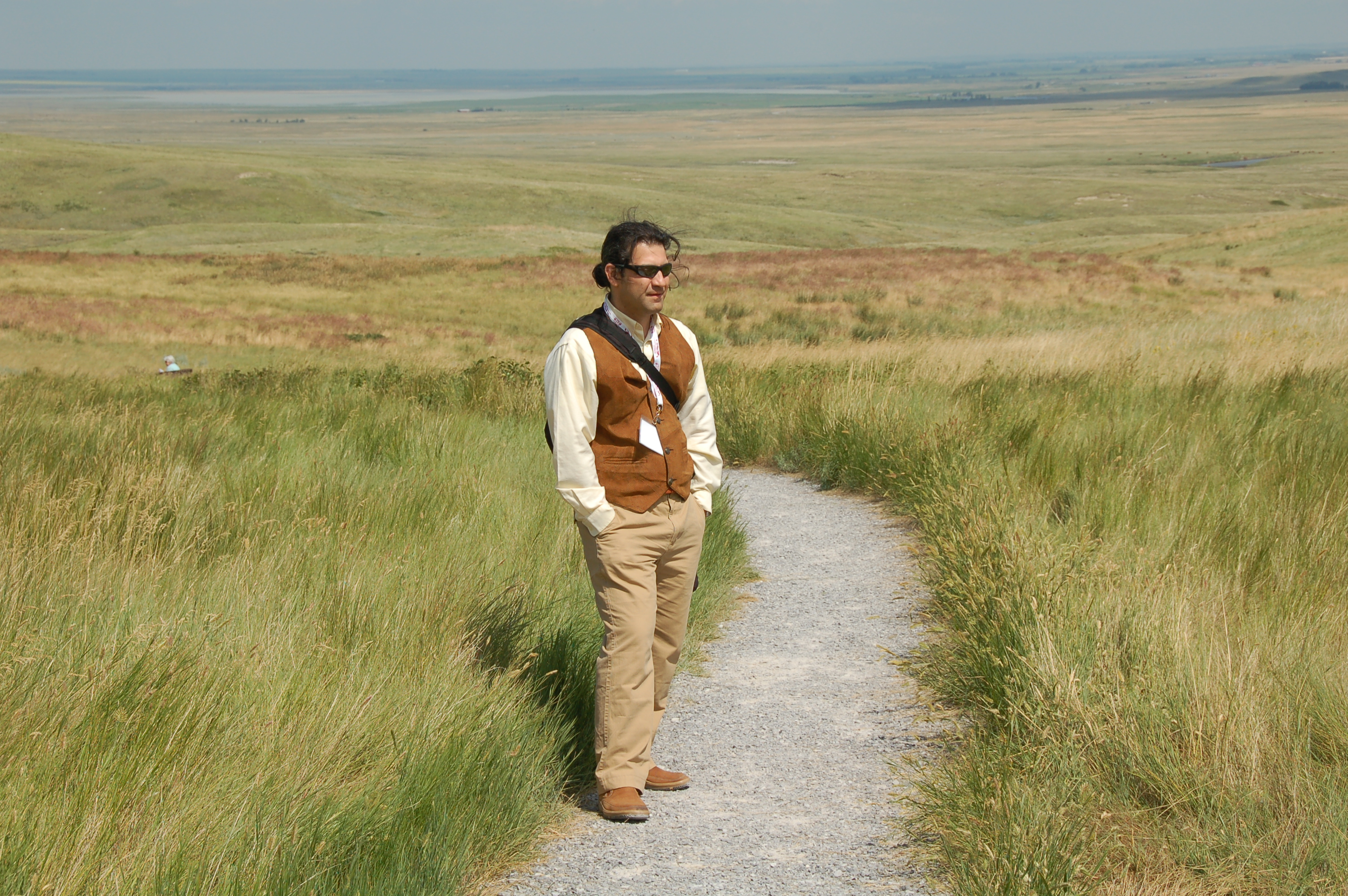
Alireza Farrokhi at the Head-Smashed-In Buffalo Jump during the 25th anniversary celebration in July 2012.

Alireza Farrokhi, Head of Conservation and Construction Services in the Historic Resources Management Branch, describes his work this way: “My unit is the operational arm of our branch. Other program areas protect historic resources and promote heritage conservation by designation, research, and advisory services to municipalities and private property owners; they tell how heritage conservation should be done. We are the group that does it.” Like other program areas, Conservation and Construction Services follows Standards and Guidelines for the Conservation of Historic Places in Canada closely.

Stewards of Provincially Owned Historic Resources

Conservation and Construction Services is responsible for “the heritage conservation, maintenance, and environmental management at all designated Provincial Historic Resources that are owned by the province.” That includes more than 50 restored historic structures, 14 operating historic sites, and 70 “mothballed” (vacant but stabilized) historic structures located at five sites not currently in use. The unit also collaborates with other government ministries—such as Alberta Environment and Sustainable Resources Development; Alberta Tourism, Parks and Recreation; and Alberta Infrastructure (the property manager for all government-owned buildings)—if heritage conservation work is required as part of a larger project.

The seven-member unit (which includes three Heritage Conservation Technologists, a Restoration Foreman, and two Restoration Craftsmen) is currently working on numerous projects throughout the province. Staff members once covered specific geographic areas, but are now more likely to be assigned projects based on their expertise. Members of the unit make up the crew for smaller projects. Larger ones are contracted out, with unit staff overseeing the project planning and management.

Restoring and Conserving

The unit’s ongoing workload ranges from conducting multiyear, multistructure restoration projects to addressing specific conservation problems, including some “that come out of the blue.” One staff member works full time at the Ukrainian Cultural Heritage Village, east of Edmonton, restoring buildings one by one. Another has been restoring the log structures at the Perrenoud Homestead near Cochrane. Members of the unit have also worked recently at the Rutherford House in Edmonton, the Stephansson House near Markerville, and Victoria Settlement near Smokey Lake.

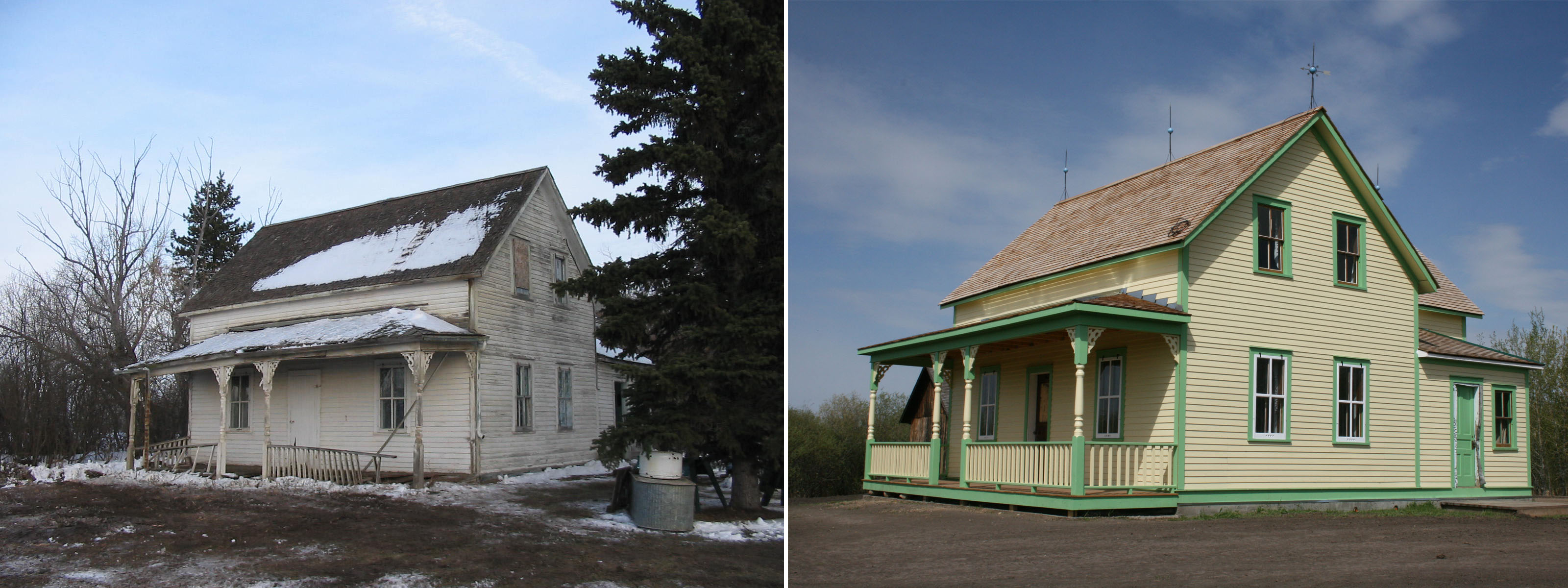
Two images contrasting the Hewko House at the Ukrainian Cultural Heritage Village before and after its restoration.
Hewko House restoration at Ukrainian Cultural Heritage Village: before (2008) and, after (2009)
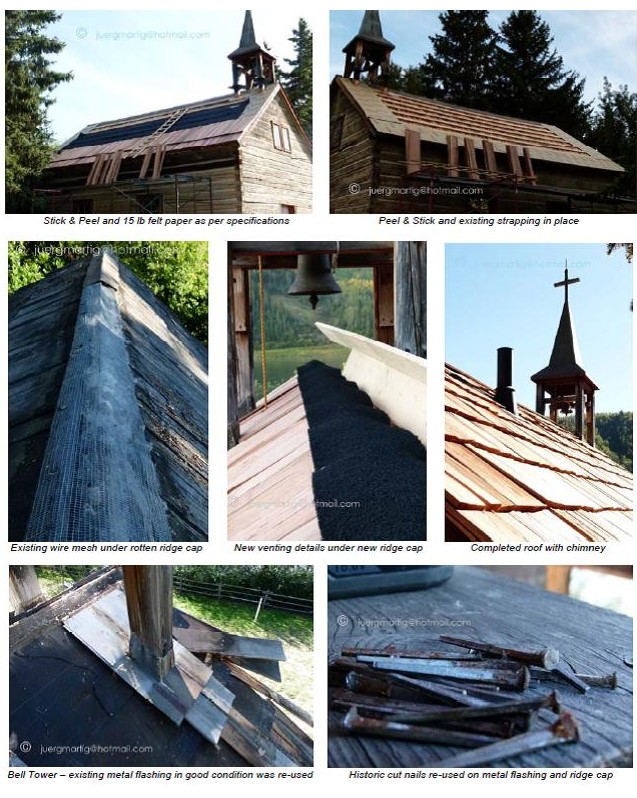
Images showing different aspects of the St. Charles Mission re-roofing at Historic Dunvegan.
St. Charles Mission re-roofing at Historic Dunvegan

Heritage and Environmental Conservation

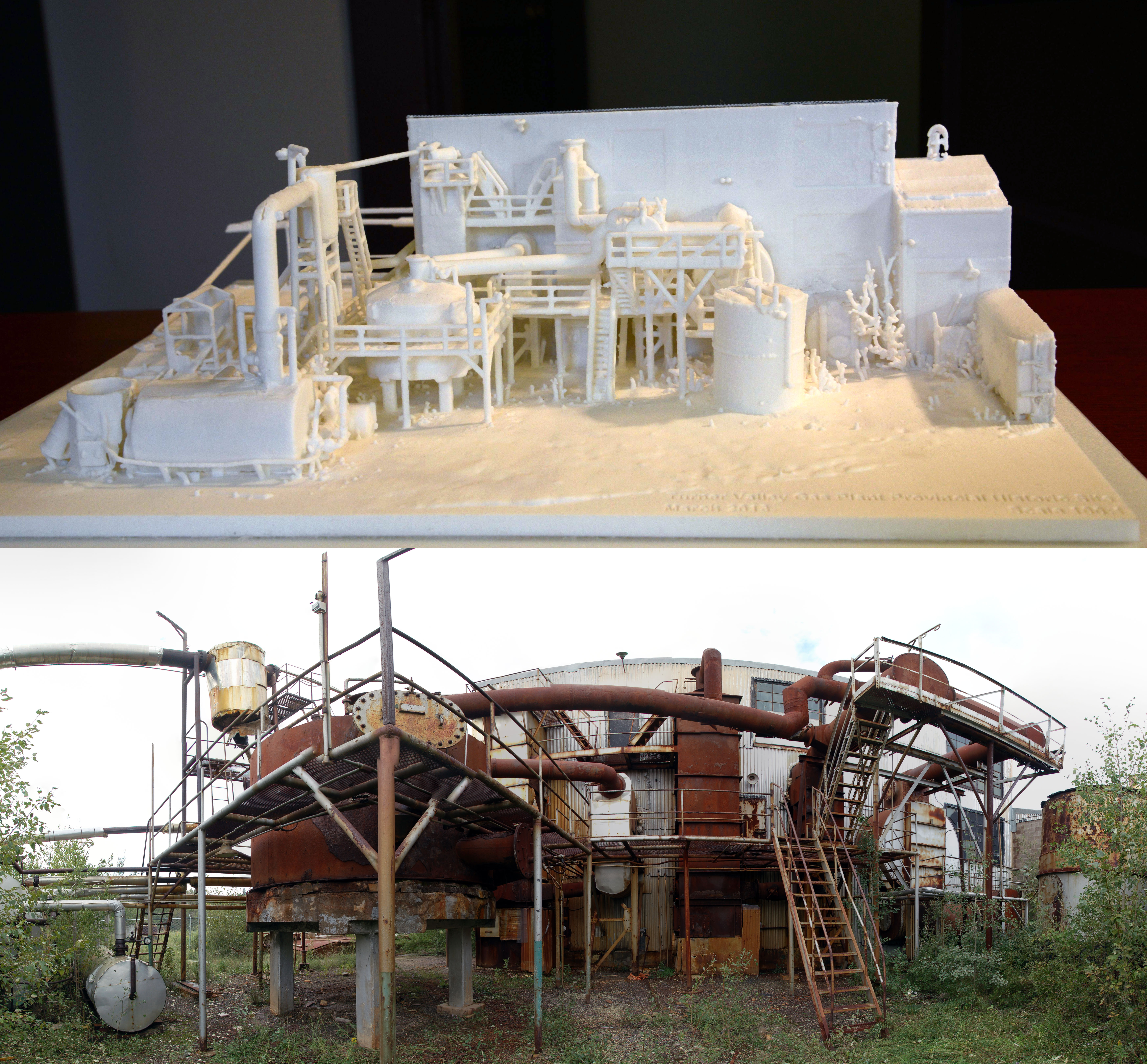
Alireza’s current projects involve restoring “environmentally challenged” industrial sites. He and a colleague are currently working at three that were critical to Alberta’s history: Turner Valley Gas Works, Alberta’s first natural gas plant and a key player in the creation of the province’s oil and gas industry; Greenhill Mine Complex, a historic coal-mining operation in the Crowsnest Pass; and the Bitumount Site north of Fort McMurray, the birthplace of oil sands extraction technology.

an image contrasting a scale model of the sulphur plant with the plant itself
Scale model of the sulphur plant at Turner Valley Gas Plant (top) and the genuine article (bottom)

“Back then, their focus was solely on energy extraction. They were not really concerned about the environment,” he says. “But now these are areas that we need to clean up with heritage conservation considerations, so we can’t just dig out the dirt and take it away.” Older structures and equipment must be rescued and stabilized; working in sections, contaminated soil and water must be removed, contained, and treated; nearby waterways must be monitored to verify that groundwater and surface run-off is now clean.

Other historic sites under the unit’s care often require environmental remediation as well, especially removal of asbestos and lead paint.

Regular Maintenance: Conservation at its Best

Conservation and Construction Services is also responsible for regular maintenance (as part of the heritage conservation process) at the sites under its care. To help with that, the unit is developing a maintenance manual for each historic structure. The manual will compile, for easy reference, all records of previous work conducted, related reports, cyclical maintenance requirements, and specific concerns to monitor “so we’re not caught off-guard.”

Alireza loves the challenge and creativity of heritage conservation work. “If a job is not challenging, it’s not interesting,” he says.

Modern buildings tend to develop predictable problems that have known solutions, he explains. But with heritage buildings, “the problems that we deal with don’t necessarily have known solutions. You have to come up with innovative ways of dealing with problems. I love that! It opens up the discussion. There are no right or wrong answers.” For every project, “you always consider the construction technology, what kinds of materials are used, why this is happening, and how you can resolve the issue without impacting the heritage fabric and values.”

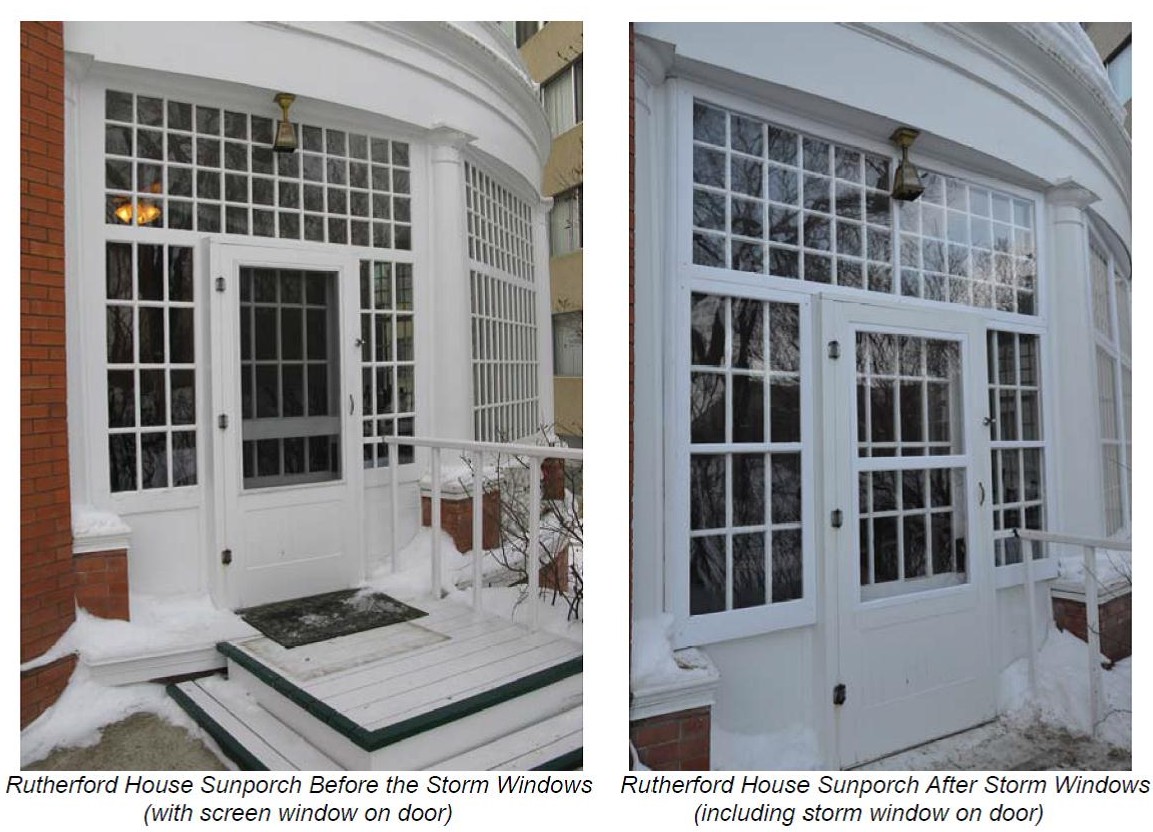
An example is recent work at the Rutherford House, an interpreted site on the University of Alberta campus. The sun porch is used as part of the restaurant. Air leaked in through its windows, making the space hard to heat, and water condensation was rotting the wooden window frames and sashes. It was decided to add unobtrusive storm windows where none had existed before. That involved “coming up with different details, experimenting, discussing with our contractor what’s possible and what’s not, and monitoring the work along the way, experimenting to see if it works.” Now the heating and condensation problems are solved and the staff is “very happy,” Alireza says. And, “it would be very hard for you to pick out where the storm window is because it blends into the historic window as if it’s not there.”Images Showing the Rutherford House Sunporch before and after storm windows were added.

From Iran to Canada

Alireza started his career as a civil engineer in his home country of Iran, doing project management for the construction of large-scale industrial and high-rise buildings. His eyes were opened to heritage conservation work when the firm that employed him was building the subway system in historic areas of Tehran. The discussions about the heritage fabric encountered there were like “poetry,” he recalls.

Alireza earned a master’s degree in heritage conservation in Tehran, then he cofounded a private company specializing in heritage conservation—a risky business venture in a country where almost all conservation work is done by the government. The company grew into one of the largest of its kind in Iran.

His company helped with stabilization of heritage structures of the 2500-year-old Bam Citadel, which was damaged in a devastating earthquake in 2003 in which some 43,000 people lost their lives. While doing that work, Alireza questioned why, at the same time that thousands of displaced people lacked basic necessities, conservation professionals were routinely advocating the use of the most advanced and expensive documentation techniques instead of less costly ones (laser scanning rather than study of years of existing aerial photographs.

That led him to the University of Calgary’s doctoral program in Environmental Design, to explore how and why professionals in heritage conservation (and potentially in other fields as well) choose which documentation technology to use. Alireza joined the Historic Resources Management Branch as a Restoration Officer in October 2011, and has been in his current position since July 2013, while also completing his dissertation.

After working on ancient monuments and sites in Iran, doesn’t Alberta’s heritage seem rather modest by comparison? Not at all, Alireza insists! “It comes down to a question of values—what you value. Heritage is heritage, regardless of how old a particular structure is. It brings people together, it creates a sense of community, and those are the important factors.

“And the conservation approaches are similar all across the board. For sure, some techniques are different, but the overall approaches are the same, so whatever you do in one part of the world could be adapted for anywhere else.”

Written by: Kerri Rubman.

Ever Wonder How a Grain Elevator Worked?

We’ve published articles on Alberta’s historic grain elevators in the past and they’ve struck a cord. We’re preparing a few more articles about Alberta elevator’s, so stay tuned. In the meantime, we though you may wish to know how a grain elevator worked.

A diagram illustrating how a standard grain elevator operated.
A diagram of a standard grain elevator.

The interior of a traditional elevator contained two open areas: an attached covered driveway and an open space under the suspended bins, known as the work floor, in the centre of the elevator. A fully-loaded vehicle was parked on the large receiving scale, which took up most of the driveway floor. The agent weighed a farmer’s fully-loaded truck, wagon or sleigh using a balance beam to the side of the scale. The farmer then dumped his load through a grate on the scale floor and the now empty vehicle was re-weighed. The agent took a sample of the grain, which he analysed for type and quality.

The grain flowed through the grate into the pit below. This pit was an open triangular shaped steel pan. The agent then used the leg to elevate the grain from the pan or pit. The leg stretched from the pit to the top of the elevator. The leg — originally powered by a 15 horsepower, one-cylinder gasoline engine mounted under the office, and later by an electric motor—was an endless belt with cups attached running inside a wooden chute up the elevator,. As the leg turned, it elevated grain to the head distribution spout or gerber. The gerber was moved from one bin spout to another to direct the grain to the desired bin. The gerber was controlled from the work floor with a wooden pedal and a large hand wheel attached to the front of the leg chute.

Most spouts in the cupola fed into a storage bins (there were at least 18 but often more). The load was stored in a bin holding the same type and grade of grain. One spout led directly outside the elevator on the track side; it could be positioned over the track for loading grain into grain cars. Another spout returned grain from within the elevator to the driveway where it could be dumped into a waiting wagon or truck.

When the agent wanted to ship a quantity of grain he drew grain from the selected bin into the shipping scale bellow the scale hopper. After it was weighed the grain was dropped into the pit, the leg re-elevated itand directed it through the gerber and into the rail car loading spout and down into a grain car waiting on the siding beside the elevator.

Written By: Judy Larmour.

Director of the Historic Places Stewardship Reflects on 35-Year Career

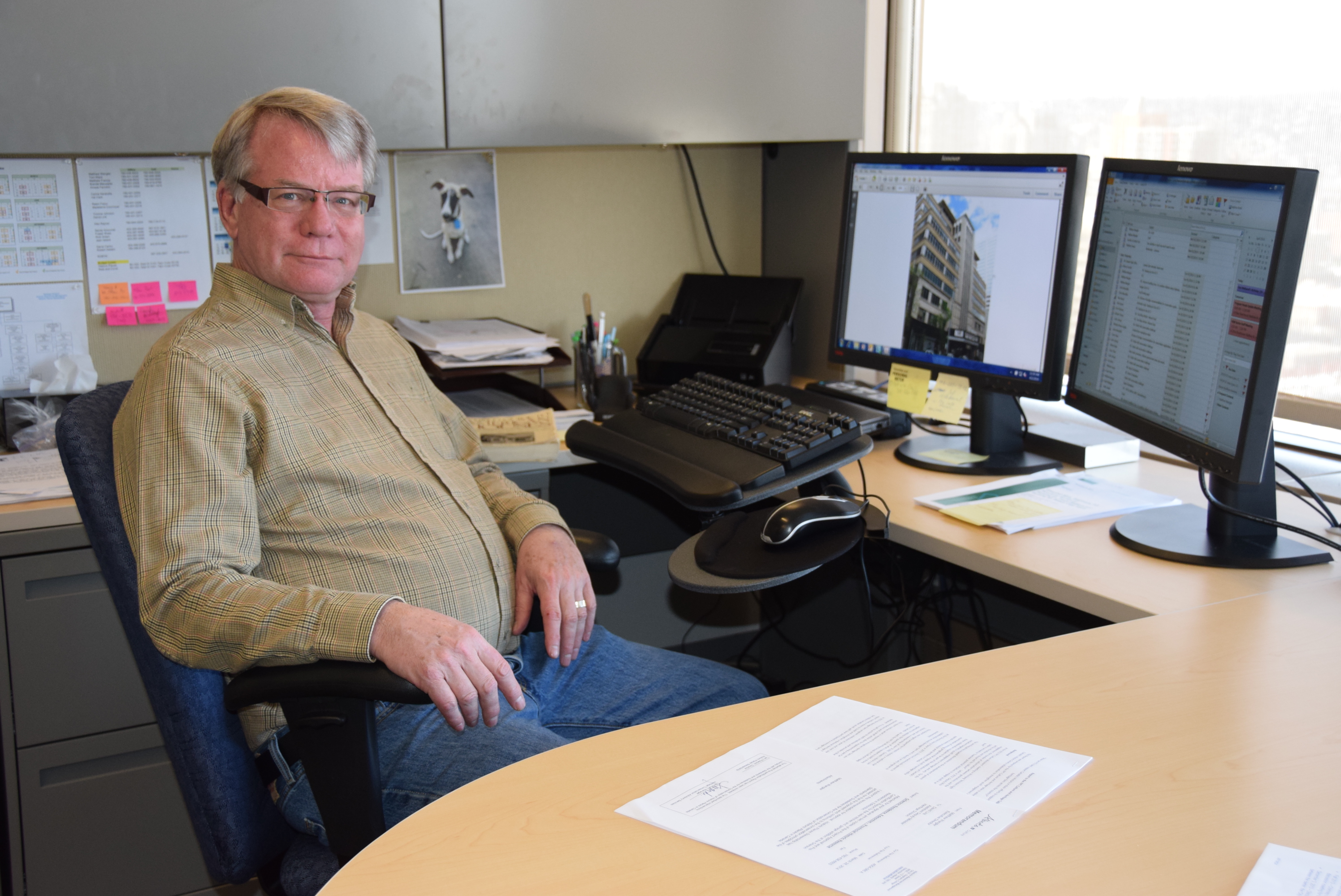
photograph of Larry Pearson, Director of the Historic Places Stewardship Section, at his desk.
Larry Pearson, Director of the Historic Places Stewardship Section.

As Director of Historic Places Stewardship, Larry Pearson heads one of the three sections that make up the Historic Resources Management Branch. Next October will mark Larry’s 35th anniversary doing heritage conservation work for the Province of Alberta—and he’s seen, and overseen, many changes.

Larry was completing a master’s degree in architecture at the University of Calgary, with a focus on heritage conservation, when he was hired as the Restoration Officer at the Ukrainian Cultural Heritage Village. Within a few years, the Ukrainian Cultural Heritage Village was amalgamated into the provincial Historic Sites Service, and eventually Larry became responsible for overseeing the architectural design work for all provincially owned sites undergoing restoration.

He was the project manager for a three-year effort to develop the Fort George and Buckingham House Provincial Historic Site—location of the first forts along the North Saskatchewan River, dating from 1792—into an interpreted site with a visitor centre and trail system. Later he headed a team, made up of colleagues he’d worked with at the Ukrainian Cultural Heritage Village, that researched and carefully dismantled St. Onuphrius Church Ukrainian Catholic Church. The Canadian Museum of Civilization (now called the Canadian Museum of History) acquired the small Eastern-Rite church to be part of the Canada Hall, its main permanent exhibit. That project won the 1997 Premier’s Award of Excellence as best team project.

Larry enjoys the challenge of planning restoration projects: “understanding how a building has changed over time, confirming what it looked like, deciding the appropriate period of significance that we want to return it to, and returning it to that period in a way that has minimal impact on historic fabric.” And he appreciates the value of collaborating (including having impassioned discussions) with colleagues from related disciplines. He continues to encourage that kind of teamwork in his current position.

As of 2000, Larry was managing what was then called Community Heritage Services, within the Historic Sites Service. Community Heritage Services was responsible for identifying and designating historic places as Provincial Historic Resources, and ensuring that their ongoing conservation preserved their heritage value, as well as providing assistance to community groups involved in heritage projects—a lot of what the Historic Places Stewardship Section does now. But this was somewhat outside the scope of the rest of the Historic Sites Service, which was focused on the development and operation of provincial historic sites. Meanwhile, other units involved in identifying, protecting, and supporting the conservation of historic resources were located in different branches of the Heritage Division. Because heritage resource management functions were diffused across the division, “the philosophical and policy discussions that needed to happen around how to identify, protect, and manage Alberta’s historic places didn’t happen,” Larry recalls.

In fall of 2000 he and colleagues from other branches within the Heritage Division were asked “to develop and implement a process that asked and answered the question: ‘Are we structured the best way we can be to accomplish what we’re being asked to accomplish?’” The result was a reorganization that established the current Historic Resources Management Branch in February 2001, gathering together functions that previously had been spread across other branches.

Larry was responsible for forming what was then called the Protection and Stewardship Section within this new branch, which he has headed since its beginnings. “The section’s programs are focused on identifying, protecting, and conserving Alberta’s historic resources,” Larry explains.

From the start he worked to ensure that “we had an established rulebook, a policy framework, about what we were doing.” His approach to conservation management was informed by his participation on the Association of Preservation Technology’s board of directors from 1984 to 1989, as a member of the training and conference committee, and later as program chair for its 1999 conference held in Banff. This work brought him in close contact with preservation professionals from the United States who were employing federal-level tools there, notably the U.S.’s National Register of Historic Places and the Secretary of the Interior’s Standards for the Treatment of Historic Properties.

During the late 1980s, Larry led an initiative to develop a set of provincial standards and guidelines for the conservation and care of historic buildings. Alberta’s Guidelines for the Rehabilitation of Designated Historic Places, which were based on the U.S. Secretary of the Interior’s Standards, were first printed in 1990, then revised and reprinted in 1993.

Then in 1999, Parks Canada began discussions with federal departments, provincial and territorial officials, and other stakeholders to develop a pan-Canadian strategy to identify and conserve Canada’s historic places. A team of representatives from provincial and territorial governments around the country worked intensively to develop a Canada-wide approach to heritage conservation.

The result was the Historic Places Initiative (HPI), launched in 2001, which over the next few years established the Canadian Register of Historic Places, Standards and Guidelines for the Conservation of Historic Places in Canada, and a process for certifying that designated historic properties are conserved in accordance with the Standards and Guidelines. The HPI also provided federal funding to provinces and territories to help them implement the HPI, so that all provincial (and by extension municipal) historic places would be included.

Larry helped represent Alberta during the HPI planning process. Alberta was a key contributor to developing the HPI’s Standards and Guidelines. Alberta officially adopted the Standards and Guidelines in August 2003. Colleagues in his section ensured development of the Alberta Register of Historic Places and the listing of Alberta’s historic places on the Canadian Register.

Along with bringing these new guiding principles to the work of the section, which with the advent of the HPI had been renamed the Historic Places Stewardship Section, Larry also made a major organizational change: expanding the reach of the section by adding a new program area. Although municipalities had been empowered by the Historical Resources Act since 1978 to designate their own historic resources and implement protections for them, very few had chosen to do so, or even knew about this conservation tool.

Larry continues: “The federal government asked the provinces to reach out to their municipalities, to ensure they were included in the work of the Historic Places Initiative. So we took a portion of the federal HPI funding and developed the Municipal Heritage Services Unit. We flowed much of the federal money through to our municipalities. It was all about building municipal capacity. Within that unit, we developed a new program called the Municipal Heritage Partnership Program to provide matching grant funding to municipalities so they could identify through surveys and inventories what’s important to them, and to help them, again through funding, to develop [municipal heritage designations] and municipal historic resource management plans…So there was a very significant, concentrated effort on engaging municipal government.” The MHPP was officially launched in 2006, although aspects of it had been piloted in previous years. “It changed our focus,” Larry says.

More recently, the section’s responsibilities have grown to include the delivery of maintenance and conservation services related to historic sites and museums owned or operated by the Heritage Division, bringing further conservation expertise into the unit. The section also now provides research services in support of the interpretation programs of a number of these sites.

As Director of Historic Places Stewardship, Larry monitors, critiques, and signs off on all decisions made by the programs within the section. For example, he reviews recommendations on provincial heritage designation made by the Historic Places Research and Designation Program, approvals for proposed changes to designated resources made by the Heritage Conservation Advisory Services, and grant-funding recommendations made to the Alberta Historical Resources Foundation by different subject specialists within the section. He also oversees “staffing, manpower, budget—administrative things.”

A big part of his job, he adds, is encouraging collaboration and teamwork among the staff of the section’s different program areas. “Nobody could do what they do without somebody else from another unit helping them,” he says, “which I think is one of the reasons why it’s such a strong section. They all know what everybody else does, and they all have a very clear, shared vision.”

Written by: Kerri Rubman.