Brrrrr… Oh, wait! It isn’t that cold!

Sitting at my desk enjoying the sun streaming in through the window, I can’t help but wonder what Eda Owen would think about the unseasonably warm winter we are experiencing. Who is Eda Owen, you ask? Working out of the Owen Residence / Dominion Meteorological Station in Edmonton, Owen was a pioneering meteorologist serving from 1915 to 1943. She was one of only a small number of female meteorologists working at weather stations throughout the world.
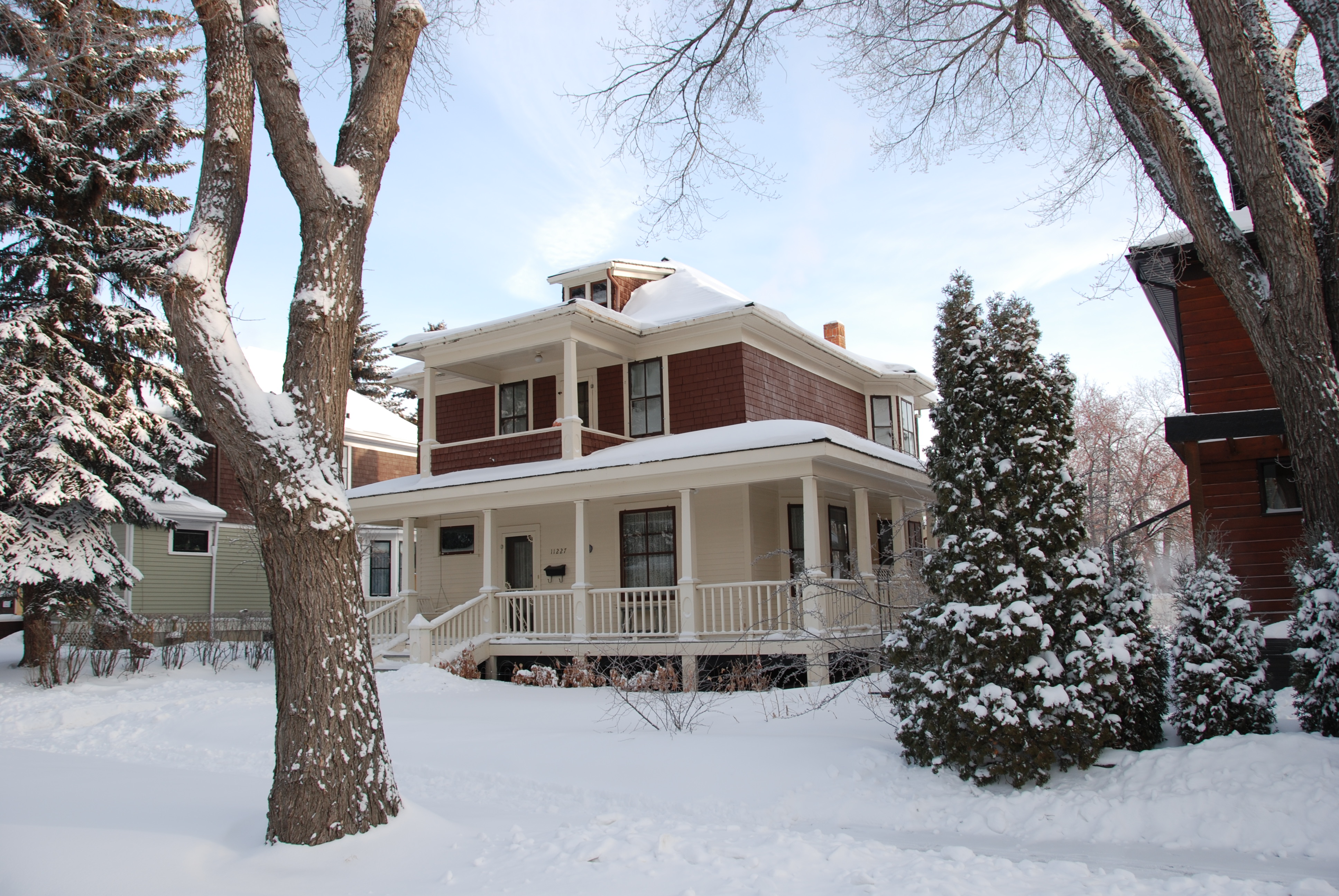
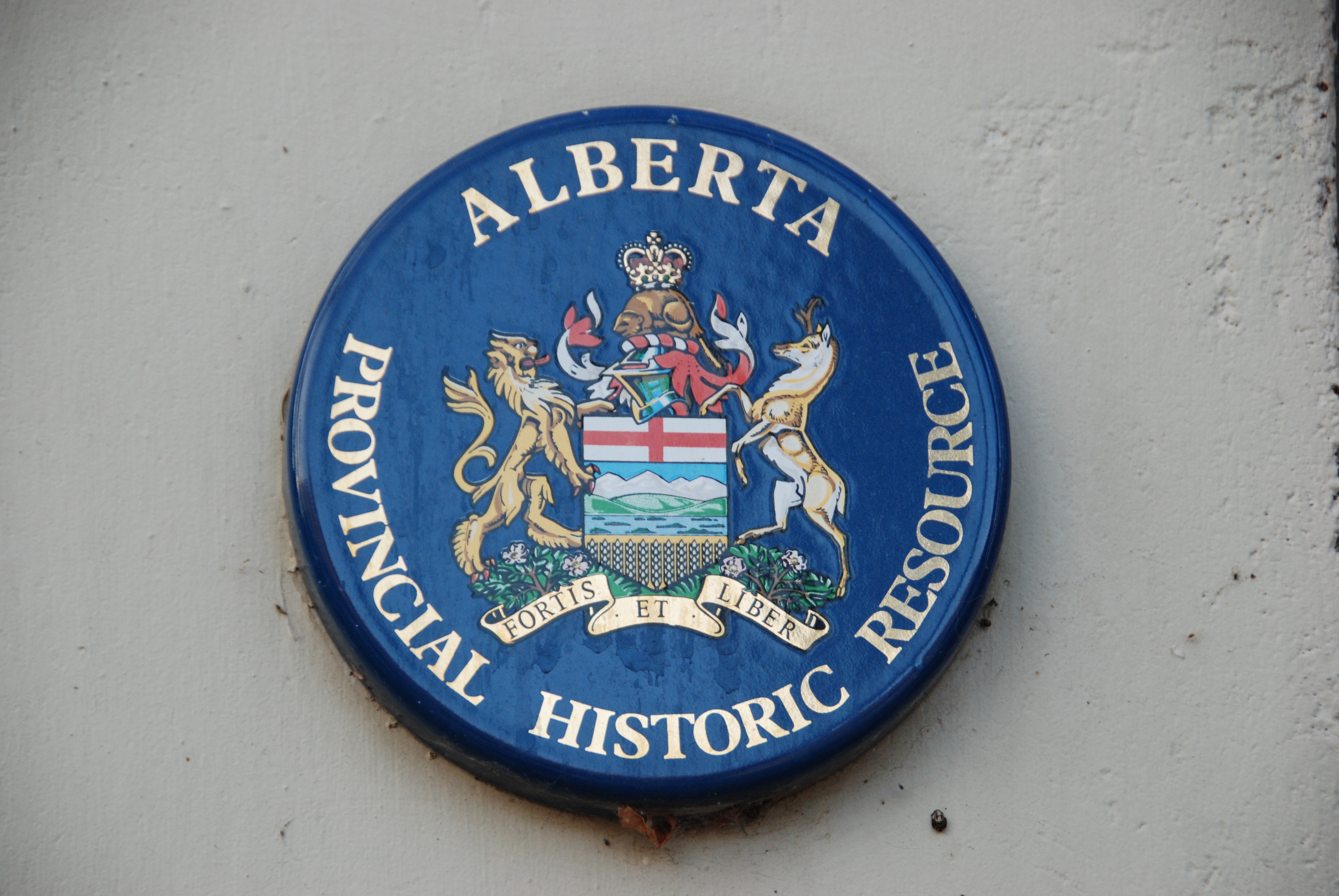
The Owen Residence / Dominion Meteorological Station was designated a Provincial Historic Resource in 1994, in part, because of its association with Eda Owen. On the Alberta Register of Historic Places, the Statement of Significance says:

In 1908, Eda and Herbert William Owen emigrated from London to Edmonton. After a number of temporary employments in his new home, Herbert accepted a position as an assistant in the Dominion government’s Meteorological Office. In 1913, the weather office was moved into the Owen residence in the Highlands neighbourhood. Wartime exigencies prompted both Owen and his supervisor, Captain S. M. Holmden, to enlist in 1915 for active service overseas. In their absence, Eda Owen, who had learned the arts of reading navigational charts and employing scientific instruments from her husband, took over meteorological duties at the Highlands station. Herbert never returned home, dying in a prisoner of war camp in Europe. Though overcome by grief, Eda continued her work at the station. In 1921, following a brief spell as an assistant meteorologist, she was formally named Provincial Agent and Weather Observer for Alberta by the federal Department of Marine and Fisheries. Her work was incredibly demanding. The Highlands station was arguably the most significant meteorological post outside of Toronto. Eda was required to take hourly readings from 36 different instruments throughout the day and compile reports from over 140 stations in the region. The information she amassed had wide currency, being circulated to forest rangers, aviators, agriculturalists, as well as radio and newspaper personnel. For most of her service from 1915 until she resigned her post in 1943, Eda was the only woman employed as an observer at a major Canadian meteorological station. Indeed, she was one of only a handful of woman meteorologists at major stations in the world at the time. As a result of her trailblazing work, she garnered international acclaim. MacLeans, the Toronto Star Weekly, and the Christian Science Monitor all featured Eda in their pages, hailing the “Weather Woman of the West” as a pioneer in a scientific field largely dominated by men.

What would Owen think of our warm winter? We will never know, but I would like to think that between readings from the 36 meteorological instruments she would have found time to enjoy the warm spring-like conditions.

To read the complete Statement of Significance, please click here.

Written by: Brenda Manweiler, Municipal Heritage Services Officer
Designation Policy: Does Your Municipality Have One?

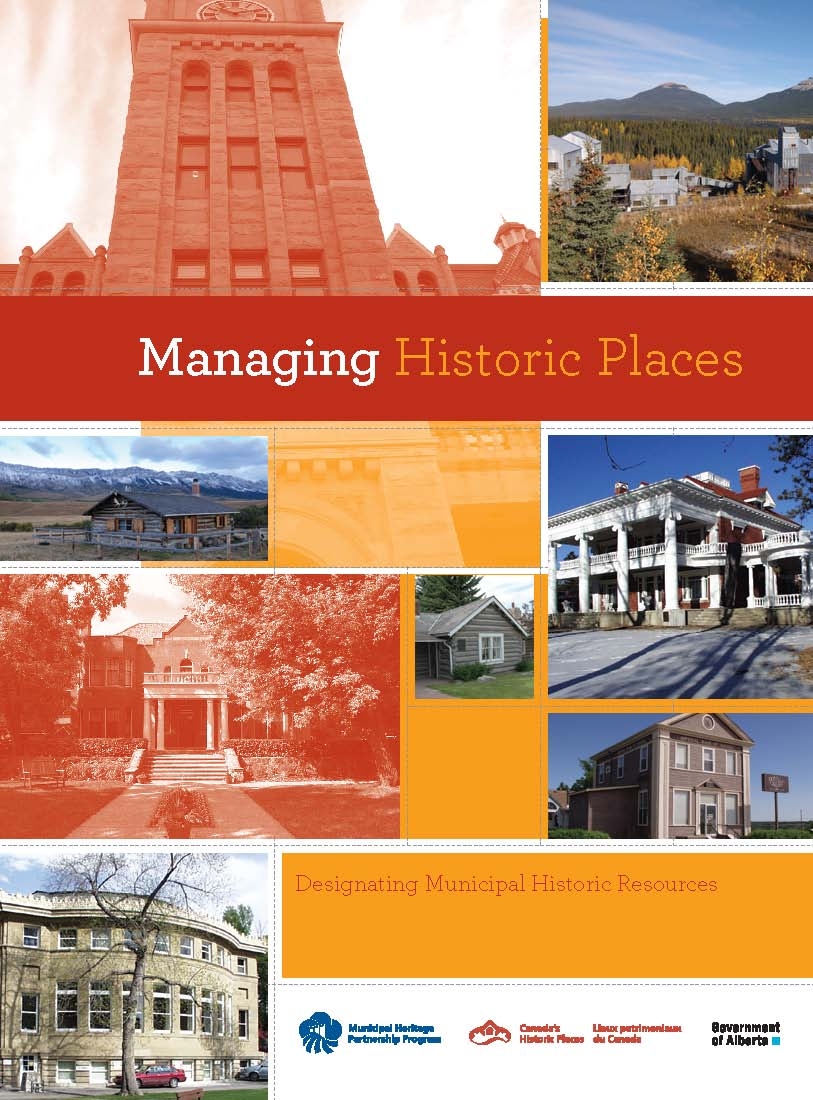
Many municipalities will designate a Municipal Historic Resource without first developing a designation policy. The Historical Resources Act does not specify how municipalities must evaluate places for Municipal Historic Resource designation. Municipal Historic Resource designation bylaws are passed in a slightly different way than a bylaw is normally considered, but otherwise each municipality is allowed to define how it will protect its historic resources. (To learn more about designating Municipal Historic Resources read Managing Historic Places: Designation Guide, which can be downloaded from the publications section of the MHPP website).

How should your municipality respond to a request from a member of the public to protect a historic resource? By developing a policy that describes how the municipality will use its power to designate Municipal Historic Resources. A place should not be designated unless it is in the public interest to do so, and a good designation policy will help determine when that is the case. A good designation policy will explain:

  • What the purpose of the Municipal Historic Resource designation program is, specifically explaining what types of places the municipality is willing to protect and why.
  • Who is allowed to nominate places for designation.
  • What information a nominator needs to provide.
  • How the municipality will evaluate a proposed designation, including who is responsible for evacuating the proposal (like a Heritage Advisory Board) and what information council needs to make a decision.

A written policy that answers these questions will help protect significant sites while reducing the time and effort needed to evaluate designation proposals. A good policy lets nominators know what types of sites the council is willing to evaluate, what they are willing to protect and what information they need to provide. A good policy will make for a transparent and fair nomination process.

For more information on creating a designation policy or other heritage management planning activities, please consult the publications section of the MHPP website, or contact Municipal Heritage Services staff.

Written by: Michael Thome, Municipal Heritage Services Officer
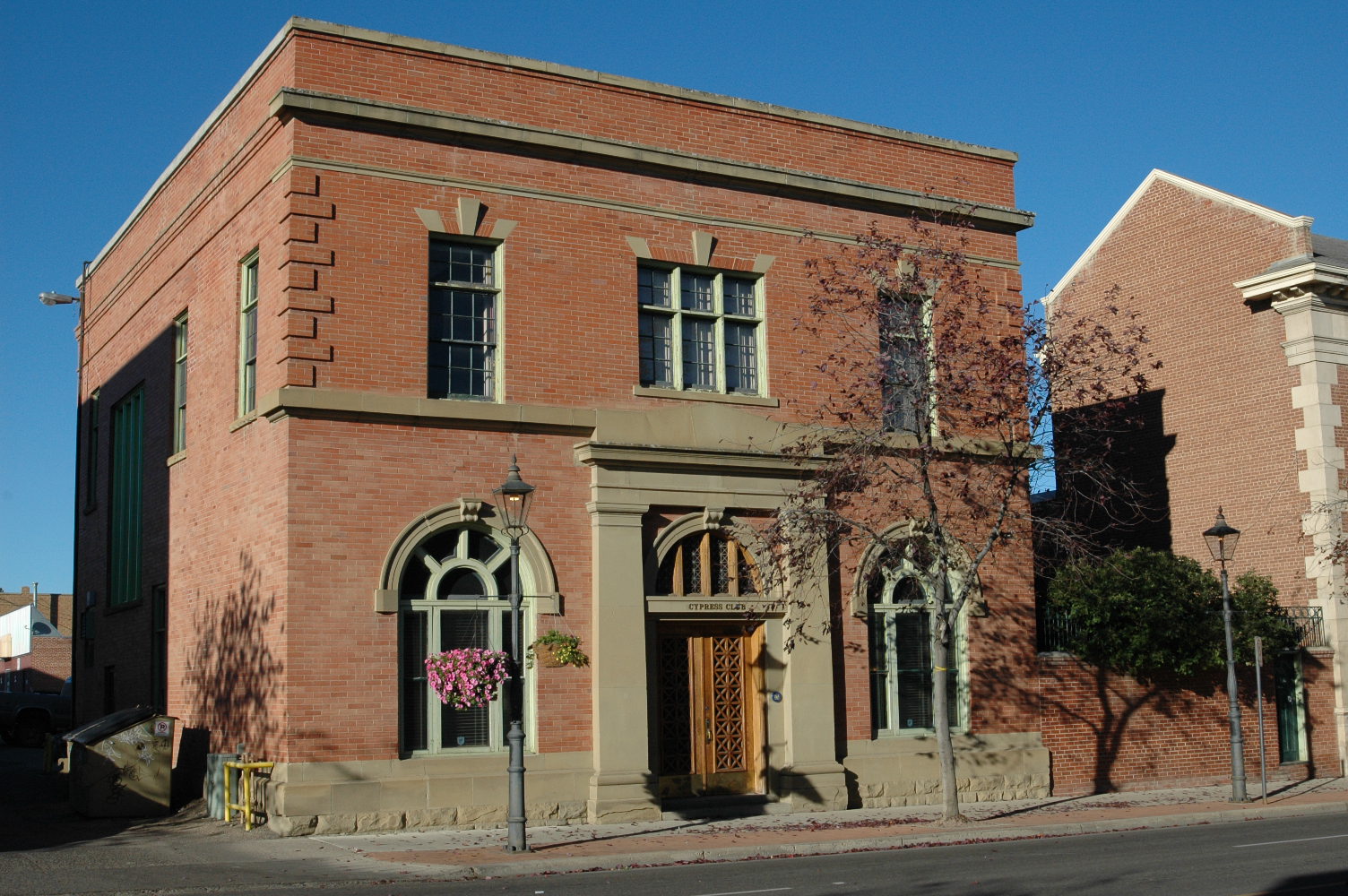
Cypress Club, Medicine Hat

As the Canadian Pacific Railway was planning its route between Winnipeg and Fort Calgary, the decision was made to cross the South Saskatchewan River at a wide valley west of Fort Walsh lush with cypress trees.  Here a station was erected and a townsite subdivided called Medicine Hat after a Cree medicine man.  The surrounding district was soon the domain of numerous ranches, and, during the 1890’s, Medicine Hat emerged as the regional metropolis of a cattle domain.  In 1898, it was incorporated as a town with over 500 people.  By this time, gas reserves were discovered in the district and incentive was provided for industrial development, particularly in pottery.  In the meantime, the city’s streets came to glow from gaslight.  By 1906, Medicine Hat was large enough to be incorporated as a city.  By 1911, its population stood at 5,600.  Contributing to its growth was its comparative isolation, and the conversion of much of the surrounding ranching leases into farmland, which resulted in the emergence of a large farming population in the hinterland.

Though the surrounding countryside and growing urban population of Medicine Hat was ethnically mixed, the business elite of the community was primarily British.  The first ranchers had been mainly British, and the new wave of industrialists and real estate developers were also of British origin, primarily immigrants from Ontario.  It was natural therefore that the first City Councils would often contain the same people as the Chamber of Commerce, with names such as Fewings, Tweed, Cousins, Crawford, Milne, Pingle, Sissons, Kealy, Huckvale and Stewart predominating.  It was probably also natural that such people would found a social club, where affairs of common interest could be discussed with less formality and out of the public eye.  Thus, on 21 November 1903, the Cypress Club was incorporated by an act of the Legislative Assembly of the North-west Territories.  Like the Edmonton Club and Ranchman’s Club (Calgary) before it, the Cypress Club was intended to provide a retreat for local business and community leaders to plot the development of the community in an atmosphere of brotherhood and congeniality.  A great incentive was the authority such a private club would have to obtain a liquor license and so provide intoxicants to its members at any time it chose.  As was typical, membership was confined to men.

Three of the first six presidents of the Cypress Club, F.L. Crawford, William Cousins and Charles Pingle, would also be presidents of the Medicine Hat Chamber of Commerce at roughly the same time, while numerous others would also be members of City Council.  To expand its scope, the Club also encouraged membership among the more prominent of the local ranch owners, and also the professional classes, particularly lawyers.  The first president was F. L. Crawford, the manager of the Bank of Commerce, but the tradition would soon be established that the presidency should alternate between City businessmen and district ranchers.

Members of the Cypress Club first met in the Cousins Block in downtown Medicine Hat.  As membership soared, and the Club quickly evolved into the elite social club of the business community, there was incentive and resources to construct a self contained building.  In 1907 therefore, the Club purchased the lot on 218 – 6th Avenue SE in the downtown core and contracted the prominent local architect, William T. Williams, to design a small, but elegant structure of red brick and sandstone to serve exclusively the functions of the Club, or whatever other purpose the Club would choose.  A deal was struck with the Bank of Commerce which gave the Bank the front half of the property on Main Street, while the Club building itself was to be built on the back part, within easy walking distance for most of the local businessmen.  When the design of the $15,000 building was complete, A.P. Burns was contracted to begin construction.  This was done through a loan from Hop Yuill, who would be repaid over the years from membership dues and fundraising activities.

As time passed, the Cypress Club continued to serve the business and professional elite of Medicine Hat and its surrounding district as a men’s social club.  During World War II, it was turned over to the Empire Club for use by armed service personnel stationed in the district.  Occasional internal renovations would occur, and, at times, financing was precarious, but, invariably, members from the business community would come to the rescue with loans.  Members over the years would include most of Medicine Hat’s mayors and members of City Council, several of the districts Members of the provincial Legislative Assembly, and Members of Parliament William Wylie, Bud Olson and Bert Hargrave.  Other members to gain a strong reputation outside the district of Medicine Hat include Judge John Sissons and Edmonton Journal editor Andrew Snaddon.

In 2002, the Cypress Club was designated a Provincial Historic Resource.  Its historical significance lies in its service as the main social club for men in the city and district of Medicine Hat since its inception in 1903.  

Written by: David Leonard, Historian

Visit the Alberta Register of Historic Places to learn more about the heritage value of the Cypress Club. In order for a site to be designated a Provincial Historic Resource, it must possess province-wide significance. To properly assess the historic importance of a resource, a historian crafts a context document that situates a resource within its time and place and compares it to similar resources in other parts of the province. This allows staff to determine the importance of a resource to a particular theme, time, and place. Above, is some of the historical information used in the evaluation of the Cypress Club.

Provincial Historic Resource Project Approvals – Why you need them!

Since I started my new post as a Heritage Conservation Adviser for the Edmonton Region, I have occasionally needed to write up project approvals for interventions occurring at a Provincial Historic Resource. Sometimes these projects were already underway or even completed. There are a number of reasons why project approvals should be issued before work occurs on or within the designation boundaries of a Provincial Historic Resource, including:

1. It’s the LAW!  Not to scare anyone, but it’s true. Section 20(9) and (10) of Alberta’s Historical Resources Act states:

(9) Notwithstanding any other Act, no person shall destroy, disturb, alter, restore, repair any historic resource or land that has been designated under this section (i.e. Provincial Historic Resource), or remove an historic object from an historic resource that has been designated under this section, without the written approval of the Minister. (10) The Minister, in the Minister’s absolute discretion, may refuse to grant an approval under subsection (9) or may make the approval subject to any conditions the Minister considers appropriate.

Please note: owners of Municipal Historic Resources must obtain approval from their municipal council (or its designate) prior to completing any work that will “destroy, disturb, alter, restore or repair” the designated property. See Section 26(6) of the Historical Resources Act for detailed information. With any questions, please contact your municipality.

2. It ensures the Standards and Guidelines for the Conservation of Historic Places in Canada  are followed. The Standards and Guidelines must be followed for the approval of any intervention. This pan-Canadian document, which has been formally adopted by the Government of Alberta, is an important reference tool in learning how to conserve one’s historic resources. The decision to perform work on any given historic resource starts with having an understanding of the place.  This is done during the designation process of Provincial Historic Resources and is documented in their individual Statements of Significance, which can be found on the Alberta Register of Historic Places. Only after a place is understood can successful planning for interventions begin. This is where the Provincial Historic Resource Project Approval process comes in as it allows for the evaluation of proposed work and serves to validate and document the methods and materials that will be used during the planned project. Without first understanding and planning, the last step of the conservation decision-making process – completing the actual intervention – may not be successful!

Finally, the last and most important reason to obtain a Project Approval for an intervention to a Provincial Historic Resources is:

3. You get to meet ME or one of my fellow Heritage Conservation Advisers. We are available to provide you with free advice on the maintenance and care of your designated Provincial Historic Resource so that it is allowed to continue to survive for generations to come.  Involving a Heritage Conservation Adviser at the outset of any given project might provide you with an insight previously not considered. It is also a requirement should you submit an application for grant funding with the Alberta Historical Resources Foundation. This funding could help in covering 50% of the expenses related to a conservation project, up to a maximum amount of $100,000. (Owners of Municipal Historic Resources are eligible to receive up to a maximum of $50,000.)

The care and maintenance of our designated Provincial Historic Resources is in the best interests of all Albertans. Let’s work together to ensure that this work is done to the best of our abilities and documented properly so that the lessons we learn from the process and results are not forgotten.

Written by: Carlo Laforge, Heritage Conservation Adviser.

What’s New with the Alberta Heritage Survey? (11-02)

In 1989, a computer database was created to store the information collected since the early 1970s by the Heritage Survey Program. Data entry has been ongoing ever since. Over the years, technology has advanced, and the Heritage Survey database software has been updated a number of times. Among the most exciting developments is the ability to store and retrieve images. There are several hundred thousand photographs in the Heritage Survey collection waiting to be uploaded, so it will take a while to catch up! Watch this blog to learn about some of these images as they’re added.

Negative Roll 71-R0001

Scans from this 1971 roll were recently uploaded. Check out the photos of five important buildings on the University of Alberta campus in Edmonton: the Arts Building (HS 53226), Rutherford House, the South Laboratory (HS 9445), the Power Plant, and Old St. Stephen’s College.

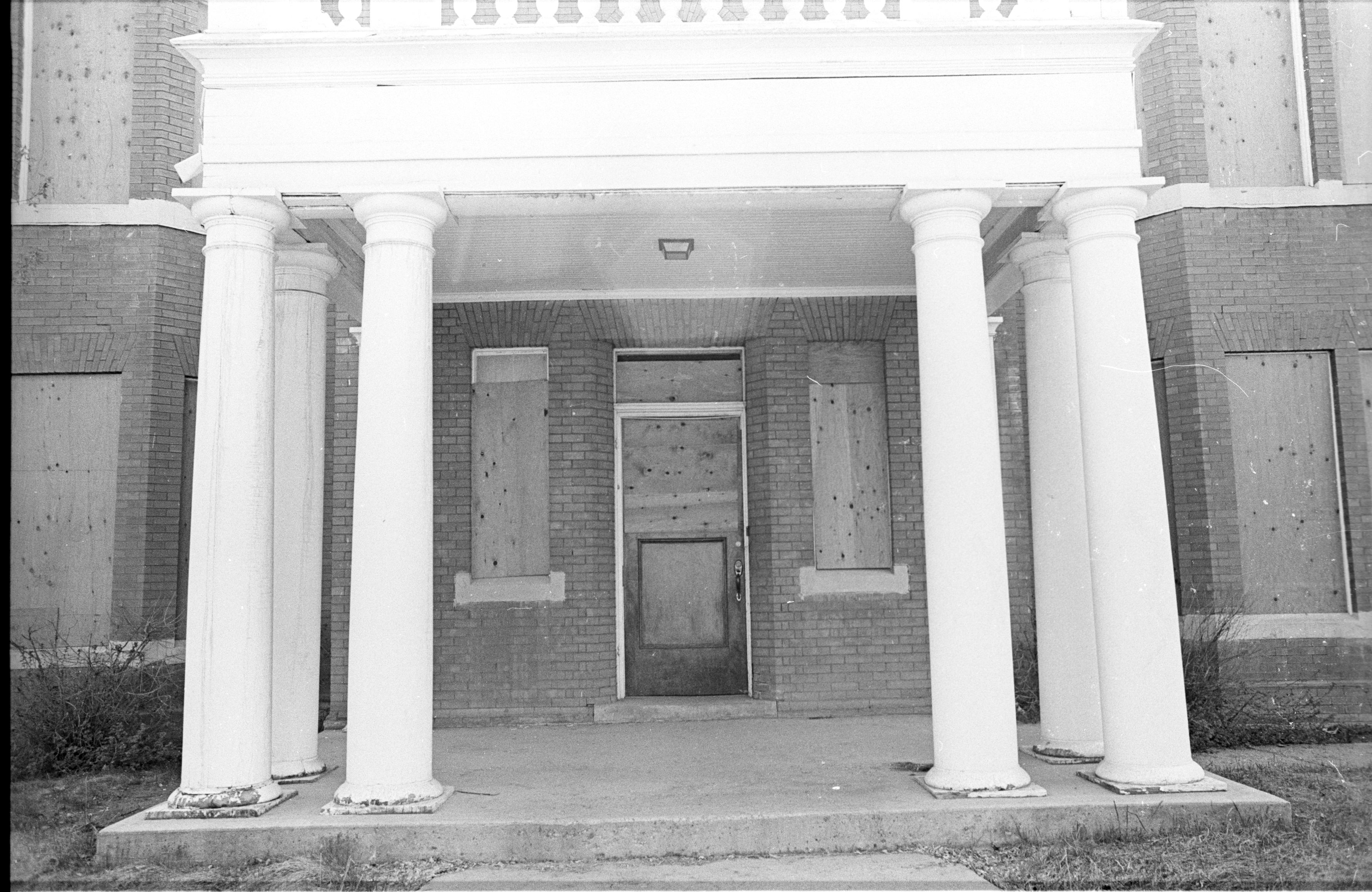
Rutherford House, boarded up in 1971. (HS 71-R0001-13)

It is fascinating to see what has changed, forty years on! For instance, in 1971, Rutherford House (HS 22330) was empty and boarded up. Today, it is designated as a Provincial Historic Resource (PHR), has been restored and operates as a Provincial Historic Site. One image of the Power Plant (HS 9441) shows a clear view to Garneau, a residential neighbourhood, one block east. Now, that view is blocked by the five-storey Rutherford North Library, built in 1973, and the Hub Mall, built in 1972. In 1971, Old St. Stephen’s College (HS 29047) still had its cylindrical metal fire escape slides. Its role as the home of the Historic Resources Management Branch was yet in the future, as were the extensive renovations that transformed the building from a student residence into government offices. Today, Old St. Stephen’s
College is a Provincial Historic Resource, and the home of the Heritage Survey Program.

Click the above links to view images on the Heritage Resources Management Information System (HeRMIS) website.

Written by:  Dorothy Field, Historic Survey Program Coordinator

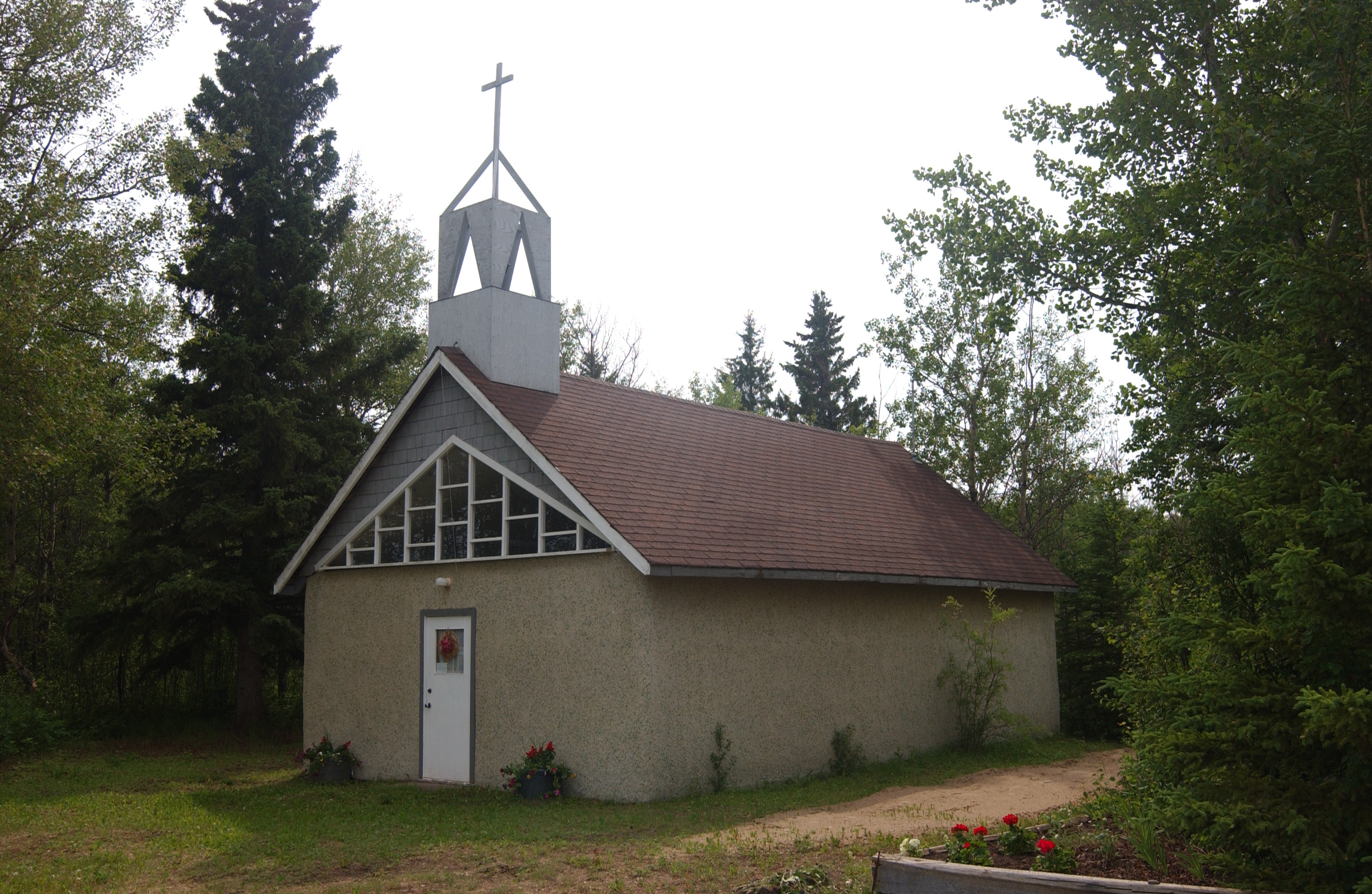
Bad Heart Straw Church

In the aftermath of World War I, the Dominion government established the Soldiers Settlement Board, which was to serve two purposes.  First, it was a mechanism whereby the government could reward men who had physically defended their country in time of need; second, it could provide an outlet for an unemployment problem that was rapidly building up.  The Board identified tracts of land in arable districts which had not hitherto been taken up by homesteaders and proceeded to have portions of them set aside for the soldiers.  One region where considerable land was reserved was the Peace River Country, the central grasslands of which had been settled much earlier.  One of the districts of this region where soldiers were encouraged to come was a small stretch of parkland off the Bad Heart River, which flows through the Burnt Hills into the Smoky River.  Here, in TPs74 & 75 R2 W6, several veterans took advantage of the government’s offer and applied for land in 1919, including the highly decorated but soon to be notorious George Frederick “Nobby” Clark.

The war veterans were soon joined by other settlers, and, gradually, the community to be known as Bad Heart evolved.  A school district was incorporated in 1928 and a store and post office was built the following year.  Bad Heart was, however, somewhat cut off from the more heavily settled areas of the Grande Prairie, and conditions were far from ideal for farming.  A number of foreclosures occurred, but the community did hang together, as cattle, hogs and poultry were raised to offset the costs of dry land farming.  Being remote however, amenities were few, and it wasn’t until the late 1950’s that electrical power and telephone services were extended there.

Until the mid-1950’s, the Bad Heart district was without a church, with local residents attending Roman Catholic, Anglican and United Churches in the Teepee Creek district just to the southwest.  At the time, one of the most energetic Roman Catholic priests in the region was resident at Sexsmith, over 50km away.  This was the Redemptorist Father Francis Dales, who, as a trained architect, had just designed a new $70,000 church in Sexsmith.  He had also constructed, and would design and construct other public buildings, the work being either volunteer or undertaken by young teenagers at a small wage.  To complete his projects, Father Dales often salvaged lumber from demolished buildings.  Scrap metal from demolished vehicles and farm equipment was also recovered and sold.  Other fundraisers of varying kinds were also undertaken.

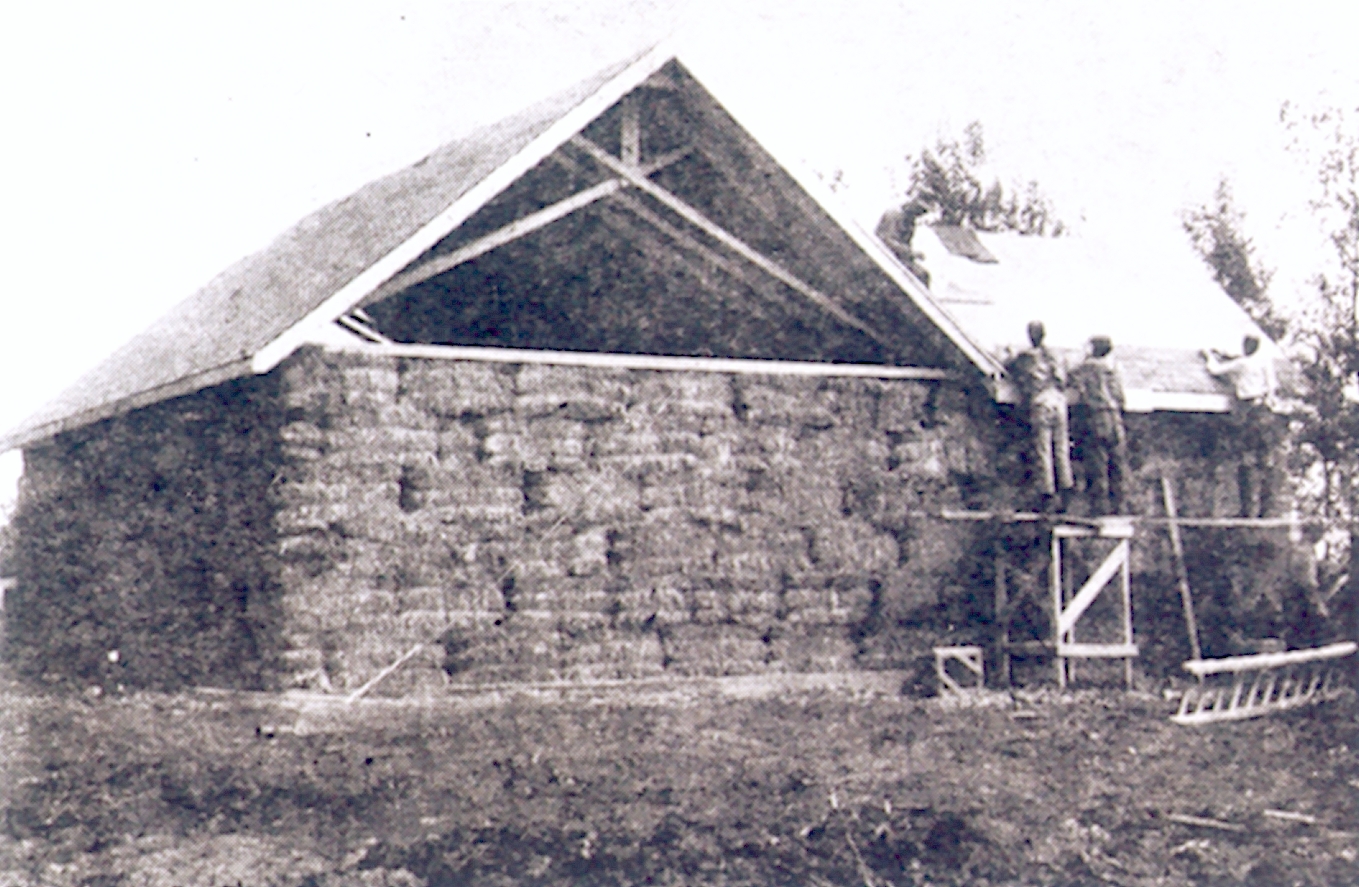
As his parish included Bad Heart, Father Dales decided, in the early 1950’s, that it was time for a church of the right persuasion to be built there.  For the district at this time, the major problem was financing, for all Roman Catholic churches relied strongly on local support, and the people of Bad Heart were hardly in a position to fund a new church structure, being relatively few in numbers and anything but wealthy.  Work bees and salvaged lumber would not be enough.  Father Dales, however, had learned that, in eastern Canada, certain farmers had built cattle sheds out of straw bales, the oil from the rye or flax serving as a preservative.  He therefore submitted a design to the Vicar Apostolic of the Archdiocese of Grouard, Bishop Henri Routhier, who approved the plan, and, apparently, personally advanced $500 towards its fulfillment.

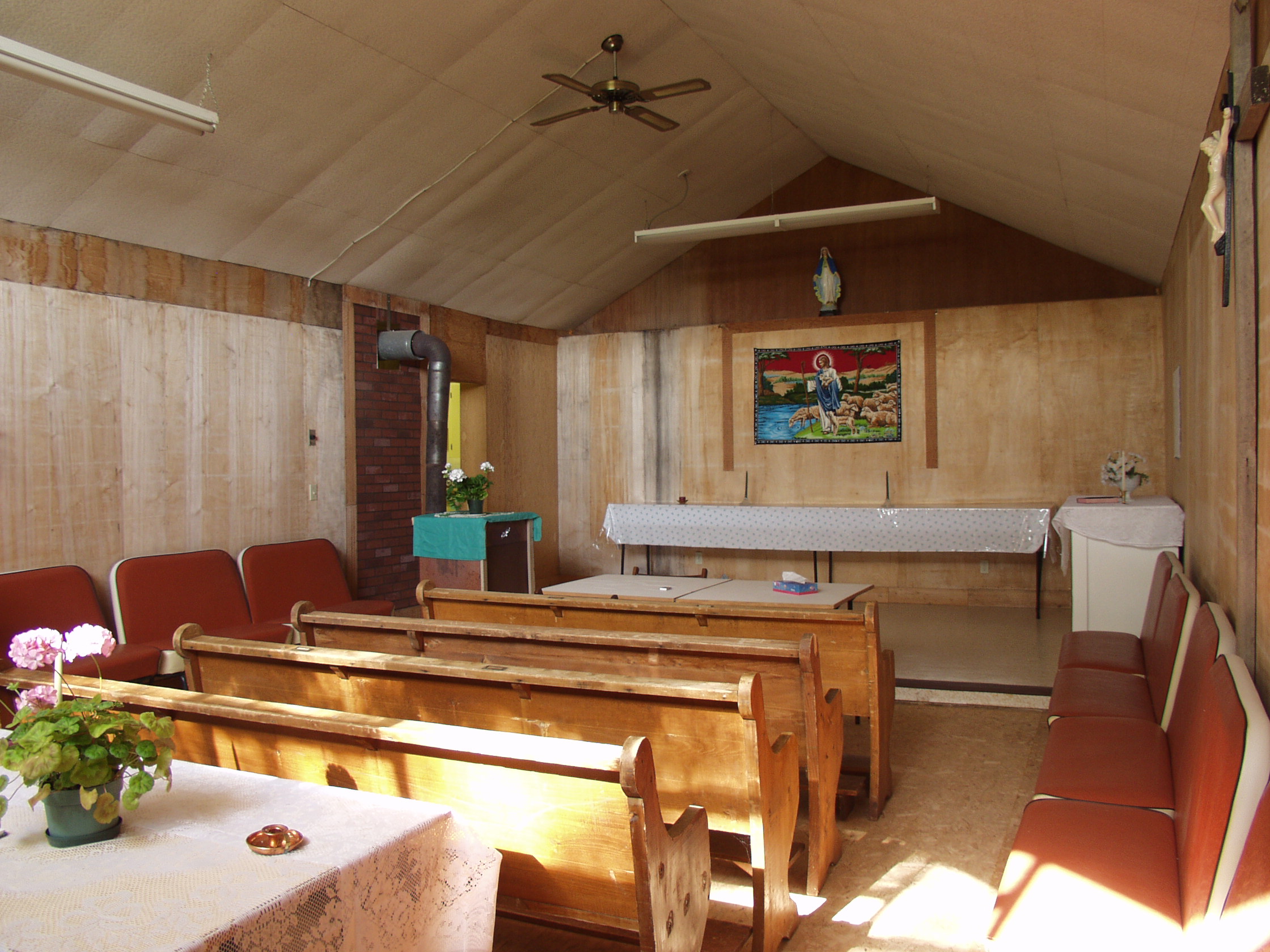
In the summer of 1954, work began on the soon to be famous rye straw church at Bad Heart.  Before long, word spread of the unique venture, which was completed in about six weeks.  Eventually, even the Toronto Star Weekly did a story on the church and its builder.  All work, of course, was volunteer, while fixtures and furnishings were salvaged from other churches in the region.  The pews, for example, were taken from the old Roman Catholic church in Sexsmith.

In March 2009, the Bad Heart Straw Church was designated a Provincial Historic Resource.  Its significance lies foremost in its representation of the ability of people in remote rural areas of the province to find ways of adapting what they have into useful purposes.  The building is also important in being directly associated with Father Francis Dales, the ebullient architecture priest who designed and built many structures in the region and elsewhere, including several churches, St. Mary’s Roman Catholic School in Sexsmith, and the Anglican Speke Hall in Grande Prairie.

Written by: David Leonard, Historian

Visit the Alberta Register of Historic Places to learn more about the heritage value of the Bad Heart Straw Church. In order for a site to be designated a Provincial Historic Resource, it must possess province-wide significance. To properly assess the historic importance of a resource, a historian crafts a context document that situates a resource within its time and place and compares it to similar resources in other parts of the province. This allows staff to determine the importance of a resource to a particular theme, time, and place. Above, is some of the historical information used in the evaluation of the Bad Heart Straw Church.

Four New Projects Approved for MHPP Funding!

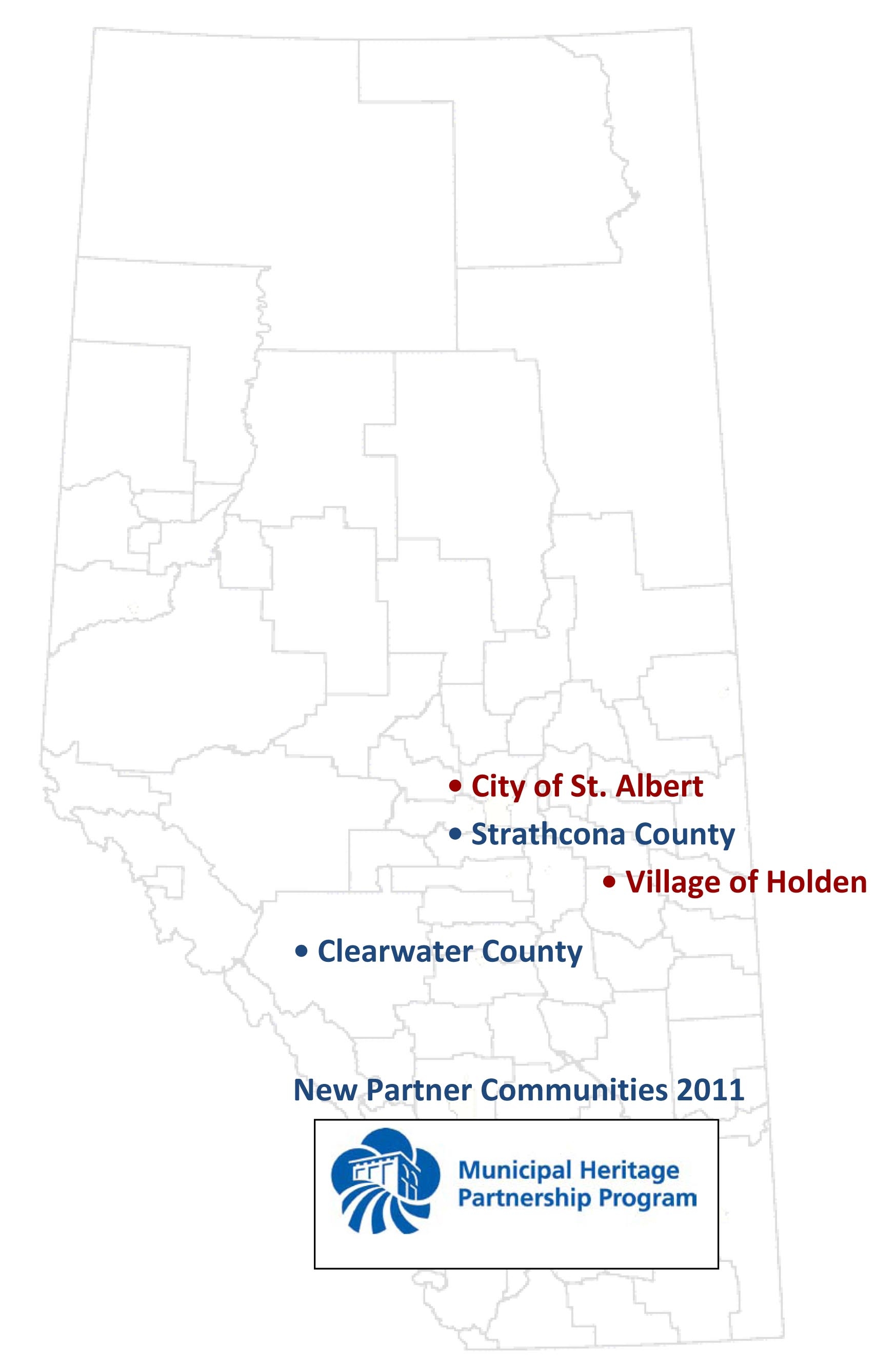
The Alberta Historical Resources Foundation, at its October meeting in Medicine Hat, approved grants for four communities to engage in heritage planning projects with the support of the Municipal Heritage Partnership Program (MHPP).

The City of St. Albert was approved for $20, 000 to undertake a heritage management plan. This builds upon the solid foundation laid by St. Albert with its Heritage Inventory project, completed a few years ago.

Strathcona County, following up from its Heritage Management plan, is now planning to identify its potentially significant historic places. The County was approved for an MHPP grant of $30, 000 to carry out this project.

Clearwater County, a new partner with MHPP, is undertaking a Heritage Inventory project to evaluate five places of interest in the Nordegg Townsite, and five additional resources in rural areas. Clearwater County was approved for an MHPP grant of $12, 500 for this work.

The Village of Holden, which, as a small community, has successfully completed a Heritage Survey and Inventory with the help of MHPP is now looking to create solid heritage policy and a management plan. MHPP is supporting the Village with a grant of $7, 500.

Congratulations to these four communities on partnering with MHPP! We look forward to working with you to help “create a future for Alberta’s Historic Places!”

Written by: Matthew Francis, Manager of Municipal Heritage Services

The Not So New Municipal Heritage Services Officer
A few days ago we introduced our newest colleague, Carlo Laforge. Doing so, our editor realized that many regular contributors to RETROactive were never introduced to our readers. So, without further ado, allow me to introduce … myself.

I started working for the Government of Alberta’s Historic Resources Management Branch in the spring of 2008. I was assigned to the Municipal Heritage Partnership Program and have been busily helping Alberta’s municipalities identify, protect and conserve locally significant historic resources. My work has given me the privilege of traveling all over Alberta to visit municipalities large and small, urban and rural. I’ve talked with municipal councils, facilitated workshops for council-appointed Heritage Advisory Bodies and discussed Municipal Historic Resources designation with municipal staff and property owners.

Back at the office, I have managed the Municipal Heritage Partnership Program’s grant agreements with municipalities. I am also responsible for processing nominations to list Municipal Historic Resources on the Alberta Register of Historic Places. I also prepare training material for municipal staffers on how to evaluate and protect historic resources (like the Managing Historic Places Designation Guide).

Before returning home to Alberta, I worked at the Government of Saskatchewan’s Heritage Conservation Branch for four years. I conducted historical research in support of the Provincial Heritage Property designation program. I also wrote several Statements of Significance for Municipal Heritage Properties listed on the Saskatchewan Register of Heritage Property and the Canadian Register of Historic Places.

I hold a Bachelor of Arts degree with a combined major of English and History from the University of Calgary and a Master of Arts degree (history) from the University of Saskatchewan. In my spare time … I have hobbies.

If I haven’t met you in person yet, I look forward to doing so.

Michael Thome

It’s bad to clad!

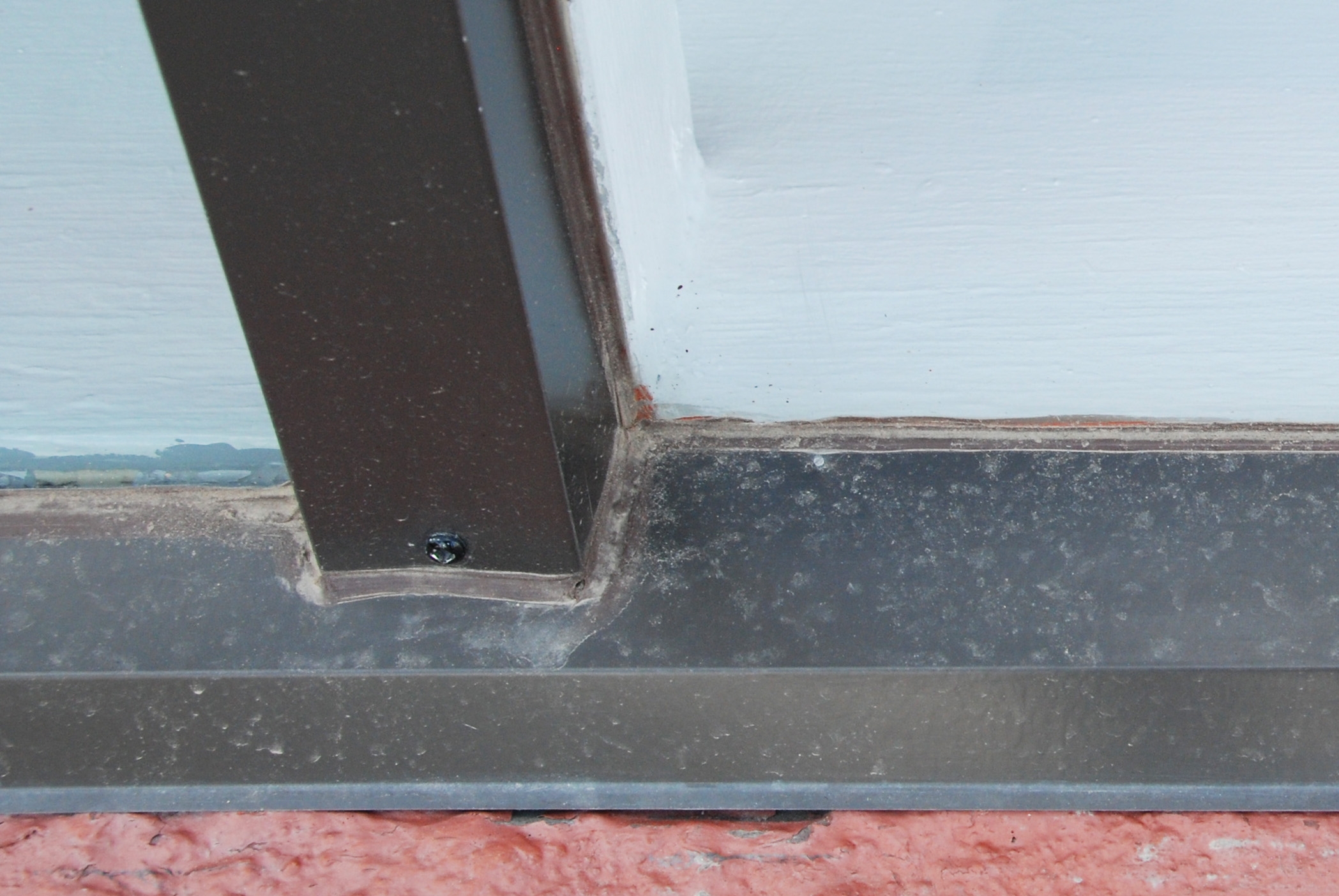
Property owners occasionally ask whether historic wood windows and trim can be clad in sheet metal to both eliminate maintenance and protect fragile historic material. As conservation advisers, we discourage cladding since it removes, in effect, a character-defining element from the building, and cladding raises maintenance issues of its own.

Tempting though it may be, simply covering up deteriorated areas can ignore the causes of deterioration, leaving underlying moisture or other problems to continue their destructive work within the structure.

Wood sills, as an example, may be weathered rather than actually rotted and can often be treated relatively easily and economically with wood epoxy repairs. Once repaired, the repainted wood is stable, rot-resistant and easily maintained.

Sheet metal cladding, on the other hand, takes skill to properly detail, fit, and install so that it drains properly. Once installed, claddings often rely on caulking to seal open edges. Caulking can attract dirt and, like the painted surfaces it conceals, needs to be maintained and periodically replaced. Perhaps most important, clad wood is no longer exposed to the drying effects of the sun and circulating air, so that if water does gets beneath the cladding, as it likely eventually will, deterioration can occur rapidly and unnoticed. Better the devil you know…

This isn’t to say cladding is always inappropriate: it may be a valid means of adding a weather detail missing in the historic element while minimizing impacts on heritage value. In general, though, it’s preferable to have an authentic original material that you can appreciate and easily maintain.

Written by: Fraser Shaw, Heritage Conservation Adviser.

Thar’s Hair on Them Thar Hills!

Origin of the name of the Hamlet of Hairy Hill

Recently the Edmonton Journal ran a photo essay and article about the Hamlet of Hairy Hill, which included the story about the origin of the name (see the Further Reading section below for links).  Hairy Hill is undoubtedly one of the most unusual place names in Alberta. It is a name that frequently raises questions, not to mention more than a few eyebrows.

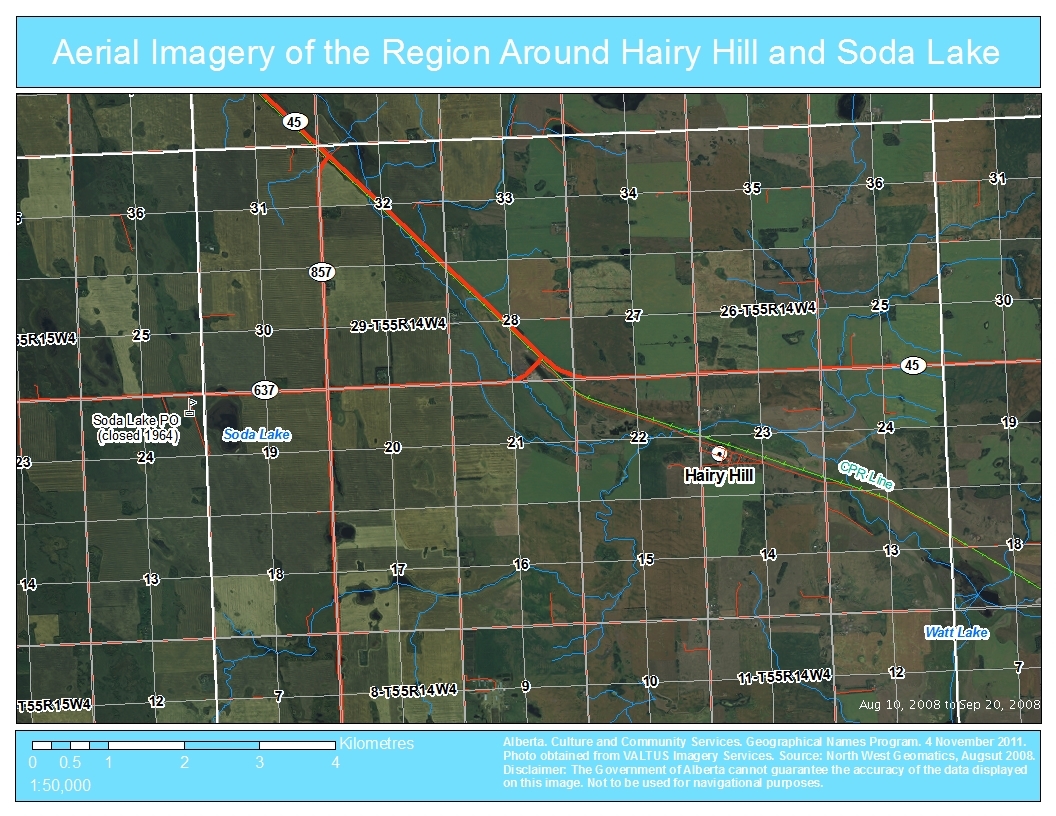
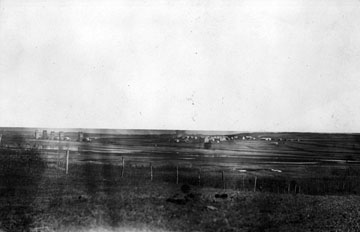
The region around what is now Hairy Hill has been historically known as both the Whitford District and the Soda Lake District.  In November 1903, a post office by the name of Soda Lake was established with A. E. Boutellier as the first postmaster. The post office name was in reference to a highly alkaline lake located nearby (which has since dried up). However, in February 1907, a new post office was opened closer to the lake. Probably in recognition of geographical realities and to avoid confusion, the new post office was given the name Soda Lake, meaning the older post office needed a new name. (Click on the above image for a larger view.)

The new name chosen for the post office was inspired by a strange phenomenon the region’s early settlers had observed. In the 1940s, folklorists recorded this story told by George Chrapka, an early resident of the area:

The first settlers, on moving into this district … chose the site for their new homes on a large flat hill.  This hill, however, was somewhat different from any other they had seen.  Everywhere they looked they saw large mats of hair covering the ground.  Naturally they were puzzled, but with the coming of the spring also came an answer.  One bright morning they saw a hundred or more buffalo roaming lazily along the slopes of the hill.  On going to the spot they found fresh mats of hair.  This solved the “hairy mystery,” and also suggested a name for the locality – Hairy Hill.

Many mammals grow a shaggy coat during the winter, which they shed in the spring. North American bison, commonly referred to as buffalo, are known to rub themselves on the ground and against foliage to rid themselves of their winter coats.  Jack Brink, a former archaeologist with the Alberta Archeological Survey and now a curator at the Royal Alberta Museum, has commented:

Bison, or buffalo as they are commonly known, have lived in central Alberta for thousands of years. The area around Hairy Hill would have been an especially attractive region because it straddles the boundary of two eco-zones: the plains to the south and the parkland and forest to the north. As such it offers access to and advantages of both regions. Hilly areas offered lush grass, greater moisture and some protection from extremes of weather. So it is reasonable to suggest that Hairy Hill was a popular spot for bison herds. This could account for the historic records of great amounts of buffalo hair found on the hill by early settlers.

Year after year, while there was still bison roaming the plains, they would return each spring to this hill, leaving new deposits of hair over its surface. The settlers called the place Hairy Hill. The unusual name stuck, gained a following and in 1907, the regional post office was given the name Hairy Hill.

As the writer of the Edmonton Journal article points out, Hairy Hill’s history is a common one for many of Alberta’s rural communities – a promising and optimistic start followed by disappointment and decline.  The population of Hairy Hill grew, slowly but steadily, over the first few decades.  In 1928, the Canadain Pacific Railway built an east-west line through the community. Soon after the completion of the rail line, Hairy Hill boasted a large school, numerous stores, and up to six grain elevators.  By 1946 the population had reached 235 and the community was erected as a village.  The population continued to grow, reaching a high of 250 in 1948 before beginning a steady decline, falling to 136 by the late-1960s.  The population dropped precipitously through the 1970s and 1980s, reaching a low of 54 people by 1993.  In 1996, the village was dissolved and Hairy Hill became a hamlet under the jurisdiction of the County of Two Hills No. 21.

Written by: Ron Kelland, Historic Places Research Officer and Geographic Names Program Coordinator

Location:

National Topographic System Map Sheet: 73 E/13 – Hairy Hill

Latitude/Longitude: 53° 45′ 48″ N & 111° 58′ 43″ W

Alberta Township System: Sec 23 Twp 55 Rge 14 W4

Description: Approximately 18 km northwest of the Town of Two Hills and 11 km southeast of the Village of Willingdon. 

Additional Resources: 

More information about Hairy Hill can be found in:

Chrapka, George. “How Hairy Hill got its Name,” Alberta Folklore Quarterly, Vol. 2 no. 1 (March 1946), p. 34, available from the Alberta Folklore and Local History Collection, University of Alberta Libraries http://www.ourfutureourpast.ca/folklore.html.

Lucas, John. “Gallery: Hairy Hill,” Edmonton Journal, 29 October 2011, Available from http://www.edmontonjournal.com/news/photos/Gallery+Hairy+Hill/5628500/story.html.  

Mah, Bill. “Hamlet of Hairy Hill Fading Slowly Into Alberta’s Past,” Edmonton Journal, 30 October 2011, Available from http://www.edmontonjournal.com/news/Hamlet+Hairy+Hill+fading+slowly+into+Alberta+past/5630654/story.html.