Ancient Jade

With no jade mines or known quarries in the province, you may be surprised to learn that people used jade in Alberta thousands of years ago. Jade is a common name that refers to two minerals, one of which, nephrite, is found in Canada.
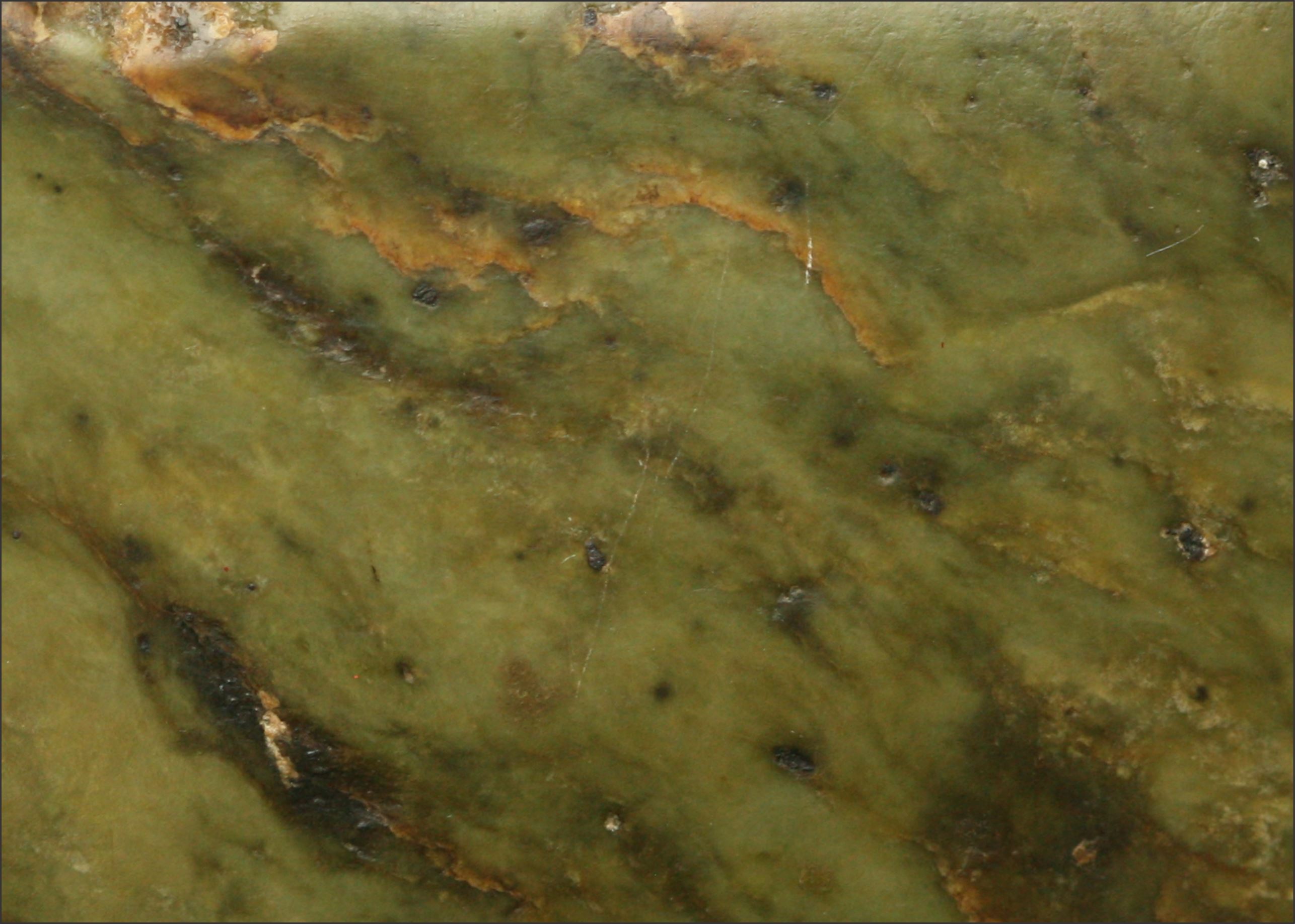
Jade artifact close-up
Close-up photograph of a jade (‘nephrite’) artifact from northwest Alberta (by Todd Kristensen).

Nephrite is one of the toughest natural materials on earth and for this reason, ancient people used it to make tools called celts. Tightly interlocking bundles of amphibole crystals (actinolite/tremolite) make nephrite incredibly resistant to fracture so the celts retain their sharp edges despite hours of wood-working with them.
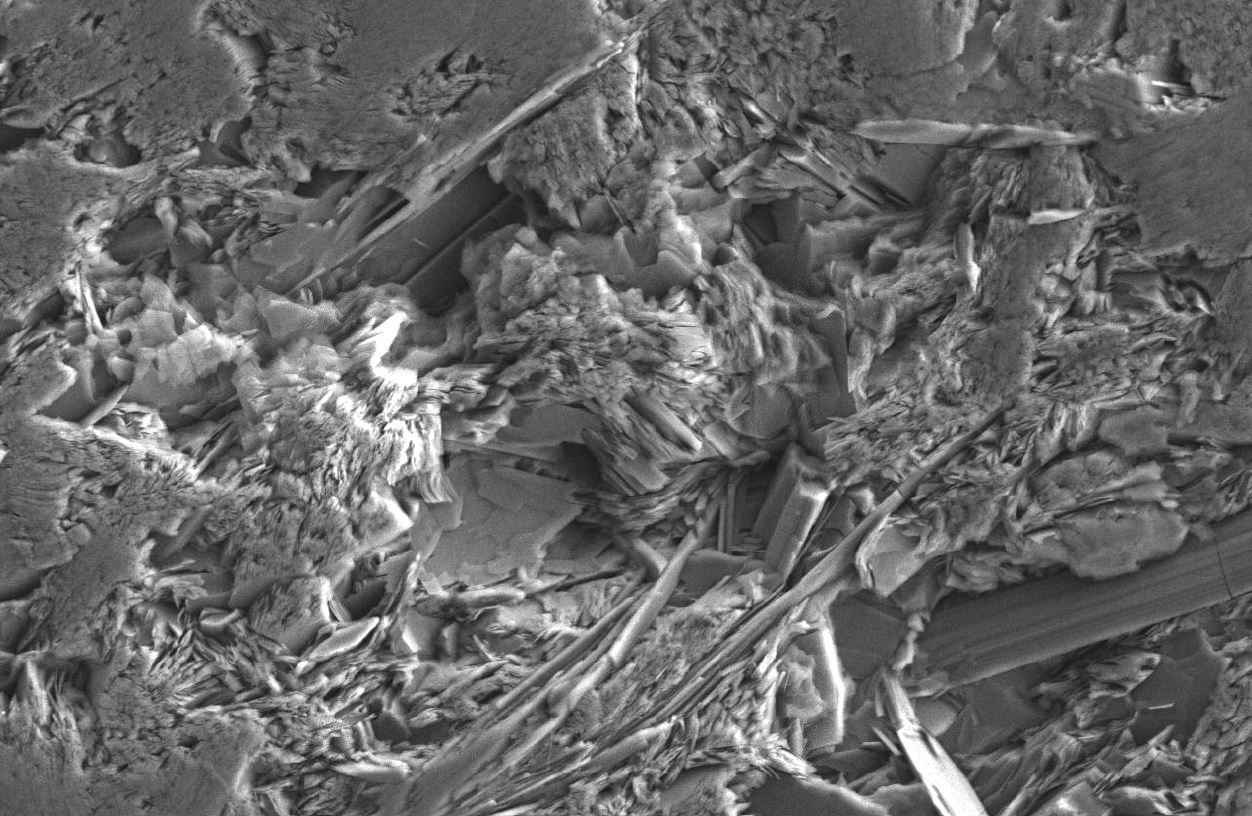
Tightly interlocking bundles visible in this Scanning Electron Microscope image give jade ('nephrite') its strength (courtesy of Jesse Morin).
Tightly interlocking bundles visible in this Scanning Electron Microscope image give jade (‘nephrite’) its strength (courtesy of Jesse Morin).

How did people make jade or nephrite celts? Slowly! As in modern times, nephrite was too strong to chip with a chisel so it was patiently sawed and ground with materials like sandstone and quartz crystals and polished with a slurry of gritty water. Jade occurs in outcrops across British Columbia where some First Nations had specialized jade workers. Most of the evidence for Aboriginal nephrite working comes from the Fraser River of southern B.C. near Lytton, Lillooet, and Hope. While the celts manufactured by pre-contact people were certainly functional, the rarity of jade and the time it took to make celts would have resulted in a highly revered and prized type of tool.
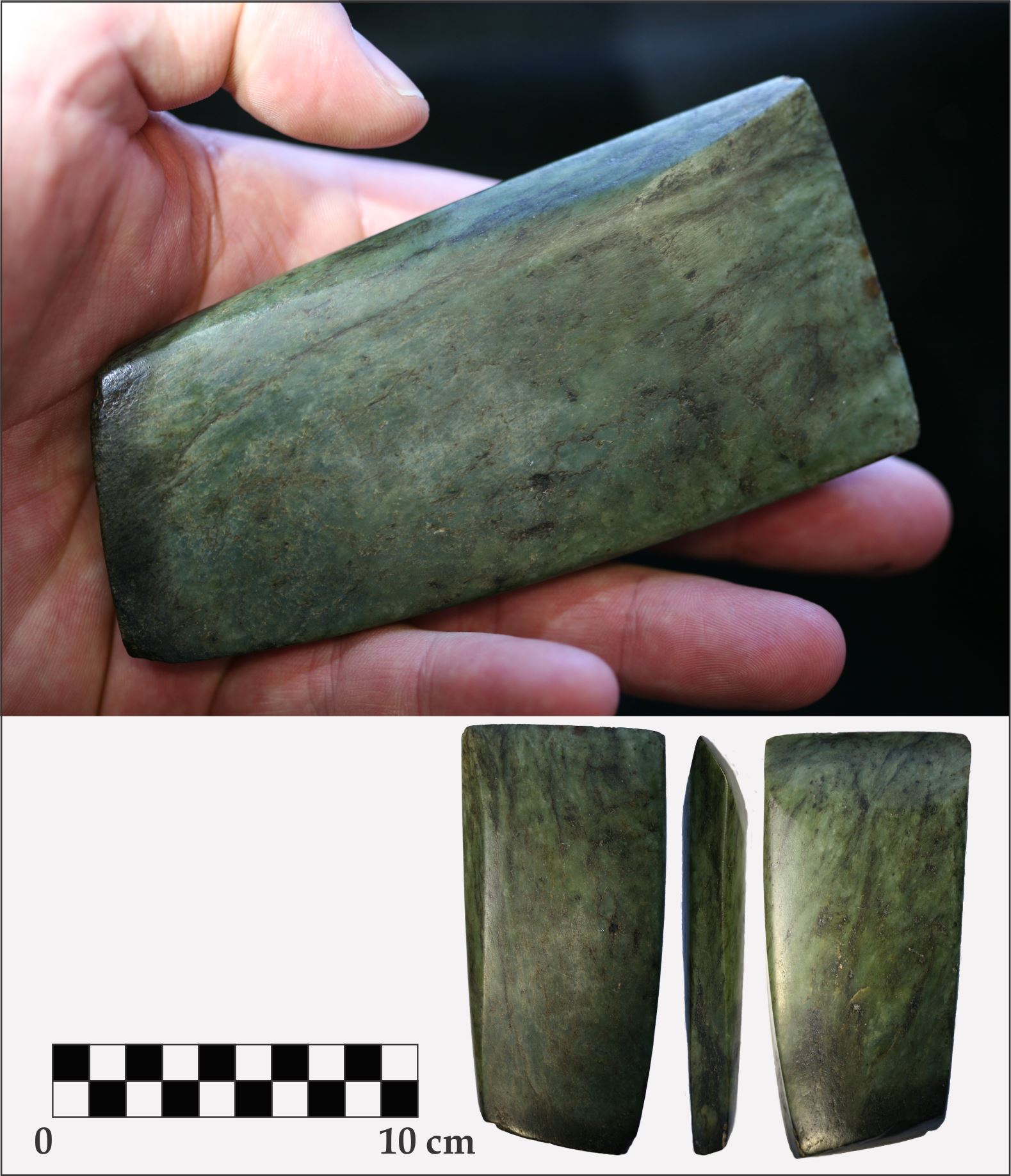
Nephrite celts are highly polished with a flat and slab-like shape. This specimen was found near Stony Plain outside of Edmonton.
Nephrite celts are highly polished with a flat and slab-like shape. This specimen was found near Stony Plain outside of Edmonton (by Todd Kristensen).

Nephrite celts have been recovered from several farmers’ fields across Alberta but have never been found during an archaeological excavation in the province. They are generally more common in northern Alberta where First Nations likely maintained stronger trading connections to people from B.C. than in the south.
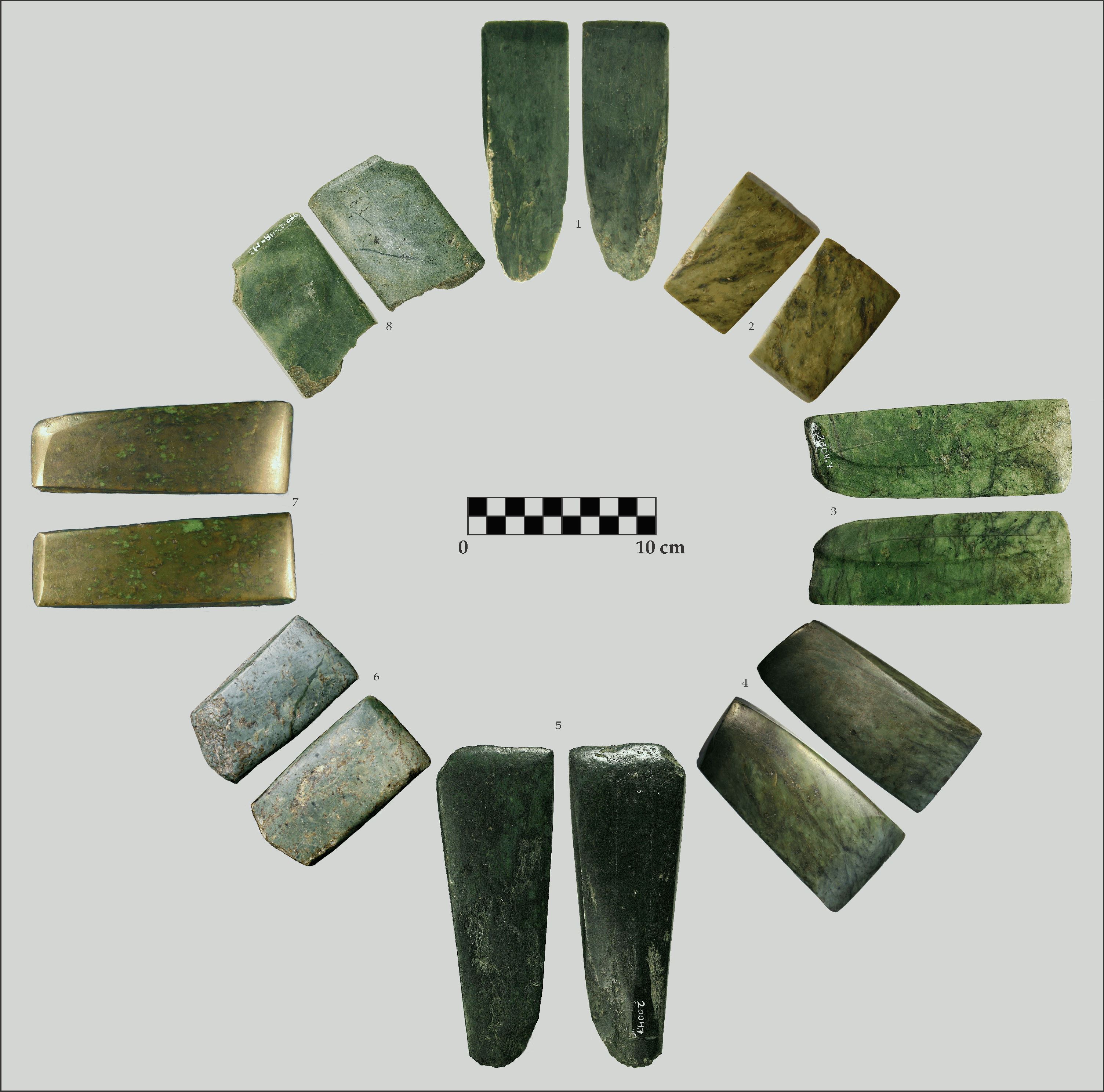
Jade or nephrite celts found in Alberta. Specimens 1, 2, 3, 5, and 8 are from the Grande Prairie area. Specimens 4, 6, and 7 are from the Edmonton area.

Based on historic records and tools used by First Nations shortly after European contact, jade celts were most likely tied onto wood or antler handles to increase the force that people could apply to the tool. The Alberta celts are thought to have been either ceremonial, status-markers, and/or they were used to build boats or prepare wooden poles.

A large spur on the end of a wood or antler handle served as a platform on which to tie or ‘haft’ a flat celt (by Todd Kristensen).

Written By: Todd Kristensen (Regional Archaeologist, Archaeological Survey), Jesse Morin (Heritage Consultant), and Karen Giering (Curatorial Assistant, Royal Alberta Museum)

Acknowledgements

Staff from the Archaeological Survey, Royal Alberta Museum, and University of Alberta collaborated with museums and farmers across Alberta to analyse our rare jade artifacts. Jade expert Jesse Morin from B.C. analysed specimens and lent his knowledge to the project. Full results, including geochemistry, mineralogy, and archaeological significance of Alberta’s jade will appear in an Occasional Paper Series article that will be available to the public shortly. Thanks to all the researchers for their help and thanks to the museums and farmers for kindly loaning artifacts for this study!

Rocky Mountain Alpine Project: Willmore Wilderness Park

From August 8-12th, 2016, Todd Kristensen (Northern Archaeologist), Robin Woywitka (Cultural Land Use Analyst), Courtney Lakevold (Archaeological Information Coordinator) and graduate student Timothy Allan visited Willmore Wilderness Park as part of the Rocky Mountain Alpine Project (RMAP). RMAP is focused on the recovery of archaeological artifacts and other organic remains (e.g., feathers, bones, caribou antlers and dung) from melting ice patches. Amazing artifacts have been found melting out of ice patches in alpine areas in the Yukon, Northwest Territories, United States and Norway. These finds have been very important for understanding how people used alpine areas in the past.

Alberta has vast stretches of alpine environments, many of which are quite fragile. One element of those fragile alpine habitats are ice patches that are currently melting at a rapid pace. The goal of RMAP is to explore Alberta’s ice patches to see how people in the past used alpine environments and see how it compares to that of people in other parts of Canada and the world. Last summer, the first RMAP expedition took place in Jasper National Park where many organics were found, as well as a piece of leather that was radiocarbon dated to A.D. 1670. Read more

Stone tools, Bugs, and the Boreal Forest: Adventures in Northern Archaeology

When people think of archaeology in Alberta they might picture buffalo jumps, rock art, or medicine wheels. These are dramatic types of sites on the prairies but what about the north? Alberta’s boreal forest has a unique record and requires a unique breed of archaeologist to find it. This blog is a small window to archaeological work in the northern half of the province and some of the interesting archaeological sites hiding in our forests.

Boreal Breed

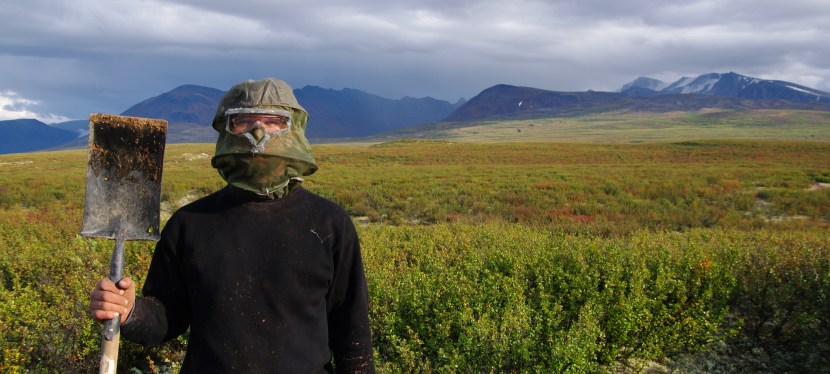
Archaeologists working in northern Alberta brave bugs, blowdown (piles of fallen trees stacked like a cruel game of KerPlunk) and a range of conditions from blistering hot to bitterly cold. Forests are quite good at concealing sites so archaeologists dig hundreds of small shovel tests to find them. Most archaeology in the ‘Green Zone’ (typically forested Crown Land) happens in advance of forestry, oil and gas activity, gravel operations, and construction of transmission or road corridors. The hard work and skill of consulting archaeologists has resulted in over 8000 archaeological sites in the Green Zone.

Roughly 8000 sites have been found in Alberta’s boreal forest.
Roughly 8000 sites have been found in Alberta’s boreal forest (highlighted in green).

The Nature of Northern Sites

Most of the successful shovel tests yield small collections of stone debris from pre-contact human tool making. Sites in the north are typically smaller than on the plains. Why? Pre-contact people in the north were generally more mobile and lived in smaller groups; southern bison herds supported bigger groups that stayed in one spot for longer periods, which produced bigger collections of artifacts. Archaeological visibility is also a factor. Prairie landforms are often easier to locate and interpret while artifacts, bones, or stone features on the surface can help guide archaeologists to productive areas under the ground. Not so in the north. Hot spots for artifacts are often harder to access, are covered in vegetation and dense roots, and are challenging to interpret (e.g., ‘how has this terrace changed over thousands of years’). Read more

The Borden Number System: What the FcOq?

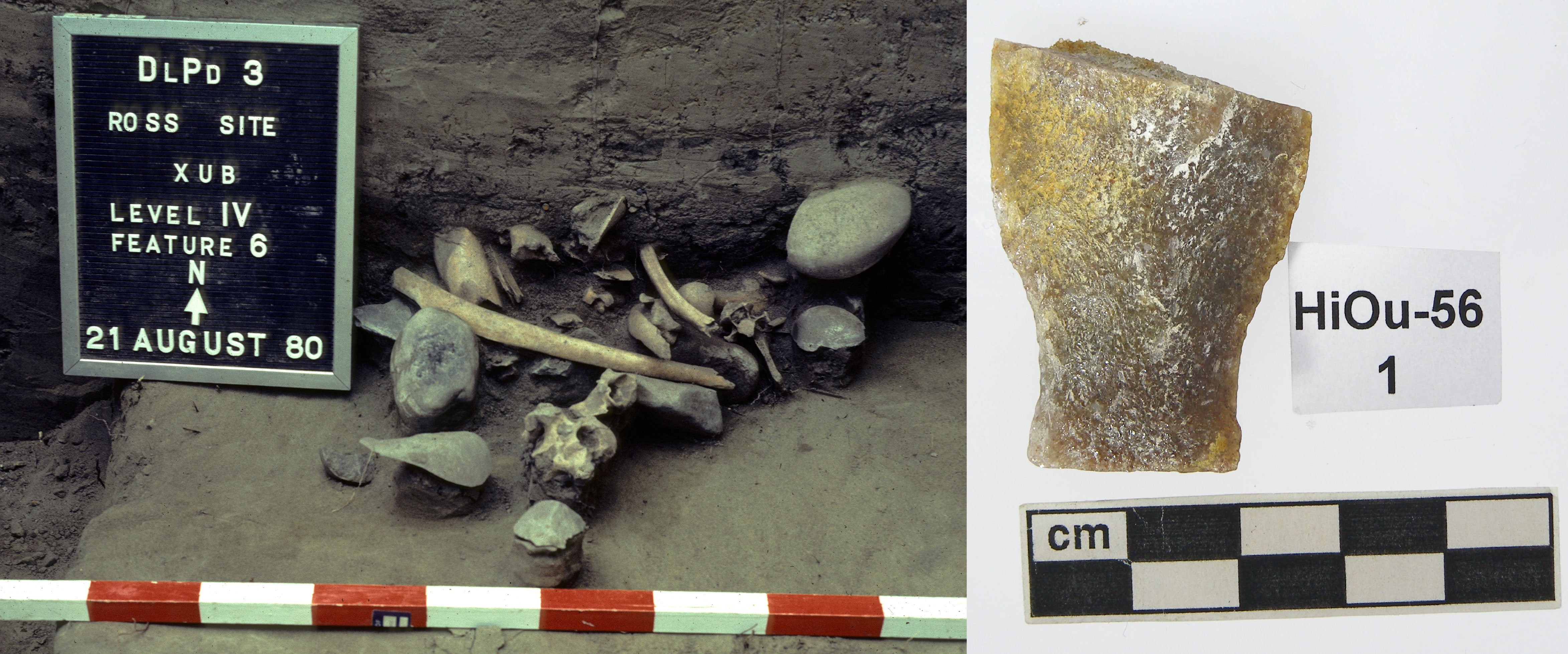
In a previous post we talked about how Alberta has almost 40,000 recorded archaeological sites. Each of these sites has its own record and associated artifacts so, you can imagine, it is a lot to keep track of. One of the most important tools we use to organize site data is a Borden number. You may have heard sites referred to by their Borden number before; for example Head-Smashed-In is also known as DkPj-1. The Borden number is actually more important than the site name as the Borden number is what is used to organize all site records and for cataloguing artifacts. In fact, the majority of sites in Alberta do not have a name at all, they are known solely by their Borden number.

Borden number DlPd-3 (Ross Site) is used as the unique identifier for this archaeological site (left). Borden numbers are also used to catalogue artifacts that are recovered from archaeological sites (right).
Borden number DlPd-3 (Ross Site) is used as the unique identifier for this archaeological site (left). Borden numbers are also used to catalogue artifacts as a way to identify what site they came from (right). (Photo Credits: Royal Alberta Museum)

Read more

Blood Kettles and Buffalo Jumps: Communal Hunting on the Plains of Alberta

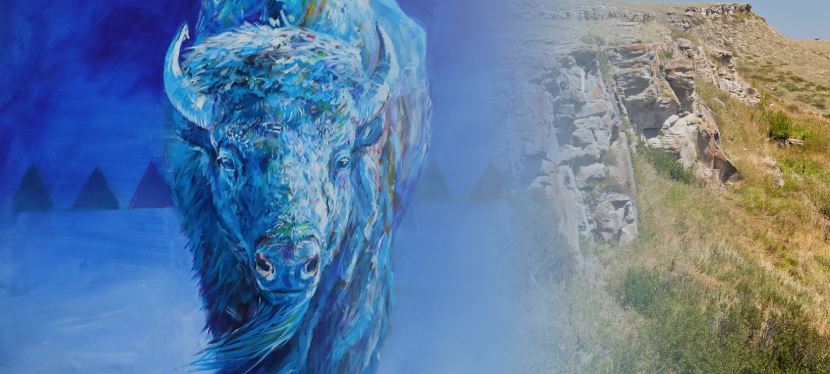
According to Blackfoot tradition, as Old Man traveled north he created the mountains, rivers, grass and trees. When he came to the area of the present day Porcupine Hills in southwest Alberta, he formed images of people from mud and breathed life into them. The people asked Old Man what they would eat, and so, he created images of buffalo from clay and brought them to life. He then took the people to a rocky ledge and called to the buffalo, who ran in a straight line over the cliff: “Those are your food.”

Tens of millions of buffalo once roamed the Great Plains of North America from Alberta’s grasslands down to Texas. To people of the plains, there was no more important food source. A number of ingenious methods were devised for communal (group) hunting – buffalo were lured into ambushes, corralled with fire, chased onto frozen lakes or into deep snow, and driven into elaborate traps called pis’kun by the Blackfoot (translated as ‘deep-blood kettles’). Of the hundreds of mass kill sites, perhaps none is more impressive than the buffalo jump, the most famous of which is Alberta’s Head-Smashed-In. Read more

Archaeology and the June 2013 Floods in Southern Alberta

In June 2013, heavy rainfall triggered catastrophic flooding in southern Alberta that has been characterized as some of the worst in the province’s history. Areas along the Bow, Elbow, Highwood, Red Deer, Sheep, Little Bow and South Saskatchewan Rivers, and their tributaries, were affected. Estimates of property damage from the flood make it one of the most costly in Canadian history. Personal property, however, was not the only casualty. The torrents of water accelerated natural erosional and depositional processes, resulting in significant alteration to many of southern Alberta’s river systems.

Debris-flow fan on the Highwood River, caused by the June 2013 flood.
Debris-flow fan on the Highwood River.
Erosional exposure on the Sheep River, caused by the June 2013 flood.

The potential for finding archaeological sites along southern Alberta’s river systems has always been high. The distribution of known archaeological sites in Alberta indicate the importance of the major river systems to precontact and historic people as sources of fresh water, food resources and travel corridors.  As a result of these associations, a number of archaeological sites were also identified as casualties of the June 2013 flood. Read more

Power and Powder: Early Guns in Alberta

It’s hard to overstate the profound impact of firearms in Alberta’s history. The earliest guns delivered food, protection, and intimidation. Technological improvements from European contact to the 1900s led to significant changes in the ways that guns were used across the province. This blog briefly explores the evolution of firearms in Alberta and the archaeological record of it.

First Guns

Firearms were introduced to Canada in the 1500s but didn’t spread to Alberta until much later. Their first appearance in the province was likely through raiding or trading in the southern U.S. by Plains First Nations. Early gun models, like flared-mouth blunderbusses, were designed for close encounters on battle fields but proved ineffective on the prairies. It wasn’t until the advent of portable flintlock muskets that guns spread like wildfire across the West.

An 1805 Barnett flintlock trade musket that came to be one the most popular Northwest Trade guns. Over 20 000 guns were sold out of Canada’s major fur trade depot at York Factory from 1600 to the late 1700s. Figure by Todd Kristensen and Julie Martindale.

Read more

Celebrating National Volunteer Week: Calhoun Bay Archaeological Sites Tour

April 10 to 16, 2016 is National Volunteer Week in Canada. Well over 12.7 million Canadians have generously donated their time and energy to important causes. Volunteers help our communities grow strong and resilient. Even the smallest effort has the ability to transform, leaving profound and lasting effects in local communities. The work of volunteers affects virtually every aspect of our society and the heritage field is no exception. This week is the perfect time to reflect on the importance of volunteer work involved in the preservation of heritage. Over the years, the Archaeological Survey section of Alberta Culture and Tourism has developed a strong working relationship with the staff of the Parks Division of Alberta Environment and Parks. Both ministries regularly collaborate on joint efforts to preserve Alberta’s natural and cultural heritage for future generations. An important component of our preservation partnership is sharing heritage information with Parks volunteers. The Archaeological Survey participates in these programs to help Parks provide support, increase communication and offer new learning experiences for both staff and volunteers.

Calhoun Bay Provincial Recreation Area Parks Volunteer Conference Field Trip

The Archaeological Survey’s Regional Archaeologists, Caroline Hudecek-Cuffe and Wendy Unfreed participated in Alberta Parks’ Volunteer Conference Field Trip to Calhoun Bay Provincial Recreation Area (PRA) as part of a 3-day conference held in September 2015. Calhoun Bay PRA is located along the eastern shores of Buck Lake surrounded by thick boreal forests. On the bus ride to the site, Caroline and Wendy treated their fellow riders to an introduction to Alberta archaeology and explained how the Read more

Alberta on Fire: A History of Cultural Burning

Fire science has come a long way but the growing practice of prescribed burning is actually a return to a deep past. Archaeological and paleoecological researchers are demonstrating that Western Canada has been burning at the hands of people for thousands of years. Much of what was thought to be wilderness in the early 1900s was likely a mosaic of manipulated landscapes influenced by controlled burns. Alberta has a rich history of fire use and the recognition of it has implications for modern conservation and land management.

Ancient Fires

Tracking the history of fire in a landscape can be challenging and, in the paleoenvironmental record, it’s particularly difficult to distinguish human from natural burning. Fire scientists, however, are untangling fire history in interesting places. Christina Poletto is a Master’s student at the University of Alberta who will soon extract a long core of lake mud in northern Alberta in order to analyse changing layers of charcoal and pollen deposited over thousands of years. This information provides a baseline of natural fire history that she hopes to compare to cultural landscapes surrounding archaeological sites. “I want to Read more

Paleoindian Archaeology, Pleistocene Extinctions and Mongolian Use of Space: An Interview with Dr. Todd Surovell

The University of Alberta Association of Graduate Anthropology Students will be hosting the 24th Annual Richard Frucht Memorial Lecture Series from March 2-4, 2016. The distinguished speaker for this year’s conference is Dr. Todd Surovell of the University of Wyoming. I had a chance to interview Dr. Surovell about his research ahead of his upcoming visit to Alberta and he offered some fascinating insights into North American colonization, the extinction of North American megafauna, and his observations of household space use by Mongolian reindeer herders as a means to inform archaeological interpretations.

Dr. Todd Surovell at the Barnes Site, Hot Springs County, Wyoming (Photo: Todd Surovell)

How long have you been doing archaeology? What got you interested in it?

I have been doing archaeology for about 23 years. I got interested in archaeology somewhat by accident; I always thought I would be a biologist, zoologist, or ornithologist as I was an avid bird-watcher, but I registered for a course called Introduction to Anthropology at the University of Wisconsin and the teaching assistant was advertising an archaeology field school in western Wisconsin. I did the field school and fell in love with field archaeology. Read more