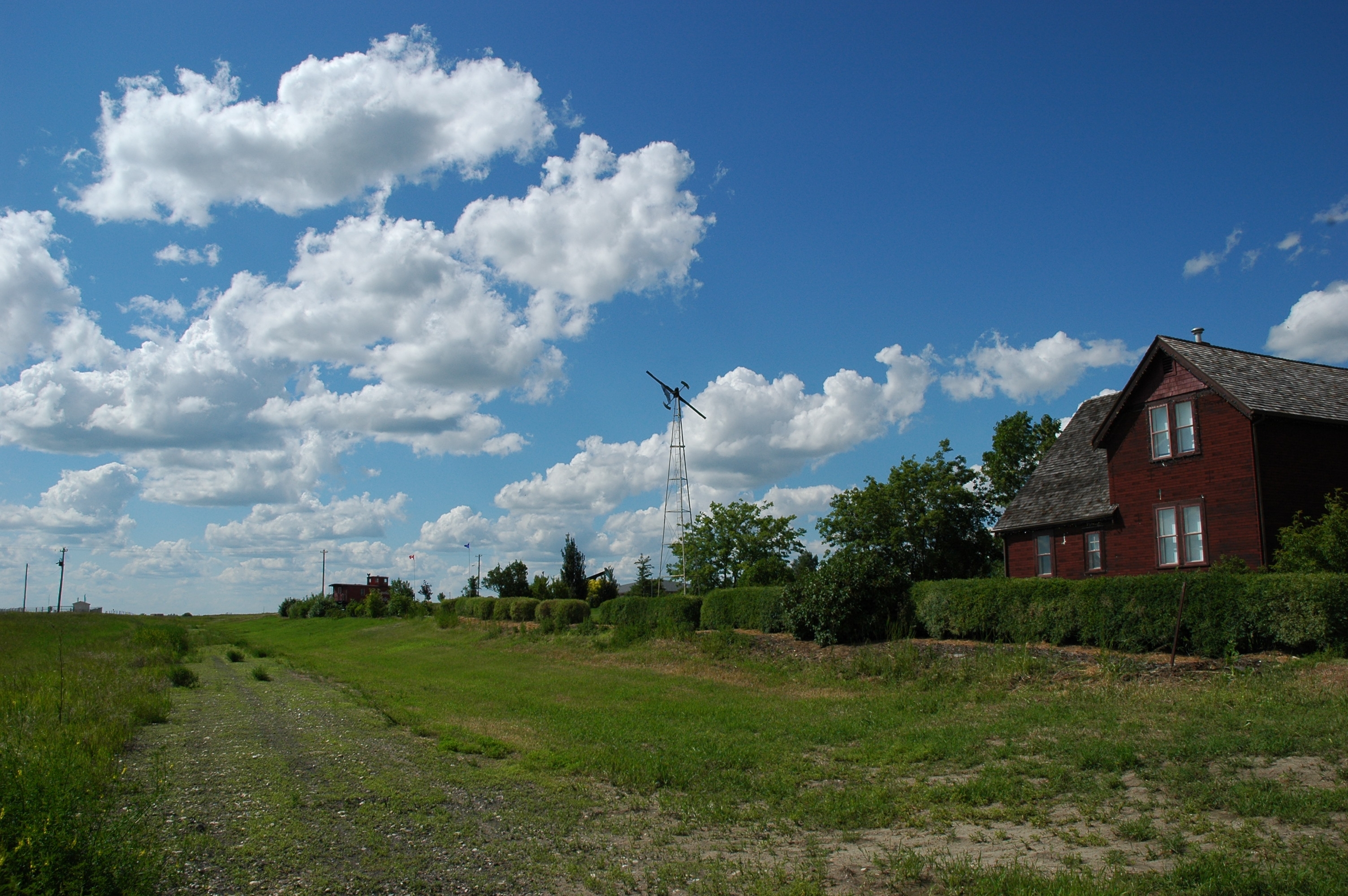
Canadian Pacific Railway Section House, Coronation

(Photo 20060621_8707.JPG)
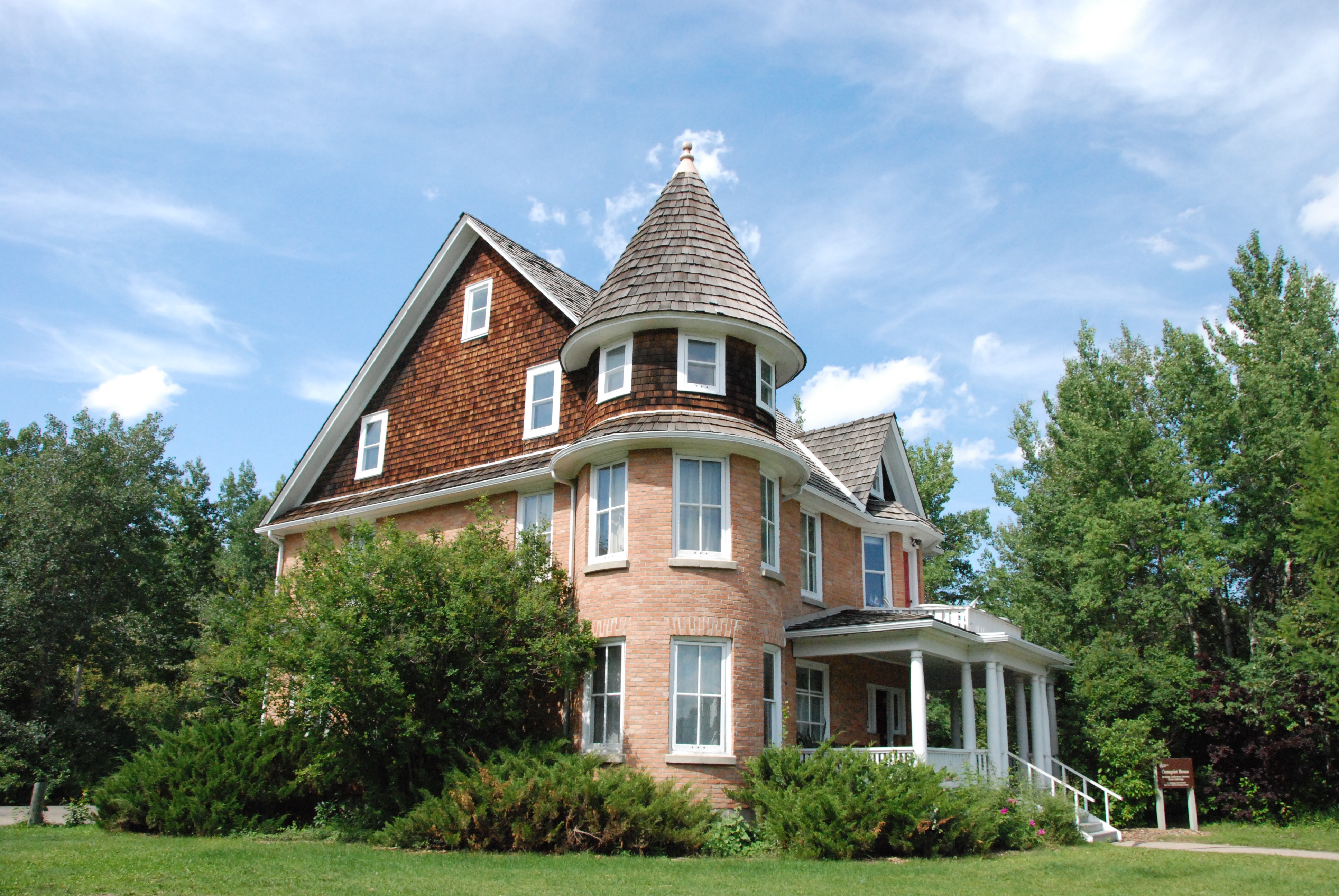
View from the southeast, showing the Section House and the former rail yard.
Historic Resources Management Branch, 2006

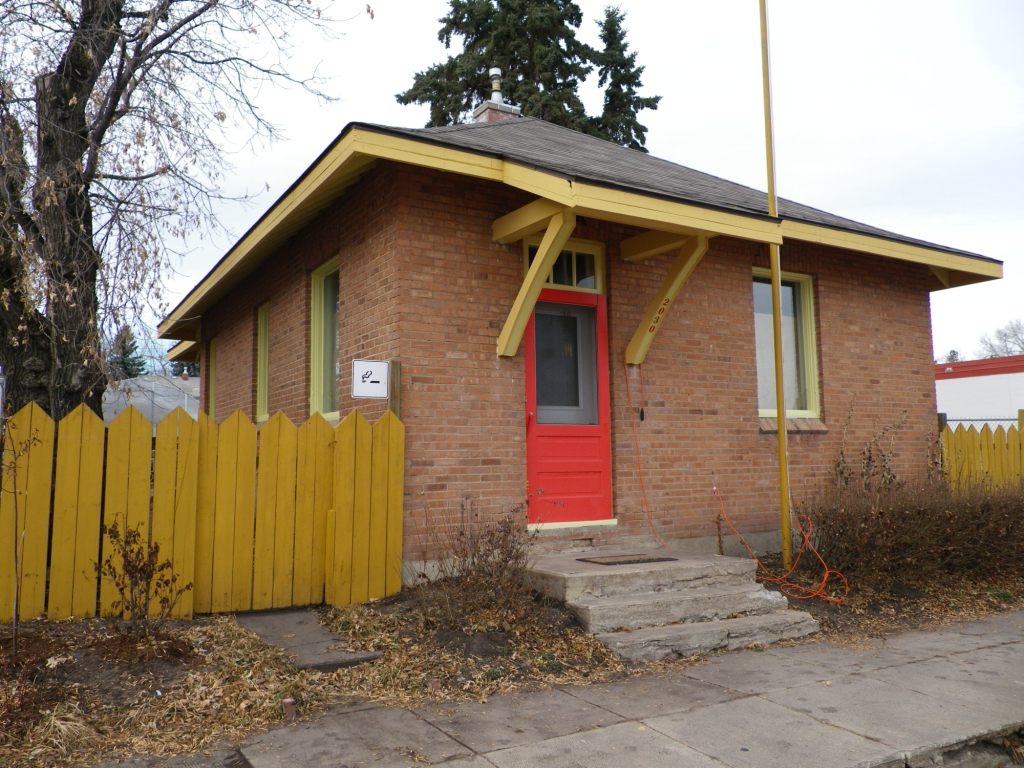
The Canadian Pacific Railway Section House in Coronation is the latest addition to the Alberta Register of Historic Places. The building was previously designated as a Registered Historic Resource in 2002. The resource was  revaluated and its designation was upgraded to Provincial Historic Resource on August 27, 2012. The building, also known as the Section Foreman’s or Roadmaster’s House is significant as it is representational of CPR divisional point architecture and demonstrates the type of housing provided by the railway to essential railway employees.
(Photo 20060621_8714.JPG)
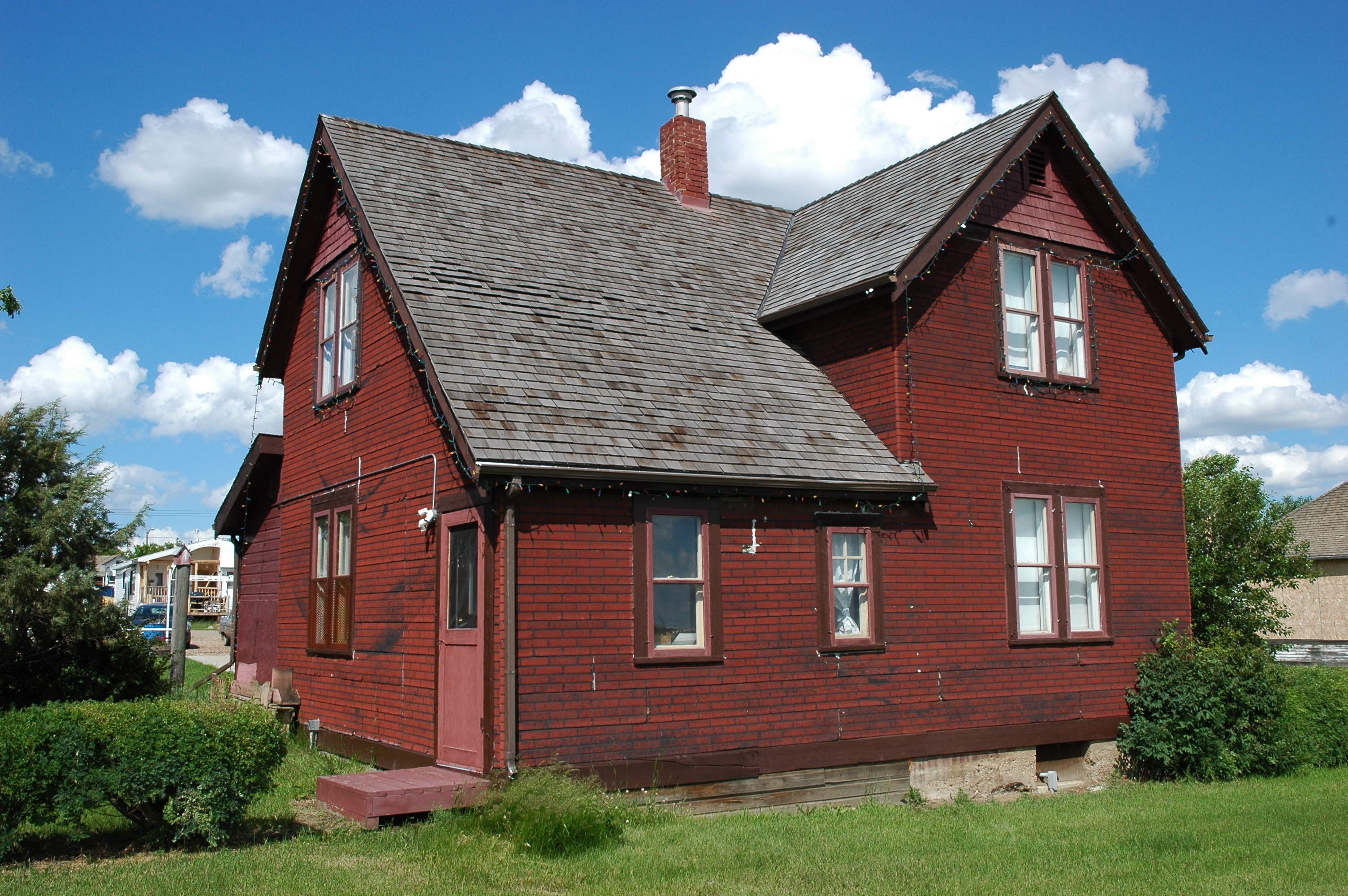
View from the southwest (trackside).
Historic Resources Management Branch, 2006

Coronation, which is located about 120 km east of Stettler, became the divisional point for the CPR’s Lorraine subdivision, which eventually connected Youngstown in the south and the coal mines at Halkirk in the north to the main line. The Section Foreman was responsible for track maintenance on the subdivision. The CPR believed that men with established families were better qualified for positions of responsibility and housing was often provided for them as a way of attracting and retaining such people. At one point Coronation had three section houses in a line adjacent to the town’s rail yard. These houses were built according to a CPR standard plan, and were utilitarian in nature and featured simple ornamentation and were constructed of low-maintenance materials.
(Photo 20060621_8646.JPG)
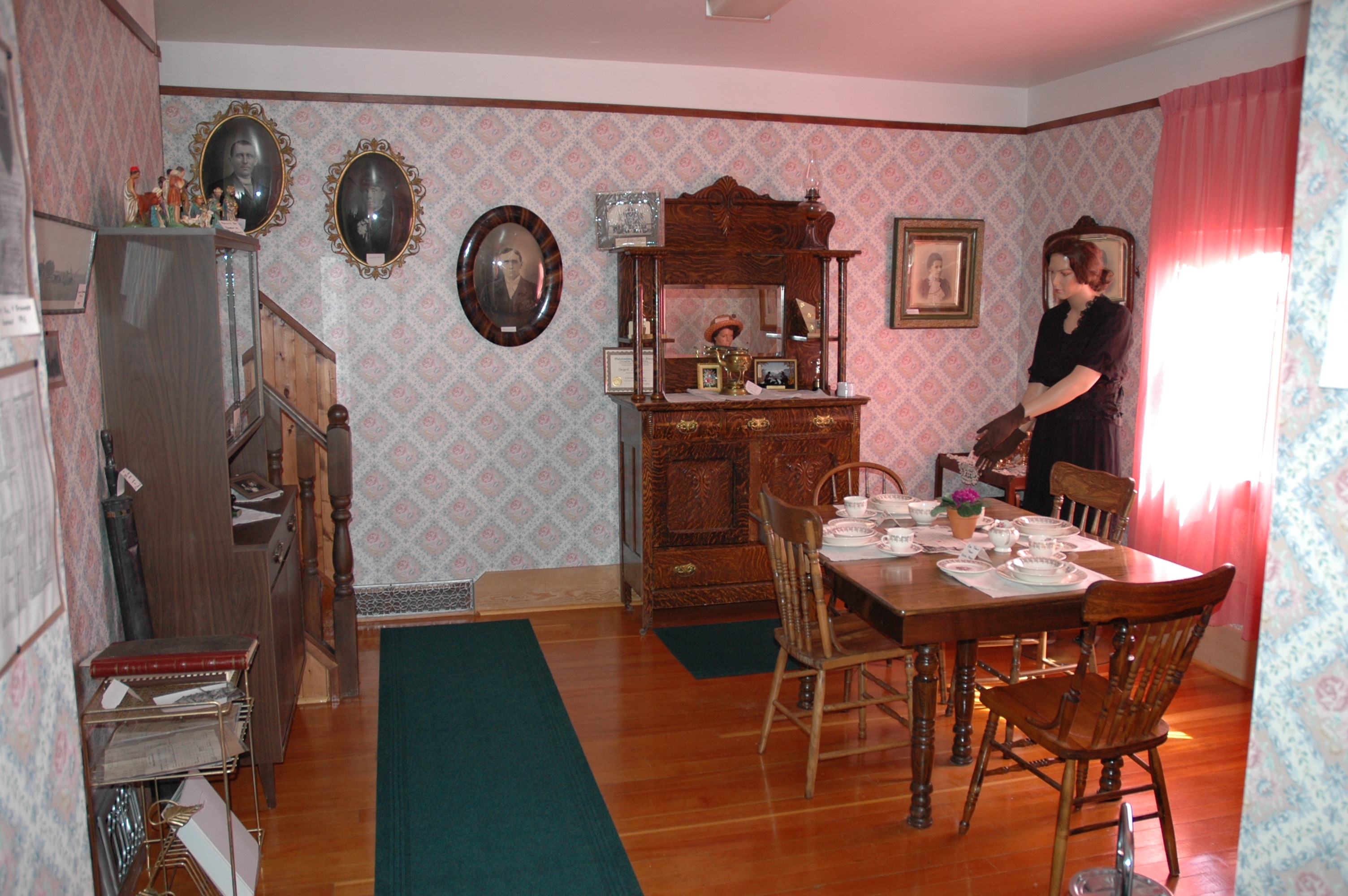
Section House Interior, Dining Room.
Historic Resources Management Branch, 2006

With changing technology, the use of divisional points evolved and many section houses were either abandoned, lifted and moved or simply torn down. The Coronation section house, which is now used as a local museum, remains on its original site and effectively communicates its provenance as an essential, and often over-looked, element of railway infrastructure.

More information on the Canadian Pacific Railway Section House in Coronation can be found on the Alberta Register of Historic Places.

Written by: Ron Kelland, Historic Places Research Officer and Geographical Names Program Coordinator
Municipalities Show and Tell at the Place Matters Forum

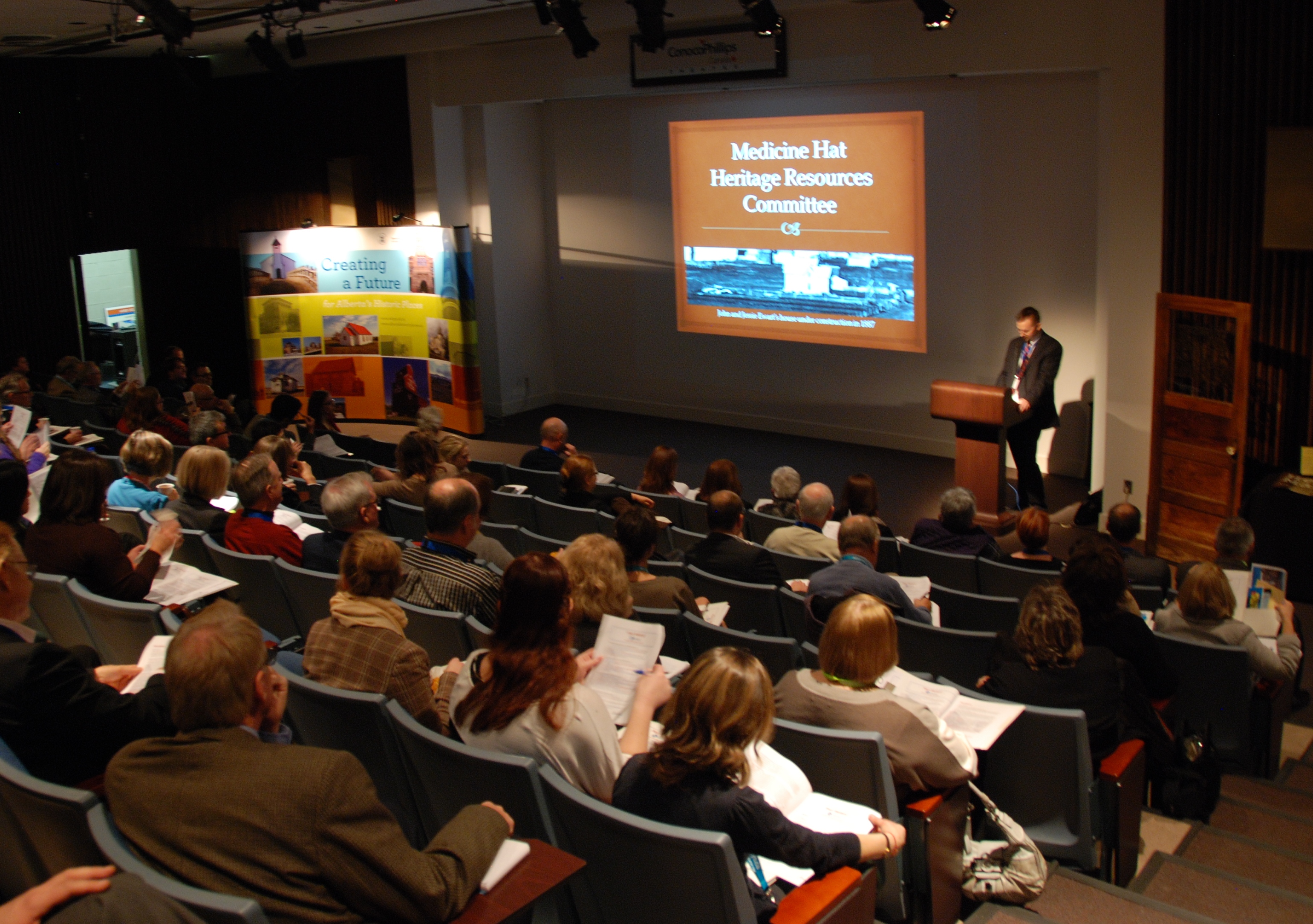
At the 2011 Municipal Heritage Forum we invited a broad range of communities to show and tell about their heritage planning projects. Back by popular demand, this year’s Place Matters Forum, saw three communities showcase their recent projects and achievements.

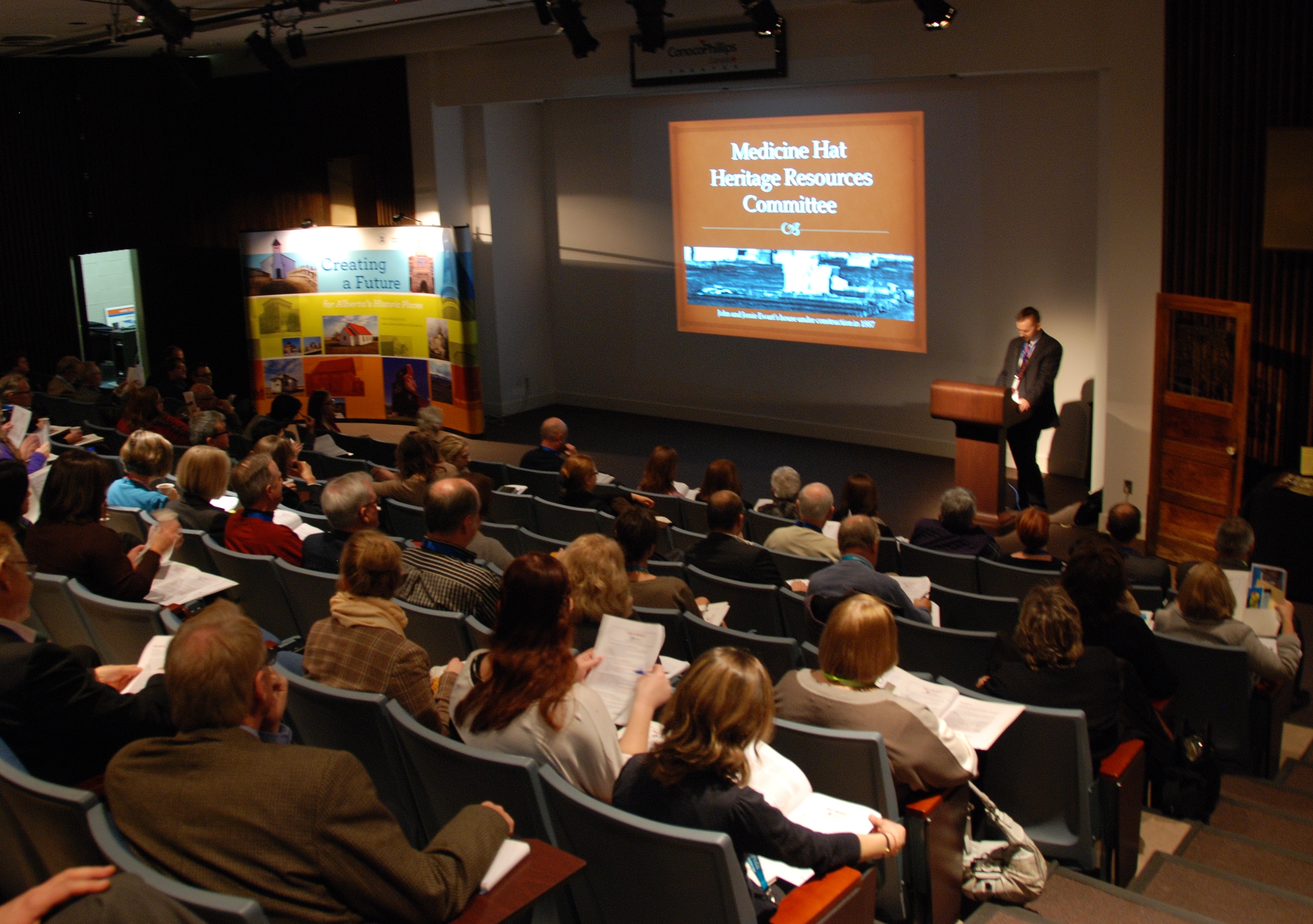
Malcolm Sissons presenting on the recent activities of the City of Medicine Hat Heritage Resources Committee.

Malcolm Sissons, Chair of the City of Medicine Hat’s Heritage Resources Committee, informed Forum attendees about some of the progress made in Medicine Hat since the establishment of the Committee. This has included the designation of new Municipal Historic Resources, heritage awareness activities, and also the possibility of creating a Municipal Historic Area.

Ann Ramsden, Director of the Musée Héritage Museum in St. Albert, described the sensitive rehabilitation of the Little White School, particularly describing how this historic place was adapted for barrier-free access.

Stepping into action on behalf of the CAO of the Village of Holden, Dave Maruszeczka, from the Village of Holden Heritage Resources Committee, spoke eloquently – totally off the cuff – about the diligent heritage planning efforts of the Village, which have now resulted in a complete Municipal Heritage Survey, Inventory, and a nearly complete Heritage Management Plan.

We would like to thank all the community presenters who took the time to “show and tell” at this years Forum – as well as those who were unable to attend. We look forward to even more great community heritage stories from across Alberta at Forum 2013!

Written by: Matthew Francis, Manager of Municipal Heritage Services

Why can’t I list that on the Alberta Register of Historic Places?

A bit about exemptions.

Listing a Municipal Historic Resource on the Alberta Register of Historic Places is normally the last step in protecting a locally significant historic place. There are several types of historic places that cannot be listed on the register. Understanding which ones are ineligible will help you understand what a historic place is and understand the purpose of  designation under the Historical Resources Act.

Only sites that are protected because of the heritage value they possess are eligible for listing on the Alberta Register of Historic Places. The register is a database containing information on places that have been protected because of their historical or archaeological significance. The register is not a list of sites that are of historical interest – that would be the Alberta Heritage Survey Program database.

Some types of resources cannot be listed on the Alberta Register of Historic Places. Properties that cannot be listed include:

  • a property outside municipal jurisdiction;
  • a property that cannot be designated as a historic resource pursuant to the Historical Resources Act;
  • small movable objects;
  • human remains;
  • modern reconstructions, no matter how accurate, of a historic place; or
  • a building, structure or object situated in a historic park or village (like Heritage Park in Calgary).
Cronquist House, protected by the City of Red Deer, is a Municipal Historic Resource.

What are some examples of these types of property? Sites owned by the Crown cannot be designated as municipal historic resources. So, post offices owned by Canada Post or a provincial court house cannot be listed. Certain types of property (such as cemeteries) are regulated under other provincial laws (such as the Cemeteries Act). Conflicts between the Historical Resources Act and other provincial statutes can occasionally annul the protective nature of designation. When this is the case, those sites cannot be listed because they are not, in practice, protected.

A historic place that clearly does not have heritage value cannot be listed on the Alberta Register of Historic Places. A contemporary reconstruction of a historic place, no matter how well executed, is by nature not a historic place. Reconstructions are built from the perspective of the present and use modern tools and materials. It’s unlikely that a reproduction will accurately reproduce a historic place in minute detail. Historic parks or villages are even worse in this respect. A historic park does not reproduce a historic streetscape in its original location. They are artificial groupings of buildings that have been created for purposes of interpretation.

These are only the most obvious exemptions. There are other more subjective exemptions, like birthplaces, moved resources and things less than 50 years old. I will discuss those exemptions in an upcoming blog post. If you’d like to know more about exceptions to listing on the Alberta Register of Historic Places, you can download the Evaluating Historic Places manual from the Municipal Heritage Partnership Program website.

Written by: Michael Thome, Municipal Heritage Services Officer

Re-Imagining the Urban Landscape & Motivations for Conservation

Forum 2012 Keynote Address

While the weather outside was frightful, the keynote address by Julian Smith at this year’s Municipal Heritage Forum intrigued and delighted a rapt audience of heritage stakeholders from across Alberta.

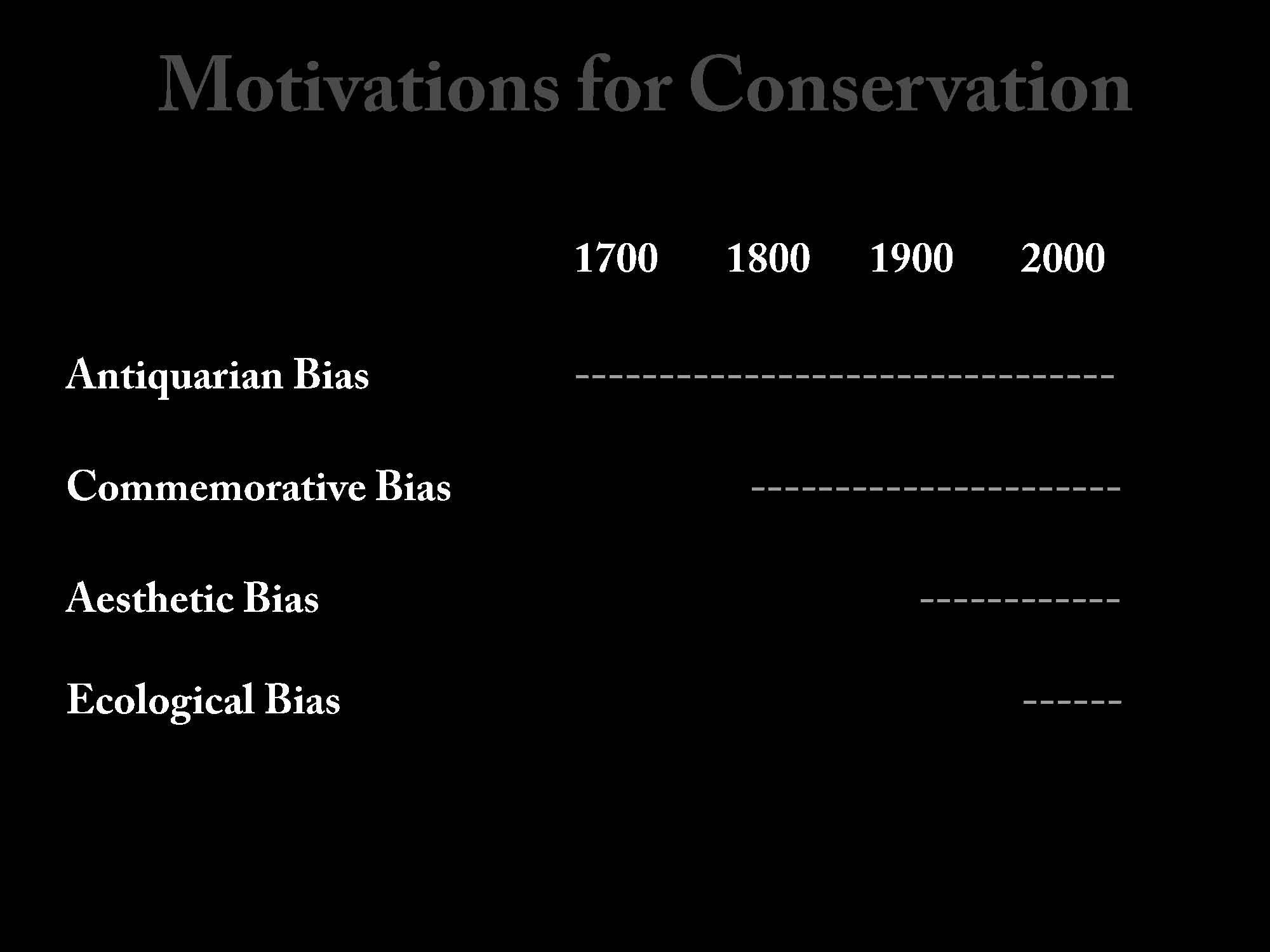
Entitled “Re-Imagining the Historic Urban Landscape,” the presentation examined some of the historical underpinnings (‘biases’)  that have guided heritage conservation, and charted a new trajectory broad enough to include landscapes and the ‘rituals’ by which people live in today’s globalized world. In his opening remarks, Julian described how international eyes are on Canada, and indeed on Alberta, as we launch into new conservation perspectives.

A Diagram composed by Julian Smith describing the historical “biases” that have characterized heritage conservation activities.

This wide-ranging re-imagination spanned the globe as Julian showcased examples and issues from Canada, the United States, Japan, India, and Europe. The newly emerging “ecological” focus not only embraces broader environmental concerns, but also takes into account the relationships between built heritage and its surroundings in a deeper way.

Many Forum participants commented on how Julian’s presentation expanded their horizons, opening up new avenues for consideration and ideas they hadn’t thought of before.

Stay tuned! A copy of Julian’s presentation will soon follow.

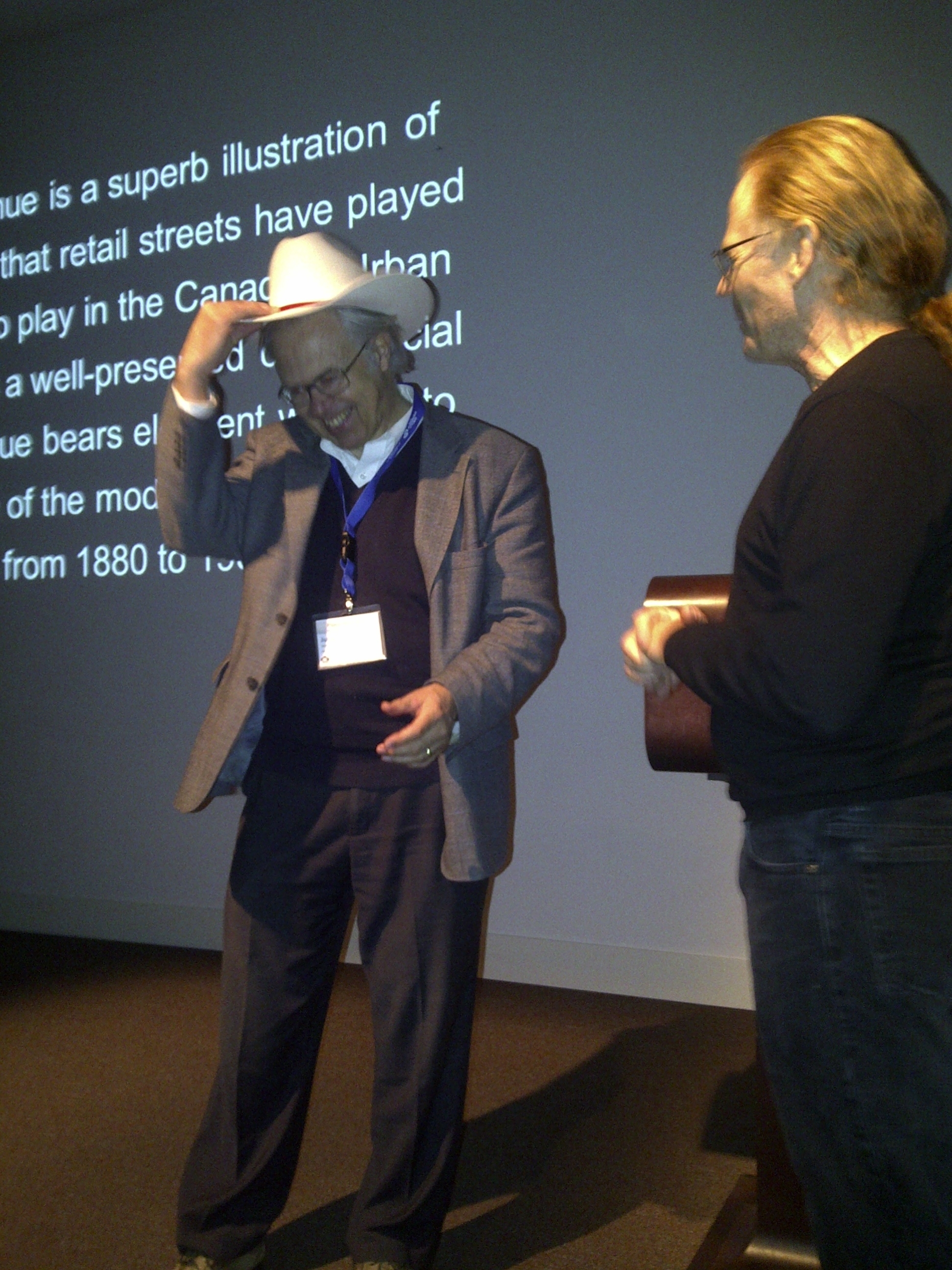
City of Calgary Senior Heritage Planner Darryl Cariou presents Julian Smith with the City’s traditional “White Hat” honour.

Written by: Matthew Francis, Manager of Municipal Heritage Services

Thank you! Success despite Snow!

Municipal Heritage Forum 2012

Last week, on November 8th and 9th, the sixth annual municipal heritage forum was held at the Glenbow Museum’s Conoco-Phillips Theatre. Nearly 85 attendees from rural and urban municipalities gathered to discuss issues and opportunities associated with the local conservation of historic urban landscapes.

We thank all those that made the trek to Calgary through adverse winter driving conditions. Your enthusiasm and participation was inspiring.

Stay tuned for detailed Forum updates!

Future blog posts will feature Julian Smith’s keynote address, the municipal show and tell presentations and the full range of presentations provided during the concurrent breakout sessions. In the meantime, please enjoy some photographs from the various sessions:

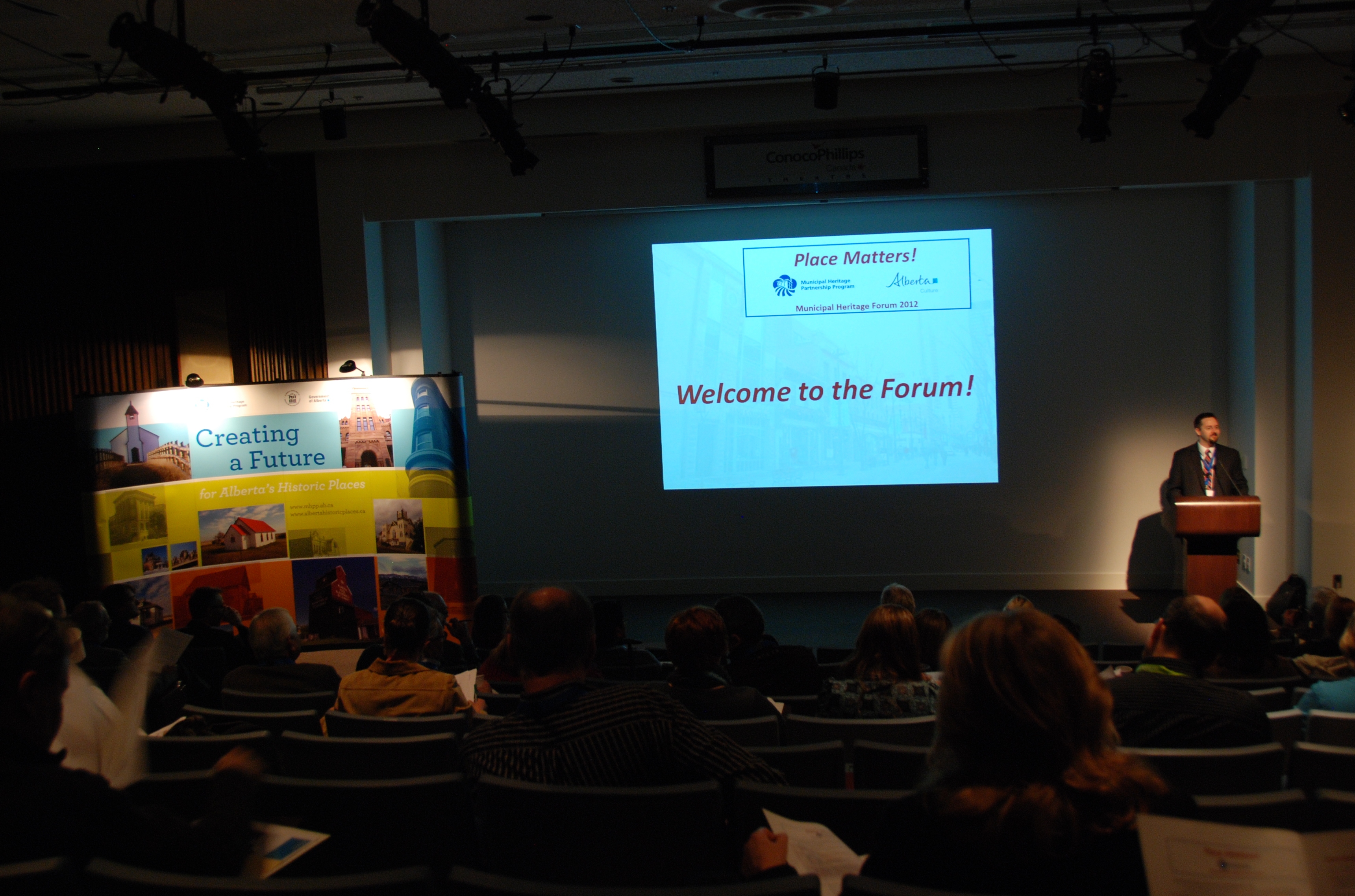
Matthew Francis, Manager of Municipal Heritage Services, welcoming attendees.
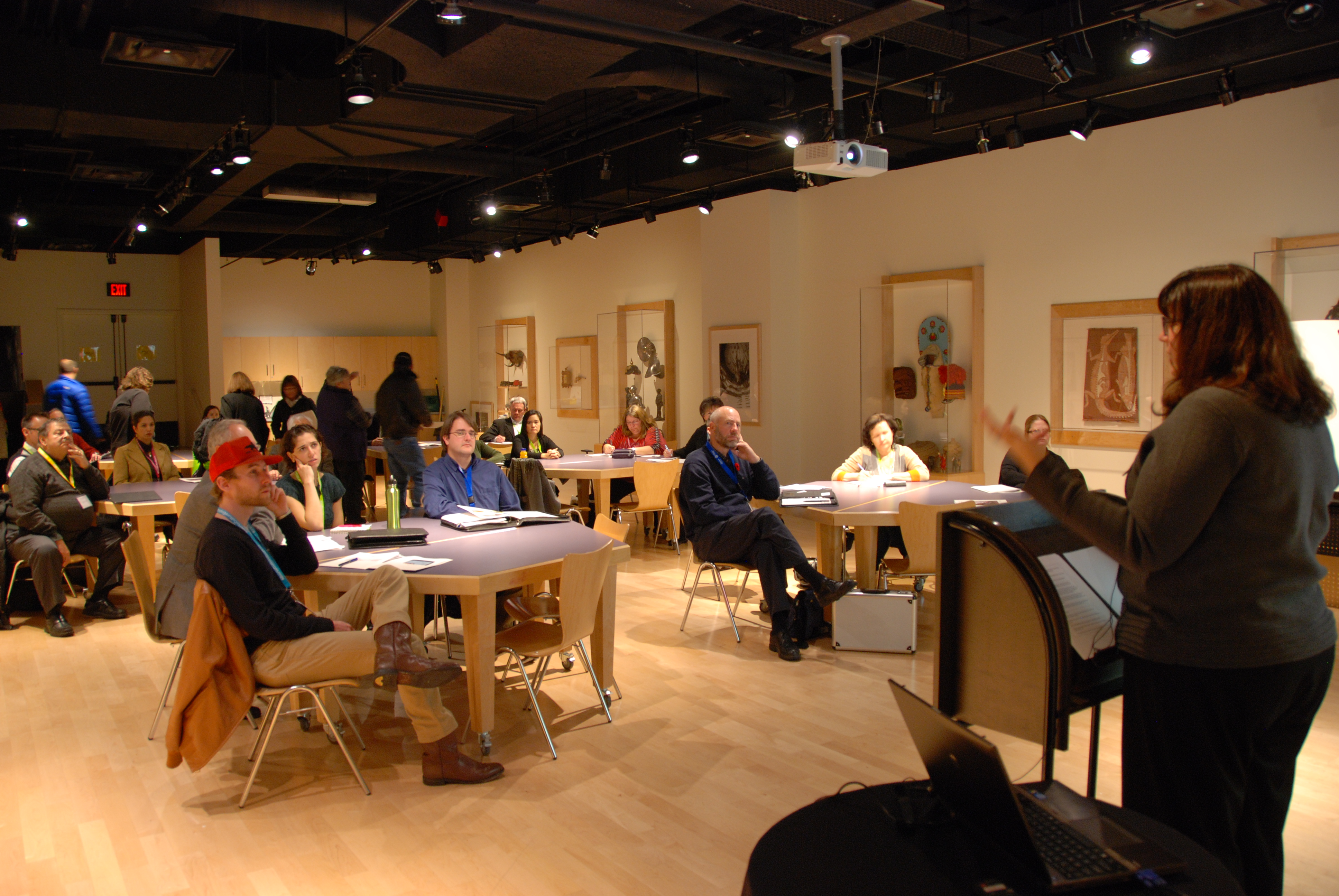
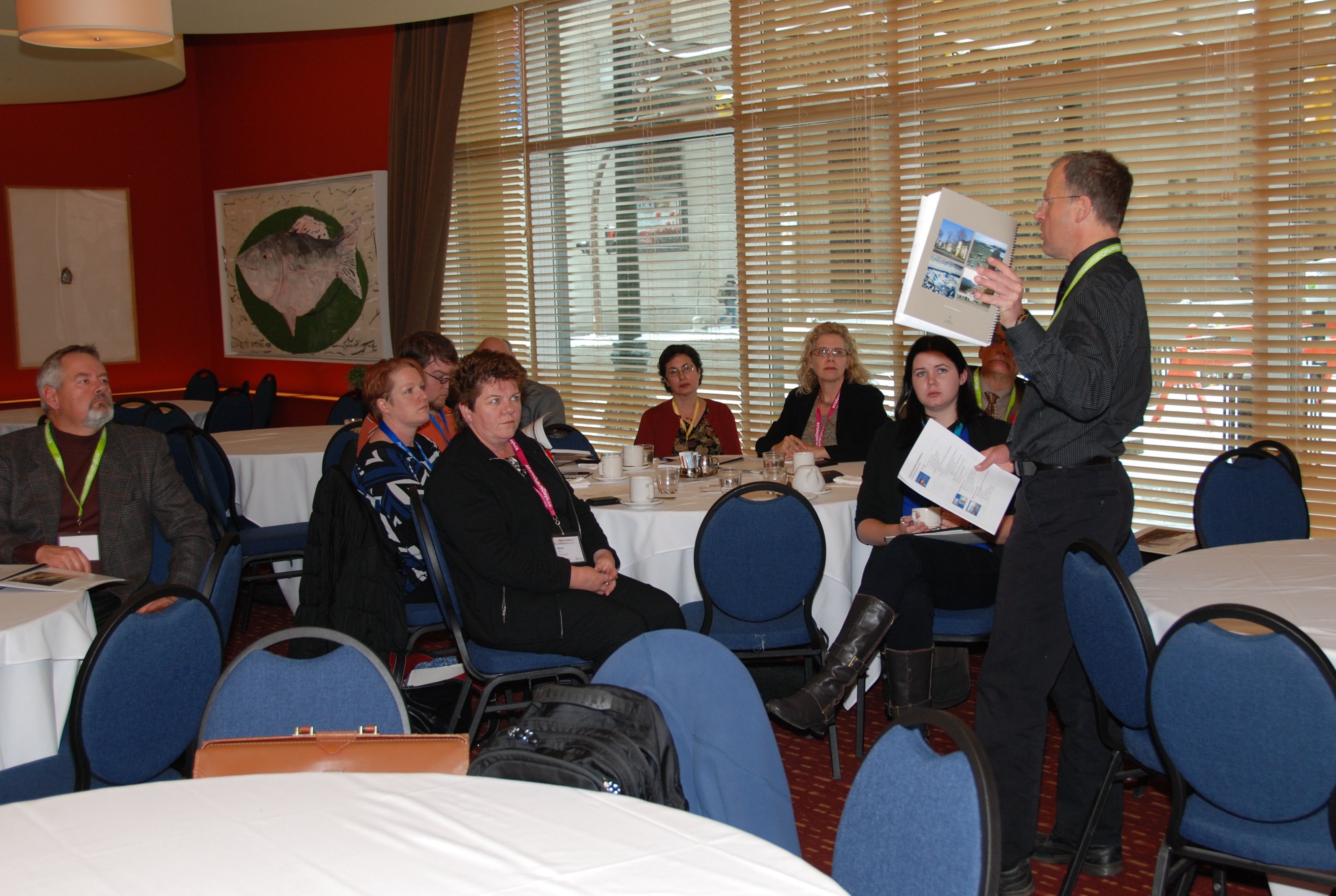
Concurrent Breakout Session: How Cultural Landscapes Build Strong Communities
Municipality Show & Tell: Medicine Hat Heritage Resources Committee
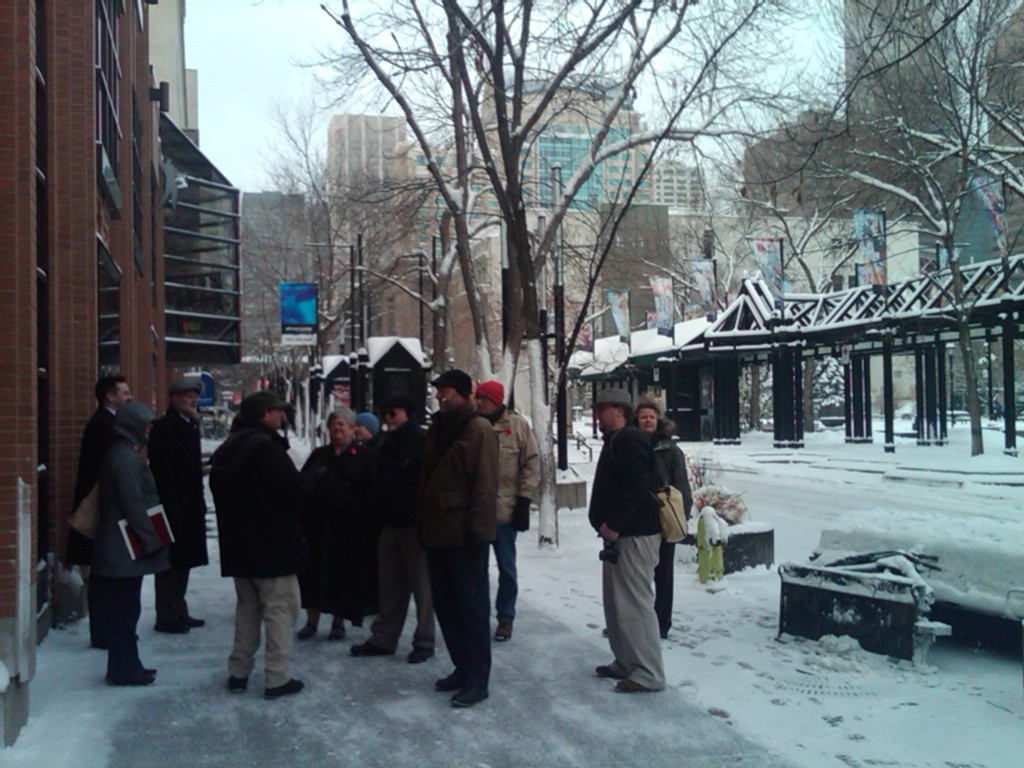
Stephen Avenue Walking Tour
Concurrent Breakout Session: Using the Standards and Guidelines
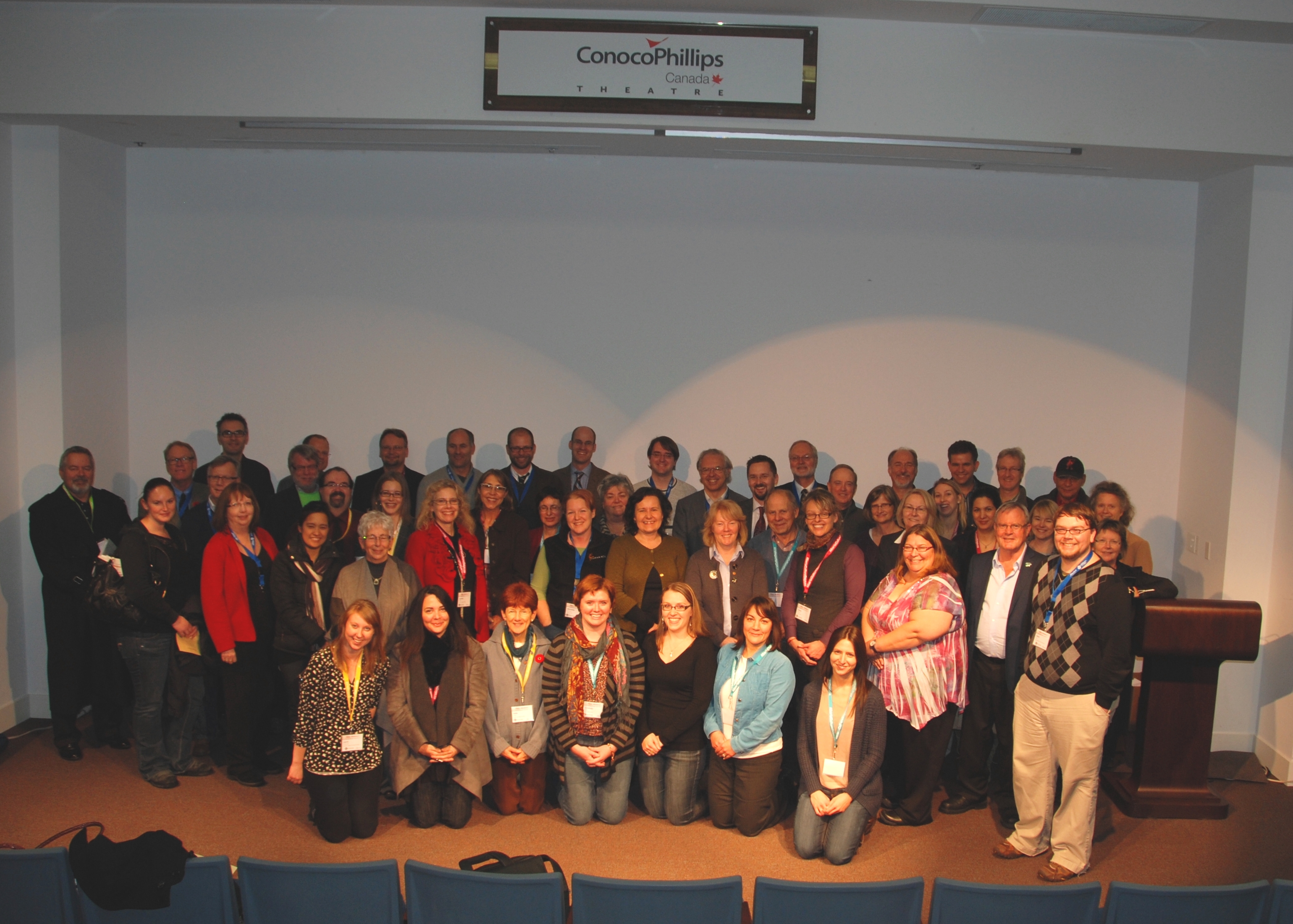
Group Photo (Friday, November 9, 2012)

Written by: Brenda Manweiler, Municipal Heritage Services Officer

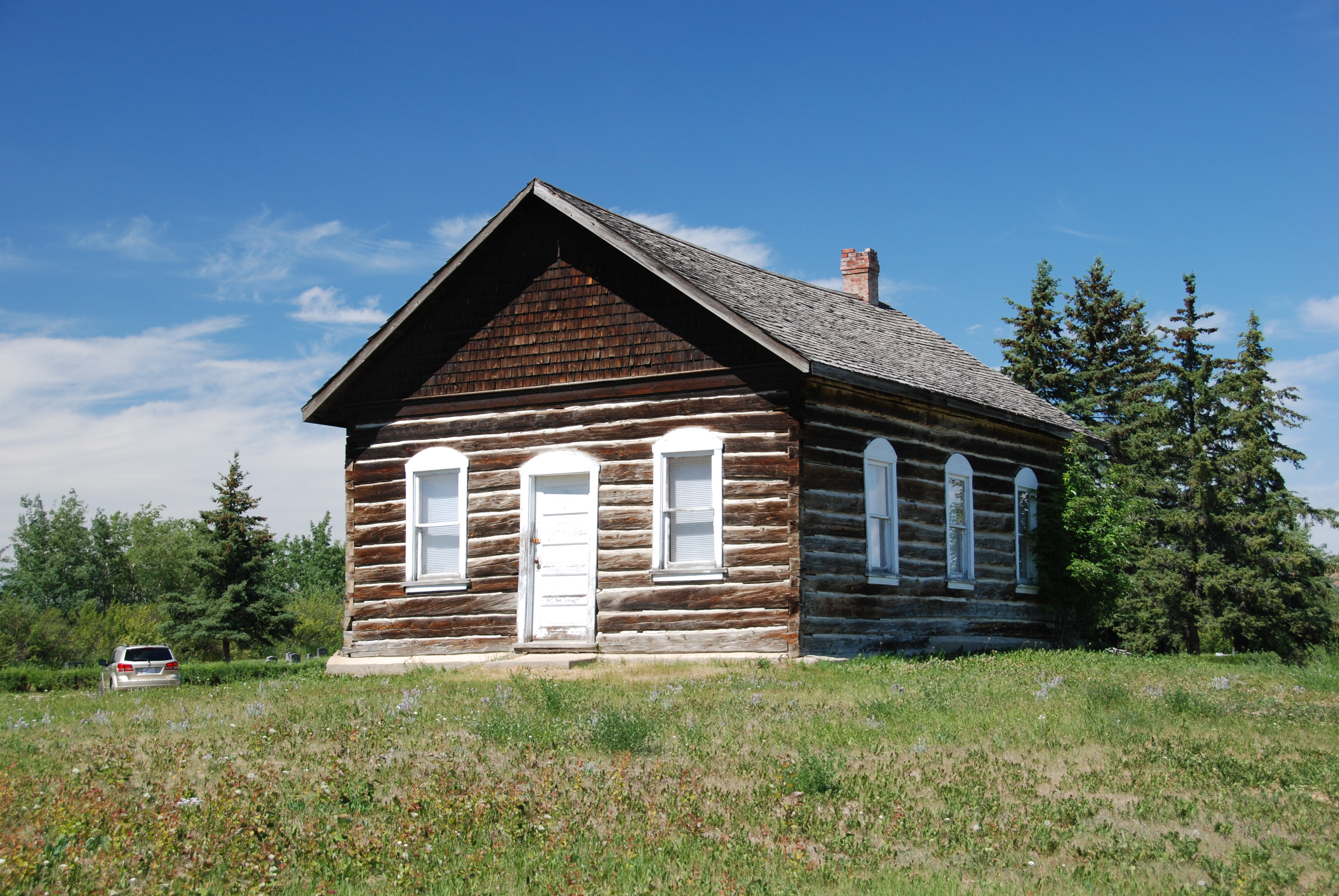
Glen Leslie Church, near Bezanson

In the summer of 1909, Dominion Land Surveyor Walter MacFarlane subdivided 17 townships on the Grande Prairie in northwestern Alberta into quarter-sections for land settlement. In the spring of 1910, the townships were thrown open of homesteading, and, during the next four years, there were 2,675 applications made for land on the Prairie, with 1,854 of them (69%) being proven up. One of the districts to receive considerable attention was that of Glen Leslie, just south of Kleskun Hill, where 144 settlers took out land. In all, these settlers made 164 applications for land, with 86 of these being proven up.

One of the homesteaders in this district was Thomas Leslie from Roslin, Ontario, who filed for and proved up NE26 TP72 R4 W6. His sons, Bruce and Norman, filed for land close by. With so much settlement in the area, Thomas applied to be the district postmaster in August, 1914.  His application was granted, which was natural as his homestead was already serving as the district store. The name proposed for the post office was Glen Leslie, which reflected Leslie’s Scottish heritage.  Leslie’s home also facilitated church services conducted by the Presbyterian minister Alexander Forbes from Grande Prairie.

In November 1913, Leslie and Forbes jointly applied for ten acres of SW6 TP72 R3 W6 in order to build a church and plot ground for a cemetery. The land contained a substantial bog and was not suitable for cultivation. The land granted, and, during the winter of 1914-15, logs were cut by local volunteers for a church building. Construction began on the structure that would become known as the Glen Leslie Church the following spring, with Alf Olson as the coordinator. The building committee consisted of Dan Minchin, Alex Milne, Lewis Fowler, and Bruce and Norman Leslie.  The total cost, born by local fundraisers, turned out to be $468. The first service was conducted by Reverend Forbes in October, 1915. In the meantime, a cemetery was plotted just to the north

The population of the Glen Leslie district was interdenominationally Protestant, and so attendees at the Glen Leslie Church were not exclusively Presbyterian. The church building was maintained by local volunteers and was made part of the new United Church of Canada in 1925.  From 1918 to 1928, it also served as the Glen Leslie School. Many other social events were held there.

In 1928, the cemetery was taken over by the Municipal District of Grande Prairie. When church services were curtailed in 1964, the County of Grande Prairie took over the church building as well. Having been well maintained, the structure was still useful for social events. It was provided with a foundation in 1970 and re-shingled in 1976. Special events continued to be held there, and, on 6 October 2011, the church was designated a Provincial Historic Resource.  Its significance lies in its provision of structural evidence of the small community of Glen Leslie, one of the many districts on the Grande Prairie, from 1915 until today.  The structure is important also in providing structural evidence of an early Presbyterian church in northwestern Alberta.

Visit the Alberta Register of Historic Places to learn more about the heritage value of the Glen Leslie Church. In order for a site to be designated a Provincial Historic Resource, it must possess province-wide significance for either its history or architecture. To properly assess the historic importance of a resource, a historian crafts a context document that situates a resource within its time and place and compares it to similar resources in other parts of the province. This allows staff to determine the importance of a resource to a particular theme, time, and place. Above, is some of the historical information used in the evaluation of the Glen Leslie Church. 

Written by: David Leonard, Historian

Frost is in the air!

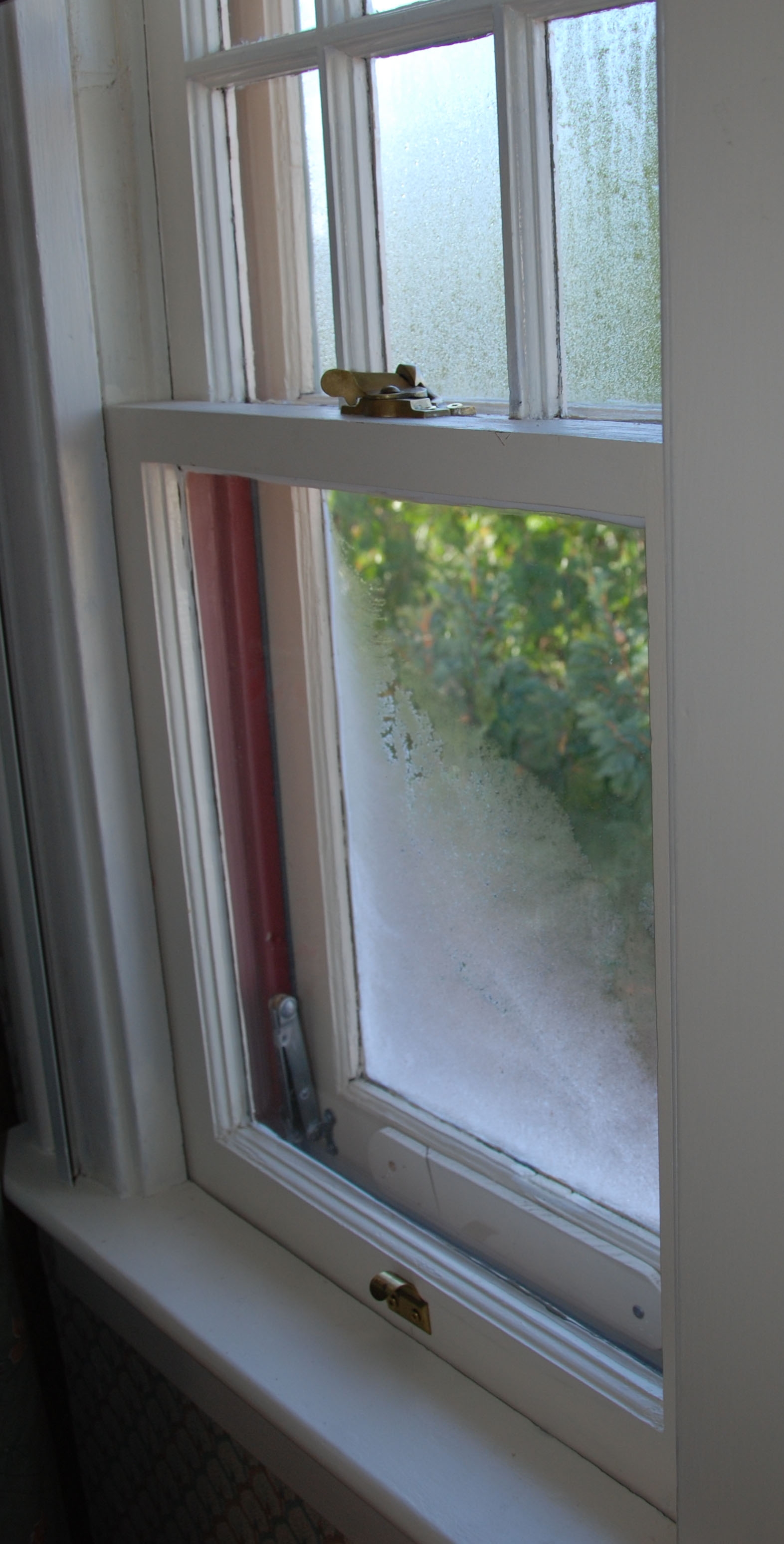
With winter coming some owners of historic places might be witnessing the formation of frost on their single pane wood windows and storms, most notably on the second storey. The reasons for this will vary and subsequently so will the solutions. Generally speaking, a little frost now and again should not harm the window frame but a more persistent formation will saturate the surrounding material and in the long run, potentially cause significant damage. Should this be the case, ignoring the situation is far from the recommended solution.

Frosty window. Note the closed storm window vent cover. During the winter it should be open.

So what is one to do?  The first step, as with any intervention on a historic place, is to develop an understanding of the problem.  What is causing frost to form on the window? The answer: warm moist air comes in contact with the cold glass and condenses, which then freezes on the surface. So how does one mitigate this? Should you let the house freeze so that the interior temperature matches the outside, or should you turn the house into an oven to eliminate any and all moisture in the air? Obviously, neither scenario is plausible.

So what is one to do – replace the windows?  Speaking from a heritage conservation perspective, replacing authentic historic windows would be the equivalent to someone shaving their head bald because they found a grey hair. Historic windows have, in my experience, proven themselves to be longer lasting than any modern window and can continue to serve their function with proper care and maintenance, while modern windows wear out and routinely need to be replaced.

As air moisture is the general cause of frosted windows, controlling it would appear to be the most appropriate approach. However, there is more than one way to control moisture during the winter. One can control moisture levels with a dehumidifier, or by preventing it from reaching the cold glass with weather stripping techniques. As well, one could better manage the presence of moisture with exhaust fans and insulation. Any combination of these efforts will help to reduce the frost on windows but it should also be noted that there are pre-existing systems that should be taken advantage of in regards to this problem.

Storm windows traditionally have three holes at their bases with a flap cover. During the winter, these should be open to let moisture and condensation escape. When bugs arrive with spring, close the flap. Double hung windows generally have locks where the sashes meet, use them to tighten the window and reduce air leakage.  Should you decide to proceed with a form of weather stripping, concentrate on the interior side of the window and allow the storm window to breathe. This will create a micro climate (similar to the ventilation in one’s roof), which should help prevent frost and therefore better sustain and protect the window.

Hopefully, the preceding information will be useful for those who might be dealing with frosty windows.  There are many articles on the Internet, which tackle this issue and propose similar, different and additional solutions ranging from “free to expensive”.  As a Heritage Conservation Adviser, my advice and that of the Standards and Guidelines for the Conservation of Historic Places in Canada, is to start with the minimal approach.  With any luck, that is all that will be needed.

Written by: Carlo Laforge, Heritage Conservation Adviser.

If you have any technical questions related to the conservation of your historic place, submit a comment in response to this post. We would be happy to prepare a response.

Register for Municipal Heritage Forum 2012

November 8th and 9th, Calgary

One week left before registration closes!

Municipal Heritage Forum 2012 is the annual opportunity for municipal leaders interested in the conservation of locally significant historic places. If you are a municipal heritage planner, heritage advisory board member or councillor we encourage you to sign up today!

Why should you attend?

– Our keynote speaker, Julian Smith, Executive Director of the Willowbank School of Restoration Arts, will explore the theme Place Matters! by sharing his perspectives on places and spaces.

– Concurrent breakout sessions will offer opportunities to learn about developing and implementing municipal heritage conservation programs. Topics include:

  • the Standards and Guidelines for the Conservation of Historic Places in Canada;
  • the integral role of geographical place names in conserving local and provincial heritage;
  • aboriginal heritage;
  • funding programs offered by the Alberta Historical Resources Foundation; and
  • meet and discuss your ideas, questions and concerns about municipal heritage conservation with Municipal Heritage Services Officers Michael Thome and Brenda Manweiler.

– Several of Alberta’s municipalities with active heritage conservation programs will present aspects of their programs. Learn firsthand how local heritage is being conserved!

Interested in attending?

DOWNLOAD: Municipal Heritage Forum 2012_Agenda and Registration Form

Written by: Brenda Manweiler, Municipal Heritage Services Officer

Prior Preparation and Planning

Municipal Heritage Planning in the Village of Holden

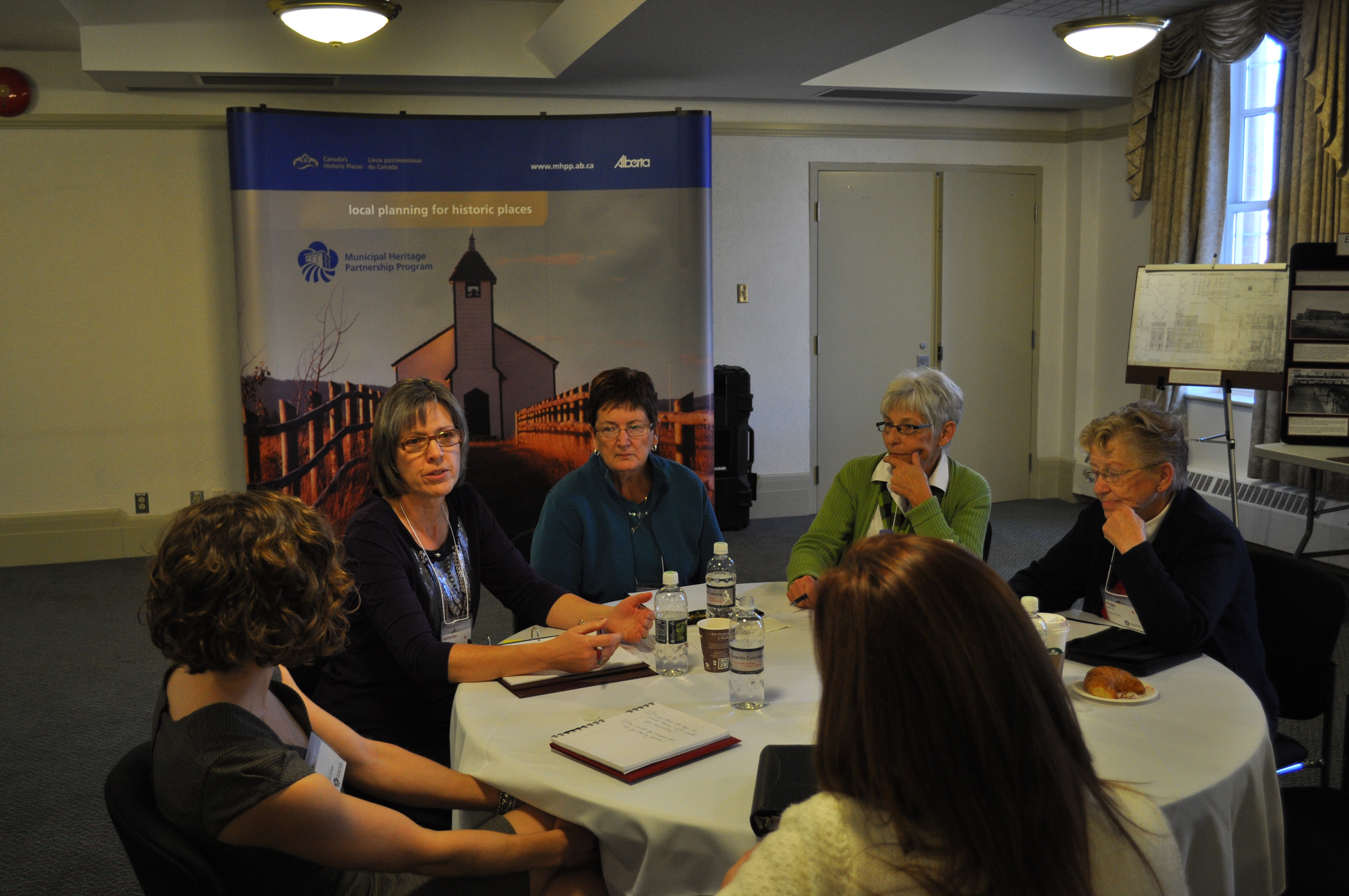
Members of the Holden Heritage Resources Committee at the 2011 Municipal Heritage Forum

In 2011 the Village completed a combined Municipal Heritage Survey and Inventory but decided that before designating any Municipal Historic Resources it would be best to develop a “recipe” for a successful local heritage conservation program. In January of 2012, the Village of Holden began work on the plan. Village staff and the Holden Heritage Resources Committee, with the services of a heritage consultant, have developed a draft plan appropriate to the Village’s needs and objectives. Elements of the plan include:

  • a policy outlining the designation process and eligibility requirements;
  • a procedure for reviewing requests to alter Municipal Historic Resources; and
  • a template bylaw for Municipal Historic Resource designations.

On Tuesday, October 16, 2012 the Village hosted on open house, inviting the owners of properties that had been documented and evaluated in the Municipal Heritage Survey and Inventory project, and any other interested residents. The attendance numbers and interest exhibited revealed an engaged community. Congratulations on a successful open house!

Cost-shared funding assistance for this project was provided by the Municipal Heritage Partnership Program (Alberta Historical Resources Foundation). If your municipality is interested in developing a municipal heritage conservation program please contact Municipal Heritage Services. 

Written by: Brenda Manweiler, Municipal Heritage Services Officer

Surveying Delburne’s Historic Resources

I spent a day in the Village of Delburne earlier this month, training the village’s new heritage advisory board. They plan to survey buildings and structures in the village over the next six months, or so. They also plan to do some oral history work with local citizens and use all this information to develop a walking tour and some interpretive plaques. Delburne is preparing to celebrate the centenary of the village’s incorporation, in 2013.

I do all sorts of heritage planning projects with Alberta’s municipalities, but while preparing for this workshop I was struck by how few municipal heritage surveys I have worked on recently. Delburne’s project has reminded me just how useful heritage survey’s can be.

Delburne AGT Building, Municipal Historic Resource

A survey helps a municipality identify buildings and structures that may be significant, providing a basis to determine which places to evaluate further. The first step is for a community to select a geographic area to be studied. (Delburne is compact enough to be surveyed in one go). The survey team does some research to locate buildings and structures built before a cutoff date (usually 40 years ago). A fieldworker photographs each place’s facades (from the sidewalk and alley) using black-and-white archival-quality film. They will also make notes on each place’s design and general condition. This is combined with some historical information explaining how the building has been used over time. Together, this information forms a survey record.

The survey records are entered into the Alberta Heritage Survey database, part of the Heritage Resources Management Information System (HeRMIS). Each survey record is a snapshot of Alberta’s streetscapes and farmyards, showing us how they have evolved over time. The database can be searched in all sorts of ways—you can look for places made of a particular material, buildings that have certain design features and/or places associated with people or events.

The survey in Delbure will provide a sense of which places may be sufficiently significant to warrant further study and evaluation. Municipalities may choose to evaluate some of these places for heritage value, eventually develop management policies and possibly designate several places as Municipal Historic Resources.

Written by: Michael Thome, Municipal Heritage Services Officer