
Happy Canada Day!

Exploring Alberta's Past

With the onset of spring, the attention of many Canadians turn to the perennial quest for the Stanley Cup, the storied challenge trophy, emblematic of hockey supremacy. Few realize that in Alberta one of Canada’s oldest sporting challenge trophies was established in 1909 by then Premier, Alexander C. Rutherford and is competed for until the present day. The history of the Rutherford Cup is as old as that of football’s Grey Cup and senior hockey’s Allen Cup all of which were established 106 years ago.
Alexander Cameron Rutherford, Alberta’s first Premier [1905-1910], distinguished himself not only as a legislator but also as an active participant in many aspects of Alberta’s developing society. Sporting activities featured prominently among Premier Rutherford’s many interests. He held executive positions with baseball, curling and football (what we now call soccer) clubs in Strathcona and established competitive trophies for the Strathcona Curling Club and the Strathcona Football Club. In 1909 Rutherford also established a challenge trophy to be vied for by senior high school soccer teams in central Alberta. The first competition for the cup culminated on the afternoon of Saturday October 16, 1909 at Edmonton’s Diamond Park in a match between Edmonton High School and Red Deer High School.
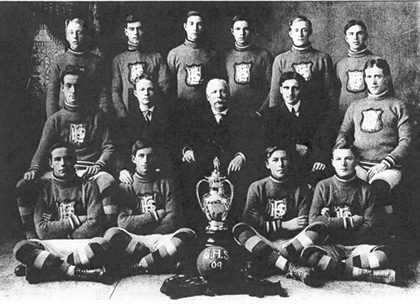
As reported by the Edmonton Bulletin, the first half of the inaugural championship match was fast and close with neither side scoring, but was marred by an unfortunate accident at the 15 minute mark. Red Deer full-back and team captain Carswell “came into violent collision” with an Edmonton forward while trying to prevent a shot on goal and broke his leg. The injured player was attended to by Dr. McGibbon and dispatched by ambulance to the Misericordia Hospital. Edmonton played an aggressive first half, giving the Red Deer goal keeper Hewson “plenty to do.” Half-back McLean played a strong game for Red Deer while on the forward line Krause and Slade “showed up well.” Hicks and Keffer starred for Edmonton, while Dean’s running and Hepburn’s shooting on goal were features of the game. Hepburn scored the game’s only goal for Edmonton after ten minutes of play in the second half with a very difficult shot. Red Deer was reluctant to concede defeat and pressed strongly in the last minutes of play with the final result “in doubt until the whistle blew for full time.” A reception was held that evening at Queen’s Avenue School with a short program of games, songs and recitations along with “dainty refreshments served by the girls of the school.” Brief addresses were given by Edmonton High School Principal William Rea, and Superintendent James McCaig, the trustee of the Rutherford Cup. Red Deer spokesman McLean stated that although defeated, his team was prepared to challenge for the trophy again and “contest its possession with the present holders.”
Determined to avenge its loss, Red Deer honed its skills during the spring of 1910 in preparation for a rematch with Edmonton. The Edmonton Journal announced that the Red Deer squad was coming to Edmonton to try to “lift the Rutherford Cup,” this time “much strengthened” and “confident of success”. The grudge match was played on Saturday April 23, 1910. The Red Deer squad was indeed much improved, the Journal noting that in the loose game they worked well together and back checked quickly. They appeared “to have had much more practice than the local boys,” were heavier and “knew how to use the weight.” Krause at centre was his team’s star, scoring the game’s solitary goal after only four minutes of play. Edmonton’s left winger Dean made spectacular individual rushes, bringing the ball down the field repeatedly, only to have the centre field man fail to score. Full-back Gillespie also played a “brilliant” game, working his position well and punting strongly, his quick checking preventing Red Deer from running up a much larger final score. Although attendance at the match was small. “fair co-eds were out in large numbers and cheered lustily for the Edmonton boys.”
The Edmonton press lamented the result of the match with partisan headlines: “Red Deer Grabs Rutherford Cup E.H.S. Pigskin Chasers Are Defeated by Students From the Half Way City.” The City of Red Deer celebrated that their boys had successfully journeyed to Edmonton and “annexed the handsome Rutherford cup” on the strength of Krause’s “doing the needful.” The Red Deer Advocate noted that the boys were “deserving of high praise for their clever play” and paid tribute to Edmonton’s hospitality. Following the match the competitors were royally received at a banquet hosted by Col. Robert Belcher, whose son captained the losing side.
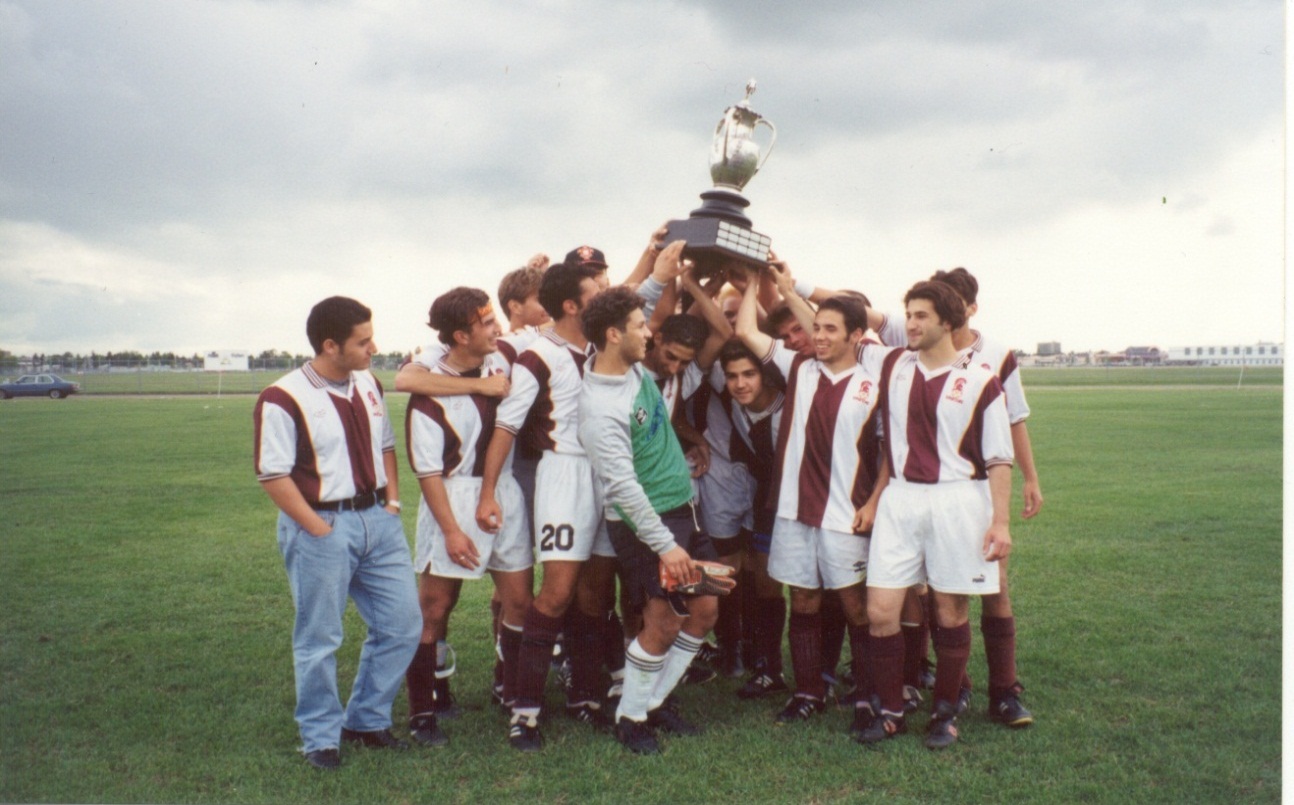
Since its inception in 1909 the Rutherford Cup has been competed for almost annually, making it perhaps Alberta’s oldest athletic competition. Until 1988 senior soccer teams from the Edmonton Public and Separate (Catholic) Schools Boards challenged each other for the cup. When these two boards discontinued their joint athletics board, the competition lapsed and since then only senior schools of the Separate system have competed for the cup within the Metro Edmonton High School Athletic Association which currently includes 51 member high schools from the Edmonton and Metro Edmonton area.
To follow the annual progress of play for the Rutherford Cup check the Metro Edmonton High School Athletic Association website at: http://metroathletics.ca/index.php.
The original version of this article appeared as “1909 Rutherford Cup – The Start of an Alberta Sporting Tradition” in Alberta Past, Vol. 11, No. 2, Spring, 1995.
Written By: Peter Melnycky, Historian, Historic Places Stewardship Section, Alberta Culture and Tourism.
In keeping with public service rules during an election, our social media activity will be limited until after the swearing-in ceremony.
In 1973, the Government of Alberta assumed a central role in the management of archaeological research. In the 42 years since then, the Archaeological Survey at Alberta Culture and Tourism has been busy. More than 9,000 archaeological research permits have been issued and as a result, archaeologists have discovered over 40,000 archaeological sites in Alberta.
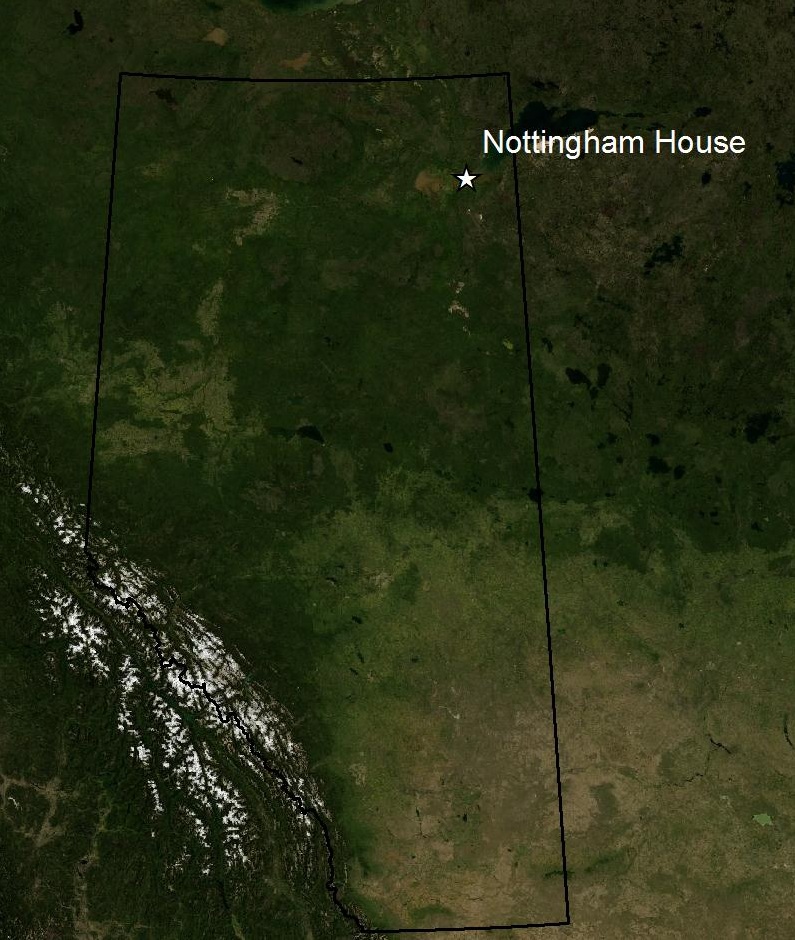
So where did it all begin? The first archaeological research permit in the province was issued to Karlis Karklins in 1973 by Alberta Culture, Youth, and Recreation. The permit was for his research at Nottingham House, a Hudson’s Bay Company trading post near Fort Chipewyan, as a part of the Western Fur Trade Research Programme. The programme was initiated by Parks Canada in 1968 to explore the history and archaeology of the fur trade in the Athabasca region. As part of that project, Karklins began researching Nottingham House in the early 1970s.
Historical Setting
Nottingham House was a fur trade post established by the Hudson’s Bay Company (HBC) in 1802. The HBC hoped to compete with the North West Company (NWC), who held a 20 year monopoly on the famed fur-rich areas of the Athabasca region. Peter Fidler, an experienced HBC surveyor, along with his Swampy Cree wife, Mary, their children and 17 other explorers arrived at Fort Chipewyan in late 1802 to set up the new trading post, Nottingham House. In the style of competitive exploration that characterized the fur trade in western Canada, Nottingham House was erected less than a mile from Fort Chipewyan, a successful NWC trading post established in 1788.
Despite the best intentions of the HBC and Fidler’s crew, Nottingham House was not a successful trading post. The NWC at Fort Chipewyan took every chance to sabotage trade at Nottingham House, even going so far as to burn HBC canoes and to have individuals that were known to trade with the HBC beaten. In their first year, the HBC at Nottingham House generated a return of only six bundles of fur, which did not come close to covering the costs of their expedition. Fidler and his company remained at Nottingham House for four years, during which they struggled with dwindling trade, starvation and increasingly aggressive attacks from the NWC. On June 9, 1806, Nottingham House was abandoned and the HBC traders moved on to other posts.
 Archaeological Research
The Nottingham House archaeological site was excavated by Karklins, an employee of the National Historic Parks and Sites Branch of Parks Canada during the 1970s. Karklins and seven others began their first 14-week excavation season in June 1972, returning for a lengthy field season each summer until 1977.
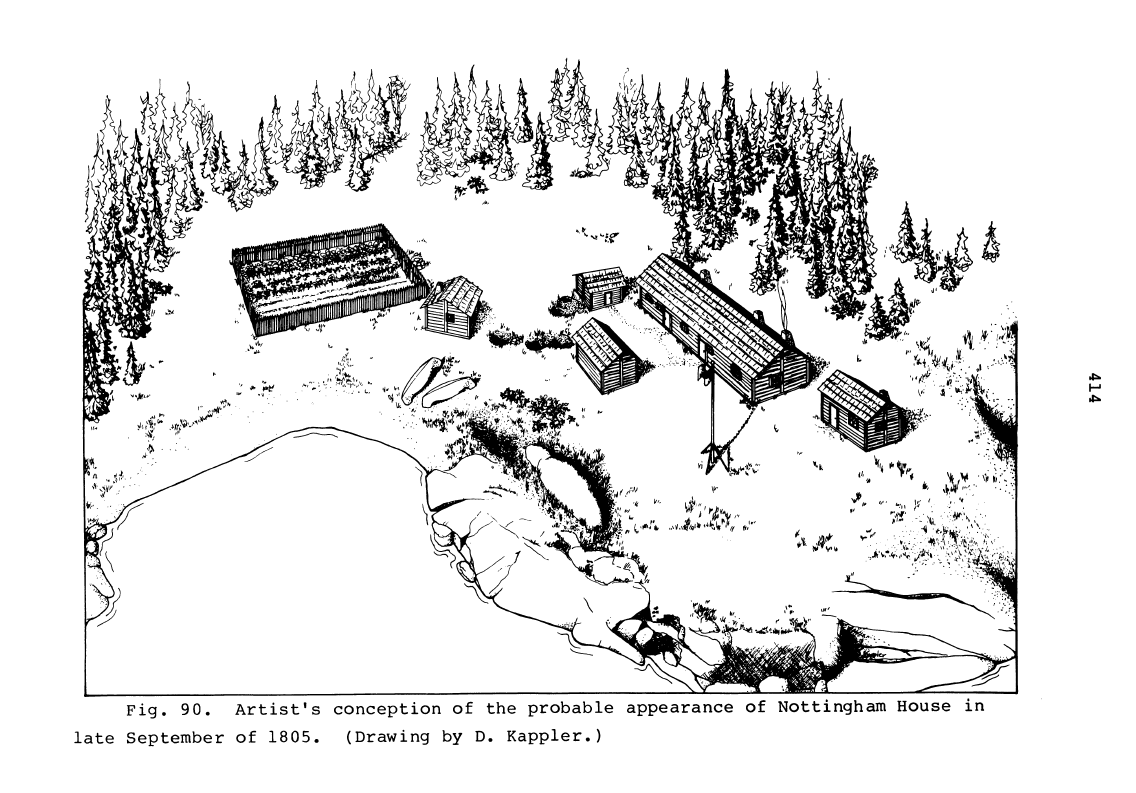
The archaeological crew unearthed just over 1,072 square meters of the site, revealing the remains of several buildings and work areas. The main house, measuring about 15 meters by 5 meters, was made up of four rooms with fireplaces, storage pits and a cellar. The site surrounding the main house included a storehouse, a provisions shed, a garden and several outdoor working areas, storage pits and trash pits. The structures were made from the locally-available wood, stones and clay. Most of the structures showed evidence of burning, which suggests that the NWC may have burned the camp after the HBC abandoned it in 1806.
 The archaeology crew also uncovered 5,707 complete artifacts and a further 1,006 broken fragments of artifacts during their field seasons. The artifacts are typical of a fur trade post from that era. Most artifacts were personal items that would have been used by those living at the post or were kept as items for trading. These included beads, combs, mirrors, books and glass and ceramic containers.
The other artifacts reflect what would be needed to construct and maintain a fur trade post in undeveloped territory in 19th century Boreal Forest Alberta, such as tools and hardware (axes, nails and saws), hunting and fishing gear (gun parts and ammunition) and household items (cookware, furniture and sewing supplies). The historical record suggests that the HBC crew relied on a protein-rich diet, consisting mostly of animals and birds such as moose, bison, caribou, dog/wolf, snowshoe hare, swans, ducks and cranes that were traded from the local Aboriginal population. Other animals identified from the faunal remains included Arctic fox, muskrat, marten, wolverine and lynx, all of which were hunted for their furs and may have been eaten as well. The crew was also able to fish in Lake Athabasca and grow potatoes and turnips in their gardens.
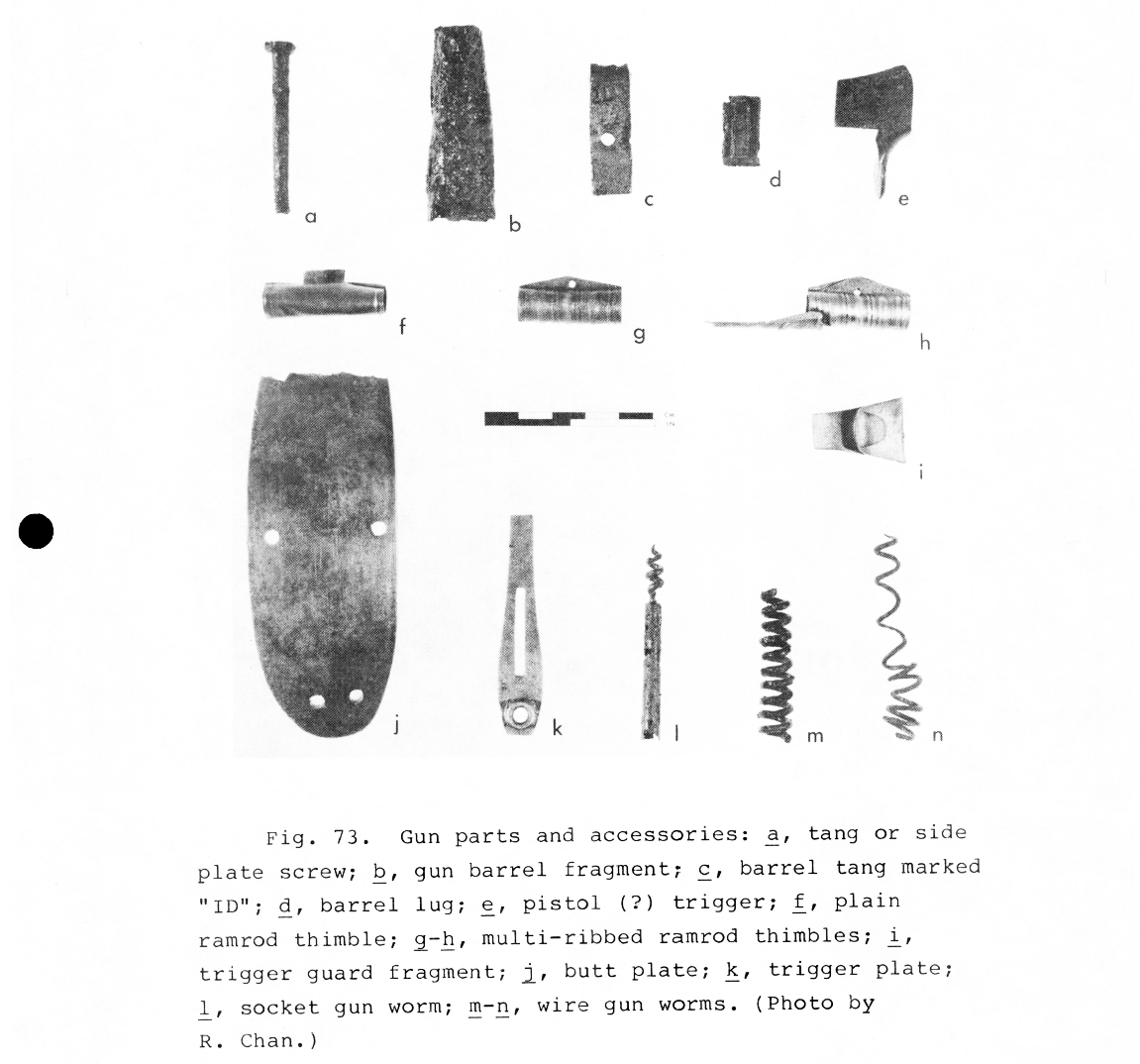
Karklins’ research in the 1970s served to build a better understanding of the economy and material culture of the Nottingham House fur trade post. The site has not been excavated by archaeologists since the 1970s, but Karklins’ research has proved valuable for other archaeologists and historians studying the fur trade in western Canada, and especially in the Athabasca region of Alberta. The archaeological site of Nottingham House remains protected by the Historical Resources Act as an Alberta Significant Archaeological Site.
References and Figures: Karklins, K. (1979). Nottingham House: The Hudson’s Bay Company in Athabasca, 1802-1806 (Doctoral dissertation, University of Idaho).
Written by: Colleen Haukaas, Archaeological Permits & Digital Information Coordinator.
Mokaakiit Iikakimat!
Narcisse Blood (Tatsikiistamik) was a Blackfoot Elder, teacher, academic, artist and visionary. Narcisse passed away, along with Michael Green, co-founder of the One Yellow Rabbit (OYR) theatre company and founder of the Making Treaty 7 initiative, Michele Sereda, artistic director of Regina’s Curtain Razor Theatre, and dancer Lacy Morin-Desjarlais in a tragic car accident on February 10, 2015. Narcisse was well known to those of us in Alberta Culture and Tourism who had the privilege of meeting and working with him for well over twenty years. His commitment to sharing Blackfoot culture, his welcoming and sharing approach to teaching others and his ability to bring people together will be dearly missed. Seeing Narcisse on the many fieldtrips he took with students from Red Crow College or the chance to hear Narcisse speak and teach others about Blackfoot culture has all been integral to the work we do here at Alberta Culture and Tourism. Through all of his efforts and all of his talents, Narcisse challenged us to see ourselves differently in our relationships with each other, for both Aboriginal and non-Aboriginal people. He taught us to be honest about the past but not be limited by the hard legacies left to us. He encouraged us to share stories about the past so we may learn from each other, so Blackfoot people and their stories are shared and heard by others, so we can all understand and appreciate our history better. We are all Treaty people after all.
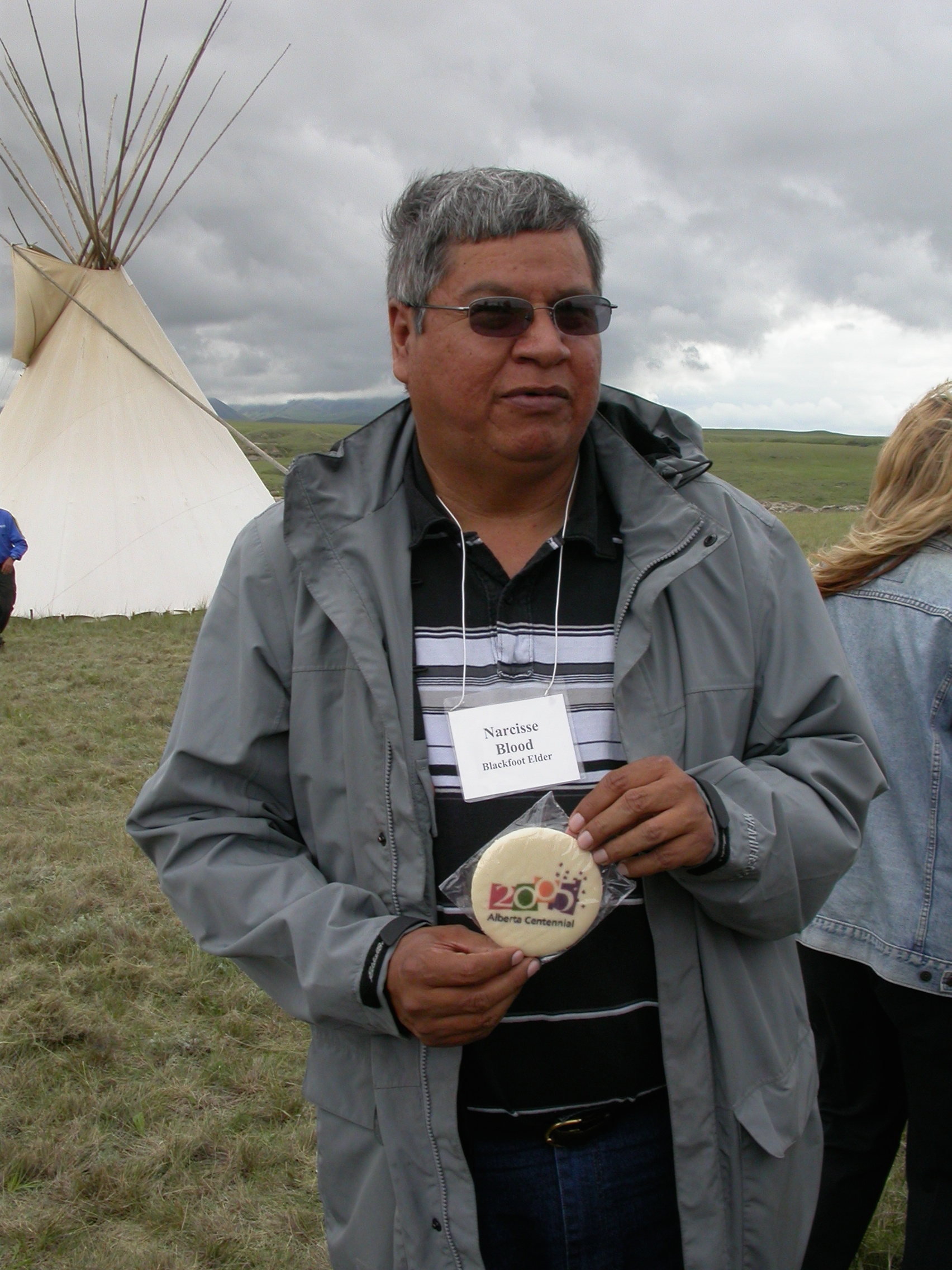
In Narcisse’s own words, “mokaakiit Iikakimat”, to strive and persevere, may we all take this message to heart as we continue working together to preserve our past, share our stories and build a more inclusive and meaningful understanding of who we are as a community.
The following are a few personal reflections from the staff at Alberta Culture and Tourism who had long standing personal and professional relationships with Narcisse:
“There are those who stand out in time and place and Narcisse was one of those. He left a legacy of hope and future for our Blackfoot ways of knowing things, all those things that teach about humility, the great spirits teachings and reaching out to those who seek out knowledge about the land. He was a true ambassador and champion for his people.” – Blair First Rider, Aboriginal Heritage, Historic Resources Management Branch
“Narcisse leaves a huge void in the Alberta cultural heritage and arts community and in the hearts of all those who knew him. He contributed in so many ways to building cultural understanding–the heart and soul of what we do. Narcisse worked closely with staff at the Royal Alberta Museum and Alberta Justice on developing the First Nations Sacred Ceremonial Objects Repatriation Act. With characteristic patience and good humour, he gently but firmly educated Government of Alberta staff on the importance of bringing home sacred Blackfoot Bundles. The First Nations Sacred Ceremonial Objects Repatriation Act (FNSCORA) – the first repatriation legislation in Canada – is a testament to his vision and his dedication. Over the years, Narcisse’s hard work and unwavering commitment brought home to Blackfoot country sacred Bundles from museum collections around the world.
As a member of the Royal Alberta Museum’s Aboriginal Advisory panel, Narcisse sparked ideas for our displays and counseled us on exhibit development. He helped identify themes for the Museum’s future history galleries, advised us on display content, and encouraged us to think in new ways about what we could achieve, working together. We will miss this esteemed colleague and beloved friend very much.” – Susan Berry, Royal Alberta Museum
“For many years Narcisse worked closely with archaeologists from across the province, including staff at the Royal Alberta Museum and the Archaeological Survey. Narcisse was a visionary who saw the value of collaboration. He routinely invited archaeologists to accompany his Red Crow College students on visits to important archaeological sites, such as buffalo jumps and medicine wheels, so that the students were exposed to both traditional and scientific perspectives. He willingly participated on archaeological tours lending his informed and reasoned voice to the interpretation. He has been a major force in the interpretation of sacred rock art sites in Writing-on-Stone Park, and was a key player in the development of the new Visitor Centre. Few if any other Aboriginal leaders had such a profound and lasting impact on the practice of archaeology across Alberta and on archaeologists themselves. His contributions will live on, but his warm and welcoming presence will be sorely missed.” – Jack Brink, Royal Alberta Museum
We would like to send our heartfelt condolences to the family, friends and colleagues of Narcisse, and Michael Green, Michele Sereda and Lacy Morin-Desjarlais. Our thoughts are with you during this most difficult time.

We all know that next Monday February 16th is Family Day in Alberta and a time for us to get together and appreciate our loved ones; but did you know that Heritage Canada The National Trust has another reason for you to celebrate next Monday? February 16th is also Heritage Day. The theme for this year’s Heritage Day is Main Street at the Heart of the Community and is a chance to appreciate our historic districts and the vibrancy they bring to our lives. Heritage Canada the National Trust has also launched their I Love My Main Street contest. Check out the link to learn how you can participate.
We believe Alberta’s main streets have many stories to tell and that their continued success contributes to healthy, diverse and aesthetically pleasing communities. As many of you are aware, the Alberta Main Street Program is designed to assist historic commercial areas across Alberta. The program is founded on the understanding that properly conserved heritage areas are destinations in themselves. When conservation is coupled with efforts to attract business, host events and otherwise create an animated public space, historic downtowns can have continued life. The Alberta Main Street Program currently has five members – Camrose, Lethbridge, Old Strathcona (Edmonton), Olds and Wainwright – who are working to ensure their main streets remain the heart of their community. The next time you travel to these communities take the time to stop and stroll the main street – you won’t regret it!
This Family Day take a moment to appreciate your local history and perhaps consider taking your family to a historic district to enjoy the sights and sounds. While you are at it, don’t forget to stop and consider the people, the businesses, the streetscape and the beautiful historic buildings which, collectively make it such a special place to be.
Written by: Rebecca Goodenough, Municipal Heritage Services Officer
 The staff of the Historic Resources Management Branch wishes you a safe and joyous holiday season.
We’ve worked hard to identify, protect and conserve Alberta’s historic resources this past year. We’d like to thank the countless people throughout Alberta for helping us to do that. Without your support, conserving our historic places would be impossible.
RETROactive will be taking a break over the holidays — we will resume publishing on January 13th, 2014. We look forward to seeing you all in the New Year!
The Board of the Alberta Historical Resources Foundation met in Pincher Creek, September 12th-13th, 2014. Since this meeting was not one where the Board was actively adjudicating many grant applications, the focus was more on policies and other planning to help conserve and celebrate Alberta’s heritage.
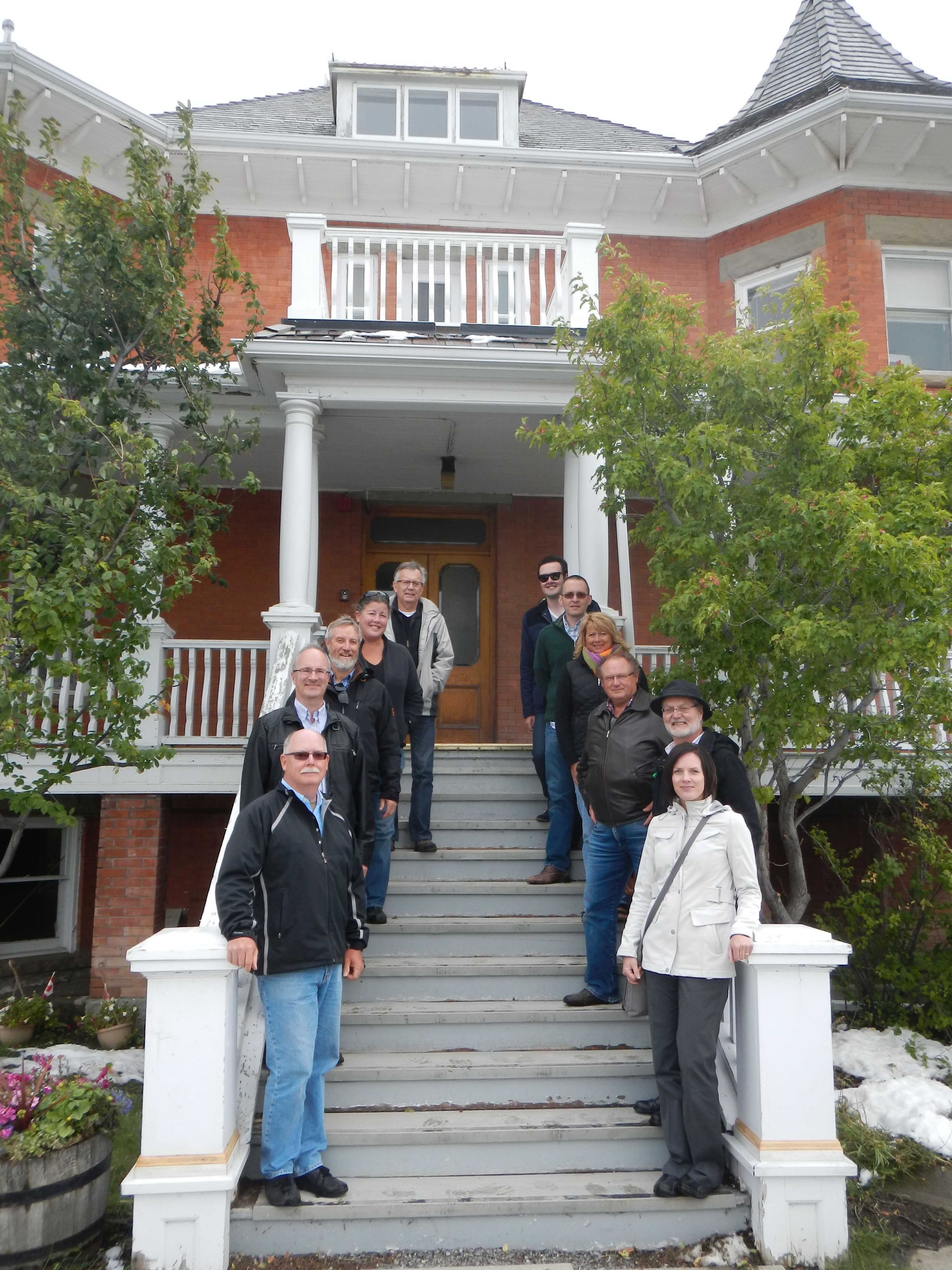
As is their custom, Board members took the opportunity to explore some of the local historic places in the community where they met. The Town of Pincher Creek’s Director of Community Services, Diane Burt Stuckey, and Curator of the Kootenai Brown Pioneer Village Museum, Farley Wuth, led an informative tour of locally significant historic places, as well as two community museums.
Some of the historic places featured on the driving tour included an historic buffalo jump site on the west side of town, and also the Lebel Mansion, newly designated by the Town as as Municipal Historic Resource. Originally built as a grand residence by the merchant Timothee Lebel, the building later served as hospital, and now as the home for the Allied Arts Council. It is a great example of another historic place serving the cultural community in Alberta.
After a visit to Heritage Acres Farm Museum, where the Board was able to see first-hand the extensive collection of agricultural equipment, Board Chair Fred Bradley facilitated a meaningful conversation with local heritage-sectors leaders and municipal officials, including Town of Pincher Creek Mayor Don Anderberg, and M.D. of Pincher Creek Reeve Brian Hammond. The Foundation was able to hear and discuss issues that are important to local communities working hard to conserve their heritage.
After a busy day of seeing the sites and learning more about the history of Pincher Creek, the Board settled in for its day-long meeting, involving a broad range of issues affecting the heritage community across Alberta. Future posts will showcase some of the decision made in Pincher Creek, so stay tuned to RETROactive!
The next meeting of the Alberta Historical Resources Foundation will take place in Edmonton, November 28th-29th.

Though I can’t imagine what could be more riveting than reading about administrative procedure, I’ve been told that some people might not feel the same way. So since not all our blog posts can be nail biters I will have to ask folks to bear with me on this one. This post might be a bit dry but it does include important information about the Municipal Heritage Partnership Program (MHPP) for interested applicants.
Those of you who have applied for Municipal Heritage Partnership Program (MHPP) funding for a survey, inventory or management plan in the past will likely have visited the MHPP website to obtain information about the grant categories, funding parameters and suggested application information. I am pleased to report that we now have all the information necessary to put together your MHPP grant application available as a Guideline document. This handy reference outlines the three grant categories and details the policy and procedures around the funding process, including eligibility requirements, application deadlines, in-kind contributions and timelines as well as an application checklist. You can access a copy by clicking here.
I encourage those of you looking to apply under one of the MHPP grant categories to use the Guidelines as a point of reference. Here is a summary of the highlights:
Please contact Matthew, Michael or myself with any questions you may have about the MHPP grant application process. For those of you who actually read this far, well done! If it weren’t for Internet copyright issues I would reward you with a picture of an adorable puppy.
Written by: Rebecca Goodenough, Municipal Heritage Services Officer
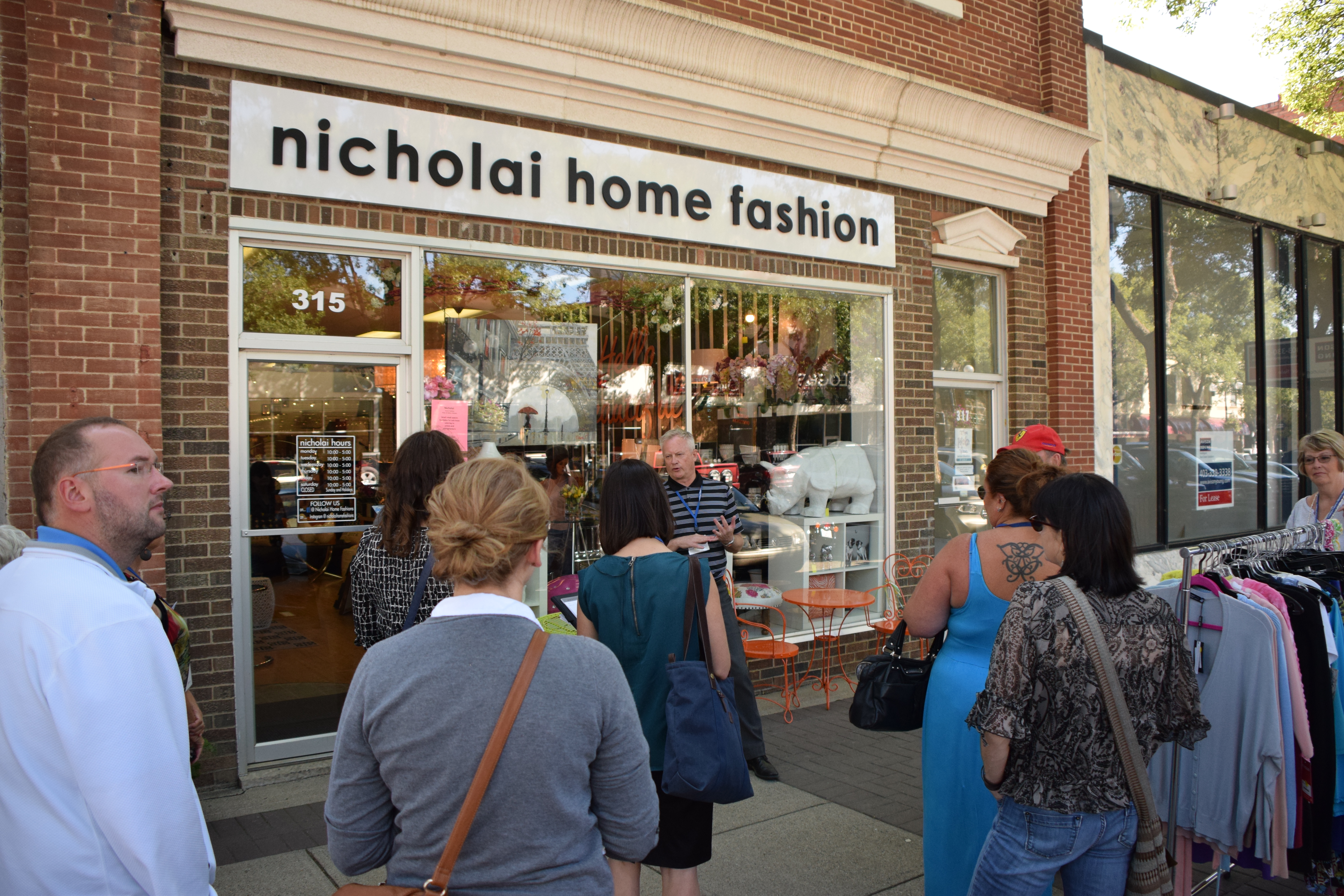
Those attending the recent Alberta Main Street Coordinator’s meeting in Lethbridge took a walking tour of downtown Lethbridge led by Downtown Lethbridge Business Revitalization Zone (BRZ) Executive Director Ted Stilson and complimented by the always-engaging historical anecdotes of Belinda Crowson, President of the Historical Society of Alberta. During the tour Ted mentioned several initiatives of the BRZ and local community that are making downtown Lethbridge an attractive and vibrant place to be.
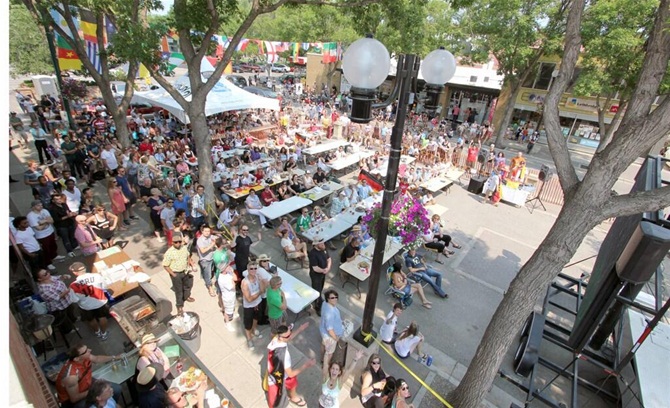
The BRZ has been active since 1988 but really started to have an impact when they partnered with the Alberta Main Street Program and the City of Lethbridge in 2000 (the BRZ and Lethbridge Main Street are now one and the same). The first major infrastructure project undertaken by the City in the downtown included improvements to Festival Square – an adaptable outdoor public space fronting Galt Gardens and located just outside the BRZ office. This flexible space allows for temporary road closures to host events and is home to the downtown Farmer’s Market. This past summer the Southern Alberta Ethnic Association, Heart of Our City, business sponsors and the Downtown BRZ hosted World Cup celebrations in Festival Square. A portion of Festival Square was cordoned off for an LED screen, public seating and a beer garden. Over 500 residents attending the final games and total attendance for the week was over 2,000. Impressive!
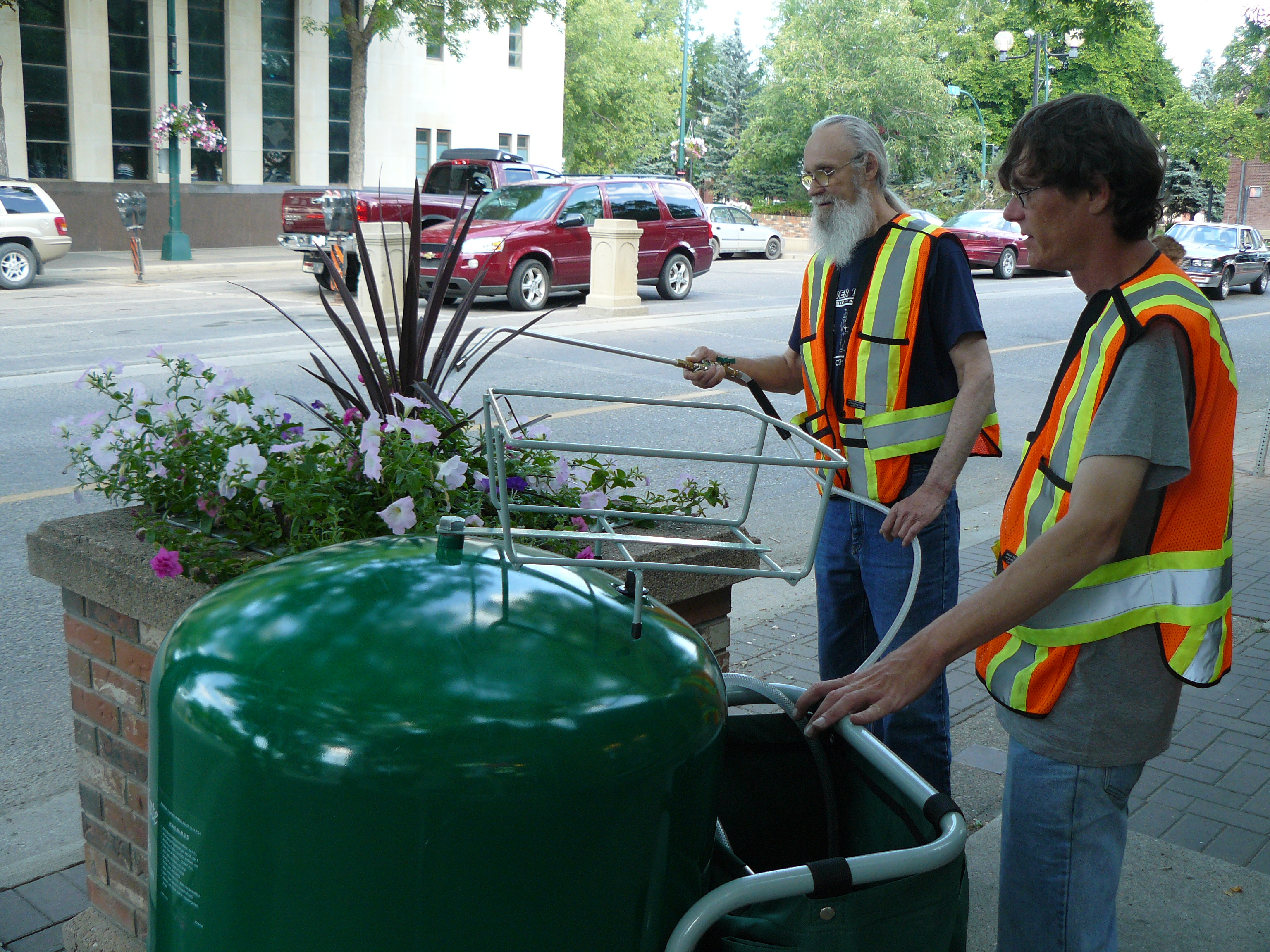
One of the first things you will notice about downtown Lethbridge is that it is spotless. This can be attributed to the very successful Clean Sweep Program that has been in operation for approximately seven years and employs up to 15 individuals from local shelters for part-time work to water plants, clear snow and pick up litter in exchange for a wage and transition to more stable housing opportunities. For the past four years the BRZ has administered the program under contract from the City and works closely with local agencies to run in the program. The Clean Sweep team also picks up cardboard and does detailed snow removal/lawn maintenance under contract with individual businesses. During my most recent trip to Lethbridge for the Main Street meetings I was up with the sun for two (very silly) early morning jogs – both days I encountered friendly faces of the Clean Sweep Program hard at work.
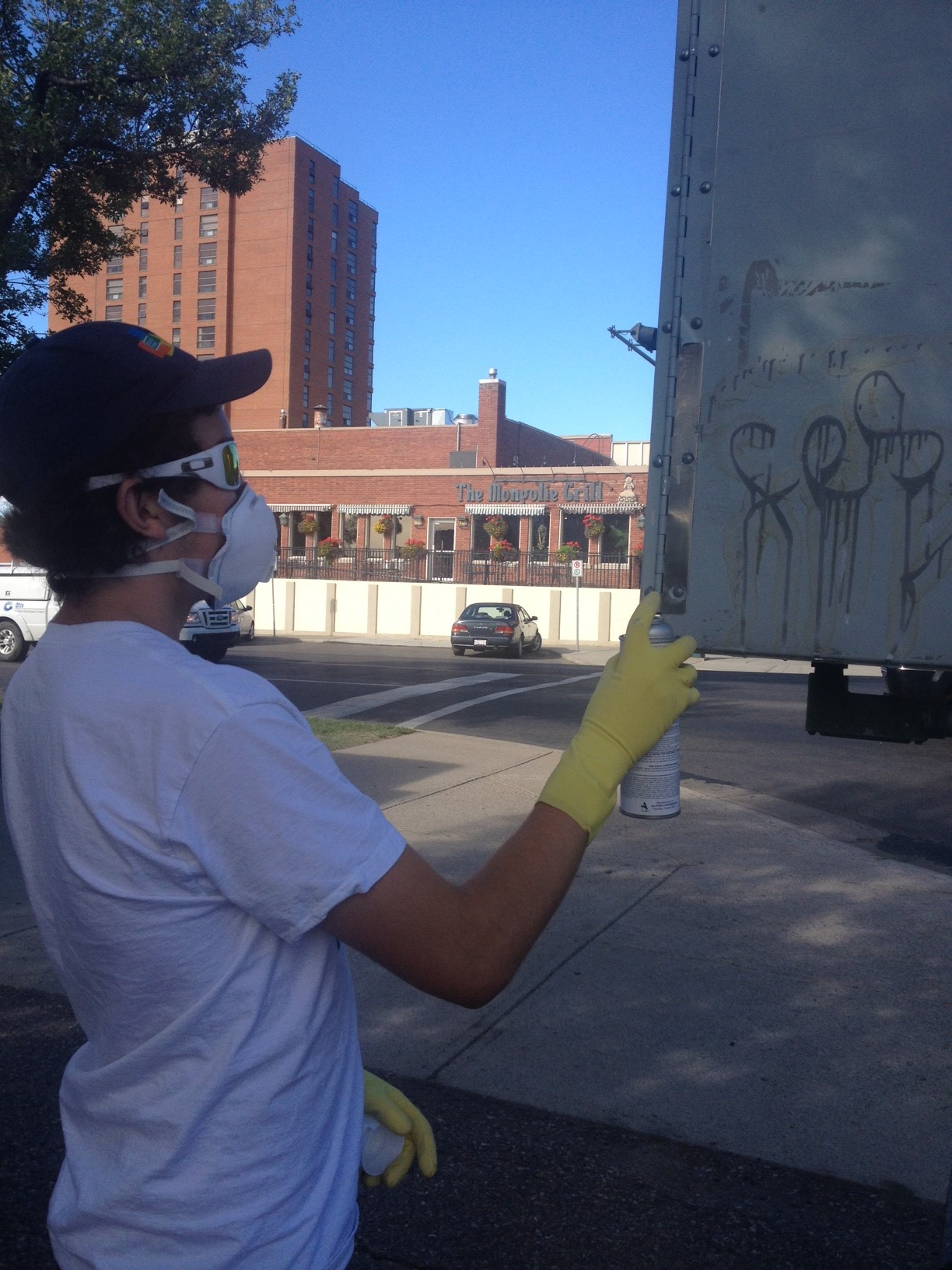
Downtown Lethbridge has a very successful graffiti removal program. For over two years the City has employed a graffiti removal team who are responsible for year-round, City-wide service. Additionally, for 10 years the Downtown BRZ has contracted a graffiti removal company that can provide service within 48 hours for downtown-specific requests.
Here are a few more tidbits about downtown Lethbridge:
The next time you are passing through Southern Alberta, take a few hours to stop in and check out downtown Lethbridge – you will be happy that you did.
Written by: Rebecca Goodenough, Municipal Heritage Services Officer
 RETROactive