Time to take a trip back to the future of the workplace of 1992, courtesy of the Public Affairs Bureau. Public promotional materials such as these often capture information aside from the original intent of the production. In this case, the video documents the early steps of the switch from the analogue to the digital in the office, the state of the economy after the recession in the early eighties, changing gender norms in employment, and the general sociopolitical atmosphere of the time. Some of the innovative trends featured, such as working from home, have persisted and become ubiquitous. However, the career change pivot from shoeing horses to being a clinical psychologist was likely as unusual then as it would be now.
Check out the rest of the Provincial Archives of Alberta video collection on YouTube, including a handful of oddly calming chess instructional videos from the early 70s.
Written by: Ron Kelland, Geographical Names Program Coordinator
A well-known anchor building in Edmonton’s Old Strathcona Provincial Historic Area has recently been designated as a Provincial Historic resource. And it’s also now listed on the Alberta Register of Historic Places.
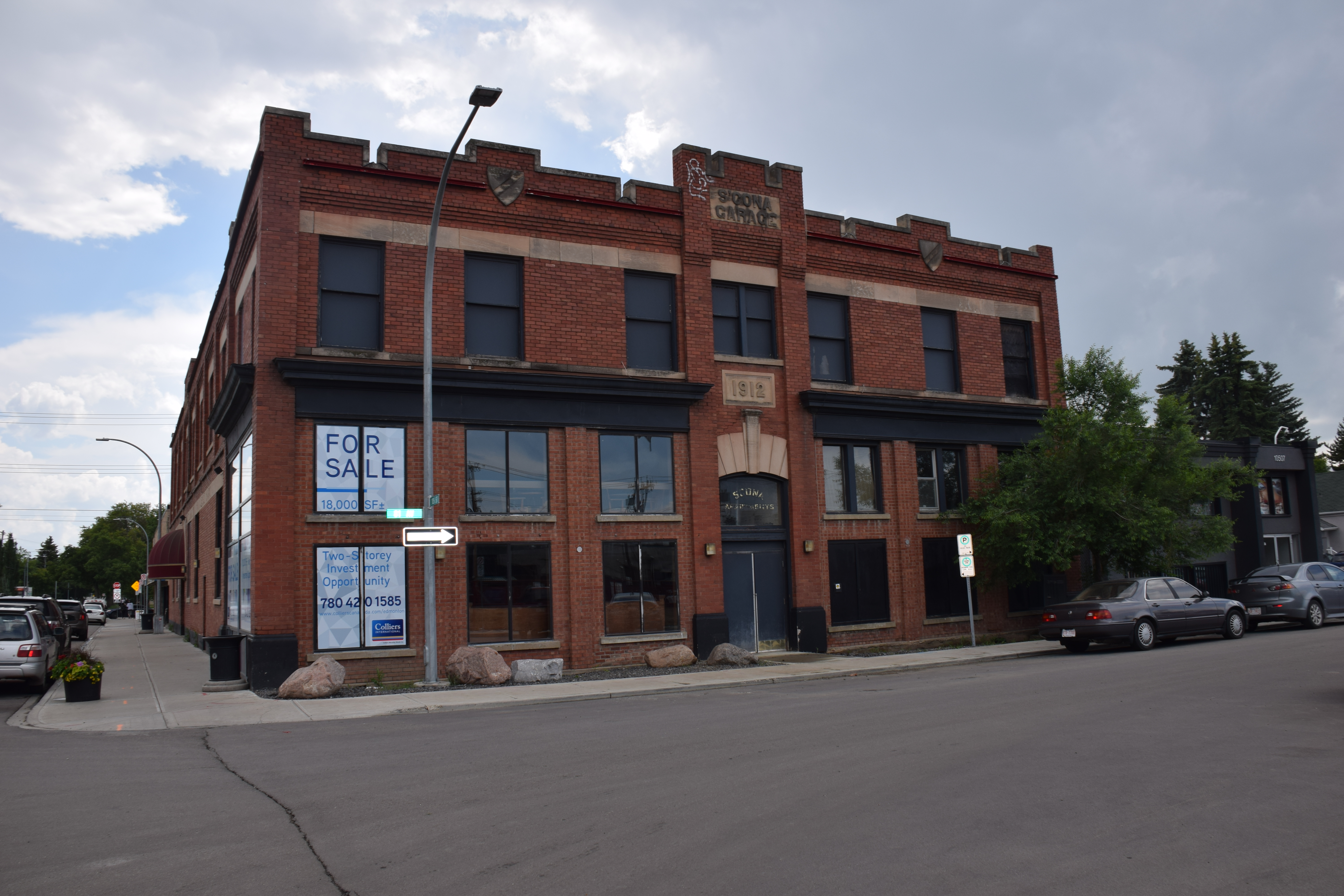
Front (north-facing) façade of the Strathcona Garage showing some of the building’s character-defining elements, notably the crenellated parapet roofline, escutcheons and the contrasting ornamental highlights (lintels, sills, name and date stones), 2019. Source: Alberta Culture, Multiculturalism and Status of Women.
The Strathcona Garage is located in Edmonton’s Old Strathcona neighbourhood on the corner of lot at 81 Avenue and 105 Street. Its heritage significance rests in its association with the early automobile industry in Alberta. It is a significant and rare remaining example of a building from the early twentieth century designed and built specifically for the era’s fledgling, but rapidly growing automobile sector.
Written by: Fraser Shaw, Heritage Conservation Advisor
Paskapoo sandstone has been maligned for poor durability, compared to Indiana limestone and sandstones from Ohio or Spain that have been used for conservation projects in Alberta. But to be fair to our homegrown sandstone, masonry in general suffers in Alberta’s climate and in the intense sunlight, drying winds and freeze-thaw cycling in areas like southern Alberta. De-icing salts used for public safety during the long winter months are the nemesis of historic masonry and will relentlessly attack sandstone, limestone and granite alike. How stone is laid in a wall, masonry mortar composition, and design details all contribute to how stone performs over time.
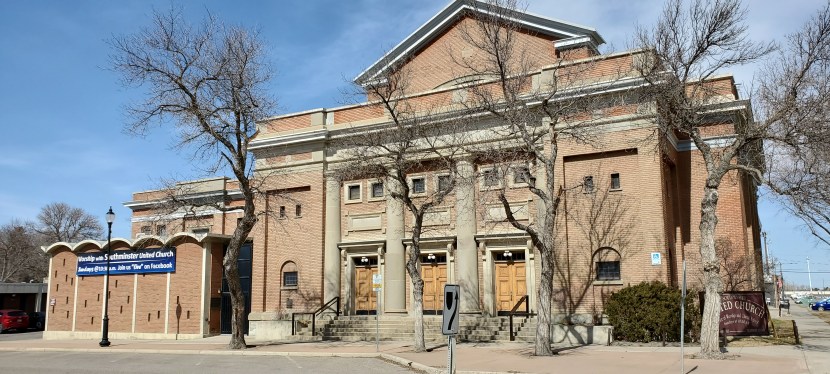
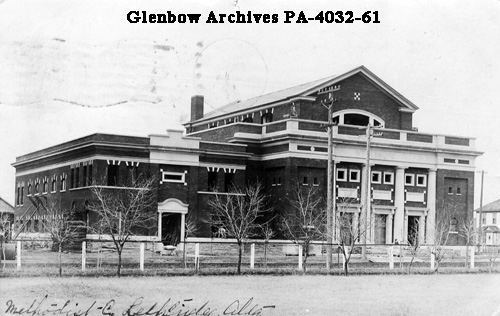
An imposing landmark in downtown Lethbridge, Southminster United Church is a large 1913 building (additions in 1914 and 1950) with a bold Modernist 1961 chapel. The Classical Revival original building dominates with its symmetrical front facade, prominent pediment, monumental engaged columns and exterior of buff-coloured brick with sandstone details. Interestingly, while stone decoration of the 1950 north addition superficially resembles the regional sandstone, it is actually imported Indiana limestone, a different and relatively durable material. Other notable Lethbridge buildings with this combination of local and imported stone are the Galt Museum (former Galt Hospital) and the Bowman Arts Centre (Manual Training School), both Provincial Historic Resources. Lethbridge designated Southminster United Church as a Municipal Historic Resource in 2016.
Circa 1915 photograph from the southwest showing the original 1913 building with its prominent columns and pediment and the 1914 hall addition at left. Source: PA-4032-61, University of Calgary Glenbow Archives Collection.
Written by: Todd Kristensen, Archaeological Survey of Alberta and Jack W. Brink, Royal Alberta Museum
The Archaeological Survey of Alberta is proud to kick-off Occasional Paper Series No. 40 with its first two articles, which are available for free download here:
Individual articles are published online throughout the year and the final compiled volume is typically released in spring. We encourage submissions from archaeologists in cultural resource management (CRM), universities and other heritage professions.
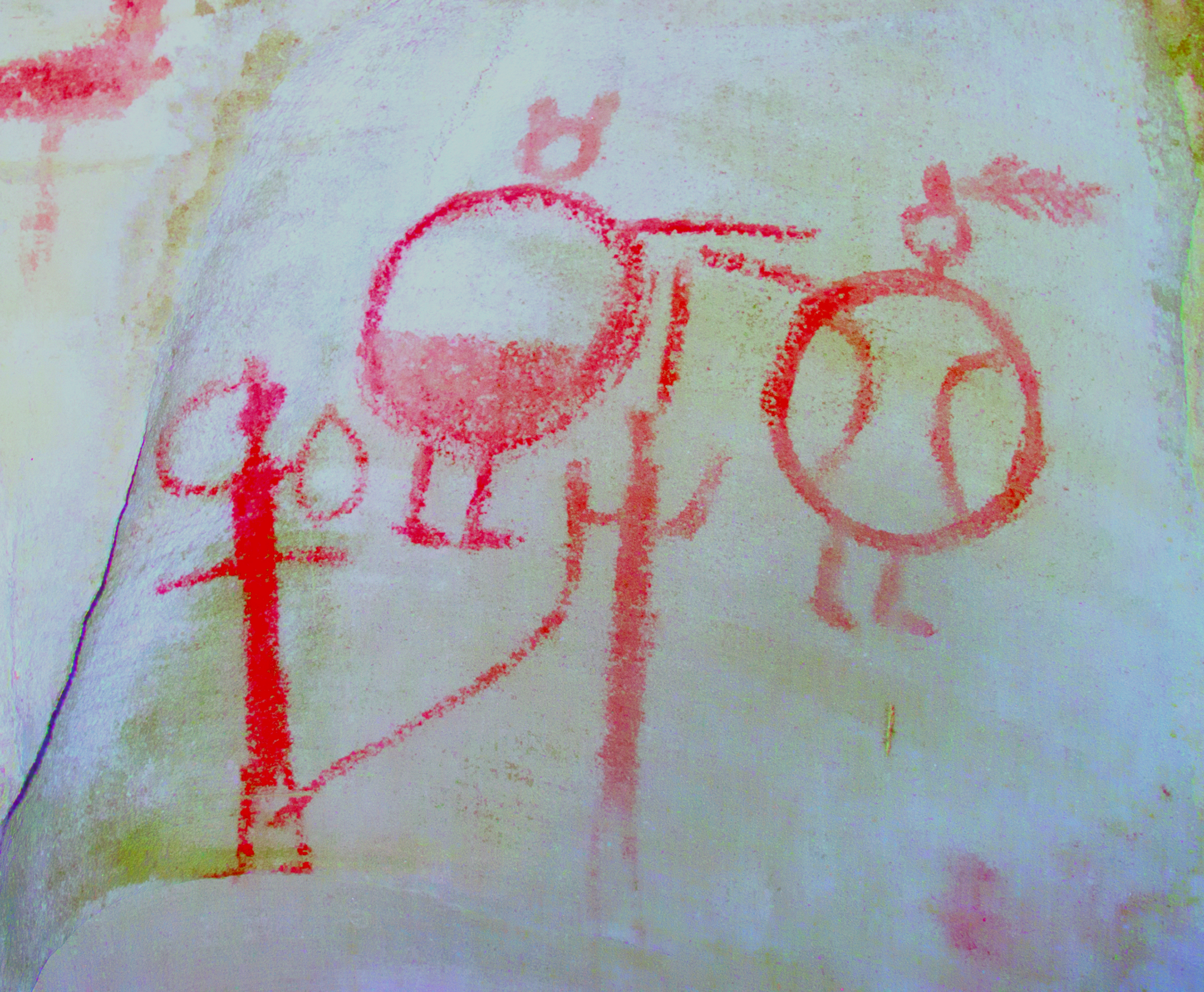
Archaeologists used a computer software program (Dstretch) to enhance the images of painted figures in southern Alberta (image by Jack Brink).
Occasional Paper Series No.40, “Archaeological discoveries and syntheses in Western Canada, 2020” features articles with a broad range of topics about archaeology on the Northern Plains and Boreal Forest. The first paper summarizes an interesting stone tool called an atlatl weight that hunters on the plains used for several thousand years. The second paper documents an impressive archive of rock art found in a small coulee rock shelter in southern Alberta. Both articles relied in large part on discoveries reported and shared by farmers and ranchers. Look for four more articles to be released in the next two months to complete the volume.
We hope the volume informs future work and research in Alberta. Interested authors can pitch a paper or idea to the editorial committee. Past volumes are available for free download here:
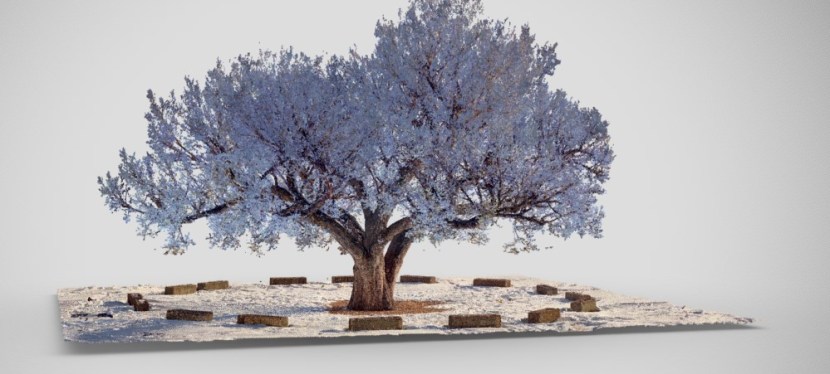
Editor’s note: Digital documentation of the Stampede Elm was conducted by Dr. Peter Dawson and Madisen Hvidberg from the Department of Anthropology and Archaeology at the University of Calgary, in partnership with the City of Calgary. A digital archive post of the Stampede Elm, created by University of Calgary archaeology PhD students Christina Robinson and Madisen Hvidberg, can be found here.
Written by: Madisen Hvidberg, MA
When asked to think of something that is “heritage,” what comes to mind? Most likely you will think of things like grand monuments, temples and old buildings. Maybe you know some specific UNESCO World Heritage Sites, or you think of archaeological heritage like excavations and artifacts. No matter what you think of, I would guess that it is probably unlikely that your first thought was…a tree.
Biological and living heritage sites can also be testaments to history. Gardens, parks and trees can represent past initiatives for beautification or utilitarian uses of the plants, and can be just as much of a part of the heritage of a place as buildings or objects. In North America much of the biological heritage within major cities is related to European settler aesthetic for planted trees and gardens, a desire to add more wind breaks in open areas, and the City Beautiful Movement of the 1890s and 1900s. The City Beautiful Movement was a reform philosophy popular in the early development of North American cities, which suggested beautification would promote social harmony and as such led to the establishment of many parks, gardens and tree-lined boulevards.
Calgary’s History of Trees
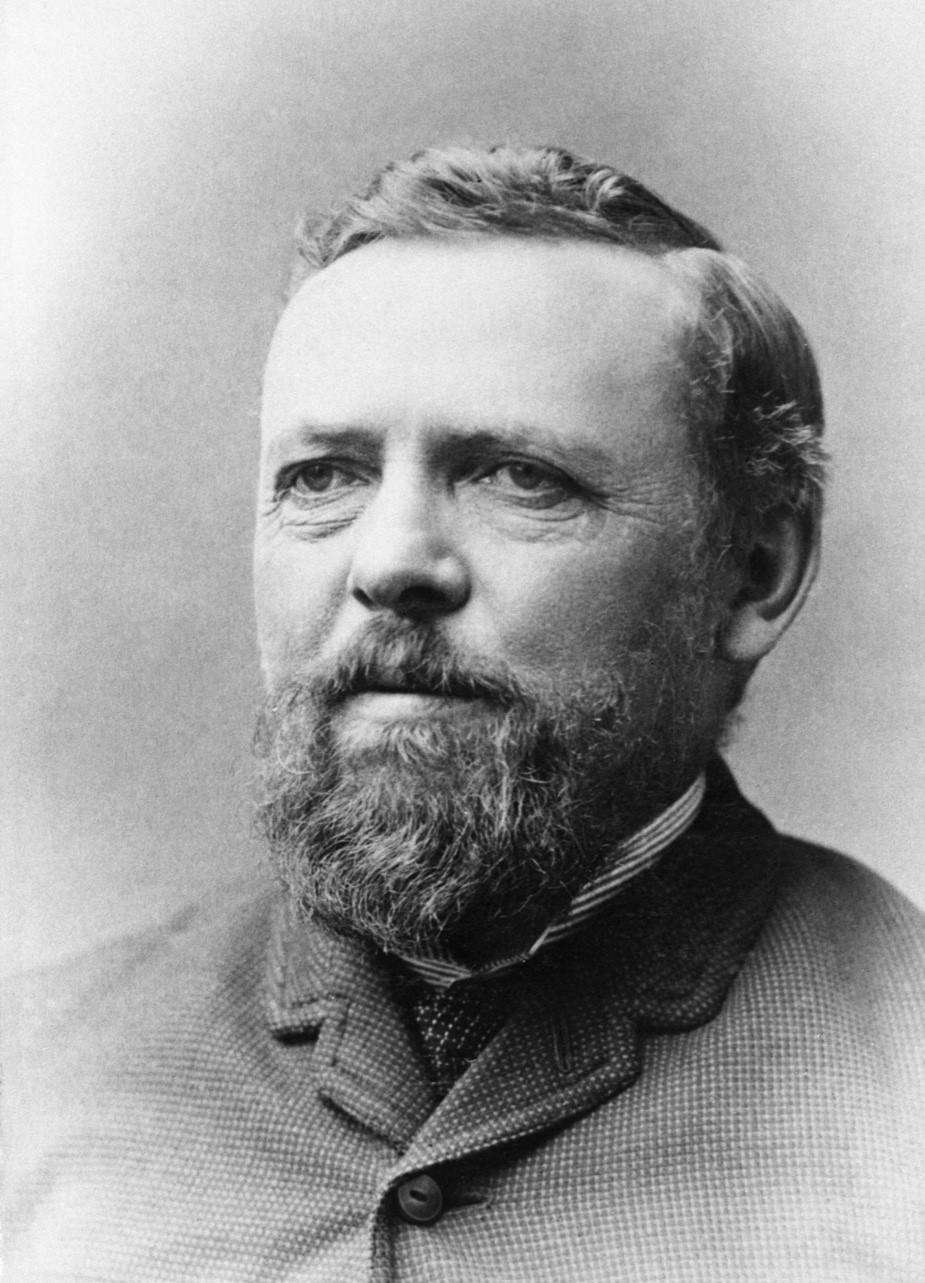
Calgary was no exception to the influences of this movement, which were largely brought to the city by William Pearce who envisioned Calgary as a “city of trees”. Pearce was a surveyor, engineer and statistician, and when appointed as an inspector for the Dominion Land Agencies in 1884, he used his position to reserve land along the north side of the Bow River. That land today is Calgary’s landmark boulevard Memorial Drive. Pearce reserved other lands for parks and started a local tree farm to find different types of trees that could grow in Calgary’s climate, with the goal of encouraging Calgarians to plant their own gardens and groves.
William Pearce, ca 1880. Source: Glenbow Archives, NA-339-1.
Written by: Colleen Haukaas, Archaeological Survey
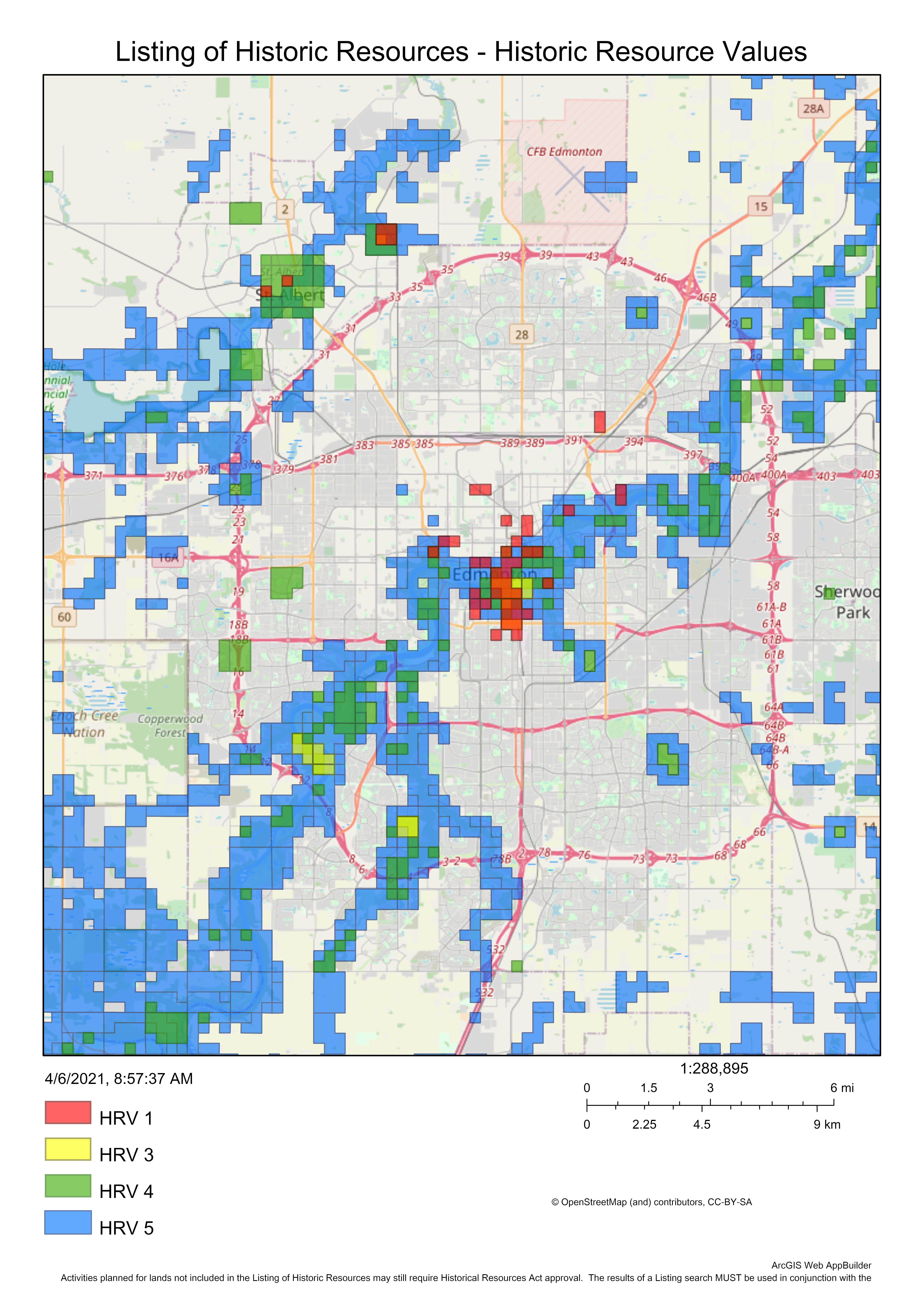
In April the Historic Resources Management Branch (HRMB) released the Spring 2021 Edition of the Listing of Historic Resources. The Listing is a biannual release of lands in Alberta that are known to contain or are likely to contain lands of a sensitive historic nature. Land parcels used in the Listing are Legal Subdivisions in the Alberta Township Survey system. The Listing is generated as a tool to aid developers, land agents, planners and other stakeholders when planning land-based development projects in Alberta.
Each land parcel in the Listing is assigned a Historic Resource Value (HRV) ranging from 1 to 5:
Historic Resource Value (HRV)
Description
HRV 1
contains a World Heritage site or a site designated under the Historical Resources Act as a Provincial Historic Resource
HRV 2
deactivated (formerly used to designate a Registered Historic Resource)1
HRV 3
contains a significant historic resource that will likely require avoidance
HRV 4
contains a historic resource that may require avoidance
Each entry is also assigned a category of the primary historic resource category of concern:
Category
Description
a
archaeological
c
cultural
gl
geological
h
historic period
n
natural
p
palaeontological
Sample map of the Listing of Historic Resources at Edmonton. Map was generated with the online Listing webmap.
A legal subdivision can have more than one HRV rating or category. For example, a legal subdivision that contains both an archaeological site and an area of high palaeontological potential may be classified as 4a, 5p.
The Listing is generated by gathering information from consultants and researchers working in archaeology, palaeontology, history and other industries in Alberta, and comparing their findings with known resources at the HRMB. Our staff use GeographicInformation Science software to compile and generate the Listing.
To view the new version of the Listing, see the online webmap version here. For more details or for information for developers, see our website.
Written by: Blair First Rider and Laura Golebiowski, Aboriginal Consultation Advisers
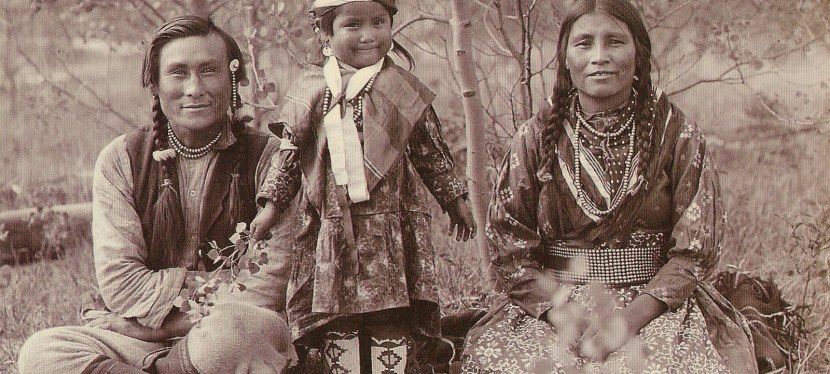
Oki! For many of us, the spring season represents new life and a fresh start. But did you know, in Blackfoot culture, the new year begins in the spring? Aboriginal Consultation Advisers Blair First Rider and Laura Golebiowski, both based in Treaty 7, discuss the significance of the seasonal round: a concept that not only structures the year, but also our relationships to the land and one another.
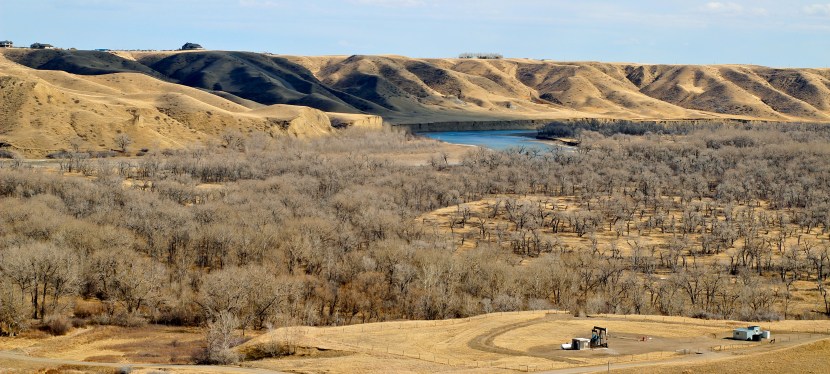
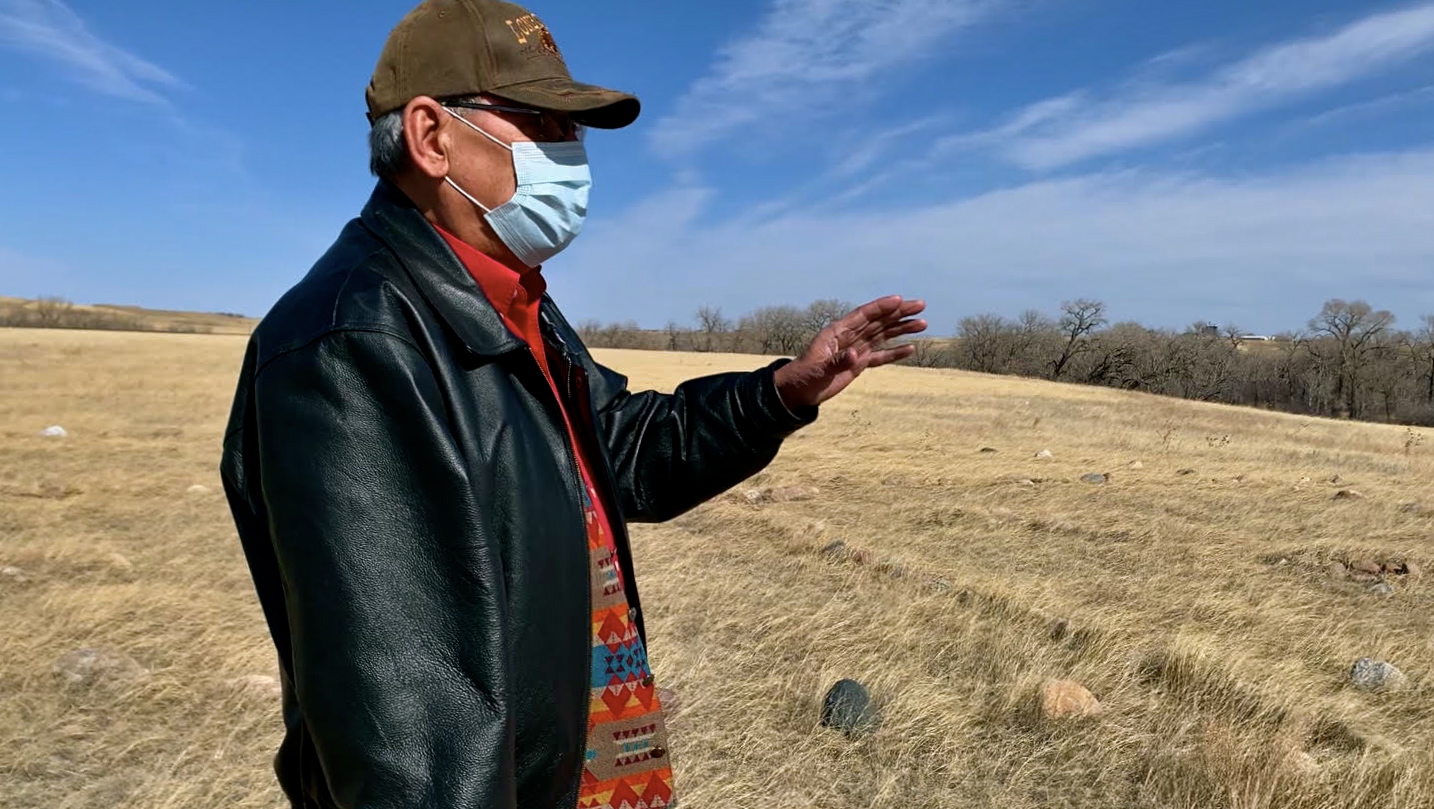
We meet today on Kainai Nation at an area called Weasel Fat Bottom, a flood plain on the south side of the Oldman River. These flats also served as an ideal traditional camping location, with proximity to water, cottonwood tree stands and grazing areas. The trees provide shelter from the wind, and beneath them medicinal plants and berries grow. We are here to learn about the seasonal round: a concept that has guided the travel, occupation and relationships of the Niitsitapi (how the Blackfoot refer to themselves, translating to “the real people”) since time immemorial, and one that still has important teachings today.
Blair First Rider stands in front of a modern medicine wheel, built during a recent Blackfoot Confederacy gathering. Source: Laura Golebiowski.
In the old days, Sky Being Ksisstsi’ko’m (Thunder) gave the Niitsitapi the Thunder Medicine Pipe Bundle. The pipe offered protection, as well as a promise that Ksisstsi’ko’m would bring the rains that would make the berries grow large and ripe. Accordingly, the new year is marked by the first clap of thunder of the first rainstorm. It is commemorated with ceremony: the gathering of the seven Societies and the opening of the sacred bundles. Through prayer, song and dance, the relationships and commitments between Niitsitapi and the Creator, the Sky Beings and the land, are renewed and affirmed. As Betty Bastien wrote in Blackfoot Ways of Knowing: the Worldview of the Siksikaitsitapi, “During these ceremonies we acknowledge and give thanks to our alliances for another cycle. We ask for continued protection, prosperity, long life, growth, and strength.”
Written by: Ron Kelland, Geographical Names Program Coordinator
At an online event on March 8, 2020, Seamus O’Regan, the Minister of Natural Resources Canada launched Recognizing Women with Canadian Place Names: Women on the Canadian Landscape. This interactive, digital map was developed by the Geographical names Board of Canada to highlight approximately 500 places and geographical features in Canada that are named for women.
Screenshot of the “Recognizing Women with Canadian Place Names” Interactive map. Source: Natural Resources Canada.
March 8 was International Women’s Day; a day acknowledged around the world to raise awareness of issues facing women, such as gender equity, and to celebrate the social, cultural and political achievements that have been made by women to their communities, regions and nations. The map was launched on that day as part of those annual celebrations.
Through history, the recognition of women has tended to be forgotten. For generations, women have been largely voiceless in history; overlooked by default and design. The essential domestic role of settler women has not been discussed to the same extent as the work of their husbands, fathers and brothers breaking the land, even though these women toiled and suffered just as men had. Even women who were admitted to the professional, scientific or professional world have often seen their accomplishments ignored or downplayed in favour of those of their male colleagues. The same trends are found in the world of cartography and place naming.
Written by: Dane Ryksen (History undergraduate, University of Alberta)
Editor’s note: Since 2017, Dane Ryksen has been documenting Edmonton’s built heritage on Instragram. Follow @_citizen_dane_ for even more of his research and photography. All photos below were taken by Ryksen unless otherwise noted.
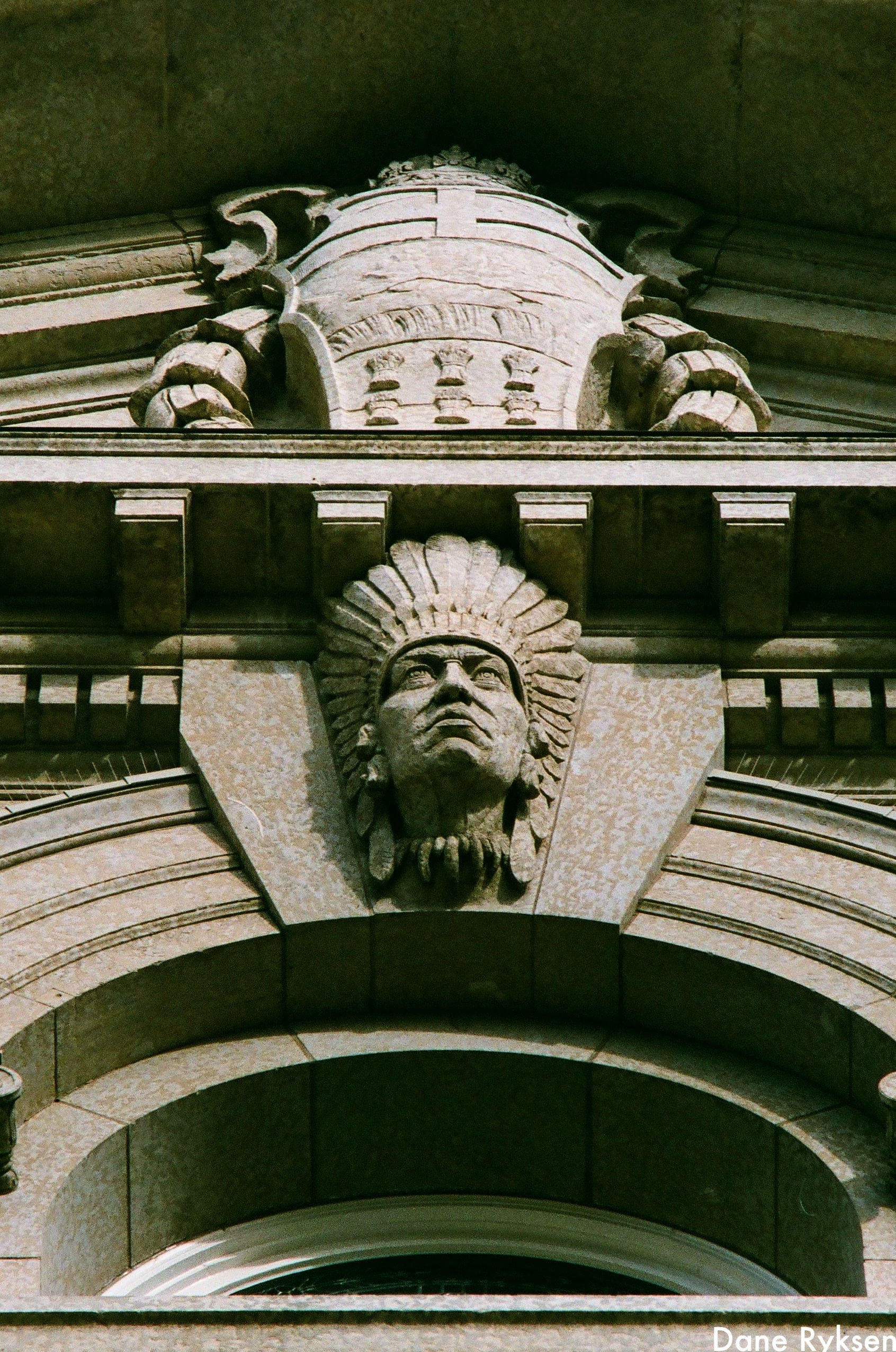
Symbology of all kinds litters the facades of Edmonton’s Bowker Building. Up, down, left, right, there’s something to be found. The Chief and arms. The Wild Rose, symbolizing Alberta itself. The heads of bison, symbolizing power, strength and durability. The Queen’s Crown on each door handle, symbolizing the monarchy. Even its long-time name, ‘The Natural Resources Building,’ a symbol of Alberta’s bountiful wealth.
For being in the throes of the Great Depression, all its bangles, wingdings and baubles may have seemed like another instance of government waste. But for the United Farmers of Alberta it came with good reason. When they commissioned the building it was seen as righting a fifteen-year-old wrong.
Written by: Todd Kristensen, Archaeological Survey of Alberta
A butchered bison leaves bones behind; a fur trade post leaves rotting walls for archaeologists to discover. But humans are more than what we eat and build. To many, our lives are defined by relationships to other people. How do archaeologists in Alberta uncover and reconstruct human relations from 10,000 years ago when not much preserves in the soil?
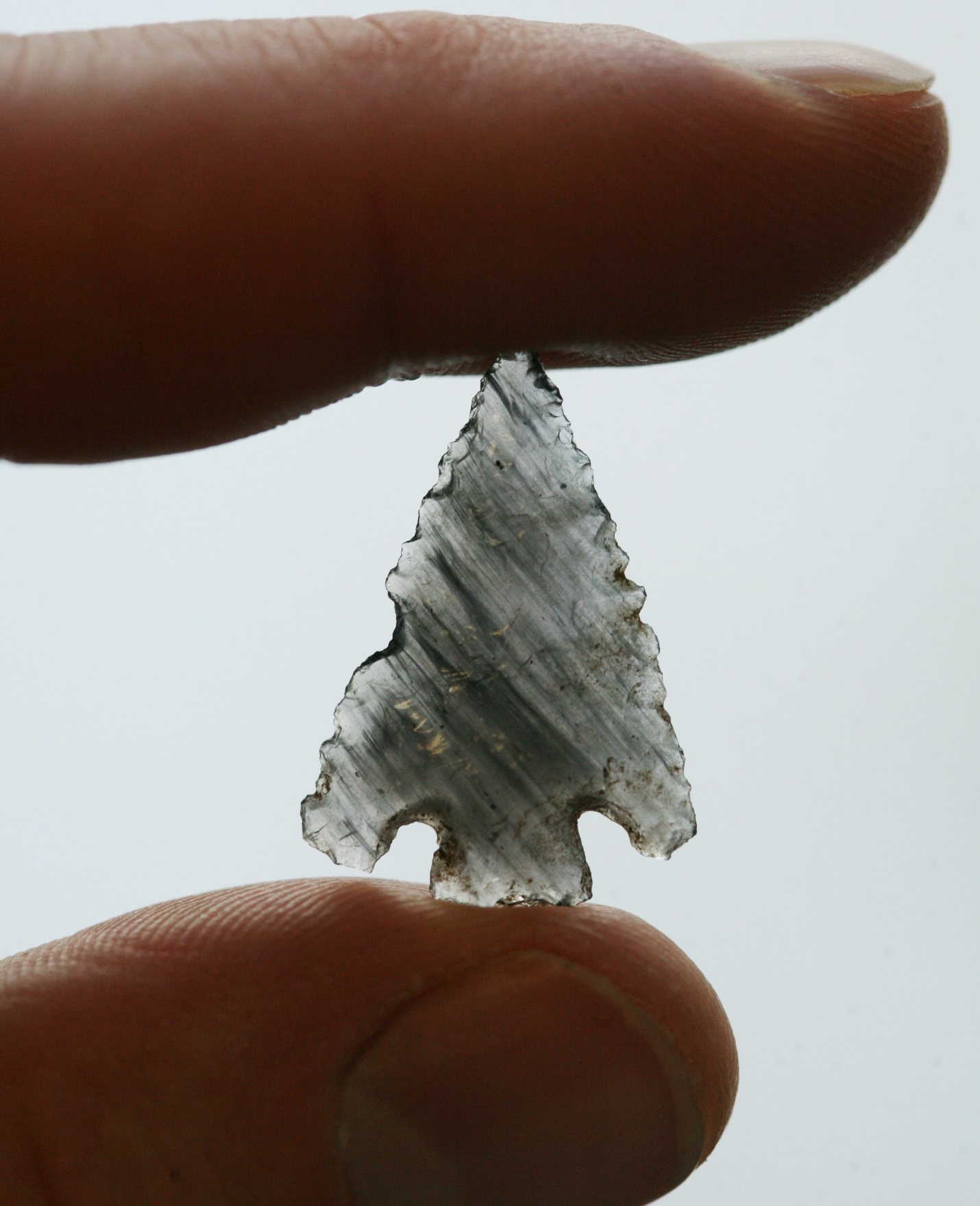
Archaeologists use microscopic clues to link stone artifacts back to the quarries where the rock originated; this “provenance” work can reveal ancient networks. In a blend of geochemistry and sociology, researchers use volcanic rocks in particular to understand how groups interacted and moved across landscapes for millennia.
Obsidian arrowhead found in the Grande Prairie area of northwest Alberta. Source: Todd Kristensen.