Hangar 14 and the British Commonwealth Air Training Plan

The British Commonwealth Air Training Plan (BCATP) is considered to be Canada’s primary contribution to the Second World War. Although the Plan was only in existence from 1940 to 1945, it left a lasting impact on Alberta and Canada as a whole. One of the most visible results of the Plan was the building construction that boomed during this time. There are examples of buildings produced during the BCATP period that are still in existence and the historical significance of these structures is evident today, one of which is Hangar 14, located at the former Blatchford Field and Municipal Airport site in Edmonton. This post will look at the foundation of the BCATP and summarize the distinct features of Hangar 14 that demonstrate the building’s significance as a provincial historic resource.
AAM 019
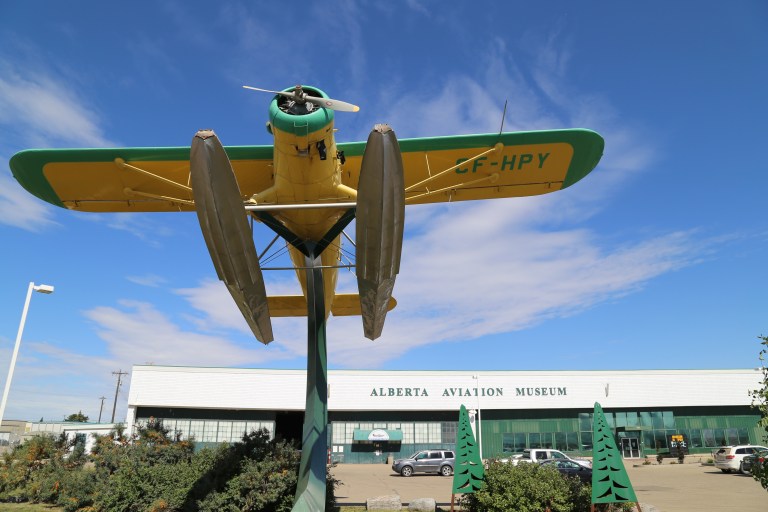
Hanger 14, the home of the Alberta Aviation Museum, Edmonton.
(Erin Hoar, 2015)

Read more

Yellowhead Townsite and Mine: Archaeology in Alberta’s Coal Branch

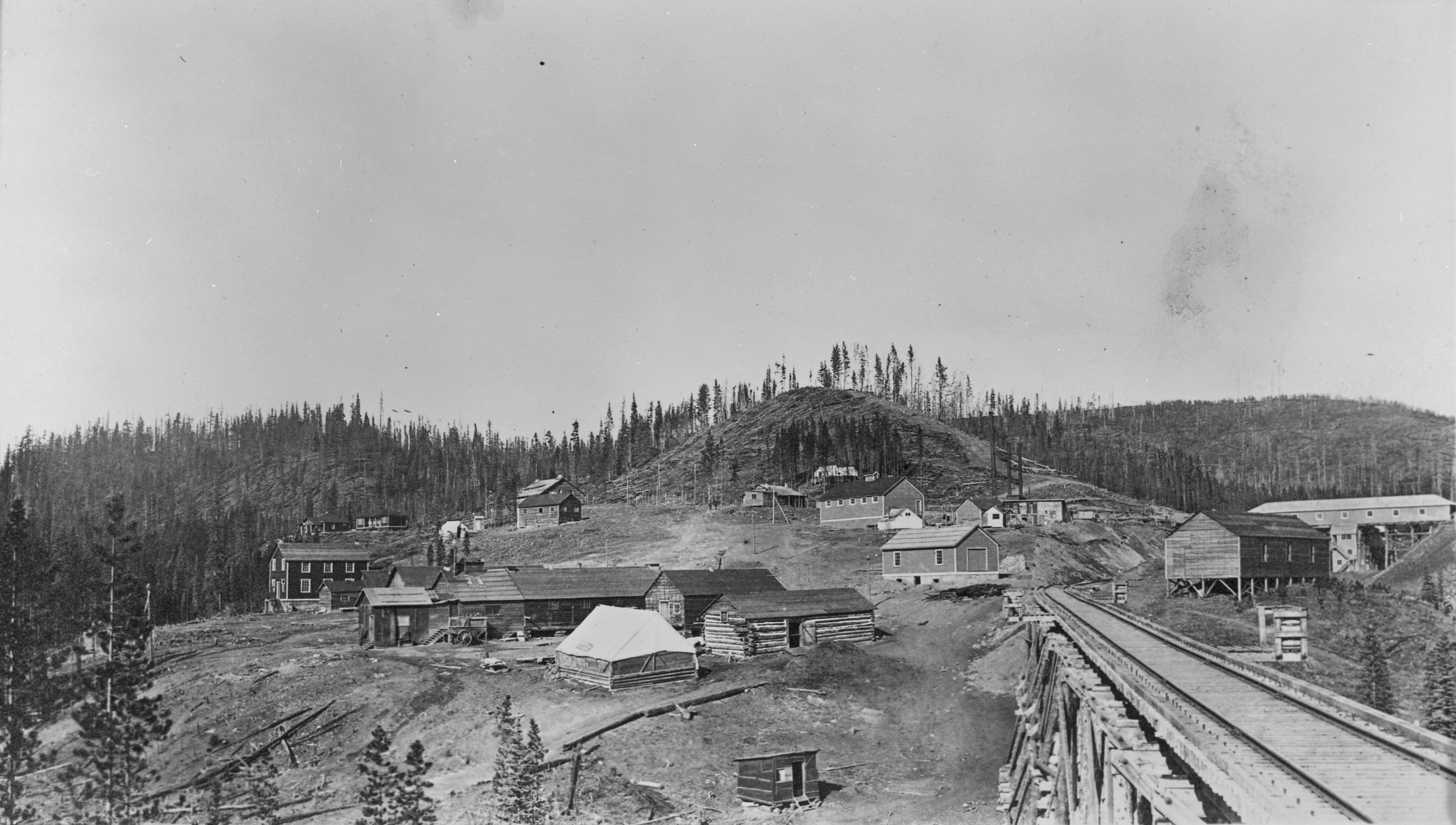
Alberta’s Coal Branch region, southwest of Edson, was once an area bustling with activity, not only due to coal production, but also with the day-to-day goings-on of communities. In its heyday, the Coal Branch supported a population of almost 3,000 people spread out among several towns including Cadomin, Mercoal, Mountain Park, Luscar, Lovettville, Coalspur, Robb, Coal Valley, and Beacon Hill. These communities, though small, had many amenities including stores, community halls, sports fields, schools, churches, and hospitals. Today, many of them have been completely abandoned or are only used for part of the year.

Part of the Yellowhead site, likely during the mid-to-late stages of mine development (Photo Credit: Provincial Archives of Alberta, Edmonton, PR1991.0312 A19987)
Part of the Yellowhead Townsite and Mine which was in operation from 1909-1919 (Photo Credit: Provincial Archives of Alberta, PR1991.0312 A19987)

Yellowhead Mine and its associated “stag camp”, and later townsite, was the first mining operation in production in the Coal Branch. Run by the Yellowhead Pass Coal and Coke Co., the mine began operations in 1909, before railroads or roads reached the area. Since the only way in and out of Yellowhead was by pack trail, the settlement was fairly isolated and difficult to get to. When mining first began, the coal could not be shipped out due to lack of rail access, so coal was stockpiled. The railroad Read more

Historic Burial near Viking, Alberta: A story of excavation, ceremony and community

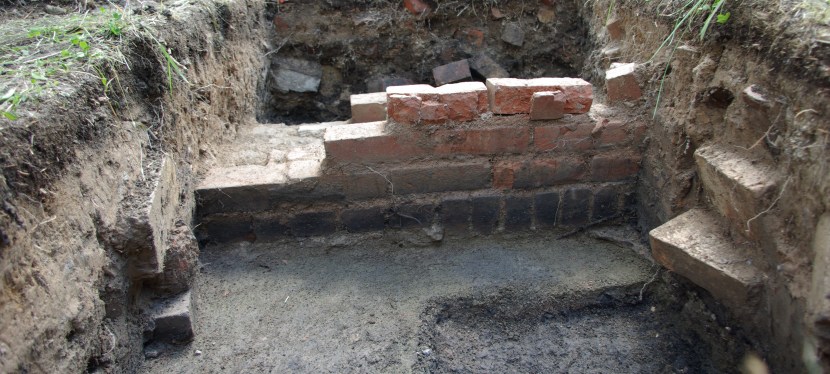
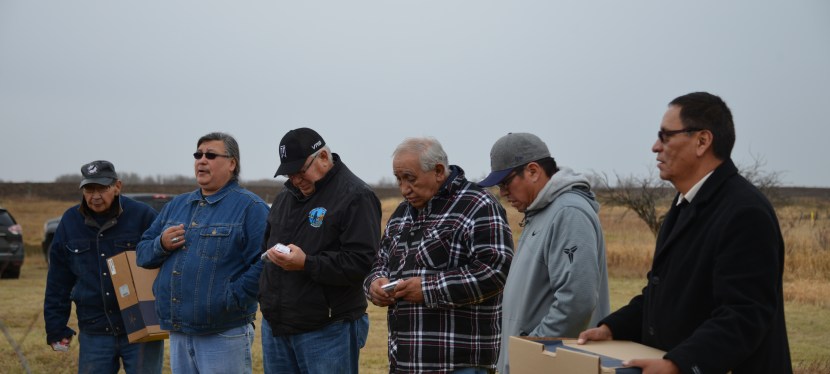
In late August 2015, Brian Rozmahel, a farmer near the Town of Viking, was working in one of his fields. He recently experienced problems with gophers causing damage to his crops and decided to set up several traps as a preventative measure. One morning he went out to check the traps he set the day before and discovered something he was not expecting to find. A badger got to the site overnight and dug into the gopher burrows. Quite a bit of earth was brought up through the badger’s digging. However, there was more than just earth that was surfaced by the badger. Resting on the ground near the burrows were human remains and other items such as buttons and beads.

When Brian encountered the remains he immediately contacted the Viking Detachment of the RCMP. The RCMP cordoned off the site and did an initial investigation of the area. In the meantime, the exposed human remains were sent to the Office of the Chief Medical Examiner (OCME) for further analysis.

In consultation with forensic anthropologist, Pamela Mayne-Correia, the OCME concluded that the human remains were historic in nature and were likely of a young Aboriginal individual. The RCMP deemed the situation to not be criminal and the Historic Resources Management Branch (HRMB) was then contacted by the OCME. As the remains were considered historic, the HRMB now had jurisdiction over the site. Read more

She’s Got Bette Davis Eyes

Her hair is Harlowe gold
Her lips sweet surprise
Her hands are never cold
She’s got Bette Davis eyes
(from Bette Davis Eyes; Kim Carnes, 1981)

Backstory

Everyone says my mother (Marina Lynch-Staunton) has Bette Davis eyes. Perhaps she used them, back in 1955, to catch the judges’ eyes. That’s when Marina was crowned Queen at the Crow’s Nest Pass Winter Carnival.

The tale of Marina’s crowning achievement has an unlikely beginning.

Picture this: a grassy hillside overlooking the Oldman River. There, a hop, skip and jump east of The Gap—the water gap through which the Oldman River cuts through the Livingstone Range—a farm tractor was used to power a rope tow that pulled skiing enthusiasts from the surrounding ranching community to the top of “Mount Pleasant,” a modest climb from the Oldman’s storied shores.

It was here that the Maycroft Ski Club was born. Read more

Romanian Settlement in Alberta

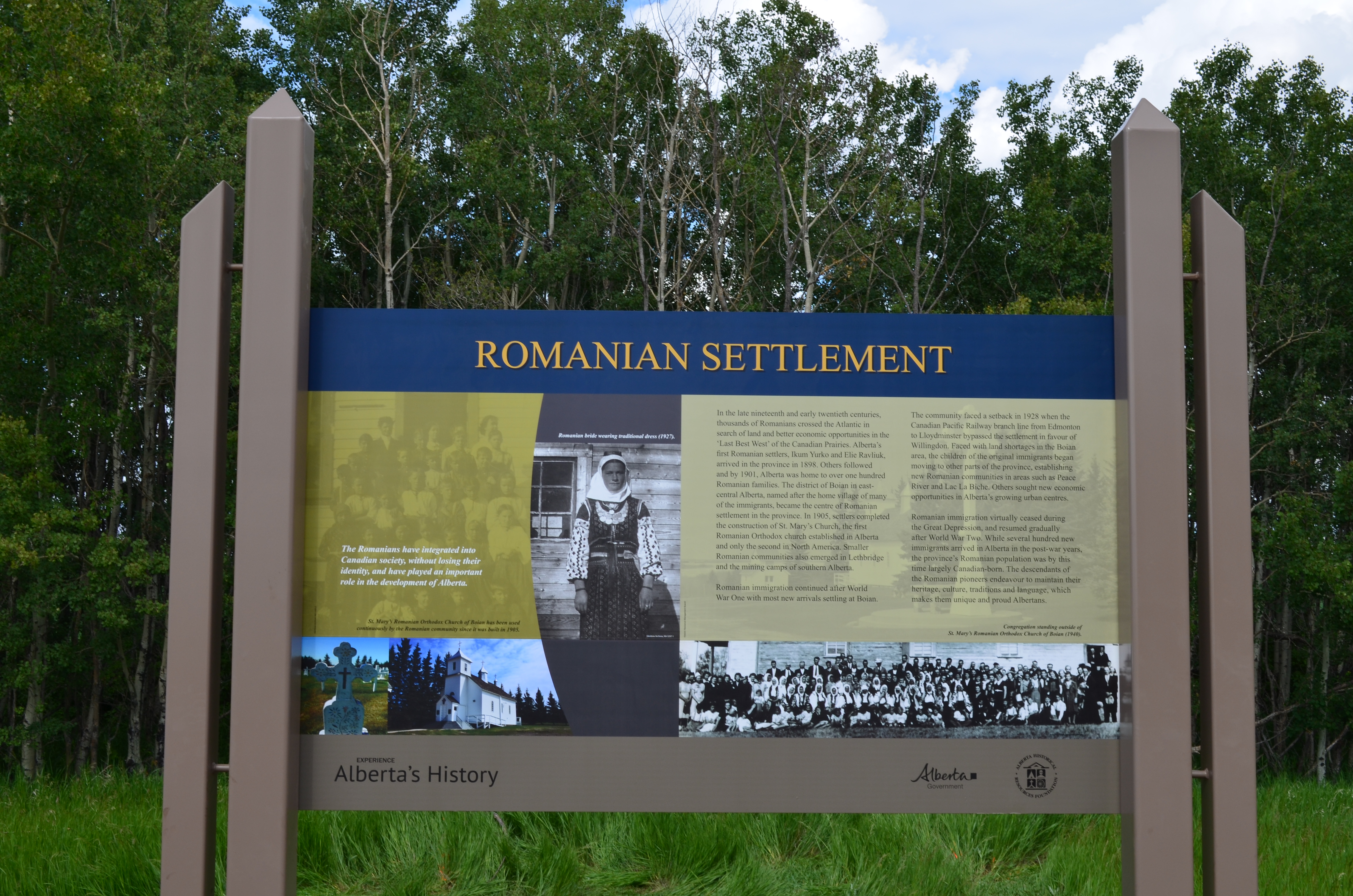
One of the latest additions to the Provincial Heritage Marker collection details the history of Romanian settlement in Alberta, starting with the first Romanian pioneers to settle in the province in 1898, Ikum Yurko and Elie Ravliuk. The earliest Romanian settlements in Alberta were concentrated in the east-central part of the province, where communities such as Boian flourished in the early twentieth century. New Romanian-Albertan communities emerged in the late 1920s as the children of the first generation began to move to other parts of the province in search of land and new opportunities. By the 1950s the province’s Romanian population was predominantly Canadian-born, but Romanian culture, traditions and language still flourished in Alberta.

New Heritage Marker installed in June 2015 on Highway 45 east of Willingdon.

The marker was installed on Highway 45 east of Willingdon in June 2015. The Provincial Heritage Marker Program promotes greater awareness of the provincially-significant people, places, events and themes that have defined the history and character of our province. Topics relevant to the history of immigration, settlement and ethnic history has been an important part of the program since it was first launched in 1955. The public plays an important role in the program, and we welcome applications from groups or individuals who want to propose topics and locations for future markers, including our popular urban/trail-sized markers, suitable for placement in towns, parks, and other locations with pedestrian traffic. For more information about the program, please visit our website.

Written By: Allan Rowe, Historic Places Research Officer

Christmas at the Ukrainian Cultural Heritage Village

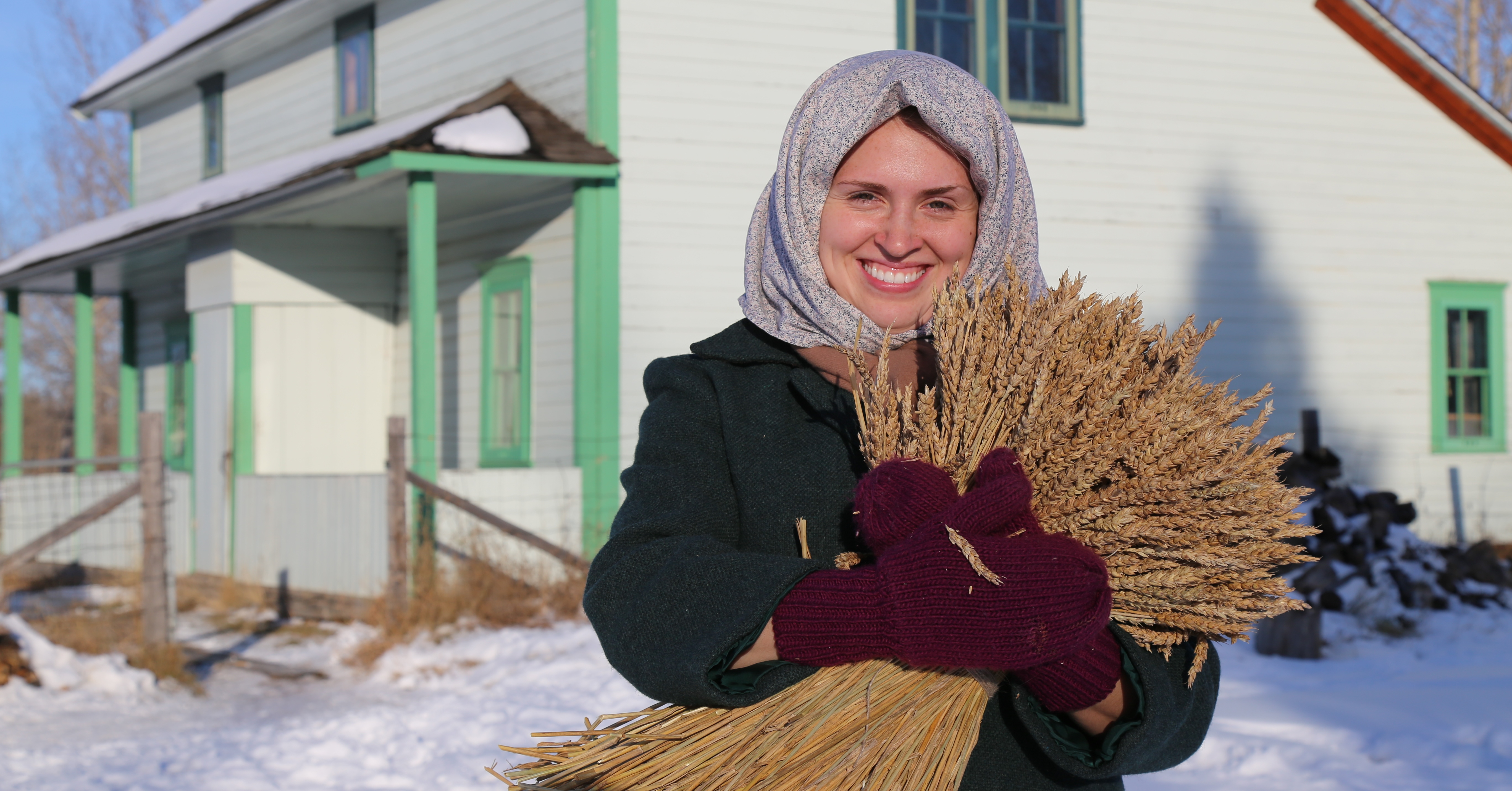
Photo Credit: Ukrainian Cultural Heritage Village
An employee at the UCHV holding a Didukh (sheaf of grain). Photo Credit: Ukrainian Cultural Heritage Village

The Ukrainian Cultural Heritage Village is a major open-air museum operated by the Historic Sites and Museums Branch of Alberta Culture and Tourism. Located 50 km east of Edmonton the museum preserves more than 30 historic structures and interprets the lives of Ukrainian settlers in east central Alberta between the years of 1892 and 1930. Based on extensive contextual and site specific research, the museum is an important steward of the intangible cultural heritage of Alberta’s Ukrainian settlers.

Among the customs which the Village documents and observes is Christmas. As Byzantine Eastern rite Orthodox and Catholic Christians, Ukrainians celebrated Christmas according to the Julian calendar, which predated the introduction of the current Gregorian calendar. What is popularly referred to as “Ukrainian Christmas” is celebrated on January 7 rather than December 25. On January 6, Ukrainians celebrate Sviat Vechir (or Holy Evening, Christmas Eve) with a special meal. For the early Ukrainian settlers of east central Alberta as well as their descendants in urban settings, this was an evening filled with ritual and tradition, including pre-Christian agrarian elements.

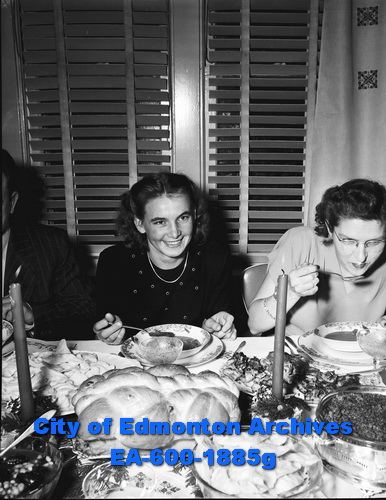
Christmas Eve meal, January 5, 1949. Photo: Eric Bland, from City of Edmonton Archives.
Christmas Eve meal, January 1949. Photo: Eric Bland. From City of Edmonton Archives, EA-600-1885g.

The evening meal on Sviat Vechir would begin when the children in the family spotted the first star in the night sky. After it was spotted, the family assembled around the table and shared a prayer or carol. The patriarch of the family then brought the first of 12 Lenten dishes to the table. This dish is Read more

Happy Holidays!

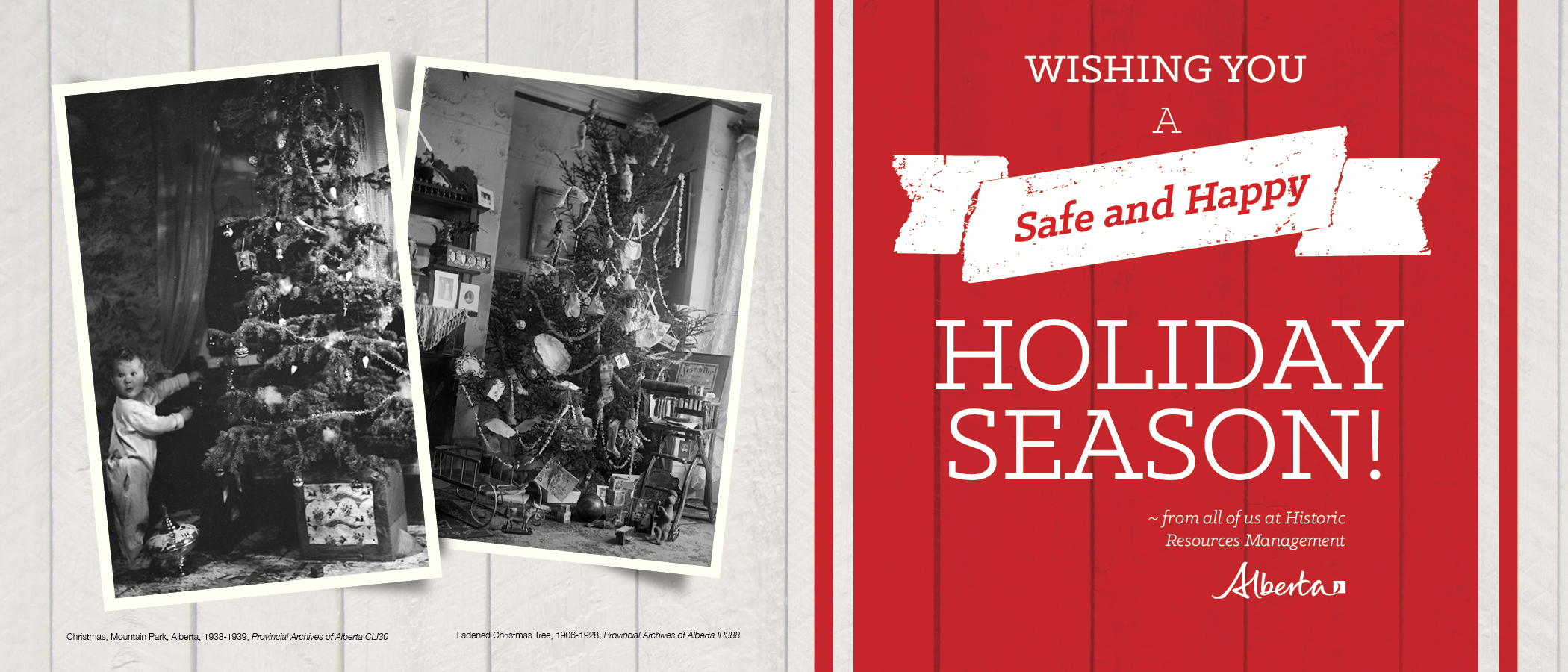
HRM - 2015 Holiday Card

The staff of the Historic Resources Management Branch wishes you a safe and happy holiday season.

We’ve worked hard to identify, protect and conserve Alberta’s historic resources this past year. We’d like to thank the countless people throughout Alberta for helping us to do that. Without your support, conserving our historic places would be impossible.

RETROactive will be taking a break over the holidays — we will resume publishing on January 6th, 2016. We look forward to seeing you all in the New Year!

Love It or Loathe It: A Brief History of the Holiday Fruit Cake

It’s hard to believe the Christmas holidays are just around the corner. Along with all the regular festivities, several traditional foods are due to make their annual appearances. One of the quintessential desserts of the season is the fruit cake. Described as either a rich, moist and flavorful cake filled with holiday cheer or a dried out, tasteless leaden brick chockfull of bitter candied fruit. We seem to have a love-hate relationship with this fruit-filled, spirit-soaked cake garnished with sugar-coated nuts. But why was it invented? How did this tradition start?

fruit cake photo

It turns out that fruit cake has staying power. Its origins may be linked back to the ancient Egyptians who made rich fruit- and nut-laden funerary cakes for their departed loved ones, meant to sustain the dead on their journey to the afterlife. Others trace its early roots back to the ancient Romans’ references to a type of energy loaf, which combined barley mash, pomegranate seeds, pine nuts and raisins. A more modern version of fruit cake became popular in the Middle Ages in Western Europe as dried fruits, honey and Read more

Conservation at the E.P. Ranch

E.P. (Prince Edward) Ranch, established by the Bedingfeld family in 1886, is located in the foothills southwest of Calgary near the Bar U Ranch National Historic Site. In 1919, during a cross-Canada tour, the Bedingfeld’s ranch captured the fancy of His Royal Highness Edward, Prince of Wales, upon his visit to the area.  Prince Edward purchased the ranch shortly thereafter from Frank Bedingfeld. Under Edward’s direction, the ranch developed a breeding program for sheep, cattle, and horses with livestock imported from the Prince’s breeding farms in the Duchy of Cornwall in England.  Prince Edward, later King Edward VIII, visited the ranch in the 1920s and in the 1940s and 1950s, after his abdication, as the Duke of Windsor.  Photographs in the Glenbow Archives show Edward and his wife Wallis Simpson, the Duchess of Windsor, strolling among the ranch buildings that still stand at the site today. The E.P. Ranch was designated a Provincial Historic Resource in 2004 for its association with Edward, who owned the site from 1919 to 1962. Fans of the 1992 movie Unforgiven will also recognize scenes shot on location at the ranch.

The main ranch (or Prince's) house prior to restoration, April 2014.
The main ranch (or Prince’s) house prior to restoration, April 2014.

In June 2013, the E.P. Ranch found itself at the epicentre of the torrential rains that flooded communities and historic sites across southern Alberta. Pekisko Creek overflowed its banks and swept through the site, turning grazing lands into a virtual river.  While the large and distinctive horse barn was unaffected, four other buildings were damaged. Read more

Arrowheads and Artifact Ambassadors

Many of the most amazing archaeological sites in Alberta were discovered accidentally by farmers, hunters, hikers, and industry workers. By sharing their finds, everyday Albertans became heritage heroes. Why is it important to share discoveries? When someone finds an artifact and puts it in their garage, one Albertan learns about our heritage. When a person invites an archaeologist to photograph that artifact, thousands of people and multiple generations of Albertans gain a portal to our past.

We’re always on the lookout for the next big site and the next famous Artifact Ambassador. To inspire you to share your finds, here are some facts about citizen discoveries in the world and here at home.

  • The Terracotta Army of China, a collection of over 8000 figures buried in a royal tomb over 2000 years ago, was discovered and reported by farmers in 1974
  • The Lascaux Cave paintings in France (over 15 000 years old) were discovered by teenagers on a hike in 1940
  • 1398 recorded sites in Alberta are based on private collections of artifacts – photographs and information about these collections have been inspiring research projects for decades

Map of private collections

  • Several archaeological finds by Alberta’s explorers and farmers have since become Provincial Historic Sites and one has even become an UNESCO World Heritage Site!
  • Archaeological finds reported by concerned Albertans include ancient rock art, medicine wheels, footprints of extinct animals hunted by people, buffalo jumps, and ancient campsites.
Image 1 Manuscript covers
A number of projects were undertaken from the 1970s to 90s to document private collections of artifacts from Lethbridge to Grande Prairie. Digital copies of these manuscripts are now available to Alberta’s archaeological community.

Even a single artifact can contain significant information. For example, staff of the Archaeological Survey recently initiated two projects to document private collections in northern Alberta. Read more