Province designates Taber Courthouse historic resource

A recent Government of Alberta information bulletin announced one of the latest Provincial Historic Resource designations. Check it out:

The Alberta government has designated the Taber Courthouse, one of Alberta’s early seats of justice, as a Provincial Historic Resource.
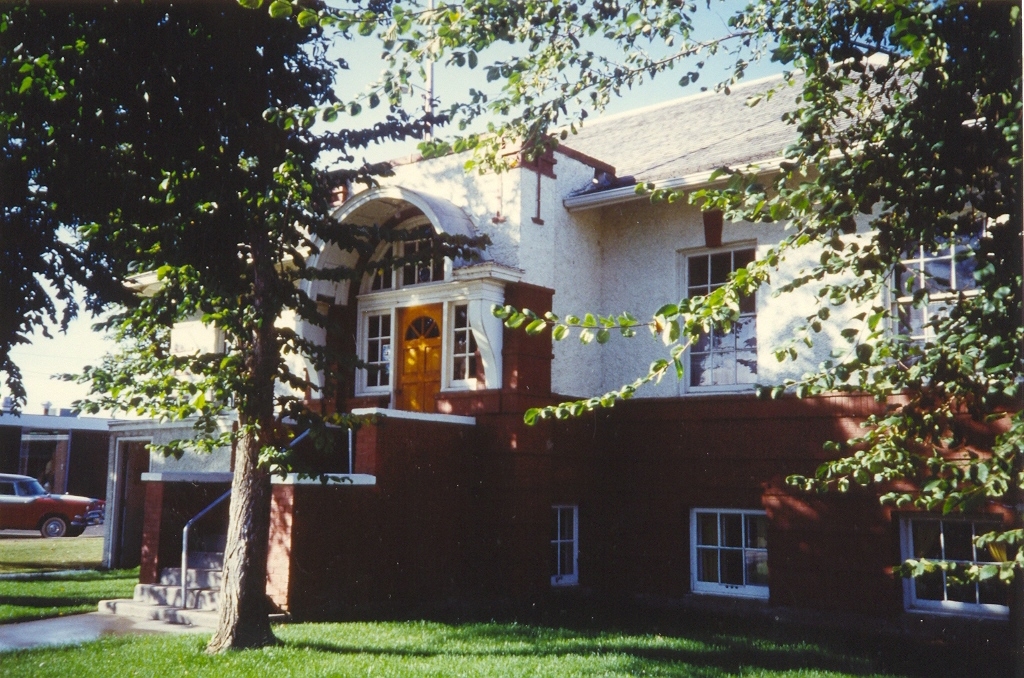
Taber Courthouse Provincial Historic ResourceBuilt in 1918, the Taber Courthouse became the model for Alberta courthouses built prior to the Second World War. After being declared a judicial sub-district in 1917, the Town of Taber donated land for the construction of the courthouse building that would also house the local detachment of the newly-formed Alberta Provincial Police. The Taber Courthouse was also the site for meetings of local community organizations and the Taber Town Council. Following the dissolution of the judicial sub-district, the courthouse continued to be used for a variety of provincial government activities and in 1953 became the official Town Hall.

The courthouse currently serves as home to the Centre Court for the Arts, a multi-use arts facility operated by the Arts Council of Taber that showcases the work of local and provincial artists.

“The partnership between the Town of Taber and the Arts Council of Taber in breathing new life into this community landmark is a wonderful example of how our historic resources can continue to provide economic, social and cultural benefits to the community,” said Culture Minister Heather Klimchuk, who joined with representatives from the Town of Taber and the Arts Council of Taber in marking the designation. “Identifying the Taber Court House as a Provincial Historic Resource will help to ensure that future generations will continue to share in those benefits while preserving the story of Taber’s rich heritage.”

“Taber takes great pride in our local history and the contributions our community has made in the development of Alberta,” said Taber Mayor Ray Bryant. “The designation of the Taber Courthouse as a Provincial Historic Resource is an important part of our ongoing efforts to honour our past as we look to grow into the future.”

Alberta currently has more than 350 provincial historic resources. These sites embody the diversity of our province’s history and include medicine wheels, tipi rings, fur trading and mounted police posts, coal mines, farmsteads, ranches, railway stations, grain elevators, churches, schools, government offices, commercial blocks and private residences. Along with helping to provide economic, social and cultural benefits, designation of Provincial Historic Resources helps to ensure that local landmarks will continue to help connect Albertans with their rich heritage. For more information on the Provincial Historic Resource Designation program, click here.

Visit the Alberta Culture Newsroom to read additional releases.
Wheatland County Lists Historic Resources on the Alberta Register of Historic Places

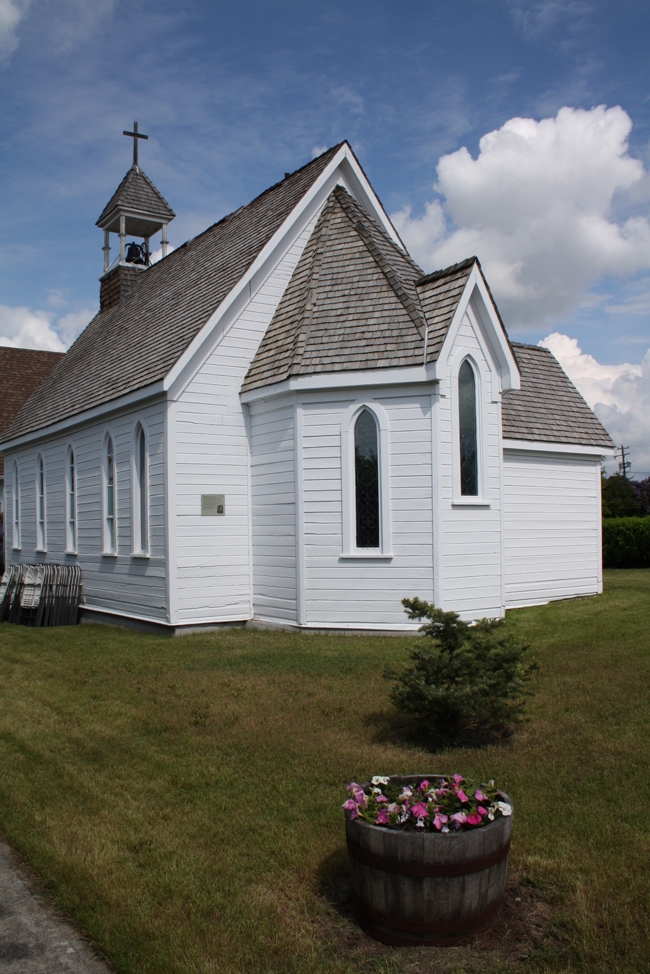
St. Andrew's Anglican Church_September 12 2012Wheatland County recently designated two Municipal Historic Resources that are now listed on the Alberta Register of Historic Places. You can find Wheatlead County a few kilometres east of the City of Calgary and adjacent to the Siksika Indian Reserve. The area was settled in the 1890s and the two sites reflect very different themes in Alberta’s history.

The St. Andrew’s Anglican Church is a small church located in the Hamlet of Gleichen, just north of Siksika Nation. It was built in 1885 by Anglican missionaries to the Blackfoot nation. The descendants of the Blackfoot people and the area’s settlers worship here to this day. This little chruch is quite likely one of the oldest Anglican churches in Alberta.

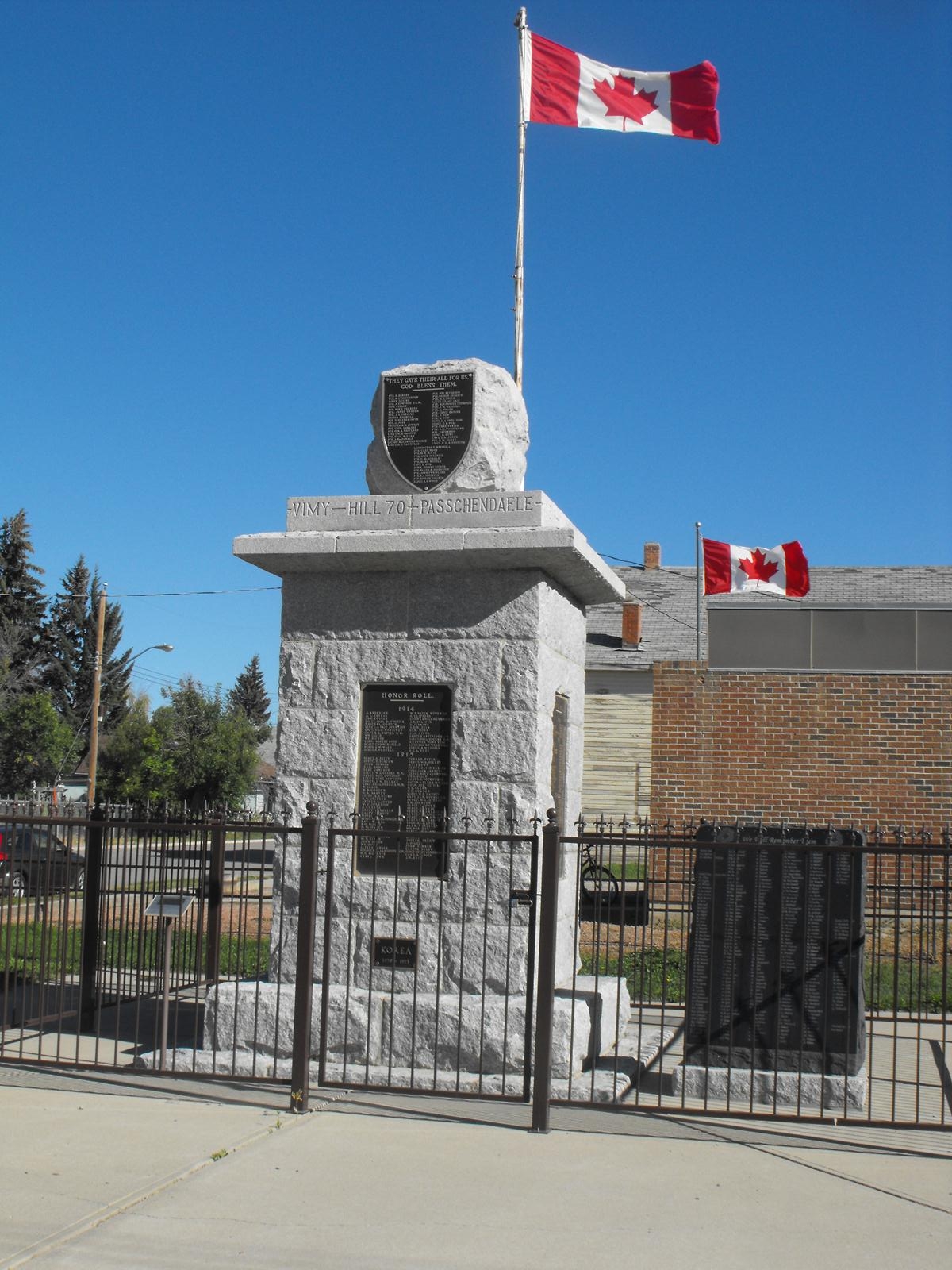
Cenotaph, Wheatland CountyThe Gleichen War Memorial Cenotaph is located in the Hamlet of Gleichen as well. Is was built in 1920 as a monument to the 51 men from the area who lost their lives while fighting for Canada in World War I. Plaques have subsequently been added to honour soldiers from the area who died during the Second World War, the Korean War and the mission to Afghanistan.

Written by: Michael Thome, Municipal Heritage Services Officer

County of Minburn: Conserving Ukrainian Canadian Historic Places

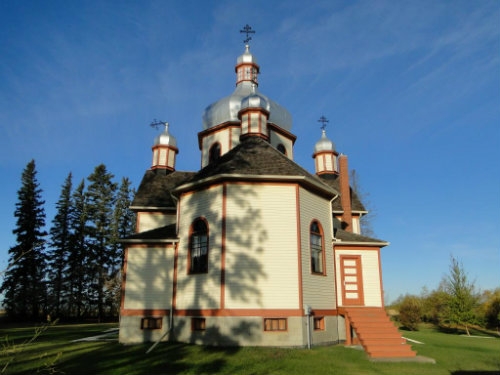
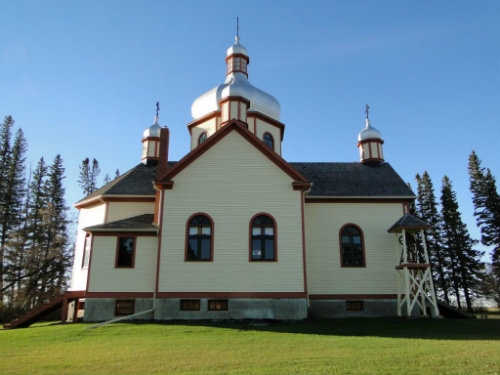
Sich-Kolomea Ukrainian Orthodox ChurchThe County of Minburn recently listed one of its newly designated Municipal Historic Resources on the Alberta Register of Historic Places. The Ukrainian Orthodox Church of the Dormition of St. Mary of Sich-Kolomea (otherwise known as Sich-Kolomea Ukrainian Orthodox Church) is one of the many historic resources that tell us about Ukrainian Canadian settlers.

Sich-Kolomea Ukrainian Orthodox ChurchThe Sich-Kolomea church is valued by the county because of what it conveys about the Ukrainian Canadians setters who built it. The church served the pioneer farmers of the area, and was the first church in what was to become the Vegreville mission district. It is also a beautiful example of the Canadian interpretation of the Byzantine style of church architecture seen in many eastern rite churches built on the Canadian prairies.

There are many municipal and provincial historic resources that tell us about the Ukrainian Canadian settlers in east-central Alberta. You can use the advanced search features of the Alberta Register of Historic Places to learn more about the places that form their legacy.

Written by: Michael Thome, Municipal Heritage Services Officer

Century Homes Calgary wins Governor General’s Award

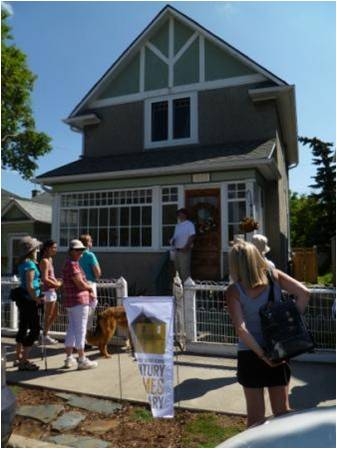
Century Homes Calgary logoAt the Place Matters! Municipal Heritage Forum back in November 2012, we heard about a highly successful community program called “Century Homes Calgary.” This initiative engaged hundreds of Calgarians in showcasing the unique heritage of their 100-year old homes, with over 500 homes participating.

In June 2012, the Alberta Historical Resources Foundation awarded a Heritage Awareness Grant for this creative initiative.

Recently, the Century Homes Calgary project, and its parent organization the Calgary Heritage Initiative Society, received recognition as the 2012 English winner of the prestigious Governor General’s Award for Community Programming.

A house participating in Century Homes Calgary

Here are the two presentations made at the Forum about the Century Homes Calgary project:

The group’s presentation at our Forum generated a lot of interest from other communities to learn how they could develop similar events.

Congratulations on your award and thank you for being an inspiration!

Written by: Matthew Francis, Manager of Municipal Heritage Services

Recent Addition to the Alberta Register of Historic Places

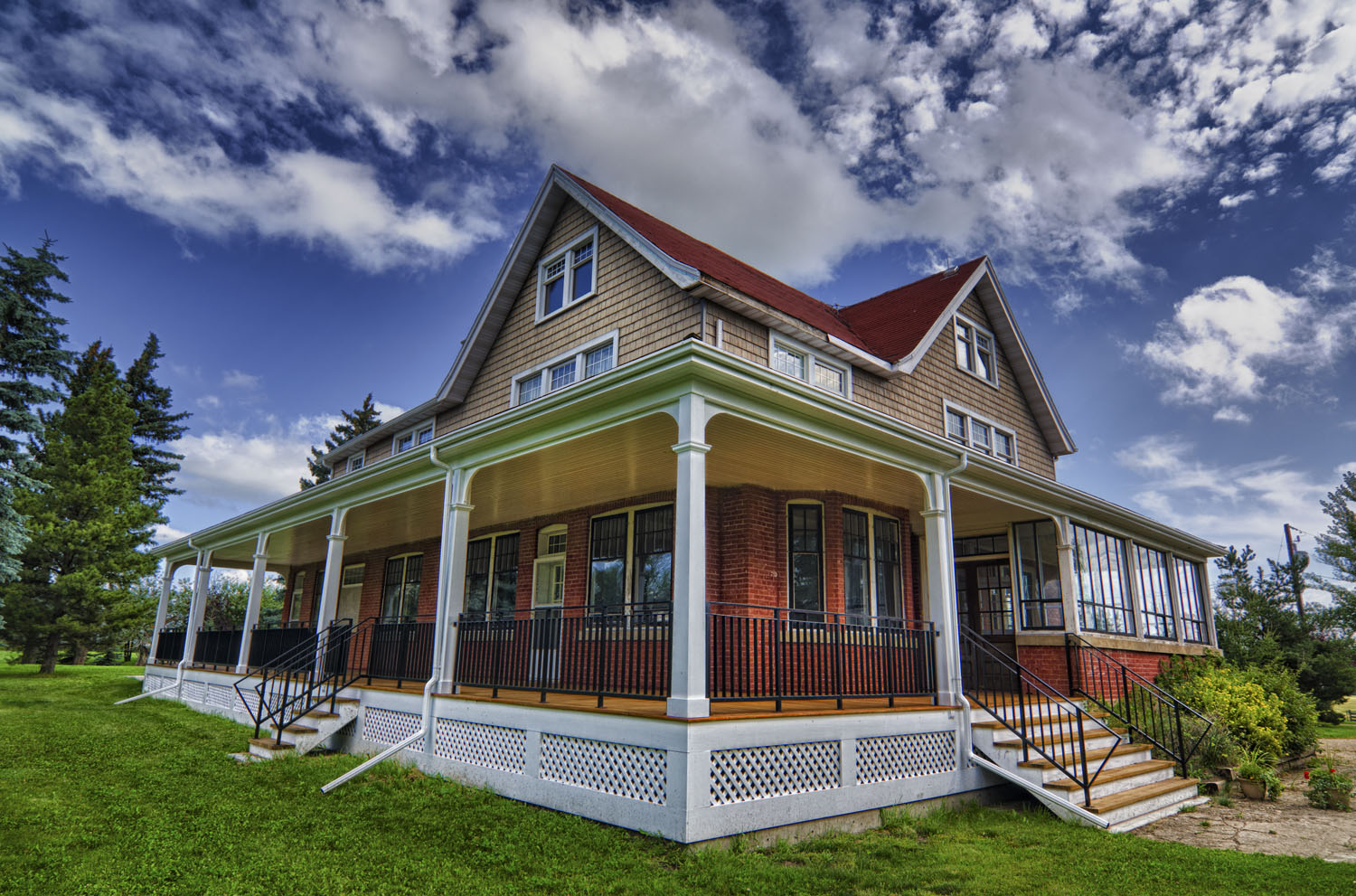
4664-0289_ExteriorA recent Municipal Historic Resource listed on the Alberta Register of Historic Places is Bremner House, located in rural Strathcona County. It is a large two and one half storey residence constructed in the early 1900’s. Heritage values associated with Bremner House include the aesthetic significance of the scale, style and location of the building as well as its representation of the cultural growth and development of Strathcona County during the first half of the 20th Century.

To read more about the significance of Bremner House, and to view additional photos, check out the listing on the Alberta Register of Historic Places.

Are you curious if places in your community are listed on the Alberta Register of Historic Places? Complete an Advanced Search by “municipality” and see what is found. Only sites formally designated as either Municipal Historic Resources, Provincial Historic Resources or Registered Historic Resources are listed on the Alberta Register of Historic Places.

Written by: Brenda Manweiler, Municipal Heritage Services Officer

City of Medicine Hat sees two new listings on the Alberta Register

A community rich in Alberta history – boasting not one but two National Historic Sites of Canada – the City of Medicine Hat recently had two of its designated Municipal Historic Resources listed on the Alberta Register of Historic Places.

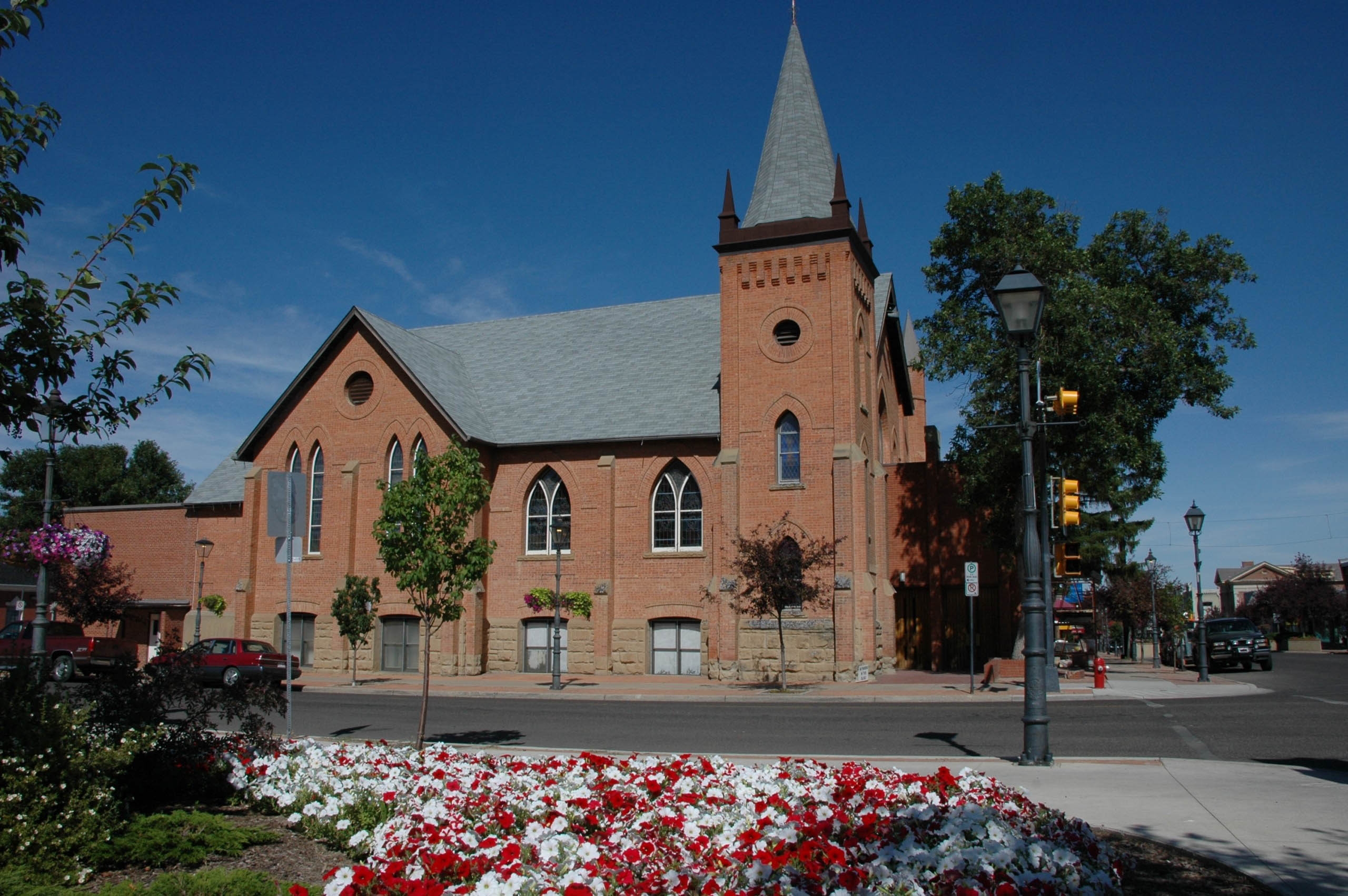
St  John's Presbyterian Church Medicine HatSignificant for its status as the oldest church building in Medicine Hat, and the home of the City’s oldest religious congregation, St. John’s Presbyterian Church was listed on the Register in late 2012.

Just this week, another historic place designated by the City, the Merchants Bank of Canada, was also listed on the Alberta Register of Historic Places. Constructed in 1899, the Merchants Bank is valued not only as the first permanent bank branch in the City, but also as an important building constructed of brick, in a city where brick was historically an important and characteristic local material, and brick-making a key industry.

Merchants Bank, Medicine HatCongratulations to the City of Medicine Hat and the owners of these two properties for being listed on the Alberta Register!

Written by: Matthew Francis, Manager of Municipal Heritage Services

Accepting Applications: Premier’s Council on Culture

Premier's Council on Culture

As many of you may already know, on January 9, 2013, Minister of Culture Heather Klimchuk launched a recruitment process for members of the Premier’s Council on Culture. Members will represent the range of sectors responsible for cultural activities and experiences – the arts, heritage, multicultural and nonprofit/voluntary organizations, as well as creative and cultural industries, youth and corporate partners.

The Government of Alberta will be recruiting up to 20 new council members, who may serve terms of up to three years. The application period ends February 28, 2013. If you are interested in being a cultural leader for both your community and Alberta, apply on the Government of Alberta Jobs Website (Job ID# 1015041).

Additional Information

Renewed Premier’s Council to help build capacity in Alberta’s cultural sectors

Council Members, Premier’s Council on Culture, Government of Alberta

Culture Ads - Final_Page_2

Prepared by: Brenda Manweiler, Municipal Heritage Services Officer

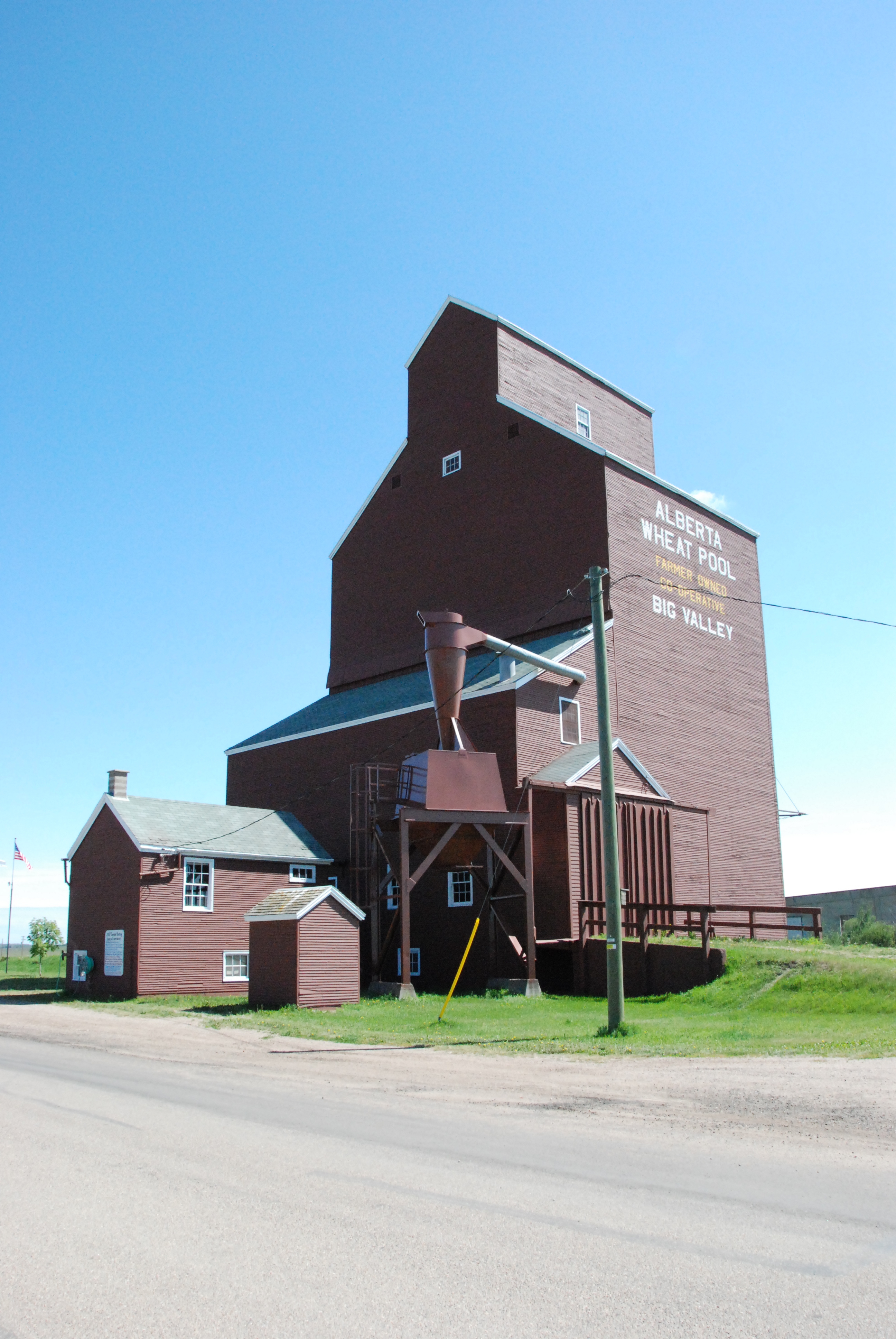
Alberta Wheat Pool Grain Elevator, Big Valley

Alberta Wheat Pool Grain Elevator (DSC_5353 Historic Resources Management Branch).

Today’s blog post will no doubt please all of our railroad and grain elevator enthusiasts out there in the ether. On August 27, 2012, the Alberta Wheat Pool Grain Elevator in Big Valley was designated as a Provincial Historic Resource and added to the Alberta Register of Historic Places. This grain elevator has heritage significance due essentially to the fact that it is…, well, it’s a grain elevator. These once dominant, landmark structures in rural Alberta have become iconic symbols, speaking to the province’s agricultural, social and railroad transportation history. This particular elevator also contributes to the cultural landscape of Big Valley, aiding in the visual communication of the community’s history as one of the province’s busiest railroad divisional points.

Wood-cribbed grain elevators such as the Alberta Wheat Pool elevator in Big Valley were once a dominant presence in the lives of most rural Albertans. These imposing, structures stood out on the horizon and could be seen from miles around. They were essential facilities for the sorting, storage, and transportation of grains and, as such, they also served an important social function as meeting places for area farmers. Although there were some variations in elevator design, size and services, they remained consistently similar in basic design and form over the years. This Alberta Wheat Pool grain elevator was a relatively late addition, being built in 1960, but it shares much with its earlier predecessors, notably its vertical orientation, gable-roofed cupola, shed-roofed drive shed with earthen ramps and overall lack of fenestration.

(DSC_2647 Historic Resources Management Branch).
View of the Alberta Wheat Pool Grain Elevator, Big Valley (DSC_2647 Historic Resources Management Branch).

In 1912, Big Valley had been selected as a divisional point on the Canadian Northern Railway’s (CNoR) Battle River Subdivision. At one point it possessed a large railyard and a number of important railroad maintenance facilities and storage areas for fuel, water and freight. Largely supported by the railroad, Big Valley was a bustling centre with a large population. In the late-1920s, Big Valley’s boom period came to an end when the divisional point was moved to Mirror on the former Grand Trunk Pacific Railway line.

Although the 1960 Alberta Wheat Pool grain elevator was built long after the Big Valley’s glory days as a divisional point, its presence adds to the interpretation of the community’s railroad heritage, particularly when considered together with the presence of other designated historical resources, such as the historic CNoR railway station and the remains of the roundhouse and frequent visits by the Canadian National Railways 6060 steam locomotive.

More information on the Alberta Wheat Pool grain elevator in Big Valley can be found on the Alberta Register of Historic Places.

Written by: Ron Kelland, Historic Places Research Officer and Geographical Names Program Coordinator

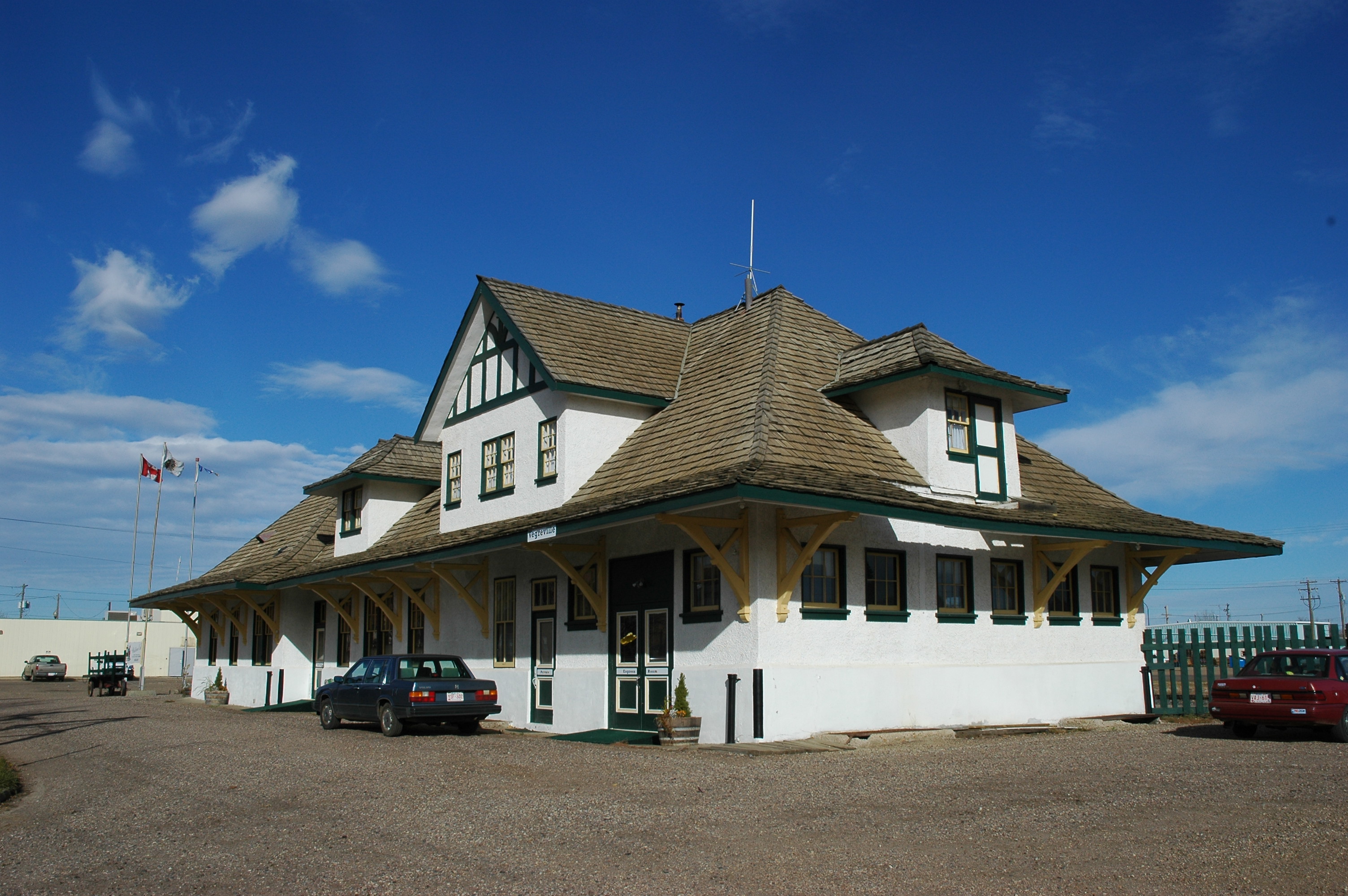
Canadian National Railway Station, Vegreville

Canadian National Railway Station, Vegreville (DSC_3053 Historic Resources Management Branch).

When the Canadian Northern Railway strung its line through east central Alberta during 1904-05, a number of sidings were put up. At a few locations, stations were erected and townsites subdivided. One of the townsites was near the tiny community of Vegreville, named after the Oblate priest, Father Valentin Vegreville, in 1895 when a post office was opened. The name was probably suggested by Father Morin, who was trying to establish a Roman Catholic Francophone colony in the area. A few French settlers did come in, and, by the turn of the 20th century, a few English settlers were around as well. A number of Ukrainians were also beginning to arrive, some spilling over from Ukrainian settlements further to the east.  In time, Vegreville became known as, primarily, a Ukrainian district, exhibiting many trappings of Ukrainian culture.

With the coming of the railway, many more settlers arrived, and the earlier community was soon replaced by the railway center. With the railway, farmers in the district could at last ship their produce directly to markets in the East. As the hinterland was so large, a building boom occurred in Vegreville. In August 1906, the community was incorporated, first as a village and then as a town, with over 400 people.

The district experienced much prosperity during World War I, but, like the rest of rural Alberta, it suffered from reduced grain prices following the War. The Canadian Northern was also suffering, and, in 1919, it was taken over by the Dominion government and made part of the Canadian National system of railways.

The late 1920’s was a period of high grain prices and high crop yields in Alberta. The farming population around Vegreville prospered accordingly, and also grew. By this time, CN was well aware that the old train station, built in 1906, was hardly adequate for the needs of the district.  It had been built to a third class 100-3 design, as had most stations between Lloydminster and Edmonton. According to railway historian Les Kozma, most of these stations were then recognized to be inadequate. On 10 April 1929, the local Board of Trade wrote to CN Superintendent Devenish to complain that:

 … the present CNR station is an eyesore and a blemish on the fair face of the town, and the facilities provided the travelling public at this station were ridiculously inadequate for the size of the town the station intended to serve.   

By this time, the Canadian Pacific Railway had begun building a branch line south from Willingdon. Possibly in recognition of the coming competition, CN decided to build a new station in Vegreville. This was a two-story wood frame structure, measuring 107’ x 37’, with a stucco exterior. It was divided into four separate functional areas on the ground floor (waiting room, ticket and express office, express room, and two washrooms). The second floor was made into living quarters for the station manager and his family. A storage room and a boiler room occupied the basement. The waiting room itself was subdivided into compartments, one serving as a ladies waiting room, and another as a smoking room.  The Vegreville Observer  was evidently satisfied, for it observed that:

… The CN, as our pioneer railway, has always been generous to Vegreville, not unduly so, but sufficiently for our present needs.

The station’s historical significance lies in its service as a station for the entire Vegreville district from 1930 to 1975. As such, it was the nerve centre for the export of agricultural produce, and the import of finished products. It also provided a passenger service for people travelling east or west, and contained the district telegraph office.

This 1930 CN Station in Vegreville served the community as a station until 1975, at which time it was sold to the town and converted into other uses, including a seniors drop-in centre. Currently, the station houses a restaurant and provides meeting space upon request.    

Visit the Alberta Register of Historic Places to learn more about the heritage value of the Canadian National Railway Station in Vegreville. In order for a site to be designated a Provincial Historic Resource, it must possess province-wide significance for either its history or architecture. To properly assess the historic importance of a resource, a historian crafts a context document that situates a resource within its time and place and compares it to similar resources in other parts of the province. This allows staff to determine the importance of a resource to a particular theme, time, and place. Above, is some of the historical information used in the evaluation of the Canadian National Railway Station. 

Written by: David Leonard, Historian

Queen’s Hotel, Fort Macleod

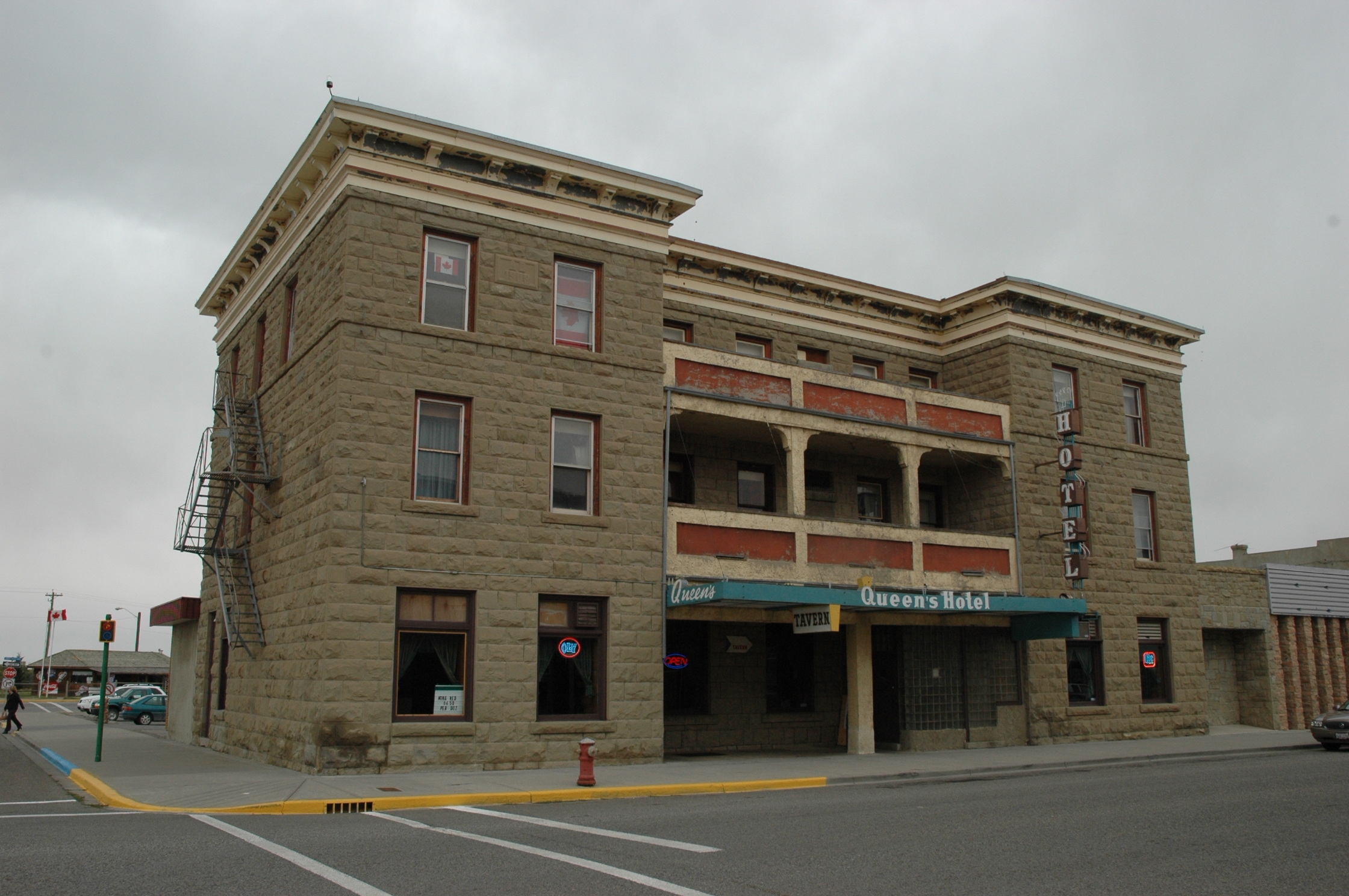
Mid-way through last year, the Queen’s Hotel in Fort Macleod was added to the Alberta Register of Historic Places. The Queen’s Hotel was designated as a Provincial Historic Resource on May 22, 2012. The building was deemed to possess heritage significance as it is an excellent example of the type of substantial hotels built in Alberta’s urban centres during boom periods of the late 1800s and early 1900s. The hotel also contributes to the heritage character of the Fort Macleod Provincial Historic Area.

The Queen’s Hotel, Fort Macleod, 2007. DSC_8336, Historic Resources Management Branch

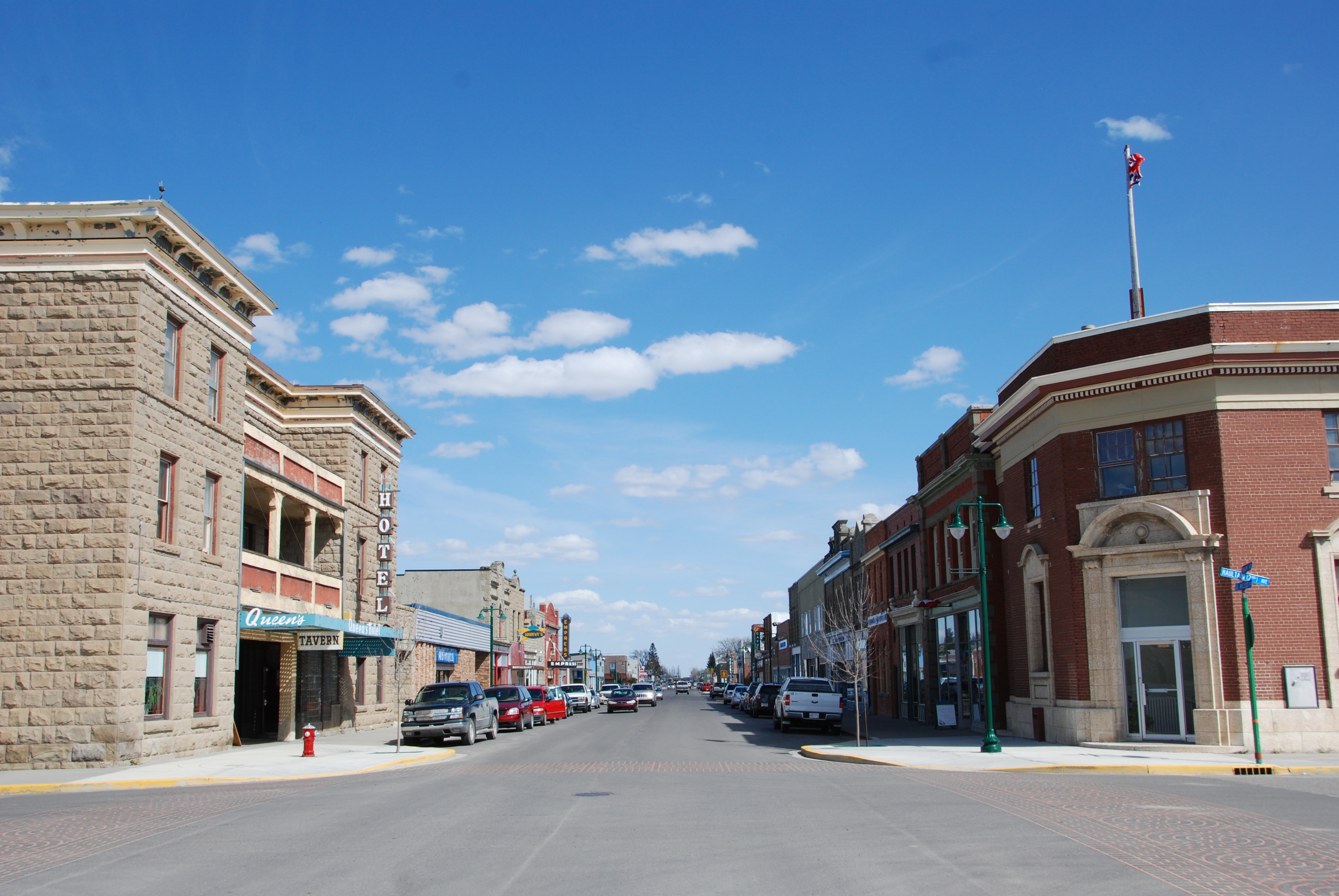
Fort Macleod was one of Alberta’s earliest and most important urban centres during the settlement period. As a thriving commercial hub and service centre for the surrounding ranching and farming communities, a number of buildings were constructed in the town’s downtown area. Locally-quarried sandstone became the building material of choice, largely due to its fire-proofing properties and the sense of stability and permanence it lent to the business and town.

The Queen’s Hotel was one of the first buildings in Fort Macleod to be built of sandstone. It was built in 1903 to replace an earlier, smaller, wood-frame hotel of the same name. The hotel is a three-storey, flat-roofed building with a U-shaped footprint. It is a prominent building in downtown Fort Macleod, being located on the northeast corner of 24th Street and Second Avenue in the town’s main commercial district. It is constructed of rough-faced sandstone blocks and is crowned by a substantial, pressed metal cornice. On completion, the Queen’s Hotel was touted as Fort Macleod’s finest lodgings and it was the most expensive accommodations in town. The Queen’s Hotel quickly became the hotel of choice for travelling business people, politicians and government officials and other well-heeled visitors to the area.

The Fort Macleod Provincial Historic Area (Queen’s Hotel at left), 2010. DSC_1150, Historic Resources Management Branch

Like most small-town hotels, the Queen’s fortunes declined following the Second World War. As tastes in travel accommodations changed, the hotel became known more as a downtown tavern with low-cost rental apartments. The hotel has also undergone a number of alterations over the years, a substantial one-storey addition has been added to the rear of the building and, as is often the case in buildings of this nature, the layout of the main floor has been dramatically altered. However, the hotel’s sandstone construction and overall style and design continue to communicate its historical significance as an early, business-class hotel and it continues to serve as an impressive visual anchor to Fort Macleod’s historic commercial district.

More information on the Queen’s Hotel can be found on the Alberta Register of Historic Places.

Written by: Ron Kelland, Historic Places Research Officer and Geographical Names Program Coordinator