Editor’s note: This week, RETROactive is pleased to share another post written by historical researcher Matt Hiltermann, on behalf of the Métis Nation of Alberta Region 3. Matt recently wrote about the Métis of Rouleaville.
Written by: Matt Hiltermann
When Albertans hear the Lougheed name, they likely think of late premier Peter Lougheed. Others may may also be familiar with his grandfather, Sir James Alex Lougheed. Much less discussed, however, is the matriarch of the Lougheed family: Lady Isabella Clark Hardisty Lougheed.
To the extent that history has focused on rich, white men, this is unsurprising if disappointing. At the same time, Isabella was widely regarded as the driving force behind her husband.[1] She and her Hardisty kin also formed the nucleus of the Lougheed family.[2] All evidence seems to point to her being a binding force in both her family and the community at large. Who was this Métis matriarch, and how did she become the “First Lady of the Northwest?”[3]
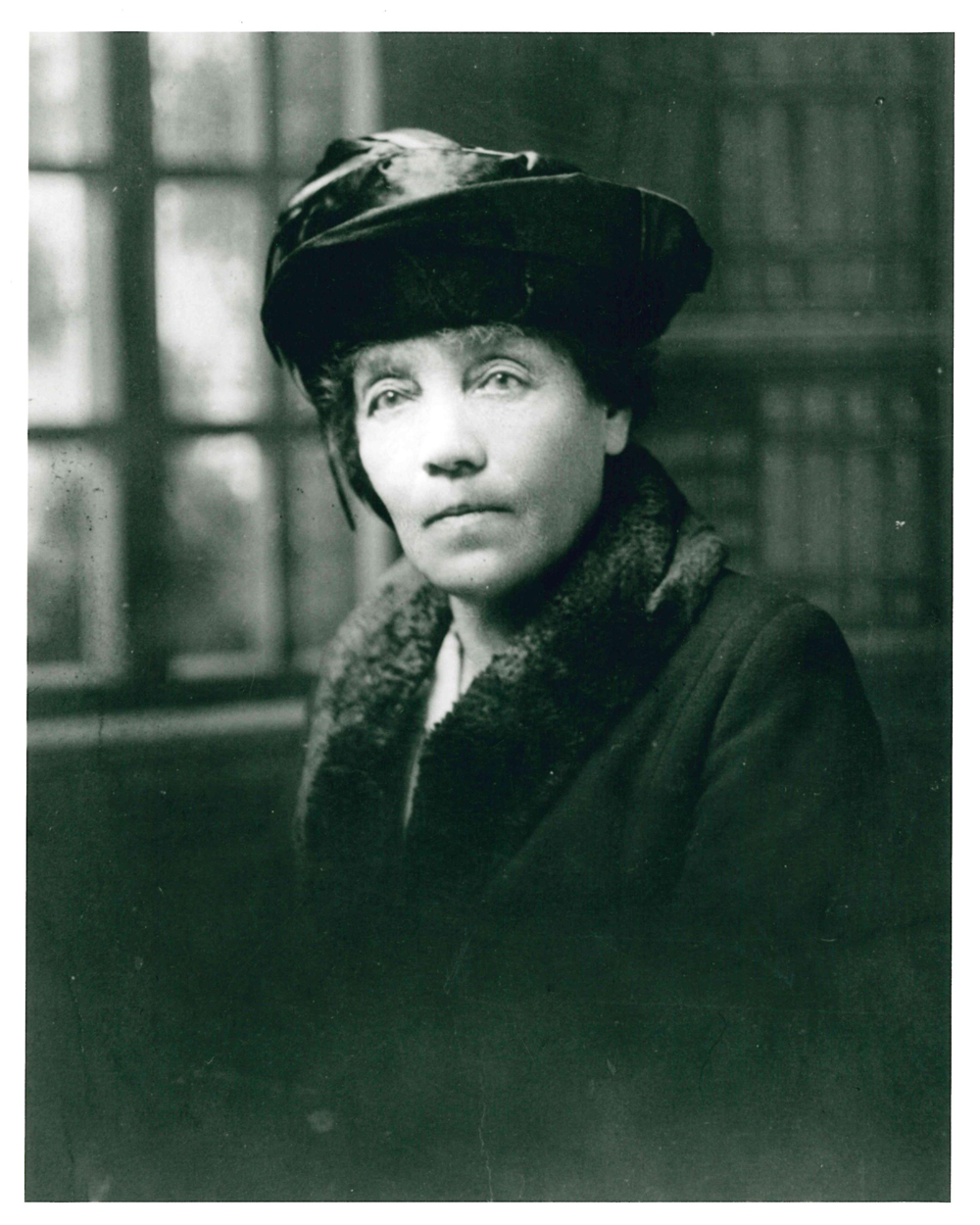
Isabellla Lougheed, ca 1910s. Source: Glenbow Library and Archives.
Isabella Hardisty was born around 1861 at Fort Resolution in what is now the Northwest Territories.[4] Her father, William Lucas Hardisty, was one of only four Métis men to attain the rank of Chief Factor between 1851 and 1869.[5] Her mother was Mary Anne Allen, a Métisse of obscure origins.[6] Both of her parents’ families had intergenerational ties to the fur trade.[7]
Written by: Jared Majeski, Historic Resources Management Branch
For his decades-long work as an archaeologist, curator and author helping to promote and preserve Blackfoot Culture, former Historic Resources Management Branch and Royal Alberta Museum staff member Jack Brink was recently named a member of the Order of Canada. He became part of this illustrious group along with a handful of other Albertans, including: Daniel Steadward, a lifelong Paralympic advocate; Dr. Lori West, who directed transplant immunology research at the U of A; and Art Bergmann, a prolific punk rock musician both as a solo artist and member of the legendary Young Canadians.
Blair First Rider, an Aboriginal Consultation Advisor with the Alberta government, worked with Jack for a number of years on, among other things, the cultural resource management file; this included work at Writing-on-Stone, Head-Smash-In Buffalo Jump and the Okotoks Erratic. In honour of Jack’s work with The Blackfoot Confederacy and Treaty 7, he was given the honourary Blackfoot name Owl Head.
“It’s kind of a bit of disbelief,” Jack Brink told Global News when asked how he felt when he heard the news. “You’re thinking… ‘What have I done to deserve this?’” Source: Office of the Governor General of Canada.
“Jack has earned his name as a way of acknowledging his support and efforts of reconciliation, repatriation and preserving the archaeological record of the sacred sites and cultural resources we are entrusted with as stewards of the land,” First Rider explained.
Understanding and preserving Indigenous history and culture, in this era of reconciliation, is done in numerous ways. One way is through archaeology, a field Brink has worked in for much of his professional life. He mentions that through archaeology, we can begin to understand the great accomplishments Indigenous people who have lived in Alberta (and Canada) for thousands of years.
“I think when the general public learn more about the deep past of Indigenous people,” Brink said, “we [can] make steps forward in terms of truth and reconciliation. The ‘past’ is a great part of the true story of Indigenous people on this continent. Most people are unaware of it, and as they learn more they come to respect the success of indigenous people surviving on this land under challenging conditions for such a long period of time. I believe that this builds an appreciation of what Indigenous people have accomplished and contributed.”
Former colleagues at the Royal Alberta Museum, where Jack worked for over 25 years, recall lessons learned from one the country’s preeminent archaeologist and curator. Assistant Archaeologist Bob Dawe mentioned that, “Jack is an excellent teacher and writer with enviable communication skills. The most beneficial enduring advice he taught me was how to be more succinct with writing and lecturing – cut to the chase rather than clutter scholarly publications and conference presentations with time wasting less relevant material. Other than this extremely helpful lesson, he didn’t belabor advice as much as lead by example.”
Acting Curator of Archaeology Kris Fedyniak worked with Brink on the ultimately successful bid for Writing-on-Stone Provincial Park to be named a UNESCO World Heritage Site. “Through the numerous and lengthy United Nations Education Scientific and Cultural Organization application bids, Jack taught me the importance of perseverance. A ‘no’ sometimes means you have to reset, reframe and try again.”
Recognition of a professional archaeologist at such a high level will hopefully inspire younger generations to not only recognize the important role archaeology and science play in our world, but to pursue a career in the field.
“I think recognition by the Governor General’s office is recognition of the power of archaeology to do good in this world,” Brink said, “to help reveal impressive stories about past cultures and to do so in a respectful way. I would hope that this would have a positive effect on young people who may be considering a career in archaeology; that it would make them aware that significant achievements can be made in the field of archaeology and that a great career can come from it.”
Written by: Ron Kelland, MA, MLIS, Geographical Names Program Coordinator
Under the Historical Resources Act, Alberta’s municipalities have the authority to designate sites and buildings as Municipal Historic Resources. This designation authority gives municipalities the ability to ensure that the preservation of their community’s history and heritage. Municipal Historic Resources are eligible for listing on the Alberta Register of Historic Places, although there is no requirement for municipally designated resources to be listed on the Register. However, designated resources must be listed on the Register to qualify for Culture, Multiculturalism and Status of Women’s conservation grants. To be listed on the Register, a Municipal Historic Resource must certain documentation prepared that explain the heritage value of the resource and guide the management of the property.
Historic Resources Management of Culture, Multiculturalism and Status of Women works with Alberta’s municipalities to list their Municipal Historic Resource Designations. A number of properties designated in previous years by a municipalities across the province have recently been added to the Alberta Register of Historic Places.
Editor’s note: With a couple weeks left in what felt like the longest year ever, this will be the last RETROactive post of 2020. Thank you to all our followers, visitors and everyone interested in Alberta’s diverse and unique history. Have a safe and happy holiday season, and we’ll see you all in 2021!
Written by: Sara King, Government Records Archivist, Provincial Archives of Alberta and Jared Majeski, Editor, RETROactive
Courtesy of the Provincial Archives of Alberta, let us start to settle in for Christmas break with some vintage video of folks hitting the slopes.
“Where Winter’s a Pleasure” was a promotional film produced by the Film and Photograph Branch of the Department of Industry and Development in 1962 for the Alberta Travel Bureau. It features footage and narration from Hans Gmoser (1932-2006), a mountain guide and founder of Rocky Mountain Guides Ltd. (later Canadian Mountain Holidays CMH) who would tour throughout North America giving lectures and showing promotional films. He was awarded the order of Canada in 1987, among other honours. Starting before dawn for a four hour hike up a glacier to ski might seem a bit daunting for some, but you can always catch the gondola at Lake Louise if you’re less ambitious, and a trip to the Tom Tom Lounge at the end of the day can’t go wrong. Just don’t forget your mountain mixture.
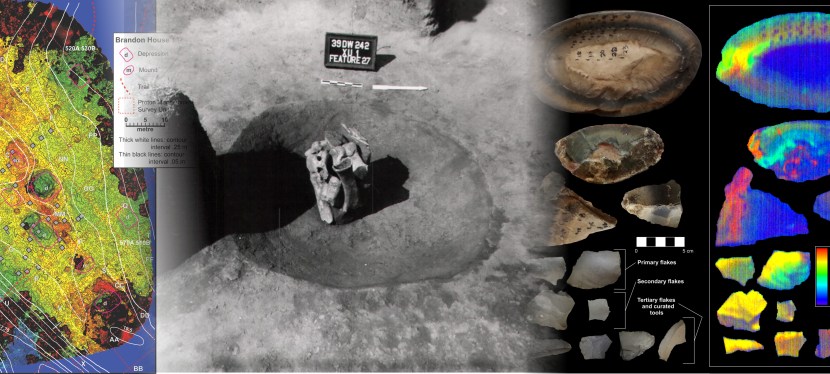
The Archaeological Survey of Alberta is proud to release Occasional Paper Series No. 39, devoted to advancing archaeological practice in Western Canada. The volume contains seven articles written by archaeological consultants, university researchers, and heritage managers. The 2019 volume is dedicated to Terrance Gibson who passed away in 2018 and was a life-long advocate of improving archaeological research and practices.
Written by: Matthew Wangler, Executive Director, Historic Resources Management Branch
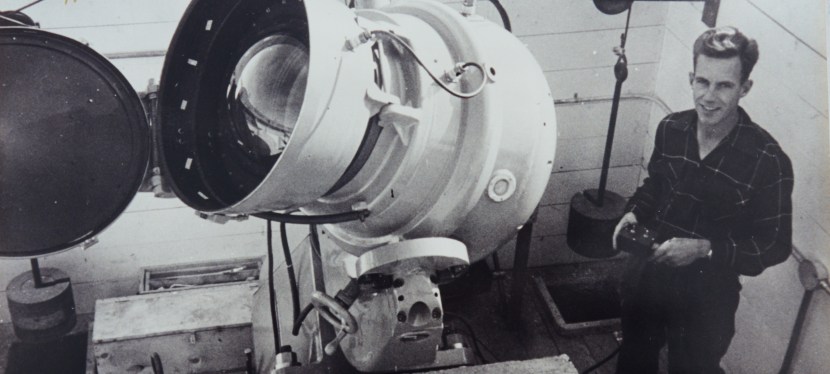
Alberta has a rich and fascinating history, and occasionally events in our past resonate with happenings of global consequence. That was the case in 1957, when a dedicated scientist working in a meteorite observation station in Newbrook captured the first North American image of Sputnik 1 – an object which came to embody both the fears and aspirations of a generation, and which heralded the beginning of a new age in science and geopolitics.
The roots of the Newbrook Observatory can be traced to 1946, when the United States and Canada agreed to work co-operatively on space science projects, particularly meteorite observations. The northerly situation of Newbrook – with its clear view of the night sky and its relative lack of auroral interference – made it an ideal location for establishing an observation station to assist in this joint effort. Constructed in 1951, the Newbrook observatory opened in 1952 as a field station of the Stellar Physics Division of Canada’s Dominion Observatory in Ottawa.
As Albertans begin to safely hunker down for the holiday season, you might think about picking up a project left at the side of your desk. Or maybe you’ll start something new altogether. If you’re someone thinking of learning more about your family history; if you’re a non-profit group wanting to mark a moment in your local history; or a person who wants to preserve the lived experiences of an older generation, these new resources will certainly help.
Developed by staff in the Alberta government’s Heritage Division, the Heritage Note Series so far consists of resource guides covering three topics: historical research, heritage markers and oral history. In these guides, you’ll learn skills like how to properly conduct an interview, how to write text for historical signage and how to manage research notes and materials.
Editor’s Note: November 15- 21 is Métis Week: an opportunity to recognize the culture, history and contributions of Métis people to Alberta and across the country. The following post is written by Matt Hiltermann on behalf of Métis Nation of Alberta Region 3. Through extensive research of census records and archival material, Matt tells the story of the many Métis families who lived at the confluence of the Bow and Elbow rivers, and who contributed to the social fabric of Rouleauville—one of Calgary’s oldest neighbourhoods.
Communities do not spring from the soil fully formed; rather, they tend to coalesce around existing population centres, important trade routes, and/or vital resources, among other things. As a fording place for the buffalo herds, the area that would become Calgary and its environs was an important gathering place for the Niitsitapi (Blackfoot) and their Tsuut’ina and Stoney Nakoda allies since time immemorial. [1] Due to its status as a gathering place rich in resources, by the mid-19th century, Métis freeman bands with kin ties to the Tsuut’ina or Niitsitapi began to visit these peoples along the Bow. [2] These Métis freemen acted as middlemen in the ever-important pemmican trade that fueled the Hudson Bay Company’s (HBC) northern trading posts, brigades and the fur trade more broadly.[3]
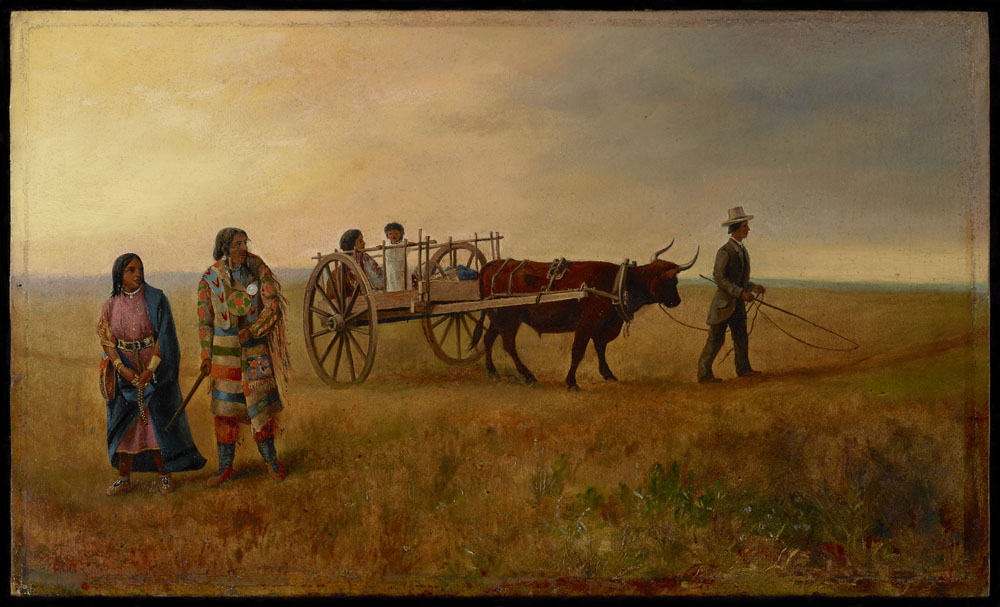
“A Red River Cart at Calgary, N.W.T.” Painting by Edward Roper, ca 1887 – 1909. Source: Library and Archives Canada.
Written by: Ron Kelland, MA, MLIS, Geographical Names Program Coordinator
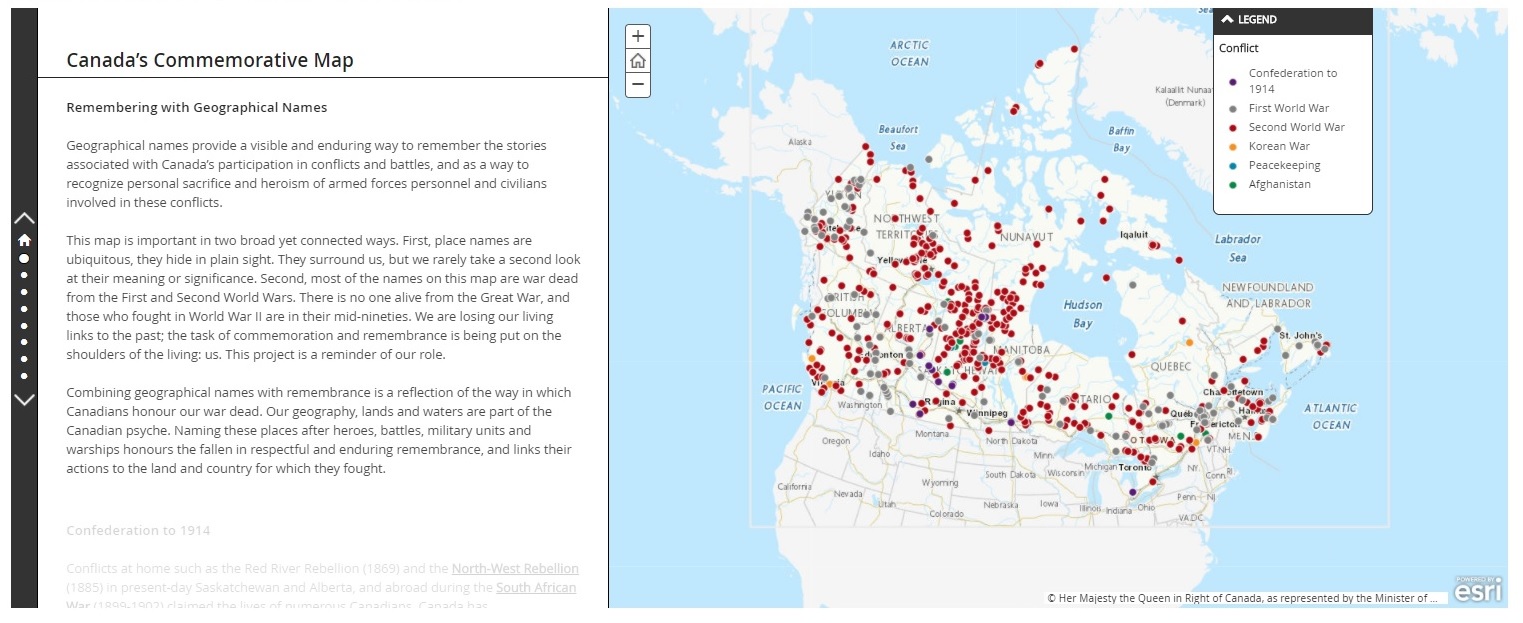
November 11 is Remembrance Day. The day that Canadians are called to set aside in honour and recognition of its military service personnel that paid the ultimate price in their defence of our nation and its values. Canadians have fought in numerous wars and as the memories of some of those wars are fading as decades pass and the last surviving veterans of those wars pass away, it becomes even more important to remember those that fought and died and those that fought and lived to preserve the memories of their fallen comrades. Canada’s Commemorative Map is one of the ways to keep the memory of those sacrifices alive.
In 2018, the Geographical Names Board of Canada launched Canada’s Commemorative Map, an interactive, digital map that highlights places and features in Canada that were named to honour and commemorate Canada’s war heroes and casualties. Source: Geographical Names Board of Canada.
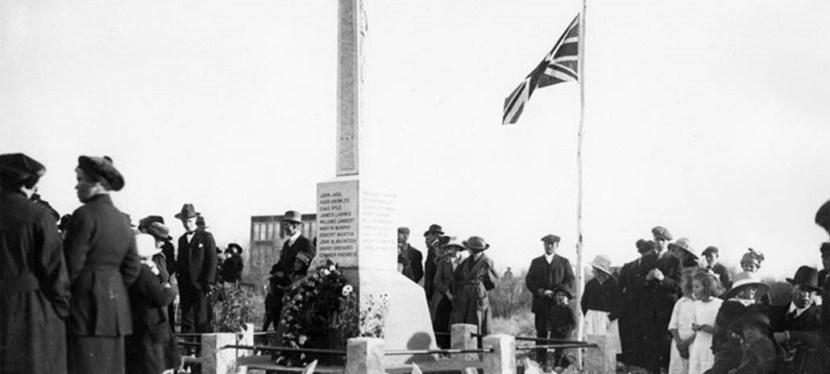
Commemoration of Canada’s war casualties have taken many forms. Following the end of the First World War, there was a national effort to erect plaques, cenotaphs and other memorials in cities, towns and villages across the country. These memorials of the First World War are often the sites of our Remembrance Day services and ceremonies to this day. Some communities built needed infrastructure and facilities, such as arenas, performing arts centres, libraries and community halls dedicated to memory of those that gave their lives in military services.
Written by: Fraser Shaw, Heritage Conservation Advisor
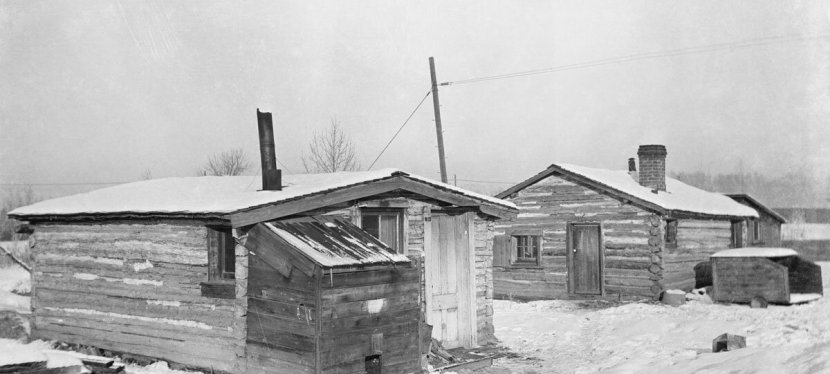
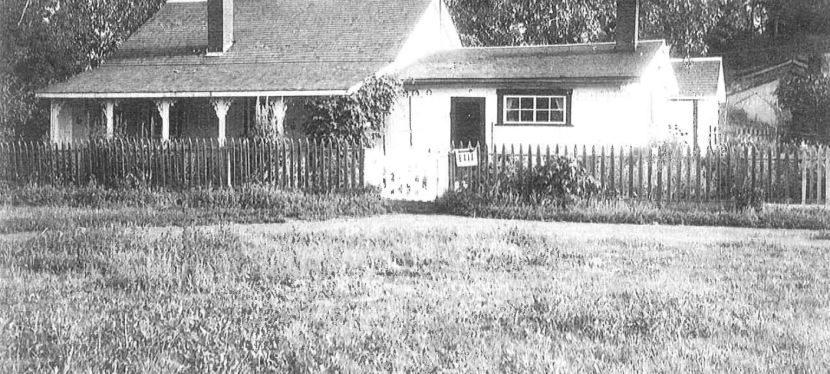
Recently, I visited the Maccoy Homestead in High River after seven long years of flood repairs and conservation. Nestled in Sheppard Family Park near the south edge of High River, this was the farm and home of well-known local resident Ruth Maccoy for over 70 years. Upon her passing in 1995 and at her bequest, the farm became Sheppard Family Park with the homestead as its nucleus.
The home is a charming 1883 whitewashed log building, the earliest structure on the site, with a frame addition and porch built by her parents in the 1920s and surrounded by a garden and picket fence lovingly tended by Ruth Maccoy over the years. Behind the house are a garden shed, a small guesthouse, and a root cellar set into an embankment, while the garage is located nearby. A path leads west through the trees to a footbridge over the Little Bow River, usually a shallow creek, to the historic water source in a natural spring.
One of High River’s first municipal designations, the Sheppard/Maccoy House was designated as a Municipal Historic Resource in 2009 by the Town of High River for its association with Ruth Maccoy and early settlement in the area. An exceptional example of an early farm, the site also exemplifies the contribution of women’s labour to homesteading and agriculture in rural Alberta and was designated a Provincial Historic Resource in 2015. The site is a good example of how complementary municipal and provincial heritage values tell a richer story and was the subject of a RETROactive post earlier this summer.




 RETROactive
