Written by: Ronald Kelland, Geographical Place Names Coordinator
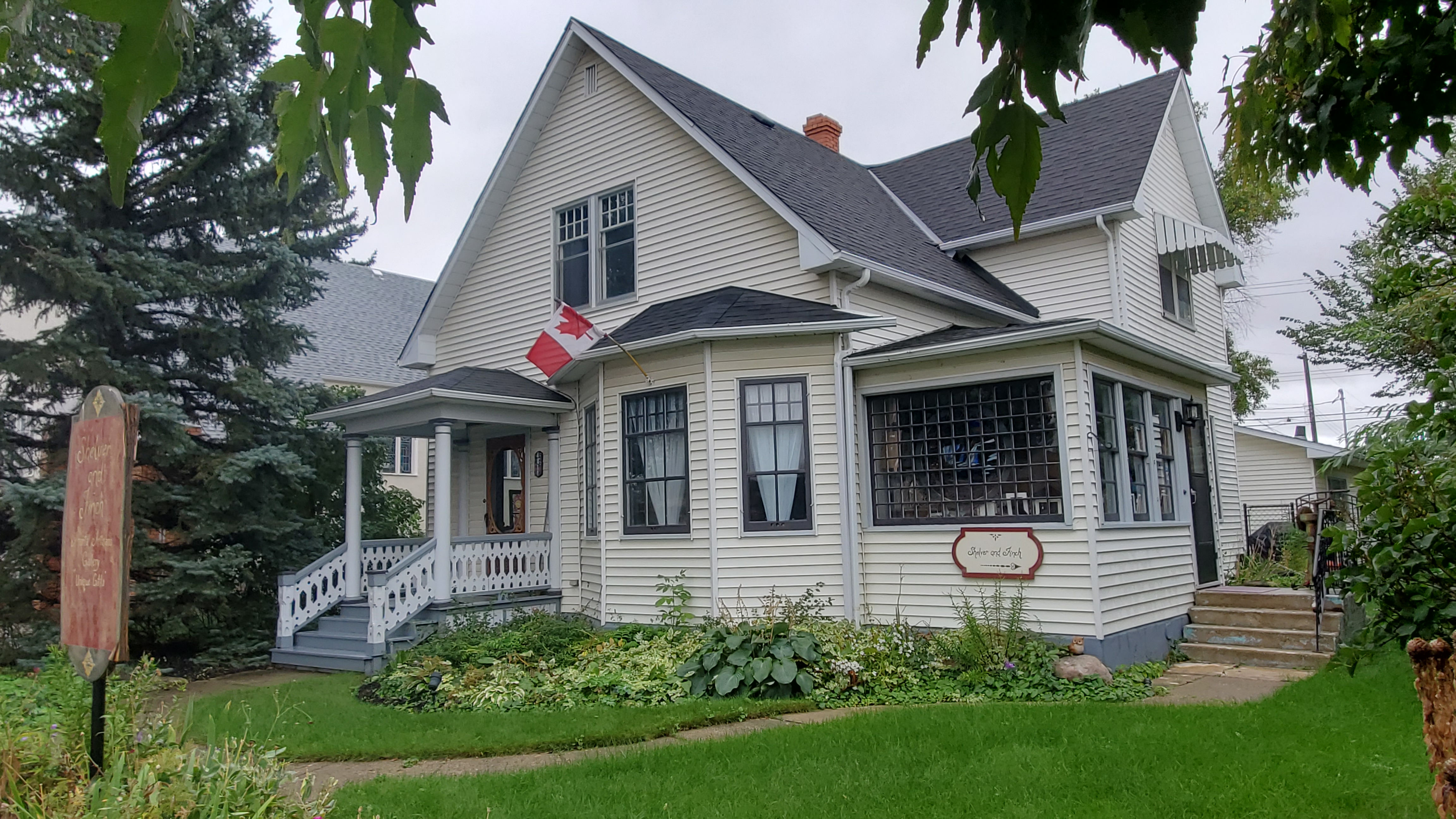
The Dr. McMillan Residence, a somewhat unprepossessing yet significant home in Claresholm, has recently been designated as a Provincial Historic resource and is now listed on the Alberta Register of Historic Places.
View of the Dr. McMillan Residence from the south, showing the main, residential entrance and the secondary, clinic entrance. Source: Historic Resources Management, Alberta Arts, Culture and Status of Women, 2024.
On Second Street West, at the western fringes of Claresholm’s downtown district, beside a church and amongst several more recent commercial buildings, stands the Dr. McMillan Residence. The house has provincial heritage significance for its association with the provision of medical services in Alberta and for its design, being a combination of private, residential space and professional, medical clinic space.
Editor’s note:September 30 is the National Day for Truth and Reconciliation and Orange Shirt Day.Reading residential school histories can be a painful process. If reading this is causing pain or bringing back distressing memories, please call the Indian Residential Schools Crisis Line at 1-866-925-4419. The Crisis Line is available 24 hours a day and can also provide information on other health supports provided by the Health Canada Indian Residential Schools Resolution Health Support Program.
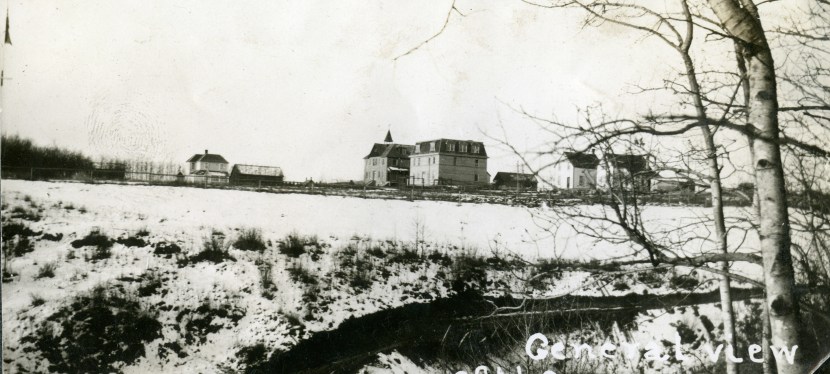
The banner image above is “General view of the I.I. School.” Date unknown. Source: City of Red Deer Archives, P10890.
Written by: Laura Golebiowski (Indigenous Consultation Adviser) in collaboration with Whitecap Dakota First Nation.
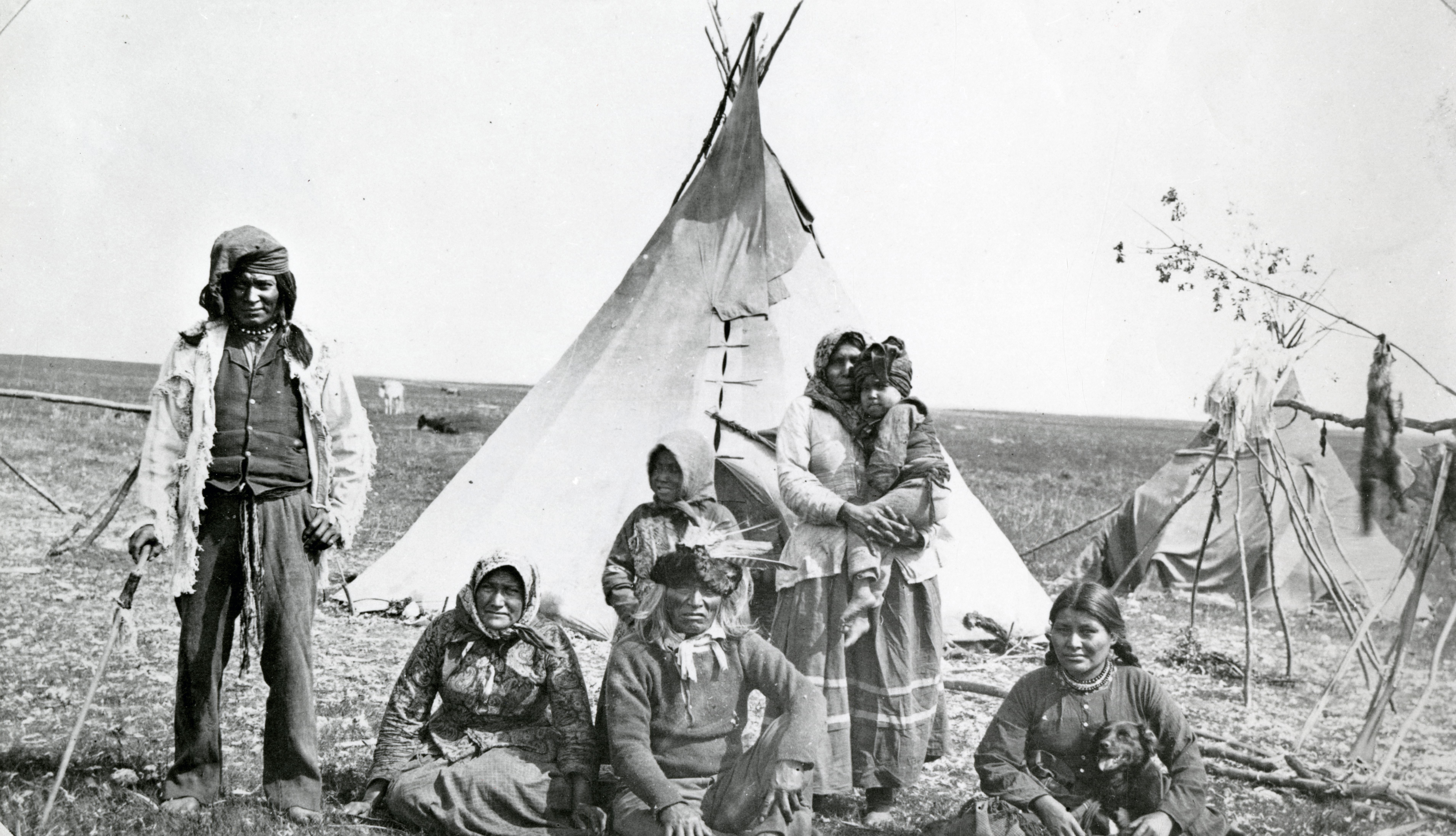
In the late 1880s, a group of Dakota Oyate led by Chief Whitecap were making their home along the northern extent of their territory. They settled near Mni Duza—the South Saskatchewan River—on a landscape known as “Moose Woods”: rich with water, wood, wildlife and plants for sustenance and ceremony.
Chief White Cap (seated centre) and members of his family, ca 1885. LH-5418, Saskatoon Public Library.
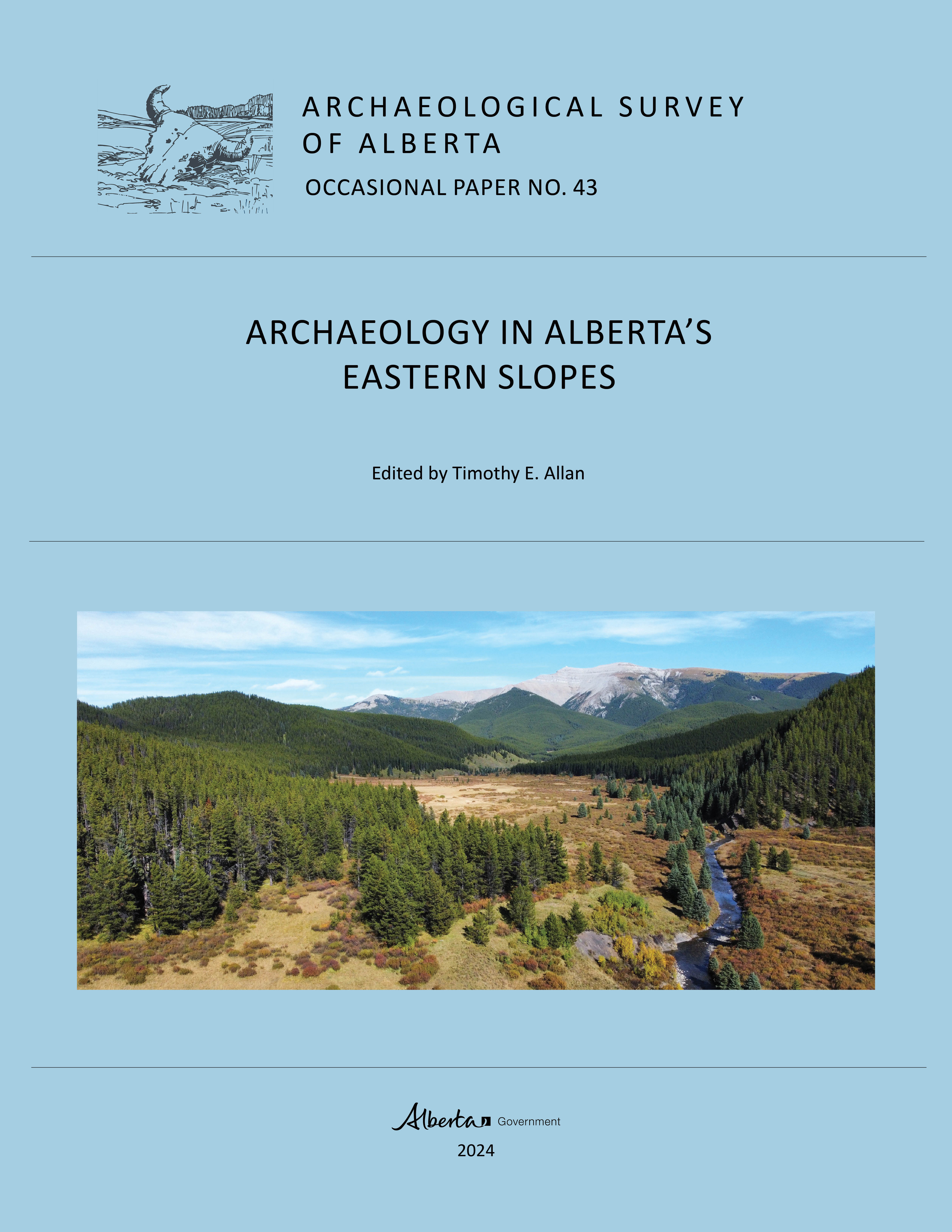
The volume is dedicated to archaeology in Alberta’s Rocky Mountains, Foothills and their margins. The initial three articles were released in Spring; below are summaries for the remaining six articles. They explore projectile points, caches, plant residues and more.
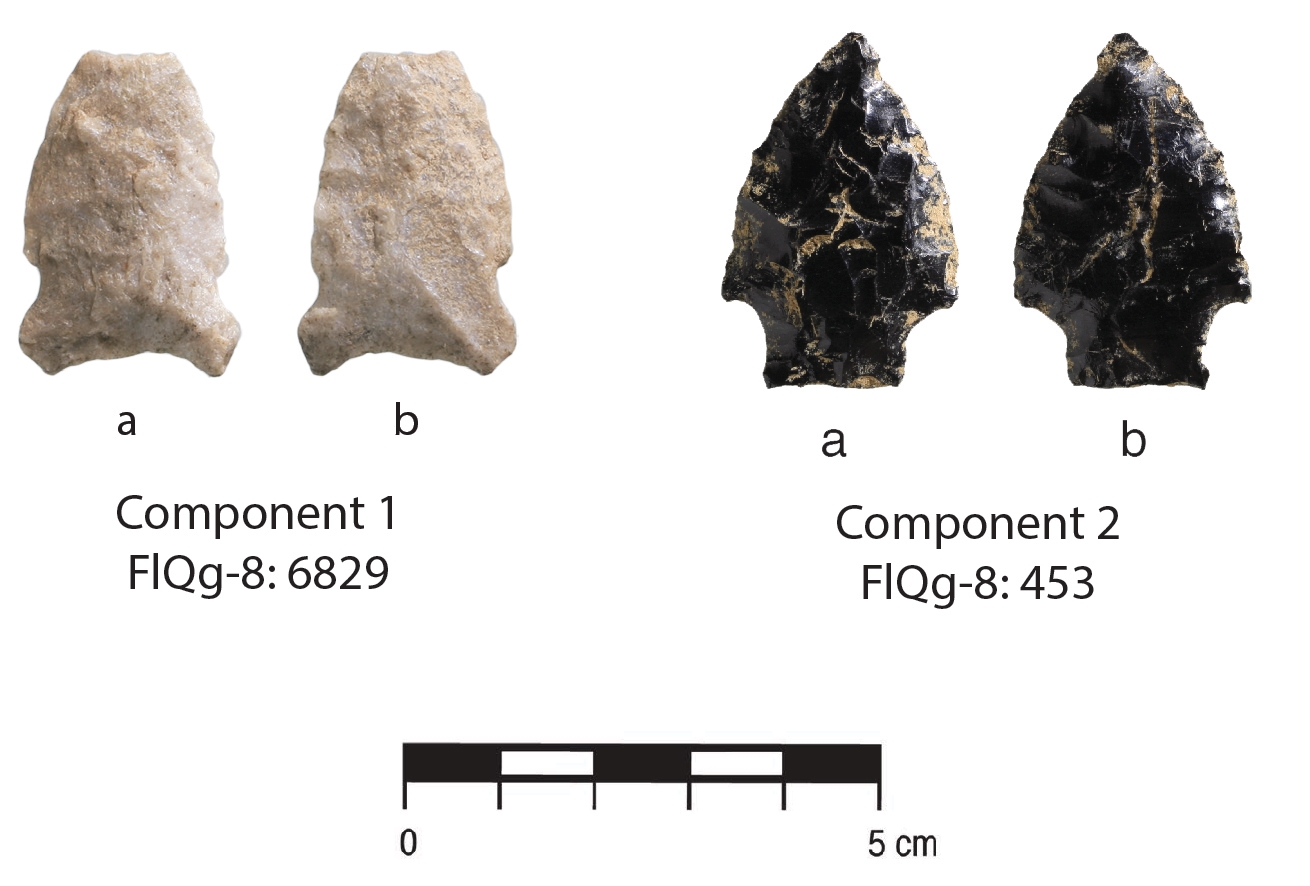
The fourth paper in the volume explores Oxbow and McKean stone tool assemblages at a site northeast of Hinton, Alberta. Taylor Graham applies statistical analyses to tease apart reduction events among the 6,000 artifacts recovered.
Projectile points recovered from FlQg-8. Source: Graham, 2024.
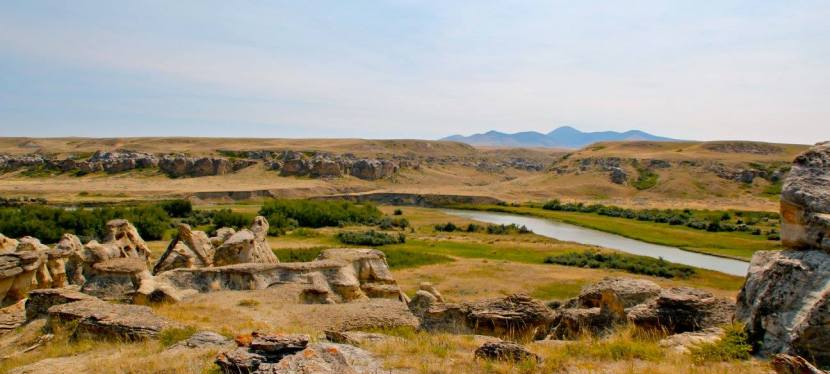
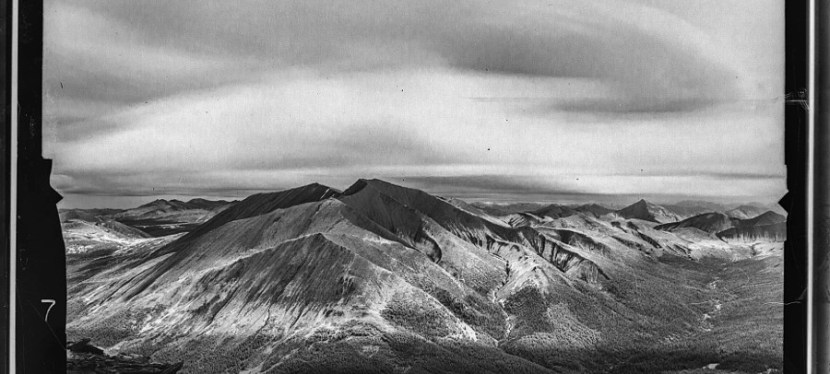
Editor’s note: The banner image above is of Áísínai’pi/Writing-on-Stone. Source: Laura Golebiowski.
Blair First Rider is a Kainai (Blood Tribe) Elder and Horn Society grandparent, and an Indigenous Consultation Adviser with the Historic Resources Management Branch. Thank you Blair for sharing your grandfather’s stories. Suukapi!
Written by: Blair First Rider and Laura Golebiowski, Indigenous Consultation Advisers
In a previous RETROactive blog post, we discussed the seasonal round: the Niitsitapi (“the real people,” how the Blackfoot refer to themselves) concept that structures the year and our relationship to the land and one another. In this post, we learn some of the ways the Niitsitapi spent time during the hot summer months at the turn of the century.
This knowledge was shared by George First Rider, Blair’s paternal grandfather. George was born in 1904 on the Kainaiwa (Blood Tribe) reserve. His father was Dog Child and his mother was The Only Handsome Woman, also known as Catching Another Horse.
George First Rider was a kipita-poka: a grandparent’s child. Deeply loved and cared for by his family, he was afforded a lifestyle of traditional knowledges and practices. He was also a member of the Horn Society and other age-grade Societies (the complex social and ceremonial system that Niitsitapi men participate in from the age of seven or eight to adulthood. Niitsitapi women participate in the Motokis Society). Through ceremonial transfers, George learned many songs and earned the ability to conduct many ceremonies.
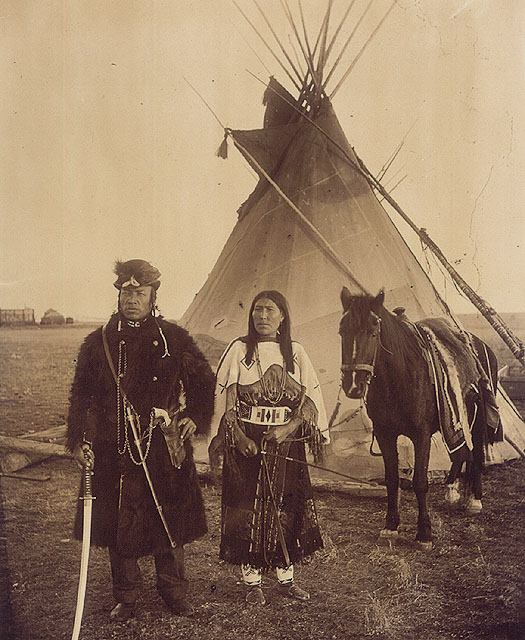
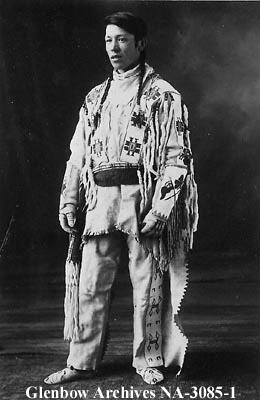
Dog Child, a North West Mounted Police scout, and his wife, The Only Handsome Woman, members of the Blackfoot Nation.” [ca 1890]. Credit: Trueman and Caple / Library and Archives Canada / PA-195224.“George First Rider, Blood.” [1925-02-21] (CU 187940) by Atterton. Courtesy of Glenbow Library and Archives Collection, Library and Cultural Resources Digital Collections, University of Calgary.Read more →
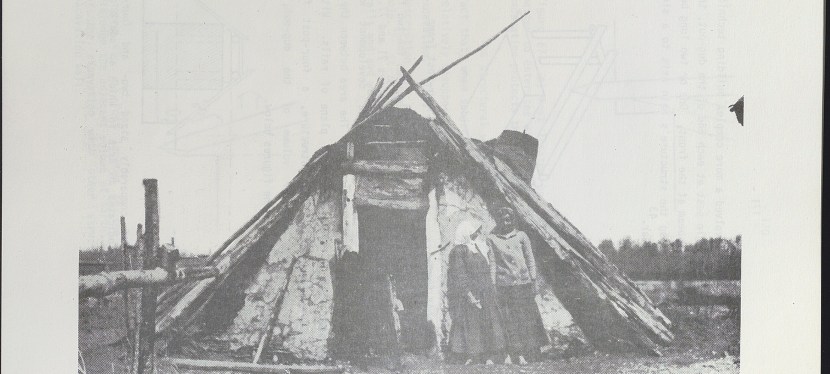
Editor’s note: The banner image above is a slanted roof, dug-out home with a four-post frame, 1913, found in Occasional Paper No. 11.
Written by: Dorothy Field, Heritage Survey Program Coordinator and Ronald Kelland, Historic Places Research Officer
The Alberta Heritage Survey Program is happy to announce that digitized versions of the first 15 Historic Sites Services Occasional Papers, published by the Historic Sites Service (HSS) between 1976 and 1985, are now available online.
Starting in 1976, the HSS produced and published an Occasional Paper Series about sites, people and historic themes in Alberta. Similar to the Archaeological Survey of Alberta’s Occasional Papers, popularly known as the “Blue Books” or the “Blue Series,” the HSS occasional papers series were produced by staff historians and contractors based on their in-house research.
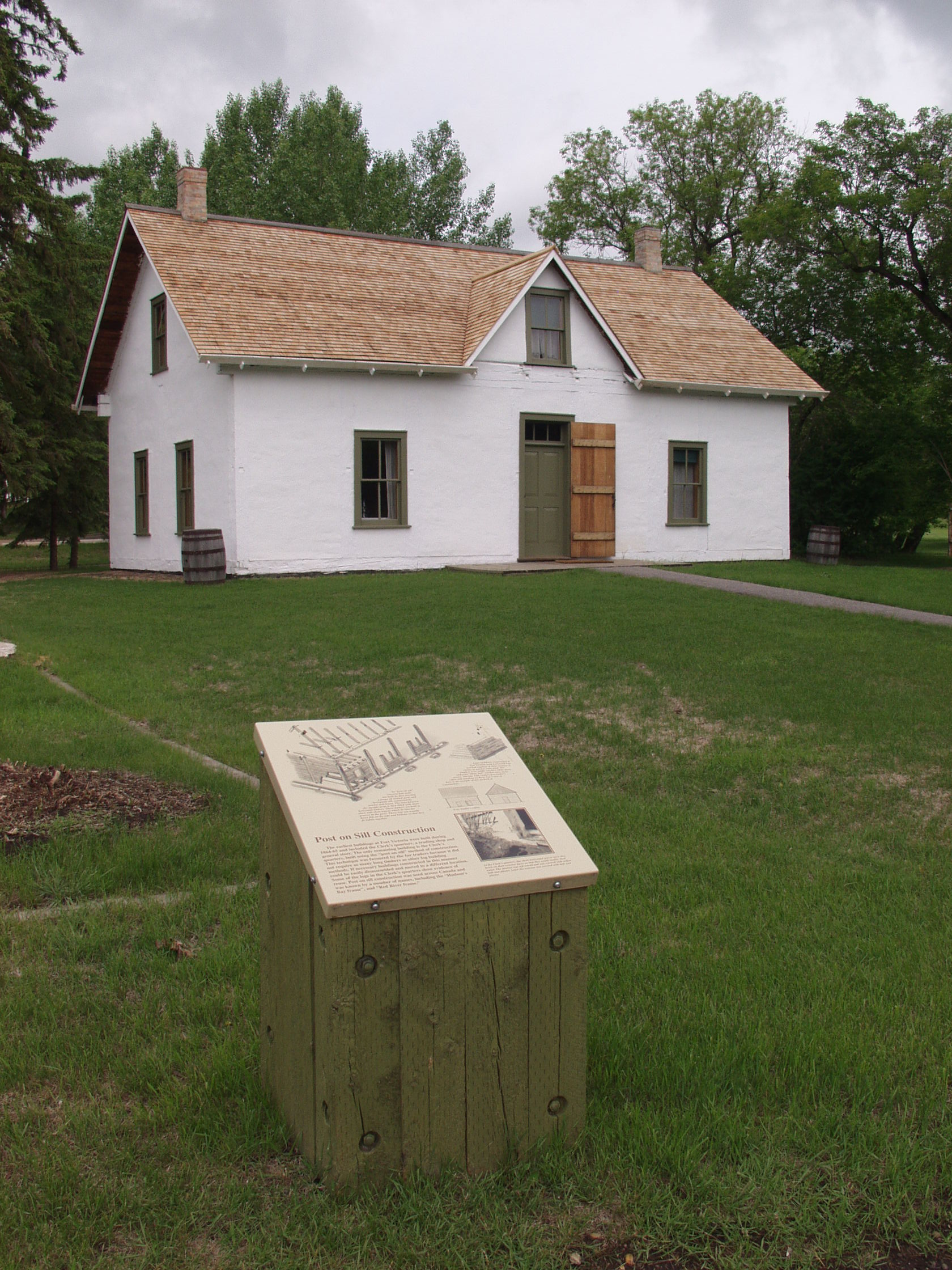
Fort Victoria Clerk’s House, Provincial Historic Resource, 2014. Source: Historic Resources Management Branch.
The Archaeological Survey of Alberta is proud to kick-off Occasional Paper Series No. 43 with its first three articles, which are available to download for free:
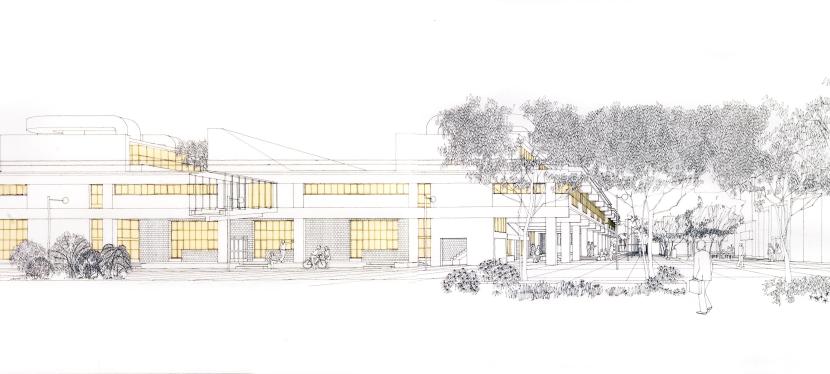
Editor’s note: The following interview has been lightly edited for length and clarity.The banner image above is of the Carleton University School of Architecture, Ottawa, 1970. Source: University of Calgary, Canadian Architectural Archives, Carmen and Elin Corneil fonds, CA ACU CAA F0007.
Written by: Robb Gilbert, Archivist, Canadian Architectural Archives and Dorothy Field, Heritage Survey Program Coordinator
In my work with the Alberta Heritage Survey, I’m always on the lookout for sources of reliable information about Alberta’s architectural history. One such resource that people may not generally be aware of is the Canadian Architectural Archives (CAA), which is a veritable Aladdin’s Cave full of material donated by architects from Alberta and across Canada. But just what, exactly is the CAA? Recently, I had the opportunity to ask Robb Gilbert, Archivist at the Canadian Architectural Archives, about the history, holdings and services of the CAA.
(Dorothy) Hi Robb! Can you tell me about yourself and what you do at the CAA?
(Robb) I’ve been at the CAA for five years. My role is to manage the CAA’s extensive collection, improve access to the holdings, acquire new collections and additions to existing collections, teach students about the archives, assist visiting researchers, and generally raise awareness and engagement with the archives. I previously worked at the Kamloops Museum and Archives before joining Archives and Special Collections at the University of Calgary. My educational background before becoming an archivist was in religious studies and art history. Courses in art and architectural history at Carleton University in Ottawa fueled my ongoing passion for the history of Canadian architecture.
When was the CAA established, by whom, and what was its original mission?
The CAA was established at the University of Calgary 50 years ago in 1974. The idea to start an archive originated with the Dean of the Faculty of Environmental Design (now called School of Architecture, Planning and Landscape) William T. Perks (1934-2023) who proposed an archive to Ken Glazier (1912-1989), the Chief Librarian. The archive was established and developed by Perks, as well as the professors of architecture Michael McMordie and R.D. Gillmor (1930-2019), and the rare books librarian Ernie Ingles (1948-2020). McMordie built the holdings from his connections and through outreach to architects across Canada. And Ingles and the staff in the library provided the administration and operations for the archive. The original mission was to serve as a teaching and research resource for students and researchers, to collect and preserve historical records on Canadian architecture, and to promote public education and awareness about the built environment.
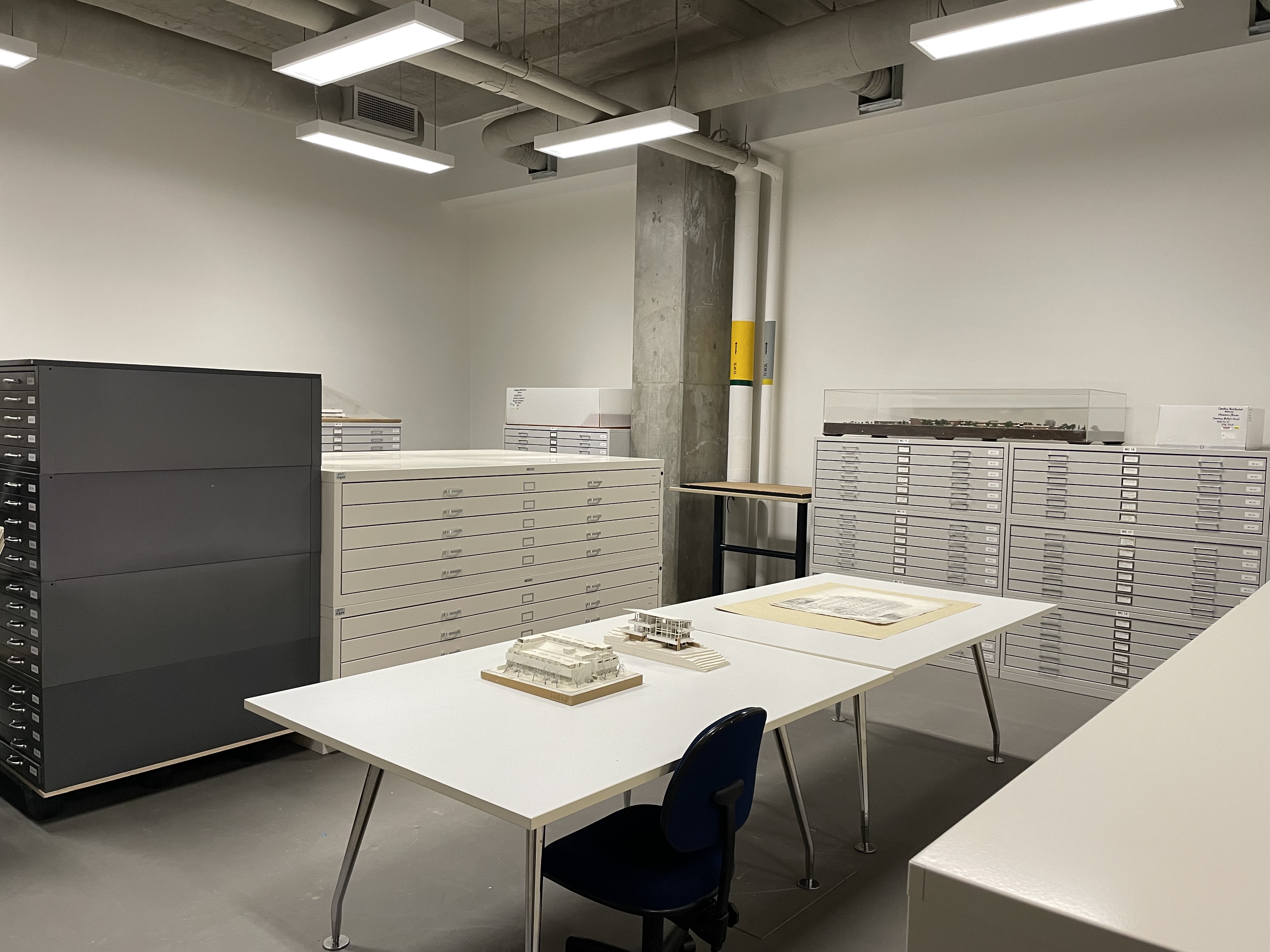
Canadian Architectural Archives, Archives Vault. Source: Photograph courtesy of the author.
Written by: Ronald Kelland, Historic Places Research and Designation Program
Remembrance Day, November 11, is the day Canadians honour our military personnel and memorialize those who gave their lives while in military service. While honouring all Canadian service personnel this Remembrance Day, RETROactive is drawing particular attention to a geographical feature named to commemorate two cousins who were casualties of the First World War.
Near the Alberta/British Columbia boundary, 55 kilometres ENE of Grande Cache is a mountain known as Mount May; its two peaks are named George Peak and Francis Peak. The mountain and its peaks are named for two cousins, George and Francis May of Ottawa, both of whom were casualties of the First World War.
Francis May
Francis Loren May (frequently misspelled Francis Lorne May) was born on August 14, 1894, at Ottawa to William Chaney May and Susan Margaret May (née Story). William May was a partner in the family firm George May and Sons, a leather goods and saddlery store on Rideau Street. In 1915, Francis was living with his parents at 155 Gilmour Street in Ottawa. Described as being nearly six feet in height and with hazel eyes, a ruddy complexion and light brown hair, he was a member of the Ottawa Ski Club and the Ottawa Canoe Club and, during his school years, he spent two years with the Ottawa Collegiate Institute Cadets. He tried to enlist for service with the Canadian Expeditionary Force in 1914 but was not accepted due to an attack of appendicitis. He did enlist for service at Ottawa on February 22, 1915. His attestation papers list his employment as clerk, and he may have been employed in the family firm or with the Dominion Government. Francis had worked with the Dominion Land Survey, notably in northeastern Alberta in 1912 as an axeman in the surveying party of George McMillan, DLS. It is possible that the May River, which was partially surveyed and named by McMillan in that year, may have been named for Francis.
Editor’s note: September 30 is National Day for Truth and Reconciliation and Orange Shirt Day. Reading residential school histories can be a painful process. If reading this is causing pain or bringing back distressing memories, please call the Indian Residential Schools Crisis Line at 1-866-925-4419. The Crisis Line is available 24 hours a day and can also provide information on other health supports provided by the Health Canada Indian Residential Schools Resolution Health Support Program.
An earlier version of this article appeared in the December/January 2024 issue of Nisichawayasi Achimowina.
Written by: Laura Golebiowski (Indigenous Consultation Adviser), in collaboration with Nisichawayasihk Cree Nation.
“Eight children, an equal number of boys and girls, were going with us to enter a Residential School… I applied, but without success, to the Principal of the Brandon Residential School, for the admittance of the Indian children. That they were “non-treaty” was the alleged objection. As, however, the Red Deer school was willing to receive them, we decided to take them there…In the course of two or three years, five of those apparently healthy children had died from Tuberculosis.”
– Samuel Gaudin, in Forty-Four Years with the Northern Crees
Nisichawayasihk Cree Nation are the Nisichawayasi Nehethowuk: the people whose ancestors lived near where the three rivers meet and who speak Nehetho, the language of the four winds. Their territory includes the rich lands of the Canadian Shield and boreal forest in what is now northern Manitoba. Their central community hub is located at Nelson House, a long-time place of Indigenous occupation where the Hudson’s Bay Company established a trading post in the late 1700s.
The rocky shoreline of Footprint Lake, Nisichawayasihk Cree Nation territory near Nelson House, Manitoba. Source: Laura Golebiowski.
Editor’s note: Tansi! June is National Indigenous History Month, the opportunity to learn about the unique cultures, traditions and experiences of Indigenous communities in what is now Alberta and across Canada. This month also marks the 125th anniversary of the signing of Treaty 8, which encompasses a land mass of approximately 840,000 kilometres and includes portions of Alberta, British Columbia, Saskatchewan and the Northwest Territories. In Alberta, much of Treaty 8 territory is delineated by the Athabasca River extending north. Treaty 8 territory also includes the north shore of Lac La Biche extending northeast to the Saskatchewan border, as well as portions of Jasper National Park.
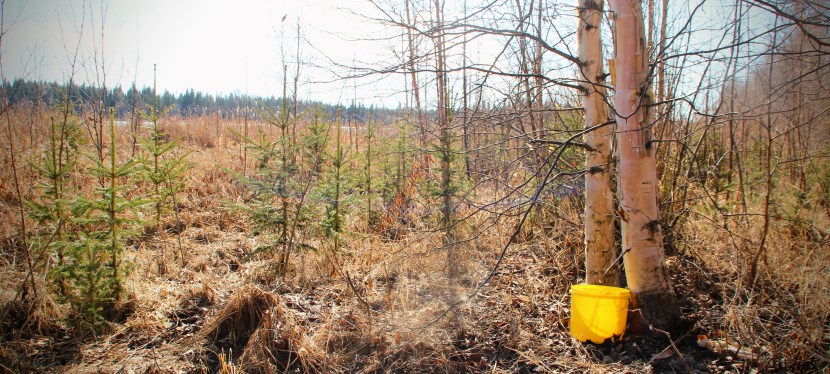
The banner image above is courtesy of Laura Golebiowski.
Written by: Laura Golebiowski (Indigenous Consultation Adviser) in collaboration with Woodland Cree First Nation.
“I believe Spring speaks its truest word when you can see the women setting out pails to get that sap from the birch tree,” Chief Dan George narrates in the 1973 film Season of the Birch. The short documentary focuses on intangible heritage knowledge and practices that are still present in Cree communities in Treaty 8 today: the tapping of birch trees and the making of birch syrup.
The window for birch tapping is incredibly narrow. The waskwayâpoy (birch sap) runs best in the early spring when the snow has melted, but before the tree leaves appear. At the kind invitation of Lawrence Lamouche, Traditional Lands Manager, I visited Woodland Cree First Nation in late April, to witness this centuries-old practice and learn how Knowledge-Keepers harvest waskwayâpoy and make birch syrup.




 RETROactive