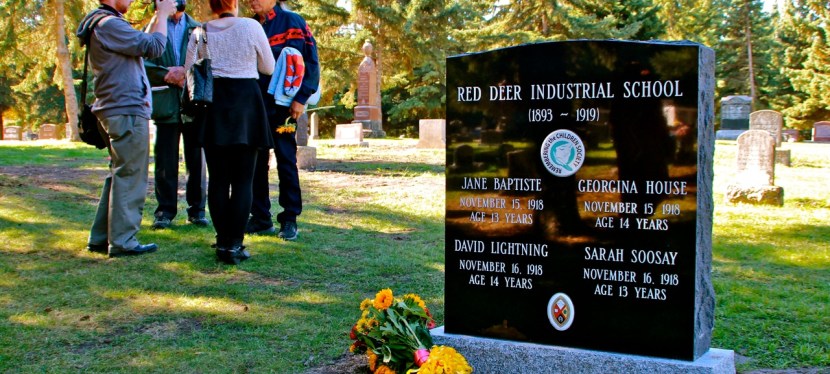
Red Deer Industrial School Monument Unveiled

During the past three weeks the Spanish influenza has swept through this institution. I regret to report that as a result, five of our pupils are dead: Georgina House, Jane Baptiste, Sarah Soosay, David Lightning, William Cardinal…At the time the children died practically everyone was sick so that it was impossible for us to bury the dead. I thought the best thing to do was to have the undertaker from Red Deer take charge of and bury the bodies. This was done, and they now lie buried in Red Deer.”

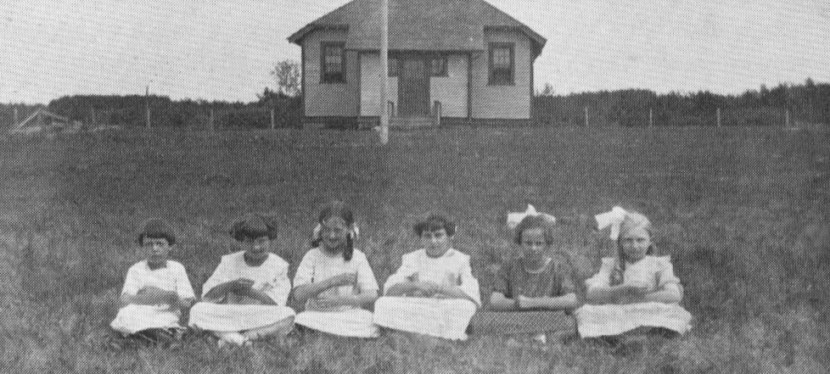
These words, written by then-Principal Joseph F. Woodsworth to the department of Indian Affairs, now also appear in the Red Deer City Cemetery, on a monument commemorating the lives of four of the five young men and women who passed away on November 15 and 16, 1918, while attending Red Deer Industrial School[1]. Until now, their names and resting places within the Red Deer City Cemetery had remained largely unmarked and their stories untold. Read more

Métis Week: November 13 – 18

riel-1
Excerpt from Chester Brown’s Louis Riel: A Comic Strip Biography (Drawn & Quarterly, Montreal, 2003)

November 13 – 18 marks the annual Métis Week celebrations. Each year, the Métis Nation of Alberta hosts events around the province to commemorate not only Riel’s uniquely complicated and heroic legacy, but the outstanding contributions of Métis people to Canada. November 16, the date Riel was executed, will be an especially significant remembrance.

When it comes to defining legacies of the women and men who helped shape Canada into what it is today, few people are as complicated as Louis Riel. The Métis founder of Manitoba and twice-elected Member of Parliament is at the same time revered and scorned; the vanguard of Métis resistance against the federal government is a hero and a traitor, depending who you ask. To this day, over 130 years after he was hanged for treason in Regina, Saskatchewan, Riel is to some still a controversial and polarizing man. But for many, especially Canada’s Métis population, Riel is a man to celebrate and to honour. Read more

Passchendaele Remembered

During November 2017, Canada commemorates the centennial anniversary of the Battle of Passchendaele, also known as the Third Battle of Ypres. It was the third and last major battle victory during 1917, after Vimy Ridge and Hill 70, for the combined Canadian Divisions fighting together as a Corps.

The Battle saw German and Allied armies clash in the area of the Belgian city of Ypres. Fought from 31 July through 10 November, 1917, the battle is estimated to have resulted in over half a million casualties. Canada alone suffered over 4,000 dead and almost 12,000 wounded. The carnage in the infamous mud of the battlefield became synonymous with the senseless and massive losses suffered by troops during the Great War. Singular feats of sacrifice and valour during the course of the battle saw nine Canadians awarded the Victoria Cross, the highest military honor conferred within the British Empire. Read more

POW and Internment Camps in Alberta: WWII

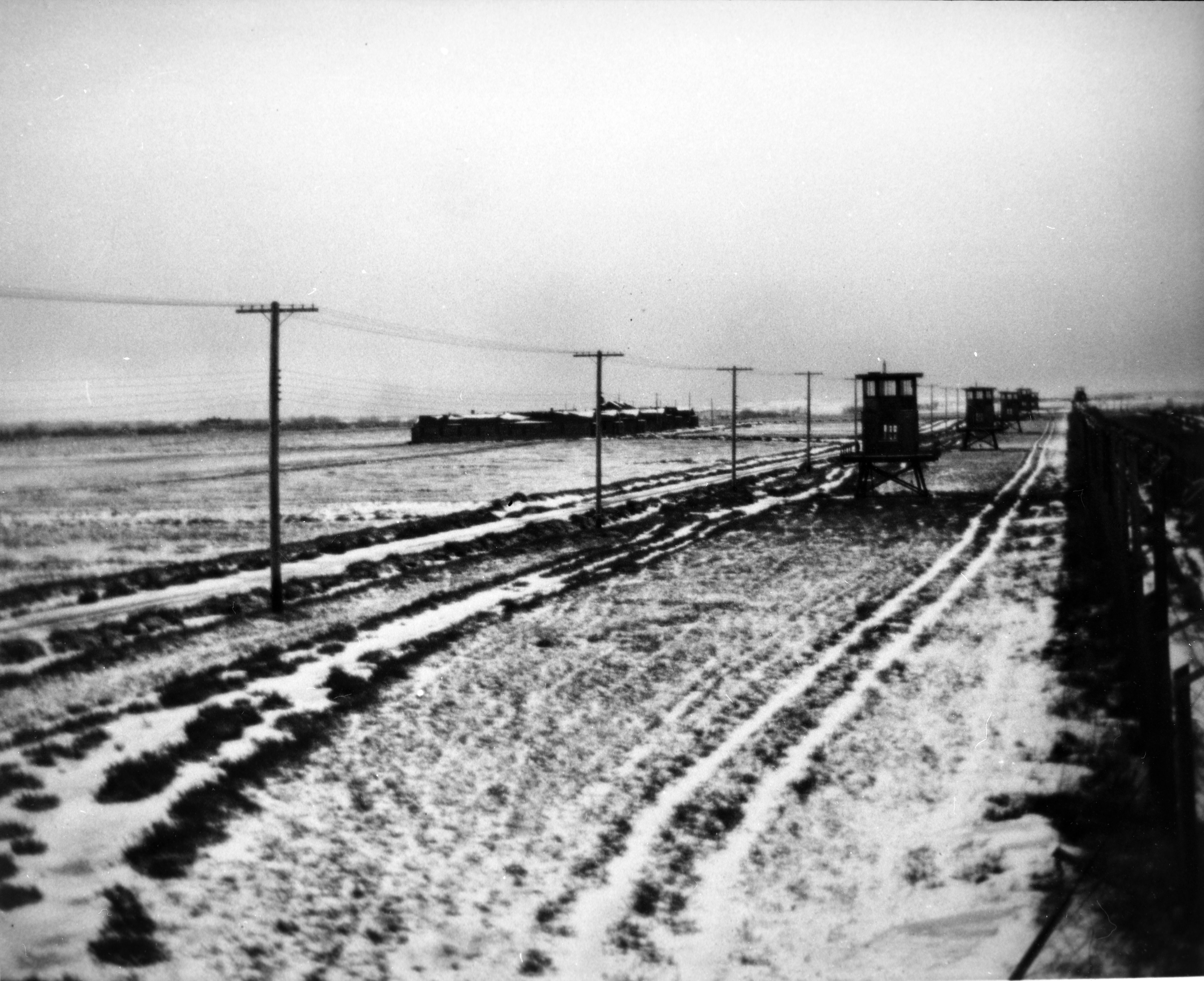
On September 1, 1939, the Second World War began and Canadians responded with more than one million of its men and women enlisting in the military. Many were sent overseas, and stories of the courageousness of Canadians on the battlefront emerged. This war is known for uniting the country and forging its own national identity, but a lesser known aspect from this period takes place at home. In a significant reaction to the war, internment camps were established and Canada detained citizens of its own country, discriminating against members of German, Japanese and Italian communities. In addition, Canada had an active part in accepting German prisoners of war who were captured in active duty. This blog post will look at the establishment of prisoner of war and internment camps in Alberta, and briefly at the people who were detained, and the life they experienced.

View of guard towers at the POW camp in Medicine Hat, c.1948 (Image courtesy of Esplanade Archives, 0590.0017).

Read more

Haunted Heritage Part 3: Hair Raising Hotels

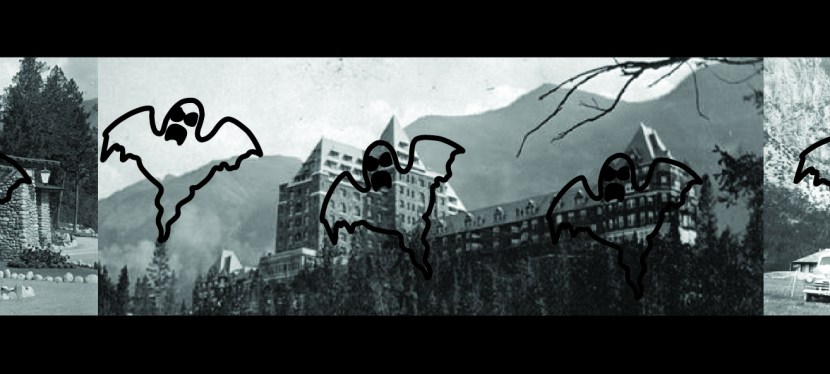
Accounts of paranormal activities, ghostly sightings and unexplained phenomena have often been noted in some of the world’s most renowned hotels. Alberta is no exception and is home to several famous hotels with a reputation of spooky occurrences. With Halloween creeping just around the corner, it is a great time to share some supernatural stories about old hotels with a wealth of ghostly lore.

Here are a few allegedly haunted hotels:

The Banff Springs Hotel

The majestic Banff Springs Hotel is a large chateau-style structure overlooking the Bow River Valley in Banff National Park. It is one of our countries original grand railway hotels constructed by Canadian Pacific Railway. Construction on the luxury hotel began in 1887 and it was first opened to the public on June 1, 1888. Between 1890 and 1928, the hotel underwent several periods of construction that involved many improvements to the original building. After a fire destroyed much of the original wooden structure in 1926, the hotel was rebuilt in its current configuration in 1928. Nestled at the foot of Sulphur Read more

Ask an Expert: The Nite’n Day Café

Have you ever heard of the Nite’n Day Café in Edmonton, formerly located at 118 Avenue and 80 Street? We recently had an inquiry on our Facebook page about the café through our Ask an Expert feature. The call was put out to our experts and, while no one had heard of it before, they did dig up some information! Read more

From the Rocky Mountains to Mr. Roger’s Neighborhood

bruce-farad
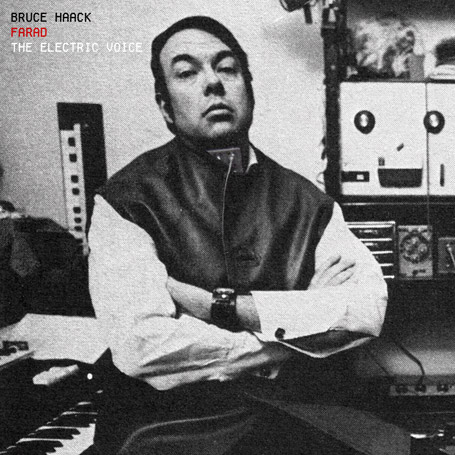
Farad: The Electronic Voice, a reissue of late-career Haack songs from Stones Throw. Image: Stones Throw Records.

This weekend is Alberta Culture Days, a three-day province-wide celebration of Alberta’s vibrant and diverse arts and culture communities. Originally created in 2008 as a one-day event called Alberta Arts Day, Alberta Culture Days has become the flagship autumnal arts celebration for people of all ages and interests. Thousands of events will take place this weekend all over Alberta.

When it comes to the music community, many people are likely familiar with famous Alberta musicians whose long careers and commercial success have led them to worldwide acclaim. Ian Tyson and k.d. lang come to mind, as well as more contemporary artists like Feist, Corb Lund, Cadence Weapon and Purity Ring. However, there is one person in particular whose influence on music is only now being fully understood, decades after his death in 1988. His name is Bruce Haack and he grew up in Rocky Mountain House, Alberta. Looking back on his career and musical output, you wouldn’t be far off in thinking that maybe this man was the living embodiment of the concept of, “way ahead of his time.” Read more

An Archaeologist’s Perspective on Truth and Heritage

An Archaeologist’s Perspective on Truth and Heritage

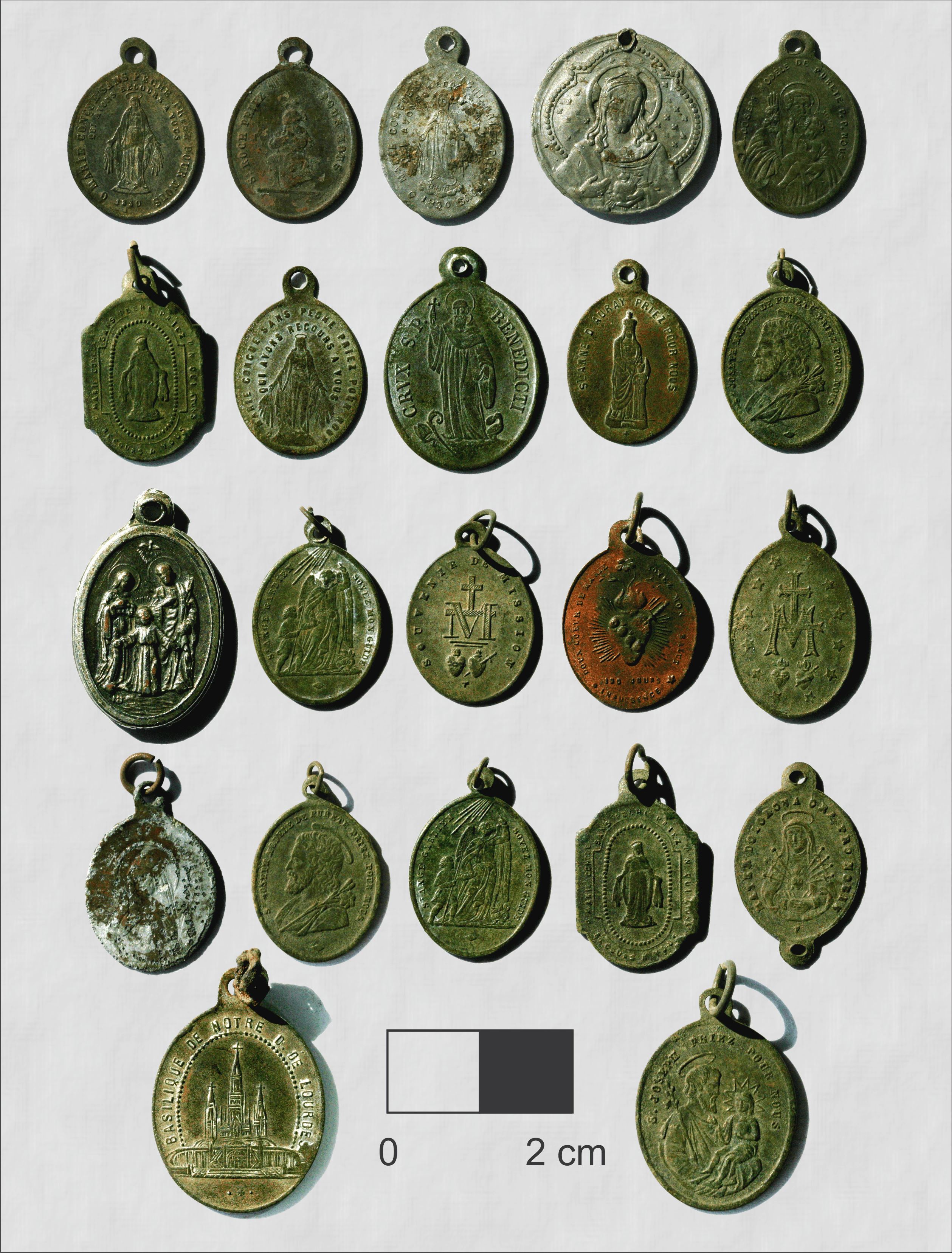
Canada’s Truth and Reconciliation Commission formed to address the residential school experience of First Nations; an Alberta symposium about the commission ended with the question “how can society spread the message of reconciliation”? As an archaeologist, my answer started with a collection of religious medallions found in a garden in northern Alberta and ended with a story about spiritual change, the value of heritage objects, and the powerful roles that historians and archaeologists can play in portraying the past.

Medallions in a Meadow

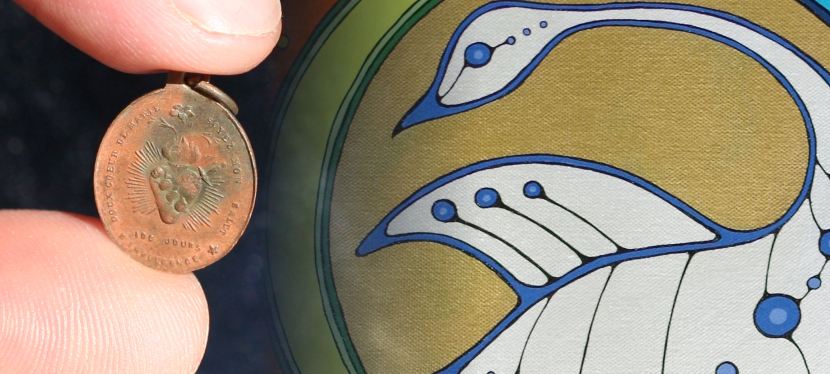
A small, yellow box of Roman Catholic medallions from the 1800s seemed unusual company next to the stone arrowheads in my office. They popped up in a garden next to a First Nations community along Meander River in northwest Alberta. During a site visit, community members shared the collection in the hopes that I could in turn help share the story of the medallions.

Roman Catholic medallions from the 1800s found in northwest Alberta. The medallions are symbols of a time when Christianity was spreading among First Nations communities.

Research revealed that the metal medallions mark an era when Christianity was evolving from a source of curiosity in the early 1800s to a defining cultural element among many Indigenous people in northern Alberta. New spiritual elements replaced others, hybridized with traditional beliefs, or were rejected. Like leaves of the surrounding carrots and parsnips, the garden medallions are a glimpse, or a surface expression, of the important roots of a story, in this case, a tale of syncretism or spiritual blending. By offering an archaeological view of the connection Read more

The Alberta Historical Resources Foundation Looking for New Board Members

Do you want to be part of a vibrant heritage board or do you know someone who might be interested? The Alberta Historical Resources Foundation (AHRF), the primary source of the Government of Alberta funding for heritage projects, is currently accepting applications to fill in four board director positions.

Founded in 1973, AHRF has grown into a complex agency that serves a wide range of stakeholders. Board members are appointed for a term of up to three years. Board meetings are held four times a year for approximately 1.5 days. Board members are also occasionally asked to attend heritage events on behalf of the Foundation.

For details on the position profile and to apply online, please visit https://www.alberta.ca/public-agency-opportunity.cfm?appt=484 . The competition will close on September 24, 2017.

Help us continue to carry on the tradition of a vibrant and competent board. Help us ensure the preservation and promotion of Alberta’s heritage.

Wainwright Hotel

This post was originally published on RETROactive on August 2, 2011. The last paragraph is an addition from another blog post featuring the Wainwright Hotel, New Uses for Old Places – The Wainwright Hotel, published on March 20, 2014.

When the Grand Trunk Pacific Railway completed its line between Saskatoon and Edmonton in 1908, vast tracts of land in east central Alberta south of the Canadian Northern line were opened up for homesteading.  At key points along the line, the GTP erected stations and subdivided townsites. One of these was near a small community called Denwood, where a post office and store had been opened in 1907. The new townsite, to where Denwood residents and businesses now moved, was called Wainwright, after the second vice-president of the GTP. One of the structures moved from Denwood to Wainwright was the Denwood Hotel, which soon became the Wainwright Hotel. It was owned by M.L. Forster, a strong community minded individual who served on the first village council and was mayor of the Town of Wainwright from 1927 to 1935. Read more