What is OPaC?

Alberta Culture and Tourism manages the Online Permitting and Clearance (OPaC) system, which has two main purposes: to discover if a historic resource will be impacted by a proposed development and to regulate the approval of archaeological and palaeontological excavation permits.

Developers and municipalities use OPaC as a tool to determine if a proposed development may affect a historic resource. Before beginning development, the project’s proponent submits an application for approval to proceed. The application is reviewed by the Historic Resources Management Branch to determine if the proposed development has the potential to damage any historic resources, such as archaeological, palaeontological, historic or Aboriginal traditional use sites. The Branch reviews approximately 3,000 development applications each year!

Archaeologists and palaeontologists obtain permits through OPaC before proceeding with an excavation. Anyone who intends to excavate for the purpose of archaeological or palaeontological research must submit an application with the details of their project to the Historic Resources Management Branch for review. Permits are given out in order to regulate the amount of excavation activity that takes place in the province and to ensure that those who are excavating for archaeological and palaeontological purposes are qualified to do so. 500 applications for archaeological and palaeontological research permits are received per year by the Branch. The Archaeological and Palaeontological Research Permit Regulation has more information on the qualifications necessary to hold such permits and the conditions under which studies must take place.

Ten years ago, applications were managed the old fashioned, paper-based way and reviewing them was a much slower process. With the boom in the oil and gas industry, the workload increased substantially and this created the need for a more efficient permitting system. In 2009, the idea of OPaC was introduced as a semi-automated way to process applications. This was a welcome transition and has made the application procedure more convenient for developers who are seeking to conduct work on Alberta’s land as well as for the people managing the applications.

There are a number of advantages to the OPaC system:

  • It has brought a consistent approach to the process and ensures that applications and inquiries are addressed in a timely manner.
  • The online database stores information on the location of archaeological, palaeontological and historic resources as well as Aboriginal traditional use sites. This data is used to build a cumulative sense of the resources and developments that are on Alberta’s landscape. This way, strategic measures can be taken to protect the resources.
  • It serves as a starting point to capture heritage data and assists in identifying issues in advance to better protect Alberta’s historic resources.

With the help of the Geographic Information System (GIS), we can map the locations of proposed developments and historic resources to help identify and minimize potential conflicts.
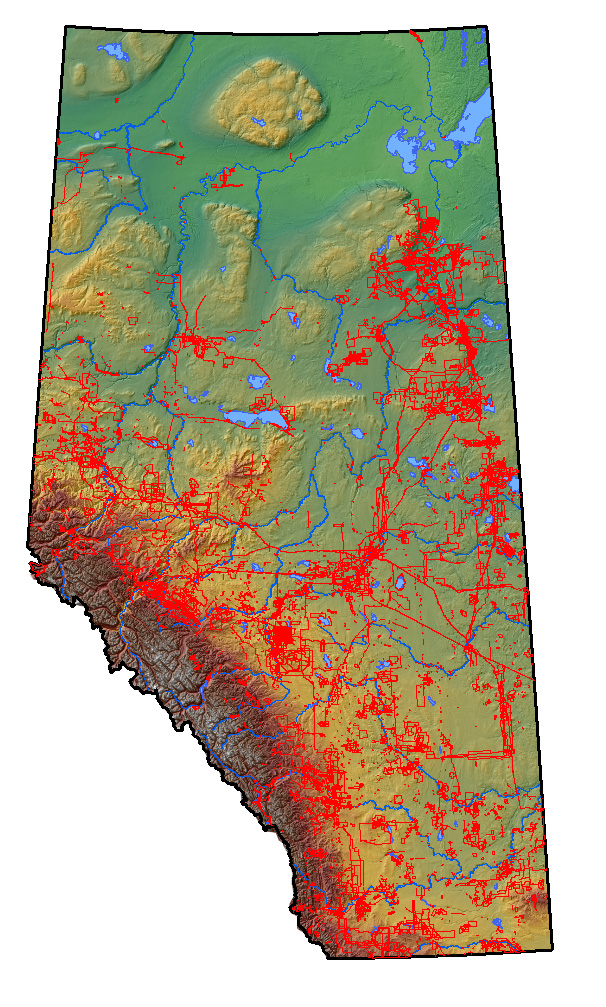
GIS map showing the locations of development projects that have been processed through OPaC.

OPaC has brought efficiency to the application process, but a wider significance lies in the fact that it supports a regulatory process that helps to discover historic resources that may otherwise go unnoticed and, therefore, unprotected – an important point, since the more we can preserve, the clearer picture we can create of Alberta’s past and this has immense benefits for future generations.

The Historic Resources Management Branch is responsible for the preservation and protection of Alberta’s historic resources as mandated by the Historical Resources Act. OPaC is a key tool in fulfilling this responsibility, as it allows experts the ability to easily and quickly determine the level of impact that could potentially threaten Alberta’s historic resources. Alberta Culture is committed to the preservation and protection of Alberta’s historic resources and this system helps to ensure that the opportunity for enhancing that knowledge is not lost.

For more information on OPaC, please refer to our website.

Written by: Erin Hoar, Historic Resources Management Branch Officer, with special thanks to the OPaC team for their assistance.

African American Immigration to Alberta

In the early twentieth century, hundreds of African Americans crossed the border in search of land and opportunity in the Prairie West. Many of these immigrants ultimately settled in Alberta, establishing communities such as Wildwood, Keystone (now Breton), Campsie and Amber Valley. The story of these settlers is one of perseverance on both sides of the border – driven out of the United States by persecution and violence, African American migrants had to overcome racist hostility and other barriers on the road to successful settlement in Alberta.

In the minds of many African Americans in the late nineteenth and early twentieth centuries, Canada was a land of freedom and opportunity. As detailed by historian Sarah-Jane Mathieu, this positive view was rooted in several factors, including Canada’s status as a refuge for runaway slaves in the mid-nineteenth century, and a general perception that African Americans would enjoy fairer treatment under Canadian than American law. This idealization of Canada was heightened by the harsh reality of life for many African Americans, as promises of land and equality in the Reconstruction Era (1865-1877) gave way to segregation, violence and legally-sanctioned discrimination. By the late nineteenth century, many African Americans viewed migration to Canada with increasing favour.

L-R: Thomas Mapp, Richard Hinton, Geneva Mapp, Eva Mapp, Ferris Mapp, Nouvella Hinton, an African American family from Amber Valley, Alberta, ca. 1925 (Glenbow Archives, NA-316-1).
L-R: Thomas Mapp, Richard Hinton, Geneva Mapp, Eva Mapp, Ferris Mapp, and Nouvella Hinton, from Amber Valley, Alberta, ca. 1925 (Glenbow Archives, NA-316-1).

This view of Canada as a haven for African American settlers would prove overly optimistic. A sharp increase in African American immigration to western Canada in 1909-1910 sparked a severe backlash across the region, including several cities in Alberta. The Edmonton Board of Trade prepared a petition calling on the federal government to act against the “serious menace” of ‘negro’ immigration, warning that it would result in “bitter race hatred” if left unchecked. The petition was endorsed by the Boards of Trade for Fort Saskatchewan, Strathcona and Calgary, and was signed by over three thousand citizens of Edmonton, at a time when the city’s population was only twenty-four thousand. Newspapers printed sensationalist stories about the impending “invasion of Negroes,” and while some voices were raised in support of the rights of African American settlers, the federal government came under intense public pressure to take action.

This pressure placed the Government of Canada in a very awkward position. The government was reluctant to openly admit that its immigration policy was dictated by considerations of race (even though that precedent had already been set with the passage of the Chinese Head Tax in 1885). Specifically barring African Americans from entry into Canada at a time when the government was working hard to attract white American homesteaders would create a glaring inconsistency in Canada’s immigration policy. Further, the Canadian government did not want to risk a public dispute with the American government over the issue by explicitly banning the free movement of some of its people across the border.

Instead of enacting an outright ban, the Canadian government took other measures to try and restrict African American immigration. For example, medical examiners stationed at border crossings were instructed to scrutinize African American immigrants for any medical condition that would justify their exclusion, quietly offering a financial bonus to doctors for each African American immigrant rejected at the border. Inspectors were also told to make certain that African American immigrants had adequate cash on hand to successfully homestead – at least two hundred dollars – even though such agents had the power to waive such a requirement for white immigrants. Frustratingly for the federal government, these measures were met with limited success – African American immigrants proved to be healthy, prosperous and well prepared for the challenge that met them at the border. The influx of African American immigrants thus continued through 1910 and 1911.

Facing continued pressure to act, Minister of the Interior Frank Oliver drafted an Order in Council in 1911 that banned “any immigrants belonging to the Negro race” from entering Canada for one year. The Order in Council was approved by Prime Minister Laurier, but the government continued to stall, fearing that enacting an open ban would harm Canadian-American relations at a time when the two governments were negotiating a major trade agreement. Instead, the Canadian government made one final effort to cut off African American immigration at the source by deploying agents to warn potential immigrants about Canada’s harsh and unforgiving climate. The hypocrisy of this strategy was remarkable – at a time when the Canadian government was working hard to assure white Americans that rumours of Canada’s cold climate were exaggerated, other agents were telling potential African American immigrants that Canada was a barren, arctic wasteland. These measures, coupled with the hostile reception already given to African American immigrants, worked to discourage potential migrants and African American immigration to Canada declined after 1911.

To some degree, this legacy of hostility dictated the settlement patterns of those African Americans, about one thousand, who did make it across the border to settle in Alberta in this period. Rather than accepting the best available land as individual homesteaders, they tended to settle in somewhat isolated rural areas where land was plentiful, if somewhat marginal, and they could establish self-sufficient, independent communities. The isolation that allowed such cohesive communities to form also worked against their survival, however, as the children of the first wave of immigrants tended to move on to Alberta’s urban centres in search of better economic opportunity. Of the early settlements, Amber Valley proved to be the most durable, surviving through the Great Depression and World War Two as an important centre of African American settlement in the province.

The story of early twentieth-century African American immigration is an important chapter in the broader history of agricultural settlement in the Canadian west. African Americans sought land and security in Canada at a time when the federal government was eager to attract homesteaders with farming experience. There was little question that the African Americans fleeing Oklahoma possessed the qualifications that the Canadian government prized in immigrants – even the Edmonton Board of Trade’s petition did not deny that “these people may be good farmers or good citizens.” However, the backlash against them, at a time when they comprised up a miniscule proportion of the population, illustrates the extent to which considerations of race entered into immigration policy and what constituted, in the public mind, a desirable settler for Canada. Approximately one thousand African Americans managed to find a home in Alberta between 1909 and 1911, but the public reaction and sustained effort to keep them from entering Canada speaks volumes about the challenges they had to overcome on the road to starting a new life in Alberta.

Written by: Allan Rowe, Historic Places Research Officer.

Sources:

Mathieu, Sarah-Jane. North of the Colour Line: Migration and Black Resistance in Canada, 1870-1955. Chapel Hill: The University of North Carolina Press, 2010.

Palmer, Howard, and Tamara Palmer, eds. Peoples of Alberta: Portraits of Cultural Diversity. Saskatoon: Western Producer Prairie Books, 1985.

Winks, Robin W. The Blacks in Canada: A History. 2nd ed. Montreal & Kingston: McGill-Queen’s University Press, 1997.

Celebrate Heritage Day

Heritage Day Poster

We all know that next Monday February 16th is Family Day in Alberta and a time for us to get together and appreciate our loved ones; but did you know that Heritage Canada The National Trust has another reason for you to celebrate next Monday? February 16th is also Heritage Day. The theme for this year’s Heritage Day is Main Street at the Heart of the Community and is a chance to appreciate our historic districts and the vibrancy they bring to our lives. Heritage Canada the National Trust has also launched their I Love My Main Street contest. Check out the link to learn how you can participate.

We believe Alberta’s main streets have many stories to tell and that their continued success contributes to healthy, diverse and aesthetically pleasing communities. As many of you are aware, the Alberta Main Street Program is designed to assist historic commercial areas across Alberta. The program is founded on the understanding that properly conserved heritage areas are destinations in themselves. When conservation is coupled with efforts to attract business, host events and otherwise create an animated public space, historic downtowns can have continued life. The Alberta Main Street Program currently has five members – Camrose, Lethbridge, Old Strathcona (Edmonton), Olds and Wainwright – who are working to ensure their main streets remain the heart of their community. The next time you travel to these communities take the time to stop and stroll the main street – you won’t regret it!

This Family Day take a moment to appreciate your local history and perhaps consider taking your family to a historic district to enjoy the sights and sounds. While you are at it, don’t forget to stop and consider the people, the businesses, the streetscape and the beautiful historic buildings which, collectively make it such a special place to be.

Written by: Rebecca Goodenough, Municipal Heritage Services Officer

The First Heritage Landmark Built on University Grounds

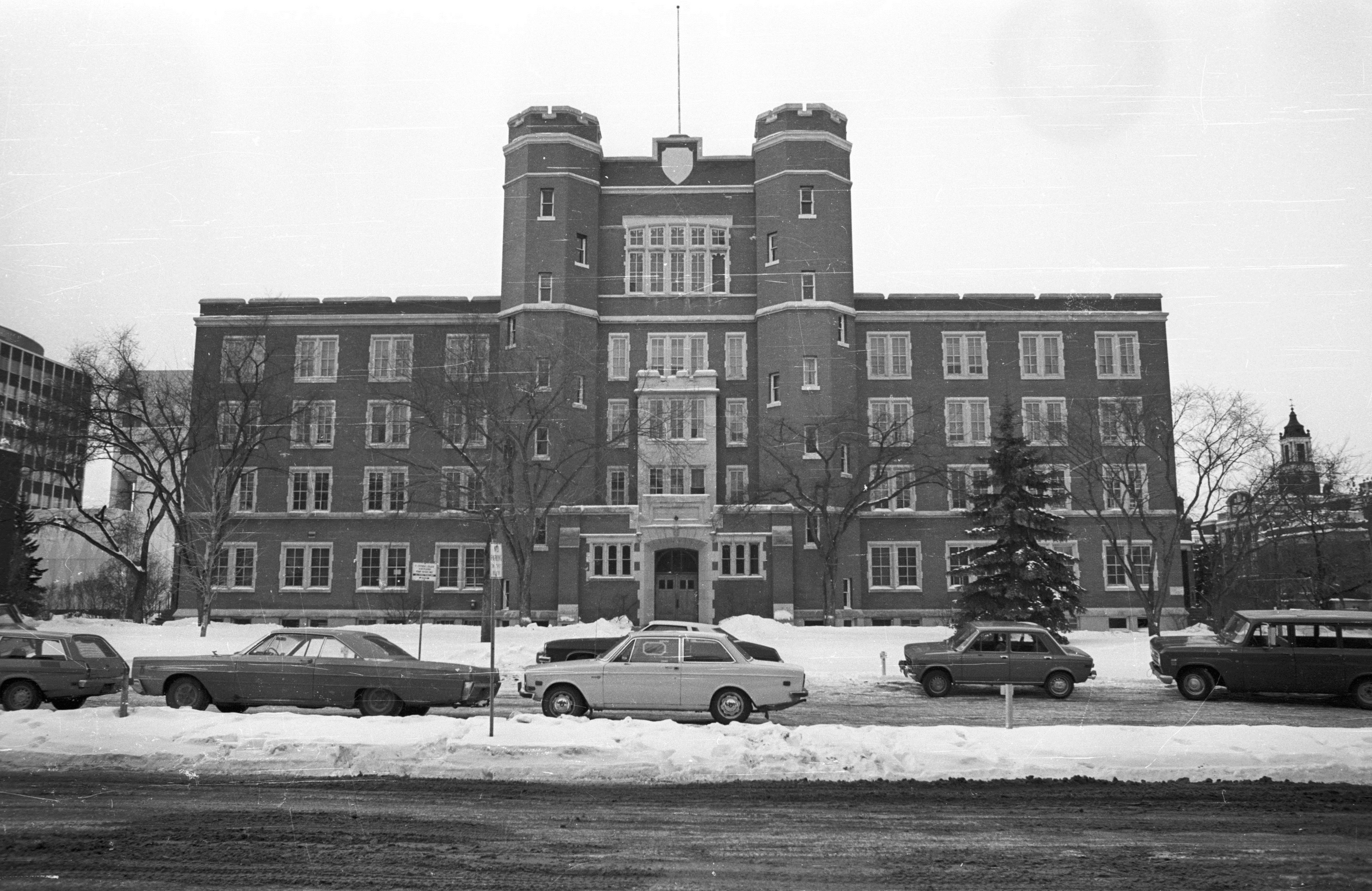
Old St. Stephen’s College sits on the grounds of the University of Alberta near the bus loop. Did you know that it is the oldest building on campus? Designed in the early 1900s by Herbert A. Magoon, the building is a collegiate Gothic style that can be seen among early British universities. The college emulates a castle-like appearance and there are very few other examples like this in Alberta or even western Canada.

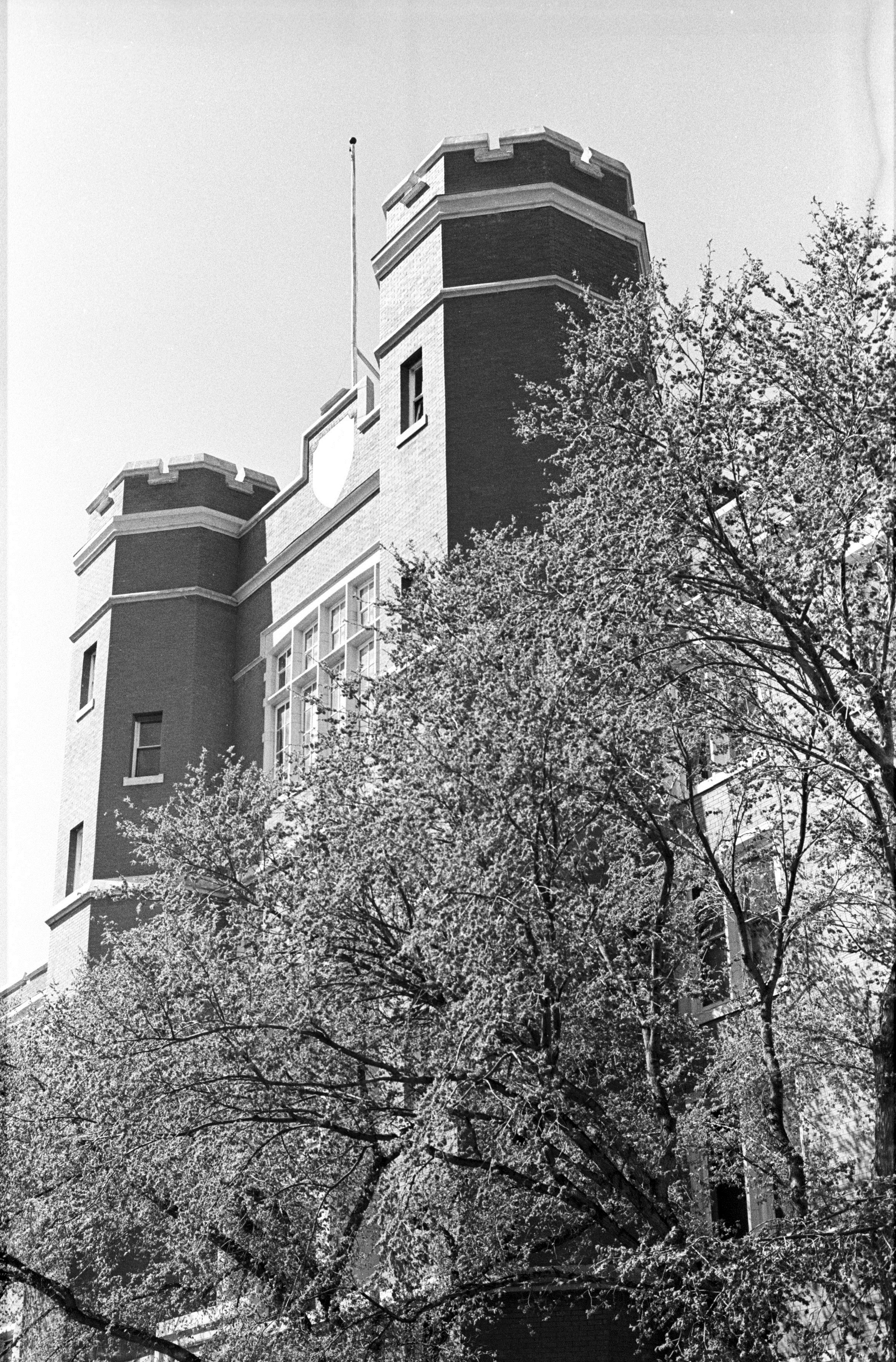
Over a century has passed since St. Stephen’s was constructed and the elm trees that were planted during the college’s early years have now grown to almost completely cover the building’s façade. This is a testimony of its endurance and the college’s longevity continues to contribute to its interesting history. This post will look at the unique construction of this structure and detail the notable features that make the Old St Stephen’s College a significant historic resource.

Old St. Stephen’s College, 1974 (Historic Resources Management Branch, 70-R30L-01-M).

The construction of Alberta College South, as the building was first known, began in 1910 on the University of Alberta campus and welcomed 41 theology students the following year. The college first functioned as a non-denominational theological school and co-ed residence, offering the basics in biblical scholarship and trained students to become ministers. Church history, biblical languages, systematic theology and homiletics are just some of the courses that were available. Within a decade of the school’s opening, the theological program began to attract students from all over Canada and other parts of the world.

By the early 1900s, Edmonton was home to Alberta College South, a seminary of the Methodist Church, and a Presbyterian instructional college known as Robertson College. In 1925, the Methodist, Presbyterian and Congregational Churches merged, forming the United Church of Canada. Around this time, the Government of Canada passed the United Church of Canada Act, declaring there to be an amalgamation when two or more colleges doing the same classwork were situated in the same locality. The outcome of this had the Robertson College relocate to Alberta College South and the institution was renamed the United Theological College. Two separate boards remained, one for the Methodist church and one for Robertson College, until 1927 when the two boards united and settled on the name St. Stephen’s College.

Old St. Stephen’s College, 1971 (Historic Resources Management Branch, 71-R0001-34).

A new building was built immediately south of the original building in 1952. Old St. Stephen’s College (as it was henceforth called) continued to be used as a student dormitory, while the new St. Stephen’s College held classrooms and offices. By the 1970s, there was an increase in student housing around the university area and less students were choosing to reside at the college. Within a few years, Old St. Stephen’s was vacant and in danger of becoming a parking lot, until considerable protest was mounted by members of the public. Demolition was averted in 1979 when the Government of Alberta leased the property from St. Stephen’s College as office space for the Historical Resources Division of Alberta Culture. The building is now owned by the Government of Alberta and houses many employees of the Heritage Division. This past September, we celebrated 35 years of residency in the historic building.

Old St. Stephen’s College was designed by one of Edmonton’s first architects, Herbert A. Magoon. In the early 1900s, Magoon moved to Western Canada where there was an increasing amount of city development. He eventually settled in Edmonton and quickly became one of the city’s most reputable architects. Magoon was involved in designing a number of buildings that are now Alberta historic resources, including the Knox Presbyterian Church, the Metals Building, the H.V. Shaw Building in Edmonton and the Old Town Hall in Wainwright. A number of Magoon’s designs are of similar style to buildings found in Chicago, where he worked and studied architecture, indicating that he was influenced from his time spent there.

In the spring of 1910, H. A. Magoon was commissioned to design the future St. Stephen’s College. St. Stephen’s was inspired by the architectural style that was popular in Europe in the early twentieth century. The design of the building is consistent with the collegiate gothic style that was common to many colleges and universities built across North America during this time. This design was favoured because it emulated a British tradition found among some early universities. There are subsequent buildings on campus that are in line with the appearance of St. Stephen’s, including the Rutherford Library and St. Joseph’s College.

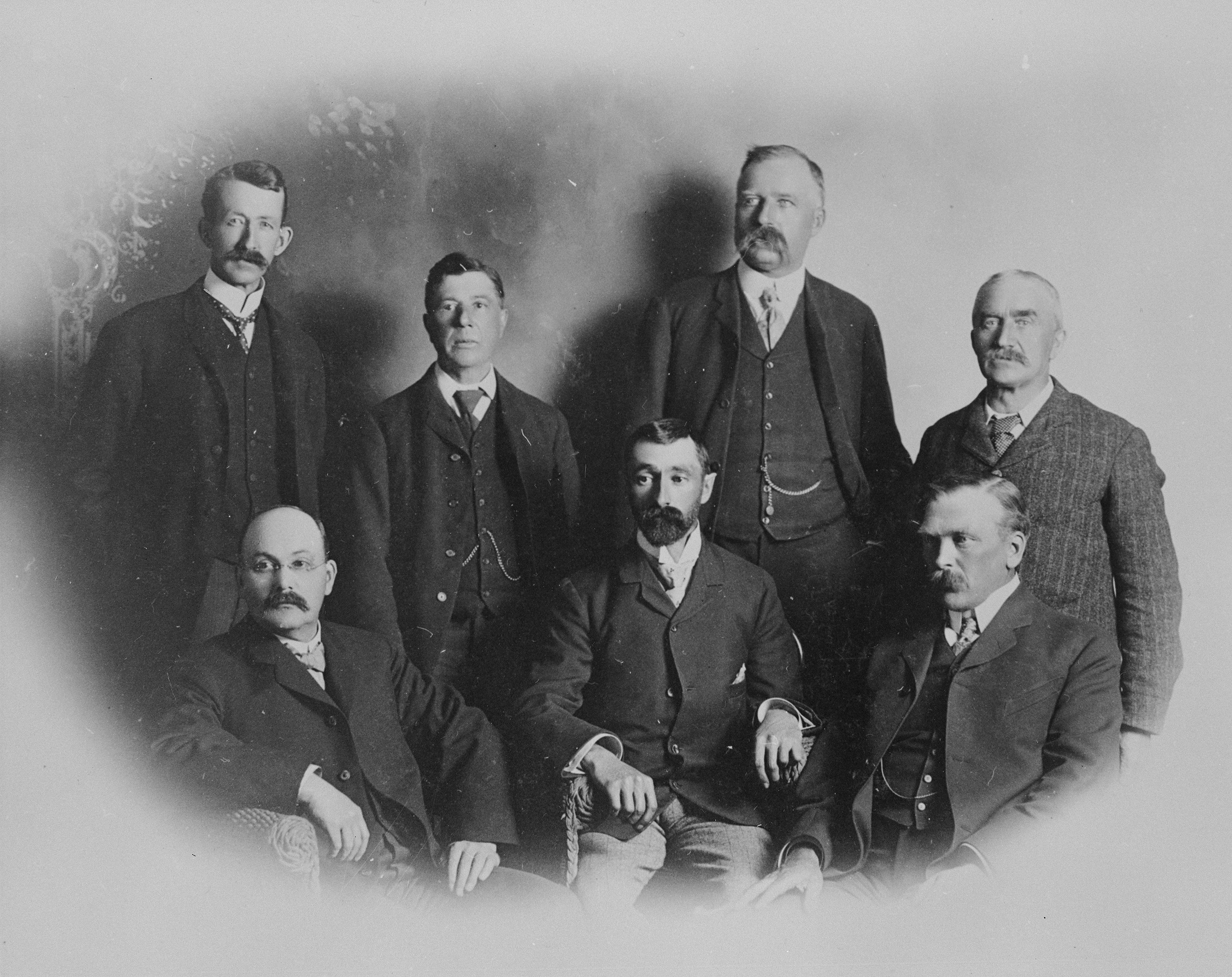
Alberta Association of Architects, ca. 1906.   Back row: Hopkins, R. P. Barnes, J. Wise, H. D. Johnson, Front row: A. Magoon, F. X. Deggen-Dorfer, A. Pirie.  (Provincial Archives of Alberta, A1998).
Alberta Association of Architects, ca. 1906. Back row: Hopkins, R. P. Barnes, J. Wise, H. D. Johnson, Front row: A. Magoon, F. X. Deggen-Dorfer, A. Pirie (Provincial Archives of Alberta, A1998).

The exterior’s notable features are its red brick veneer, octagonal towers and battlemented fortifications, which give the structure a castle-like appearance. The overall design of the building fit with the vision of the principal to-be of Alberta South College, John Henry Riddell. Riddell wanted a building that would “stand out, conspicuous against the horizon…appearing so clearly…as to challenge every passer-by.” The resulting structure was an impressive brick building that has drawn comparison to St. James’s Palace in London.

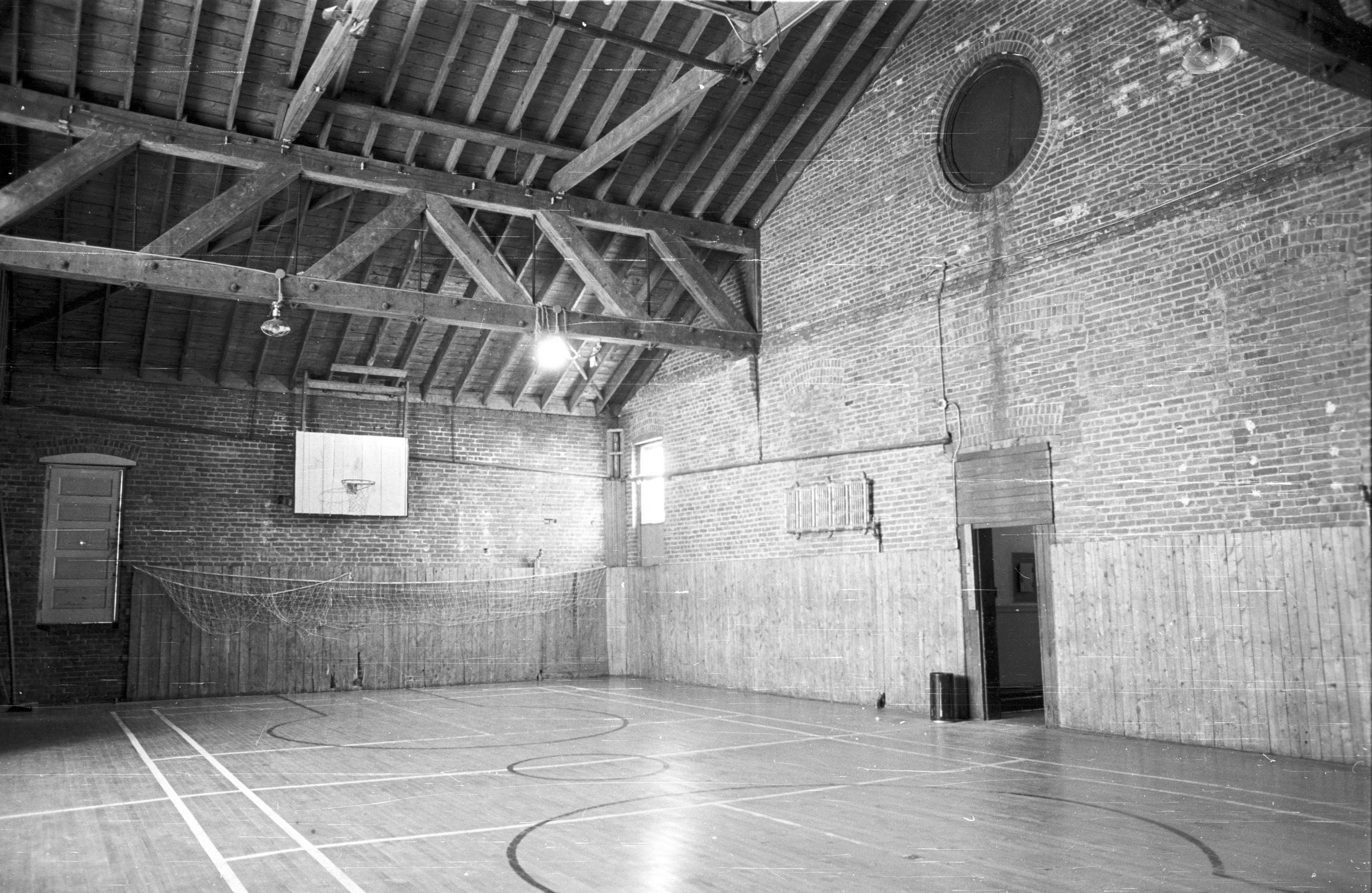
The interior of Old St. Stephen’s has a number of distinguishing features that make the building unique, such as an entrance foyer with oak detailing, a fireplace in the former Dean’s office, a vault and the remnants of a gymnasium on the top floor. When the building was first constructed, it featured 65 bedrooms, a 300 person capacity assembly hall, faculty residences and a dining hall. In 1935, a classroom was converted into a chapel with stained glass windows, which still remains in the north wing of the first floor. The chapel contains the original wooden pews and pulpit that were crafted by a former St. Stephen’s student.

The gymnasium on the 5th Floor, 1974 (Historic Resources Management Branch, 70-R30L-12-M).
The gymnasium on the 5th Floor, 1974. The gym is no longer in use and now serves as a mechanical room for the building (Historic Resources Management Branch, 70-R30L-12-M).

This is the oldest building to be constructed on the grounds of the University of Alberta, the province’s first post-secondary institution. Although separate from the University, the college has become integrated into the campus over the past century and has served as a recognized landmark in the university area. Old St. Stephen’s is an example that historic buildings need not necessarily be demolished, but they can successfully be reused, thus continuing the preservation of Alberta’s built heritage.

Written by: Erin Hoar, Historic Resources Management Branch Officer

Sources:

Alberta Register of Historic Places. “Old St. Stephen’s College.” (Accessed September 10, 2014).

Biographical Dictionary of Architects in Canada 1800-1950. “Magoon, Herbert Alton.” Accessed January 9, 2015.

Designation File # 132, in the custody of the Historic Resources Management Branch.

“Old St. Stephen’s College.” Alberta Past 2, no. 2 (August 1986): 1.

Simonson, Gayle. Ever-Widening Circles: A History of St. Stephen’s College. Edmonton, Canada: St. Stephen’s College, 2008.

St. Stephen’s College, Edmonton: Report #428. Alberta Culture, Historical Resources Division, Historic Sites Service, 1979.

University of Alberta. “University of Alberta: St. Stephen’s College.” (Accessed September 10, 2014).

Heritage Energized Oct. 22-24, 2015! – Save the Dates

Which of you RETROactive readers out there doesn’t love the annual Municipal Heritage Forum? What started in 2007 as a small “Summit for Stakeholders,” has grown into something which has brought Alberta’s heritage community together, building connections and raising the bar. We have received lots of positive feedback on the Forum over the years, and – we have to be honest – it’s also a lot of fun to put on!

Well, this year, as we announced at the Forum in Lacombe that the 2015 event would have a whole different spin, a whole new energy – Heritage Energized! 

HeritageEnergizedConf-15-6-1

Mark your calendars now – October 22-24th – we are linking up our already dynamic Forum with the premier, Canada-wide heritage conservation conversation. We’ll converge in Calgary, one of Canada’s most energetic cities, for a few days of exploration, engagement, and inspiration.

Fred Bradley, Chair, Alberta Historical Resources Foundation

At the 2014 Lacombe Forum, Fred Bradley, Chair of the Alberta Historical Resources Foundation, announced that the Foundation would be assisting 120 Albertans – including municipal heritage advisory boards, Main Street communities, students, and others – to attend the Heritage Energized through sponsored registrations. Henry Maisonneuve, Alberta Governor of Heritage Canada the National Trust, thanked the Foundation for their strategic partnership in this way, stating that he looked forward to a strong contingent of Albertans participating. Stay tuned to RETROactive for additional information on how you may be eligible for one of these spaces.


High-tech windows circa 1910

Prism glass:  the stained glass used in storefront windows historically found in commercial buildings on main street. The shimmering, textured surfaces of original prism glass transom windows — running the width of a historic storefront above the main display windows — can be a rare treat when they’re intact.

Sometimes referred to as clerestory windows, traditional transom windows on main street were sometimes equipped with special prism glass: sheets of glass composed of small panels, each roughly 15 cm square, featuring a distinctive prismatic or wedge-like pattern cast into the interior-facing surface (see photograph below). Some panels also featured patterns cast into the outer face too. Assembled into panels using cames, or narrow bars of lead or zinc, prism glass transom windows were popular in pre-World War I commercial buildings when interior electric lighting was relatively weak and inefficient. With sunlight free and plentiful, especially in Alberta, the prismatic panels were oriented in such a way as to capture incoming light and refract or deflect it deep into the store within.

A close-up of a piece of prism glass from the Renwick Building, a Provincial Historic Resource on Fort Macleod’s main street (Courtesy of Fraser Shaw, Historic Resources Management Branch).

Given their relative rarity, the analogy to stained glass windows of churches and other buildings isn’t entirely out of place. Like stained glass, the glass itself is often coloured: manganese added during the manufacturing process to make the naturally green glass clearer often turned a purplish colour after decades of exposure to ultraviolet radiation in sunlight. (The colour also appears in some old telegraph line insulators and the now almost-vanished sidewalk “skylights” — which are a story of their own). You can spot prism glass in certain parts of Calgary and Edmonton and on some of Alberta’s historic main streets, although it is easily mistaken with so-called “reeded” glass, similar glass panels impressed with narrow ridges rather than the unique prismatic profile specially oriented to pull sunlight into store interiors. Sometimes only close inspection can distinguish the two.

Why is prism glass so rare now? Like many features of historic buildings, particularly in the commercial district, these components were subject to changing fashion, retailing trends and, of course, the rigours of our climate. The benefit of prism glass and transom windows declined as electric lighting improved in efficiency and affordability, particularly with the mid-century introduction of fluorescent lighting. Prism glass transom windows were traditionally paired with retractable awnings, which allowed the store’s proprietor to regulate the amount of light coming into the store. As awnings went out of fashion and were removed, the transom windows often pulled in so much sunlight that stores were often too brightly lit, hot and stuffy. The unrelenting sunlight would also fade display items.

An original prism (or possibly reeded) glass transom window on the Bell Block, a large late commercial style building on Macleod Trail in Calgary (Courtesy of Fraser Shaw, Historic Resources Management Branch).

Physical deterioration of course also played a part: decades of thermal expansion and contraction, exposure to moisture, and wind loading took its toll on the delicate assemblies, causing cames and soldered joints to fatigue or break, with the eventual result that many transom windows were removed or covered with painted plywood sheets. Changing retail fashion assisted the process: as automobile use increased throughout the twentieth century, so did the need for larger, illuminated signs. Prism glass and transom windows, having outlived their original purpose, were covered over or removed with “slip cover” remodeling of main street storefronts in the 1930s onward.

Today, historic transom windows, and especially those of rare prism glass, are coveted historic building elements that many building owners want to restore. Sometimes intact original windows are preserved behind later materials; often, however, they need extensive repairs. Where that’s the case, there are excellent resources to assist in restoration.

For information on conservation prism glass or other elements of a historic resource, contact your heritage conservation advisor.

Written by: Fraser Shaw, Heritage Conservation Advisor.

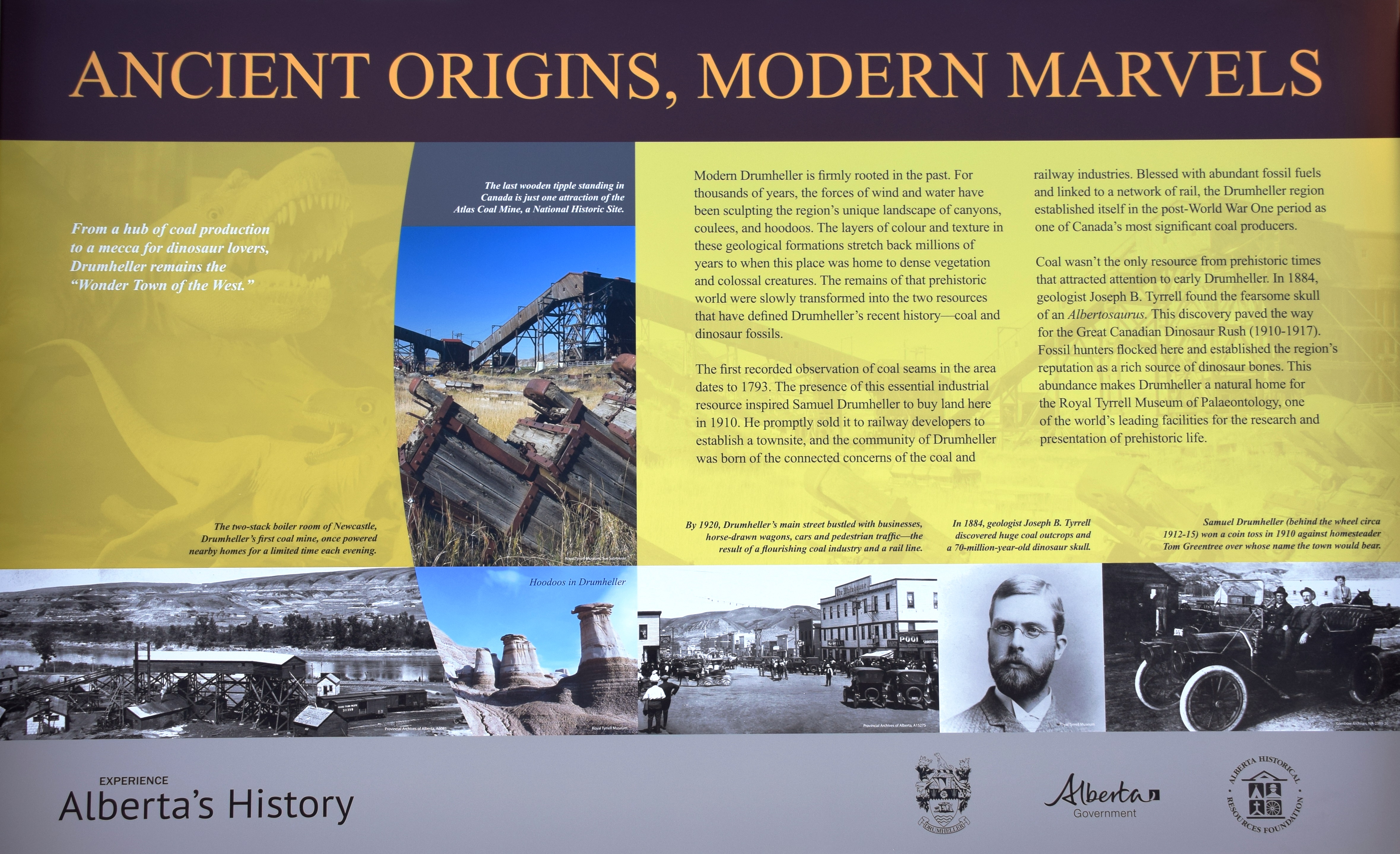
Ancient Origins, Modern Marvels in Drumheller

Visitors to the Town of Drumheller can now learn more about the history, geology and natural resources of the community with the installation of a new Alberta Historical Resources Foundation Heritage Marker. Combining text with contemporary and archival photographs, the marker describes how the forces of nature shaped the area’s striking landscape and left the region rich in the two resources that would define Drumheller’s future – coal and dinosaur fossils.

Heritage Marker along Highway 9, north of Drumheller.
The Drumheller Heritage Marker up-close (Courtesy of Stefan Cieslik, Historic Resources Management Branch).

It was coal that first attracted the attention of railway and mining investors, who established a townsite to support the booming coal industry. By the end of World War One, the Drumheller region was one of Canada’s leading coal producers. The area also caught the imagination of fossil hunters, who flocked to the region from 1910 onward in search of fossils like the massive Albertosaurus skull unearthed by Joseph B. Tyrrell in 1884. The abundance of dinosaur bones made Drumheller a natural home for the Royal Tyrrell Museum of Palaeontology, one of the world’s leading facilities for the research and presentation of prehistoric life.

The marker was installed on November 20, 2014, along Highway 9, one-and-a-half kilometers north of the Town of Drumheller. The Town of Drumheller applied for the development of the heritage marker through the Alberta Heritage Markers Program. The program was established in 1955 to promote greater awareness of the historic people, places, events and themes that have defined the character of our province. The program brings Alberta’s dynamic history alive through heritage markers placed at roadside pullouts, within parks and in other community locales.

Written by: Allan Rowe, Historic Places Research Officer.

2015 Alberta Historical Resources Foundation Application Deadlines

A new year means a new round of funding opportunities through the Alberta Historical Resources Foundation (AHRF). Grants are available under the the Municipal Heritage Partnership Program (MHPP) for municipally-led heritage survey, inventory and management plan projects and are reviewed and issued four times per year. The Heritage Preservation Partnership Program (HPPP) includes grants for conservation heritage awareness, publication and research projects; as well as two heritage scholarship categories with applications reviewed twice per year. The chart below outlines the 2015 deadlines for the two programs:

Program

Please refer to the links above to access the grant guidelines for each funding program. Questions regarding MHPP can be directed to Michael Thome, Acting Manager of Municipal Heritage Services at michael.thome@gov.ab.ca or 780-438-8508 and questions regarding HPPP can be directed to Carina Naranjilla, AHRF Grant Program Coordinator at carina.naranjilla@gov.ab.ca or 780-431-2305.

Written by: Rebecca Goodenough, Municipal Heritage Services Officer.

Thanks for the memories!

I came this close to writing this post in the third person. I then returned to my senses, and decided to just go for it and write a brief personal message here to you terrific RETROactive readers. I’ll be moving on from my much-loved role of Manager, Municipal Heritage Services. In early February, I’ll be returning to my hometown of Chilliwack, B.C., where I’ll be serving as Executive Director of that historic community’s Museum and Archives.

Matthew Francis led the Municipal Heritage Partnership Program and the Alberta Main Street Program from 2007-2015

My long-time colleague Michael Thome, who will be serving as Acting Manager, asked me to share a few fun memories. So here goes:

  • Spending more than 100 days ‘on the road’ in 2006, when we were launching the Municipal Heritage Partnership Program, conducting “MHPP Roadshows” in Edmonton, Fort McMurray, Grande Prairie, Red Deer, Calgary, Lethbridge, and Medicine Hat, as well as presenting to over 75 municipal councils! You don’t realize the sheer scale, breadth, and beauty of Alberta until you get out driving its highways and backroads. Most people don’t realize that a municipality like Mackenzie County or Wood Buffalo are larger than Switzerland!
  • Getting to know all of the best burgers and fries places across Alberta. (You’ll have to get in touch with me if you want access to this top-secret list!) 
  • Launching the Municipal Heritage Forum as a “Summit for Stakeholders” in 2006. Back then, there were lots of people doing great local heritage conservation work across Alberta, but most of them didn’t know each other well. That first Forum, which we put on at the World Trade Centre in Edmonton – gave people a chance to get to know each other, and put a face to a name. After that, people doing heritage in Smoky Lake County or Yellowhead County felt free to call other people they had met, ask questions, and share what had worked for them. Since then the Forum has of course grown, and I am thrilled to see how delegates have really taken ownership of it and made it their own dynamic, learning community.
  •  We saw a new way forward for the Alberta Main Street Program, and built a flexible and sustainable paradigm of doing a fantastic program, that needed a new approach. Now, we have a tremendous, creative network of historic communities (Lethbridge, Olds, Old Strathcona, Camrose, and Wainwright), animating their heritage commercial districts with energy, conservation, and high-quality urbanism.
  • I remember attending one Council meeting (at a municipality which shall remain nameless), where the delegation presenting before me was a zealous farmer who came in coveralls, straight from the harvest fields – and slammed a heavy rock down on the Council table – THUD! He was irate and relayed the story that the County staff must have knocked this rock into his field during Winter snow removal, as he insisted he “hadn’t had a rock like that in his field for three generations!” The rock had been kicked up and shattered the window of his combine. He requested compensation for half the cost of replacing the damaged window. I thought the man’s claim was reasonable. Before you knew it – there was a motion passed to provide the compensation. Now that’s democracy in action! (That same County did then proceed to do some tremendous heritage planning work over the next few years, legally protecting a number of its significant historic places through Municipal Historic Resources designation).
  • We saw the number of designated Municipal Historic Resources (legally protected by local governments) grow exponentially, from under 70 in 2006 to well over 300 in 2015, with 240 already listed on the Alberta Register of Historic Places!

Of all the memories of projects – from Pincher Creek down south to Fort Vermilion up north – I still have to say the greatest memories are the people. Working with local Heritage Advisory Boards was so enjoyable because the “why” is so compelling. The people who do it are there for a reason – they love their historic places! It was also great to work collaboratively with the municipal staff and heritage planners across the province. I know that I have learned a lot from their knowledge and experience – and there is still so much to learn! And, of course, I had the privilege of working as colleagues day in, day out with the best team of heritage professionals in Canada here at Historic Resources Management.

Front Cover of MHPP Manual

Thanks – to all of you – for the memories! Let’s keep on creating a future for our historic places.

Written by: Matthew Francis, former Manager, Municipal Heritage Services.

Frozen Finds in the Alpine

Recent archaeological research from Alaska to Yellowstone has revealed rare and delicate tools preserved in high altitude ice that tell of a deep human history in some of the most remote alpine habitats on the continent. These artifacts were lost by ancient hunters of alpine animals (like caribou and sheep) and had been encased in a barrier of ice that warming temperatures have recently unlocked. A race is now on to find frozen relics from the past before they, and the icy archives that house them, disappear.

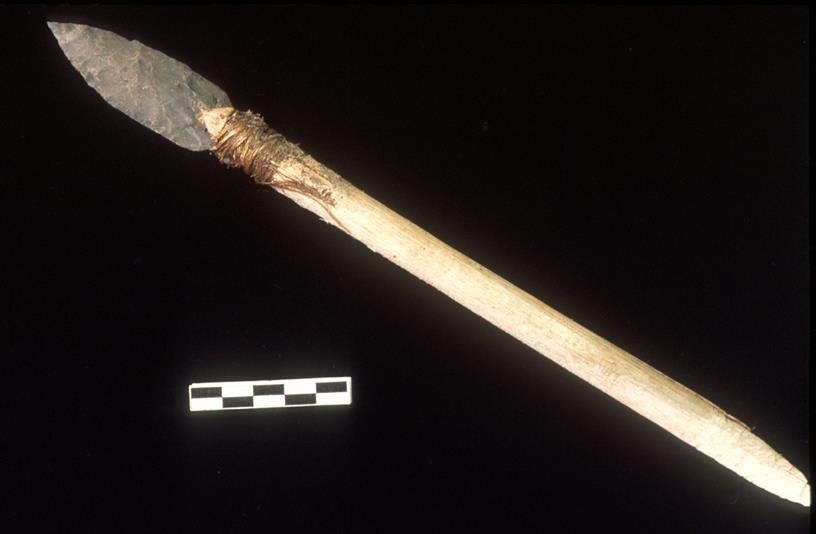
This stone dart is over 4000 years old and is preserved in its original wooden shaft (courtesy of the Government of Yukon).

The story of prehistoric alpine hunters in North America owes its existence to Yukon biologists who discovered an odd piece of wood above the treeline. The find was reported to local archaeologists who realized that it was a wooden tool lost on the ice thousands of years ago. First Nations across the North still remember stories of traditional life in the alpine, but until that lucky Yukon find, archaeologists didn’t expect that much physical evidence of old activities could be preserved in the harsh high altitude conditions. It is very rare to find wooden tools that are thousands of years old, so the artifact triggered a series of research programs in the North.

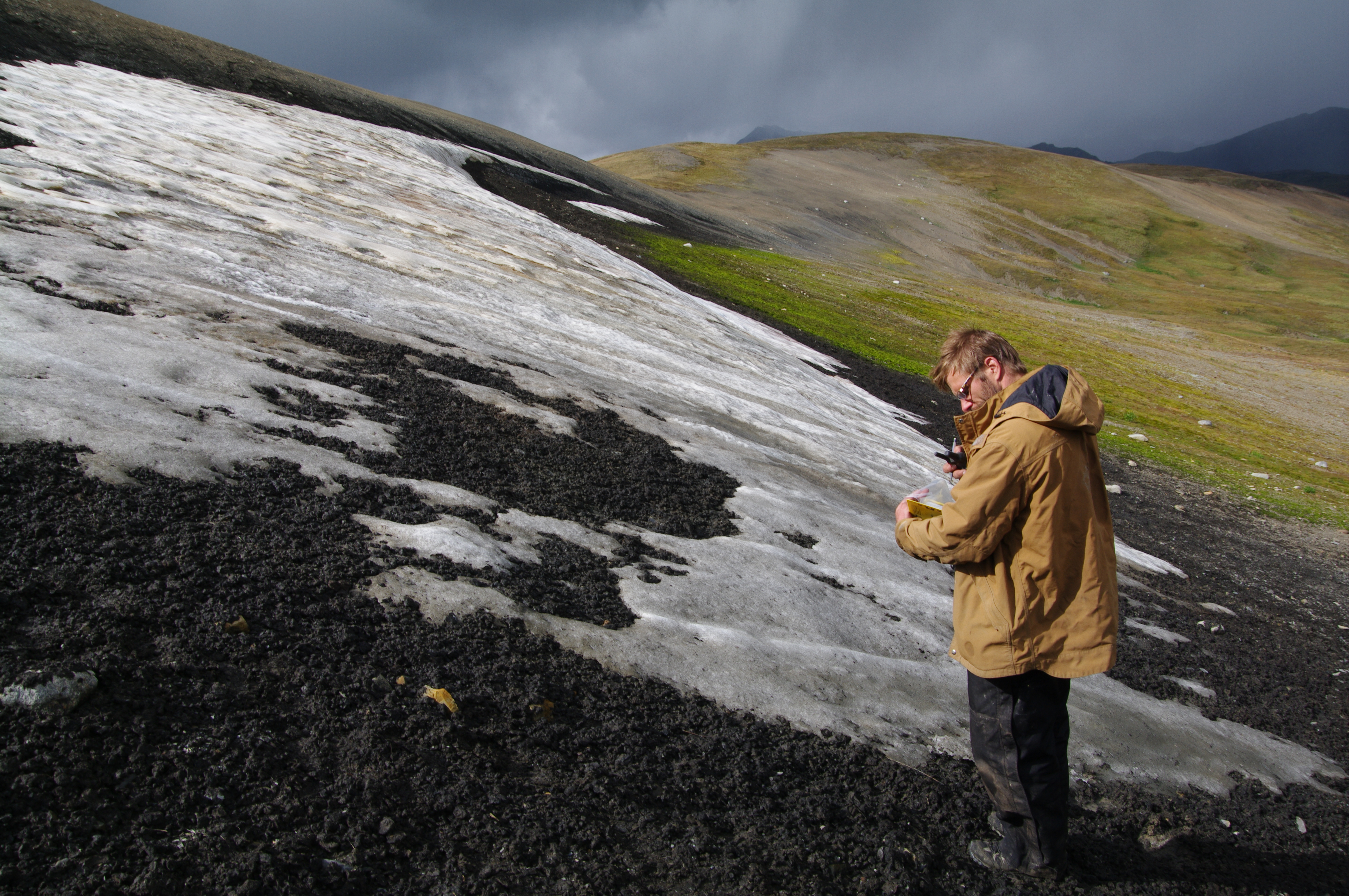
An archaeologist surveying a melting ice patch for artifacts (courtesy of Mike Donnelly).
An archaeologist (Todd Kristensen) surveying a melting ice patch for artifacts (courtesy of Mike Donnelly).

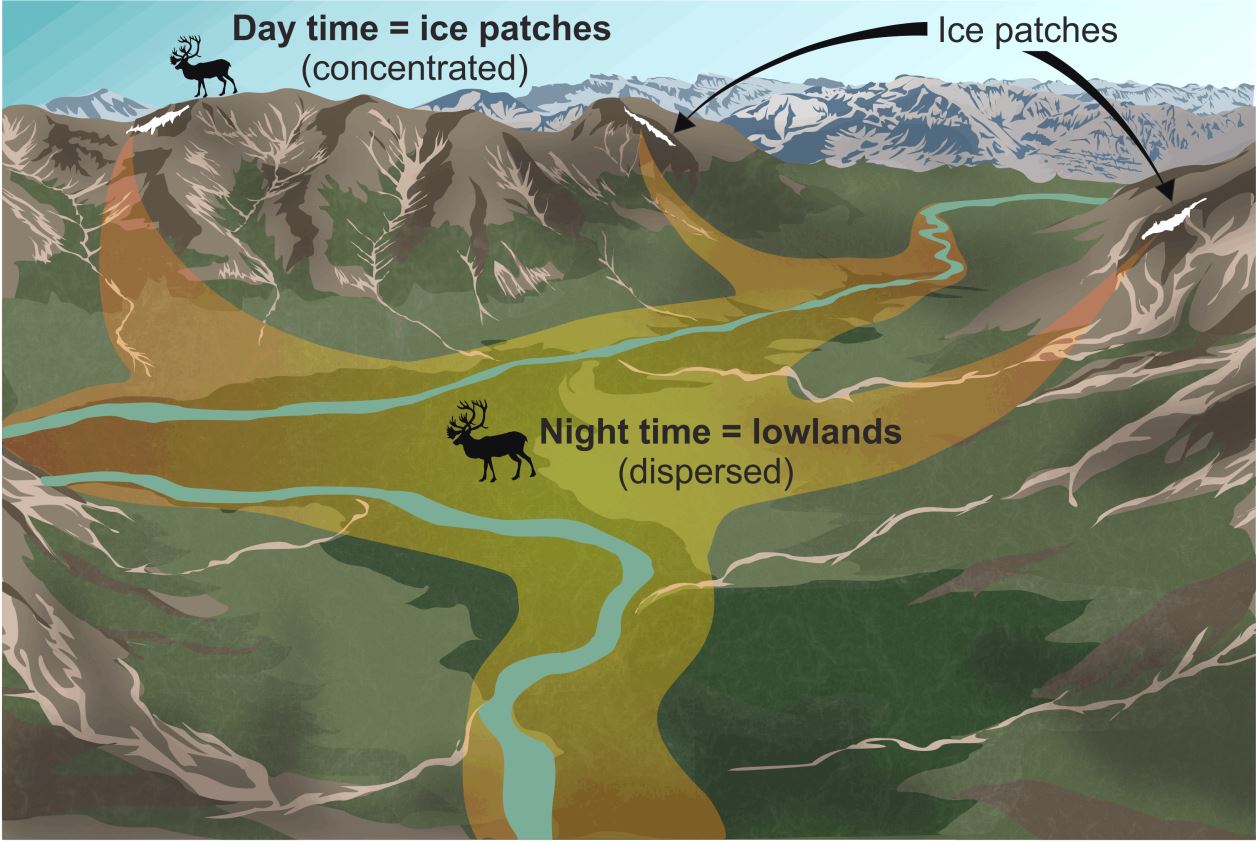
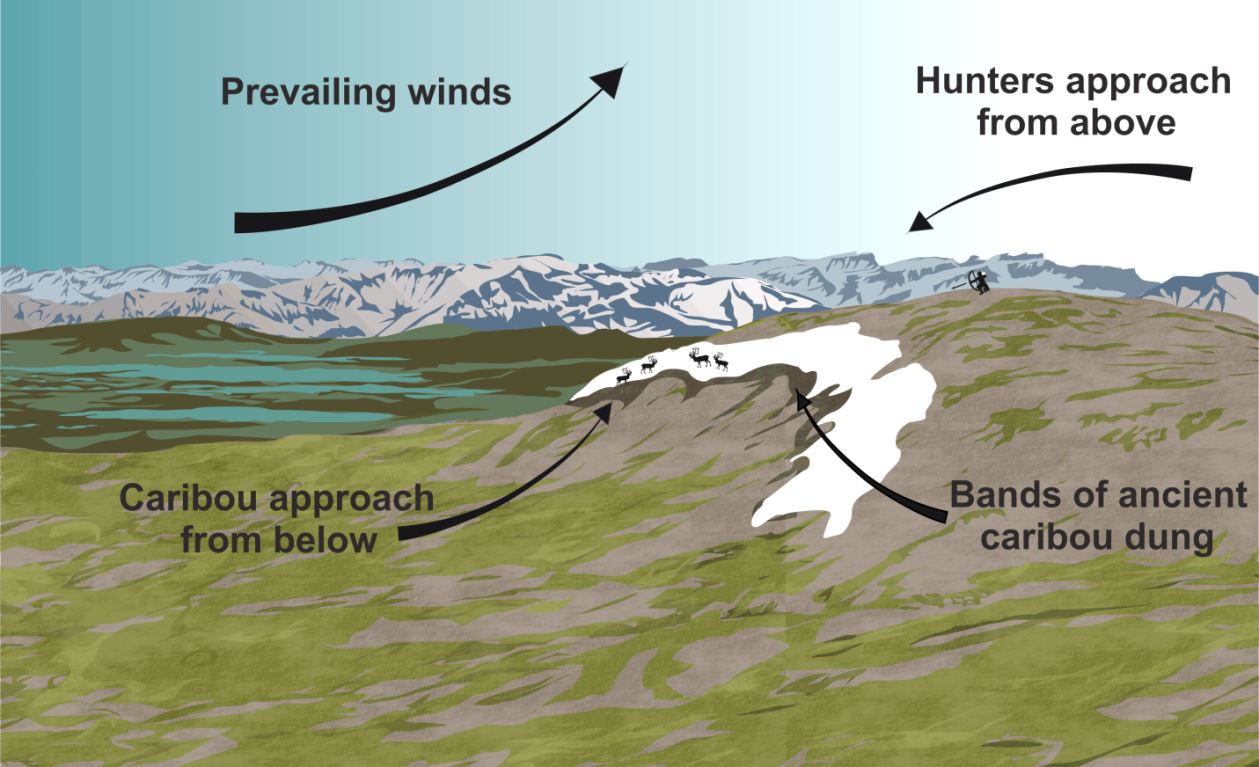
On a daily basis, caribou migrate upslope to colder heights during the hottest time of day only to return to the valleys at night. Alpine ice features provide animals relief from insects and hot temperatures. This long-lived habit of ice patch use makes these animals predictable. And so, as long as caribou and other animals have been gathering at ice patches in the North (for over 9000 years), people armed with sturdy moccasins and stone-tipped weapons have followed them.

Caribou gather on the upland ice features to stay cool in the midday heat (Todd Kristensen).


The perfect ice patch borders a round top that enabled hunters to lurk from above undetected (Todd Kristensen).

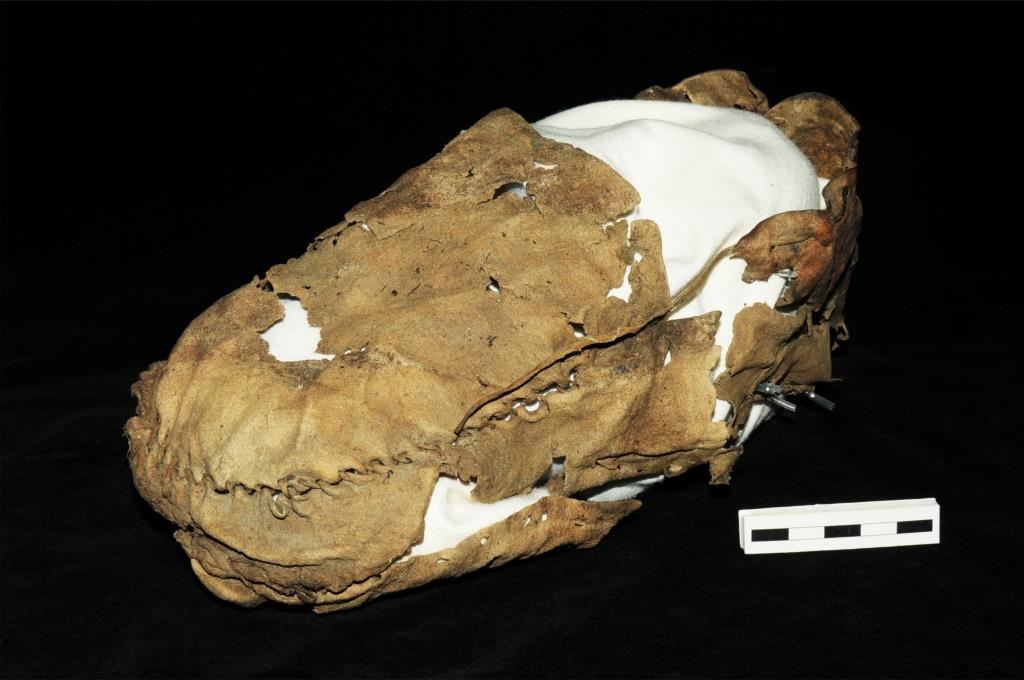
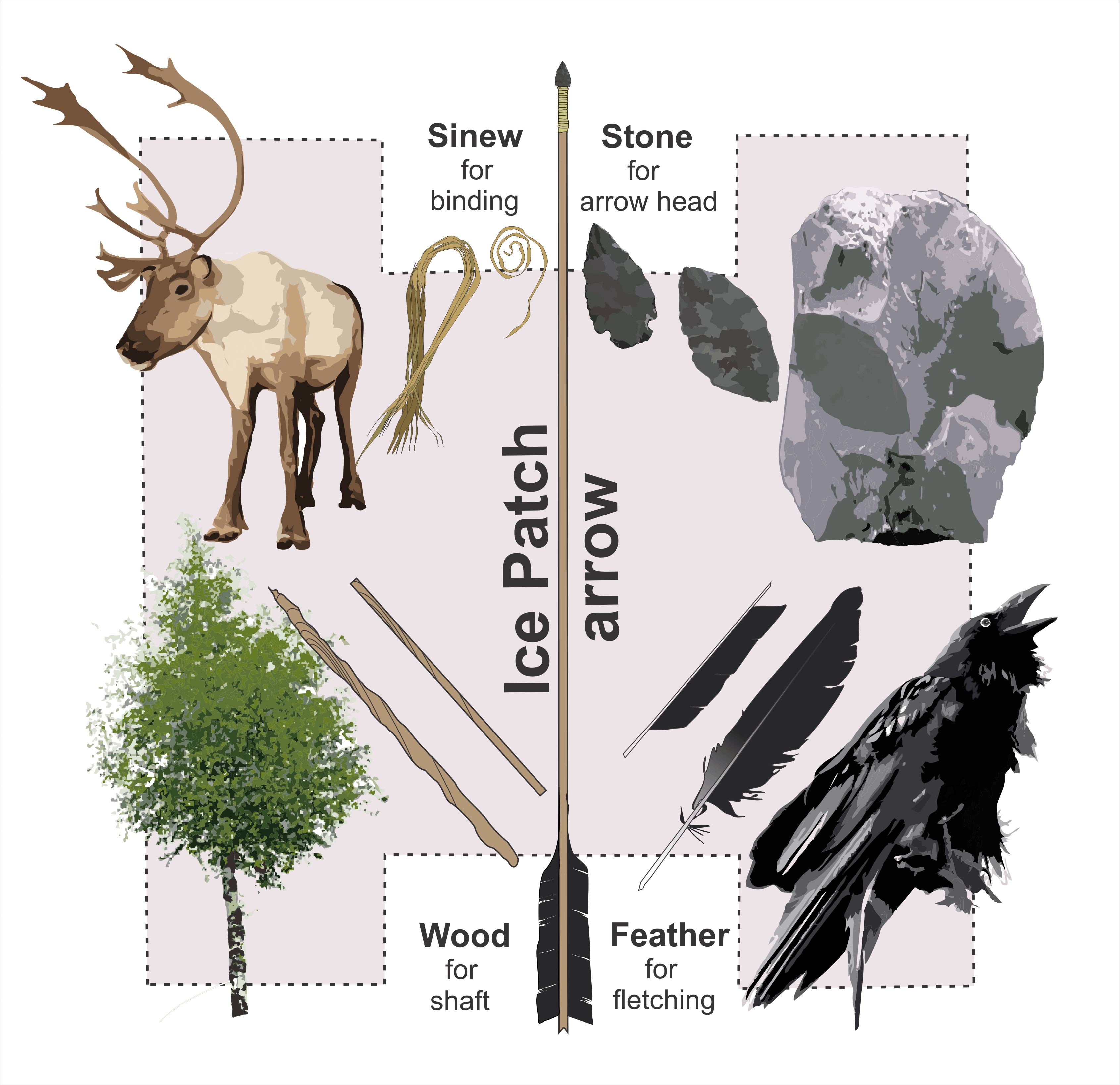
Archaeologists have found remnants of prehistoric hunting trips including possible broken spear shafts near Jasper, arrows, bows, darts, and  an excellently preserved 1400 year old Yukon moccasin. Some arrows even retain the feathers that were tied to their shafts, which helped create drag that kept the arrows flying straight. (This is called ‘fletching’ and is the origin of the common European surname ‘Fletcher’. Arrowmaker is also a common First Nations family name for this reason.)

This moccasin held the foot of an alpine climber over a thousand years ago (courtesy of the Government of Yukon).
Figure 7. Arrow materials
Modern science is pin-pointing the materials used in ancient weapons (Todd Kristensen).

Archaeologists in N.W.T. have also found a snare in an alpine ice patch that was used to capture ground squirrels, the skins of which were stitched together to form beautiful robes. Based on First Nations traditional knowledge, up to 200 snares were set in a single alpine area and this could produce enough food to last for months. Add to this the supply of caribou, sheep, ptarmigan, and berries, and alpine life from late summer to early fall was good.

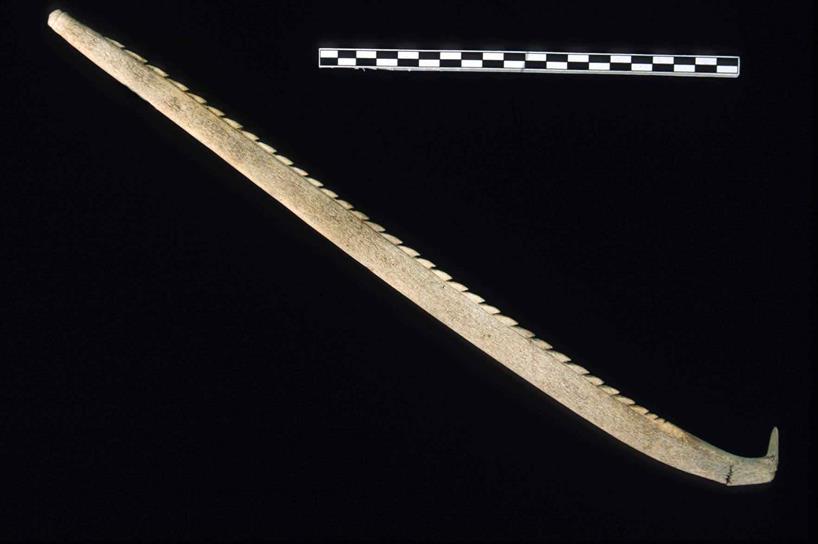
This barbed lance is a carved piece of antler from a Yukon ice patch (courtesy of the Government of Yukon).

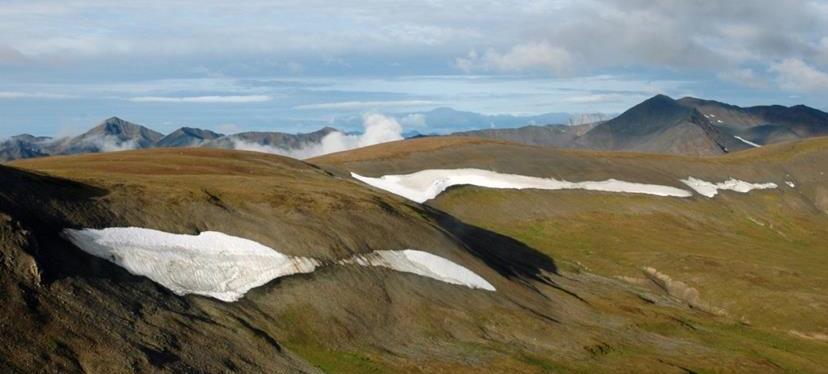
Ice patches that lasted for over four millennia have vanished in the last 50 years and scientists are monitoring the implications for alpine ecology. While the causes of ice retreat are debated, the impact on the archaeological record is clear. Melting ice has unlocked a story of prehistoric hunting but at the same time, it has exposed those very clues of the ancient past to destructive high altitude weather. A book is opening and quickly closing and much remains to be learned before the fragile alpine artifacts decompose. If modern climbers find old bones, wood, or a potential artifact, please leave them in place and contact the authors with some photographs or map coordinates so we can continue to learn about the deep past of life in the alpine.

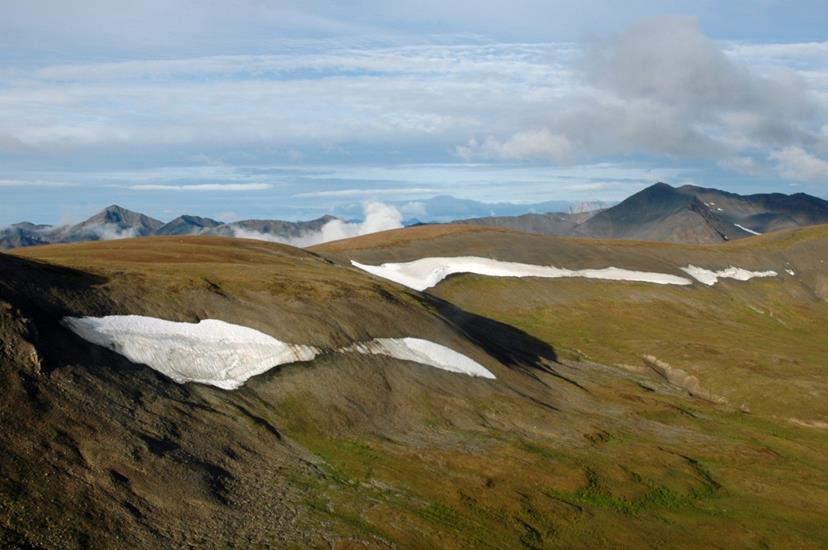
Ice patches in the North West Territories. (Tom Andrews, Government of N.W.T.).

A full version of this article appeared in the October issue of Alberta Outdoorsmen.

Written by: Todd Kristensen (Northern Archaeologist, Alberta’s Archaeological Survey); Tom Andrews (Territorial Archaeologist, Prince of Wales Northern Heritage Centre;, and Darryl Bereziuk (Director, Alberta’s Archaeological Survey)