According to Blackfoot tradition, as Old Man traveled north he created the mountains, rivers, grass and trees. When he came to the area of the present day Porcupine Hills in southwest Alberta, he formed images of people from mud and breathed life into them. The people asked Old Man what they would eat, and so, he created images of buffalo from clay and brought them to life. He then took the people to a rocky ledge and called to the buffalo, who ran in a straight line over the cliff: “Those are your food.”
Tens of millions of buffalo once roamed the Great Plains of North America from Alberta’s grasslands down to Texas. To people of the plains, there was no more important food source. A number of ingenious methods were devised for communal (group) hunting – buffalo were lured into ambushes, corralled with fire, chased onto frozen lakes or into deep snow, and driven into elaborate traps called pis’kun by the Blackfoot (translated as ‘deep-blood kettles’). Of the hundreds of mass kill sites, perhaps none is more impressive than the buffalo jump, the most famous of which is Alberta’s Head-Smashed-In. Read more →
It’s hard to overstate the profound impact of firearms in Alberta’s history. The earliest guns delivered food, protection, and intimidation. Technological improvements from European contact to the 1900s led to significant changes in the ways that guns were used across the province. This blog briefly explores the evolution of firearms in Alberta and the archaeological record of it.
First Guns
Firearms were introduced to Canada in the 1500s but didn’t spread to Alberta until much later. Their first appearance in the province was likely through raiding or trading in the southern U.S. by Plains First Nations. Early gun models, like flared-mouth blunderbusses, were designed for close encounters on battle fields but proved ineffective on the prairies. It wasn’t until the advent of portable flintlock muskets that guns spread like wildfire across the West.
An 1805 Barnett flintlock trade musket that came to be one the most popular Northwest Trade guns. Over 20 000 guns were sold out of Canada’s major fur trade depot at York Factory from 1600 to the late 1700s. Figure by Todd Kristensen and Julie Martindale.
Fire science has come a long way but the growing practice of prescribed burning is actually a return to a deep past. Archaeological and paleoecological researchers are demonstrating that Western Canada has been burning at the hands of people for thousands of years. Much of what was thought to be wilderness in the early 1900s was likely a mosaic of manipulated landscapes influenced by controlled burns. Alberta has a rich history of fire use and the recognition of it has implications for modern conservation and land management.
Ancient Fires
Tracking the history of fire in a landscape can be challenging and, in the paleoenvironmental record, it’s particularly difficult to distinguish human from natural burning. Fire scientists, however, are untangling fire history in interesting places. Christina Poletto is a Master’s student at the University of Alberta who will soon extract a long core of lake mud in northern Alberta in order to analyse changing layers of charcoal and pollen deposited over thousands of years. This information provides a baseline of natural fire history that she hopes to compare to cultural landscapes surrounding archaeological sites. “I want to Read more →
On a cold January day researchers from the University of Alberta and the province’s Archaeological Survey huddled on a frozen lake near Fort McMurray waiting to extract long cores of mud. Layered throughout the cores are environmental indicators, like pollen and microorganisms, that span thousands of years. Geologists have tried to map the boundaries of hydrocarbon reservoirs in the oil sands for over a century but they have only recently focused on the natural forces that exposed bitumen to human eyes. The mystery of this exposure event is what continues to draw researchers to remote frozen lakes in northeast Alberta. Read more →
In an earlier post we showed a video of the fieldwork undertaken for the Rocky Mountain Alpine Project in August of 2015. This was a pilot project to determine the potential for finding organic archaeological artifacts in ice patches in the Jasper National Park area. One of our most exciting finds was a leather strip that had recently melted out from the edge of an ice patch. However, we also found and collected a significant number of other naturally occurring organic materials melting out from the ice. While most of these are not archaeological, they are valuable for understanding how this environment and the animals living in it have changed over time. The pilot project revealed that ice patches in Jasper and neighbouring Mount Robson Provincial Park have great potential for archaeological research but also for biological, environmental, and climate research. See below for some of our other finds and their potential to contribute to our knowledge of this landscape’s past.
Natural Organics
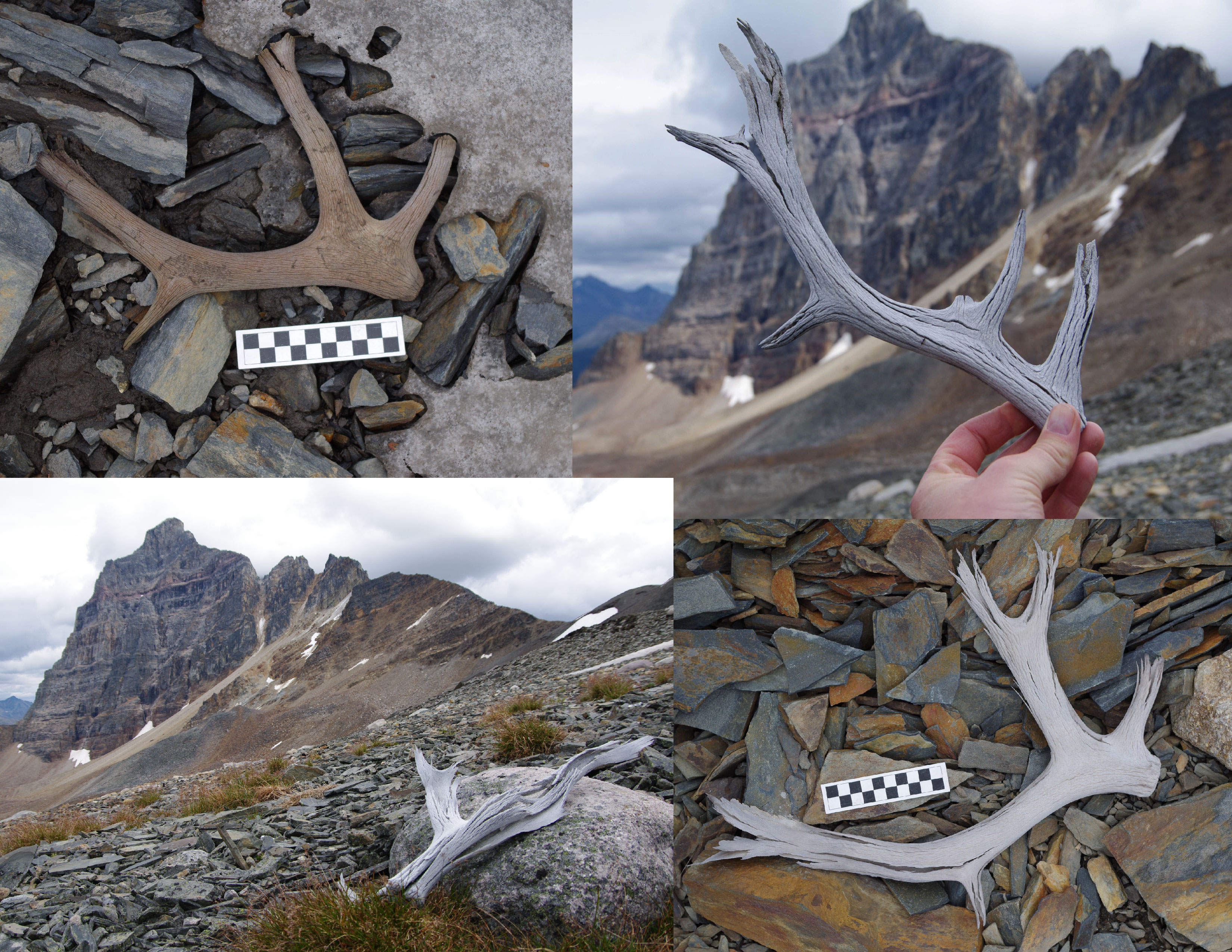
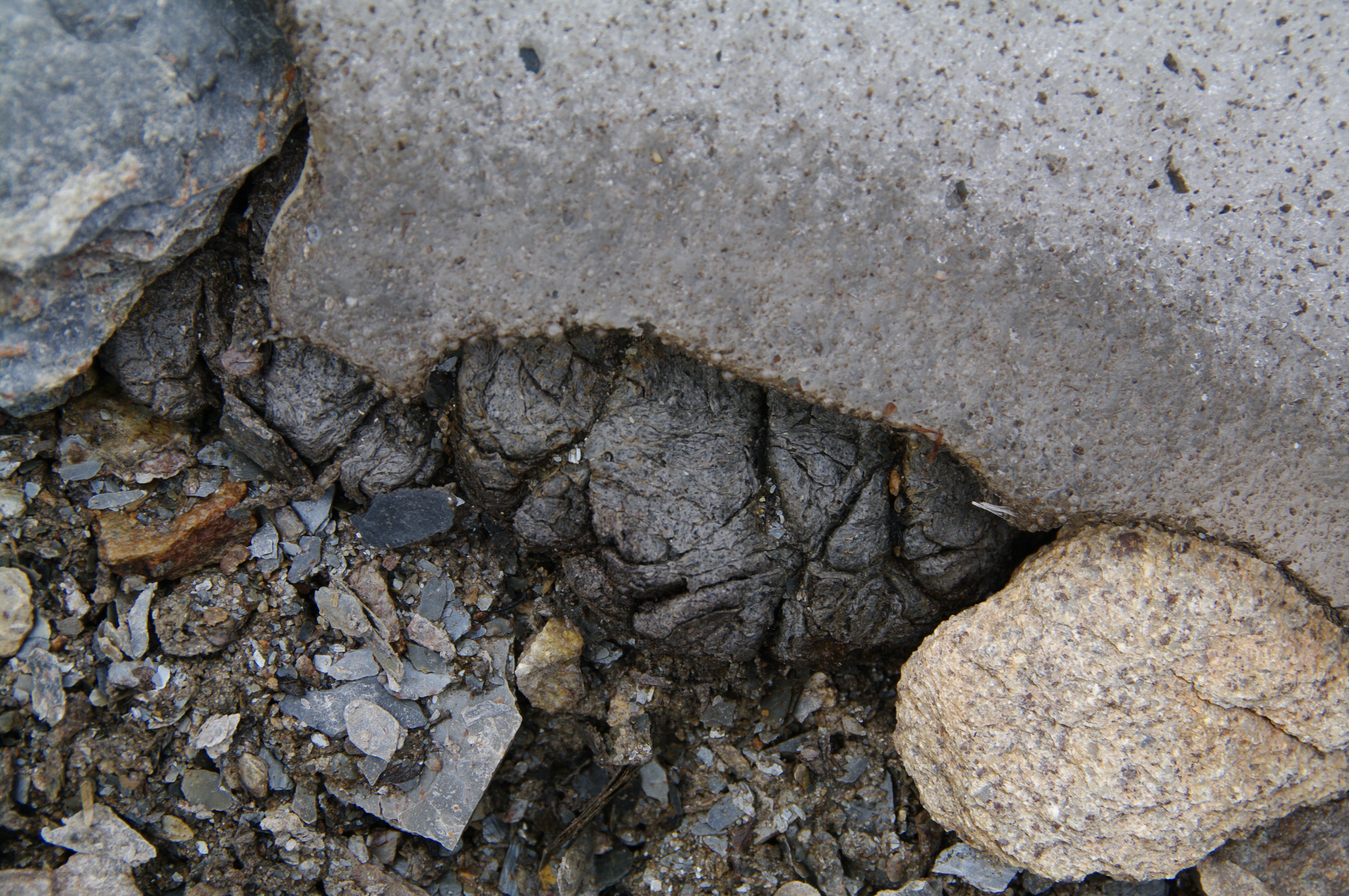
Caribou antlers were the most abundant organic materials found. Antlers can be used to reconstruct caribou populations in the past by recovering DNA from them and using genetics to track population growth and decline. It is important to understand how populations change naturally so that we can interpret what effect human activity might have on caribou. We may also be able to detect the impact of past ecological events (like volcanic eruptions) on caribou populations. Similarily, caribou dung present in the ice patches can also be used to track caribou populations and diet. Some researchers have also used finds like this to track the evolution of viruses.
A sample of some of the caribou antlers found at the edge of the ice patches.Caribou dung melting out of the ice.
Bone is another important archaeological and ecological find. Any bone that was encountered was examined for evidence of human modification such as breaking or fracturing of the bones from hunting and processing. Read more →
How did people kill animals before guns and the bow and arrow? One of the oldest weapons in Alberta is called an atlatl or dart thrower. The atlatl increased in popularity around 8000 years ago and was the trusted technology for roughly 300 consecutive generations of hunters. It was replaced by the bow and arrow around 2000 years ago.
What’s an Atlatl?
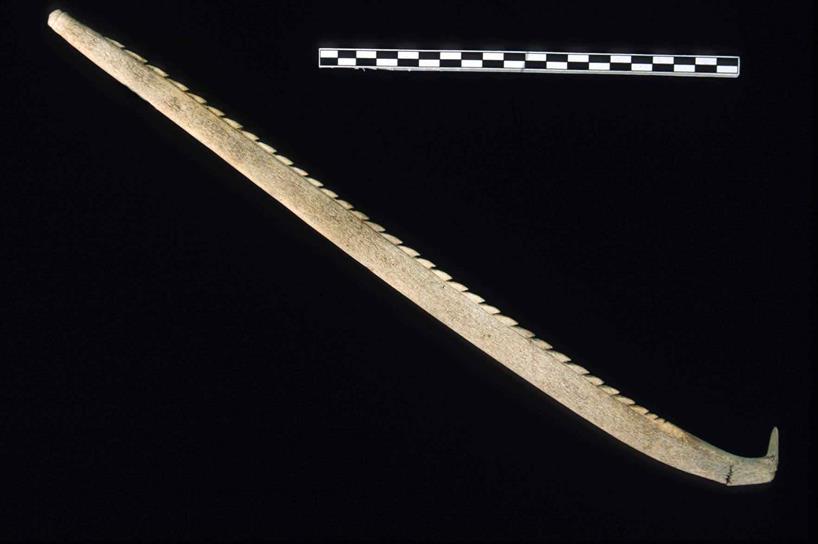
The atlatl is a carved wooden board, up to 1 m long, with a hook on one end that inserts into a divot at the end of a ‘dart’ shaft (about 1 m in length).
An atlatl throwing board (by Amanda Dow)
The hunter throws the dart in a motion similar to a baseball pitch. A flick of the wrist at the end of the throw increases the speed and power. Is the use of an atlatl better than just throwing a spear? The world record for a hand-thrown javelin is 104 m while the record for an atlatl thrown-dart is 258 m! Read more →
This is the second of two blogs about some of the unique evidence of early boating in Alberta. The first blog explores First Nations boats and the second discusses the earliest Euro-Canadian vessels from the adoption of the birch back canoe to steamboats.
Boating in the Fur Trade
The first European fur traders adopted an eastern Algonkian-style of birch bark canoe. Every year, hundreds of men and women in Alberta gathered supplies and moulded lightweight ‘Express’ canoes at major fur trade boat building centres like Fort Chipewyan, Fort Edmonton, and Rocky Mountain House. While canoes and other physical traces of boat building at these forts have long since decayed, other lines of evidence of early boating are preserved. Trading posts needed Read more →
It takes patience to fold steaming hot birch bark into a canoe and it takes power to hammer the planks of a lumbering sternwheeler. The products of Alberta’s early boat building were vessels that delivered families safe and sound to hunting grounds, glided fishermen over teaming shoals, and carried trade goods in an economic system that forged our province. This is the first of two blogs about some of the unique evidence of early boating in Alberta. The first blog explores First Nations boats and the second discusses early Euro-Canadian vessels from the adoption of the birch back canoe to steamboats.
Dug-outs and Bull Boats
First Nations’ boats on the plains were often made of buffalo hides stretched over willow or pine frames. This ‘bull boat’ was a small, circular craft quickly built from tipi hides and recycled shortly after. It enabled safe river crossings Read more →
Obsidian is a natural glassy rock that was produced by volcanoes and used by pre-contact people across North America for making stone tools. Obsidian is the sharpest naturally occurring substance on earth, which made it ideal for making tools such as arrowheads and knives that were designed to slice animal flesh. Many obsidian tools have been found in Alberta despite the fact that there are no natural sources of it in the province. This means that obsidian was traded or carried into Alberta from long distances away. Research on obsidian tools at archaeological sites in Alberta has been conducted on a small scale since the late 1980’s. The current Alberta Obsidian Project (AOP) is the first large-scale attempt to analyse our province’s obsidian; it began in 2014 when a research plan was developed by members of the Archaeological Survey of Alberta, the Royal Alberta Museum, and the Center of Applied Isotope Studies (CAIS) at the University of Georgia. Read more →
Recent archaeological research from Alaska to Yellowstone has revealed rare and delicate tools preserved in high altitude ice that tell of a deep human history in some of the most remote alpine habitats on the continent. These artifacts were lost by ancient hunters of alpine animals (like caribou and sheep) and had been encased in a barrier of ice that warming temperatures have recently unlocked. A race is now on to find frozen relics from the past before they, and the icy archives that house them, disappear.
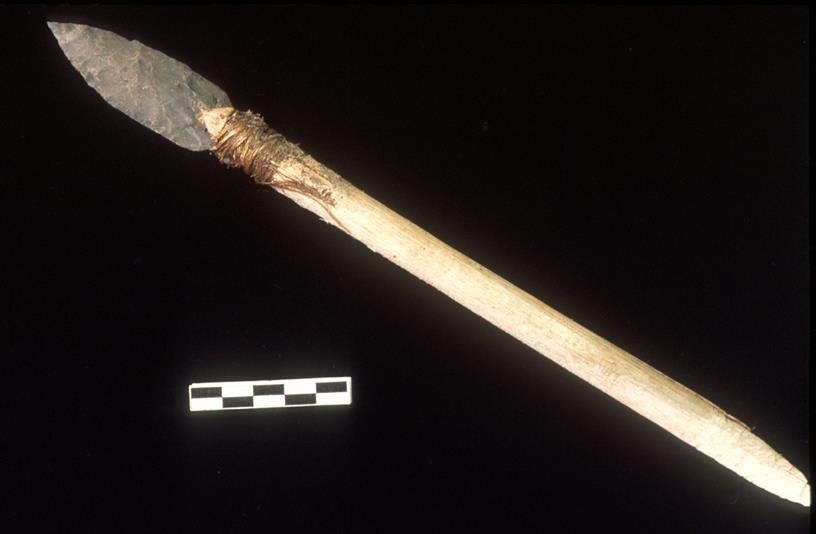
This stone dart is over 4000 years old and is preserved in its original wooden shaft (courtesy of the Government of Yukon).
The story of prehistoric alpine hunters in North America owes its existence to Yukon biologists who discovered an odd piece of wood above the treeline. The find was reported to local archaeologists who realized that it was a wooden tool lost on the ice thousands of years ago. First Nations across the North still remember stories of traditional life in the alpine, but until that lucky Yukon find, archaeologists didn’t expect that much physical evidence of old activities could be preserved in the harsh high altitude conditions. It is very rare to find wooden tools that are thousands of years old, so the artifact triggered a series of research programs in the North.
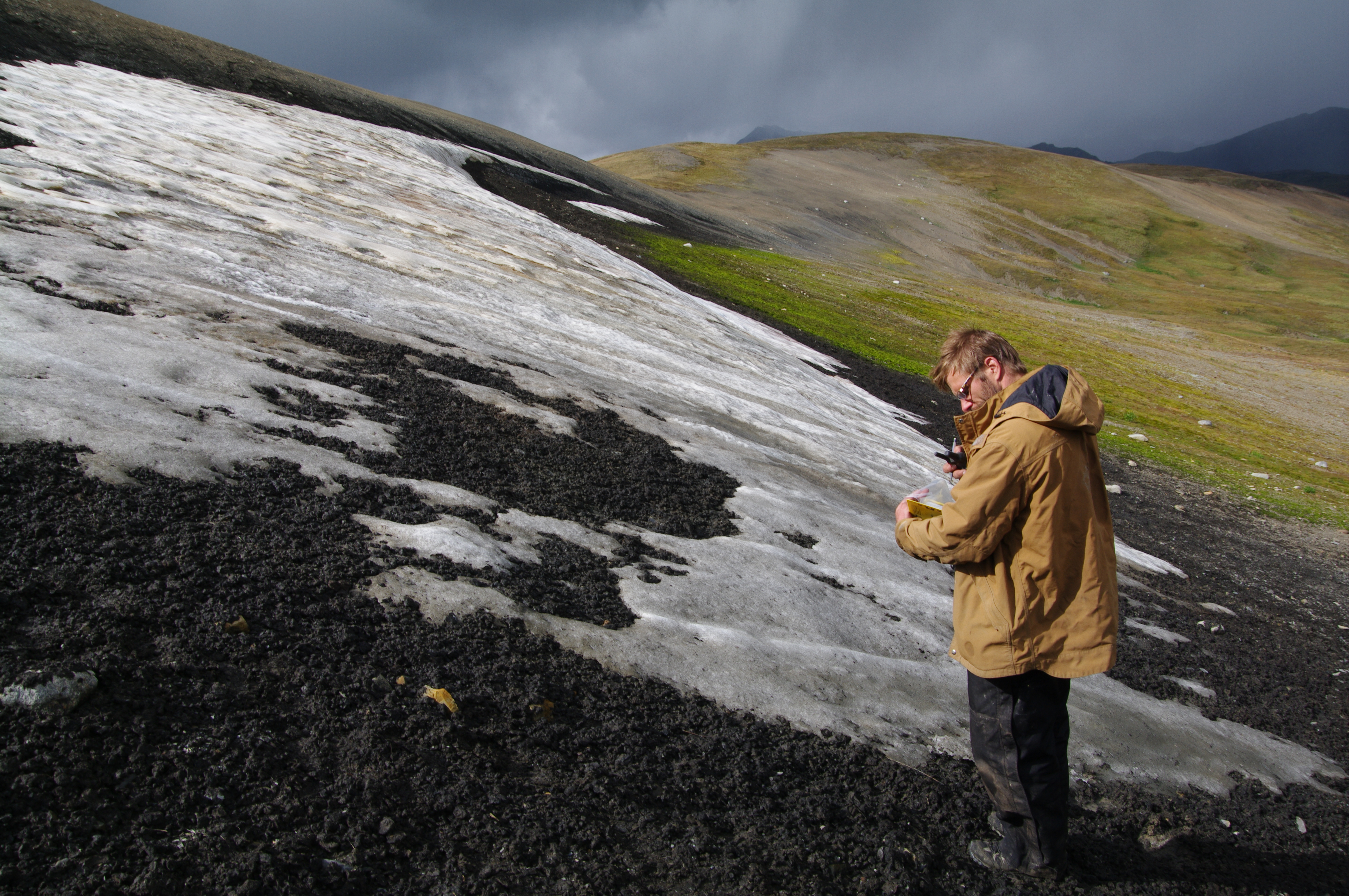
An archaeologist (Todd Kristensen) surveying a melting ice patch for artifacts (courtesy of Mike Donnelly).
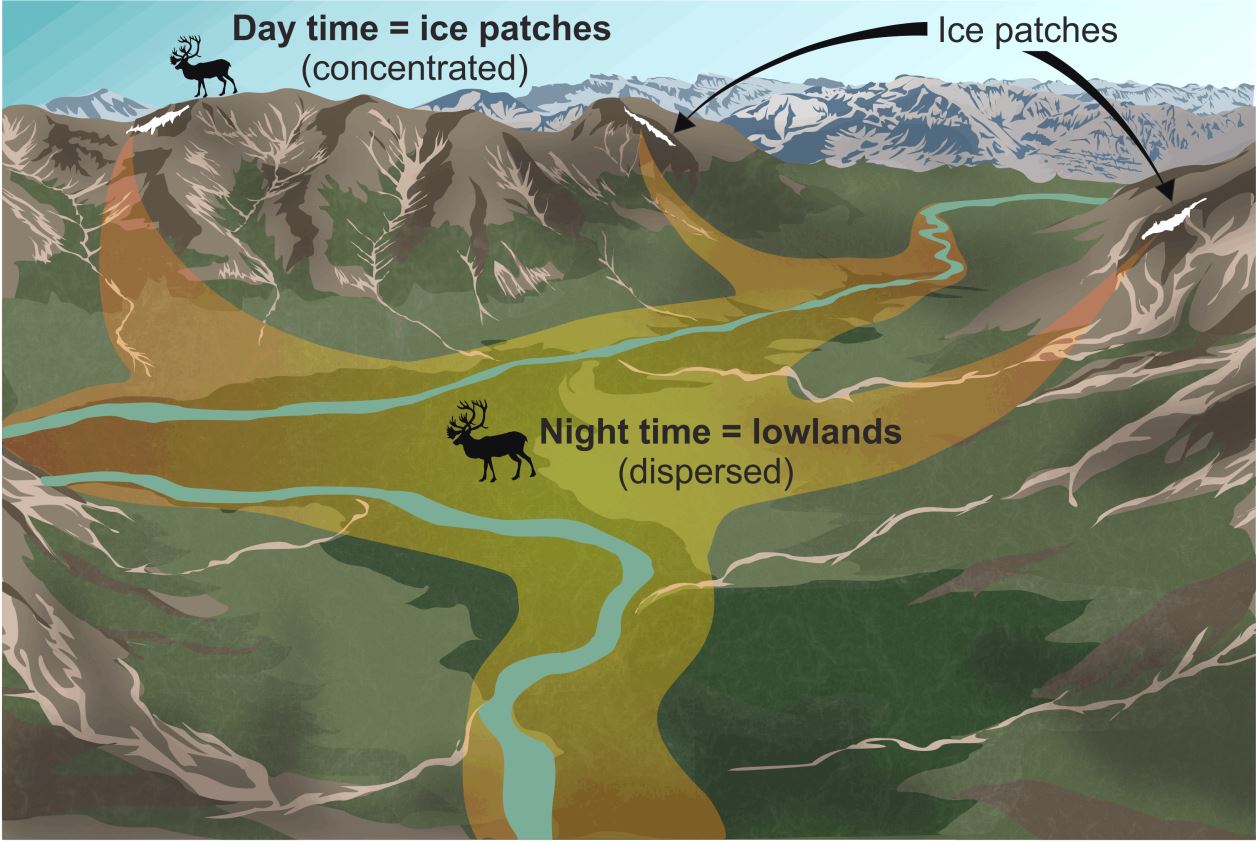
On a daily basis, caribou migrate upslope to colder heights during the hottest time of day only to return to the valleys at night. Alpine ice features provide animals relief from insects and hot temperatures. This long-lived habit of ice patch use makes these animals predictable. And so, as long as caribou and other animals have been gathering at ice patches in the North (for over 9000 years), people armed with sturdy moccasins and stone-tipped weapons have followed them.
Caribou gather on the upland ice features to stay cool in the midday heat (Todd Kristensen).
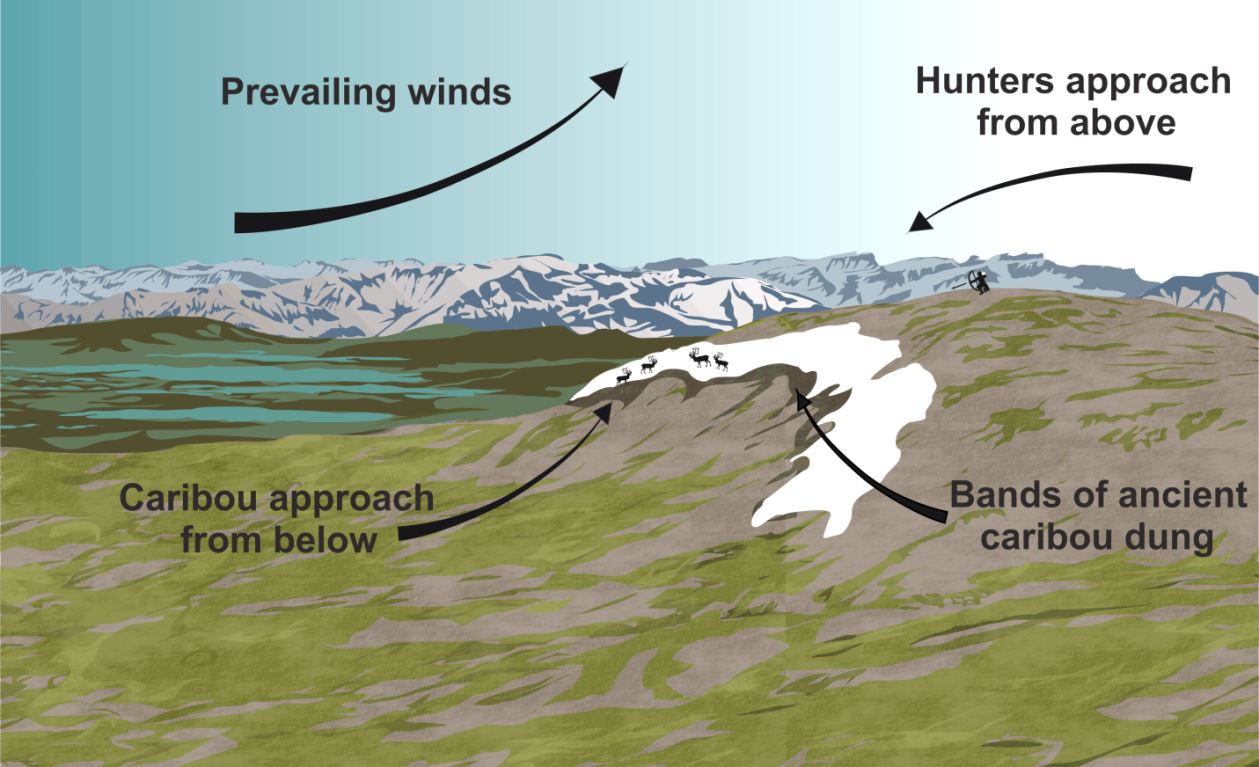
The perfect ice patch borders a round top that enabled hunters to lurk from above undetected (Todd Kristensen).
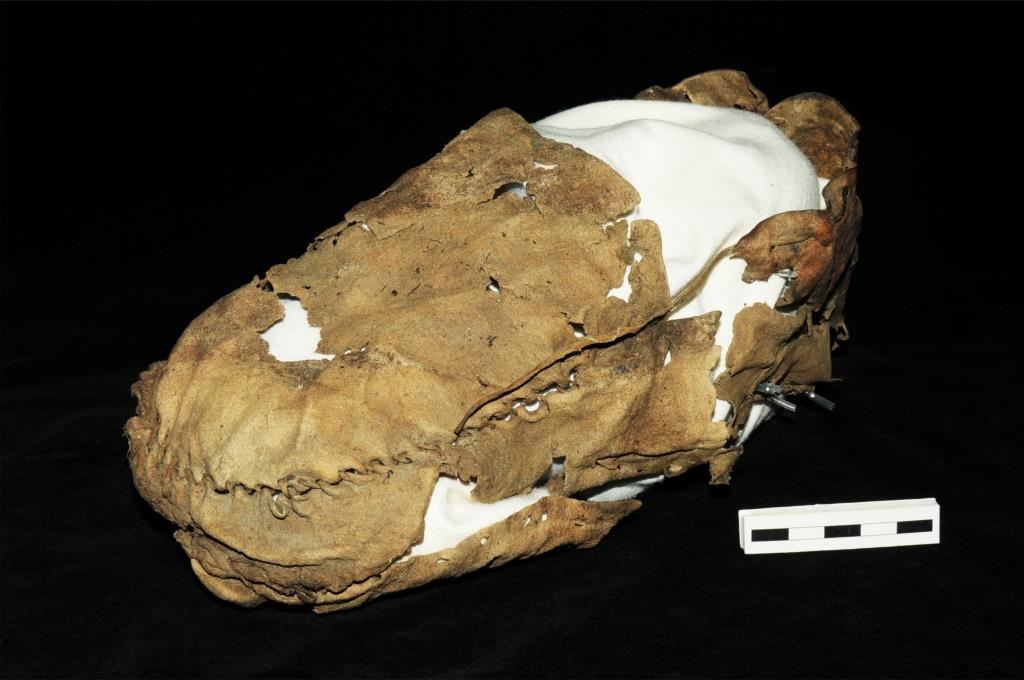
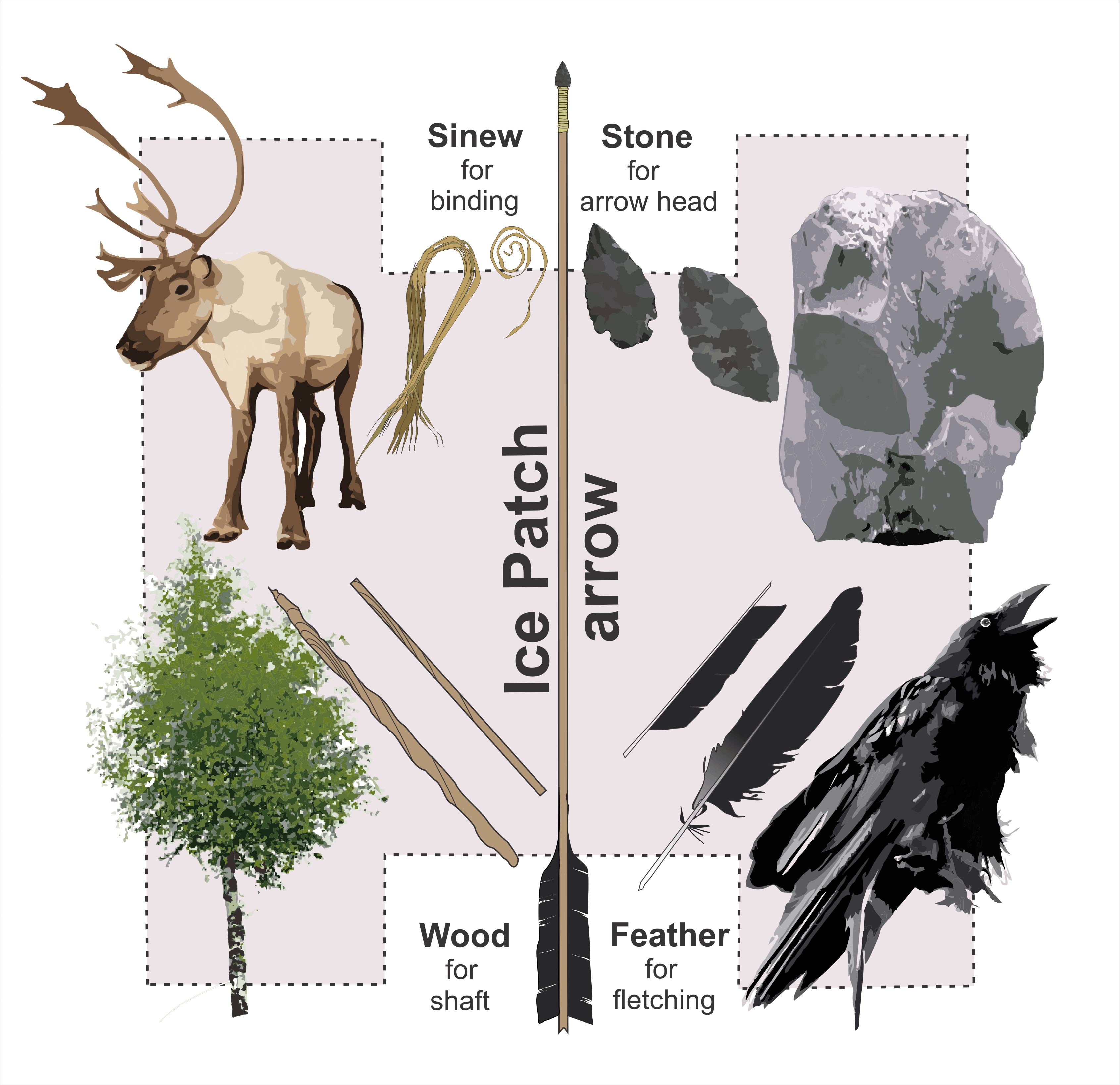
Archaeologists have found remnants of prehistoric hunting trips including possible broken spear shafts near Jasper, arrows, bows, darts, and an excellently preserved 1400 year old Yukon moccasin. Some arrows even retain the feathers that were tied to their shafts, which helped create drag that kept the arrows flying straight. (This is called ‘fletching’ and is the origin of the common European surname ‘Fletcher’. Arrowmaker is also a common First Nations family name for this reason.)
This moccasin held the foot of an alpine climber over a thousand years ago (courtesy of the Government of Yukon).Modern science is pin-pointing the materials used in ancient weapons (Todd Kristensen).
Archaeologists in N.W.T. have also found a snare in an alpine ice patch that was used to capture ground squirrels, the skins of which were stitched together to form beautiful robes. Based on First Nations traditional knowledge, up to 200 snares were set in a single alpine area and this could produce enough food to last for months. Add to this the supply of caribou, sheep, ptarmigan, and berries, and alpine life from late summer to early fall was good.
This barbed lance is a carved piece of antler from a Yukon ice patch (courtesy of the Government of Yukon).
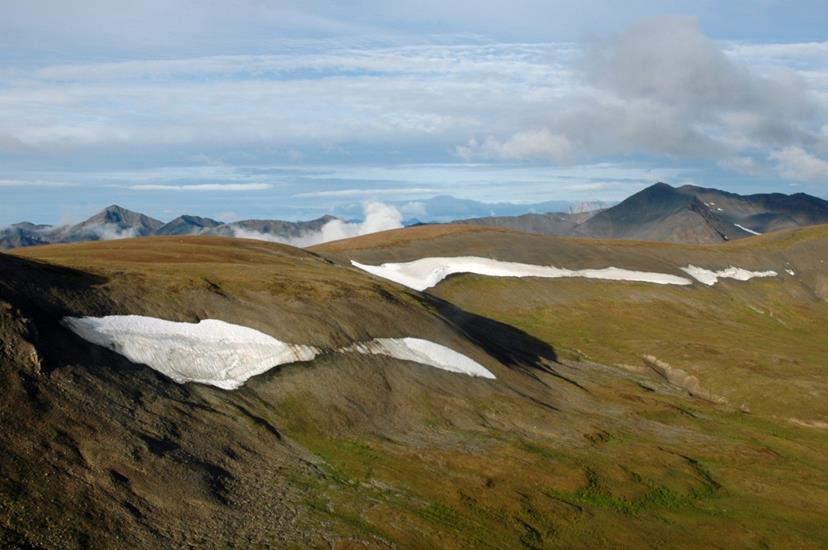
Ice patches that lasted for over four millennia have vanished in the last 50 years and scientists are monitoring the implications for alpine ecology. While the causes of ice retreat are debated, the impact on the archaeological record is clear. Melting ice has unlocked a story of prehistoric hunting but at the same time, it has exposed those very clues of the ancient past to destructive high altitude weather. A book is opening and quickly closing and much remains to be learned before the fragile alpine artifacts decompose. If modern climbers find old bones, wood, or a potential artifact, please leave them in place and contact the authors with some photographs or map coordinates so we can continue to learn about the deep past of life in the alpine.
Ice patches in the North West Territories. (Tom Andrews, Government of N.W.T.).
A full version of this article appeared in the October issue of Alberta Outdoorsmen.
Written by: Todd Kristensen (Northern Archaeologist, Alberta’s Archaeological Survey); Tom Andrews (Territorial Archaeologist, Prince of Wales Northern Heritage Centre;, and Darryl Bereziuk (Director, Alberta’s Archaeological Survey)







 RETROactive