Yellowhead Townsite and Mine: Archaeology in Alberta’s Coal Branch

Alberta’s Coal Branch region, southwest of Edson, was once an area bustling with activity, not only due to coal production, but also with the day-to-day goings-on of communities. In its heyday, the Coal Branch supported a population of almost 3,000 people spread out among several towns including Cadomin, Mercoal, Mountain Park, Luscar, Lovettville, Coalspur, Robb, Coal Valley, and Beacon Hill. These communities, though small, had many amenities including stores, community halls, sports fields, schools, churches, and hospitals. Today, many of them have been completely abandoned or are only used for part of the year.
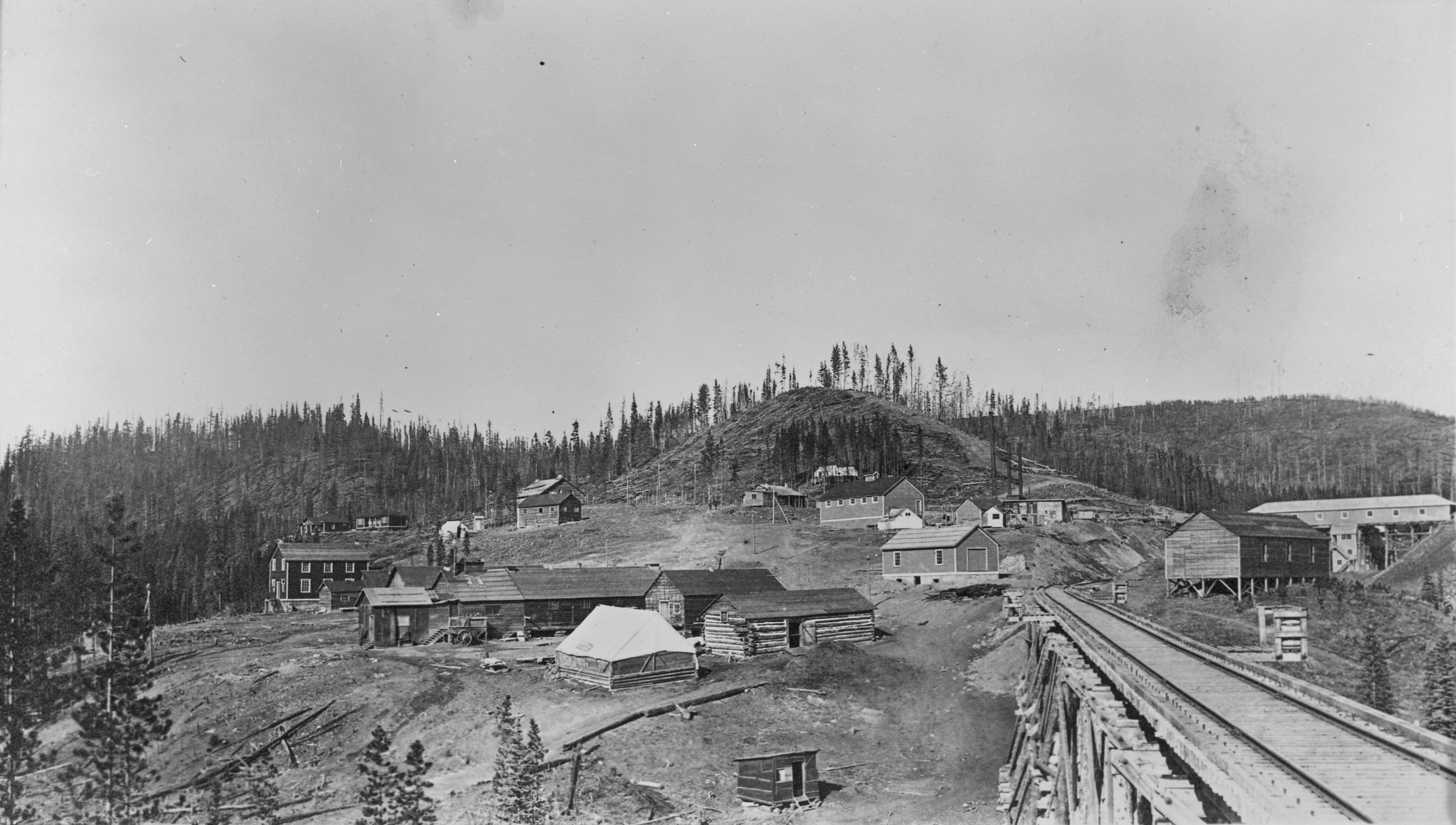
Part of the Yellowhead site, likely during the mid-to-late stages of mine development (Photo Credit: Provincial Archives of Alberta, Edmonton, PR1991.0312 A19987)
Part of the Yellowhead Townsite and Mine which was in operation from 1909-1919 (Photo Credit: Provincial Archives of Alberta, PR1991.0312 A19987)

Yellowhead Mine and its associated “stag camp”, and later townsite, was the first mining operation in production in the Coal Branch. Run by the Yellowhead Pass Coal and Coke Co., the mine began operations in 1909, before railroads or roads reached the area. Since the only way in and out of Yellowhead was by pack trail, the settlement was fairly isolated and difficult to get to. When mining first began, the coal could not be shipped out due to lack of rail access, so coal was stockpiled. The railroad Read more
Historic Burial near Viking, Alberta: A story of excavation, ceremony and community

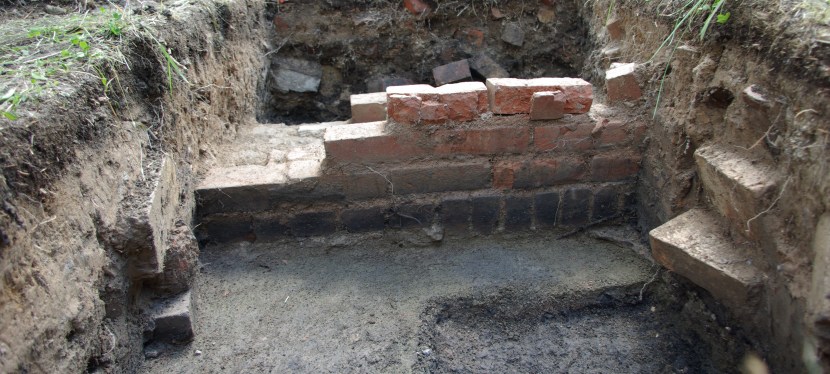
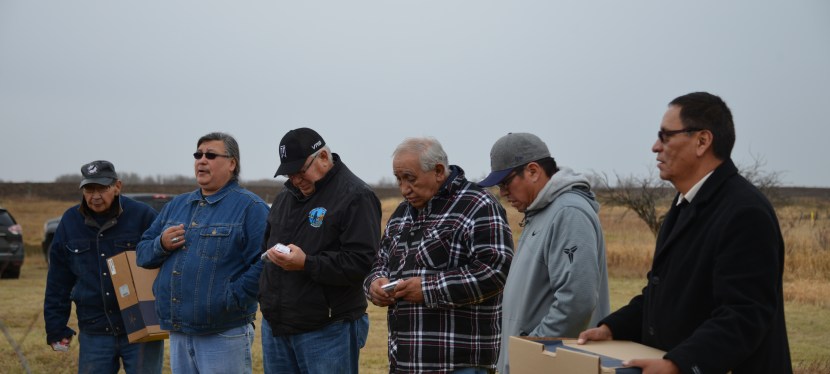
In late August 2015, Brian Rozmahel, a farmer near the Town of Viking, was working in one of his fields. He recently experienced problems with gophers causing damage to his crops and decided to set up several traps as a preventative measure. One morning he went out to check the traps he set the day before and discovered something he was not expecting to find. A badger got to the site overnight and dug into the gopher burrows. Quite a bit of earth was brought up through the badger’s digging. However, there was more than just earth that was surfaced by the badger. Resting on the ground near the burrows were human remains and other items such as buttons and beads.

When Brian encountered the remains he immediately contacted the Viking Detachment of the RCMP. The RCMP cordoned off the site and did an initial investigation of the area. In the meantime, the exposed human remains were sent to the Office of the Chief Medical Examiner (OCME) for further analysis.

In consultation with forensic anthropologist, Pamela Mayne-Correia, the OCME concluded that the human remains were historic in nature and were likely of a young Aboriginal individual. The RCMP deemed the situation to not be criminal and the Historic Resources Management Branch (HRMB) was then contacted by the OCME. As the remains were considered historic, the HRMB now had jurisdiction over the site. Read more

Arrowheads and Artifact Ambassadors

Many of the most amazing archaeological sites in Alberta were discovered accidentally by farmers, hunters, hikers, and industry workers. By sharing their finds, everyday Albertans became heritage heroes. Why is it important to share discoveries? When someone finds an artifact and puts it in their garage, one Albertan learns about our heritage. When a person invites an archaeologist to photograph that artifact, thousands of people and multiple generations of Albertans gain a portal to our past.

We’re always on the lookout for the next big site and the next famous Artifact Ambassador. To inspire you to share your finds, here are some facts about citizen discoveries in the world and here at home.

  • The Terracotta Army of China, a collection of over 8000 figures buried in a royal tomb over 2000 years ago, was discovered and reported by farmers in 1974
  • The Lascaux Cave paintings in France (over 15 000 years old) were discovered by teenagers on a hike in 1940
  • 1398 recorded sites in Alberta are based on private collections of artifacts – photographs and information about these collections have been inspiring research projects for decades

Map of private collections

  • Several archaeological finds by Alberta’s explorers and farmers have since become Provincial Historic Sites and one has even become an UNESCO World Heritage Site!
  • Archaeological finds reported by concerned Albertans include ancient rock art, medicine wheels, footprints of extinct animals hunted by people, buffalo jumps, and ancient campsites.
Image 1 Manuscript covers
A number of projects were undertaken from the 1970s to 90s to document private collections of artifacts from Lethbridge to Grande Prairie. Digital copies of these manuscripts are now available to Alberta’s archaeological community.

Even a single artifact can contain significant information. For example, staff of the Archaeological Survey recently initiated two projects to document private collections in northern Alberta. Read more

Megafloods and Layered Pasts: Exposing Alberta’s Oil Sands

On a cold January day researchers from the University of Alberta and the province’s Archaeological Survey huddled on a frozen lake near Fort McMurray waiting to extract long cores of mud. Layered throughout the cores are environmental indicators, like pollen and microorganisms, that span thousands of years. Geologists have tried to map the boundaries of hydrocarbon reservoirs in the oil sands for over a century but they have only recently focused on the natural forces that exposed bitumen to human eyes. The mystery of this exposure event is what continues to draw researchers to remote frozen lakes in northeast Alberta. Read more

Rocky Mountain Alpine Project Update

In an earlier post we showed a video of the fieldwork undertaken for the Rocky Mountain Alpine Project in August of 2015. This was a pilot project to determine the potential for finding organic archaeological artifacts in ice patches in the Jasper National Park area. One of our most exciting finds was a leather strip that had recently melted out from the edge of an ice patch. However, we also found and collected a significant number of other naturally occurring organic materials melting out from the ice. While most of these are not archaeological, they are valuable for understanding how this environment and the animals living in it have changed over time. The pilot project revealed that ice patches in Jasper and neighbouring Mount Robson Provincial Park have great potential for archaeological research but also for biological, environmental, and climate research. See below for some of our other finds and their potential to contribute to our knowledge of this landscape’s past.

Natural Organics

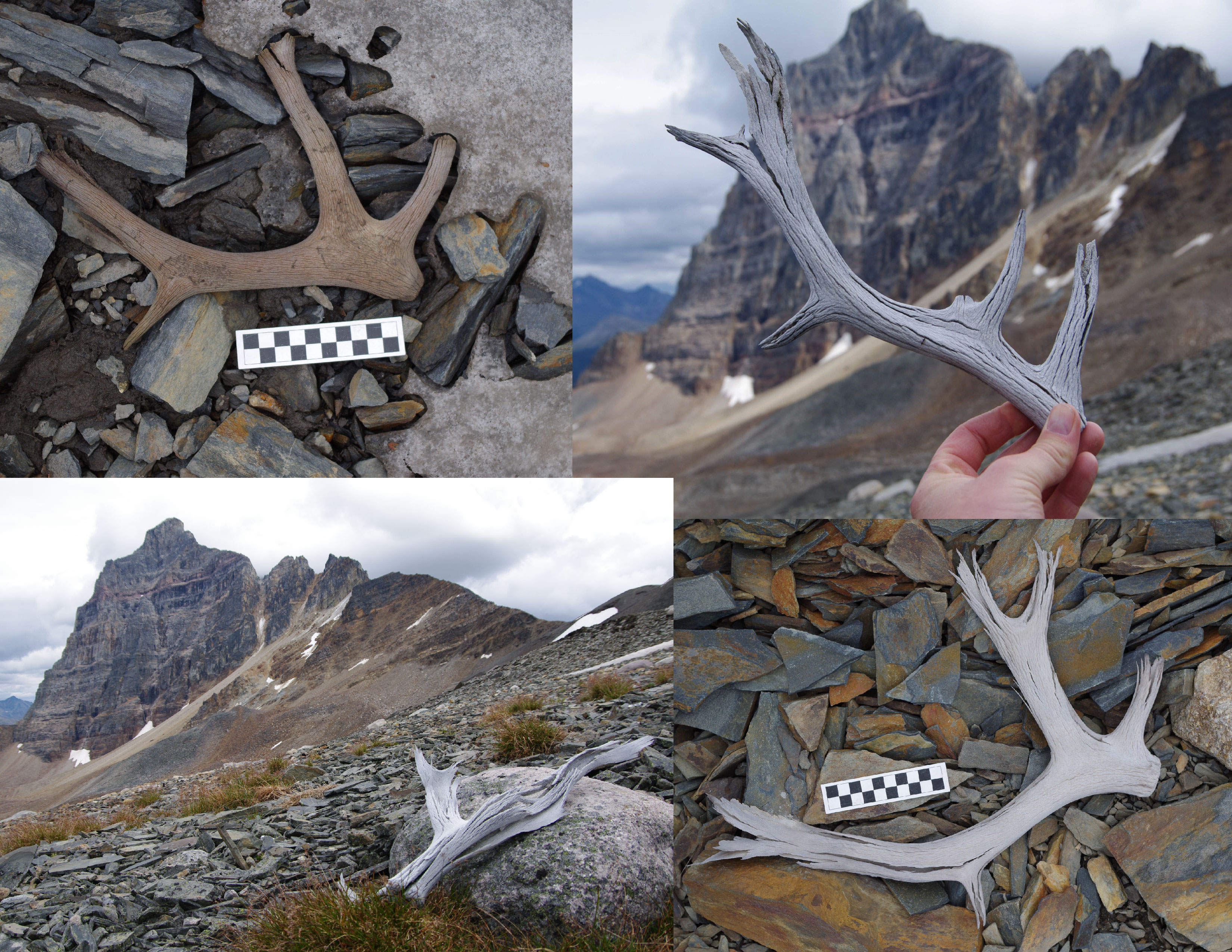
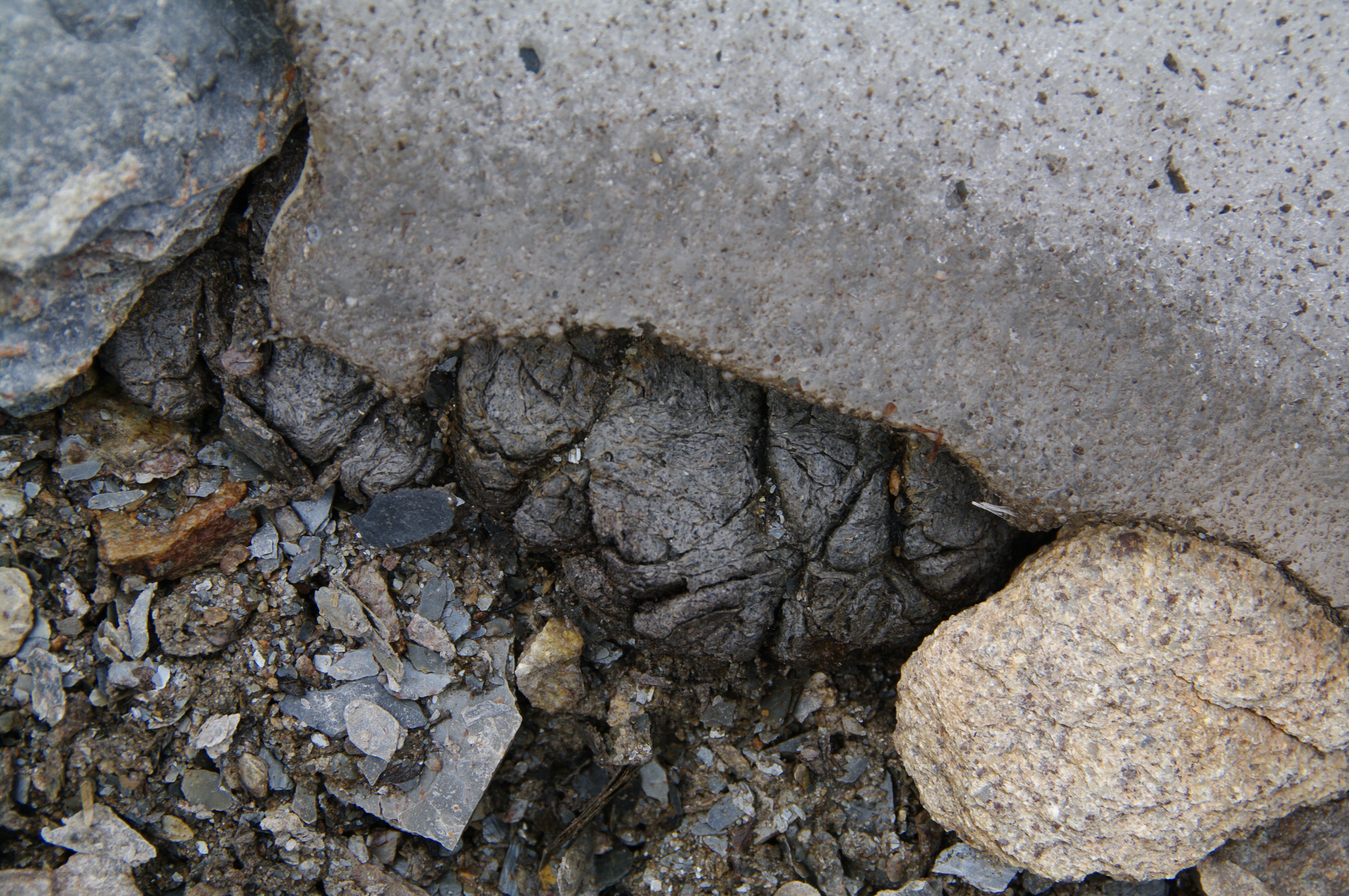
Caribou antlers were the most abundant organic materials found. Antlers can be used to reconstruct caribou populations in the past by recovering DNA from them and using genetics to track population growth and decline. It is important to understand how populations change naturally so that we can interpret what effect human activity might have on caribou. We may also be able to detect the impact of past ecological events (like volcanic eruptions) on caribou populations. Similarily, caribou dung present in the ice patches can also be used to track caribou populations and diet. Some researchers have also used finds like this to track the evolution of viruses.

A sample of some of the caribou and elk antlers found at the edge of the ice patches.
A sample of some of the caribou antlers found at the edge of the ice patches.
Caribou dung melting out of the ice.

Bone is another important archaeological and ecological find. Any bone that was encountered was examined for evidence of human modification such as breaking or fracturing of the bones from hunting and processing. Read more

Alberta’s Ancient Darts and Atlatl Hunting

How did people kill animals before guns and the bow and arrow? One of the oldest weapons in Alberta is called an atlatl or dart thrower. The atlatl increased in popularity around 8000 years ago and was the trusted technology for roughly 300 consecutive generations of hunters. It was replaced by the bow and arrow around 2000 years ago.

What’s an Atlatl? 

The atlatl is a carved wooden board, up to 1 m long, with a hook on one end that inserts into a divot at the end of a ‘dart’ shaft (about 1 m in length).

Figure 1. Atlatl and weight Amanda Dow
An atlatl throwing board (by Amanda Dow)

The hunter throws the dart in a motion similar to a baseball pitch. A flick of the wrist at the end of the throw increases the speed and power. Is the use of an atlatl better than just throwing a spear? The world record for a hand-thrown javelin is 104 m while the record for an atlatl thrown-dart is 258 m! Read more

Rocky Mountain Alpine Project

In August of 2015 members of the Archaeological Survey of Alberta undertook fieldwork in Jasper National Park and Mount Robson Provincial Park. This work had a focus on ice patch archaeology – that is, surveying melting alpine ice patches to recover ancient cultural and natural material revealed by retreating ice and snow. The video below showcases this fieldwork and explains its importance. A more detailed blog post will follow in the next few weeks to provide more information about this important initiative that was spearheaded by our Northern Archaeologist, Todd Kristensen. Enjoy!

00044 from Courtney Lakevold on Vimeo.

Video footage, audio and photos by: Courtney Lakevold (Archaeological Information Coordinator), Todd Kristensen (Northern Archaeologist), Mike Donnelly (Archaeologist), and Travis Jones (Ph.D. Student, University of Georgia/Center for Applied Isotope Studies)

Video and summary by: Courtney Lakevold, Archaeological Information Coordinator

Birch Bark Buccaneers and Prairie Paddlers: An Illustrated Look at Alberta’s Early Boating (Part 2)

This is the second of two blogs about some of the unique evidence of early boating in Alberta. The first blog explores First Nations boats and the second discusses the earliest Euro-Canadian vessels from the adoption of the birch back canoe to steamboats.

Boating in the Fur Trade

The first European fur traders adopted an eastern Algonkian-style of birch bark canoe. Every year, hundreds of men and women in Alberta gathered supplies and moulded lightweight ‘Express’ canoes at major fur trade boat building centres like Fort Chipewyan, Fort Edmonton, and Rocky Mountain House. While canoes and other physical traces of boat building at these forts have long since decayed, other lines of evidence of early boating are preserved. Trading posts needed Read more

Birch Bark Buccaneers and Prairie Paddlers: An Illustrated Look at Alberta’s Early Boating (Part 1)

It takes patience to fold steaming hot birch bark into a canoe and it takes power to hammer the planks of a lumbering sternwheeler. The products of Alberta’s early boat building were vessels that delivered families safe and sound to hunting grounds, glided fishermen over teaming shoals, and carried trade goods in an economic system that forged our province. This is the first of two blogs about some of the unique evidence of early boating in Alberta. The first blog explores First Nations boats and the second discusses early Euro-Canadian vessels from the adoption of the birch back canoe to steamboats.

Dug-outs and Bull Boats

First Nations’ boats on the plains were often made of buffalo hides stretched over willow or pine frames. This ‘bull boat’ was a small, circular craft quickly built from tipi hides and recycled shortly after. It enabled safe river crossings Read more

Tracking Ancient Connections: The Alberta Obsidian Project

Obsidian is a natural glassy rock that was produced by volcanoes and used by pre-contact people across North America for making stone tools. Obsidian is the sharpest naturally occurring substance on earth, which made it ideal for making tools such as arrowheads and knives that were designed to slice animal flesh. Many obsidian tools have been found in Alberta despite the fact that there are no natural sources of it in the province. This means that obsidian was traded or carried into Alberta from long distances away. Research on obsidian tools at archaeological sites in Alberta has been conducted on a small scale since the late 1980’s. The current Alberta Obsidian Project (AOP) is the first large-scale attempt to analyse our province’s obsidian; it began in 2014 when a research plan was developed by members of the Archaeological Survey of Alberta, the Royal Alberta Museum, and the Center of Applied Isotope Studies (CAIS) at the University of Georgia. Read more