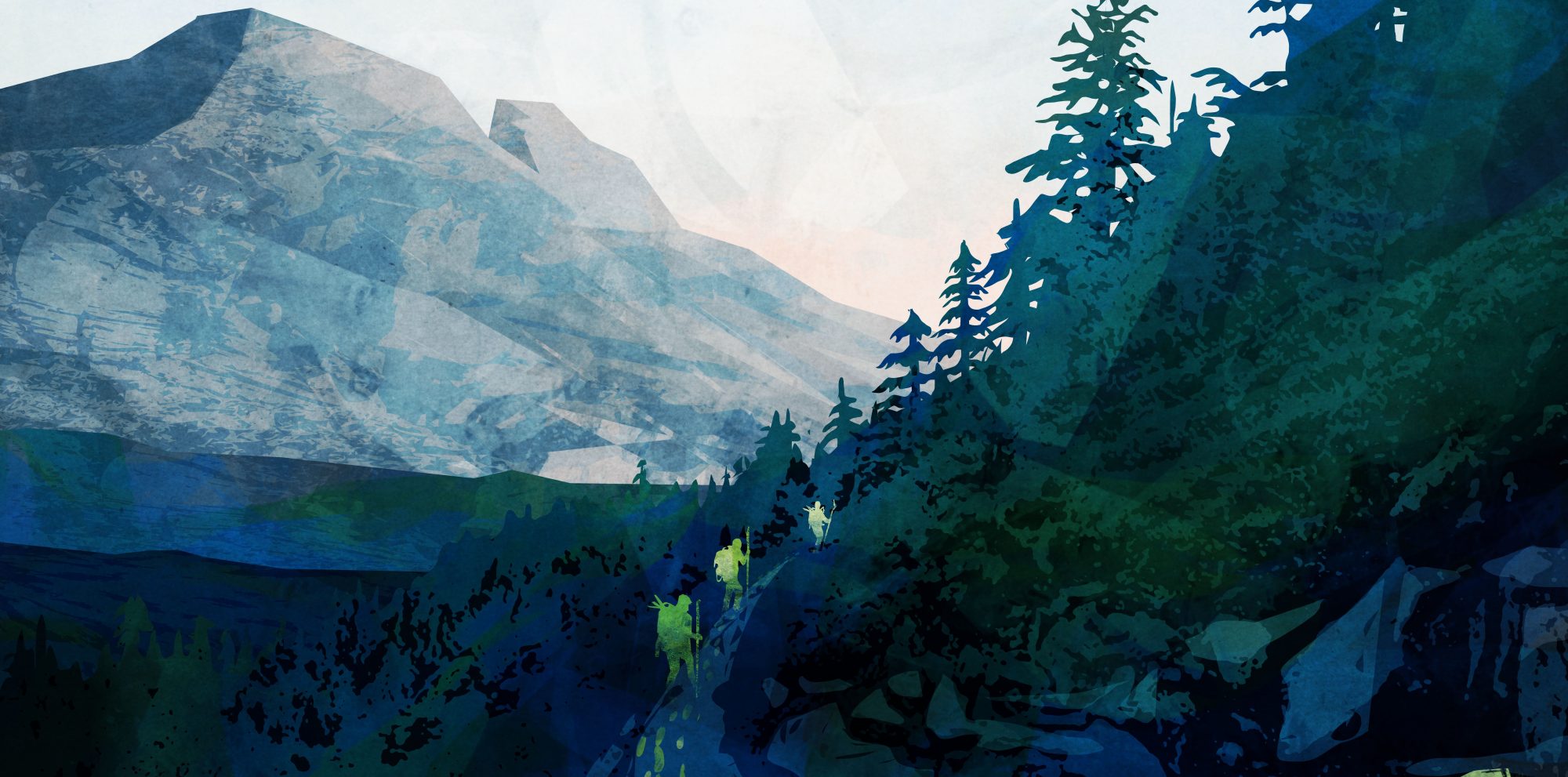
Located between the Astoria and the Whirlpool rivers is a mountain considered by many to be the most majestic in Jasper National Park, if not the entire Canadian Rocky Mountains. At an impressive altitude of about 3,300 metres, the mountain has been known by a number of names. French Canadian voyageurs using the Athabasca Pass referred to the notable landmark as La Montagne de la Grand Traverse (Mountain of the Great Pass). Dr. James Hector of the Palliser Expedition referred to it as Le Duc, probably after a Metis member of his party. In 1912, Arthur O. Wheeler of the Alpine Club of Canada and the Interprovincial Boundary Survey named it Fitzhugh Mountain, after the townsite of Fitzhugh, which was named for E. L. Fitzhugh, a director of the Grand Trunk Pacific Railway (the townsite of Fitzhugh was later renamed Jasper). It had also been periodically, and incorrectly, referred to as Mount Geikie. Today, and since 1916, the mountain is named Mount Edith Cavell, named for a British nurse who never set foot in Canada, let alone within Jasper National Park or on the mountain itself. How this mountain became a commemoration to Edith Cavell is an interesting lesson in Canada’s role in the First World War, its place in the Empire and the importance of wartime symbolism and the values of myth and memorialization.
North face of Mount Edith Cavell with Lake Cavell in the foreground, ca. 1945. Provincial Archives of Alberta, PA354.1
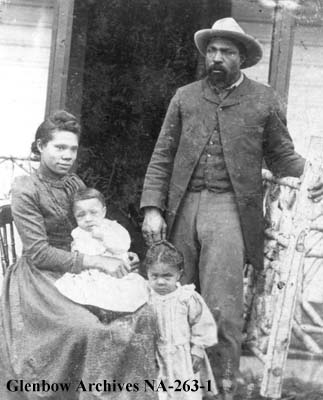
Alberta’s history is rife with many stories of interesting and fascinating cowboys and ranchers. High in this company stands John Ware, a black cowboy and rancher of near-mythic standing in Alberta’s history. John Ware has become almost an unofficial emblem of Alberta and western Canada, featuring prominently in centennial exhibits, in books and even on a Canada Post stamp. He is often portrayed as an embodiment of western Canadian values and as a demonstration of the levelling effect of the pioneer period and the cultural tolerance that was only possible on the Canadian prairies. There is little doubt that John Ware truly did enjoy the respect of his fellow ranchers and cowboys and his story, even if exaggerated, is an inspiring one. Yet, despite this outpouring of goodwill, respect and admiration, for many years John Ware was commemorated by a racially derogatory name prominently displayed on maps.
John Ware with his wife Mildred and two of their children, Robert and Nettie, ca. 1896. Glenbow Archives: NA-263-1
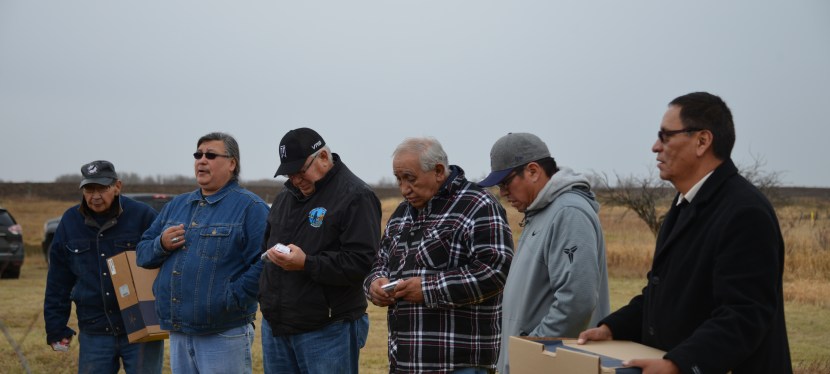
In late August 2015, Brian Rozmahel, a farmer near the Town of Viking, was working in one of his fields. He recently experienced problems with gophers causing damage to his crops and decided to set up several traps as a preventative measure. One morning he went out to check the traps he set the day before and discovered something he was not expecting to find. A badger got to the site overnight and dug into the gopher burrows. Quite a bit of earth was brought up through the badger’s digging. However, there was more than just earth that was surfaced by the badger. Resting on the ground near the burrows were human remains and other items such as buttons and beads.
When Brian encountered the remains he immediately contacted the Viking Detachment of the RCMP. The RCMP cordoned off the site and did an initial investigation of the area. In the meantime, the exposed human remains were sent to the Office of the Chief Medical Examiner (OCME) for further analysis.
In consultation with forensic anthropologist, Pamela Mayne-Correia, the OCME concluded that the human remains were historic in nature and were likely of a young Aboriginal individual. The RCMP deemed the situation to not be criminal and the Historic Resources Management Branch (HRMB) was then contacted by the OCME. As the remains were considered historic, the HRMB now had jurisdiction over the site. Read more →
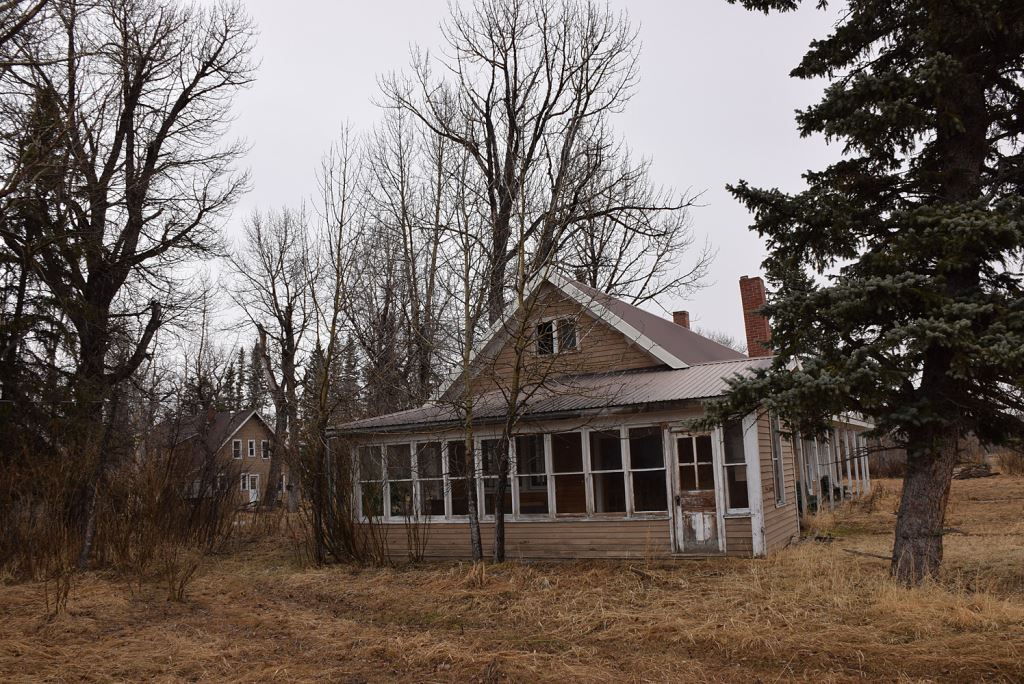
E.P. (Prince Edward) Ranch, established by the Bedingfeld family in 1886, is located in the foothills southwest of Calgary near the Bar U Ranch National Historic Site. In 1919, during a cross-Canada tour, the Bedingfeld’s ranch captured the fancy of His Royal Highness Edward, Prince of Wales, upon his visit to the area. Prince Edward purchased the ranch shortly thereafter from Frank Bedingfeld. Under Edward’s direction, the ranch developed a breeding program for sheep, cattle, and horses with livestock imported from the Prince’s breeding farms in the Duchy of Cornwall in England. Prince Edward, later King Edward VIII, visited the ranch in the 1920s and in the 1940s and 1950s, after his abdication, as the Duke of Windsor. Photographs in the Glenbow Archives show Edward and his wife Wallis Simpson, the Duchess of Windsor, strolling among the ranch buildings that still stand at the site today. The E.P. Ranch was designated a Provincial Historic Resource in 2004 for its association with Edward, who owned the site from 1919 to 1962. Fans of the 1992 movie Unforgiven will also recognize scenes shot on location at the ranch.
The main ranch (or Prince’s) house prior to restoration, April 2014.
In June 2013, the E.P. Ranch found itself at the epicentre of the torrential rains that flooded communities and historic sites across southern Alberta. Pekisko Creek overflowed its banks and swept through the site, turning grazing lands into a virtual river. While the large and distinctive horse barn was unaffected, four other buildings were damaged. Read more →
A recent Government of Alberta information bulletin announced a new Provincial Historic Resource. Check it out:
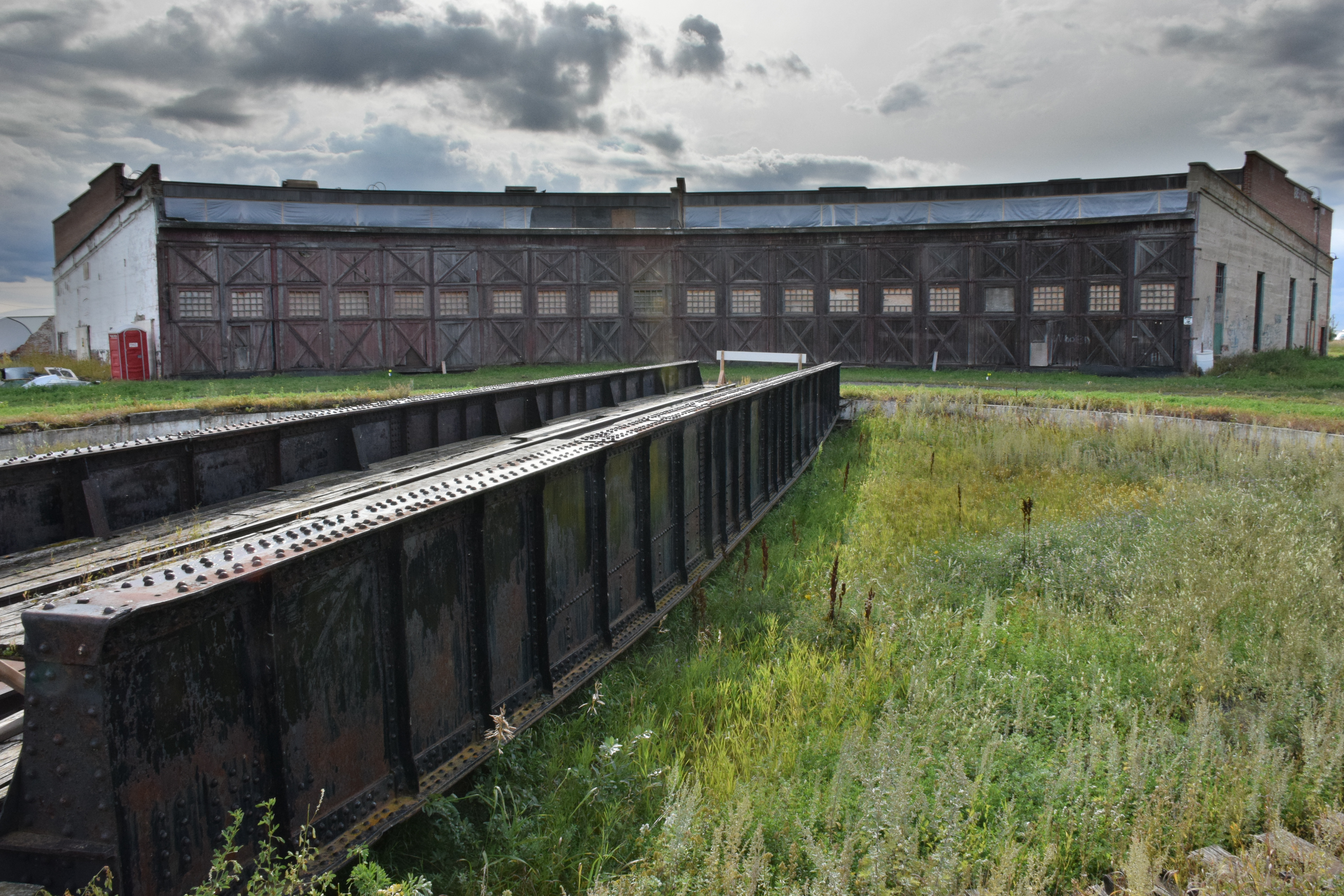
In August, 2015, a rare and important piece of Alberta’s railroading and transportation heritage has been designated as a provincial historic resource.
Exterior of the Canadian Northern Railway Roundhouse, showing the large, double doors, which provide access to the locomotive stalls. The turntable and bridge are in the foreground, September 2014. Alberta Culture and Tourism, Government of Alberta.
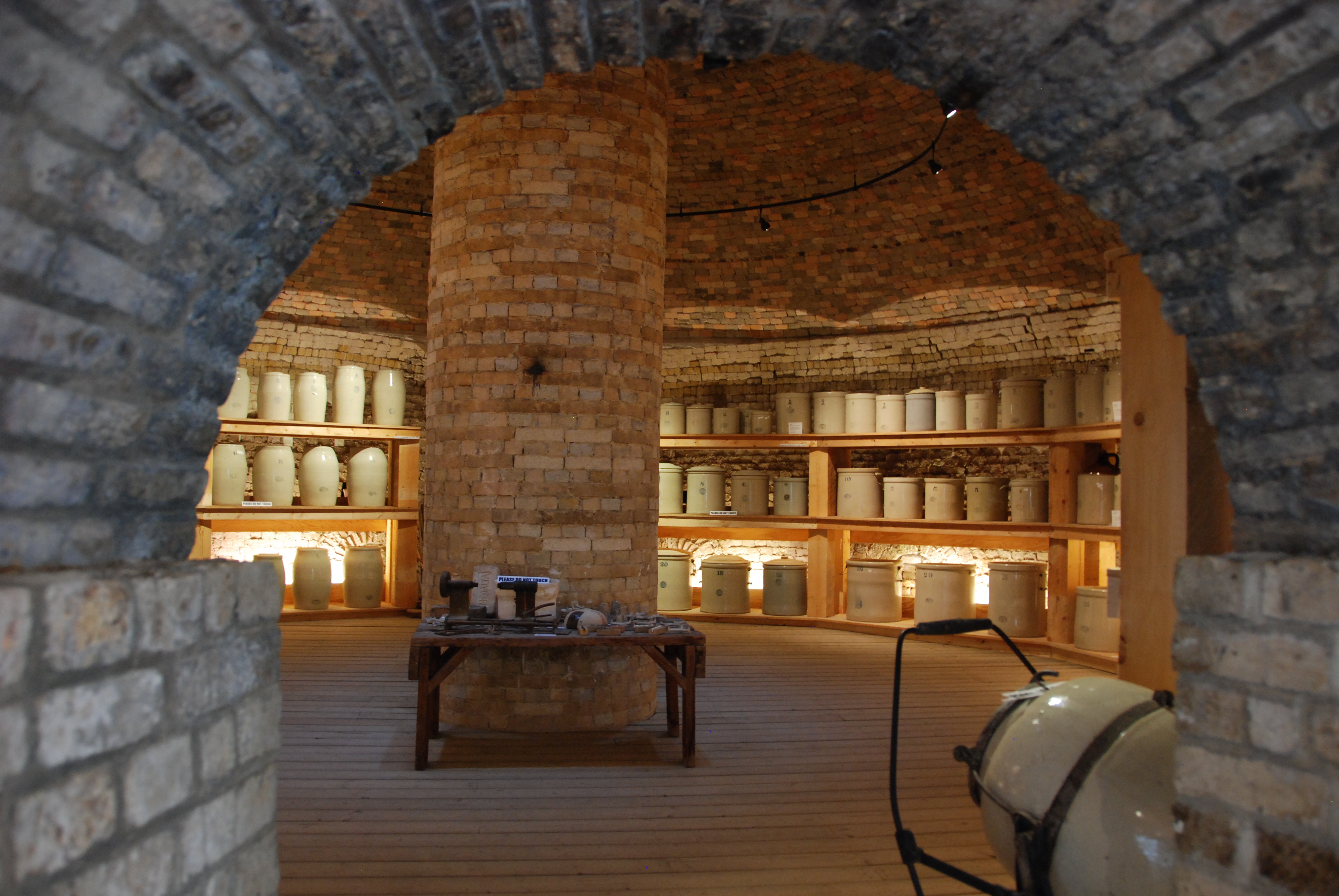
The first steps out onto the dome of the beehive kiln are a bit unnerving, with only a thin shell of tightly-fitted bricks supporting a small group of us above the void below. Domes structurally similar to this have been around since antiquity – many notable examples still survive – but it’s reassuring to know that scaffolding inside the kiln will prevent a painful and possibly career-ending collapse.
Kiln No. 2, one of four historic beehive downdraft kilns at Medalta Potteries, is a circular drum roughly ten metres in diameter with brick exterior walls surmounted by the dome and a tall central stack. Encircling the walls are wide adjustable bands of corroding steel which held the kiln together as it expanded and contracted and attest to the rigours of the firing process. Medalta’s beehive kilns historically fired a wide range of ceramic products and now serve as distinctive classroom and exhibit spaces.
This post was originally published on RETROactive on March 6th, 2012. Farmers across the province will soon be busy with harvest so we thought it appropriate to highlight a previous post associated with Alberta’s agricultural past. Please note that these statistics are from 2012.
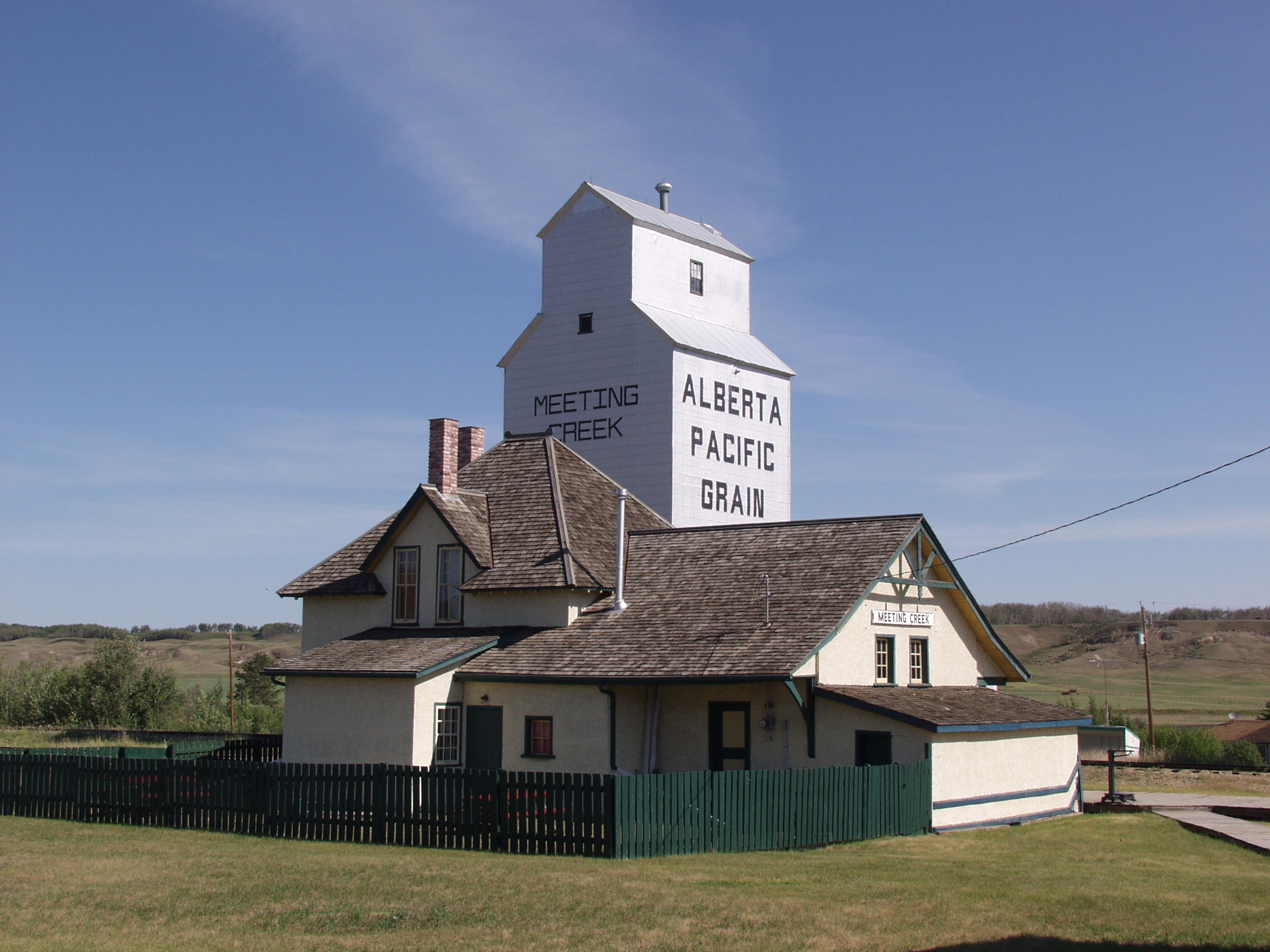
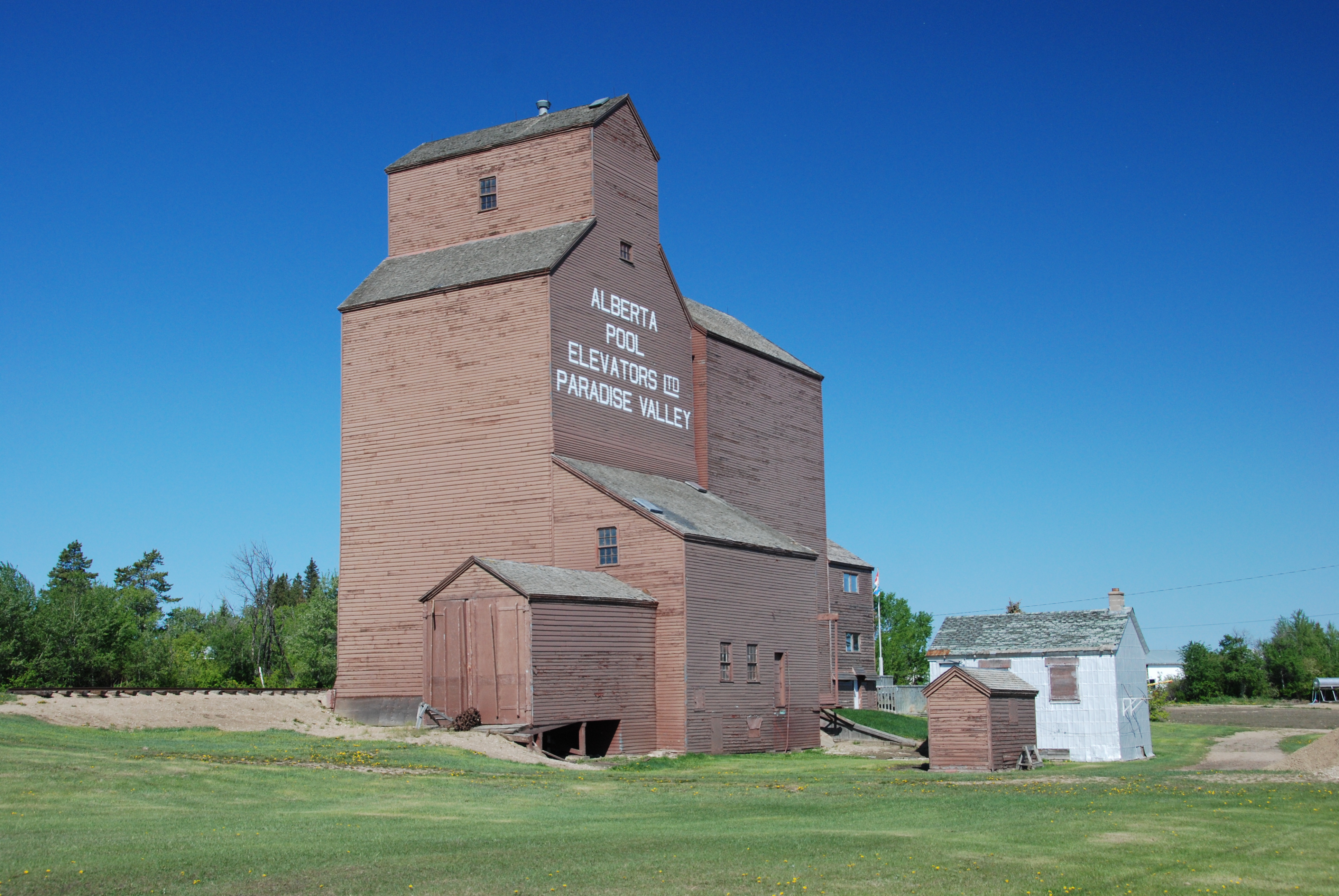
The twentieth century saw the rise and fall – literally – of the wooden country grain elevator in Alberta. As rail lines spread across the province, grain elevators sprouted like mushrooms after a spring rain. The high water mark for wooden country grain elevators was in 1934. New elevators were added in every decade, but this has been exceeded by the rate of demolition or closure ever since. Check out the following “index” of Alberta’s wooden country elevators, called “elevators” for short in this list.
In a previous post, we looked at the naming of five mountains in Jasper National Park after First World War Victoria Cross recipients. It took a number of years and some persistence from the Geographic Board of Alberta to achieve this natural war monument for the service of five soldiers to the British Commonwealth in the First World War. In addition to naming the mountains, the negotiations between provincial and federal naming authorities resulted in the naming of the Victoria Cross Ranges in Jasper National Park to serve as a long-standing tribute to all recipients of the Victoria Cross. This naming decision created a naming policy that is still honoured today.
Looking west to the Victoria Cross Ranges (Image courtesy of Mountain Nerd on Summit Search)
Visitors to this year’s Raymond Stampede got to learn more about the fascinating history of the event with the installation of the latest Alberta Historical Resources Foundation heritage marker. The marker details the history of the event – the first of its kind held in Alberta – dating back to 1902, when prominent rancher Raymond Knight decided to organize a skills competition for local cowboys and ranch hands. The success of the Raymond Stampede inspired the organization of similar events across Alberta, with a growing range of events and prizes that attracted more and more competitors. Held in dozens of communities across the province each year, rodeos have long been significant cultural events in Alberta that strongly reflect its great agricultural heritage.
Raymond Stampede’s new heritage marker.
The marker was installed on June 25, 2015 at the site of the Stampede in Raymond Knight Memorial Park. The Town of Raymond applied for the development of the heritage marker through the Alberta Heritage Markers Program. The program was established in 1955 to promote greater awareness of the historic people, places, events, and themes that have defined the character of our province. The program brings Alberta’s dynamic history alive through heritage markers placed at roadside pullouts, within parks, and in other community locales.
Written by: Allan Rowe, Historic Places Research Officer
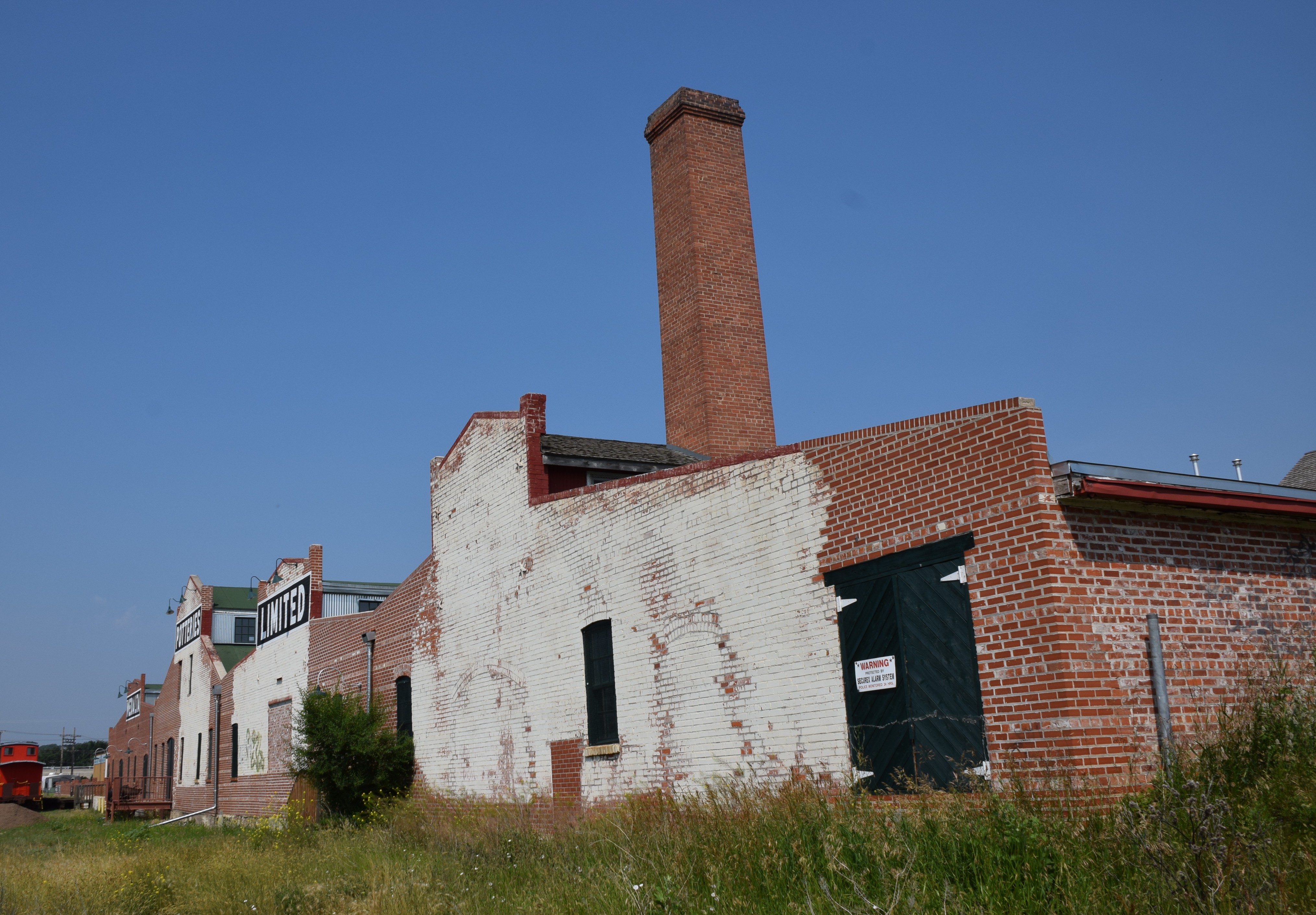
A massive brick chimney at Medalta Potteries towers six metres above the roof of “Building 10” and extends roughly the same distance from the roof to the dusty factory floor below. Two meters wide at its base, the chimney and accompanying boiler were vital in the production of clay products from the early decades of the twentieth century until the plant’s closure in the 1960s. Now a Provincial Historic Resource, Medalta Potteries in Medicine Hat has evolved into a vibrant community hub that includes the Medalta archives and interpretive centre, galleries and displays, a working pottery that reproduces classic Medalta ware, a contemporary ceramics centre for professional artists, and a venue for markets, weddings, concerts and other community events. The tall brick chimney and distinctive monitor roofs of the former factory buildings provide the iconic backdrop for these varied activities.
Medalta Potteries in 2014, looking west to Building 10 before rebuilding of the chimney.
Already leaning slightly to the south, the chimney developed a worrisome new tilt after the June 2013 southern Alberta floods, an event which inundated much of Medalta and the nearby residential neighborhoods. As soil conditions on site gradually normalized in early 2014, the chimney’s foundation shifted and subsided further into the clay-rich soil, raising concerns about its stability. The only practical long-term conservation option was to disassemble the chimney and rebuild it with the original, locally manufactured brick using traditional masonry materials and construction methods.
Conserving the chimney started with extensive photographs and measurements followed by disassembly by a contractor specializing in historic masonry conservation. Medalta’s staff archaeologist monitored and documented the process. As the chimney came down brick by brick, unexpected finds within the masonry included an old whisky bottle; fire bricks from Hebron, North Dakota; and a bizarre series of wasps’ nests occurring at roughly one metre intervals within the stack. This corresponds roughly with the work a team of masons would likely have completed in a typical day – a coincidence that begs further explanation. The chimney-dwelling wasps turned out to be quite blind and fortunately did not harass the masonry crew as dismantling proceeded.
The most intriguing relic, however, was a cluster of bricks inscribed with names and the inscription “IX 44”, presumed to represent a date. The names went unobserved until mortar dust from the disassembly process settled lightly onto the brick and highlighted the writing. Prisoners of war interned in Medicine Hat during the Second World War were recruited for work in local industries to offset the wartime labour shortage. Research now underway may reveal that some of these POWs, possibly even masons in their pre-war lives, helped repair the chimney at Building 10 in September of 1944.
Chimney rebuilding is nearing completion and will replicate its historic appearance — without the lean to the south. Glazed bricks set into the chimney mark the locations of the autographed bricks and, soon, visitors to Medalta will be treated to a new exhibit in Building 10 featuring the original bricks and an account of this chapter in the site’s remarkable history.
Written by: Fraser Shaw, Heritage Conservation Adviser




 RETROactive