Five-hundred Years of History at McKinnon Flats: New Discoveries Made in the Aftermath of the 2013 Flood

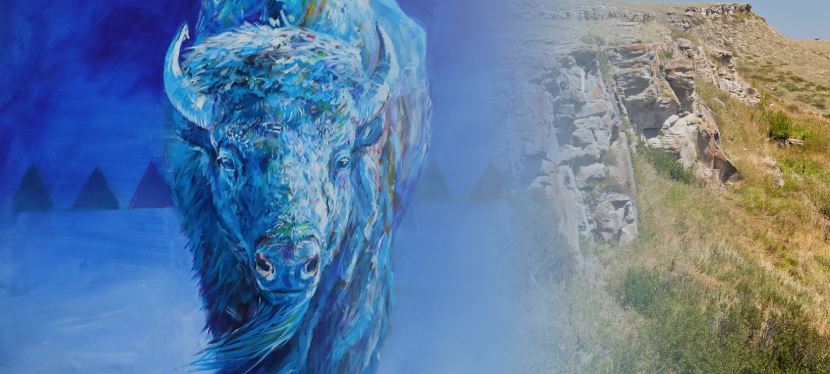
You may have recently seen a news story about archaeological finds at McKinnon Flats, approximately 22 km southeast of Calgary (see below for news links).  Today, McKinnon Flats is a popular recreational area, used for fishing, hiking and bird watching.  But did you know that five centuries ago it may also have been used for bison hunting and camping?

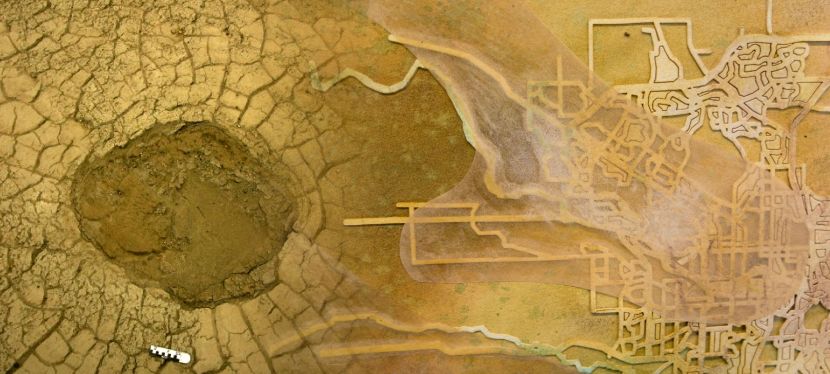
Archaeologists of Lifeways of Canada Limited have been contracted by Alberta Culture and Tourism to find out about early settlement at McKinnon Flats.  They’re part of Culture and Tourism’s three-year Post-Flood Investigation Program, which was initiated to record the effects of the June 2013 southern Alberta flood on archaeological and palaeontological sites along rivers such as the Bow, Highwood, Sheep and Kananaskis.  As a result of the program, 100 new archaeological sites were identified and additional information was gathered at 87 sites that had been recorded prior to the flood.  Many of these sites were found eroding from the riverbanks, with some in need of investigation before they disappeared entirely. Read more
Haunted Heritage Part 2: Abandoned Ghost Towns of Alberta

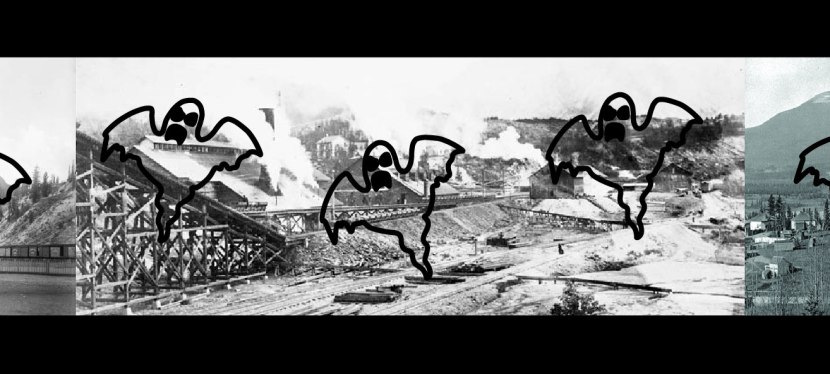
In keeping with the haunted heritage theme started last year, I thought it would be fun to look at some other spooky places in Alberta. Some of the most haunting places in our province are deserted ghost towns. Along any lonely stretch of highway, travellers are bound to come across the decaying remains of one of Alberta’s abandoned towns. Desertion of these small settlements occurred when local natural resources were depleted and transportation routes shifted elsewhere. With no reason for being, these towns became nothing more than crumbling relics of a bygone era.  Read more

Claiming their Ground – Three Pioneering Alberta Women in their Professions

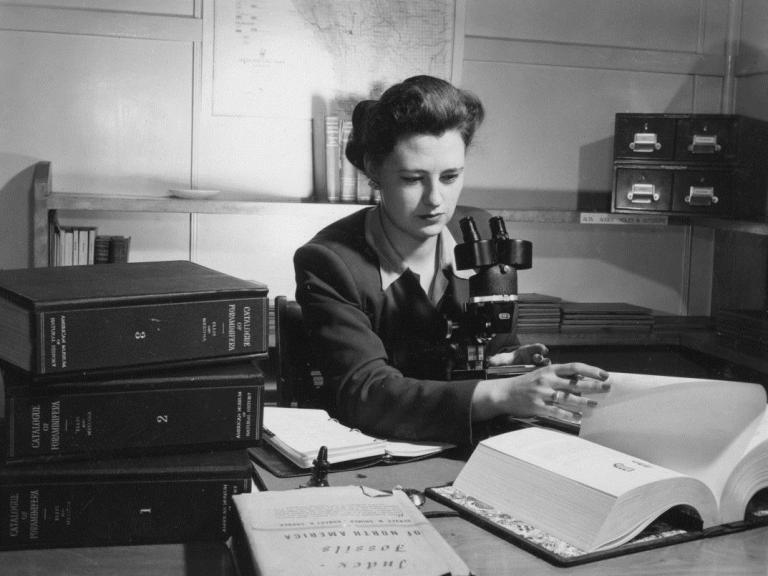
October is Women’s History Month in Canada, when we celebrate the achievements of women throughout our past and use their stories to inspire Canadians today. The twentieth century saw women entering occupations previously the exclusive domain of men. A variety of circumstances combined to allow these advances, including the rise of public education, social activism culminating in universal suffrage, legal challenges that established women as “persons” and the upheaval created by two world wars. These changes are not sufficient to explain the careers of the three women described in this blog; it took determination, persistence, courage and intelligence for them to succeed and carve a place for themselves as professional women in these fields that were predominantly, if not exclusively, the preserve of men.

diane_loranger
Diane Loranger, geologist, ca. 1946-1947. (Glenbow Archives, IP-14A-1470)

Read more

Lives on Pots: Ancient Pottery in Alberta

Pottery traditions have developed independently all over the globe thanks to the versatility of clay as a medium for utilitarian function and the expression of identity. Over 450 sites in Alberta have pre-contact pottery dating from 300 to close to 2000 years old. Fragments or “sherds” of pots at archaeological sites reveal surprising amounts of information about how people lived, how they transmitted knowledge, and why pottery traditions persisted in Indigenous populations for millennia. Ancient pottery production continues to influence modern potters and it can inform how modern society uses material goods to express identity. Read more

Hollywood in the Canadian Rockies

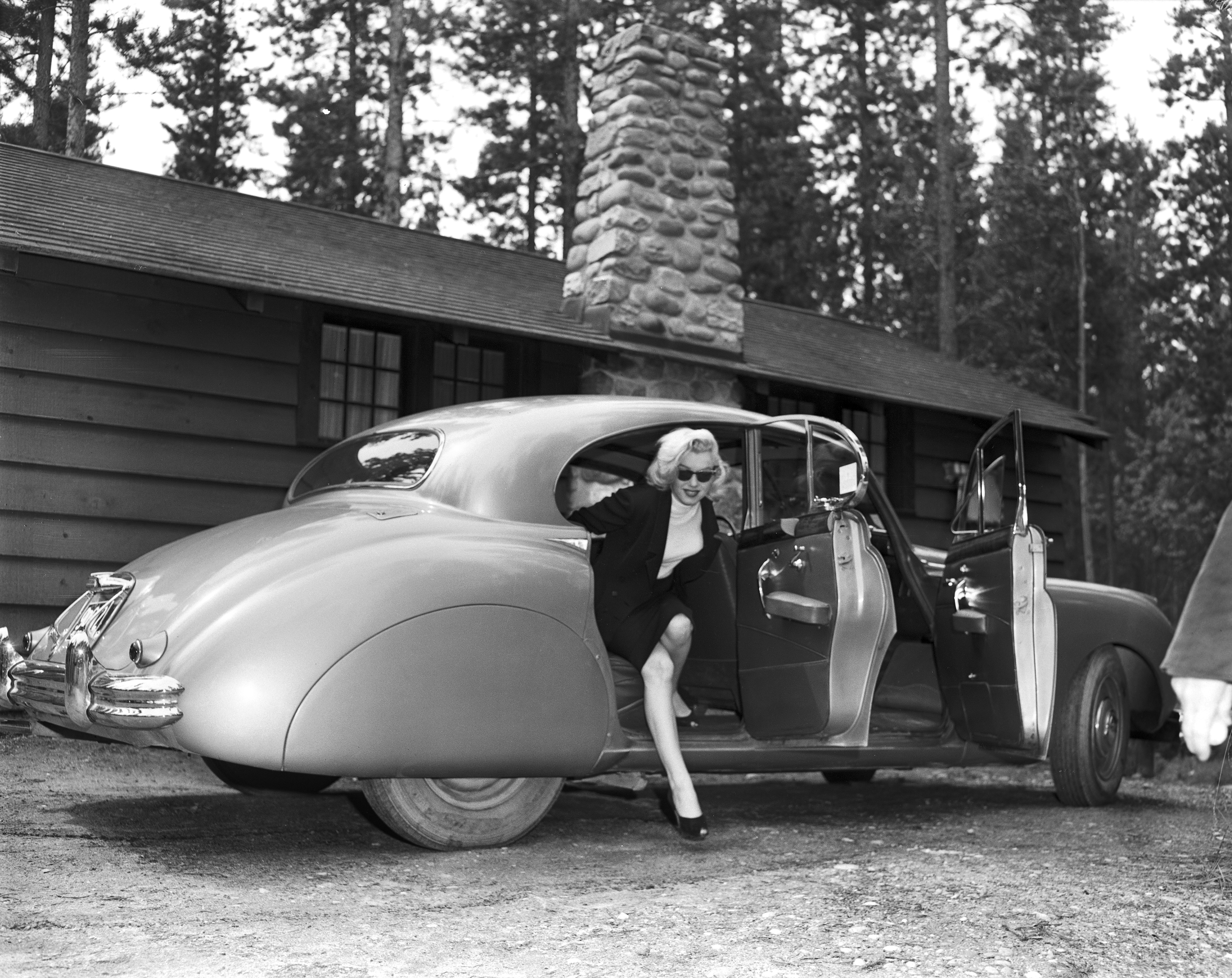
Marilyn Monroe Nearly Drowned,’ read the headline, tucked away in the entertainment pages of the Calgary Herald for August 14th, 1953. Monroe was on location in Jasper National Park for the filming of the 20th Century Fox blockbuster western, River of No Return, when she slipped and fell in the icy waters of the Maligne River. Although pulled to safety by her co-star Robert Mitchum – and a dozen other crew members who quickly rushed to her rescue – she suffered a badly sprained ankle.

The cast and crew had caused quite a stir when they first arrived in the tiny mountain town of Jasper on the 25th of July. Two thousand people, more than the population of the town itself, were on hand to greet the train when it arrived from Vancouver. Director Otto Preminger, when first arriving on location, made a complete circle, shook his head and said, “I guess it doesn’t really matter where I point the camera. We are absolutely surrounded by scenery.”

Marilyn Monroe in the Canadian Rockies for the filming of 'River of No Return', 1953. (Photo Credit: Provincial Archives of Alberta PA3057.7)
Marilyn Monroe in the Canadian Rockies for the filming of ‘River of No Return’, 1953. (Photo Credit: Provincial Archives of Alberta PA3057.7)

1953 wasn’t Hollywood’s first foray into using the Mountain Parks as a cinematic backdrop; filmmakers already had a long love affair with Banff and Jasper dating back to the 1920’s with one of the earliest movies being Cameron of the Royal Mounted, filmed in Banff and released in December of 1921. The film was produced by Canadian Ernest Shipman. A prolific filmmaker of his day, Shipman produced 12 movies between 1919 and 1922. It was at this time however that large Hollywood interests, supported by the U.S. State Department, began exerting control over foreign markets, vertically integrating the production, distribution and exhibition of films, effectively putting independent filmmakers out of business and ending a successful decade of domestic film making in Canada. Read more

Changing Animals: Alberta’s Ice Age Megafauna and Wally’s Beach

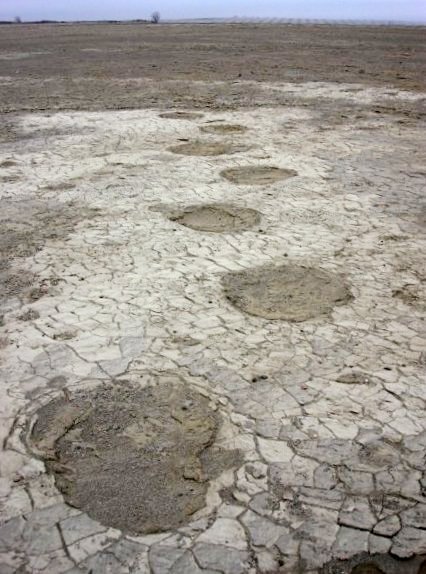
When St. Mary Reservoir in southern Alberta was filled in the 1950s, no one knew that it submerged an incredible record of life from 13,000 years ago. That record, including footprints of mammoth, camel, and horse, was recently exposed – the internationally significant site is now informing opinions about the role humans played in the extinction of Alberta’s ‘megafauna’.

Rare and information-rich trackways from lumbering mammoth were revealed by scouring winds at St. Mary Reservoir (courtesy of Shayne Tolman).

Wally’s Beach

Shayne Tolman, a teacher from Cardston, is responsible for drawing attention to St. Mary Reservoir and Wally’s Beach, a site complex on an ancient island in St. Mary River that is currently being investigated by Dr. Brian Kooyman and a team from the University of Calgary. Archaeologists have discovered that the menu of some of Alberta’s oldest humans included megafauna like camel, horse, and perhaps mammoth. Over six thousand artifacts indicate that people were hunting big game at a time when these animals were likely struggling to cope with climate change. Did human hunting lead to megafauna extinction or are warming temperatures to blame? Many researchers argue that pre-contact human populations were too small to impact big game while others suggest that targeted hunting patterns among small groups could have big consequences.

Megafauna of Alberta at the end of the last Ice Age (produced by Todd Kristensen)

Read more

The Battle of Jutland, First World War Commemoration and Alberta Place Names

No single event has had such a dramatic impact on place names in Alberta than the First World War Battle of Jutland. Deep in the heart of Kananaskis Country can be found a series of mountains bearing the names of the ships and naval commanders of this naval battle. At least twenty-six mountains bear names commemorating the Battle of Jutland – sixteen of them are named for Royal Navy vessels that took part in the battle and ten are named for the Admirals, ship captains and seamen that lead and fought at Jutland. Additionally, many features associated with the mountains (glaciers, lakes and creeks) have subsequently been given Jutland names. The great number of Jutland-related geographical names in Alberta is curious. While there is no questioning the significance of the Battle of Jutland – it was the only major sea battle of the First World War, one of the few times in which dreadnought battleships fought directly against each other and its results affected strategy and tactics on both sides and altered the course of the war – it was also a battle in which there was no significant Canadian presence; no Canadian ships were involved and only one Canadian casualty has ever been confirmed. So, how did so many of these mountains along the Alberta-British Columbia boundary end up being named to commemorate this battle?

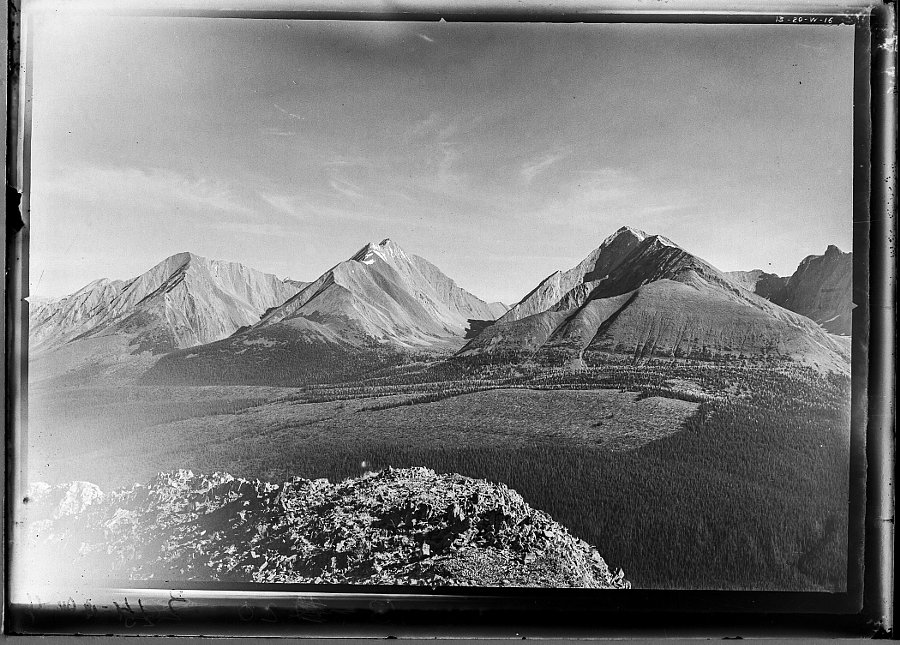
Mount Engadine (left), The Tower (middle) and Mount Galatea (right), taken in 1916 by the Interprovincial Boundary Survey. Mount Engadine and Mount Galatea are named for Royal Navy vessels that fought at the Battle of Jutland, the seaplane carrier HMS Engadine and the light cruiser HMS Galatea.
Mount Engadine (left), The Tower (middle) and Mount Galatea (right), taken in 1916 by the Interprovincial Boundary Survey. Mount Engadine and Mount Galatea are named for Royal Navy vessels that fought at the Battle of Jutland, the seaplane carrier HMS Engadine and the light cruiser HMS Galatea. Image Source: Mountain Legacy Project, IMG_3320. The Mountain Legacy Project is based at the School of Environmental Studies, University of Victoria, Victoria, BC. For more information, go to mountainlegacy.ca, or email mntnlgcy@uvic.ca.

Read more

Blood Kettles and Buffalo Jumps: Communal Hunting on the Plains of Alberta

According to Blackfoot tradition, as Old Man traveled north he created the mountains, rivers, grass and trees. When he came to the area of the present day Porcupine Hills in southwest Alberta, he formed images of people from mud and breathed life into them. The people asked Old Man what they would eat, and so, he created images of buffalo from clay and brought them to life. He then took the people to a rocky ledge and called to the buffalo, who ran in a straight line over the cliff: “Those are your food.”

Tens of millions of buffalo once roamed the Great Plains of North America from Alberta’s grasslands down to Texas. To people of the plains, there was no more important food source. A number of ingenious methods were devised for communal (group) hunting – buffalo were lured into ambushes, corralled with fire, chased onto frozen lakes or into deep snow, and driven into elaborate traps called pis’kun by the Blackfoot (translated as ‘deep-blood kettles’). Of the hundreds of mass kill sites, perhaps none is more impressive than the buffalo jump, the most famous of which is Alberta’s Head-Smashed-In. Read more

Archaeology and the June 2013 Floods in Southern Alberta

In June 2013, heavy rainfall triggered catastrophic flooding in southern Alberta that has been characterized as some of the worst in the province’s history. Areas along the Bow, Elbow, Highwood, Red Deer, Sheep, Little Bow and South Saskatchewan Rivers, and their tributaries, were affected. Estimates of property damage from the flood make it one of the most costly in Canadian history. Personal property, however, was not the only casualty. The torrents of water accelerated natural erosional and depositional processes, resulting in significant alteration to many of southern Alberta’s river systems.

Debris-flow fan on the Highwood River, caused by the June 2013 flood.
Debris-flow fan on the Highwood River.
Erosional exposure on the Sheep River, caused by the June 2013 flood.

The potential for finding archaeological sites along southern Alberta’s river systems has always been high. The distribution of known archaeological sites in Alberta indicate the importance of the major river systems to precontact and historic people as sources of fresh water, food resources and travel corridors.  As a result of these associations, a number of archaeological sites were also identified as casualties of the June 2013 flood. Read more

Power and Powder: Early Guns in Alberta

It’s hard to overstate the profound impact of firearms in Alberta’s history. The earliest guns delivered food, protection, and intimidation. Technological improvements from European contact to the 1900s led to significant changes in the ways that guns were used across the province. This blog briefly explores the evolution of firearms in Alberta and the archaeological record of it.

First Guns

Firearms were introduced to Canada in the 1500s but didn’t spread to Alberta until much later. Their first appearance in the province was likely through raiding or trading in the southern U.S. by Plains First Nations. Early gun models, like flared-mouth blunderbusses, were designed for close encounters on battle fields but proved ineffective on the prairies. It wasn’t until the advent of portable flintlock muskets that guns spread like wildfire across the West.

An 1805 Barnett flintlock trade musket that came to be one the most popular Northwest Trade guns. Over 20 000 guns were sold out of Canada’s major fur trade depot at York Factory from 1600 to the late 1700s. Figure by Todd Kristensen and Julie Martindale.

Read more