Layers of History in Edworthy Park: The University of Calgary’s 2025 Field School and Public Archaeology Program

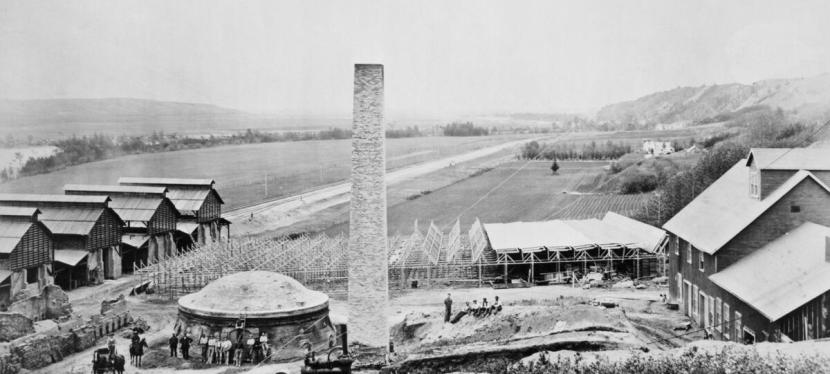
Editor’s note: The banner image above is the Calgary Pressed Brick and Sandstone Company plant, Brickburn, Alberta (ca. 1916-1920 [CU1136164] by unknown). Image courtesy of Glenbow Library and Archives Collection, Libraries and Cultural Resources Digital Collections, University of Calgary.

Written by: Sam Judson and Lindsay Amundsen-Meyer, Department of Anthropology and Archaeology, University of Calgary  

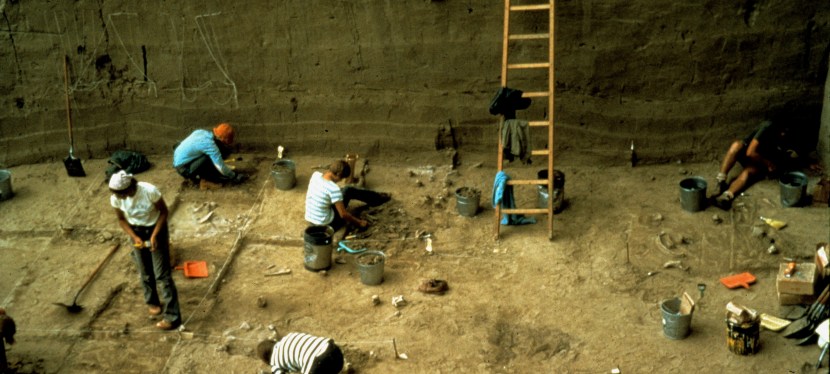
To most Calgarians, Edworthy Park is nothing more than a city park with a large and popular off-leash area for dogs, rocky ‘beaches’ along the Bow River and meandering biking and walking trails that folks enjoy throughout the year. What most users of the park do not realize is that Edworthy Park has a remarkable history: numerous pre-contact Indigenous archaeological sites within the park; the presence of a Métis winter camp in the late 19th century; the eventual establishment of one of the Calgary area’s earliest homesteads by Thomas Edworthy; and Edworthy’s operation of a sandstone quarry on the land in the early 20th century. There was even a 20th century brick factory within the park and its associated village (Brickburn) to the west. As you’ll learn, the students and staff of the University of Calgary archaeology field school and Public Archaeology Program discovered these many layers of history are present across much more of Edworthy Park than previously known.

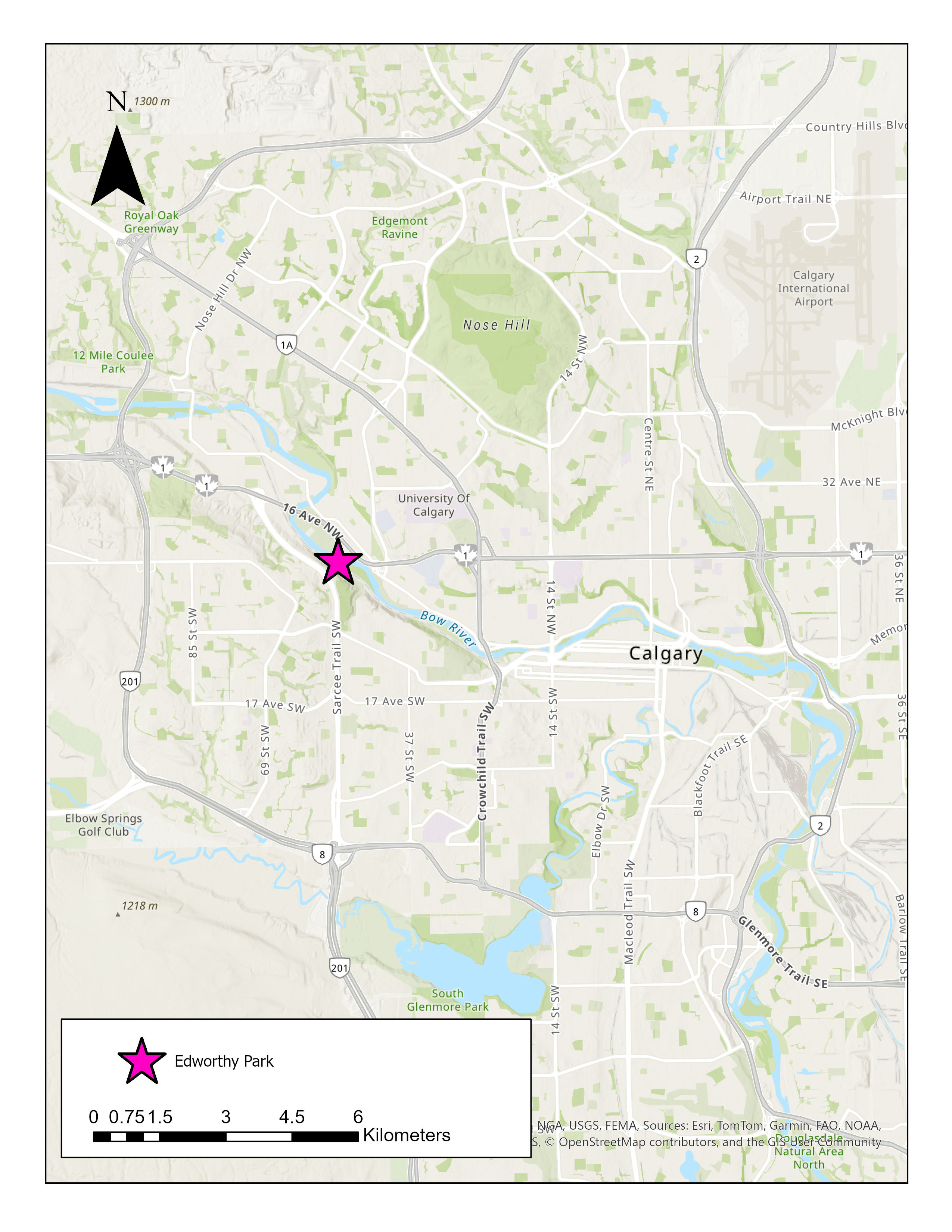
Location of Edworthy Park, within the City of Calgary. Source: Lindsay Amundsen-Meyer.
Read more

Archaeology in Alberta’s Eastern Slopes: The Occasional Paper Series in 2024 (Part 2)

Written by: Timothy Allan and Todd Kristensen

Archaeology in Alberta’s Eastern Slopes

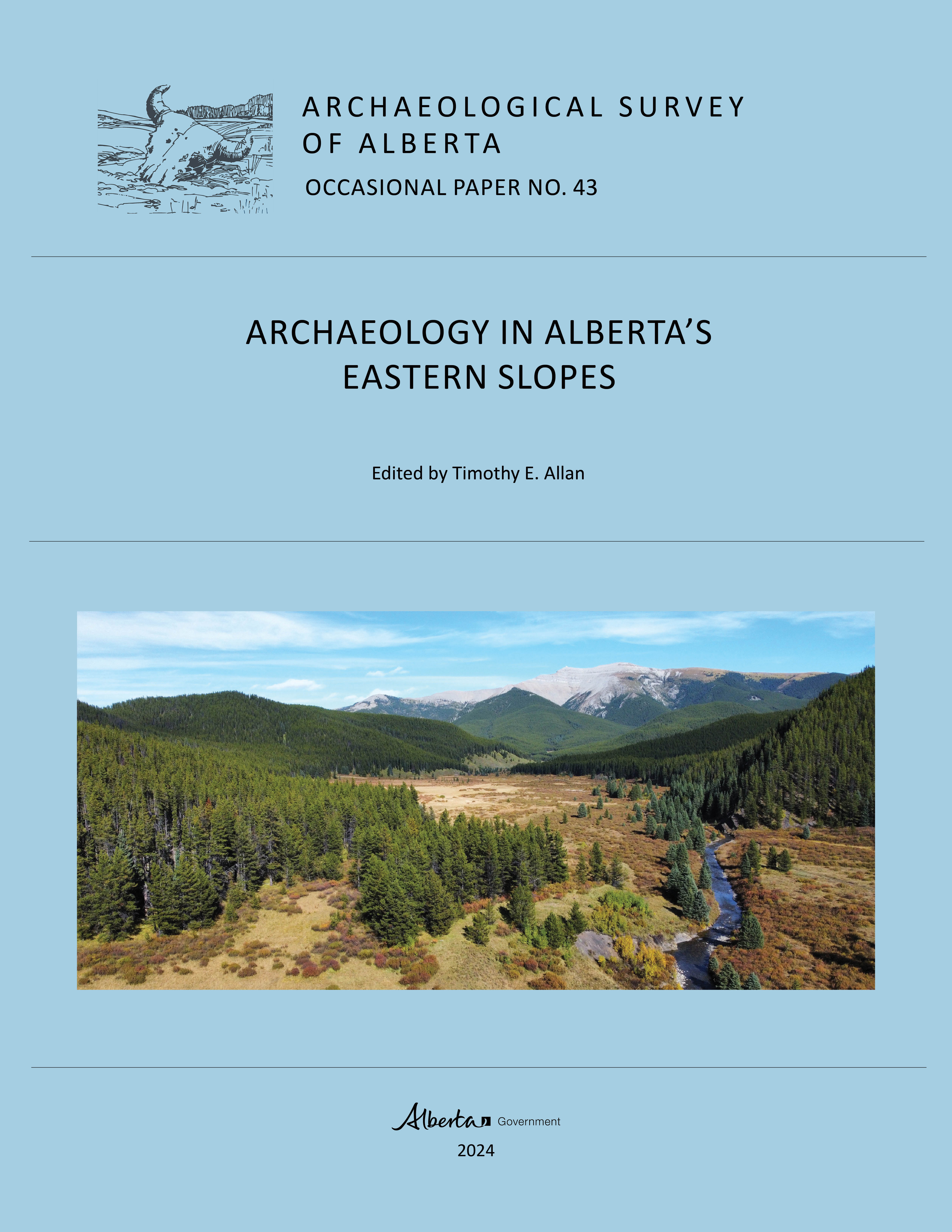
The volume is dedicated to archaeology in Alberta’s Rocky Mountains, Foothills and their margins. The initial three articles were released in Spring; below are summaries for the remaining six articles. They explore projectile points, caches, plant residues and more.

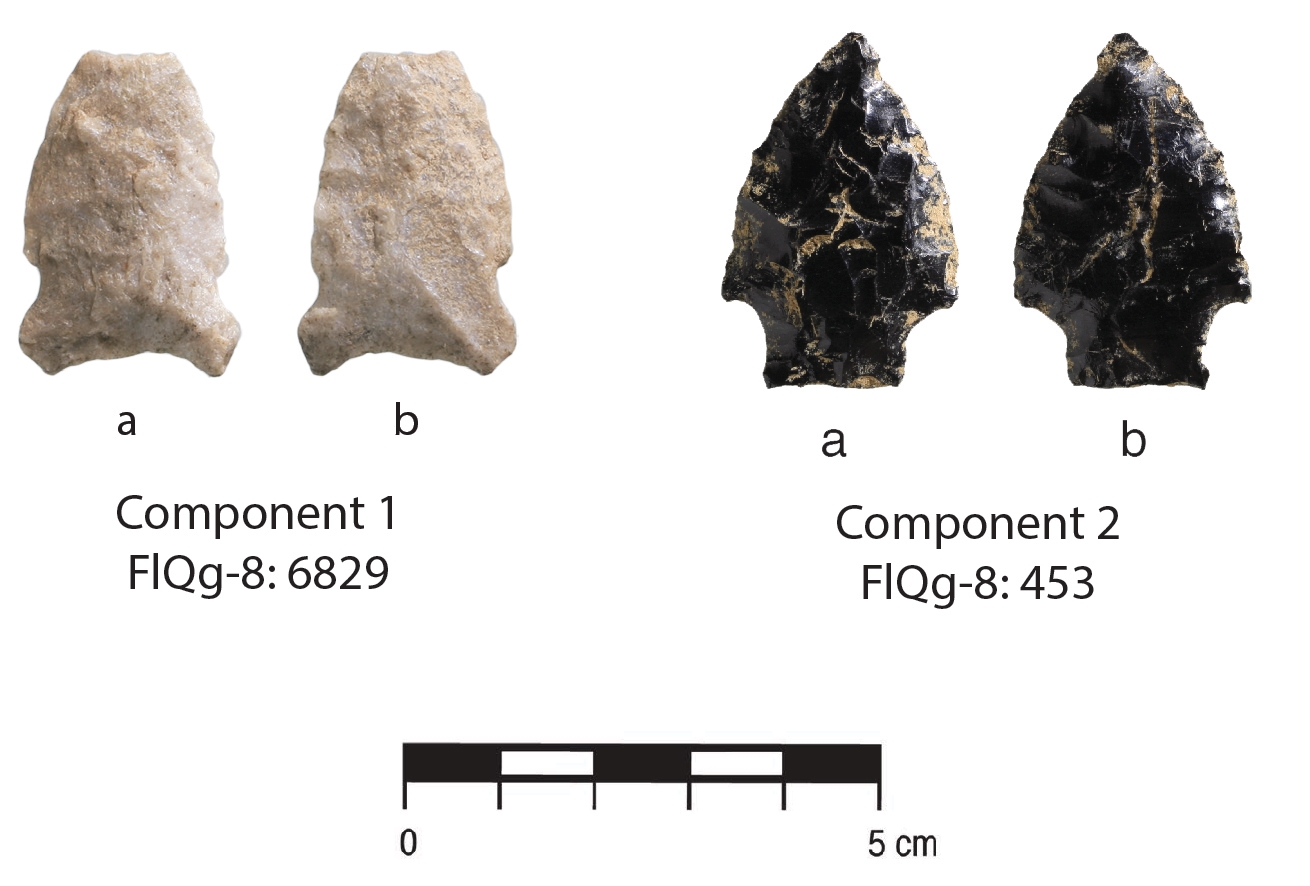
The fourth paper in the volume explores Oxbow and McKean stone tool assemblages at a site northeast of Hinton, Alberta. Taylor Graham applies statistical analyses to tease apart reduction events among the 6,000 artifacts recovered.

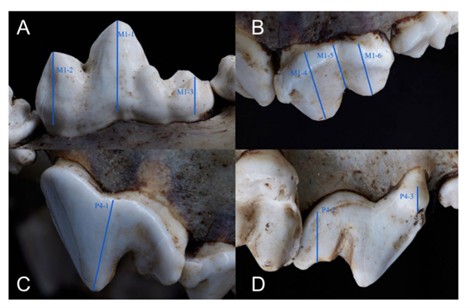
Projectile points recovered from FlQg-8. Source: Graham, 2024.
Read more

Public archaeology in Nose Hill Park

Written by: Sam Judson and Lindsay Amundsen-Meyer, Department of Anthropology and Archaeology, University of Calgary.

Calgary was incorporated as a Canadian city in 1884 and, since then, has grown to be a city of more than 1.5 million people. Although the City of Calgary is less than 150 years old, people have lived in this area, called this place home, and taken care of these lands for thousands of years. This long history is told through the numerous archaeological sites within and beyond Calgary’s city limits. Examples such as the Hawkwood site, Everblue Springs site and Mona Lisa Site demonstrate that this part of Alberta has been inhabited for approximately 8,000 years.

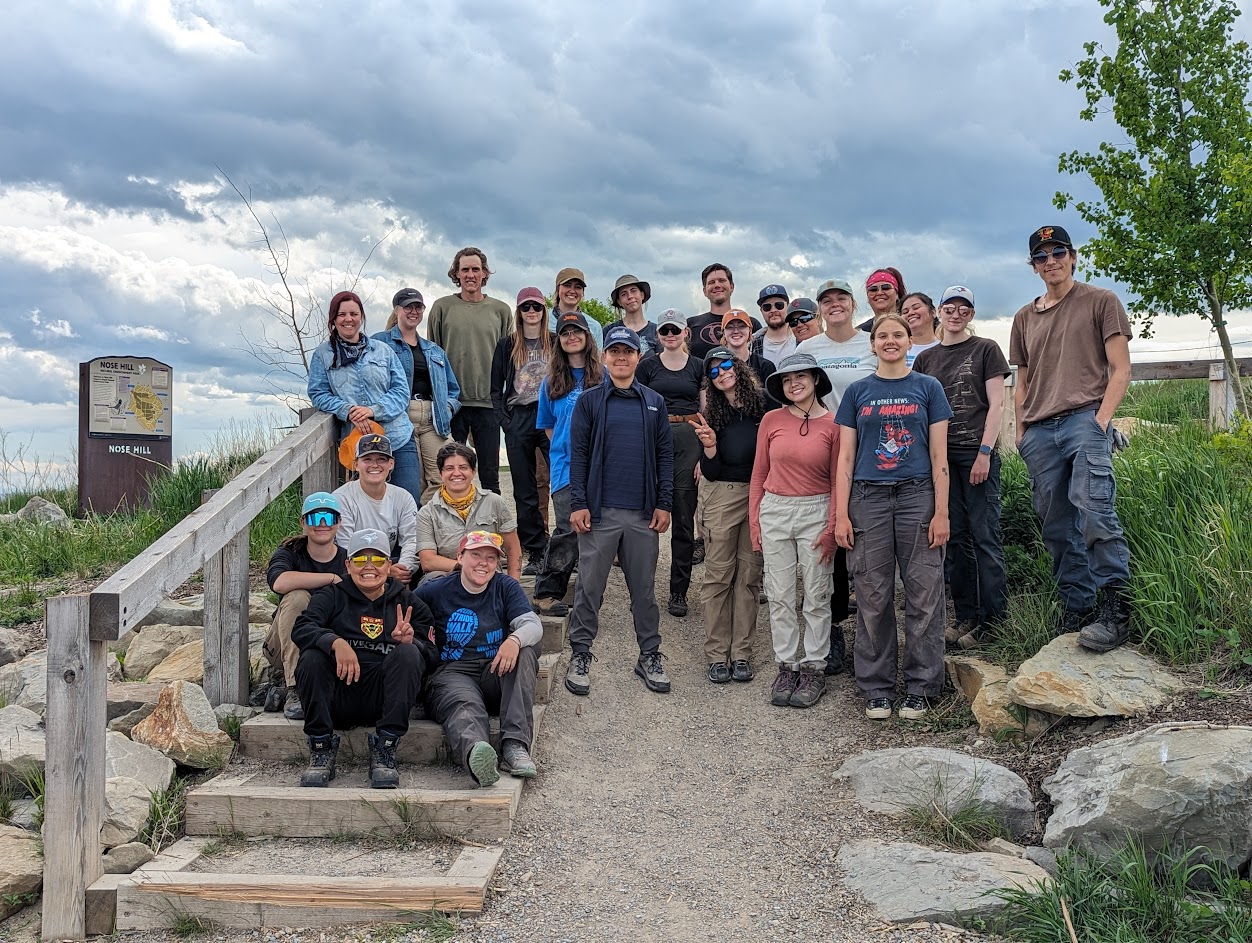
Nose Hill is a testament to Alberta’s long-standing Indigenous history. More than 40 recorded Precontact Indigenous archaeological sites are known within this City of Calgary park space, most first recorded by archaeologists in 1978 ahead of the creation of the park. The majority of these are camp sites made up of one or many stone circles, but kill sites and lithic scatters are also present. Not only was Nose Hill utilized frequently by Indigenous groups before contact, but it was also extensively used by citizens in the early days of Calgary’s existence as a settler municipality. Animals grazed on Nose Hill, northern areas of the hill were cultivated for crops, and a gravel pit was active on Nose Hill for several years. Despite these modern activities, Nose Hill Park remains one of the largest undisturbed grasslands in the Calgary area. As a result, the archaeological sites of Nose Hill are remarkably well preserved and tell a story of thousands of years of human occupation and connection with this prominent landform.

University of Calgary Staff and Students at Nose Hill Park, Calgary. Source: Lindsay Amundsen-Meyer.
Read more

Art-chaeology: visualizing the past through illustration

Written by: Jared Majeski, Historic Resources Management Branch

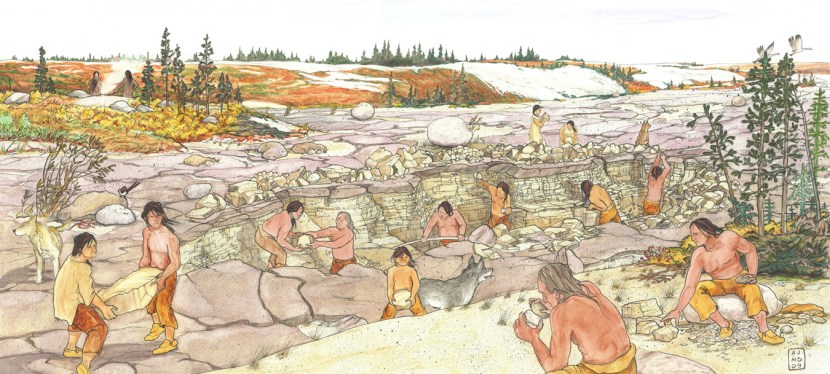
Look hard enough, and you can find artistic expression in many different occupations. The stone mason cutting and preparing a stone feature; a researcher distilling their raw data into a visually appealing infographic; or in the case of archaeologist Amanda J.M. Dow (B.A. Archaeology, University of Calgary), using pencils to represent archaeological research through illustrations. Whether you categorize it as art or archaeology, Dow’s illustrations help to put faces to names and context to places.

The following interview has been lightly edited for length and clarity. All images and illustrations below are courtesy of Amanda Dow.

Where do science and art meet and is there ever an uncomfortable junction?

Dow: There is always a strange dance between art and science.  It can be awkward and challenging but for the dance to work, there has to be a reciprocal understanding from both disciplines. I like to use the word “illustration” to help lend my artwork scientific credibility. I use the results of archaeology and research to make the art academic. But in the end, the illustration is just one person’s interpretation of an event.  What lends it credence is what informs the interpretation.  And if that information is scientific, then that weird dance can work.


Archaeologists tend to communicate in dry and what feels like uninteresting ways because that’s what they’re trained to do. What do you think of traditional archaeological reports, articles and books? Does this make you try to depict the past in more interesting ways?

Dow: There are different ways results of archaeological study are communicated.  In Alberta, the vast majority of archaeological study are presented as technical reports. That’s my day job, as a consulting archaeologist and I contribute to this type of “grey” literature presenting data without excessive interpretation. Technical reports are defined by budget, schedule and scope. It’s always a challenge to present data within those limitations without being too boring.

The opportunity to share more interpretation and provide people with more elaboration comes from other forms of communication.  This is where archaeologists have an opportunity to collect from the technical literature all the glamorous bits and create an interpretation the science supports.  This is where articles and books, presentations and alternative media are serving a greater public role.  And this is where I try to make artistic contributions.

What’s the most satisfying part of your job as an illustrator?

Being able to share a concept that makes someone pause for a moment to appreciate the genius of our ancestors.  I like taking an archaeological or historical record and putting a face on it. I like tweaking imaginations.

Read more

Tipis, Bison and Dogs: Visualizing an Archaeological Feature in Southern Alberta

Written by: Todd Kristensen and Emily Moffat, Archaeological Survey of Alberta

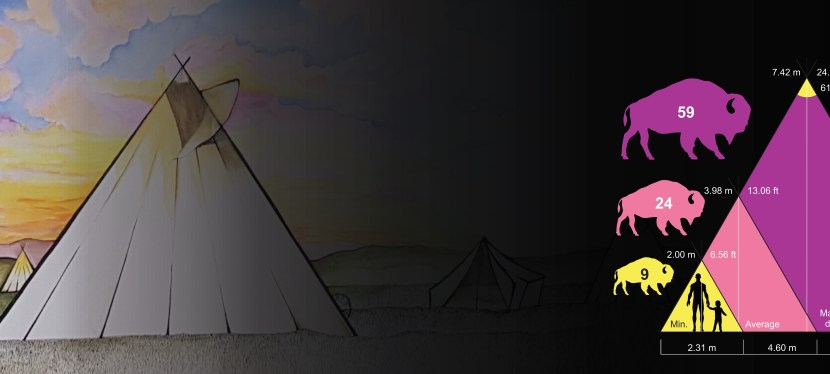
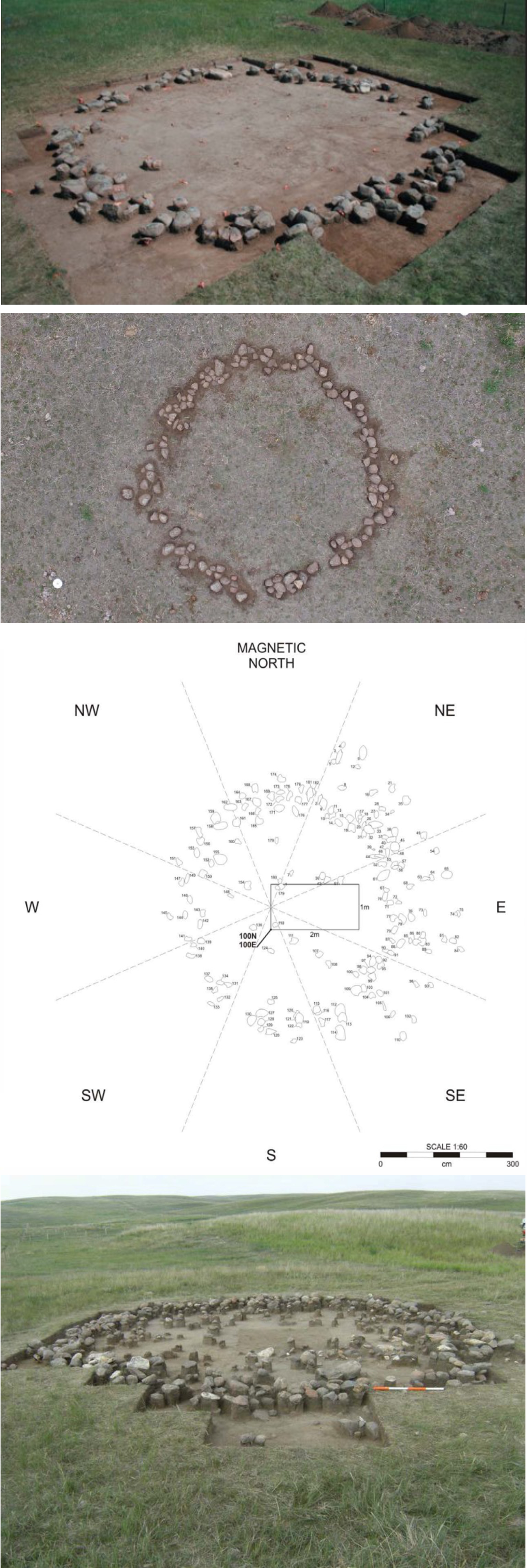
Small rings of rock appear across Alberta’s prairies. These stones once weighed down the bison hide covering of tipis – a type of dwelling used by generations of First Nations. Tipis, and the remnants of them, have drawn the attention of archaeologists and historians in the province for over 70 years. It is estimated that Alberta had a million stone circles before being displaced by farming and other developments. Currently, the province has over 8,000 recorded archaeological sites with tipi rings: some are a single circle (a small camp) while others host over 200 rings in one spot (a large gathering of family and allies). New figures and imagery here highlight decades of archaeological research and help visualize how records of tipi rings can reveal dimensions of pre-contact life.        

Exposed, excavated, and mapped tipi rings in Alberta. Source: permits 08-110, 09-050, 11-048, and 21-046.
Read more

When the Ice Melted: Revisiting the Ice-Free Corridor

Editor’s note: The research presented in this blog is from a published journal paper co-authored by Timothy Allan, John Ives, Robin Woywitka, Gabriel Yanicki, Jeffrey Rasic and Todd Kristensen.

Ice sheet margins derived from: Dalton, A. S., M. Margold, C. R. Stokes, L. Tarasov, A. S. Dyke, R. S. Adams, S. Allard, et al. 2020. An Updated Radiocarbon-Based Ice Margin Chronology for the Last Deglaciation of the North American Ice Sheet Complex. Quaternary Science Reviews 234: 106223–27. https://doi.org/10.1016/j.quascirev.2020.106223.  

Written by: Todd Kristensen, Archaeological Survey of Alberta

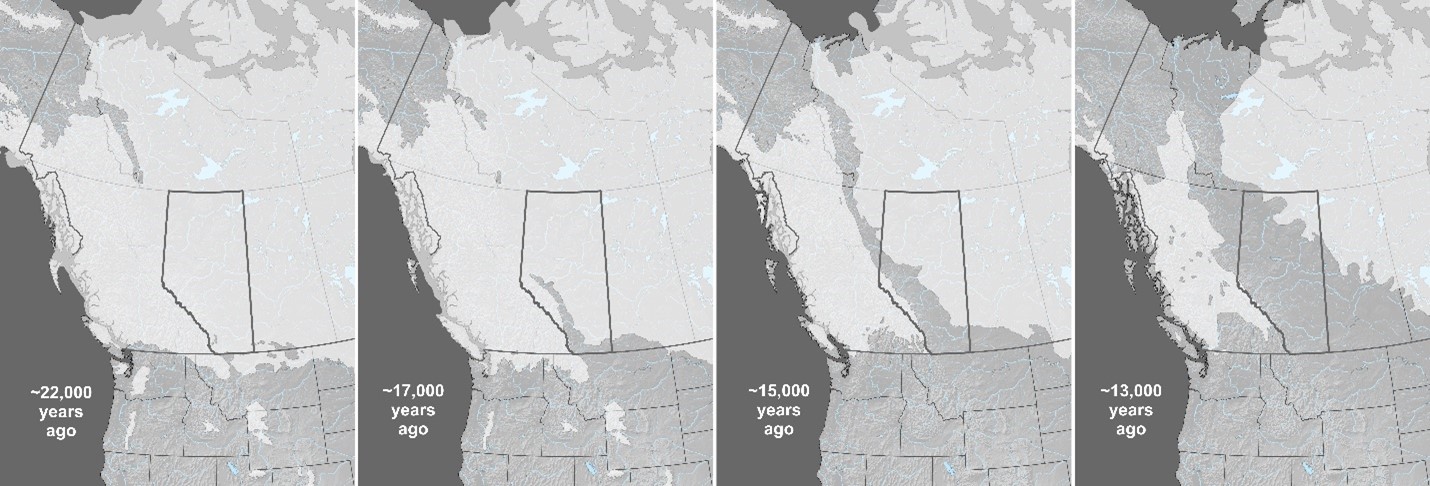
Alberta was once covered with glacial ice. Around 22,000 years ago, portions of the ice that sprawled across the province were over 1.5 kms thick. When the ice began to melt, it retreated in two directions (northeast and west) and exposed a pathway dubbed the Ice-Free Corridor that crossed through Alberta and connected previously exposed land masses over the warmer United States and a colder but drier region to the north called Beringia (parts of Northwest Territories, Yukon, Alaska, and Russia). People had settled into the corridor in what is now Alberta by 13,000 years ago. Where did they come from?

The melting of ice sheets over Alberta from roughly 22,000 to 13,000 years ago (based on data from Dalton et al. 2020). The ages are ‘calibrated’ from radiocarbon dates.

New archaeological discoveries are pushing back the ages of when people arrived in Beringia and to the south in the United States. To help understand which of those two areas are the likely source of people who came to Alberta, archaeologists have recently looked at the tools they were carrying, specifically, what kinds of stone the tools were made of. Some of the rock types that people used to craft things like spear points, scrapers and knives, are only found in certain areas in North America: their presence in Alberta’s archaeological record indicates that the stones were transported from far away. In turn, archaeologists look at changes in those ‘toolstone’ materials to track changing relationships; in the absence of other things that don’t preserve in Alberta’s soil, stone tools reveal where people migrated from, who they were interacting with (their ‘kin’) and how that all changed over thousands of years.

Read more

Designation and protection: 50 years of the Historical Resources Act (Part 1)

Editor’s note: The banner image above is courtesy of the Royal Alberta Museum.

Written by: Todd Kristensen, Archaeological Survey of Alberta and Dan Spivak, Head, Resource Management Program, Royal Tyrrell Museum of Palaeontology

This year, the Historical Resources Act (HRA or the Act) in Alberta celebrates its 50th anniversary. When it was passed in 1973, the Act provided a range of tools to manage historic resources across the province. This now includes archaeological sites, historic buildings, Indigenous traditional use sites of an historic character and palaeontological sites. It was a landmark achievement on a national scale because it stimulated the first stand-alone provincial department whose purpose was to ensure site protection during industrial development. Since inception, the Act has led to the documentation of over 42,000 archaeological sites, 110,000 historic structures, 7,200 palaeontological sites and 2,400 historical Indigenous traditional use sites. While the goals of heritage management in Alberta have evolved along with the Act, it continues to protect the past.

To recognize this milestone, RETROactive contributors will look at the legacy of the Act in managing historic resource sites, including archaeological, palaeontological, historic building and Indigenous traditional use sites. They will also explore the role of the Act in establishing the names of geographical locations across the province.

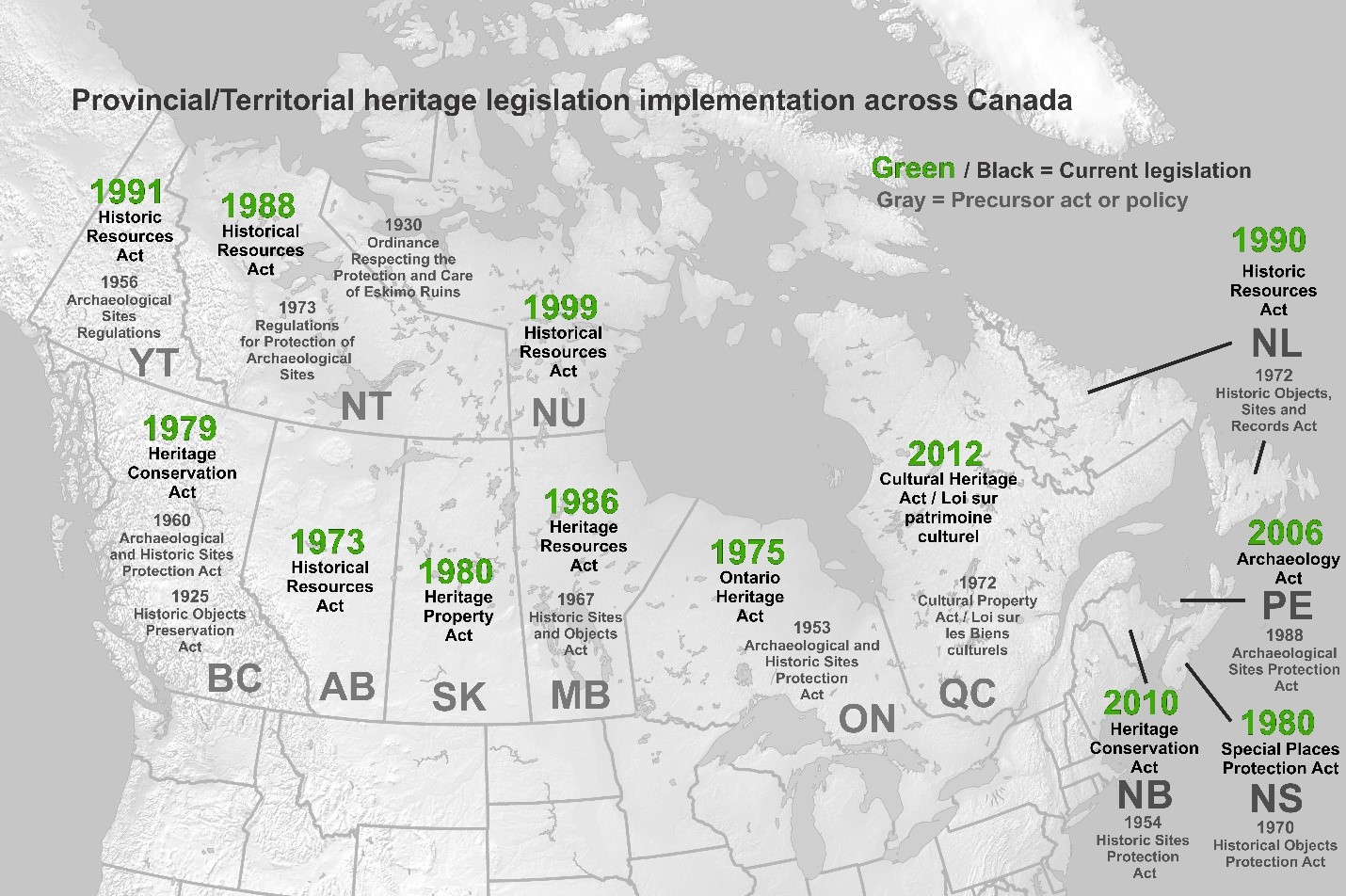
A map of heritage legislation and preceding acts or policies across Canada. Source: Todd Kristensen.
Read more

Archaeology on the Brink: The Occasional Paper Series in 2023 (Part 2)

Editor’s note: The Archaeological Survey of Alberta is proud to release the complete volume of Occasional Paper Series No. 42, available for free download. The volume is dedicated to Alberta archaeologist Jack Brink and the initial blog featured the first five articles. This post features the remaining seven articles, which focus on a variety of archaeological topics.

Written by: Todd Kristensen, Archaeological Survey of Alberta

In the sixth paper of the volume, staff of Lifeways of Canada Limited summarize three seasons of excavation at an important archaeological site in southern Alberta. The Junction Site has produced a number of interesting pit features associated with Late Precontact Period bison kills, processing areas and winter camp activities.   

    A boiling pit feature and profile from the Junction Site. Source: Vivian and Blakey, 2023.
    Read more

    Archaeology on the Brink: The Occasional Paper Series in 2023 (Part 1)

    Editor’s note: The Archaeological Survey of Alberta is proud to release the complete volume of Occasional Paper Series No. 42, available for free download.

    Written by: Todd Kristensen, Archaeological Survey of Alberta

    Archaeology on the Brink: Papers in Honour of John W. Brink

    Cover of the 2023 Occasional Paper Series. Artwork by Shannon Ford.

    Unlike previous volumes, in which papers are published and released throughout the year, the current volume is based on an archaeology conference session dedicated to the widely respected Alberta archaeologist Jack Brink, and all articles are here released concurrently. This blog features five articles (out of 12 in the issue) that focus on archaeological work at the famous Head-Smashed-In Buffalo Jump UNESCO World Heritage Site in southern Alberta. The rest of the 12 articles will be published next week.

    Read more