

Written by: Ronald Kelland
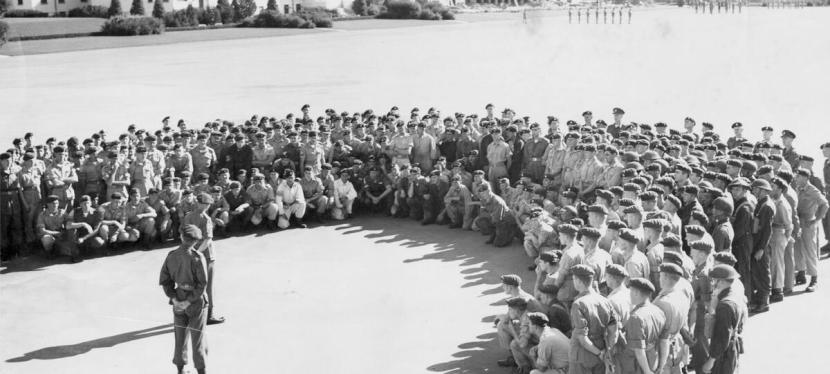
On Remembrance Day, Canadians honour those who gave their lives in military service. While honouring all Canadian service personnel, RETROactive highlights a few geographical features named to commemorate casualties of the Princess Patricia’s Canadian Light Infantry.
Princess Patricia’s Canadian Light Infantry – Formation and First World War
Of all the regiments in the Canadian Army, past and present, one of the most storied with a long association with Alberta is the Princess Patricia’s Canadian Light Infantry (PPCLI). The regiment was formed in Ontario at the start of the First World War. Andrew Hamilton Gault of Montreal, a successful businessman, adventurer and veteran of the South African (Boer) War, used his own funds to raise and equip an infantry regiment. It came into being in August 1914. Major Gault was second in command, and Lieutenant Colonel Francis Farquhar, military secretary to the Duke of Connaught, Governor General of Canada, was the regiment’s commander. Farquhar requested that the regiment be named for Princess Patricia, the Governor General’s daughter. Princess Patricia presented the regiment with its colours and standard on August 23, 1914. The standard became affectionately known as the “Ric-a-Dam-Doo.” It is not known how the standard acquired the name, but it is believed that it may be a play on Freicedan Dubh, the Gaelic motto of the historic Scottish Black Watch regiment. Major Gault, at one time, had served with the Royal Highland Regiment of Canada, also known as the Black Watch.
Although based in Ottawa, the regiment recruited soldiers from across Canada, with a substantial number coming from the prairie provinces. The aggressive recruitment campaign resulted in a full regiment being signed up within days. Most were British-born Canadians and had seen prior military service, notably in the South African (Boer) War. The regiment’s first battalion sailed for Europe on September 27 and, following additional training in England, was deployed to France on December 20, 1914, the first Canadian infantry regiment to enter the war.
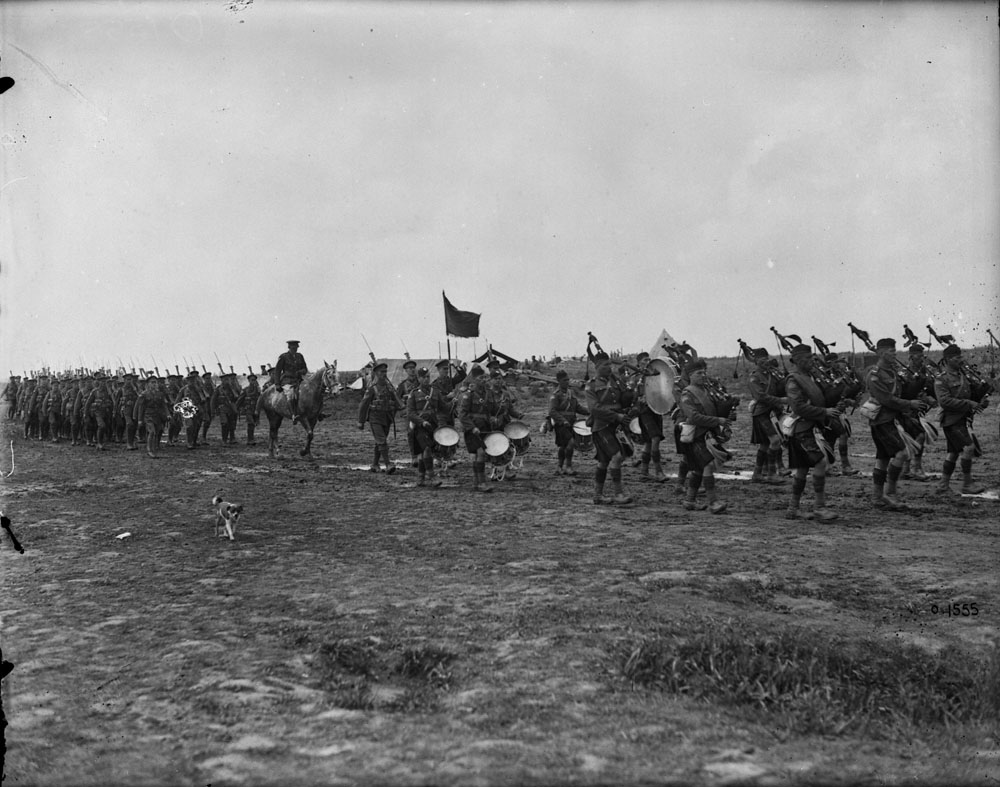
The Princess Patricia’s Canadian Light Infantry would see action throughout the war, receiving 20 Battle Honours and suffering 4,076 casualties, including 1,272 killed in action. Some of those casualties have been commemorated through the naming of geographical features in Alberta.
Lieutenant-Colonel Francis D. Farquhar, DSO – Mount Farquhar
Francis Douglas Farquhar was born in London, England, on September 1, 1874. He came from a family with a strong military legacy, with his father, grandfather, great-grandfather and great-great-grandfather all having served in the British Army. Farquhar joined the Coldstream Guards in 1896 and trained at the Army Staff College. He served in Somaliland, in China during the Boxer Rebellion and in the South African (Boer) War, during which he was awarded the Distinguished Service Order. He then went to Canada in 1913 to serve as military secretary to the Governor General.
Farquhar, Gault and Henry Buller were instrumental in founding and recruiting for the Princess Patricia’s Canadian Light Infantry. Farquhar appears to have been known for his easy-going manner and affability and was well-liked by his troops. Lt.-Col. Farquhar was not a lead-from-the-rear type of commander either. He was frequently in the front lines shoulder-to-shoulder with his men and was known to help with both mundane tasks like trench maintenance and dangerous tasks like laying barbed wire in no-man’s land. He saw that the trench warfare in Flanders was unlike anything seen before. Instead of resisting change, as many First World War commanders did, he attempted to adapt military dogma to the new situation. He encouraged his men to be innovative and recognized that real and current wartime experience was as valuable as previous experience and rank.
Lt.-Col. Farquhar did not command the regiment for long. On January 6, 1915, the regiment went to the front-line trenches in Flanders near Dikkebus, Belgium (often referred to as Dickiebush by English-speaking Allied soldiers). On January 15, 1915, they were redeployed to the front near St. Eloi, Belgium. In March, the regiment was due to be relieved by a British unit. But on the night of March 19-20, Lt.-Col. Farquhar was showing the commanding officer of the relieving battalion the positions when he was struck by either a stray bullet or sniper fire. Sergeant Louis Scott, who witnessed the event, recalled:
Colonel Farquhar was with the Colonel of the Rifle Brigade. They came up on an inspection tour to observe what was going on. He moved out just a little ahead of me, talking to the Rifle Brigade Colonel, when suddenly we heard him go down. … We did what we could for him but obviously he needed to be into a dressing station and ordered Sergeant Maclean and Sergeant MacMorris of my company with a stretcher to take him out to the dressing station at Vermacil, which they did. Regretfully, he died there.
-David J. Bercuson. The Patricias: The Proud History of a Fighting Regiment
Francis Farquhar was buried in a common grave at the Voormezeele Enclosure No. 3 cemetery a short distance south of Ypres, Belgium.
In 1917, a proposal was submitted to the Geographic Board of Canada to name a mountain on the Alberta-British Columbia boundary for Lt.-Col. Farquhar. The proposal was accepted and the mountain was officially named Mount Farquhar on November 4, 1919.
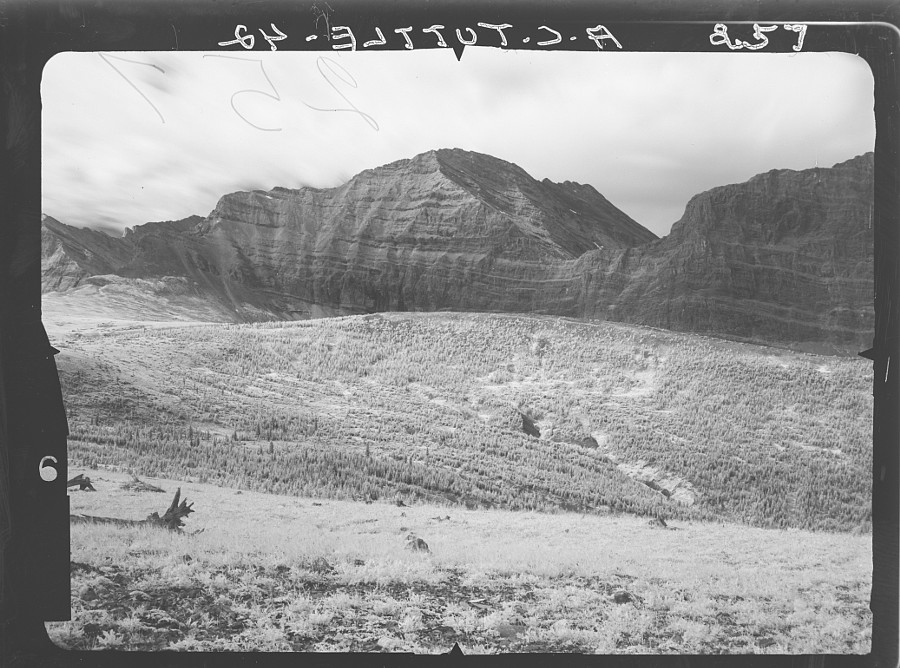
View Mount Farquhar on the Alberta Geographical Names Web Map
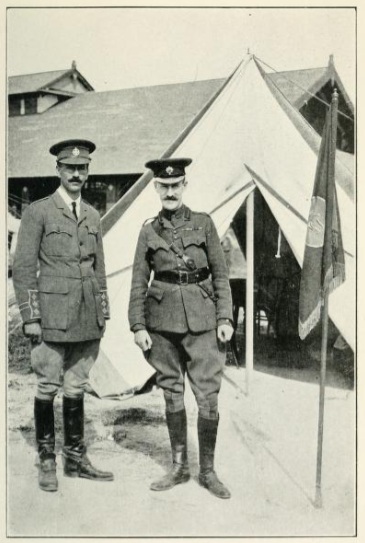
Captain (later Lieutenant Colonel) H.C. Buller (left) and Lieutenant Colonel F.D. Farquhar (right) with the standard of the Princess Patricia’s Canadian Light Infantry. Source: Canada in the Great War, Volume 2. (Toronto: United Publishers of Canada, Ltd., ca. 1918).
Lieutenant-Colonel Herbert C. Buller, DSO – Mount Buller and Buller Creek
Herbert Cecil Buller was born in Plympton St. Maurice, Devonshire, in 1881 and educated at Eton and the Royal Military College Sandhurst. Like Farquhar, he came from a military family, being the son of Admiral Sir Alexander Buller of the Royal Navy. Buller joined the British Army’s Rifle Brigade in 1900, served in India, the Middle East and Ireland, and reached the rank of Captain in 1910. He served as aide-de-camp to Prince Arthur, the Duke of Connaught, during the prince’s term as Governor General of Canada. Buller joined the Princess Patricia’s Canadian Light Infantry at its inception and initially served as adjutant and oversaw much of the regiment’s early recruitment efforts.
Following the death of Lt.-Col. Farquhar, Buller, being the only uninjured senior officer in the regiment at that point, was promoted to Lieutenant Colonel and given command of the regiment, leapfrogging other senior officers, notably Major Gault, who had been wounded. Buller was well-suited and qualified for command. Like Farquhar, he was a lifelong professional soldier. But that is where the similarities ended.
While Farquhar was known to be amiable and soft-spoken, Buller was seen as being abrupt and stoic, but a better tactician. Buller led the regiment during the Second Battle of Ypres in 1915, during which he was wounded by shrapnel, causing him to lose his right eye. Buller was mentioned in dispatches three times for distinguished conduct in the field and was awarded the Distinguished Service Order for his actions during Second Ypres.
On June 1, the Patricias, with Buller in command, were deployed to the trenches at Sanctuary Woods east of Ypres, putting them directly in the German line of attack in what would be known as the Battle of Mount Sorrel. Bombardment by German artillery and the ensuing infantry assault devastated the regiment, which suffered 388 casualties, including Gault, who lost a leg. Five officers were killed, including Lt.-Col. Buller, who perished attempting to prevent German soldiers from fortifying a shell crater. He was buried in the same common grave as Lt.-Col. Farquhar.
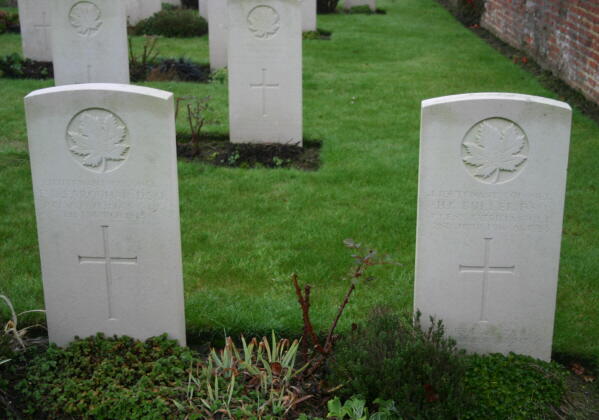
On June 30, 1926, a mountain near Canmore was named to commemorate Lt.-Col. Buller. Later that year, a nearby creek that today flows into the Spray Lakes Reservoir was given the name Buller Creek in his honour. The creek’s name was rescinded in 1957, as it was to be impacted by the reservoir created by the Three Sisters Dam. As the entire creek was not inundated, the name was reinstated in 1976.
View Mount Buller and Buller Creek on the Alberta Geographical Names Web Map
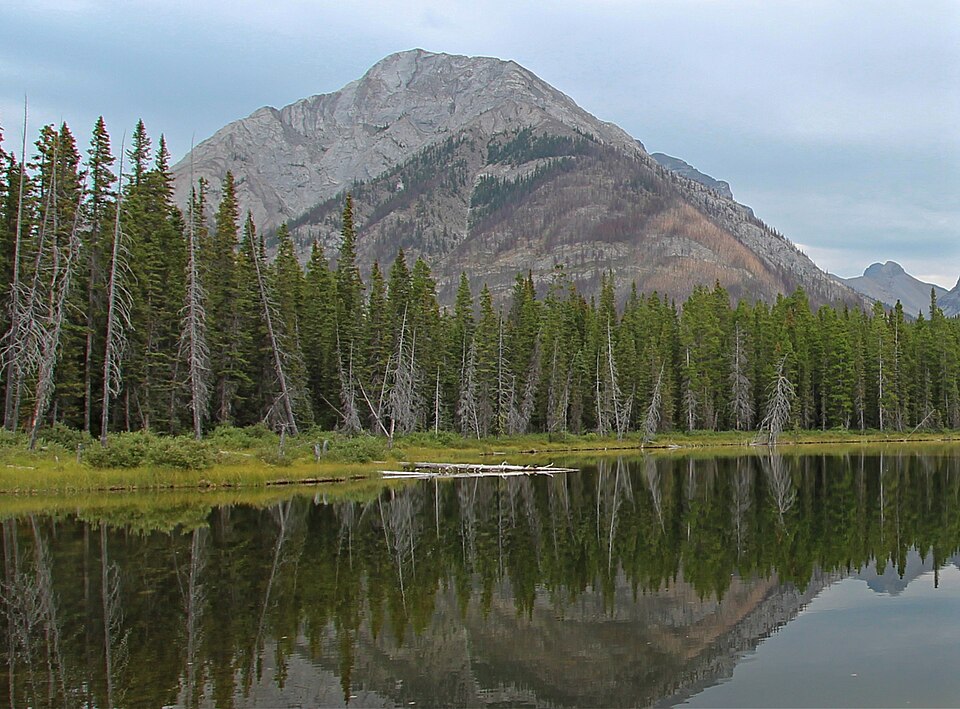
Second World War
Following the end of the First World War, the Princess Patricia’s Canadian Light Infantry became part of Canada’s permanent militia. Although formed and initially raised in Ontario, for the inter-war years, the regiment was based in Winnipeg and Esquimalt, British Columbia.
On December 21, 1939, the first contingent of the Princess Patricia’s left Canada for England; the rest of the regiment and newer recruits would join them in the weeks and months to follow. The regiment spent months in training and on guard duty in England during the months of inactivity known as the “Phony War.” The Patricias were selected for deployment to Norway in April 1940, to Brest, France, in June 1940 and to Spitzbergen in July 1941. Those operations were eventually scaled down or cancelled.
The Patricias would finally see battle in 1943, landing in Sicily in July and on the Italian mainland in September. The regiment would be part of the Italian campaign, fighting northward until early 1945, when it was deployed to The Netherlands. Over the course of the Second World War, the Princess Patricia’s Canadian Light Infantry added 18 more Battle Honours to its legacy, but at the cost of 264 killed and 1,118 wounded.
Post-War and Korea
At the end of the war, the Princess Patricia’s Canadian Light Infantry was again retained as part of Canada’s permanent or active army. The regiment would now be headquartered at Currie Barracks in southwest Calgary. The regiment also shifted to cold-weather and parachute training.
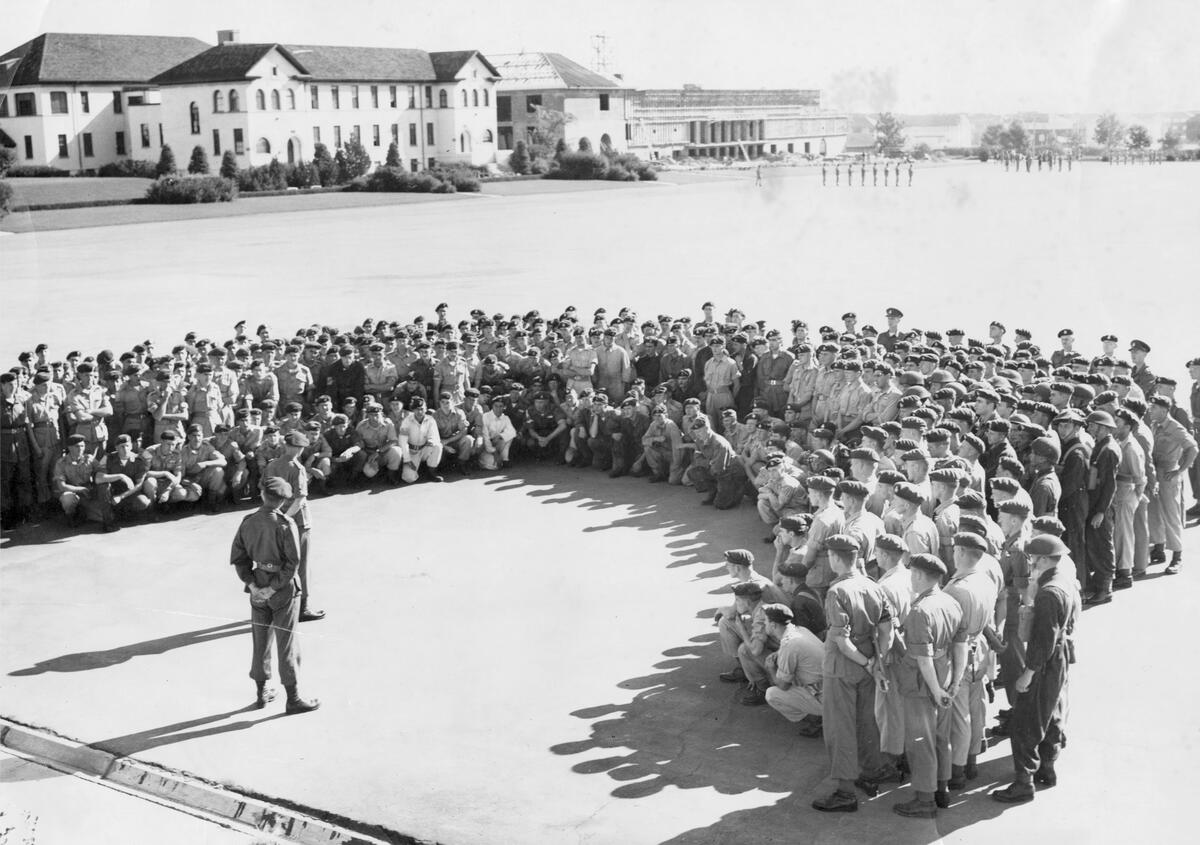
The regiment was called upon again in 1950, when a battalion from the regiment was selected to be part of the Canadian Army Special Force in Korea. The regiment began training at CFB Calgary, CFB Wainwright and Fort Lewis, Washington. The Patricias left for Korea from Seattle and arrived at Busan, South Korea, on December 18, 1950, moving to Miryang for additional training a few days later.
Warrant Officer James D. Wood – Wood Lake
James Deans Wood was born at Ranfurly, Alberta, on November 17, 1915, and was raised in Calgary. He moved with his family to Vancouver in 1929. He was an amateur athlete and trained with the militia before the war and enlisted for service when hostilities broke out. James joined the Princess Patricia’s Canadian Light Infantry in September 1936 and was stationed in Esquimalt. He started the war at the rank of Private and rose to be Sergeant Major of his unit. During the Italian campaign, he received the Distinguished Conduct Medal for his actions at the crossing of the Savio River in Italy in October 1944. His citation notes that under heavy fire, Sergeant Major Wood assisted 17 non-swimmers to shore, then crept up to an enemy machine-gun dugout, single-handedly killed two enemy soldiers with grenades and took three prisoners. The following day, while escorting a wounded officer back across the river, he attacked an enemy sniper post, killing one man and taking two prisoners.
Following the war, James remained with the regiment. He was first stationed in Shilo, Manitoba, and later transferred to Currie Barracks in Calgary. He undertook Arctic operations training at Churchill, Manitoba, and Whitehorse, Yukon, and qualified as a parachutist. He was granted a discharge from the armed forces in September 1949 but re-enlisted in September 1950. On January 18, 1951, he was leading a training exercise at Miryang when a Chinese anti-personnel mine, believed to be a dud, exploded unexpectedly, causing him to lose his right forearm and causing severe wounds to his head, neck and chest. He was evacuated to an American Army hospital where surgeons operated on him for six hours in a valiant but unsuccessful effort to save his life. On Wood’s death, fellow regimental Sergeant Major Owen Gardner said:
I have never served with a better soldier. … With his death our regiment has lost one of the best warrant officers it ever had. Jimmy was a true Patricia. No finer statement can be made of any man.
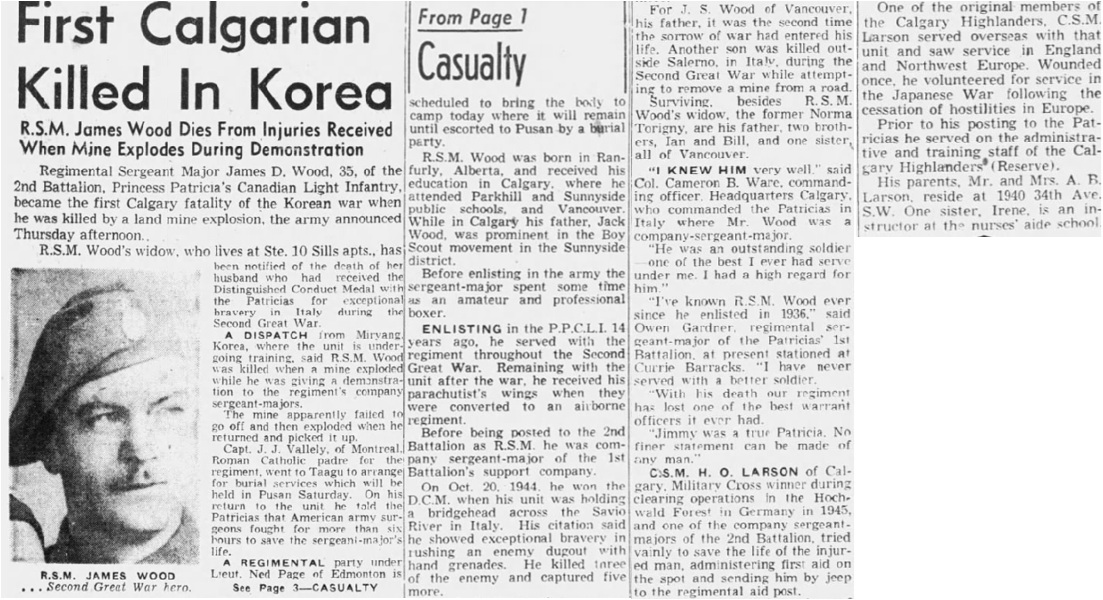
Warrant Officer James Deans Wood is buried at the United Nations Cemetery in Busan and is commemorated on the Monument to Canadian Fallen in Busan, South Korea, and its twin monument in Ottawa. In September 1951, James Deans Wood was commemorated in Alberta with the naming of Wood Lake, just east of Grande Prairie. The lake was locally known as “Jack Pine Lake,” but the Geographic Board of Alberta recommended that it be named to commemorate James Wood.
View Wood Lake on the Alberta Geographical Names Web Map
Post-Korea, Cold War, Peacekeeping and Afghanistan
Warrant Officer Wood was just one of the regiment’s casualties in the Korean War. Of the approximately 3,800 Patricias deployed to Korea, 107 were killed in action and 429 were wounded.
Throughout the Cold War, the Princess Patricia’s Canadian Light Infantry remained headquartered at Currie Barracks, CFB Calgary. They were also part of the NATO forces in Europe, notably at CFBs Baden-Söllingen and Lahr, and took part in United Nations peacekeeping operations in Cyprus and the Balkans. They also undertook a significant role in Canada’s contribution to military operations in Afghanistan. CFB Calgary and Currie Barracks closed in the late 1990s, and the regimental headquarters moved to CFB Edmonton, maintaining the Princess Patricia’s Canadian Light Infantry’s connection to Alberta.
Lieutenant Colonel Francis Farquhar, Lieutenant Colonel Buller and Warrant Officer James Wood are the members of the Princess Patricia’s Canadian Light Infantry who are commemorated in Alberta through the naming of geographical features. They are but three of the hundreds of the regiment’s soldiers who made the ultimate sacrifice and gave their lives in defence of Canada, our allies, our ideals and values. Many others have been killed or wounded in service, including those in the recent training accident at CFB Wainwright in October 2026. While some may be commemorated through the naming of geographical features, all have earned and deserve our thanks and must be remembered every November 11.
Sources
Canada in the Great War, Volume 2. (Toronto: United Publishers of Canada, Ltd., ca. 1918), 396, available from https://archive.org/details/canadaingreatwor02toro/page/n9/mode/2up
“Warrant Officer Class I James Deans Wood,” Findagrave.com, available from https://www.findagrave.com/memorial/20722208/james_deans-wood
Barrett, Matthew K. “The One-Eyed: Lieutenant Colonel Herbert Buller, D.S.O. Princess Patricia’s Canadian Light Infantry,” World War Graphic History [blog], available from https://matthewkbarrett.com/2014/08/07/the-one-eyed/.
——–. “The Princess & the Guardian, Colonel-in-Chief Princess Patricia of Connaught & Lieutenant Colonel F.D. Farquhar, D.S.O., Princess Patricia’s Canadian Light Infantry,” World War Graphic History [blog], available from https://matthewkbarrett.com/2014/08/04/the-princess-the-guardsman/.
Bercuson, David J. The Patricias: The Proud History of a Fighting Regiment. (Toronto: Stoddart Publishing Co. Ltd., 2001).
Veterans Affairs Canada, Canadian Virtual War Memorial, [website], (Ottawa: Government of Canada), available from https://www.veterans.gc.ca/en/remembrance/memorials/canadian-virtual-war-memorial.
Zuehlke, Mark and C. Stuart Daniel. The Canadian Military Atlas: The Nation’s Battlefields from the French and Indian Wars to Kosovo, (Toronto: Stoddart, 2001).

