Municipal Historic Resource spotlight: Lethbridge

Written by: Ron Kelland, MA, MLIS

Over the past few months, some of Alberta’s municipalities have been protecting their built heritage by designating a number of new Municipal Historic Resources (MHRs). These resources are structures and other sites that the municipality has deemed to be of significant heritage value to their community. Like Provincial Historic Resources, municipal designations are listed on the Alberta Register of Historic Places. Municipally designated properties also qualify for conservation grants from the Alberta Historic Resources Foundation.

The City of Lethbridge recently added six new MHRs to the Alberta Register of Historic Places. As of May 31, 2019, the City of Lethbridge has 26 designated MHRs listed.

The most recent listed designations by the City of Lethbridge are:

Watson Residence

Located in the Victoria Park neighbourhood on 14th Street South between 3rd and 4th Avenue, the Watson Residence is an Edwardian Foursquare with classical revival detailing and ornamentation. It was built in 1910/11. It has heritage value as an example of residential construction during Lethbridge’s rapid expansion in the pre-First World War period, and as an excellent example of an urban foursquare home. It was also the residence of Allan James Watson, who was a long-serving superintendent of the Lethbridge School District.
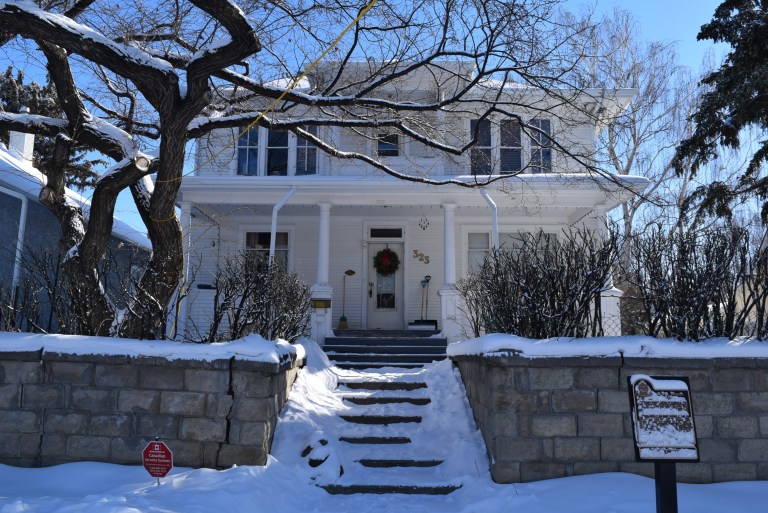
Watson Residence, Lethbridge, Alberta
Watson Residence, Lethbridge, February 2019. Source: Historic Resources Management, Government of Alberta

Read more

Congratulations to the Royal Alberta Museum

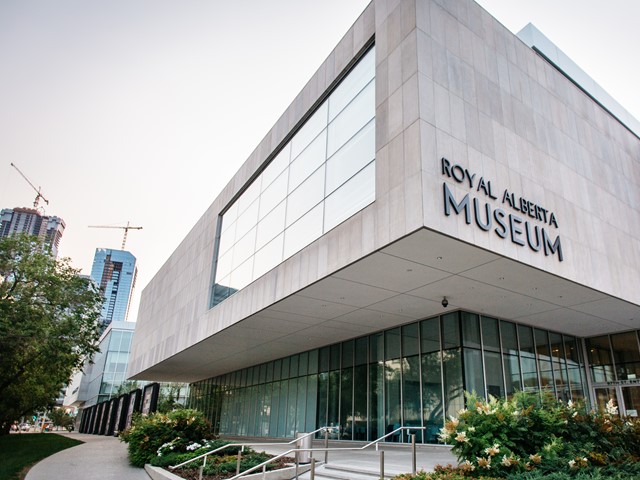
The new Royal Alberta Museum is opening today! Congratulations to everyone who has worked so hard to make this happen. We are very excited to explore the new building and galleries, and enjoy the museum for many years to come.

New Royal Alberta Museum in downtown Edmonton. Credit: Flickr/Government of Alberta.

In honour of the new museum building opening, our post today looks back at the beginning, and original opening, of the Provincial Museum of Alberta (later renamed Royal Alberta Museum) 51 years ago.

The former Royal Alberta Museum building was built as the Provincial Museum and Archives of Alberta in 1967. It was the culmination of a decades long effort to build a provincial museum in Edmonton. Funding came through the Government of Canada’s “Confederation Centennial Memorial Program”, which saw a substantial, jointly funded construction project in Read more

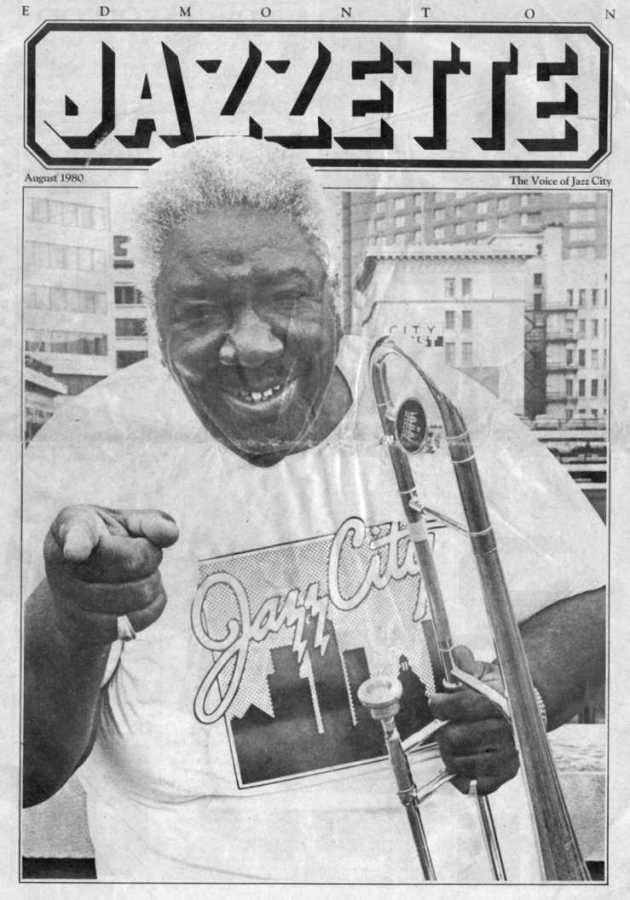
Did You Ever Hear the Blues? The Music, Film and Influence of Big Miller

JC-1980-Cover
Big Miller on the cover of the August 1980 edition of the Edmonton Jazzette. That shirt is due for a comeback. Photo provided by the Yardbird Suite.

Generally speaking, the ol’ City of Champs hasn’t been known as an international hub of art and culture as say, Montreal, New York City or Los Angeles. Artists of all stripes – musicians, dancers, visual artists – tend to get their feet wet in Edmonton then head off for the greener pastures of large international centres of creativity. So to hear stories of popular artists choosing to do the opposite and actually move to Edmonton to pursue creative endeavours (in the 1970s no less!), well, that’s something worth exploring.

Jazz music has a long history in Edmonton; incredible venues like the Yardbird Suite are recognized as important institutions in the city and former events, like the Jazz City Festival are recognized for their historical role in promoting the genre in the city and province. This week is the 2018 Edmonton International Jazz Festival. Since 2006 this festival has brought some of the world’s finest jazz musicians and acts to Alberta and has promoted local musicians at an internationally recognized venue. This week’s blog post is about one of those unique Edmonton transplants, one that may not be as well-known as jazz contemporaries Tommy Banks and PJ Perry, but one who certainly deserves to be recognized in the same ranks – the great trombonist and Kansas City Blues singer Clarence Horatius “Big” Miller. Read more

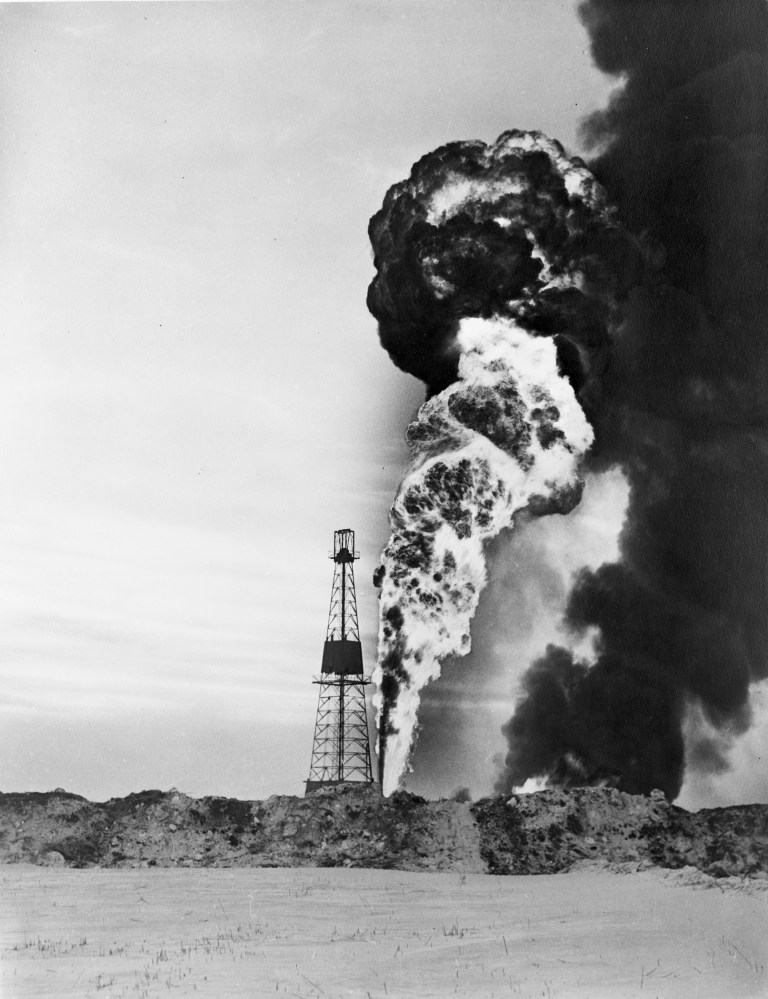
“IT THREW A MUSHROOM CLOUD JUST LIKE AN ATOMIC BOMB”: THE LEDUC No.1 OIL DISCOVERY – 70 YEARS AGO

On a bitterly cold afternoon, at 3:55pm, Nathan E. Tanner, Minister of Lands and Mines turned a valve at the Leduc No. 1 oil well as a rig hand held out a burning rag, setting alight a massive column of smoke and flame that roared hundreds of feet skyward. That event took place on February 13, 1947, seventy years ago today and it heralded in a new era for Alberta. An era of rapid development and prosperity fed by the now discovered reserves of oil deep under the province.

p1342
“It flared hundreds of feet” is how tool push Vern Hunter described the lighting of the flare as the Leduc No. 1 oil well was brought in on February 13, 1947. Source, Provincial Archives of Alberta, P1342

Read more

St. Nicholas Peak

You better watch out
You better not cry
You better not pout
I’m telling you why
Santa Claus is coming to town.

He sees you when you’re sleeping,
He knows when you’re awake,
He knows when you’ve been bad or good,
So be good for goodness sake!
(J.F. Coots & H. Gillespie, 1934, © EMI Feist Catalog Inc; Haven Gillespie Music)

How can Santa Claus see all of this? How can he know what we are doing all of the time? Where exactly does he get his information? While some more imaginative people believe that Santa Claus must have magical, all-knowing, all-seeing powers. Other, more practical-minded folk, insist that he must have a vast network of elfin spies keeping tabs on every boy and girl in his domain. However, here in Alberta we know better. Santa Claus obviously does his recon from his lofty vantage point in the Canadian Rockies from which he can see great distances – perhaps even into your own home (and isn’t that just a little bit creepy?). Read more

ELIZABETH STREET SCHOOL, MEDICINE HAT – MUNICIPAL HISTORIC RESOURCE

In February 2016, the City of Medicine Hat designated the Elizabeth Street School as a Municipal Historic Resource. In September, a plaque about the school’s history and designation was unveiled. The school is the most recent of Medicine Hat’s historic resources to be listed on the Alberta Register of Historic Places.

a10594
Elizabeth Street School during construction, ca. 1912. The school’s Classical Revival details, notably the cornice at the roofline and the keystone and voissoir details around the entryways, are evident.
Source: Provincial Archives of Alberta, A10594

Read more

Fighting Words?

Origin of the Names Battle Lake, Battle Creek and Battle River

Note: This post was originally published on RETROactive March 9, 2011.

Battle Lake is located approximately 53 km west of Wetaskawin and is one of a series of water features in the area that are identified by the name Battle, including Battle Creek, Battle Lake and Battle River.

The name Battle Lake was first recorded in the 1883 field notes of Tom Kains of the Dominion Land Survey (DLS). He recorded it as “Battle River Lake” due to its location on the Battle River. He later shortened the name to Battle Lake and, in 1901, that form of the name was approved by the Geographic Board of Canada for use on maps. Read more

The Battle of Jutland, First World War Commemoration and Alberta Place Names

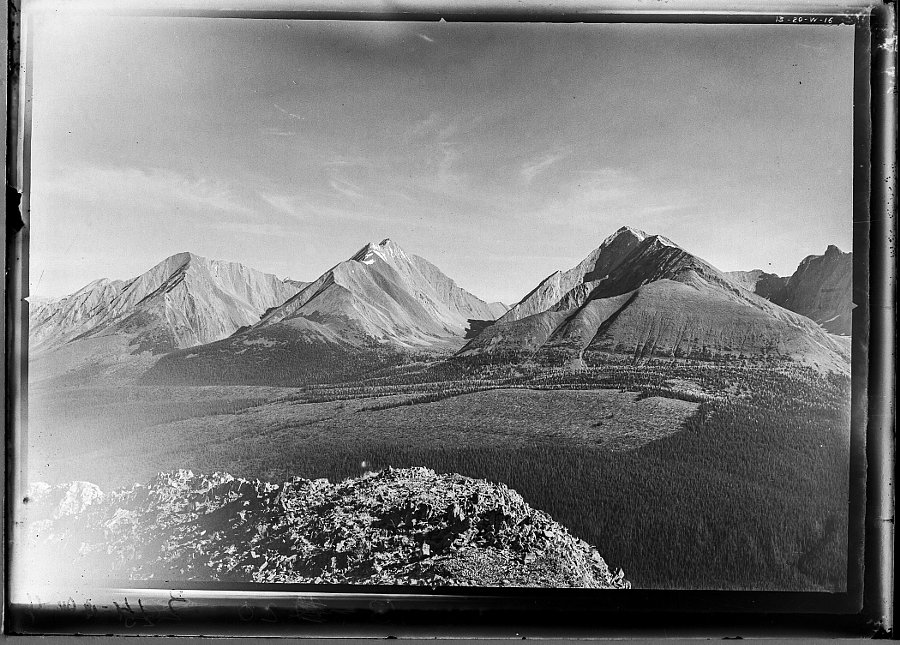
No single event has had such a dramatic impact on place names in Alberta than the First World War Battle of Jutland. Deep in the heart of Kananaskis Country can be found a series of mountains bearing the names of the ships and naval commanders of this naval battle. At least twenty-six mountains bear names commemorating the Battle of Jutland – sixteen of them are named for Royal Navy vessels that took part in the battle and ten are named for the Admirals, ship captains and seamen that lead and fought at Jutland. Additionally, many features associated with the mountains (glaciers, lakes and creeks) have subsequently been given Jutland names. The great number of Jutland-related geographical names in Alberta is curious. While there is no questioning the significance of the Battle of Jutland – it was the only major sea battle of the First World War, one of the few times in which dreadnought battleships fought directly against each other and its results affected strategy and tactics on both sides and altered the course of the war – it was also a battle in which there was no significant Canadian presence; no Canadian ships were involved and only one Canadian casualty has ever been confirmed. So, how did so many of these mountains along the Alberta-British Columbia boundary end up being named to commemorate this battle?

Mount Engadine (left), The Tower (middle) and Mount Galatea (right), taken in 1916 by the Interprovincial Boundary Survey. Mount Engadine and Mount Galatea are named for Royal Navy vessels that fought at the Battle of Jutland, the seaplane carrier HMS Engadine and the light cruiser HMS Galatea.
Mount Engadine (left), The Tower (middle) and Mount Galatea (right), taken in 1916 by the Interprovincial Boundary Survey. Mount Engadine and Mount Galatea are named for Royal Navy vessels that fought at the Battle of Jutland, the seaplane carrier HMS Engadine and the light cruiser HMS Galatea. Image Source: Mountain Legacy Project, IMG_3320. The Mountain Legacy Project is based at the School of Environmental Studies, University of Victoria, Victoria, BC. For more information, go to mountainlegacy.ca, or email mntnlgcy@uvic.ca.

Read more

Mount Lougheed and Wind Mountain

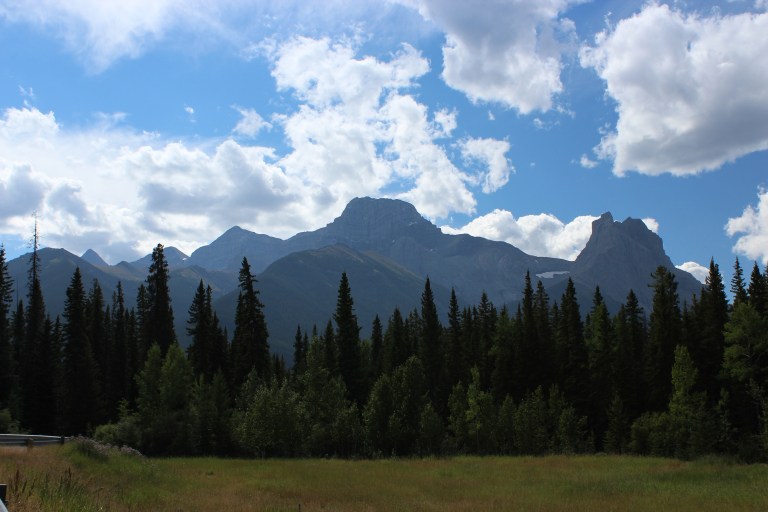
One of the most recognizable mountains in the Canadian Rockies is Mount Lougheed. Located approximately 15 kilometres southeast of Canmore, this majestic 3,150 metre (10,335 ft.) mountain is named for Sir James Alexander Lougheed. However, Lougheed is not the only name the mountain has had. In fact, it is not even the first mountain in the area to bear the name Lougheed. The story of how the mountain became known as Mount Lougheed is interesting.

IMG_0322

Mount Lougheed from the Trans-Canada Highway, August 2011. The entire massif is known as Mount Lougheed. The large, central peak is likely the feature named “Windy Mountain” by Eugene Bourgeau in 1858. The prominent peak furthest to the right is Windtower Mountain. The peak known today as Wind Mountain is the distinctly pointed peak visible on the horizon at left side of the photograph.
Source: Larry Pearson, Historic Places Stewardship Section, Alberta Culture and Tourism.

In 1858, Eugène Bourgeau (sometimes spelled Bourgeaux), a botanist with the Palliser Expedition, accompanied James Hector up the Bow Valley towards what is now Canmore. Bourgeau named many of the mountains and lakes along the way. Bourgeau was struck by the way the clouds swirled around one particular peak. James Hector, in his account of August 11, 1858, noted that Read more

Mount Edith Cavell

Located between the Astoria and the Whirlpool rivers is a mountain considered by many to be the most majestic in Jasper National Park, if not the entire Canadian Rocky Mountains. At an impressive altitude of about 3,300 metres, the mountain has been known by a number of names. French Canadian voyageurs using the Athabasca Pass referred to the notable landmark as La Montagne de la Grand Traverse (Mountain of the Great Pass). Dr. James Hector of the Palliser Expedition referred to it as Le Duc, probably after a Metis member of his party. In 1912, Arthur O. Wheeler of the Alpine Club of Canada and the Interprovincial Boundary Survey named it Fitzhugh Mountain, after the townsite of Fitzhugh, which was named for E. L. Fitzhugh, a director of the Grand Trunk Pacific Railway (the townsite of Fitzhugh was later renamed Jasper). It had also been periodically, and incorrectly, referred to as Mount Geikie. Today, and since 1916, the mountain is named Mount Edith Cavell, named for a British nurse who never set foot in Canada, let alone within Jasper National Park or on the mountain itself. How this mountain became a commemoration to Edith Cavell is an interesting lesson in Canada’s role in the First World War, its place in the Empire and the importance of wartime symbolism and the values of myth and memorialization.

PA354.1
North face of Mount Edith Cavell with Lake Cavell in the foreground, ca. 1945.
Provincial Archives of Alberta, PA354.1

Read more