Key Things to Know About Provincial Historic Resource Designation

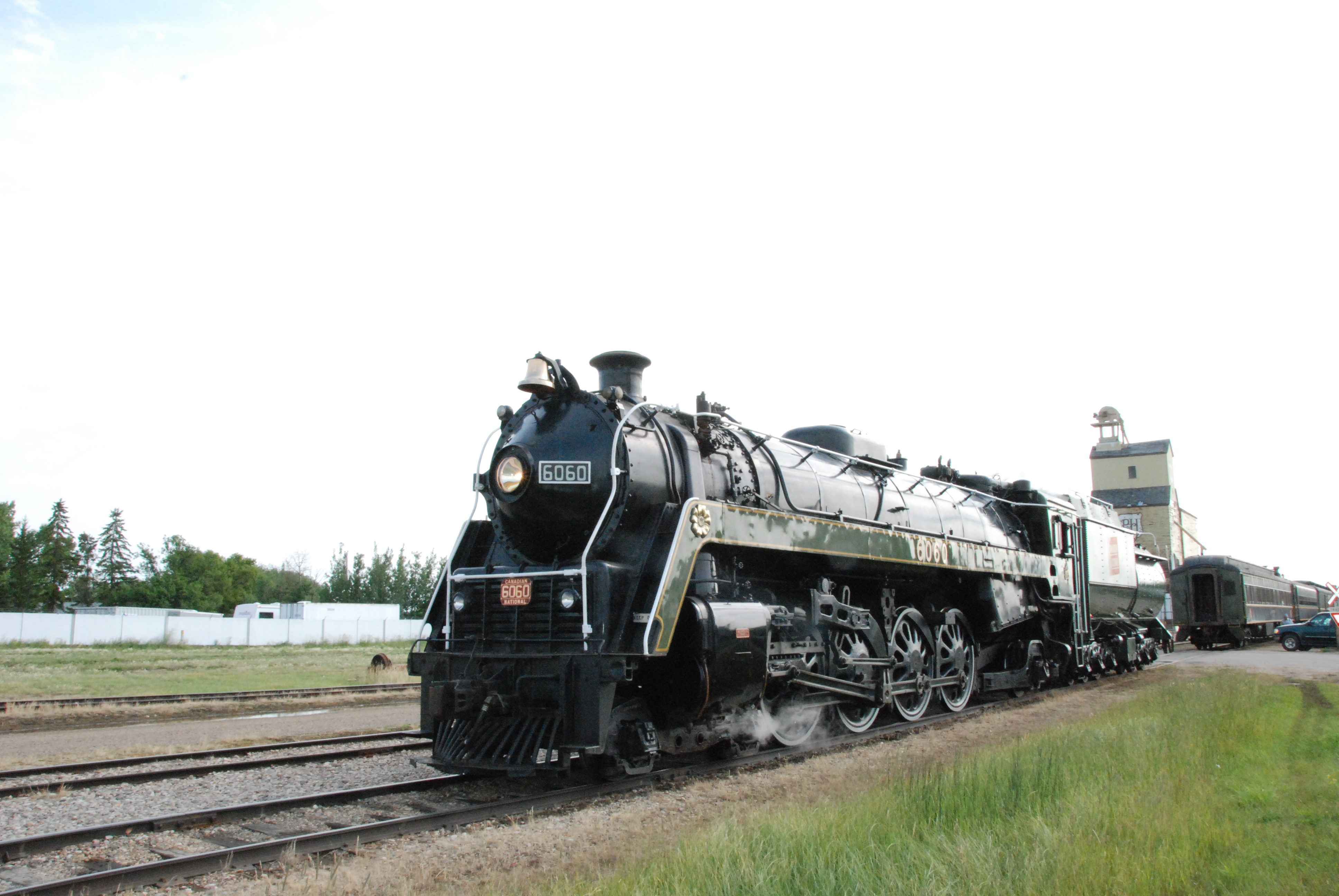
Canadian National Railways Steam Locomotive 6060 in Stettler (2009)
Canadian National Railways Steam Locomotive 6060 in Stettler (2009). A unique Provincial Historic Resource.

As Manager of the Historic Places Research and Designation Program, one of Brenda Manweiler’s primary responsibilities is the Provincial Historic Resources Designation Program. The goal of the Provincial Historic Resources Designation Program is to identify, evaluate, and designate those historic resources that are most significant to the province as a whole. Currently there are some 360 sites protected as Provincial Historic Resources in Alberta, with several more added every year.

The designation program is almost entirely driven by citizen input. Applications for provincial designation come from the public, usually the property owner but sometimes also from other individuals or groups concerned about the long-term future of a resource.

Once a resource is designated, its owner cannot destroy, disturb, alter, restore, or repair it without written approval from the provincial government. But the owner gains tangible benefits, including access to conservation grants and technical advice, and the intangible benefit of knowing that a valued property will be preserved and protected into the future.

Brenda feels these citizen advocates could take even greater advantage of the Provincial Historic Resources Designation Program if they better understood the designation criteria. Here are some key things she’d like people to know:

A property doesn’t have to be grand or architecturally detailed, nor associated with some famous person to be designated. It doesn’t even have to be a building.
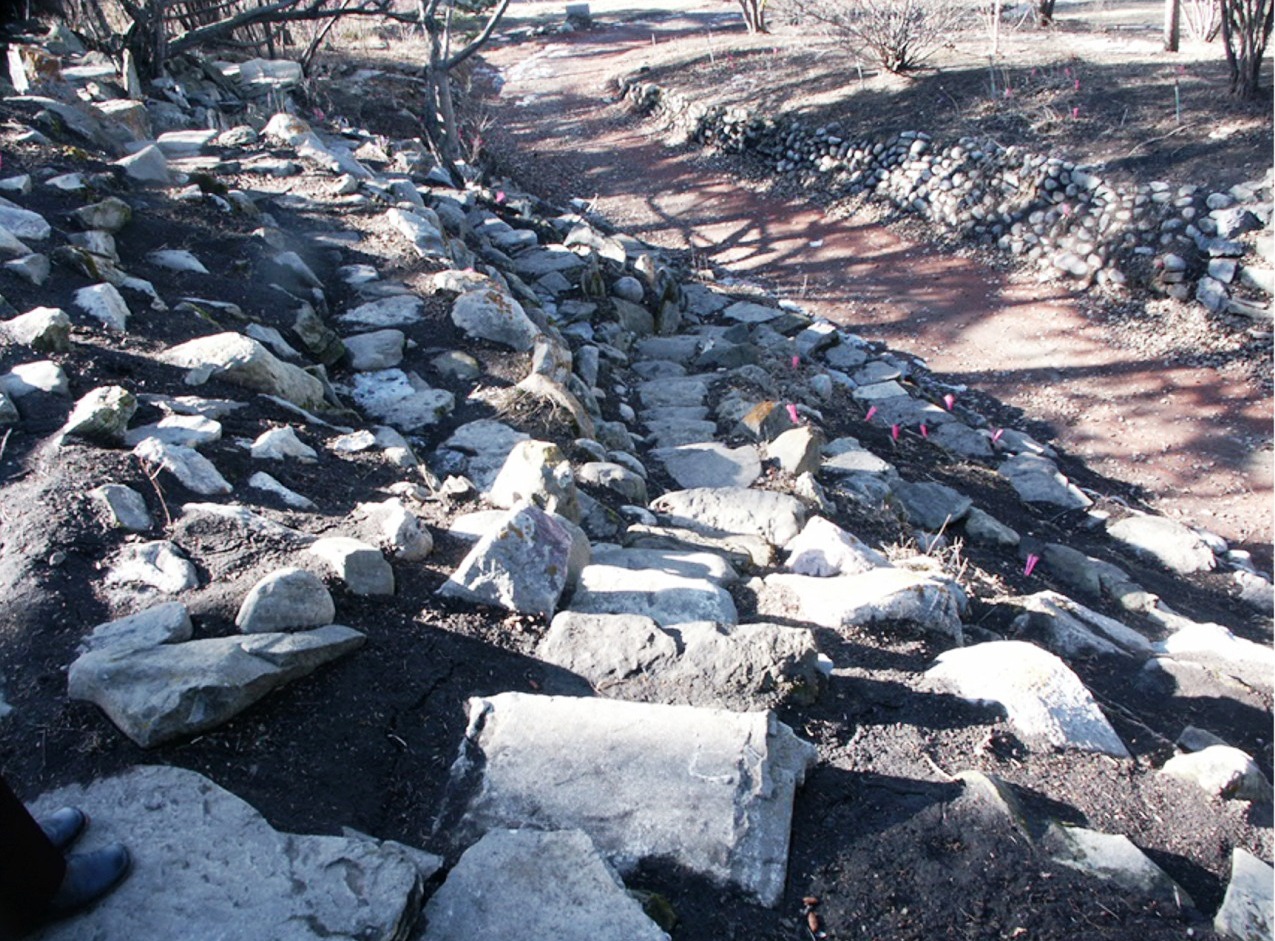
a view of a path in the Reader Rock Garden, 2005.

Brenda notes: “The general public seems to have such a defined idea of what a historic place can be. They’re thinking of homes, commercial buildings, churches, schools.” But the Alberta Register of Historic Places also includes gardens, such as the Reader Rock Garden in Calgary; buried resources such as Balzac Archaeological Site; a radar station located in Cold Lake; a steam locomotive in Settler—even a Meteorite Impact Crater, in Whitecourt.

“I would love to see more of these unique historic places,” she says. “One of the gaps that we have in our family of historic resources is sports and leisure sites,” she continues. “Canada is such a hockey country; Alberta is such a hockey province. Where’s an ice rink? Where’s the baseball field? I’d love to designate some sites that help to celebrate Alberta’s strong history in athletic pursuits.”

Provincial designation isn’t better than municipal designation, just different.
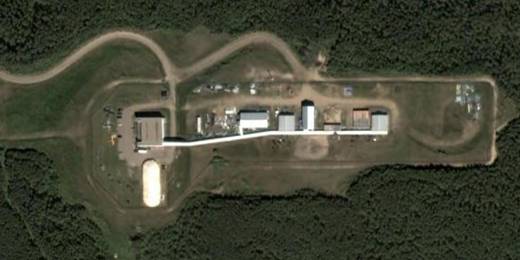
Northern Defence Radar Station, Cold Lake

Brenda explains: “Provincial significance is determined by looking through a pretty big lens. Is this site significant to all Albertans? Has the site helped shape the province into what it is today? Municipal designations have a narrower scope, a local lens to look through to determine significance.” But a municipally designated site can be just as significant as a provincial one—often even more so—within its own community context. Both levels of designation offer the same form of protection: the resources cannot be altered without approval from the designating authority.

She continues: “We have a variety of sites throughout the province that have been designated as both Municipal and Provincial Historic Resources. People might think that’s just duplication, so why bother? But I think it’s important to note the perspective that we come at it from. A provincial point of view is going to be lot different than a local perspective, so a site could end up being designated under both categories for different reasons.”

An example is Calgary City Hall, which is designated by the federal, provincial, and municipal governments. Both the provincial and municipal designations recognize the building’s significance as Calgary’s seat of government, and as an excellent example of Richardsonian Romanesque architecture. But the municipal designation also notes that it is “the earliest known example of steel-frame construction in Calgary” and that it was designed by a prominent Calgary-based architect.

Designation is not just about the sites and structures; it’s also about people and how they’ve used these places.
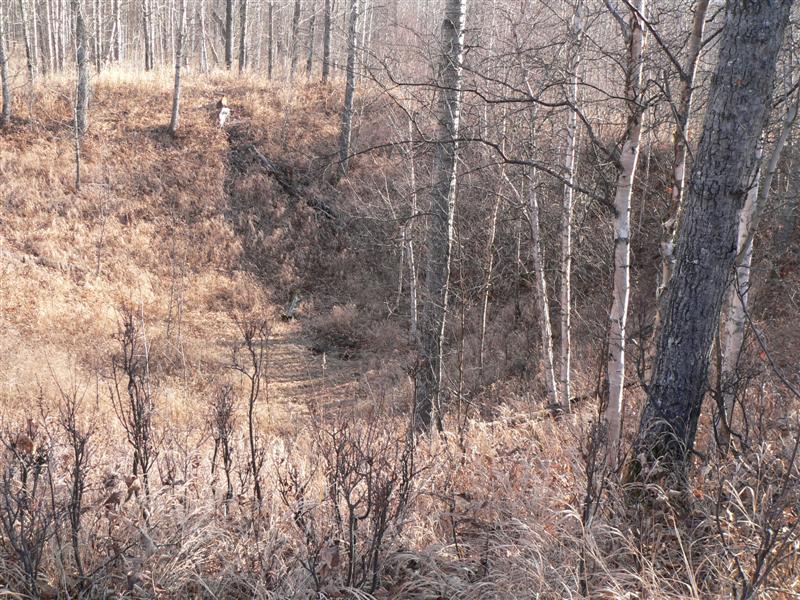
Looking down into the Whitecourt / Woodlands Meteorite Impact Crater (2007)

The most modest or ordinary place could be where a remarkable person lived or worked, or where some once-crucial, unusual, or game-changing human activity took place—and that’s what makes the site historically significant.

One of Brenda’s favourite examples is the Owen Residence/Dominion Meteorological Station in Edmonton. Inside this ordinary American four-square dwelling was “arguably the most significant meteorological post outside of Toronto” (according to the Statement of Significance). Even more remarkable, it was operated by “Weather Lady” Eda Owen, one of the few female meteorologists in the world working at a major station.

Another very modest but significant place is the Community Rest Room in Ponoka. When farm families came into town to conduct business, men could congregate in their choice of hotels, bars, and pool halls. This facility provided a much-needed retreat for women and children, offering not only toilets and showers but also a safe and social meeting place—and even a venue for political organizing.

“So much of the significance associated with Provincial Historic Resources comes down to the unique stories—the events, people, and places that have helped to make Alberta what it is today,” Brenda says.

Written by: Kerri Rubman.
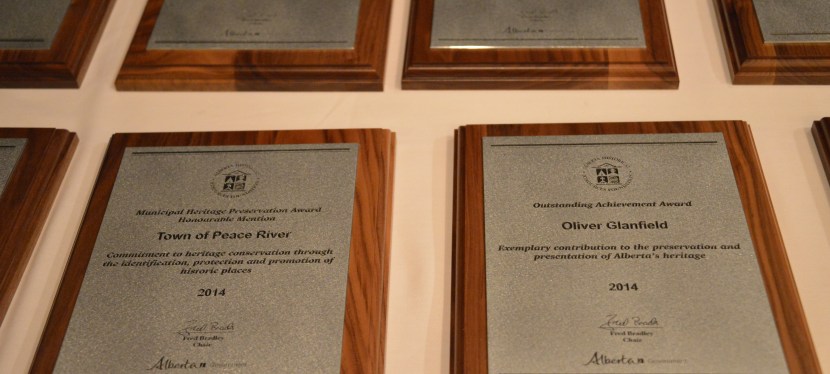
Alberta Historical Resources Foundation Heritage Awards

The Alberta Historical Resources Foundation gives out Heritage Awards biennially. The Heritage Awards recognise individuals and groups work to conserve, protect and interpret Alberta’s rich and diverse heritage. The 2014 awards ceremony took place in Red Deer on October 16th.

Our colleagues over at the Alberta Culture and Tourism blog just published an article detailing the award winners (see Heritage Award recipients give Albertans a prize). It contains details of the event, including a list of award winners. You should check it out!

The ceremony was a great night where some very worthy Albertans were recognized for their work in conserving and interpreting Alberta’s heritage. Our very own Gary Chen, Heritage Conservation Advisor (and shutter-bug extraordinaire) was on the scene. We have some great pictures from the awards ceremony we’d like to share with you.

The staff of the Historic Resources Management Branch congratulate each and every award winner. The tireless work they do in preserving Alberta’s heritage is welcome and appreciated, by us and many, many other Albertans. We couldn’t do what we do without the support and encouragement of people such as these.

Written by: Michael Thome, Municipal Heritage Services Officer.

Preserving the Past at Writing-on-Stone

Writing-on-Stone Provincial Park is nestled into the winding valleys and coulees along Milk River in Southern Alberta. Painted and carved on its fragile sandstone walls are one of the largest collections of rock art in North America. Appropriately named, Writing-on-Stone is a rocky canvas of ancient and historic art that spans many centuries.

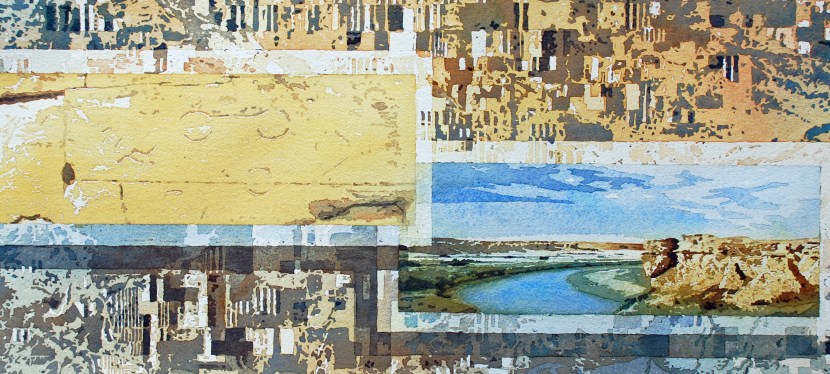
To increase awareness of this unique piece of the past and to encourage the preservation of sensitive historic resources, a collaborative team of the Historic Resources Management Branch, the Royal Alberta Museum, and the University of Alberta initiated the Heritage Art Series project. The goal is to create artwork, like the piece depicted above, that captivates the public in order to encourage the appreciation and protection of Alberta’s past.

Rock Art in Alberta

Alberta’s rock art includes pictographs (paintings), petroglyphs (engravings), carved boulders, and effigies (rocks arranged to form shapes). Art that was applied to rock walls has a variety of functions and there are six major types in Alberta.

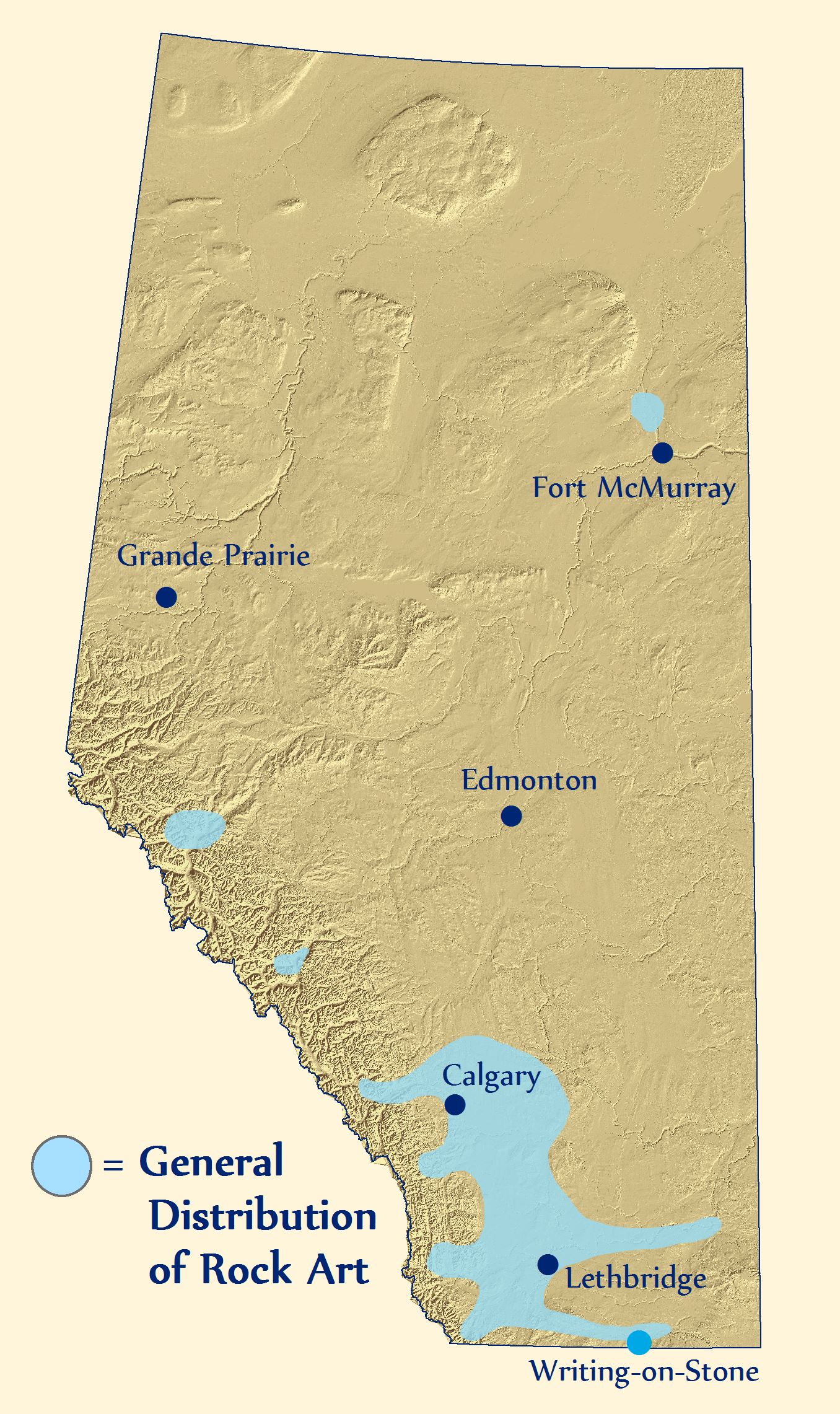
Rock Art Map
This map depicts the general extent of recorded First Nations rock art in Alberta.


‘En Toto Pecked’ involves figures that were entirely pecked out of the rock wall and this tradition of art appears in Alberta from 2500-1500 years ago. It is thought to have originated in Wyoming.

‘Vertical Series’ may be a type of rock art that acted as a communication system that related events and actors. It may be ideographic (like Egyptian hieroglyphs) with name glyphs like the Mayans of Central America.

‘Columbia Plateau’ refers to vision quest or hunting ritual art thought to be made by people originally from interior B.C. This style of rock art ranges from a few hundred to several thousand years old.

‘Foothills Abstract’ is a rock art style that consists of enigmatic shapes and motifs that may be the work of religious figures. Subjects include handprints, animals (and their tracks), and stylized humans.

‘Plains Biographical’ refers to rock art that documents events, important figures, or tallies of things acquired/exchanged by the Blackfoot and their ancestors.

Lastly, ‘Plains Ceremonial’ refers to spiritually important rock art that is still of great significance to modern Blackfoot Nations. Out of respect for the power of these and other rock art images to modern First Nations, photographs of the various styles of rock art are not included here.

The Milk River Valley Through Time

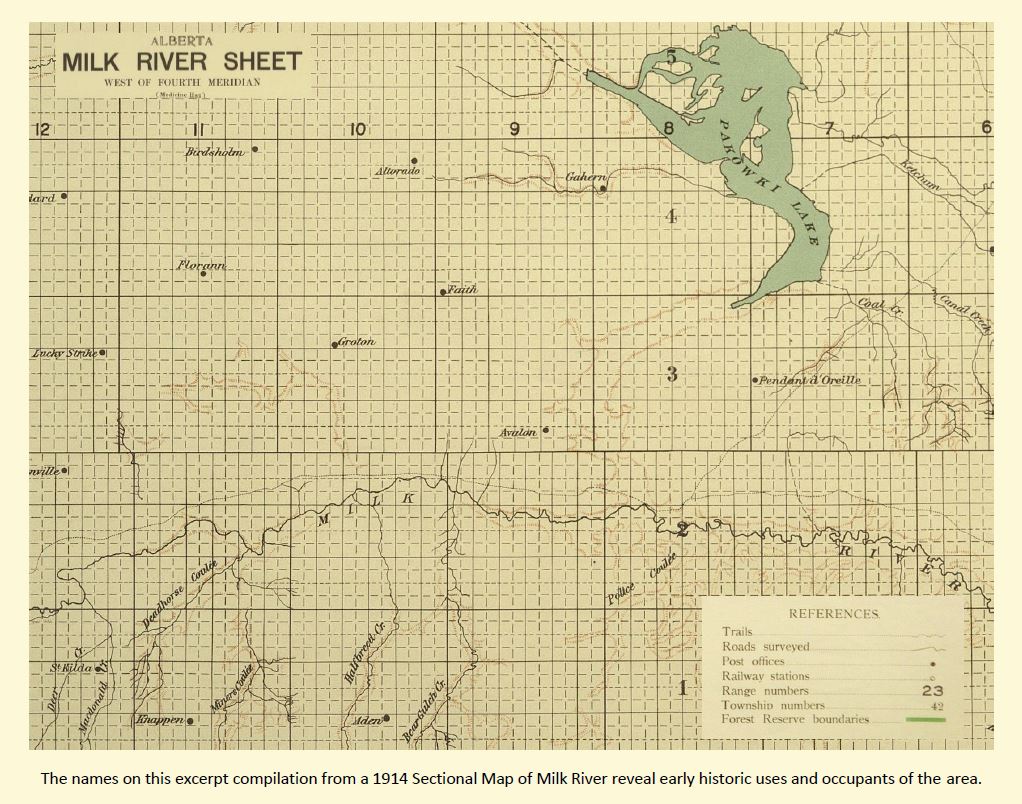
First Nations pursued buffalo herds in the Milk River region and view the valley as a sacred place where stories and dreams were recorded on the rock walls. The earliest Europeans included a mix of traders, coal miners, and Northwest Mounted Police, the early history of which is still recorded in modern place names.

Milk River valley map


Milk River Valley photograph

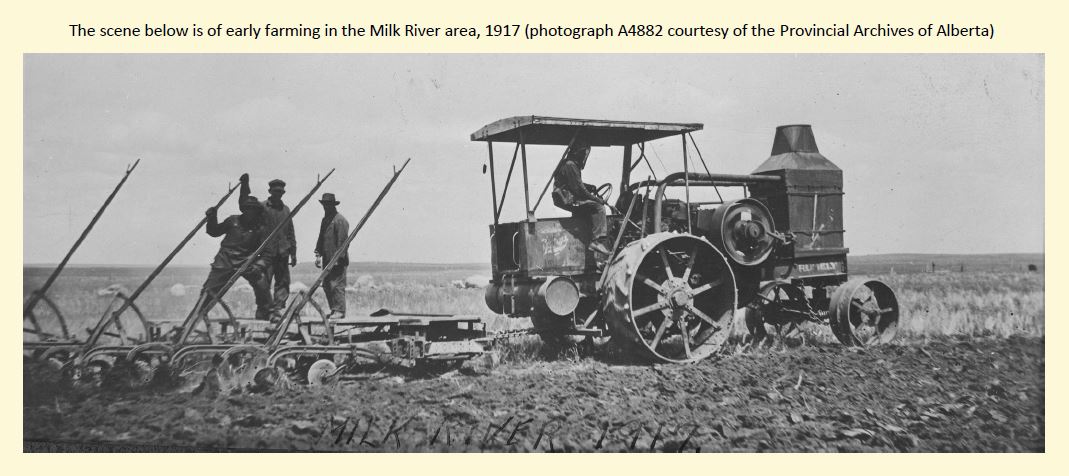
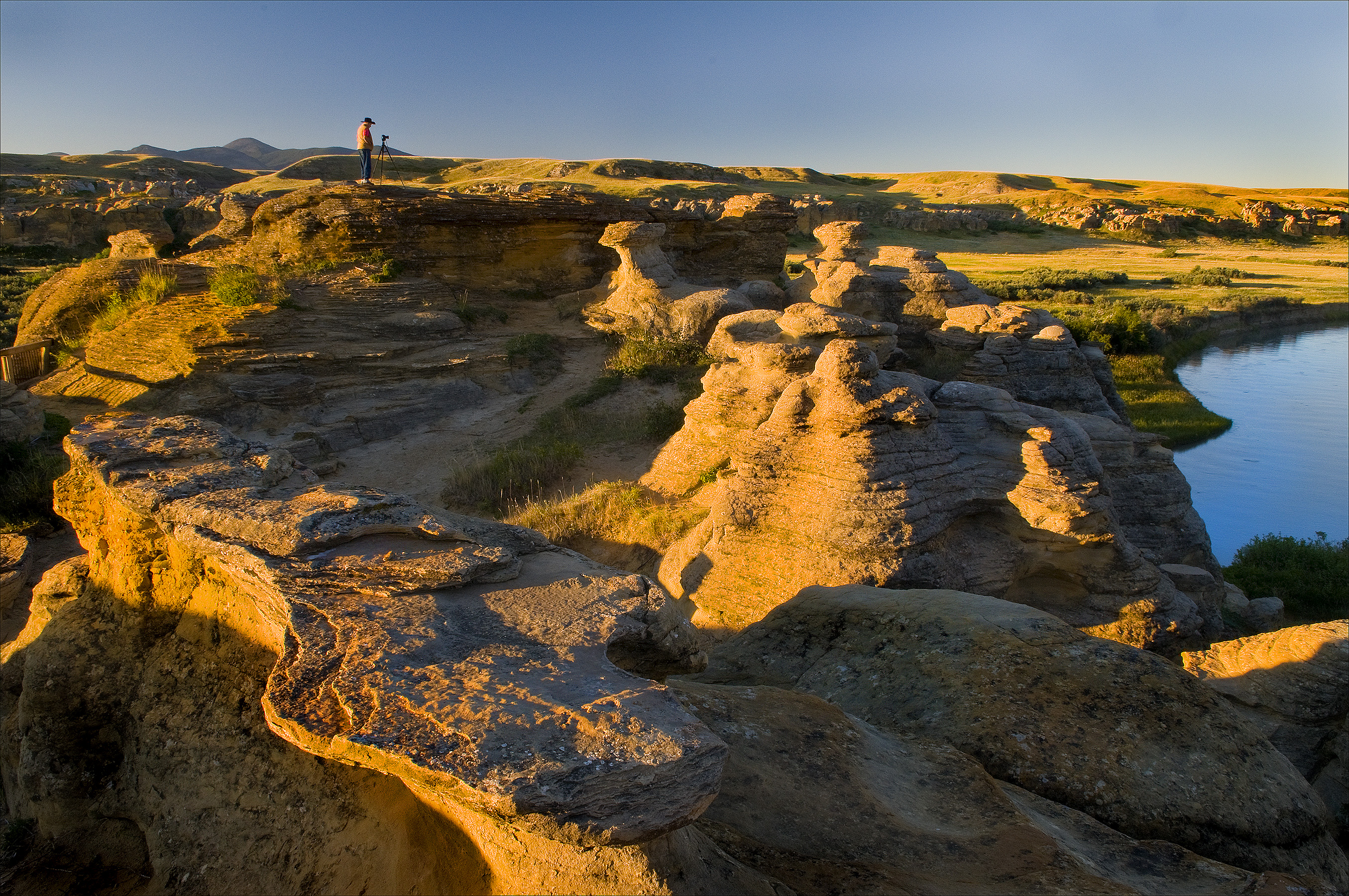
Cattle quickly replaced a vacancy left when buffalo were eliminated in the late 1800s. In addition to ranchers, new irrigation techniques and canals opened up the area to more intensive cultivation. Modern users of the Milk River landscape include farmers, Kainai First Nations, oil and gas operators, ranchers, and people in the tourism industry associated with Writing-on-Stone Provincial Park and National Historic Site (the photograph below is of the morning light on the park’s sandstone hoodoos, courtesy of Robert Berdan). Just as the uses of the Milk River region have changed in the past, they will continue to evolve in the future.

Writing-on-Stone photograph

The above painting by Anne McCartney is a textured narrative of landscape change in the Milk River Valley. The background is from an aerial photograph showing irrigated fields creeping to the valley’s edge. At lower right is a looming sandstone cliff that has witnessed a steady flow of First Nations, traders, miners, explorers, and farmers passing through the valley. In the upper left is a rock art panel depicting a battle scene from the deep past. Recent vandalism of that very panel highlights the need to protect and appreciate the landscape of Writing-on-Stone.

Protecting Rock Art Landscapes

The evocative and significant collection of art at Writing-on-Stone is under constant threat. Sadly, vandalism and graffiti have defaced some of the park’s art but through education and restricted access, much of the vandalism has now been curtailed. Instilling visitors with a healthy respect for the spiritual importance of the area to the modern Blackfoot will help ensure that the landscape is protected. Natural erosion, however, is unstoppable.

Much rock art has disappeared over the centuries from weathering of soft sandstone. New technologies are helping to better document the art and may lead to long term methods that slow rates of erosion. The park has been a key site in North America for experimentation with techniques to protect rock art.

Laser scanner
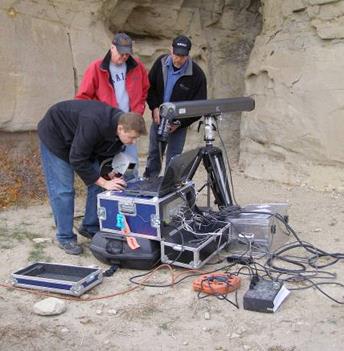
Archaeologists use laser scanners to accurately record rock art panels.

Portable laser scanners have been used to record high-quality images and to produce near-perfect replicas. Artificial drip-lines and plastic caps are diverting water from some exposed panels and a consolidant has been applied in experimental non-rock art locations to test the ability to strengthen rock and prolong the life of rock art images. Note that none of the preservation measures will be applied directly to ancient images without thorough review and cooperation with the Blackfoot people. Rock art left in its natural setting will eventually be lost, but there is much that can be done to enable a prolonged period of appreciation and enjoyment from viewing the hopes and dreams of early artists.

Written by: Todd Kristensen, Northern Archaeologist, and Jack Brink, Royal Alberta Museum

Unlocking the Vault: How New Technology Can Enhance Understanding of Alberta’s Archaeological Resources

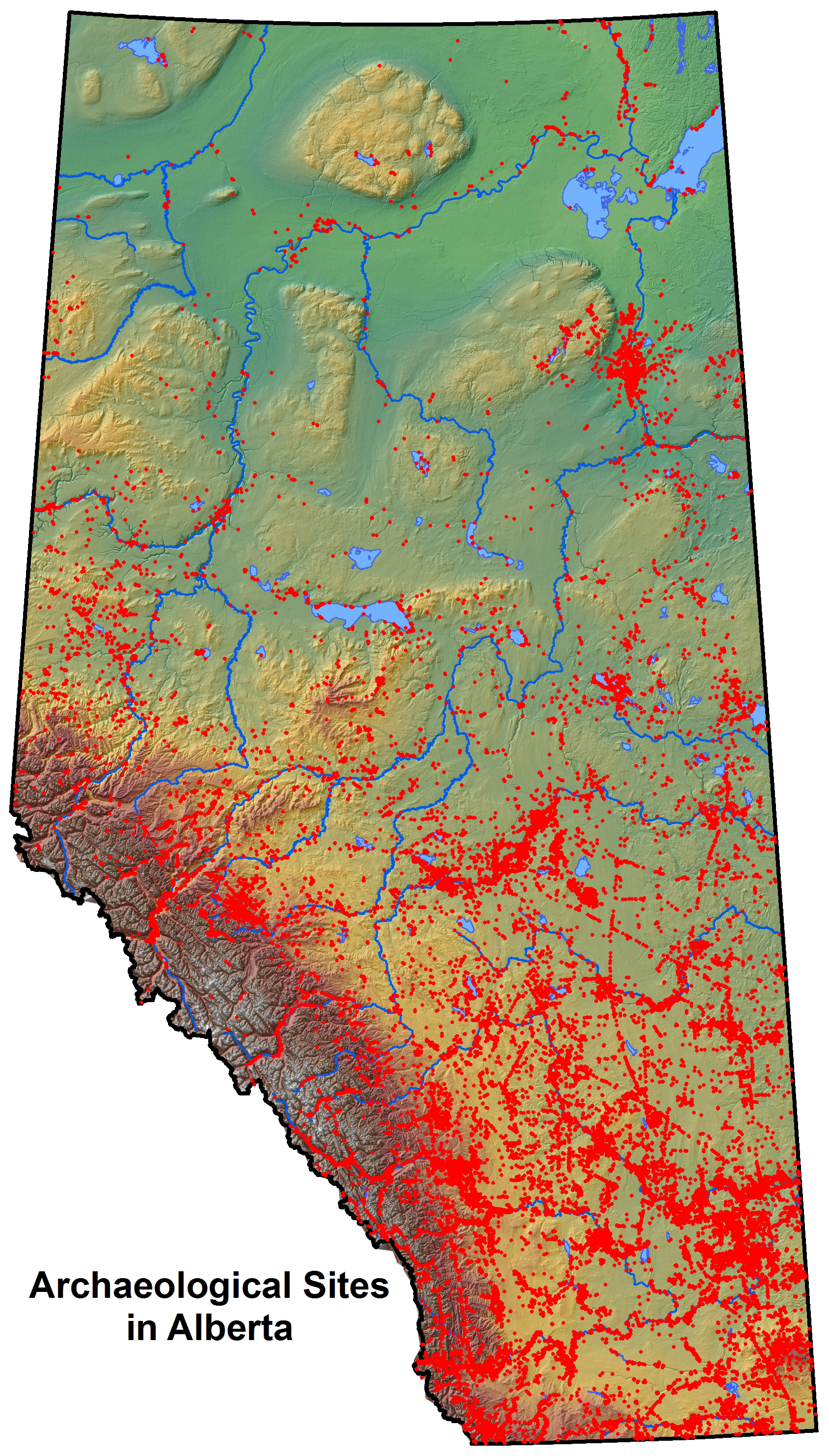
“Putting dots on paper maps”—that’s how Eric Damkjar, Head of Archaeology at the Archaeological Survey Section of the Historic Resources Management Branch, describes his section’s old methods of recording archaeological site locations. In his words, “We have on record approximately 40,000 archaeological sites … We used to manage that information with hand-drawn dots on paper maps, and that’s a very arduous system.” But about ten years ago the branch obtained funding to create a geographic information system (or GIS) for the information—basically a computerised map”. Damkjar, a former consulting archaeologist who says he’s always had a technical bent, “jumped at the chance” to work on this new initiative.

Embracing technology, particularly GIS mapping, has dramatically changed the way that the Archaeological Survey Section regulates development. Indicating the proposed footprint of the development on a computerised map is much easier and more accurate than the old system of pulling out the relevant paper map and laboriously drawing in the footprint by hand. Also, the electronic footprint provides instant access to a variety of related electronic records that formerly had to be retrieved by hand and reviewed on paper.

Known archaeological sites in Alberta.

The potential of electronic mapping and electronic databases of information go far beyond improving the section’s abilities to regulate development. Paper maps indicating the location of 40,000 historic resources—along with archaeological reports numbering in the thousands—were, as one might expect, extremely difficult to access. When reports only existed in paper form, an individual who wanted to do research had to physically go into the basement and pull a report off the shelf. “Our unit,” says Damkjar, “was basically trying to unlock the vault of archaeological information that was sitting there, tied up in paper, and to make it more accessible [not only for] our … regulatory actions, but also for research.” One goal for 2014 is to create a web portal consisting of a mapping viewer that the public can use to access and view information about archaeological sites.

Damkjar is also eager to make the information that has resulted from the regulation of development more readily available. Every year millions of dollars are spent by industry on archaeological studies, because the Historic Resources Management Branch frequently requires industry to do excavations of sites slated for potential development. Since 1973, there have been approximately 7,000 archaeology projects undertaken in the province. “There’s a valid point in wondering what is the point of excavating these sites if you’re not going to learn anything from it”—in other words, if that information is not going to be made more accessible to the public and to scholars, says Damkjar.

Synthesizing work that has been done by digitizing reports and building databases and electronic maps will help Albertans improve their understanding of the “big picture” of the province’s historic resources. “We can now study the distribution of ancient land use across the province,” says Damkjar. “We can look at where in Alberta different sites are distributed—that used to be very daunting when it was in paper.” The ultimate goal, in Damkjar’s view, is to translate, digest, and synthetize the existing information that the province holds on all its historic resources and in so doing, create a “higher level of understanding” of Alberta archaeology as a whole. Significant progress has been made by staff at the section, who have published books and articles aimed at both amateur and professional archaeologists.

The vision Damkjar has is to “create an environment where we can have dynamic links between archaeological site location information [in GIS] … artifact information, and photographs that are submitted in reports and so on, and create a kind of unified electronic environment where researchers, regulatory people like ourselves, and consultants can work from their desktops and look at the full spectrum of information.” Damkjar notes that “there’s still a lot of work to be done on that front”—but that goal is vastly more achievable now thanks to the evolving technology.

Written by: Gretchen A. Albers.

Alberta Historical Resources Foundation Meets in Pincher Creek

The Board of the Alberta Historical Resources Foundation met in Pincher Creek, September 12th-13th, 2014. Since this meeting was not one where the Board was actively adjudicating many grant applications, the focus was more on policies and other planning to help conserve and celebrate Alberta’s heritage.

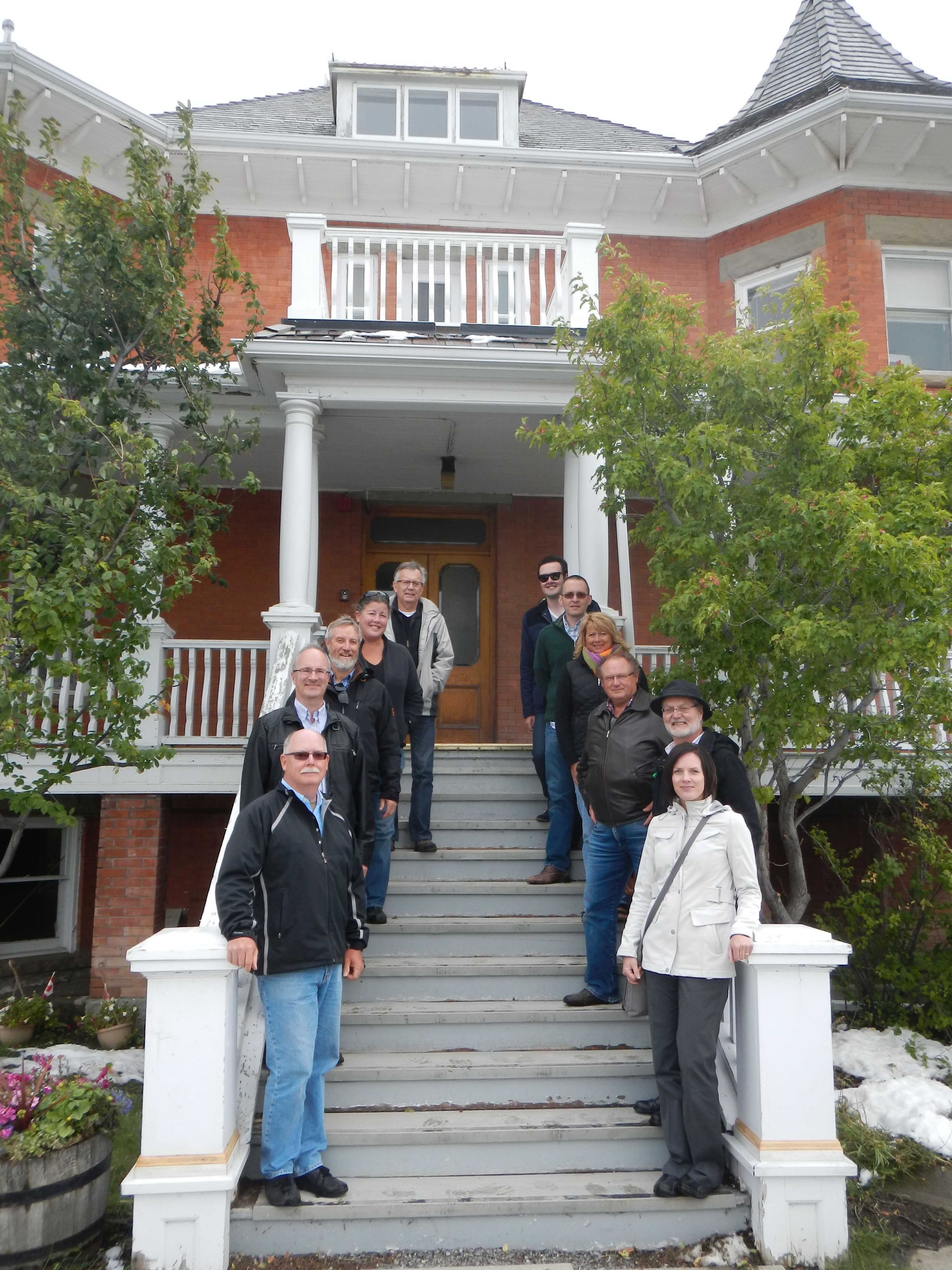
The Board of the Alberta Historical Resources Foundation, on the steps of Lebel Mansion, the Town of Pincher Creek's first designated Municipal HIstoric Resource.
The Board of the Alberta Historical Resources Foundation, on the steps of Lebel Mansion, the Town of Pincher Creek’s first designated Municipal HIstoric Resource.

As is their custom, Board members took the opportunity to explore some of the local historic places in the community where they met. The Town of Pincher Creek’s Director of Community Services, Diane Burt Stuckey, and Curator of the Kootenai Brown Pioneer Village Museum, Farley Wuth, led an informative tour of locally significant historic places, as well as two community museums.

Some of the historic places featured on the driving tour included an historic buffalo jump site on the west side of town, and also the Lebel Mansion, newly designated by the Town as as Municipal Historic Resource. Originally built as a grand residence by the merchant Timothee Lebel, the building later served as hospital, and now as the home for the Allied Arts Council. It is a great example of another historic place serving the cultural community in Alberta.

After a visit to Heritage Acres Farm Museum, where the Board was able to see first-hand the extensive collection of agricultural equipment, Board Chair Fred Bradley facilitated a meaningful conversation with local heritage-sectors leaders and municipal officials, including Town of Pincher Creek Mayor Don Anderberg, and M.D. of Pincher Creek Reeve Brian Hammond. The Foundation was able to hear and discuss issues that are important to local communities working hard to conserve their heritage.

After a busy day of seeing the sites and learning more about the history of Pincher Creek, the Board settled in for its day-long meeting, involving a broad range of issues affecting the heritage community across Alberta. Future posts will showcase some of the decision made in Pincher Creek, so stay tuned to RETROactive!

The next meeting of the Alberta Historical Resources Foundation will take place in Edmonton, November 28th-29th.


Early Cabins in the West

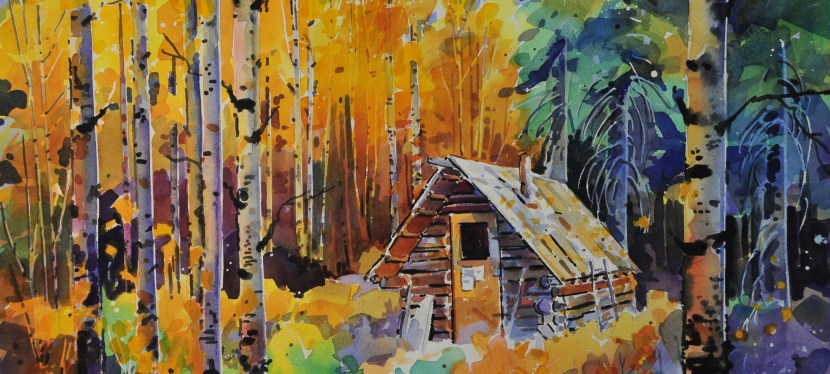
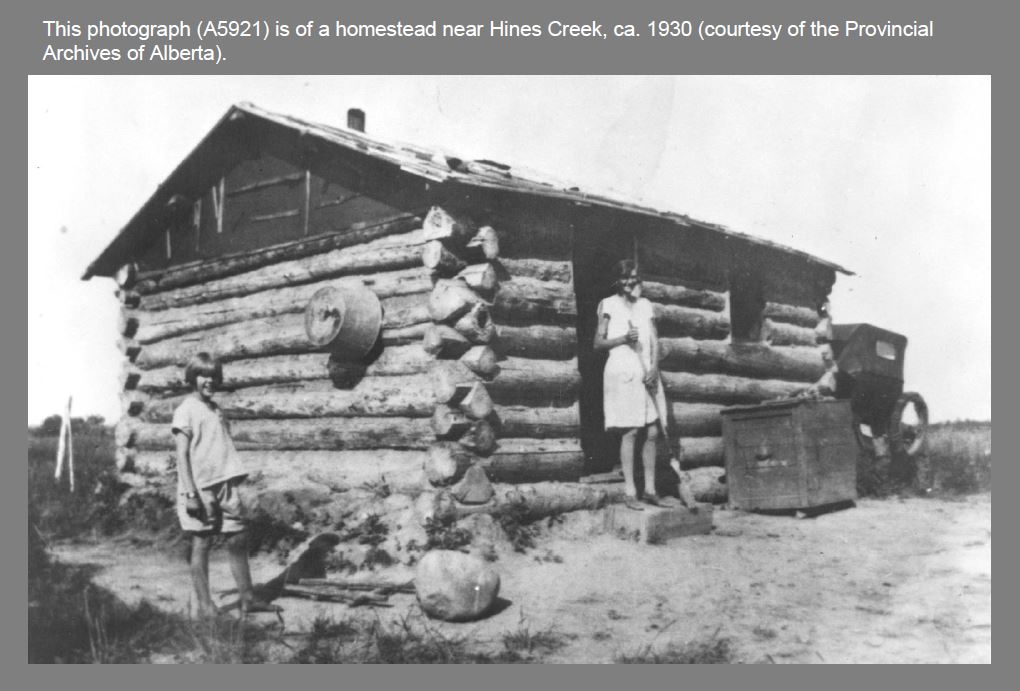
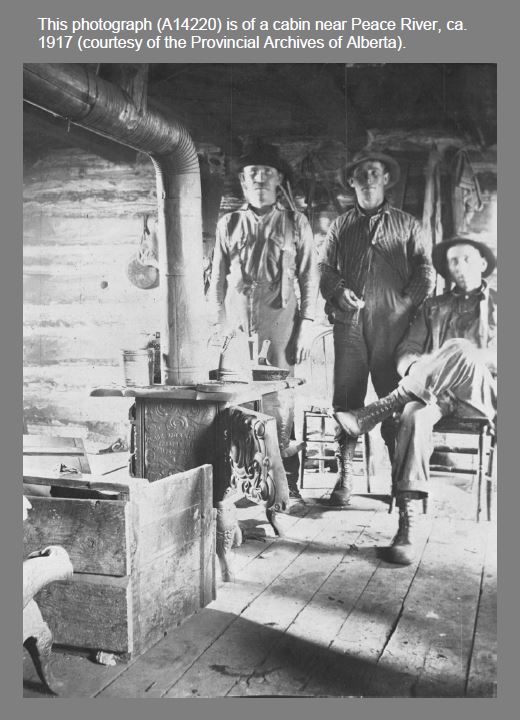
Cabins performed a variety of functions in Alberta’s past from homesteading to hunting and post offices to ranger cabins. Many events and daily challenges that defined our province unfolded on the wooden floors of early cabins. Just like the characters they housed, each cabin’s architecture and associated artifacts are unique.

Cabin and tobacco tin

To encourage an appreciation of cabins and the surviving record of them, as well as other historic resources in the province, a collaborative team from the Historic Resources Management Branch, the University of Alberta, and the Royal Alberta Museum initiated the Heritage Art Series. The goal is to create artworks that depict scenes from Alberta’s past that captivate public audiences. We hope that these artworks, like the cabin painting above, stimulate an interest in learning about our province’s heritage, which will in turn instill a greater respect for the past.

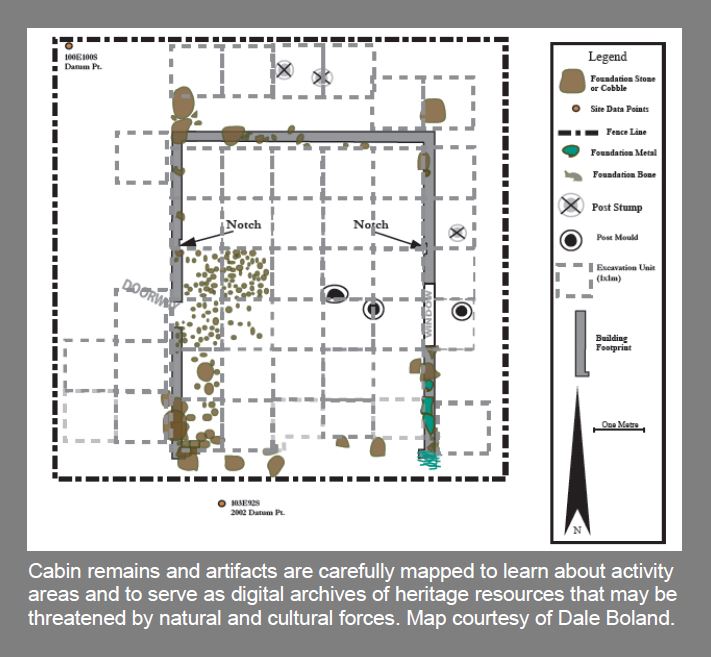
Cabins were typically made of raw timbers with a variety of corner joints, roofs, sawn floorboards, and chimneys. Associated features include outhouses, garbage pits, ice houses (for storing food), cellars, and drying racks. What can the archaeological record tell us about cabins and their occupants? Maps of cabins and associated structures reveal how people utilized landscapes and interacted with each other within cabins. Our modern homes are often relatively large with multiple rooms and levels, which is drastically different from the single-room cabins that many Albertans spent their lives in. An historical perspective informs us that changes in domestic architecture have had a real impact on the way Alberta’s families interact with each other and with their neighbours.

Cabin map

Cabins are often associated with historic trails that influenced how regions were settled and how goods were transported across the country. Cabin modifications over time tell stories of trial-and-error adaptations to new landscapes while artifacts can indicate the types of activities conducted around cabins, cultural affinities, number of occupants, and the season of occupation. Outhouses and garbage pits can reveal past diets, wealth, access to luxury goods, hygiene, medical conditions, and entertainment.

Cabin and bottle

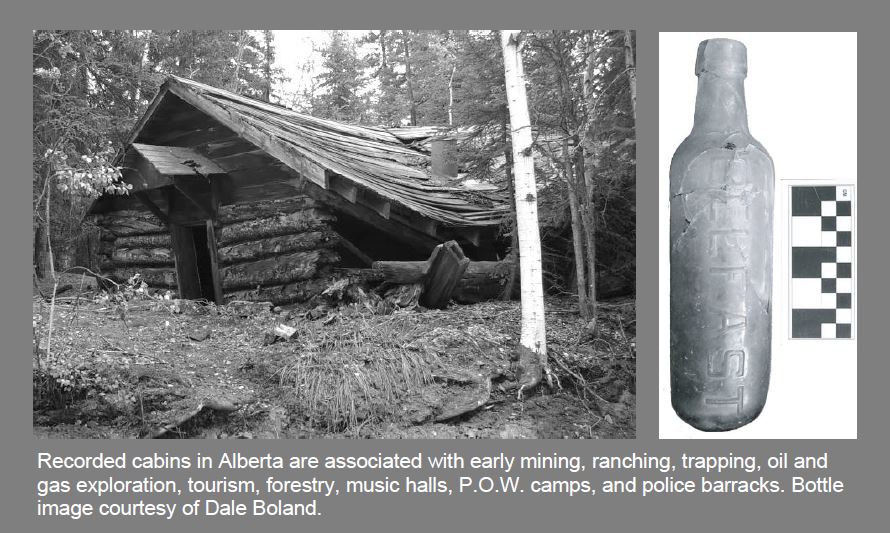
Aside from cabins’ phsycial make-up and artifact assemblages, they are significant heritage resources because they were often the first permanent structures to appear on many of Alberta’s landscapes. They represent a new adaptation and a new way of life for the people who first built them. There are over 550 recorded archaeological sites in Alberta with cabin components. Over 115 of these sites also have a pre-contact First Nations component, which suggests that many of the good spots for cabins have always been good places to make a living on the land.

Homestead photograph

The painting at the top of this article by Gregg Johnson is of a trapper’s cabin in the autumn foothills. It captures the solitude of the trapper’s life. Autumn was a busy time as trapper’s geared up for winter. Supplies were brought in, trap lines were re-established, and wood was cut for the long winter ahead. Like many of Alberta’s industries, modern trapping has an interesting past and an informative historic record. Archaeology offers a unique opportunity to learn about the past lives of people who may not be represented in historical accounts. In this sense, the study of historic resources gives a voice to people who have not been given the chance to speak for hundreds of years.

Miners cabin

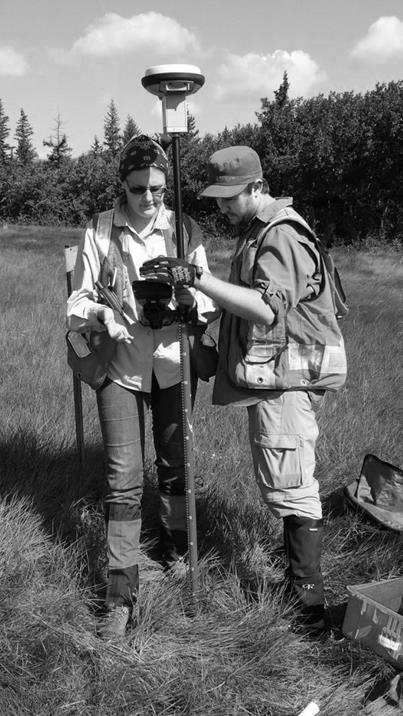
An example of a current research project about cabins that will illuminate the past record of a poorly understood group of people is that by Dr. Kisha Supernant at Buffalo Lake. Dr. Supernant and her research team from the University of Alberta are studying the adaptations of Metis and First Nations people who occupied Buffalo Lake in the 1800s in order to acquire meat that supplied neighbouring trade posts like Fort Edmonton. Her excavations and mapping program will uncover an important way of life that helped shape our province.

Mapping crew
Dr. Supernant and a graduate student use GPS equipment to map archaeological features.

The next blog of the Heritage Art Series will be about the changing landscape and rock art of Writing-on-Stone Provincial Park.

Written by: Todd Kristensen, Northern Archaeologist, and Dr. Kisha Supernant, University of Alberta

In Service of Historic Alberta: A Decade on the Alberta Historical Resources Foundation’s Board of Directors

Languishing historic downtowns were revived, once again attracting businesses and customers. Modest but beloved churches were repaired to continue to serve their congregations and communities. An exquisite sandstone prairie mansion where history was made, the Lougheed House, was painstakingly restored to become a vital museum and events venue. These were some of the highlights of Tom Clark’s ten-year stint on the Board of Directors of the Alberta Historical Resources Foundation.
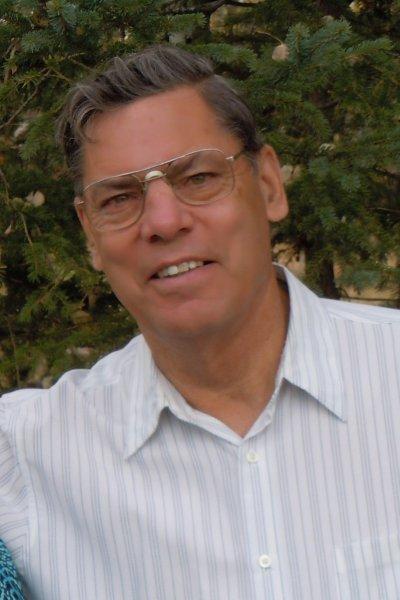
Tom applied to join the Foundation’s board while serving on the Clearwater County Council for two terms and while chairing the Nordegg Historical Society (which he still does). His experience working with community groups and addressing heritage conservation concerns prepared him well to fill a spot on the board.

Tom Clark, former Director of the Alberta Historical Resources Foundation.

While the Foundation supports a number of programs, “the big thing was the adjudication of funds that people have applied for over the years for their different projects,” Tom explains. “There is an awful lot in the province…that needs restoration,” he notes. To maintain their integrity, historic places need the injection of funding and technical expertise that the AHRF can bring them.

The Foundation—which gets its money from the Alberta Lottery Fund—provides funding to projects that preserve historical resources or raise awareness of heritage in Alberta. Grants are awarded through three programs: the Heritage Preservation Partnership Program, the Alberta Main Street Program, and the Municipal Heritage Partnership Program. The last two programs are specifically for municipalities, but grants from the Heritage Preservation Partnership Program are available to anyone working to conserve or increase public awareness of a historic resource. They are awarded in five categories: Historic Resources Conservation, Transportation/Industrial Artifact Conservation, Heritage Awareness, Publications, and Research. There are also two scholarships: the Roger Soderstrom Scholarship and the Bob Etherington Heritage Trades Scholarship.

Tom saw a wide range of grant recipients during his time on the board: from “a local ladies’ group that want[ed] to restore the roof of a church” to National Historic Sites such as the Medalta Potteries of Medicine Hat, and the main streets of towns such as Camrose, Lethbridge, and Olds. “We’d get the people involved who owned these buildings,” Tom remembers. “We’d give it a facelift, and people would start coming [to the historic downtowns] again. It revitalized whole communities.”

In addition, the Alberta Historical Resources Foundation oversees the Provincial Heritage Markers Program (“if you’re familiar with those big blue historic markers throughout the province,” Tom says, “we were responsible for [selecting the topics for] those”). Tom explains that the Foundation is “also responsible for [approving recommendations for] the naming of places—if you wanted to name a mountain after your grandmother [while Tom was on the board], we reviewed it” (and probably rejected it).

Grant awards and other decisions that come before the board for approval are first reviewed by subject specialists on the staff of the Historic Resources Management Branch, who make recommendations. The Branch’s staff “put together a presentation and take it to the board, and we discuss it” at one of the quarterly meetings, Tom explains. “We do a bit of background [research] on it…and we ‘yea’ or we ‘nay’ it.”

One of the most memorable aspects of the Foundation’s meetings, from Tom’s perspective, was they are held in different spots around Alberta. As a result, Tom says, “In the ten years I’ve seen an awful lot of this province, and [have seen first hand] the projects that people were doing.” Last February, the board met in the town of Olds, where board members saw several properties that have benefitted from conservation grants from the Foundation, including the Dr. Hartman Residence, the Brown Residence, the Kemp Block, and Maybank Drug Store. The Town of Olds has received much help from the Municipal Heritage Partnership Program over the years, including funding and advising to produce a heritage survey, inventory, and management plan.

Tom adds that the board is ever-mindful that its “main objective is to try and preserve as much history in the province as we possibly can—with the cooperation of others. They’re not our projects—the project belongs to the group that’s applying. It’s their project; we just help them along.”

Tom, for many years, has driven forward just such a community project. As chair of the Nordegg Historical Society, Tom has helped marshal a “good strong volunteer program” that is restoring the Nordegg/Brazeau Colliers Minesite. As Tom explains, “Nordegg was a coal-mining town, and by 1955 the need for coal had diminished. In 1955 the town shut down. There was no pride of ownership there, because it was a company town.” The site stayed closed until the late 1960s and early 1970s, when it was used as minimum security camp for adolescents. After that, “It was basically a ghost town.”

Tom continues: “In the late 1980s, the Nordegg Historical Society formed and proceeded to work diligently to try to preserve some of that [history]. Over the years, we got it to the point where we can take tours of it.” It is now both a National Historic Site and a Provincial Historic Resource.

Tom’s involvement in the restoration of Nordegg/Brazeau Colliers Minesite—when a deserted coal-mining town’s heritage was resurrected, explored, and celebrated—gave him a unique perspective on how heritage can be preserved and promoted through community initiative. Tom enjoyed all aspects of serving on the Foundation: “Everything. The whole gamut. The publications, [researching] the history on different things. The naming of places—we sat and discussed the naming of spots in the mountains.” Unsurprisingly, though, given his own participation in the Nordegg restoration, Tom found the work of the AHRF in aiding individuals, community groups, and municipalities in undertaking their own heritage restoration projects the most compelling of all the Foundation’s endeavours. “It’s one of the boards [I served on] that I will truly miss,” Tom concludes. “It was certainly educational.”

Written by: Gretchen A. Albers

Alberta Coal!

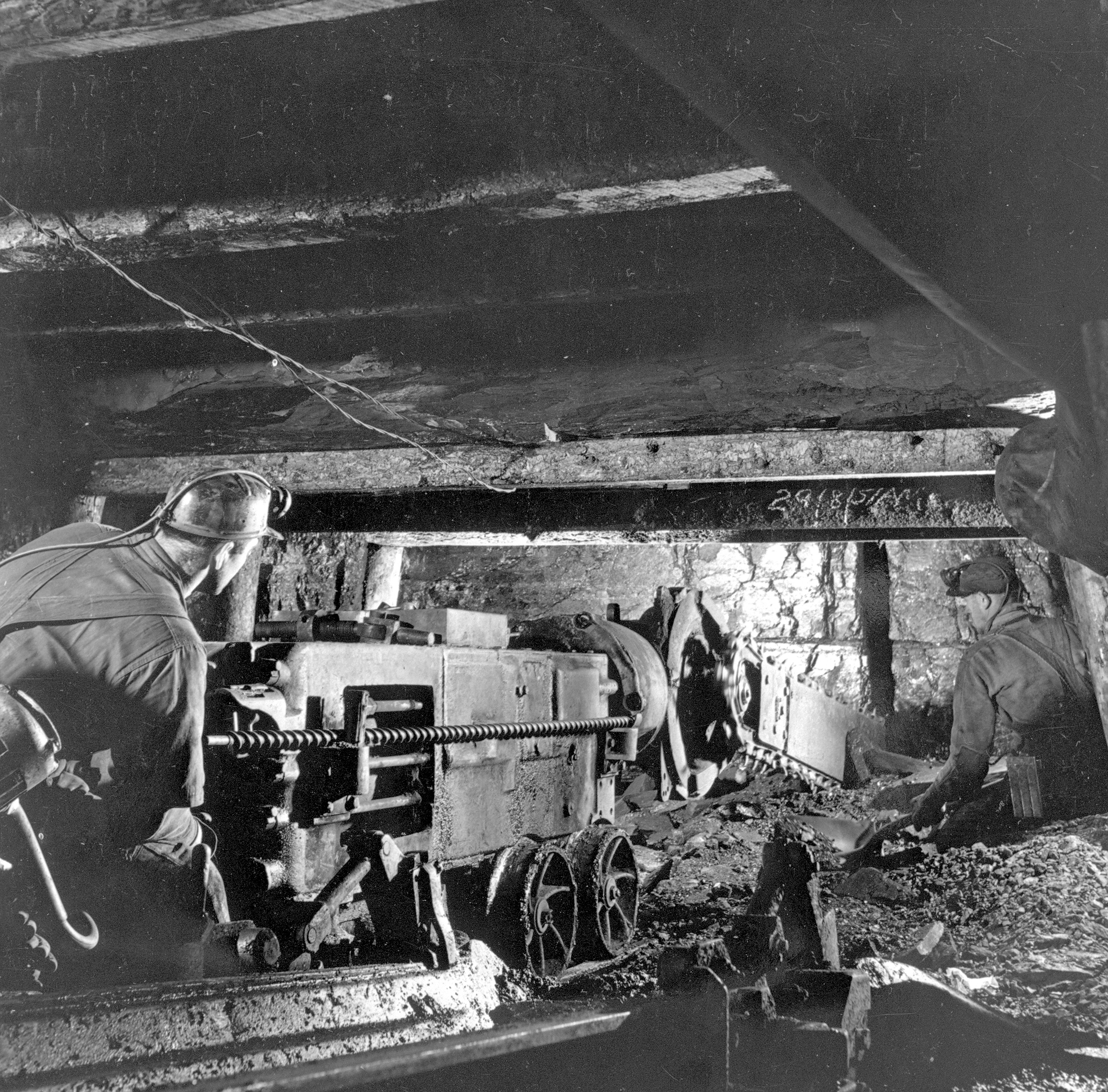
Miners using a universal coal cutter at Lethbridge Collieries, ca. 1950 Source: Provincial Archives of Alberta, A9908
Miners using a universal coal cutter at Lethbridge Collieries, ca. 1950
Source: Provincial Archives of Alberta, A9908

Alberta Culture has developed a comprehensive website that explores and promotes a deeper appreciation for the rich history of energy resources in our province and their role in shaping Alberta’s past, present, and future. The Energy Resources Heritage website explores the Alberta history of coal, conventional oil, oil sands, natural gas, electricity and alternative energy. It also profiles Bitumount, the pioneering industrial facility north of Fort McMurray that laid the foundations for Alberta’s modern oil sands industry.

The coal section of the Energy Resource Heritage Website examines the history of coal from the earliest times through the Industrial Revolution and the development of the coal industry in Alberta. It explores how the science and technology associated with coal mining has evolved, and how the industry responded to the sharp decline in demand for coal with the rise of oil and natural gas use after World War Two. It also explores topics relevant to the social history of the coal industry in Alberta, such as the evolution of coal towns; the roles played by women and children in coal communities; and the emergence of organized labour, which fought for better wages and safer working conditions in one of the world’s most dangerous industries.

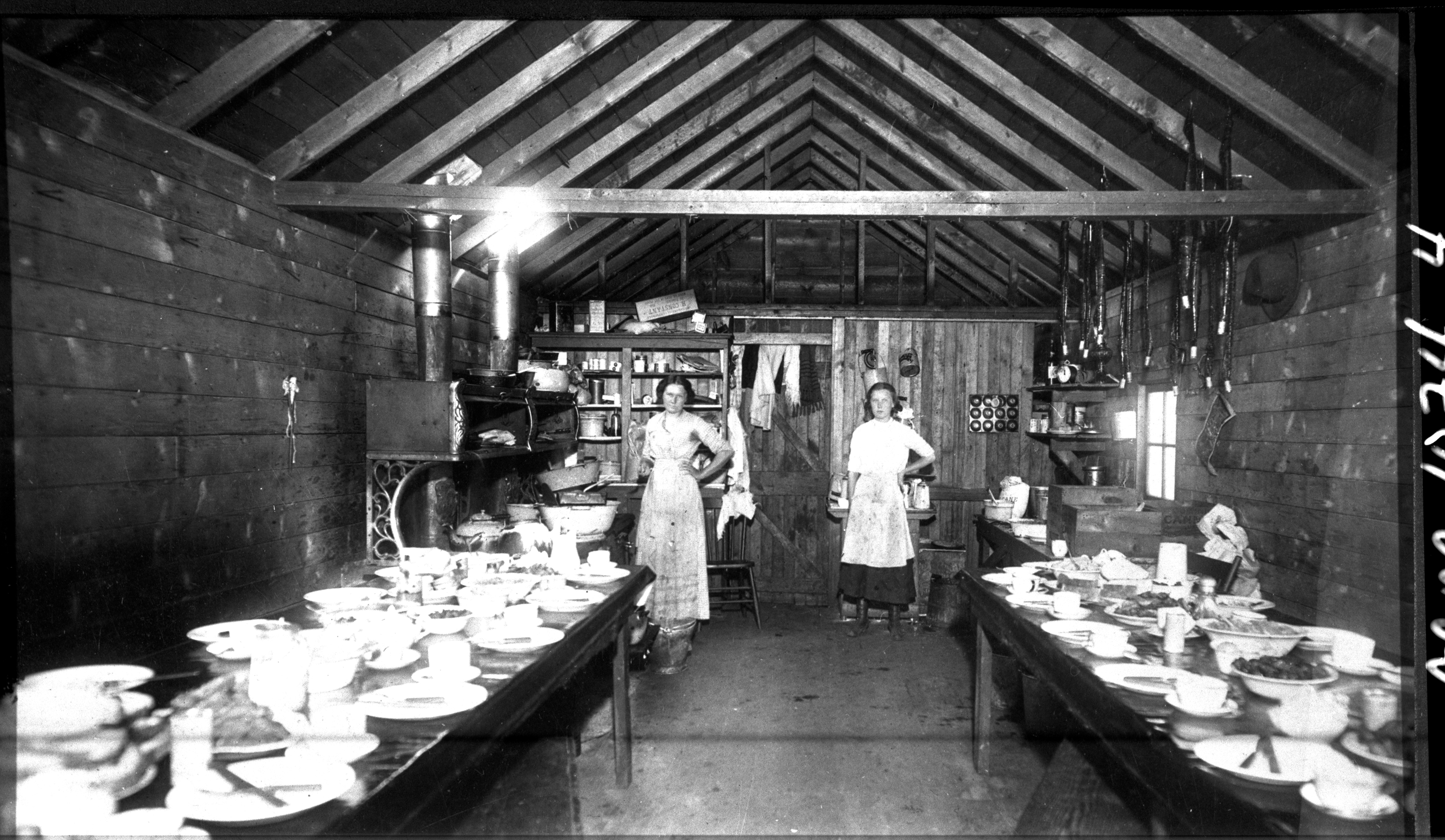
Two women stand in a cookhouse at Newcastle Mine in Drumheller Valley, ca. 1912; Newcastle was one of the first mine operations in Drumheller Valley to establish a cookhouse, which fed up to 100 miners three times a day. Source: Courtesy of Atlas Coal Mine National Historic Site
Two women stand in a cookhouse at Newcastle Mine in Drumheller Valley, ca. 1912; Newcastle was one of the first mine operations in Drumheller Valley to establish a cookhouse, which fed up to 100 miners three times a day.
Source: Courtesy of Atlas Coal Mine National Historic Site

The history of coal use by humans stretches back thousands of years, as coal’s ready availability and different properties have long made it a valuable resource in many parts of the world. In addition to burning it for heat, ancient peoples used coal for cultural and artistic expression. Bronze Age people in Wales, for example, incorporated coal into their burial customs, while ancient artisans in China carved coal into jewelry and other ornamental items. Similarly, First Nations people in Alberta used coal for decoration and carving, such as the extraordinary bison sculptures unearthed in a farmer’s field near Barrhead in 1949 (now housed at the Royal Alberta Museum).

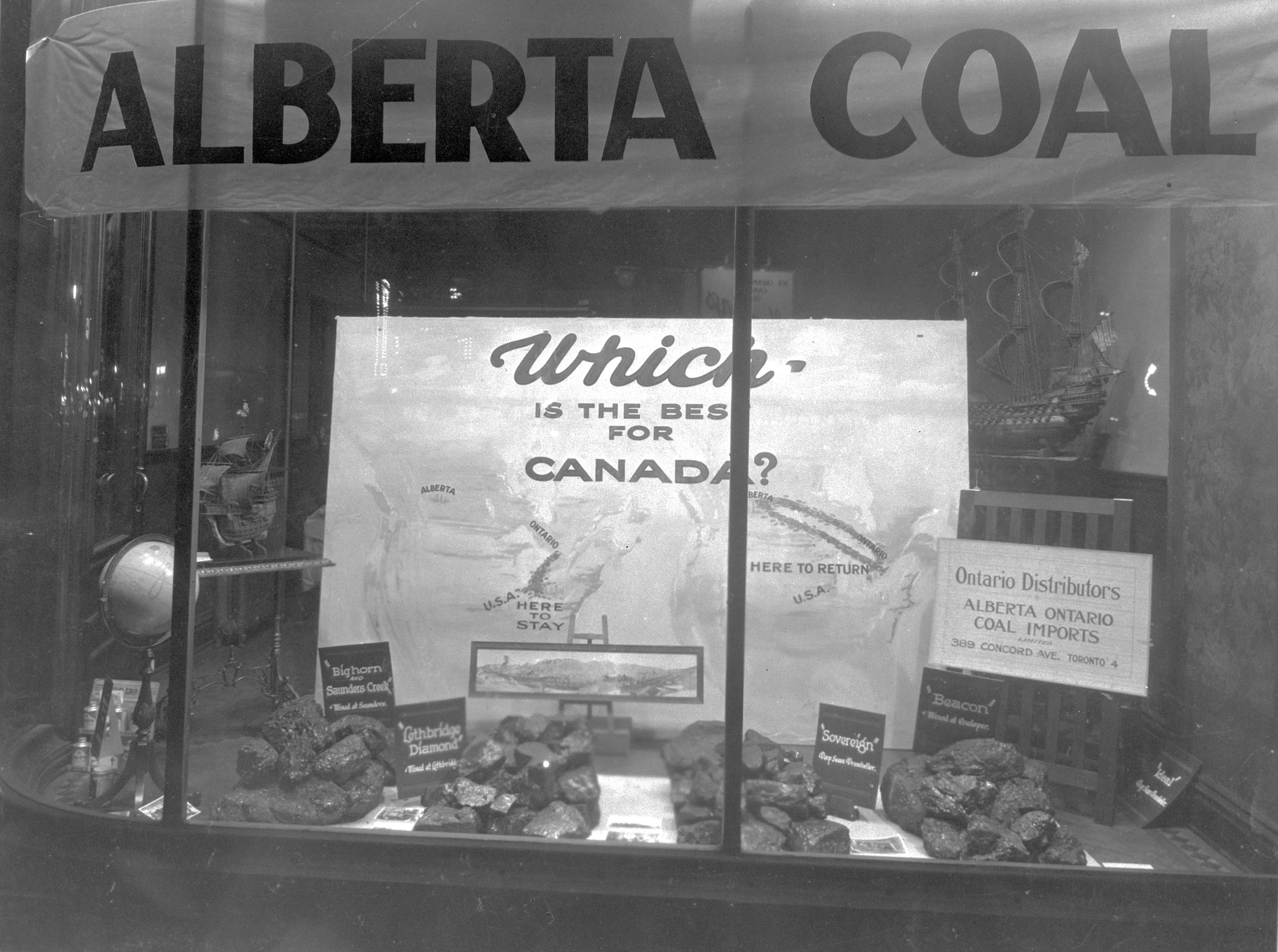
An Alberta coal company advertises in Ontario, n.d. Source: Provincial Archives of Alberta, A3975
An Alberta coal company advertises in Ontario, n.d.
Source: Provincial Archives of Alberta, A3975

The key turning point in the history of coal was the Industrial Revolution. As the primary fuel that drove steam engines in factories and railroads, coal became extremely valuable and was mined on an enormous scale. Railways quickly took over from watercraft as the most important means of commercial transportation, which in turn had a decisive impact on the history of Alberta. In 1881, the Canadian Pacific Railway was contracted to build a railway line across Canada and the company turned to the rich coal seams of Alberta as a crucial source of fuel. The province’s early coal industry was centred in southern Alberta (primarily near Lethbridge and in the Crowsnest Pass) but as rail lines spread throughout the province other centres of coal production emerged, including Drumheller and the communities of the Coal Branch. The rise of major cities like Calgary and Edmonton further drove the demand for coal, both for heating and for the generation of electricity at the province’s earliest coal-fired power plants.  Coal thus played a crucial role in the growth of Alberta in the late nineteenth and early twentieth centuries – it attracted investment and immigration and led to the development of some of Alberta’s earliest communities.

From the earliest use of coal to the challenges faced by the industry today, the coal section of the website offers visitors an introduction to the fascinating history of one of Alberta’s most important natural resources.

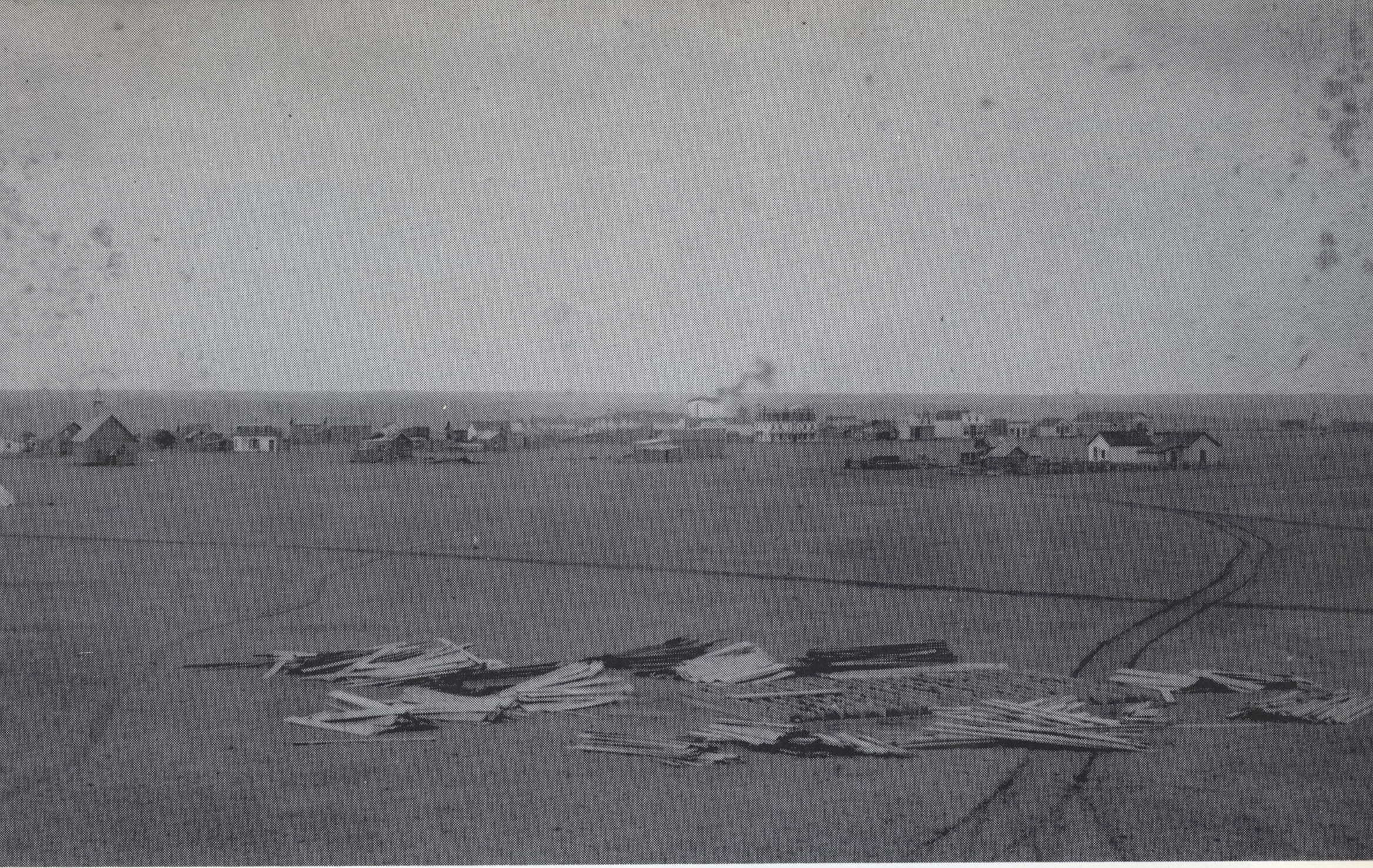
Lethbridge, an early coal producing centre, as it looked by November of 1886 Source: Galt Museum & Archives, P19770171000GP
Lethbridge, an early coal producing centre, as it looked by November of 1886
Source: Galt Museum & Archives, P19770171000GP

Written by: Allan Rowe, Historic Places Research Officer

Long-Time Adviser Is Dedicated to Helping People “Preserve Their Own History”

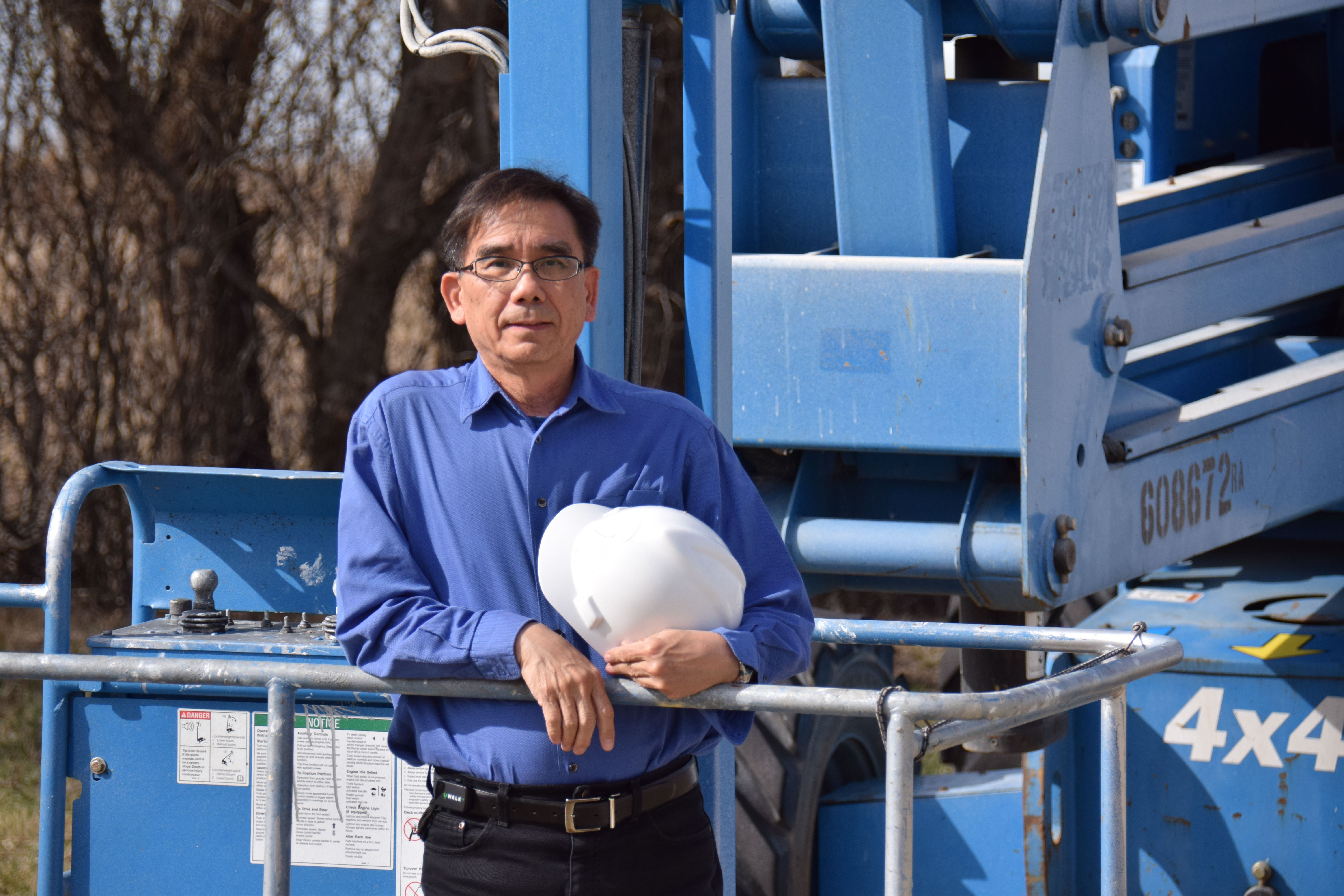
Gary Chen, Heritage Conservation Adviser for Northern Alberta

Gary Chen’s first job, after earning a diploma in Architectural Technology from the Northern Alberta Institute of Technology, was for the Government of Alberta providing technical advice on the conservation of heritage buildings. That was back in 1976; he’s never left. “If you don’t love the job, you probably won’t be there that long,” he says.

Originally, he worked on both privately owned and crown-owned properties. When the Historic Places Stewardship Section was established in 1999, Gary became one of the advisers working in its Conservation Advisory Services, which provides help to private owners of older buildings, especially those that are designated as Provincial Historic Resources or that have the potential to be designated.

Originally just two advisers covered the entire province. “So we’d be traveling all over, but mind you, in those days, we didn’t have that many sites designated,” Gary recalls. “One day I could be way up north in Fort Vermilion and then the next day I might be down in Medicine Hat.” Fortunately, Gary has always enjoyed the travel that is a big part of his job. He says, “I’ve been to almost all four corners of the province…I learned a lot about Alberta history and the local history while doing the work.” Today there are five advisers, and Gary covers the northern part of the province.

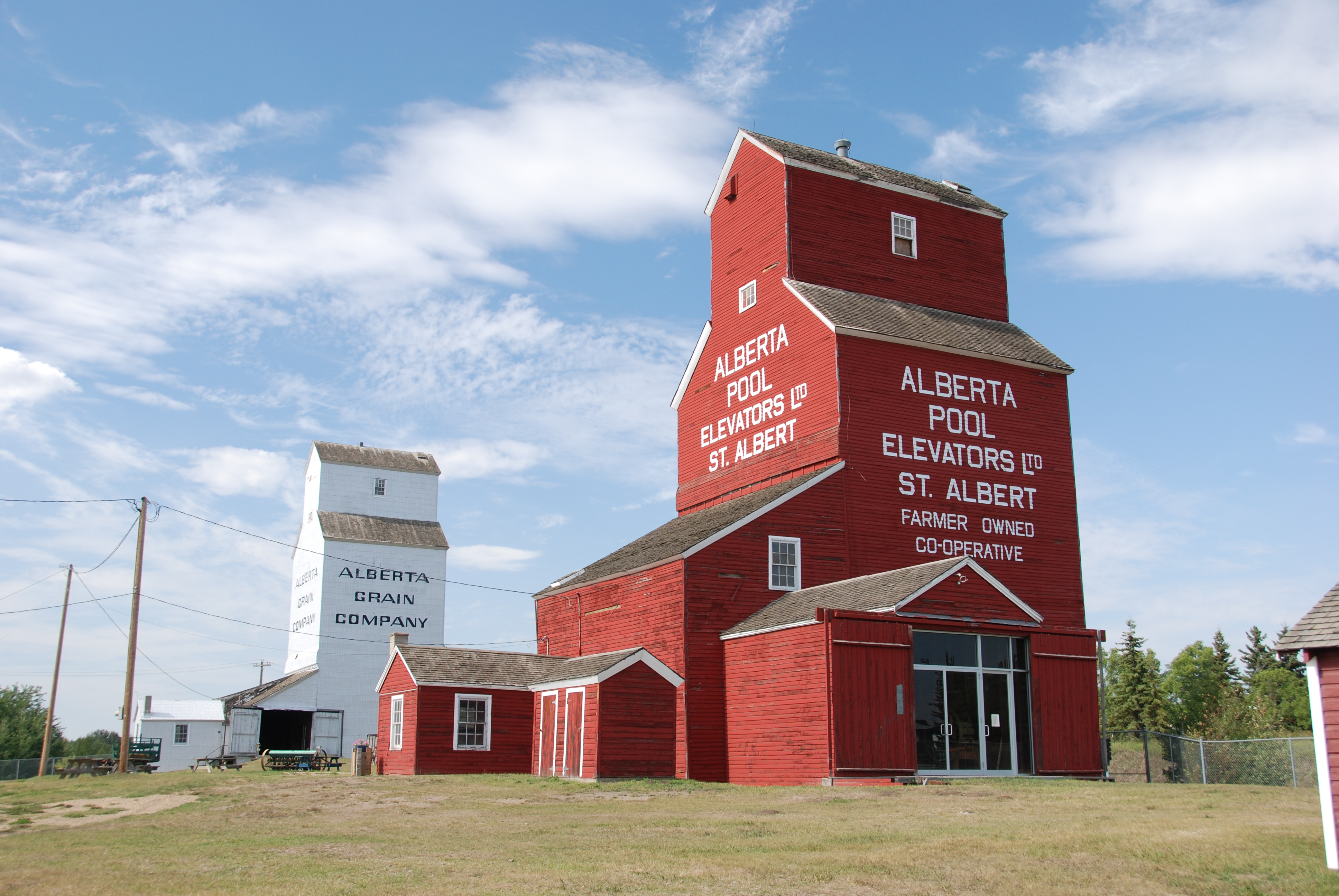
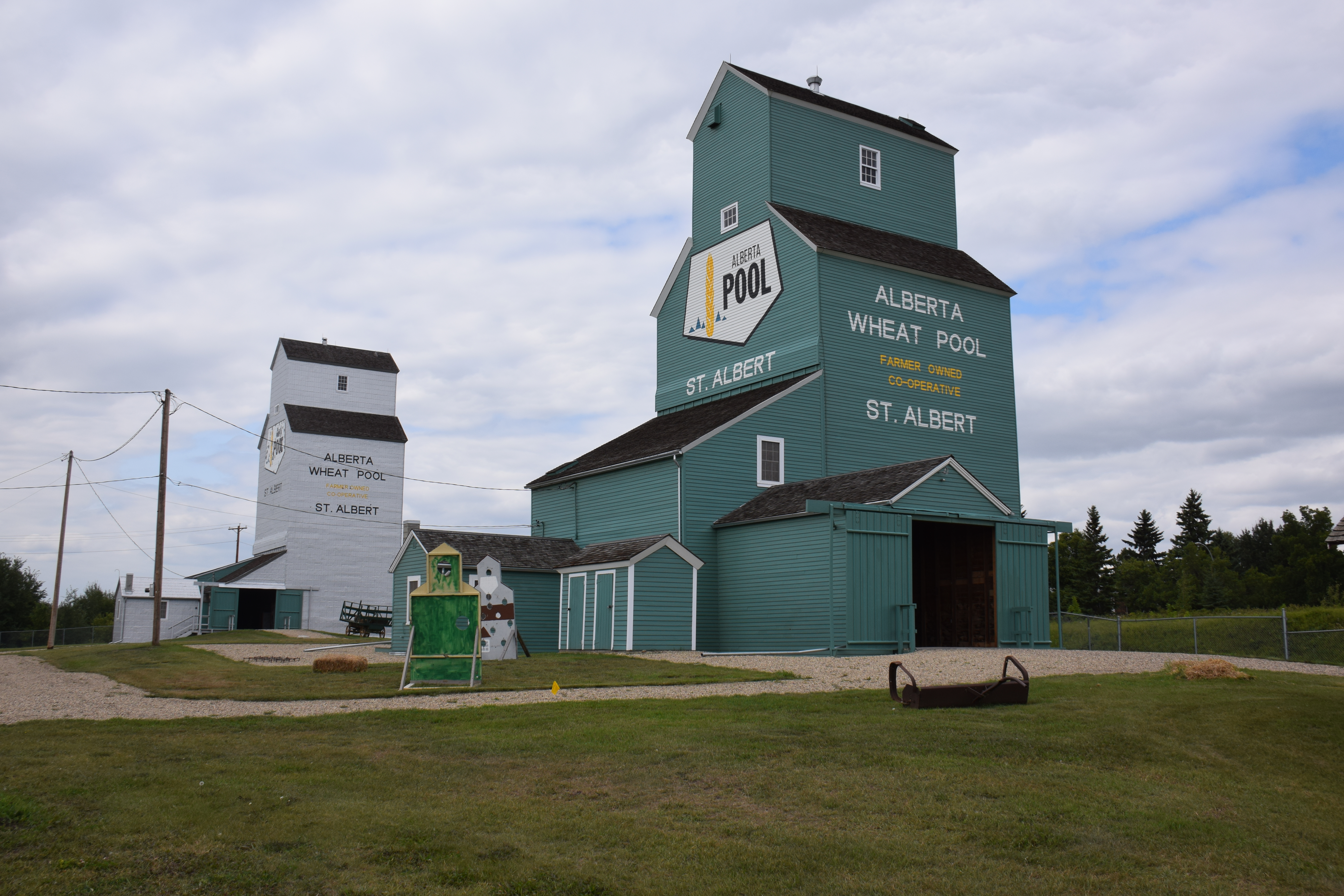
The kinds of projects he advises on vary widely. His latest involvement with a major restoration project required attending biweekly meetings with the conservation architect and others responsible for a multiyear restoration of the Alberta Grain Company and Alberta Wheat Pool grain elevators in St. Albert: “We would discuss and explore anything, and sometimes even climb up the scaffolding and help look at it, and if they had some specific technical question we would try to find a way to get the work done.” He is now making frequent trips to Athabasca to discuss the conservation and continued use of a vacant school building and an old train station that are landmarks in the community.

DSC_4416

St. Albert Grain Elevators, before and after restoration

Much of what he does is respond to requests for help from owners or stewards of individual properties—mainly homes but also churches, community buildings, and commercial structures.

“My job is partly just to help people to conserve their old buildings,” whether or not they are able to meet the criteria of being designated as historic, Gary says. Sometimes he discovers that a building has hidden potential. For example, it might have been covered by modern siding, but if that can be peeled back to expose the original facing, “the building will go back to its old charm,” he explains.

Even if an older building has been too greatly altered over time to meet the “integrity” criteria for heritage designation, Gary is still happy to visit and advise the owners: “The building may be carried down from their ancestors. I always regard those as their own history. I can still help them, give them advice so that they can be able to preserve their own history.”

The Heritage Conservation Advisers will get involved in a project at several stages. Sometimes owners of older buildings just want advice on how to solve a specific problem, such as a leaky roof. Often owners want to find out if their property might qualify for historic resource designation, which would allow them to apply for conservation grants from the Alberta Historical Resources Foundation. If the buildings are already designated, any changes to them must adhere to the Historical Resources Act and the Standards and Guidelines for the Conservation of Historic Places in Canada, so the advisers will provide pre-project guidance, monitor the work, and verify that it has been carried out appropriately. (The introduction of the Standards and Guidelines in 2003 greatly helped in explaining conservation principles and practices to the public, Gary notes.)

Requests for advice on repairs will almost always require a site visit for a “hands-on” look at the problem—climbing up ladders, crawling under floor joists, whatever it takes. Gary continues: “A lot of times we just use our trained eyes to catch the problem… Just based on my education, what I’ve learned, I could tell the owner ‘This beam is overloaded.’” He might send the owner a useful technical report. Sometimes the advisers will recommend that the owners hire a restoration architect, structural engineer, or other specialist. In that case, “our major job is to monitor… to make sure the work will be done properly even if they hire a professional.”

Back in the 1970s, when Gary started out in this field, there was little professional training available in the technical aspects of heritage conservation, so he learned on the job and through review of professional publications. “And in fact even today, I’m still learning because all these building technologies and materials change,” he says.

There have been many new tools for documenting and analyzing the buildings, notably digital photography. There are new materials available to replace or repair original historic fabric, and changing understanding about what methods and materials work best. For example, it was once considered a good idea to cover sandstone with sealant to stop it from weathering. But over time it was seen that this trapped moisture in the stone, leading to spalling (chipping or flaking) and other kinds of deterioration.

“Sometimes the challenge is to find new technology to help the old buildings continue to survive,” Gary says.

An even bigger challenge—and a fairly common one—is persuading owners to make the effort to undertake appropriate conservation of their historic buildings. Owners will wonder, for example, why they should try to retain their original wood windows, instead of just buying vinyl replacements from a hardware store. Or they’ll want to tear down walls to make rooms bigger. Or they’ll assume that it will be easier and cheaper to just demolish an existing building and design something new.

“If you’re willing to spend the time, you should be able to preserve what is there,” Gary says. And it’s important to try, he points out, “because, after all, it was a pioneer who came up with the idea, the design…and we have to respect their design…Sometimes you have to look at it almost like an antique…The rooms are maybe smaller and you prefer bigger, but you still respect how it was built.”

“You try to convince them, a lot of times, by slowly using different examples,” he says. “Sometimes I have to be flexible too. Basically, you allow them to make certain changes but maybe, with my advice, the change that they make is still sympathetic to the historic building.”

One of Gary’s favourite, but most challenging, projects was the restoration of the Grande Prairie High School—one that called for much consultation and compromise.

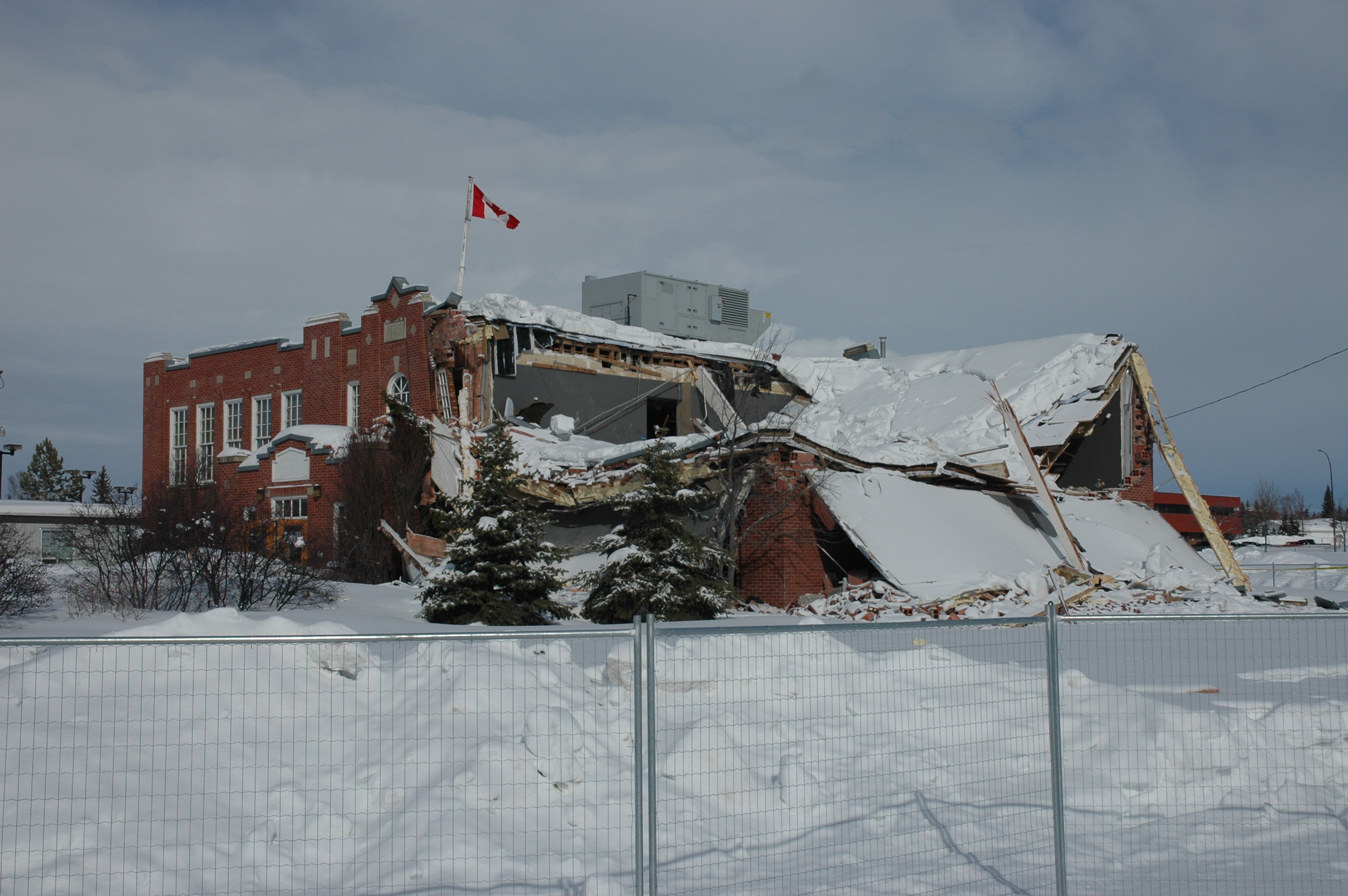
The two-storey brick Collegiate Gothic school was built in 1929 and converted to an art gallery in 1975. In 2007 a heavy snow storm caused the roof and a portion of the building to collapse. At that point, the City (the building’s owner) considered tearing it down and replacing it with a purpose-built gallery, with appropriate climate controls and other modern features.

Grande Prairie High School, with collapsed roof

But “because a portion of the roof has collapsed it doesn’t mean the building is totalled,” Gary says. “So we hired an architect” to show that the building could be repaired and retained. “Because of the [building’s provincial heritage] designation, we had to stand firm and say, ‘Preserve whatever is possible. It’s your history. If it’s gone, it’s gone. People can only remember by pictures.’” Many local citizens agreed. “After all, they don’t really have that many historic buildings in the city of Grande Prairie.”

The architect hired by the City proposed building a new structure that would enclose the old school building. “I look at it and I say, well, why don’t we do it the reverse way?”

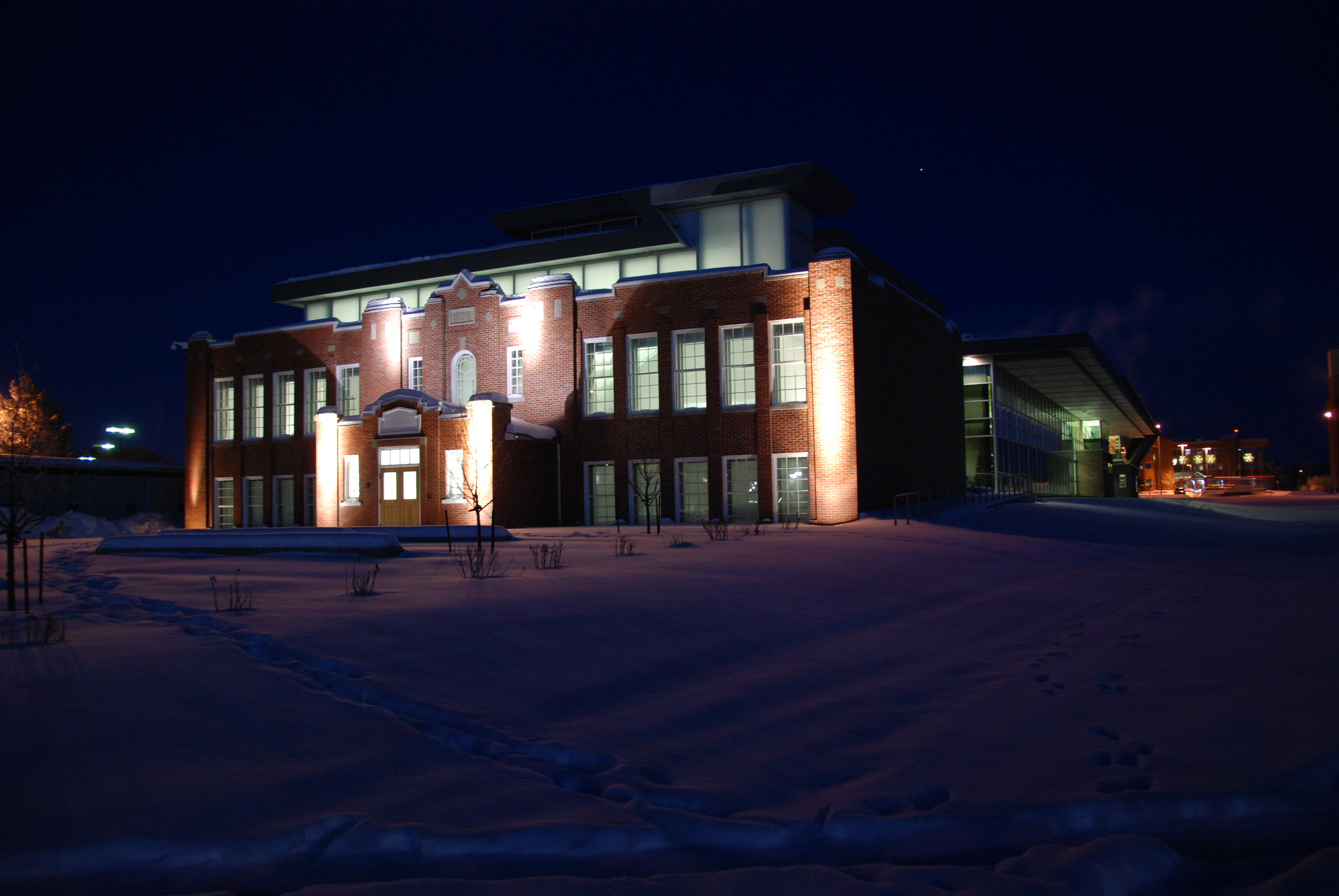
And that’s what happened. “At the end, this building was preserved, but only the building shell….They designed a steel-frame building inside the brick building. Now they do have a [modern] art gallery, and I think they’re proud that the people can still be able to see what the old high school looked like.”

“It might not be the kind [of project] that we really like,” Gary concedes, since historic interior features were not retained, but it did succeed in saving and giving continued life to a significant community building.

Grande Prairie High School
Grande Prairie High School, with building shell preserved

This is what has kept Gary engaged in this work for nearly four decades. “We’re not only preserving a building, we’re preserving the history,” he says. And one learns about history “not just by reading a book, [or] looking at pictures. Sometimes we have the physical evidence right there, that really helps for future generations.”

Written by: Kerri Rubman

Labour Day in Alberta, 1894-1914

As a social historian, I am fascinated by the history of holidays and public celebrations. Holidays are one way that political authority and popular culture influence each other: governments decide which holidays to recognise, but the people decide how to celebrate them. Records of these celebrations offer a unique window into the past, yielding insight into how our culture and society has (or has not) changed. In honour of this year’s September long weekend, I took the opportunity to look back at how Albertans celebrated Labor Day in the late nineteenth and early twentieth centuries.

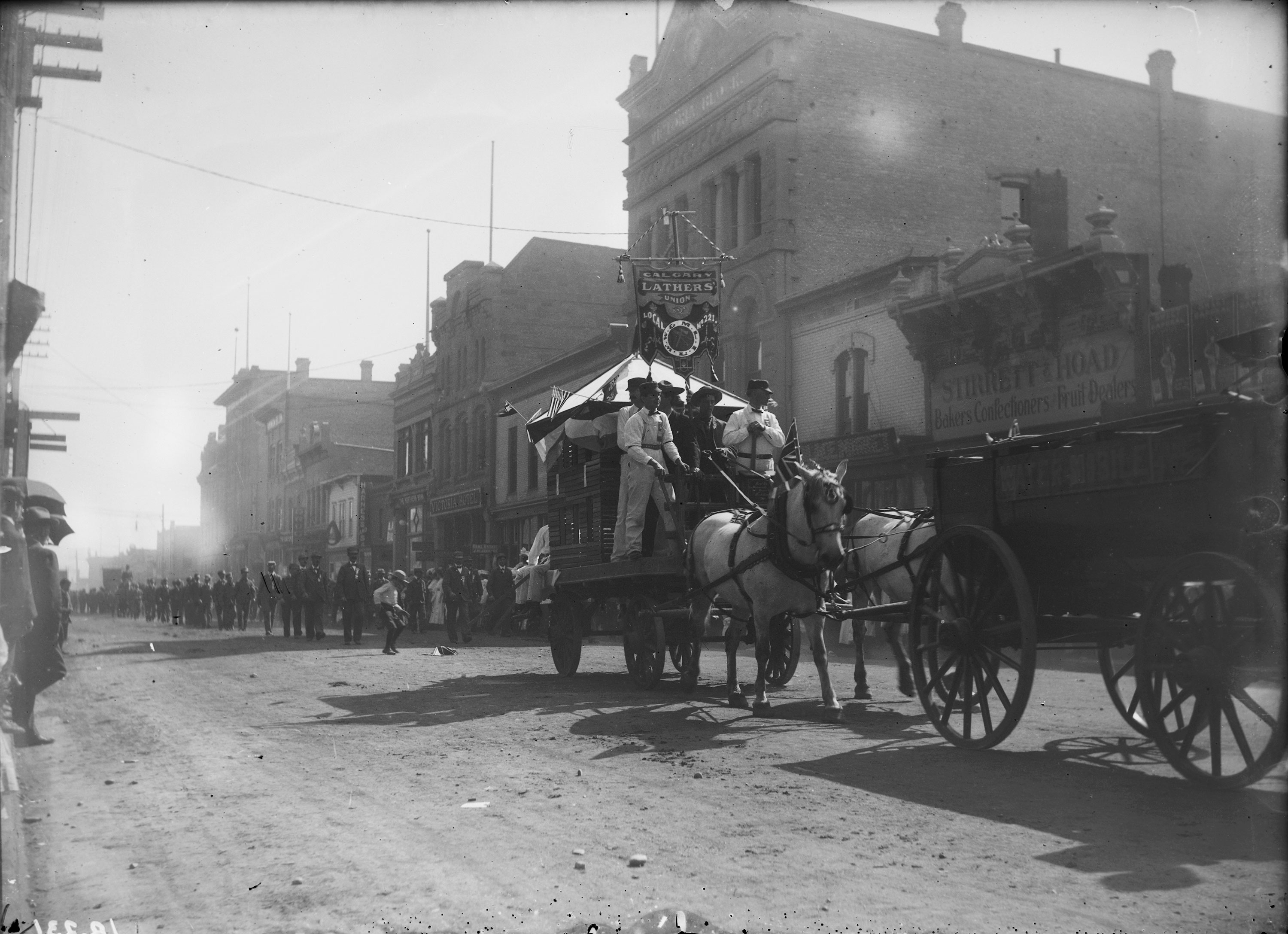
The Calgary Lathers’ Union, Local 221, participating in an early twentieth-century Labour Day parade (ca. 1908). Courtesy of the Provincial Archives of Alberta, IR231

The Parliament of Canada passed legislation in 1894 setting aside the first Monday in September as a statutory holiday. The proclamation of this new holiday was one of the many recommendations in the final report of the Royal Commission on the Relations of Labour and Capital (1889), which had investigated conditions in factories and industrial worksites across Canada. Given the range of problems exposed by the Commission – including low wages, unsafe working conditions, and the widespread use of child labour – a new holiday was perhaps less urgently needed than other reforms. Nonetheless, the idea of a new holiday received widespread support, and Canada celebrated its first Labour Day on September 3, 1894.

In the heavily-industrialised cities of eastern Canada, this legislation merely caught up with what was already happening in many urban communities, where organised labour had started to take root in the late nineteenth century. Skilled workers such as carpenters, printers, stonemasons and pipefitters organised into craft unions to protect their particular interests. Leaders of these craft unions began to push hard for a holiday that recognised the importance of their labour, and many cities responded by declaring Labour Day a civic holiday in the 1880s. By the time Labour Day was declared a national holiday in 1894, workers in cities like Toronto, Hamilton and Montreal had already been celebrating it for many years.

By contrast, in the relatively new and lightly-industrialised cities of Alberta, the first Labour Day passed with little fanfare. “To-day is Labor day, or rather, no labor day,” the Edmonton Bulletin dryly commented in September 1894, “and as a consequence, the stores in town are closed.” Within a few years, however, each Labour Day was met with greater enthusiasm, and Albertans enjoyed the holiday in ways that would be familiar to us over a century later.

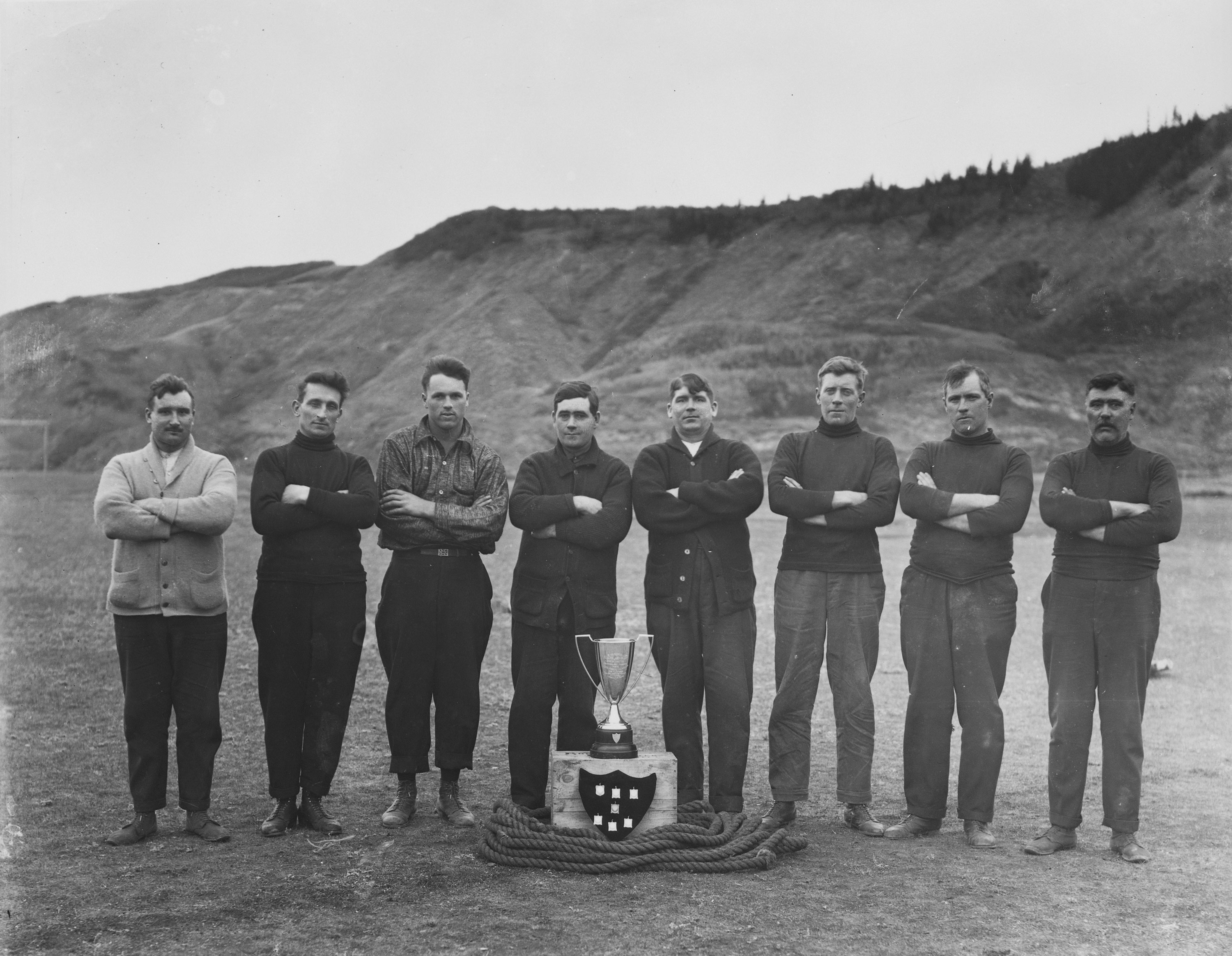
From the outset, sports were an important part of Labour Day celebrations. These miners pose with their trophy after winning the Labour Day Tug-of-War in Drumheller (ca. 1920). Courtesy of the Provincial Archives of Alberta, A15048.

Outdoor recreation soon became an important feature of the day, as sportsmen took advantage of the newly-created long weekend for hunting and fishing excursions. Organised sports were soon an important part of Labour Day as well, with bicycle races, track and field competitions, and team sports organised in different parts of the province by the late 1890s. In 1899, the Edmonton Cricket Club invited their rivals from Calgary for a tournament on the Labour Day weekend – an early example of the Calgary-Edmonton sports rivalry that remains such a feature of Labour Day in present-day Alberta.

Early Labour Day celebrations in Alberta were marked by sports, leisure and recreation, but had little to do with recognising the working class.

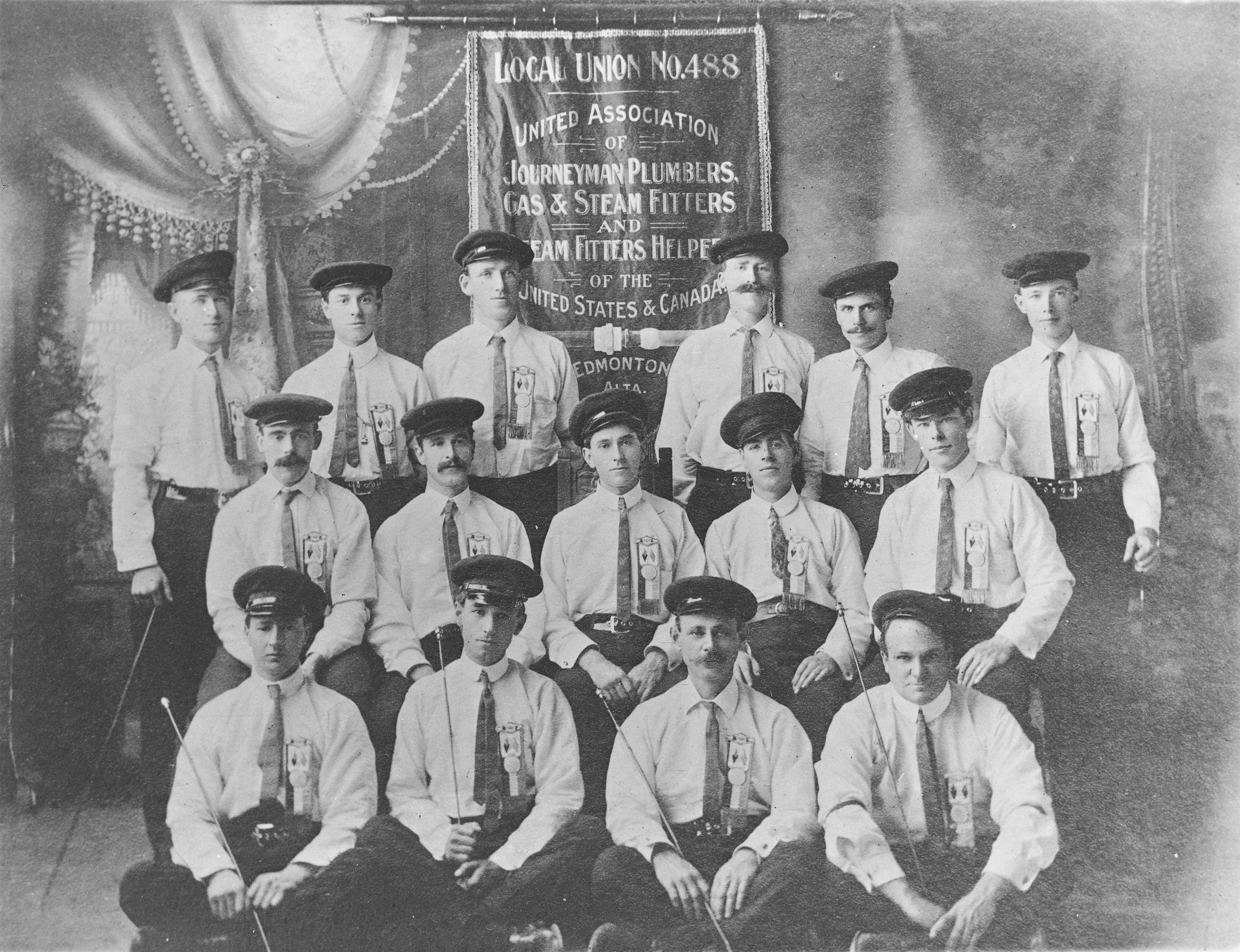
This changed after 1900 with the rise of organised labour in Alberta, particularly in its largest cities. Between 1900 and 1910, roughly one-third of the skilled tradesmen in Calgary and Edmonton organised into craft unions.  As a result, Labour Day celebrations in Calgary and Edmonton began to resemble the much larger events held in eastern Canada, with parades, speeches, and labour-organised leisure events. In 1904, for example, the Edmonton Trades and Labour Council organised a “monster parade” of the city’s craft unions down Jasper Avenue. The men (and they were all men – early twentieth-century craft unions were exclusively male organisations) marched in orderly procession behind banners, flags and brass bands, wearing find clothes to emphasise their respectability to the general public. The parade included a number of floats where tradesmen demonstrated their craft to the audience. The day ended with organised sports, pitting one union against another in good-natured competition, and speeches where union leaders spoke about the contributions of labour to social and economic prosperity. In Calgary in 1907, an estimated two thousand people marched down Stephen Avenue, followed by an afternoon of sports and family entertainment in Victoria Park. Similar scenes played out on a smaller scale in Alberta’s coal mining centres such as Drumheller and the Crowsnest Pass.

Local 488 of the United Association of Plumbers and Pipefitters, Edmonton (1904). This portrait illustrates the images that craft unions wanted to project to the public during Labour Day parades – well dressed, respectable and dignified. Courtesy of the Provincial Archives of Alberta, A19670.

These events, of course, did not represent Alberta’s entire working class. Early Labour Day celebrations were driven by craft unions – unskilled workers had little official presence at the events. The labour contributions of women were not generally recognised at these events, though women certainly took part in the leisure and recreation activities after the parade. Further, the exclusive focus on organised labour was soon diluted by the participation of other community groups and organizations in the annual parade. Nonetheless, these parades represent a colourful and important part of Alberta’s labour history, when craft unions sought to use a holiday to claim public space and promote an image of respectability and dignity. Such events were very uncommon after World War Two, as Labour Day celebrations returned to the pattern established in the 1890s – informal recreation, family leisure, and of course, sports rivalries.

Written by: Allan Rowe, Historic Places Research Officer.

Sources

Bright, David. Limits of Labour: Class Formation and the Labour Movement in Calgary, 1883-1929. Vancouver: UBC Press, 1998.

Finkel, Alvin. Working People in Alberta: A History. Edmonton: Athabasca University Press, 2012.

Herron, Craig and Steve Penhold. The Workers’ Festival: A History of Labour Day in Canada. Toronto: University of Toronto Press, 2005.