A New Roof for St. Ambrose Church

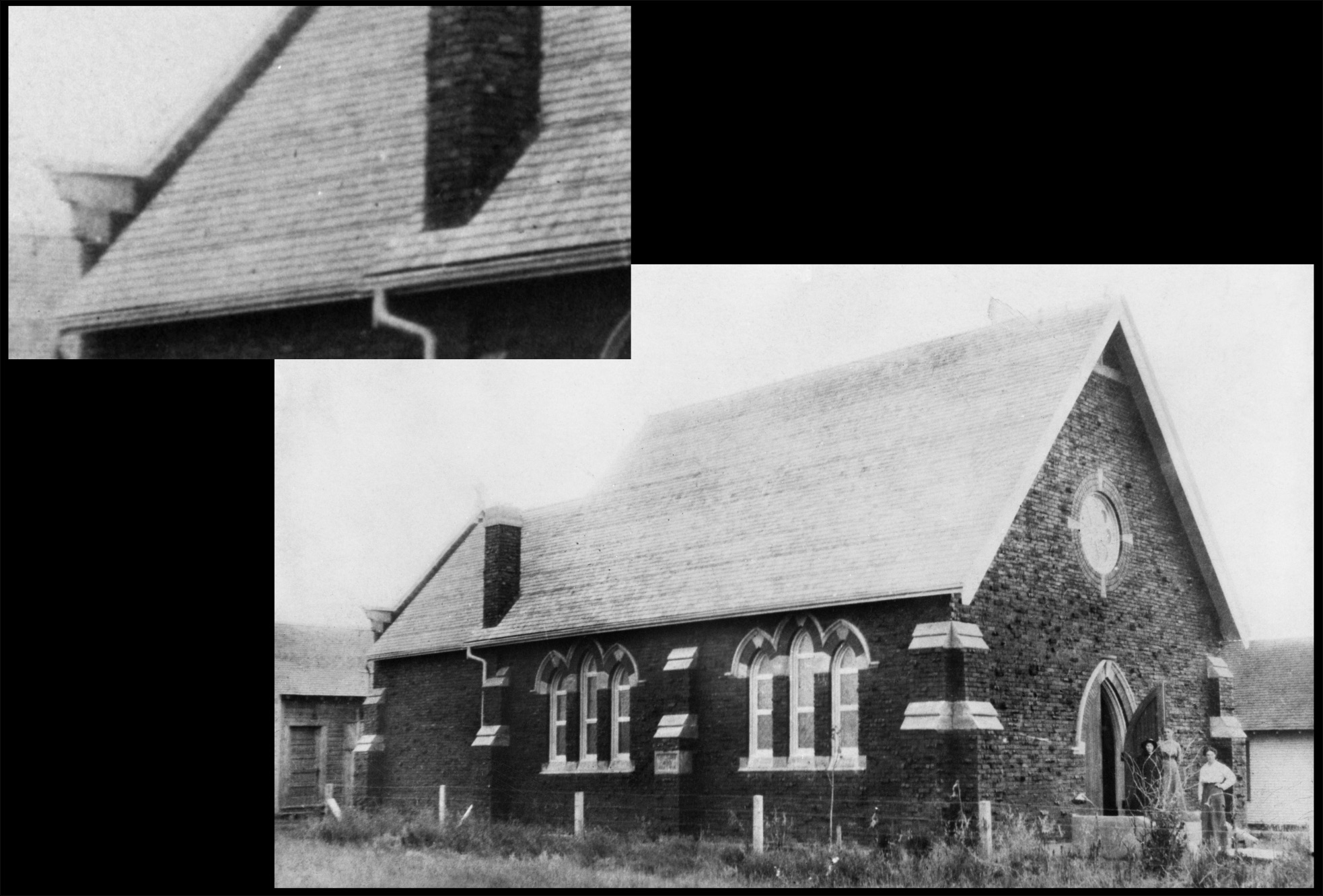
Located on a quiet residential street in Redcliff, Alberta, St. Ambrose Anglican Church is distinguished by its buttressed brick masonry exterior, steeply-pitched gable roof and pointed arch windows. These characteristics strongly identify the 1914 church with the Gothic Revival style popular in the Victorian era for ecclesiastical architecture in England, a style also eagerly adopted by Anglican, Presbyterian, Methodist and Congregational churches across Canada. Unlike many churches, though, St. Ambrose was modelled on small Anglican parish churches in England and is a variant of the Gothic Revival style seldom found in Alberta.

St. Ambrose’s architecture hearkens back to England but the building’s local roots are evident in the “clinker brick” masonry exterior, an overfired brick with distinctive irregular or lumpy shapes and striking colour variations. Clinker brick resulted from high firing temperatures in the kiln which caused the clay to partly vitrify or melt, sometimes to the point where clumps of bricks would fuse together and had to be broken apart. This lack of uniformity was appreciated for its decorative qualities and the clinker brick at St. Ambrose was produced at the Redcliff Brick and Coal Company just blocks away. The combination of far-reaching colonial stylistic influences and distinctive local materials contributed to the church’s designation as a Provincial Historic Resource in 2008.

St. Ambrose Church from the northwest in 1914, with inset showing the original narrow exposure, traditional step flashings, and rows of slightly offset shingles (inset) to create shadow lines and decorative horizontal bands across the roof. Glenbow Archives photograph NA -2701-5.

Read more

The Tale of a Rusty Revolver

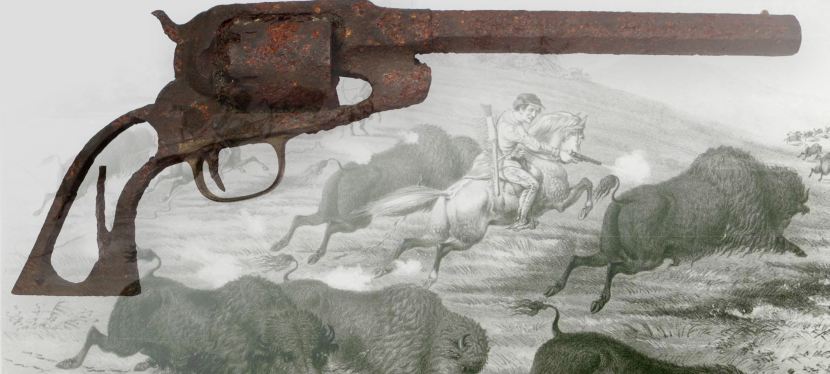
The story of a rusty gun found in central Alberta begins across the continent in 1863 when 100,000 New Model Army revolvers were being made at the Remington & Sons factory near the banks of the Mohawk River in New York State. The New Model Army was a popular sidearm because it was affordable and tough: most were destined for use in close combat by U.S. Army soldiers in the American Civil War. Between New York and Alberta, much of the revolver’s story is a mystery. Read more

Spirit Houses in Willmore Wilderness Park

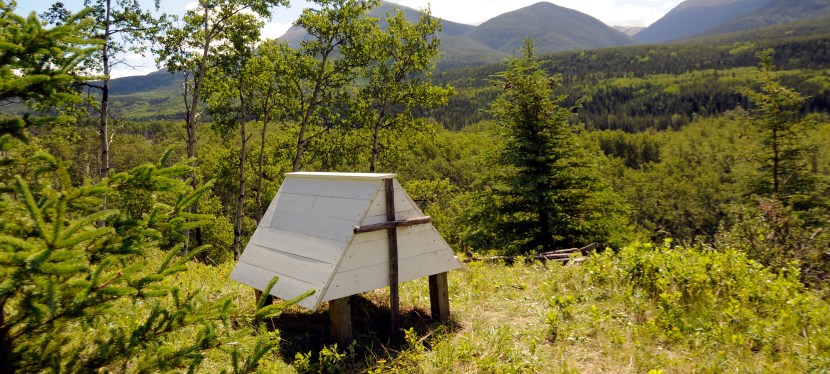
This week’s blog post is guest-authored by the Willmore Wilderness Preservation and Historical Foundation and features work conducted in the summer of 2016 with the support of the Government of Alberta through the Alberta Historical Resources Foundation. We hope you enjoy their fascinating stories and stunning photographs.

Willmore Wilderness Preservation & Historical Foundation is a non-profit society registered under the Alberta Societies Act in 2002. The Foundation became a Registered Charitable Organization in 2003. The Foundation preserves the history of the area; focuses on the advancement of education of the park; restores historical pack trails and sites; and enhances the use of Willmore Wilderness Park for Albertans and visitors alike. Read more

Old as… ?: Dating Archaeological Sites

Knowing the date of an archaeological site is one of the things that makes it most interesting – when were people here?

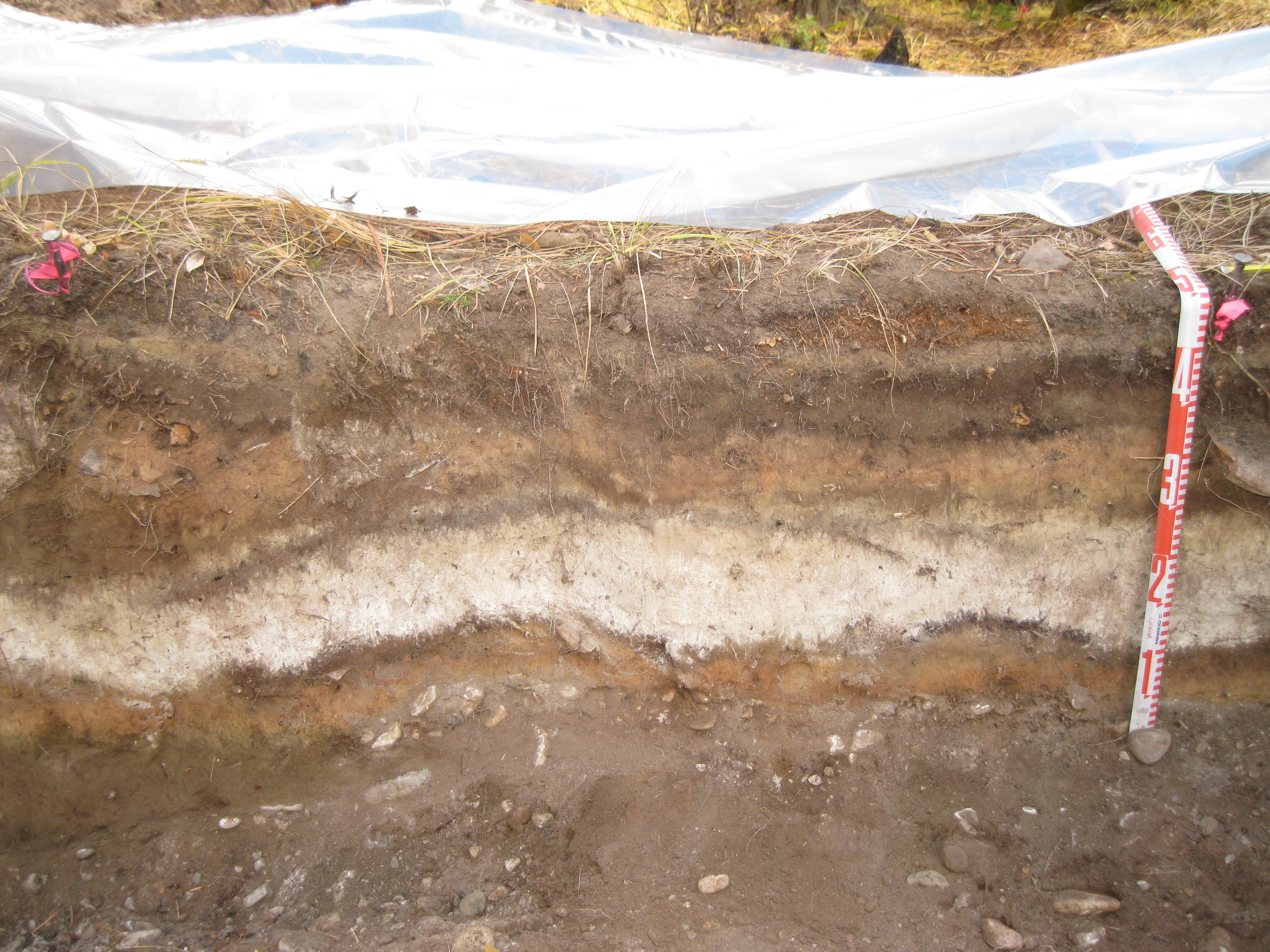
Two main types of dating are applied to archaeological sites when possible– relative and absolute dating. Relative dating puts sites or artifacts “in order” by simply determining if one event happened before or after another. A common example of relative dating in Alberta is by using Mazama Ash. About 7600 years ago, Alberta was blanketed in ash after the Mazama volcanic eruption. This ash is still sometimes found today in stratigraphic profiles, buried under other deposits of sediment. When this ash is encountered it can be used as a time marker. Anything below it is older than 7600 years and anything found above it is younger than 7600 years.

Example of a buried volcanic ash (also known as tephra) found during archaeological excavation. The ash is the lightest coloured layer in the profile, between 25 and 35 cm below the surface (between the 1 and 3 on the tape measure).

Relative dates can also be obtained using artifact styles. Projectile points are one of the most common types of artifacts used to relatively date sites. Spearpoints represent the oldest projectile point technology and indicate that the site falls within the “Early Prehistoric Period” (11,200-7,500 calendar years before present), dartpoints are representative of the “Middle Prehistoric Period” (7,500-1,350 calendar years before present) and arrowpoints represent the emergence of the use of bow and arrow in the “Late Prehistoric Period” (1,350-250 calendar years before present). Dates can be further refined within each general time period based on the spear, dart or arrow style.

Absolute dating is more specific than relative dating and provides a more exact date (with standard deviation) of when the site or artifact was used. There are several methods of absolute dating but one of the most common methods used by archaeologists is radiocarbon dating. Radiocarbon dating can be used on organic material such as bone or charcoal. A radiocarbon date can be obtained by measuring the amount of Read more

“IT THREW A MUSHROOM CLOUD JUST LIKE AN ATOMIC BOMB”: THE LEDUC No.1 OIL DISCOVERY – 70 YEARS AGO

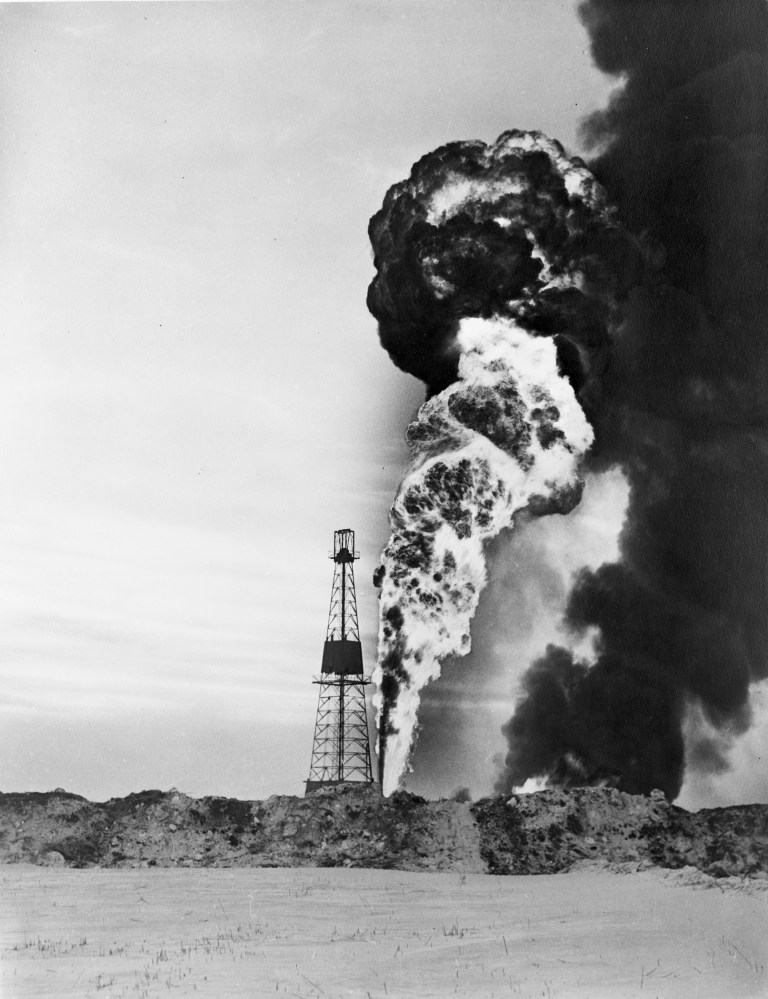
On a bitterly cold afternoon, at 3:55pm, Nathan E. Tanner, Minister of Lands and Mines turned a valve at the Leduc No. 1 oil well as a rig hand held out a burning rag, setting alight a massive column of smoke and flame that roared hundreds of feet skyward. That event took place on February 13, 1947, seventy years ago today and it heralded in a new era for Alberta. An era of rapid development and prosperity fed by the now discovered reserves of oil deep under the province.

p1342
“It flared hundreds of feet” is how tool push Vern Hunter described the lighting of the flare as the Leduc No. 1 oil well was brought in on February 13, 1947. Source, Provincial Archives of Alberta, P1342

Read more

Mountain Movement: How the Rockies Shape Alberta

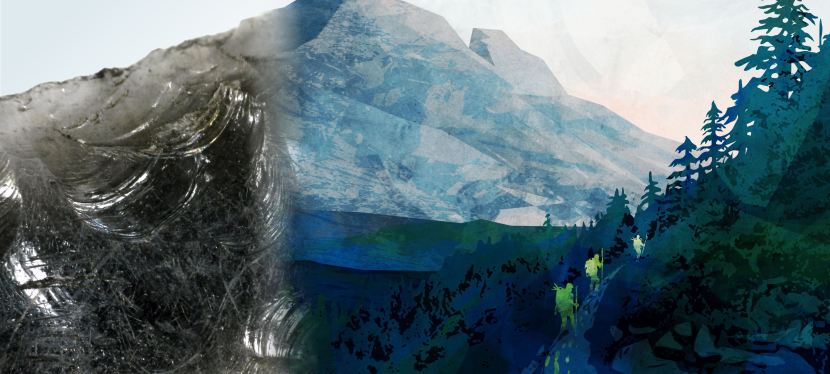
Most of Alberta’s Rocky Mountains finished uplifting 50 million years ago – they’ve been pouring sediment across the province ever since. The Rockies shaped our water drainage network and, with the help of glaciers, erected the house of silt, sand, and stone that we all live in. The tilt that our mountains built is largely responsible for the development of our prairie soils and modern agriculture. Our mountains have also shaped how cultures interact and move, which has moulded much of our history.

At first glance, the Rockies are imposing – an impressive barrier rising from the foothills like a stony gate. But for thousands of years, people traveled across and within them to trade and acquire goods. Groups in southeastern British Columbia, like the Kootenai, often descended into Alberta’s valleys to hunt bison and other big game. The Kootenai engaged in trade and formalized sport (like the hoop and arrow game) with local Blackfoot, Cree, and other groups. Large caches of meat and hides were then transported back across Read more

Ask an Expert – What’s the most unusual archaeological find in Alberta to date?

Earlier this year, we launched our Ask an Expert initiative. We received our first question via our Facebook page “Alberta’s Historic Places.” The question is:

What’s the most unusual archaeological find in Alberta to date?

There are many correct answers to this question depending on people’s interests but this video shares some of our expert’s favourites! Enjoy!

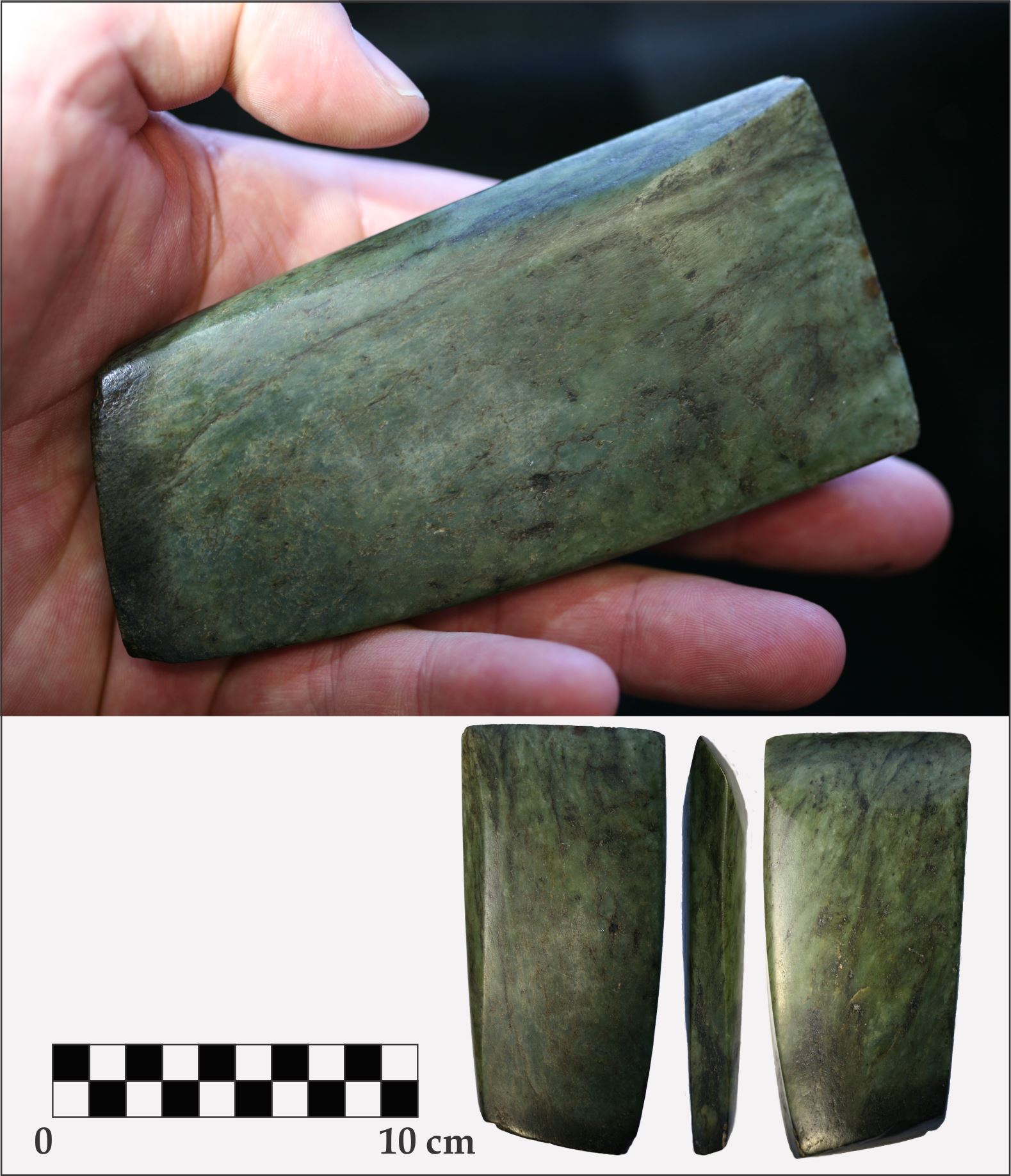
Jade Celt

https://albertashistoricplaces.wordpress.com/2016/08/31/ancient-jade/

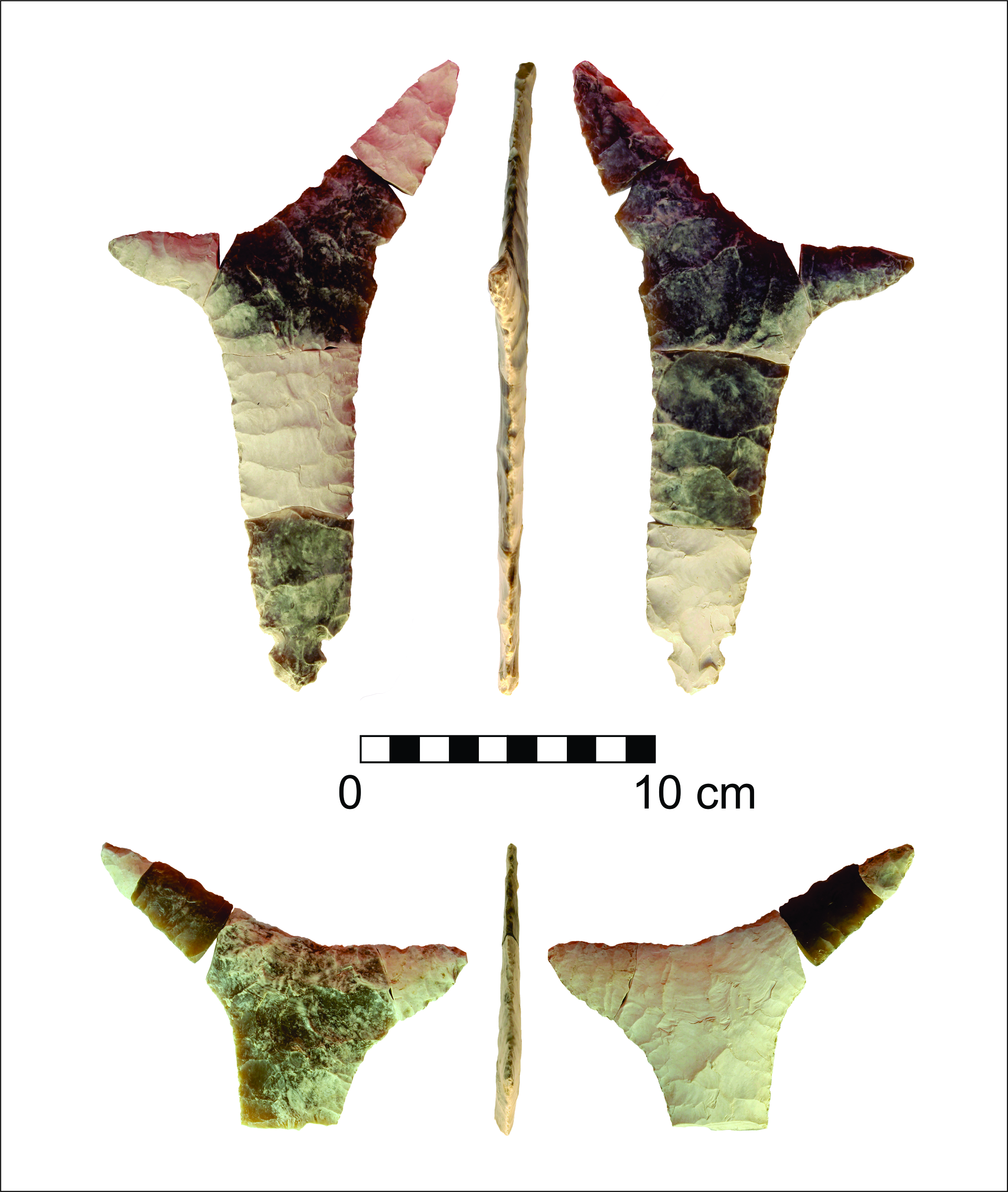
Knife River Flint Eccentrics

https://albertashistoricplaces.wordpress.com/2016/12/07/from-north-dakota-with-flair/

Nephrite celts are highly polished with a flat and slab-like shape. This specimen was found near Stony Plain outside of Edmonton.
Jade Celt


figure-1-eccentrics-colour
Knife River Flint Eccentrics

If you’d like to submit a question to one of our experts at the Historic Resources Management Branch comment below or find us on Facebook (Alberta’s Historic Places) or Twitter (@ABHistoricPlace).

Video and text by: Courtney Lakevold, Archaeological Information Coordinator

Ask an Expert and Happy New Year 2017

Happy New Year to everyone! We are excited for the New Year and look forward to sharing more of Alberta’s history with our readers. As many of you know, 2017 marks Canada’s 150th anniversary. We hope to touch on this theme throughout the year and highlight the role that Alberta has played in the country’s history. Another goal we have for this year is to connect with our readers more. We want to know what you would like to learn about! So, we are launching a new initiative called Ask an Expert.

Ask an Expert
logoaskanexpert2

The Historic Resources Management Branch of Alberta Culture and Tourism is responsible for the identification and conservation of historic resources in Alberta. Historic Resources include historic places and structures, archaeological sites and artifacts, and traditional use sites. We also deal with geographic place names in the province.

Do you have a question about any of the following topics (related to Alberta)?

  • Historic Places
  • Provincial Historic Resources
  • Heritage Conservation
  • Historic Structures
  • Geographic Place Names
  • Archaeology

If so, we’d love to hear from you! You can submit your question by commenting on any one of our blog posts (preferably related to the topic), or you can leave a comment on our Facebook page or tweet at us on Twitter.

Facebook: Alberta’s Historic Places

Twitter: @ABHistoricPlace

When we receive questions we will track down our resident experts to answer them for you. The answers will be in the form of blog posts or videos.

To get things started we will be giving away a one-time admission pass to one of Alberta’s historic sites or museums to the person whose question we choose for the first Ask An Expert feature! http://www.culture.alberta.ca/heritage-and-museums/museums-and-historic-sites/

Cheers to 2017! We look forward to your questions.

Back on the Horse: Spreading Archaeology in Alberta

The Archaeological Survey of Alberta is proud to announce the re-establishment of an occasional paper series that served as the principal means of sharing archaeological information in the province from 1976 to 1994. The series consisted of annual review volumes (with papers that summarized a years’ worth of archaeological projects) and thematic volumes that showcased current projects and research pertaining to a specific region or topic in Alberta archaeology (past volumes can be accessed here). To kick-off the series revival, we present a volume of 16 articles led by current and former staff of the Archaeological Survey of Alberta and Royal Alberta Museum. The articles present new methods, approaches, and results of archaeology in the province. The current and all future volumes will be available for free download. Read more