The St. Mary Reservoir, near Cardston in southern Alberta, was built and filled by the early 1950s. During reservoir draw downs and droughts, lake bottom sediments are exposed and quickly eroded, which has revealed a unique collection of artifacts and even trackways of now extinct megafauna like mammoth and camel.
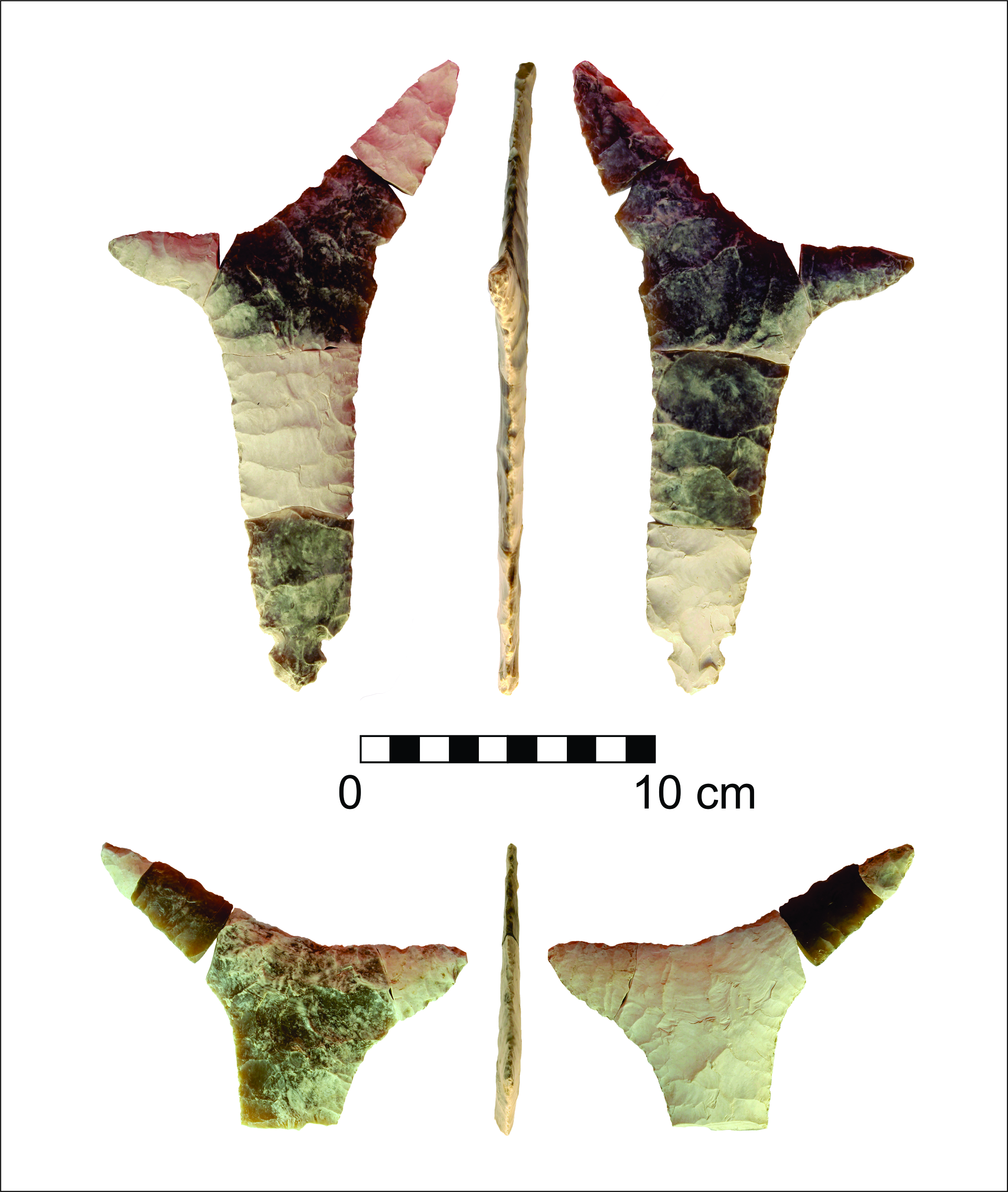
Two particularly interesting artifacts are termed ‘eccentrics’ because their shape and significance are so unusual. Eccentrics are very rare artifacts, the shapes of which are thought to be determined more by aesthetic rather than functional reasons. Some archaeologists think that the large flintknapped stone artifacts from St. Mary Reservoir are symbolic representations of the branched “horns” of pronghorn antelope once common across the Great Plains. Others think they may have been ceremonial knives used on special occasions.
Knife River Flint ‘eccentrics’ from St. Mary Reservoir. The different colourations of these pieces are due to ‘patination’. This is when a chemical rind develops over time around particular edges or faces of artifacts depending on their exposure to different local conditions (courtesy of Shayne Tolman).
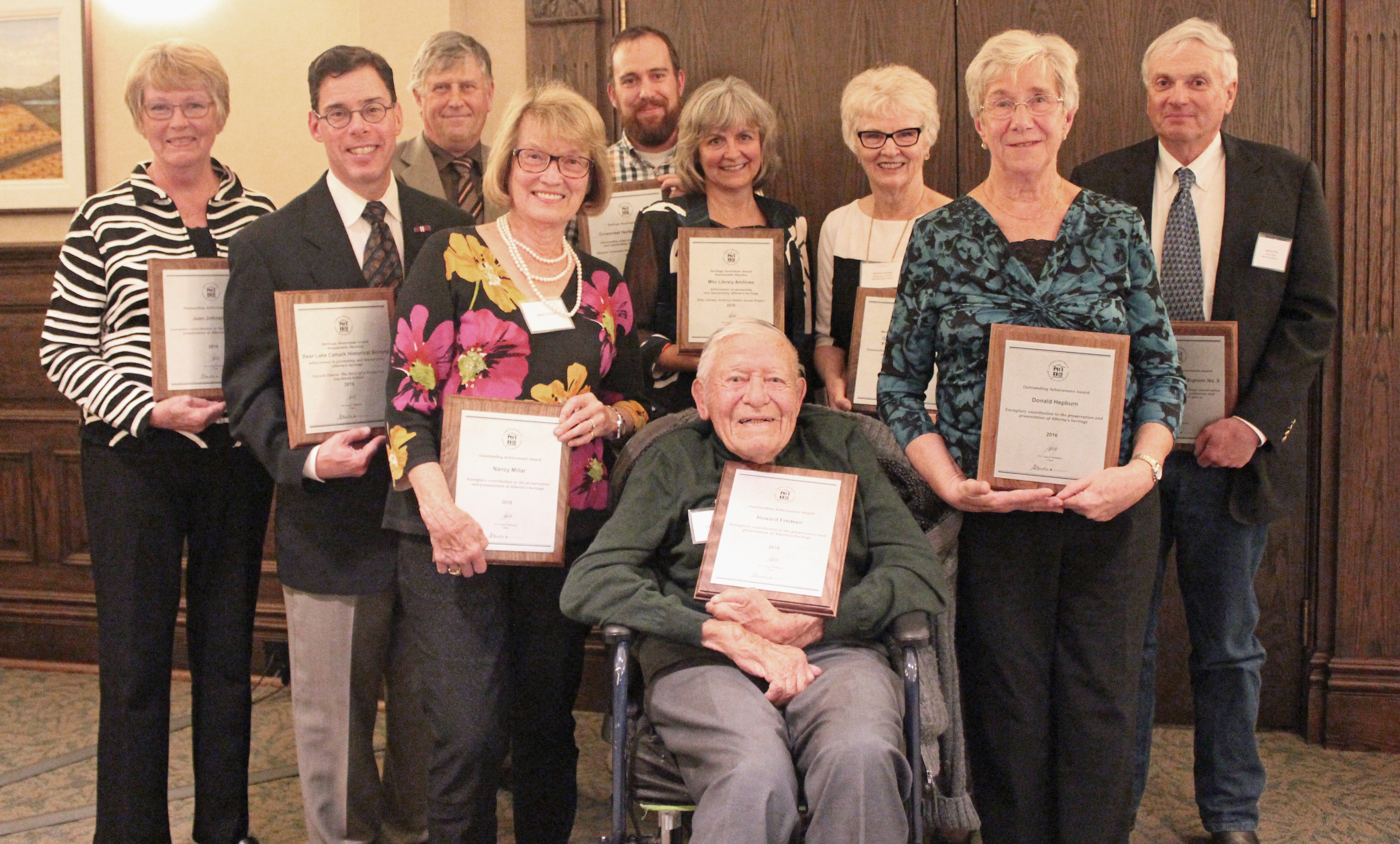
Alberta Historical Resources Foundation 2016 Heritage Award Recipients.
The night of October 14 was filled with pride and honour as award recipients, guests, staff and board members celebrated the biennial Heritage Awards at the historic McDougall Centre in Calgary.
The Alberta Historical Resources Foundation presented the awards in four categories to 14 deserving individuals and organizations in recognition of their accomplishments and contribution to the preservation and promotion of Alberta’s heritage.
Outstanding Achievement
Don Hepburn (Red Deer)
Howard Fredeen (Lacombe)
Jean Johnstone (Lethbridge)
Nancy Millar (Calgary)
Honourable mention – Elizabeth and Bill Bullick (Coronation)
Heritage Conservation
Glen Leslie Church Preservation Group (County of Grande Prairie), Glen Leslie Church restoration
Empress and District Historical Society (Empress), Canadian Pacific Railway Station restoration
Heritage Awareness
Crowsnest Heritage Initiative, “Discover Crowsnest Heritage” signage program
Haying in the 30’s Cancer Support Society, “Haying in the 30’s” event
Honourable mention – Bear Lake Canuck Historical Society, “Canuck Classic: The Story of a Treasured One-Room School”
Historic places are unfortunately fair game for graffiti attacks – sometimes especially so when these places are visible and widely recognized landmarks. Defined as writing or drawings scribbled, scratched, or painted illicitly onto walls and other surfaces, graffiti from a heritage conservation perspective is an intervention to be removed or reversed. It clearly differs from old markings that are an acknowledged and legitimate part, or “character-defining element”, of a historic place. Examples of the latter are prisoners’ inscriptions etched into the basement cell walls of the Cardston Courthouse or, on the opposite side of the law, North West Mounted Police members’ initials carved into the sandstone outcrops overlooking Police Coulee at Writing-On-Stone Provincial Park. These special cases contribute to heritage value rather than obscure or detract from it. Read more →
You may have recently seen a news story about archaeological finds at McKinnon Flats, approximately 22 km southeast of Calgary (see below for news links). Today, McKinnon Flats is a popular recreational area, used for fishing, hiking and bird watching. But did you know that five centuries ago it may also have been used for bison hunting and camping?
Archaeologists of Lifeways of Canada Limited have been contracted by Alberta Culture and Tourism to find out about early settlement at McKinnon Flats. They’re part of Culture and Tourism’s three-year Post-Flood Investigation Program, which was initiated to record the effects of the June 2013 southern Alberta flood on archaeological and palaeontological sites along rivers such as the Bow, Highwood, Sheep and Kananaskis. As a result of the program, 100 new archaeological sites were identified and additional information was gathered at 87 sites that had been recorded prior to the flood. Many of these sites were found eroding from the riverbanks, with some in need of investigation before they disappeared entirely. Read more →
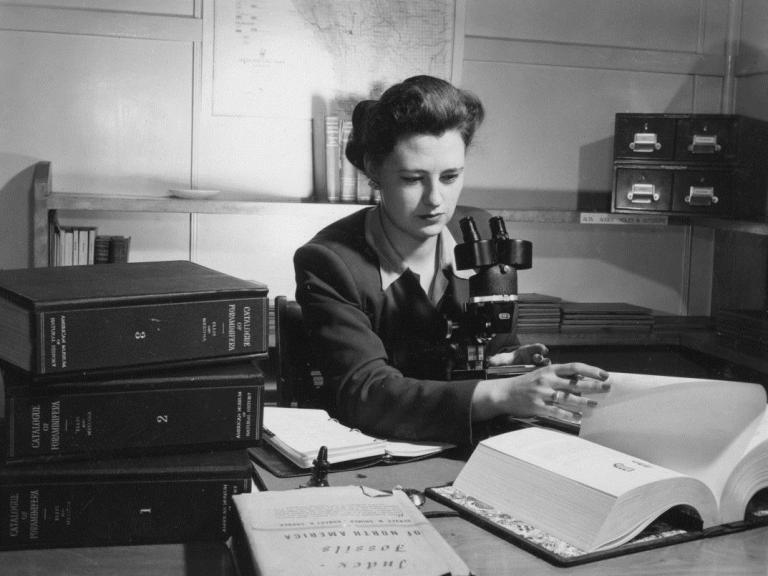
October is Women’s History Month in Canada, when we celebrate the achievements of women throughout our past and use their stories to inspire Canadians today. The twentieth century saw women entering occupations previously the exclusive domain of men. A variety of circumstances combined to allow these advances, including the rise of public education, social activism culminating in universal suffrage, legal challenges that established women as “persons” and the upheaval created by two world wars. These changes are not sufficient to explain the careers of the three women described in this blog; it took determination, persistence, courage and intelligence for them to succeed and carve a place for themselves as professional women in these fields that were predominantly, if not exclusively, the preserve of men.
Diane Loranger, geologist, ca. 1946-1947. (Glenbow Archives, IP-14A-1470)
Pottery traditions have developed independently all over the globe thanks to the versatility of clay as a medium for utilitarian function and the expression of identity. Over 450 sites in Alberta have pre-contact pottery dating from 300 to close to 2000 years old. Fragments or “sherds” of pots at archaeological sites reveal surprising amounts of information about how people lived, how they transmitted knowledge, and why pottery traditions persisted in Indigenous populations for millennia. Ancient pottery production continues to influence modern potters and it can inform how modern society uses material goods to express identity. Read more →
Origin of the Names Battle Lake, Battle Creek and Battle River
Note: This post was originally published on RETROactive March 9, 2011.
Battle Lake is located approximately 53 km west of Wetaskawin and is one of a series of water features in the area that are identified by the name Battle, including Battle Creek, Battle Lake and Battle River.
The name Battle Lake was first recorded in the 1883 field notes of Tom Kains of the Dominion Land Survey (DLS). He recorded it as “Battle River Lake” due to its location on the Battle River. He later shortened the name to Battle Lake and, in 1901, that form of the name was approved by the Geographic Board of Canada for use on maps. Read more →
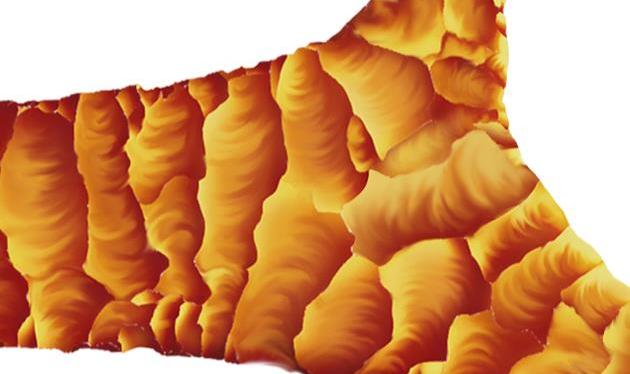
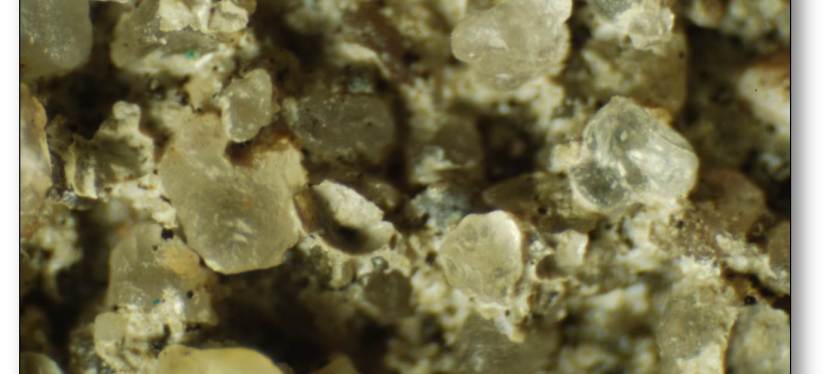
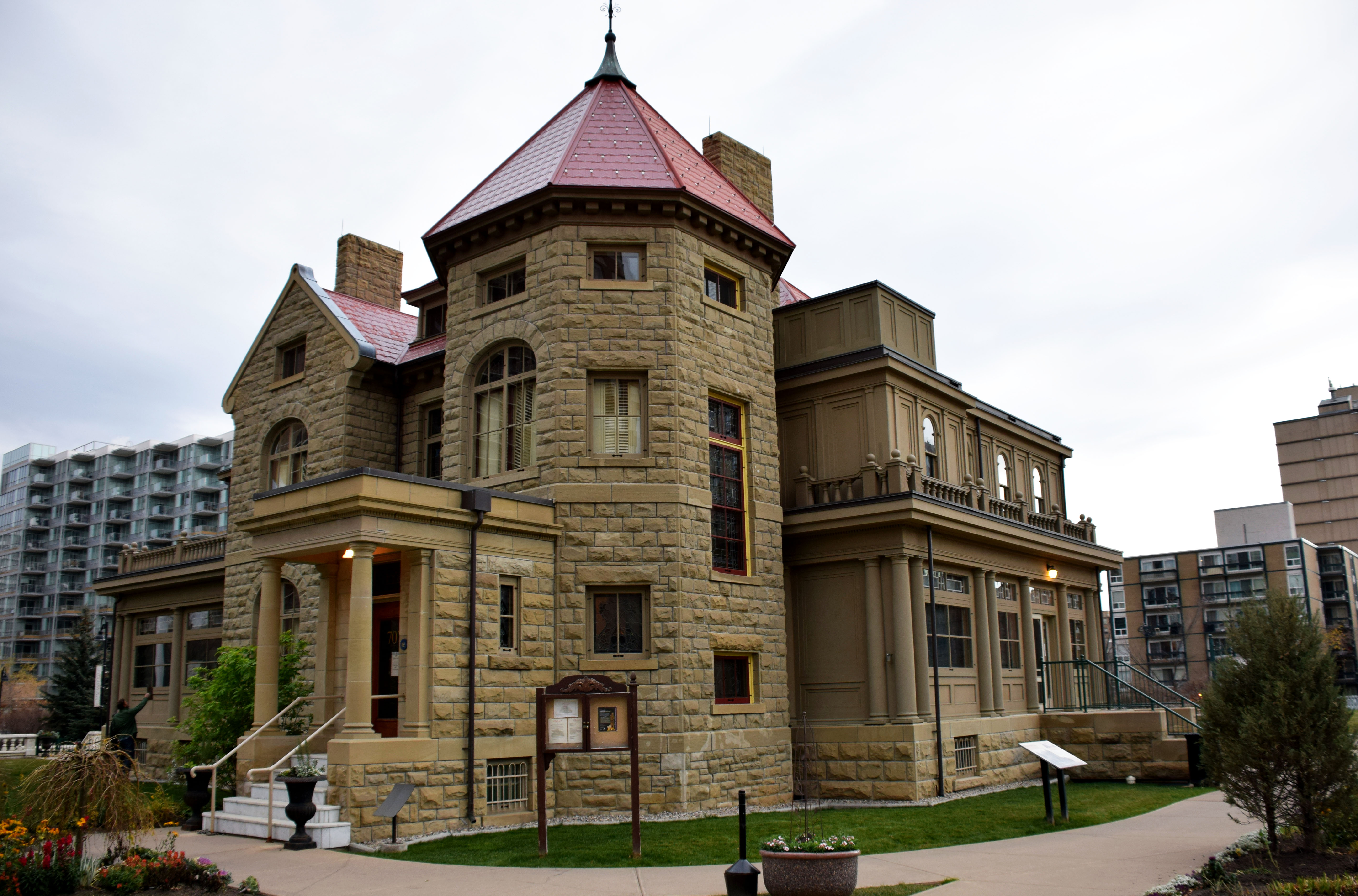
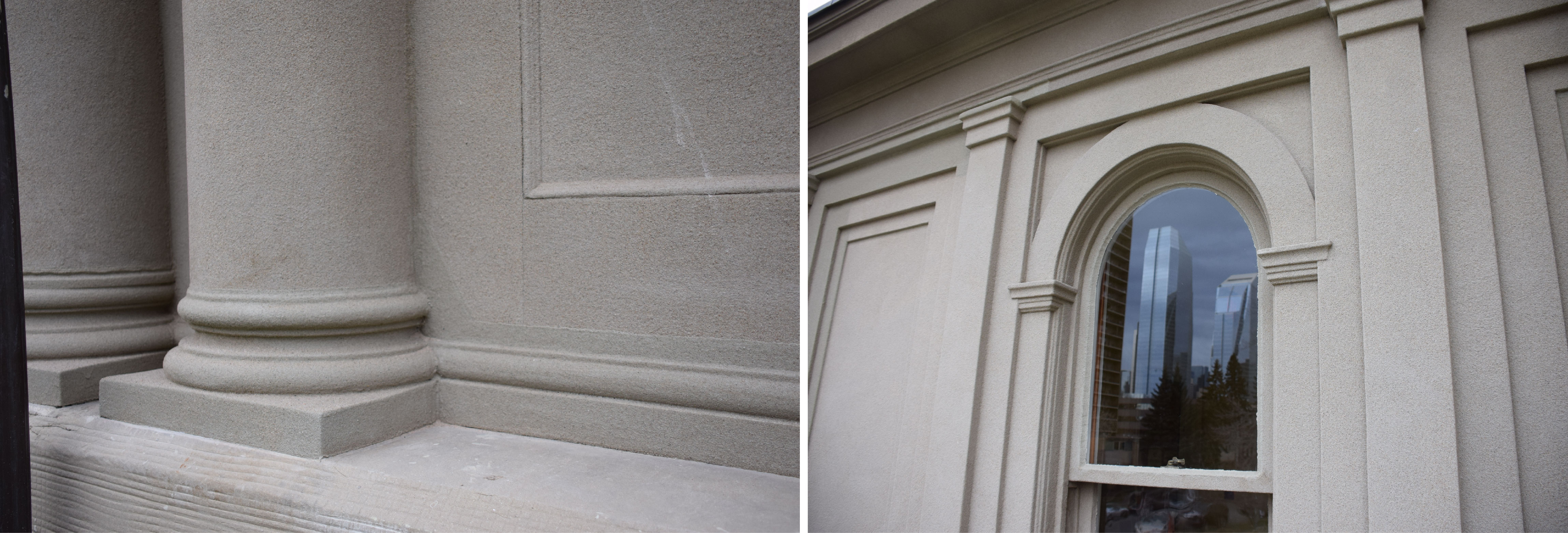
Sand painting is a faux finish technique that was not uncommon for exteriors of masonry buildings in the early part of the twentieth century. By dusting sand onto paint while still tacky, painted wood or metal details were made to resemble stone. If you guessed you were looking at magnified grains of sand in the teaser photograph above, you were right. The photograph, taken through a binocular microscope, is actually of a sand paint sample taken from the Senator Lougheed Residence in Calgary.
Senator Lougheed Residence, Calgary.Sand painted wood details at the Senator Lougheed Residence, Calgary.
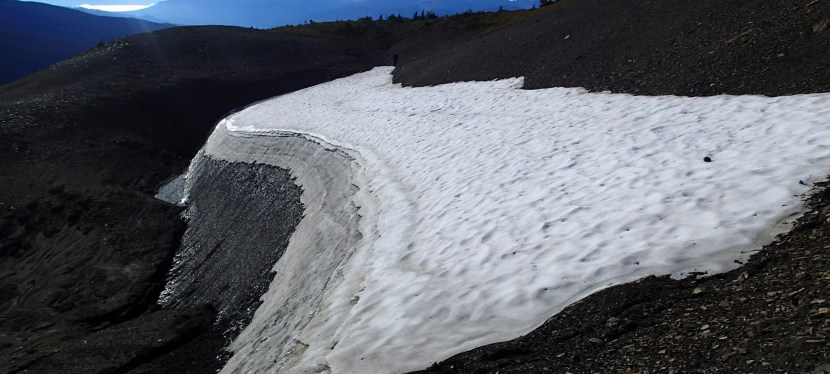
A few weeks ago we featured ice patch archaeology in Willmore Wilderness Park as part of the Rocky Mountain Alpine Project. The trip to Willmore was one of two attempts this summer to find archaeological artifacts and other organics melting out of Alberta’s ice patches. The second attempt took place from August 22-26, this time in Jasper National Park and, as promised, here are the results! For a background on the Rocky Mountain Alpine Project, check out our video.
This year was our second visit to Jasper’s ice patches. The goal of last year’s trip to Jasper was to determine if there was potential for finding organics and archaeological artifacts in Alberta’s alpine ice features. The trip was very successful and we found that many organics, like antlers and wood, were preserved at high altitudes. We also found a cultural piece of leather, with two knots in it, melting out of one of the patches. It was radiocarbon dated to A.D. 1640. The exploratory trip proved to be successful and we were excited to return to Jasper this year, both to re-visit the ice patch that yielded the leather and to explore some new areas.
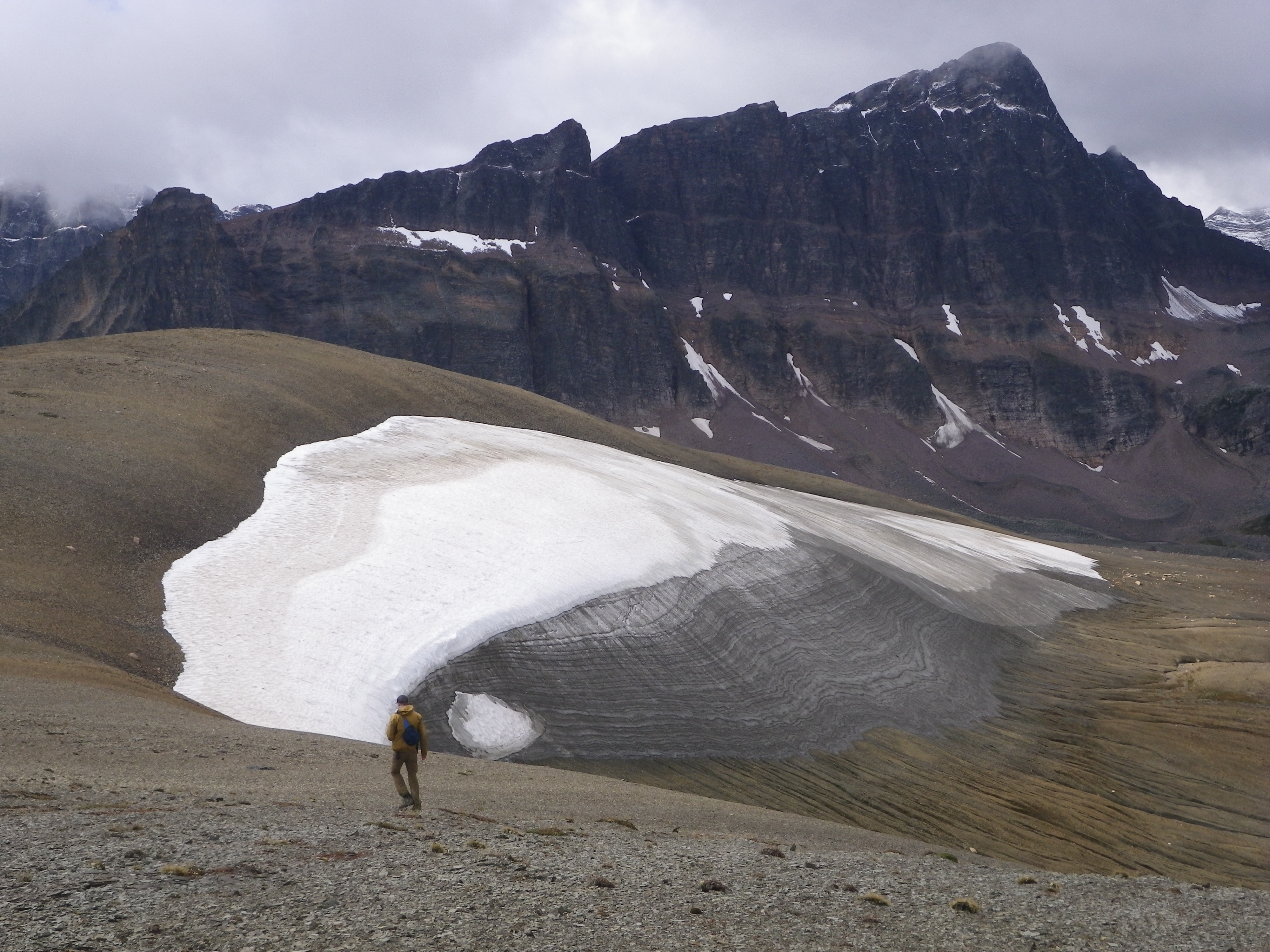
Ice patch in the Maligne Lake Area of Jasper National Park, archaeologists surveyed the patch in August 2016. (Photo Credit: Aaron Osicki)
With no jade mines or known quarries in the province, you may be surprised to learn that people used jade in Alberta thousands of years ago. Jade is a common name that refers to two minerals, one of which, nephrite, is found in Canada.
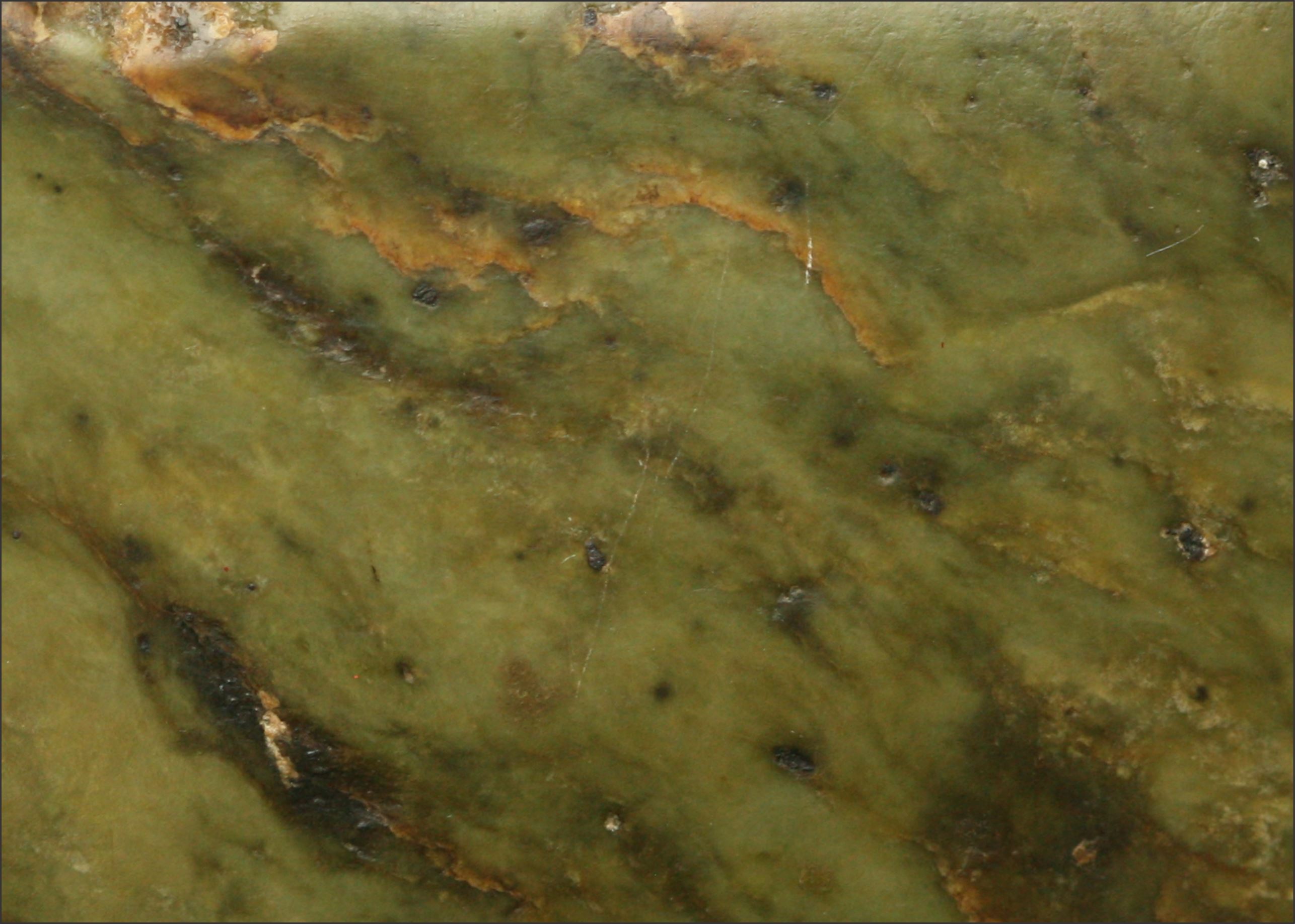
Close-up photograph of a jade (‘nephrite’) artifact from northwest Alberta (by Todd Kristensen).
Nephrite is one of the toughest natural materials on earth and for this reason, ancient people used it to make tools called celts. Tightly interlocking bundles of amphibole crystals (actinolite/tremolite) make nephrite incredibly resistant to fracture so the celts retain their sharp edges despite hours of wood-working with them.
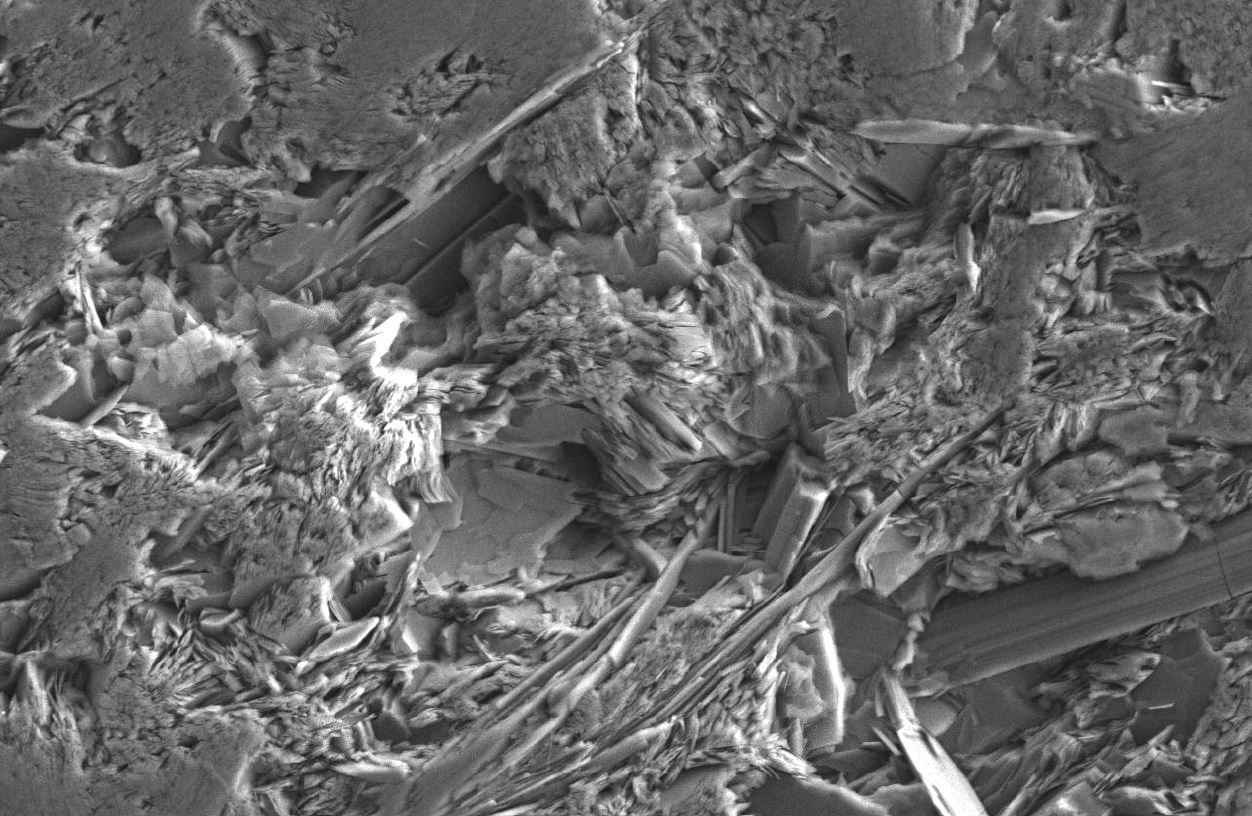
Tightly interlocking bundles visible in this Scanning Electron Microscope image give jade (‘nephrite’) its strength (courtesy of Jesse Morin).
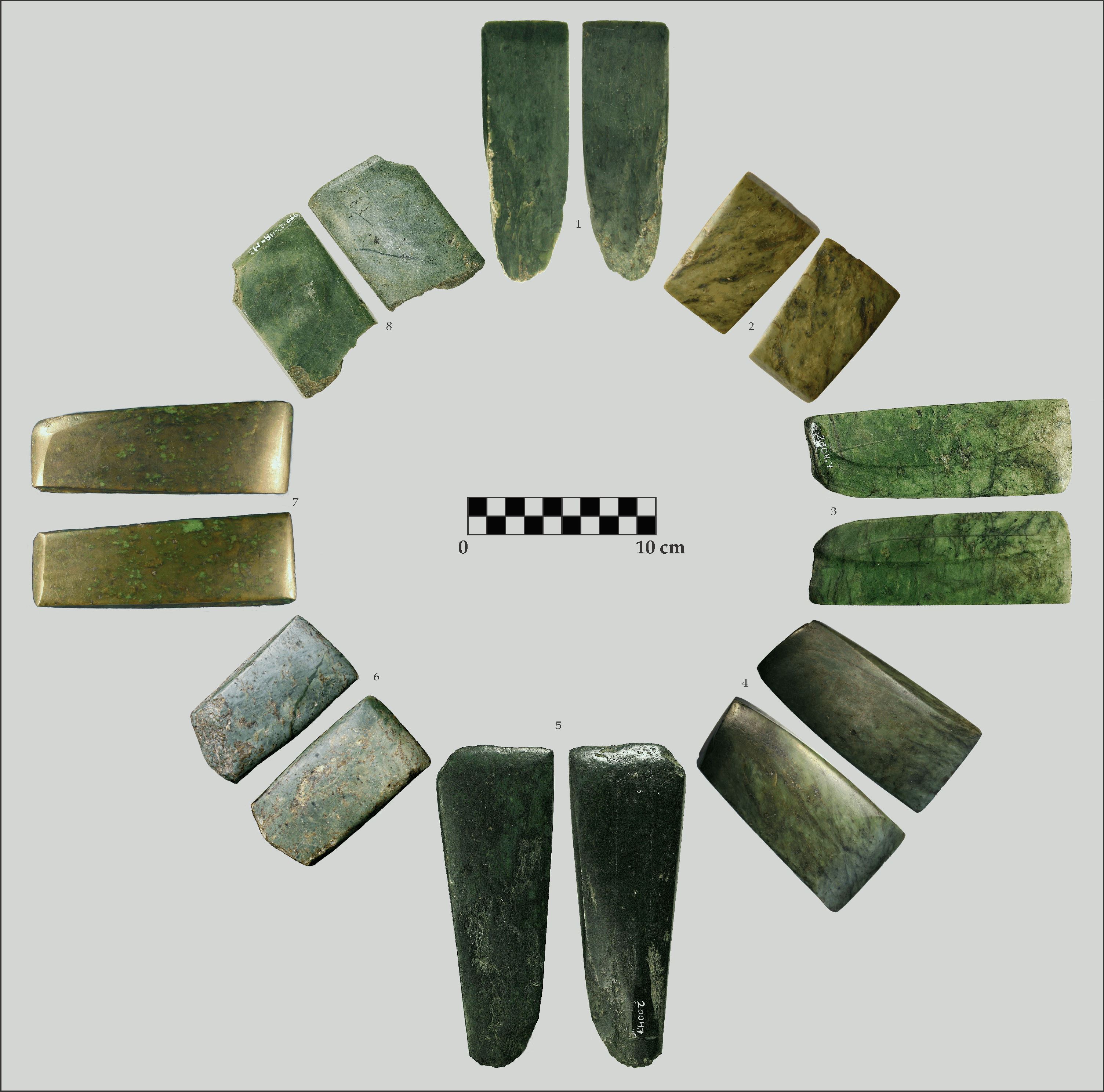
How did people make jade or nephrite celts? Slowly! As in modern times, nephrite was too strong to chip with a chisel so it was patiently sawed and ground with materials like sandstone and quartz crystals and polished with a slurry of gritty water. Jade occurs in outcrops across British Columbia where some First Nations had specialized jade workers. Most of the evidence for Aboriginal nephrite working comes from the Fraser River of southern B.C. near Lytton, Lillooet, and Hope. While the celts manufactured by pre-contact people were certainly functional, the rarity of jade and the time it took to make celts would have resulted in a highly revered and prized type of tool.
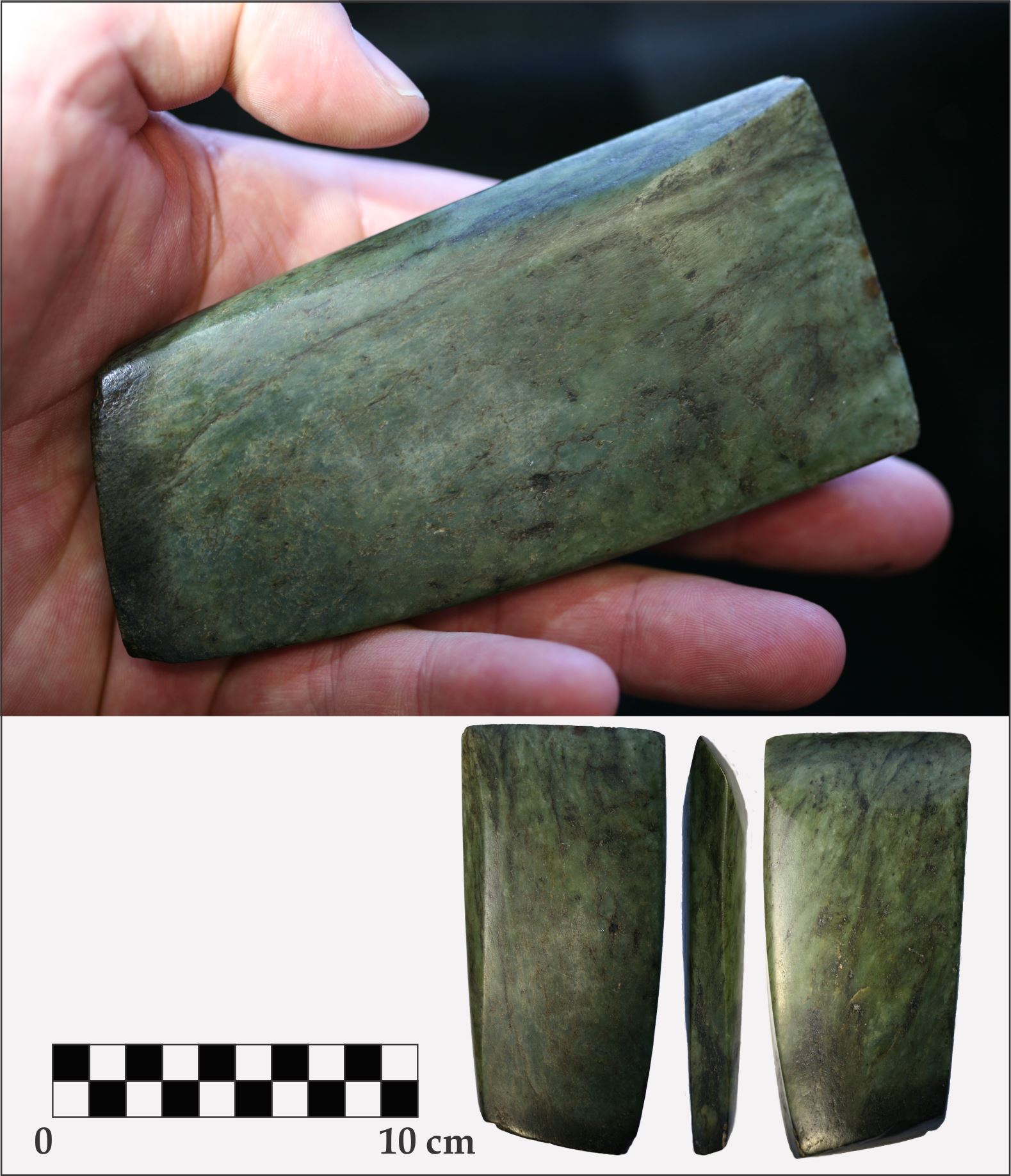
Nephrite celts are highly polished with a flat and slab-like shape. This specimen was found near Stony Plain outside of Edmonton (by Todd Kristensen).
Nephrite celts have been recovered from several farmers’ fields across Alberta but have never been found during an archaeological excavation in the province. They are generally more common in northern Alberta where First Nations likely maintained stronger trading connections to people from B.C. than in the south.
Jade or nephrite celts found in Alberta. Specimens 1, 2, 3, 5, and 8 are from the Grande Prairie area. Specimens 4, 6, and 7 are from the Edmonton area.
Based on historic records and tools used by First Nations shortly after European contact, jade celts were most likely tied onto wood or antler handles to increase the force that people could apply to the tool. The Alberta celts are thought to have been either ceremonial, status-markers, and/or they were used to build boats or prepare wooden poles.
A large spur on the end of a wood or antler handle served as a platform on which to tie or ‘haft’ a flat celt (by Todd Kristensen).
Written By: Todd Kristensen (Regional Archaeologist, Archaeological Survey), Jesse Morin (Heritage Consultant), and Karen Giering (Curatorial Assistant, Royal Alberta Museum)
Acknowledgements
Staff from the Archaeological Survey, Royal Alberta Museum, and University of Alberta collaborated with museums and farmers across Alberta to analyse our rare jade artifacts. Jade expert Jesse Morin from B.C. analysed specimens and lent his knowledge to the project. Full results, including geochemistry, mineralogy, and archaeological significance of Alberta’s jade will appear in an Occasional Paper Series article that will be available to the public shortly. Thanks to all the researchers for their help and thanks to the museums and farmers for kindly loaning artifacts for this study!






 RETROactive