45+ Years of Data Management at the Archaeological Survey of Alberta

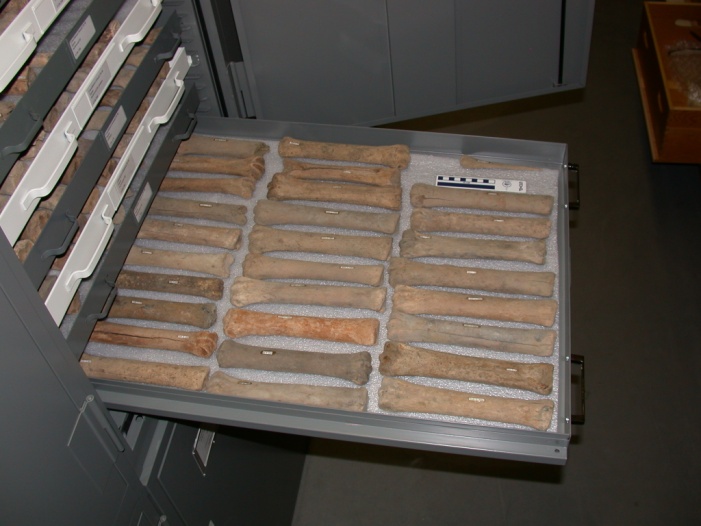
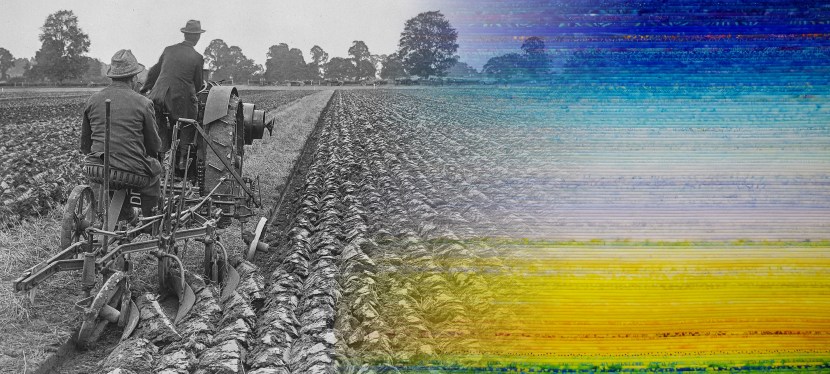
Whether excavating archaeological sites or surveying the land in search of undiscovered ones, archaeologists create data. That data can take the form of field journals, artifact catalogues, GPS tracks and waypoints, photographs, excavation plans, level records, site forms, and reports. It is often said that for every month spent in the field, an archaeologist will spend a year in the lab and the office processing the field data they collected.

The Archaeological Survey (the Survey) began managing Alberta archaeological sites, research, and mitigation in 1972, with the passing of what is now known as the Historical Resources Act. At the same time, the Survey also became the official provincial repository for most archaeological data. Today the Survey collects and archives data for use by archaeological researchers, consultants, and other stakeholders, and also relies on archaeological data in order to run the historic resources management machinery. Read more

Celebrating Mary Schäffer Warren

Thursday, March 8th marks International Women’s Day. This year we honour the memory, achievements and spirit of Yahe–Weha (mountain woman, as she was known to the Stoney), Mary Schäffer Warren.

“Lake Louise is a pearl; Lake Maligne is a whole string of pearls.”

– Mary Schäffer Warren

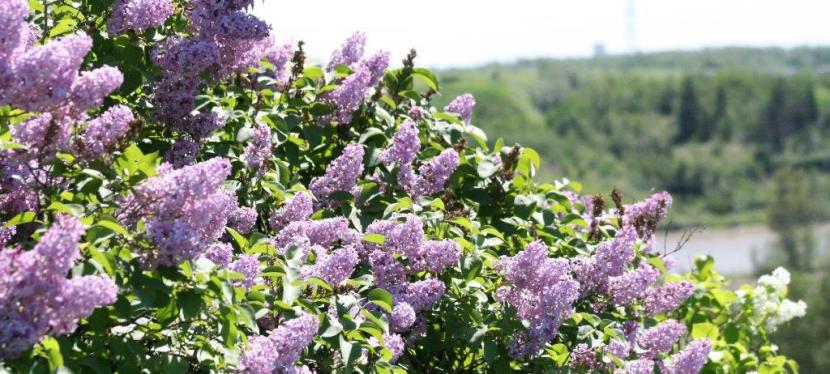
A view towards Spirit Island, Maligne Lake, Jasper National Park (taken by the author, September 2017).

The famed turquoise blue waters of Maligne Lake are bordered by impressive mountain peaks and glaciers. The lakes breathtaking natural beauty often leaves visiting tourists awestruck. But did you know that a Quaker woman from Philadelphia first surveyed, mapped and named the geological features (lake, mountains, peaks and glaciers) in the area? This remarkable pioneering woman was Mary Schäffer Warren. Read more

The Swing of Things: Archaeology in Alberta and the Occasional Paper Series

The Archaeological Survey of Alberta is proud to kick-off Occasional Paper No. 38 with a new format and early contributions. Articles in the Occasional Paper Series will now be published online throughout the year, with the final, compiled volume released at the end of the year. Our goal in moving to this rolling release format is to make articles available in a timely manner, while helping to accommodate the schedules of CRM consultants, university students, and other contributors.

Cover of the 2018 Occasional Paper Series. Submissions are welcome.

Occasional Paper No. 38, “The Swing of Things: Contributions to Archaeological Research in Alberta, 2018,” is dedicated to an early member of the Archaeological Survey of Alberta, Milt Wright, whose recent passing was mourned by the province’s archaeological community. The first article in the volume is a tribute to him.

Milt Wright (1952-2017) was an integral member of the Archaeological Survey of Alberta in the 1980s and 90s.

The second paper is an identification guide for Knife River Flint, supplemented by geochemical and mineralogical tests of this important raw material that was used to make stone tools in Alberta.

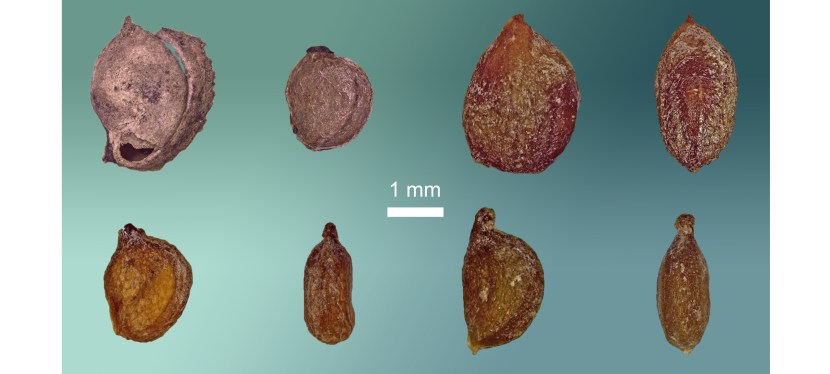
A sample of Knife River Flint artifacts found in Alberta. Individual artifact photographs courtesy of Eugene Gryba, Shayne Tolman, Bob Dawe, and Todd Kristensen.

The title, “The Swing of Things,” refers to what we hope will be consistent format and content for years to come: each issue will feature papers documenting the multitude of cultural resource management (CRM), avocational, and academic archaeological projects completed in previous years. Interested authors can pitch a paper or idea to the editorial committee. The current and past volumes are available for free download here.

Written By: Eric R. Damkjar, Head, Archaeological Survey of Alberta

WOODY STRODE: CALGARY STAMPEDER AND HOLLYWOOD STALWART

Stampeders President Tom Brook holding the Grey Cup with Woody Strode in Toronto, November, 1948. Courtesy of the Calgary Stampeder Football Club.

In conjunction with Black History Month, RETROactive profiles Woody Strode, a pioneering African American player with the Calgary Stampeders who went on to a remarkable career in Hollywood.

The arrival of Herb Trawick to the Montreal Alouettes in 1946 signalled the beginning of African Americans playing in the Canadian Football League (CFL), expanding the talent pool of athletes available for Canada’s professional teams. The first African Americans to play in Alberta were Charles Clay (Chuck) Anderson and Woody Strode who joined the Calgary Stampeders for the 1948 season. Although Strode only played with Calgary for two seasons, he made a lasting contribution to the lore of Grey Cup festivities that are now considered to be Canada’s premier sporting event.

Woodrow Wilson Woolwine Strode, whose ancestors had intermarried with Creek (Muscogee), Cherokee and Blackfoot Native Americans, was born 25 July 1914 in Los Angeles. He studied at the University of California, Los Angeles where he had a stellar record as a decathlete and football player. Part time jobs with Hollywood film studios led to several uncredited film appearances and foreshadowed his future career. During the Second World War, Strode served with the Fourth Air Read more

Another Log in the Wall: Preserving Historic Timber Architecture in Alberta

test-wall-5
The uncoated timber Slemko Barn at the Ukrainian Cultural Heritage Village, a variety of building components representing different species, thickness of section, and orientation of wood grain. Source: Evan Oxland, 2017

“Sustainability is not possible without durability […] Once constructed a building becomes a machine that ‘needs to be fed’.” -Joseph Lstiburek, 2006

In Alberta, there are hundreds of thousands of square feet of raw uncoated timber used in historic architecture, including farmhouses at the Ukrainian Cultural Heritage Village and log churches at Historic Dunvegan. Penetrating oils and wood coatings help prevent the primary causes of wood deterioration, but when these historic structures must be preserved in perpetuity, how do you assure the building material will last when it was originally built to make it through only a decade or two?

This is where Alberta Culture and Tourism’s Conservation and Construction Services comes in. Read more

The Sun Greenhouse Company

Thank you to Kim Fung (Sien Lok Society of Calgary), Tommy Y. Ng (Bison Historical Services Ltd., Sien Lok Society of Calgary), Edward Gee and Bill Gee for sharing this important piece of Alberta’s history.

The Sun Greenhouse Company was a vegetable farm that operated from 1927 to 1973 in Banff National Park, specifically at a former location in Anthracite, an abandoned coal-mining town that existed from 1886 to 1904. Thriving for two generations on 10.4 acres of land, it supplied needed produce to soldiers stationed in Banff during WWII, the Banff Springs Hotel, Chateau Lake Louise, and various local restaurants, and grocery and food outlets in the Bow Valley (Lake Louise to Canmore). It is believed that anyone who dined in Banff from 1927 to 1973 will most likely have eaten a product from the Sun Greenhouse Company.

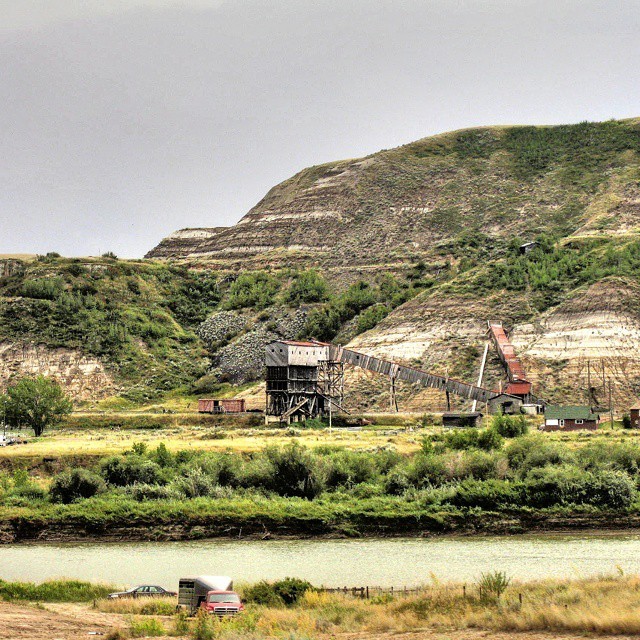
Sun Greenhouse, Anthracite, Alberta, 1951. Photo Credit: Whyte Museum of the Canadian Rockies.

What made this business unique is that it was located on non-arable land leased within the Rocky Mountains, and owned and operated by Chinese immigrants living under the racist restrictions of the 1923 Chinese Immigration Act, also known as the infamous Chinese Exclusion Act. The Act forbade Chinese immigrants from many professions, including farming or owning crown land, yet the Chinese flourished in the produce growing industry (specifically in BC), even under additional provincial discriminatory restrictions (Chan 2016 and 2017). Read more

After the Flood: Archaeology in Alberta and the Occasional Paper Series

The Archaeological Survey of Alberta is proud to release Occasional Paper Series No. 37 dedicated to historic resources encountered and documented during investigation programs following the June, 2013 flood in southern Alberta. The volume contains 18 articles written by historic resources consultants, university researchers, staff of the Royal Alberta Museum, and members of the Archaeological Survey of Alberta. The flood eroded and blanketed archaeological, palaeoenvironmental, and palaeontological sites; Alberta Culture and Tourism coordinated a series of contracts in 2014, Read more

The Early Years of Archaeology in Alberta

As the summer of 1949 approached, Boyd Wettlaufer, a Master’s student of archaeology at the University of New Mexico, was asked by his Field Director where he wanted to dig for the summer. In a 2008 interview, with Karen Giering of the Royal Alberta Museum, Wettlaufer related how the conversation with his director had transpired:  

 “Boyd,” he said. ‘I think it’s time you did a dig of your own. Where would you like to go?” And I thought of Head-Smashed-In. I said, “Well there’s a buffalo jump up in Alberta I wouldn’t mind taking a look at.” And so, he gave me a couple boxes of groceries and credit card for the gas and the two boys (William Hudgins and Donald Hartle) to help me and sent me off” [1].

Wettlaufer was familiar with the area around Fort MacLeod, having been stationed out of the nearby Royal Canadian Air force base of Pearce during the war as a flight instructor and aerial photographer. It was a member of the local historical society (Boyd and his wife Dorothy plugged their trailer into her porch for electricity [2]), who had first shown him the Read more

Exterior Rehabilitation and Restoration of Old St. Stephen’s College

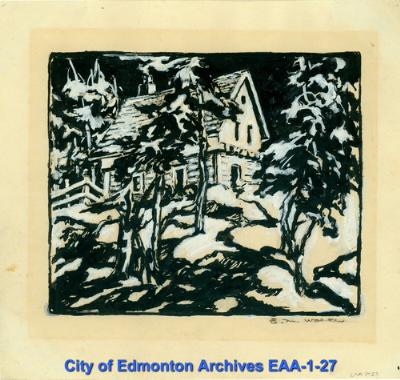
Historic photo of Old St. Stephen’s College circa. 1915.

After about three years, the Old St. Stephen’s College – Provincial Historic Resource has now completed the planning and implementation of its exterior rehabilitation and restoration project which started a number of years back with its cedar shingle roof replacement.

This recently completed scope involved foundation upgrades and stair revisions to the ground level access points of the building, including the addition of a compatible, distinguishable and subordinately designed barrier-free access ramp, as well as masonry repairs and the replacement of the 1980’s metal storms with more historically appropriate wooden units that will have the added benefit of allowing more natural ventilation in the building. Additional work also included the rehabilitation of the former fire exit door openings, the return of the round window at the top level of the building and the addition of vented caps to the non-functional chimneys. Read more

Rainbow Fossils and Bison Calling

For an animal that looks like an awkward collision of snail and squid (Figure 1), ammonites have played surprisingly important roles in international history. To Blackfoot First Nations on the Plains of North America, the ornate edges of ammonite segments resemble miniature bison (sometimes called buffalo), and, for over a thousand years, they have been used in ceremonies to summon bison spirits. Across the ocean, 16th to 19th Century fossil hunters propelled ammonites into palaeontological fame by using them to anchor theories of an ancient earth (Figure 2). In modern Alberta, Canada, miners and members of Blackfoot First Nations are seeking iridescent ammonites to fuel a global demand for art and jewellery; sacred and secular, and now economic, ammonites are immersed in a complex story. Read more