Newton’s Lilacs: Edmonton’s Hermitage, 1876-1900

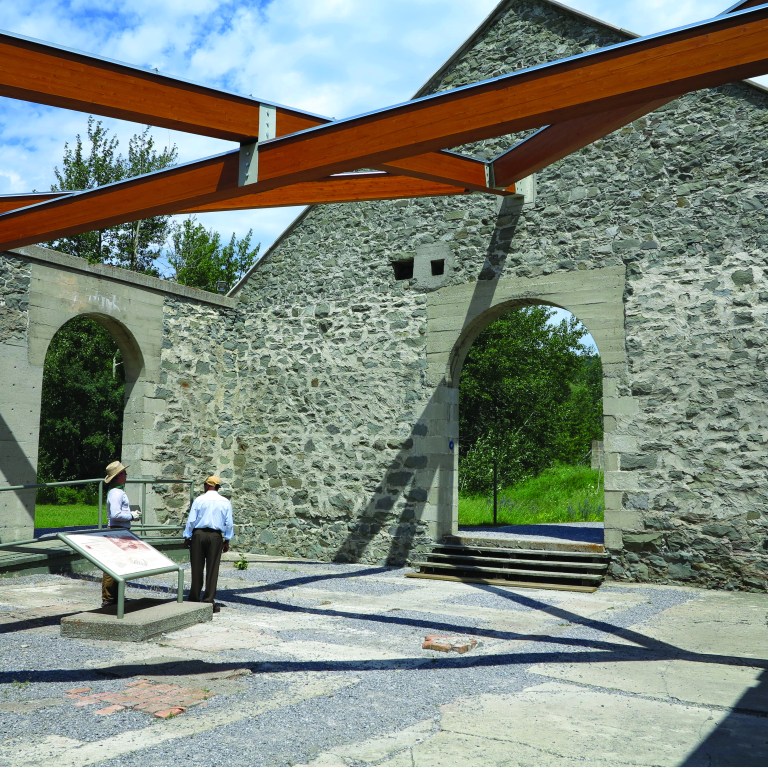
In a remote corner of north east Edmonton, bounded by Clareview Road and 129th Avenue, is a small unmarked parcel of land commanding a dramatic view of the North Saskatchewan River valley. Only faint ground depressions and a small interpretive marker betray the fact that this is the location of Canon William Newton’s Hermitage and the birthplace of the Anglican Church in what would become the Province of Alberta.

“The Hermitage” by Ella May Walker, City of Edmonton Archives, EAA-1-27.

William Newton was born in 1828 at Halstead, Essex, England into a family of weavers. Having obtained an education through the help of wealthy benefactors, he trained for the Unitarian Church, served as a Congregationalist minister and published two books of sermons. In 1870 he immigrated to Canada and was ordained into the Anglican Church by Bishop A.N. Bethune of Toronto. He spent four years at Rosseau and Howard Township in Ontario before being accepted by Bishop John McLean of Saskatchewan as a missionary with the Society for the Propagation of the Gospel at Fort Edmonton. Read more

Alberta Museums Association: Championing Alberta’s Museums

The Alberta Museums Assocation, founded in 1971, is a non-profit society whose mission is to lead, facilitate, and support museums in their vital role with communities. The Museums Association now has more than 200 Institutional and 250 Individual Members among its membership. The Association is one of five provincial heritage organizations that receive annual funding from the Alberta Historical Resources Foundation. May 18th is International Museums Day, a day to raise awareness of the importance of museums. Be sure to visit one of your local Alberta museums to celebrate!

Atlas Coal Mine National Historic Site, Drumheller Valley. Photo Credit: Erika Price @erykahprice

Museums are invaluable resources and contributors to communities; they educate, they engage, they convene, they inspire, they question, and they evolve. The Alberta Museums Association (AMA) champions the value of museums to stakeholders across the province and beyond, and works to ensure that museums create dynamic connections with their communities. We also offer a variety of programs and services, including:

  • Professional development opportunities, including our Annual Conference, Certificate in Museum Studies, and other specialized learning events to increase the professionalization of the sector;
  • Allocation of funding to museums and museum professionals to facilitate the completion of innovative work throughout the province, and;
  • Administration of the Recognized Museum Program to help museums fulfill their public trust responsibilities and ensure their succession for the future.

These programs are extensively used and have proven valuable to members as they reinvent themselves and solidify their roles as connected, creative hubs in their communities. Read more

Historic Resources and Flooding

During the past few weeks, areas of southern Alberta have been affected by overland flooding, and this week warnings were issued for areas in northern Alberta (https://www.alberta.ca/emergency.aspx). Floods can affect historic resources such as historic buildings, museum collections and archaeological sites. The June 2013 flood is an example of a flood event that had a large impact on historic resources, causing damage to some historic sites and buildings and exposing or washing away archaeological sites.

Flood damage from the June 2013 flood to the chicken coop at E.P. Ranch, photo taken April 2014.

If you are looking for information about how to deal with historic resources impacted by flooding, please refer to our ‘Flood Info’ page that features the following articles:

If you think you have come across an archaeological site that may have been exposed by flooding, please report your find to the Archaeological Survey of Alberta: https://www.alberta.ca/report-archaeological-find.aspx

If you think you have found a fossil, please report it to the experts at the Royal Tyrrell Museum: http://www.tyrrellmuseum.com/research/identify_fossil.aspx

Kirkness House: Two Edmonton Pioneers

Thank you to Melanie Moore (Board Member of the Highlands Historical Society in Edmonton) for sharing this important piece of history. 

There is an old house in the Virginia Park neighbourhood of Edmonton, on 73rd Street and Ada Boulevard. Now empty, it has seen better years. The shingles are coming off, the paint old and faded, the yard overgrown. When asked about the house, neighbours knew little of its story.

Kirkness House, Edmonton, 2018 (photograph by Melanie Moore).

Having recently explored the history of my own 100 year old home in Edmonton, I decided to find out more. James Kirkness, and his wife Sarah Steinhauer, built the house in 1909. Prior to that, he and Sarah lived in an adjacent log cabin where they raised their children. The City of Edmonton Archives has a painted-over photograph of James in front of the 1870s log cabin with the new 1909 house behind. Likely James had the painting commissioned, put it in an ornate frame, and hung it proudly in his new home. Read more

Plough your Furrows Deep: The Foundations of Agriculture in Alberta

Farming in Alberta has been shaped by a deep and layered history of geological, biological, and human forces. This article takes us back to the beginning.

Farming is based on a sliver of soil that caps kilometers of sediment and bedrock. To understand how our fields first formed, we need to read an ancient geological story of how Alberta has been raised and tilted then scoured and capped over time. Alberta has sat inside a continental plate (or ‘craton’) for over 300 million years. Around 180 million years ago, the western edge of this plate began crunching to form the up-and-down terrain of the Coast Mountains of British Columbia (B.C.) and the Rocky Mountains between B.C. and Alberta (Figure 1). Mountain building finished about 50 million years ago.

Bedrock geology draft 4
Figure 1. This is a bedrock map of Alberta and B.C. “Bedrock” refers to the stony basement below our modern soil and loose sediment (gravel, sand, and silt). B.C. is striped with colour because its bedrock is made of diverse chunks of land called terranes that got repeatedly mashed against a moving continental plate that Alberta lay within. One product of this mash-up (‘accretion’) was mountain building (‘orogeny’). Creation of the western mountains forever shaped the development of soils and agriculture in the Prairie Provinces (map by Todd Kristensen with bedrock data from the USGS 2015).

For almost 200 million years, Alberta has been tilted: our bedrock is formed largely of shales and sandstones that built up when sediment either poured off the mountains and solidified into rock or settled down in ancient waters that once filled a basin over Alberta. From about 50 to 5 million years ago, huge sheets of gravel and sand continued to shed off the Rockies (carried by rivers and streams) before settling into our basement. Read more

Building skills: Using seeds and shells to learn about Alberta’s ancient environments

How do we know about past environments?

Historic and precontact archaeological and palaeoenvironmental sites from across Alberta tell us much about people and past environments. But how can we learn the details about that environment? This blog post will tell you how we use environmental indicators, especially macrofossils, to reconstruct what conditions were like at sites in the past.

It may seem reasonable to assume that the environment when an archaeological site was inhabited by people was generally the same as it is now, and this is sometimes the case. However, the archaeological record in Alberta goes back at least 13,000 years , to the end of the last major glaciation and its transition to our present epoch (the Holocene). Given this long and varied history, it’s obvious some considerable changes have occurred. Read more

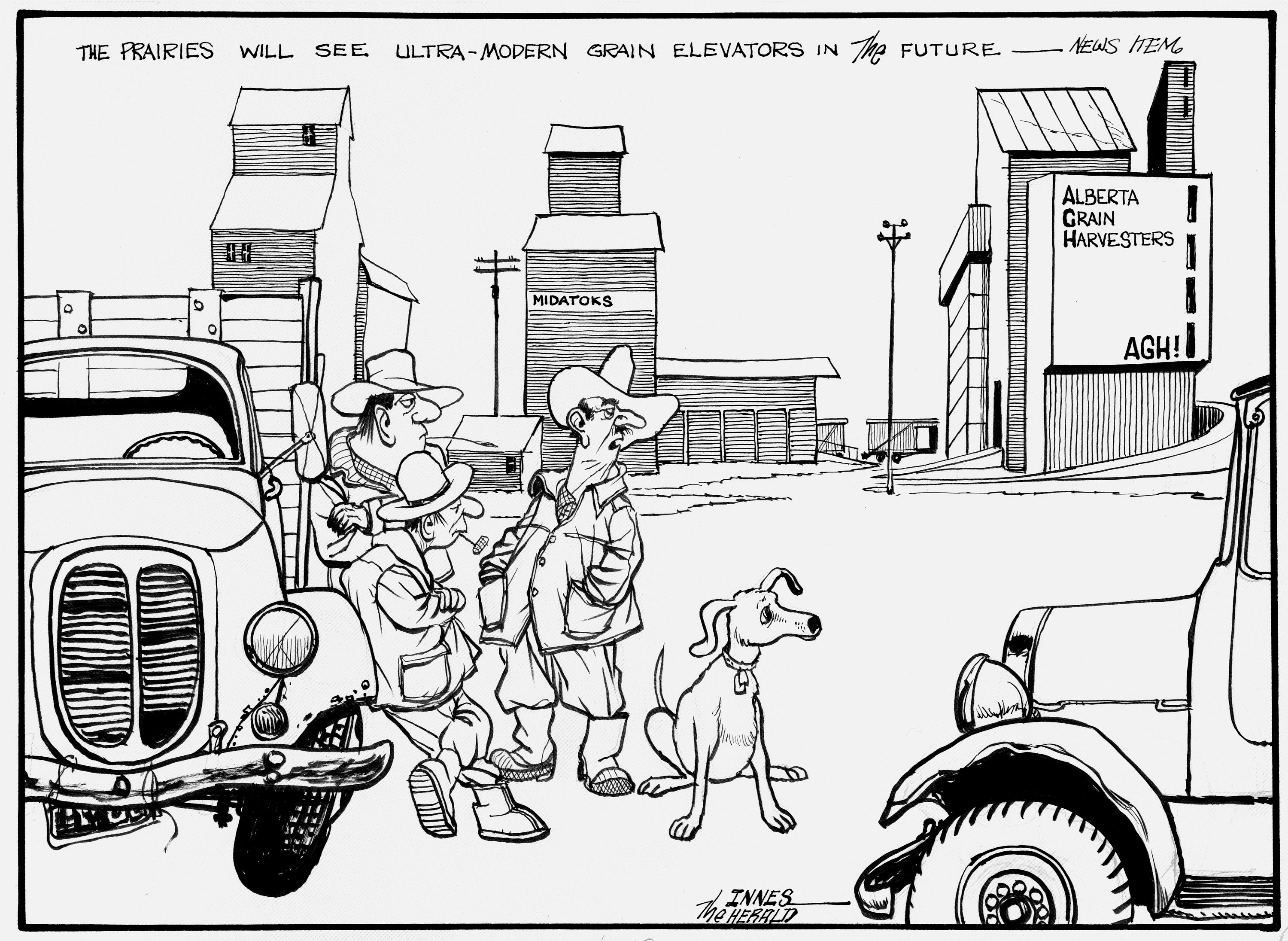
Alberta’s Wooden Country Grain Elevators – Update

This post was originally published on RETROactive on March 6th, 2012 and again on August 26, 2015. Interest in grain elevators remains strong, so a revisit seems in order. Some additional data has been added, an updated list of communities with elevators can be accessed below, as well as a variety of resources and documents relating to Alberta’s Grain elevators.

The twentieth century saw the rise and fall—literally—of the wooden country grain elevator in Alberta. As rail lines spread across the province in the early 1900s, grain elevators sprouted like mushrooms after a spring rain. The height of wooden country grain elevators was reached in 1934. New ones continued to be added until the 1990s, but with increasing numbers being demolished, these icons of the prairie became scarcer. Today, the remaining wooden country grain elevators number only about six percent of the maximum reached in the 1930s. Check out the following “index” of Alberta’s wooden country grain elevators, called “elevators” for short in this article.

Number of elevators in Alberta: Read more

Volcanoes and Alberta

Thank you to guest writer Britta Jensen of the Department of Earth and Atmospheric Science, University of Alberta, for this interesting post about the impact volcanoes have had on our province.

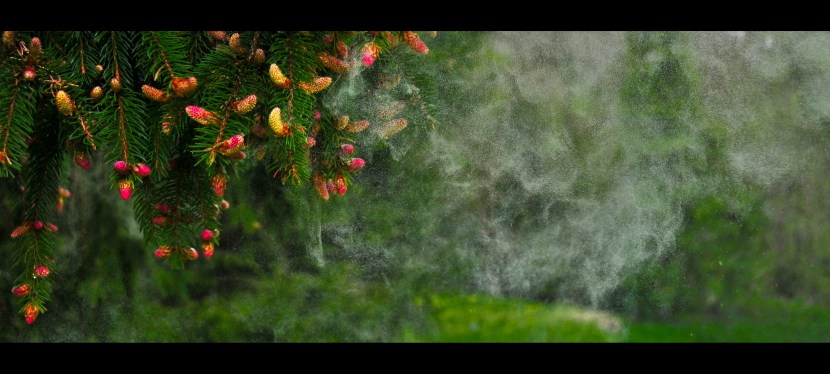
It is safe to say that when people think of Alberta they rarely think of volcanoes. Prairies, check; mountains, check; boreal forest, check; volcanoes, ummm, no? This is a fair reaction because Alberta can’t currently claim a single volcano. However, take a look at a map and you can see that we aren’t actually that far, relatively speaking, from the impressive volcanic peaks that dot the west coast – Mount St. Helens, Rainier, Baker, Meager, to name a few. Far enough to avoid the damaging effects of an eruption? Perhaps not. On May 18th 1980, Albertans learned that we are close enough to have our province impacted by major volcanic eruptions. The eruption of Mount St. Helens, which killed 57 people locally, spread ash far and wide. Enough ash accumulated in southern Alberta to cause problems, with reduced visibility, vehicles, and people with respiratory illnesses. A light dusting of ash was even reported as far north as Edmonton. No visible layer of that eruption remains on the landscape of Alberta. But what about the past?

Mount St. Helens, Washington State, summer 2017. View of the north-face that collapsed in 1980 (Photo Credit: Britta Jensen).

When we look under the ground, at pits dug during construction, road cuts, river banks and other exposures of the ground we walk upon, we can see a history of large eruptions blanketing parts of our province in volcanic ash. This record of Read more

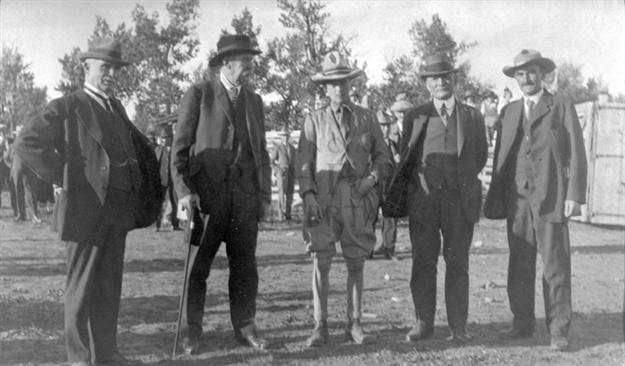
HONOURING ALBERTA’S HERITAGE HEROES

Nominations for the Alberta Historical Resources Foundation’s Heritage Awards 2018 are now open. Help us honour and celebrate the outstanding contributions of Albertans to the promotion and preservation of Alberta’s heritage. This is the 7th biennial Heritage Awards since its reintroduction in 2005.

Awards will be presented in the Heritage Conservation, Heritage Awareness and Outstanding Achievement categories. In addition, the Foundation is proud to introduce the Indigenous Heritage and Youth Heritage Awards this year. Awards will be presented during an awards ceremony on October 12, 2018.

Who are the heritage heroes in your community? Complete your nominations now. Deadline for submission is July 15.

For a copy of the guidelines and nomination form, visit https://alberta.ca/heritage-awards.aspx or contact the Program Coordinator at 780-431-2305 (toll-free by first dialing 310-000) or Carina.Naranjilla@gov.ab.ca.