Love It or Loathe It: A Brief History of the Holiday Fruit Cake

It’s hard to believe the Christmas holidays are just around the corner. Along with all the regular festivities, several traditional foods are due to make their annual appearances. One of the quintessential desserts of the season is the fruit cake. Described as either a rich, moist and flavorful cake filled with holiday cheer or a dried out, tasteless leaden brick chockfull of bitter candied fruit. We seem to have a love-hate relationship with this fruit-filled, spirit-soaked cake garnished with sugar-coated nuts. But why was it invented? How did this tradition start?

fruit cake photo

It turns out that fruit cake has staying power. Its origins may be linked back to the ancient Egyptians who made rich fruit- and nut-laden funerary cakes for their departed loved ones, meant to sustain the dead on their journey to the afterlife. Others trace its early roots back to the ancient Romans’ references to a type of energy loaf, which combined barley mash, pomegranate seeds, pine nuts and raisins. A more modern version of fruit cake became popular in the Middle Ages in Western Europe as dried fruits, honey and Read more
Conservation at the E.P. Ranch

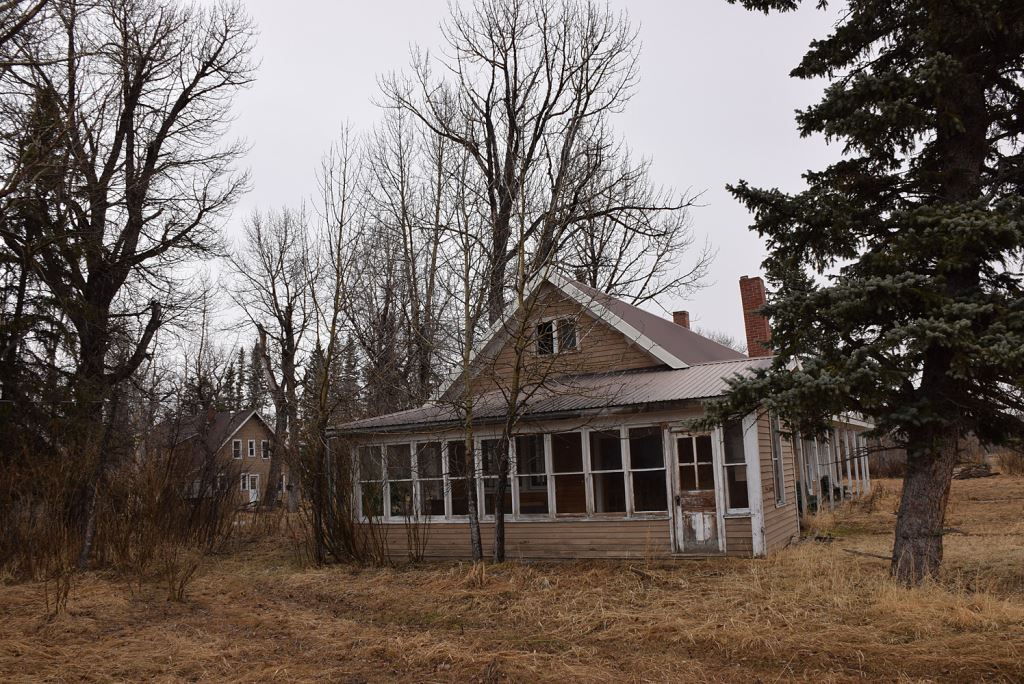
E.P. (Prince Edward) Ranch, established by the Bedingfeld family in 1886, is located in the foothills southwest of Calgary near the Bar U Ranch National Historic Site. In 1919, during a cross-Canada tour, the Bedingfeld’s ranch captured the fancy of His Royal Highness Edward, Prince of Wales, upon his visit to the area.  Prince Edward purchased the ranch shortly thereafter from Frank Bedingfeld. Under Edward’s direction, the ranch developed a breeding program for sheep, cattle, and horses with livestock imported from the Prince’s breeding farms in the Duchy of Cornwall in England.  Prince Edward, later King Edward VIII, visited the ranch in the 1920s and in the 1940s and 1950s, after his abdication, as the Duke of Windsor.  Photographs in the Glenbow Archives show Edward and his wife Wallis Simpson, the Duchess of Windsor, strolling among the ranch buildings that still stand at the site today. The E.P. Ranch was designated a Provincial Historic Resource in 2004 for its association with Edward, who owned the site from 1919 to 1962. Fans of the 1992 movie Unforgiven will also recognize scenes shot on location at the ranch.

The main ranch (or Prince's) house prior to restoration, April 2014.
The main ranch (or Prince’s) house prior to restoration, April 2014.

In June 2013, the E.P. Ranch found itself at the epicentre of the torrential rains that flooded communities and historic sites across southern Alberta. Pekisko Creek overflowed its banks and swept through the site, turning grazing lands into a virtual river.  While the large and distinctive horse barn was unaffected, four other buildings were damaged. Read more

Arrowheads and Artifact Ambassadors

Many of the most amazing archaeological sites in Alberta were discovered accidentally by farmers, hunters, hikers, and industry workers. By sharing their finds, everyday Albertans became heritage heroes. Why is it important to share discoveries? When someone finds an artifact and puts it in their garage, one Albertan learns about our heritage. When a person invites an archaeologist to photograph that artifact, thousands of people and multiple generations of Albertans gain a portal to our past.

We’re always on the lookout for the next big site and the next famous Artifact Ambassador. To inspire you to share your finds, here are some facts about citizen discoveries in the world and here at home.

  • The Terracotta Army of China, a collection of over 8000 figures buried in a royal tomb over 2000 years ago, was discovered and reported by farmers in 1974
  • The Lascaux Cave paintings in France (over 15 000 years old) were discovered by teenagers on a hike in 1940
  • 1398 recorded sites in Alberta are based on private collections of artifacts – photographs and information about these collections have been inspiring research projects for decades

Map of private collections

  • Several archaeological finds by Alberta’s explorers and farmers have since become Provincial Historic Sites and one has even become an UNESCO World Heritage Site!
  • Archaeological finds reported by concerned Albertans include ancient rock art, medicine wheels, footprints of extinct animals hunted by people, buffalo jumps, and ancient campsites.
Image 1 Manuscript covers
A number of projects were undertaken from the 1970s to 90s to document private collections of artifacts from Lethbridge to Grande Prairie. Digital copies of these manuscripts are now available to Alberta’s archaeological community.

Even a single artifact can contain significant information. For example, staff of the Archaeological Survey recently initiated two projects to document private collections in northern Alberta. Read more

Heritage Energized: HRMB at the National Trust Conference

Last month, the Historic Resources Management Branch had the opportunity to attend the National Trust for Canada’s annual conference, right here in our home province. Held October 22-24 in Calgary, the conference’s theme of “Heritage Energized” explored how heritage energy can turn places around, empower people and create opportunities.

Preceding the conference was Moh-Kins-Tsis: Calgary Indigenous Heritage Roundtable, a day-long session bringing together Elders and knowledge keepers with practitioners in the fields of heritage, archaeology, architecture and planning, to discuss how to protect Indigenous heritage sites in the urban environment.  Moderators Lorna Crowshoe (Aboriginal Issues Strategist, City of Calgary) and Makiinima—Roy Fox (Former Chief of the Kainai Nation) set the tone for the day by establishing the room as an “ethical space”—where groups with contrasting world views can come together in respectful, cooperative and collaborative ways. The audience then had the special opportunity to learn about Blackfoot ways of knowing from Elders Wilton Goodstriker, Herman Yellow Old Woman, Bruce Wolf Child, Andy Blackwater and Dr. Reg Crowshoe. These discussions were expanded upon by a number of professional and academic presenters.

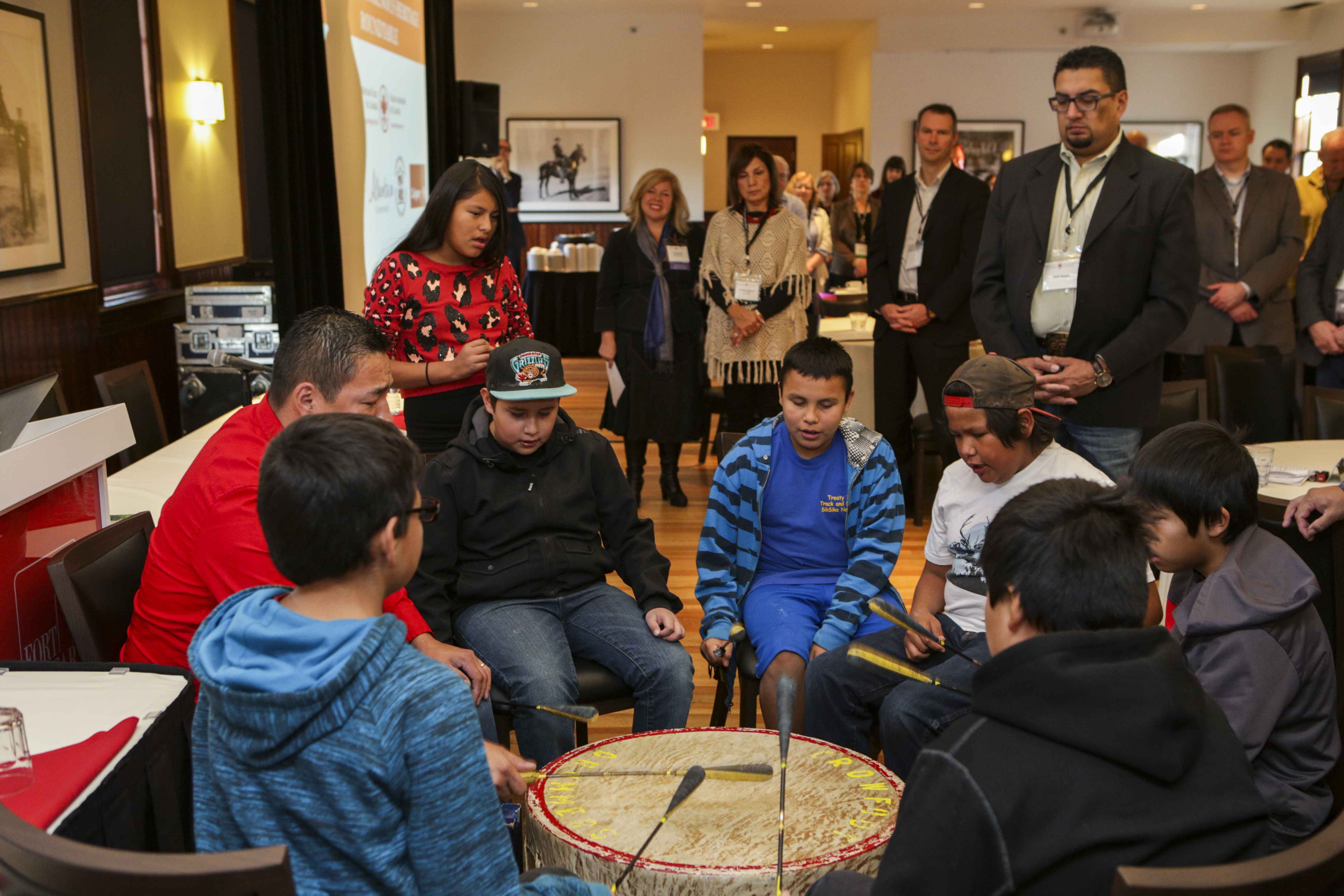
The Crowfoot Young Warriors kick off Moh-Kins-Tsis: Calgary Indigenous Heritage Roundtable with drumming and song. Photo credit: Pinpoint Photography, courtesy of the National Trust for Canada.

The latter half of the day focused on the Paskapoo Slopes—an area in the city’s northwest rich in archaeological and cultural heritage and of high significance to the Blackfoot Nations. A panel composed Read more

Metis Week in Alberta

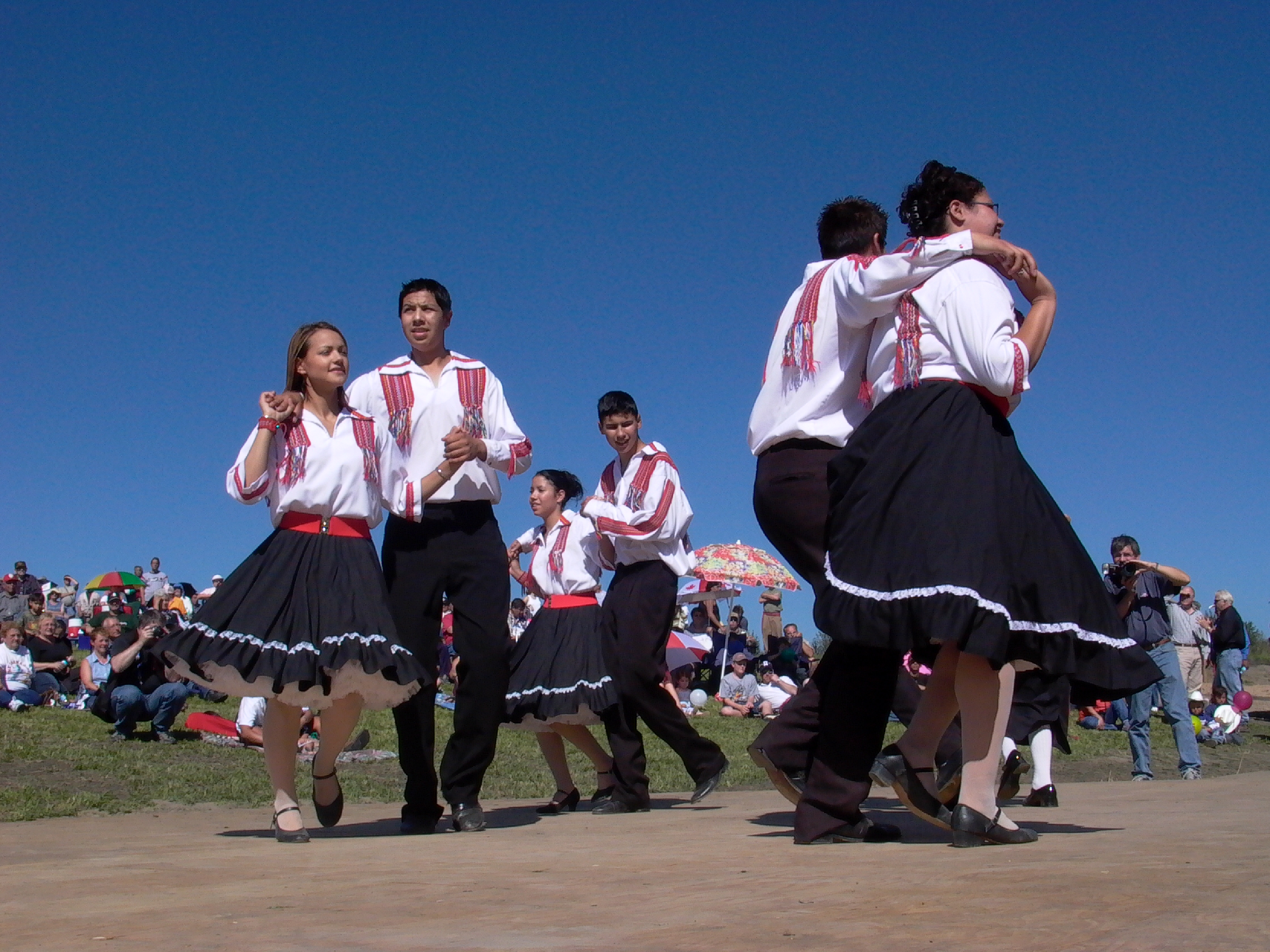
Photo Credit: Travel Alberta

Events are taking place across the province this week in honour of Metis Week, from November 15-21, 2015. This week provides an opportunity to celebrate Metis people, their culture and their contributions.

Louis Riel Day was celebrated on November 16th, the date that marks the anniversary of Riel’s death in 1885. Riel was a Metis leader who fought for the recognition of Metis people and their rights. He is also credited as the founder of the province of Manitoba. Commemorations and events took place in both the Edmonton and Calgary areas.

Many other events are taking place across the province to celebrate Metis week and it’s not too late to take part! For a full listing of events, click here.

Remembering Beverly’s War Dead: Alberta’s First Great War Memorial

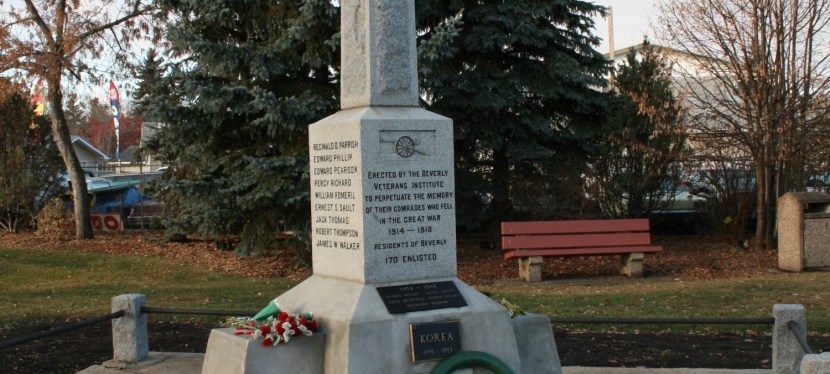
Canada is in the midst of marking the centenary of the Great War of 1914-1918. The war which engulfed the Dominion of Canada was to have dramatic effects on the young, barely decade-old province of Alberta. By 1914 Alberta boasted a greatly expanded population of 470,000 of whom more than 49,000 served in Canada’s armed forces. Of that number over 6,000 died and another 20,000 suffered non-fatal casualties.

On the eastern boundary of Alberta’s capital City of Edmonton the coal mining community of Beverly was incorporated as a Village in 1913 and elevated to the status of Town in July of 1914. Just prior to Canada’s entry into the Great War, Beverly had a population of 1,200, attracting residents from across Read more

Megafloods and Layered Pasts: Exposing Alberta’s Oil Sands

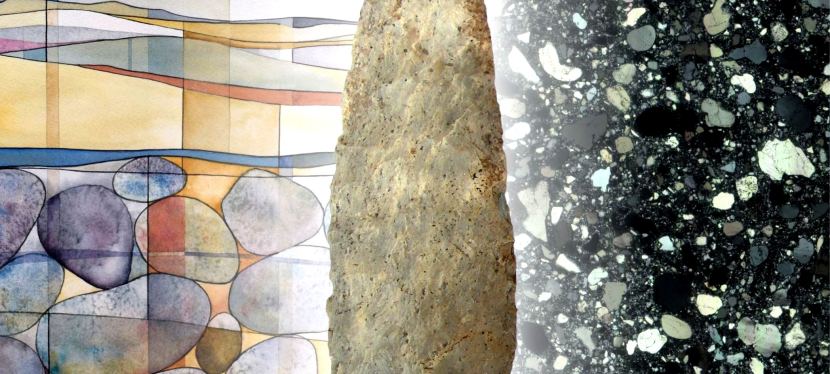
On a cold January day researchers from the University of Alberta and the province’s Archaeological Survey huddled on a frozen lake near Fort McMurray waiting to extract long cores of mud. Layered throughout the cores are environmental indicators, like pollen and microorganisms, that span thousands of years. Geologists have tried to map the boundaries of hydrocarbon reservoirs in the oil sands for over a century but they have only recently focused on the natural forces that exposed bitumen to human eyes. The mystery of this exposure event is what continues to draw researchers to remote frozen lakes in northeast Alberta. Read more

Haunted Heritage

In Alberta, autumn is the perfect mix of sun-soaked days and brisk star-filled nights. Our trees are coloured all sorts of stunning shades of sunburst, heralding the changing seasons. As the winds snatch away the golden foliage, only bare lonely branches are left swaying eerily in their place, it’s the perfect time for telling tales of ghosts and spooky places. From haunted hotels to spooky schoolhouses, Alberta has a rich history rife with ghostly tales. It’s no wonder we love to share local tales of the paranormal.

Here’s our top 5 list of the spookiest heritage sites:

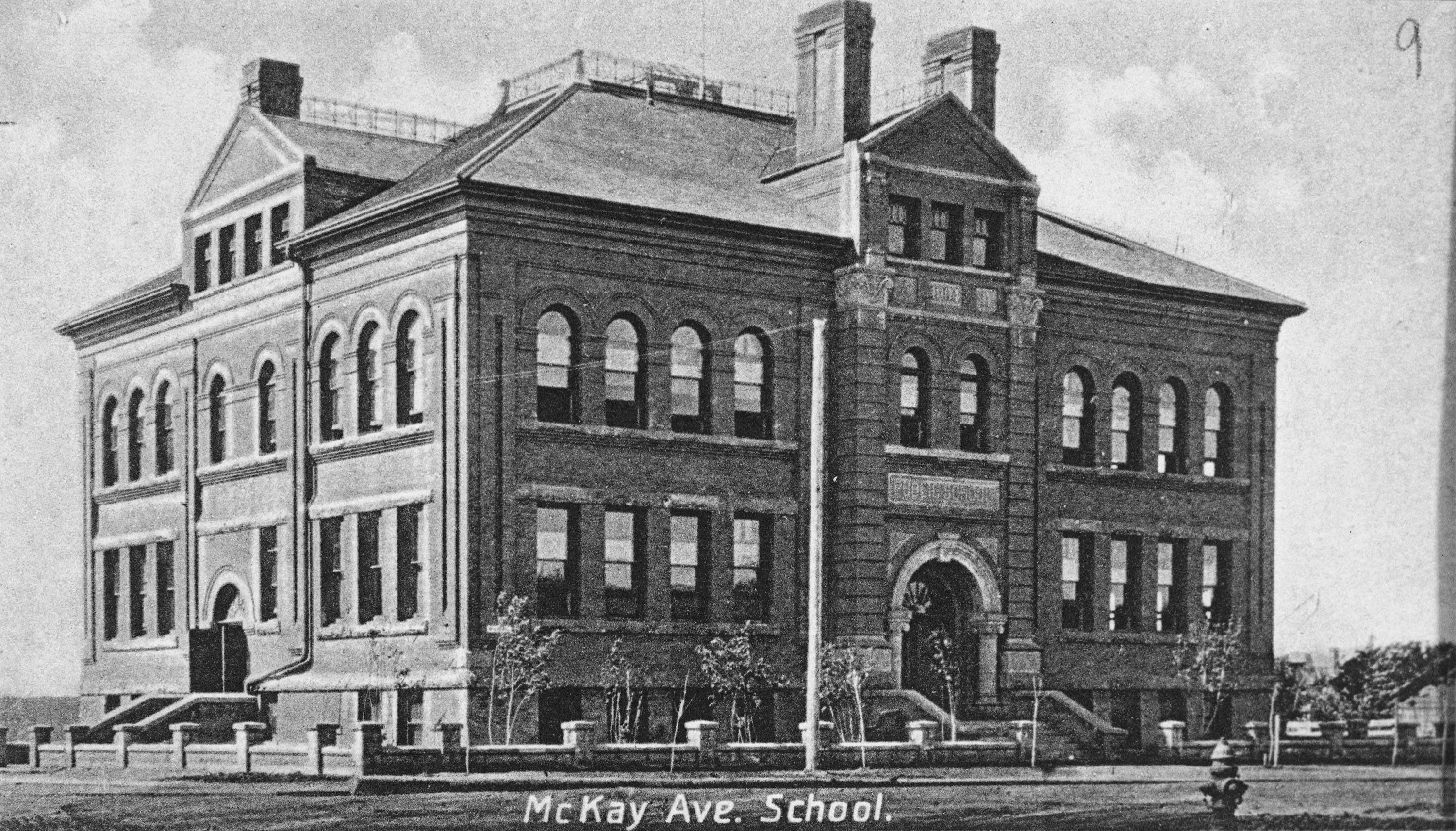
1. The McKay Avenue School: Built between 1904 and 1905, the McKay Avenue School is an early twentieth-century, three-story building situated in the heart of Edmonton’s Downtown district. The building has a red-brick façade with sandstone trim, round arches over the windows, and imposing columns flanking the main entrance. The building hosted the inaugural session of the Alberta Legislative Assembly. It’s also connected to early educational institutions in Edmonton and is an example of stately Richardson Romanesque architectural style.

McKay Avenue School circa 1913, Edmonton (photo courtesy of Provincial Archives of Alberta)
McKay Avenue School circa 1913, Edmonton, said to be haunted by spirits of children and a worker who fell from the roof to his death (photo courtesy of the Provincial Archives of Alberta).

The school is now home to the Edmonton Public Schools Archive and Museum run by the Edmonton Public School Board. Tales abound of possible paranormal activity in the building including objects mysteriously moving around, water taps found running, and lights being turned off and on by Read more

Rocky Mountain Alpine Project Update

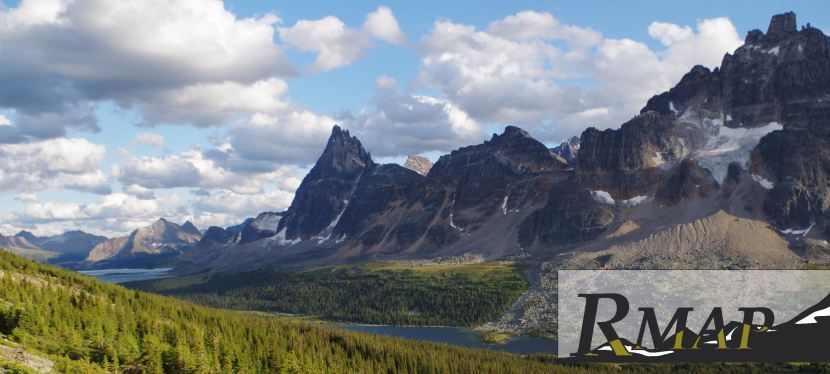
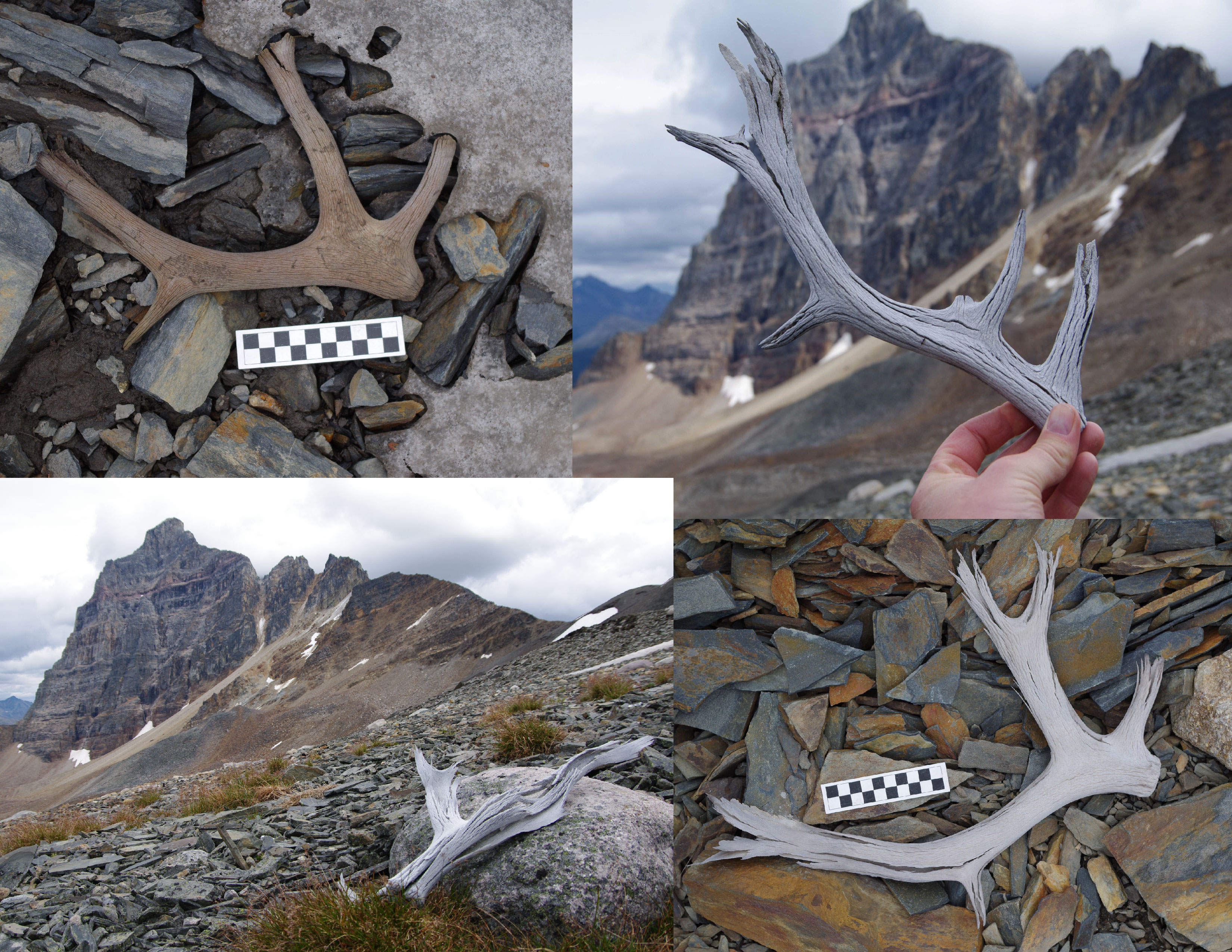
In an earlier post we showed a video of the fieldwork undertaken for the Rocky Mountain Alpine Project in August of 2015. This was a pilot project to determine the potential for finding organic archaeological artifacts in ice patches in the Jasper National Park area. One of our most exciting finds was a leather strip that had recently melted out from the edge of an ice patch. However, we also found and collected a significant number of other naturally occurring organic materials melting out from the ice. While most of these are not archaeological, they are valuable for understanding how this environment and the animals living in it have changed over time. The pilot project revealed that ice patches in Jasper and neighbouring Mount Robson Provincial Park have great potential for archaeological research but also for biological, environmental, and climate research. See below for some of our other finds and their potential to contribute to our knowledge of this landscape’s past.

Natural Organics

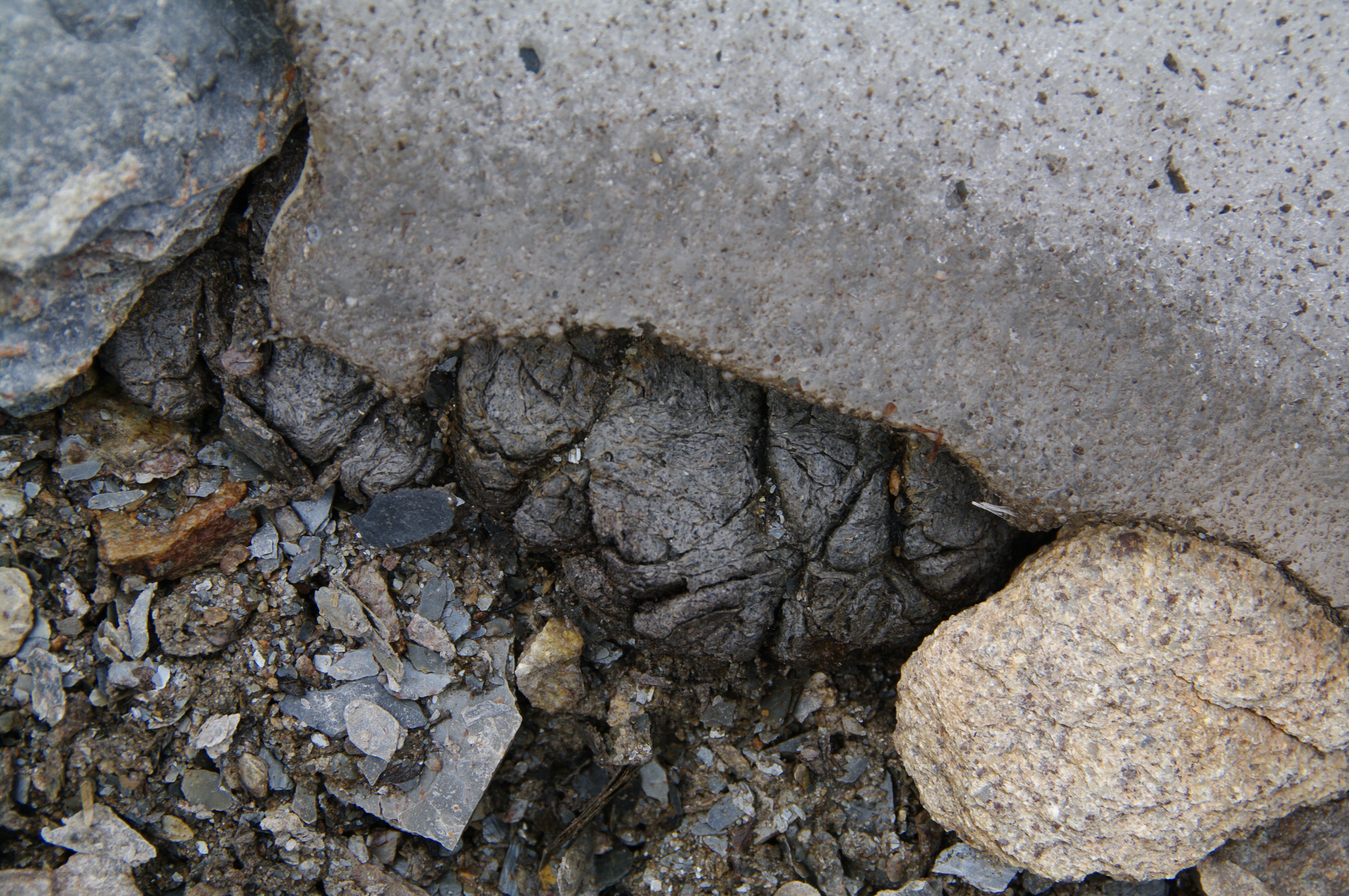
Caribou antlers were the most abundant organic materials found. Antlers can be used to reconstruct caribou populations in the past by recovering DNA from them and using genetics to track population growth and decline. It is important to understand how populations change naturally so that we can interpret what effect human activity might have on caribou. We may also be able to detect the impact of past ecological events (like volcanic eruptions) on caribou populations. Similarily, caribou dung present in the ice patches can also be used to track caribou populations and diet. Some researchers have also used finds like this to track the evolution of viruses.

A sample of some of the caribou and elk antlers found at the edge of the ice patches.
A sample of some of the caribou antlers found at the edge of the ice patches.
Caribou dung melting out of the ice.

Bone is another important archaeological and ecological find. Any bone that was encountered was examined for evidence of human modification such as breaking or fracturing of the bones from hunting and processing. Read more