Second World War Service, Decorations and Sacrifice: Geographical Names Commemorating Alberta’s War Casualties

Written by: Ronald Kelland, Geographical Place Names Coordinator

Remembrance Day, November 11, is the day Canadians honour and memorialize those who gave their lives while in military service. While honouring all Canadian service personnel this Remembrance Day, this year RETROactive is drawing attention to a few geographical features named to commemorate casualties of the Second World War. Following the Second World War, the Province of Alberta, through collaboration between the Geographic Board of Alberta and the Geographic Board of Canada began naming geographical features, mostly lakes, for decorated military personnel from Alberta that were casualties of the Second World War. This is the story of two of those individuals.

Conn Lake

Located approximately 35 kilometres northwest of Bonnyville is Conn Lake.        

The lake is named for Leading Steward James Conn. Born at Hillcrest, Alberta on December 7, 1914, Conn was the son of John Robert (died 1921) and Lillian Maude Conn (died 1916). At some point, James and his siblings moved to Quebec and by 1932 James Conn was living on University Street (now Robert-Bourassa Boulevard) in Montreal.

At the outbreak of the war, James Conn was a waiter with the Canadian Pacific Railway. Conn enlisted in the Royal Canadian Naval Volunteer Reserve in August 1943 and trained at Navy Reserve Divisions HMCS Montreal (now HMCS Donnacona) and at Winnipeg with HMCS Chippawa and at Ottawa with HMCS Carleton. He served a short stint on HMCS Stadacona, a steam yacht that had been acquired by the Royal Canadian Navy in 1915 and was used as a home waters patrol vessel during the Second World War. On October 17, 1944, he reported to HMCS Esquimalt at the rank of Leading Steward.

HMCS Esquimalt was a Bangor-class minesweeper operating out of the port of Halifax to hunt enemy submarines and keep approaches to the harbour clear of mines. Named for the Township of Esquimalt on Vancouver Island, she was launched in 1941 and was originally assigned to patrol duties off Newfoundland and was transferred to Halifax in September 1944. On 15 April 1945, Esquimalt sailed on a patrol to hunt a German U-boat that was suspected to be in the waters near Halifax. At approximately 6:30 a.m. on the morning of April 16, with the lights of Halifax visible on the horizon, a torpedo from German U-boat U-190 struck Esquimalt on its starboard, flooding the engine room and causing a loss of power. In less than five minutes, and before a distress call could be sent, Esquimalt rolled onto her starboard side and sank beneath the surface.

Sources differ regarding the number of sailors lost in the sinking of HMCS Esquimalt, with a range of 39 to 44 crew perishing that night either going down with the sinking vessel or of exposure in the frigid waters awaiting rescue. Six hours after the sinking, survivors were picked up by Esquimalt’s sister ship, HMCS Sarnia. Twenty-seven of Esquimalt’s crew survived. Leading Steward James Conn was not one of them
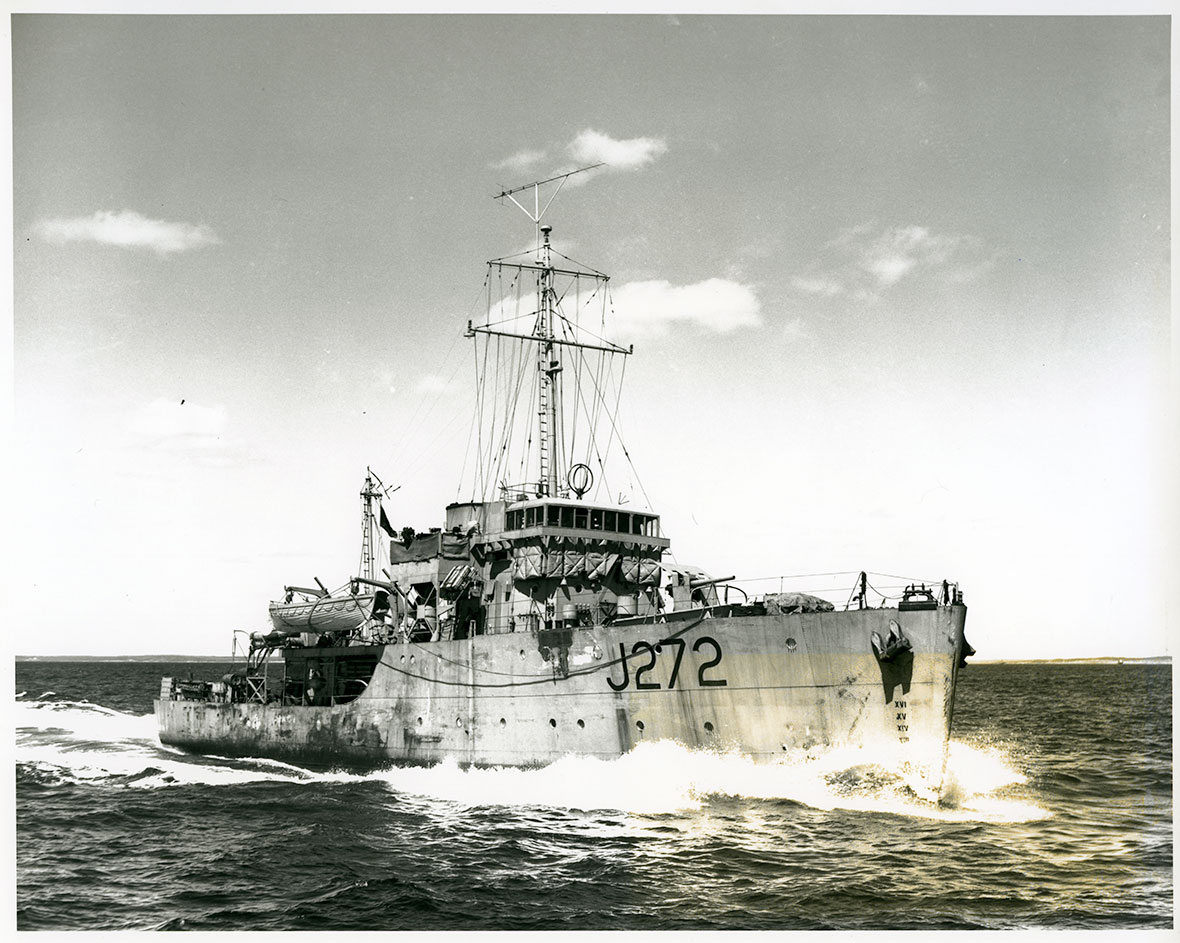
HMCS Esquimalt, 1944. Source: Department of National Defense.
Read more

Not Forgotten: Cousins in Arms

Written by: Ronald Kelland, Historic Places Research and Designation Program

Remembrance Day, November 11, is the day Canadians honour our military personnel and memorialize those who gave their lives while in military service. While honouring all Canadian service personnel this Remembrance Day, RETROactive is drawing particular attention to a geographical feature named to commemorate two cousins who were casualties of the First World War.

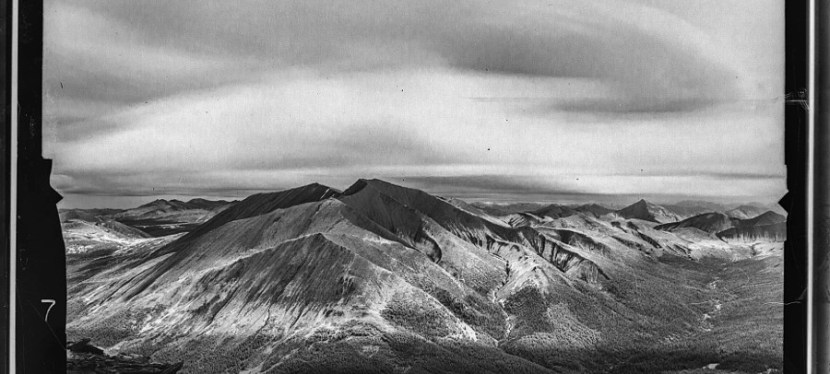
Near the Alberta/British Columbia boundary, 55 kilometres ENE of Grande Cache is a mountain known as Mount May; its two peaks are named George Peak and Francis Peak. The mountain and its peaks are named for two cousins, George and Francis May of Ottawa, both of whom were casualties of the First World War.

Francis May

Francis Loren May (frequently misspelled Francis Lorne May) was born on August 14, 1894, at Ottawa to William Chaney May and Susan Margaret May (née Story). William May was a partner in the family firm George May and Sons, a leather goods and saddlery store on Rideau Street. In 1915, Francis was living with his parents at 155 Gilmour Street in Ottawa. Described as being nearly six feet in height and with hazel eyes, a ruddy complexion and light brown hair, he was a member of the Ottawa Ski Club and the Ottawa Canoe Club and, during his school years, he spent two years with the Ottawa Collegiate Institute Cadets. He tried to enlist for service with the Canadian Expeditionary Force in 1914 but was not accepted due to an attack of appendicitis. He did enlist for service at Ottawa on February 22, 1915. His attestation papers list his employment as clerk, and he may have been employed in the family firm or with the Dominion Government. Francis had worked with the Dominion Land Survey, notably in northeastern Alberta in 1912 as an axeman in the surveying party of George McMillan, DLS. It is possible that the May River, which was partially surveyed and named by McMillan in that year, may have been named for Francis.

Read more

“For Ever With The Lord”: In memory of common soldiers from the chapel at Old St Stephen’s College

Written by: Peter Melnycky, Historian

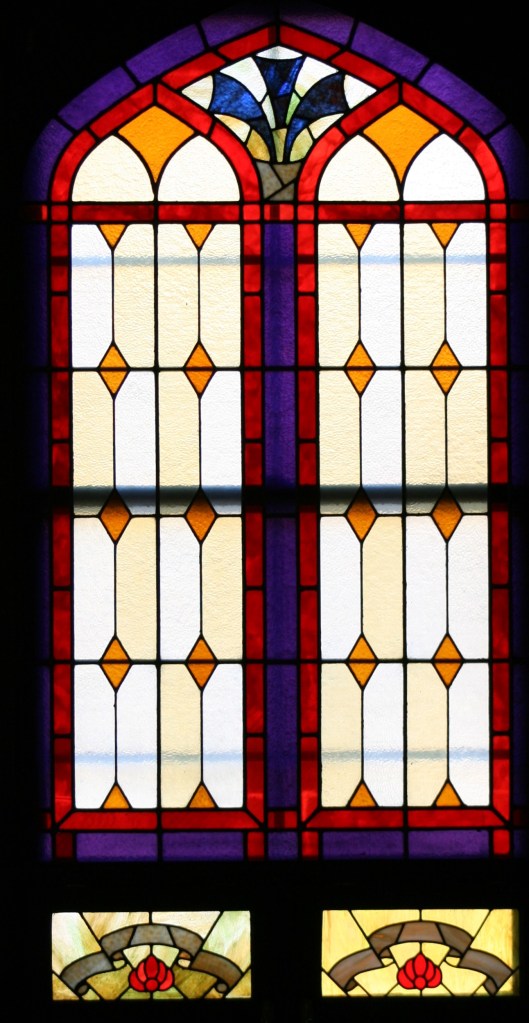
Stained glass at Old St. Stephen's College, on campus at the University of Alberta in Edmonton. Photo by: Peter Melnycky
Stained glass at Old St. Stephen’s College, on campus at the University of Alberta in Edmonton.

In 1935, the chapel unveiled within St. Steven’s College displayed plaques commemorating the war service and sacrifices of its brave associates. Dated to 1923, the first plaque honoured 19 Ministers and 61 Probationers who served during the Great War, as well as eight who “bravely fell”. A separate plaque commemorated “To the Glory of God and in Loving Memory” eight students of Robertson College “who fell on the field of Honour” during the war. One individual plaque was also dedicated in memory of Harold G. Riddle of Robertson College who died at St. Omer, France in 1916 and proclaimed Virtute Praeclarus (“Brilliance with Courage”) in his memory.

Read more

Alberta Remembers

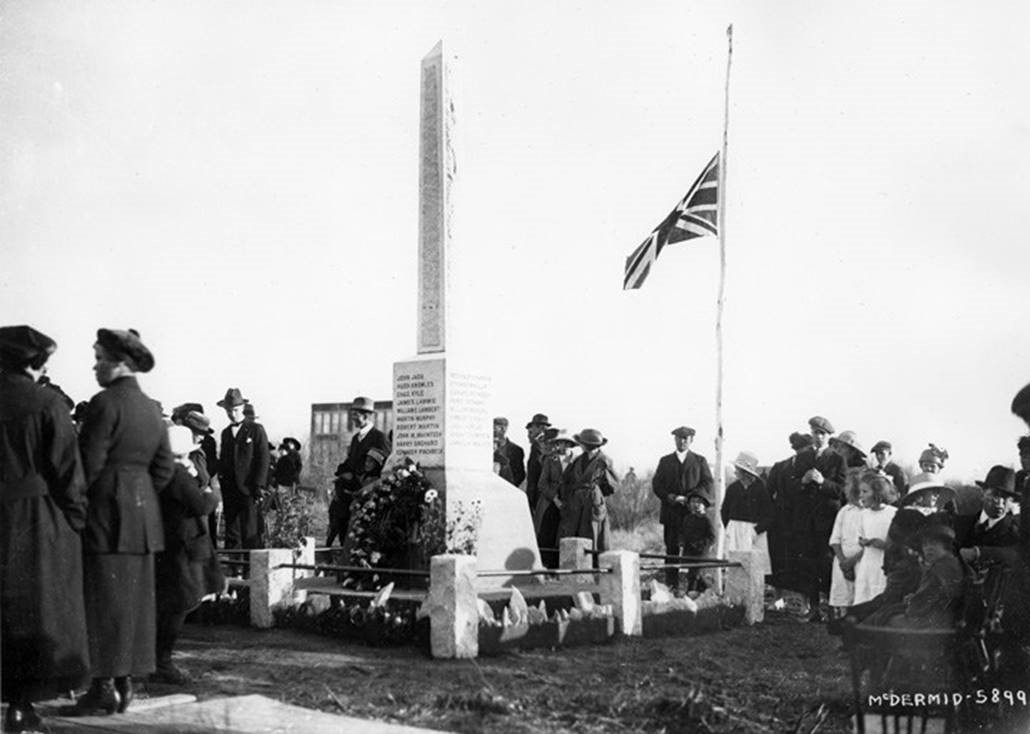
The Beverly Cenotaph, a simple stone obelisk, was unveiled on October 17, 1920. (City of Edmonton Archives, EA-160-14)

On November 11, 1918, after more than four years of fighting the “war to end war”, an armistice was called in France and all hostilities came to an end on the Western Front of the First World War. While the battles may have ceased, the effects of the conflict continued to reverberate around the world and across the years, even to the present day, a century later.

Albertans were among those who fought alongside fellow British citizens, as well as French and American soldiers – among others – to defeat Germany and its allies. Estimates place the number of Albertan soldiers at 48,885 – or over one third of the province’s male population aged 18 to 45. Of these, about one in eight did not return from the war, and almost half of those who did return had been wounded.1 The effect of the distant, unseen war was felt throughout the province on a personal level.

One way Albertans dealt with the trauma and loss was to come together and commemorate those who had sacrificed their lives. A model for these activities was provided by “Peace Day”, celebrated on July 19, 1919, in London, England, in honour of the signing of the Treaty of Read more

Blackfoot Soldiers in WWI

Tomorrow is Aboriginal Veterans Day. It is estimated that more than 12,000 First Nations members, Inuit, and Métis served in WWI, WWII and the Korean War.

At first glance, the voluntary participation of several young Niitsitapi (Blackfoot) men in the First World War appears to confirm their assimilation into Euro-Canadian culture. Recent graduates of prototype residential schools, they shunned requests by their elders to remain in Treaty 7 territory and were inspected, inducted, drilled, and disciplined. Many were sent overseas to fight for God, King, and Country. Some were killed in action. We might interpret a 1917 letter home from Siksika (Blackfoot) soldier Mike Foxhead as an indication of his acceptance of colonial values. He wrote:

I’ll stick to it until the end to put up a name for the Reserve, so they can say that they have one of their boys over here. I could have got out of it when the other boys got their discharge only I wanted to do my bit like all other Canadians. I knew that somebody had to go and fight for the Empire, and I made up my mind that I would go because it would be my duty sooner or later.[1]

Yet as historian James Dempsey has shown, there were important elements of Blackfoot warrior culture that accompanied Blackfoot mobilization during the Great War.[2] As the nineteenth-century waned, so too did opportunity for young men to prove themselves in battle, raid their enemy’s camps for horses, and recount Read more

Passchendaele Remembered

During November 2017, Canada commemorates the centennial anniversary of the Battle of Passchendaele, also known as the Third Battle of Ypres. It was the third and last major battle victory during 1917, after Vimy Ridge and Hill 70, for the combined Canadian Divisions fighting together as a Corps.

The Battle saw German and Allied armies clash in the area of the Belgian city of Ypres. Fought from 31 July through 10 November, 1917, the battle is estimated to have resulted in over half a million casualties. Canada alone suffered over 4,000 dead and almost 12,000 wounded. The carnage in the infamous mud of the battlefield became synonymous with the senseless and massive losses suffered by troops during the Great War. Singular feats of sacrifice and valour during the course of the battle saw nine Canadians awarded the Victoria Cross, the highest military honor conferred within the British Empire. Read more

POW and Internment Camps in Alberta: WWII

On September 1, 1939, the Second World War began and Canadians responded with more than one million of its men and women enlisting in the military. Many were sent overseas, and stories of the courageousness of Canadians on the battlefront emerged. This war is known for uniting the country and forging its own national identity, but a lesser known aspect from this period takes place at home. In a significant reaction to the war, internment camps were established and Canada detained citizens of its own country, discriminating against members of German, Japanese and Italian communities. In addition, Canada had an active part in accepting German prisoners of war who were captured in active duty. This blog post will look at the establishment of prisoner of war and internment camps in Alberta, and briefly at the people who were detained, and the life they experienced.

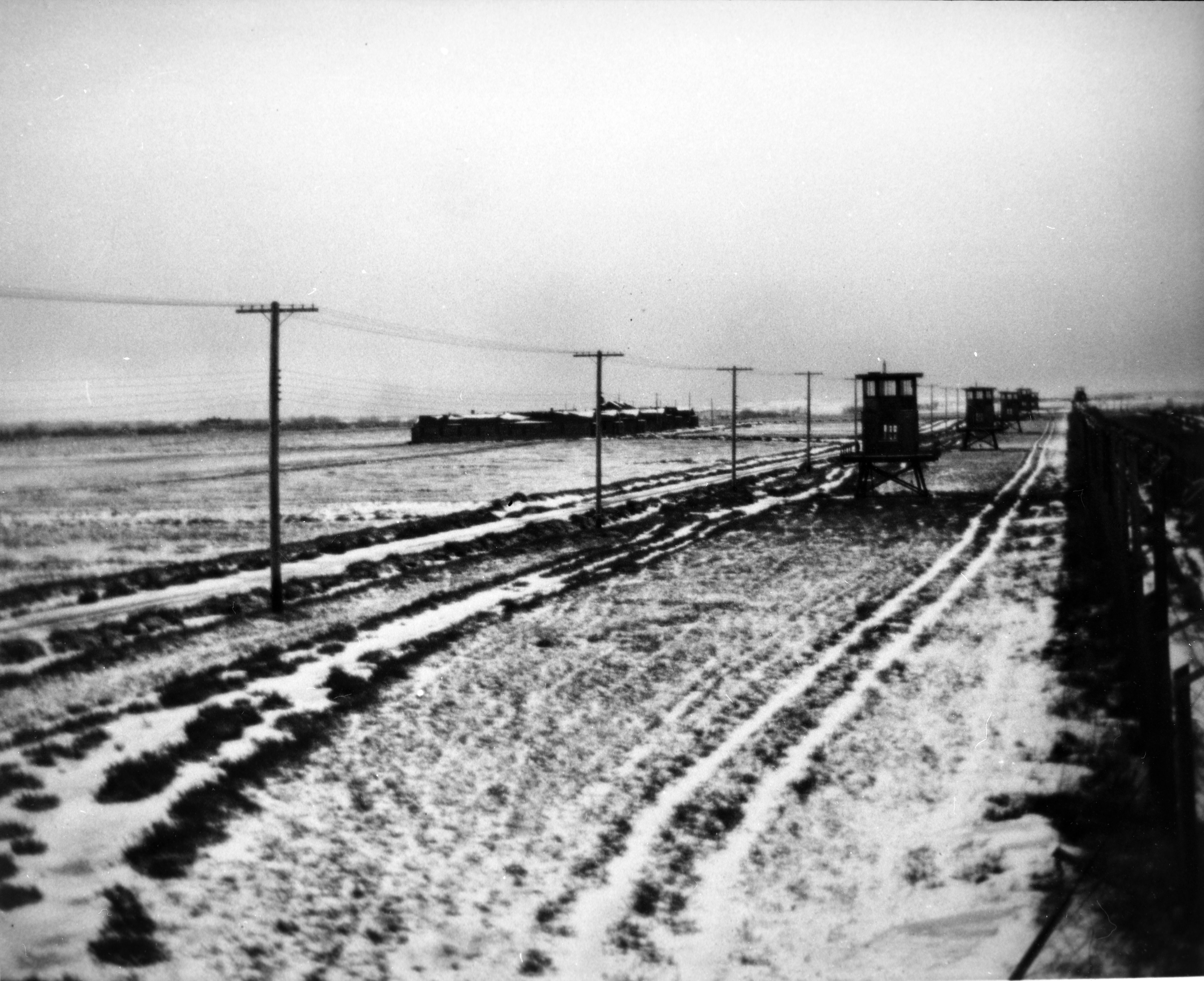
View of guard towers at the POW camp in Medicine Hat, c.1948 (Image courtesy of Esplanade Archives, 0590.0017).

Read more

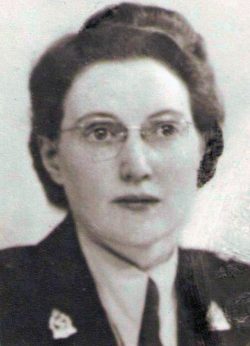
A Portrait of Service and Sacrifice: Nursing Sister Lieutenant Nora Hendry Peters 1910-1944

Shortly before his death in April of 1915 while serving with the Royal Navy Volunteer Reserve, English poet Rupert Brooke penned the now famous lines of The Soldier. He surmised that should he die during the course of the war, there would be some corner of a foreign field That is for ever England”. In a similar vein, one might consider the ultimate sacrifices paid by Albertans during two World Wars and their final resting places as corners of foreign fields that are for ever Alberta.

During Canada’s two World Wars approximately 127,000 Albertans served in the country’s armed forces, of Read more

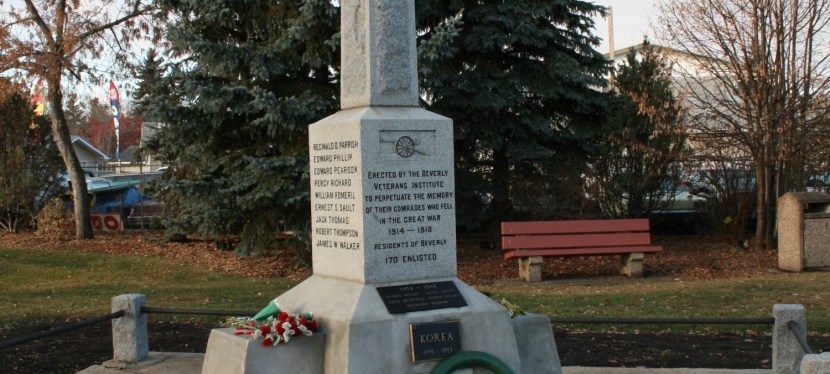
Remembering Beverly’s War Dead: Alberta’s First Great War Memorial

Canada is in the midst of marking the centenary of the Great War of 1914-1918. The war which engulfed the Dominion of Canada was to have dramatic effects on the young, barely decade-old province of Alberta. By 1914 Alberta boasted a greatly expanded population of 470,000 of whom more than 49,000 served in Canada’s armed forces. Of that number over 6,000 died and another 20,000 suffered non-fatal casualties.

On the eastern boundary of Alberta’s capital City of Edmonton the coal mining community of Beverly was incorporated as a Village in 1913 and elevated to the status of Town in July of 1914. Just prior to Canada’s entry into the Great War, Beverly had a population of 1,200, attracting residents from across Read more