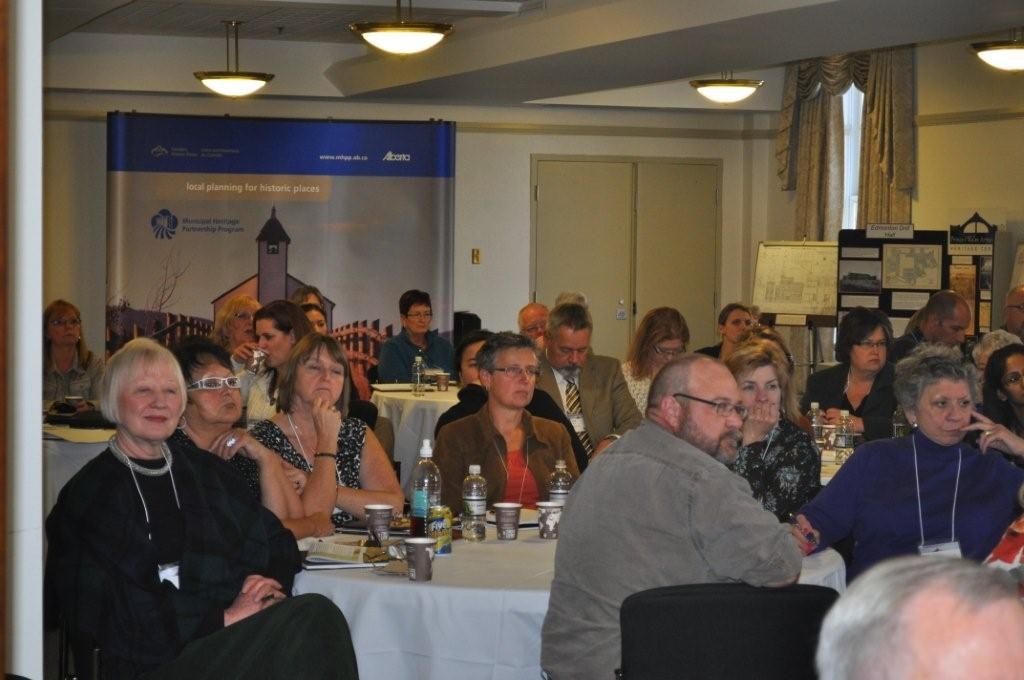
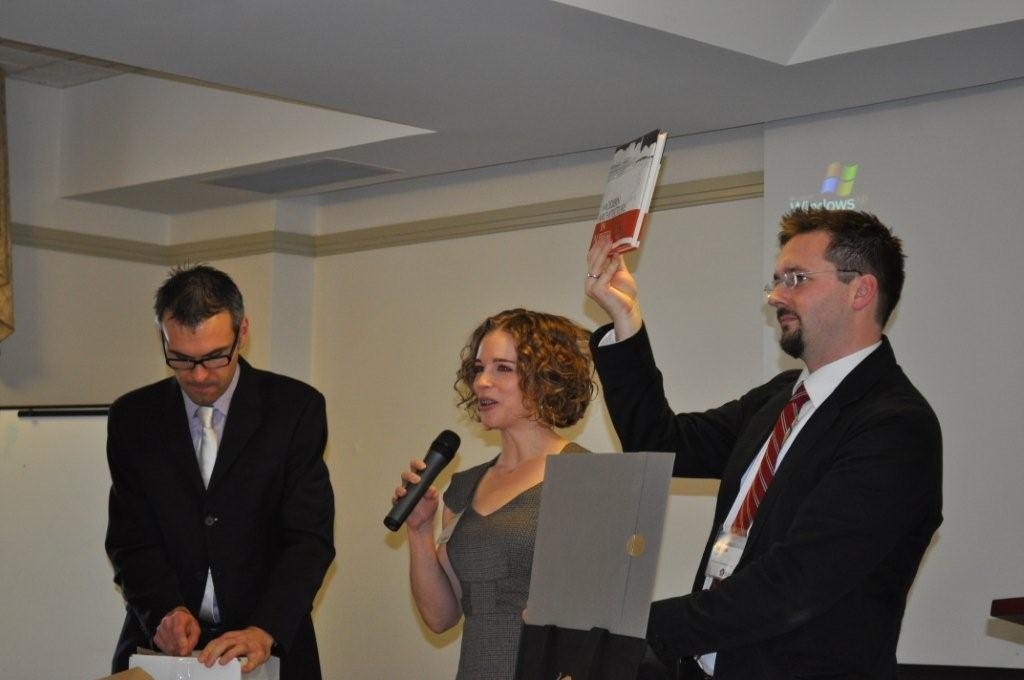
Recent blog posts featured the presentations shared during the 2011 Municipal Heritage Forum. The complete collection is accessible via the following links:
Members of the Village of Holden Historic Resources Committee
The 2011 Municipal Heritage Forum on October 27th and 28th featured “Show &Tell” sessions. Several municipalities working on municipal heritage planning projects with the assistance of the Municipal Heritage Partnership Program shared their experiences with the attendees. A mix of rural and urban municipalities spoke about their heritage projects, showcasing the opportunities, challenges and rewards that can result from identifying and evaluating potential historic places.
Thursday, October 27, 2011
Yellowhead County – Debbie Charest, Director of Community & Protective Services
Municipal District of Big Lakes – Cathy Wilcox, Grants Manager
Heritage Site Survey – talked about how GIS assisted with planning their Municipal Heritage Survey.
These presentations provide insights and inspiration to other municipalities interested in developing a local heritage conservation program. If you have any questions about how your municipality can participate in the Municipal Heritage Partnership Program, please contact MHPP staff.
Note: For a complete collection of the 2011 Municipal Heritage Forum presentations, please click here.
Written by: Brenda Manweiler, Municipal Heritage Services Officer
Heritage Advisory Bodies (HABs) are boards, committees or commissions established through municipal bylaw. The community members appointed to the HAB advise council on heritage conservation matters and assist with the implementation of heritage initiatives (such as a Municipal Heritage Survey or a Municipal Heritage Inventory). This presentation discusses the ingredients necessary to establish an effective HAB.
A Municipal Historic Resource may not be destroyed, disturbed, altered, restored or repaired without the written approval of the applicable municipal council, or their designate. This presentation provides an overview of the designation and alteration approval processes.
The Standards and Guidelines for the Conservation of Historic Places in Canada provides practical guidance on the preservation, rehabilitation and restoration of historic resources. This presentation is a general introduction to the principles and recommended/not recommended actions contained in the Standards and Guidelines.
NOTE: For a complete collection of the 2011 Municipal Heritage Forum presentations, please click here.
Written by: Brenda Manweiler, Municipal Heritage Services Officer
On Thursday, October 27, at the 2011 Municipal Heritage Forum, “Roadmap to Success,” Berdine Jonker, Senior Heritage Planner with the BC Heritage Branch, Ministry of Forests, Lands and Natural Resource Operations, travelled over the Rockies to share her expertise and the experiences of the BC Heritage Branch. As the keynote speaker, Berdine discussed how values-based heritage conservation is completed in British Columbia. She showcased a heritage context study completed for the City of Prince George, featured a cultural tourism workshop conducted with the Nisga’a Lisims Government and discussed design guidelines that were developed for the City of Grand Forks, all through the use of a values-based approach.
For a copy of Berdine’s presentation and supplementary information, please click on the following links:
Thank you, Berdine, for travelling to Alberta and presenting at the Forum! MHPP staff and Forum attendees really appreciated learning about some of the municipal heritage initiatives occurring in British Columbia.
For a complete collection of the 2011 Municipal Heritage Forum presentations, please click here.
Written by: Brenda Manweiler, Municipal Heritage Services Officer
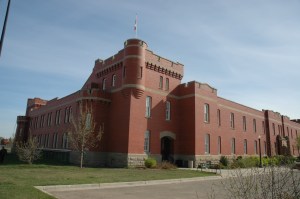
Today and tomorrow the annual Municipal Heritage Forum is being hosted at the Prince of Wales Armouries, in Edmonton. This impressive building was constructed in 1914-15 as the Edmonton Drill Hall. In 1979 it was designated a Provincial Historic Resource and in 2004 the City of Edmonton designated it a Municipal Historic Resource. The facility currently serves as the Prince of Wales Armouries Heritage Centre. The current tenants include:
Some of the words we use to discuss heritage conservation can be confusing. The related but distinct terms historic place, historic resource and historic site are often misunderstood. Sometimes, people will talk of historic sites when they mean historic resources, and make reference to historic places when the place is not formally historic. Confused? I shall clarify:
Historic Place is the generic term used throughout Canada to reference “a structure, building, group of buildings, district, landscape, archaeological site or other place in Canada that has been formally recognized for its heritage value.” Each province and territory has separate legislation regulating the identification, evaluation and management of historic places. Therefore, each province uses a different term to describe a designated or protected historic place. For example, in Manitoba they are called Heritage Sites and in Saskatchewan, Heritage Properties.
Brooks Aqueduct is a historic place designated as a Provincial Historic Resource and is operated as a historic site.
Alberta’s HistoricalResources Act uses the term Historic Resource. A Historic Resource is defined as a historic place valued for “its palaeontological, archaeological, prehistoric, historic, cultural, natural, scientific or esthetic interest”. The Government of Alberta may designate a historic resource as a Provincial Historic Resource and a municipality may designate a historic resource as a Municipal Historic Resource. Designated historic resources may not be repaired, altered or destroyed without written approval from the designating authority.
A Historic Site is a historic resource owned or leased by the Government of Alberta and managed by the Historic Sites and Museums Branch of Culture and Community Spirit. These sites are interpreted through public programming, signage and exhibits. Stephansson House and Brooks Aqueduct are examples of historic sites.
So, if you ever find yourself talking about an old place ask: “What do I really mean? Has it been formally recognized by the Government of Alberta or a municipality?” Perhaps you are talking about a formally recognized historic resource.
Written by: Brenda Manweiler, Municipal Heritage Services Officer
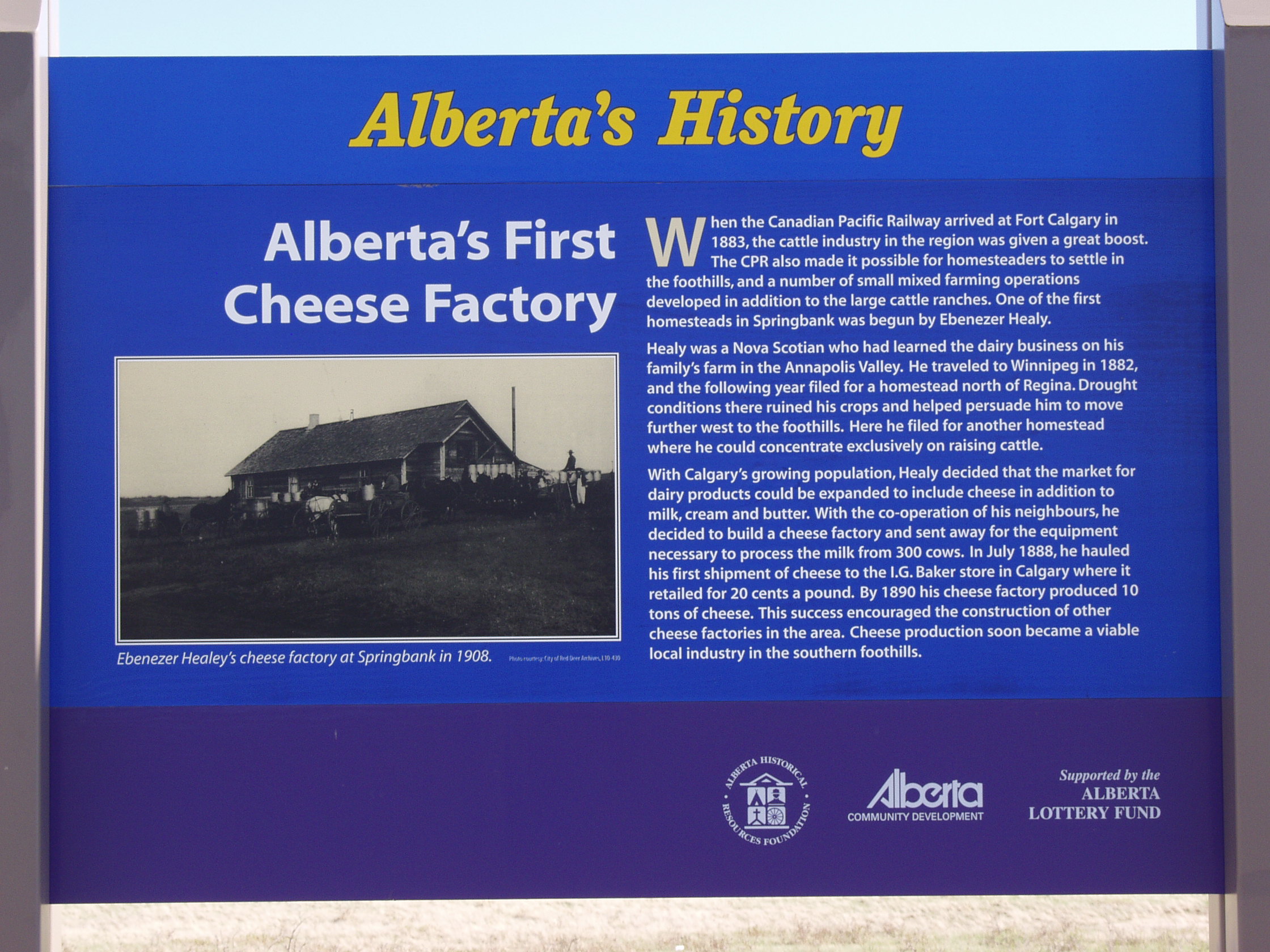
You have all probably seen them – large blue heritage markers located at highway rest areas or points of interest throughout Alberta. These interpretive signs tell of Alberta’s rich heritage. Come, travel Alberta and read a featured heritage marker:
Alberta’s First Cheese Factory
When the Canadian Pacific Railway arrived at Fort Calgary in 1883, the cattle industry in the region was given a great boost. The CPR also made it possible for homesteaders to settle in the foothills, and a number of small mixed farming operations developed in addition to the large cattle ranches. One of the first homesteads in Springbank was begun by Ebenezer Healy.
Healy was a Nova Scotian who had learned the dairy business on his family’s farm in the Annapolis Valley. He traveled to Winnipeg in 1882, and the following year filed for a homestead north of Regina. Drought conditions there ruined his crops and helped persuade him to move further west to the foothills. Here he filed for another homestead where he could concentrate exclusively on raising cattle.
With Calgary’s growing population, Healy decided that the market for dairy products could be expanded to include cheese in addition to milk, cream and butter. With the co-operation of his neighbours, he decided to build a cheese factory and sent away for the equipment necessary to process the milk from 300 cows. In July 1888, he hauled his first shipment of cheese to the I.G. Baker store in Calgary where it retailed for 20 cents a pound. By 1890 his cheese factory produced 10 tons of cheese. This success encouraged the construction of other cheese factories in the area. Cheese production soon became a viable local industry in the southern foothills.
Heritage Marker Location
South side of Highway 1, one kilometre west of Highway 22.
Alberta Register of Historic Places
If you would like to read more about Alberta’s dairy industry check out these Provincial Historic Resources on the Alberta Register of Historic Places:
RETROactive was launched six months ago and thanks to all of you it has grown into a blog followed by nearly 125 people. Over 60 blog posts have been published, covering topics such as: the conservation of historic windows; roadside heritage markers; the history of various Provincial Historic Resources; how to complete Municipal Heritage Surveys/Inventories and how Albertans can access conservation funding.
Are these the types of posts you want to read? Are there certain topics you would like us to discuss? What do you think about RETROactive? Please provide us with your feedback by commenting at the bottom of this post, write a comment on our Facebook page or email us at: albertahistoricplaces@gov.ab.ca. We look forward to receiving all of your messages.
Thank you for visiting RETROactive.
Written by: Brenda Manweiler, Municipal Heritage Services Advisor
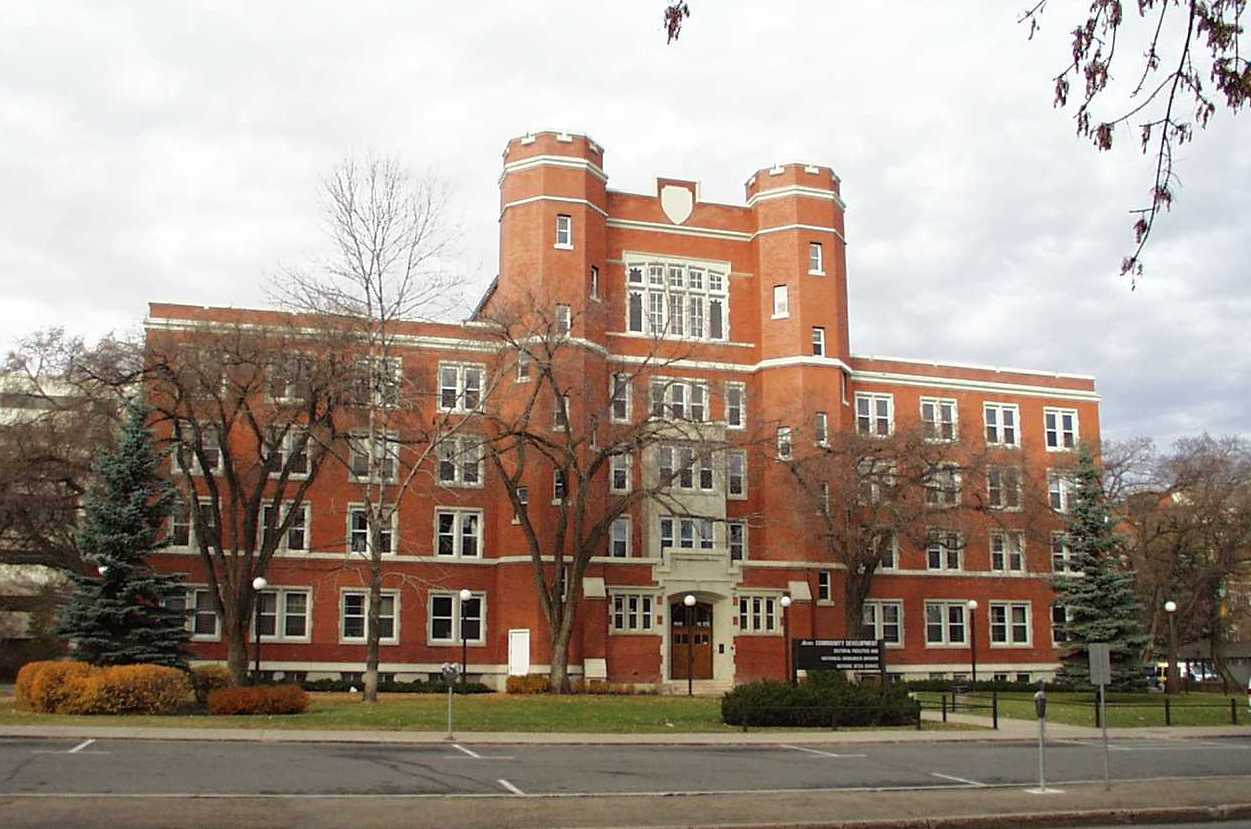
Old St. Stephen's College, located on the University of Alberta campus, is home to the Historic Resources Management Branch (the authors of RETROactive). This building is also a Provincial Historic Resource.
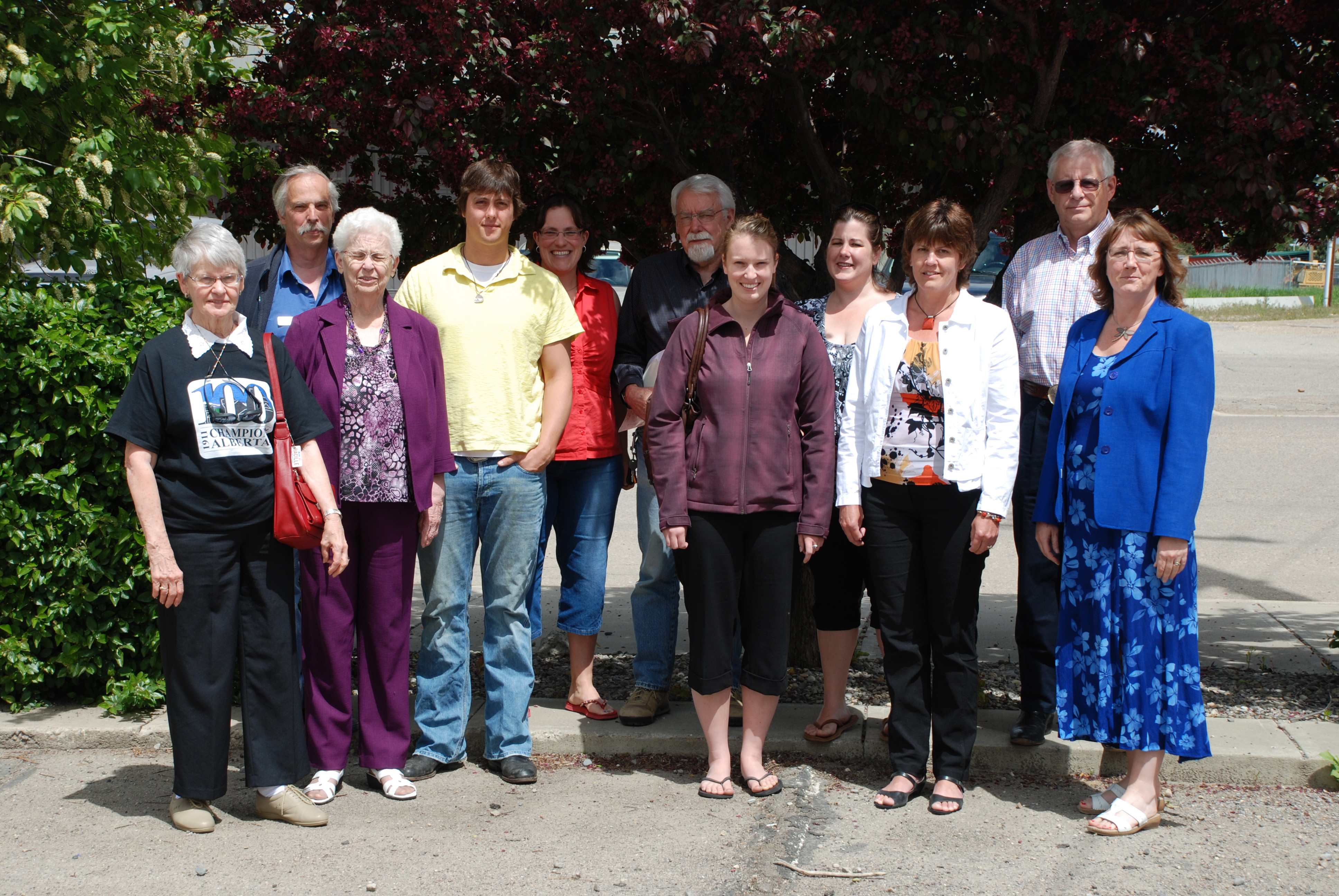
Over the next nine months the Vulcan region will be a hive of activity. Vulcan County has partnered with the Town of Vulcan and the villages of Carmangay, Champion and Milo to complete both a Municipal Heritage Survey and a Municipal Heritage Inventory. Working collaboratively, and with the services of a heritage consultant, a range of potential historic places within these municipalities will be documented and a number of places of interest will also be evaluated for eligibility, significance and integrity.
Completing these projects will allow municipal staff, councillors and residents to better understand the older places that make their communities unique and livable. From this understanding, municipal officials will be able to make informed decisions about which sites may merit protection and conservation for the benefit and enjoyment of future generations.
Pictured from Left to Right: Racille Ellis, Champion Community Representative; Paul Taylor, Town of Vulcan Councillor; Marjorie Weber, Vulcan and District Historical Society; Cody Shearer, Vulcan Business Development Society; Katie Walker, Village of Milo Councillor; Richard Lambert, Vulcan and District Historical Society; Amy Rupp, Village of Champion CAO; Kym Nichols, Village of Carmangay Mayor; Leslie Warren, Vulcan Business Development Society; William Roebuck, Kirkcaldy Community Club; Liza Dawber, Vulcan County. Missing: Bill Lahd, Milo Community Representative.
Written by: Brenda Manweiler, Municipal Heritage Services Officer
RETROactive is all about Alberta’s historic places. But what is a historic place: is it a home, a commercial building, a church or a baseball diamond? Could planes, trains or automobiles be historic places? The Standards and Guidelines for the Conservation of Historic Places in Canada defines a historic place as, “a structure, building, group of buildings, district, landscape, archaeological site or other place in Canada that has been formally recognized for its heritage value.” Does this mean any place in Alberta could be a historic place?
Theme / Activity / Cultural Practice / Event – a place directly associated with a theme, activity, cultural practice or event that has made a significant contribution to the broad pattern of provincial or municipal history.
Institution / Person – a place directly associated with a significant institution or with the life of a significant person in the province’s or municipality’s past.
Design / Style / Construction – a place displaying distinctive characteristics of a type, style, period or method of construction, or representing the work of a master, or expressing high artistic values.
Information Potential – a place yielding, or likely to yield, information important to a municipality’s or the province’s history, prehistory or natural history.
Landmark / Symbolic Value – a place particularly prominent or conspicuous, and that has acquired special visual, sentimental or symbolic value that transcends its function. A landmark contributes to the distinctive character of the province or municipality.
Note: The Historical Resources Act limits Municipal Historic Resource designation to real property. This means that while the province can designate a plane, train or an automobile, municipalities may only designate land and “immovables” (meaning buildings and other things permanently affixed to land). For additional information please see: Evaluating Historic Places and Designating Municipal Historic Resources.
So do historic places in Alberta include planes, trains and automobiles? I have searched the Alberta Register of Historic Places and this is what I have uncovered:
Hangar #14 is significant, “as a rare surviving Canadian example of hangar design from the World War Two period and as a symbol of Canada’s wartime experience.” It is also significant, “for its association with Wilfred R. May, one of Edmonton’s most significant aviation figures and the 418 City of Edmonton Squadron.” Hangar #14 is designated as both a Municipal Historic Resource and a Provincial Historic Resource.
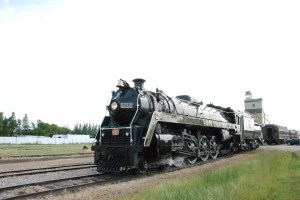
The 6060 Locomotive (pictured above) is significant, “as an excellent representation of a late-era steam locomotive.” The engine currently services the Alberta Prairie Railway Excursions line, which runs between Stettler and Big Valley. It is designated as a Provincial Historic Resource.
Automobiles:
Do you have any suggestions? Approximately 700 historic places are listed on the Alberta Register of Historic Places. Search the register to discover one that is associated with automobiles. Let us know what you find by submitting a comment at the bottom of this post.
Written by: Brenda Manweiler, Municipal Heritage Services Officer


 Recent blog posts featured the presentations shared during the 2011 Municipal Heritage Forum. The complete collection is accessible via the following links: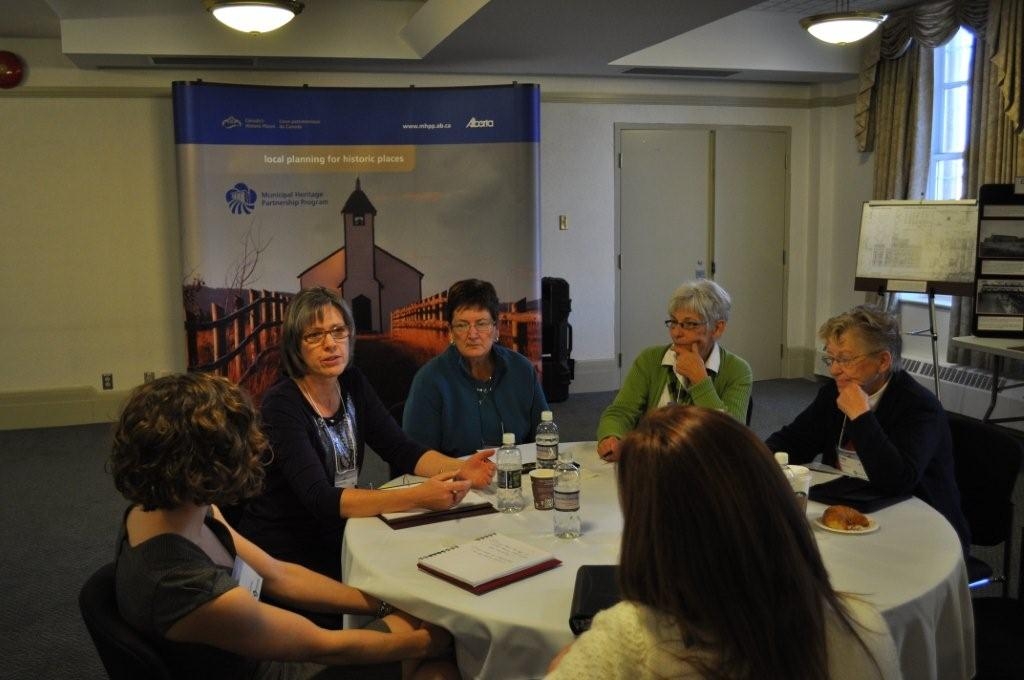

 Not quite. For a place to be listed on the
 RETROactive